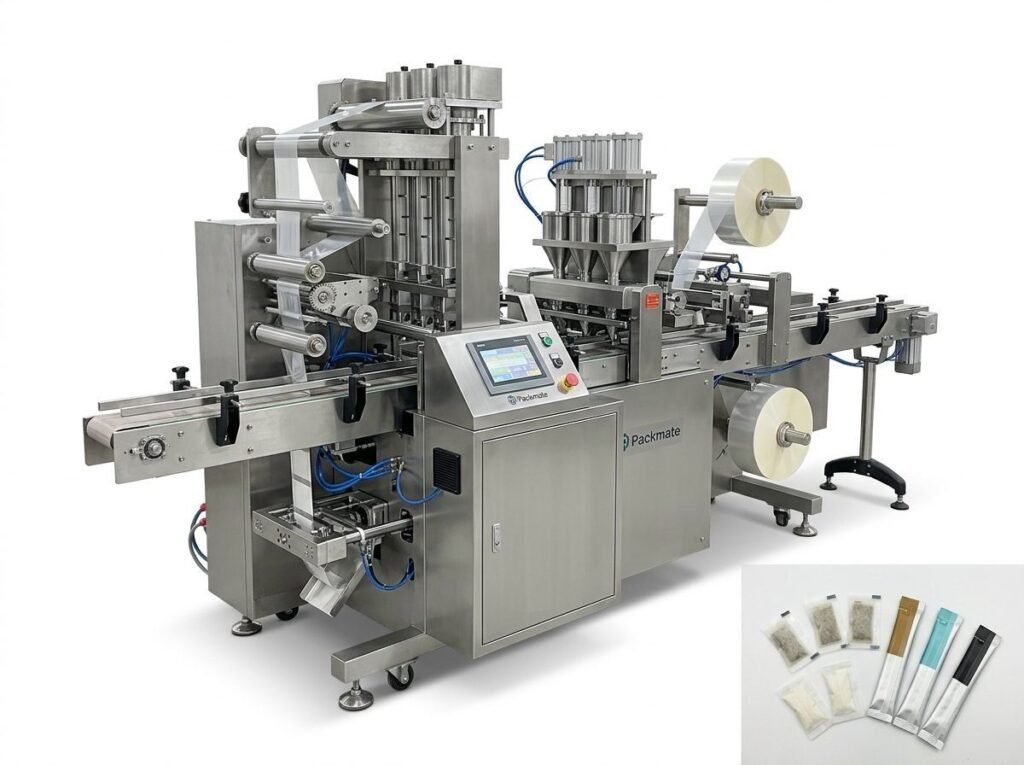
Choosing the right snus packaging machinery in Switzerland is a critical decision that affects product consistency, regulatory compliance, and long-term profitability. This guide walks you through the most important factors — from production throughput and machine type to factory capabilities and after-sales support — so you can confidently select the best solution for your snus or nicotine pouch production needs.
Understand Your Production Requirements
Start by documenting your core production metrics. Key parameters include target daily output, pouch format (portion, round, flat), pouch weight range, number of lanes required, and desired footprint. A manufacturer can only propose an optimal machine when these variables are clear. If you plan to scale, prioritize machines that support modular upgrades.
Throughput & Speed Expectations
Throughput is the most visible performance metric. Higher lane counts and multi-lane synchronisation dramatically increase output, but also require more advanced control systems. When comparing machines, ask for real-world output data (pouches/min and pouches/hour) for your exact pouch size and weight rather than theoretical maxima.
Format Flexibility
If your product lineup includes multiple pouch shapes or sizes, choose equipment with easy format changeovers and modular change parts. Machines designed for nicotine pouches often include quick-change tooling and recipe-based PLC controls so you can move between SKUs with minimal downtime.
Compare Machine Types and Technologies
Not all snus packaging machines are built the same. Select the type that aligns with product characteristics, speed goals, and budget.
Stick Pack and Sachet Machines
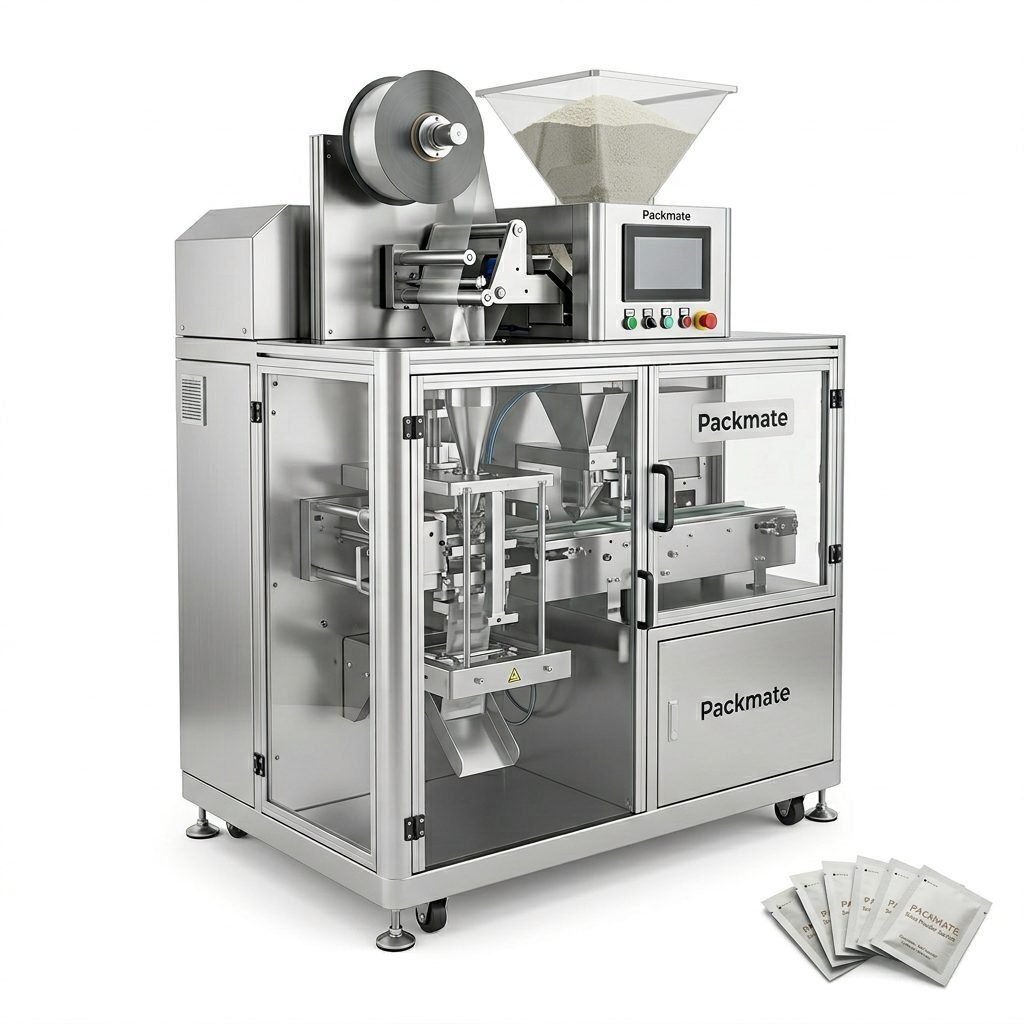
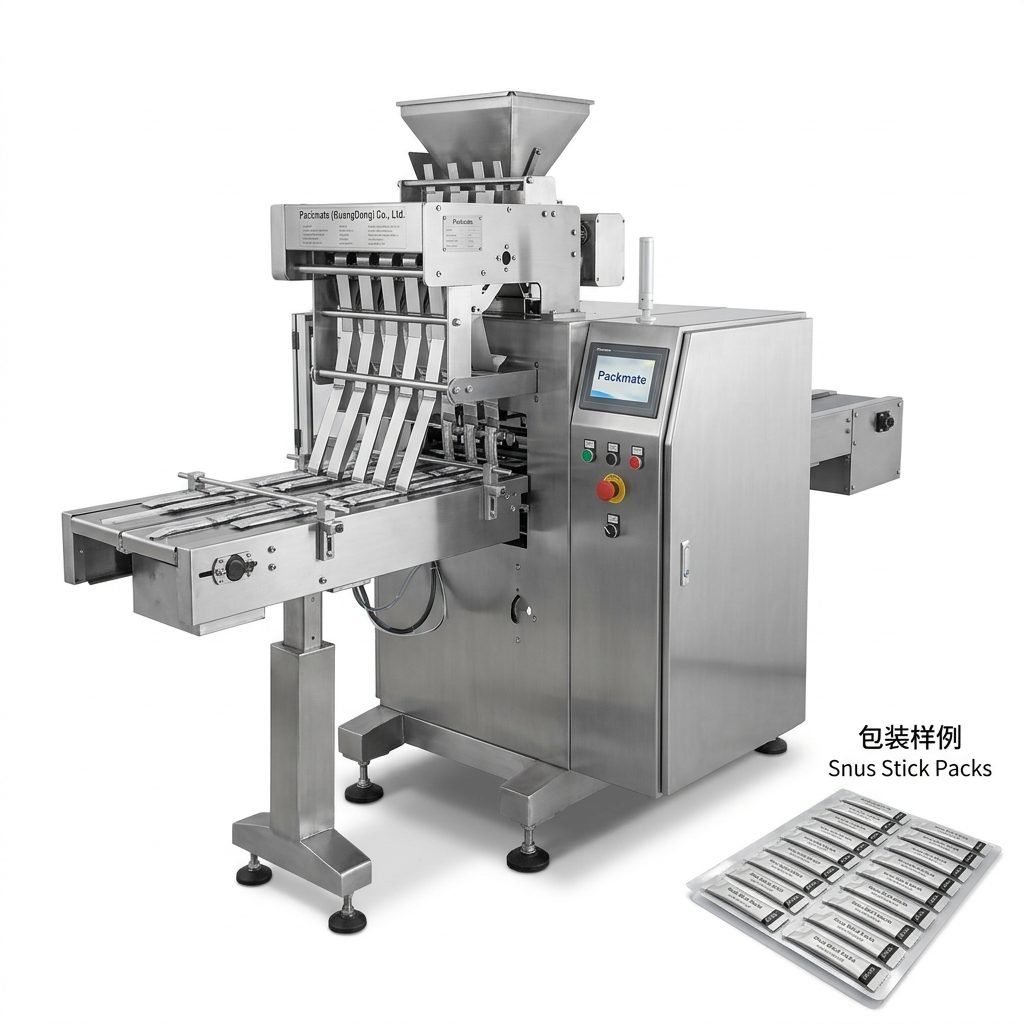
Stick pack and sachet systems often serve single-portion snus formats. These machines can be compact and cost-effective, offering high speed for uniform pouch sizes. For detailed machine offerings, review product pages like Sachet & Stick Pack Machines.
Multi-Lane Snus & Nicotine Packaging Systems
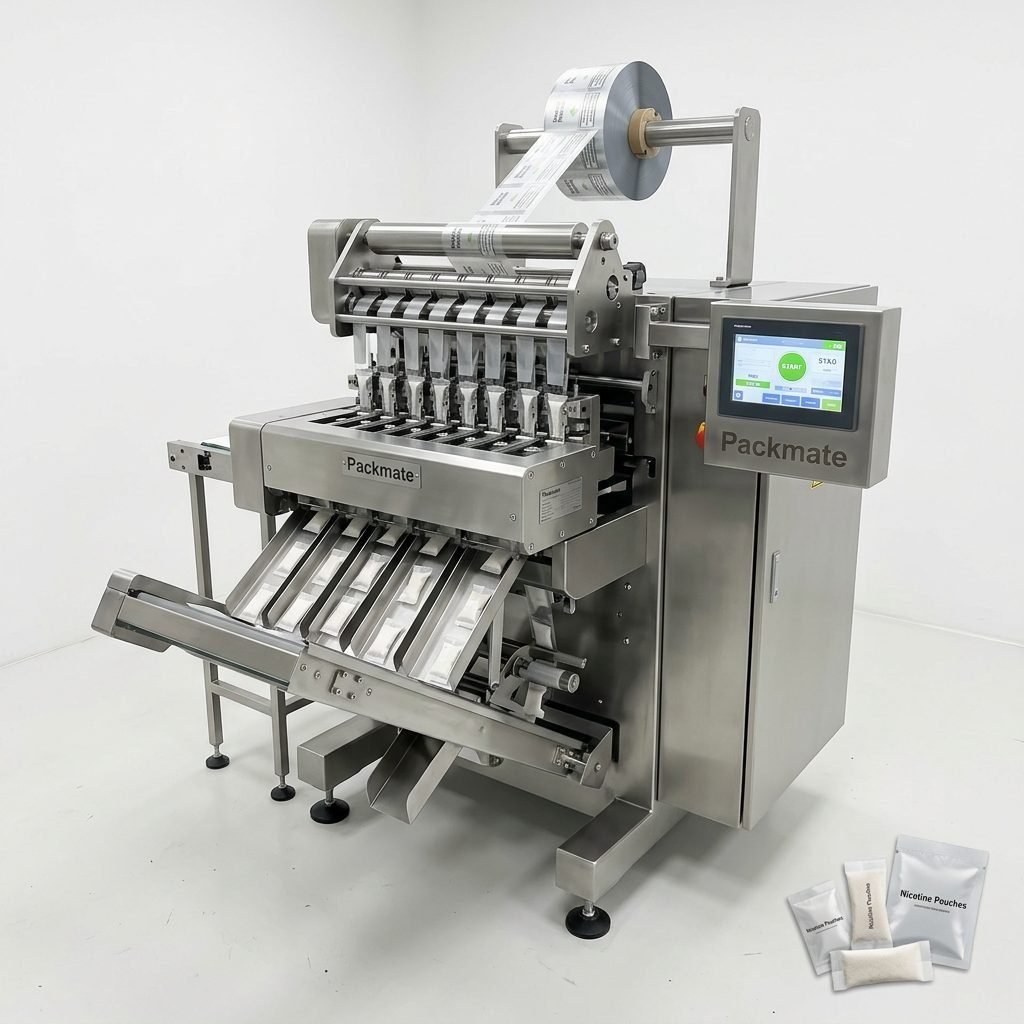
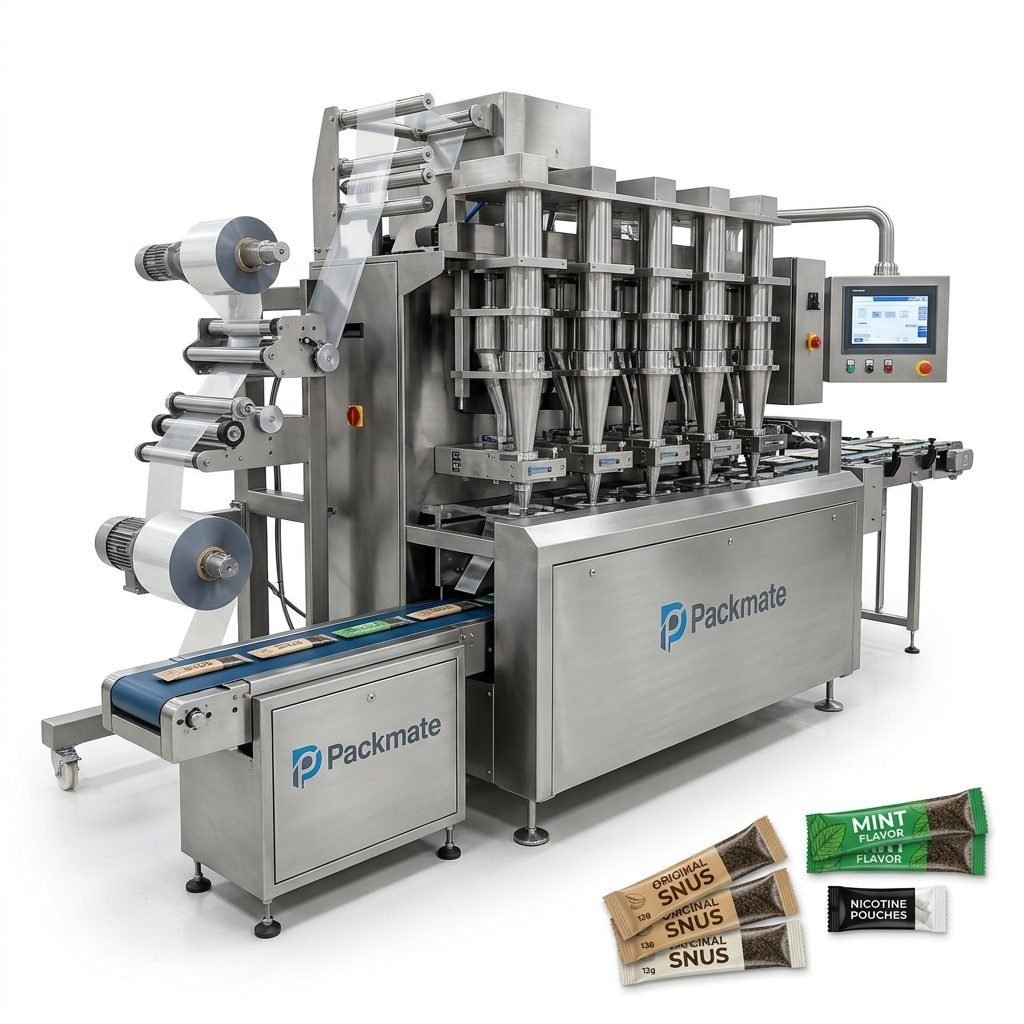
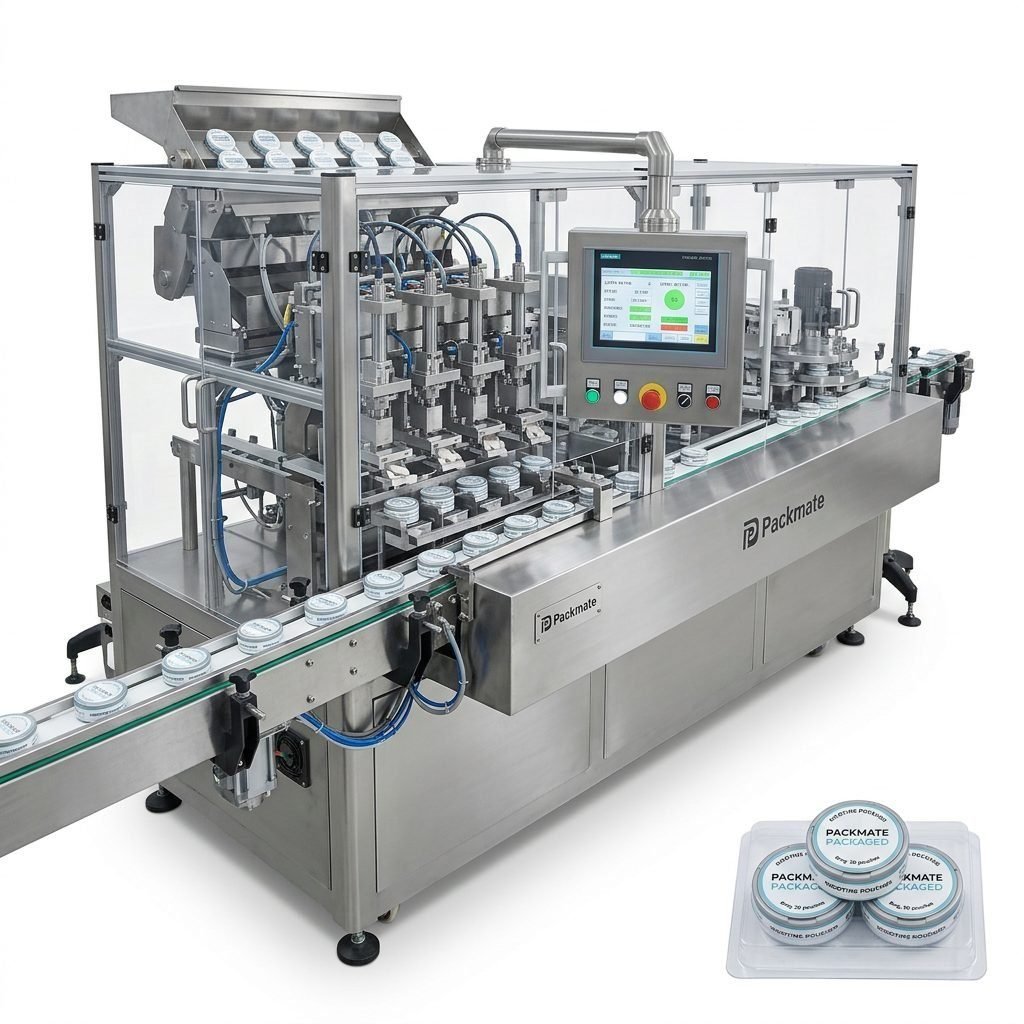
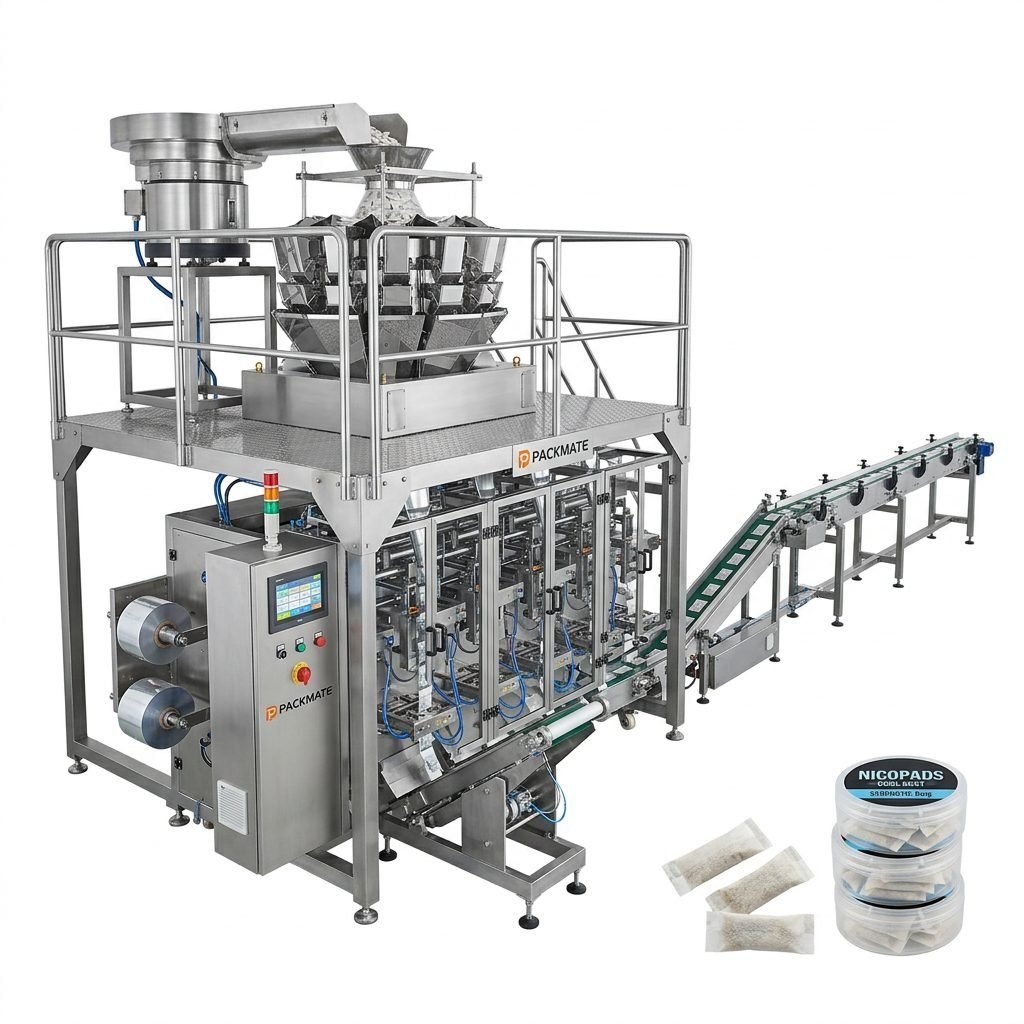
Multi-lane systems significantly increase throughput by running several pouch streams in parallel. These are ideal for high-volume plants and small-dose pouches. Consider machines with robust lane synchronization and independent lane control to reduce product loss and enable flexible lane usage. Explore Snus & Nicotine Packaging Machines for multi-lane solutions.
Integrated Filling & Packaging Lines
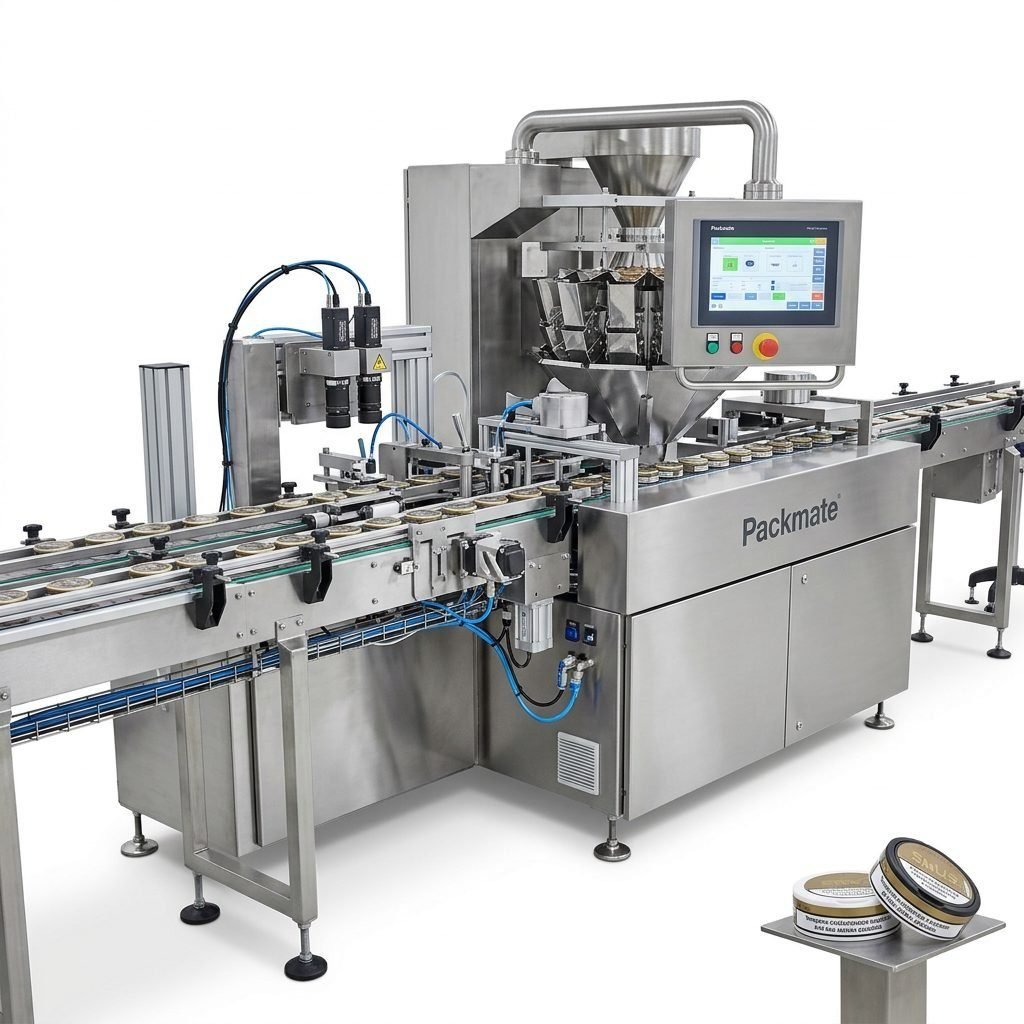
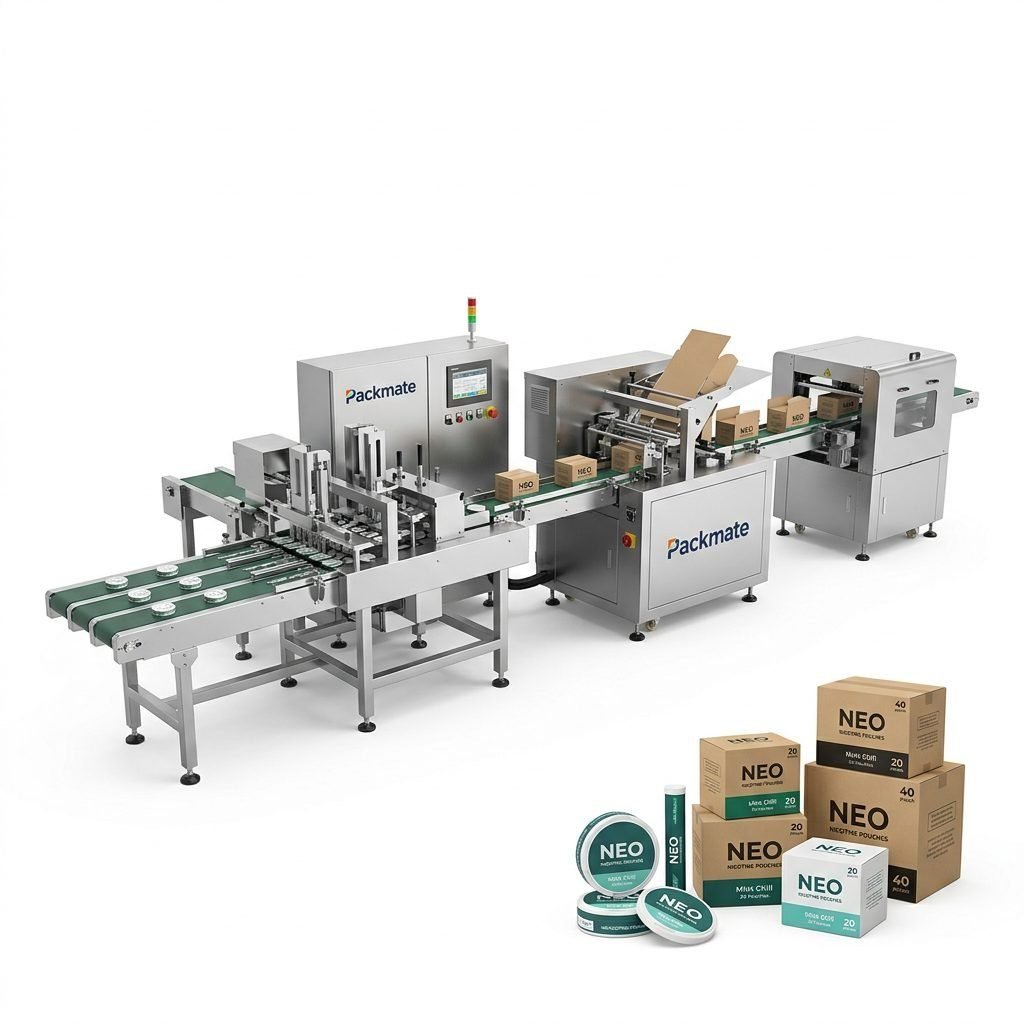
If your process includes pre-weighing, dosing, or liquid additives, consider integrated filling and packaging lines that combine upstream dosing with pouch forming and sealing. These turnkey lines reduce handoffs and ensure traceability. See examples at Filling & Packaging Lines.
🔍 Tip: Prioritize machines with servo-driven systems and modern PLC controls for precise dosing, repeatable motion control, and easier diagnostics.
Critical Technical Specifications to Evaluate
When evaluating proposals, focus on specs that influence product quality, uptime, and operating cost.
⚙️ Electrical & Control Systems: Look for industrial PLCs, touchscreen HMI, recipe storage, remote diagnostics, and CE/ISO compliant electrical assemblies.
🎯 Accuracy & Repeatability: Check dosing tolerances and weight control — crucial for nicotine content consistency and regulatory limits.
🛠️ Material Contact Parts: Stainless steel 316/304 and FDA-grade materials reduce contamination risks and ensure easy cleaning.
🔄 Changeover Time: Fast tool-change designs improve line availability when switching SKUs.
Regulatory Compliance & Certifications
In Switzerland and EU markets, equipment must meet safety and hygiene standards. Purchase from manufacturers who provide CE documentation and ISO quality management certification. Confirm the supplier’s testing records, material certificates, and electrical safety reports. Packmate highlights its compliance with international standards; you can review certifications when evaluating suppliers, for example via their Certificate page.
Factory Capability and Manufacturer Track Record
A manufacturer’s factory resources, machining capabilities, and assembly processes determine the final machine quality and delivery time. Important indicators include:
- Factory size and production capacity (e.g., 20,000㎡ and advanced CNC centers).
- Years of experience in snus or nicotine pouch machinery (look for companies with decades of R&D history).
- Availability of custom engineering and turnkey line design.
For more background on a supplier, review their company profile and case studies. Packmate’s history and global projects can be seen through their About Packmate and Case pages.
After-Sales Support, Spare Parts & Training
Never undervalue service. Local support in Switzerland or a reliable international service network cuts downtime. Ask the manufacturer about:
✅ Spare parts lead time and local stocking options.
✅ Training programs for operators and maintenance teams.
✅ Remote diagnostics and on-site commissioning support.
Established suppliers typically offer service contracts, commissioning support, and operator training; check vendor references and ask for a service-level agreement (SLA). For information on service offerings, visit the manufacturer’s Service page or contact their sales team via Contact Us.
Budget Planning and ROI Considerations
Total cost of ownership includes purchase price, installation, validation, spare parts, consumables, and energy usage. Higher upfront investment in advanced multi-lane systems can pay off in lower unit costs and higher flexibility. Perform an ROI analysis comparing:
- Capital cost vs. expected throughput.
- Labor savings from automation.
- Waste reduction through precise dosing.
- Projected scale-up needs over 2–5 years.
Practical Selection Checklist
Use this quick checklist during supplier evaluation:
📌 Production capacity matched to your daily needs.
📌 Proven dosing accuracy for nicotine pouch weights.
📌 Easy maintenance and local spare parts availability.
📌 Compliance documentation (CE/ISO) and material certificates.
📌 Clear warranty terms, training, and remote support options.
Final Steps Before Purchase
Before finalizing, schedule a factory visit or request a video demonstration showing the exact machine running your product or a nearest equivalent. Obtain a FAT (Factory Acceptance Test) with your recipe and ask for performance guarantees. Clarify lead times, installation timelines, and validation documentation required for Swiss regulatory authorities.
Negotiation & Contracting
Negotiate payment milestones tied to delivery and FAT results. Ensure spare parts lists and training commitments are included in the contract. Confirm warranty coverage terms and the scope of free vs. billable support.
Why Choose an Experienced Manufacturer
Experienced manufacturers combine advanced machining capabilities, proven multi-lane engineering, and turnkey line experience — all of which reduce risk and speed time-to-market. A supplier with decades of industry focus on snus packing machines is positioned to provide optimized solutions, validated components, and reliable field support.
💡 Action Point: Request case studies and references from similar projects to verify real-world performance and supplier responsiveness.
If you are ready to explore concrete machine options, review product categories that match your needs: Snus & Nicotine Packaging Machines, Sachet & Stick Pack Machines, and integrated Filling & Packaging Lines. For supplier background and factory details, consult the manufacturer’s About and Case pages.
Conclusion
Selecting the best snus packaging machinery in Switzerland requires a careful balance of throughput, format flexibility, technical robustness, regulatory compliance, and reliable after-sales support. Prioritise suppliers with proven multi-lane experience, advanced CNC and assembly capabilities, and transparent service commitments. By following a structured evaluation — documenting your needs, verifying technical specs, reviewing factory capabilities, and testing machines before purchase — you will minimize risk and secure a production line that supports consistent quality and scalable growth.
Frequently Asked Questions
Q1: What production speed should I target for a small-to-medium snus operation?
A1: For small-to-medium operations, machines that deliver tens of thousands of pouches per day with 4–8 lanes are common. Choose based on your SKU mix; multi-lane machines scale better as demand grows.
Q2: How important is machine material certification for nicotine pouch production?
A2: Very important. Stainless steel contact parts and material certificates help ensure hygiene and regulatory compliance. Always request material certificates and surface finish details.
Q3: Can I upgrade a single-lane machine to multi-lane later?
A3: Some manufacturers provide modular designs that allow lane expansion. Confirm upgrade pathways and required downtime with the supplier before purchase.
Q4: What warranty and service terms should I insist on?
A4: Insist on a clear warranty period covering major components, defined response times for support, and availability of spare parts. Include training and commissioning in the purchase contract.
Q5: Where can I view real-world examples and certifications?
A5: Ask the supplier for case studies, FAT reports, and their certification documents (CE/ISO). Many manufacturers publish these on their website; check their certificate and case pages for validation.