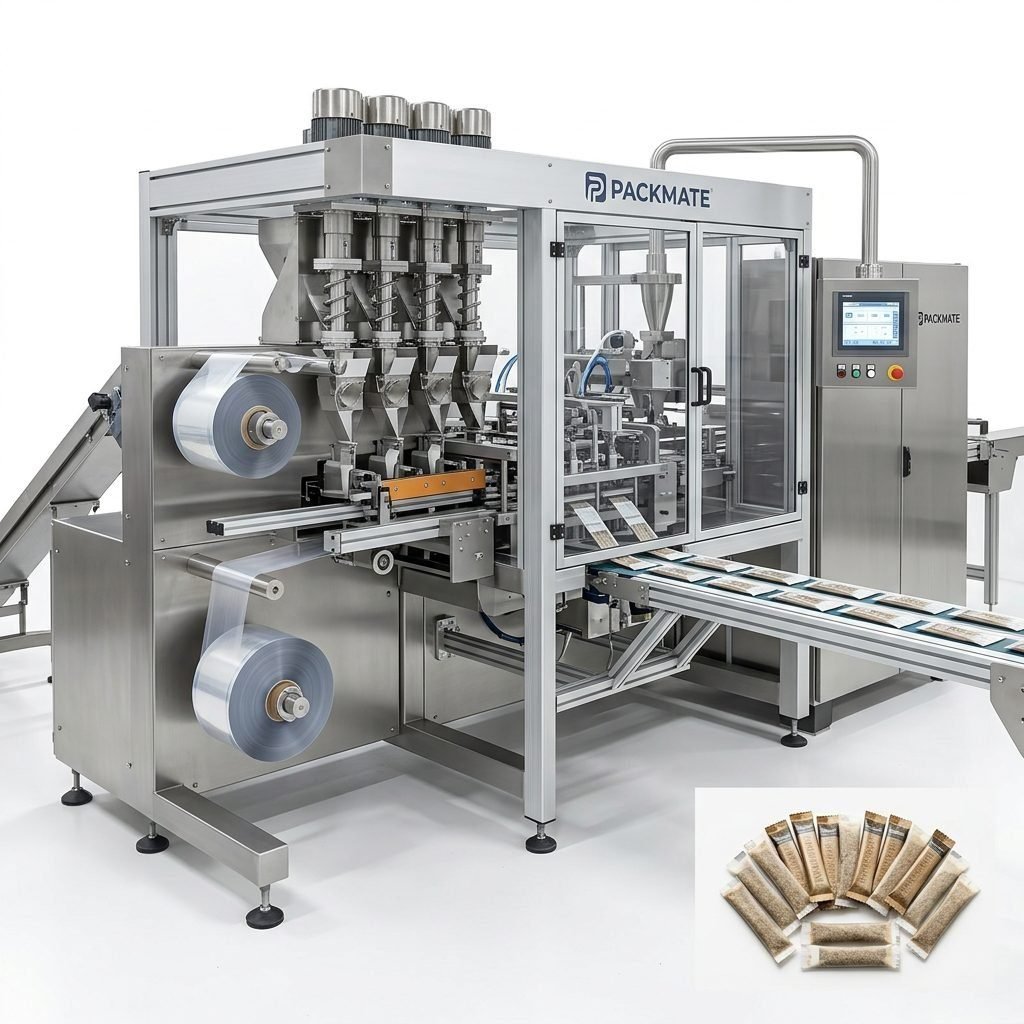
Choosing the right snus packaging machine manufacturer for your business in Brazil requires balancing regulatory awareness, production goals, cultural preferences, and long-term support. This guide walks you through practical criteria, technical considerations, and local nuances so you can select a reliable supplier and scale your snus or nicotine pouch production efficiently.
Understand Brazil’s market, culture and regulatory environment
Brazil has specific rules and strong public health sentiment regarding tobacco products. While oral nicotine products — including snus and nicotine pouches — attract growing interest from some consumer segments, you must account for local legislation, labeling requirements in Portuguese, and restrictions on marketing and distribution. Work with legal advisors familiar with ANVISA (the Brazilian Health Regulatory Agency) and municipal regulations to ensure full compliance before importing machines or starting production.
From a cultural standpoint, Brazilian consumers value approachable packaging and clear dosage information. In many regions, single-portion convenience, discreet design, and moisture management are highly appreciated. Manufacturers who understand these nuances can help tailor machines and packaging lines to local consumer habits.
Key machine types: match equipment to your product format
Selecting the right machine starts with the product format you plan to produce:
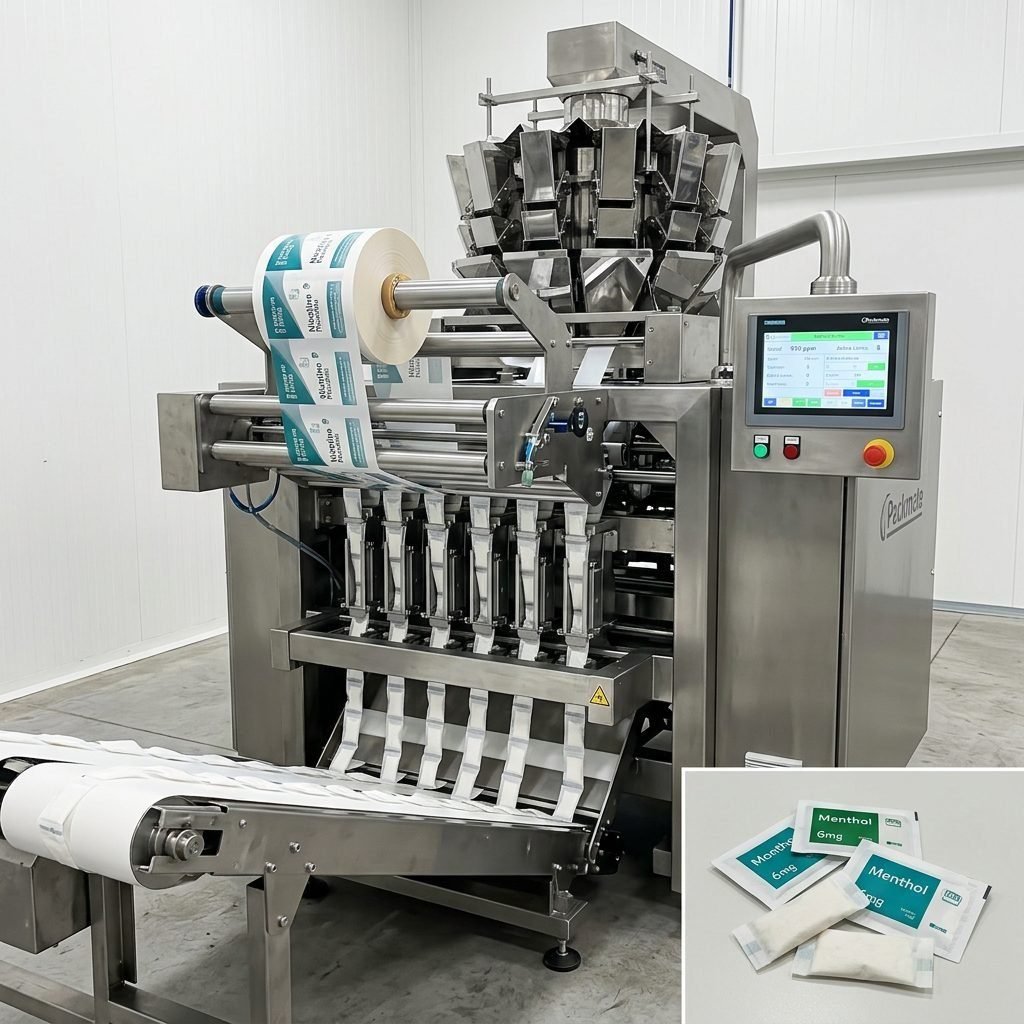
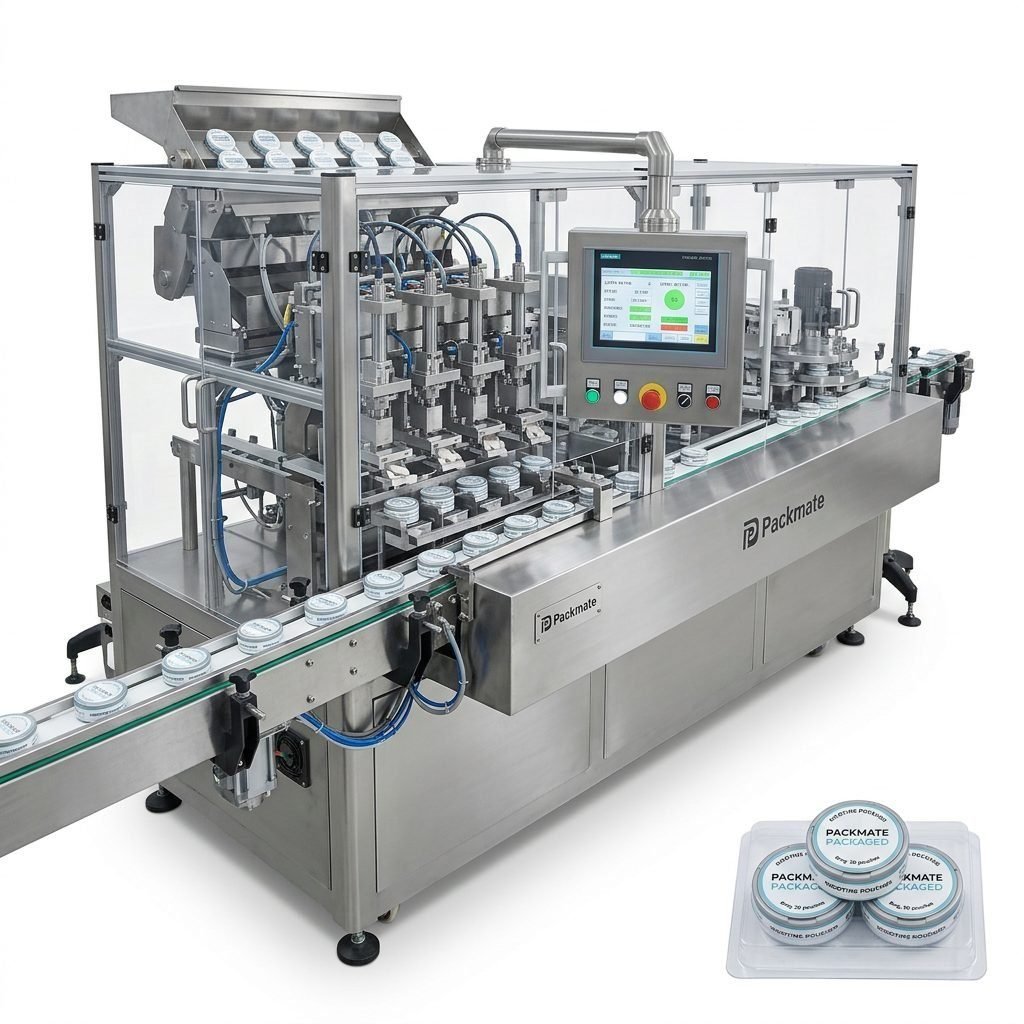
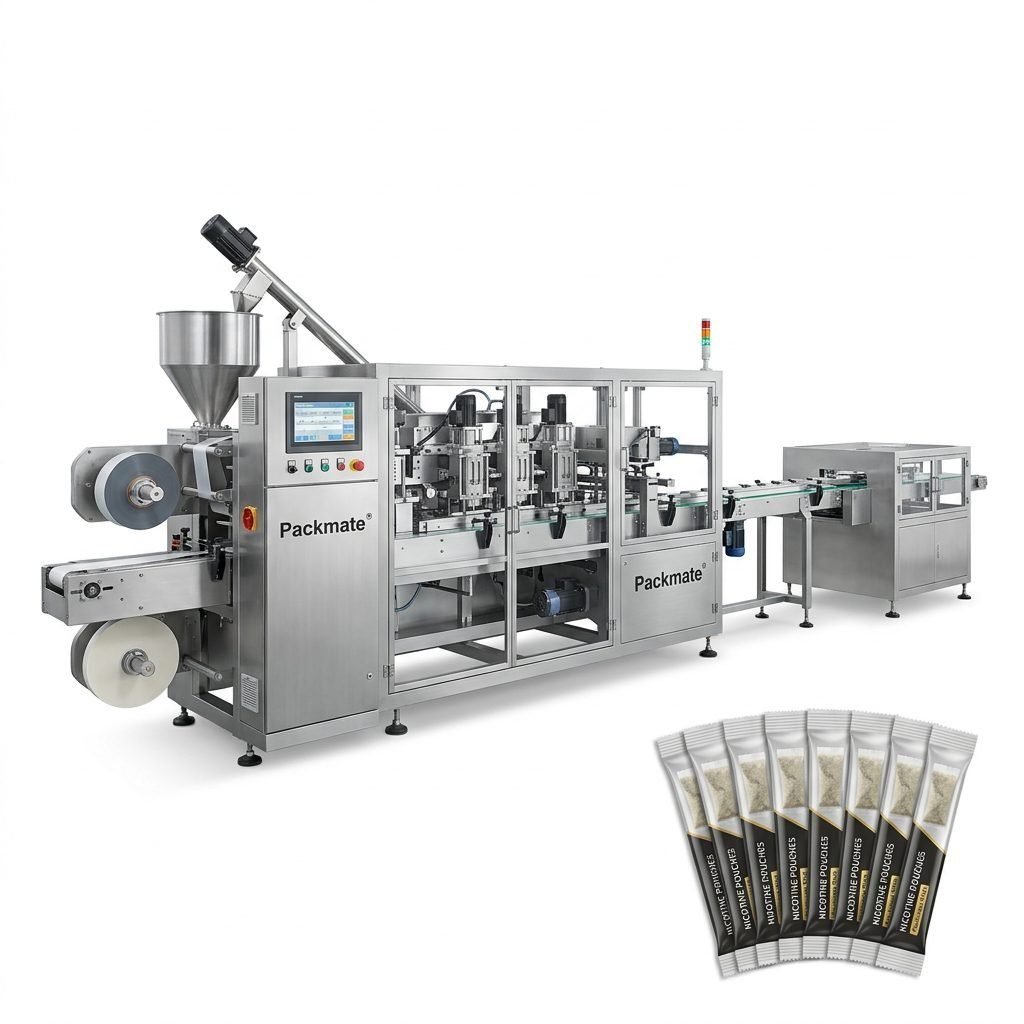
🔹 Snus & Nicotine Pouch Machines — optimized for single-dose pouches with precise fill control and consistent sealing. These machines are ideal for nicotine pouches that require tight moisture control and high accuracy. See product options: Snus & Nicotine Packaging Machines.
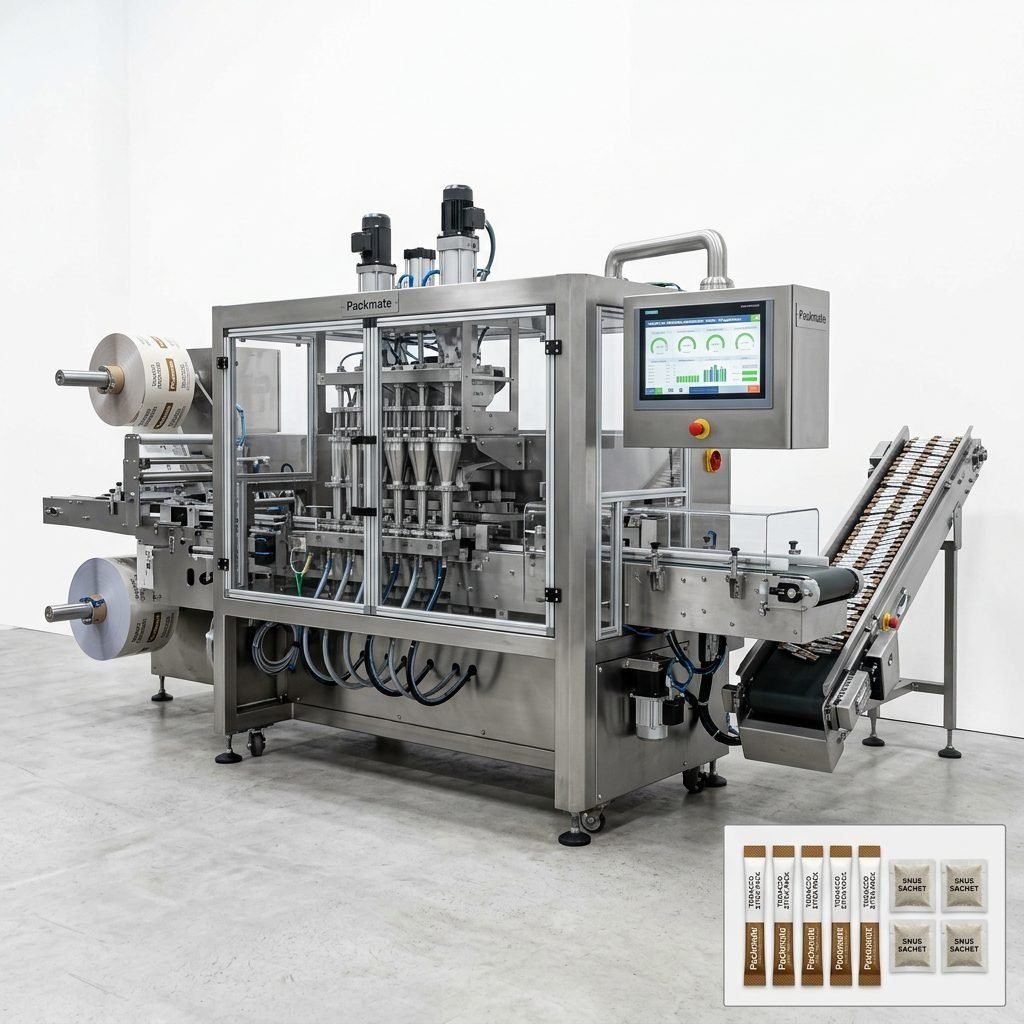
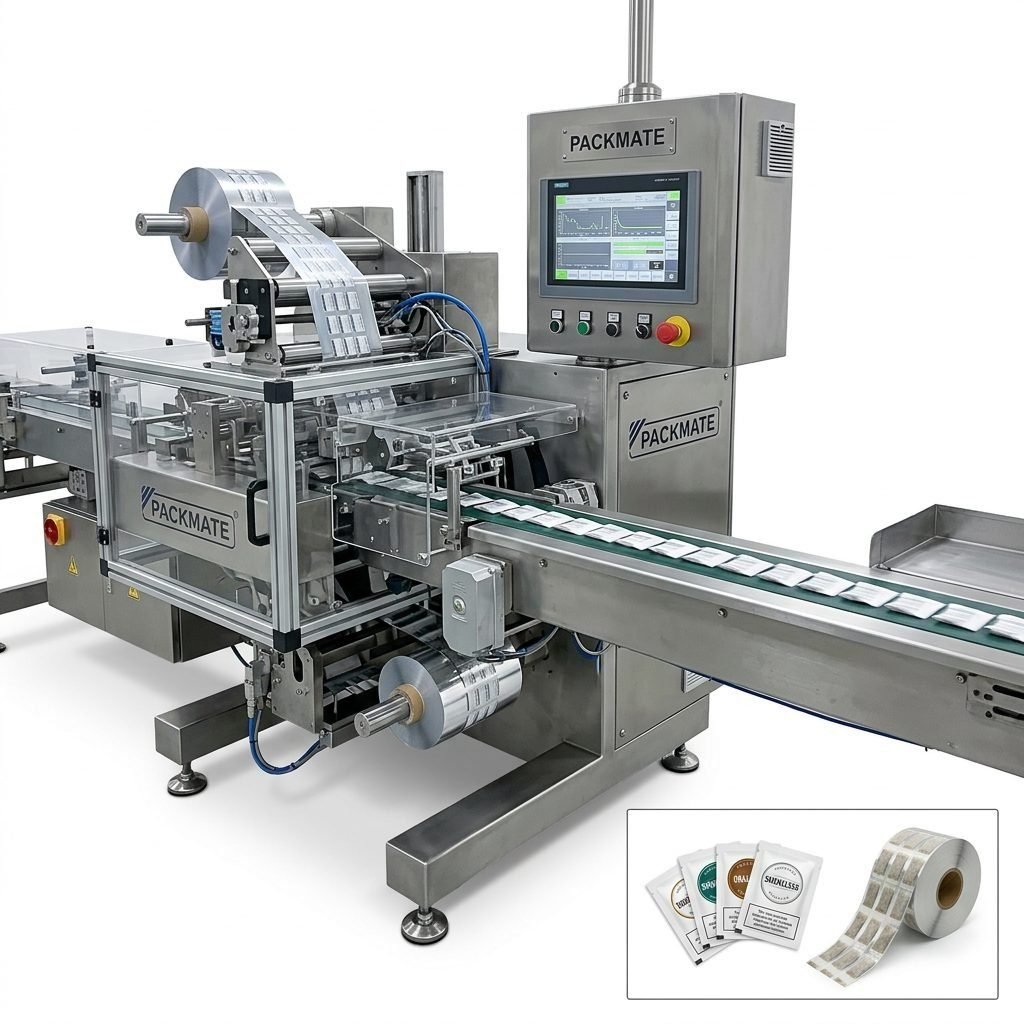
🔹 Sachet & Stick Pack Machines — versatile for single pouches, sticks, or tear-open sachets. Good for flavored or portioned formats. Explore: Sachet & Stick Pack Machines.
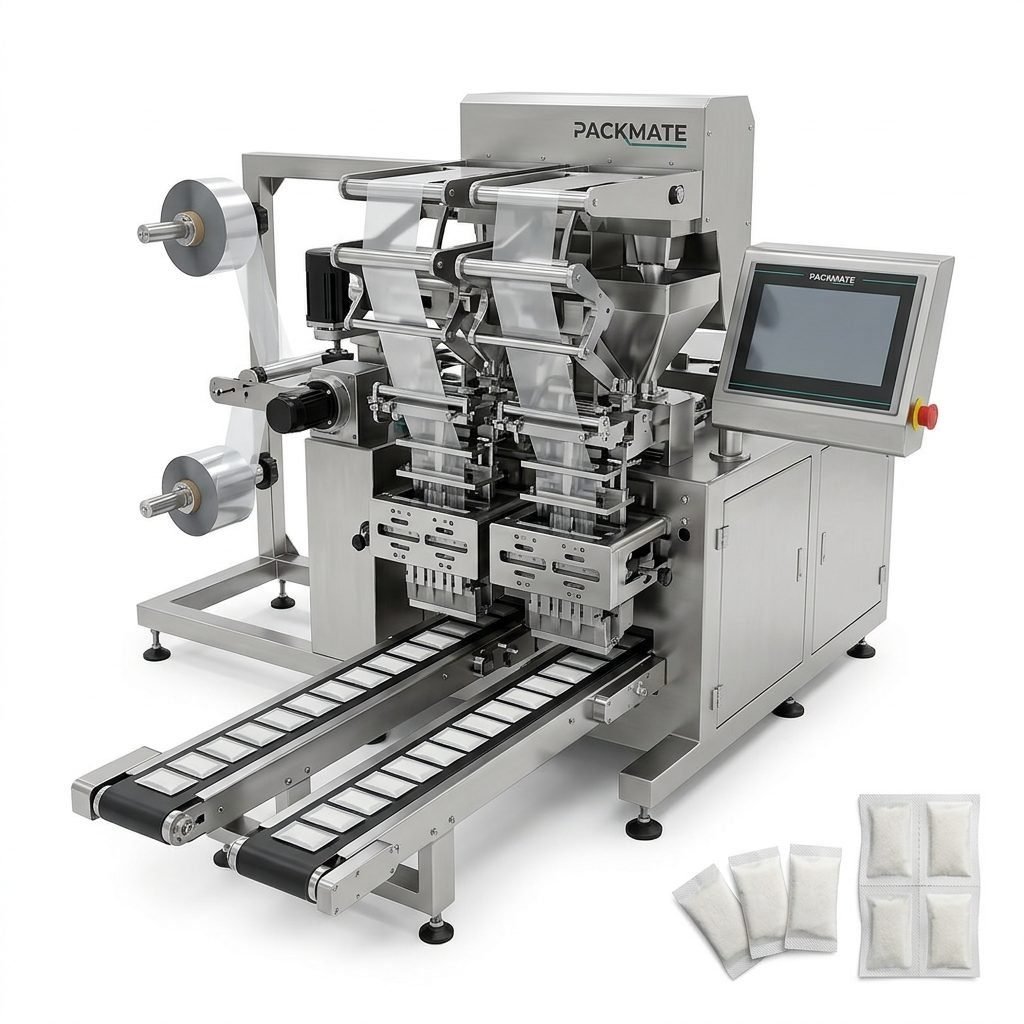
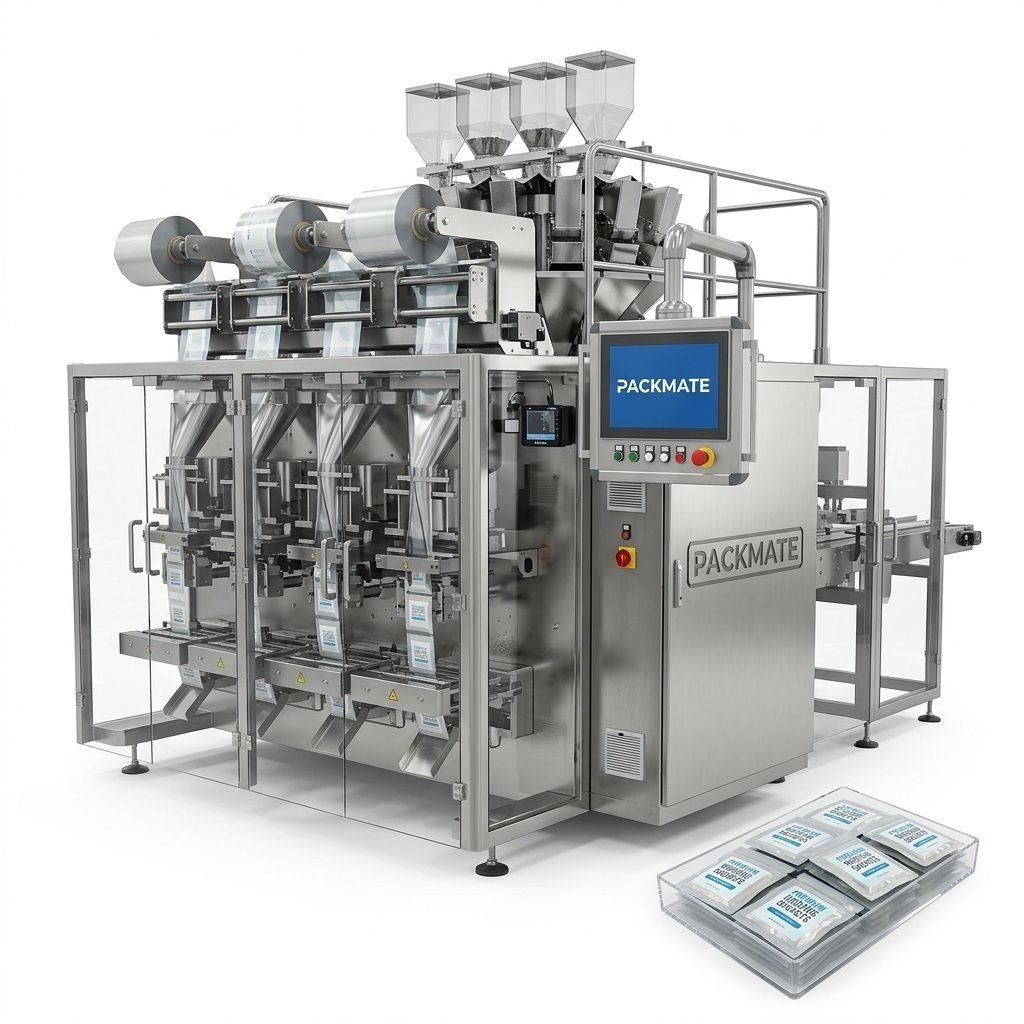
🔹 Multi-lane systems — essential if you plan high-volume production of small-dose pouches (multi-lane lines multiply throughput without increasing footprint). Multi-lane designs reduce per-unit cost and are common for expanding brands targeting broad distribution across Brazil.
Factory strength and certifications: what to verify
A manufacturer’s production capability and quality control processes directly affect machine reliability. Look for:
✅ Industry experience — decades of engineering experience indicate maturity in design and problem-solving.
✅ Manufacturing area & advanced equipment — large facilities with CNC centers and precision assembly lines reduce variability in machine builds.
✅ Certifications (CE, ISO) — these demonstrate compliance with international quality, safety, and management standards. Vendors often list credentials and case studies; review them and request copies. Learn more about the manufacturer: About Packmate.
Why on-site inspection matters
Visiting the factory or conducting a third-party audit helps you verify build quality, assembly practices, and testing procedures. Check machining tolerances, assembly jigs, wiring harness quality, and the final test reports for machines similar to the ones you intend to buy.
Customization, materials and packaging formats for Brazil
Brazilian customers often prefer localized labeling and tamper-evident features. When comparing manufacturers, evaluate their ability to:
– Integrate printing systems that support Portuguese text and ANVISA-required warnings.
– Offer flexible dosing modules for different nicotine strengths and portion sizes.
– Support different barrier films, desiccants, and vacuum/modified-atmosphere options to preserve freshness in Brazil’s diverse climates.
Quick technical checklist:
⚠️ Servo-driven dosing and pouch formation for consistent weights
⚠️ Accurate multi-lane synchronization for higher throughput
⚠️ In-line quality inspection (weighing, visual, seal integrity) to reduce waste
⚠️ Easy-to-replace wear parts and standardized motors/drives for fast service
After-sales support, spare parts & training
For Brazilian operations, reliable post-sale support is a deciding factor. Confirm:
🔧 Spare parts availability — ask about local inventory or rapid international shipping options.
🔧 Technical training — ensure vendor provides on-site commissioning, operator and maintenance training in Portuguese (or with translation).
🔧 Remote support & diagnostics — modern machines offer remote connectivity for diagnostics and firmware updates; this reduces downtime and service visits.
Service agreements & warranties
Negotiate a clear service-level agreement: response times, spare part pricing, warranty coverage, and options for preventive maintenance contracts. A robust service plan often saves more money over the machine lifecycle than the initial price difference between vendors.
Cost factors and ROI: what really matters
Initial purchase price is only one component of cost. Include these in your ROI calculation:
• Throughput & yield — higher output and lower scrap improve unit economics.
• Energy consumption — energy-efficient servo systems reduce operating costs.
• Changeover time — quick format changes save production hours if you run multiple SKUs.
• Maintenance frequency — robust components and easy access lower downtime.
Estimate payback by modeling daily production target, expected yield, and cost of lost production hours. Machines with slightly higher capital cost but superior uptime often deliver faster ROI.
How to evaluate suppliers: a practical roadmap
Follow these steps to narrow vendors and make a confident decision:
1. 🔍 Define product specs — pouch size, nicotine dose range, film types, and required capacity.
2. 📄 Request technical dossiers — machine layout, electrical diagrams, spare parts list, and test reports.
3. 🏭 Factory visit or virtual audit — inspect assembly, QA processes and witness a machine running product samples.
4. 🧪 Production trial — request a trial run with your materials and a recorded test for yield and seal quality.
5. ✍️ Negotiate contract terms — include acceptance criteria, training, warranty, and penalties for missed delivery dates.
Supplier red flags:
❌ Vague uptime or acceptance tests
❌ No references or case studies for similar lines
❌ Lack of spare parts visibility or long lead times
Real-world reference: check cases & exhibitions
Ask for relevant case studies demonstrating installations in climates similar to Brazil’s and with similar product formats. Vendors that participate in international exhibitions and share machine demonstrations typically have stronger R&D and user feedback loops. See examples and case references: Case and recent events: Our Exhibition.
Why Packmate-style manufacturers are often chosen
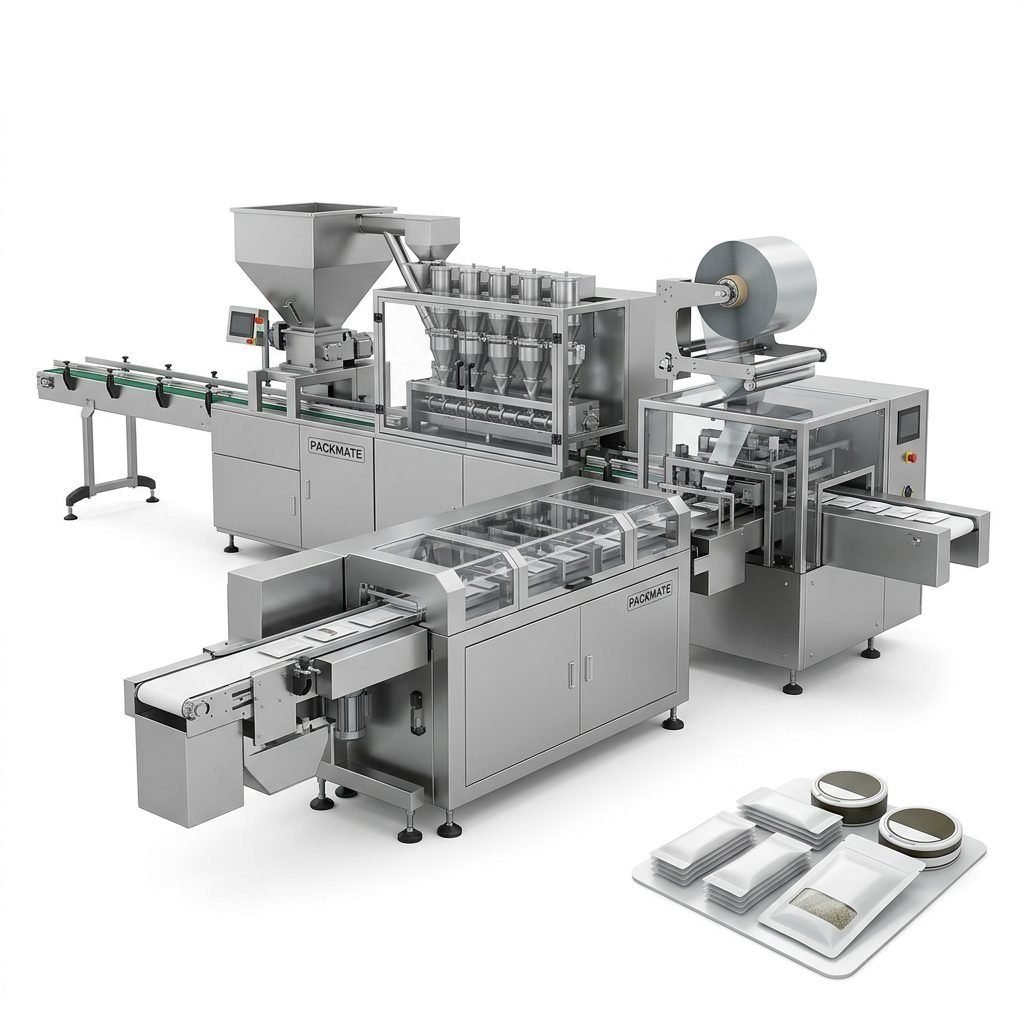
Manufacturers with decades of experience, large manufacturing facilities, advanced CNC capabilities, and a wide portfolio of snus and pouch packaging equipment can offer turnkey solutions that shorten development time. They typically provide multiple machine models, multi-lane options, and tailored automation lines for growing brands. Explore a full suite of product lines if you need integrated weighing and filling systems: Weighing & Packaging Systems.
Logistics & import considerations for Brazil
Consider import duties, local taxes, shipping times, and customs clearance process. Machines often require special crating and documentation (packing lists, certificates of origin). Plan installation windows and spare parts kits to avoid extended downtime during the commissioning phase.
Final decision checklist
– Compliance: local regulatory support and labeling capability
– Performance: demonstrated throughput and yield figures
– Quality: factory audit, certifications, and material traceability
– Support: training, spare parts, and remote diagnostics
– Commercial: warranty terms, service SLA and total cost of ownership
If you want a supplier who offers integrated solutions and global support networks, review manufacturer details and reach out for tailored quotations and trials. For product line options and auxiliary equipment, check packaging lines and auxiliary equipment pages: Filling & Packaging Lines and Auxiliary Packaging Equipment.
Conclusion — practical next steps
Start by documenting your product specs and regulatory requirements for Brazil, shortlist manufacturers with proven snus/nicotine expertise, request machine trials with your materials, and verify after-sales support including training in Portuguese. Prioritize uptime, serviceability, and compliance over the lowest purchase price to build a resilient and scalable production line.
Common Questions
Q1: Are snus and nicotine pouch machines legal to import and operate in Brazil?
A1: Legal status depends on local regulations and product classification. Consult ANVISA and legal counsel to ensure compliance with import and product regulations before purchase.
Q2: What production capacity should I choose for a startup brand in Brazil?
A2: Begin with a flexible single- or dual-lane line that supports SKUs you plan to launch. If demand grows quickly, choose modular systems or multi-lane upgrades to scale without replacing core equipment.
Q3: How important are local spare parts and service for Brazilian operations?
A3: Extremely important. Local or fast-shipped spare parts and reliable remote support minimize downtime and are key to sustained operations.
Q4: Should I require machine trials with my packaging film and formulation?
A4: Yes — require vendor trials using your exact film, pouch material, and nicotine formulation to confirm seal integrity, dosing accuracy, and shelf life.
Q5: Where can I find more technical catalogs and contact information for suppliers?
A5: Request vendor catalogs and service details directly from the manufacturer’s website or contact pages; for example, check company brochures and contact details here: Catalog and Contact Us.