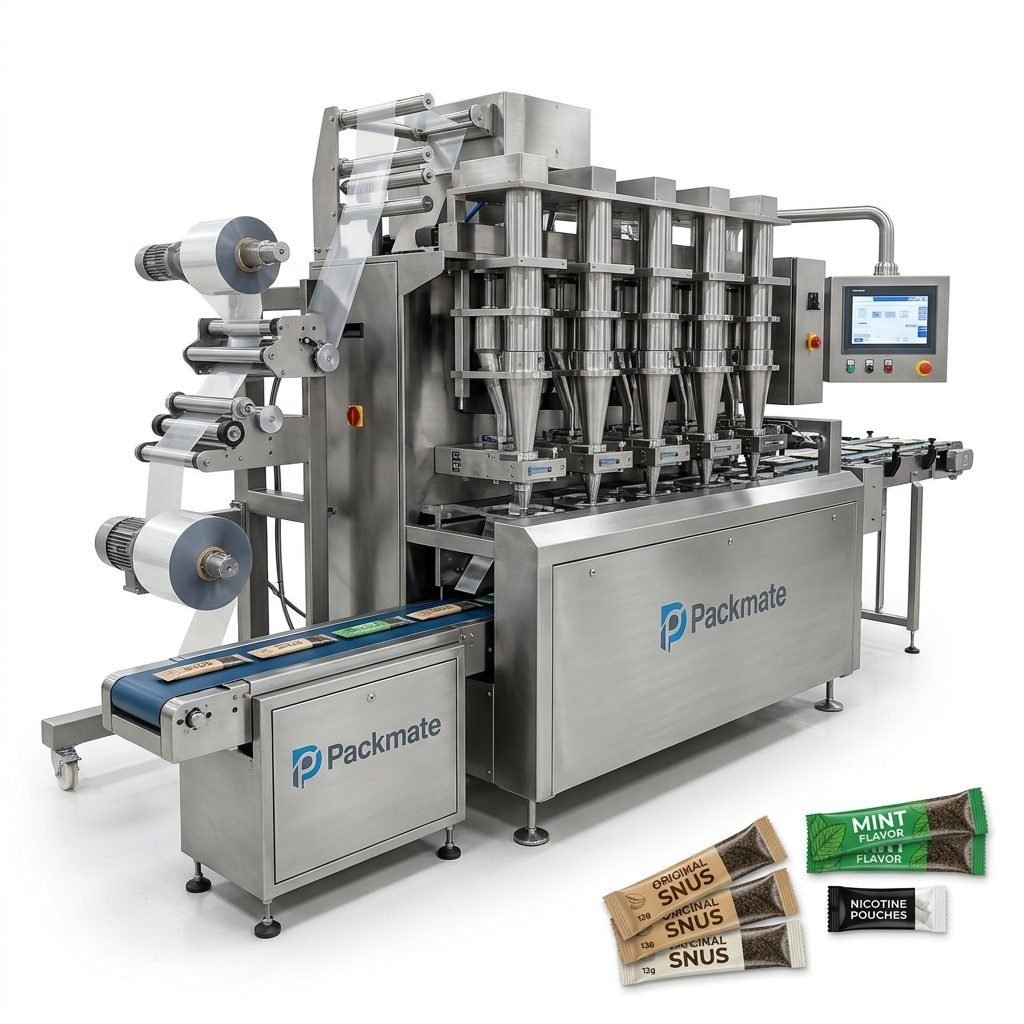
The nicotine pouch market is growing rapidly and so are the demands on packaging efficiency, regulatory compliance, and production flexibility. This guide explains how automated packaging solutions for nicotine pouches and snus can deliver high-speed, compliant and cost-effective production. It covers machine types, line design, quality assurance, customization, and practical purchasing considerations — all focused on helping manufacturers scale reliably.
Why Automation Matters for Nicotine Pouch Packaging
Automation is not just about speed. For nicotine pouches, product integrity, dose consistency, hygiene, and traceability are equally critical. Manual handling increases risk of contamination and variability; automated systems reduce labor costs while improving repeatability. Modern packaging lines combine precision filling, multi-lane forming, heat-sealing, and vision inspection to deliver consistent pouches that meet regulatory requirements.
Key benefits at a glance
✓ Higher throughput per operator • ✓ Consistent pouch weights and seals • ✓ Full traceability and labeling • ✓ Reduced waste and rework • ✓ Easier compliance auditing.
Common Nicotine Pouch Formats and Machine Types
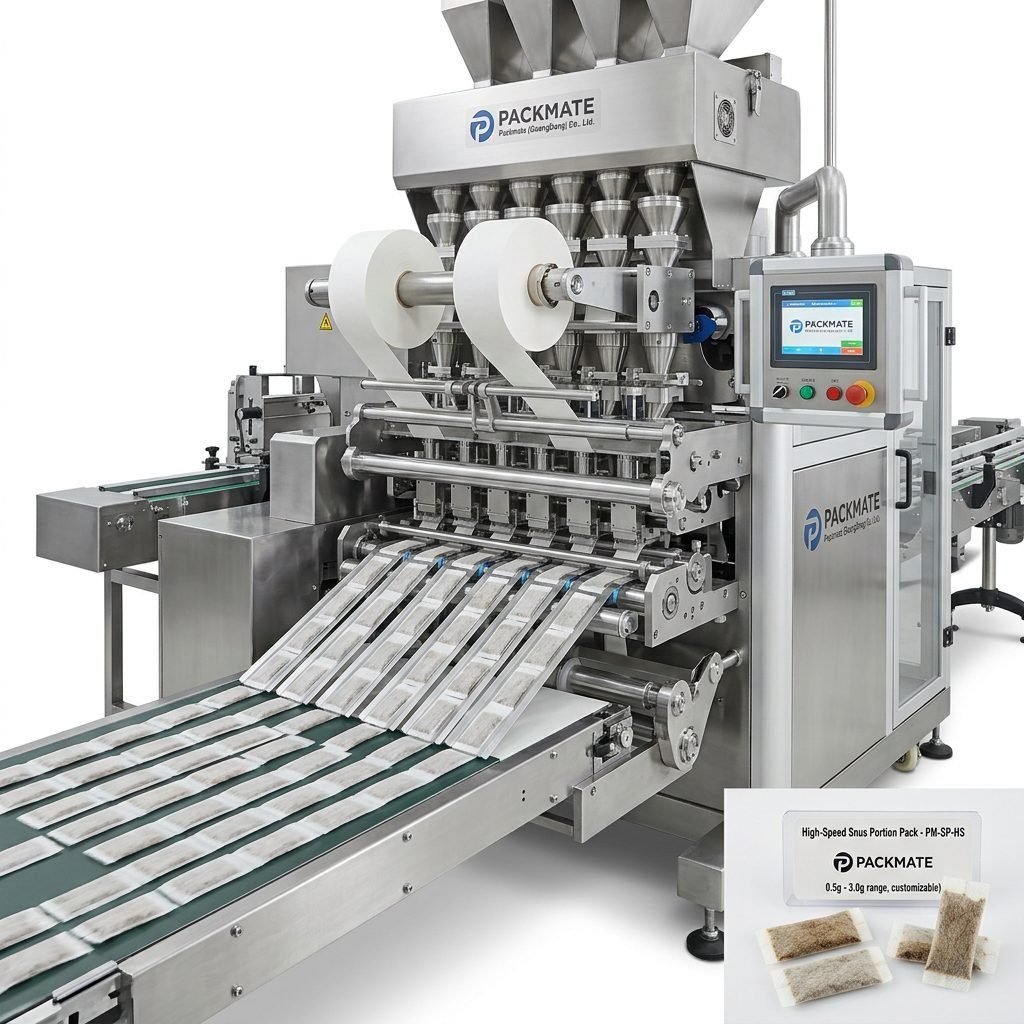
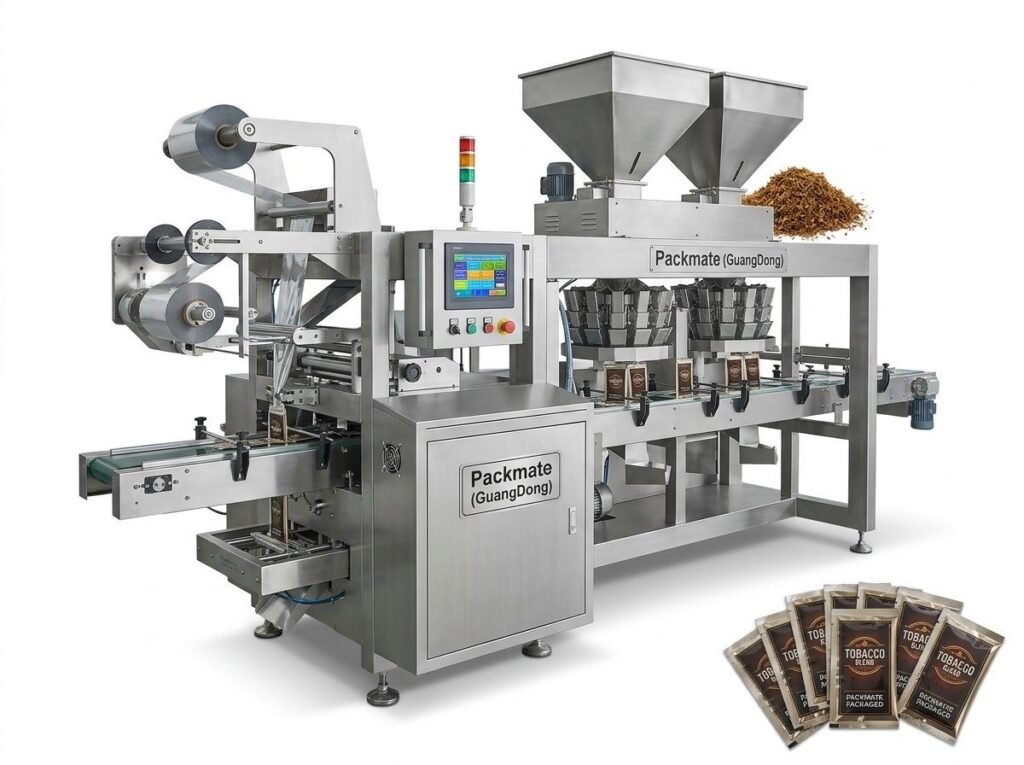
Nicotine pouch packaging comes in several formats: single-dose sachets, multi-dose can inserts, stick packs, and multi-pocket pouches. Equipment choice depends on dose size, product texture (powder, granule, or moist blend), desired output speed, and final pack format. The main machine categories include:
Form-fill-seal (FFS) Multi-lane Pouch Machines
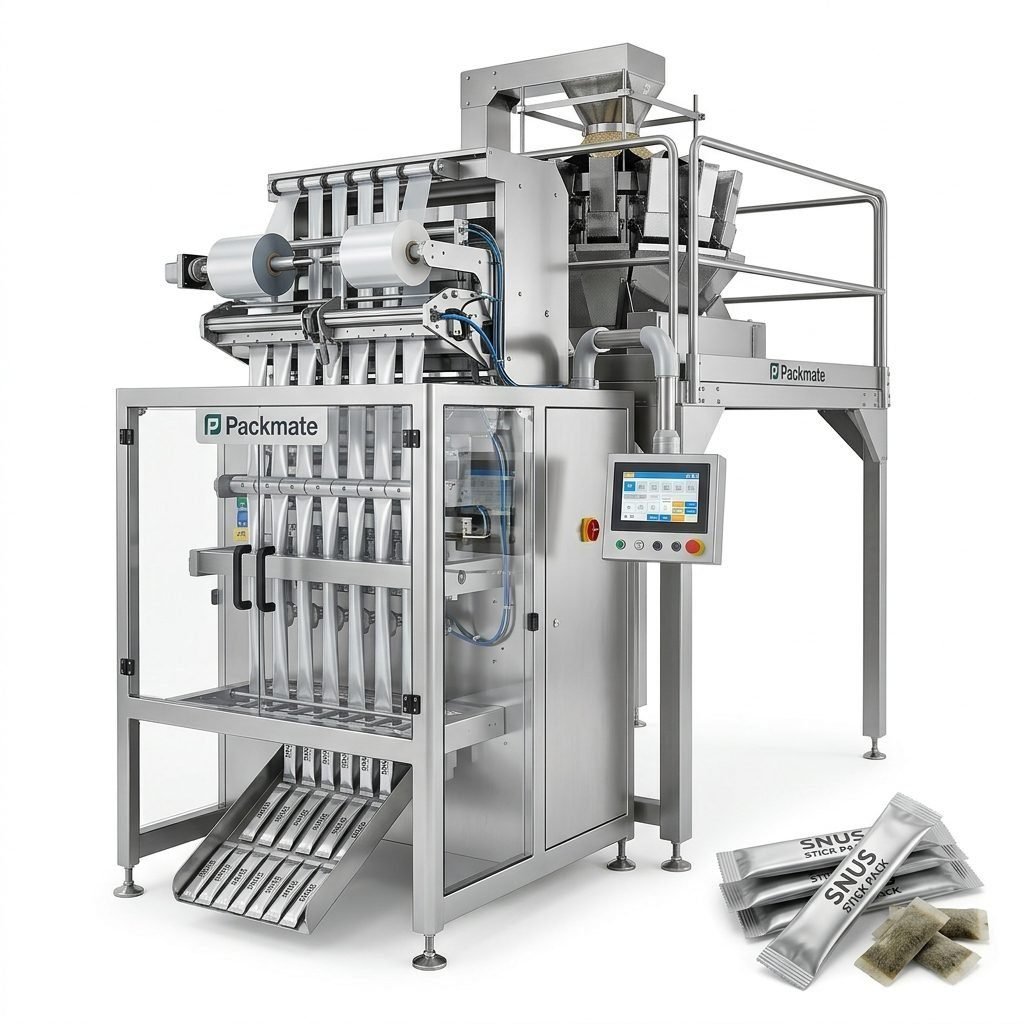
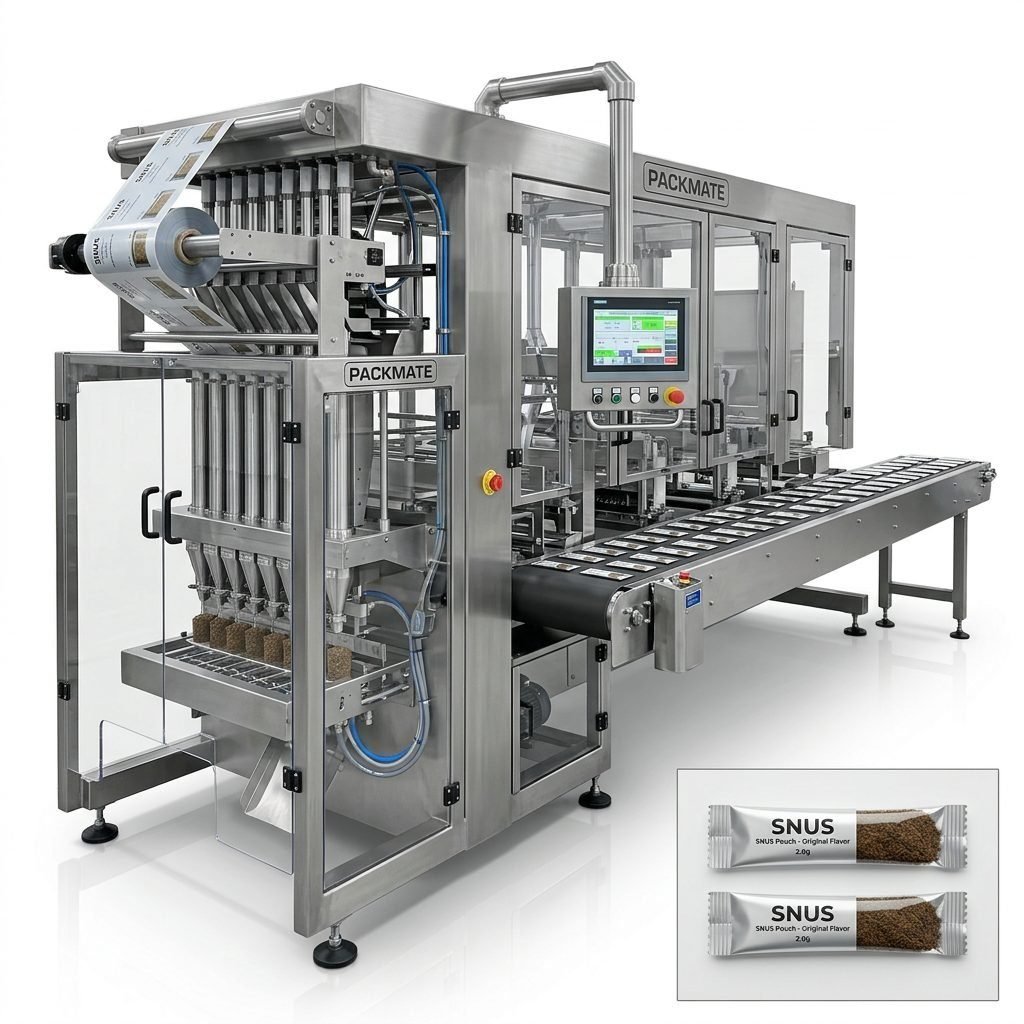
These systems form pouches from roll stock and fill them at high speeds across multiple lanes. Multi-lane technology is essential for small-dose pouches where individual lane speeds sum to high total output. Multi-lane FFS systems are ideal for maximizing throughput while maintaining compact floor space.
Sachet & Stick Pack Machines
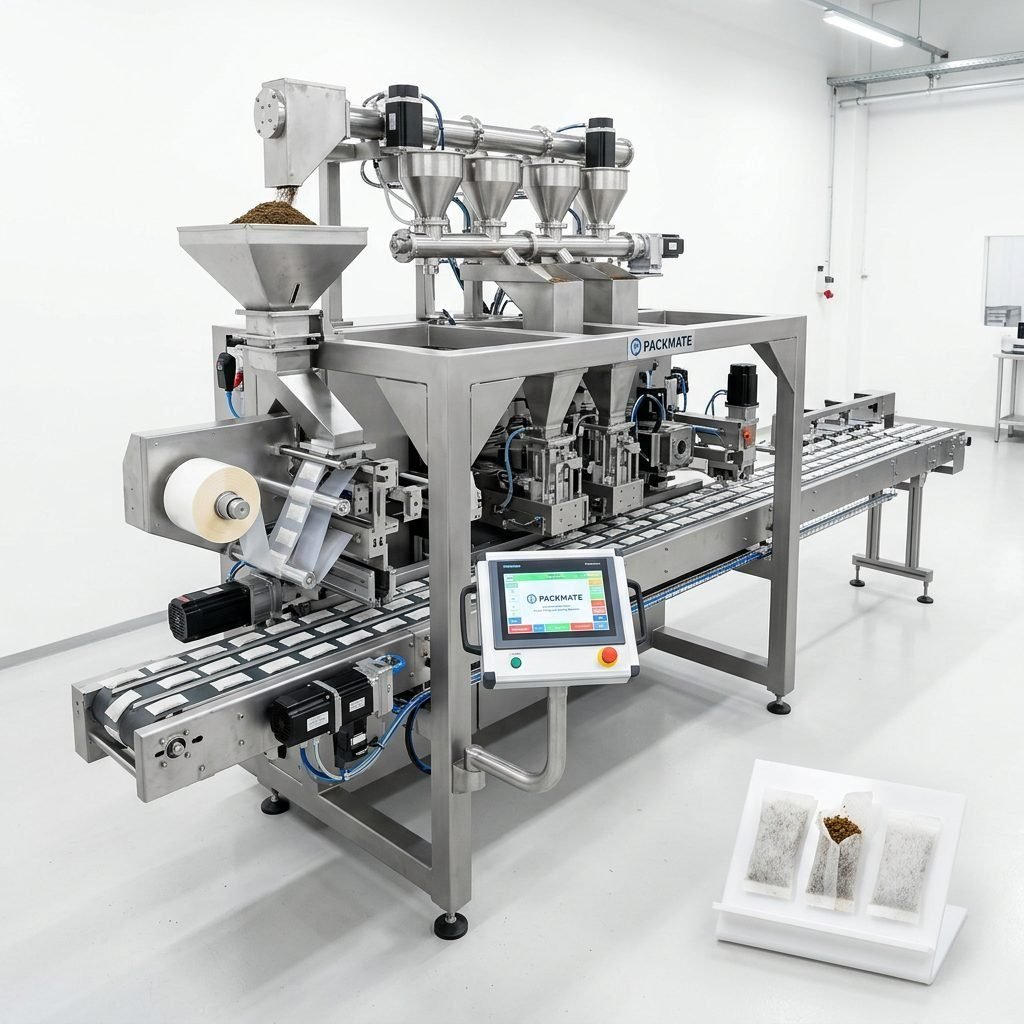
Stick and sachet machines are perfect for single-portion products. They offer precise dosing and are commonly used when single-serve convenience or sampling is required. For product lines targeting retail consumption or sampling, stick pack lines can be the most economical choice.
Auxiliary and Upstream Equipment
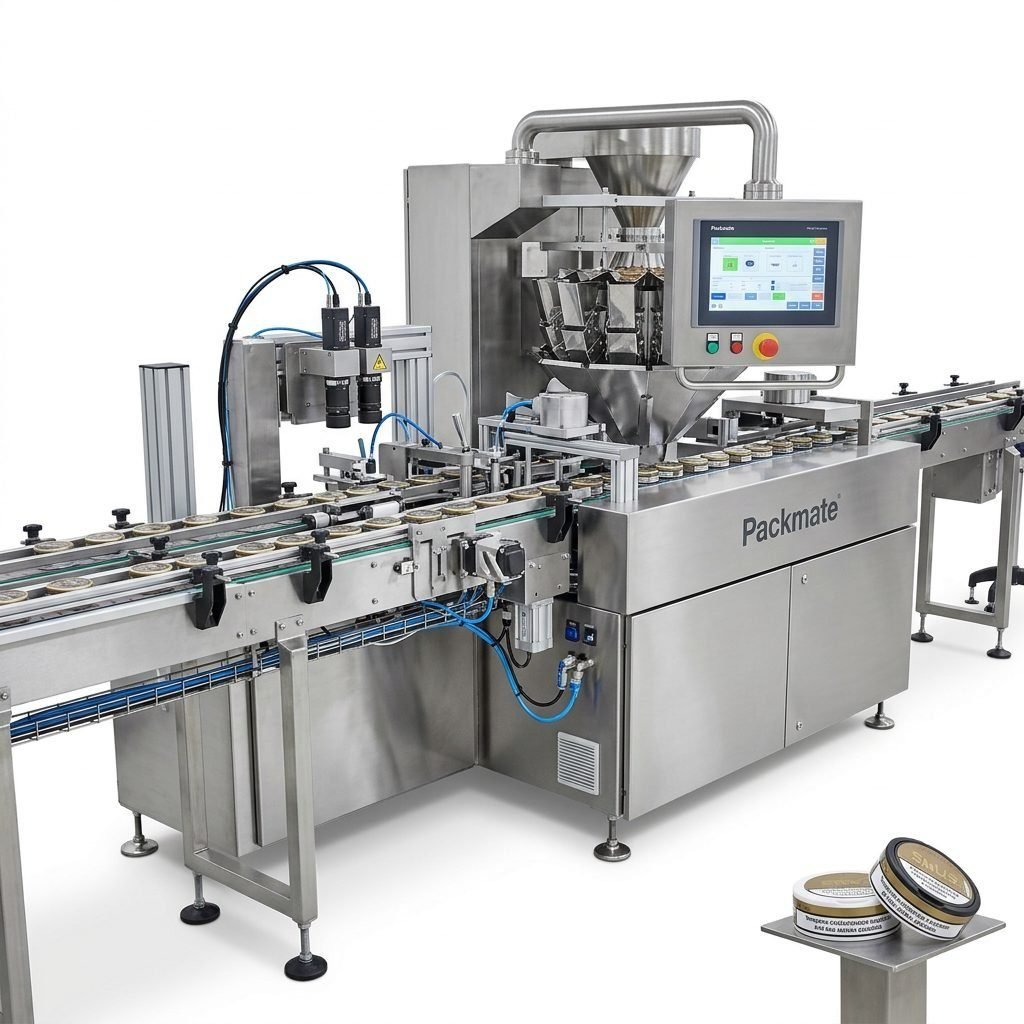
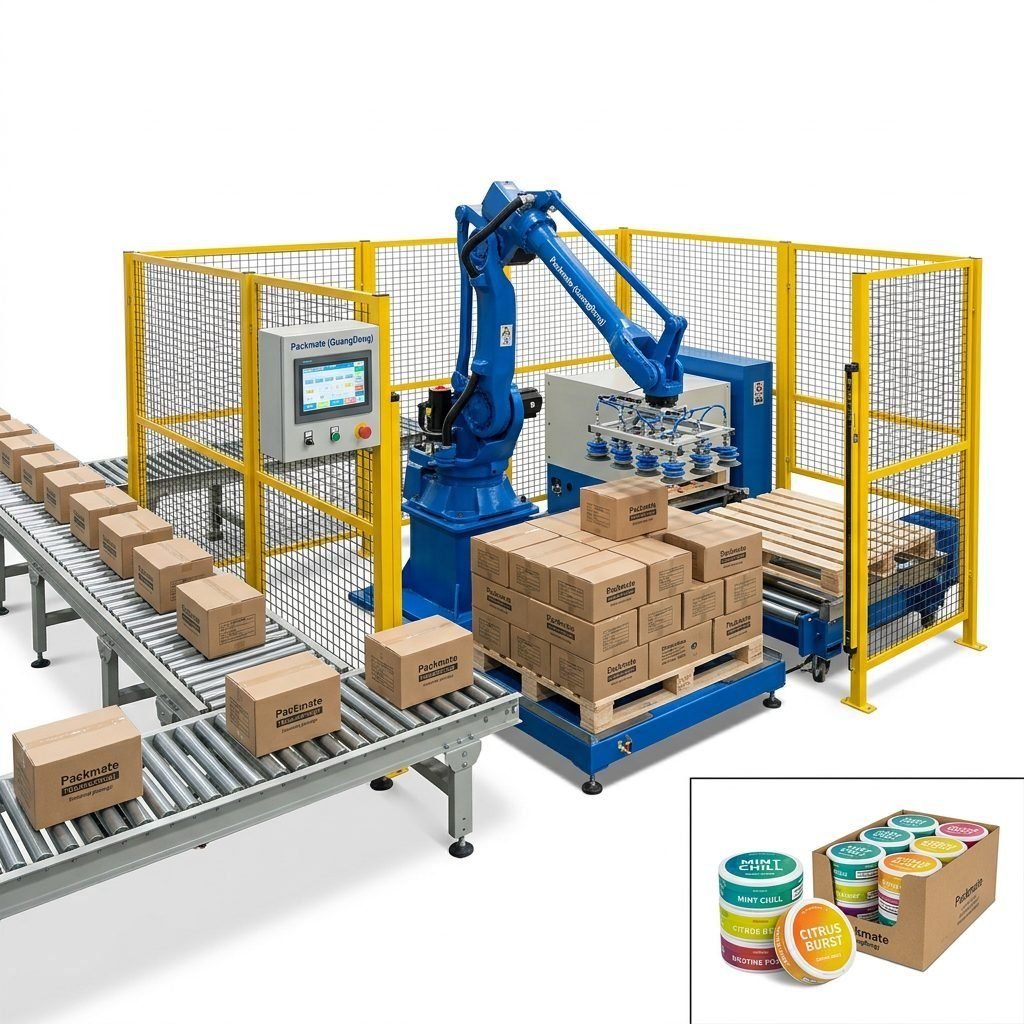
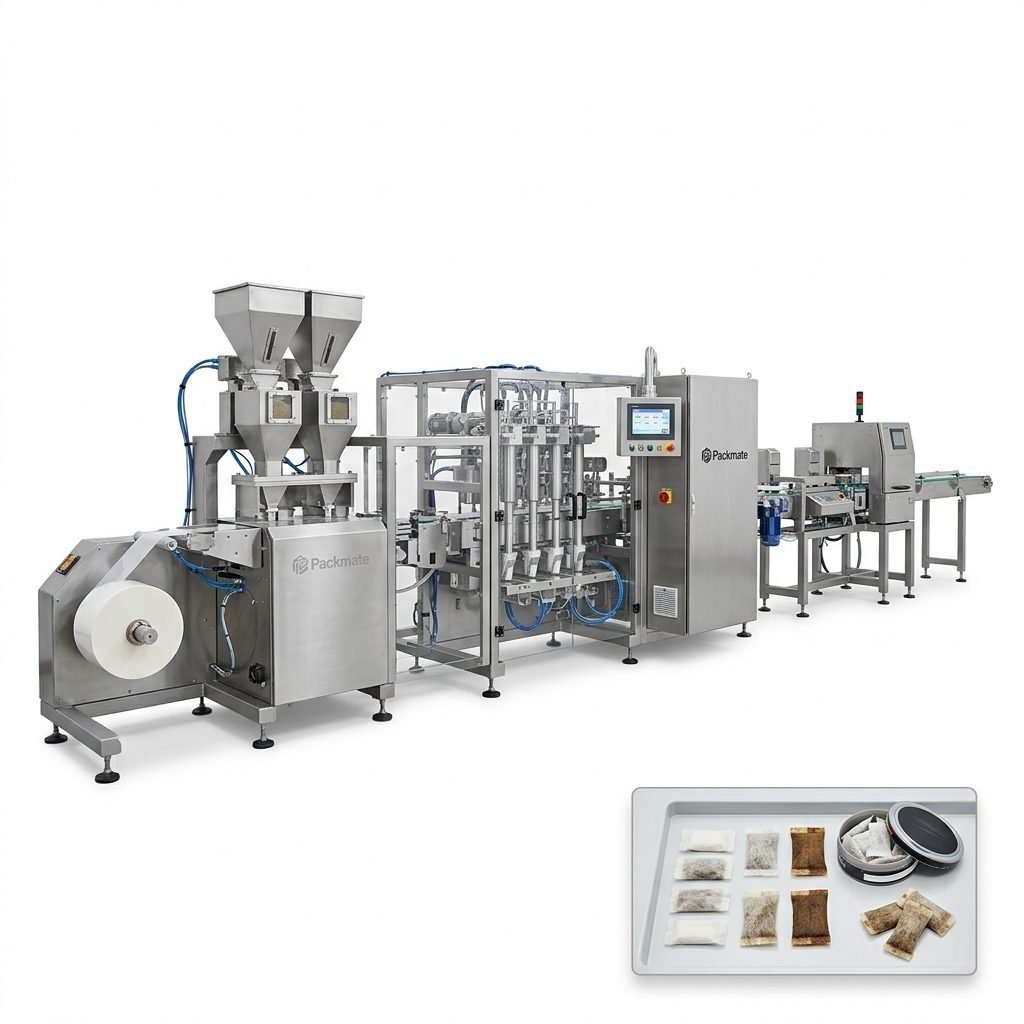
Weighing systems, vibratory feeders, dosing hoppers, and canning lines integrate upstream to ensure each pouch receives the correct fill. Supporting equipment also includes nitrogen flushing modules, desiccant insertion systems, and automatic case packing machines to complete production lines.
Tip: When selecting machines, look for modular designs that allow adding lanes or integrating weighing modules later. This protects your investment as demand grows.
Regulatory Compliance and Quality Controls
Nicotine products face stringent regulations across jurisdictions. Packaging systems must support tamper-evident seals, child-resistant features where required, and labeling with batch codes and manufacturing dates. Traceability is a must — automated lines should log batch IDs, machine settings, and reject rates for audit trails.
Built-in Quality Assurance Features
Vision inspection cameras, metal detectors, seal integrity testers, and checkweighers should be integrated into the line. Real-time rejection and feedback loops allow the machine to adjust parameters automatically and remove defective pouches without stopping the line. These measures reduce recalls and maintain brand reputation.
Designing a High-Speed, Efficient Packaging Line
A high-performance production line starts with precise planning. Consider product flow, footprint, utilities (compressed air, electricity), and sanitation access. Key design principles include minimizing manual handling, ensuring easy maintenance access, and designing for quick changeovers to support multiple SKUs.
Layout and Workflow
Place fill modules upstream of sealing modules and align infeed conveyors to reduce tangles and downtime. Plan for maintenance aisles and component storage near the line. Many suppliers offer turnkey layout drawings to match available factory space.
Changeover and Flexibility
Quick-change tooling and recipe-based controls shorten downtime between SKUs. For multi-lane machines, the ability to run fewer lanes at lower speeds while maintaining product quality can be invaluable for small runs and product trials.
Production KPI Focus: Track OEE (Overall Equipment Effectiveness), reject rate, and average downtime. Continuous monitoring can yield immediate process improvements.
Integration, Automation Controls and Industry Standards
Control systems should be PLC-based with HMI interfaces for recipe selection and live diagnostics. Modern lines include Ethernet communications for MES (Manufacturing Execution Systems) integration. Ensure machines comply with CE and ISO certifications for international shipping and customer acceptance.
Data and Traceability
Digital traceability — logged automatically by the line — supports batch recall processes and regulatory reporting. Barcode or QR code printing and verification at pack and case levels ensures every unit can be traced back to a production batch.
Maintenance, Support and Spare Parts Strategy
Preventive maintenance schedules, spare parts kits, and remote support capabilities reduce downtime. Choose suppliers who provide clear maintenance documentation, local support options, and fast access to critical spares.
Training and After-Sales Service
Operator and technician training are essential. Many OEMs include onsite commissioning and training; remote video support and parts consignment programs are valuable for global operations. Evaluate service agreements for response times and spare parts availability.
Customization and Turnkey Solutions
Many manufacturers offer turnkey packaging lines tailored to nicotine pouch requirements — from dosing to final case packing. Customization often includes specific material handling, nitrogen flushing, desiccant insertion, and child-resistant primary or secondary packaging modules.
For a comprehensive overview of machine types and turnkey solutions you can view product categories and system options directly: Snus & Nicotine Packaging Machines, Sachet & Stick Pack Machines and Weighing & Packaging Systems.
Selecting the Right Supplier: What to Ask
When evaluating suppliers, ask about field-proven installations, spare parts lead times, certification (CE/ISO), and available customizations. Request references and case studies showing similar product runs and production capacities. Visiting a supplier’s factory and seeing machines running with similar materials is highly recommended.
Checklist for supplier evaluation:
• Demonstrated multi-lane performance • On-site commissioning & training • Spare parts & service network • Compliance documentation and CE/ISO certificates.
Case Study Highlights and Global Presence
Leading machine builders with global reach supply scalable lines to Europe, Asia, and the Americas. Reviewing case studies provides insight into uptime, yield improvements, and total cost of ownership. Explore real-world implementations and exhibition demonstrations to validate supplier claims: Case and Our Exhibition.
Calculating ROI and Total Cost of Ownership
ROI calculation should include machine capital cost, installation, training, spare parts inventory, and expected labor savings. Consider waste reduction and higher yields as part of the value equation. Look at break-even timelines under conservative production growth scenarios.
Hidden value drivers
Less obvious benefits include faster new product introductions, better brand protection through traceability, and reduced regulatory risk. These elements can shift ROI significantly in favor of automation.
How to Start: Practical Next Steps
Start with a site audit and production forecast. Identify target SKUs, desired throughput, and regulatory requirements. Request machine demonstrations with your product, and ask for a turnkey proposal that includes utilities, layout, and training. If you want a detailed vendor profile, visit the manufacturer’s About page for company background and certifications: About Packmate.
Action Plan (30 / 60 / 90 days):
30 days: Product trials and requirements definition.
60 days: Supplier selection and layout finalization.
90 days: Installation scheduling, training and pilot production.
Closing Thoughts
Implementing an automated nicotine pouch packaging line is a strategic investment that enhances quality, compliance, and throughput. Carefully evaluate machine capabilities, service networks, and the supplier’s track record to ensure a successful deployment. Suppliers with deep expertise in snus and small-dose pouch equipment bring invaluable knowledge that shortens ramp-up time and protects product quality.
Helpful resources
To explore machine options and technical catalogs, review product categories for deeper technical details: Bag & Pouch Packaging Machines and Auxiliary Packaging Equipment.
Frequently Asked Questions
Q1: What is the typical throughput of a multi-lane nicotine pouch machine?
A1: Throughput varies based on lane count and pouch size. Multi-lane systems can deliver several hundred thousand pouches per shift when configured for small-dose, high-speed operation. Request machine-specific performance data from suppliers for accurate planning.
Q2: How do I ensure compliance with international regulations?
A2: Choose machines with CE and ISO certifications, implement vision inspection, and integrate batch printing and serialization to meet traceability mandates. Consult regulatory advisors for country-specific packaging and labeling rules.
Q3: What level of customization is possible for niche pouch formats?
A3: Most manufacturers provide custom tooling, multi-lane configurations, and auxiliary modules (nitrogen flushing, desiccant insertion). Early engagement with the OEM ensures your requirements are feasible and costed correctly.
Q4: How should I plan spare parts and service support for global operations?
A4: Establish a critical spare parts kit based on components with the highest risk of wear. Negotiate service-level agreements for response times and consider local partners for faster support if the OEM does not have a nearby service center.
Q5: Can I see examples of installed lines before purchase?
A5: Yes. Request case studies and site visits. Many suppliers provide video demos, on-site trials, and exhibition showings where running machines and production samples can be reviewed.