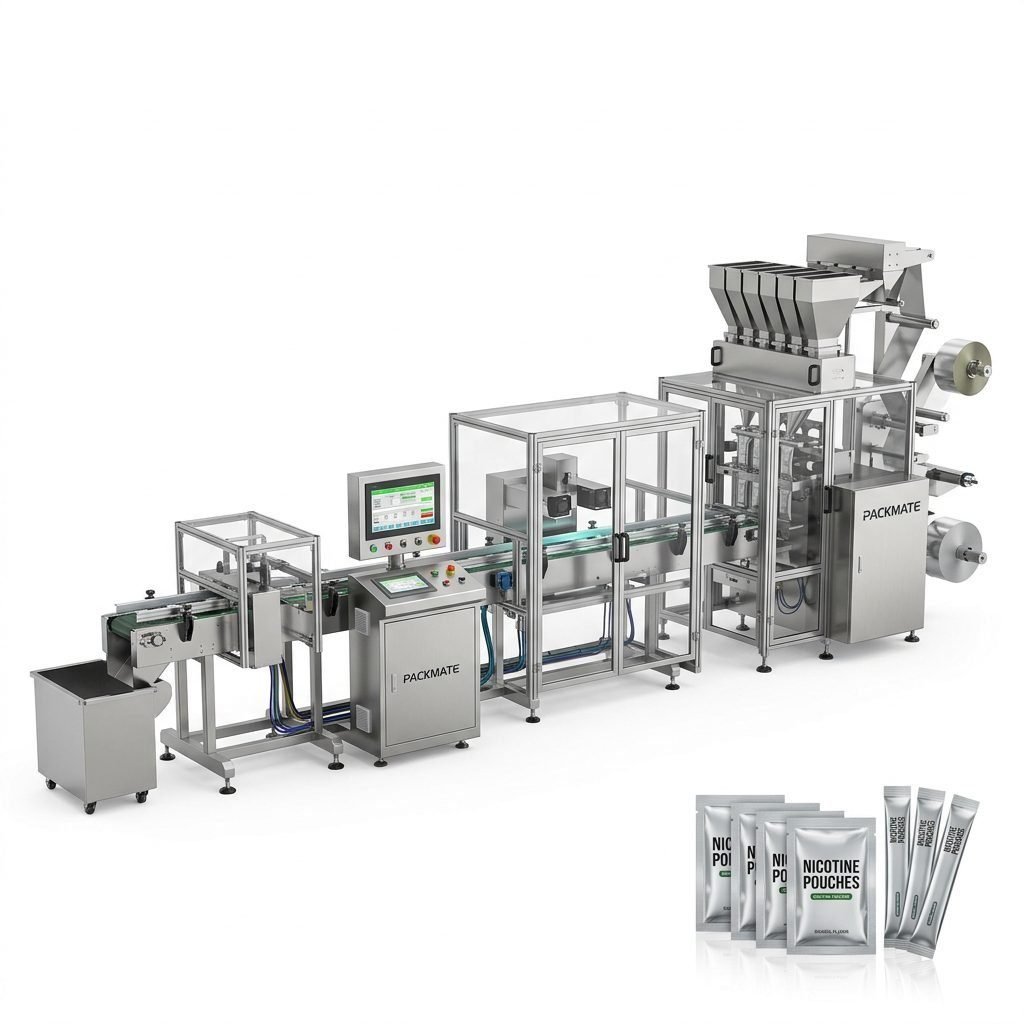
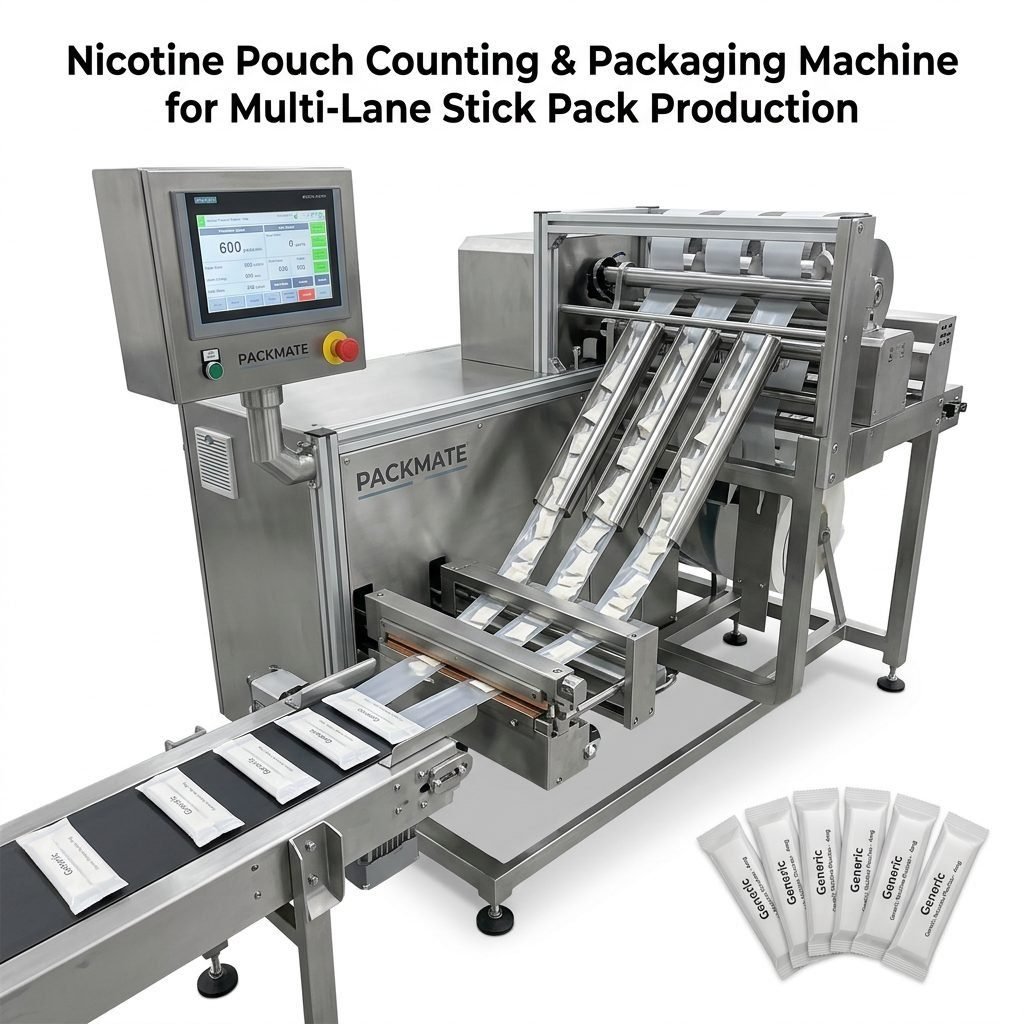
Choosing the right snus packaging machine for your production needs in the Republic of Congo means balancing local market dynamics, regulatory requirements, and long-term operational stability. This guide walks you through practical decision points—from machine types and production capacity to automation, maintenance, and supplier selection—so you can select a solution that fits your product format, budget, and growth plan.
Understand the Local Market & Regulatory Context
Before selecting equipment, assess the Congo market for snus and nicotine pouch demand, import rules, labeling requirements, and taxes. Local regulations can affect packaging formats, materials allowed, and required labeling languages. Factoring these into your machine selection will avoid costly rework later.
📌 Key tip: If exports are part of your plan, prioritize machines with international certification (CE/ISO) and adjustable labeling modules to meet destination country requirements.
Select the Right Machine Type for Your Product
Snus and nicotine pouches can be packed using different machine families. Your choice depends on pouch style (stick pack, sachet, multi-lane small-dose pouches), filling material (powder, granule, paste), and desired output speed.
Common machine types
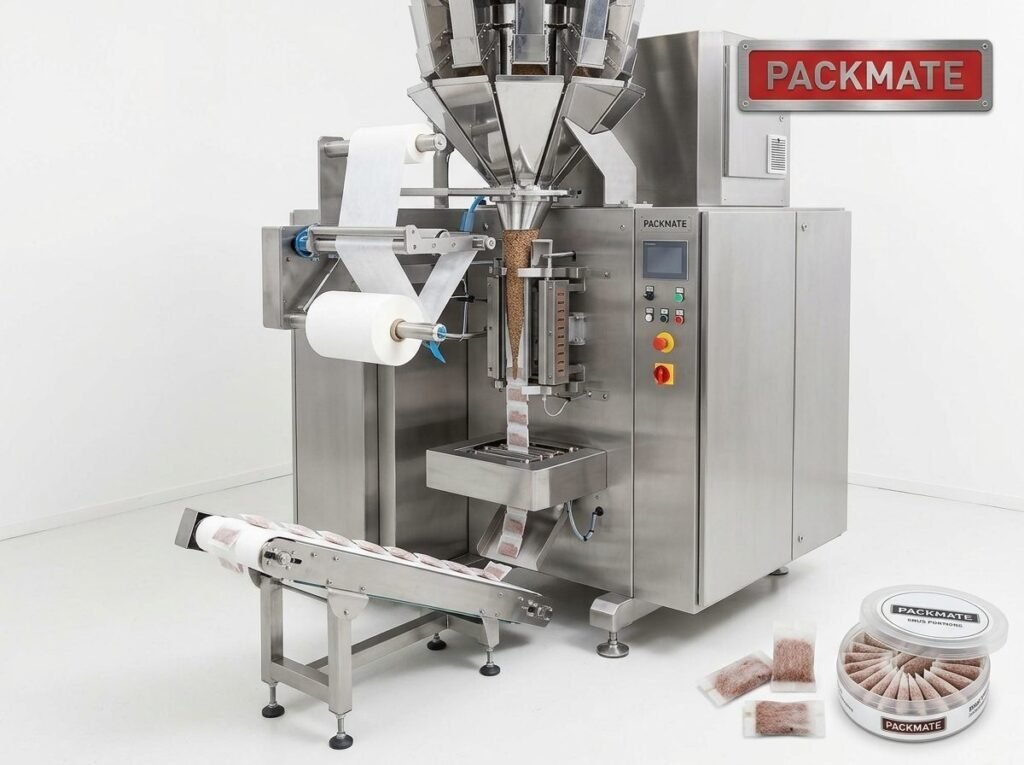
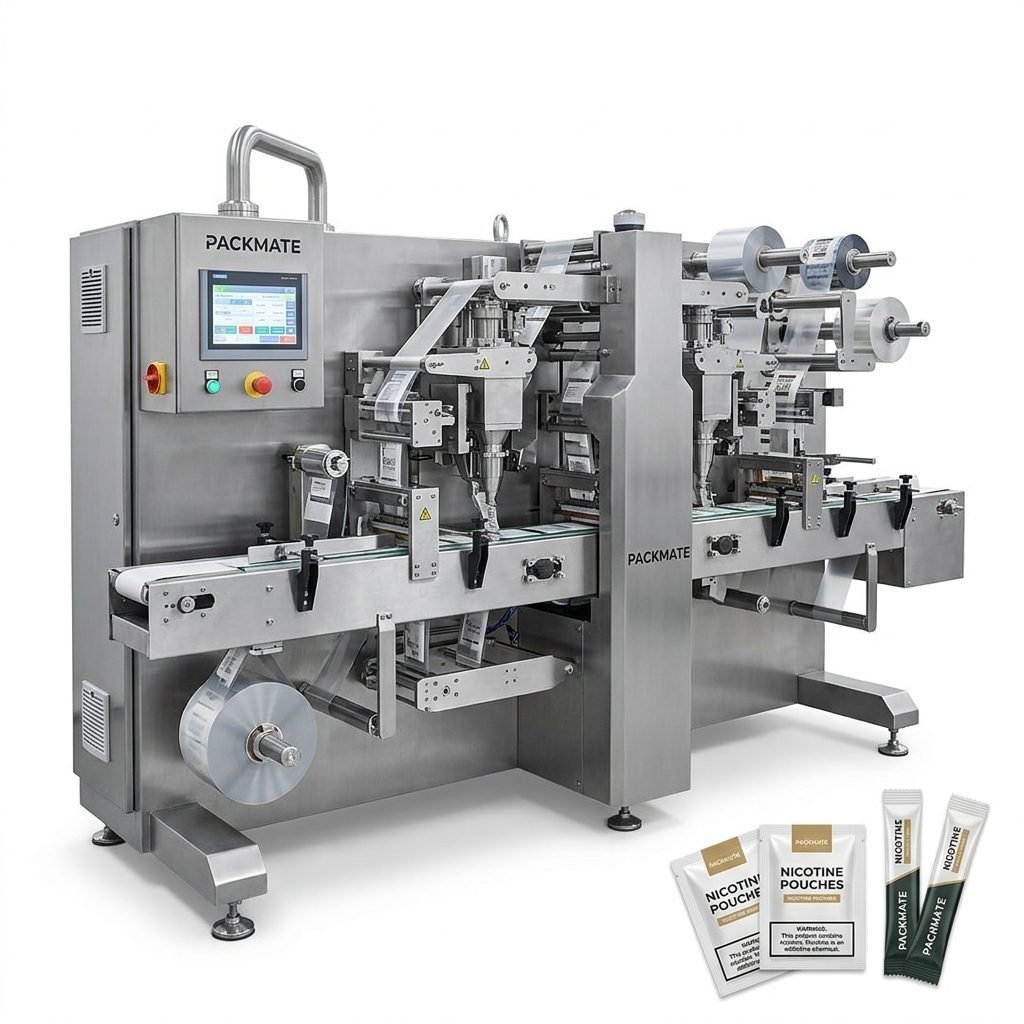
✓ Stick Pack Machines: Good for single-dose stick products, compact, often lower initial cost and good for medium speeds.
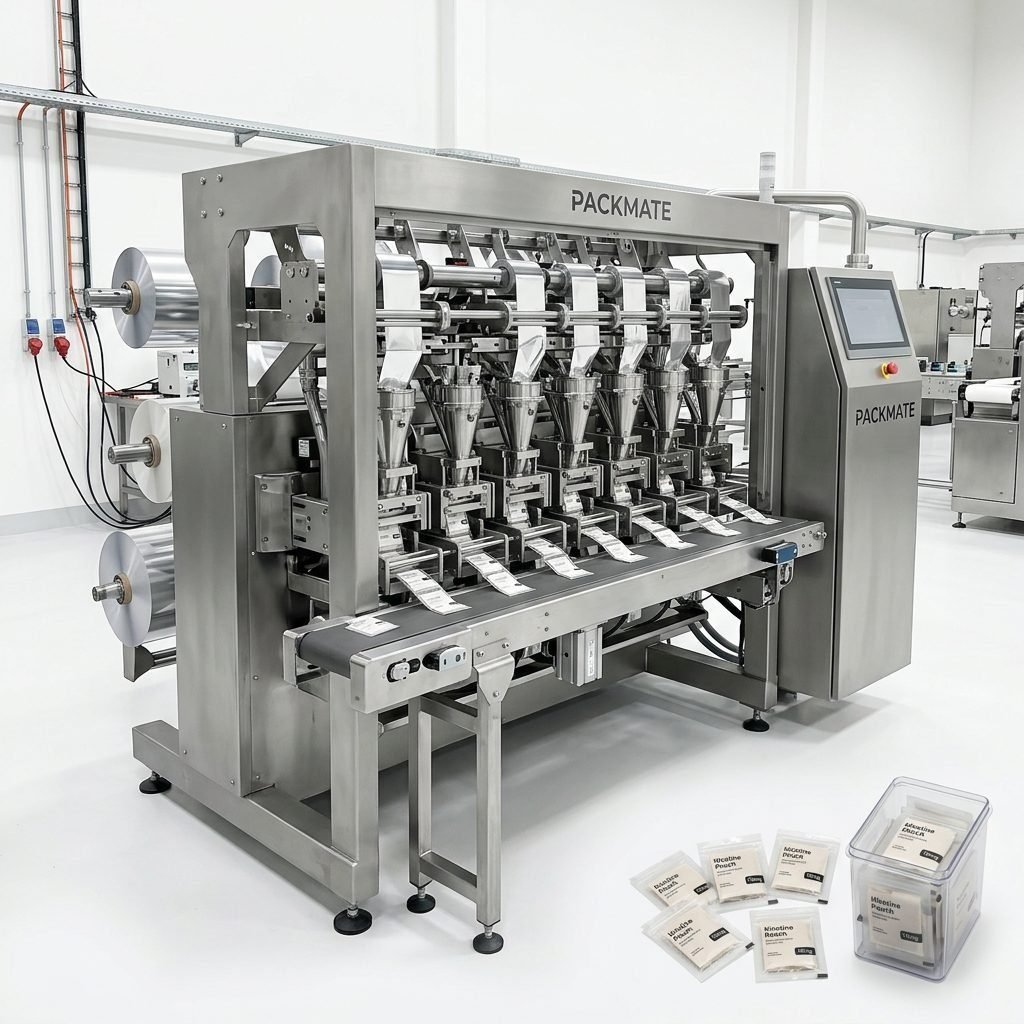
✓ Sachet & Stick Pack Machines: Flexible machines that support sachets and stick packs with variable length and sealing options. Ideal if you plan multiple formats. See examples of Sachet & Stick Pack Machines here: Sachet & Stick Pack Machines.
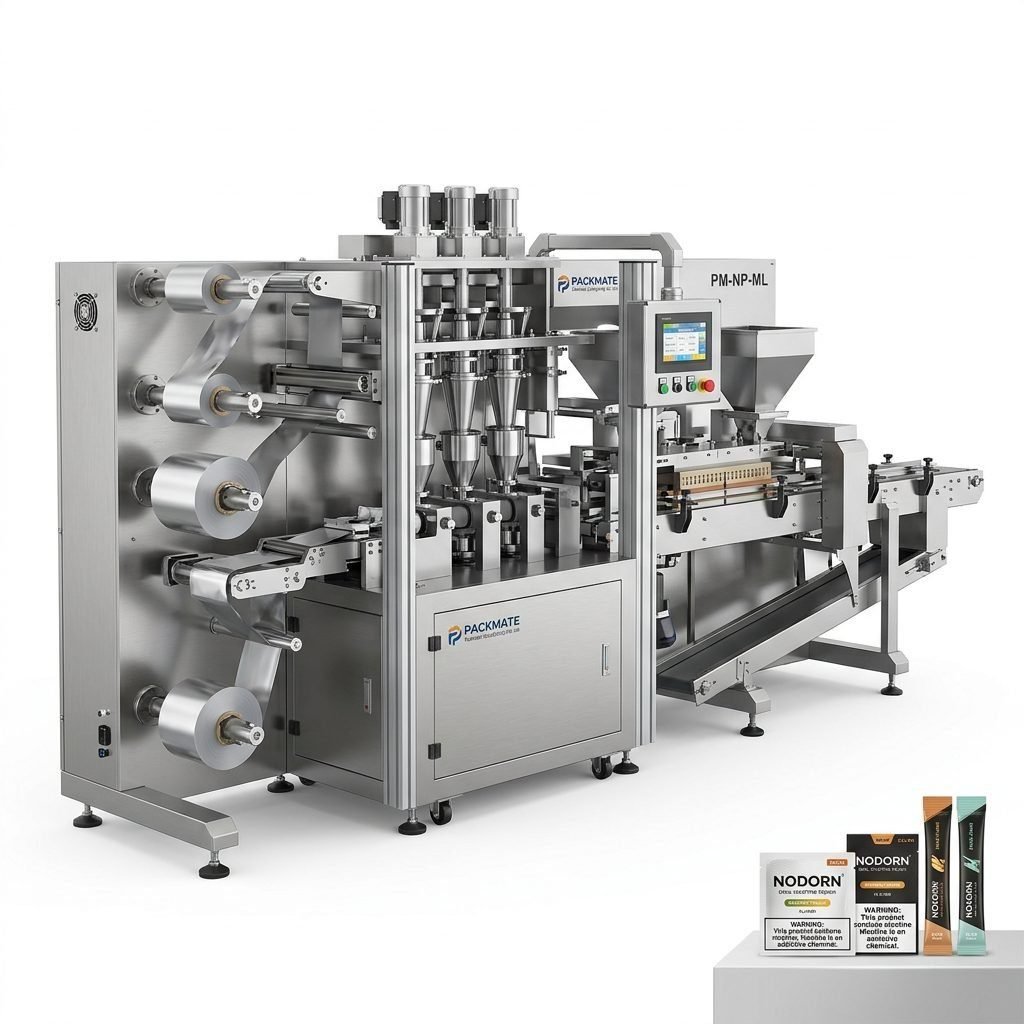
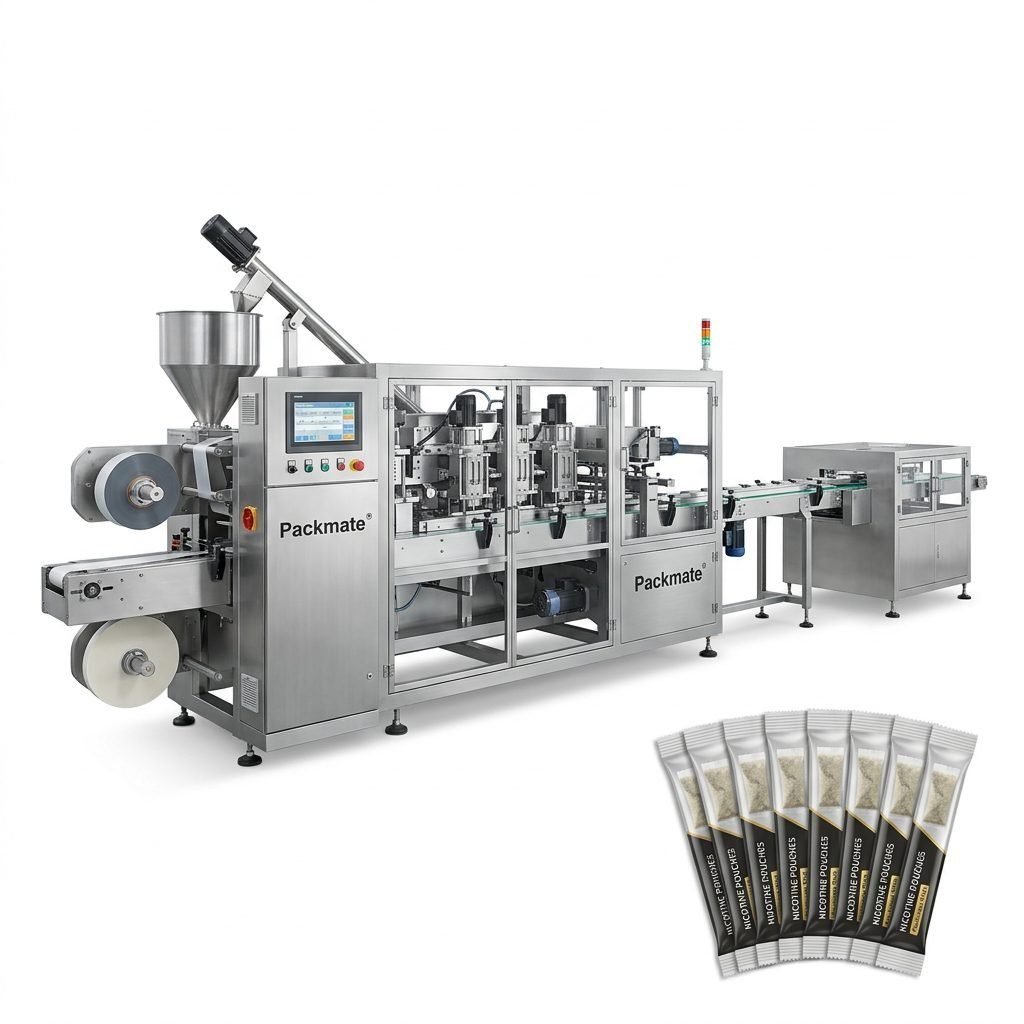
✓ Multi-lane Snus/Nicotine Packaging Machines: Designed for high-throughput, small-dose pouches with multiple lanes. Best for established brands needing consistent high output. Explore: Snus & Nicotine Packaging Machines.
⚠️ Production fit check: Match machine type to your monthly target output. A machine capable of 100–200 pouches/min on multi-lane configurations may be right for scaling, while a single-lane stick pack could be optimal for niche or test production runs.
Capacity, Speed, and Flexibility
Evaluate both the instantaneous speed (pouches per minute) and practical hourly/day throughput. Real-world throughput depends on changeover times, operator skill, and maintenance windows.
Consider machines with flexible lane configurations if you expect product variation. Multi-lane designs let you increase lanes as demand grows without replacing the base machine.
Important capacity metrics
– Nominal speed (pouches/min) under ideal conditions.
– Effective speed considering changeover and quality checks.
– Changeover time between formats.
– Scalability (can lanes be added or replaced easily?).
Precision Filling & Material Compatibility
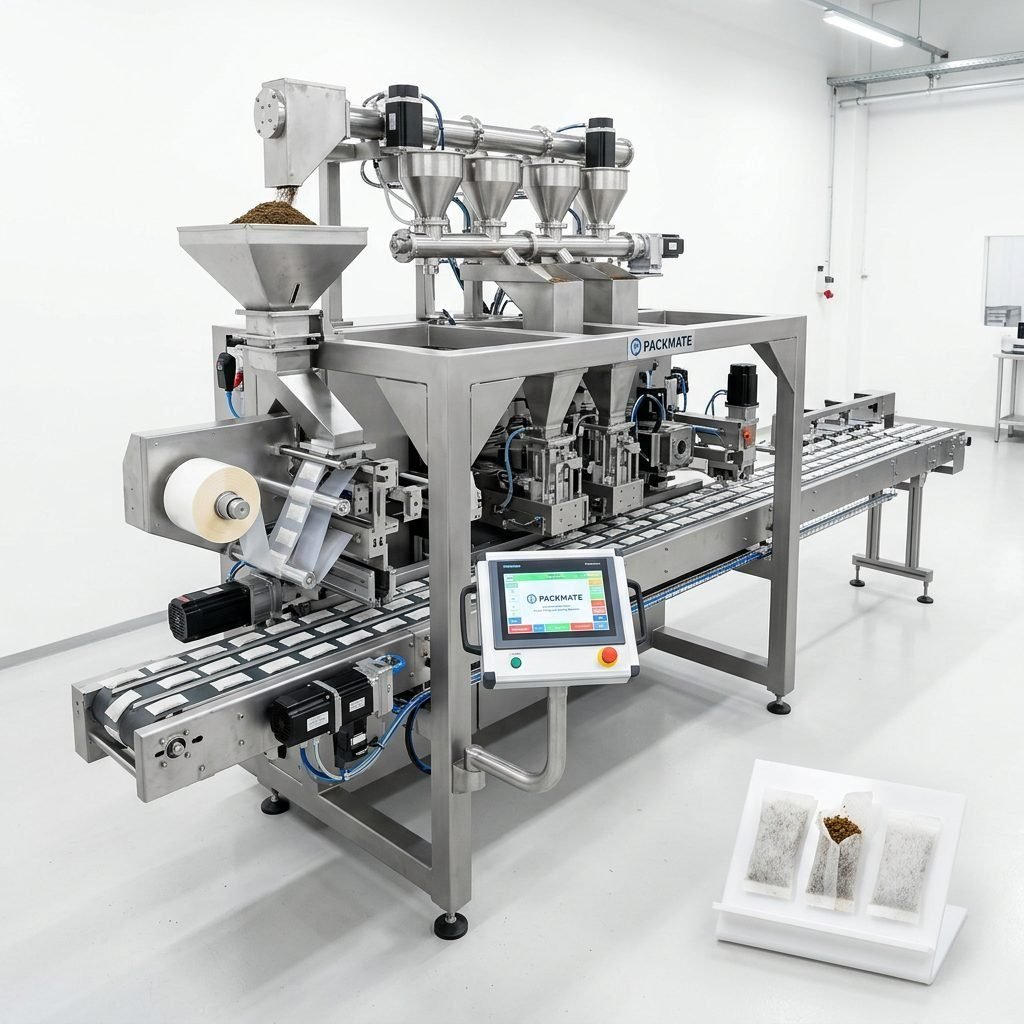
Accurate dosing is critical for snus and nicotine pouches. Choose a machine with reliable weighing/filling systems and minimal drift over long runs. If your product is powdery or hygroscopic, a dosing system designed for powders (vibratory feeders, piston fillers, or auger systems) should be used.
For liquid or paste fillings, ensure the machine supports hygienic design, easy cleaning, and minimal product retention. Consider integrated weighing & packaging systems for higher precision.
🔧 Precision focus: For nicotine pouches, dosing variation tolerance is tight. Ask suppliers for standard deviation statistics and perform acceptance tests on-site.
Automation, Integration & Industry 4.0
Modern snus packaging machines offer PLC control, HMI interfaces, and data logging. If you plan to scale, prioritize machines that support remote monitoring, recipe management, and integration with upstream/downstream equipment (scales, metal detectors, cartoners).
Integration reduces manual handling, improves traceability, and shortens production cycles—key benefits in competitive markets.
Quality, Certifications & Compliance
Verify the supplier provides CE/ISO documentation and can support compliance documentation for international markets. Machines built with food-grade materials and hygienic design minimize contamination risks and simplify audits.
Packmate Snus Machine emphasizes compliance and global standards—check their certificates and product pages for details if certification is a deciding factor.
Reliability, Maintenance & Spare Parts
Ask about mean time between failures (MTBF), availability of local technicians, and spare parts lead times. A global supplier with a strong parts network reduces downtime impact.
✅ Maintenance checklist: Request an OEM maintenance schedule, training package for operators, and a spare parts list with part numbers and lead times.
Total Cost of Ownership & ROI
Purchase price is only one component. Include installation, training, spare parts, consumables, energy use, and expected uptime when modeling ROI. A slightly higher upfront investment in a more reliable machine often results in lower cost per pouch over time.
Supplier Selection: What to Ask
When evaluating suppliers, ask direct questions:
– Can you provide references or case studies in similar markets? (Ask for performance data.)
– What is your after-sales service model and SLA for spare parts?
– Do you offer onsite commissioning and operator training?
– What customization options are available for product formats and materials?
Packmate’s company profile, long history since 1993, and wide range of solutions may be helpful when verifying supplier capability. Learn more About Packmate.
Turnkey Lines & Supporting Equipment
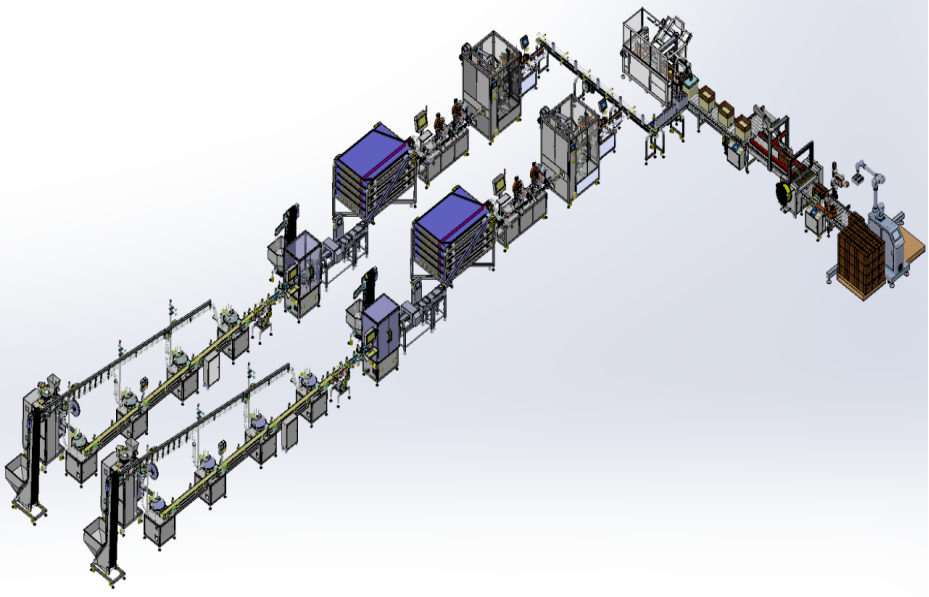
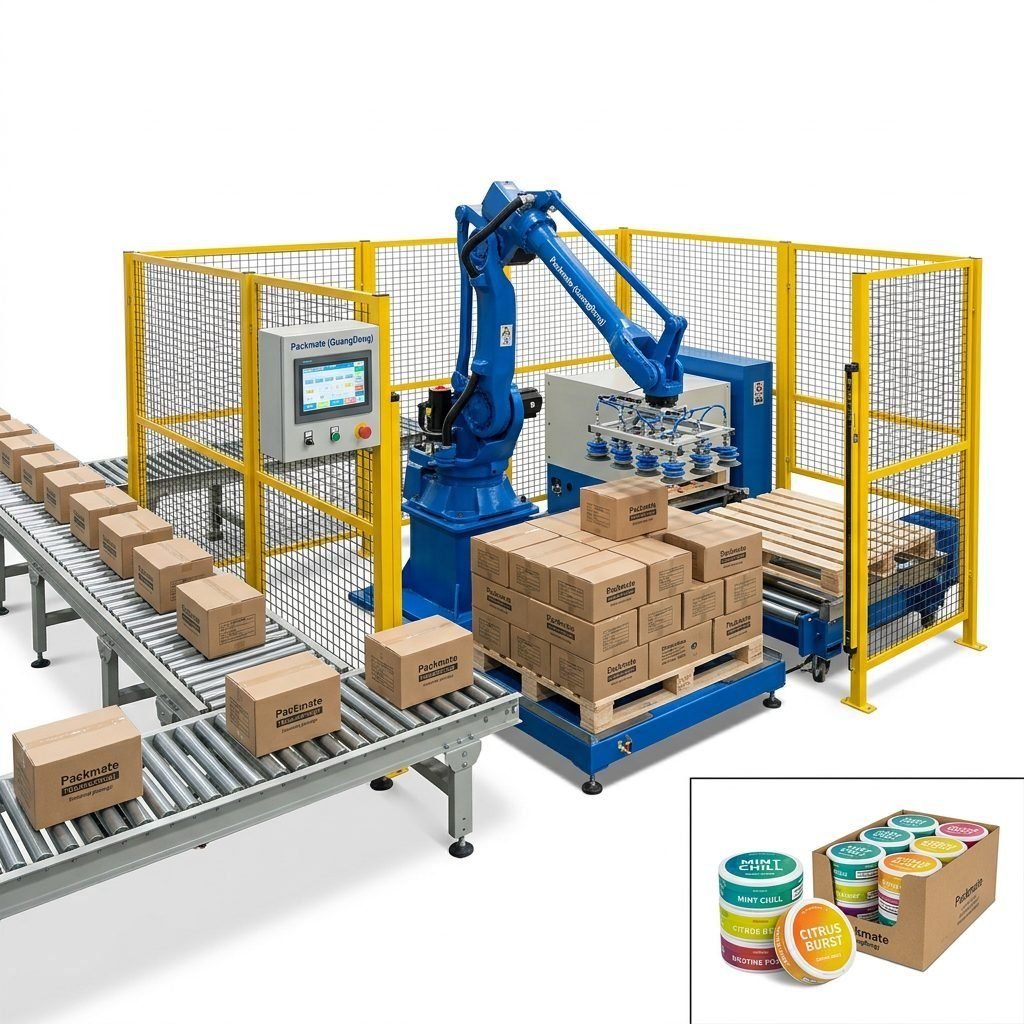
For full production lines, consider complementary equipment such as feeders, checkweighers, metal detectors, and cartoning machines. A supplier providing turnkey solutions reduces compatibility risks and streamlines commissioning. See complementary systems: Filling & Packaging Lines and Auxiliary Packaging Equipment.
📌 Integration benefit: Purchasing a line (filling + packaging + checkweighing) from one supplier often shortens installation time and improves overall line stability.
Logistics, Installation & Local Support in Congo
Assess import logistics, customs clearance, and local power/infrastructure compatibility. Confirm the supplier can support installation remotely or provide onsite engineers. A nearby warehouse for spare parts, or a supplier with fast shipping options, reduces downtime risk.
For pre-sales and post-sales engagement, you can use the supplier’s contact paths to clarify logistics and local support: Contact Us.
Customization, Upgrades & Future-Proofing
Your chosen machine should allow upgrades (e.g., additional lanes, automation modules, vision systems). Check whether the supplier supports retrofits and whether spare parts remain available for at least 5–10 years.
How to Run a Successful Factory Acceptance Test (FAT)
A FAT validates machine performance before shipment. Define clear acceptance criteria: speed, dosing accuracy, seal integrity, packaging appearance, and safety checks. Ask for video documentation and sample runs on your actual product mix.
🔍 FAT checklist: Confirm nominal speed, repeatability, alarm handling, and changeover process. Ensure spare parts for commissioning are packed with the machine.
Why Packmate May Be a Strong Partner
With more than 30 years of engineering experience and a 20,000㎡ facility, Packmate delivers a wide range of snus packaging machines and turnkey solutions. Their product families include snus/nicotine packaging, stick pack, sachet machines, and integrated lines—making them a candidate for both newcomers and scaling producers. Explore Packmate offerings and case studies to validate fit: Case.
Decision-making checklist (Quick)
– Define product formats and expected monthly volumes.
– Prioritize dosing accuracy and hygiene for nicotine pouches.
– Confirm certifications and spare parts availability.
– Evaluate total cost of ownership; factor energy use and downtime.
– Run or witness a FAT and request performance data on similar products.
📈 Final reminder: A well-chosen machine is a long-term investment. Emphasize reliability and supplier support as much as initial price.
Next steps
Shortlist 2–3 suppliers, request detailed proposals, and arrange a machine demo or FAT. If you need integrated line solutions, view Packmate’s range of bag & pouch packaging machines and consult their service offerings to build a complete production strategy.
Frequently Asked Questions
Q1: What capacity should I choose for a new snus line in Congo?
A1: Start by mapping current demand and near-term growth. For pilot operations, single-lane stick/sachet machines are common. For market entry with scaling plans, a multi-lane snus/nicotine packaging machine with expandable lanes is recommended.
Q2: How important are certifications for my packaging machines?
A2: Very important—CE and ISO certifications ensure safety, reliability, and easier access to export markets. Additionally, food-grade construction and traceability features are essential for compliance and consumer safety.
Q3: What are typical lead times and spare parts strategies?
A3: Lead times vary by customization level; standard machines may be delivered faster. Always request a spare parts list and consider stocking critical wear parts to avoid extended downtime.
Q4: Can I upgrade a machine later to add lanes or automation?
A4: Many modern machines are designed for upgrades; confirm upgrade paths and costs with the supplier before purchase.
Q5: How do I validate a supplier’s claims?
A5: Request references, witness a FAT, ask for on-site demos or video evidence of similar product runs, and verify certifications and after-sales commitments.