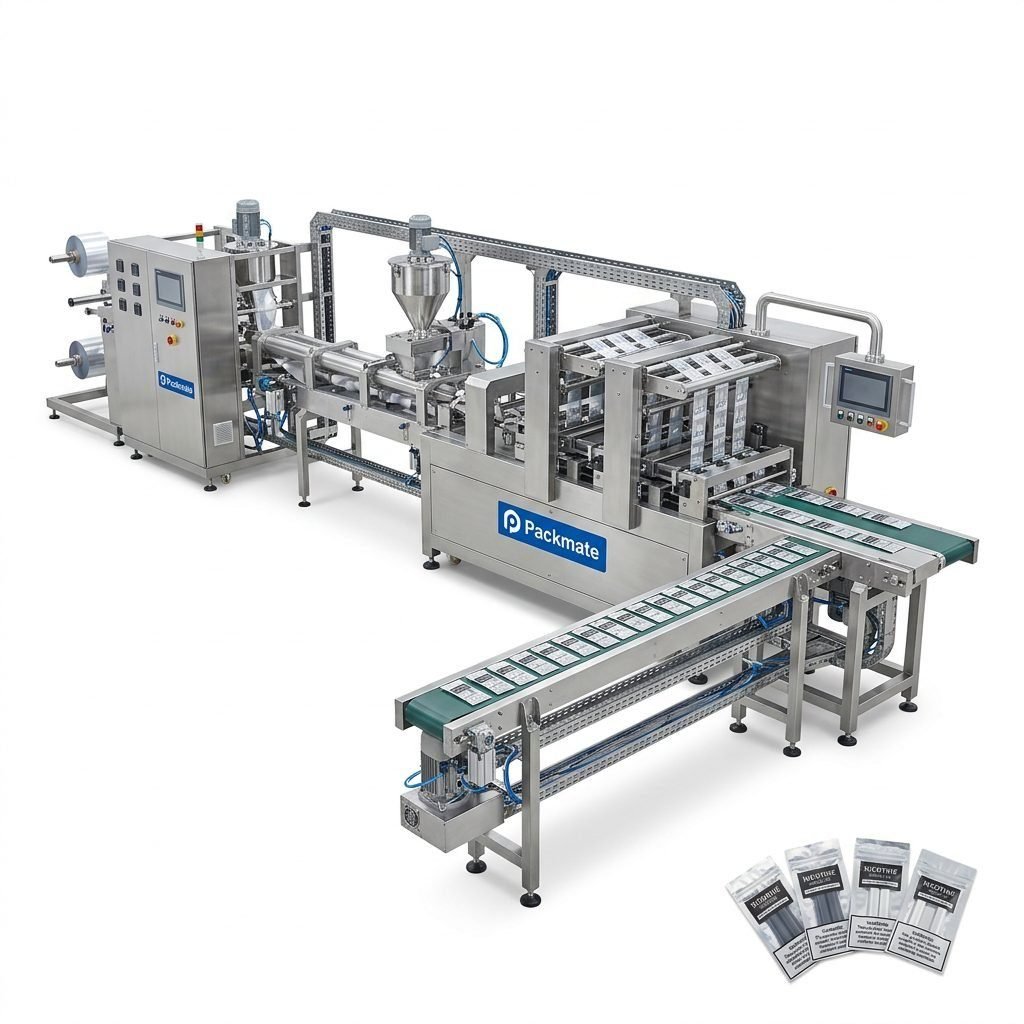
Choosing the right nicotine pouch or snus packaging machine is a critical decision for manufacturers in Pakistan who want to scale production reliably while meeting local market preferences and regulatory requirements. This guide walks you through the technical, operational, and commercial factors to evaluate so you can select a machine that fits your product format, daily output targets, labor profile, and environmental conditions in Pakistan. ⚙️🔍
Understand Your Production Needs in Pakistan 🇵🇰
Before comparing models, define clear production goals. Ask: what is your target daily output (pouches per minute / hour), what pouch formats do you plan to offer (round pouch, stick pack, sachet), and which filling types will you use (powder, granules, moisture-sensitive blends)? In Pakistan’s climate, high humidity and temperature fluctuations can affect powder flow and pouch sealing, so machines with robust environmental control and tight sealing systems are preferred.
Important: assess your SKU mix and seasonal demand. In Pakistan, festivals and promotional cycles can create spikes in demand—choose a machine with flexible speed and quick changeover features to respond fast.
Common production scenarios
• Small startups: focus on compact multi-purpose machines that can handle low to medium output with minimal operator training.
• Growing SMEs: require multi-lane systems to multiply output without proportionally increasing floor space.
• Contract manufacturers/exporters: prioritize CE/ISO certified machines, traceability features, and integration with downstream case packing.
Key Machine Types and When to Choose Them
Selecting the correct machine type is driven by pouch design, filling characteristics, and throughput goals. Below are the most common options used for nicotine pouch/snustype production.
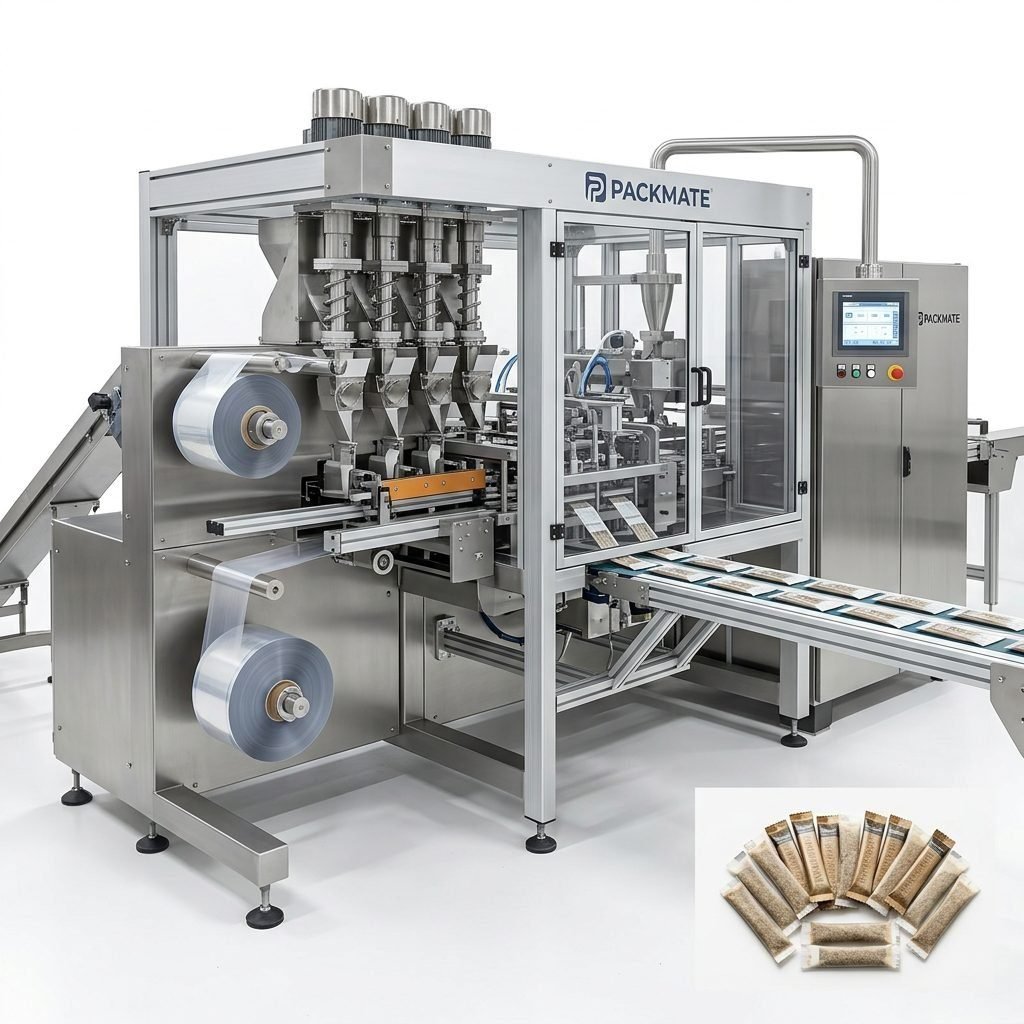
Sachet & Stick Pack Machines
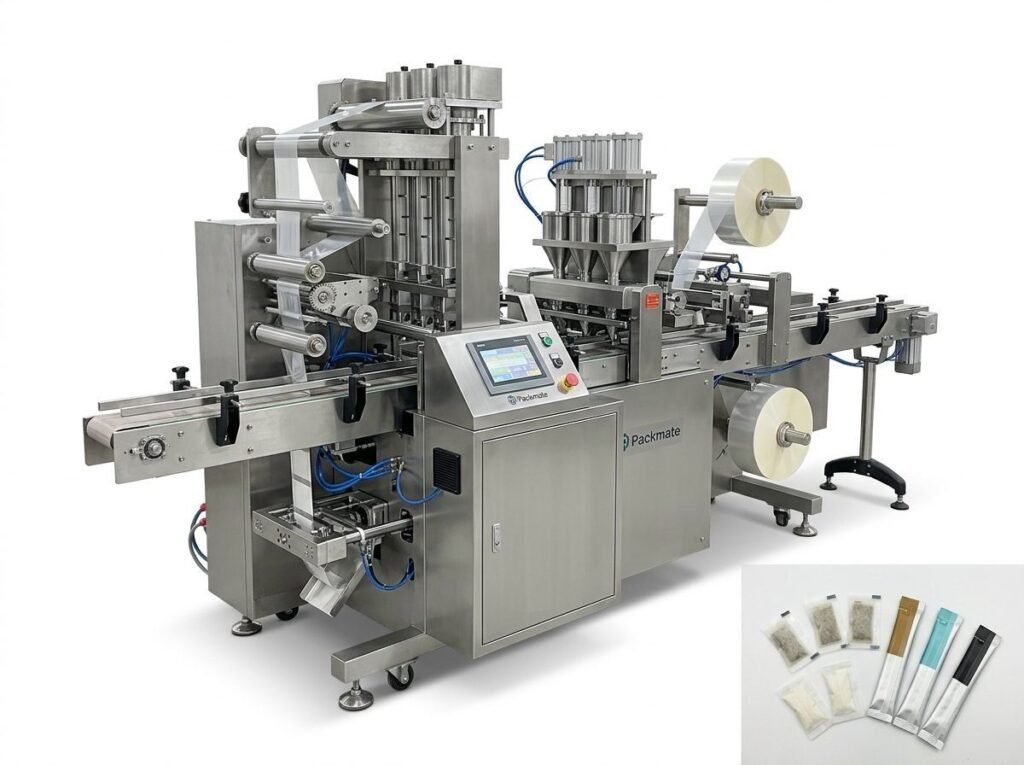
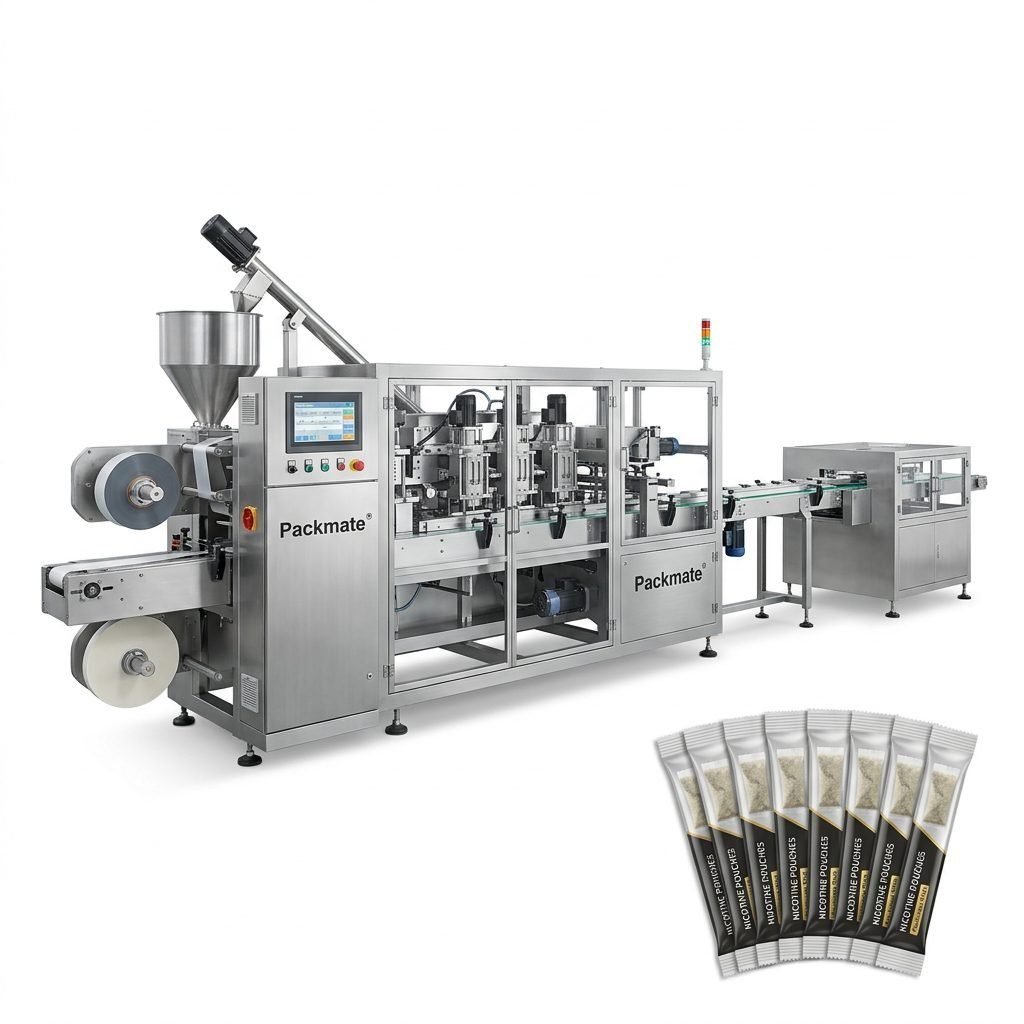
For narrow single-dose stick packs or flat sachets, stick pack and sachet machines provide fast, continuous packaging with precise dosing. These are ideal for single-portion nicotine pouches with fast sealing cycles. Explore high-speed options and multi-lane configurations for increased throughput. See model variations: Sachet & Stick Pack Machines.
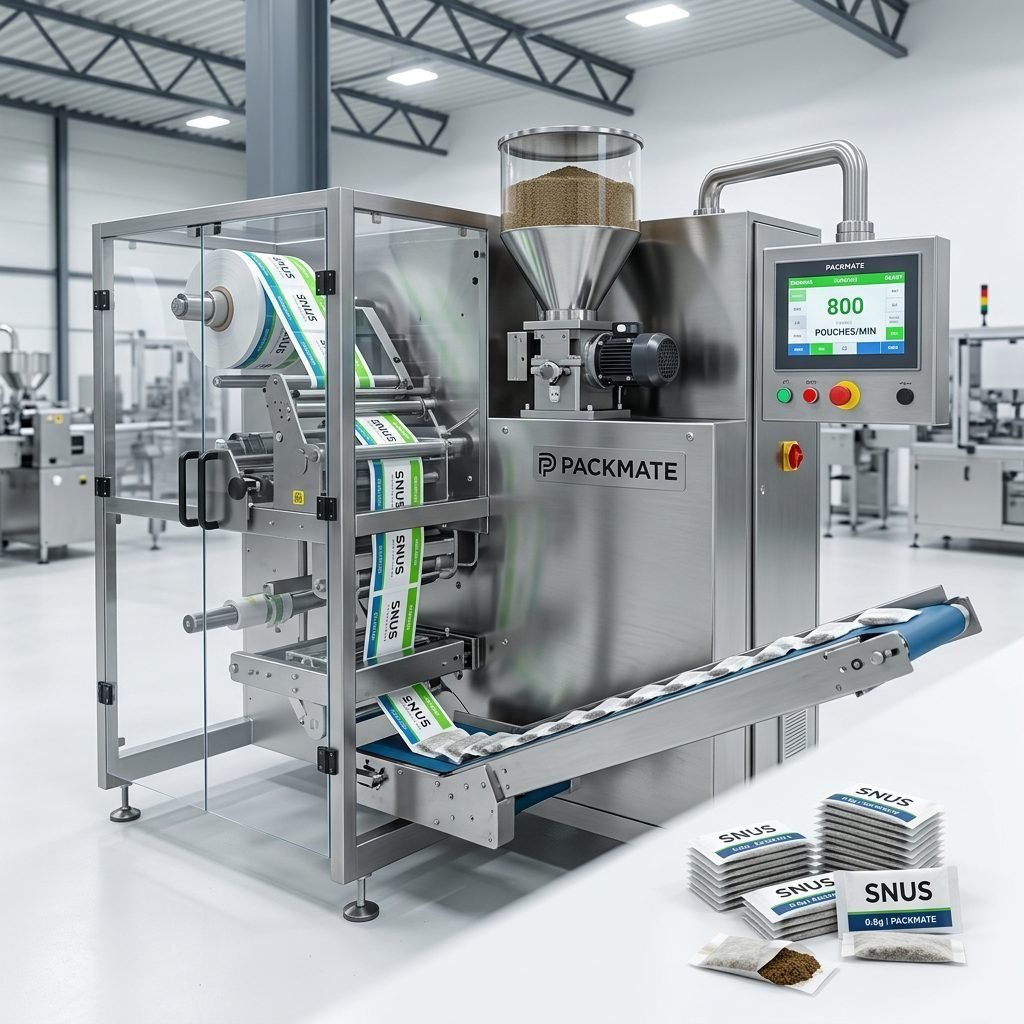
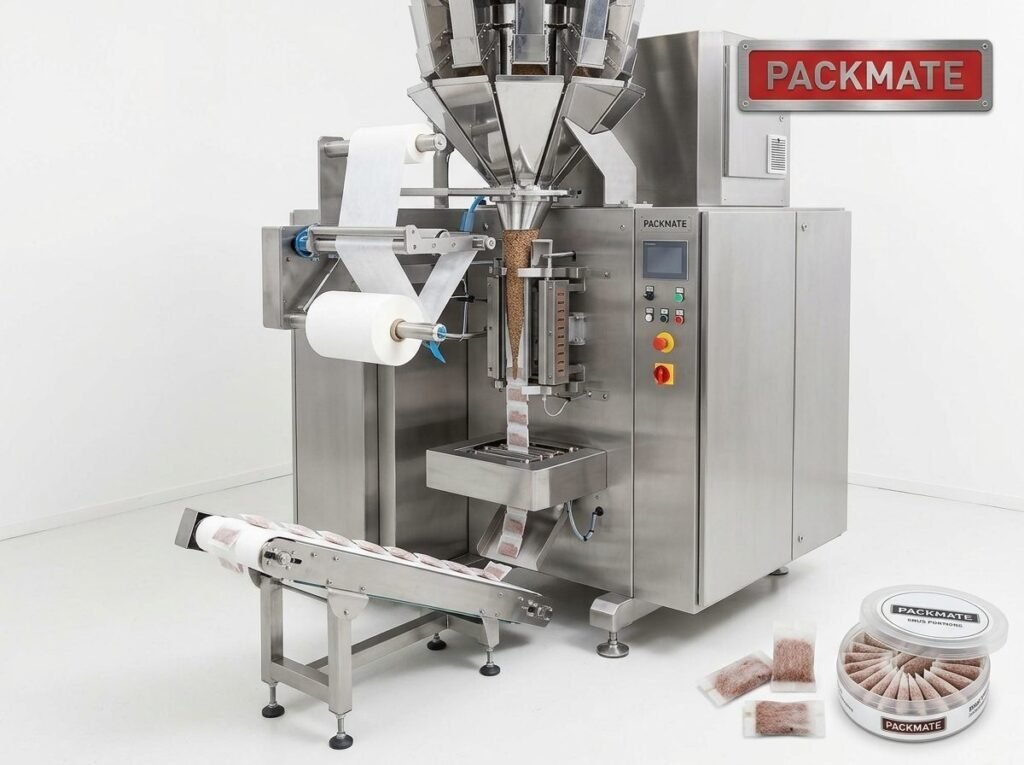
Snus & Nicotine Pouch Packaging Machines
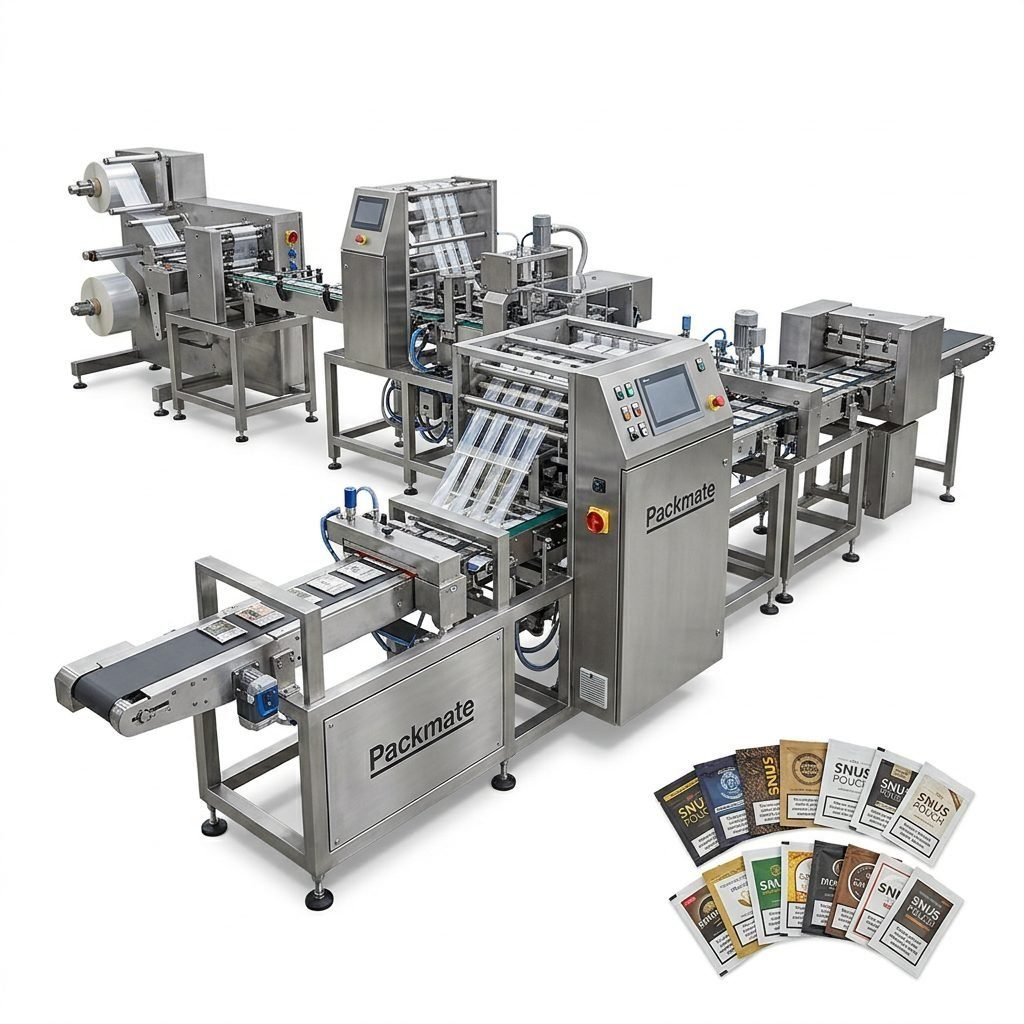
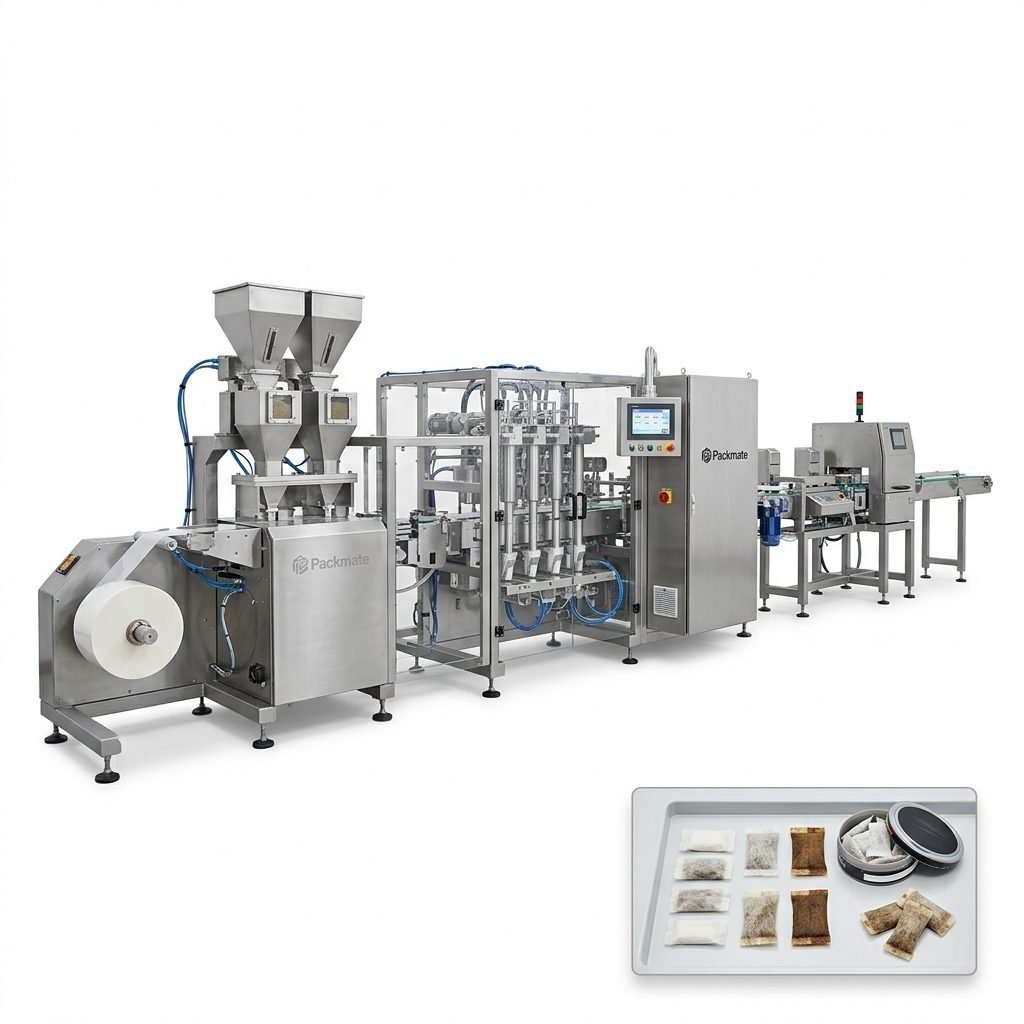
Dedicated snus / nicotine pouch machines are designed for the unique pouch shape, dosing tolerances, and finishing required by nicotine products. These systems often include vibration feeders, precision weighers, and pouch formation and sealing modules. For manufacturers focused exclusively on nicotine pouches, this category delivers best-in-class performance: Snus & Nicotine Packaging Machines.
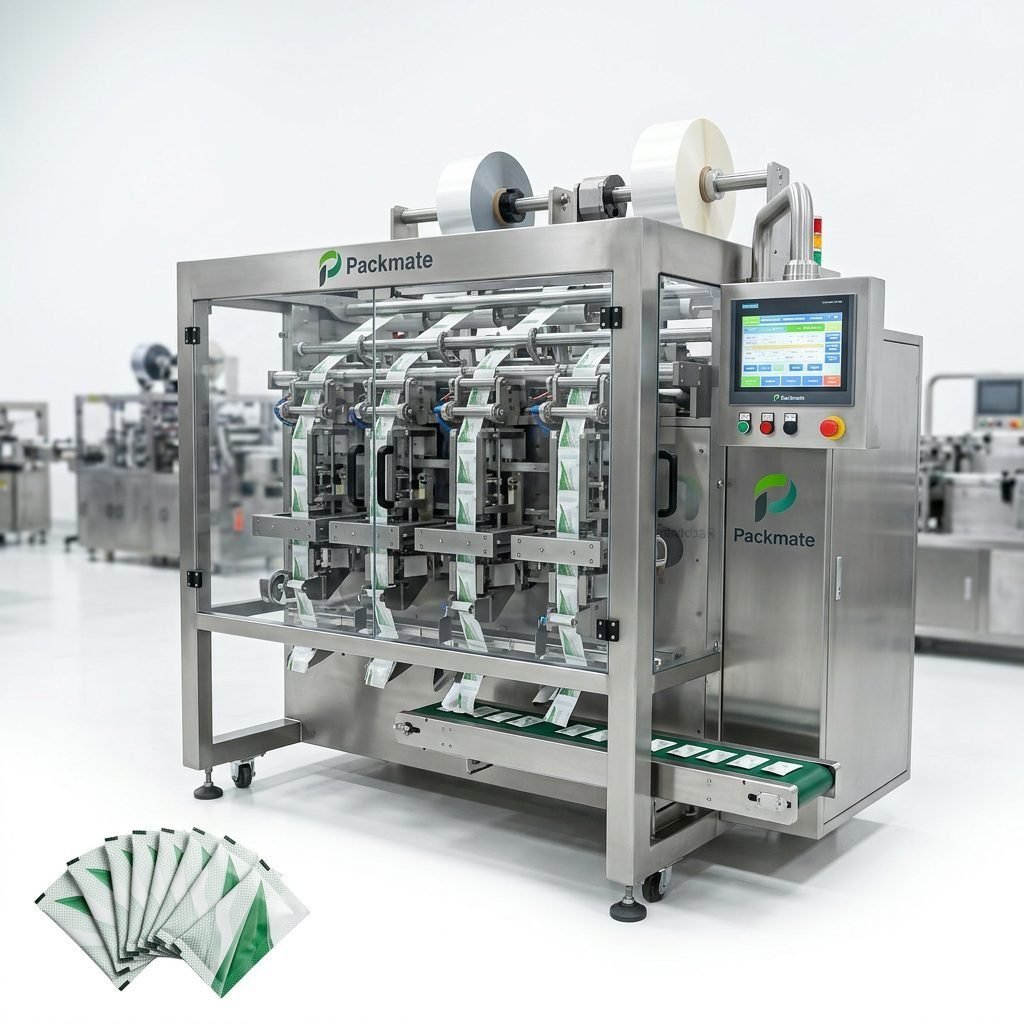
Multi-lane Systems
When floor space is limited but output needs to be high, multi-lane packaging machines are a smart solution. They run several lanes in parallel with a single control system, reducing capital cost per pouch and offering compact scalability—perfect for Pakistani manufacturers expanding from regional to national distribution.
Critical Technical Specifications to Compare
When evaluating models, compare these technical specifications side-by-side. They directly impact product quality, efficiency, and long-term operating cost.
- Throughput (pouches/minute and daily capacity)
- Filling accuracy and dosing system type (weigher, auger, vacuum)
- Sealing method and temperature control for humidity-prone environments
- Material compatibility (co-extruded films, laminated foils)
- Changeover time and tool-less adjustments
- PLC and HMI sophistication for remote diagnostics
- Power requirements and availability of voltage/frequency options for Pakistan
Tip: Select a machine with local voltage compatibility (typically 220–240V/50Hz in Pakistan) or ensure the supplier provides the correct electrical configuration to avoid field modifications.
Material & Pouch Format Considerations
Film selection and pouch design affect machine selection as much as any mechanical spec. High-barrier films are common for nicotine products to preserve freshness and nicotine stability under Pakistan’s warm climate.
Barrier properties and sealing
Choose films with proven heat-seal performance that match the machine’s sealing technology. Machines with adjustable band or jaw sealing and precise temperature control will perform better with laminated films during summer months.
Pouch shapes and consumer habits
In Pakistan, packaging design that communicates quality, discreetness, and convenience often resonates well. For example, small portable boxes or tins combined with single-dose pouches are preferred in some urban markets. Consider machines that can integrate with secondary packaging equipment (cartoners, case packers).
Quality Control, Certification & Compliance
Buyers should insist on CE and ISO certifications as baseline indicators of equipment safety and manufacturing quality. Packmate Snus Machine offers CE and ISO compliant solutions backed by factory testing and global references.
For export-oriented firms, ensure traceability features and documentation supporting hygienic design, cleanability, and materials compliance. Visit the manufacturer’s profile for more details: About Packmate.
Local Considerations for Pakistan: Supply Chain, Workforce & Customs
Pakistan presents unique operational realities—hot summers, variable power stability in some regions, and a workforce with strong mechanical aptitude but often limited specialist training in automation. Consider these localized factors:
- Power and electrical setup: choose equipment tolerant of brief voltage fluctuations or include robust stabilization and UPS options.
- Service & parts availability: ensure the supplier offers timely spare parts and remote support or has local partners to reduce downtime.
- Import duties and documentation: plan for customs lead times; work with suppliers experienced exporting to Pakistan to avoid clearance delays.
- Cultural marketing: packaging that respects local cultural norms and language (Urdu labels, bilingual instructions) often performs better in regional retail channels.
Selecting a Supplier and After-sales Service
A machine’s uptime depends as much on vendor support as on build quality. Key supplier selection criteria:
- Proven case studies and international references—review real production installations. See examples: Case.
- Spare parts availability and lead times for critical wear items.
- Remote diagnostics capability and training programs for operators/maintenance staff.
- Warranty terms, upgrade paths, and spare parts kits included with the machine.
Supplier check: Request a live demo or factory acceptance test (FAT), and ask for a full list of spare parts and recommended maintenance schedules before purchase.
Cost, Total Cost of Ownership (TCO) & ROI
Purchase price is only one element of cost. Calculate TCO by factoring energy usage, spare parts consumption, operator time, packaging material waste, and expected downtime. A higher initial investment in a precision machine often yields shorter payback through lower waste and higher yields—especially important for premium nicotine products.
Installation, Commissioning & Operator Training
Choose suppliers who provide on-site commissioning and hands-on operator training in Pakistan or offer remote training modules in English/Urdu. Clear documentation, spare tool kits, and initial process recipes will shorten ramp-up time. If you plan to integrate with upstream filling or downstream cartoning, verify mechanical and PLC interfaces in advance.
Avoid These Common Pitfalls
• Under-specifying throughput: Buying a machine that barely meets current demand can limit growth.
• Ignoring film compatibility: Not testing packaging film with the machine before purchase leads to sealing or appearance defects.
• Neglecting after-sales service: Long spare part lead times increase production risk.
• Overlooking operator training: Many early failures are due to incorrect setup rather than mechanical problems.
Why Consider Packmate Snus Machine
Packmate Snus Machine brings over 30 years of engineering in pouch and snus equipment, a 20,000㎡ manufacturing facility, and a global track record. Their machines cover snus/nicotine pouch formats, stick pack and sachet solutions, and multi-lane lines built for high consistency and fast changeovers. Explore related product lines and support services: Snus & Nicotine Packaging Machines, Sachet & Stick Pack Machines, and Contact Us for demos and quotations.
Quick checklist before purchase:
- Confirm daily capacity & future growth buffer
- Test your pouch film & product on the machine
- Verify power compatibility and local spares availability
- Arrange on-site commissioning & operator training
Final Thoughts
Choosing the best nicotine packaging machine in Pakistan requires aligning technical performance with local market realities—climate, electrical infrastructure, workforce skills, and retail preferences. Prioritize machines with flexible formats, robust sealing for humid conditions, certified quality, and strong after-sales support. A well-chosen machine reduces waste, improves shelf life, and accelerates your path to market leadership.
Frequently Asked Questions
Q1: What machine type is best for a startup producing 5,000 pouches/day?
A1: For that volume, a compact single- or dual-lane snus/nicotine pouch machine or a stick pack machine with moderate speed is ideal. It gives a balance of cost, footprint, and flexibility for product testing and small-batch runs.
Q2: How do I handle humidity issues in southern Pakistan?
A2: Use high-barrier films, machines with precise temperature control on sealing jaws, and consider a controlled environment (AC or dehumidifiers) in the production area to maintain consistent sealing and product stability.
Q3: How important are CE/ISO certifications when buying equipment for Pakistan?
A3: Very important—CE/ISO indicate adherence to international safety and quality standards, ease customs clearance for imports, and are often required by retailers and export markets.
Q4: Can I get spare parts and service locally?
A4: Many reputable suppliers provide spare parts globally, and some have regional partners. Confirm lead times and consider stocking critical wear parts locally to minimize production downtime.
Q5: Where can I see live demonstrations and machine specifications?
A5: Request a factory acceptance test (FAT) or live demo from the manufacturer. For more information and product catalogs, check the manufacturer’s product pages and contact channels on their website.