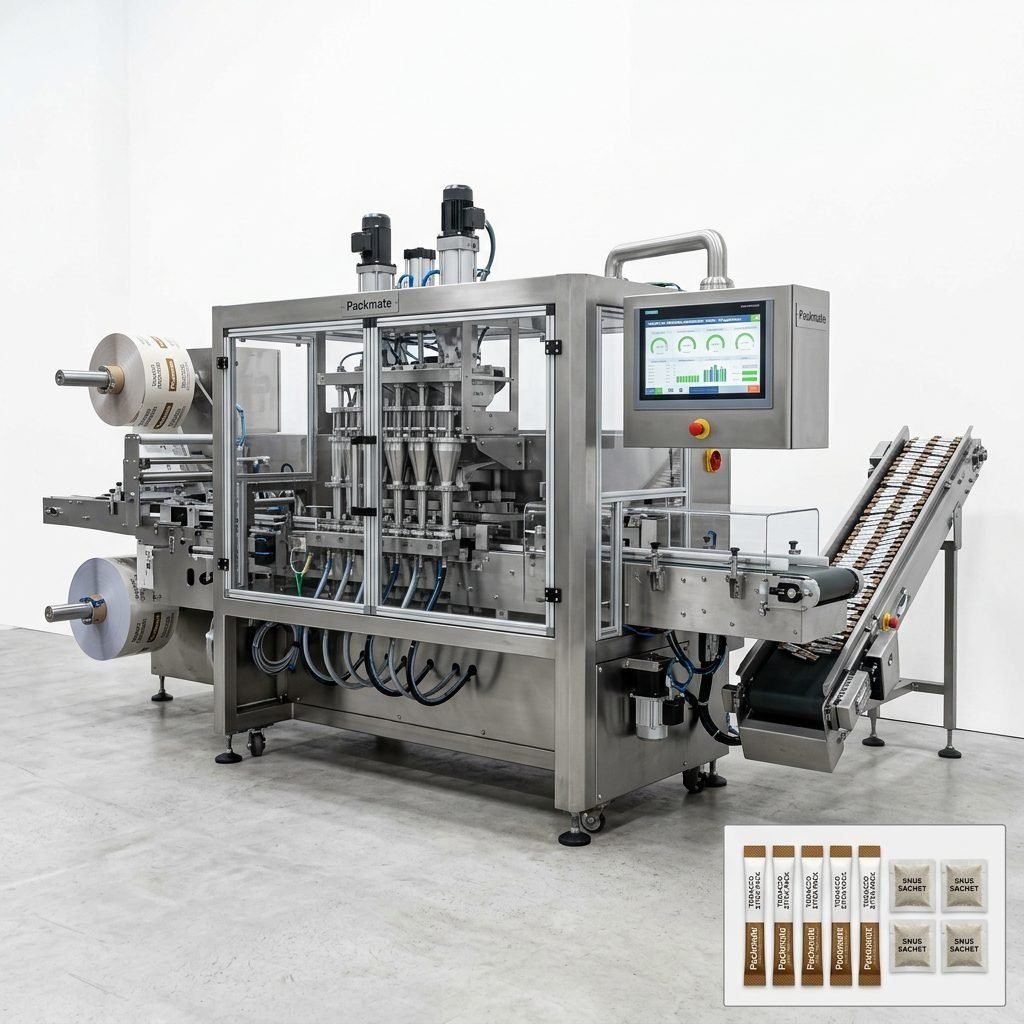
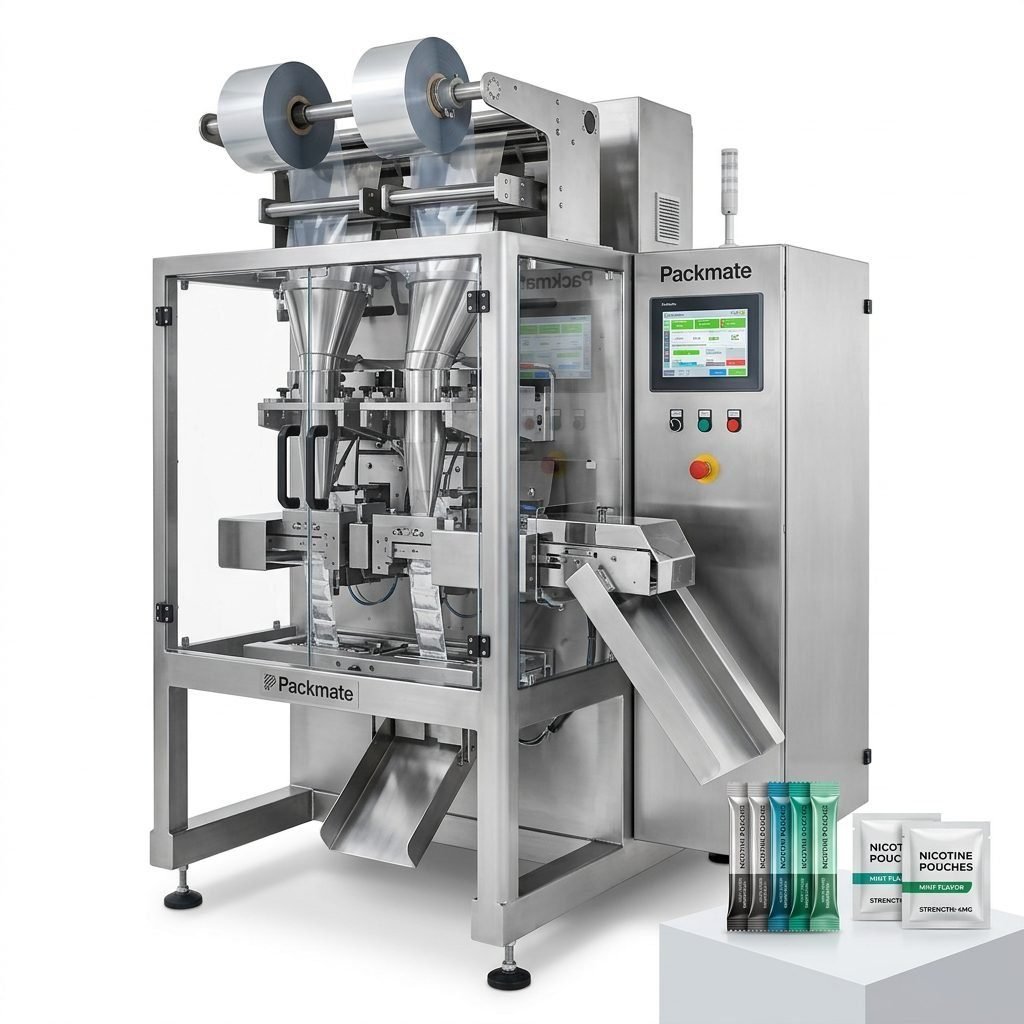
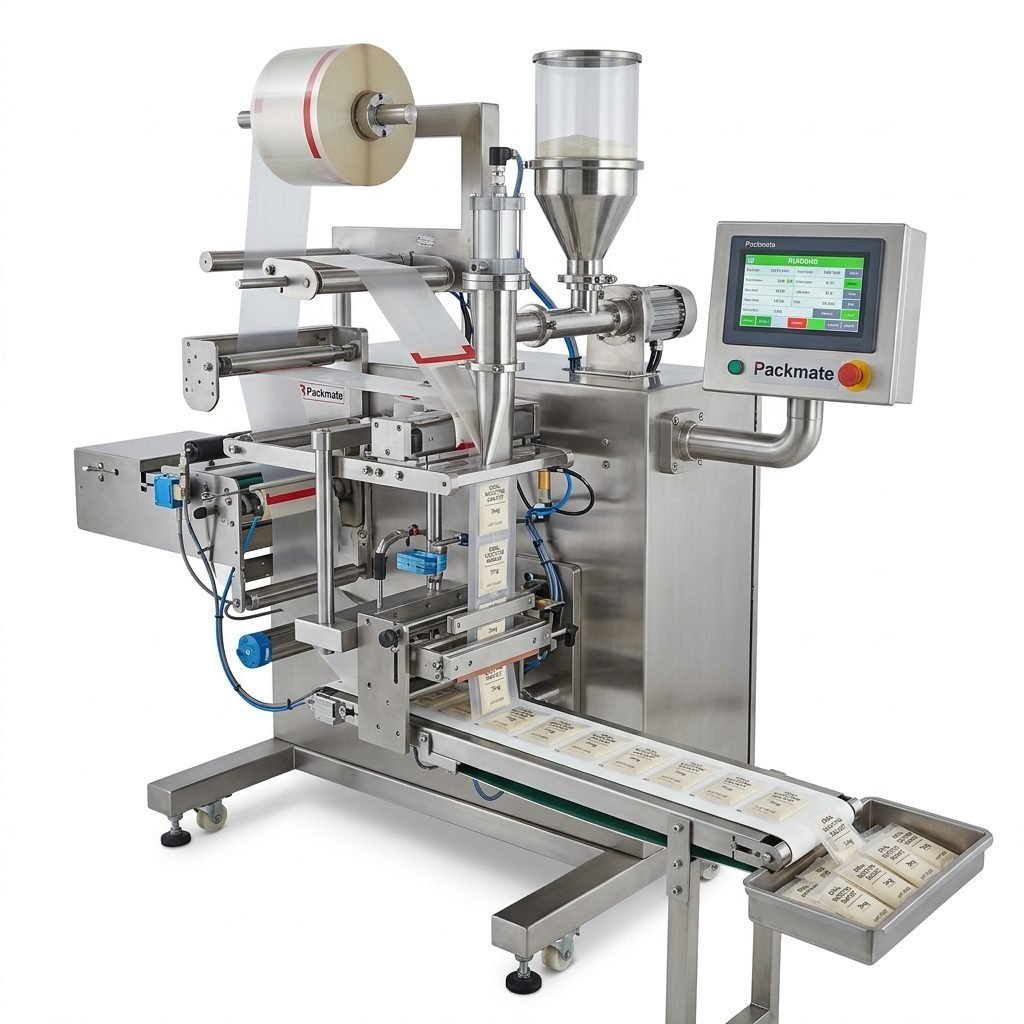
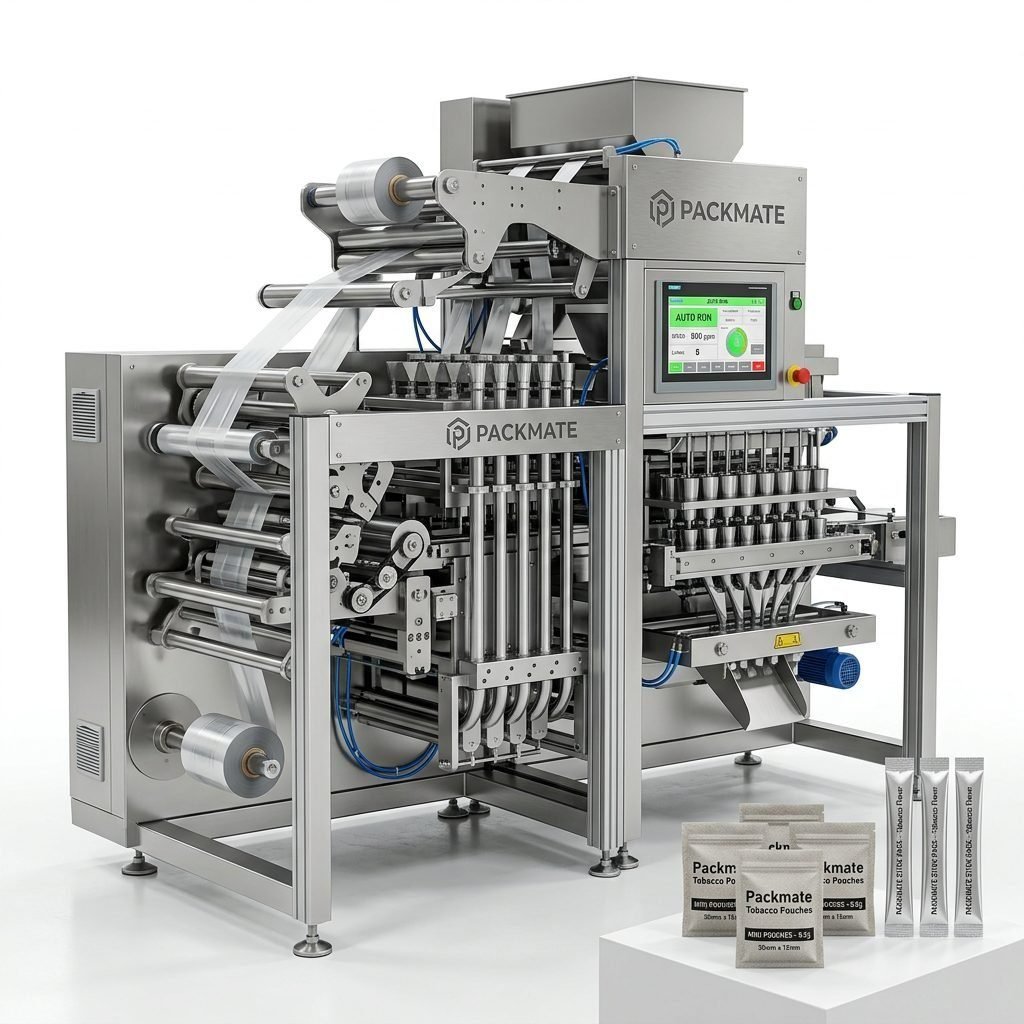
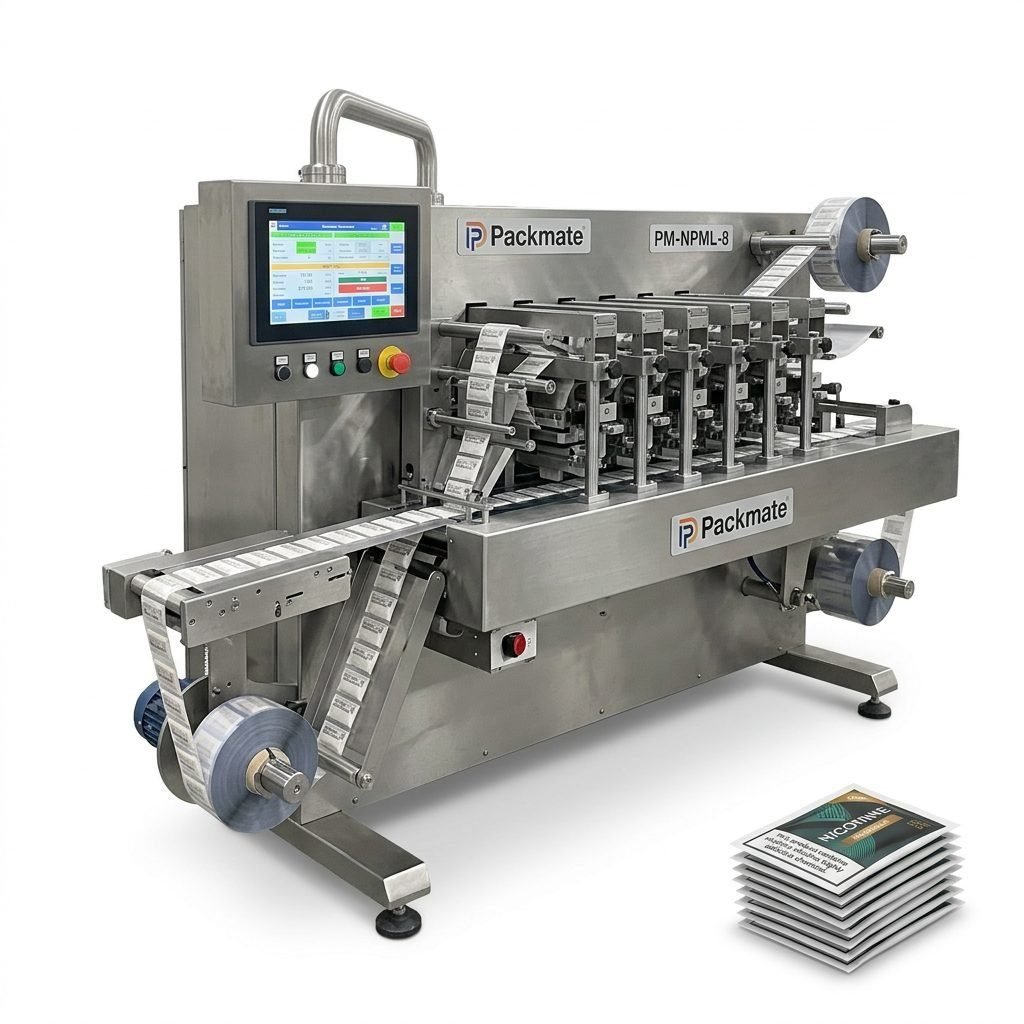
Choosing the right nicotine packaging machinery for a production line in Brazil requires a strategic balance of regulatory awareness, production capacity, machine precision, and long-term serviceability. This guide walks production managers, procurement teams, and engineers through practical steps to evaluate options, compare technical specifications, and secure a packaging solution that fits local market demands and sustainability goals.
🔎 Understand the Brazilian market and regulations
Brazil has distinct regulatory and import considerations for nicotine products. Before investing in a new line, confirm local labeling, ingredient disclosure, and product classification. Work with legal counsel or a compliance expert to determine whether additional filtration, sealing integrity testing, or tamper-evident features are mandatory. Machines that produce consistent seal quality and traceable batch records will minimize compliance risks.
📌 Tip
If you need detailed machine categories and specifications, check product pages like Snus & Nicotine Packaging Machines to compare machine families and line capabilities.
⚙️ Define your production requirements
Start by documenting throughput targets, pouch formats, fill types, and production shifts. Key variables include:
✅ Target output (pouches/minute or units/hour)
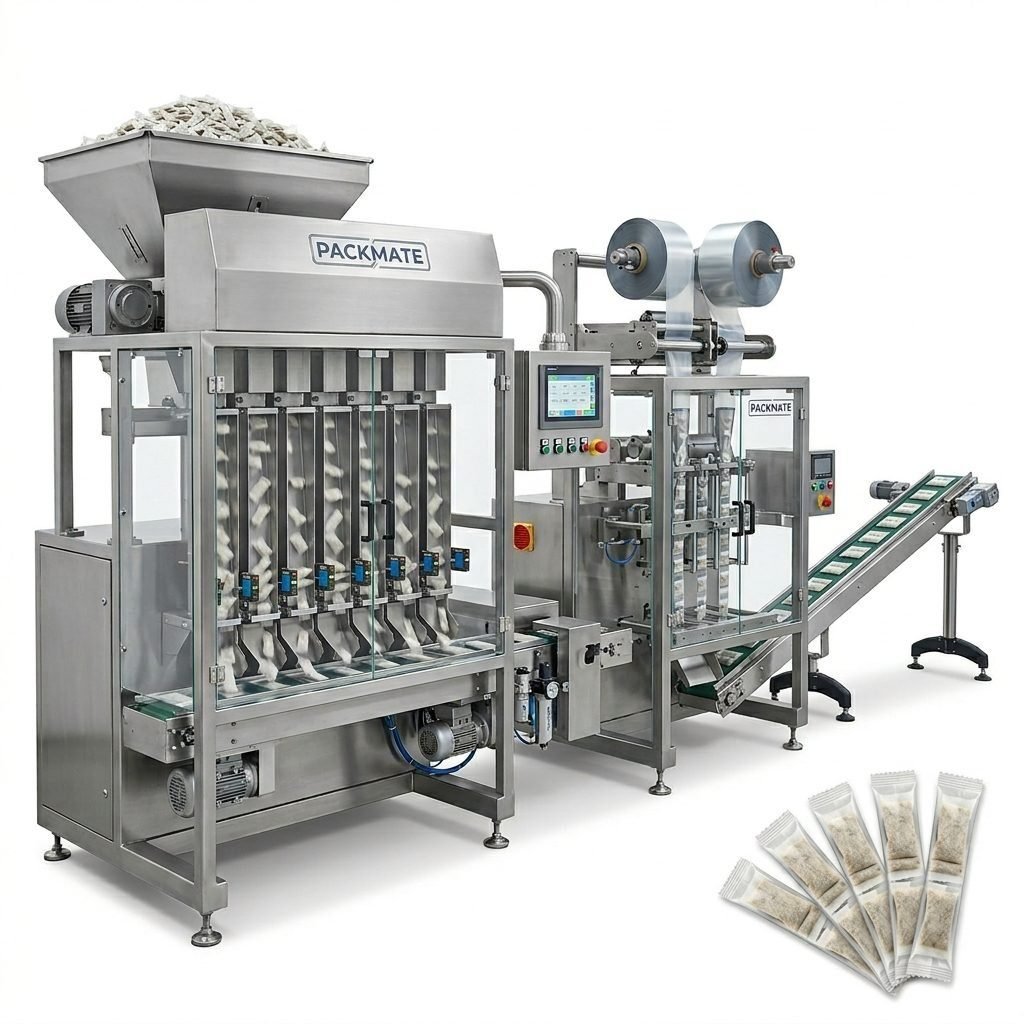
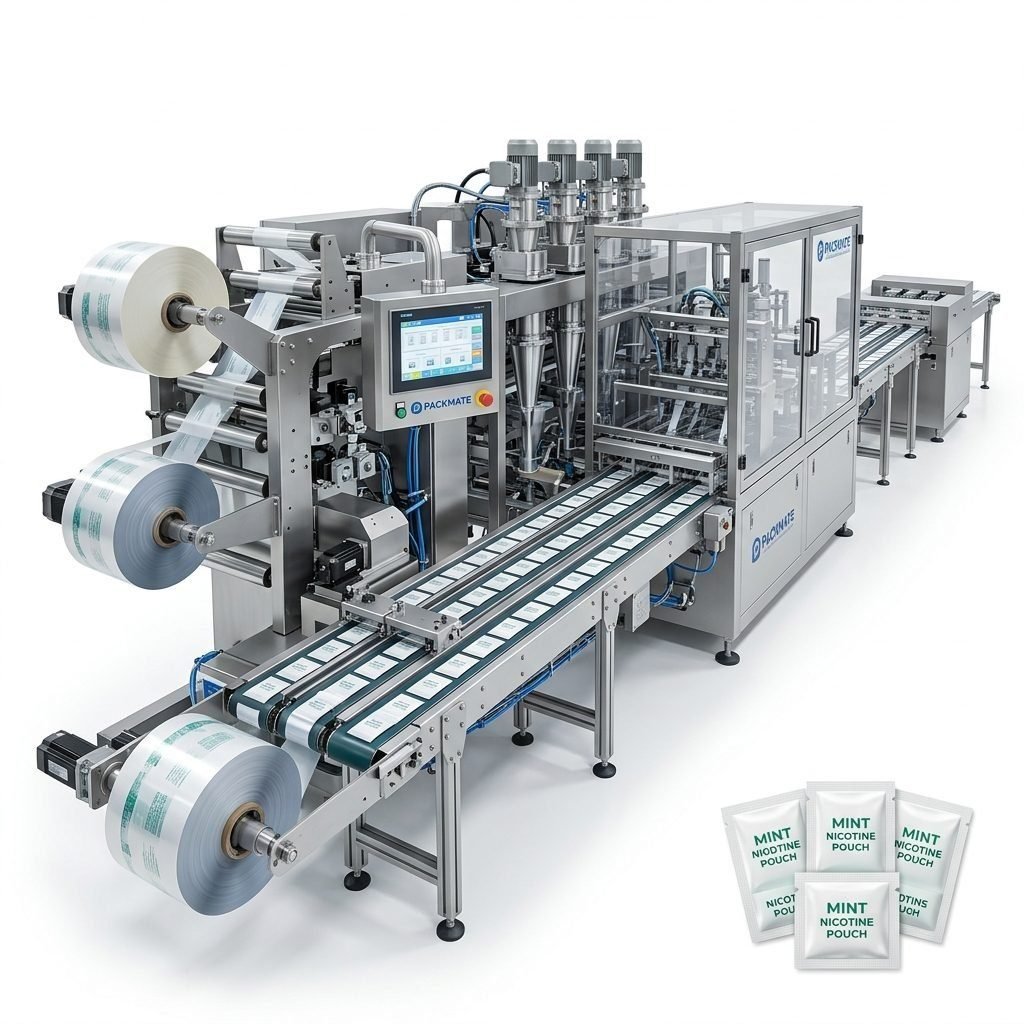
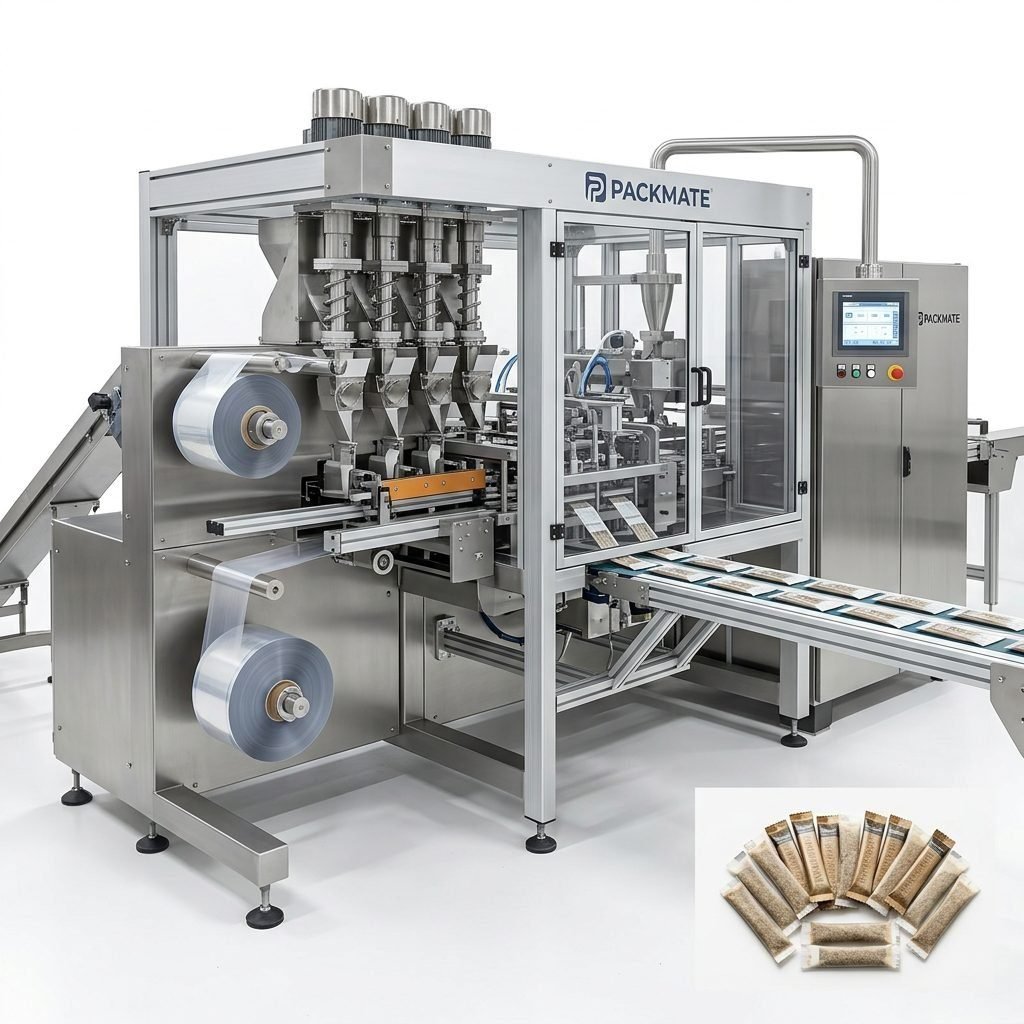
✅ Pouch types: single-lane sachets, multi-lane snus pouches, stick packs
✅ Fill materials: powder, granule, wet, or nicotine liquid
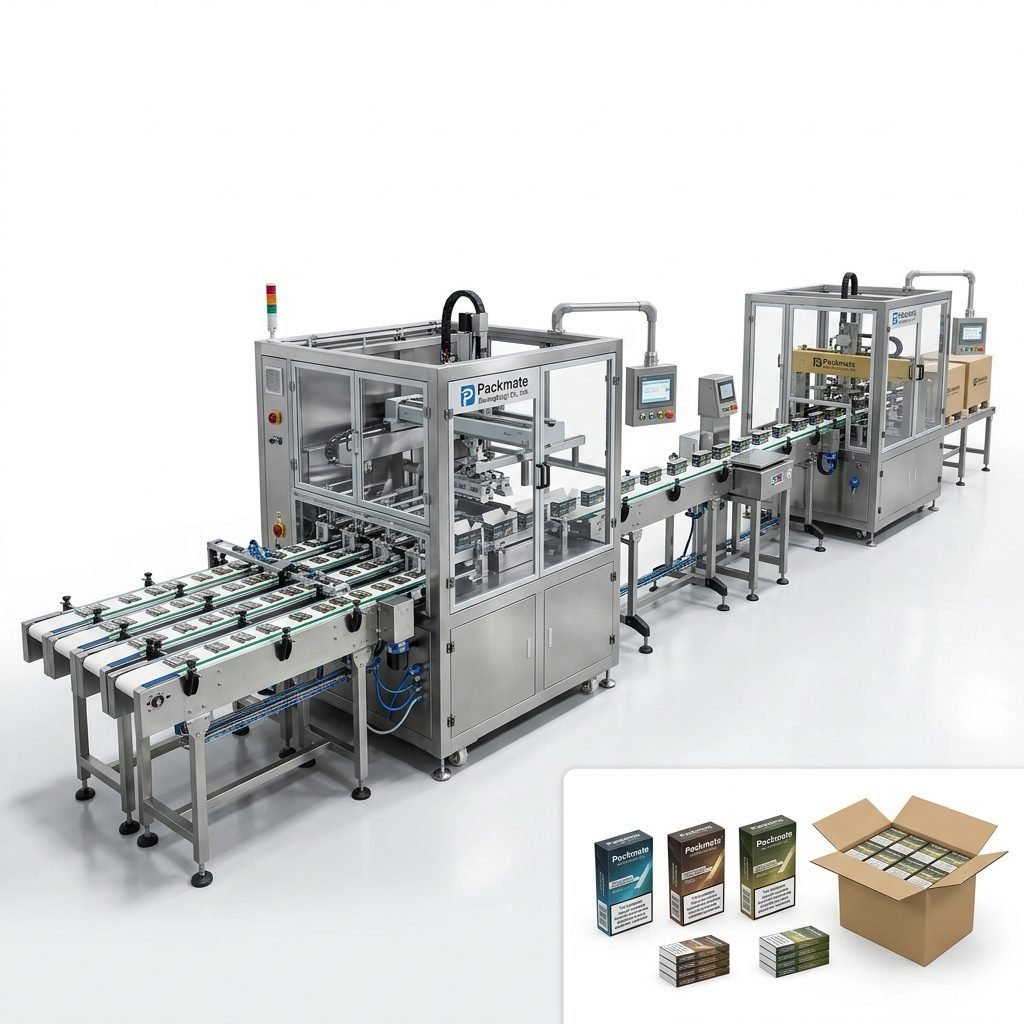
✅ Downstream needs: cartoning, case packing, and palletizing
🔧 Match machine type to product format
Packaging lines differ by the form factor they support. For nicotine pouches and snus, the most common machines are multi-lane pouch formers and stick/sachet machines. Select machinery designed for your specific format and dose precision. For example, Packmate’s range includes multi-lane systems for small-dose pouch production and stick pack lines tailored to narrow sachets. Explore Sachet & Stick Pack Machines to see options and lane configurations.
Key considerations
Evaluate lane convertibility, changeover time, and ability to handle small-dose portions. Machines with modular designs let you scale output by adding lanes or integrating new fillers later.
📈 Capacity planning and scalability
Choose a machine that aligns with current demand but provides room to grow. Overbuying can idle capital, while under-spec equipment becomes a production bottleneck. Consider modular multi-lane systems: they offer higher throughput without proportionally increasing floor space. When comparing machines, ask suppliers for performance curves and real-world case studies — for example, see Packmate’s production cases to understand output in similar industries at Case.
🛠️ Evaluate machine precision and materials handling
Nicotine pouches require high dosing accuracy and gentle handling to avoid product loss or contamination. Key features to assess:
🔹 High-precision dosing systems (load cells, volumetric or auger feeders)
🔹 Gentle transport mechanisms to preserve pouch integrity
🔹 Consistent sealing and cutting systems to prevent leakage
🔹 Easy-to-clean contact surfaces, compliant with hygiene standards
🔁 Flexibility and quick changeover
For product lines that will handle multiple SKUs, changeover speed directly affects productivity. Look for features such as:
- Tool-less adjustment points and quick-replace mold sets
- Recipe-driven PLC controls for automated settings
- Modular sections to swap fillers, sealing jaws, or lanes
🔍 Inspect build quality and core components
A reputable manufacturer with robust factory capabilities — such as production in a 20,000㎡ facility with advanced CNC machining centers and precision assembly — signals consistent component quality. Check for:
⚙️ Precision-made sealing jaws and servo systems
⚙️ Proven gearboxes and bearings with international certifications
⚙️ CE and ISO compliance to meet global and local standards (see Certificate)
🤝 After-sales support and spare parts availability
In regions like Brazil, responsive after-sales service and spare parts logistics reduce downtime and protect ROI. Ask suppliers about:
- Local service partners or trained technicians nearby
- Spare parts lead times and recommended stock levels
- Remote support capabilities and PLC backup strategies
Packmate emphasizes global turnkey solutions and ongoing technical support — reviewing provider service options helps you avoid costly production interruptions. For service offerings, see Service.
💰 Total cost of ownership (TCO)
Evaluate total lifecycle costs, not just purchase price. Include:
• Energy consumption and efficiency
• Maintenance frequency and spare parts expense
• Expected uptime and production yield
• Residual value and upgrade paths
🧾 Factory acceptance and testing protocols
Prioritize suppliers offering thorough factory acceptance tests (FAT), including production runs, sealing integrity tests, and dosing accuracy reports. FAT helps validate performance before shipment and reduces installation surprises. Many manufacturers provide factory videos and documentation; request these to benchmark agreed KPIs.
🚢 Logistics, installation, and commissioning in Brazil
Coordinate customs, import duties, and on-site installation schedules early. Confirm whether the supplier assists with local installation or offers commissioning packages. For turnkey solutions that include fillers, weighers, and auxiliary equipment, review integrated line options like Filling & Packaging Lines and Weighing & Packaging Systems.
🔒 Safety and hygiene considerations
Ensure machinery meets occupational safety standards and is designed for easy sanitation. Features to review:
- Guarding and interlocks for operator safety
- Stainless steel contact parts and washdown capability
- HMI with secure user-level access to protect recipes
📊 Make an informed supplier comparison
Create a scorecard when assessing vendors. Typical categories include: performance, uptime history, compliance certifications, local support, cost, and scalability. Ask for references from similar projects and, where possible, visit a live line demonstration. Packmate’s portfolio, factory capabilities, and exhibition presence can be helpful references — see About Packmate and Our Exhibition.
✔️ Final checklist before purchase
• Confirm dose accuracy and sealing performance under production load
• Validate spare parts lead times and local support commitments
• Ensure FAT and SAT (site acceptance test) plans are in contract
• Verify warranty, training packages, and documentation language
📌 Summary: making the right long-term investment
Choosing the best nicotine packaging machinery in Brazil is about aligning machine capability with regulatory demands, production targets, and service resilience. Prioritize precision dosing, sealing reliability, modular scalability, and a supplier with strong manufacturing credentials and after-sales support. By using a clear scorecard and insisting on FAT/SAT documentation, you reduce risk and achieve predictable output and quality.
Need more information?
If you want machine catalogs, technical drawings, or project-specific consultations, review the Catalog or contact the supplier directly at Contact Us.
Frequently Asked Questions
Q1: How quickly can a nicotine packaging line be installed and commissioned in Brazil?
A: Installation times vary by scope. A single-machine line may be commissioned in a few weeks, while a fully integrated multi-lane turnkey line with auxiliary equipment can take several months. Always include FAT and local commissioning in your timeline.
Q2: What is the typical dosing accuracy for small-dose nicotine pouches?
A: High-quality lines achieve dosing accuracy within a few percent. Accuracy depends on the chosen dosing technology (load cell, auger, or vibratory) and consistent material properties.
Q3: Are spares and technical support available locally in Brazil?
A: Leading suppliers offer global support networks and can arrange local partners or trained technicians. Confirm spare parts logistics and stocking recommendations before purchase.
Q4: Can one line handle multiple pouch formats and SKUs?
A: Yes — look for modular machines with quick-change tooling, recipe-driven PLCs, and scalable lane configurations to support multiple formats with minimal downtime.
Q5: How do I verify a supplier’s claims about throughput and uptime?
A: Request FAT records, customer references, and live demonstrations. Real production case studies and documented performance data are essential for verification.