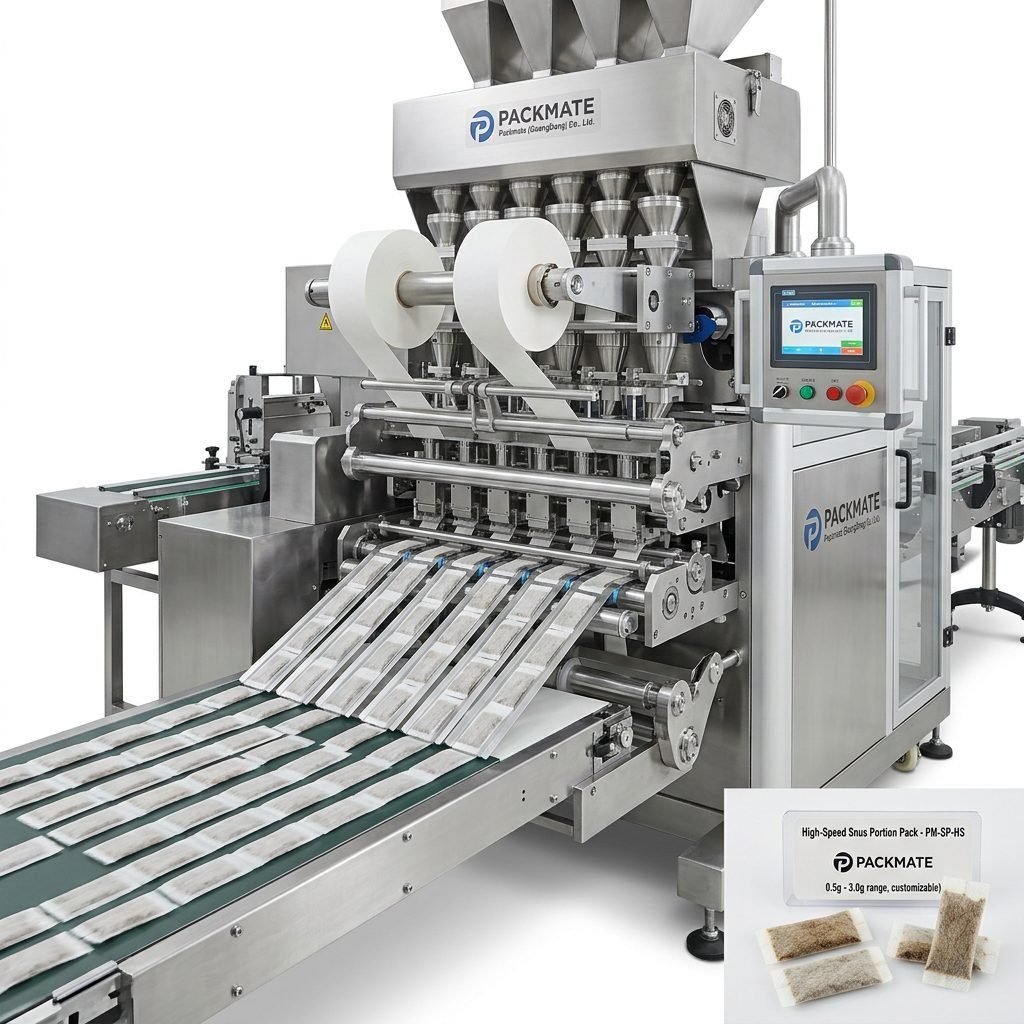
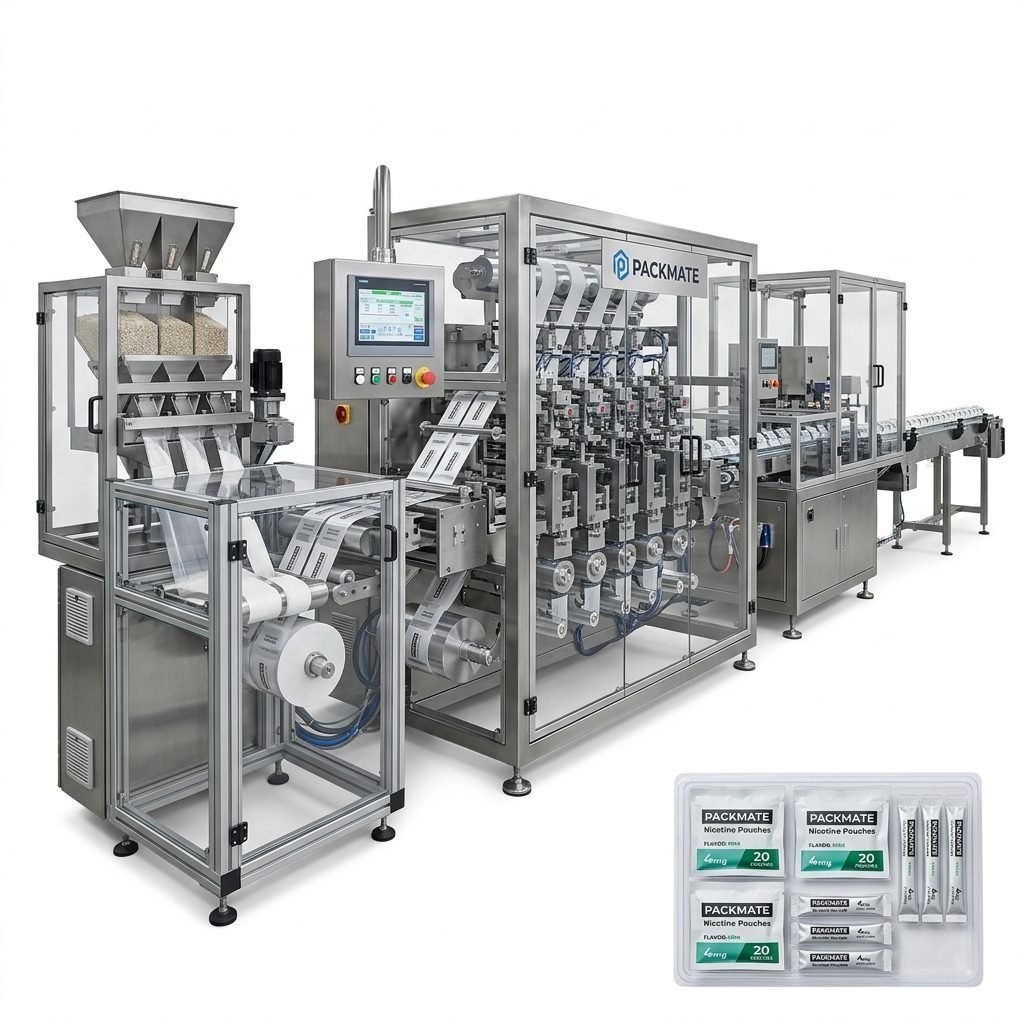
Choosing the right nicotine packaging machine manufacturer for your business in Senegal is a strategic decision that affects product quality, regulatory compliance, production costs, and your ability to scale. This guide walks you through the essential considerations — from technical specifications and certifications to after-sales support and local market realities — so that you can select a partner who delivers reliable machines, tailored service, and measurable return on investment.
🔍 Understand the Senegal Market & Your Production Needs
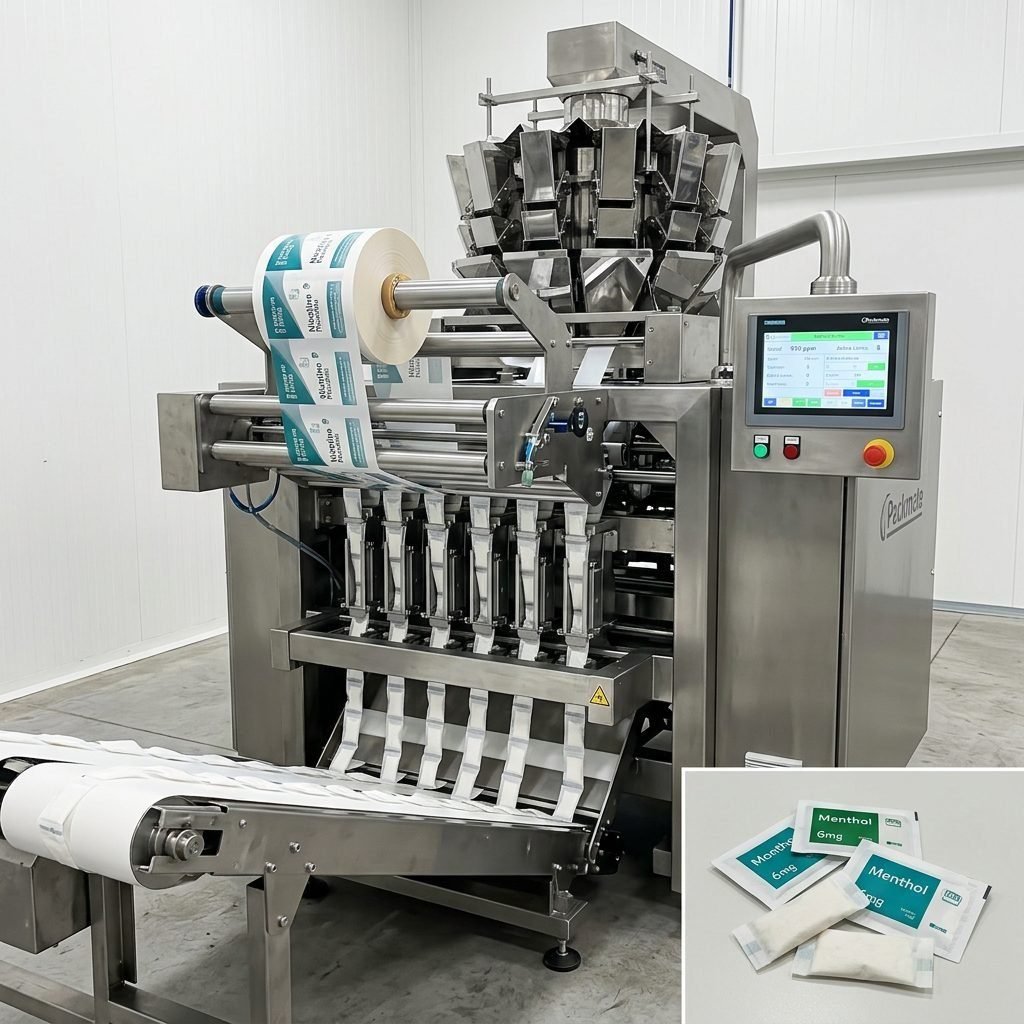
Senegal’s tobacco and nicotine product market has unique distribution channels, regulatory checks, and consumer preferences. Before reaching out to manufacturers, define your production targets: daily output (pouches/hour), pouch formats (single-dose sachets, stick packs, or multi-lane snus pouches), and product types (powder, granule, or moisture-sensitive pouches). These parameters determine machine type, lane count, and auxiliary equipment.
Small pilot production favors compact stick pack or single-lane snus pouch machines, while mid-to-large-scale operations require multi-lane systems with high-speed dosing and integrated weighing. If you plan to expand, prioritize modular lines that allow lane additions and quick format changes.
✅ Key Technical Criteria to Evaluate
Selecting a manufacturer means assessing machines across several technical dimensions. Pay attention to:
Machine stability and uptime — Look for robust frames, precision components, and proven field reliability. Downtime directly impacts costs and delivery schedules.
Production accuracy — Accurate dosing and sealing reduce material waste and ensure consistent nicotine content per pouch, a critical factor for compliance and customer trust.
Flexibility — Machines that support multiple pouch sizes and quick tooling changes let you respond to new SKUs without major capital expenditure.
⚙️ Recommended machine classes
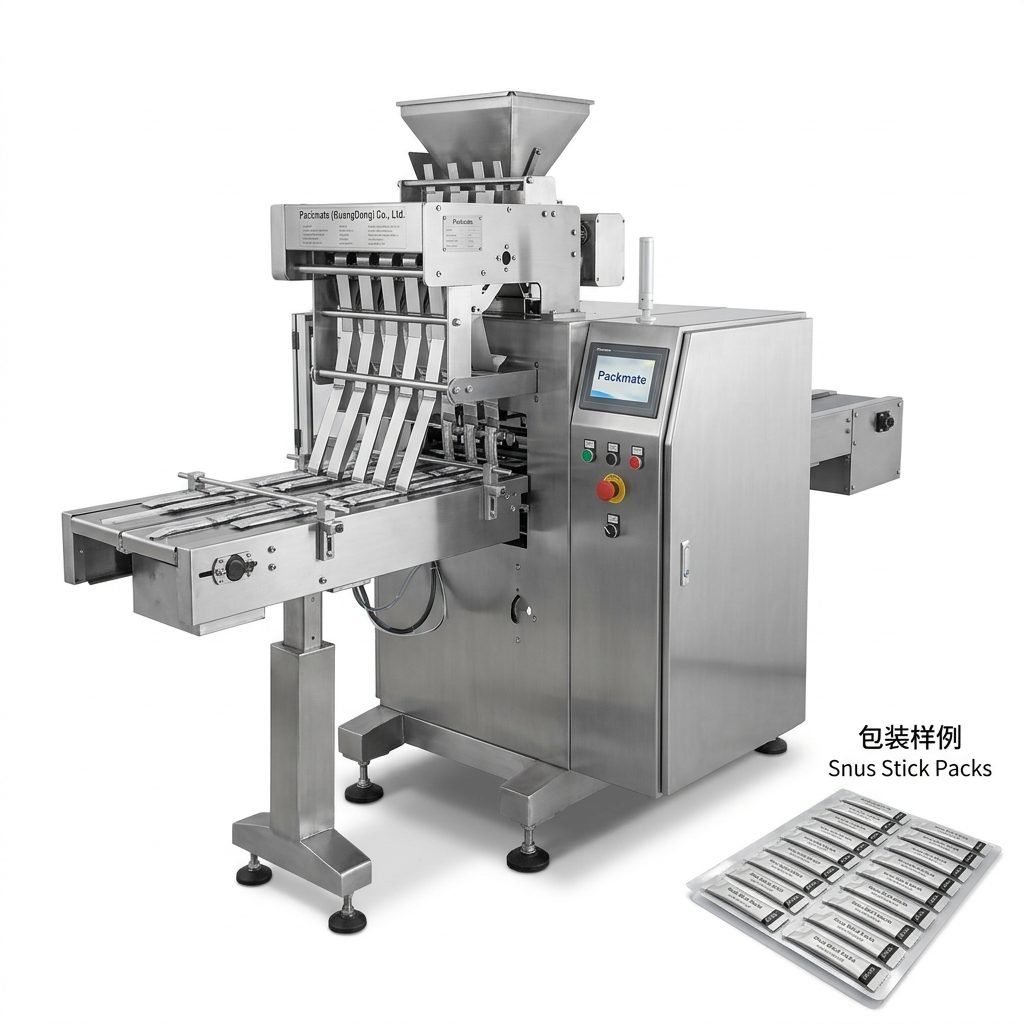
– Single-lane snus pouch machines for small-batch or R&D.
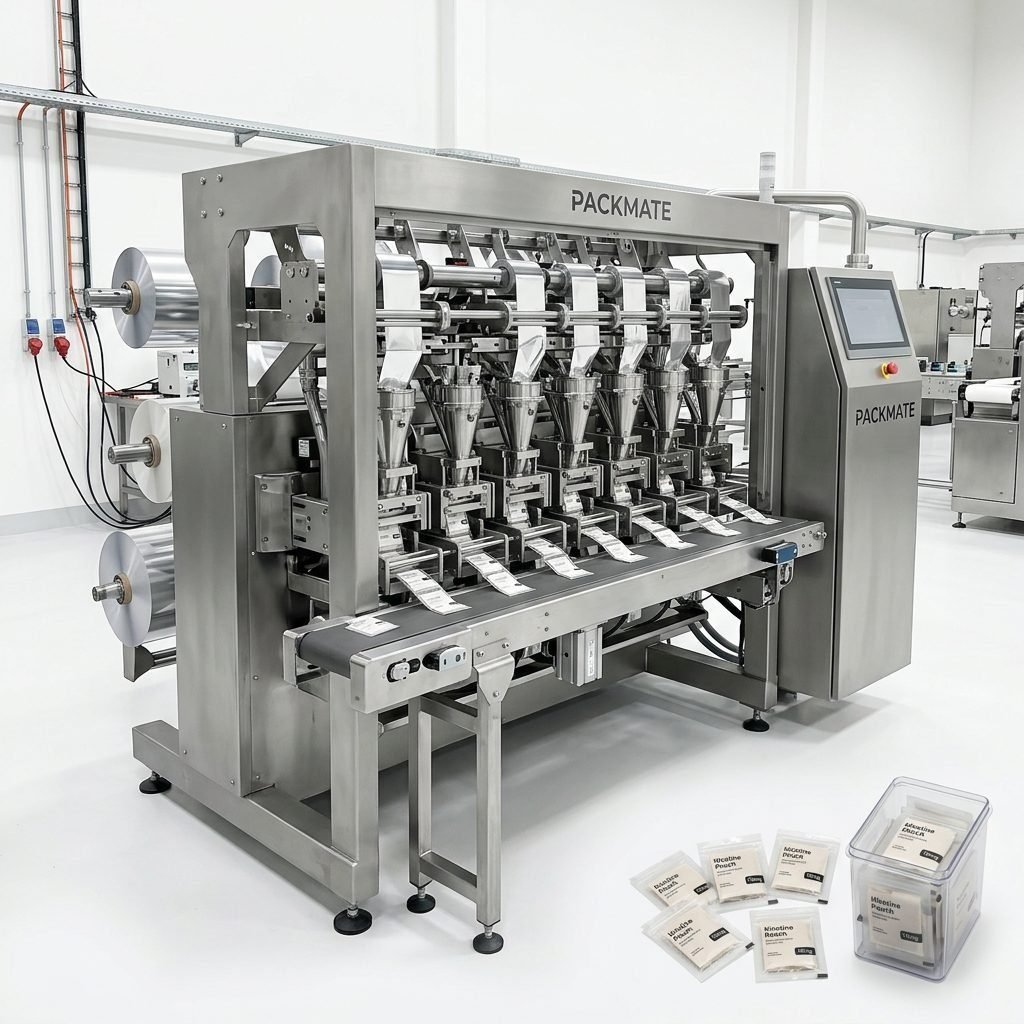
– Multi-lane systems for medium to high volume nicotine pouches.
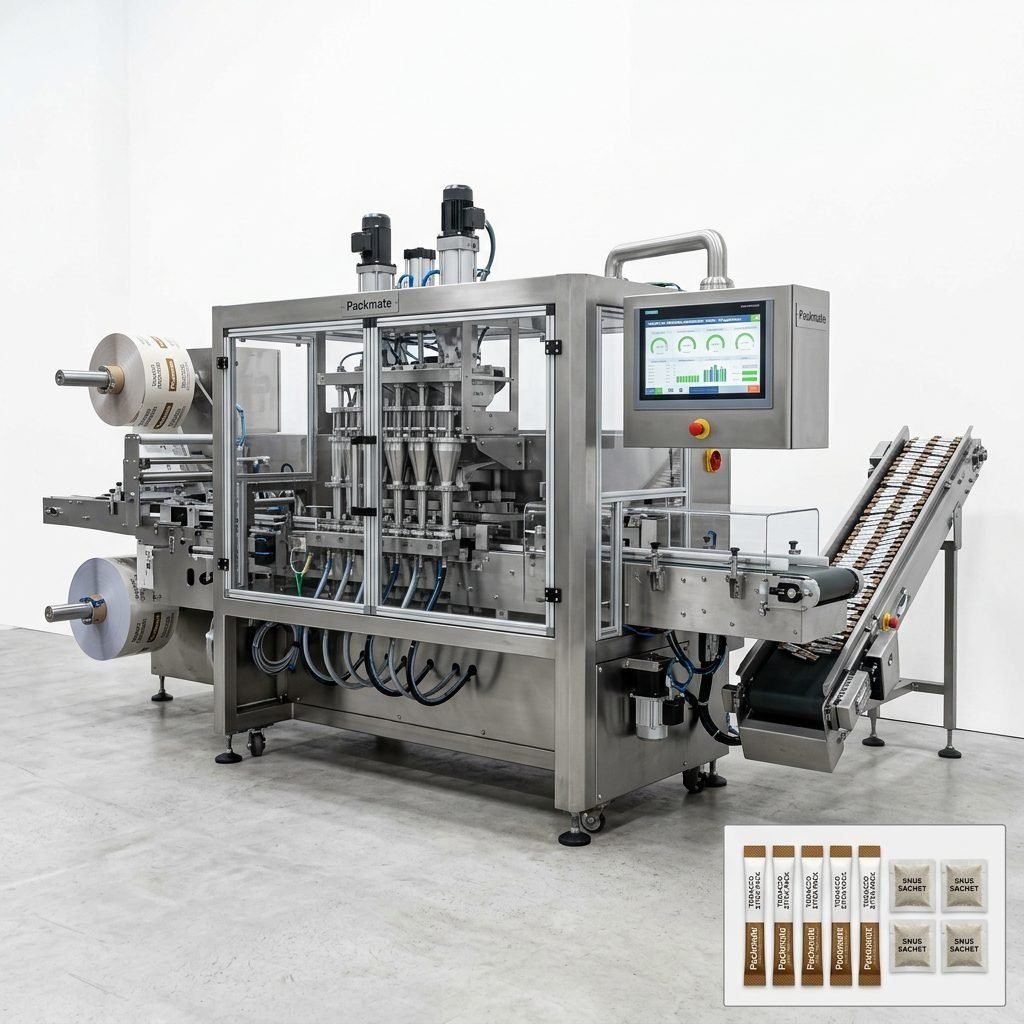
– Integrated stick pack & sachet lines when you need mixed-format production.
📜 Certifications, Standards & Regulatory Compliance
Ensure the manufacturer can supply machines that meet international safety and quality standards. CE and ISO certifications are minimum signals of compliance and consistent manufacturing processes. If you plan to export from Senegal, machines with recognized certifications simplify approvals in destination countries.
Ask for documentation: certificates, material traceability, and quality inspection records. Reliable vendors provide factory test reports and can support customer inspections or third-party audits.
🏭 Factory Strength & Experience
A manufacturer’s technical depth, workshop scale, and R&D history reflect its ability to deliver complex packaging lines and ongoing improvements. Companies with decades of engineering experience and substantial factory footprints typically offer better component sourcing, spare parts availability, and customization capabilities.
Packmate: an example of manufacturing strength
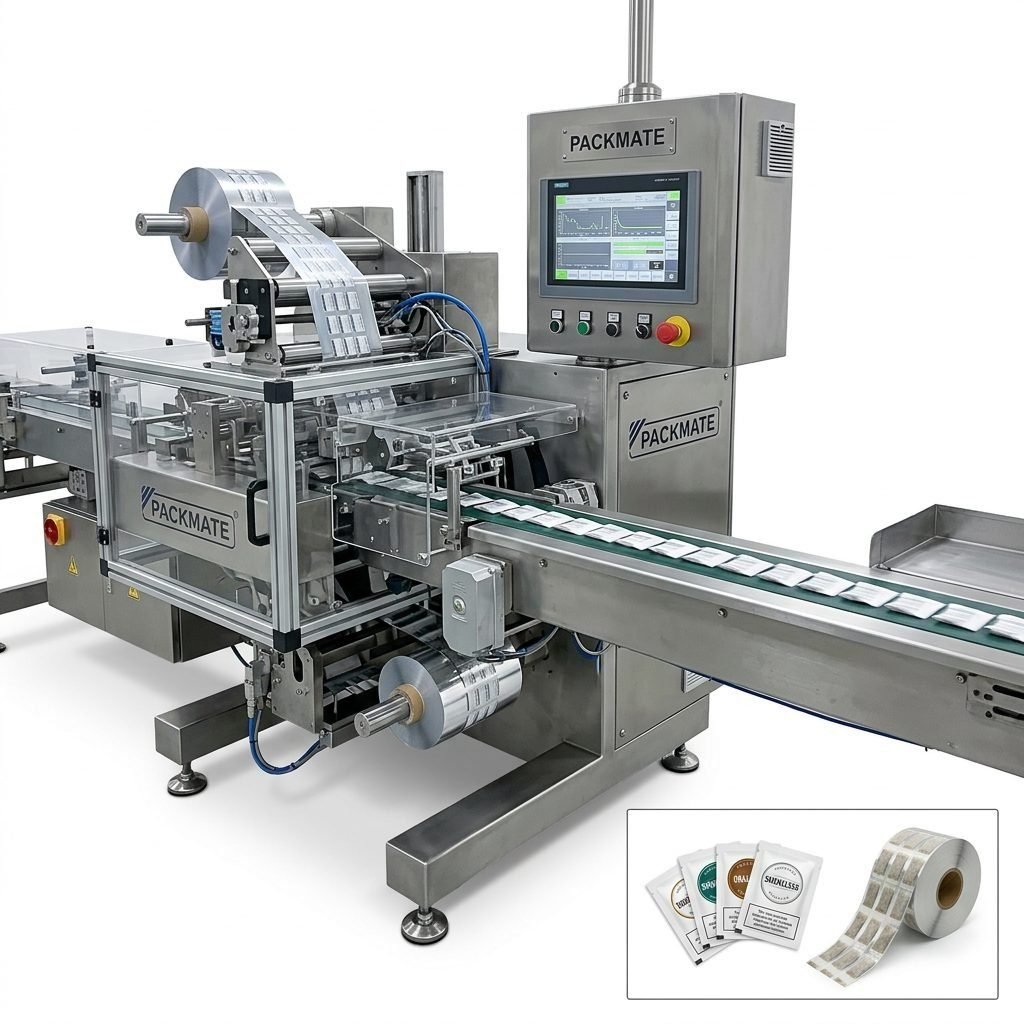
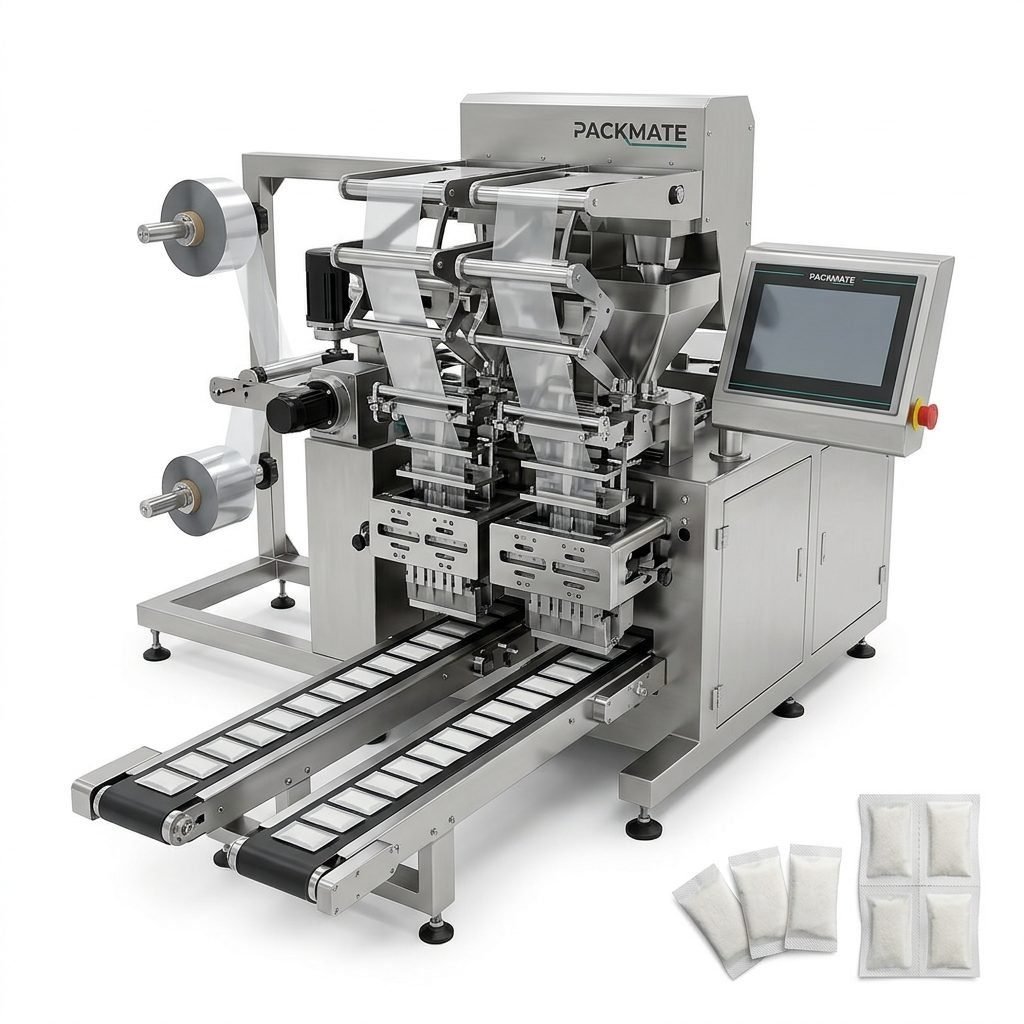
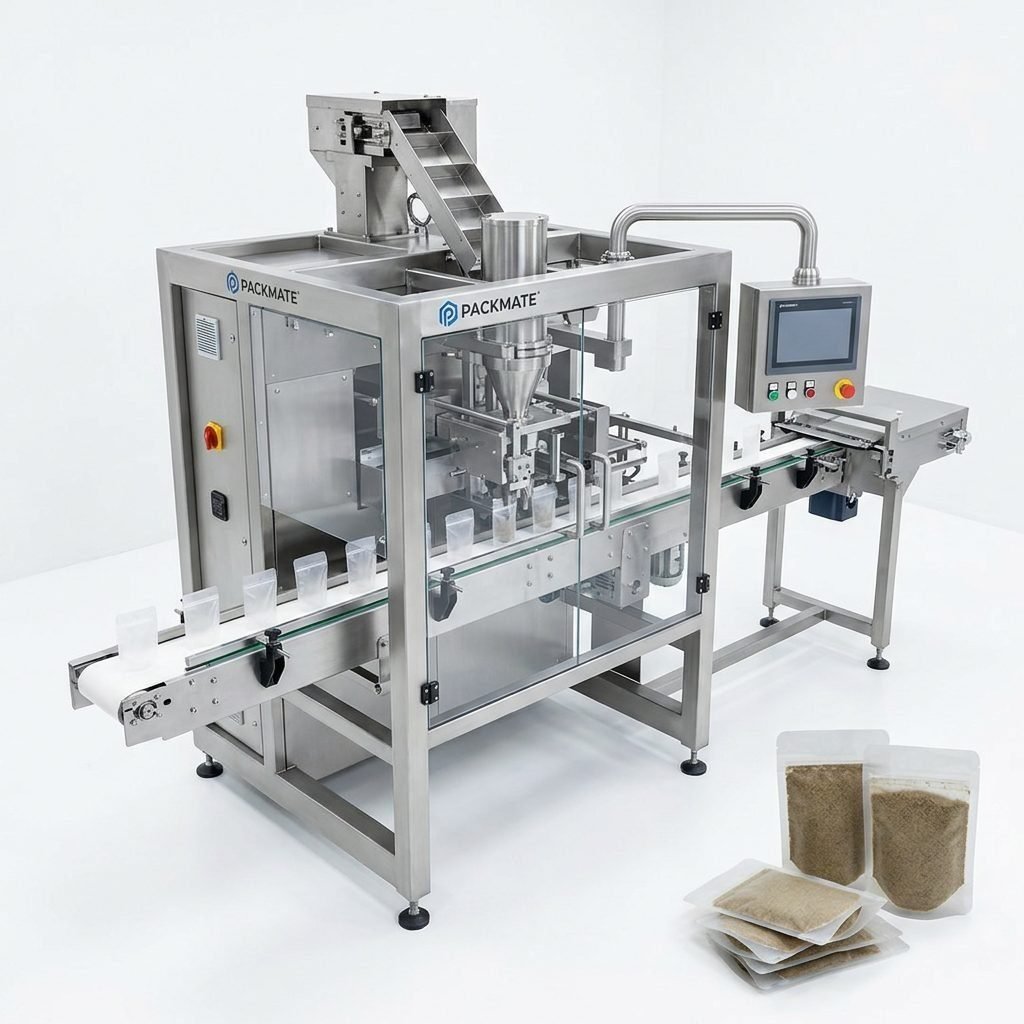
Packmate Snus Machine brings over 30 years of engineering experience, a 20,000㎡ manufacturing facility, advanced CNC centers, and more than 50 machine models. Their portfolio spans snus and nicotine pouch machines, stick pack and sachet machines, and full turnkey packaging lines — a valuable reference point when assessing suppliers.
Learn more about their offerings here: Snus & Nicotine Packaging Machines and About Packmate.
💬 After-Sales Support & Local Serviceability
Excellent after-sales support is often more valuable than a marginally lower purchase price. Important support elements include: spare parts lead time, remote troubleshooting, local service partners or training for your technicians, and comprehensive documentation in English or French.
Ask whether the manufacturer provides:
– Remote diagnostics and PLC/software updates.
– Onsite commissioning and operator training in Senegal or a nearby region.
– Clear spare parts lists with part numbers and typical consumption rates.
💸 Total Cost of Ownership (TCO) vs. Purchase Price
Evaluating cost requires a long-term view. Consider energy consumption, spare parts, maintenance intervals, expected uptime, and operator training costs. A slightly higher initial investment in a durable, precise machine can lead to a lower TCO through reduced waste and downtime. Request a Total Cost of Ownership estimate from each vendor.
Checklist for TCO
– Energy consumption per 1,000 pouches.
– Mean time between failures and mean repair time.
– Consumables: sealing elements, cutting knives, and film guides.
– Availability of local technicians and spare part stock.
🧭 Questions to Ask Potential Manufacturers
Use a standard questionnaire for all vendors to compare apples-to-apples. Example questions:
1) What are the guaranteed production speeds and tolerances for nicotine dosing?
2) Can you provide references or case studies of installations in Africa or similar markets? (Request contactable references.)
3) What is included in commissioning, and is travel to Senegal available for onsite training?
4) How long are spare parts available, and what are average lead times for critical components?
📈 Case Studies & Proven Track Records
Manufacturers who publish global case studies and machine performance data demonstrate transparency and capability. Review case examples that match your intended product type. You can check supplier case pages like Packmate case studies to verify real-world performance, installation scope, and customer feedback.
🛠 Installation, Commissioning & Training
Proper commissioning and operator training are essential to reach declared speeds and ensure product quality. Confirm that the vendor offers:
– Onsite setup and validation of pouch sealing, dosing, and weigher calibration.
– Structured training for operators and maintenance personnel, with training materials in English or French.
– Standard commissioning checklists, performance acceptance tests, and long-term maintenance plans.
🔗 Integrating Auxiliary Equipment & Full Lines
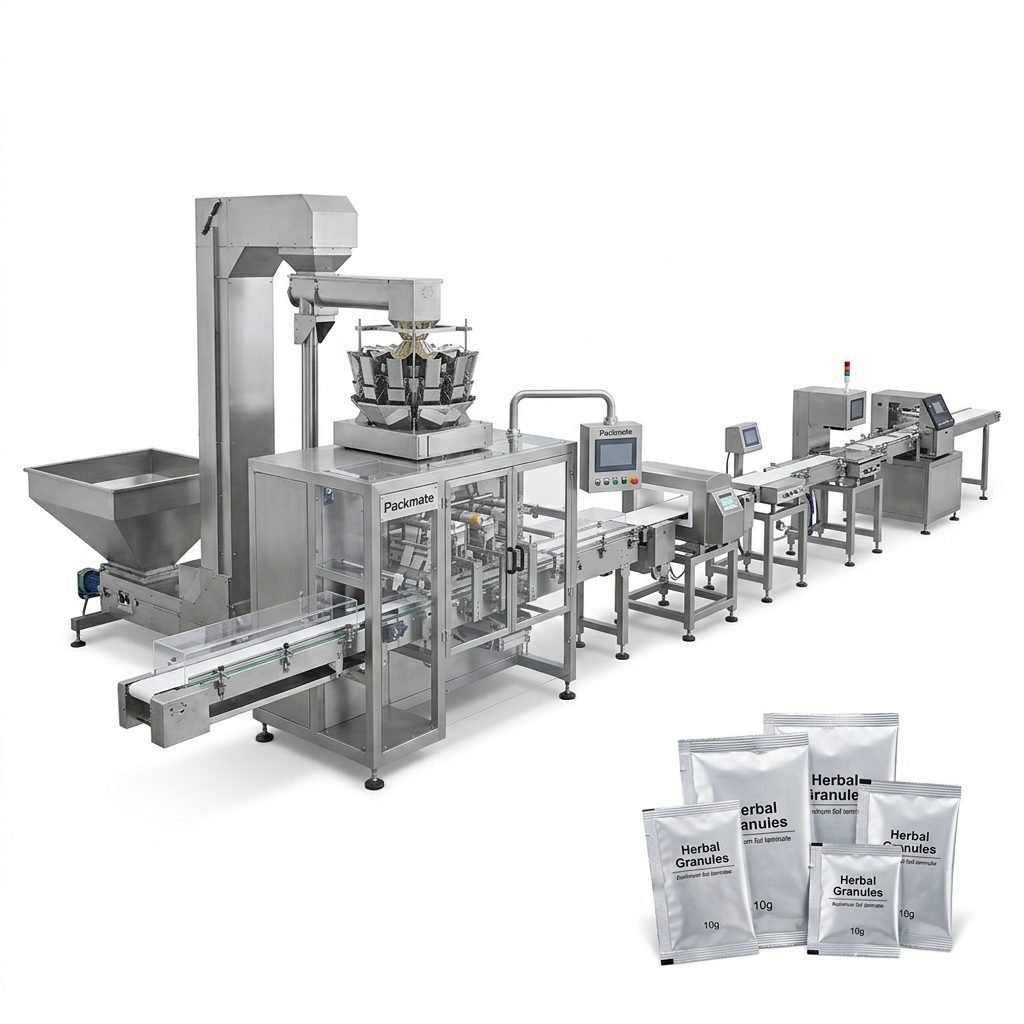
A complete production line may include feeders, vibratory conveyors, weighers, checkweighers, metal detectors, and cartoning or case packing systems. Consider vendors that either provide or coordinate auxiliary equipment to ensure smooth line integration. Packmate lists auxiliary offerings and full lines such as weighing & packaging systems and filling lines — useful when planning turnkey installations: Weighing & Packaging Systems and Filling & Packaging Lines.
⚖️ Example configuration for a Senegal facility
– Multi-lane snus pouch machine (4–8 lanes) with rotary dosing for nicotine powder.
– High-precision multi-head weigher for additives or flavor blends.
– In-line metal detector and rejection system, followed by automated cartoning.
📦 Logistics, Shipping & Local Customs
Industrial machinery logistics to Senegal requires careful planning: crating, port handling, customs documentation, and local transport. Choose a manufacturer experienced with African shipments or ask for references. Properly documented shipments minimize delays and unexpected fees.
📝 Contract Terms, Warranties & Spare Parts Agreements
Negotiate clear warranty terms, spare parts kit contents, and service-level agreements (SLAs). A typical warranty covers mechanical and electrical components for a defined period and specifies response times for remote support or onsite visits. Confirm part replacement costs and availability after warranty expiration.
🌍 Choosing Between Local Agents vs. Direct Manufacturer Purchase
Purchasing via local agents can simplify customs and local support but may add margin to cost and complicate accountability. Buying directly from a reputable manufacturer often reduces cost and ensures direct support lines, but you must ensure logistics and service are clearly arranged. Evaluate both options against total cost, service guarantees, and risk allocation.
📌 Practical Procurement Checklist
Before signing, ensure you have:
– Clear machine specifications and acceptance test criteria.
– Written quotations that breakdown machine price, auxiliary equipment, spare part kits, training, and shipping.
– Warranty, SLAs, and a list of guaranteed spare parts with lead times.
– Contactable references and factory visit options if practical.
🔗 Useful Resources & Next Steps
If you are exploring turnkey solutions or want to evaluate proven machine lines and accessories, review supplier catalogs and service pages. For example, Packmate provides extensive product categories that can help you map your requirements: Sachet & Stick Pack Machines, Auxiliary Packaging Equipment, and a full Service overview.
🚀 Final Checklist: Make the Decision with Confidence
1) Define required output, pouch formats, and expansion plans.
2) Shortlist manufacturers with proven snus/nicotine machine experience and factory capacity.
3) Validate certifications, request references, and review case studies.
4) Negotiate TCO, warranty, spare parts availability, and commissioning scope.
5) Confirm logistics, customs handling, and onsite training arrangements for Senegal.
📞 Ready to contact a reliable supplier?
For direct inquiries and more detailed technical consultation, visit the supplier contact page: Contact Us. Reviewing product catalogs and FAQs can also accelerate your specification process: Catalog and FAQs.
常见问题 (FAQs)
Q1: What is the typical lead time for a multi-lane nicotine pouch packing line?
A1: Lead time varies by complexity and customization, but a standard multi-lane line typically requires 12–20 weeks including testing. Confirm specific timelines with the manufacturer and allow extra time for shipping and customs clearance to Senegal.
Q2: How can I ensure consistent nicotine dosing across thousands of pouches?
A2: Use precision dosing systems with weight-based verification, regular calibration routines, and in-line checkweighers. Automated feedback loops and high-quality screw or rotary dosers reduce variation.
Q3: Are manufacturers able to provide spare parts and service in Africa?
A3: Reputable manufacturers maintain spare part inventories and partner with local service providers or offer direct support through scheduled visits. Verify parts lead times and ask for a recommended spare parts kit.
Q4: Can machines be modified for different pouch materials or barrier films?
A4: Most modern lines are designed for material flexibility, but confirm compatibility and request material testing during FAT (Factory Acceptance Test) with your actual films and nicotine blends.
Q5: What documentation should I request before purchase?
A5: Request machine specifications, CE/ISO certificates, FAT reports, spare parts lists, warranty terms, commissioning plan, and contactable references. These documents protect your investment and streamline acceptance.