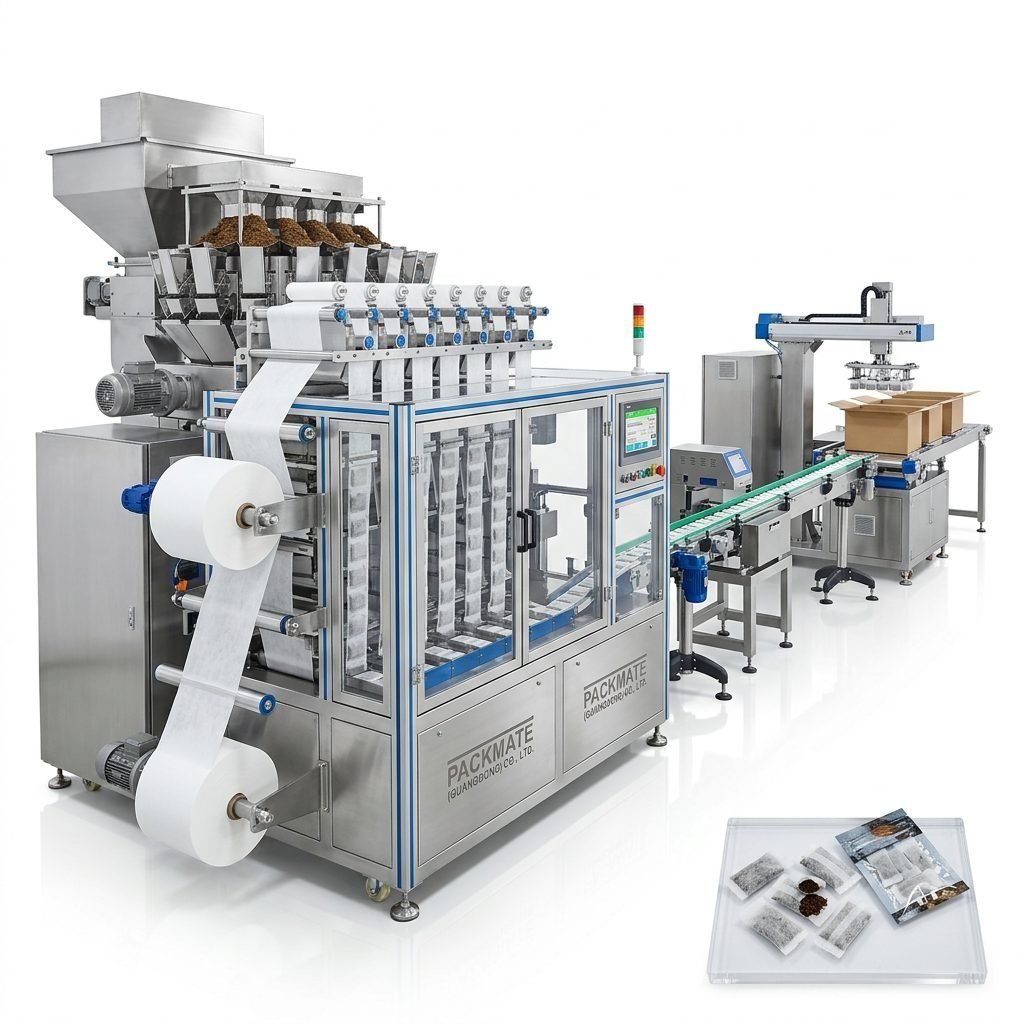
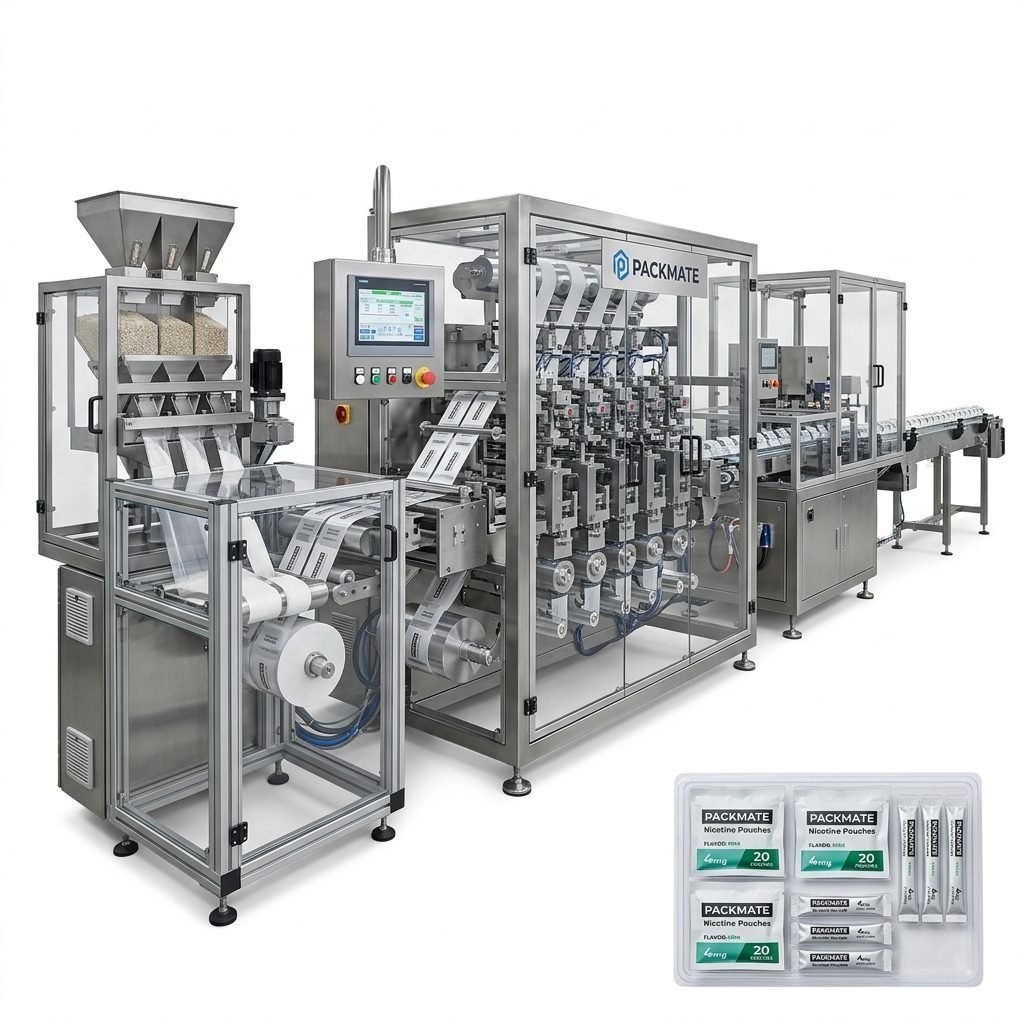
Launching a snus or nicotine pouch brand means your packaging equipment will define product consistency, regulatory compliance, and production economics from day one. For startups, choosing the right snus machine is about balancing reliability, flexibility, and upfront investment. This guide walks you through the practical criteria, machine types, supplier assessment, and real-world tips so you can pick packaging equipment that helps your business scale without costly surprises.
Why the Right Snus Packaging Machine Matters for Startups
A packaging machine isn’t just a piece of hardware — it’s a long-term partner for production. Choosing incorrectly can lead to higher waste rates, long changeover times, regulatory issues, and lost capacity when demand grows. Startups need machines that deliver consistent pouch weight, neat sealing, and minimal downtime while remaining adaptable to product changes like different pouch sizes, materials, or dosing types.
Key startup priorities
🔶 Speed-to-market: machines that can be commissioned quickly and validated for quality control.
🔶 Flexibility: ability to run multiple formats (pouches, sachets, sticks) with easy changeovers.
🔶 Reliability & after-sales: technical support, parts availability, and training for smaller teams.
🔶 Compliance: CE/ISO and the capability to meet local labeling and safety regulations.
Types of Snus Packaging Machines and When to Choose Each
Packaging lines vary by pouch style and production philosophy. Below are the common options startups evaluate:
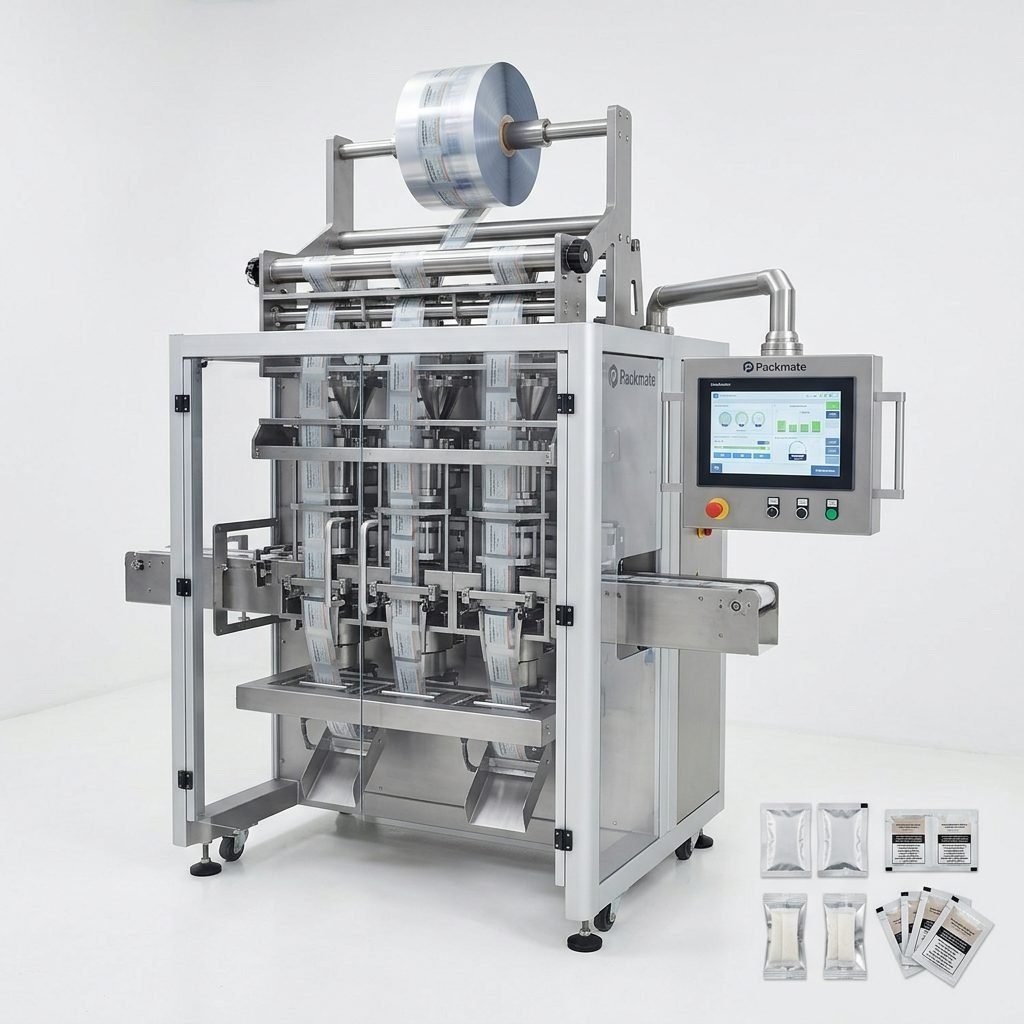
Sachet & Stick Pack Machines
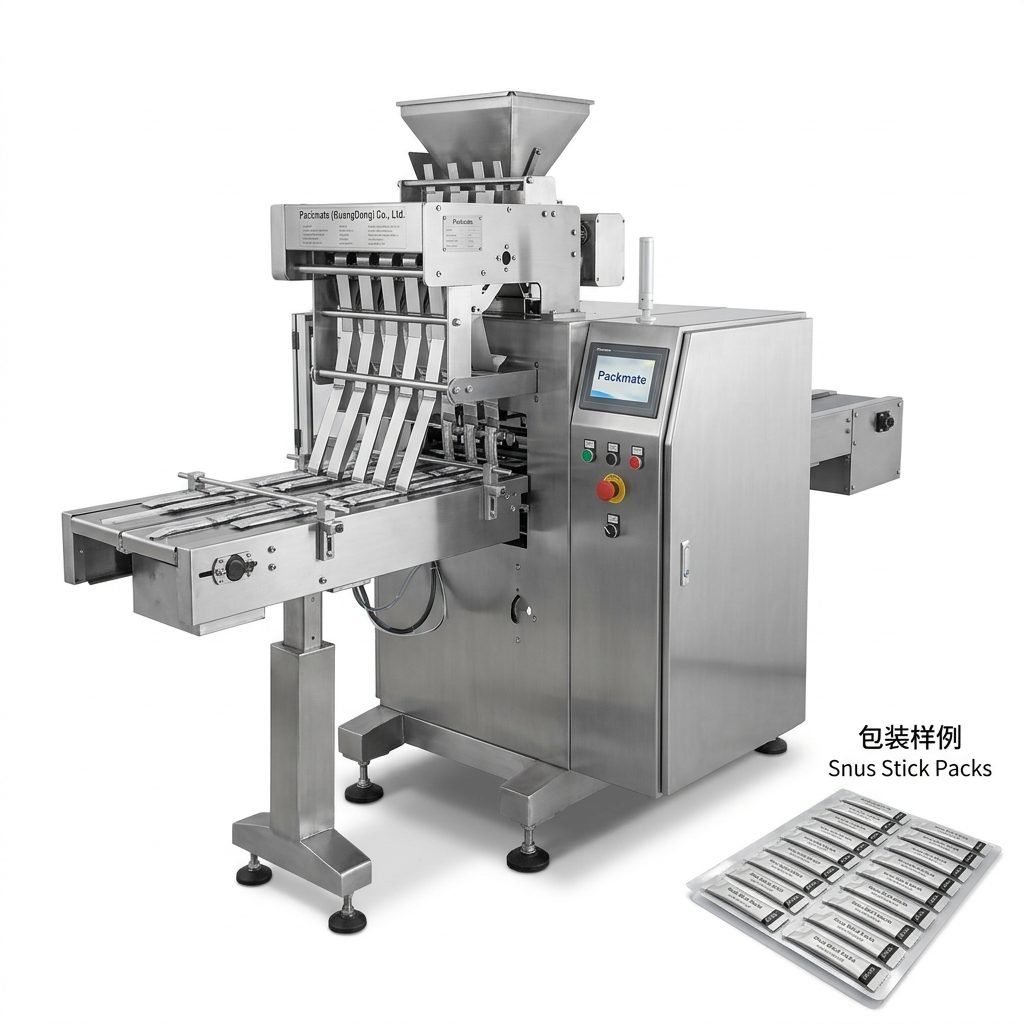
These are ideal for single-dose portions produced in continuous form. Stick packs are perfect for slim dosing while sachets can be wider and used for different shapes. Advantages include compact footprint and good speed for single-portion units.
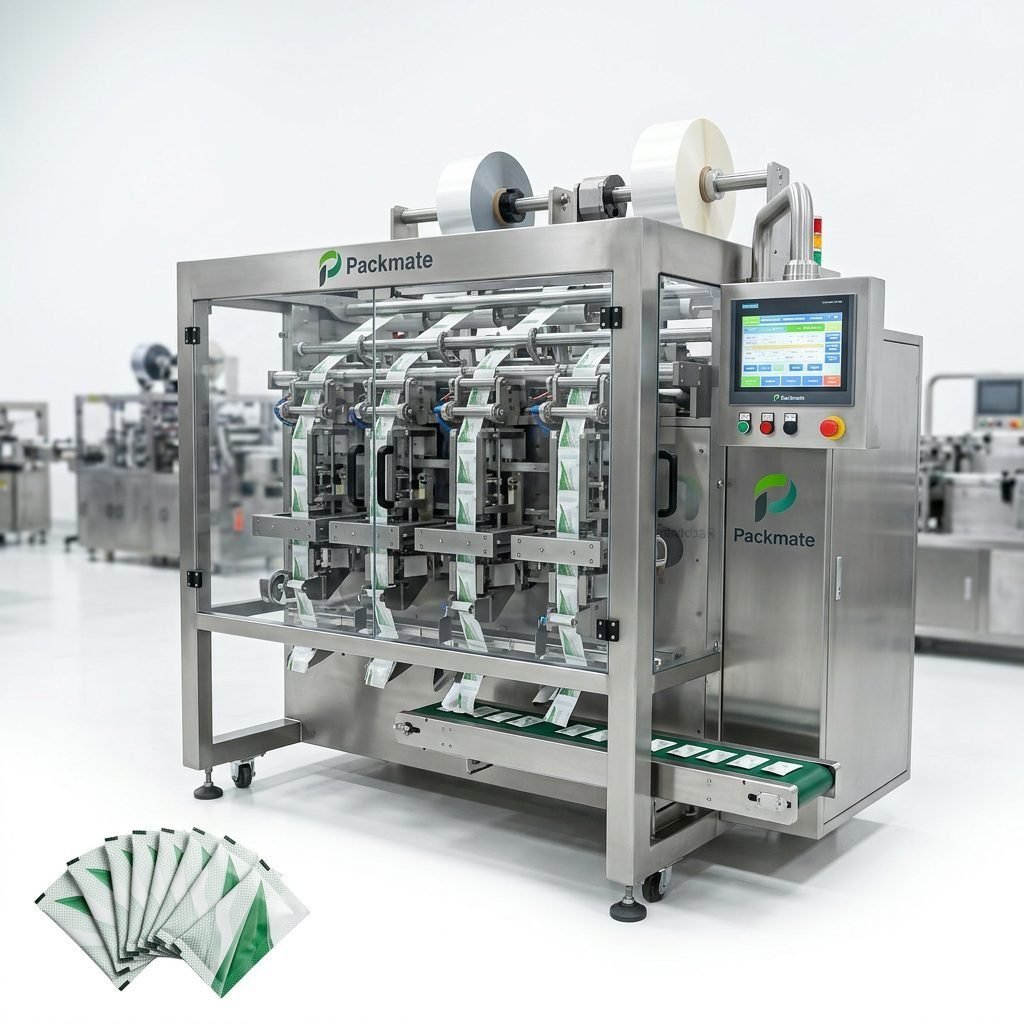
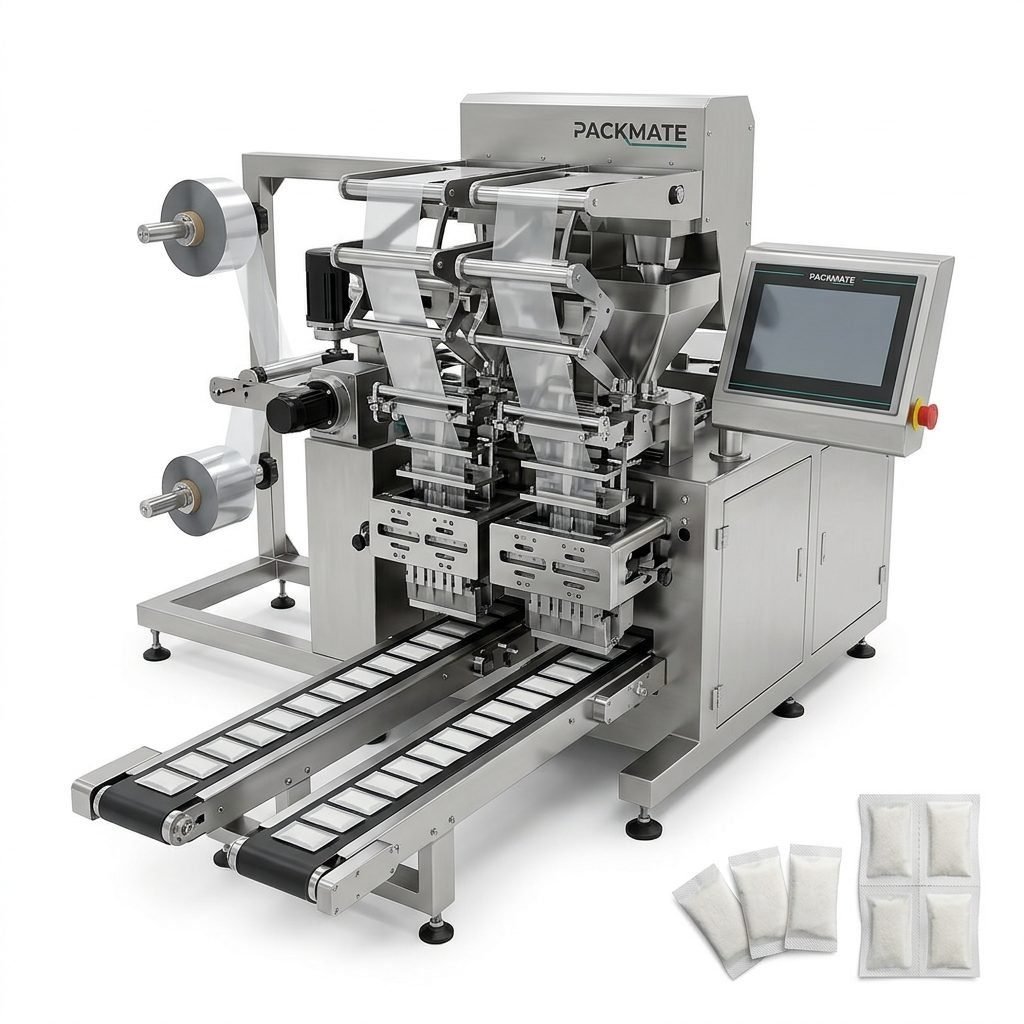
Multi-lane Snus / Nicotine Pouch Machines
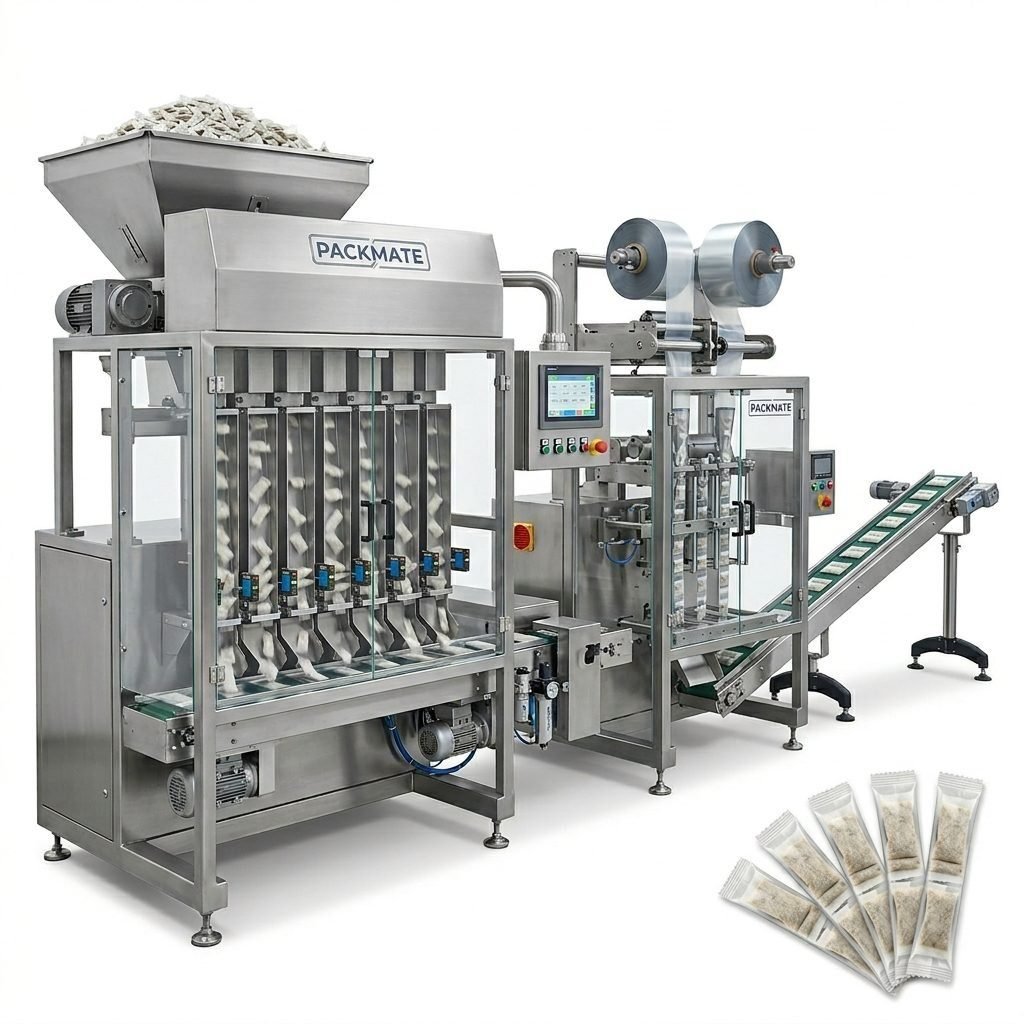
Multi-lane systems run several pouches side-by-side to maximize throughput while keeping machine footprint reasonable. These are excellent when you expect to scale quickly and need higher outputs without buying multiple single-lane machines.
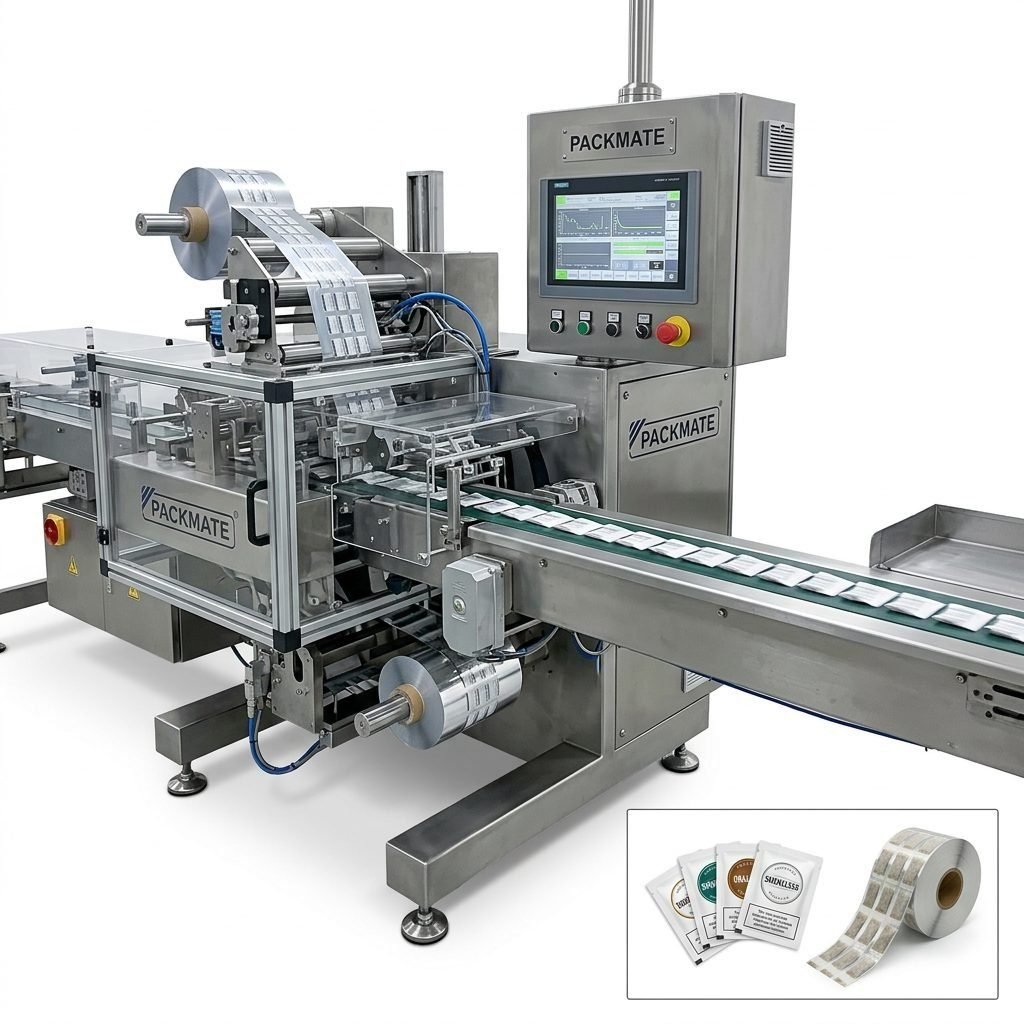
Form-Fill-Seal Pouch Machines
For custom pouch shapes and flexible materials, form-fill-seal machines provide design freedom and are suitable when marketing differentiation (unique pouch look/feel) matters. They can handle liquids, powders, and pouch sealing in one integrated station.
⚠️ Tip: For most startups, a flexible multi-format machine (that supports sachets and sticks or has modular lanes) provides the best balance between CAPEX and market adaptability.
Technical Specifications to Evaluate
When reviewing machine specs, focus on the attributes that impact product quality, production economics, and ease of operation:
- Production speed (pouches per minute): Consider both peak and sustained speeds after real-world testing.
- Lane count and scalability: Multi-lane options improve throughput while keeping footprint manageable.
- Filling accuracy & dosing mechanism: Precision dosing reduces waste and ensures regulatory compliance for nicotine content per pouch.
- Material compatibility: Ability to handle your chosen pouch films, foils, or laminates and seal reliably.
- Changeover time & tooling: Quick-change features save labor and downtime when switching SKUs.
- HMI & automation features: Intuitive controls, recipe storage, and integration with upstream dosing/weighing systems.
- Cleanability & maintenance: Easy access to components and local spare parts availability reduce mean time to repair.
Assessing Suppliers: What Startup Founders Should Ask
The machine is only as good as the company behind it. Ask these core questions when evaluating suppliers:
- Factory capability: Do they have in-house CNC machining, assembly lines, and quality testing? A strong manufacturing base means better build quality and lead times.
- Proven models and references: Can they show case studies or examples of similar installations? Look for real-world cases and testimonials.
- Certifications & compliance: Are machines CE/ISO certified and able to meet hygiene and safety standards relevant to your market?
- After-sales service: What support, training, spare parts stock, and remote diagnostics are available?
- Turnkey capability: Can they supply full lines including feeding, weighing, and packaging or just the core machine?
🔶 Pro vetting step: Visit the manufacturer’s factory if possible, or request a live demo video showing your product running on the machine with measurable outputs.
Financial Planning: CAPEX, OPEX and ROI for Startups
Budget wisely. Machines with the lowest purchase price may cost more over time due to inefficiencies, consumables, and downtime. Consider:
- Total Cost of Ownership (TCO): include spare parts, tooling, consumables (films, inks), and service contracts.
- Scalability vs immediate need: Avoid over-investing; modular systems allow staged expansion.
- Financing options: leasing, vendor financing, or second-hand refurbished machines can preserve working capital.
- Payback time: model your expected volumes, scrap rate, and labor to estimate ROI.
Integration with Upstream and Downstream Equipment
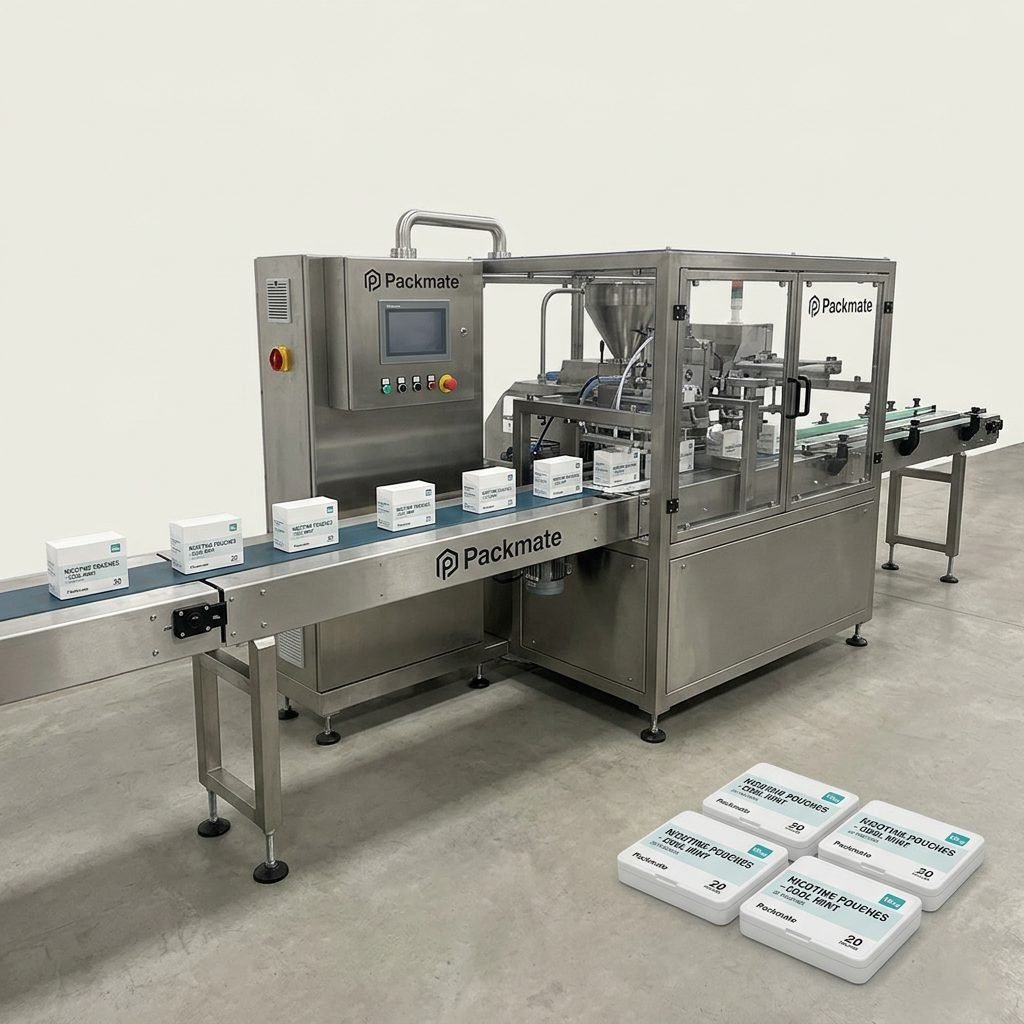
Packaging performance is influenced by the whole line. Ensure compatibility between your dosing, weighing, conveying, and secondary packaging (cartoning, sealing) systems. A cohesive line reduces manual handling steps and improves yield.
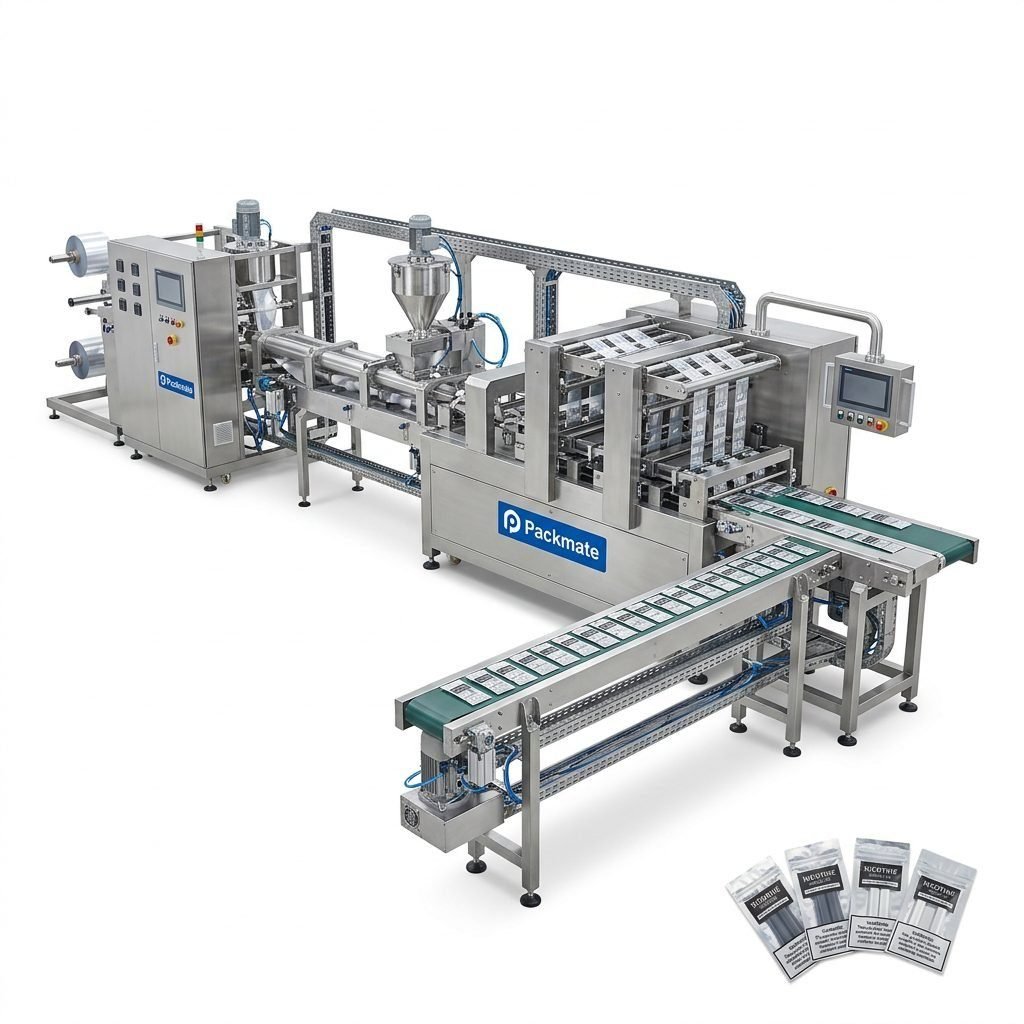
If you need a fully integrated solution, review suppliers that offer turnkey lines. For example, Packmate provides combined solutions spanning dosing, multi-lane packaging, and secondary packing. See their product offerings for details on multi-lane and full-line solutions: Snus & Nicotine Packaging Machines.
Quality Assurance & Regulatory Considerations
For nicotine products, regulatory scrutiny is high. Invest in machines that support consistent dosing and traceability:
- Weight and dose verification: in-line checkweighers or sampling protocols to ensure each pouch meets spec.
- Labeling & traceability: integration with printers and serialization systems if needed by your market.
- Hygienic design: stainless steel contact parts, easy-to-clean surfaces, and minimal crevices to control contamination.
Operational Readiness: Training, Spare Parts & Service
Startups often run lean teams. Prioritize suppliers that include operator training, clear documentation, and fast spare parts delivery. Remote support capabilities (video troubleshooting, PLC backups) can drastically shorten downtime.
Check the manufacturer’s case studies and service offerings to understand their global footprint and responsiveness. For company background and certifications, review the manufacturer profile: About Packmate and their certification page: Certificate.
✅ Startup checklist: machine demo with your product, spare parts list, service SLA, training schedule, and installation plan.
Real-world Buying Roadmap for Startups
Follow a structured buying process to avoid costly mistakes:
- Define product formats, daily volumes, and growth scenarios.
- Request demonstrations with your actual formulation and pouch film.
- Compare TCO estimates and service contracts instead of just purchase price.
- Negotiate commissioning, training, and spare parts package into the contract.
- Plan for stage-wise scaling — buy modular or multi-lane systems to grow with demand.
Explore real customer cases to see how similar lines perform in production: Case. When you’re ready to contact vendors, use the manufacturer’s contact portal to arrange demos and quotes: Contact Us.
Common Startup Pitfalls and How to Avoid Them
New brands often encounter similar issues. Anticipate these to reduce risk:
- Underestimating changeover time: test SKU switchovers during the demo phase and request spare sets of tooling if needed.
- Ignoring consumable compatibility: verify film suppliers and run machine trials with the actual packaging film.
- Skipping maintenance planning: schedule preventive maintenance and keep a critical parts kit on hand.
🔶 Final startup reminder: balance flexibility and cost. A slightly higher initial investment in a robust, modular machine often pays off faster through fewer headaches and more predictable scale-up.
Where to See Machines and Get Support
Attend industry exhibitions to see live demos and meet engineers. Many manufacturers post exhibition schedules and demonstrations online — check the events page for upcoming shows: Our Exhibition. For full product lines and categories, review their catalog and system pages: Sachet & Stick Pack Machines and Bag & Pouch Packaging Machines.
Next steps for founders
Start by documenting your product specs and target daily output, then request a machine demo with your exact formulation. Capture cycle times, scrap rates, and ease of changeover during that demo so you can make an apples-to-apples comparison between vendors.
Closing thought
For startups, the ideal snus machine is one that minimizes operational risk, supports product variety, and grows with demand. By focusing on flexibility, support, and long-term costs rather than just purchase price, you can choose packaging equipment that becomes a reliable foundation for your brand’s growth.
Frequently Asked Questions
Q1: How do I know whether to buy single-lane or multi-lane machine?
A1: Choose single-lane for very low initial volumes or narrow budgets; choose multi-lane if you expect to scale and need higher throughput while conserving floor space. Evaluate expected monthly volumes and growth trajectory before deciding.
Q2: What lead time should I expect for a new snus packaging line?
A2: Lead times vary by model and customization but typically range from several weeks to a few months. Confirm factory capacity, CNC machining schedules, and testing time. Ask the vendor for a firm delivery and commissioning timeline.
Q3: Can I run multiple pouch sizes on the same machine?
A3: Many machines support multiple pouch sizes with modular tooling and recipe-driven HMI controls. Ensure the vendor demonstrates changeover time and provides spare tooling or quick‑change solutions.
Q4: What ongoing costs should startups budget for?
A4: Plan for consumables (films, inks), spare parts kits, preventive maintenance, training refreshers, and occasional service visits. Include an annual service contract if uptime is critical.
Q5: Where can I find reliable vendors and real-world cases?
A5: Review manufacturer case studies and product pages to validate capabilities. For example, explore Packmate’s product categories, cases, and support pages for concrete examples of multi-lane and turnkey solutions: Weighing & Packaging Systems, Case, and Contact Us.