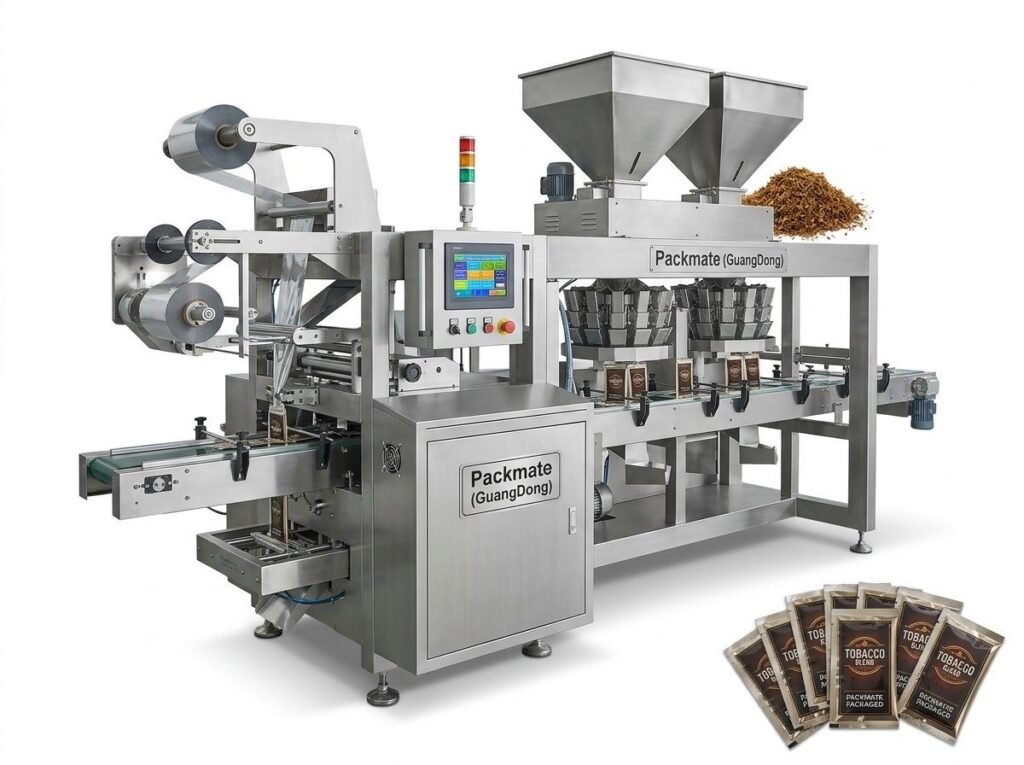
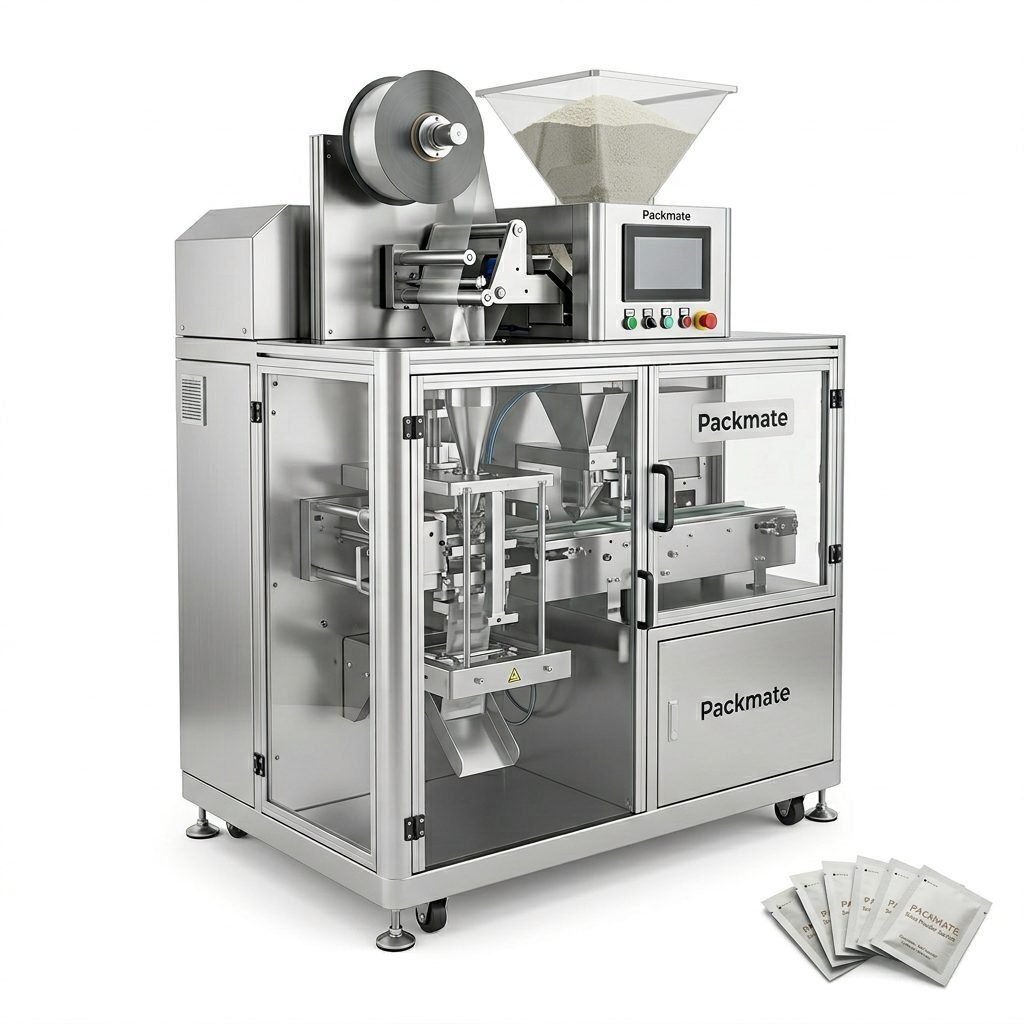
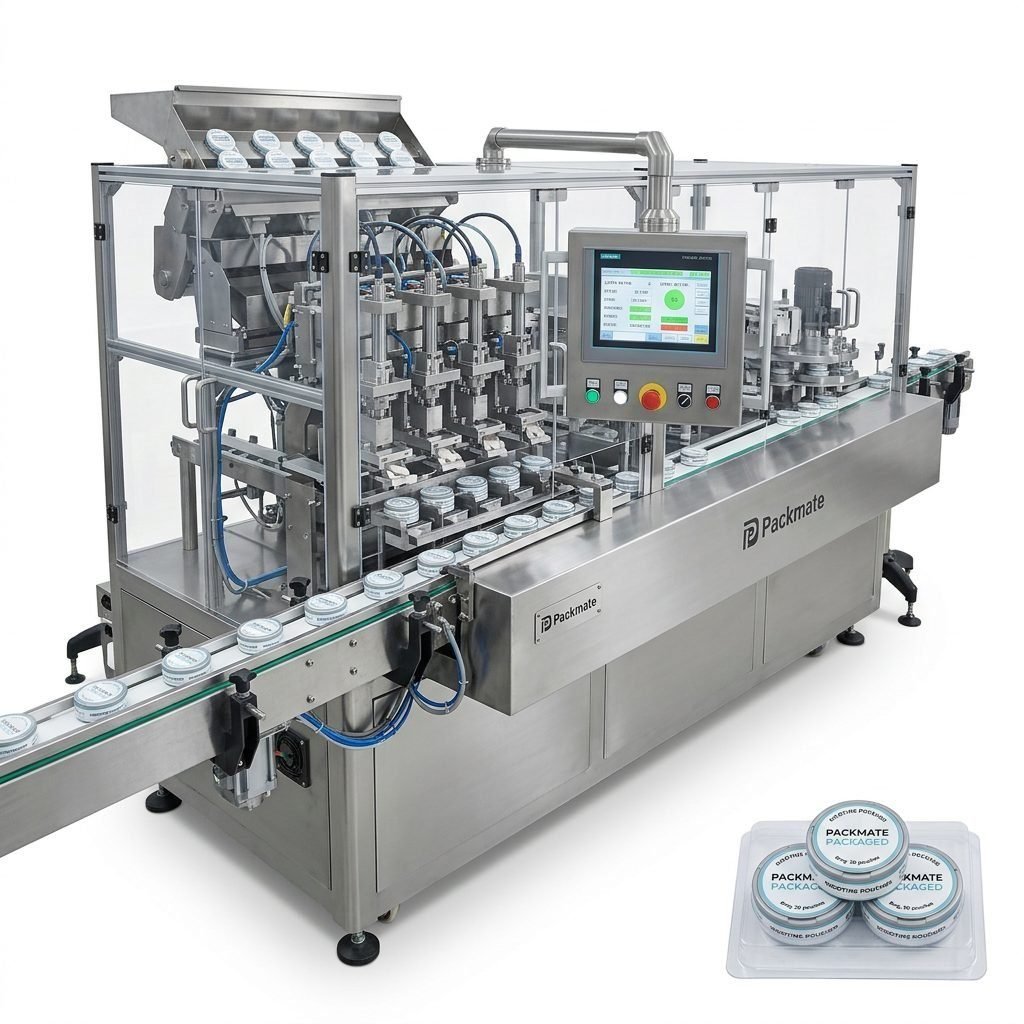
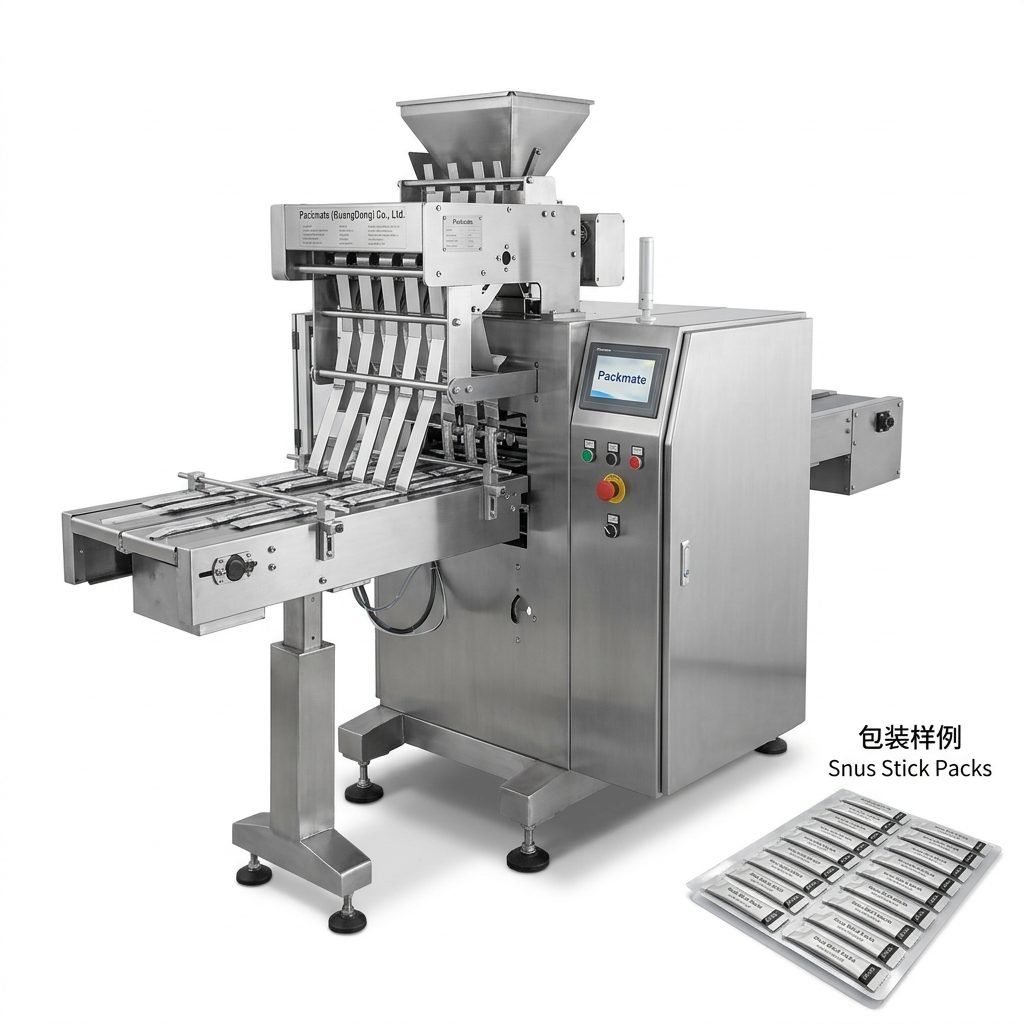
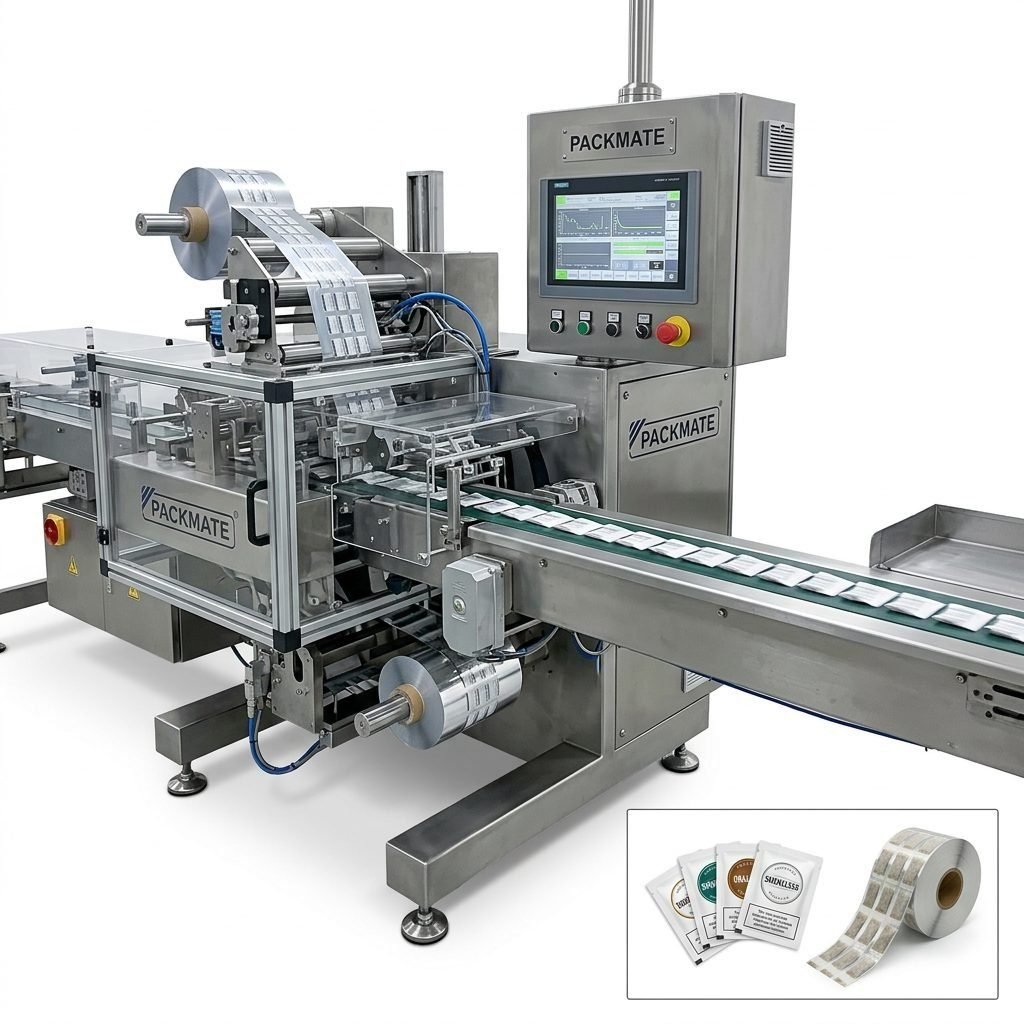
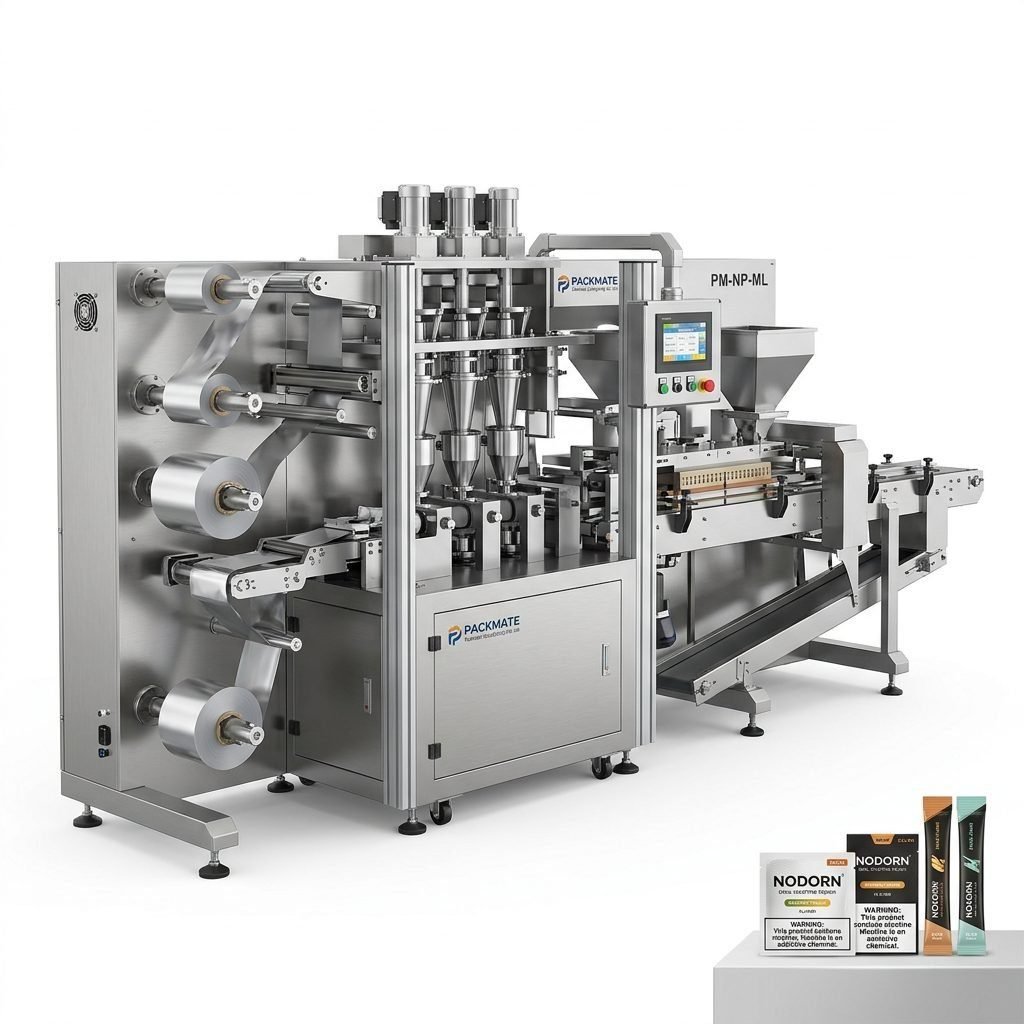
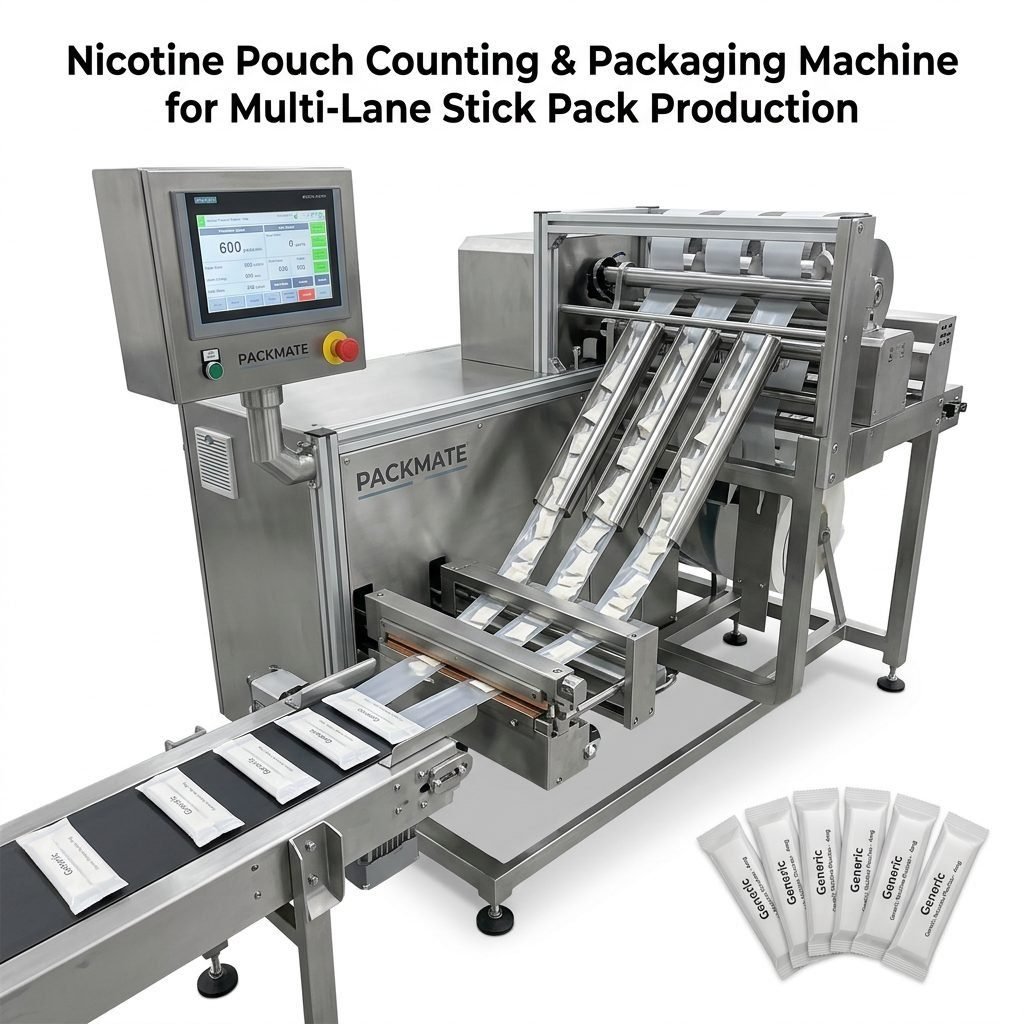
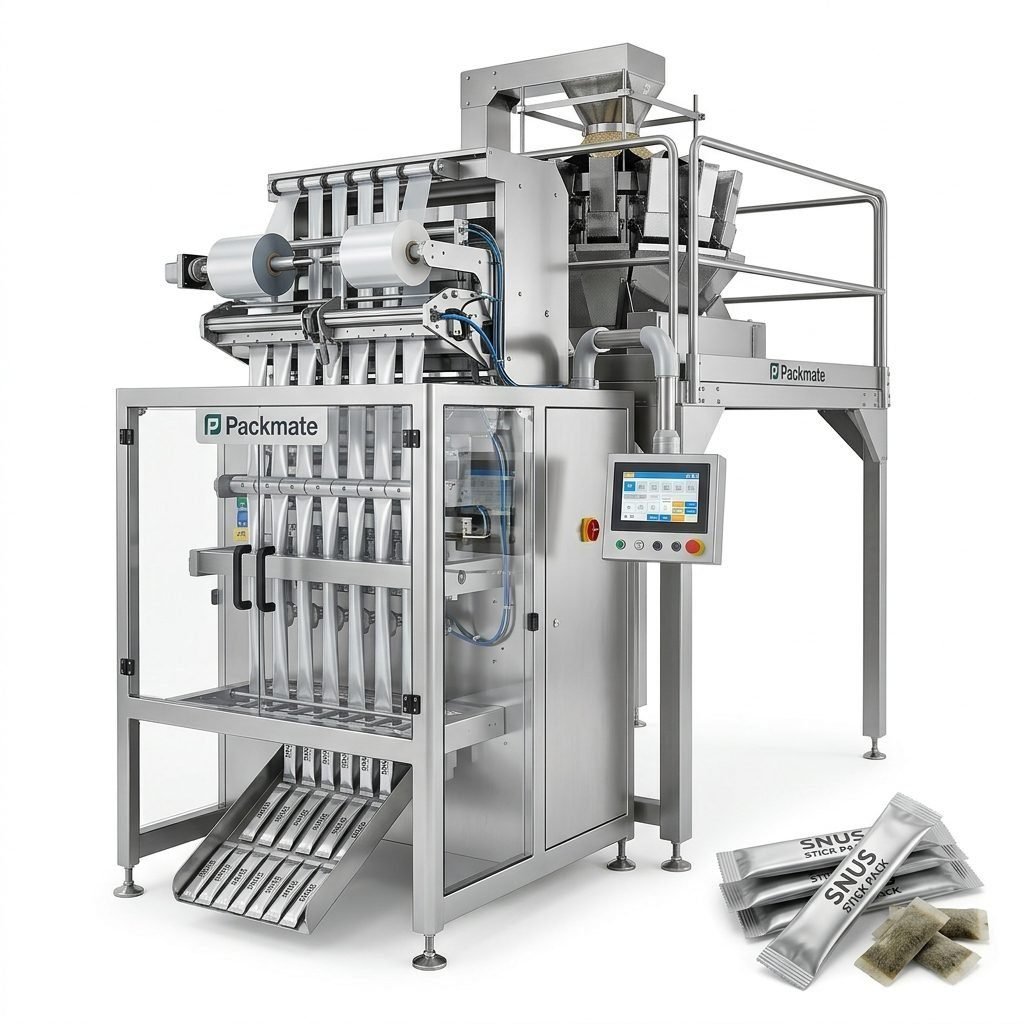
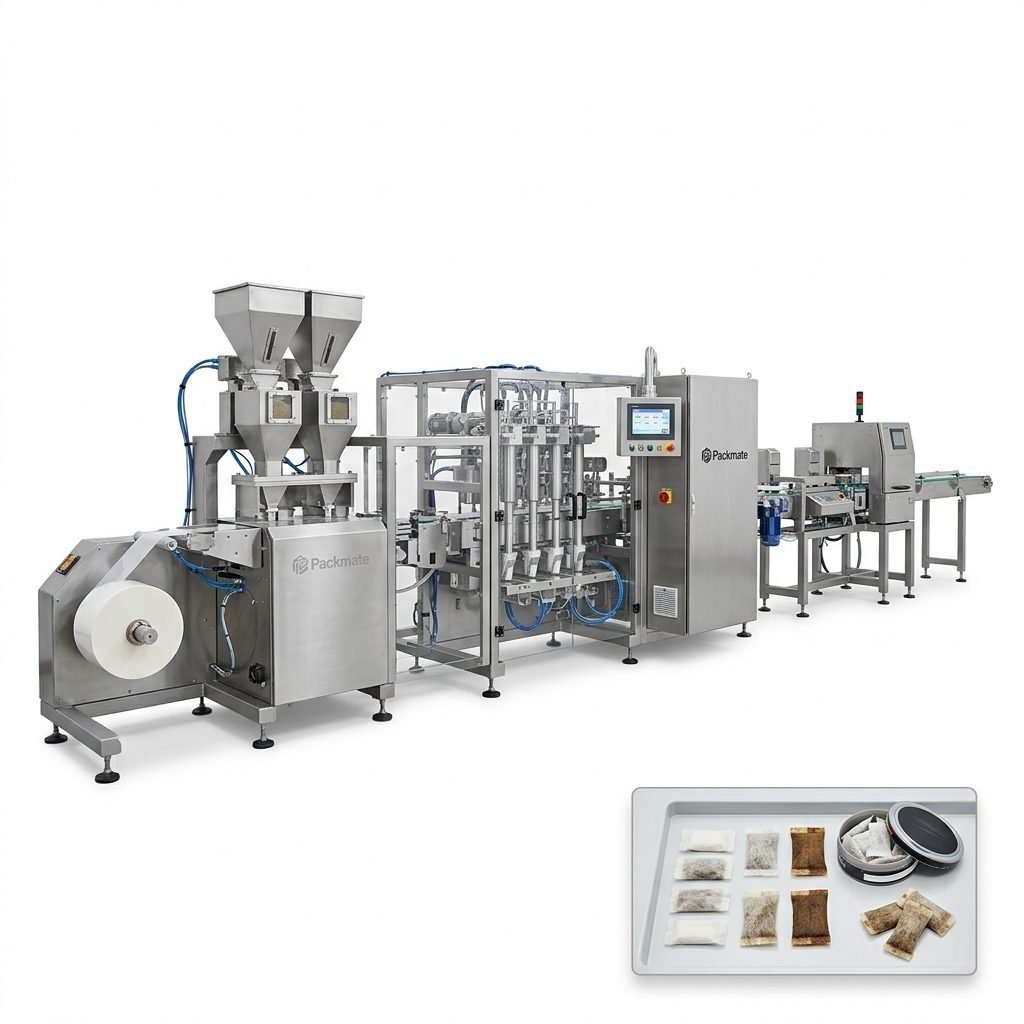
High speed snus filling lines are the backbone of modern nicotine pouch production, delivering the precision, speed, and consistency required by manufacturers targeting both mature and emerging markets. This guide walks you through the essential components, production strategies, integration options, and selection criteria to help packaging managers, engineers, and plant planners make informed decisions when upgrading or building a snus pouch packing line.
What is a High Speed Snus Filling Line?
A high speed snus filling line is a fully or semi-automated production line designed to form, fill, and seal small-dose nicotine pouches (snus, nicotine pouches) at multi-lane throughput. These lines combine precision dosing, pouch forming, reliable sealing, and downstream operations such as checkweighing, metal detection, and cartoning to create a seamless manufacturing flow. Typical outputs range from tens of thousands to hundreds of thousands of pouches per hour depending on lane count and pouch format.
Core benefits
🔶 High throughput that scales production without compromising pouch quality.
🔶 Precision dosing for consistent nicotine and moisture control.
🔶 Integrated quality controls such as vision inspection and checkweighers reduce waste and ensure regulatory compliance.
Key Components of a Snus Packing Line
A reliable snus filling line is made of multiple coordinated modules. Understanding each part helps when specifying machine requirements or troubleshooting production challenges.
Feeding & Dosing Systems
The feeder and dosing modules handle tobacco powder, granules, or blended nicotine materials. For small-dose pouches, gravimetric or volumetric dosing with multi-head systems guarantees accuracy. High-speed lines often use synchronized feeders for each lane to maintain uniform weight.
Form-Fill-Seal (FFS) and Multi-Lane Sealing
Pouch formation and sealing must be stable across all lanes. Advanced sealing jaws with temperature control minimize leaks and ensure clean edges. Multi-lane FFS systems multiply output while keeping changeovers manageable.
Weighing, Inspection & Rejection
Inline checkweighers, metal detectors, and vision systems detect under/overfill, foreign bodies, and printing defects. Automated rejection reduces customer complaints and protects brand reputation.
Secondary Packaging & End-of-Line
After pouch sealing, options include flow-wrapping, blister packing, cartoning, and case packing. Choosing the right secondary equipment depends on market demands, shelf presentation, and logistics efficiency.
Design Considerations for High Efficiency
Efficiency is more than speed. It’s a balance of uptime, maintainability, and product quality. When designing or selecting a line, prioritize modular design, quick-change tooling, and robust automation to minimize downtime and accelerate product launches.
Modularity and Scalability
✅ Modular stations let you add lanes, integrate new check equipment, or swap pouch formats without rebuilding the entire line.
✅ Quick-change tooling and recipe-driven HMI reduce changeover time for diverse SKUs.
Hygiene and Materials
Choose materials and surface finishes that meet tobacco or pharmaceutical hygiene standards. Stainless steel, hygienic design, and easy-to-clean conveyors prevent contamination and accelerate maintenance.
Automation & Smart Features
Today’s snus lines include Industry 4.0 features: remote diagnostics, predictive maintenance analytics, and integrated MES communication. These features ensure higher OEE and allow technical teams to act on data before problems escalate.
Vision Systems & Traceability
Vision systems inspect pouch shape, seal integrity, and correct printing. Combined with barcode or RFID traceability, manufacturers can track batches from raw material to finished case—critical for recalls and quality audits.
Remote Support & Predictive Maintenance
Remote support reduces travel time for service teams and shortens downtimes. Predictive maintenance uses sensor data to schedule interventions when components show trending wear, rather than waiting for failure.
Choosing the Right Line: Practical Checklist
Selecting the best snus filling line requires an honest assessment of current and forecasted production needs. Use this checklist to guide supplier conversations and internal planning.
🔶 Throughput targets: Peak and average hourly output per SKU.
🔶 Lane count & format flexibility: Can the system handle free-form pouches, sachets, or stick packs?
🔶 Compliance: Certifications (CE, ISO) and local regulatory requirements.
🔶 Service & training: On-site commissioning, operator training, spare parts availability.
🔶 Total cost of ownership: Energy use, maintenance labor, and consumables are as important as purchase price.
Quality Control and Regulatory Compliance
Snus and nicotine pouch production is subject to increasing regulatory scrutiny worldwide. Equipment must support traceability, hygienic handling, and consistent dosing to meet both local and export-market standards.
Certifications and Documentation
Choose vendors who provide CE and ISO-compliant machinery, FAT/SAT documentation, and full electrical and software documentation. This shortens validation time and keeps audit trails simple.
Installation, Commissioning & After-Sales Service
A proven supplier will help with line layout, electrical + pneumatic requirements, operator training, and spare parts kits. After-sales service should include rapid-response troubleshooting, remote diagnostics, and scheduled maintenance contracts.
🔧 Tip: Plan for at least 6–8 weeks of commissioning time for a full multi-lane line, including sample validation and operator qualification.
Case Applications & Market Fit
High speed lines are used by start-ups scaling to regional brands and by established manufacturers expanding capacity. Typical end-products include single-dose nicotine pouches, flavored snus sachets, and pharmaceutical-like sachets requiring exacting dose control.
From Europe to Asia and the Americas, manufacturers rely on flexible multi-lane designs that can adapt to different packaging regulations and market preferences. To explore specific machine families and tailored solutions, see Packmate’s product portfolio: Snus & Nicotine Packaging Machines and Filling & Packaging Lines.
Choosing a Supplier: Why Packmate Snus Machine?
Packmate brings 30+ years of engineering experience and over 50 machine models built at a 20,000㎡ manufacturing facility. Their strengths include advanced CNC production, precision assembly, and a track record of global turnkey projects.
🔶 Experienced R&D with continuous improvement since 1993.
🔶 Turnkey solutions including auxiliary systems and line integration.
🔶 Global service network and exhibition presence to test machines live before purchase. Learn more About Packmate.
Real-World Implementation Tips
Small operational changes can have outsized impact on yield and uptime. Below are practical recommendations gleaned from field deployments.
Operator Training & SOPs
Standard Operating Procedures and cross-training reduce mistake-related stoppages. Keep operators in short, rotating shifts to keep focus on quality during long runs.
Spare Parts & Consumables Planning
Stock critical wear parts like seals, jaws, and sensors. A simple parts kit can cut mean time to repair significantly.
Environmental Control
Maintain humidity and temperature control in the production area to preserve product moisture and dosing accuracy—especially important for hygroscopic blends.
Integration with Upstream & Downstream Systems
Integrating filling lines with upstream mixers, blenders, and downstream cartoners enhances traceability and reduces handling. Packmate offers auxiliary equipment and system integration services for seamless line deployment—see their auxiliary product range: Auxiliary Packaging Equipment.
Budgeting & Lead Times
Budget planning should include machine cost, installation, validation, training, and spare parts. Typical lead times for a custom multi-lane snus filling line range from several months to a year depending on customization and certification needs.
Next Steps for Buyers
Schedule a factory visit or live demonstration to validate machine performance under realistic conditions. Review case studies and request FAT documentation. For direct inquiries, contact the Packmate team through their contact page: Contact Us.
Further Reading & Resources
For product specifications and model comparisons, explore Packmate’s product lines and catalog pages. Their machine pages include example layouts and case studies that demonstrate real-world throughput and lane configurations: Sachet & Stick Pack Machines.
Final Thoughts
Investing in a high speed snus filling line is a strategic step for manufacturers aiming to scale, improve quality, and enter new markets. Prioritize modularity, serviceability, and data-driven features to maximize return on investment and keep production reliable as demand evolves.
Common Questions
❓ What throughput can I expect? Typical throughput depends on lane count and pouch format; multi-lane high-speed lines can reach tens to hundreds of thousands of pouches per hour.
❓ How long is installation and commissioning? Plan for 6–12 weeks depending on customization, FAT results, and site readiness.
❓ What certifications are available? Leading suppliers provide CE and ISO-compliant equipment with full documentation for audits.
❓ Can lines handle multiple pouch formats? Yes—modular tooling and recipe-driven controls enable quick format changes across many suppliers’ advanced models.
❓ How do I get a tailored quote? Contact the supplier with production targets, SKU list, and preferred inspection options to receive a customized proposal.