Choosing the right snus packaging machine supplier in the United States requires more than a simple price comparison. Production targets, regulatory compliance, local consumer preferences, and long-term serviceability must all be evaluated. This guide walks you through practical decision points—technical, commercial, and operational—so you can select a supplier that meets your US production needs and growth plans.
Understand the US snus and nicotine pouch market
In the United States, nicotine pouches and snus are a growing category, influenced by evolving consumer preferences and state-level regulation. While use patterns differ from Nordic markets, American consumers increasingly seek discreet, convenient packaging and a wide range of flavor and portion formats. For suppliers, this means machines must support flexible pouch sizes, variable filling volumes, and attractive presentation formats favored by US retailers.
Regulatory and compliance context
The US market places strong emphasis on regulatory compliance—especially FDA guidance for tobacco/nicotine products—as well as accurate labeling and traceability. When vetting suppliers, confirm they understand US-specific documentation needs and can provide equipment that supports batch coding, serialization, and tamper-evident or child-safety requirements if needed.
Key reminder: Verify whether your chosen solution can integrate with existing track-and-trace, labelling, and QA systems used in the US supply chain.
Define your production needs precisely
Before contacting suppliers, document your production requirements: target daily output, pouch formats (single-dose, multi-dose, stick, sachet), filling materials (powder, granule, liquid, nicotine payload), expected changeover frequency, and desired automation level. These specifics shape the right machine class—one-lane vs. multi-lane, vertical form-fill-seal vs. pre-made pouch sealing, and whether you need integrated weighing or dosing.
Production profile checklist
Use this quick checklist to standardize supplier conversations:
- Target units per minute/hour/day
- Pouch sizes and material types
- Tolerance on filling weight and dosage accuracy
- Planned SKUs and changeover requirements
- Automation level: manual, semi, or fully automated line
Technical criteria: what your machine must deliver
Evaluate machines across technical dimensions, not just speed. Prioritize reliability, dosing accuracy, material compatibility, and hygiene design for nicotine products. Consider future expansion—multi-lane capability or modular additions (weighing, vision inspection, labeling) can protect your investment.
Performance & throughput
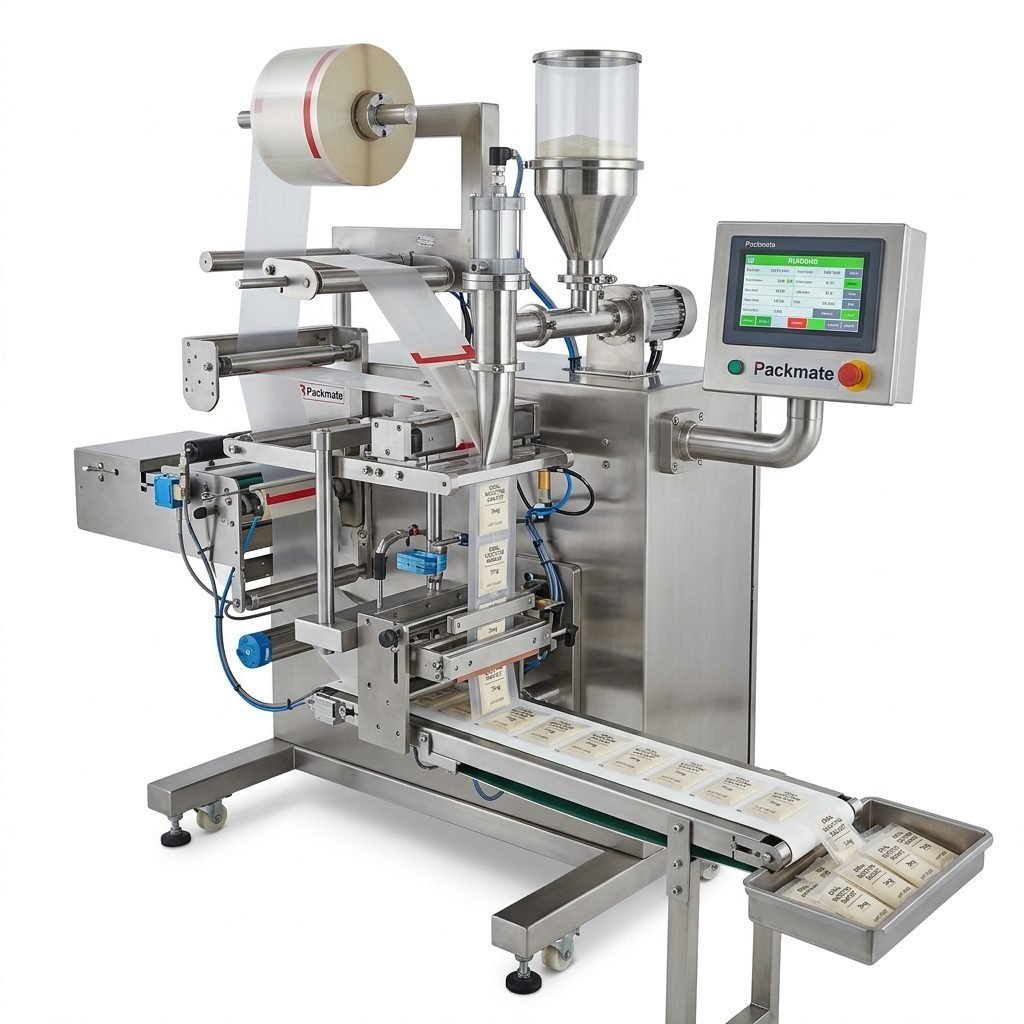
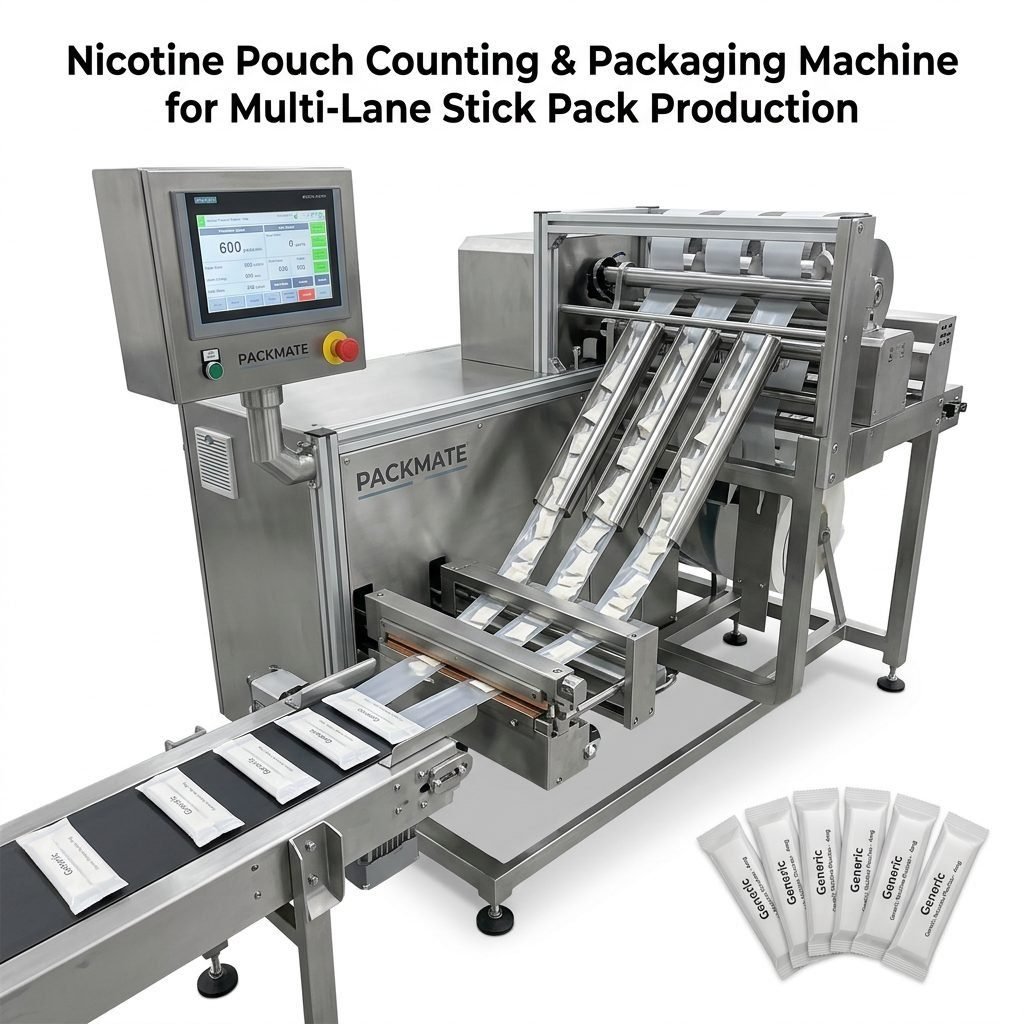
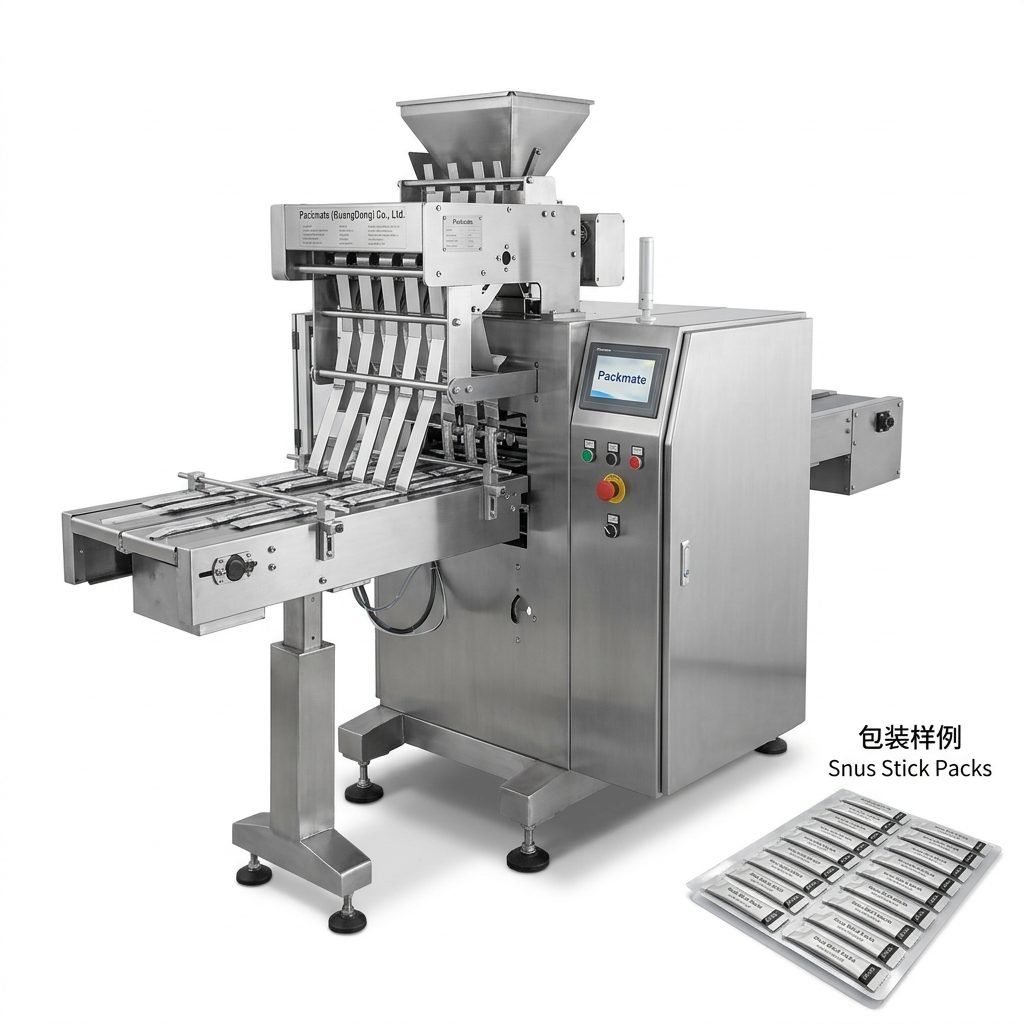
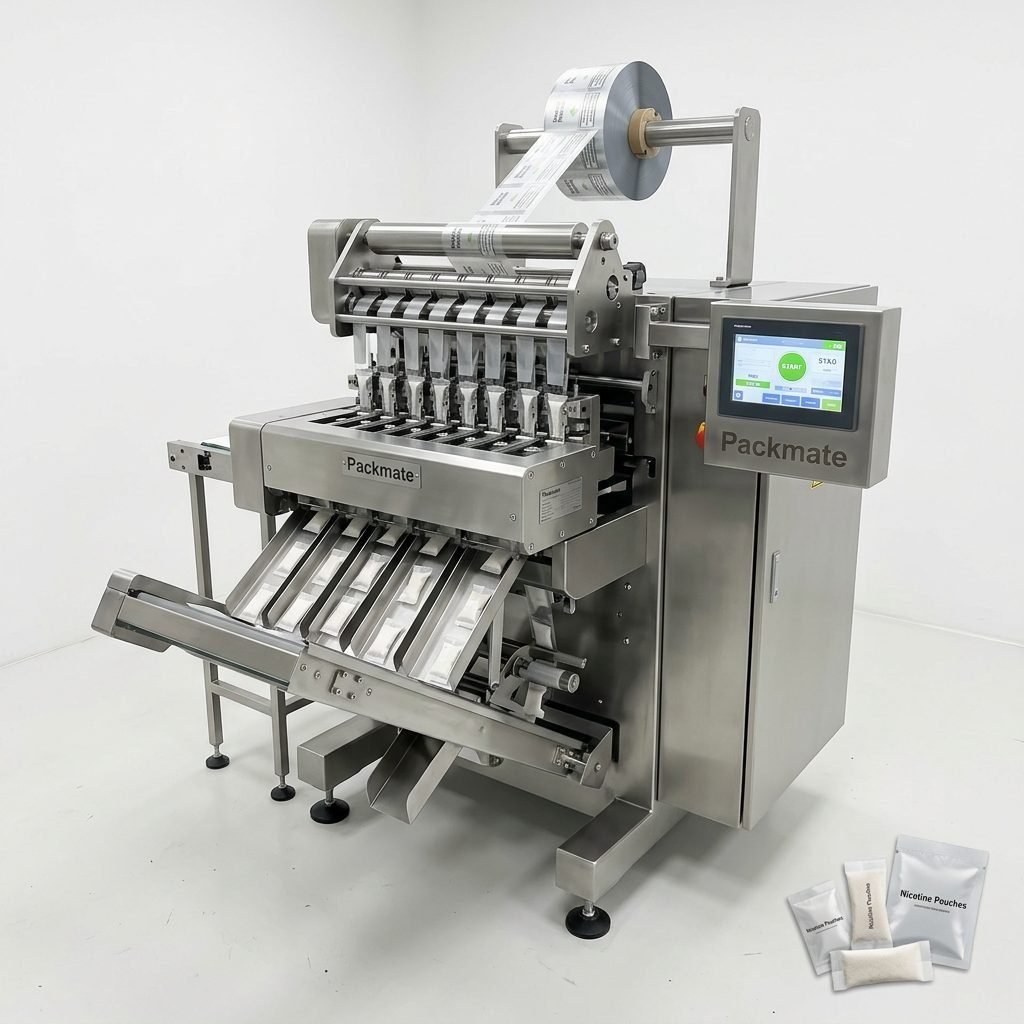
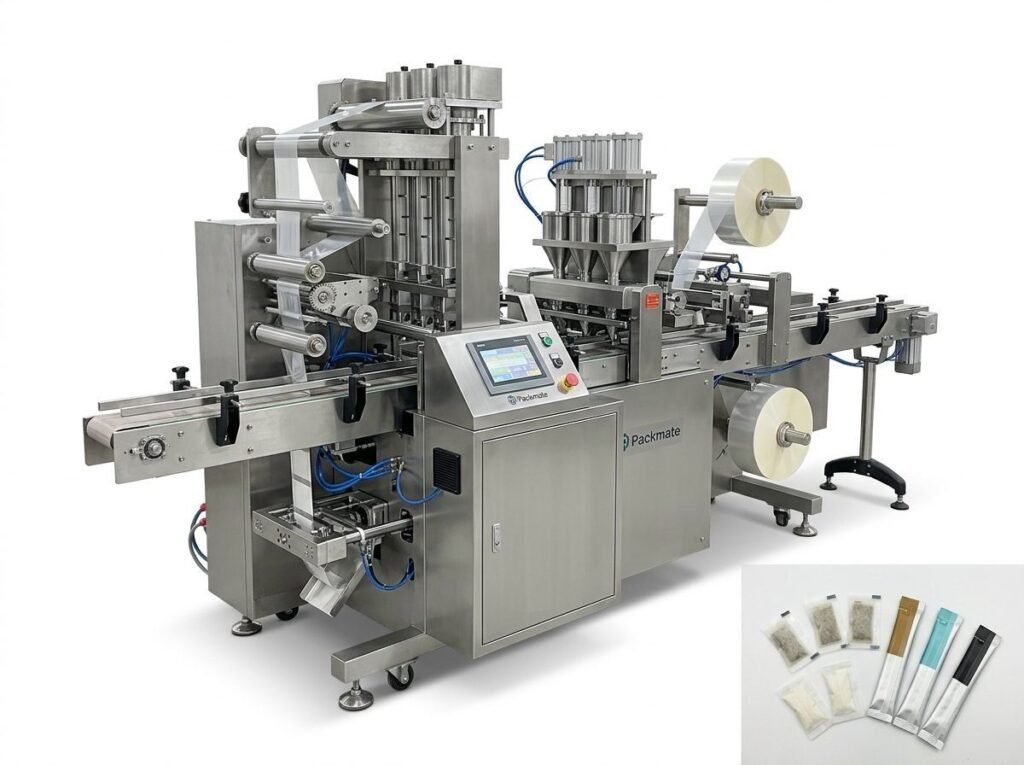
Look at guaranteed production rates under real conditions, not theoretical peaks. Ask for test reports or video demonstrations showing continuous run times at your target speed. Packmate’s multi-lane systems are designed for high-efficiency small-dose production, which is especially relevant for nicotine pouches that require precise dosing.
Dosing accuracy & consistency
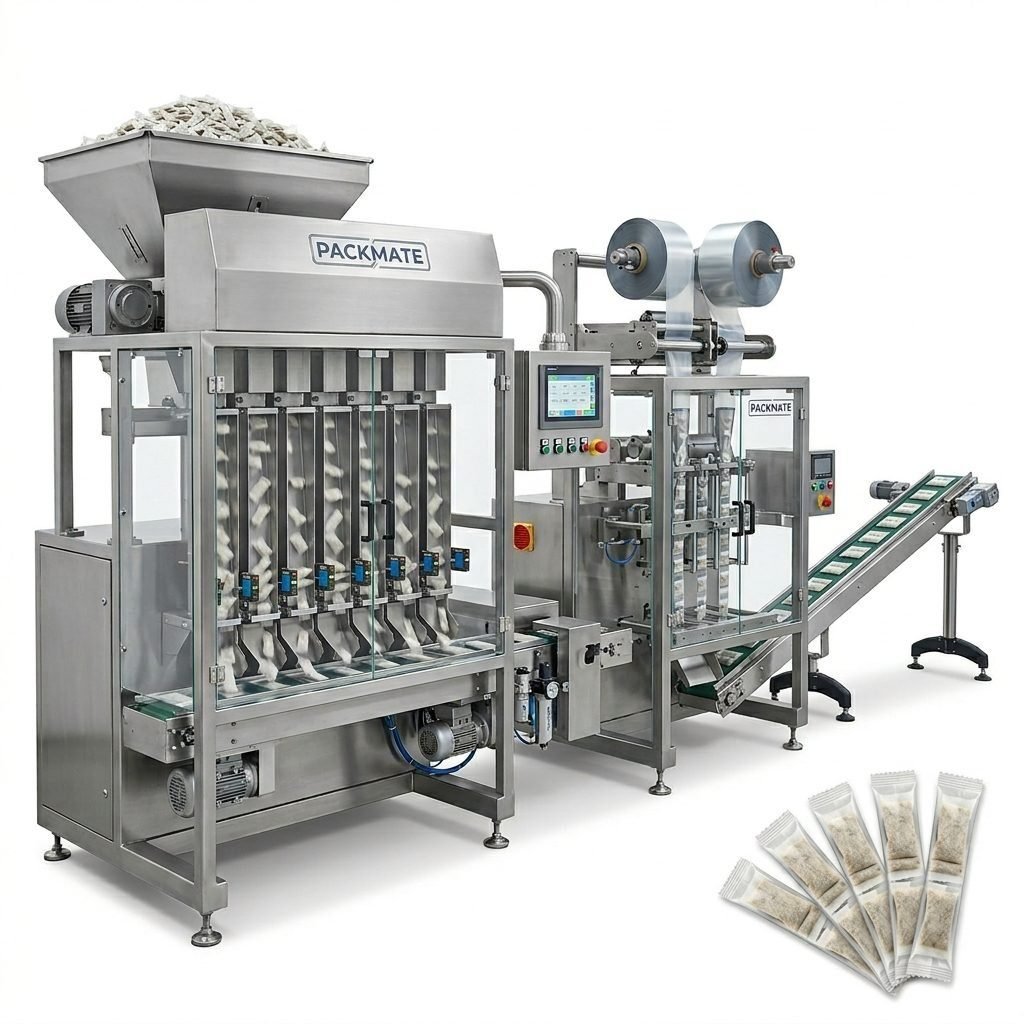
Nicotine pouch dosing tolerances are strict. Confirm the supplier’s filling technologies (vibratory, auger, multi-head weighing) and request sample test data for weight variation and CV% at target speeds.
Material and format flexibility
US brands often innovate with new pouch materials and barrier films. Ensure the machine supports your intended laminate structures, sealing temperatures, and any reclosable or child-resistant features you plan to implement.
Tip: Request a machine demo using your actual materials when possible—this reveals compatibility issues early.
Supplier evaluation: beyond the machine
A competent supplier delivers equipment plus long-term support. Evaluate their manufacturing capabilities, certifications, global experience, spare parts strategy, training services, and references—especially any customers operating in North America.
Experience, factory capability and certifications
Companies with decades of experience and advanced manufacturing (CNC machining centers, precision assembly) typically produce more reliable machines. Verify CE, ISO, and any export-related certifications. Packmate’s 30+ years in the packaging industry and 20,000㎡ facility highlight competence in producing high-precision snus systems.
After-sales service & spare parts
Fast access to parts and service is critical. Ask about local stocking partners, remote diagnostics, technician training, and typical lead times for critical spares. Suppliers who exhibit at global exhibitions and maintain international partnerships often offer better support networks.
References, case studies and demonstrations
Request case studies or customer contacts with similar production profiles. If available, visit a customer site or attend a live demonstration at a trade show. You can learn a lot from a real production environment, including maintenance practices and uptime figures.
Commercial and contractual considerations
Clearly define warranty terms, payment milestones, acceptance tests, and training obligations in the contract. Include performance guarantees, spare parts kits, and a plan for commissioning and FAT/SAT (Factory Acceptance Test / Site Acceptance Test).
Negotiation checklist: Lead time, delivery INCOTERMS, installation scope, training hours, spare parts list, service SLAs, and acceptance criteria.
Site preparation and integration
Plan utilities (electricity at local voltage, compressed air, chilled water if required), production floor loading, and access routes for installation. Discuss software integration for MES/ERP, and ensure the control systems use standard communication protocols for smooth data exchange.
Cost of ownership: long-term perspective
Evaluate total cost of ownership—not just purchase price. Consider energy consumption, spare parts cost, expected MTBF (mean time between failures), and the supplier’s training quality. A slightly more expensive machine with higher uptime and lower operating costs often delivers better ROI.
Selecting suppliers to contact
Start with suppliers who provide clear documentation, local or regional service capabilities, and demonstrated success with snus or nicotine pouch lines. For product information and equipment types, review manufacturers’ product pages and technical catalogs before scheduling demos. Examples to review include comprehensive product portfolios for Snus & Nicotine Packaging Machines and Sachet & Stick Pack Machines.
Visit Packmate’s About page to understand their capabilities, and review specific equipment categories such as Snus & Nicotine Packaging Machines and Sachet & Stick Pack Machines to match technical features to your requirements. If you want to see installation examples, check Case studies and plan to speak with the supplier about local service and lead times.
Useful links:
Snus & Nicotine Packaging Machines,
Sachet & Stick Pack Machines,
About Packmate,
Contact Us.
Quick pre-purchase checklist
🔧 Confirm dosing accuracy data at your target speed.
📦 Validate material compatibility with your film and pouch type.
⚙️ Ensure spare parts lead times and local support options.
✓ Get a written FAT and acceptance criteria before shipment.
Making the final decision
Balance technical fit, supplier reliability, serviceability, and total cost. Favor suppliers who offer sample runs, transparent testing data, and clear commissioning and training plans. A trusted global supplier with local understanding of US market and regulatory realities, supported by robust manufacturing capabilities, will reduce risk and accelerate your time-to-market.
Final recommendation
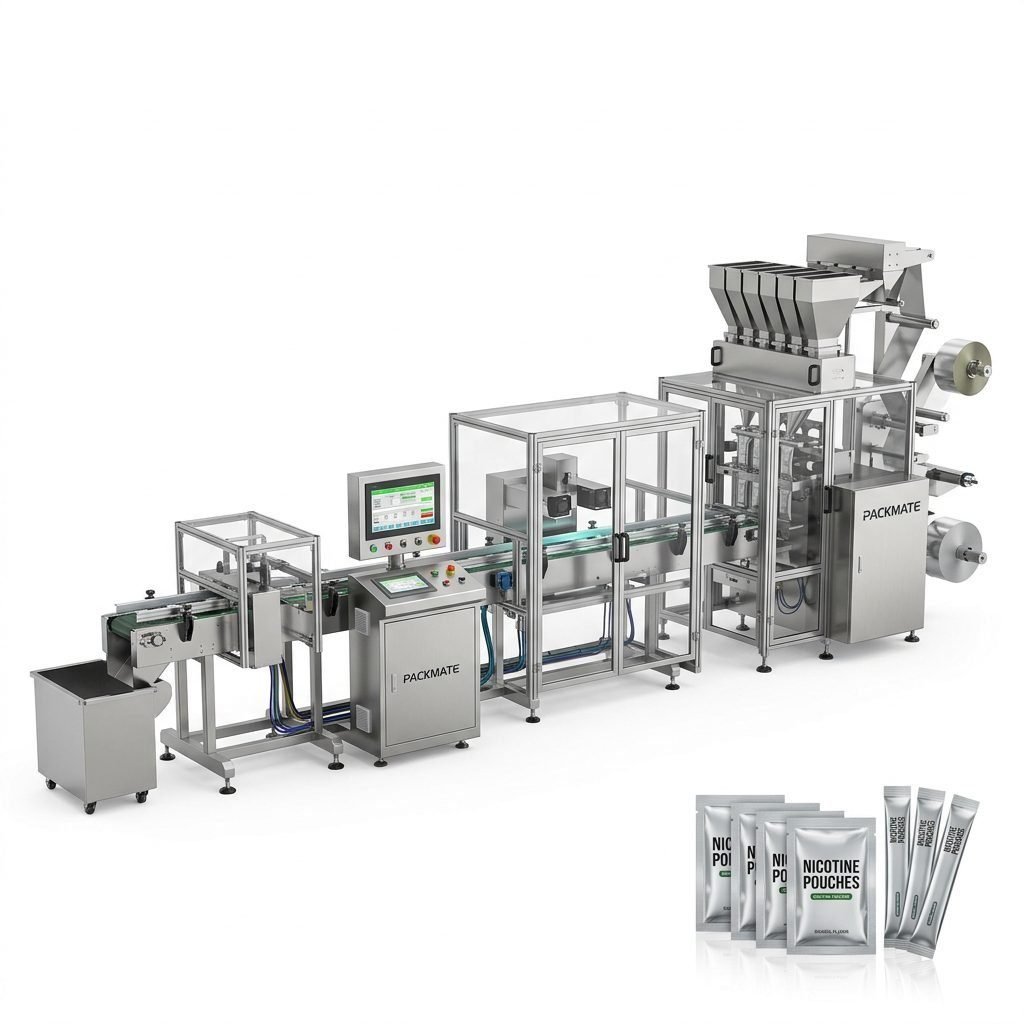
Prioritize suppliers that demonstrate experience in snus/nicotine pouch equipment, provide documented proof of performance, and commit to US-focused compliance and support. When possible, select a vendor that can deliver turnkey solutions—from filling and sealing to labeling and packaging—so your line is optimized end-to-end.
Frequently Asked Questions
Q1: What certifications should I require from a snus machine supplier?
A: Request CE and ISO as baseline manufacturing and safety standards. Also confirm compliance documentation that supports FDA-related operational needs and any customer-specific regulatory requirements. Suppliers with visible quality procedures and test reports reduce compliance risk.
Q2: How important is local US service and spare parts availability?
A: Very important. Quick access to critical spares and trained technicians minimizes downtime. If the supplier has local partners or a regional stocking strategy, it significantly improves operational reliability.
Q3: Should I choose multi-lane or single-lane machines?
A: Choose based on target throughput, SKU flexibility, and floor-space constraints. Multi-lane systems maximize throughput for small-dose pouches and are cost-effective for high-volume lines; single-lane machines may suit pilot runs or smaller volumes.
Q4: How do I validate a supplier’s performance claims?
A: Ask for Factory Acceptance Tests, in-line video of continuous production at target speeds, sample weight variation reports, and references from customers with similar operations. Insist on a formal acceptance test before final payment.
Q5: What ongoing support should be included in the contract?
A: Include training hours, remote diagnostics, a list of critical spares, warranty terms, and defined SLAs for on-site service. Define escalation paths and responsibilities for software updates and integration support.