In competitive nicotine pouch and snus production, precision and consistency define success. Manufacturers need machines that can handle tiny portion sizes, provide accurate filling, and create reliable seals at high speed. This article explores tailor-made snus packaging machines designed for efficient portioning, filling and sealing — machines that scale with your business, comply with international standards, and deliver long-term operational value.
🔧 Why Custom Snus Packaging Machines Matter
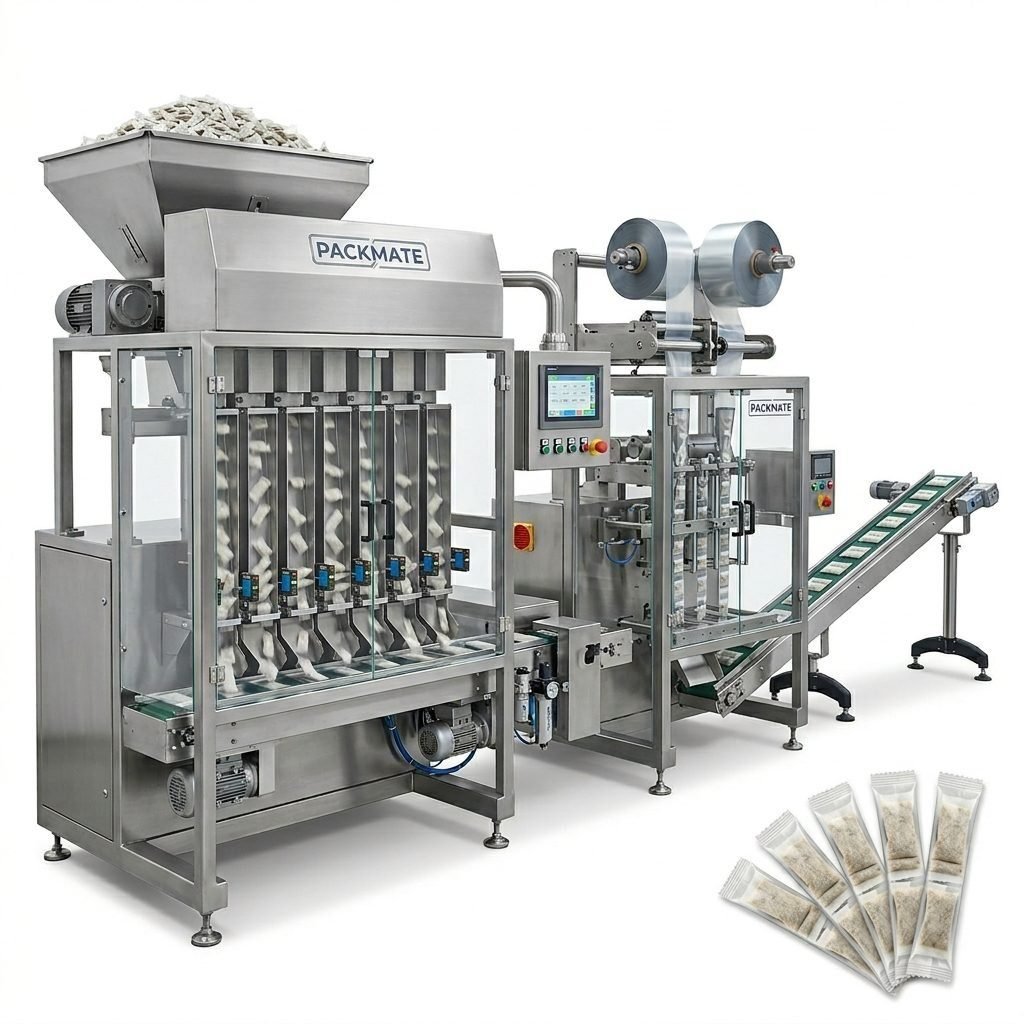
Standard equipment often sacrifices flexibility for cost, but the snus market demands both high throughput and product-specific handling. A bespoke snus packaging system adapts to your product format (pouches, sachets, stick packs), dosing weight, and materials while optimizing speed and minimizing waste. Manufacturers like Packmate Snus Machine bring decades of engineering expertise and offer machines built for the unique demands of nicotine pouches, tea-like products, and micro-dose sachets.
⚡ Key Business Advantages
✔️ Higher yield and lower scrap — Accurate portioning systems reduce overfill and material loss.
✔️ Faster time-to-market — Custom tooling and rapid changeovers let you launch new SKUs quickly.
✔️ Regulatory readiness — Machines designed to meet CE and ISO standards simplify audits and market entry.
✔️ Improved consumer experience — Uniform portions and secure seals maintain product integrity and brand trust.
🔎 Core Components: Portioning, Filling, Sealing
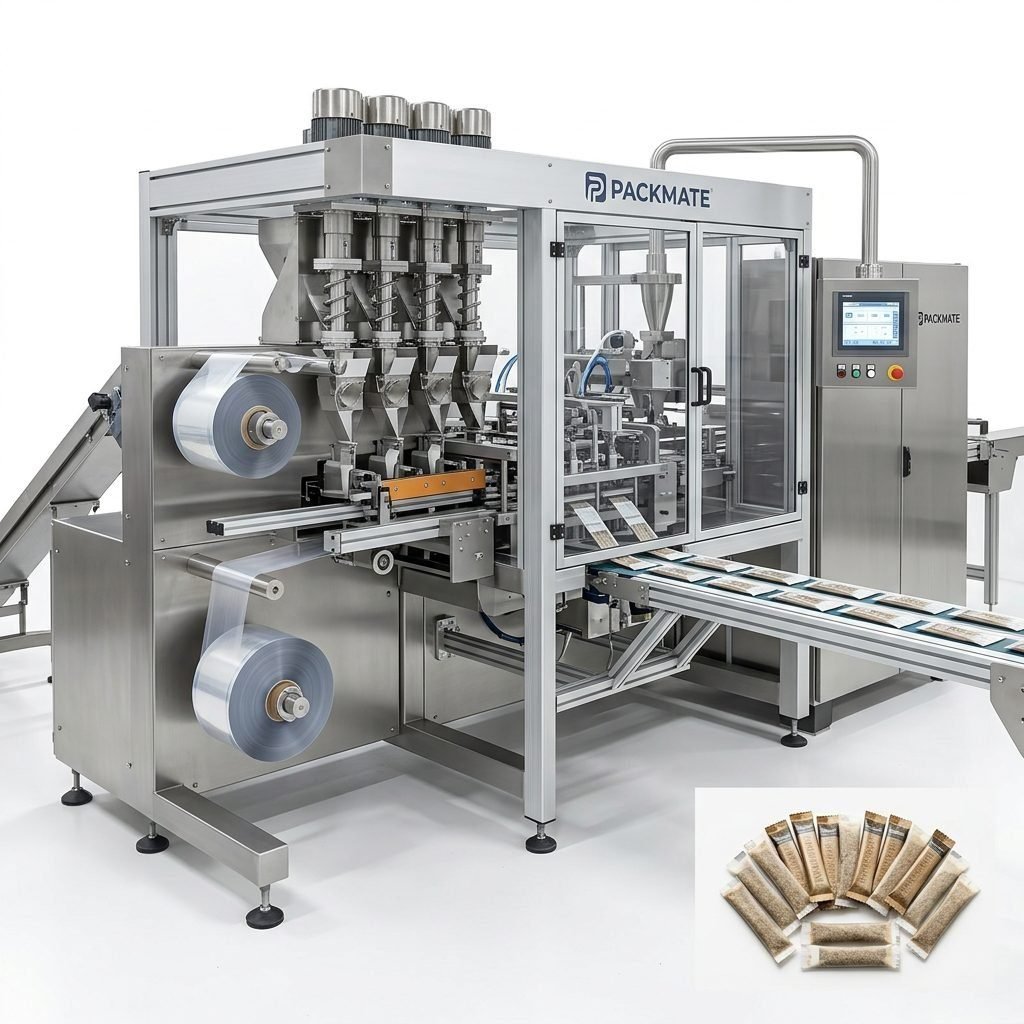
A well-designed snus packaging line integrates three critical subsystems. Precision portioning meters product into repeats; filling stations control dose accuracy and product flow; sealing modules ensure barrier integrity and visual consistency. Each subsystem requires customization to match product characteristics such as moisture content, granule size, and hygroscopic behavior.
Portioning Technologies
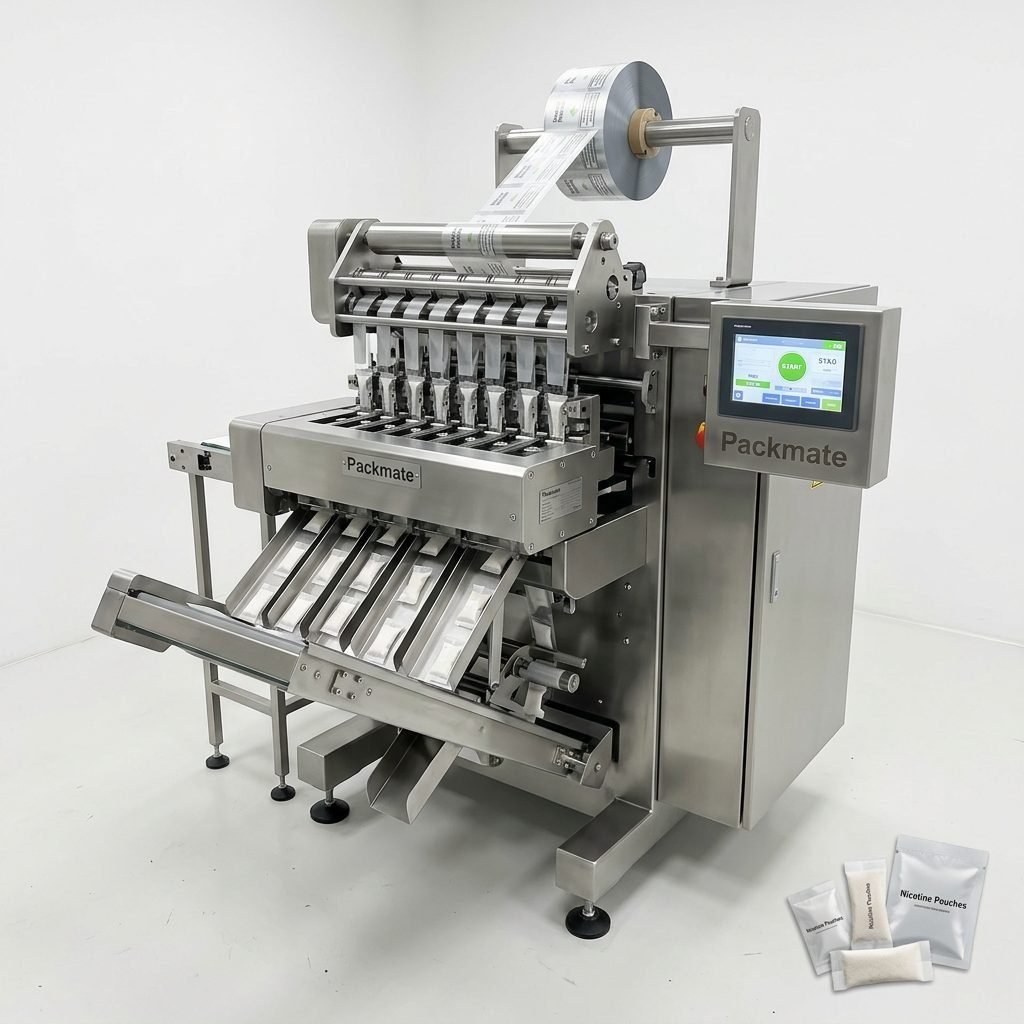
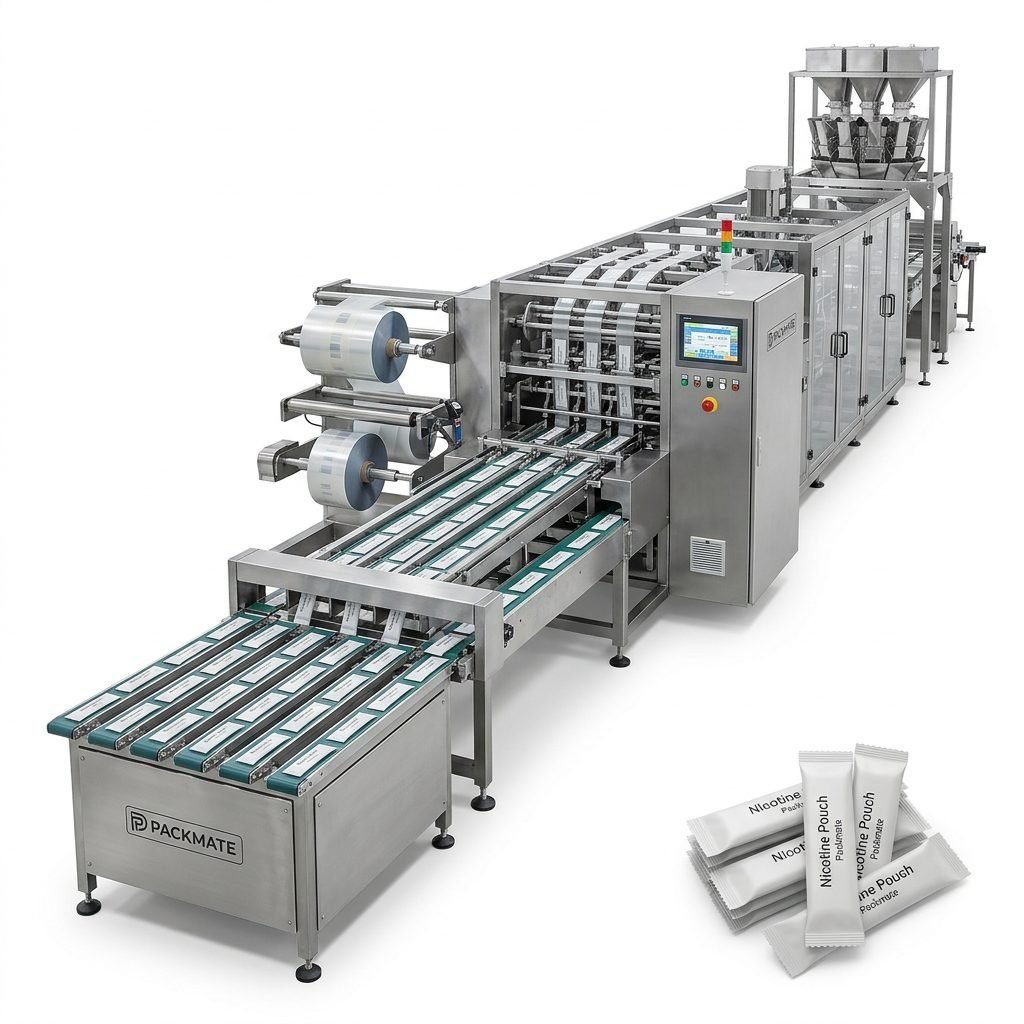
Portioning for micro-dose pouches can use auger fillers, volumetric cups, or multi-head weighers depending on tolerance and output requirements. Multi-lane portioning is common for high-volume production, where synchronized dosing across parallel lanes multiplies throughput without compromising accuracy.
Filling Solutions
Filling modules must handle varying product textures — from damp, cohesive snus to fine powder or moist granules. Gentle product handling, anti-bridging measures, and sanitary design minimize product degradation. Custom nozzles, vibration-assisted feeders, and dust control systems are typical enhancements for snus lines.
Sealing and Packaging Formats
Seal quality impacts shelf life and consumer acceptance. Heat-seal systems, ultrasonic sealing, and modified atmosphere options can be selected based on film type and product sensitivity. Formats include single-portion sachets, multi-portion stick packs, and folded pouches; each format demands a specific sealing geometry and finishing process.
🏭 Factory Strength and Quality Assurance
Choosing a supplier with proven manufacturing capability and quality systems reduces implementation risk. Packmate Snus Machine operates a 20,000㎡ facility with advanced CNC machining centers and precision assembly lines. With 30+ years of industry experience, the company offers over 50 machine models and complete turnkey solutions that are tested under strict quality protocols.
⚙️ Certifications: CE and ISO compliance ensure machines meet international safety and quality benchmarks.
🌍 Global support: Demonstrations at international exhibitions and worldwide service capability.
⚙️ Customization Options and Integration
Customization goes beyond cosmetic adjustments. It includes multi-lane arrangements, recipe-driven PLC control, built-in weighing and vision inspection, and integration with upstream or downstream equipment (such as dosing hoppers, case packers or secondary labeling lines). Packmate provides modular options that can be scaled as production demands grow.
Automation & Industry 4.0
Modern snus lines often include remote monitoring, data logging, and predictive maintenance. These features reduce downtime and empower plant managers with meaningful KPIs like OEE, reject rates, and per-shift throughput. Integration-friendly PLCs and standardized communications protocols simplify connection with MES systems.
📦 Typical Machine Configurations
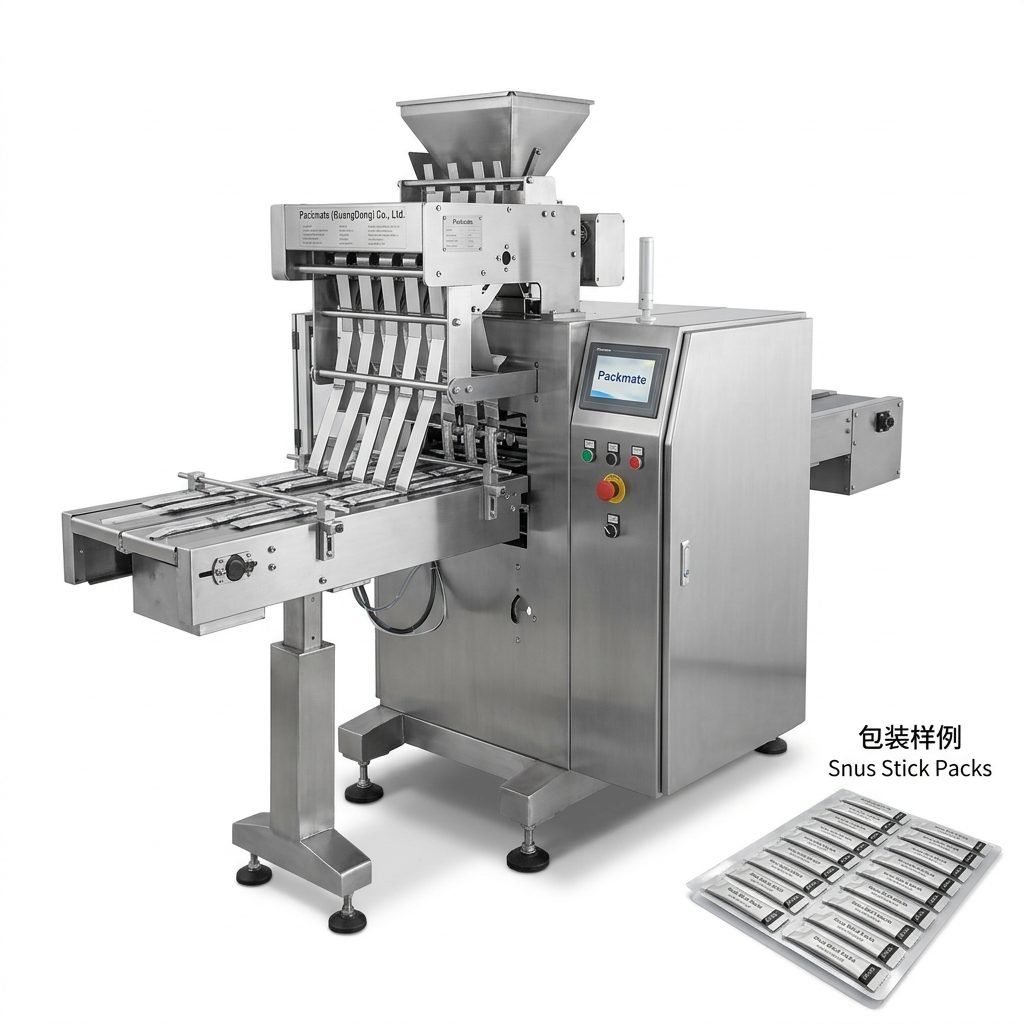
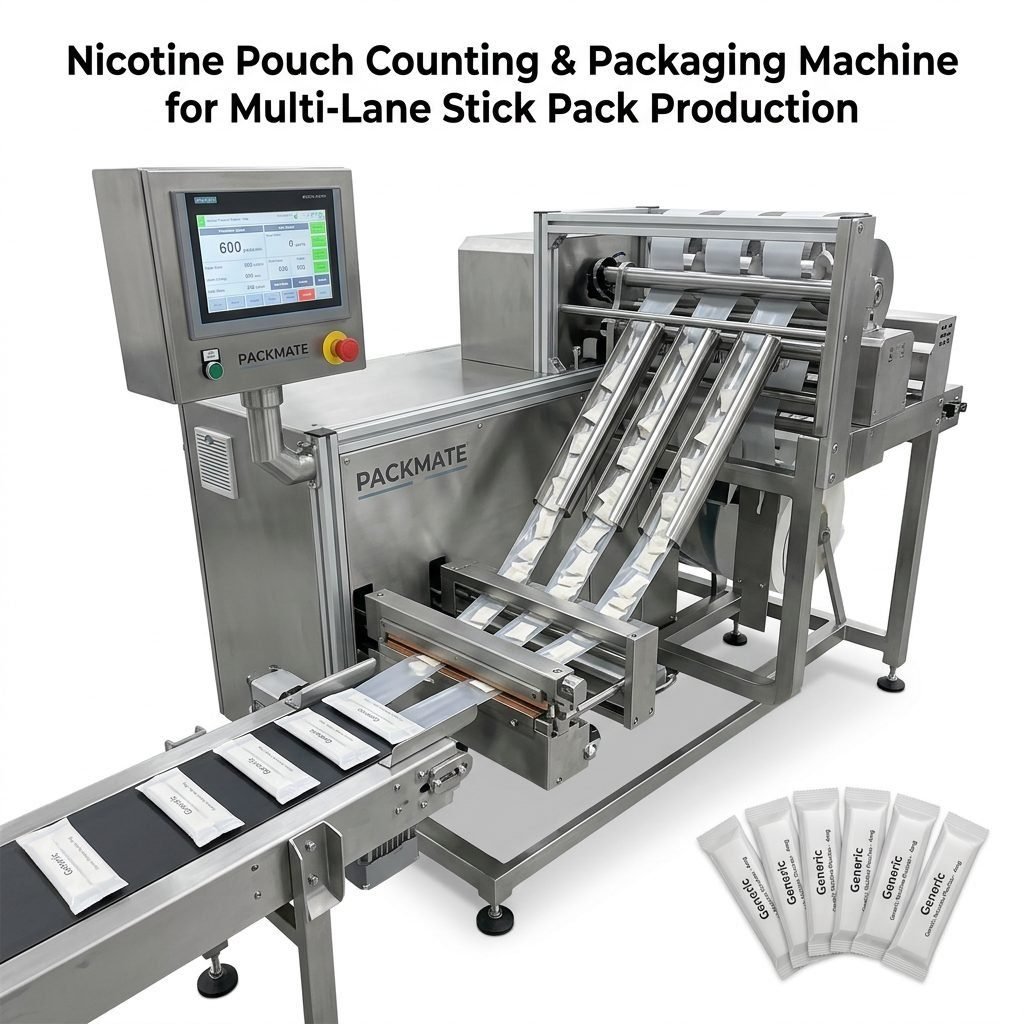
Depending on capacity and format, lines range from compact single-lane machines to multi-lane high-speed systems. Common configurations include:
-
Single-lane stick pack machine for specialty or low-volume SKUs.
-
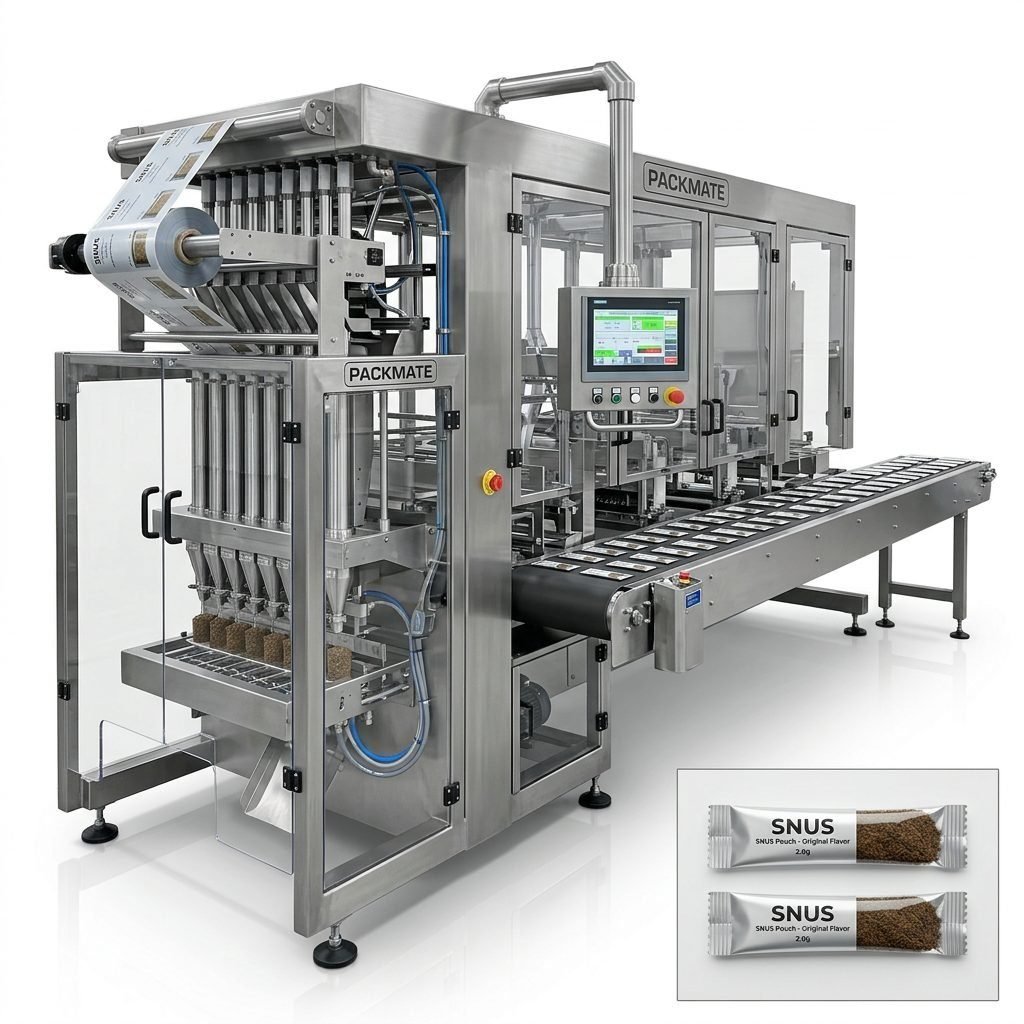
Multi-lane sachet lines with synchronized portioning for mass production.
-
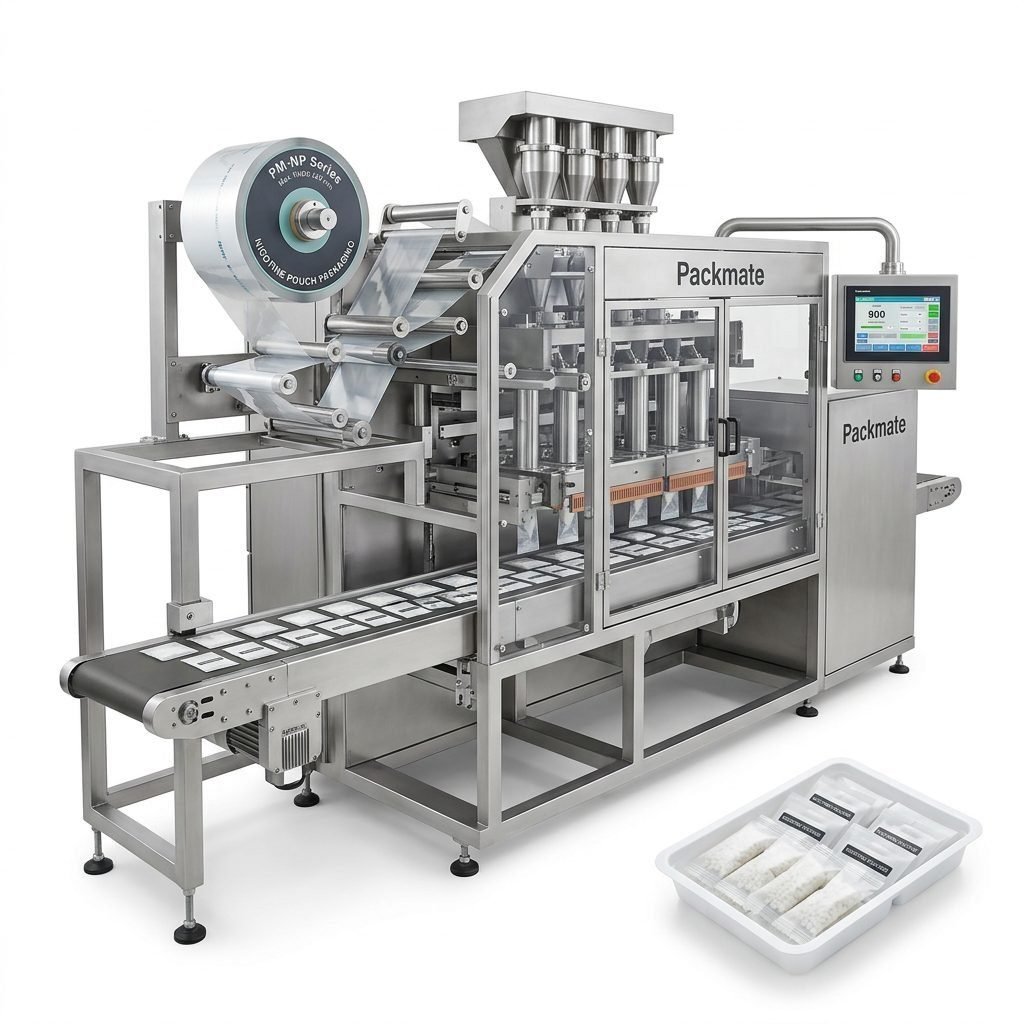
Complete filling and packaging lines that combine dosing, sealing, inspection and case packing.
🔍 Compliance, Safety and Sanitation Considerations
Nicotine-containing products are regulated in many markets. Machines should be designed for easy cleaning, minimal crevices, and materials that withstand frequent sanitation. Safety interlocks, guarded moving parts, and emergency stop systems are standard; electrical and CE safety documentation must be ready for regulatory review.
⚠️ Tip: When selecting a supplier, verify their certification documents and request a FAT (Factory Acceptance Test) to confirm performance before shipment.
📈 Return on Investment and Total Cost of Ownership
While custom machines require higher initial capital than off-the-shelf units, the ROI often appears within months due to material savings, reduced labor, and fewer rejects. Key financial drivers include throughput improvements, decreased waste from precise dosing, simplified cleaning cycles, and less downtime from robust mechanical design.
🛠 After-Sales Service and Global Support
A strong service network accelerates ramp-up and minimizes production interruptions. Look for suppliers that offer commissioning, training, spare parts kits, and remote diagnostics. Packmate emphasizes long-term technical support and global cooperation, with exhibition presence and case studies demonstrating field performance. Explore real-world examples on their case page to understand practical implementations.
For detailed product lines and modular options, the following resources are useful:
🧭 How to Choose the Right Machine for Your Market
Selecting the right equipment depends on product specifications, legal environment, and consumer habits. For example, in Scandinavian markets where traditional snus is popular, brands may prioritize sealed cans or specific pouch textures. In emerging markets, single-portion sachets and economical stick packs may be more attractive. Custom machines should reflect local packaging preferences and regulatory labeling requirements.
Checklist Before Purchase
🔎 Production target (units/day) and target SKUs.
🔎 Tolerance for dose variation and acceptable waste level.
🔎 Material compatibility (films, laminates) and sealing method.
🔎 Space and utility constraints in your facility.
🔎 After-sales support, spare parts availability, and training services.
📦 Example Project Flow: From Inquiry to Commissioning
Typical project milestones include initial consultation, technical specification, layout and quote, prototype or FAT, production, shipping and installation, and operator training. Emphasize communication and sample testing during design to confirm that the machine meets dose accuracy, sealing integrity, and cosmetic expectations before full production begins.
🔗 Working with Suppliers and Partners
Choose a partner with transparent documentation and demonstrated machine performance. Request references and visit exhibitions to see live demos — this helps evaluate real throughput and product handling. For further information on complementary machines, explore auxiliary equipment and weighing systems that can be integrated into your line.
Learn more about auxiliary options and system integration at the following pages:
🔁 Final Thoughts: Scale, Safety and Sustainability
Investing in a tailor-made snus packaging system improves product consistency, supports compliance, and can significantly cut operational costs over time. Whether you are launching a boutique brand or scaling a high-volume production line, focus on flexible design, reliable service, and a supplier with proven manufacturing capacity and quality control. Strategic automation and careful selection of sealing and portioning technologies make the difference between costly downtime and steady, profitable production.
Explore Further
If you are ready to evaluate options or schedule a demonstration, contact the manufacturer to discuss production targets, sample testing, and site-specific requirements. A thorough evaluation and a clear understanding of your target markets will ensure the final system matches your operational and commercial goals.
Frequently Asked Questions
Q1: How quickly can a custom snus packaging line be delivered and commissioned?
Delivery times vary with configuration complexity. Standard customized lines often ship within 12–20 weeks after final design approval, while highly engineered multi-lane systems may take longer. Commissioning and operator training typically add 1–2 weeks on site. Request a detailed project schedule during quotation to align expectations.
Q2: What accuracy can I expect from portioning systems?
Modern portioning and multi-head weighing systems can achieve very tight tolerances — often within ±1–2% for many formulations. Accuracy depends on product characteristics and choosing the right dosing method (auger, volumetric, weighing). A pilot run and on-site testing help validate tolerance performance.
Q3: Are these machines compliant with international regulations?
Yes. Reputable manufacturers supply CE and ISO-compliant equipment, and can provide the necessary documentation for regulatory inspections. Additionally, hygienic design features simplify cleaning validation and support local regulatory requirements.
Q4: What support is provided after installation?
After-sales support typically includes commissioning, operator and maintenance training, spare parts kits, remote troubleshooting, and extended service contracts. Confirm service level agreements and spare parts lead times during purchase negotiations.
Q5: Can the machines handle different pouch materials and sealing types?
Yes. Machines can be configured with adjustable sealing heads, ultrasonic modules, or MAP capabilities to match film laminates and product sensitivity. Provide sample materials to your supplier to validate sealing settings and long-term seal integrity under expected storage conditions.
For further consultation or to request detailed specifications and case studies, visit the manufacturer’s product pages and contact team to arrange a demo or quote.