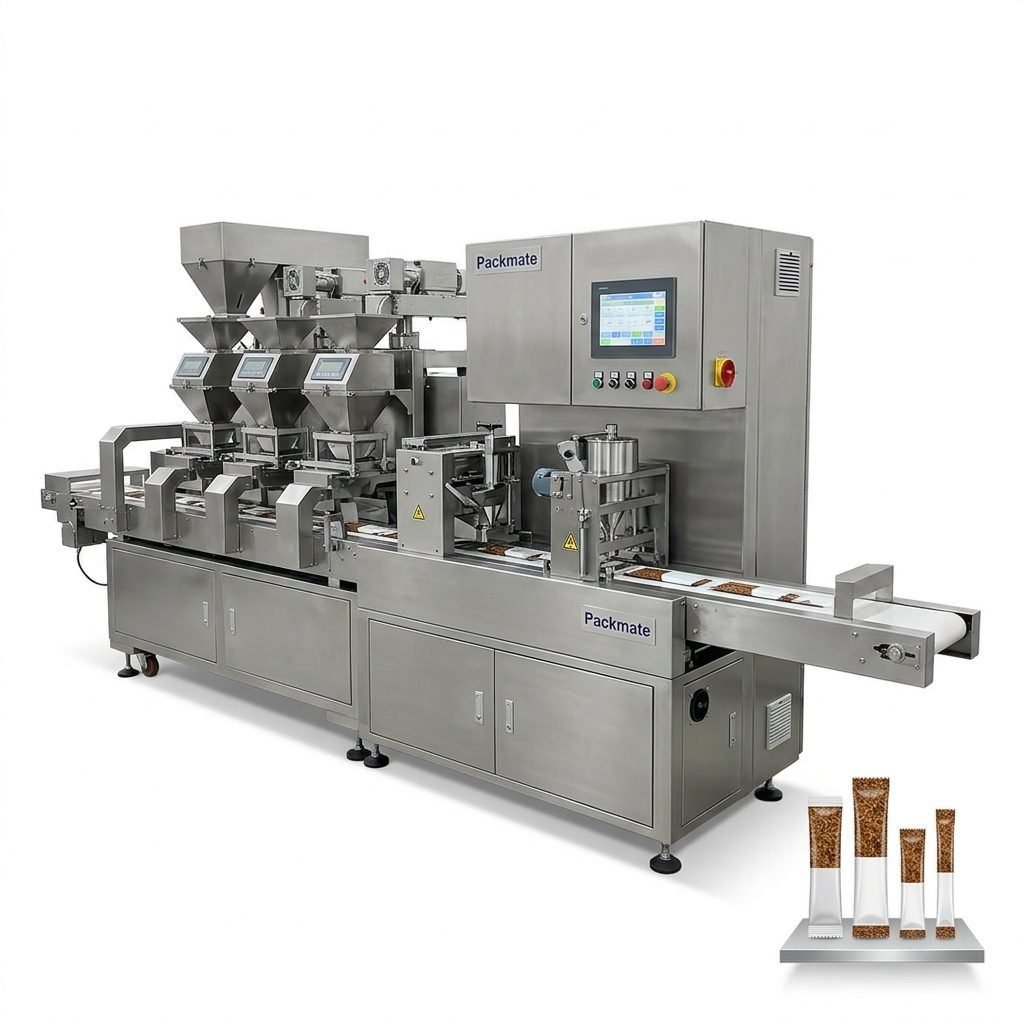
In a rapidly evolving nicotine pouch market, a tailored production line can be the difference between a generic product and a distinguished brand. This article explains how a Custom Nicotine Pouch Production Line can be designed, delivered, and supported to meet your exact needs — from recipe and pouch format to throughput, regulatory compliance, and after-sales service. We draw on Packmate Snus Machine’s 30+ years of packaging engineering experience and real-world turnkey solutions to guide your decision-making.
Why Choose a Custom Nicotine Pouch Production Line?
The nicotine pouch category requires precision, hygiene, and flexibility. Off-the-shelf machines can handle volume, but custom lines bring significant advantages: optimized material usage, reduced waste, better product consistency, and packaging formats that reinforce brand identity. A custom line is engineered around your product (moisture levels, pouch weight, texture), your packaging (sachet, stick pack, multi-lane pouches), and your desired output — whether you plan to produce artisan batches or high-speed lanes for global distribution.
Key Business Benefits
✅ Brand differentiation: Custom pouch shapes, print registration for high-quality graphics, and unique portion formats help your product stand out on the shelf or in subscription boxes.
✅ Operational efficiency: Machines configured for your material specs reduce changeover time and packaging waste, improving yield and lowering cost per pouch.
✅ Regulatory alignment: Integrated systems can be configured to track batch codes, serialization, and hygiene controls required across different markets.
Core Components of a Tailored Production Line
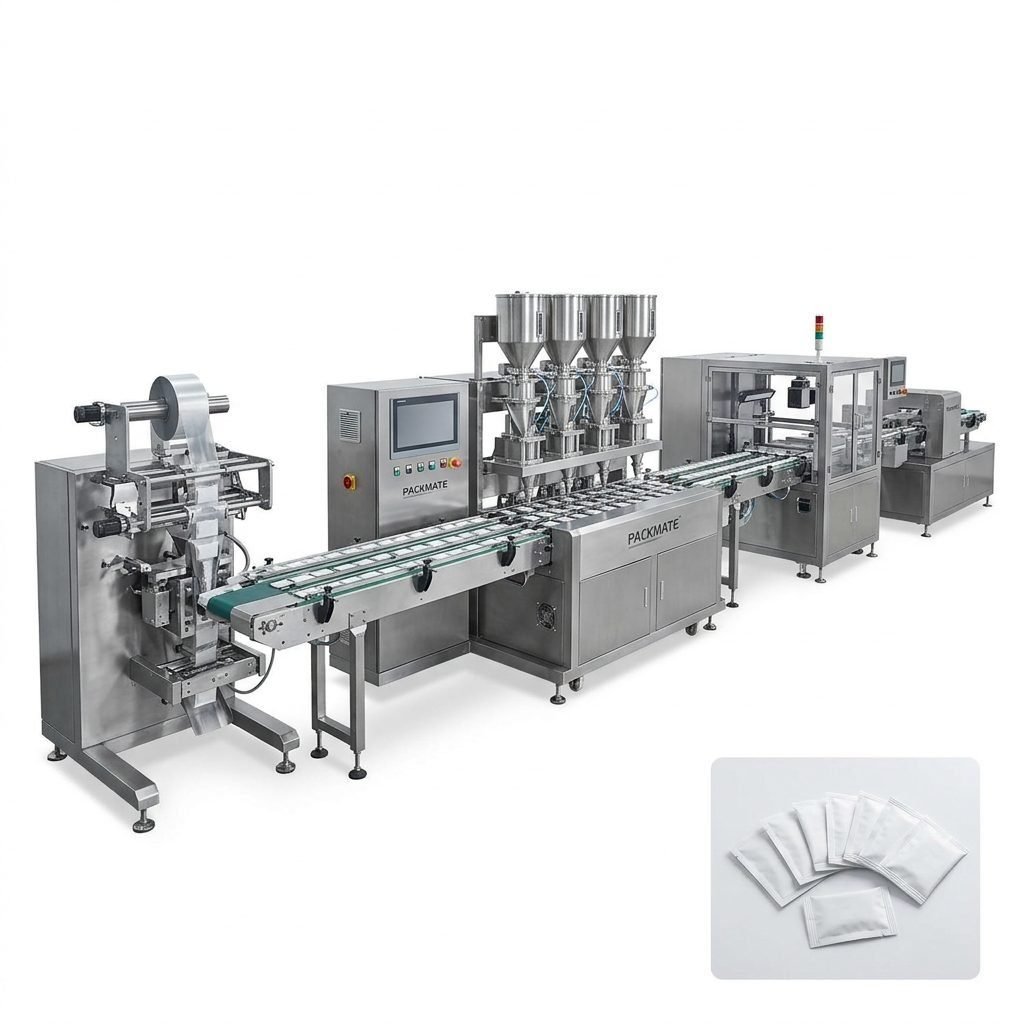
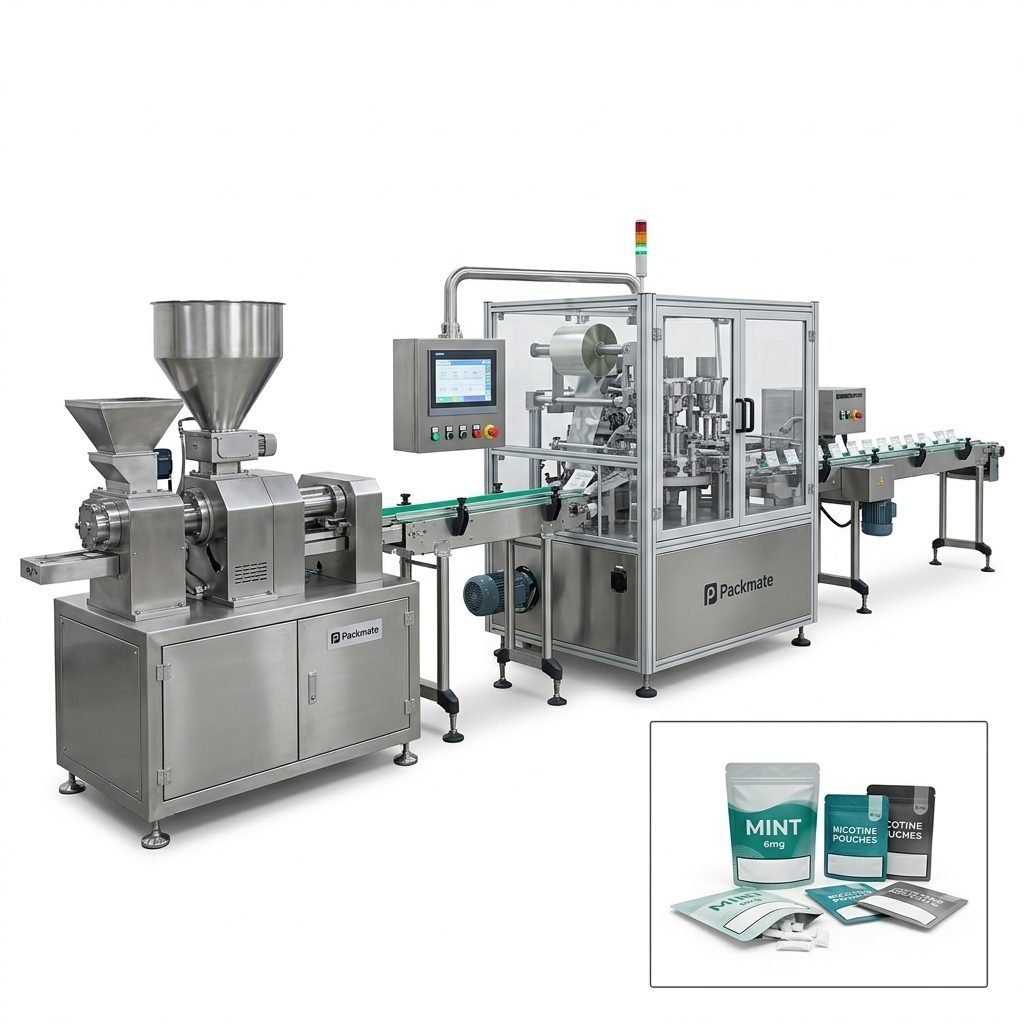
A complete nicotine pouch production line is an orchestrated set of modules, each optimized for consistent, high-quality output. Typical components include:
Raw Material Handling & Dosing
Precise weighing and conveying systems ensure the tobacco-free substrate, nicotine, and excipients are mixed and dosed accurately. For small-dose pouches, multi-head or volumetric dosing systems reduce variance to ensure each pouch delivers consistent nicotine strength.
Pouch Forming & Filling
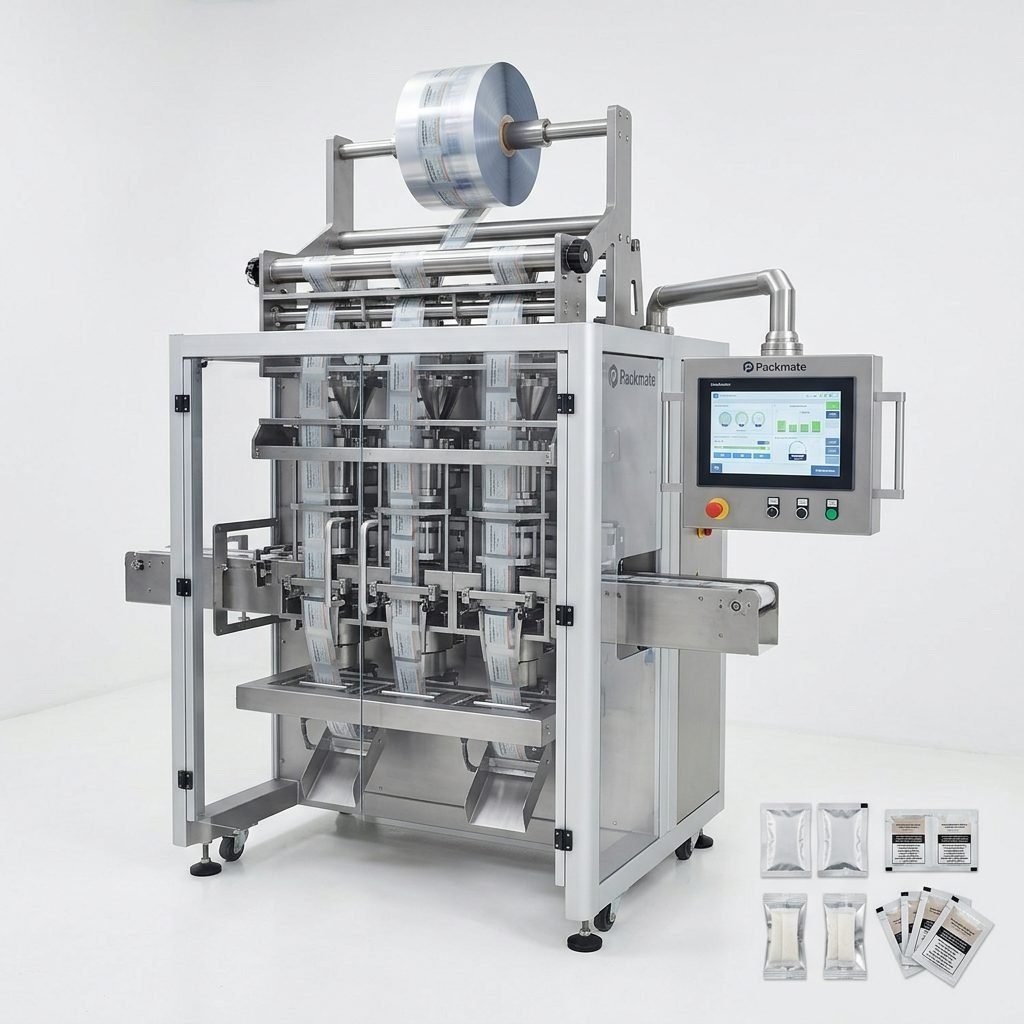
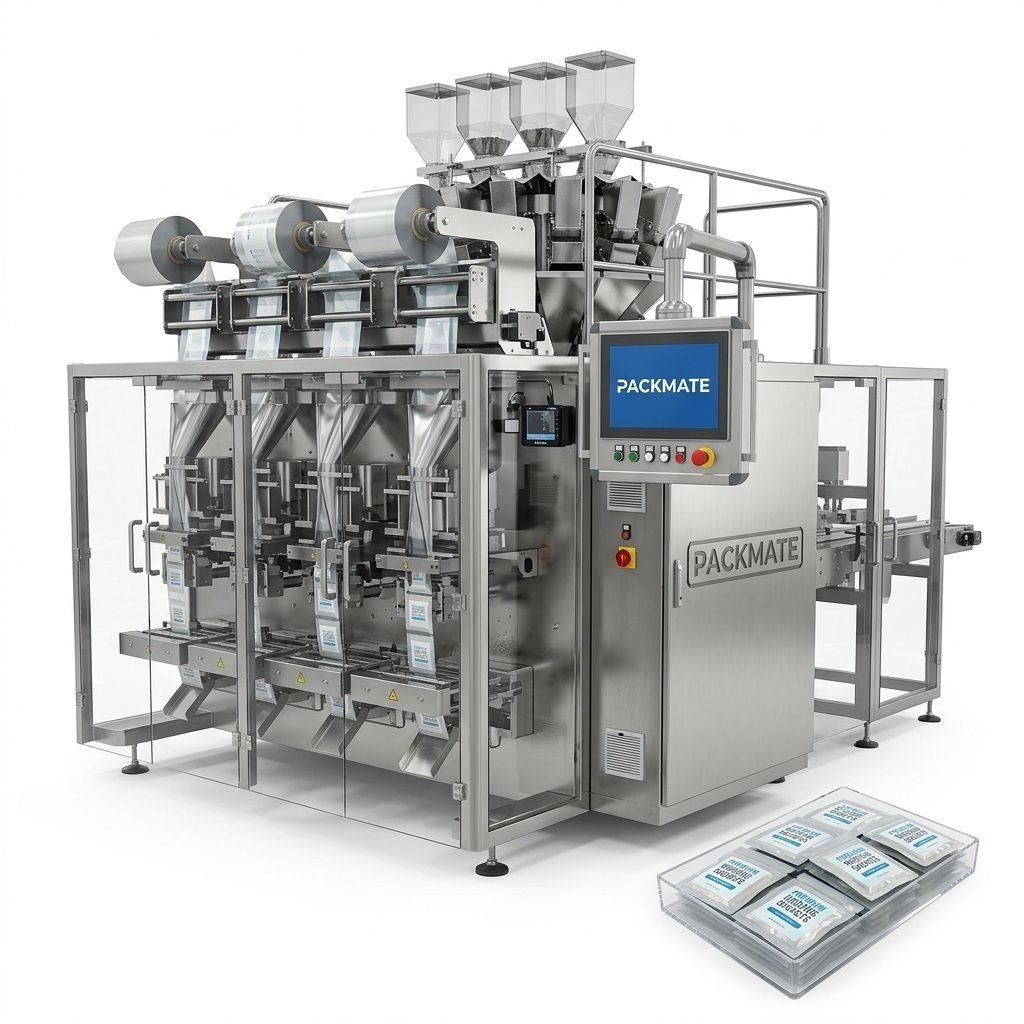
Choose between pre-made pouch feeding or forming-pouch machines depending on design flexibility and speed. Multi-lane forming machines enable high throughput with precise portion control across several lanes simultaneously.
Sealing, Cutting & Packaging
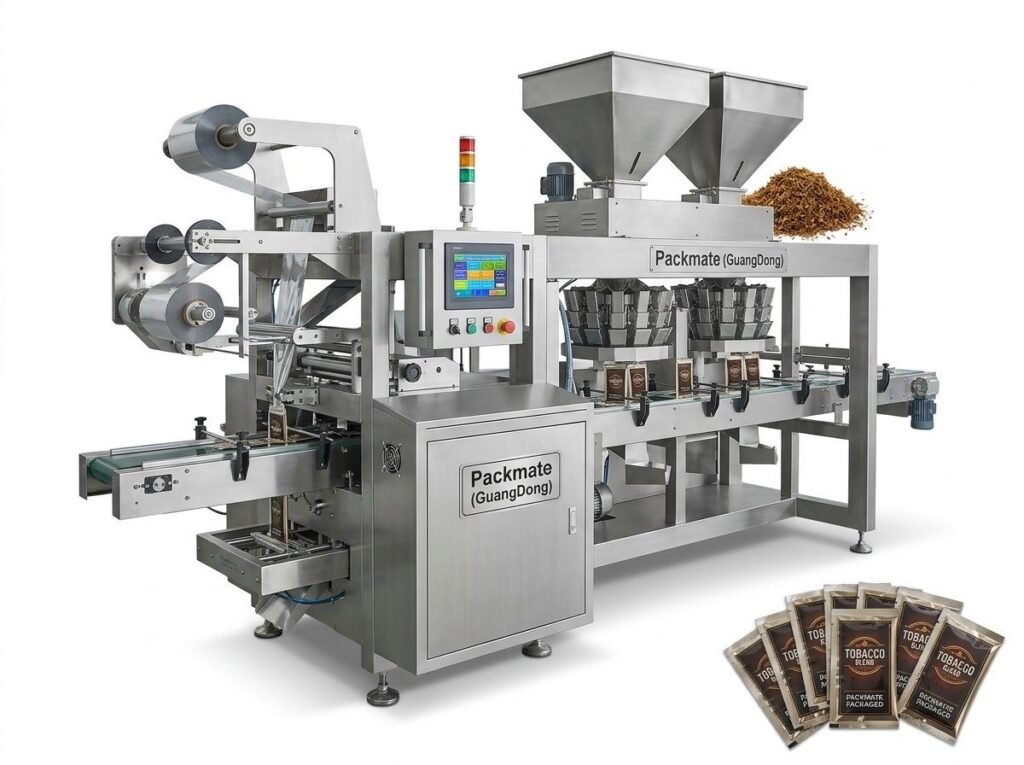
Heat-sealing, ultrasonic sealing, and high-precision knife units deliver consistent seals and clean edges for sachets, stick packs, and multi-lane pouches. Upstream and downstream packaging modules — like cartoning, sleeving, and case packing — can be integrated for a turnkey line.
Automation, Control & Data Collection
PLC and SCADA systems allow recipe control, remote monitoring, and OEE tracking. Integration with MES (Manufacturing Execution Systems) simplifies batch traceability and helps you meet audit requirements in regulated markets.
Customization Options: Design for Your Brand and Market
Customization is not one-size-fits-all. Work with engineering partners to select the right combination of features that match your brand positioning, regional regulations, and production targets. Consider the following customization axes:
🔧 Packaging format: sachet, stick pack, flat pouch, or multi-lane portion pouches.
🎯 Throughput: single-lane artisanal lines up to multi-lane high-speed lines for mass production.
🧪 Process control: humidity control, closed mixing systems, and nitrogen flushing for product stability.
✨ Artwork & printing: inline print registration and hopper-controlled labeling to ensure consistent branding.
Material & Sustainability Considerations
Modern consumers demand sustainable packaging. Your custom line can be optimized for recyclable or compostable films, mono-material structures, and minimal thermal sealing energy. Selecting the right film and sealing technology reduces carbon footprint while maintaining shelf-life requirements.
Quality, Compliance, and Certifications
Compliance is essential for nicotine products. Your packaging line should support:
• Batch coding and serialization for traceability.
• Clean-in-place (CIP) or quick-disassembly points for sanitation.
• CE and ISO compliant components and documentation for global markets.
Packmate’s Credentials
Packmate Snus Machine manufactures equipment in a 20,000㎡ facility with advanced CNC centers, stringent quality testing, and international certifications such as CE and ISO. With over 30 years of experience and more than 50 machine models, Packmate supplies tailored systems worldwide and offers installation and long-term technical support.
Production Line Examples and Use Cases
Below are representative configurations that illustrate how customization matches business goals.
Artisan / Small Batch Line
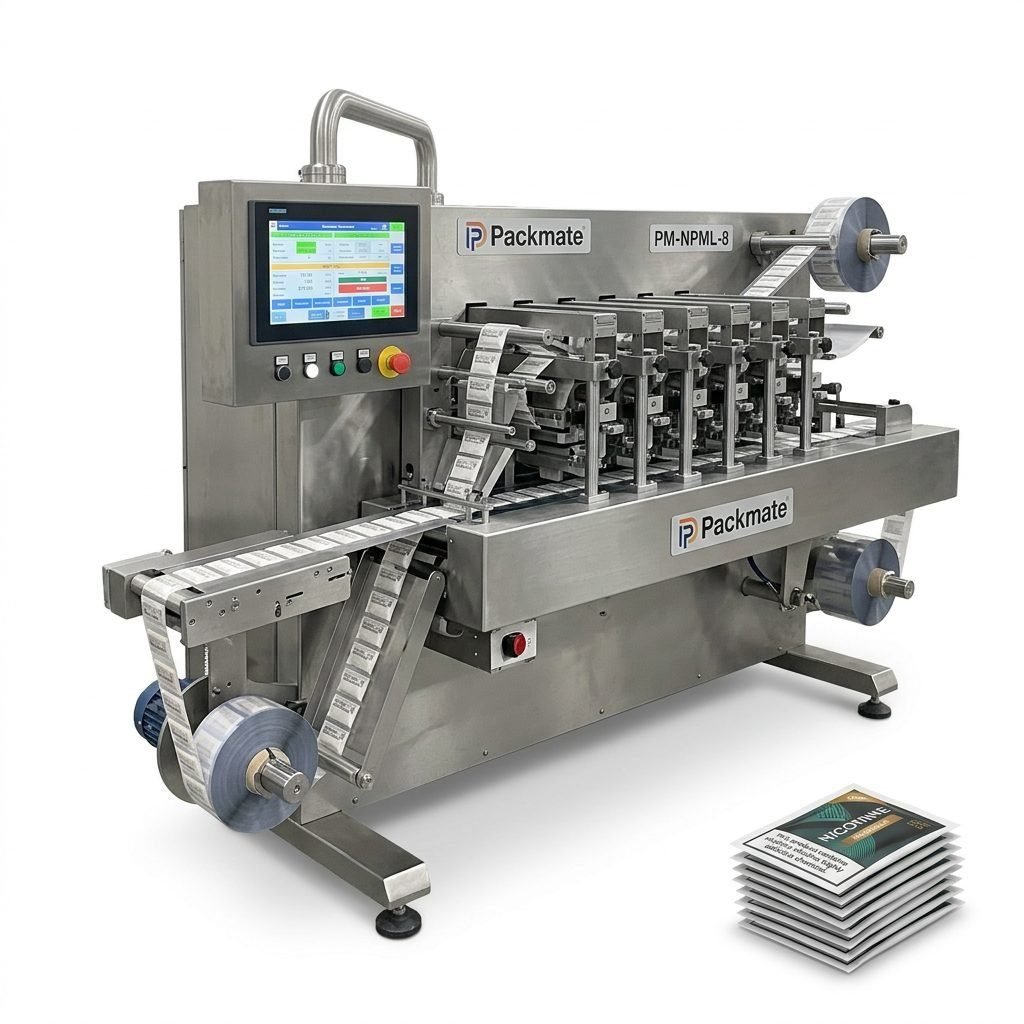
For premium or limited-edition product runs, a flexible single-lane line with easy changeover, small-batch dosing, and manual or semi-automatic packing allows high-quality finish and greater control over formulations.
Multi-Lane High Throughput Line
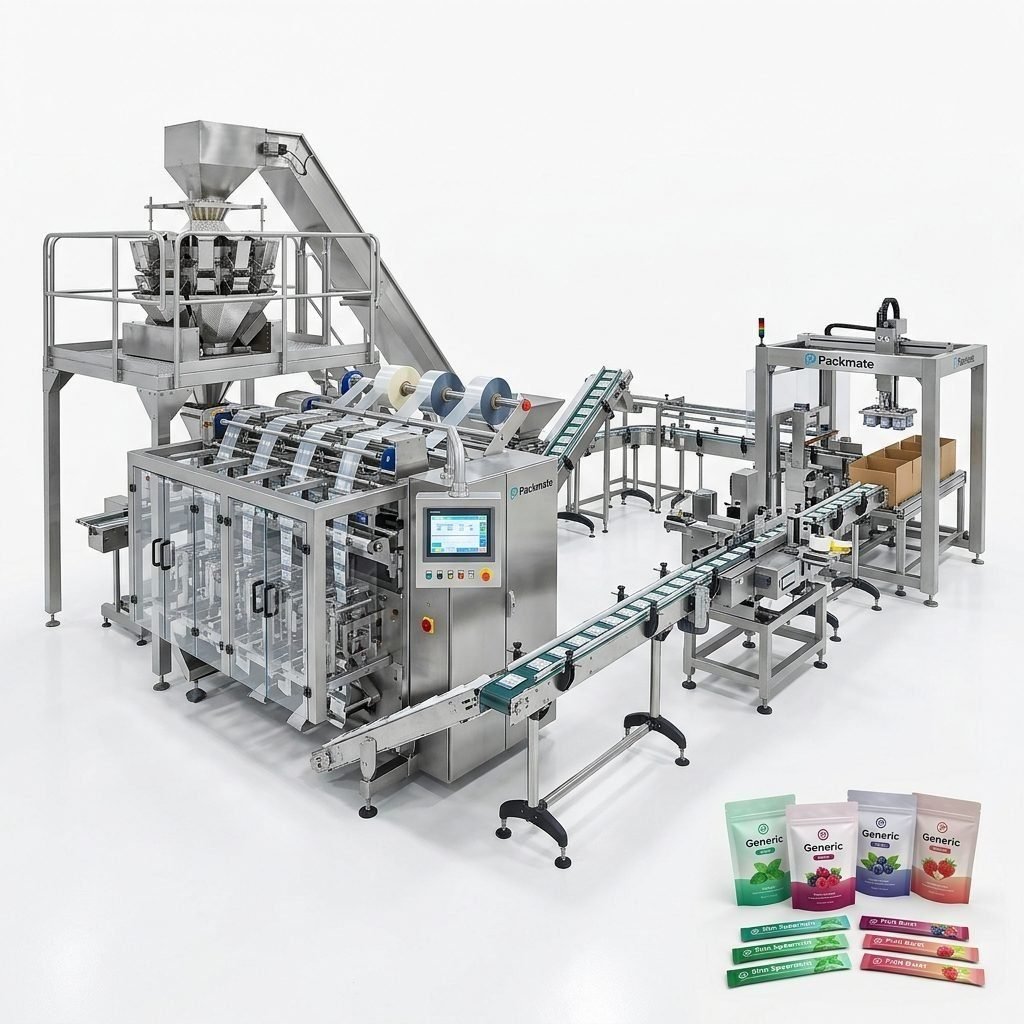
For manufacturers targeting widespread distribution, multi-lane forming and filling systems produce thousands of pouches per minute across multiple lanes. These lines combine high-speed portioning, in-line quality inspection, and automated case packing.
Integrated Turnkey Solutions
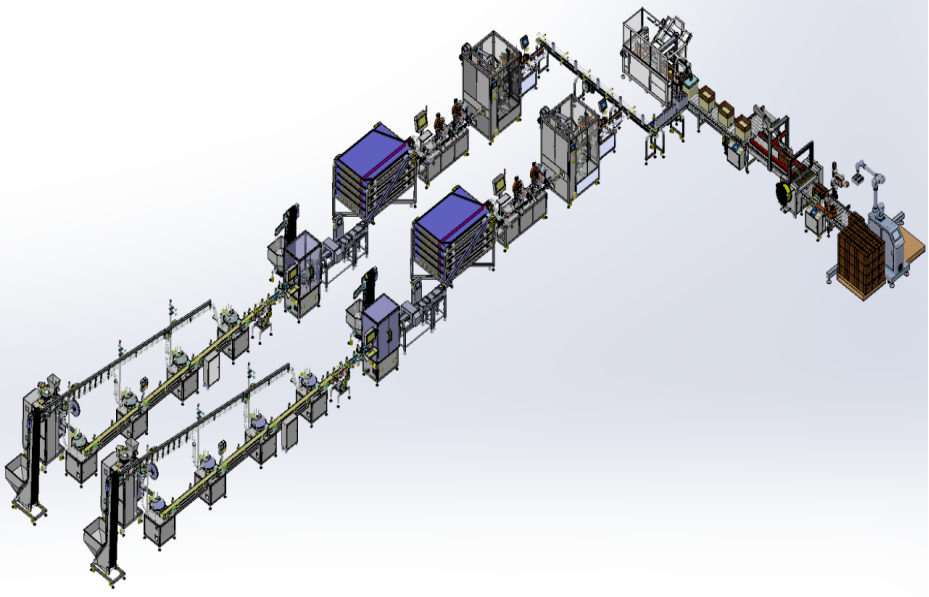
A turnkey solution bundles raw material handling, mixing, portioning, packaging, and end-of-line packing with full documentation, validation, and operator training — ideal for new manufacturing facilities or brand expansions.
Installation, Commissioning & After-Sales Support
Successful deployment requires more than hardware. Rigorous commissioning, operator training, and preventative maintenance plans are essential to maximize uptime. Reputable manufacturers provide spare parts, remote diagnostics, on-site service, and upgrades that extend machine lifecycles.
⚙️ What to expect in a support package:
• On-site installation and validation.
• Operator and maintenance training.
• Spare parts kits and recommended stock levels.
• Remote support and firmware updates.
Cost Considerations and Return on Investment
Budgeting for a custom production line involves CapEx and OpEx. While initial CapEx can be higher than standard machines, a well-engineered line reduces operating costs through lower material waste, less downtime, and higher yield. ROI analyses should include:
• Increased throughput and faster time-to-market.
• Savings from optimized film usage and reduced rejects.
• Lower labor costs due to automation.
• Revenue uplift from differentiated packaging and brand positioning.
Financing and Phased Investment
Phased upgrades allow businesses to start with a core line and expand features (extra lanes, in-line QA, cartoning) as volumes grow. Many manufacturers help with leasing or financing options to align capital outlays with projected revenue.
Selecting the Right Manufacturing Partner
Choose a supplier with proven nicotine pouch expertise, a track record of customized configurations, and robust after-sales support. Packmate’s global cases and exhibition presence demonstrate practical experience serving brands across Europe, Asia, and the Americas. For more information about product offerings and machine models, see Packmate’s Snus & Nicotine Packaging Machines and Sachet & Stick Pack Machines.
For broader packaging options, explore their Bag & Pouch Packaging Machines and Filling & Packaging Lines which can be integrated into complex production systems.
Questions to Ask Potential Suppliers
• Do they provide custom engineering and in-house machining capabilities?
• Can they validate performance with samples or pilot runs?
• What certifications and compliance documentation do they provide?
• What is their spare parts and service response time in your region?
Real-World Example: From Concept to Commissioning
A European start-up wanted a premium pouch with tight nicotine tolerance and eco-friendly film. The engineering process included material compatibility testing, a pilot multi-lane run to verify dosing accuracy, and the addition of in-line nitrogen flushing to extend shelf life. After successful commissioning, the line reached target OEE within six weeks and reduced film waste by 8%.
How to Start Your Custom Project
Initiating a custom project typically follows these steps:
1. Product profiling: define pouch format, portion size, moisture & nicotine specs.
2. Volume forecasts: determine initial and target throughput.
3. Site review: plan floor layout, utilities, and cleanroom requirements.
4. Prototype & pilot: test runs and validation.
5. Final delivery: installation, training, and warranty support.
📌 Tip: Engage your engineering partner early for packaging artwork and material selection — early choices affect machine settings, tooling, and long-term cost efficiency.
Useful Links and Resources
See detailed equipment categories and cases from Packmate: Snus & Nicotine Packaging Machines, Sachet & Stick Pack Machines, and Case studies highlighting turnkey installations.
Making the Decision: Practical Considerations
Invest time in evaluating production forecasts, regulatory environments, and supply chain resilience. A modular design can insulate your business from sudden demand shifts by enabling capacity expansion without full replacement of the core line.
Afterword: Why Engineering Matters
Good engineering balances precision, maintainability, and lifecycle cost. Working with an experienced partner ensures your custom nicotine pouch production line will be optimized not only for today’s requirements but for future product evolutions and market expansion.
Frequently Asked Questions
Q1: How long does a custom line take from order to commissioning?
A1: Typical lead times vary by complexity. A straightforward single-lane line may be delivered within 3–5 months, while a fully integrated multi-lane turnkey solution can take 6–12 months including factory acceptance testing and validation.
Q2: Can lines be upgraded later to increase capacity?
A2: Yes. Many manufacturers design machines modularly so you can add lanes, faster dosing modules, or additional packing stations without replacing the entire system.
Q3: What levels of technical support are offered after installation?
A3: Support typically includes initial on-site commissioning, operator training, spare parts availability, remote diagnostic assistance, and options for annual service contracts tailored to your region.
Q4: Are there pilot or demo options before committing to full production equipment?
A4: Reputable suppliers offer pilot runs, sample production, and demonstration units at exhibitions. Check exhibition schedules and request sample validations prior to purchase.
Q5: How do I start a conversation about a custom line?
A5: Begin by sharing product specifications, annual volume projections, desired packaging formats, and any regulatory constraints. For direct inquiries, you can contact Packmate via their Contact Us page.
Explore more about Packmate’s manufacturing capabilities and machine portfolio: About Packmate and Bag & Pouch Packaging Machines.