Choosing the best snus machine is a strategic decision for tobacco industry manufacturers aiming to scale production, improve consistency, and meet regulatory demands. This guide walks production managers, procurement teams, and technical leads through the critical factors that determine a successful snus or nicotine pouch packaging investment — from machine types and throughput to quality control, installation, and long-term service. Expect practical production tips, clear purchase criteria, and real-world considerations that drive return on investment.
Why the Right Snus Machine Matters
A specialized snus or nicotine pouch packaging machine influences product quality, operational uptime, and compliance with hygiene and safety standards. Unlike generic pouch machinery, dedicated snus systems are engineered for small-dose pouches, multi-lane precision dosing, reliable sealing, and minimized product loss — all crucial for maintaining consistent portion weight, shelf life, and brand reputation.
Core business benefits
• Faster time-to-market with repeatable pouch formats.
• Reduced material waste through accurate cutting and dosing.
• Scalable production lines that support new SKUs and packaging formats.
• Easier regulatory reporting thanks to stable processes and traceability features.
✔︎
Quick tip: When evaluating vendors, prioritize machines that offer multi-lane capability and precise micro-dosing controls — these two features deliver the best balance of flexibility and yield for nicotine pouch production.
Types of Snus & Nicotine Packaging Machines
Not all packaging machines are created equal. Below are the most common systems used by tobacco and nicotine pouch manufacturers:
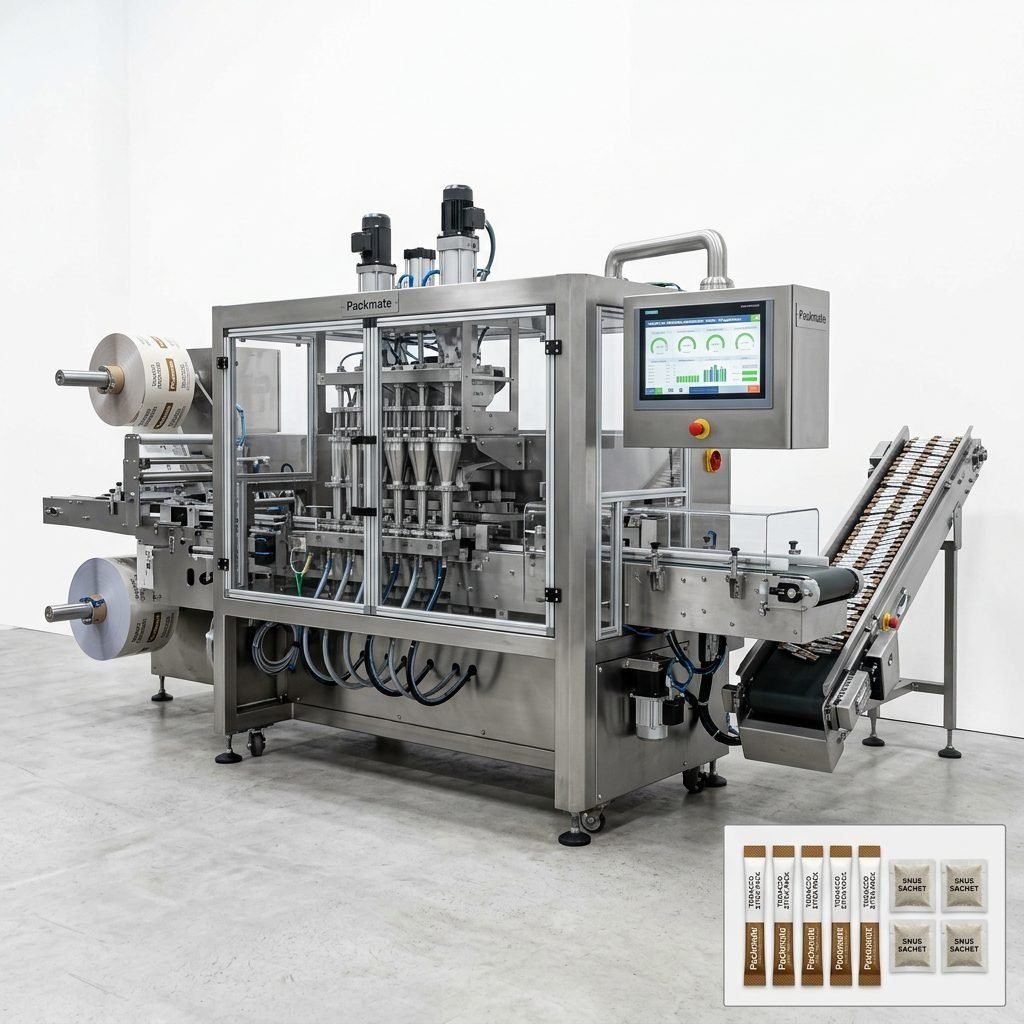
Sachet & Stick Pack Machines
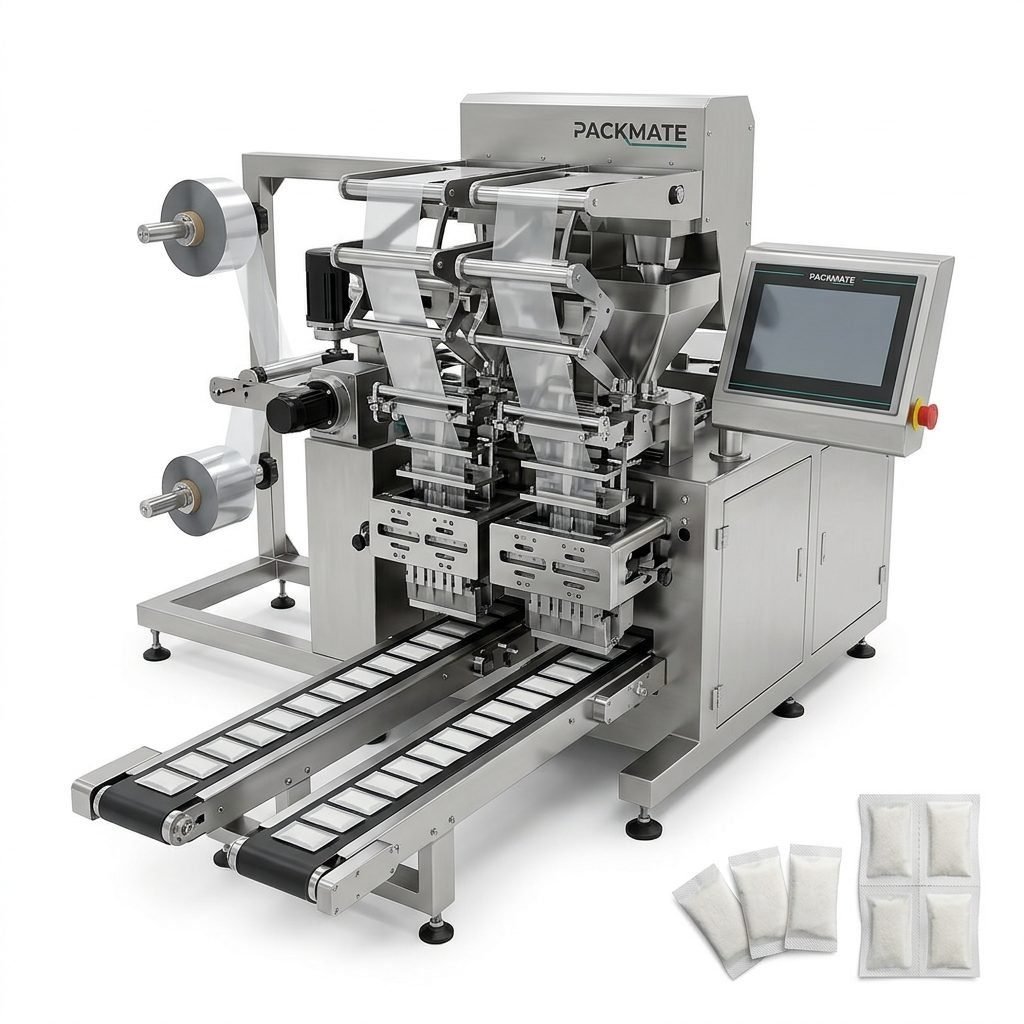
Sachet and stick pack machines are ideal for single-dose formats and can be configured for flowable powders or small granules. These machines are often deployed where compact, consumer-ready pouches are required. Explore advanced models here: Sachet & Stick Pack Machines.
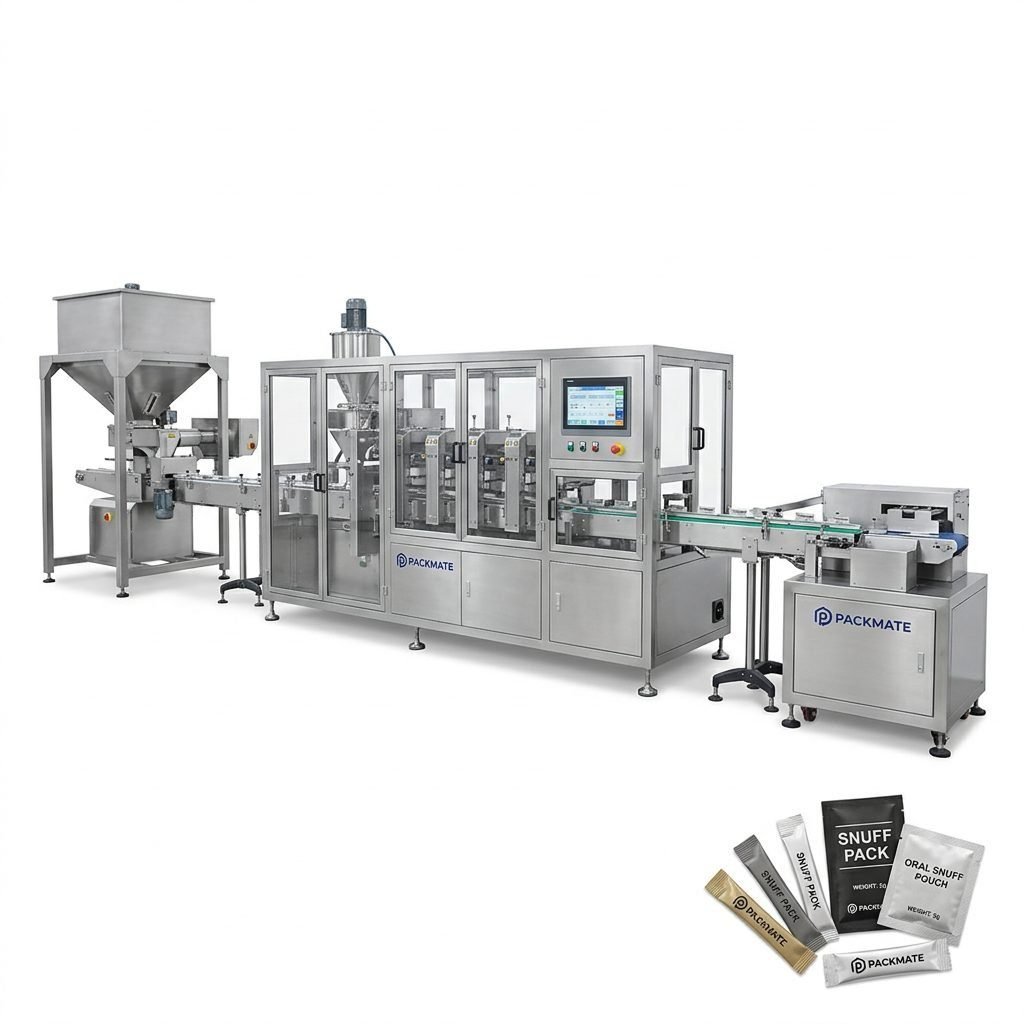
Multi-Lane Snus Pouch Lines
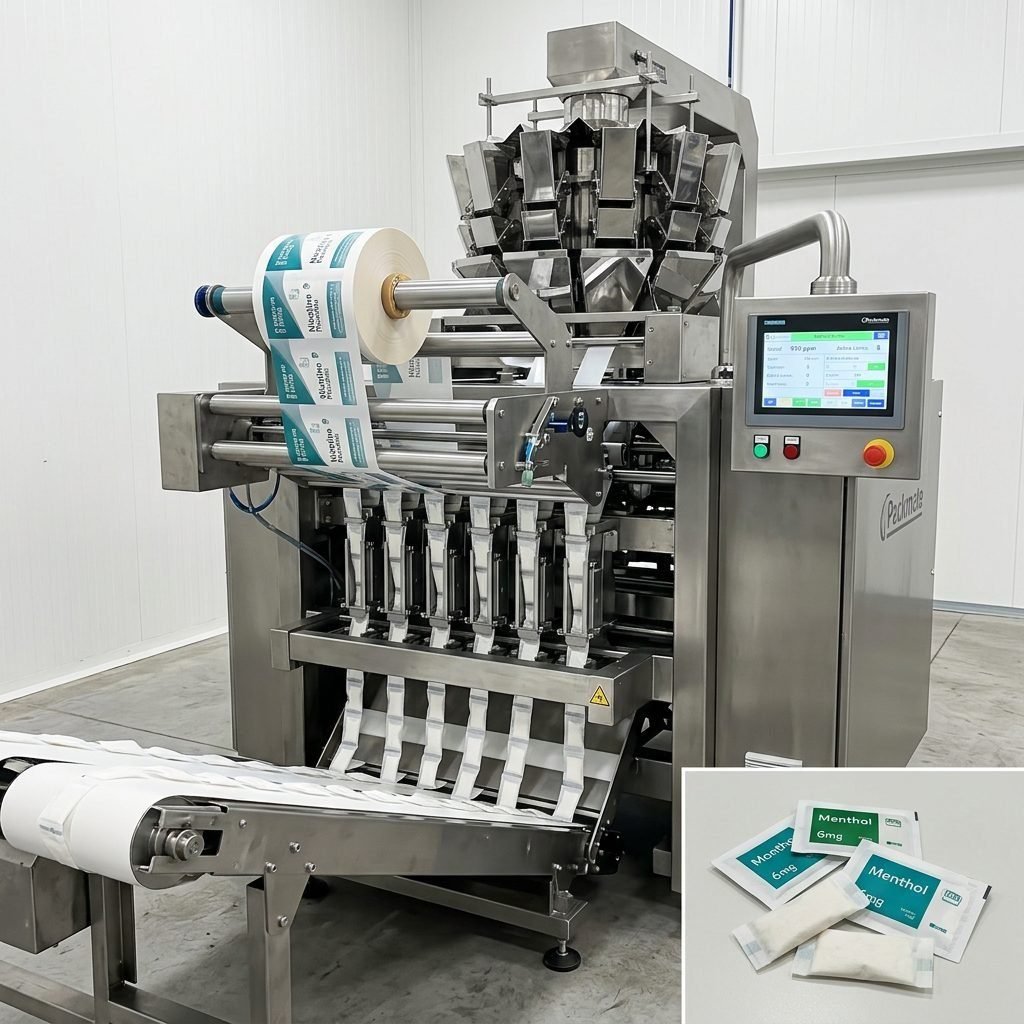
Multi-lane systems dramatically increase throughput by running several lanes of small pouches simultaneously. They are engineered for precise dosing, synchronized sealing, and minimal cross-lane variation — a must for high-volume manufacturers producing nicotine pouches and snus.
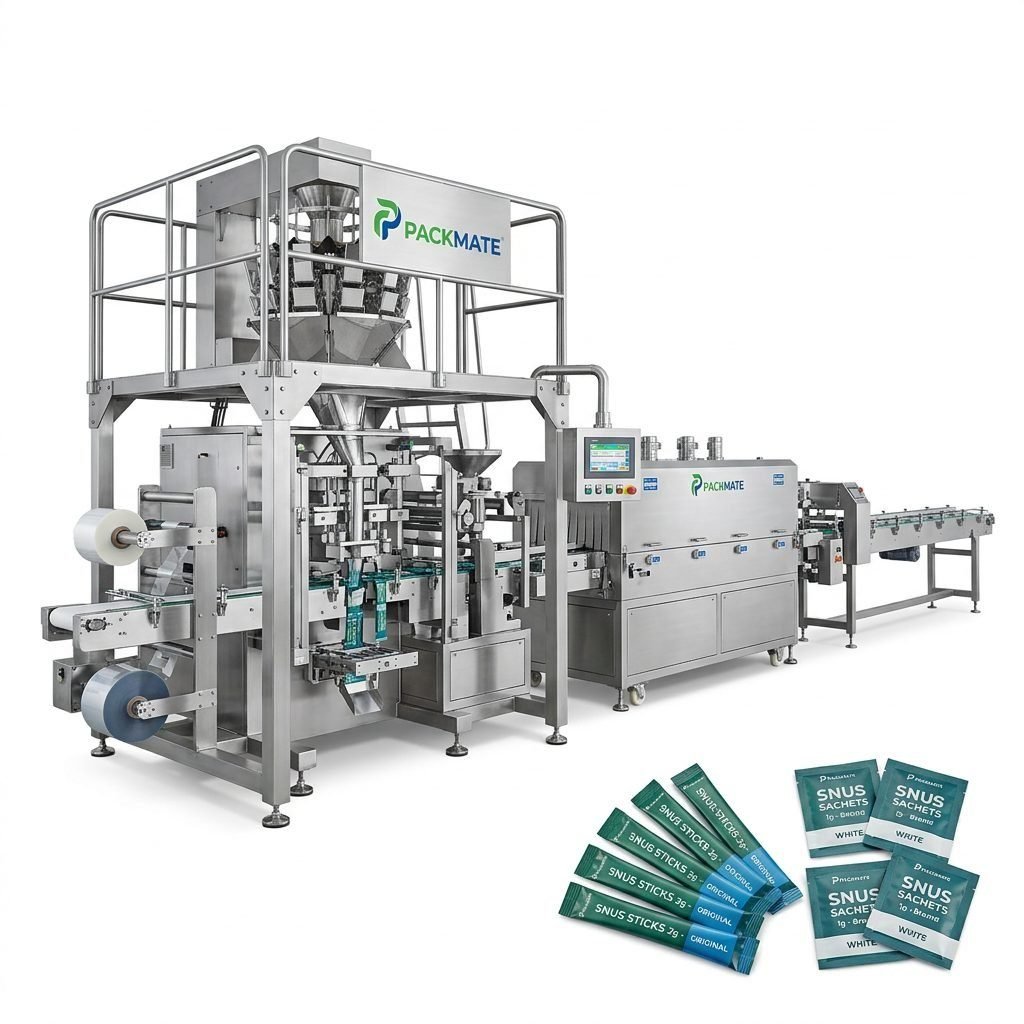
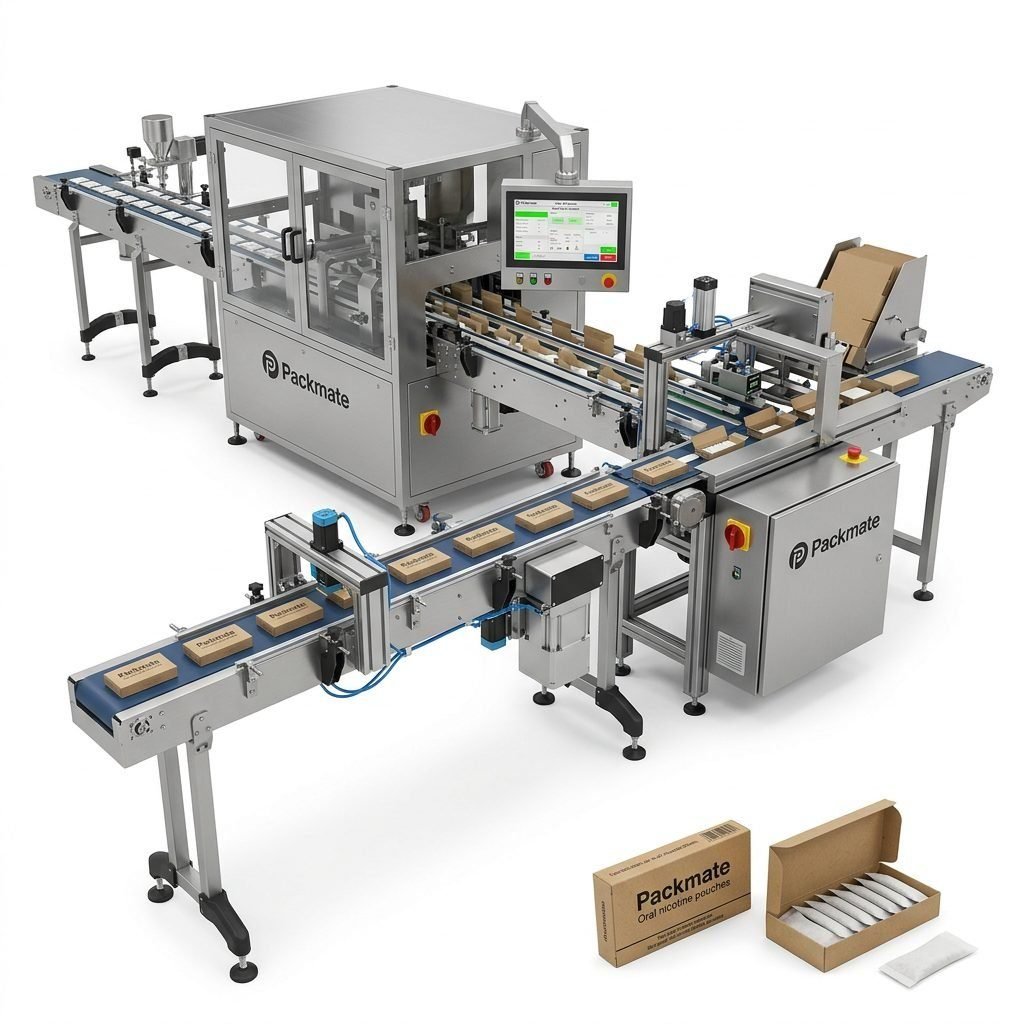
Complete Filling & Packaging Lines
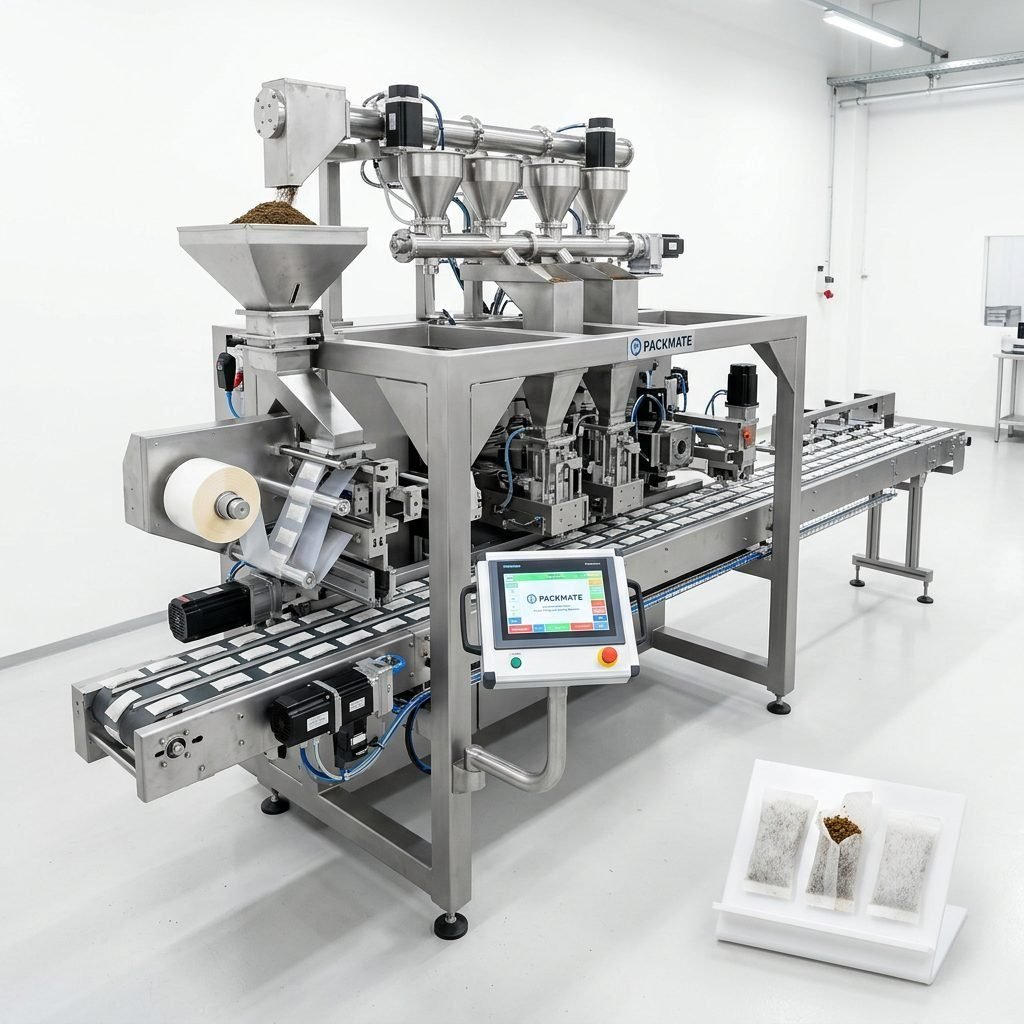
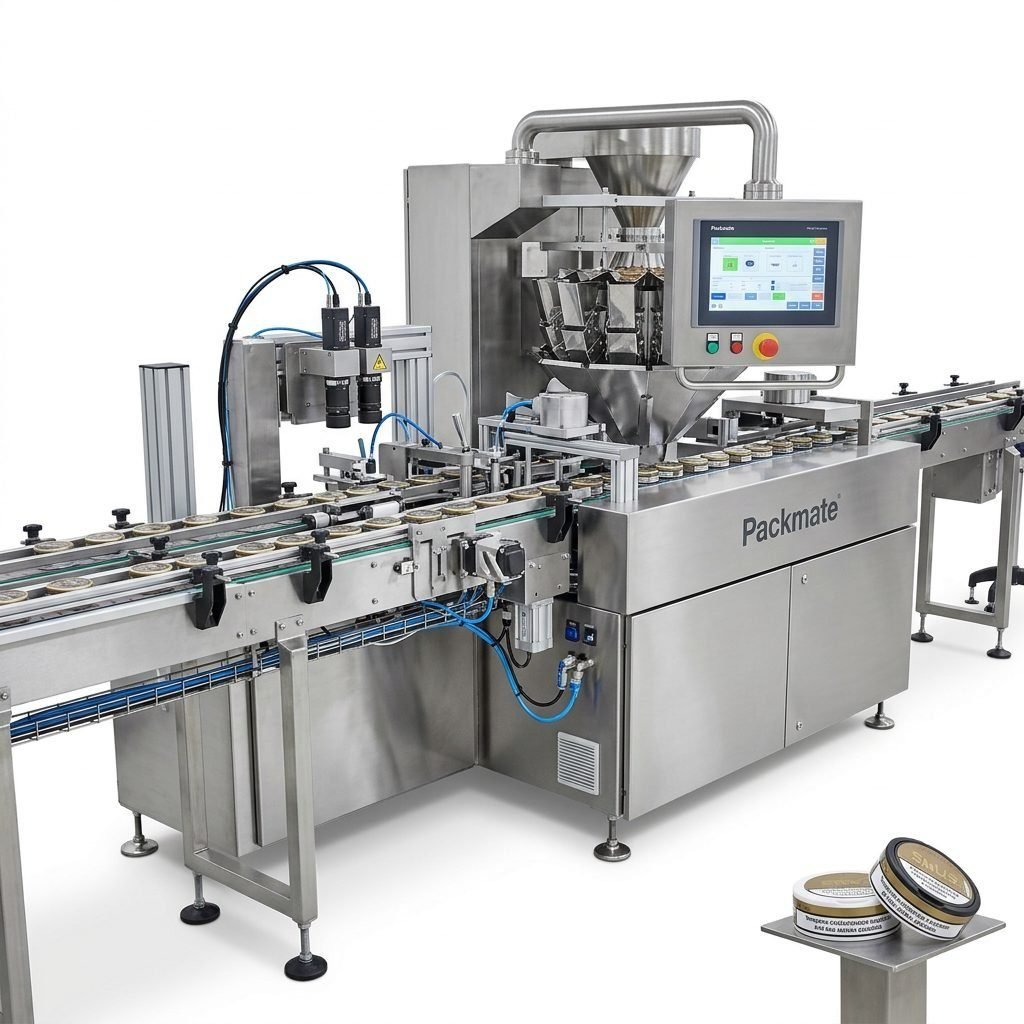
For turnkey production, integrated filling and packaging lines combine dosing, tray/form filling, sealing, and secondary packing. These lines reduce integration time and simplify supply chains. See examples: Filling & Packaging Lines.
Key Technical Features to Compare
Technical specifications define machine performance and long-term reliability. Focus on these attributes when comparing suppliers:
-
Throughput (pouches/min) and scalability for future capacity.
-
Dosing accuracy and weight tolerance for consistent product weight.
-
Material compatibility (film types, laminates, and heat-seal layers).
-
PLC and HMI controls with recipe storage and quick-changeover features.
-
Hygienic design: easy-clean surfaces, minimal contamination points, and compliant materials.
⚠️
Production alert: A machine with excellent maximum speed but poor changeover design often underdelivers. Fast changeovers and recipe-driven controls save far more production time over months of varied SKU runs.
Buying Guide: How to Evaluate Vendors
Selecting a supplier is as important as choosing the machine model. Beyond price, evaluate the vendor on engineering capability, factory capacity, after-sales service, and certification compliance.
Factory strength and engineering experience
A supplier with decades of R&D and a robust facility is better positioned to deliver stable, long-lasting machines. For example, Packmate Snus Machine has over 30 years of engineering experience and a 20,000㎡ manufacturing facility equipped with CNC centers and precision assembly lines — factors that correlate strongly with product reliability.
Certifications and compliance
Seek CE and ISO certifications, documented quality control procedures, and evidence of compliance with local tobacco and nicotine regulations. Verified certificates reduce audit risks and smooth market entry. You can review supplier certificates here: Certificate.
After-sales support and spare parts
Confirm the availability of spare parts, local service partners, and remote diagnostic capabilities. Strong support contracts and on-site commissioning services minimize downtime during ramp-up. Check vendor services here: Service.
Production Tips for Maximum Yield and Consistency
Implementing best practices on the shop floor ensures machines operate at peak efficiency and maintain product quality.
1. Standardize raw materials
Use consistent film suppliers and verify seal strength on each roll. Minor changes in film or adhesive can alter sealing profile and cause leaks or equipment jams.
2. Implement SPC and in-line checks
Statistical process control (SPC) and frequent in-line checks for weight, seal integrity, and pouch dimensions catch drift before it impacts whole batches. Consider integrating vision inspection and weight-check conveyors for automated rejection of out-of-spec pouches.
3. Scheduled preventive maintenance
Preventive maintenance calendars aligned with production shifts reduce unplanned downtime. Key items: lubrication, belt tension checks, cutter blade inspection, and seal bar calibration.
🔧
Maintenance checklist highlight: Keep a spare set of cutting knives and seal bars on site. Replacing worn consumables promptly prevents quality defects and extended stoppages.
Installation, Commissioning & Operator Training
Proper installation and thorough operator training are decisive for successful machine adoption.
Commissioning scope
A complete commissioning package should include on-site setup, production validation runs, recipe programming, and documentation for electrical and mechanical parameters. Confirm who handles utilities, ventilation, and foundation prep before machine arrival.
Operator and maintenance training
Training modules should cover daily startup/shutdown, changeover procedures, basic troubleshooting, and safety protocols. Vendors offering hands-on training at your site or at their factory demonstration center provide higher readiness levels for production.
Cost Considerations and ROI
Purchase price is only one component of total cost. Evaluate whole-life costs including parts, service, downtime risk, and consumables.
-
Initial capital expenditure vs. projected throughput and yield.
-
Consumable costs (films, adhesives, sealing elements).
-
Energy consumption and utility integration.
-
Service contract levels and remote support availability.
Manufacturers commonly calculate payback by modeling improved yield and labor savings. A quality multi-lane snus line often pays back through reduced per-unit labor and material loss within 12–36 months, depending on production scale.
Why Choose an Experienced Manufacturer
Experience translates to better machine architecture, fewer field issues, and quicker recovery when problems arise. A manufacturer with proven global deliveries and exhibition presence reflects a mature product line backed by service networks. Learn more about a seasoned supplier’s global footprint: About Packmate.
Factory capabilities
Facilities with advanced CNC machining and precision assembly ensure that replacement parts meet tight tolerances, reducing wear and unexpected failures. Packmate’s 20,000㎡ facility and 50+ machine models are examples of scale that supports rapid customization and spare parts supply.
Real-World Case Examples and References
Manufacturers often request case studies to validate performance claims. Review third-party references and on-site demonstrations. Many suppliers list project cases and global cooperation examples — this insight helps predict machine behavior under your product characteristics. For sample projects and case studies, see: Case.
📌
Remember: On-site demonstration runs with your exact product formulation are the most reliable predictor of actual line performance.
Common Pitfalls and How to Avoid Them
Avoid surprises by proactively addressing common pitfalls:
Underestimating changeover requirements
Rapid SKU shifts demand quick-change tooling and stored recipes. Neglecting this leads to downtime and higher labor costs.
Skipping acceptance testing
Insist on FAT (Factory Acceptance Testing) and SAT (Site Acceptance Testing) with measurable KPIs for speed, accuracy, and waste before final acceptance.
Next Steps: How to Get a Tailored Quote
Prepare product specifications (pouch size, target throughput, materials, and regulatory packaging requirements), outline expected SKUs and future expansion plans, and request a turnkey quote that includes installation and training. When contacting suppliers, reference relevant product lines such as Snus & Nicotine Packaging Machines to speed up configurator responses. For direct vendor contact and support, use: Contact Us.
Conclusion
Investing in the best snus machine requires balancing technical specs, supplier credibility, service capability, and production strategy. Prioritize multi-lane precision, robust hygienic design, and manufacturers with demonstrated engineering depth. Apply strict acceptance testing, schedule preventive maintenance, and train operators thoroughly to maximize uptime and product quality.
Frequently Asked Questions
Q1: What machine type is best for small-dose nicotine pouches?
Multi-lane snus pouch machines designed for small-dose production are usually the best choice. They combine precise micro-dosing with multiple lanes to achieve high throughput while maintaining tight weight tolerances.
Q2: How important are certifications like CE and ISO?
Certifications demonstrate adherence to international safety and quality standards and are often required for cross-border sales. They also indicate robust manufacturing and quality control practices.
Q3: What lead time should I expect for a customized snus packaging line?
Lead time varies with customization level and factory load but typically ranges from several weeks for standard models to several months for highly customized turnkey lines. Early engagement during specification finalization helps shorten delivery time.
Q4: How can I reduce downtime during changeovers?
Invest in machines with quick-change tooling, recipe-driven HMI controls, and well-documented standard operating procedures. Training operators in efficient changeover techniques and maintaining spares on site also reduces downtime.
Q5: Where can I see machines demonstrated before purchase?
Request factory demonstrations, attend international trade exhibitions, or arrange sample runs at the vendor’s demo center to validate performance with your formulation and packaging materials.