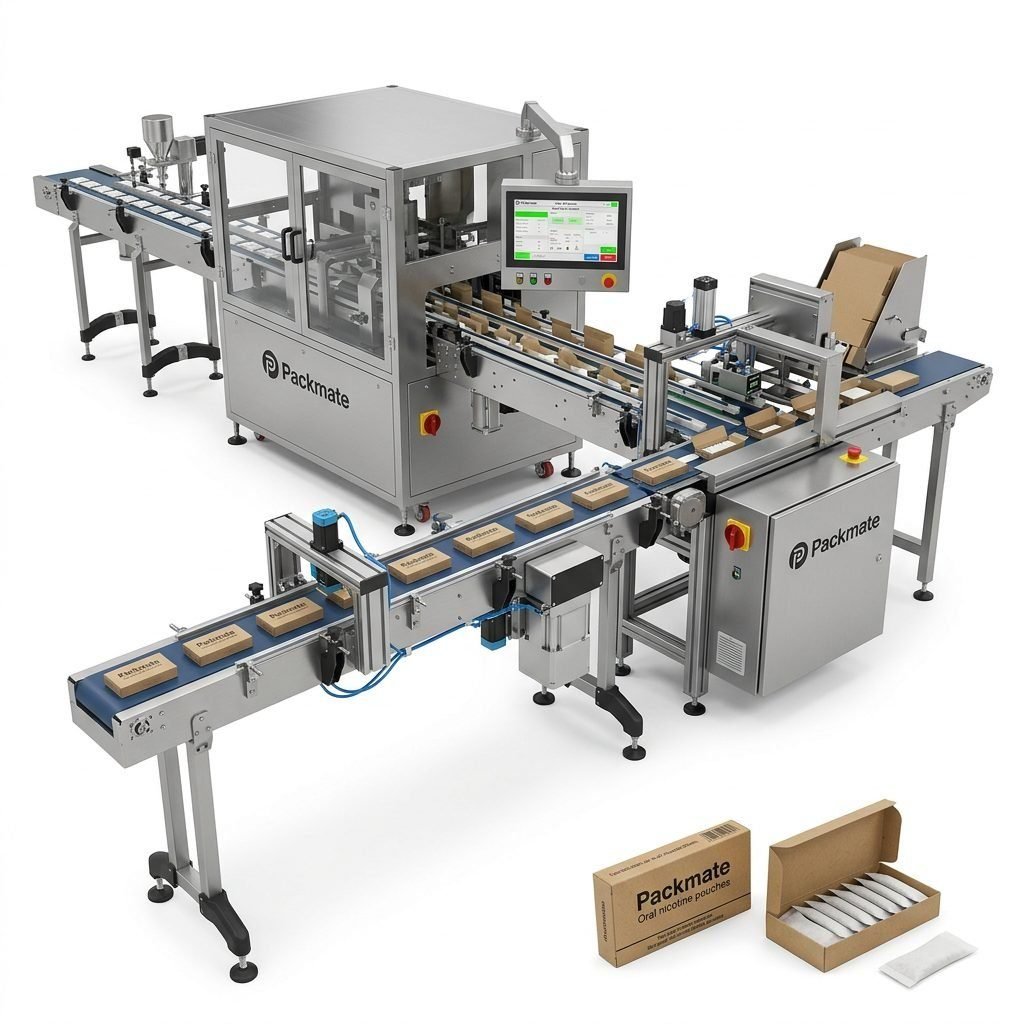
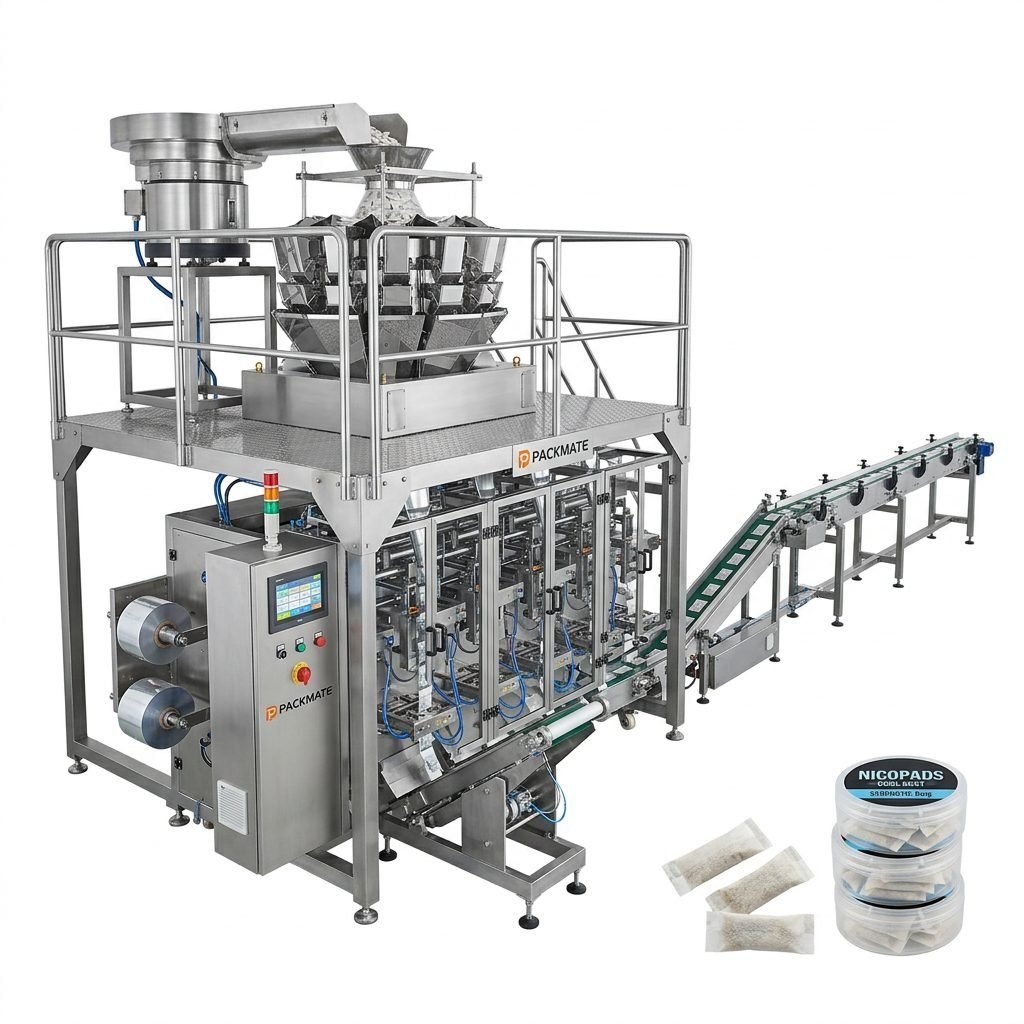
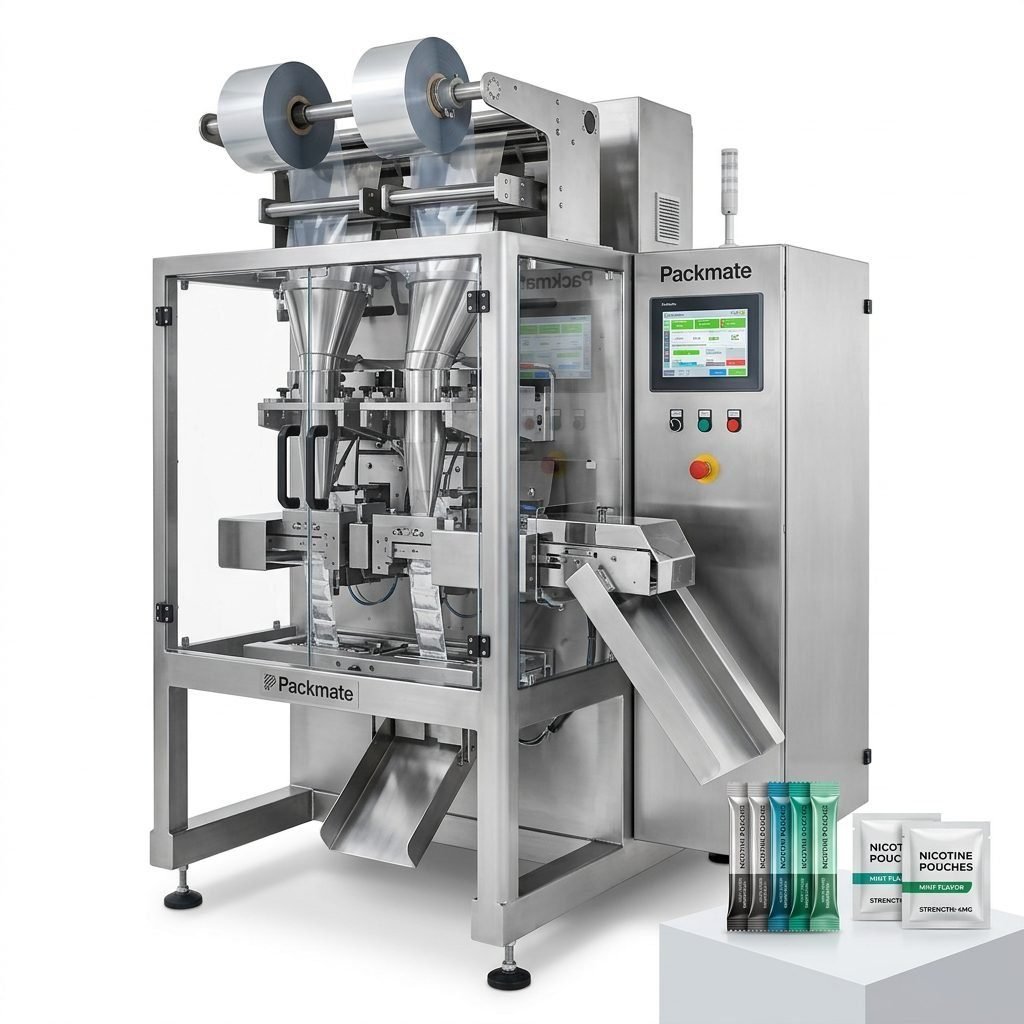
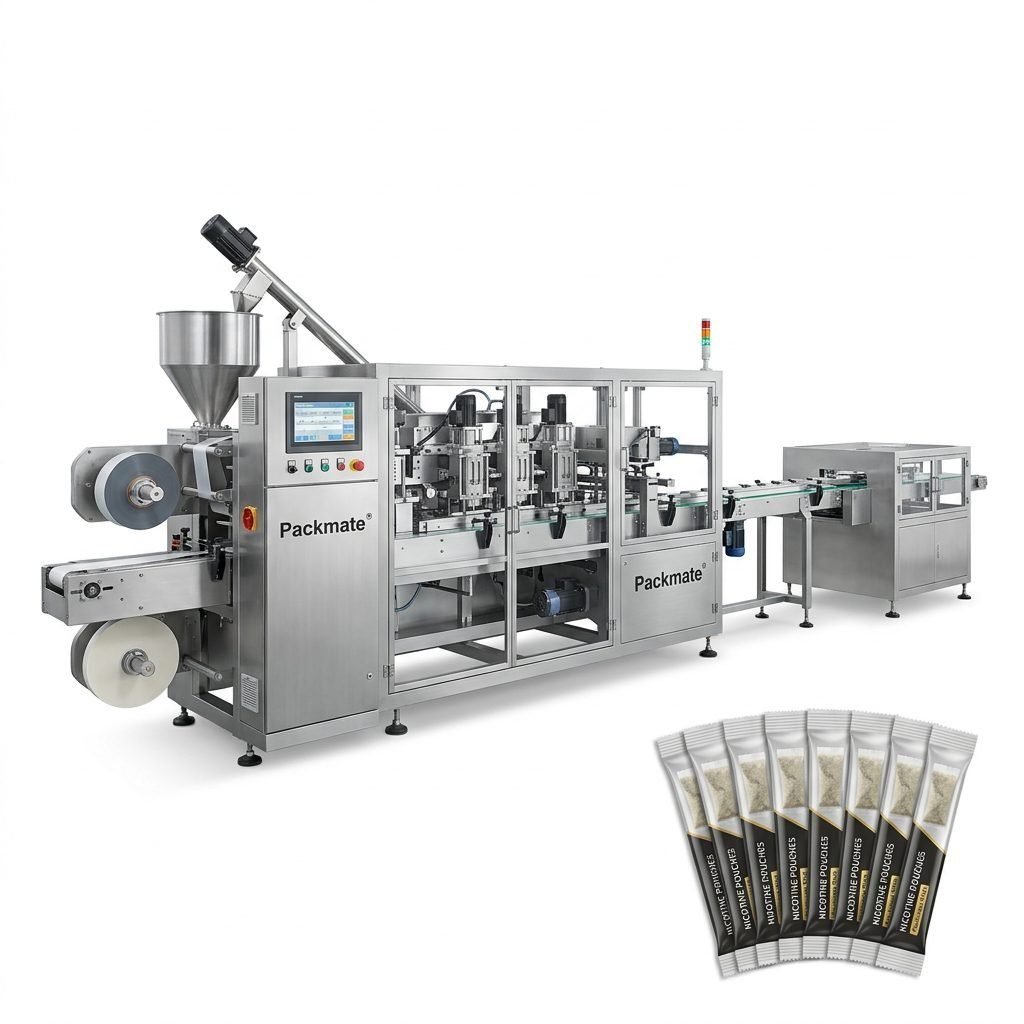
Choosing the right snus packaging machine for food-grade production is a decisive step for manufacturers who want to scale up production while maintaining strict hygiene and regulatory standards. This guide walks you through the technical, operational, and commercial factors that matter most when selecting a machine for nicotine pouches, snus, or other small-dose products — from material contact surfaces to automation level, multi-lane options, and post-sale support.
Why Food-Grade Standards Matter for Snus Packaging
Producing nicotine pouches and snus for human consumption requires more than speed and accuracy. Food-grade production demands materials and designs that minimize contamination risks, simplify cleaning, and comply with local and international regulations. Choose equipment built with stainless steel (304/316) contact parts, sealed motors and drives, and smooth surfaces to prevent residue buildup. Machines certified to CE and ISO standards provide an extra layer of confidence for global supply chains.
Key considerations for food-grade packaging
📌 Material contact: Food-grade stainless steel, polished surfaces, and FDA-compliant seals and gaskets.
⚠️ Hygiene & cleaning: CIP (clean-in-place) or easy dismantling for manual cleaning; minimal crevices.
✓ Traceability & validation: Support for batch codes, date stamps, and data logging for audits.
Machine Types: Which One Fits Your Product?
Snus and nicotine pouches can be packaged using different machine formats. Your product format, desired speed, and flexibility needs will determine the best fit.
Sachet & Stick Pack Machines
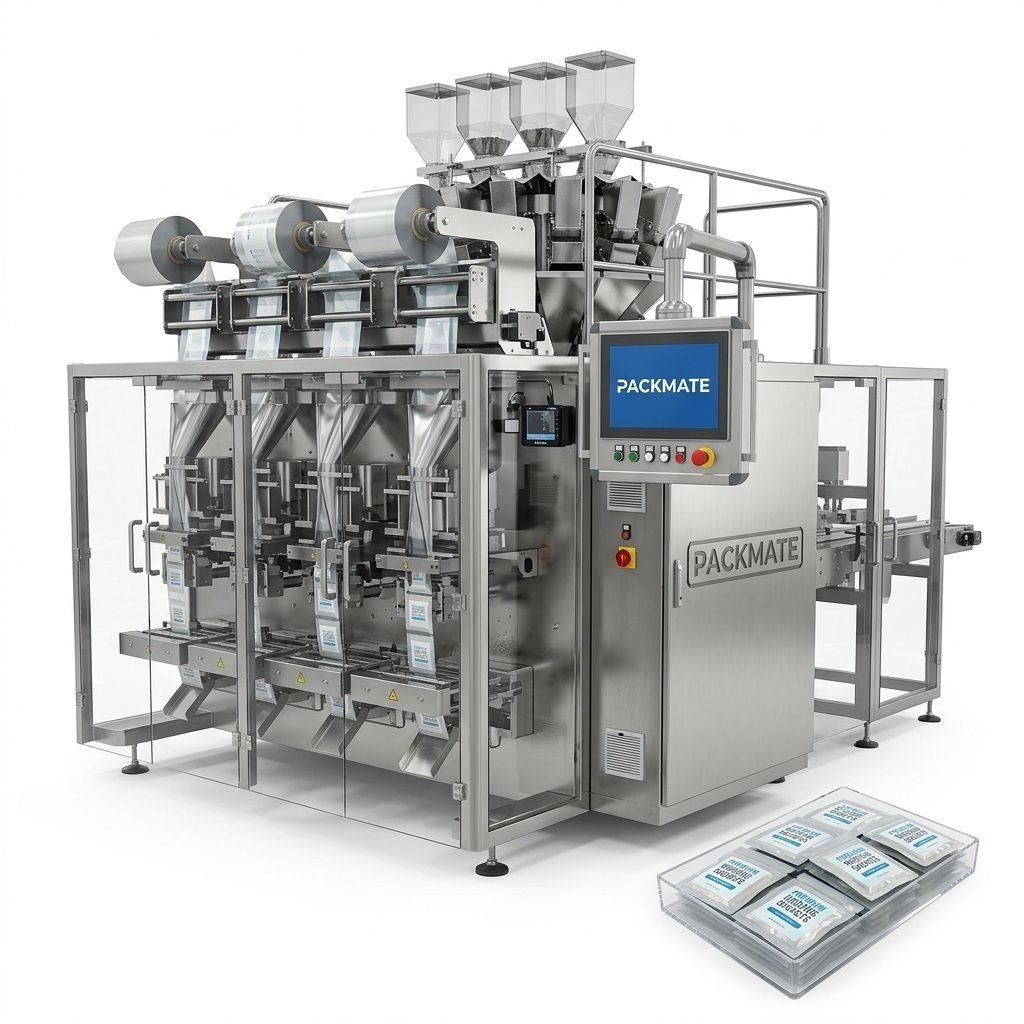
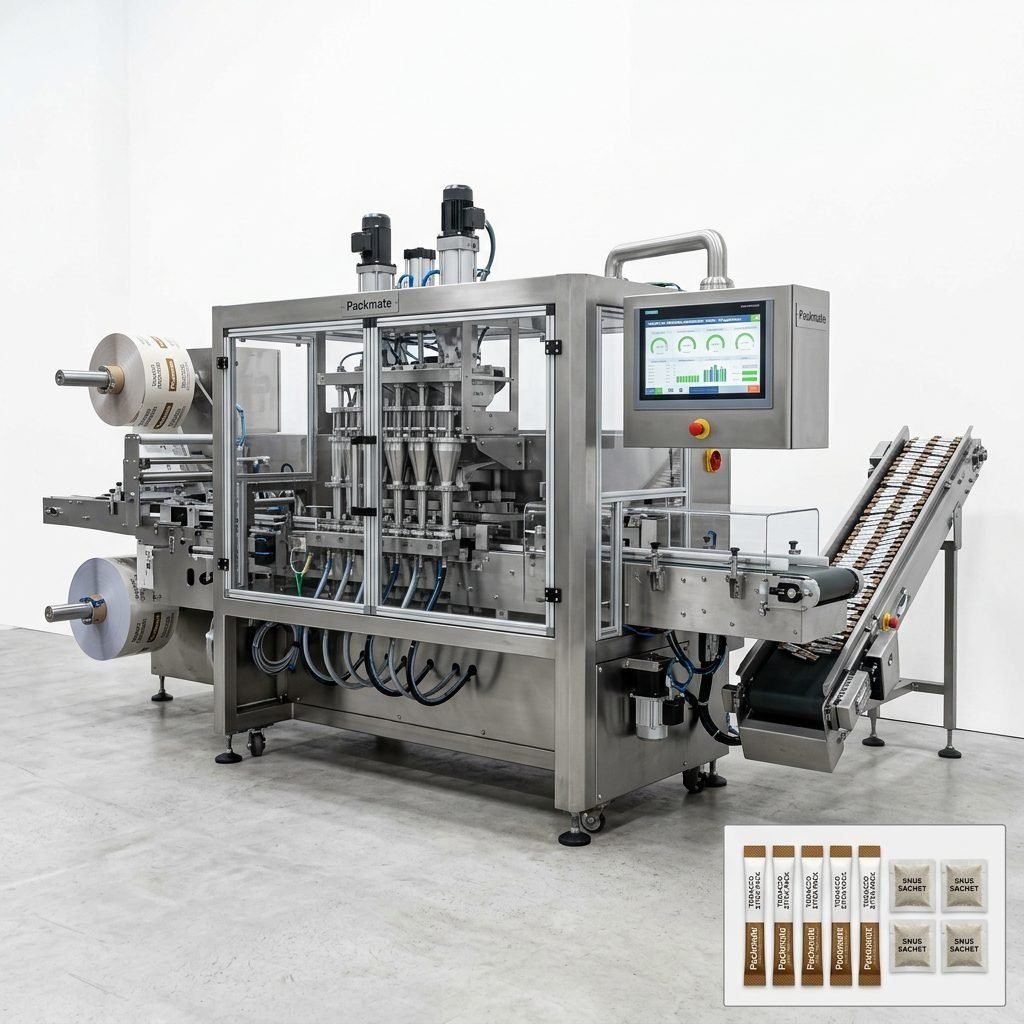
Sachet and stick pack machines are excellent for single-dose portions and provide a continuous, high-speed solution for rectangular or tubular pouches. They are often used for small-dose nicotine pouches when a vertical or horizontal pouch is acceptable. For examples and technical specs, review specialist lines such as Sachet & Stick Pack Machines.
Multi-Lane Snus Pouch Systems
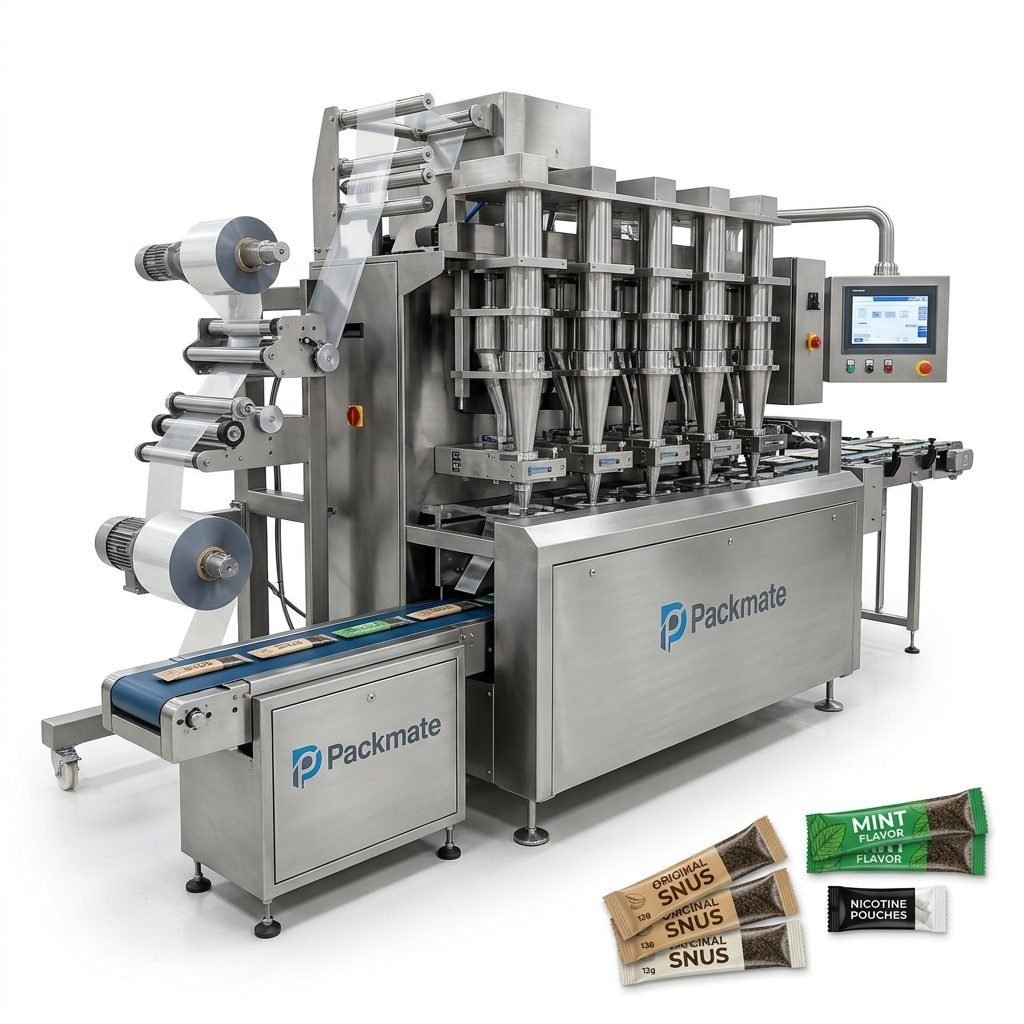
Multi-lane systems are ideal when you must maximize throughput with small-dose pouches. Multi-lane machines can have 2, 4, 8 or more lanes, allowing many pouches to be filled and sealed simultaneously. If your business requires high capacity while maintaining dosing accuracy, a multi-lane solution is worth considering.
Bag & Pouch Packaging Machines
For resealable pouches, zipper bags, or larger formats, bag & pouch machines provide flexibility for secondary packaging. These systems can be combined with weighing or feeding systems to create a complete line. See Bag & Pouch Packaging Machines for configurations and options.
Critical Technical Specs to Evaluate
When comparing suppliers and models, pay attention to specifications that impact yield, product quality, and long-term costs.
📌 Dosing accuracy: For nicotine pouches, dosing tolerance is critical. Look for ±1–3% accuracy for powders and micrograms-level control for nicotine liquids.
📌 Speed & throughput: Measured in pouches/minute or lanes x pouches/minute. Consider future growth — choose a machine with headroom.
📌 Sealing integrity: Heat-seal vs ultrasonic sealing, seal width, and temperature control for reliable hermetic seals.
📌 Changeover time: Quick change parts and adjustable guides for minimal downtime between SKUs.
📌 Control systems: PLCs, servo drives, touchscreen HMI, and remote diagnostics reduce operator errors and support predictive maintenance.
Food-Grade Materials and Sanitary Design
A machine might look robust, but sanitary design separates a production-ready machine from a maintenance burden. Surfaces that contact product should be 316 stainless steel for higher corrosion resistance, especially when acidic components or flavors are present.
Rounded edges, minimal horizontal surfaces, and hygienic frame structures make cleaning faster and reduce bacterial harborage points. If your process uses water for cleaning, ensure electrical enclosures and drives are IP65 or better.
Automation & Integration: Building a Turnkey Line
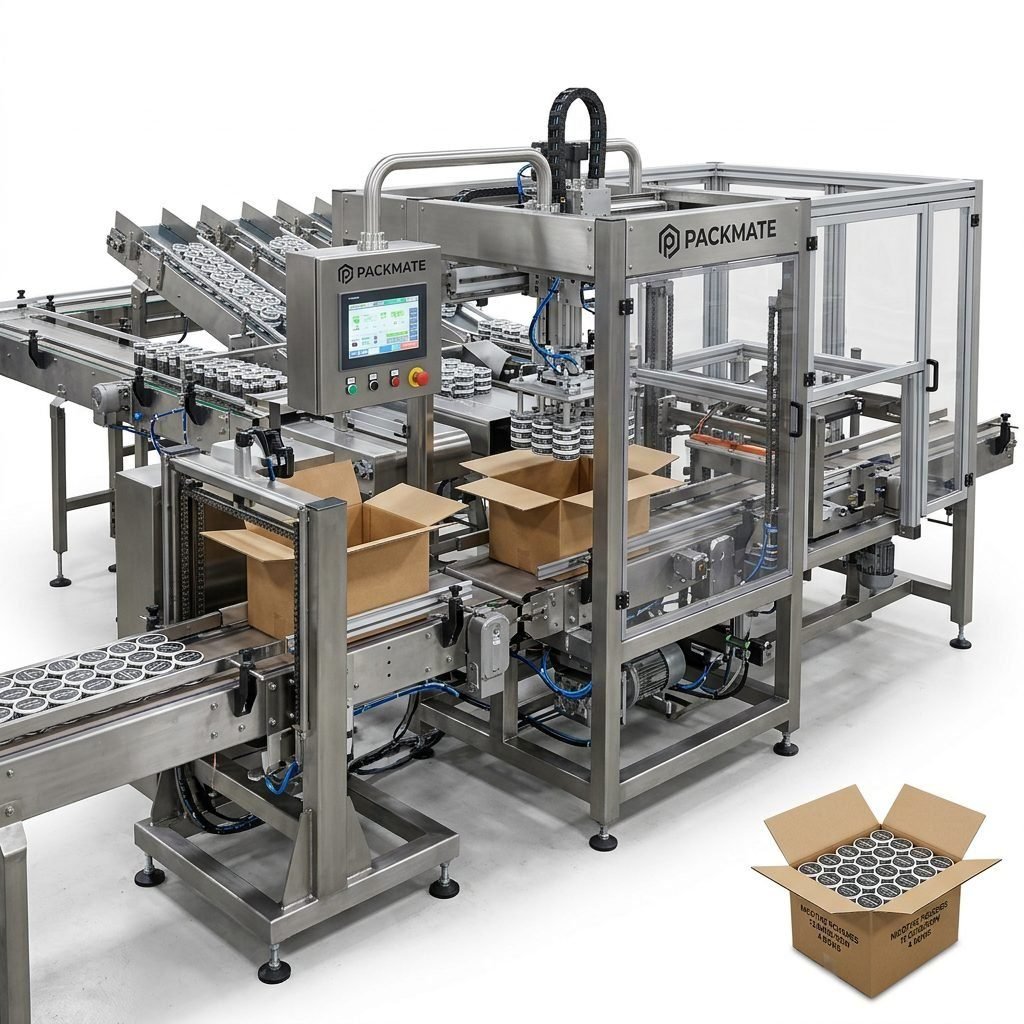
Most modern packaging projects require integration of upstream and downstream equipment. Filling systems, multi-head weighers, orientation devices, and cartoning or case packing units must all communicate reliably.
Consider integrated solutions from vendors who provide end-to-end lines. For example, you can pair snus filling machines with automated weighing and packaging lines — learn more about complete solutions at Filling & Packaging Lines and Weighing & Packaging Systems.
Communication protocols and Industry 4.0
Ask suppliers about OPC-UA, Modbus, or Ethernet/IP compatibility. Modern HMI with recipe management, remote monitoring, and data collection simplifies compliance and reduces downtime.
Operational Factors: Uptime, Maintenance, and Support
Long-term productivity depends on quick troubleshooting, available spare parts, and technical training. Evaluate supplier footprints, spare parts lead times, and onsite commissioning support. A reliable manufacturer will offer preventive maintenance plans and remote diagnostics to minimize production losses.
✓ Spare parts availability: Fast access reduces downtime.
✓ Field service & training: Onsite commissioning and operator training are essential.
✓ Documentation: Full drawings, electrical schematics, and maintenance guides.
Customization: When Standard Machines Aren’t Enough
Many snus and nicotine pouch producers have unique requirements: special pouch shapes, novel filling materials, or strict regional regulations. Choose a manufacturer with engineering depth and customization experience. Packmate Snus Machine, for example, highlights decades of R&D and offers turnkey solutions tailored to industry needs. For company details and credentials, consider reviewing their company profile at About Packmate.
Common custom requests
– Multi-lane synchronization for very small pouch sizes.
– Integrated nitrogen flushing or MAP (Modified Atmosphere Packaging) for extended shelf life.
– Automated feeding and orientation for irregular or branded pouch formats.
– Traceability modules for batch coding, serialization, and compliance reporting.
Regulations & Certification
Tobacco-related products and nicotine pouches face complex legal frameworks in many countries. Even when packaging is considered a mechanical process, the equipment and processes must support product safety and regulatory traceability. Seek machinery that supports GMP-like practices and is manufactured to CE/ISO standards. Verify supplier certificates before procurement and retain records for audits. Packmate promotes equipment that meets international norms — their certificates can be viewed at Certificate.
Budgeting: Total Cost of Ownership (TCO)
Initial purchase price is only one part of the equation. Evaluate total cost of ownership, including installation, training, spare parts, energy consumption, and expected life cycle. An automated, higher-specification machine may cost more upfront but deliver lower labor costs, better yield, and less downtime over time.
Checklist for TCO evaluation
📌 Energy efficiency
📌 Spare parts pricing
📌 Training and labor costs
📌 Expected throughput vs demand
On-Site Considerations and Factory Layout
Plan your factory layout to support hygienic flow: raw materials in, production in a controlled environment, and finished goods out to avoid cross-contamination. Consider HVAC, dust control, and local exhaust systems for powder handling. Machine footprints, maintenance access, and utility requirements (power, compressed air, vacuum) should be confirmed early in the project.
Selecting a Supplier: Questions to Ask
When evaluating vendors, ask clear, direct questions about past projects, references, and the level of customization the supplier can handle.
Key questions:
– Can you provide case studies or references for snus/nicotine pouch projects? (See relevant examples under Case.)
– What are the lead times for spare parts and long-term support?
– Do you offer onsite commissioning and training?
– Are machines compliant with CE/ISO, and can you provide certificates?
– How modular is the equipment for future expansion or format changes?
Real-World Example: From Prototype to Turnkey Line
A mid-sized manufacturer wanted to switch from manual pouch filling to a semi-automatic multi-lane snus pouch line. The chosen solution combined a high-accuracy powder dosing system, a 4-lane pouch former/sealer, and automated cartoning. After validation and operator training, the line achieved a 5x increase in throughput and reduced dosing variance by 80%, while meeting local food-grade requirements.
Why Choose an Experienced Manufacturer?
Manufacturers with deep experience have refined designs that reduce common issues like hopper bridging, inconsistent seals, and lane mismatch. Packmate’s history (30+ years of engineering and a 20,000㎡ facility) is an example of how established suppliers combine machining capacity, assembly precision, and quality control to deliver reliable packaging equipment. Review their full product suite at Snus & Nicotine Packaging Machines.
Practical next steps for buyers
1. Prepare a clear product specification: pouch size, target speed, dosing tolerance, and material details.
2. Request performance data and video demonstrations from shortlisted suppliers.
3. Ask for a site layout and utilities list to ensure smooth installation.
4. Negotiate spare parts and service agreements upfront to protect uptime.
Conclusion
Selecting the best snus packaging machine for food-grade production is a multifaceted decision that balances hygiene, accuracy, throughput, and long-term support. Prioritize sanitary design, dosing precision, and a supplier who can integrate and support a turnkey production line. Leveraging experienced manufacturers and validated systems reduces risk and speeds time-to-market.
Frequently Asked Questions
Q1: What makes a packaging machine truly “food-grade”?
A1: Food-grade machines use compliant materials (316/304 stainless steel in contact parts), hygienic design (rounded, cleanable surfaces), sealed electrical components, and validation documentation to support clean operations and regulatory audits.
Q2: How do I ensure dosing accuracy for nicotine pouches?
A2: Choose machines with high-precision dosing modules (loss-in-weight, auger with feedback, or servo-driven piston fillers), proper hopper agitation for flowable powders, and in-line weight check systems to monitor deviations.
Q3: Can I scale from a single-lane to a multi-lane system later?
A3: Some vendors design modular systems that allow lane additions or upgrades. Confirm modularity and control compatibility before purchase to reduce future costs.
Q4: How important is supplier support after installation?
A4: Extremely important. Commissioning, operator training, spare parts availability, and remote diagnostics keep uptime high. Negotiate service response times and spare parts packages before signing.
Q5: Where can I see examples of production lines and certifications?
A5: Check supplier case studies and certification pages for real-world examples and compliance documents, such as those linked under Our Exhibition and Certificate.