Choosing the right nicotine packaging machinery in Indonesia requires more than a straightforward equipment purchase. Manufacturers must consider local regulatory frameworks, cultural and market preferences, workforce skills, and supply chain realities while balancing production efficiency, product quality, and compliance. This guide walks through the practical steps to evaluate, select, and implement snus and nicotine pouch packaging systems that fit Indonesian production environments and business goals.
Understand Indonesia’s Market and Cultural Context
Indonesia is a diverse archipelago with a predominantly Muslim population and varied local customs. Though nicotine products are consumed across demographic groups, companies operating in Indonesia should be culturally sensitive in branding, distribution, and packaging decisions. Seasonality (for example, lower factory throughput during major religious holidays like Ramadan and Lebaran) and local labor practices will shape production planning and maintenance schedules. Moreover, local regulatory bodies enforce product and labeling rules — make sure your packaging line can adapt to regulatory labeling changes and language requirements (Bahasa Indonesia).
Key Production Goals to Define Before Evaluating Machinery
Before comparing models, document your priorities so machine selection aligns with business strategy:
✅ Throughput requirements: pouches per minute, lanes required for your SKU mix.
✅ Flexibility: ability to run multiple pouch sizes and materials.
✅ Compliance & traceability: serialization, batch coding, and label updates.
✅ Hygiene & cleanability: material contact parts and CIP/cleaning access.
✅ Total cost of ownership: maintenance, spare parts, and energy use.
Types of Nicotine Packaging Machinery and When to Use Them
There are several packaging formats and associated machinery types widely used for nicotine pouches and snus. Choosing the right format influences consumer appeal, regulatory labeling, and production economics.
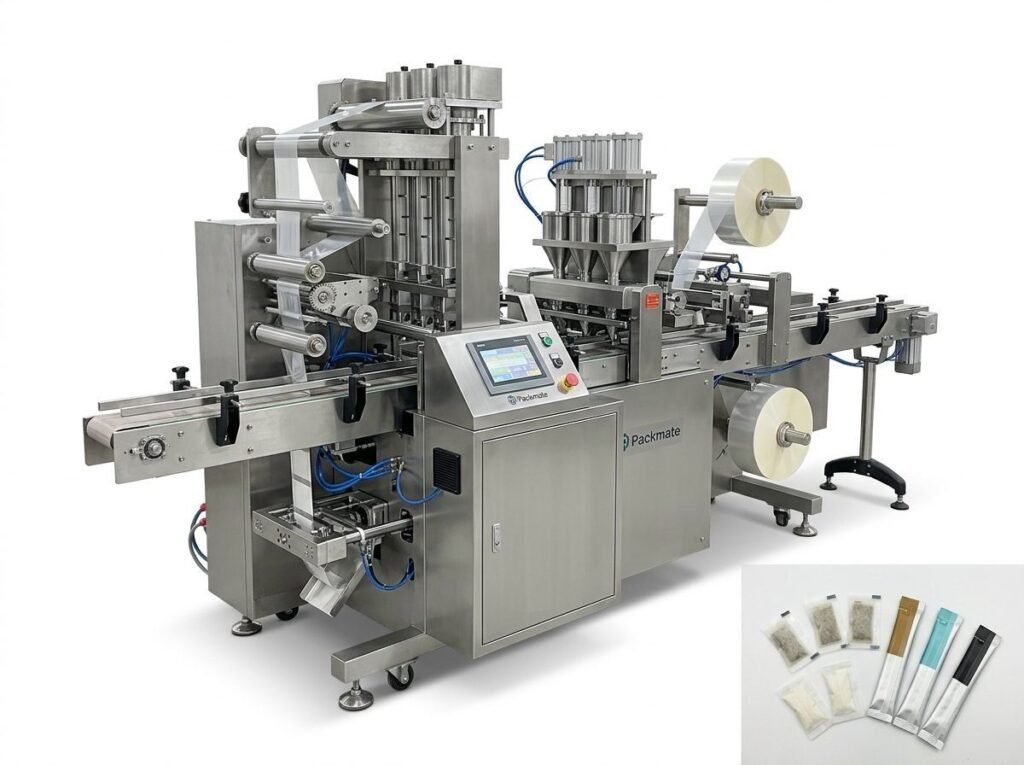
Sachet and Stick Pack Machines
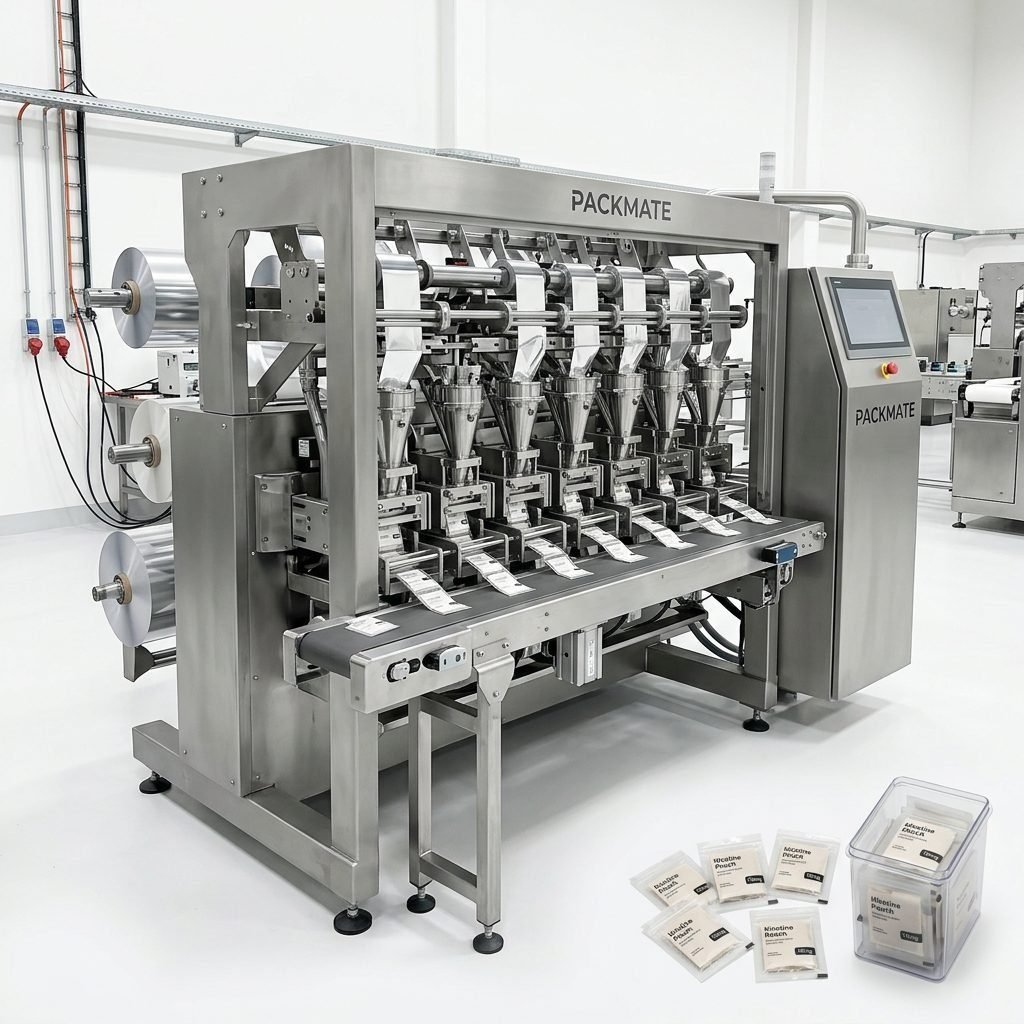
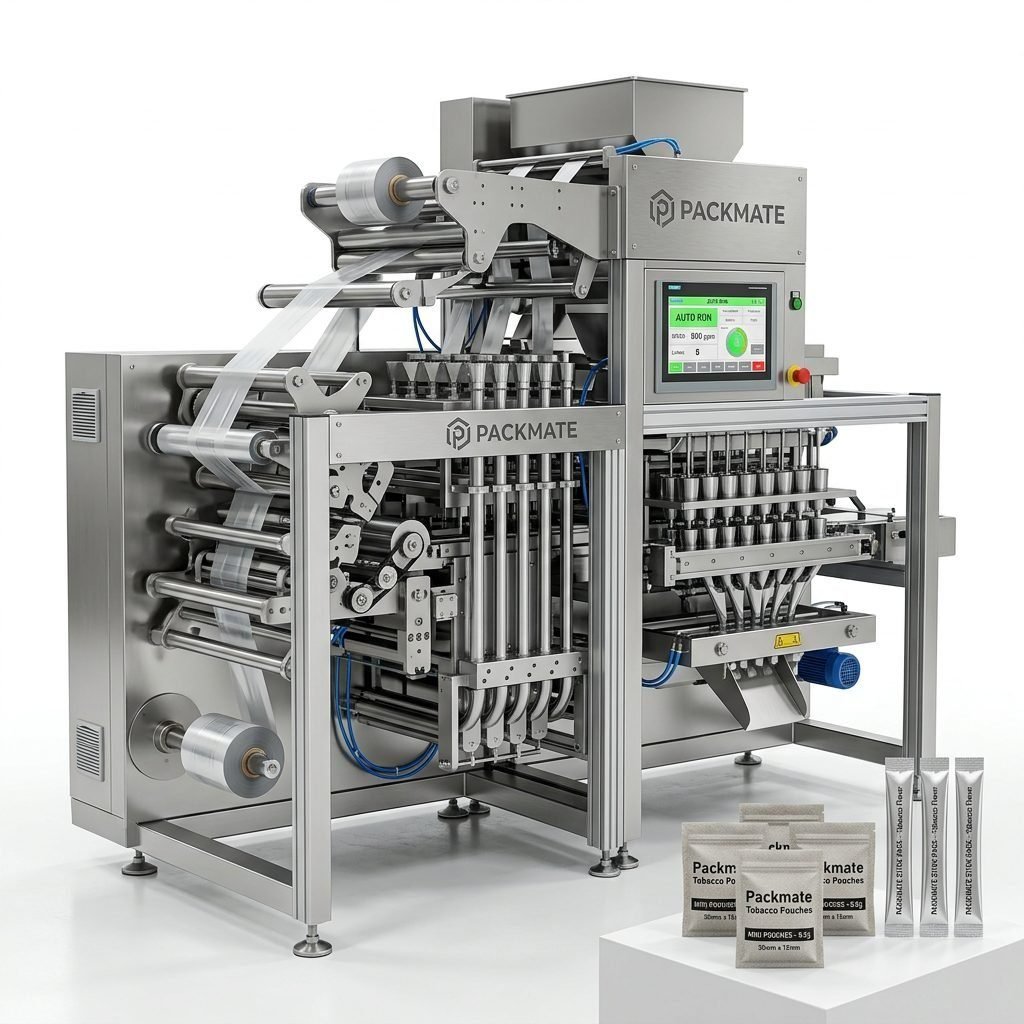
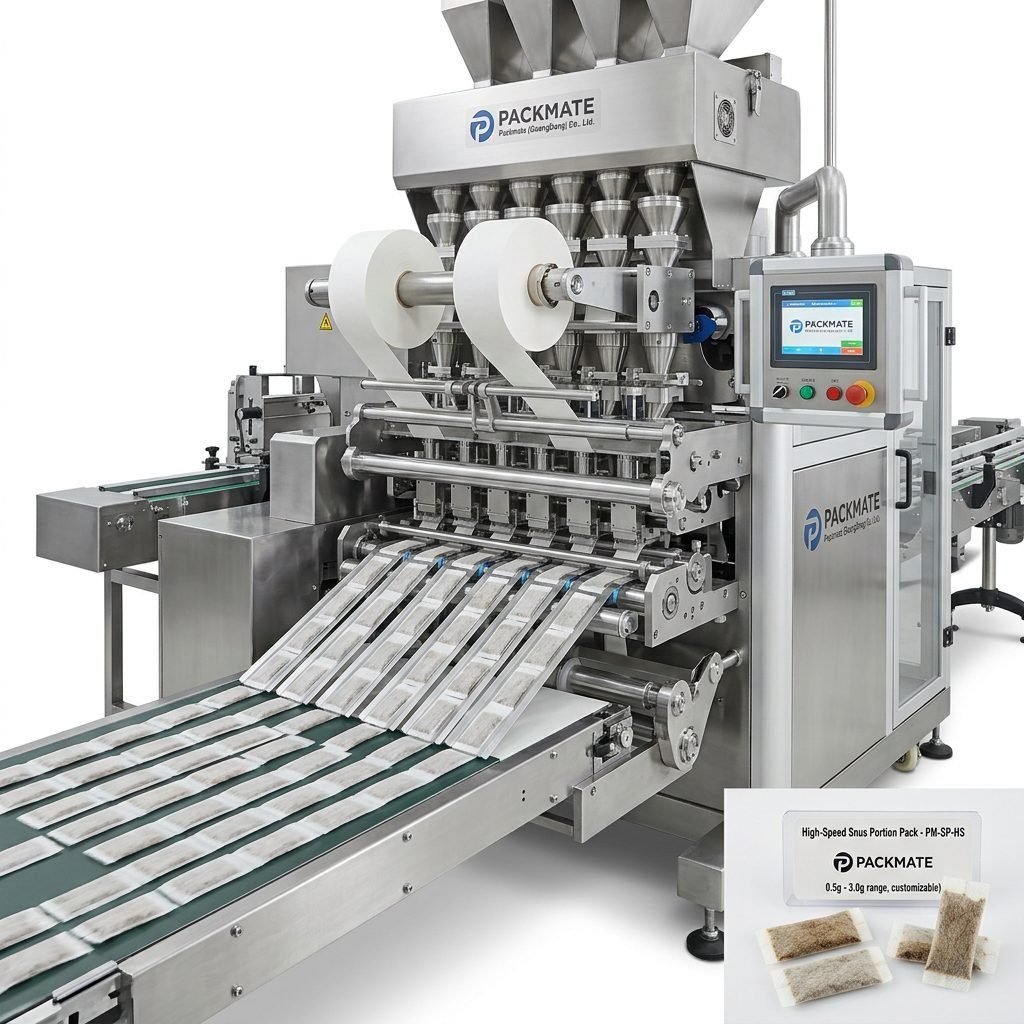
Stick packs and small sachets are ideal for single-portion nicotine pouches. These machines typically offer high-speed, single-lane or multi-lane configurations. If you expect high-volume retail distribution or vending machines, consider multi-lane stick pack systems for maximum throughput. See options in Sachet & Stick Pack Machines for model references.
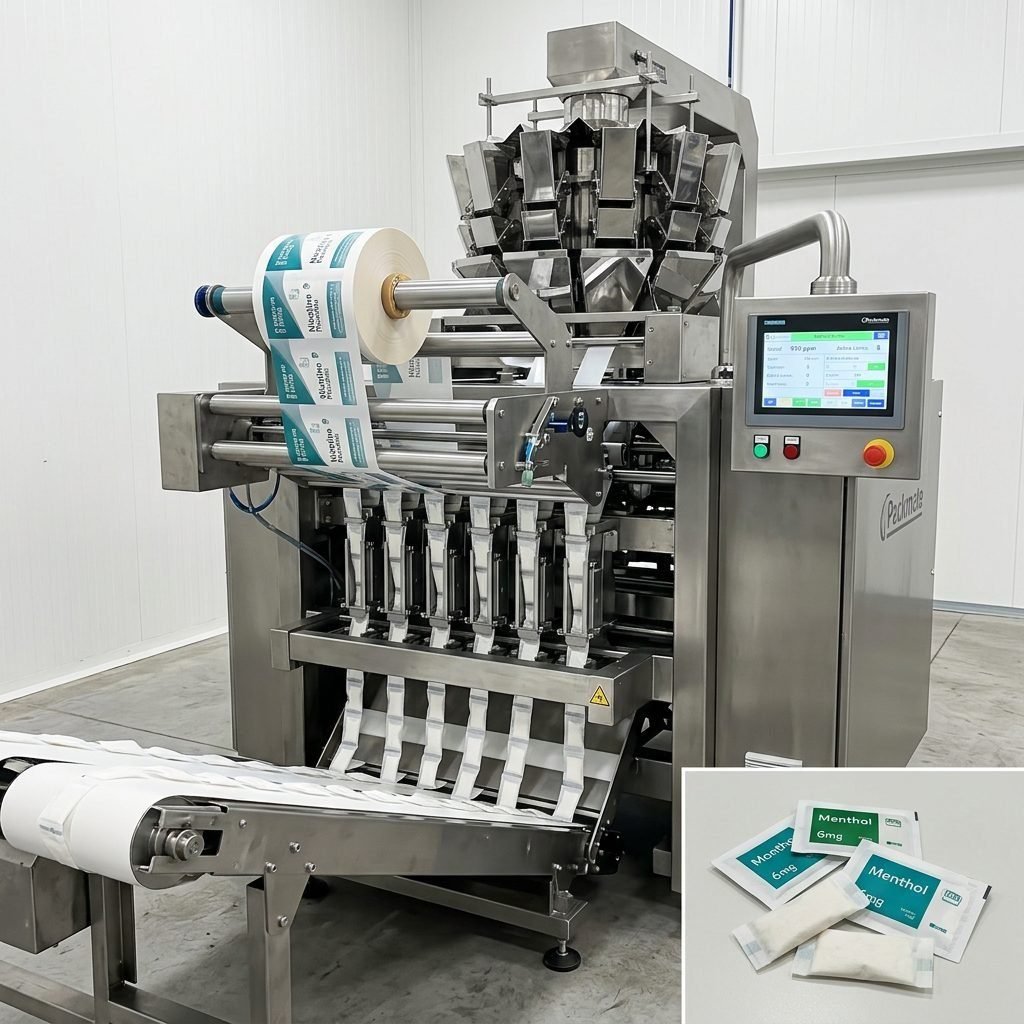
Multi-Lane Snus / Nicotine Pouch Machines
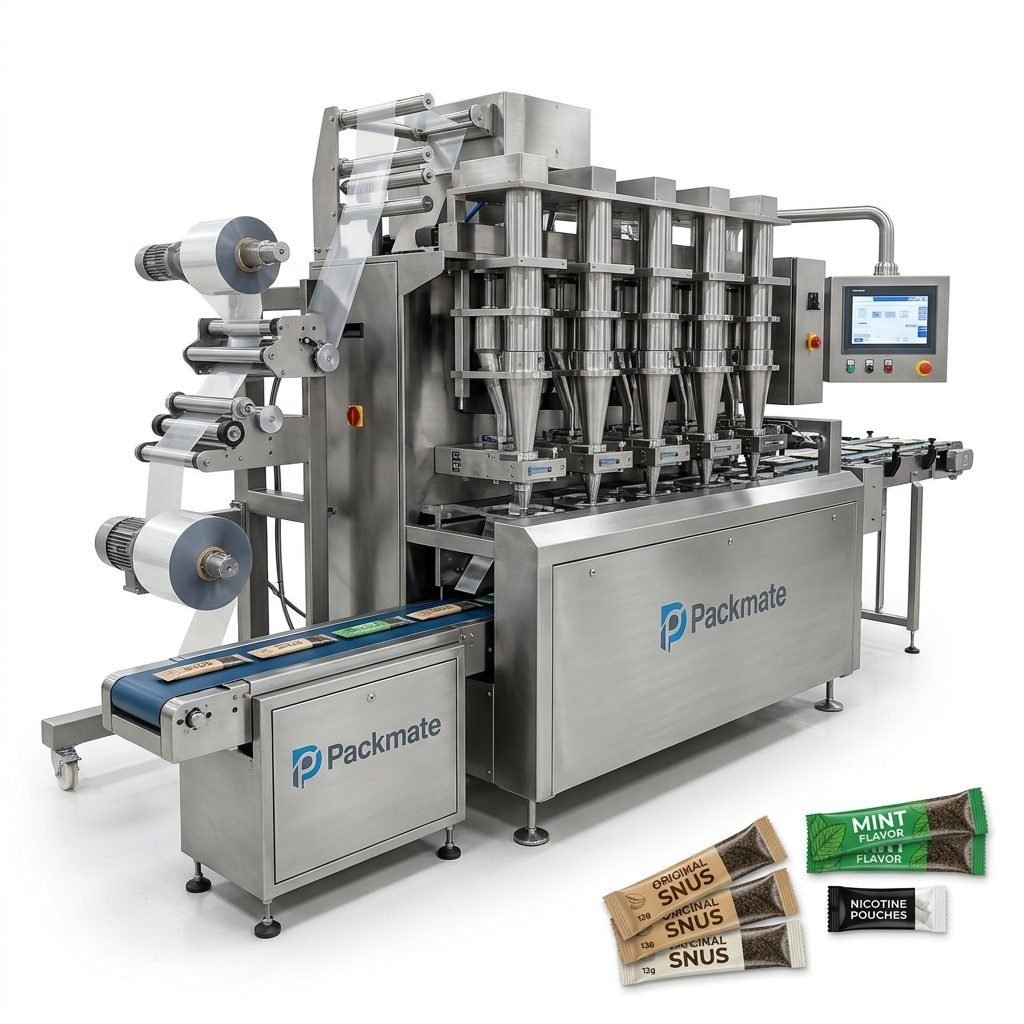
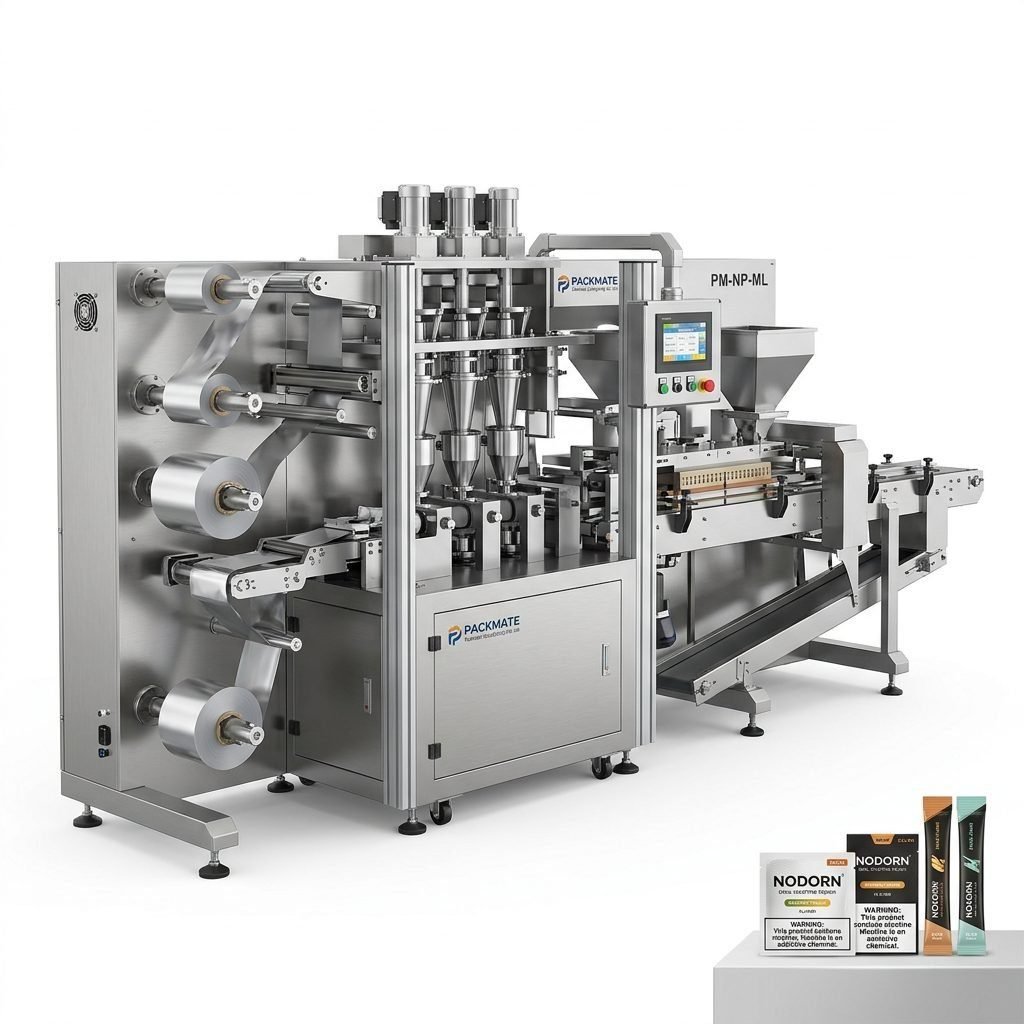
For compact pouch shapes and high-efficiency output, multi-lane snus machines are suited to small-dose pouch production. These systems are space-effective and reduce per-piece labor costs when producing large batches of consistent SKUs. Packmate’s snus-focused lines are engineered for precision dosing and synchronized multi-lane forming.
Bag & Pouch Packaging Machines
If you pack nicotine pouches in retail bags or resealable pouches, bag & pouch machines provide the flexibility to handle different bag types and zip-lock features. They pair well with upstream filling and counting systems to support mixed-SKU packaging.
Critical Technical Specifications to Compare
When evaluating suppliers, compare machines on these measurable specs:
🔧 Output speed (pouches/min and lanes) — ensure peak and sustained rates meet demand.
📦 Filling accuracy (mg or grams) — critical for nicotine dosing and regulatory compliance.
⚙️ Changeover time — how quickly the machine can switch SKUs.
🔒 Material compatibility — supports films and barrier laminates used for nicotine products.
🧰 Maintenance accessibility — tool-less adjustments and clear service points.
🌐 Control & connectivity — PLC, HMI, remote diagnostics, and data logging for traceability.
Regulatory Compliance and Labeling in Indonesia
Indonesia enforces strict rules on tobacco and nicotine products, including labeling, health warnings, and taxation. Work with local legal counsel to confirm packaging requirements such as language, warning formats, and import documentation. Ensure your packaging line can:
- Integrate batch coding and variable data printing for traceability.
- Apply compliant warning labels and tamper-evident seals where required.
- Support periodic packaging changes without extended downtime.
Supplier Selection: What to Expect from a Reliable Manufacturer
Choose a supplier with proven experience in nicotine pouch equipment and international certifications. Evaluate:
📑 Certifications such as CE and ISO to assure safety and quality.
🌍 Global references and case studies demonstrating performance in similar markets — review supplier Case histories.
🛠️ After-sales service and spare parts availability in Indonesia or nearby regions — confirm lead times.
🧪 Factory capability: modern CNC, precision assembly, and QA processes to deliver consistent machines.
📅 Project support: installation, commissioning, operator training, and validation services.
Practical Steps to Validate a Machine Before Purchase
Follow a structured validation path to reduce risk:
- Request a Factory Acceptance Test (FAT) with your product or a representative sample to verify speed, fill accuracy, and pouch formation.
- Inspect material handling for dust control and ease of cleaning — critical for nicotine handling safety.
- Confirm electrical and air specifications align with Indonesian plant utilities and phase power.
- Review spare parts lists and recommended spares to keep on site.
- Plan for operator training and create maintenance schedules as part of the contract.
Customization and Turnkey Solutions
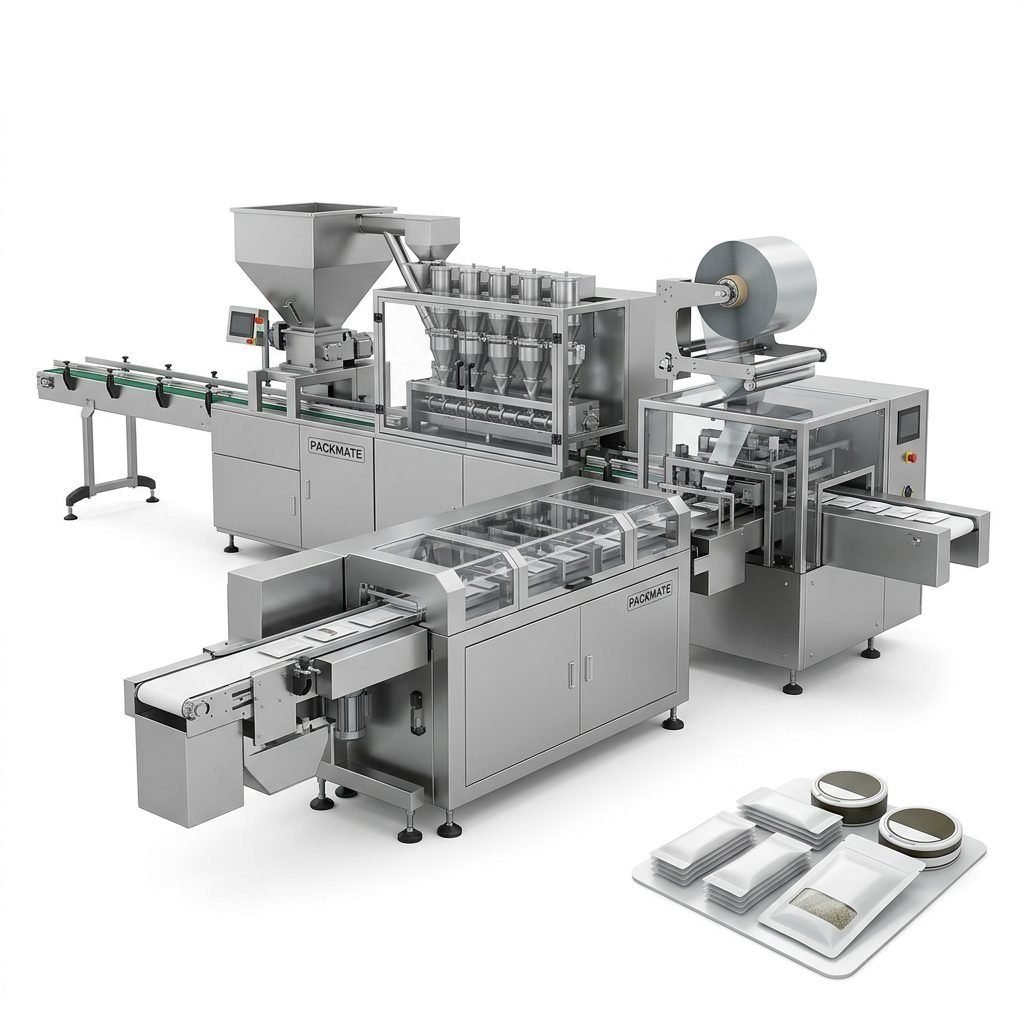
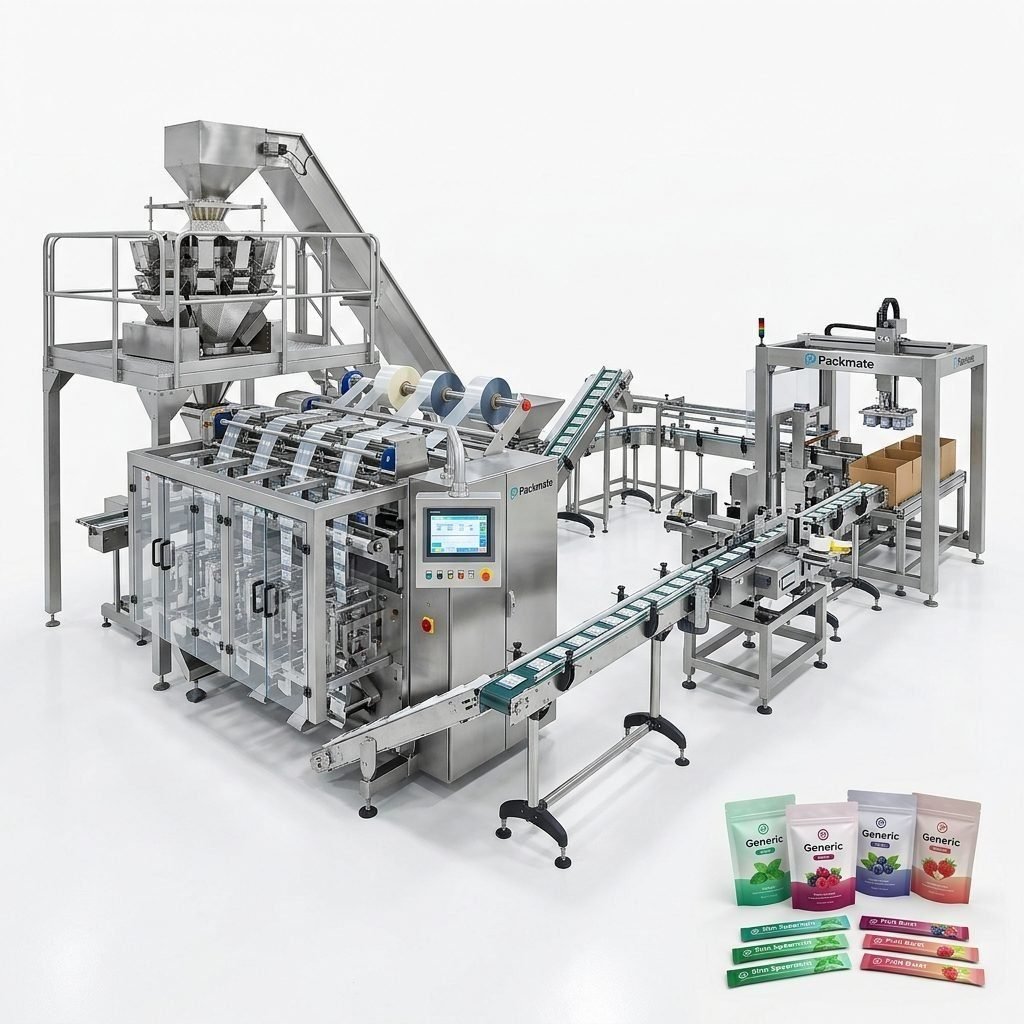
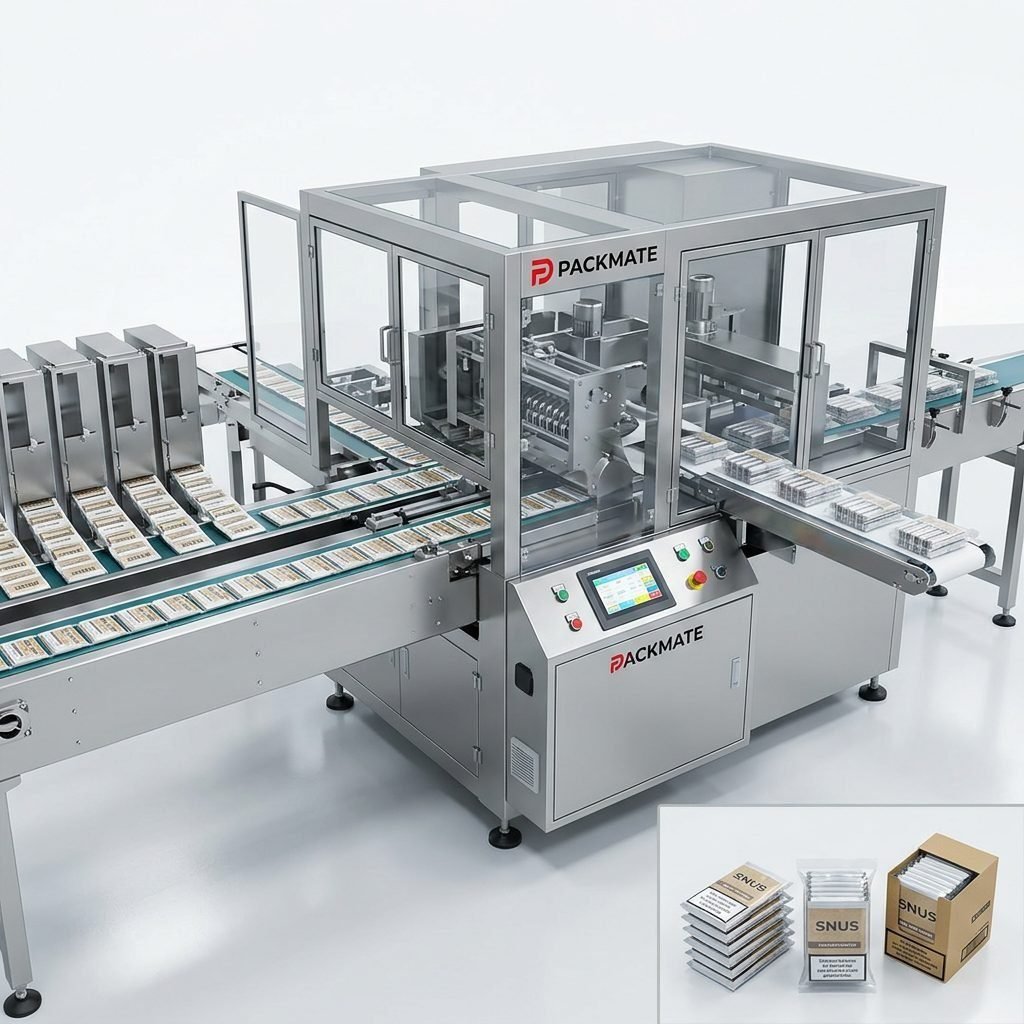
Many producers benefit from turnkey lines combining filling, weighing, pouch forming, and final pack handling. Custom solutions help optimize floor footprint, minimize labor, and ensure end-to-end traceability. If you need full-line integration, consider suppliers who provide:
– Integrated Weighing & Packaging Systems and Filling & Packaging Lines that match upstream and downstream speeds.
– Auxiliary Packaging Equipment to automate capping, cartoning, and case packing for final logistics.
For product examples and line concepts, review Packmate’s solutions: Snus & Nicotine Packaging Machines and Filling & Packaging Lines.
Local Support, Parts, and Training in Indonesia
Reliable local support dramatically reduces downtime. Confirm whether the manufacturer has:
⚡ Local service partners or the ability to dispatch technicians quickly to Indonesian sites.
📦 Local or regional spare parts inventory to avoid long import delays.
🏫 Training programs for operators and maintenance teams, including multilingual manuals or on-site Bahasa Indonesia support.
Cost Considerations and Return on Investment
Don’t focus solely on the purchase price. Calculate the total cost of ownership by including:
- Installation and commissioning fees;
- Spare parts and consumables;
- Downtime risks and mean time to repair (MTTR);
- Energy consumption and facility compatibility;
- Potential revenue increase from higher throughput and reduced rejects.
Use a simple payback model: estimate additional margin from improved line speed and lower waste, then divide by total investment to check alignment with business targets.
Why Partner with an Experienced Manufacturer
An experienced supplier brings lessons learned from global installations, proven machine mechanics, and compliance knowledge. Packmate, for example, offers over 30 years of R&D and manufacturing capacity, multiple machine models, and full-line solutions to serve nicotine pouch production. Learn more about the company’s background at About Packmate.
Choosing Between Standard Models and Customized Lines
If your product and packaging are standard within the market, a validated standard machine provides a faster ROI. If you need unique pouch shapes, special barrier films, or integrated secondary packaging, customization may be necessary. Discuss customization timelines and validation plans with the vendor, and request references for similar projects; you can review real-world deployments in the supplier Case studies.
When ready to request a quote or site visit, use the supplier’s Contact page to begin technical discussions: Contact Us.
Implementation Checklist for Indonesian Production Sites
Use this checklist to ensure a smooth installation:
✅ Verify electrical, compressed air, and floor load capacity.
✅ Confirm machine guarding meets local safety codes.
✅ Prepare operator training schedules around local holidays.
✅ Stock recommended spare parts for the first 12 months.
✅ Establish local service SLA or remote support agreements.
Local Partnerships and Market Entry Tips
If entering Indonesia with nicotine products, partner with local distributors and legal advisors to navigate permits, tax rules, and retail channel nuances. Attend regional trade events or request supplier exhibitions to see live equipment demos; view upcoming participation details on the supplier’s exhibition page.
For technology that complements nicotine pouch lines, explore related systems in Bag & Pouch Packaging Machines and Weighing & Packaging Systems to build an efficient factory layout.
Final Recommendations
Investing in nicotine packaging machinery in Indonesia is a strategic decision that should balance technical performance, regulatory compliance, cultural awareness, and operational readiness. Prioritize suppliers with proven international experience, local support, and the flexibility to adapt to your SKU mix and market dynamics. A well-chosen, well-supported packaging line will reduce risk, control costs, and accelerate your market presence.
Next Steps
– Define your target throughput and SKU strategy.
– Request FATs and references relevant to Indonesian operations.
– Plan for operator training and spare parts inventory.
– Consider turnkey integration for faster time-to-market.
– Contact the manufacturer for tailored proposals and local service options.
Helpful Links
– Snus & Nicotine Packaging Machines
– Bag & Pouch Packaging Machines
– Case Studies
– Contact Us
Frequently Asked Questions
Q1: How do I ensure my packaging line meets Indonesian labeling requirements?
A: Work with local regulatory consultants and specify printers and labeling modules capable of multilingual variable data printing and rapid design updates.
Q2: What after-sales support should I expect from an international manufacturer?
A: Expect commissioning, operator training, spare parts lists, remote diagnostics, and defined SLAs for on-site technician dispatch or remote support.
Q3: Is customization necessary for small-batch production in Indonesia?
A: For diverse SKU mixes and premium packaging, customization provides flexibility. For commodity SKUs, validated standard machines deliver lower CAPEX and faster commissioning.
Q4: How do cultural holidays affect production planning?
A: Plan maintenance and major changeovers before peak holiday periods (e.g., Ramadan preparations) to avoid long downtime during factory slowdowns.
Q5: Where can I see live demonstrations or request references?
A: Request factory acceptance tests, customer references, or attend exhibitions listed on the manufacturer’s exhibition page to verify machine performance in real environments.