Choosing the right nicotine packaging machine in Nepal is a critical business decision that affects production speed, product consistency, regulatory compliance, and long-term profitability. Whether you are launching a new nicotine pouch brand, scaling production, or upgrading an older line, this guide will walk you through essential criteria, machine types, cost considerations, installation support, and how to evaluate suppliers so you can make an informed purchase decision.
Understand Your Product and Production Goals
Before comparing machines, define your product specifics and business goals. Ask: What pouch size and dose range will you produce? Do you need single-lane or multi-lane production for higher throughput? Will you package dry powder, granules, or wet formulations? Clarifying these points helps narrow options to machines that meet your technical needs.
Key product questions to answer
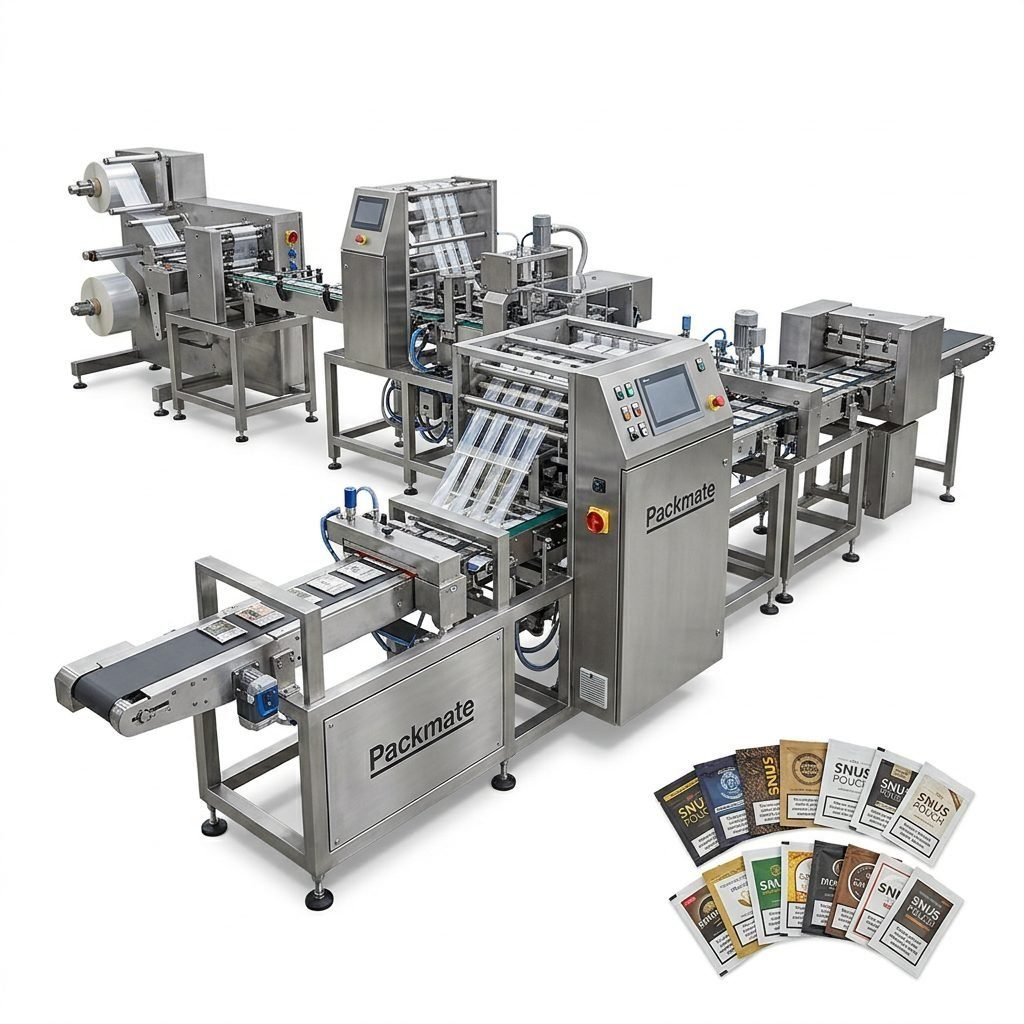
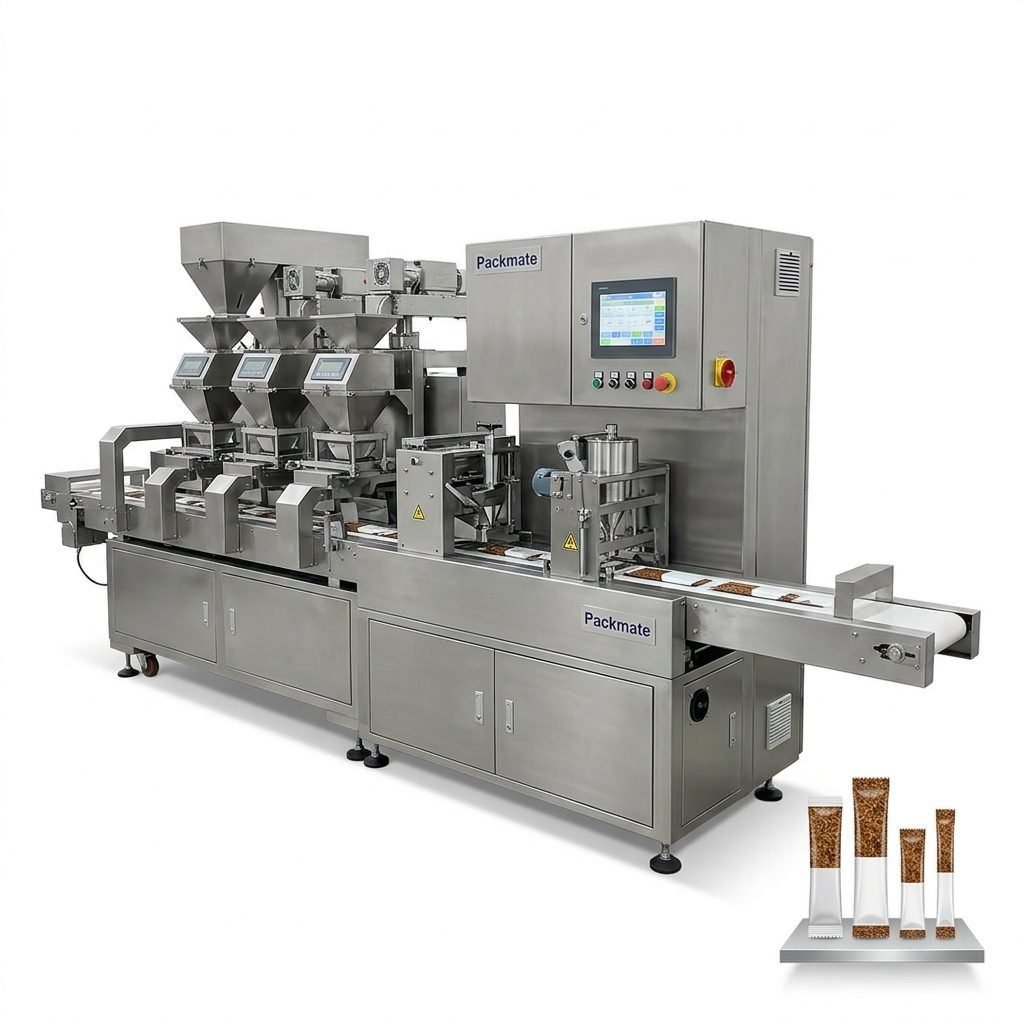
Product format — nicotine pouches, snus, sachets, stick packs or small sachet formats. Each format has specific filling, sealing and delivery requirements. For example, multi-lane pouch machines are ideal for small-dose nicotine pouches that require high-speed, high-accuracy depositing.
Throughput — daily and hourly targets determine whether you need a single-lane or 4/8/12-lane system.
Compliance needs — food-grade materials, CE or ISO certifications, and local regulatory compliance are mandatory considerations.
✓ Pro tip: If you are unsure of final product variations, choose modular machines that support quick changeovers and upgrades without a full line replacement.
Common Nicotine Packaging Machine Types
Packaging machinery for nicotine pouches comes in several popular types — each suited to different product forms and production strategies. Understanding the differences helps you match machine capability to product requirements.
Snus & Nicotine Pouch Machines
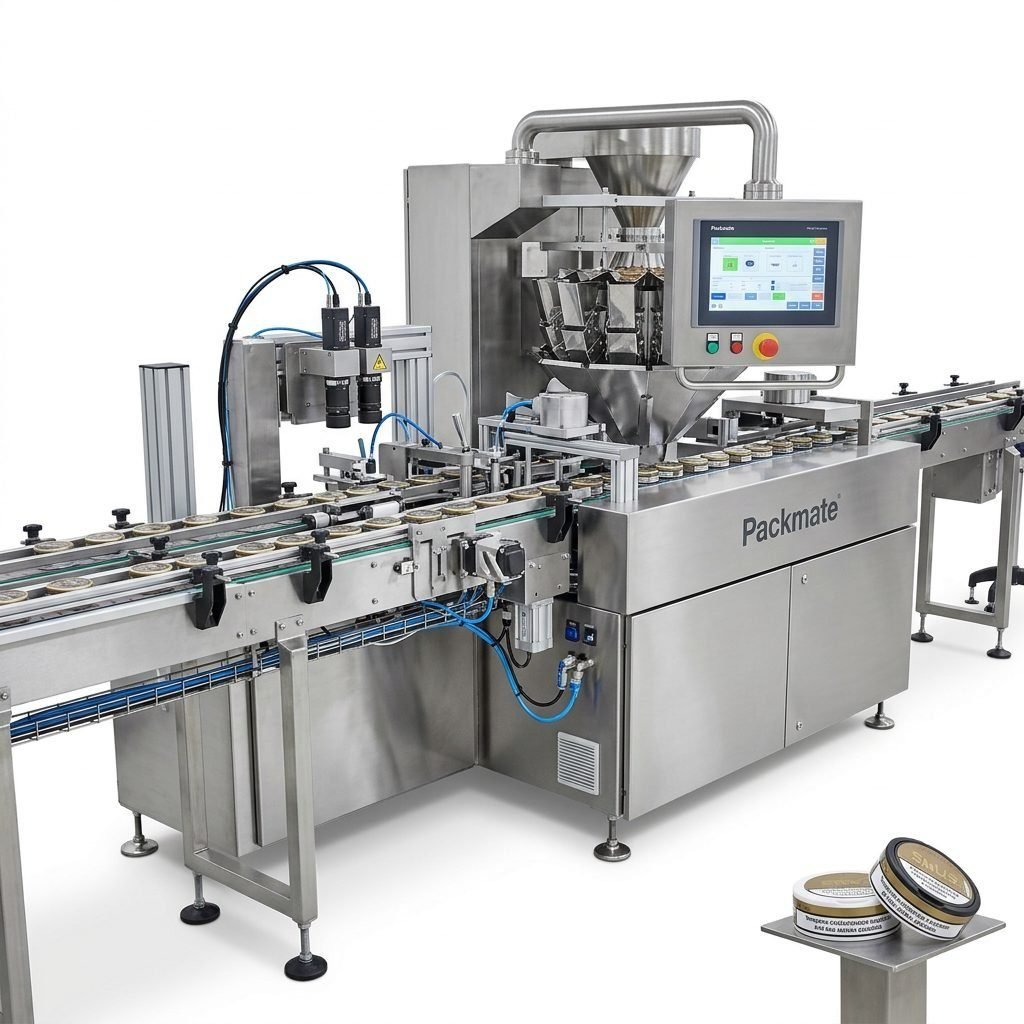
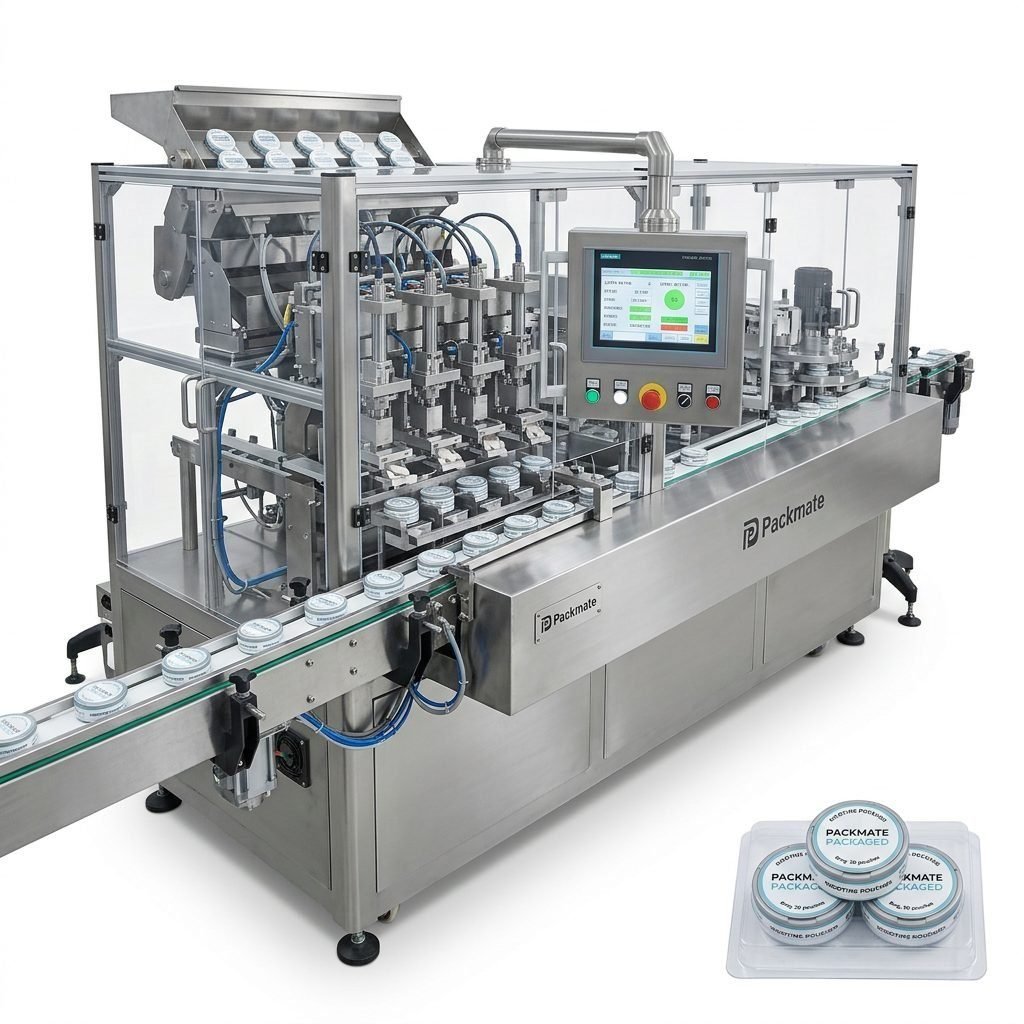
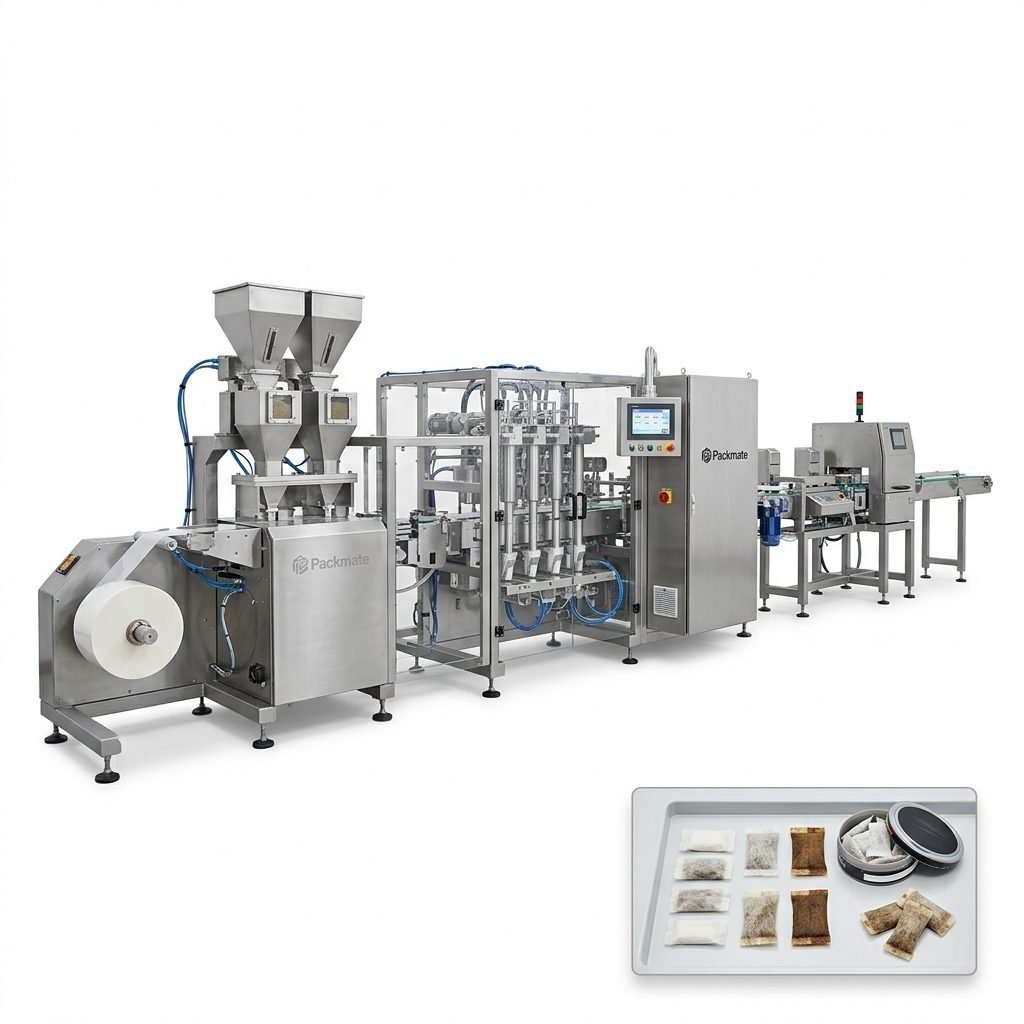
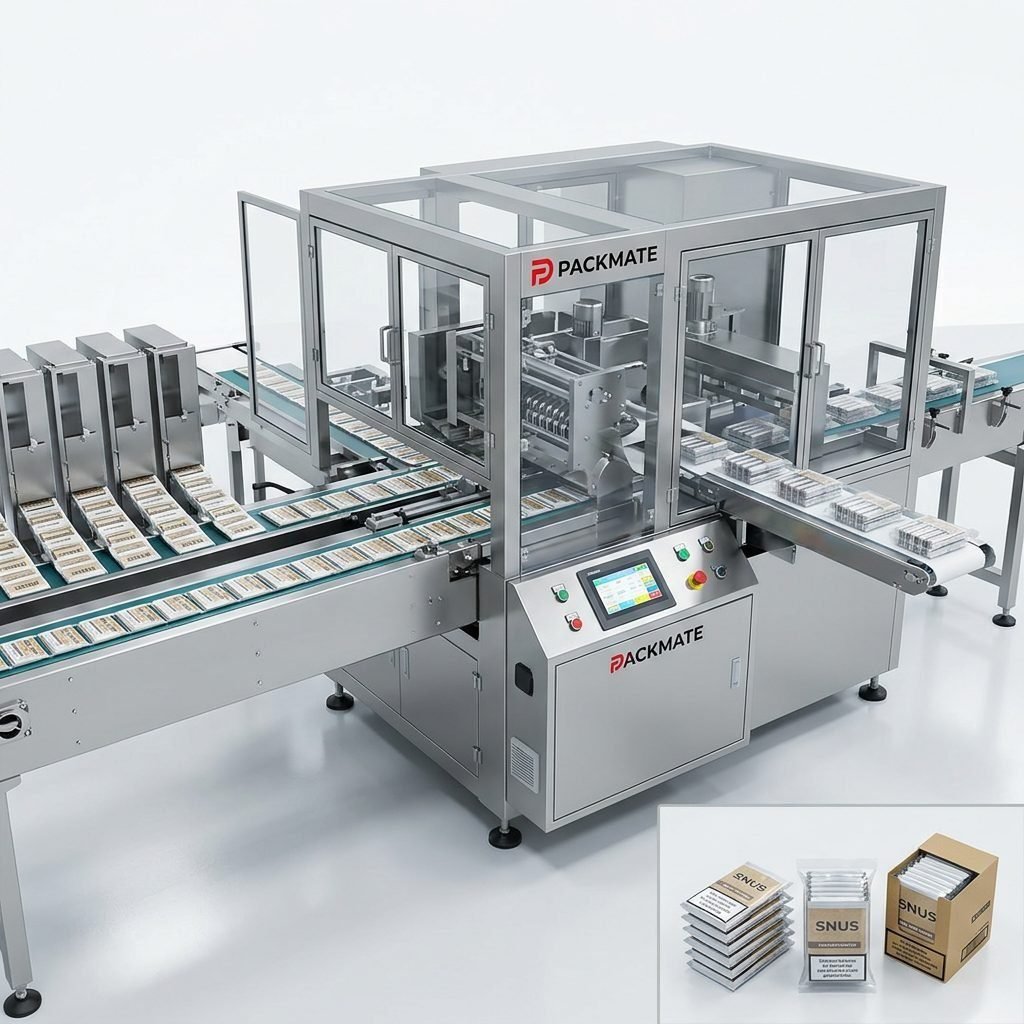
These machines are specifically designed to form, fill and seal small-dose pouches. They handle precise dosing, multi-lane formats, and often integrate with weighing systems for exact fill weights. If your product is a nicotine pouch, consider specialized lines optimized for pouch shape integrity and gentle handling. Explore product options here: Snus & Nicotine Packaging Machines.
Sachet & Stick Pack Machines
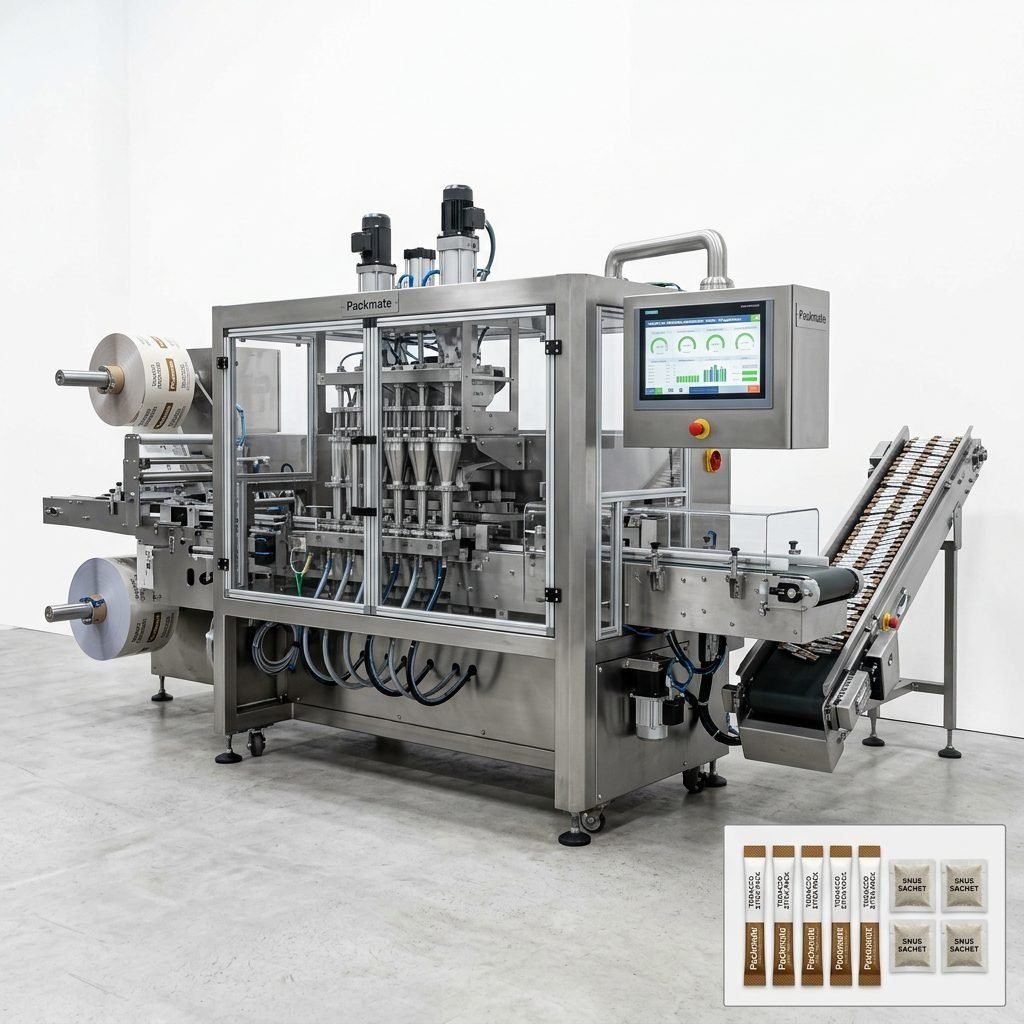
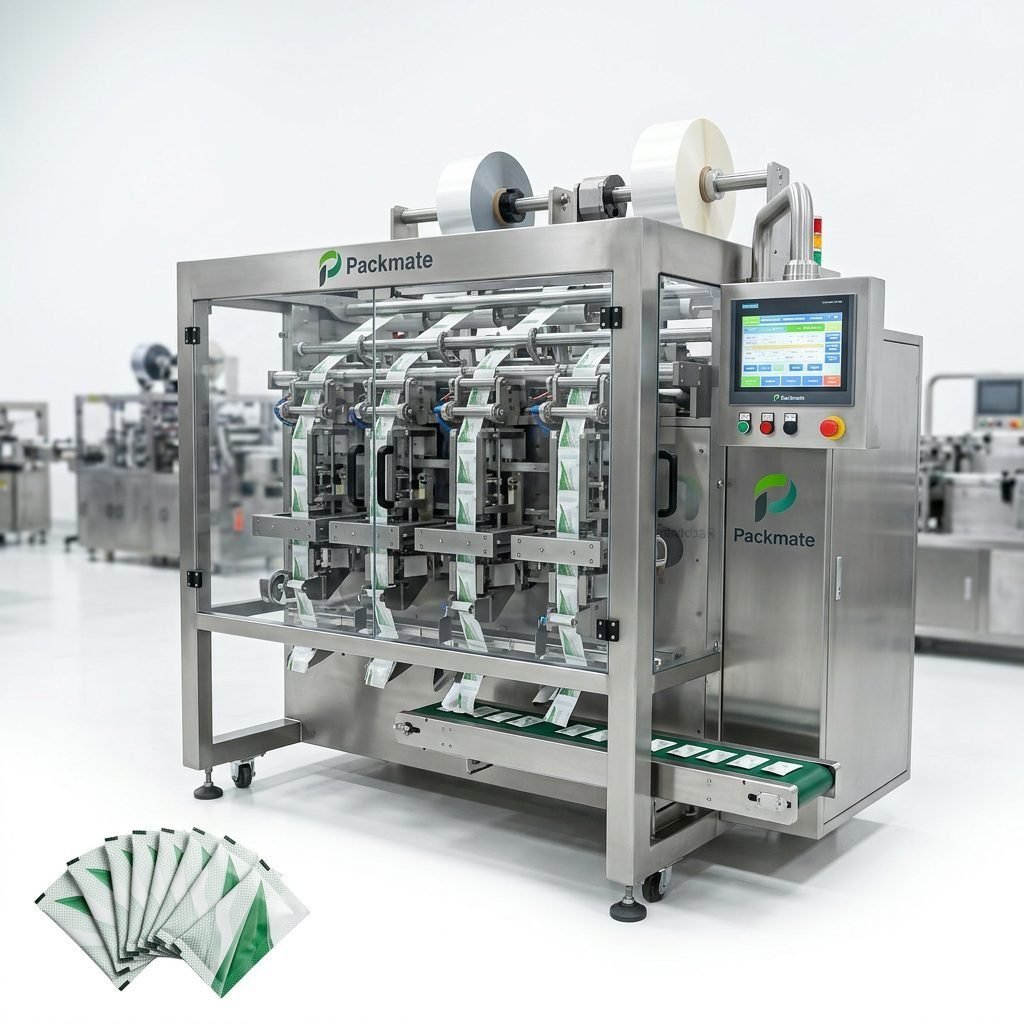
Sachet and stick pack machines are versatile for single-dose formats and small sachets. They work well for powder and granular nicotine formulations and are often simpler to operate and maintain. For broader stick and sachet capabilities, view Sachet & Stick Pack Machines.
Filling & Packaging Lines
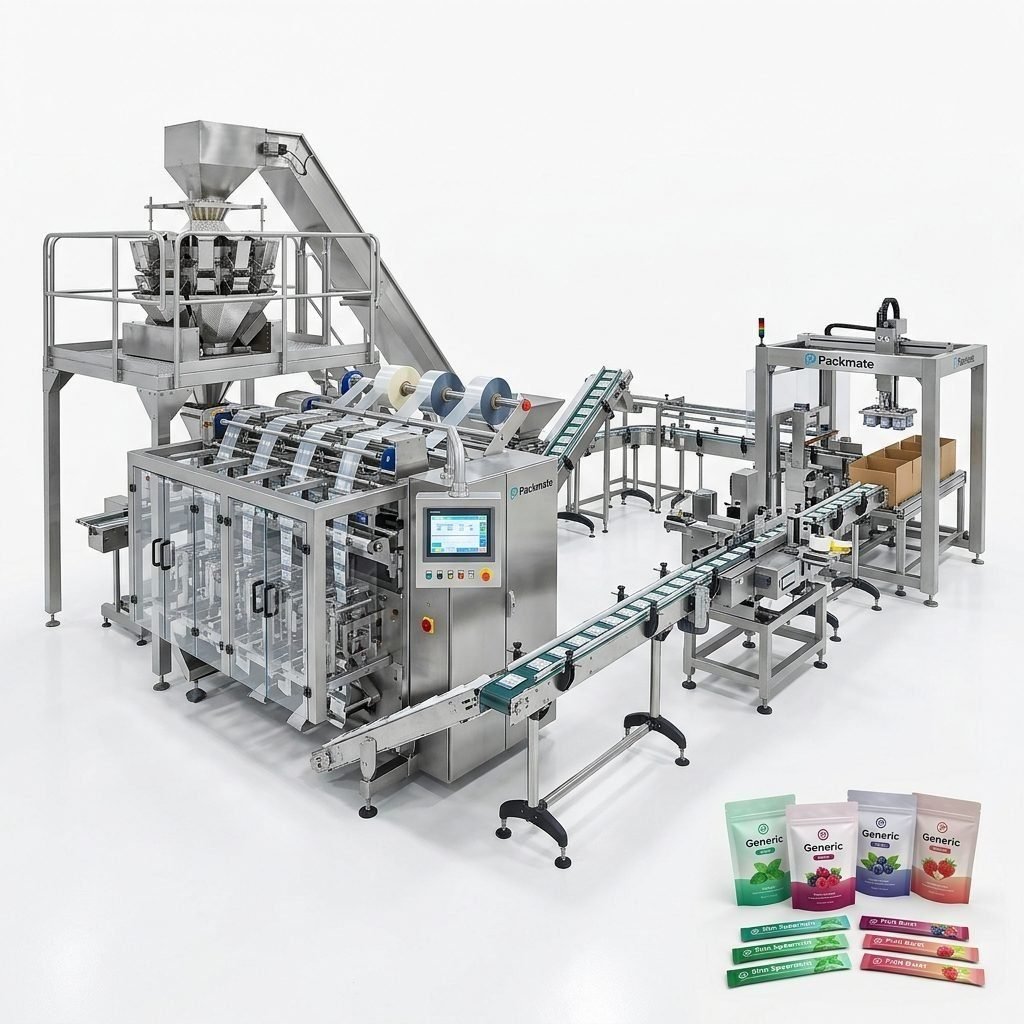
Full filling and packaging lines integrate upstream dosing and downstream secondary packaging such as cartoning and case packing. If you need a turnkey solution, consider vendors who supply complete lines and system integration. See integrated options at Filling & Packaging Lines.
Important: For nicotine pouches, prioritize machines that minimize powder dispersion and provide accurate dosing to maintain product safety and reduce waste.
Technical Specifications to Compare
When evaluating machines, compare key specifications side by side. These numbers reveal real-world capabilities and operational fit.
Throughput & Lane Configuration
Throughput is typically given in pouches per minute or units per hour. Multi-lane machines provide higher throughput without increasing machine footprint. If growth is expected, select a machine with more lanes or the option to add lanes later.
Dosing Accuracy & Filling Range
Precision is critical for nicotine products. Look for specifications that state dosing tolerances (e.g., ±X mg). Evaluate weighing and dosing systems — auger fillers, volumetric fillers, and loss-in-weight feeders all offer different accuracy levels.
Materials & Hygiene Standards
Stainless steel contact parts, easy-to-clean designs, and compliance with hygiene standards reduce contamination risk. Verify CE, ISO, or other certifications and request documentation if regulatory compliance is part of your market requirement.
Supplier Evaluation: Support, Parts & After-Sales Service
Buying a packaging machine is a long-term relationship. Strong after-sales support, spare parts availability, and installation services are as important as the machine specs. Look for suppliers with a proven track record and transparent service offerings.
Choose suppliers who provide:
- Installation & commissioning with onsite engineers or guided remote setup.
- Operator and maintenance training to ensure efficient running and reduced downtime.
- Spare parts availability and clear lead times for components that wear.
- Global references and case studies to validate performance under similar operating conditions — see examples at Case.
⚠️ Warning: A low initial price may hide poor after-sales support, long spare part lead times, and higher lifetime costs. Prioritize total cost of ownership (TCO) over upfront cost.
Total Cost Considerations
Evaluate the total cost beyond the purchase price. Consider installation, customization, spare parts, consumables, energy consumption, operator training, and expected maintenance frequency. A higher quality machine with lower downtime can be more economical over 3–5 years.
Hidden costs to account for
Energy usage, spare part wear, custom tooling for special pouch shapes, and validation or certification processes if required by local regulators.
Customization & Turnkey Solutions
If your product or line configuration is unique, seek suppliers who offer fully customized solutions and integration. Companies with a strong engineering background and factory capabilities can deliver turnkey lines — from dosing to final case packing — tailored to your specifications.
Packmate Snus Machine, for example, emphasizes turnkey solutions and has extensive experience in multi-lane snus and nicotine pouch lines. Learn more about the company and capabilities at About Packmate.
Factory & Quality Assurance
Manufacturing quality determines machine longevity. Look for manufacturers with robust CNC machining, precision assembly lines, and documented quality control procedures. A factory tour, virtual or in-person, can reveal manufacturing practices and assembly standards.
Certifications and testing
Ensure the supplier provides standard certifications such as CE and ISO. Request test reports, FAT (Factory Acceptance Test) documentation, and video demonstrations of the machine running your product if possible.
Installation, Training & Local Service in Nepal
Local service availability is a practical concern in Nepal. Confirm whether the supplier has local partners, trained technicians available for travel, or reliable remote support. Ensure clear service-level agreements (SLAs) for critical response times and spare part delivery.
Tip: Negotiate a service and spare parts package at purchase. It usually reduces downtime and can be budget-friendly compared to emergency repairs later.
How to Run a Supplier Evaluation Checklist
Use a checklist to evaluate suppliers objectively. Key items include machine specifications match, warranty terms, spare parts policy, training, references, certifications, and total cost calculation. Ask for a detailed quotation that breaks down each cost component to compare offers fairly.
Suggested checklist items
– Machine model and lanes, expected throughput
– Dosing accuracy and filler type
– Material contact surfaces and hygiene features
– Certifications and compliance documents
– Warranty period and coverage details
– Lead time for delivery and installation schedule
– Spare parts availability and typical lead times
– Customer references and case studies (see Case)
Making the Final Decision
When comparing final proposals, weigh both technical fit and supplier reliability. A machine that perfectly matches your product but lacks local support may cost more in the long run. Conversely, a slightly higher initial investment in a robust, well-supported machine often results in lower operational costs and better product quality.
Checklist summary: Match product needs, verify accuracy and hygiene, confirm certifications, secure spare parts & support, and calculate total cost of ownership before purchase.
Where to Find Trusted Machines and Further Resources
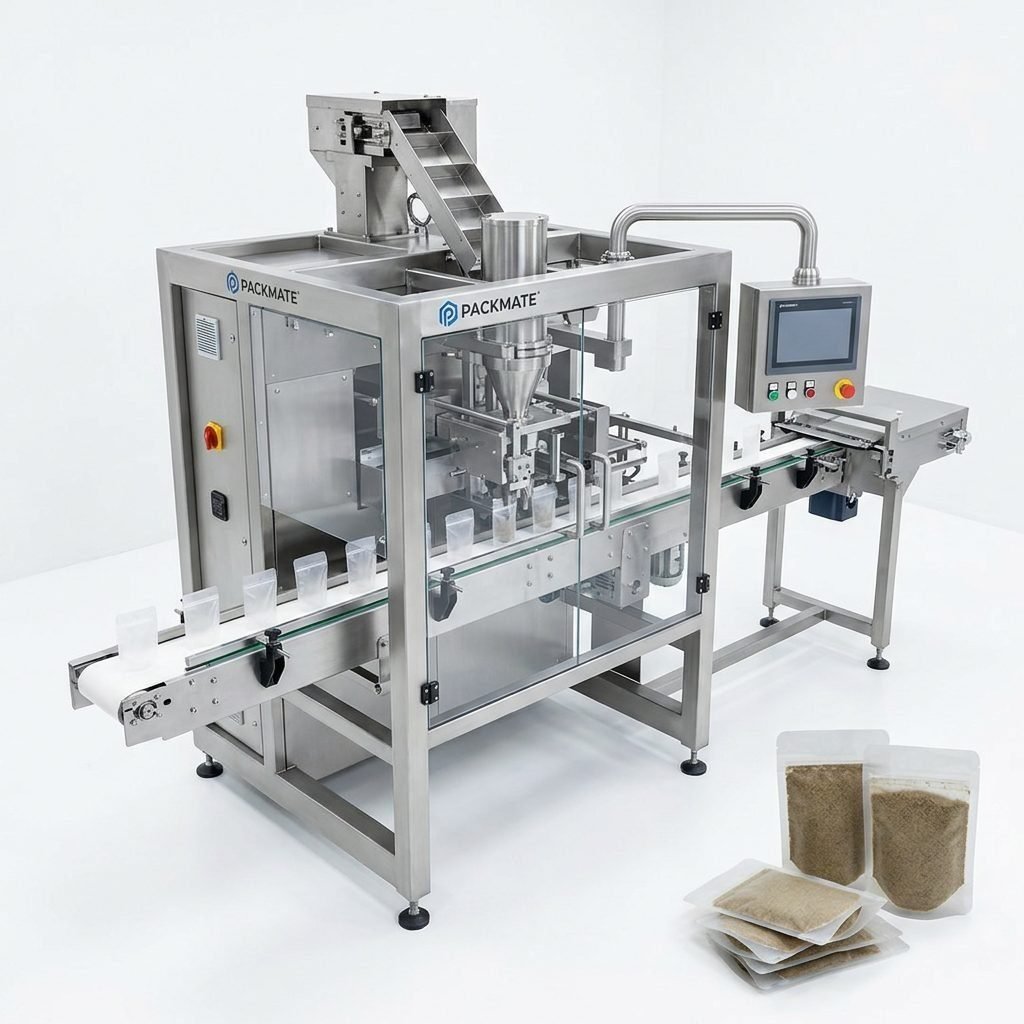
Look for manufacturers with decades of experience in snus and nicotine packaging, comprehensive model ranges, and a reputation for engineering quality. You can review product families and supporting equipment such as weighing systems at supplier sites. For a broad product overview, see related categories like Bag & Pouch Packaging Machines and Weighing & Packaging Systems.
Partnering with a Manufacturer — What to Expect
Trusted manufacturers will provide detailed project planning, including layout recommendations, electrical and pneumatic requirements, FAT videos or on-site tests, and operator training. They should also offer long-term cooperation plans covering upgrades and spare parts supply. If you need direct contact to discuss project specifics, use the supplier contact resource: Contact Us.
Final Thoughts
Selecting the best nicotine packaging machine in Nepal is a balance of technical specifications, supplier reliability, total cost, and after-sales support. By defining your product requirements, assessing machine types, verifying supplier capabilities, and planning for service and spare parts, you can secure a packaging solution that supports consistent product quality and sustainable growth.
Useful links for additional reading
Explore product catalogs and certifications to make an informed choice: Catalog, Certificate, and read about company mission at Mission & Vision.
Frequently Asked Questions
Q1: What production speed should I choose for a new nicotine pouch line in Nepal?
A1: Base speed on your forecasted demand and growth plans. If uncertain, opt for a multi-lane machine with modular scalability to expand throughput without a completely new machine.
Q2: How important is CE or ISO certification when buying a machine?
A2: Certifications indicate adherence to international quality and safety standards, which is essential for export markets and establishing trust in product safety. Always request certified documentation.
Q3: Can I get onsite installation and training in Nepal?
A3: Many reputable suppliers offer onsite installation and training. Confirm availability before purchase and consider remote commissioning support if onsite service is limited.
Q4: How do I ensure dosing accuracy for nicotine pouches?
A4: Choose machines with high-precision dosing systems (loss-in-weight feeders or precision auger fillers) and request test runs with your product to validate accuracy prior to final acceptance.
Q5: Where can I see real-world examples and case studies?
A5: Review manufacturer case pages and request references. For examples of turnkey lines and multi-lane snus systems, check the supplier case portfolio: Case.