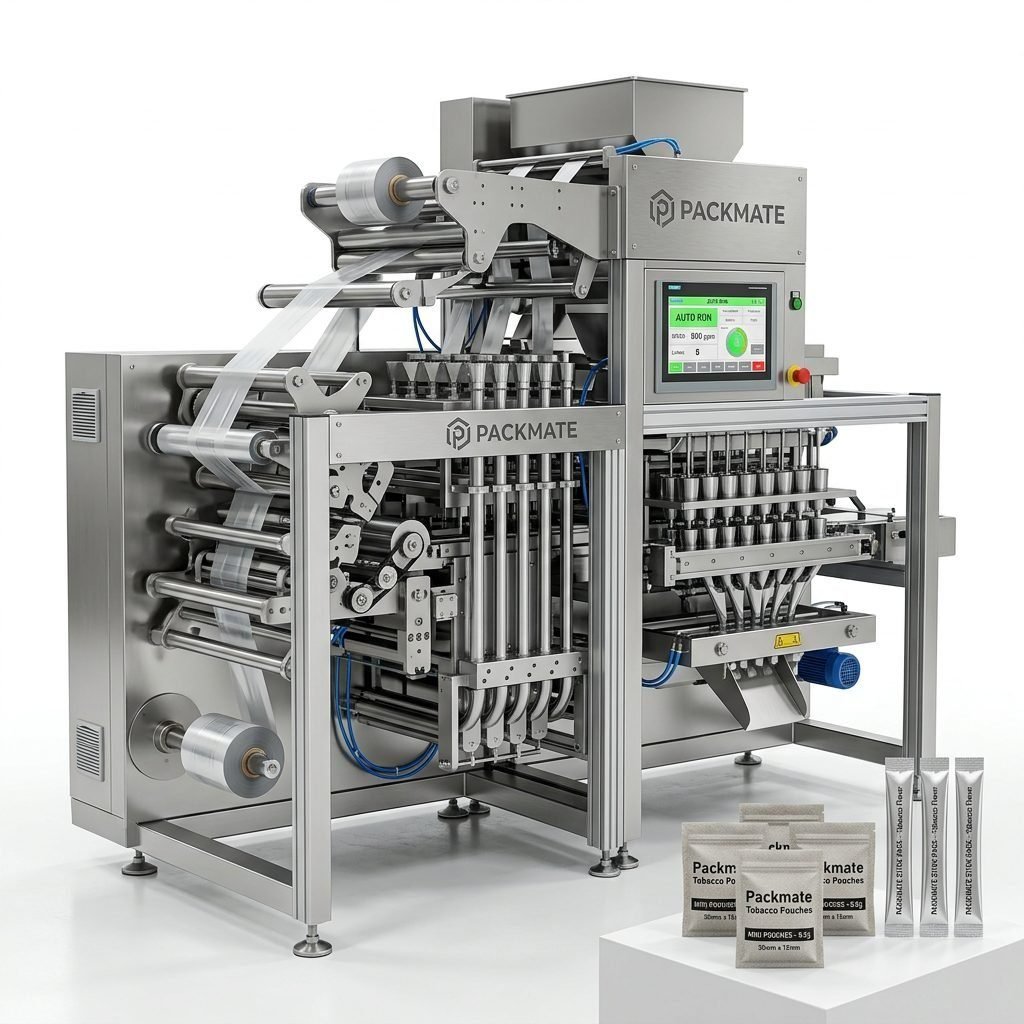
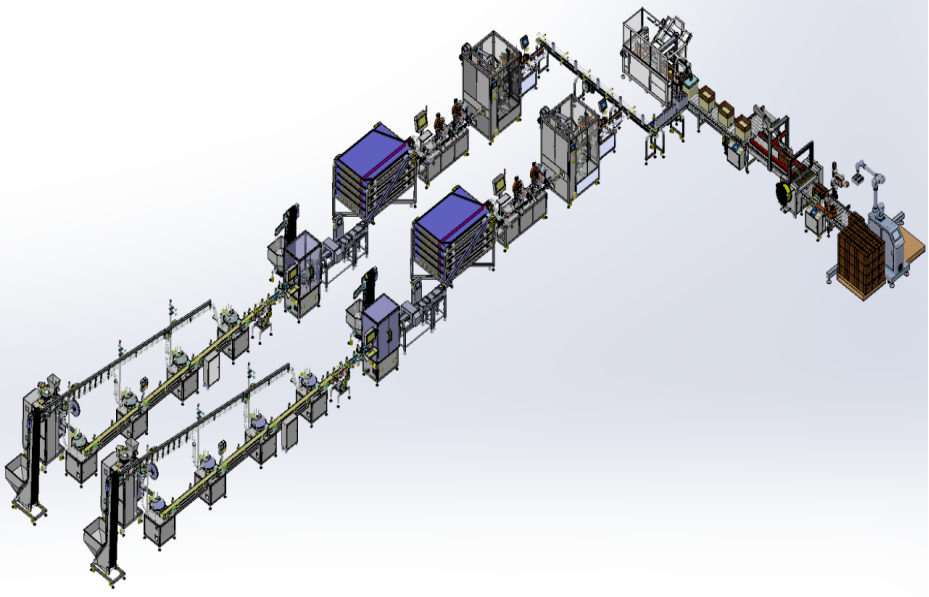
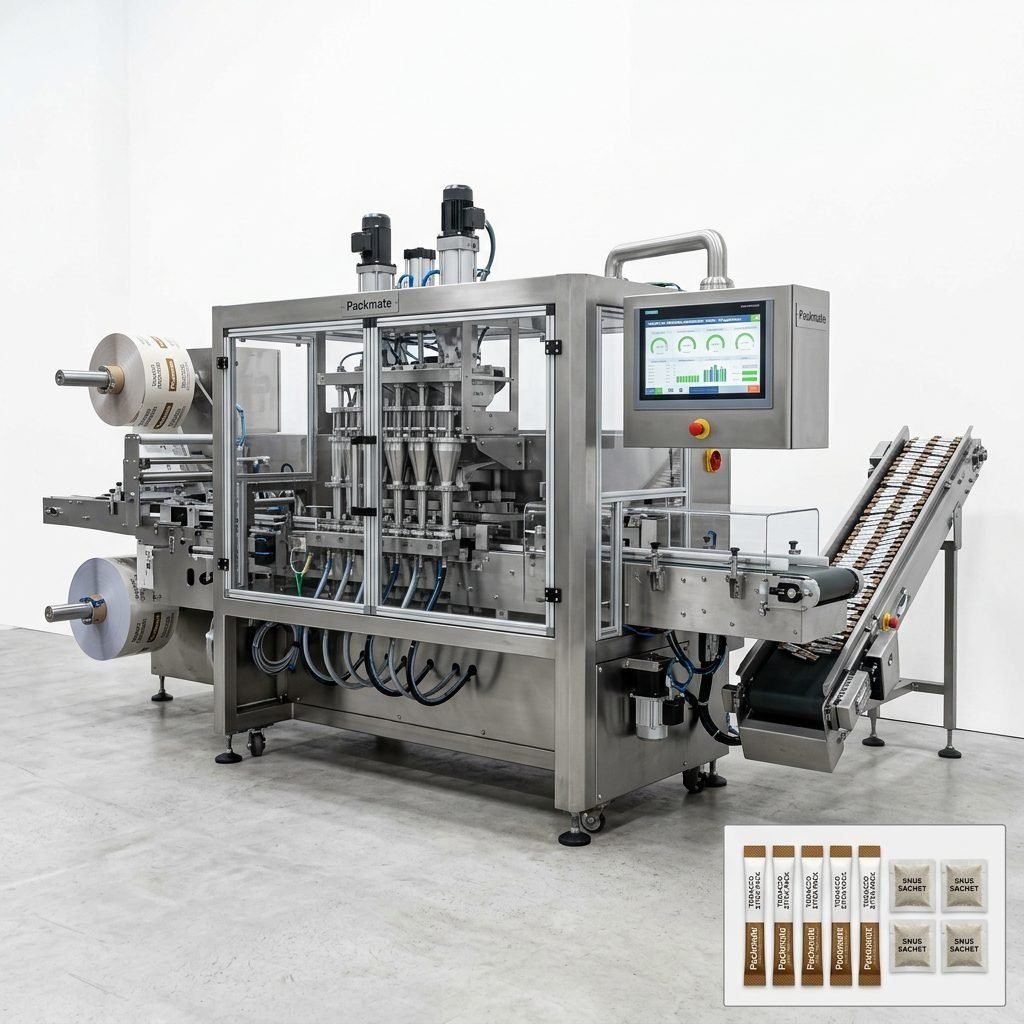
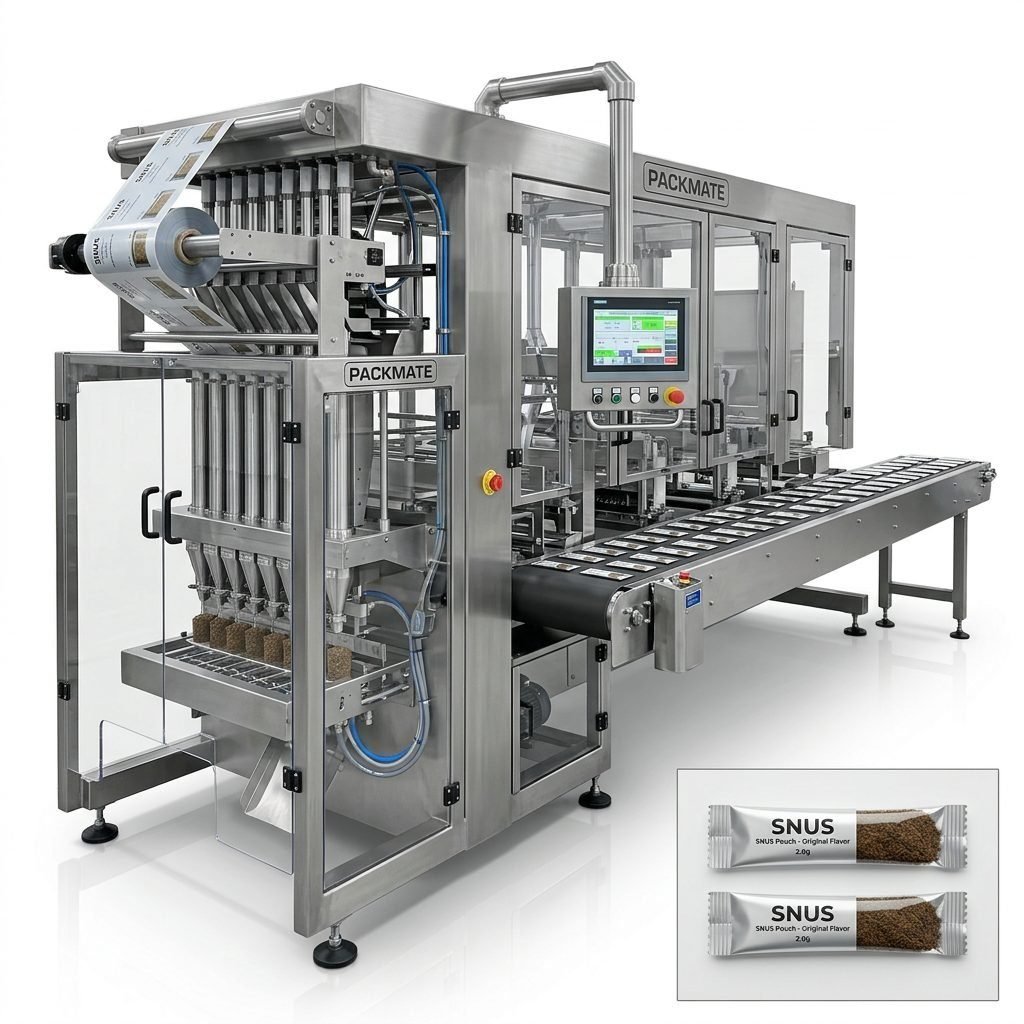
The modern nicotine pouch market demands production lines that combine precision, speed, and reliability. This article explores a complete Smart Nicotine Pouch Production Line — from core components and automation strategies to quality control, customization, and return-on-investment considerations. Whether you are scaling a start-up or upgrading an established plant, this guide shows how advanced bottle-neck free automation, multi-lane pouch systems and integrated weighing and filling solutions create high-efficiency pouch making tailored to contemporary regulatory and market pressures.
Overview: What a Smart Nicotine Pouch Production Line Delivers
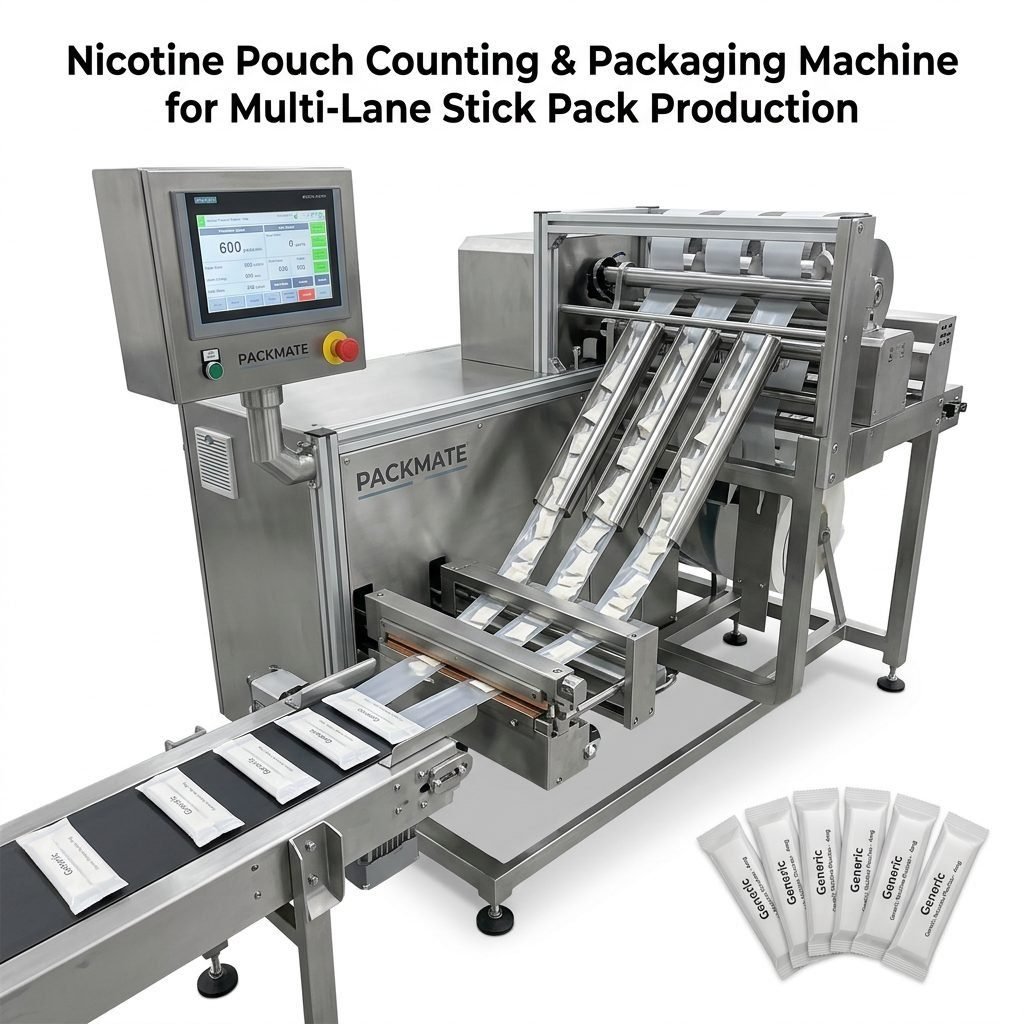
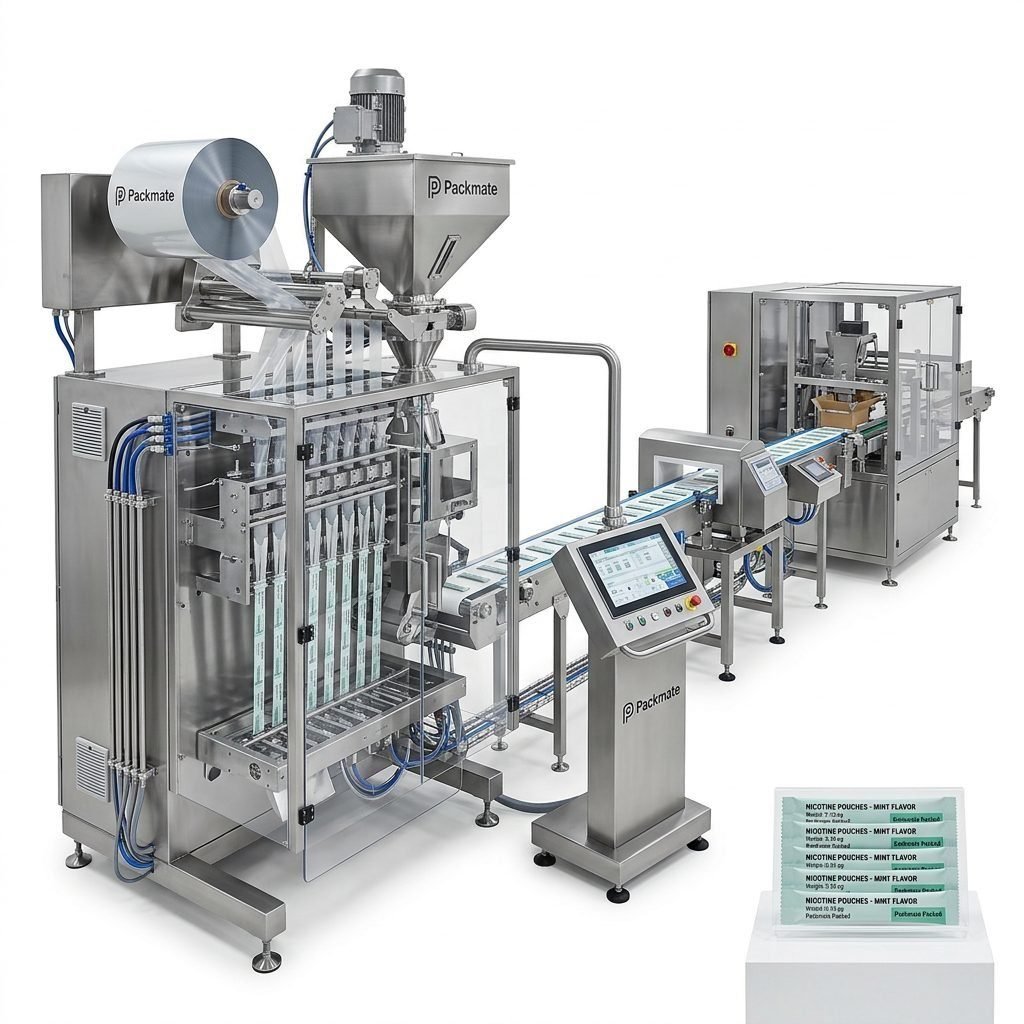
A Smart Nicotine Pouch Production Line integrates precision dosing, pouch forming, sealing, automated packing and in-line quality inspection into a synchronized workflow. Core objectives include maximizing throughput, minimizing material waste, ensuring repeatable portion weights, and maintaining compliance with global standards. Modern systems feature multi-lane filling, automated feeding channels, and PLC-driven process control to achieve stable output rates and predictable yields.
Key Outcomes
⚙️ Increased throughput: Multi-lane pouchers can multiply single-lane capacity by 4x–12x depending on configuration.
✅ Consistent dosing: High-precision weighing systems reduce variability, which is crucial for regulatory compliance and consumer trust.
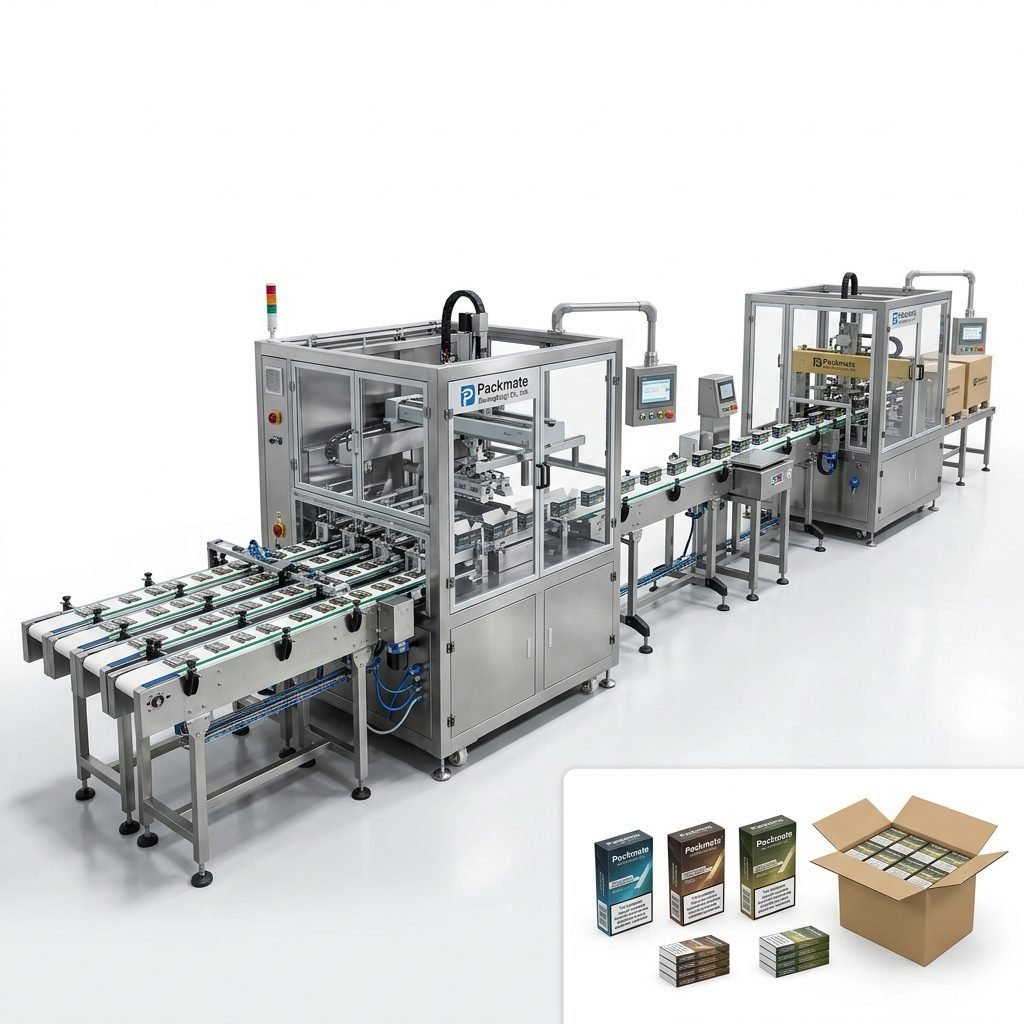
📦 Automated downstream: Consolidated pouch collating, grouping and cartoning reduce labor and handling errors.
Core Components and How They Work Together
A full production line typically includes: raw material feeding systems, precision weighing & dosing, multi-lane forming and sealing machines, nitrogen flushing or inert gas options, in-line metal detection and vision systems, pouch collators, and final packing/case-packing equipment. Each unit is controlled by a central PLC and HMI, enabling recipe recall, remote diagnostics and production monitoring dashboards.
Precision Weighing & Dosing
Accurate dosing is the heart of nicotine pouch production — it ensures each pouch has precise nicotine and tobacco-free filler contents. Modern gravimetric or volumetric feeders sync with the multi-lane poucher to deliver exact portion amounts at high cycle rates. Integration with weighing & packaging systems enables closed-loop correction and traceable weight records.
Multi-lane Forming, Sealing & Pouch Types
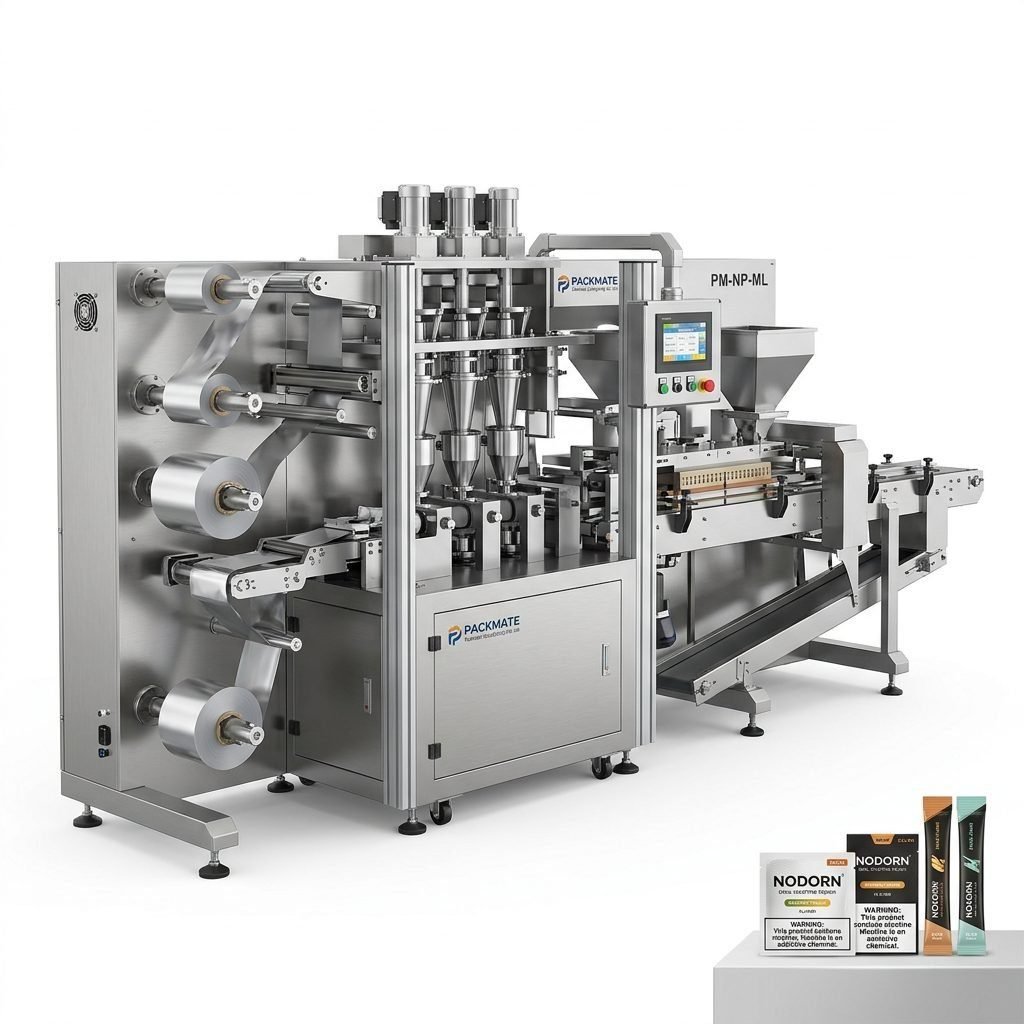
Multi-lane technologies allow parallel production of multiple pouches on one film web. Typical pouch formats include standard flat pouches, round/stand-up pouches and stick-style sachets. For nicotine pouches, pouch integrity and minimal oxygen ingress are critical; advanced sealing heads and controlled dwell times ensure hermetic seals and long shelf life. Customers can explore machine families across categories such as Snus & Nicotine Packaging Machines and Bag & Pouch Packaging Machines.
Automation & Smart Controls: Reducing Downtime and Human Error
Smart production lines use PLCs, servo motors, and HMI interfaces to automate changeovers, recipe selection and parameter adjustments. Automated film splicing, tool-less die changes and remote alarm analytics reduce downtime. Predictive maintenance algorithms use sensor data to forecast component wear and schedule service windows before failures occur.
🔧 Smart features at a glance:
• Auto-calibrated feeders for continuous dosing accuracy.
• Servo-driven lanes with synchronized indexing to avoid film stretch.
• Centralized HMI with recipe management and batch traceability.
Quality Control, Traceability & Compliance
For nicotine pouch producers, regulatory compliance and product safety are top priorities. In-line vision systems, X-ray or metal detection, and weight checks ensure every pack meets specs. The production line logs batch IDs, machine parameters and QC results for each run, enabling full traceability from raw material to finished case.
Testing & Inspection Layers
📈 In-line checks: continuous weight verification, seal integrity tests and optical inspection for correct pouch shape, print and code placement.
✔️ Batch records: automatic data capture to simplify audits and regulatory submissions.
Packaging Flexibility & Downstream Options
After pouch forming and quality checks, downstream equipment handles grouping, secondary wrapping, labeling and case packing. Options include flow-wrap machines, automatic collators, shrink tunnels and robotic case packers. Combining modular downstream equipment creates flexible lines that adapt as product SKUs or market packaging preferences change.
Modularity for Fast Changeovers
Modular stands and quick-connect interfaces let teams swap modules in hours instead of days. This accelerates SKU changes and reduces lost production during seasonal transitions or new product launches. Explore integrated solutions including Filling & Packaging Lines for end-to-end automation.
Customization & Turnkey Project Delivery
Every nicotine pouch product has unique formulation, portion size and packaging requirements. A reputable manufacturer will offer tailored layouts, engineering services and full turnkey delivery — from equipment manufacture to on-site installation and staff training. Turnkey projects minimize the complexity of sourcing multiple vendors and accelerate time-to-market.
📦 What a turnkey package typically includes:
• Site layout and line balancing engineering.
• FAT (Factory Acceptance Test) + SAT (Site Acceptance Test).
• Training, spare parts kit, and service agreements.
Factory Capability & Manufacturer Strength
When selecting a supplier, factory capacity, machining capabilities and quality control systems matter. Facilities with advanced CNC centers, precision assembly lines and ISO/CE certification are better equipped to deliver repeatable machine performance and long-term support. Partnering with an experienced manufacturer with a global service footprint reduces deployment risks and shortens ramp-up time.
Proven Track Record
Look for companies with multi-decade engineering experience, a broad product portfolio across snus, sachet and stick-pack machines, and verified case studies. A transparent development timeline and public certifications help validate capability and commitment to continuous improvement.
Operational Efficiency & ROI Considerations
The economic case for automation includes reduced labor costs, less product waste, faster changeovers, and better yield. Key metrics to evaluate ROI include uptime percentage, yield improvement (reduction in overfill/underfill), energy consumption per pouch and maintenance intervals. Predictive maintenance and remote support further increase asset utilization.
Calculating Payback
A realistic payback analysis should incorporate capital cost, installation, validation, spare parts, and ongoing service. Compare these against labor offsets and reductions in waste and recall liabilities. Often, companies see payback within 18–36 months depending on production scale and product margins.
Installation, Validation & After-Sales Service
Proper installation and validation are essential, especially for nicotine pouch producers subject to strict product regulations. Service offerings should include on-site commissioning, OEE tuning, staff training, and remote troubleshooting. A dependable spare parts supply chain and structured maintenance plan prevent extended downtime.
Case Examples & Industry Applications
Leading suppliers have installed multi-lane solutions for nicotine pouches, tea sachets and powdered formulations across Europe, Asia and the Americas. Case studies often highlight throughput increases, reduction in manual labor and improved traceability. For example, a switch to multi-lane pouching with integrated weighing and collating increased output by 300% for some clients while improving portion consistency.
Choosing the Right Machine Family
Selecting the correct machine family depends on production speed, pouch format, product characteristics and future SKU plans. Evaluate options across Snus & Nicotine Packaging Machines, Sachet & Stick Pack Machines and Bag & Pouch Packaging Machines to find the best fit. Consider modular systems that allow future capacity scaling without full replacement.
Vendor Evaluation Checklist
🔍 Checklist highlights: factory certifications, spare parts lead time, demonstration machines, service contracts, FAT/SAT procedures and client references. Visiting an installed customer line is one of the most effective ways to validate performance claims.
Sustainability & Material Considerations
Sustainable packaging and material optimization are becoming central to brand strategy. Machines that enable minimal film use, precise dosing and optimized pack formats reduce environmental footprint and packaging costs. Discuss recyclable film options and compatible sealing parameters with your equipment provider.
Getting Started: Steps to Deploy a Smart Line
First, define production targets, SKUs, footprint and regulatory requirements. Request technical proposals and references, then conduct a Factory Acceptance Test. Plan for validation, staff training and a phased ramp-up. Many manufacturers assist across project phases — from layout to after-sales — ensuring a smooth launch.
For those evaluating suppliers and full-line options, explore machine ranges and case studies to inform decisions. Useful references include product pages for Sachet & Stick Pack Machines and integrated solutions showcased under Filling & Packaging Lines.
Final Thoughts
Investing in a smart nicotine pouch production line is a strategic move that boosts capacity, ensures consistent product quality, and improves compliance. The right partner provides deep engineering experience, robust factory capabilities and responsive service to realize a smooth and profitable production rollout. Carefully evaluate automation level, modularity, QC features and service terms to align the system with long-term business goals.
🔎 Ready resources: For detailed specifications, spare parts and project service contact, see About Packmate and case histories to review verified deployments and machine families: About Packmate | Case Studies.
Frequently Asked Questions
Q1: How quickly can a turnkey nicotine pouch line be installed and validated?
A1: Typical timelines range from 8 to 20 weeks for delivery and FAT, plus 2–6 weeks for site installation and validation depending on line complexity and regulatory requirements.
Q2: What throughput levels are realistic with multi-lane systems?
A2: Depending on lane count and pouch format, production ranges from tens of thousands to several hundred thousand pouches per hour. Multi-lane configurations scale linearly with robust film handling and synchronized dosing.
Q3: What QC systems are essential for nicotine pouch production?
A3: In-line weight checks, vision inspection for pouch integrity and coding, metal detection or X-ray and batch data logging are essential for safety and compliance.
Q4: Can lines be upgraded for new formats or higher speeds?
A4: Yes. Many manufacturers design modular platforms where lanes, feeders and downstream modules can be added or upgraded to meet changing production needs.
Q5: Where can I find detailed product ranges and service information?
A5: Start with product pages and service sections on the manufacturer portal to review machine specs and support offerings: Snus & Nicotine Packaging Machines, Bag & Pouch Packaging Machines, and Filling & Packaging Lines.