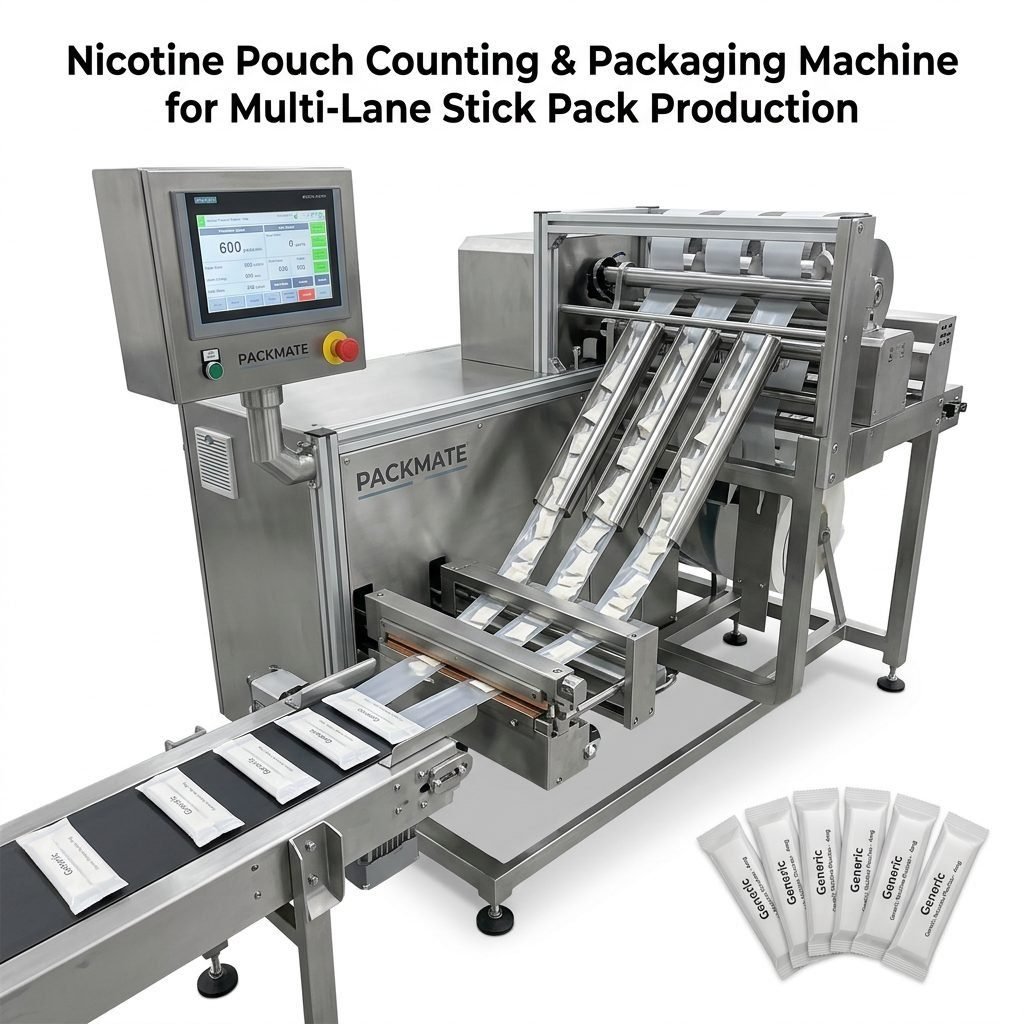
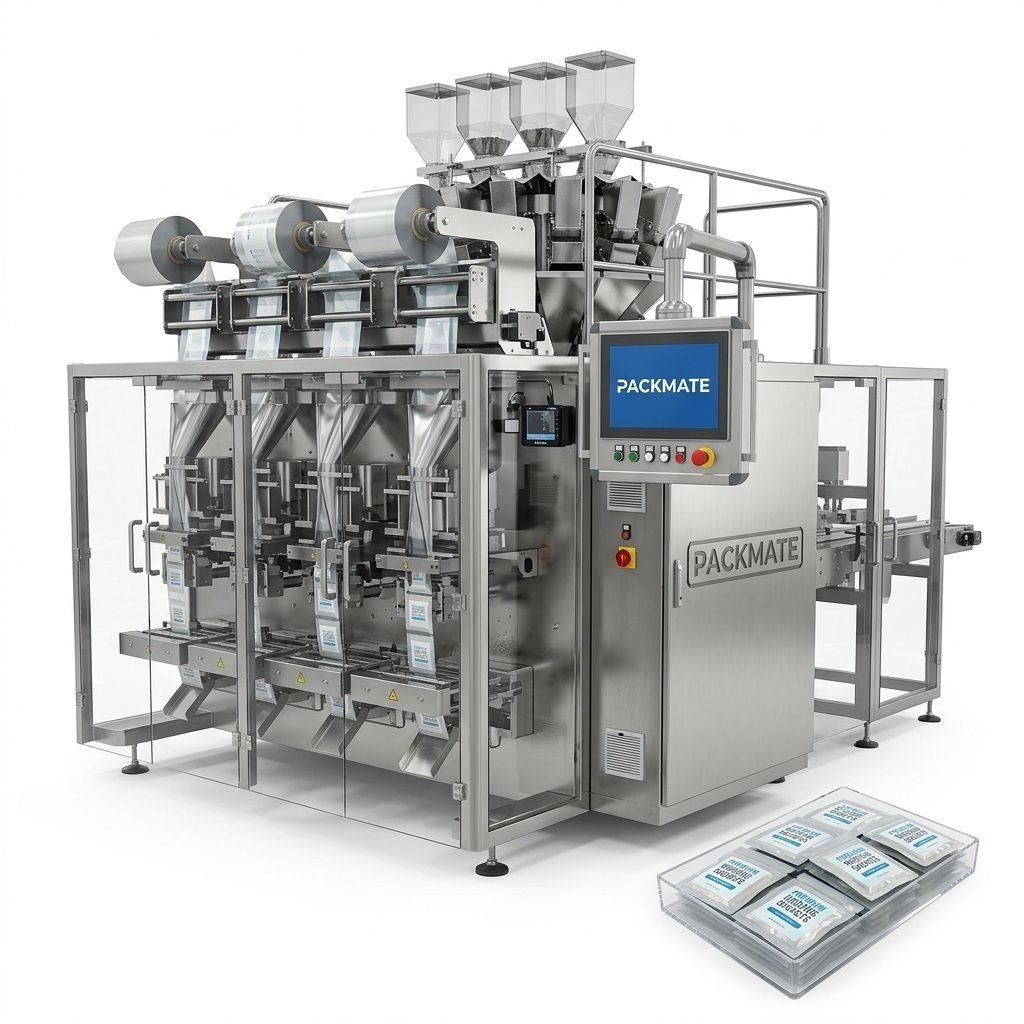
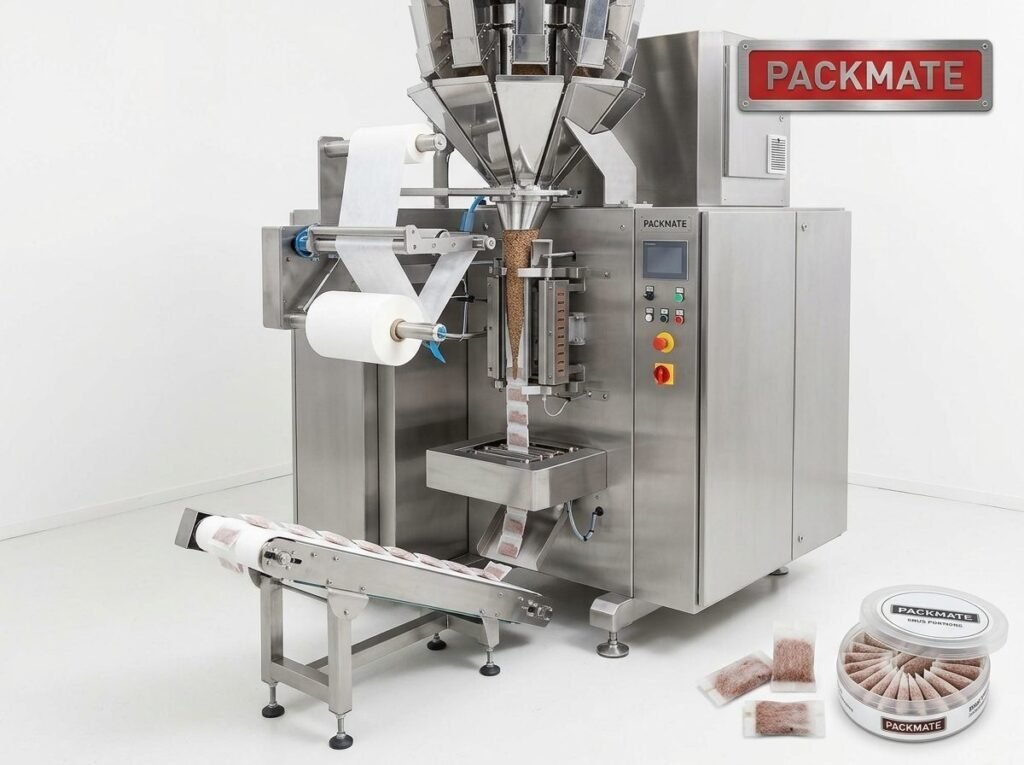
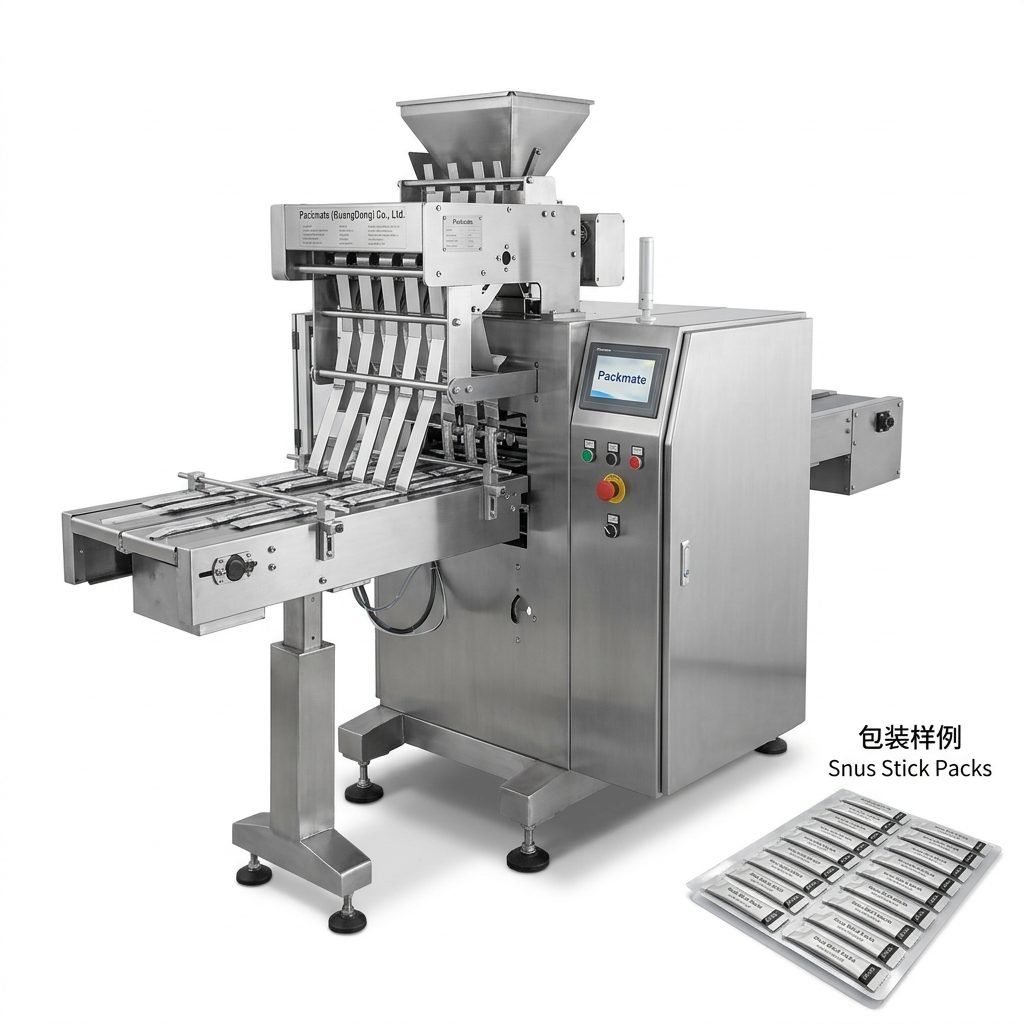
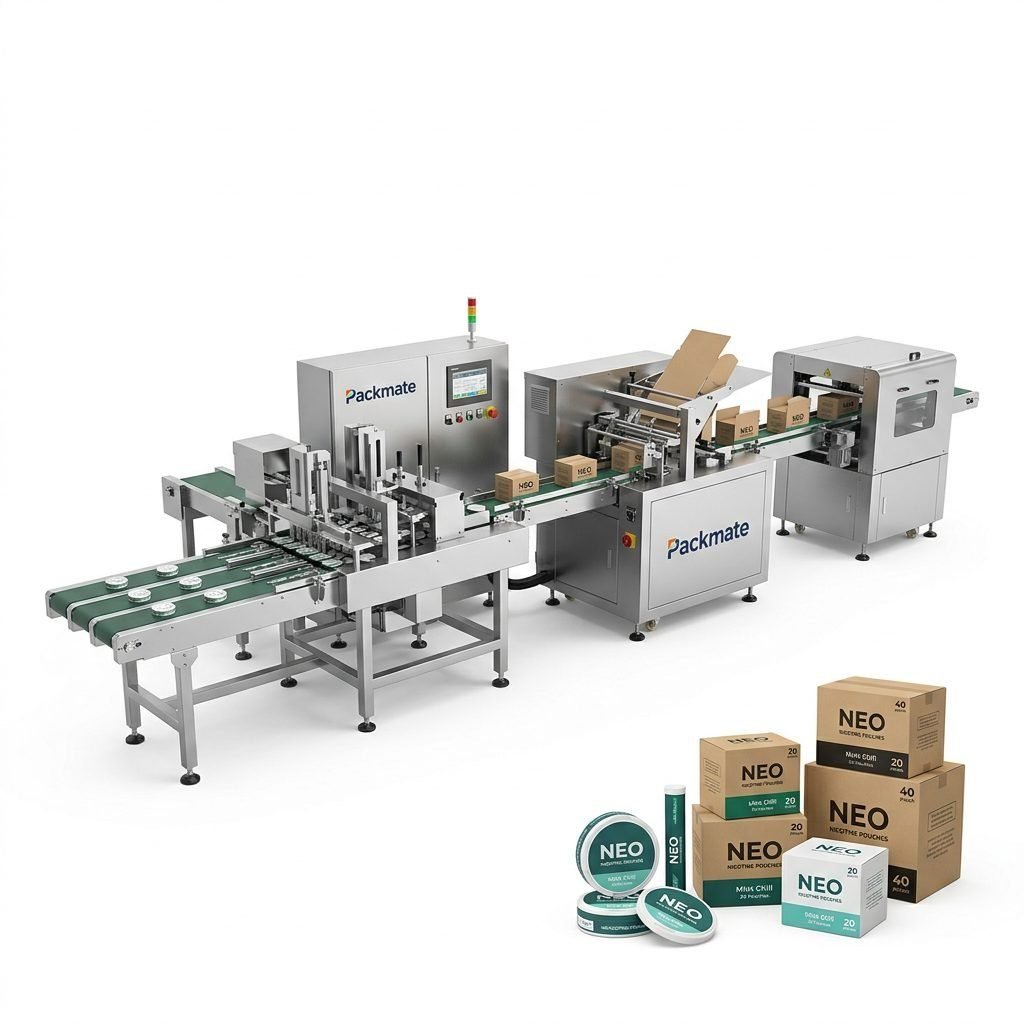
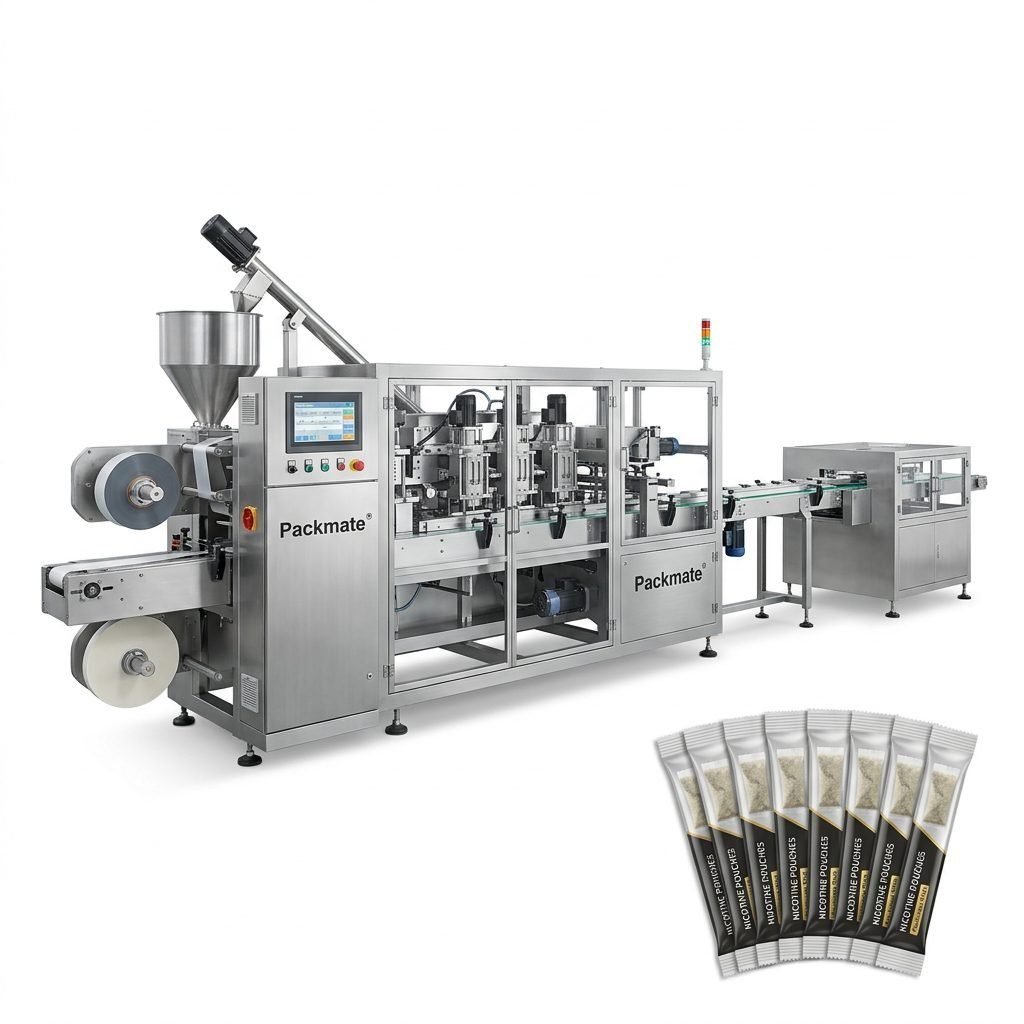
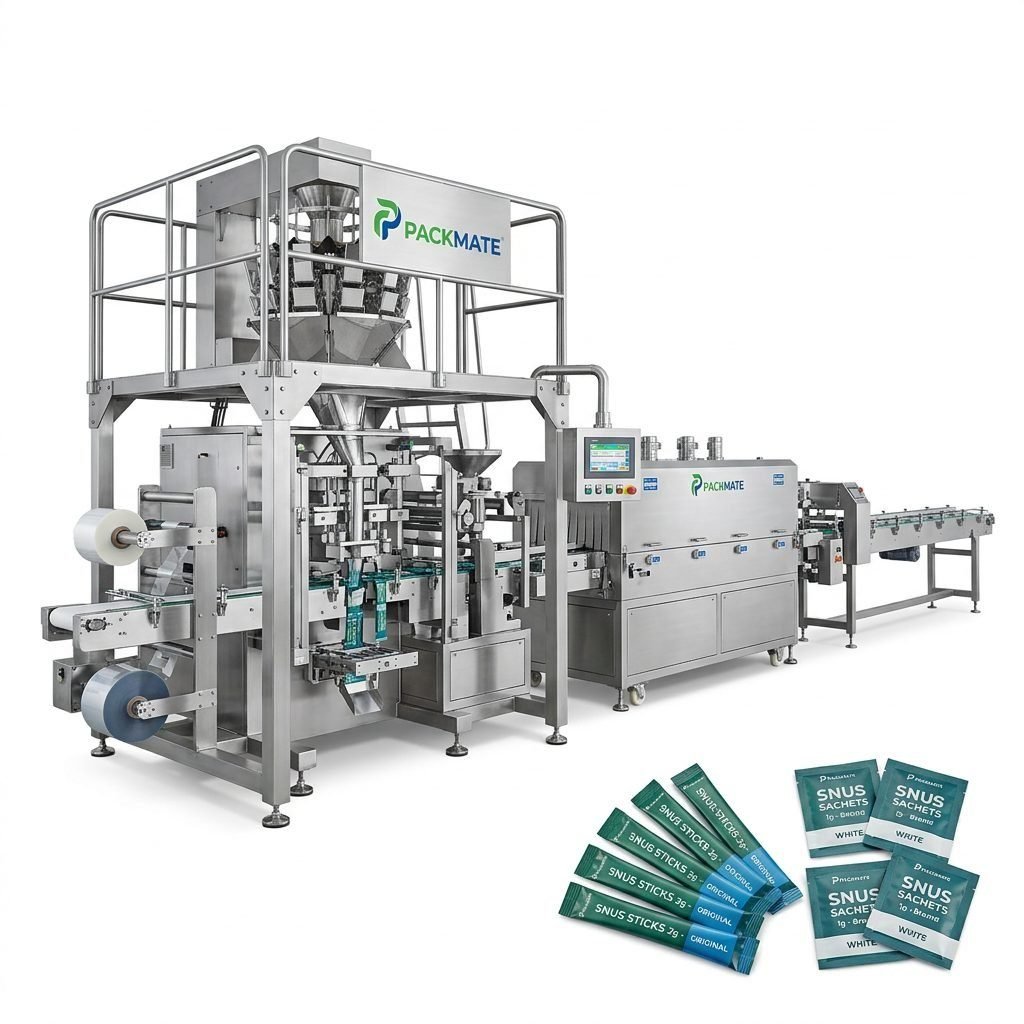
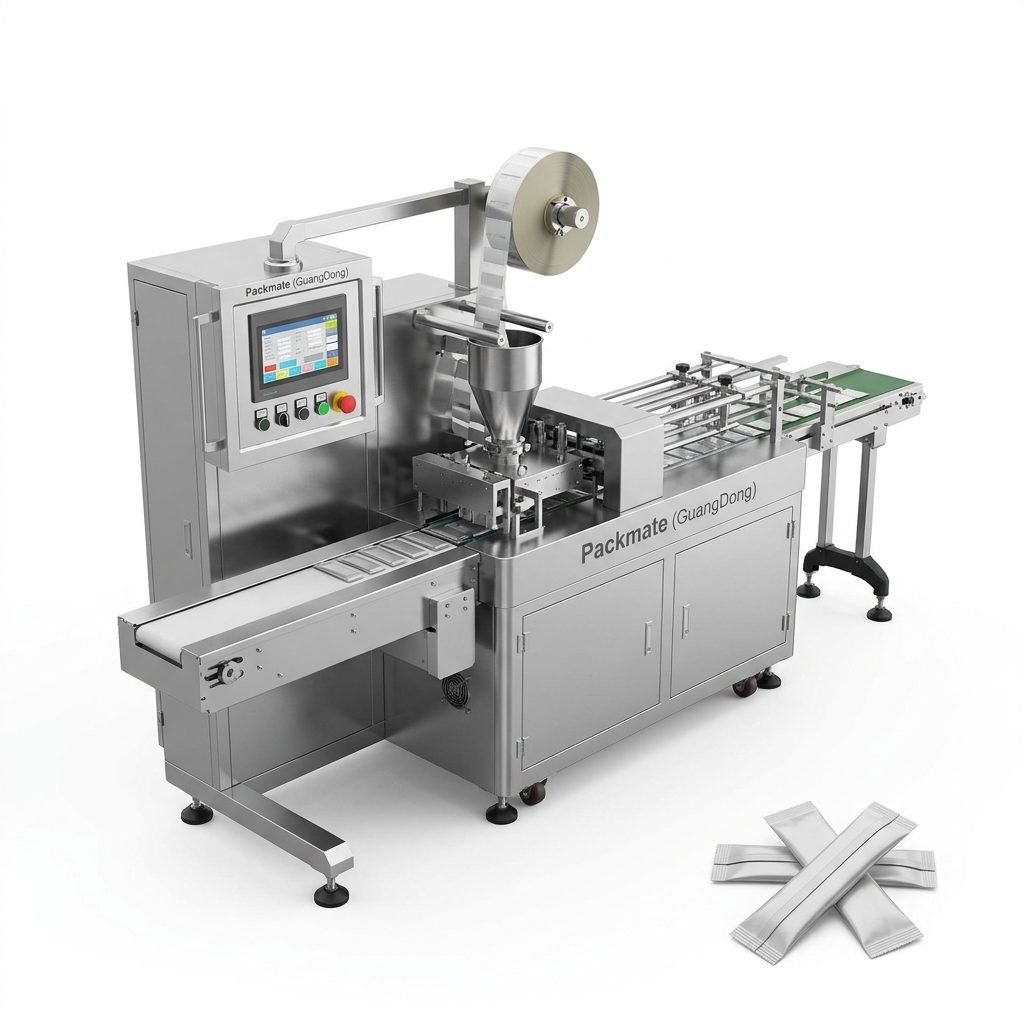
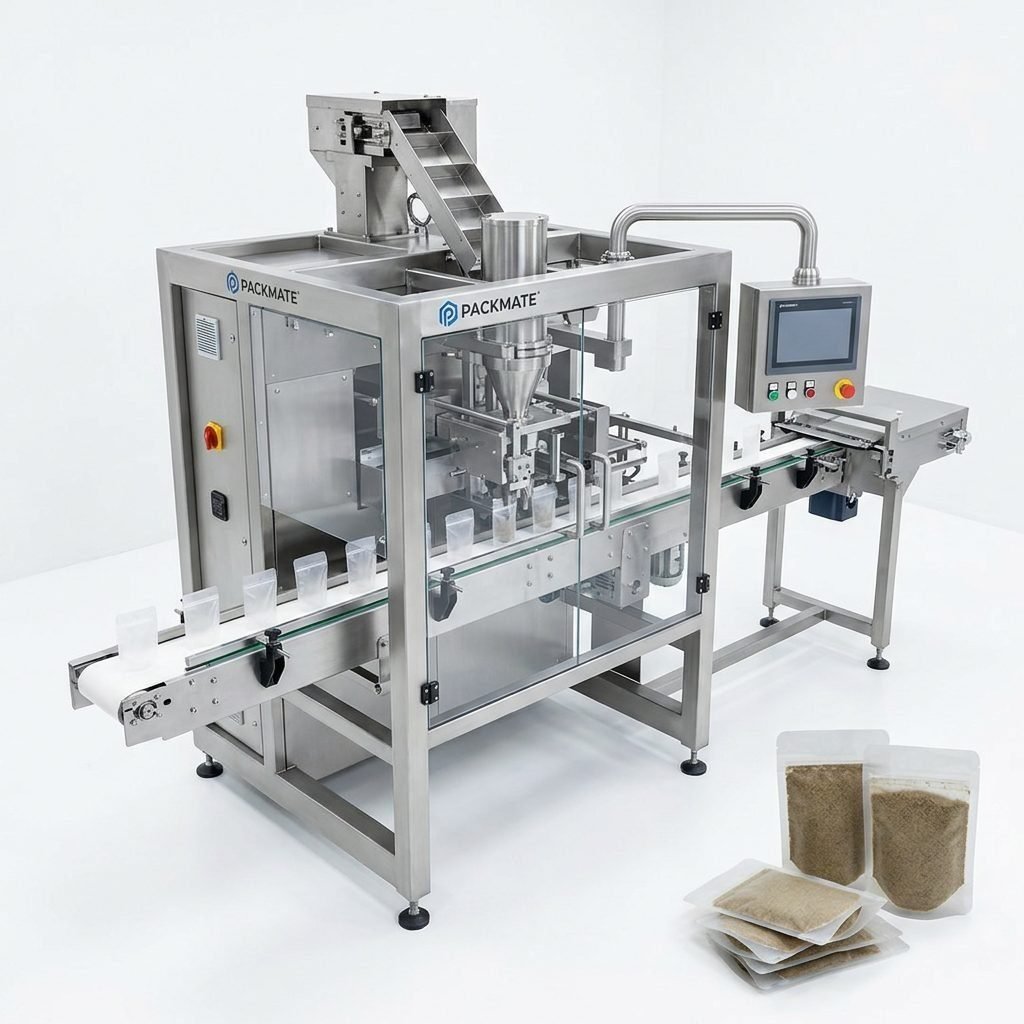
As demand for nicotine pouches continues to grow globally, manufacturers are turning to fully automated, high-speed filling solutions to deliver consistent product quality, scalable throughput, and tight control over portion dose and packaging accuracy. This article provides an in-depth look at modern Nicotine Pouch Filling Lines — from core components and production strategies to machine selection, layout considerations, compliance, and real-world examples — helping operations managers, engineers, and packaging buyers make informed decisions for their next production upgrade.
Why choose a full automatic Nicotine Pouch Filling Line? ⚙️
Industrial nicotine pouch production favors automatic lines because they maximize efficiency while minimizing variability. A complete automatic filling line integrates powder handling, precise dosing, pouch formation, sealing, date coding, and output handling into a continuous workflow. The result is markedly higher throughput, lower labor dependency, and improved hygienic control — essential for consumer-sensitive products such as tobacco-free nicotine pouches and snus.
Key benefits ✓
Reduced product waste, consistent weight control, multi‑lane scalability for high-volume SKUs, and integrated quality checks such as weight verification and pouch integrity detection.
Main components of a typical automatic line
A reliable production line is a combination of precision sub-systems designed to operate seamlessly. Below are the standard modules you will find in a complete Nicotine Pouch Filling Line:
1. Bulk handling & conditioning
Powder and blend handling systems include controlled hoppers, feeders, and optional conditioning units to ensure consistent moisture and flow properties. Proper conditioning prevents bridging and maintains stable dosing performance across long production runs.
2. Multi-head or multi-lane dosing systems
Precision dosing is the nucleus of pouch product quality. Modern lines use multi-head auger or multi-lane volumetric/gravimetric dosing units to deliver repeatable portion weights with minimal deviation, allowing high-speed output without compromising dose accuracy.
3. Pouch/tube forming and sealing machines
Machines that convert film into individual pouches, cut and seal them, and perform final trimming are engineered for thermal control and sealing consistency. Options include ultrasonic sealing for sensitive materials or high-speed rotary sealing for blister-free finishes.
4. In-line quality control
Integrated checkweighers, vision systems for seal inspection, and leak testers are critical to ensure only compliant products move forward to secondary packaging. Data logging and SPC integration enable traceability and continuous improvement.
5. Secondary packaging & end-of-line automation
After filling and sealing, lines often include collators, cartoners, case packers, and palletizing systems to complete the customer-ready packing process. Flexible end-of-line modules allow quick SKU changes and mixed packing runs.
Note: Many manufacturers (including Packmate Snus Machine) provide fully integrated turnkey solutions covering all these modules for a single-source project execution.
Design priorities when selecting a filling line
Selecting the right platform requires balancing throughput targets, product characteristics, and regulatory requirements. Prioritize the following:
Accuracy and repeatability — choose dosing technology and calibration strategies that keep weight variation within controlled limits.
Scalability — modular multi-lane systems allow you to add lanes or swap in higher-speed modules as demand grows.
Hygiene and maintenance — easy-to-clean components, CIP-compatible hoppers, and quick-change parts reduce downtime for cleaning and SKU changeovers.
Compliance and traceability — ensure the line can support required labeling, batch coding, and electronic traceability consistent with CE/ISO standards.
Typical production workflows and layout tips
A well-designed production cell minimizes cross-flow and unplanned handling. Typical workflow:
• Raw material staging → conditioning → dosing → pouch forming → filling → sealing → inspection → secondary packing → palletizing
Layout tip: position auxiliary equipment (weigh hoppers, vibratory feeders) close to the dosing module and provide clear service aisles for maintenance access. Consider mezzanine storage for film reels to reduce floor congestion.
Customization and modularity — why they matter
Nicotine pouch products vary widely in portion size, pouch material, and sealing requirements. Working with a manufacturer that supplies modular options (different dosing heads, lane counts, seal technologies) shortens lead times and future-proofs the investment. Packmate’s product range includes multi-lane systems and adaptors for stick pack, sachet, and pouch styles — allowing single-vendor integration for both primary and secondary packaging modules. Learn more about their machine portfolio here: Snus & Nicotine Packaging Machines.
Multi-lane advantage: Double or triple lanes multiply net throughput without proportionally increasing floor space or operator count, and they can be selectively disabled for small-batch runs.
Quality, certification & machine reliability
Equipment that meets international standards provides a solid foundation for regulatory compliance. Look for CE and ISO certifications, validated control systems, and comprehensive testing protocols. Reputable manufacturers conduct FAT/SAT procedures and provide extensive documentation, spares lists, and service contracts to keep uptime high and life-cycle costs predictable. Packmate maintains CE/ISO-compliant practices and offers factory testing — view their certifications and exhibitions for proof of reliability: Certificate, Our Exhibition.
Case examples and global applications 📦
International brands have deployed multi-lane nicotine pouch filling lines to support new product launches and rapid market scaling. Typical case outcomes include reduced weight variance by up to 60%, throughput increases of 3–5x compared with semi-automatic systems, and improved hygiene compliance. Real customer cases demonstrate how turnkey suppliers deliver complete lines that incorporate both primary filling and downstream cartoning/boxing modules. Explore real-world cases: Case.
Service, training and long-term support
After-sales support is critical for complex automated lines. Look for suppliers that include commissioning, operator training, preventive maintenance plans, and remote diagnostics. Effective support reduces commissioning time and avoids production losses. Packmate publishes detailed catalogs and service offerings for refurbishments and upgrades — see Service and their Catalog for available options.
Cost considerations & ROI
Upfront investment in an automated line is balanced by reduced labor costs, lower product giveaway, and higher consistent throughput. Key ROI drivers include improved yield, lower rejects from better sealing/inspection, and the ability to scale production quickly for new SKUs. A total-cost-of-ownership analysis should factor in spare parts, planned downtime for cleaning, and the supplier’s warranty and service response times.
Tip: Request performance guarantees and FAT reports during vendor selection to validate throughput and dose accuracy under real product conditions.
How to start a project with a turnkey supplier
1) Define capacity and SKU mix. 2) Share product specs (particle size, moisture, pouch material). 3) Request site survey and layout drawing. 4) Schedule FAT and acceptance criteria with vendor. 5) Plan utility and foundation needs. For a comprehensive product and machine lineup, check Filling & Packaging Lines and Weighing & Packaging Systems.
Regional considerations — focus on markets with unique habits
Different regions have specific consumption preferences and regulatory frameworks. For example, Nordic markets historically favor snus formats with stringent packaging and labeling requirements, while other markets may prefer smaller portion sizes and distinctive sachet branding. Working with suppliers familiar with local regulatory expectations and market customs ensures packaging formats and labeling are compliant and culturally appropriate.
Further resources and contacts
For detailed product specifications, model comparisons, and project references, visit Packmate’s product pages and company information: About Packmate and the Bag & Pouch Packaging Machines catalog.
Quick checklist before ordering
• Define target throughput and future expansion plan
• Provide representative product samples for trial
• Confirm utility specs and floor loading
• Agree FAT/SAT acceptance criteria and training schedule
Conclusion
Investing in a complete automatic Nicotine Pouch Filling Line delivers measurable benefits across product quality, cost control, and production agility. With modular multi-lane configurations, accurate dosing systems, and integrated quality checks, modern lines are designed to meet evolving market demands. Partnering with an experienced turnkey supplier ensures smooth project delivery — from R&D trials to full-scale production and long-term support.
Frequently Asked Questions
Q1: What throughput can I expect from a multi-lane filling line?
A1: Throughput varies by lane count, dosing speed, and pouch format. Typical multi-lane lines can multiply single-lane rates 2–6x. Discuss your target kg/hr and pouch size with suppliers to get a validated throughput plan.
Q2: How accurate is the dosing on nicotine pouch machines?
A2: With properly configured dosing (gravimetric/volumetric auger) and in-line checkweighers, weight variation can be minimized to meet regulatory limits. Performance is typically demonstrated during FAT using customer product samples.
Q3: What hygiene and cleaning features should I require?
A3: Look for quick‑release hoppers, smooth stainless surfaces, CIP/COP readiness where applicable, and sealed motors to facilitate cleaning. Easy disassembly of dosing components reduces downtime during sanitation cycles.
Q4: Can I integrate my secondary packaging with the primary line?
A4: Yes. Many turnkey suppliers offer integrated cartoning, case packing, and palletizing modules to deliver a unified production line. Ensure communication protocols and conveyor interfaces are agreed upon during the engineering phase.
Q5: What support and spare parts should be planned?
A5: Plan for a baseline spare parts kit (seals, belts, dosing screws), annual service checks, and remote diagnostics. A supplier with global service coverage and documented lead times for critical parts will reduce risk.