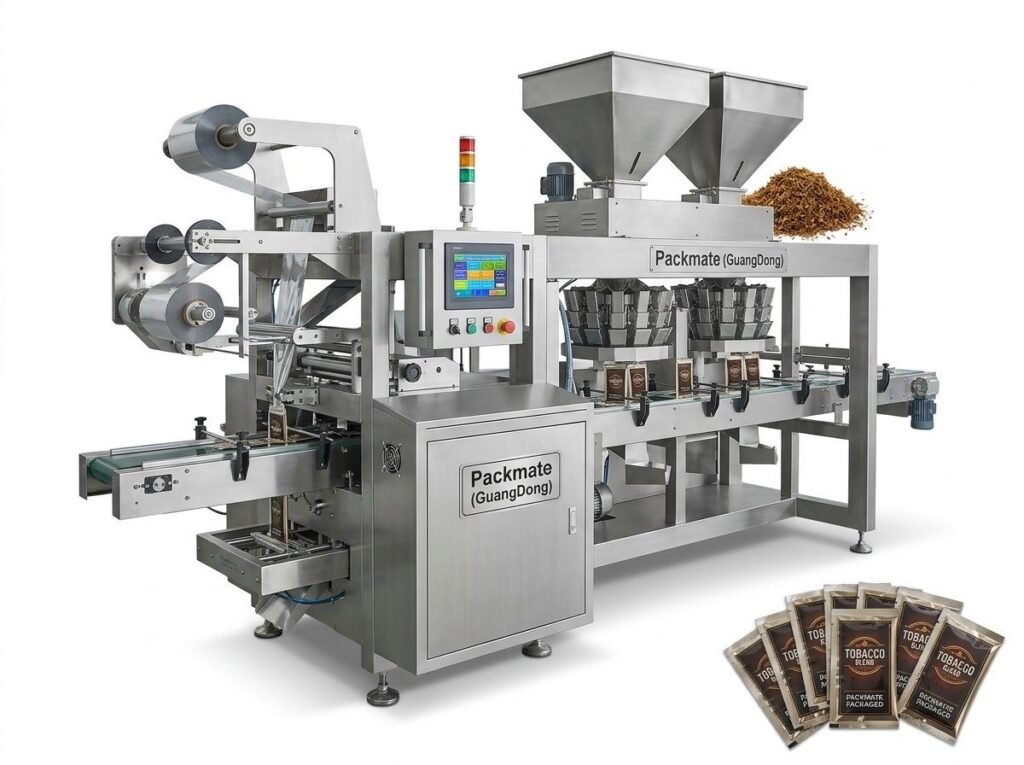
The modern snus and nicotine pouch market demands production lines that are fast, hygienic, and highly flexible. Manufacturers need solutions that handle pouches, cans and bulk packaging with consistent precision. This article walks you through a complete Snus Packing Line Solution — a fully automated system designed for high-efficiency production of nicotine pouches and snus in multiple formats. We explore machine selection, line layout, production capacities, quality control, regulatory compliance, and after-sales service to help you design a scalable, future-proof packaging operation.
Overview of a Complete Snus Packing Line
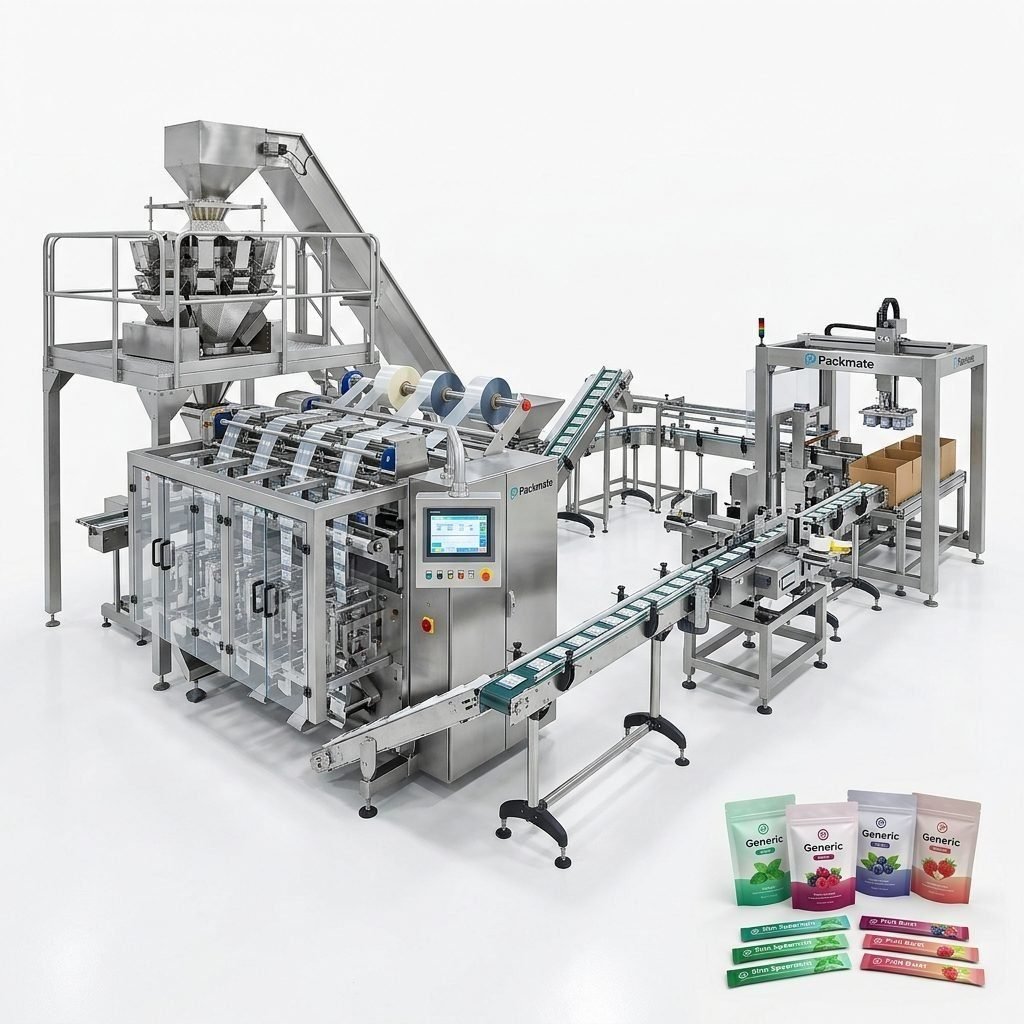
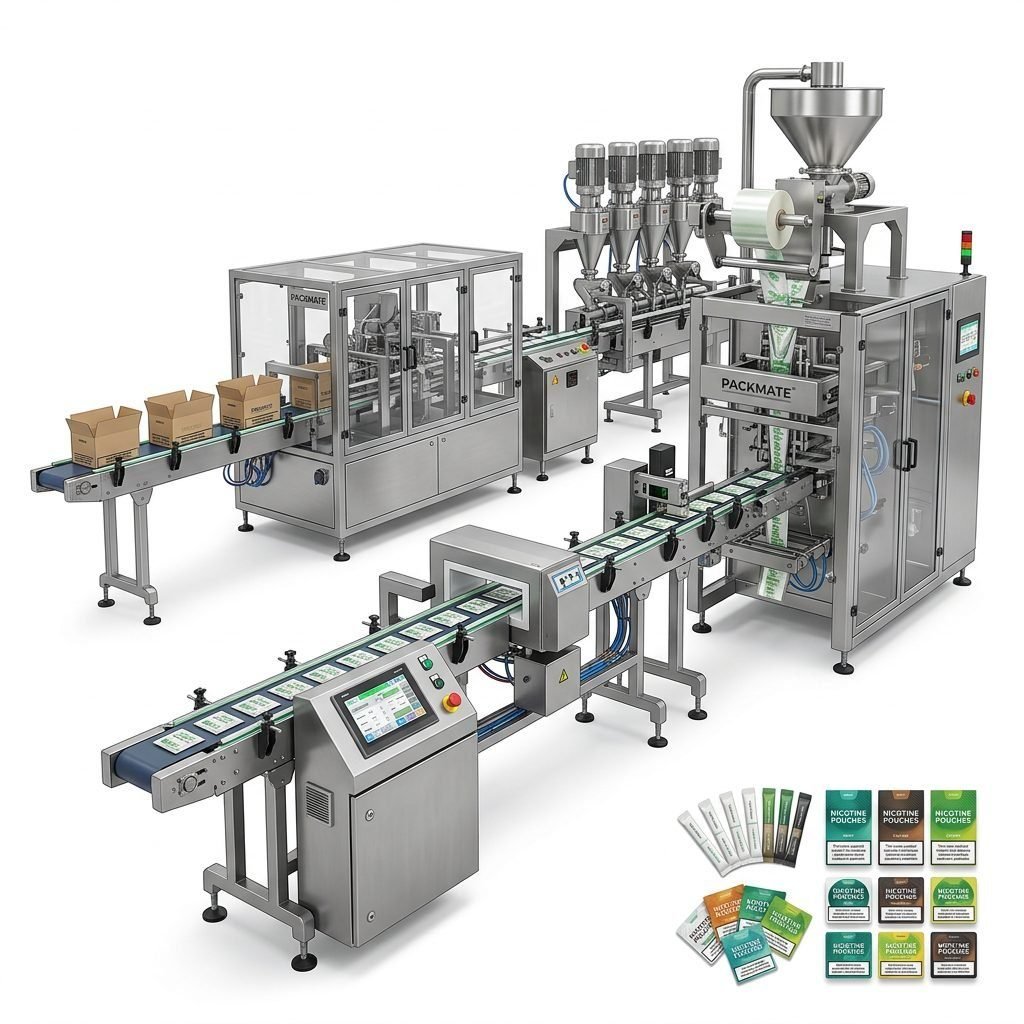
A complete snus packing line integrates feeding, weighing, pouch forming, filling, sealing, canning, labeling, case packing and palletizing. The goal is a seamless workflow from raw material to finished unit, with minimal human intervention. Key performance indicators include uptime, yield rate, cycle time and product consistency. For turnkey solutions, many manufacturers prefer a single supplier capable of supplying machines, PLC integration, and on-site commissioning.
For product details and machine types, see Packmate’s product range: Snus & Nicotine Packaging Machines, Bag & Pouch Packaging Machines, and Weighing & Packaging Systems.
Core Components and Their Roles
Every production line is modular. Understanding each component helps customize capacity and layout:
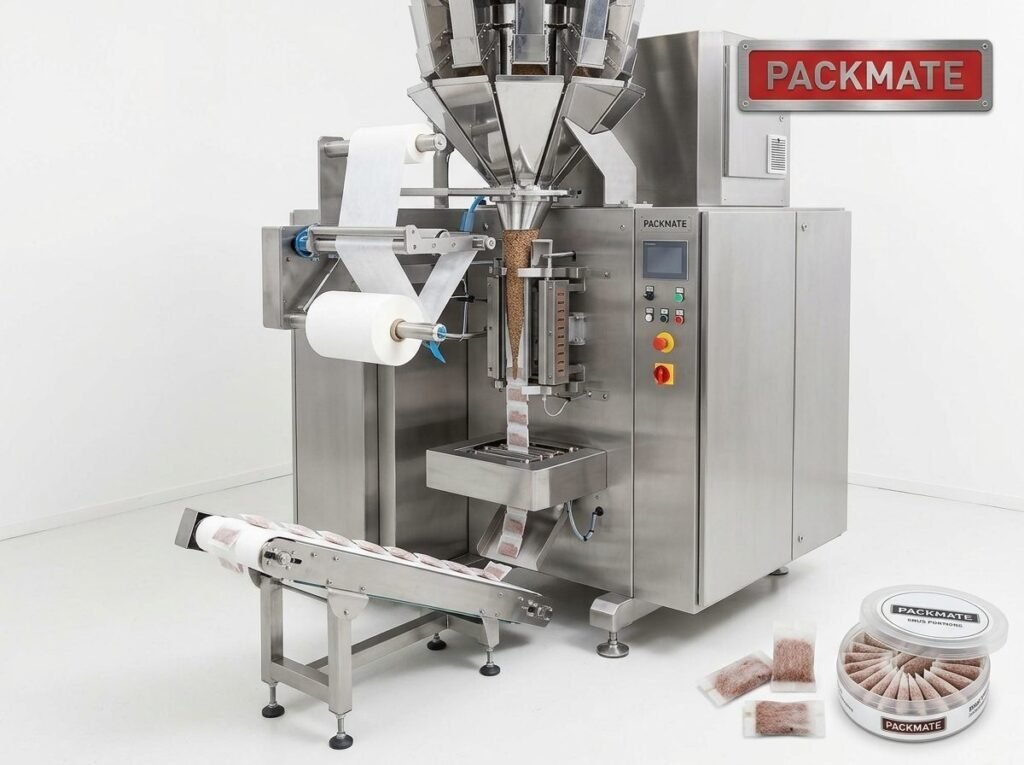
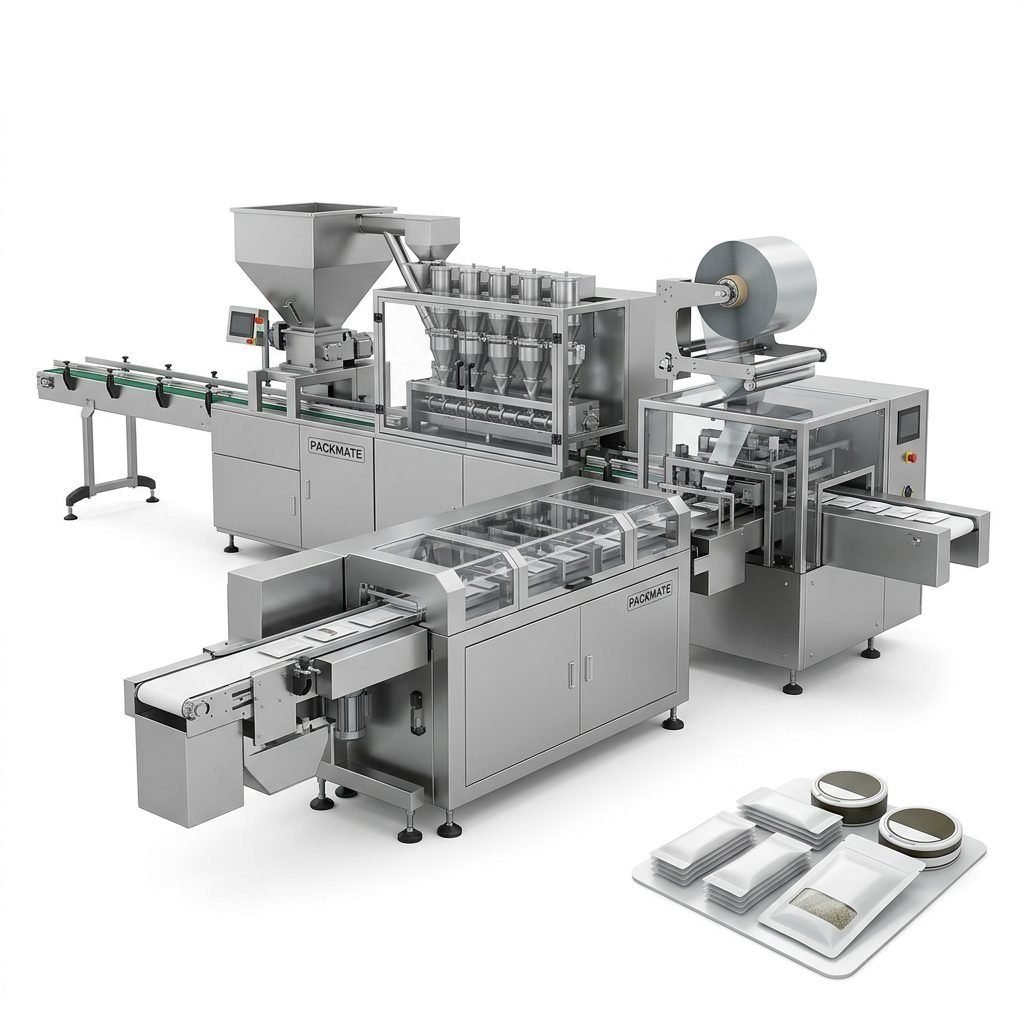
⚙️ Feeding & Dosing Systems — Accurately deliver tobacco, nicotine blends, powder or pouches into fillers. Precision weighing systems minimize giveaway while ensuring accurate dosage.
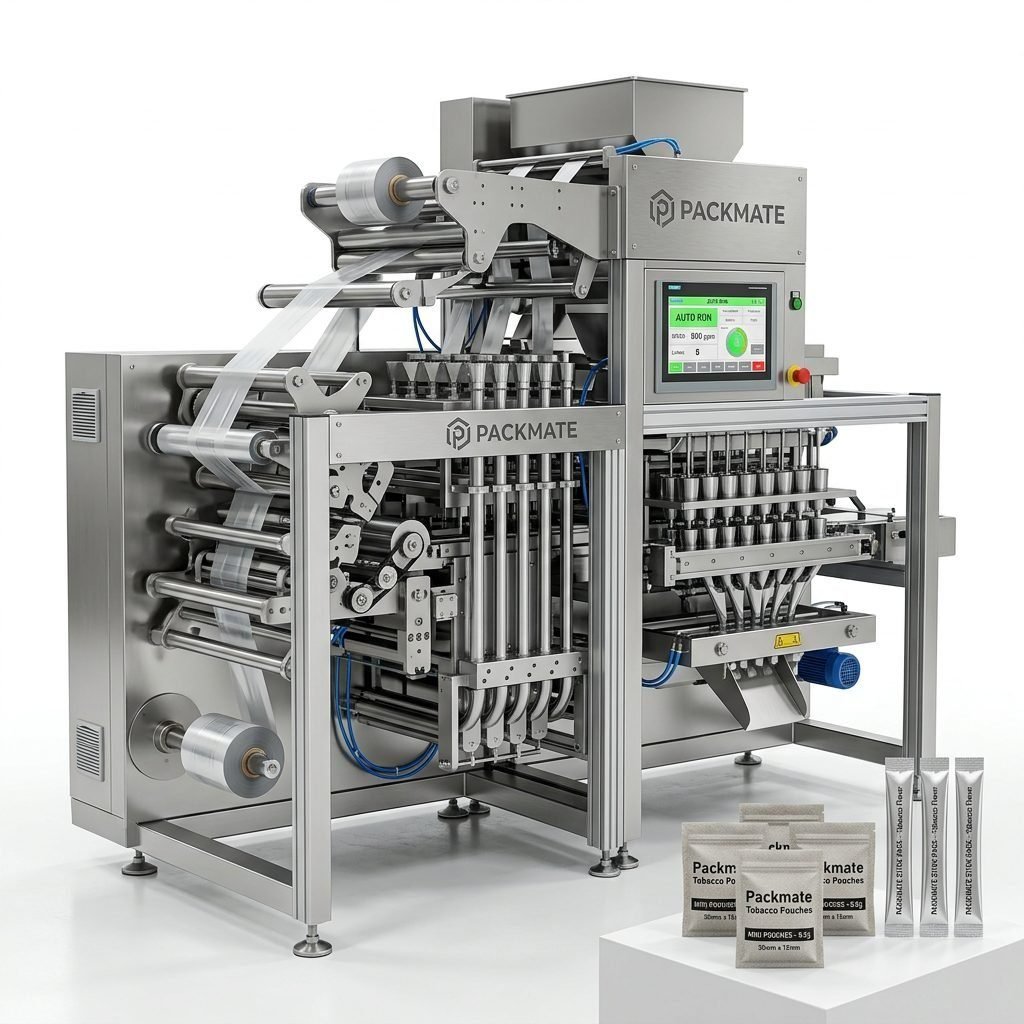
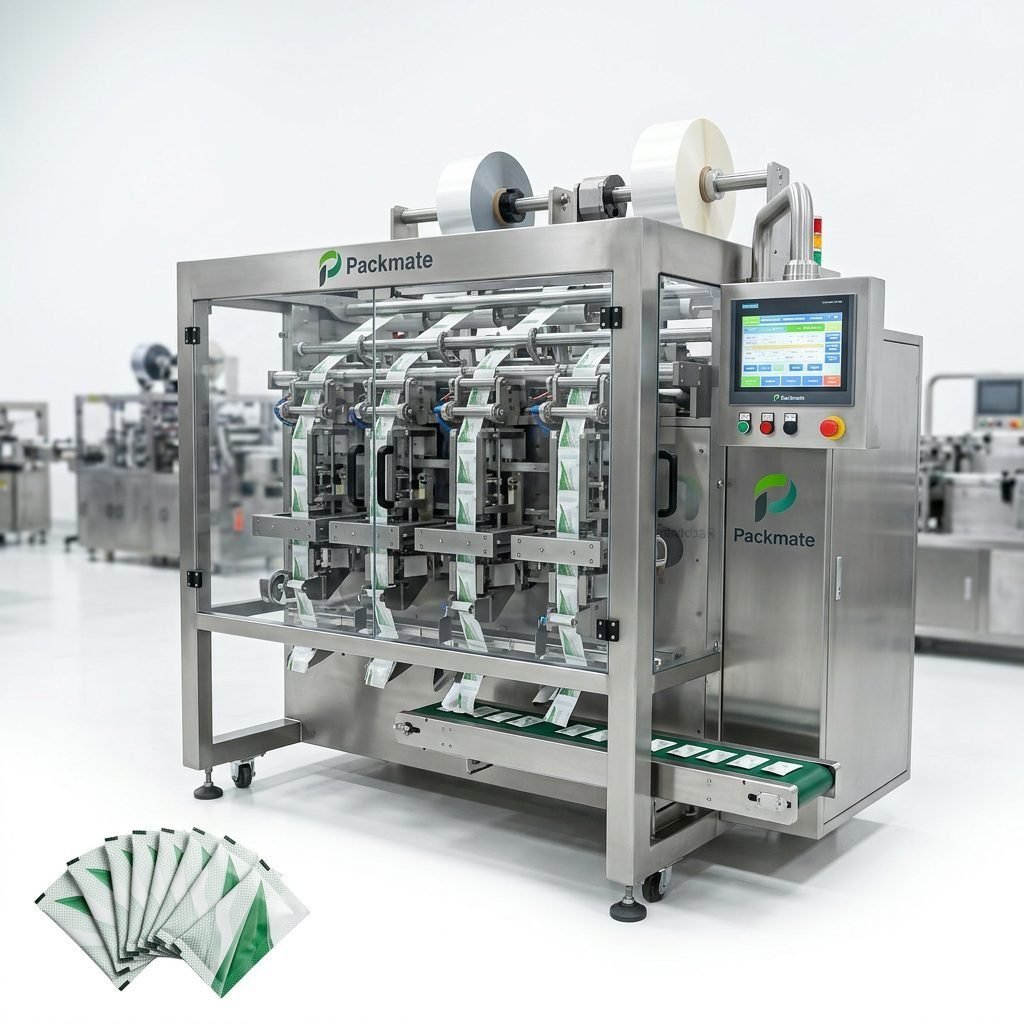
📦 Pouch Forming & Filling Machines — Multi-lane or single-lane options for stick packs, sachets or individual pouches. High-speed servo drives and synchronous cutters improve reliability.
🔒 Sealing & Capping Units — Ensure airtight seals for cans and tamper-evident closures. Temperature control and consistent sealing pressure are essential for shelf life.
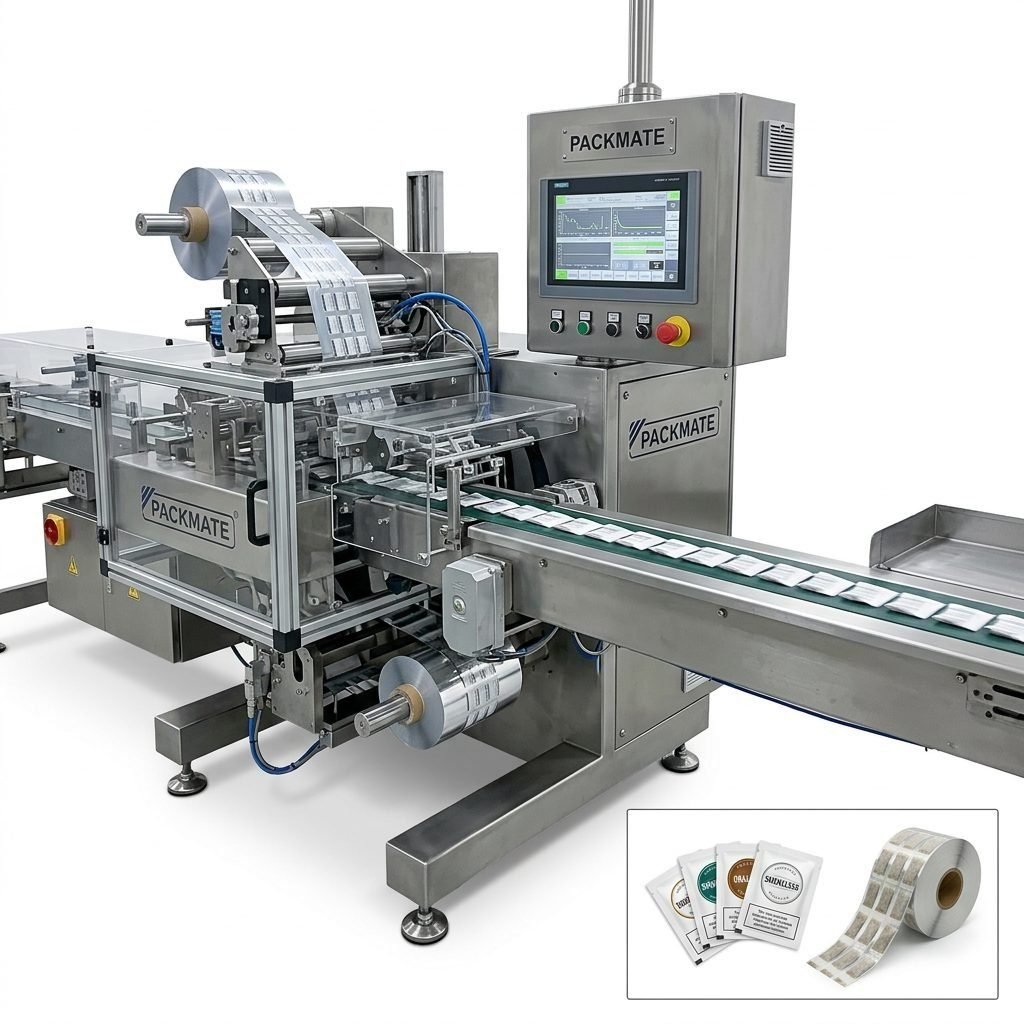
🏷️ Labeling & Coding Systems — Automatic label application, inkjet or laser coding for traceability and regulatory compliance.
📦 End-of-Line Automation — Robot case packers, carton erectors, palletizers and shrink wrappers to complete the workflow and reduce manual handling.
Packaging Formats: Pouches, Cans and Bulk
Flexibility is a must. Manufacturers often need to switch between single-dose pouches, multi-pouch cans and bulk containers. A well-designed line enables quick changeovers and minimal downtime.
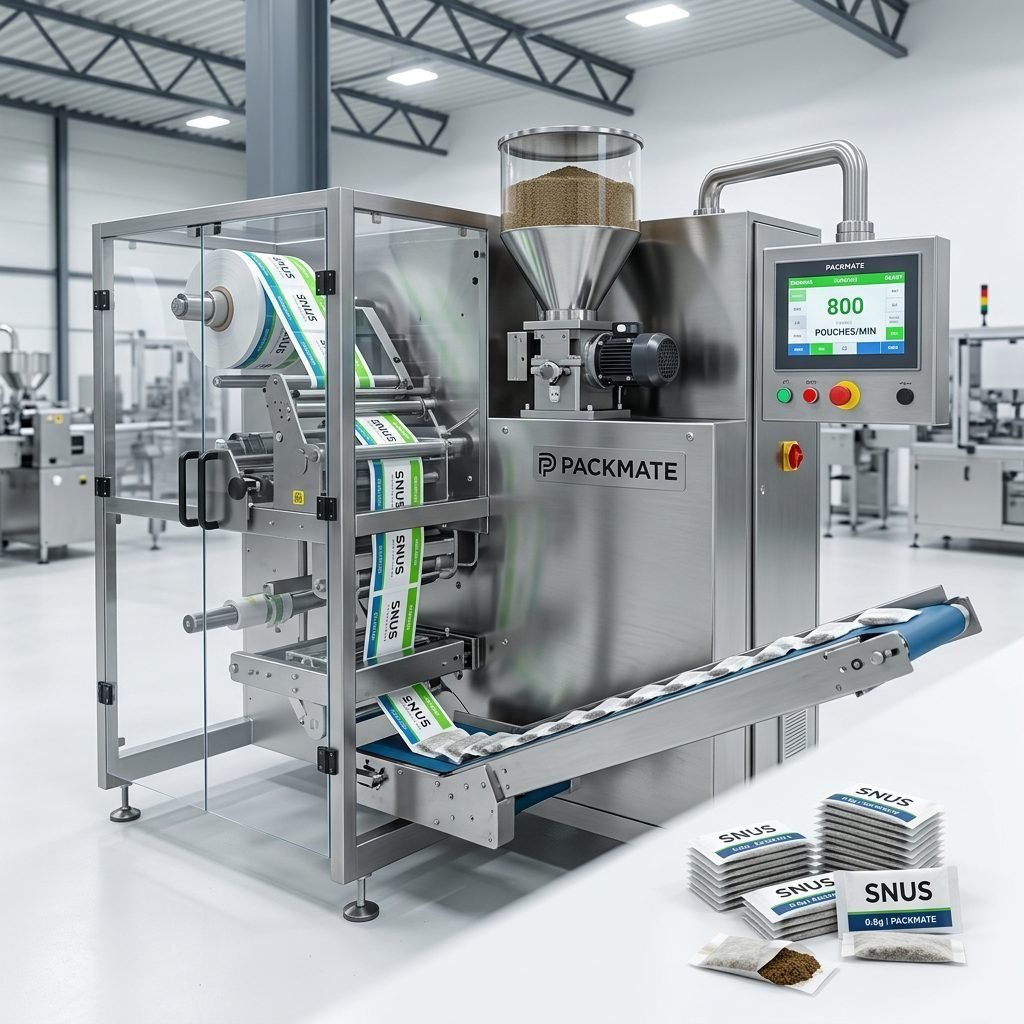
• Single Pouch Lines — High-speed multi-lane pouch machines produce individual sachets or nicotine pouches, commonly used for sample packs or single-use formats.
• Canning Lines — Systems that transfer a fixed number of pouches into cans, then seal and label. Canning lines often include vibration or settling devices to ensure consistent count and appearance inside the can.
• Bulk Packaging — For large-volume shipments, bulk tubs or bags require weighing, bagging and palletizing integration.
Design Principles for High-Performance Lines
Efficient design balances throughput, quality, safety and maintainability. The following principles guide effective line layouts:
① Modularity — Build lines with replaceable modules so upgrades or format changes are rapid.
② Hygienic Design — Use stainless steel, easy-to-clean surfaces and sealed motors to meet food and pharmaceutical standards.
③ Automated Changeover — Quick change parts and servo controls reduce downtime and operator skill requirements.
④ Integrated Control — Central PLC/HMI with recipe management, data logging and remote support capability.
Quality Control and Compliance
Snus and nicotine products are subject to strict regulations in many markets. Designing the line to support compliance avoids costly recalls and market access issues.
🔎 Traceability — Integrate batch coding, serial numbers and production logs. Centralized data storage allows quick retrieval for audits.
🧪 In-line Inspection — Metal detectors, checkweighers and vision systems detect foreign particles, under/overweight packages and missing labels.
📜 Standards & Certification — Work with suppliers that comply with CE, ISO and other relevant certifications to facilitate global export.
Case Study: Multi-Lane High-Speed Pouch Line
A European customer required a compact, high-speed multi-lane pouch line to supply retail and vending markets. The solution included a 6-lane pouch former, rotary filling, automated counting and a canning module. Results achieved:
✔️ Output — Up to 120,000 sachets per hour across all lanes.
✔️ Accuracy — ±0.5% dosing accuracy using integrated weighing heads.
✔️ Uptime — Over 92% achievable with predictive maintenance and spare-part strategy.
Choosing the Right Supplier
Selecting a supplier involves more than equipment specs. Consider engineering experience, after-sales service, spare parts availability and global references. Packmate is a specialist in snus packaging with over 30 years of experience and a 20,000㎡ manufacturing base, making it a reliable partner for turnkey projects. Learn more About Packmate and review global case studies here.
Key Supplier Capabilities to Verify
• R&D & Customization — Ability to adapt machines to product nuances and local regulations.
• Service Network — Local or regional support teams for rapid response.
• Spare Parts & Training — Comprehensive parts catalog and operator training programs to reduce downtime.
Line Integration and Factory Layout Tips
Proper layout reduces material travel, improves safety and simplifies sanitation routines. Follow these practical tips:
1) Streamline raw material flow from receiving to dosing to minimize cross-traffic.
2) Provide clear zones for clean vs. non-clean operations; place GMP-sensitive machines in a controlled environment.
3) Design operator access paths for maintenance without interrupting production lines.
4) Allow space for future expansion; modular machines can be added to increase lanes or speed.
Automation, IIoT and Predictive Maintenance
Industry 4.0 technologies enhance reliability and lower lifecycle costs. Implementing IIoT sensors, cloud-based monitoring and predictive analytics allows you to schedule maintenance based on real conditions rather than fixed intervals.
• Real-time Dashboards — Track OEE, reject rates and downtime events with visual dashboards accessible remotely.
• Remote Troubleshooting — Secure remote access helps engineers diagnose issues without travel, reducing mean time to repair.
• Predictive Alerts — Vibration, temperature and motor current analytics can warn before failures occur.
Safety, Training and Documentation
Regulatory safety and operator competence are non-negotiable. Fully documented SOPs, lockout-tagout procedures and operator training reduce accidents and quality incidents.
• Provide multi-language manuals and on-site training sessions tailored to operator skill levels.
• Include spare part kits and recommended maintenance schedules with the initial project delivery.
• Ensure machine guarding complies with local regulations and CE/ISO standards.
Logistics and Installation Considerations
Large production lines require meticulous planning for logistics, assembly and commissioning. Choose suppliers experienced in shipping, customs clearance and on-site assembly to accelerate time-to-production. For inquiries or project planning, view Contact Us.
Why Manufacturers Choose Packmate
• 30+ Years Experience — Decades of machine development focused on packaging precision and automation.
• Factory Strength — 20,000㎡ factory with advanced CNC centers and precision assembly lines.
• Global Turnkey Solutions — End-to-end projects from design to commissioning and support.
• Certifications — Machines compliant with CE and ISO, simplifying export process.
Return on Investment and Cost Drivers
Investing in automation yields ROI through labor savings, reduced waste and higher throughput. Main cost drivers include machine complexity, customization level, and integration of inspection systems. Work with suppliers to run capability studies and ROI models tailored to your production volumes and labor costs.
Deployment Steps for a Typical Project
1) Requirements Gathering — Define SKUs, speeds, formats and regulatory needs.
2) Line Layout & Proposal — Engineers design a layout and provide a Bill of Materials.
3) Factory Acceptance Test (FAT) — Pre-shipment testing to verify performance and recipes.
4) Installation & Commissioning — Site assembly, qualification and staff training.
5) Ongoing Support — Spare parts, remote service and upgrades to meet changing demand.
Final Thoughts: Building a Resilient Snus Production Operation
A robust snus packing line is the combination of meticulous engineering, quality components and a partner that understands both product intricacies and market dynamics. Prioritize flexibility, hygiene and data-driven maintenance to secure long-term competitiveness. For a detailed product catalog or to request a quote, visit Packmate’s product lines: Sachet & Stick Pack Machines and Filling & Packaging Lines.
Common Questions
Q1: What production speeds can multi-lane snus pouch machines reach?
A1: Multi-lane pouch machines vary by model; high-performance systems can reach tens of thousands of pouches per hour across multiple lanes. Actual throughput depends on pouch size, fill weight and downstream handling.
Q2: How do you ensure dosing accuracy for very small nicotine pouch weights?
A2: Precision dosing is achieved via multi-head weighers or volumetric dosing combined with frequent calibration and in-line checkweighers. Recipe control and environmental controls further stabilize accuracy.
Q3: Can the same line handle both pouches and cans without major reconfiguration?
A3: Yes — with modular design and quick-change parts, many lines can switch between pouch-only production and pouch-to-can workflows with planned changeovers. Adding or removing a canning module is a common approach.
Q4: What after-sales support is typically included?
A4: Reputable suppliers offer commissioning, operator training, spare parts kits, remote diagnostics and warranty periods. Extended service contracts and spare-part stocking strategies are recommended for critical lines.
Q5: How do I get started with a custom turnkey solution?
A5: Begin with a site survey and requirements document. Contact the supplier to request a proposal and Factory Acceptance Test (FAT) plan. For Packmate projects and inquiries, visit Service or reach out via Contact Us.