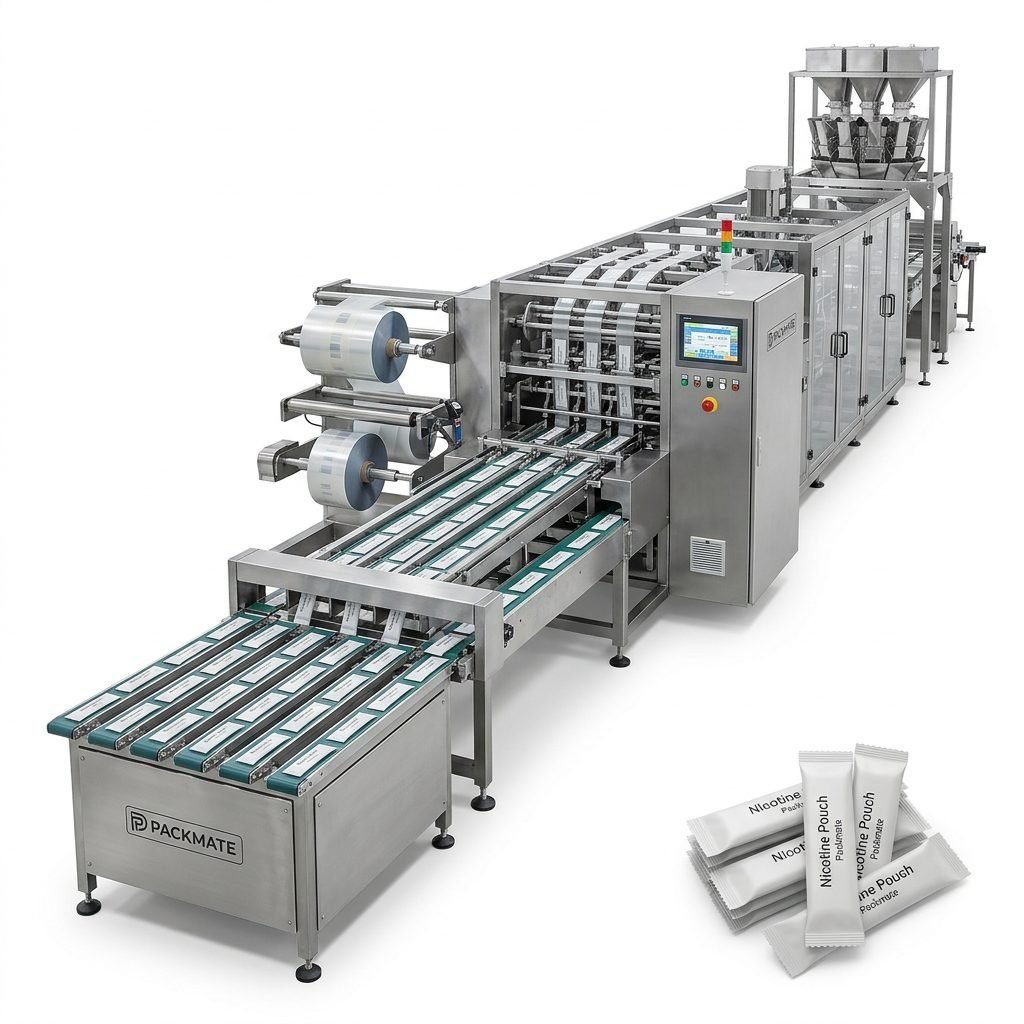
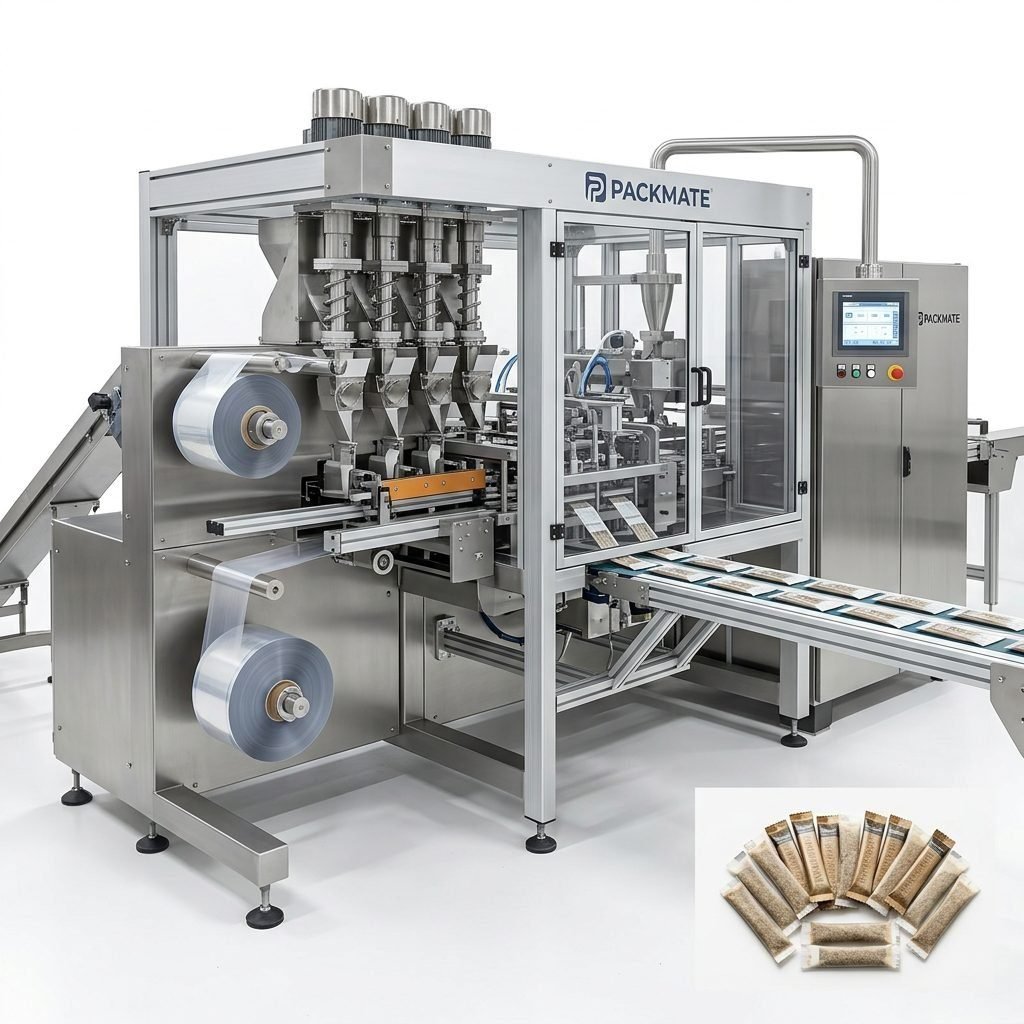
Choosing the right nicotine packaging machine in Belgium requires more than comparing speeds and prices — it means matching equipment to local regulations, multilingual labeling needs, consumer habits, and sustainability expectations. This guide walks Belgian manufacturers and distributors step-by-step through selecting a snus or nicotine pouch packaging solution that delivers compliance, efficiency, and long-term value.
Understand the Belgian Market & Regulatory Context
Belgium sits at the crossroads of several cultural regions (Flanders, Wallonia, and a small German-speaking community), so packaging and labeling must often be prepared in multiple languages (Dutch, French, and sometimes German). In addition, Belgium follows EU directives and specific national rules for nicotine products. Before selecting a machine, confirm legal requirements around child-resistant features, ingredient disclosure, health warnings, and measurement units.
🔴 Tip: Work with legal counsel or a compliance specialist familiar with Belgian and EU tobacco/nicotine regulations to ensure your packaging lines can print/attach the required warnings and batch codes in all necessary languages.
Local consumer preferences
Belgian consumers value discreet, premium, and sustainable packaging. Many buyers prefer compact cans or sleek pouches that are easy to carry and reseal. Sustainability is increasingly important — consider materials and machines that support recyclable films or mono-material options. Machines that enable reduced material use and precise fill control can help you lower waste and appeal to eco-conscious buyers.
Key Machine Types for Nicotine Pouch Packaging
Selecting the machine type is the foundation of your investment. Major options include:
- Multi-lane snus/nicotine pouch machines for high throughput production.
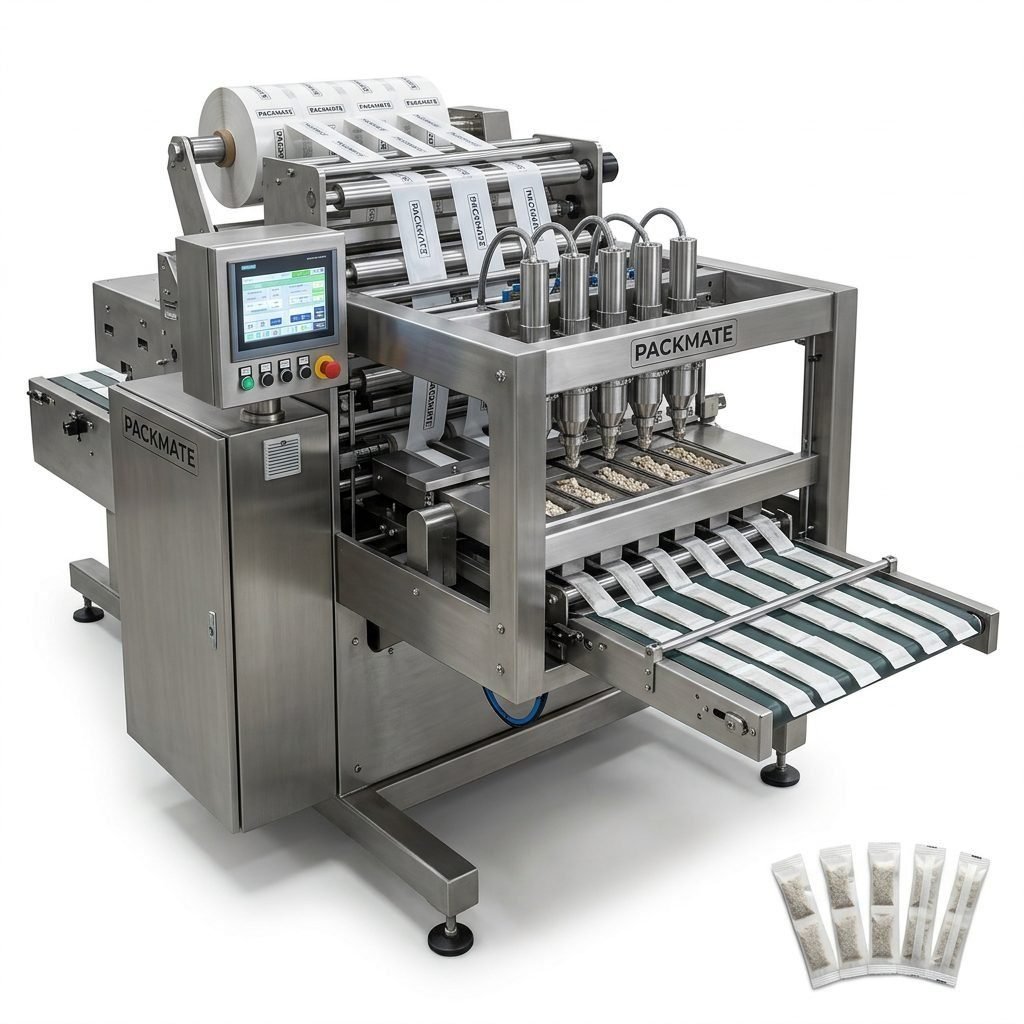
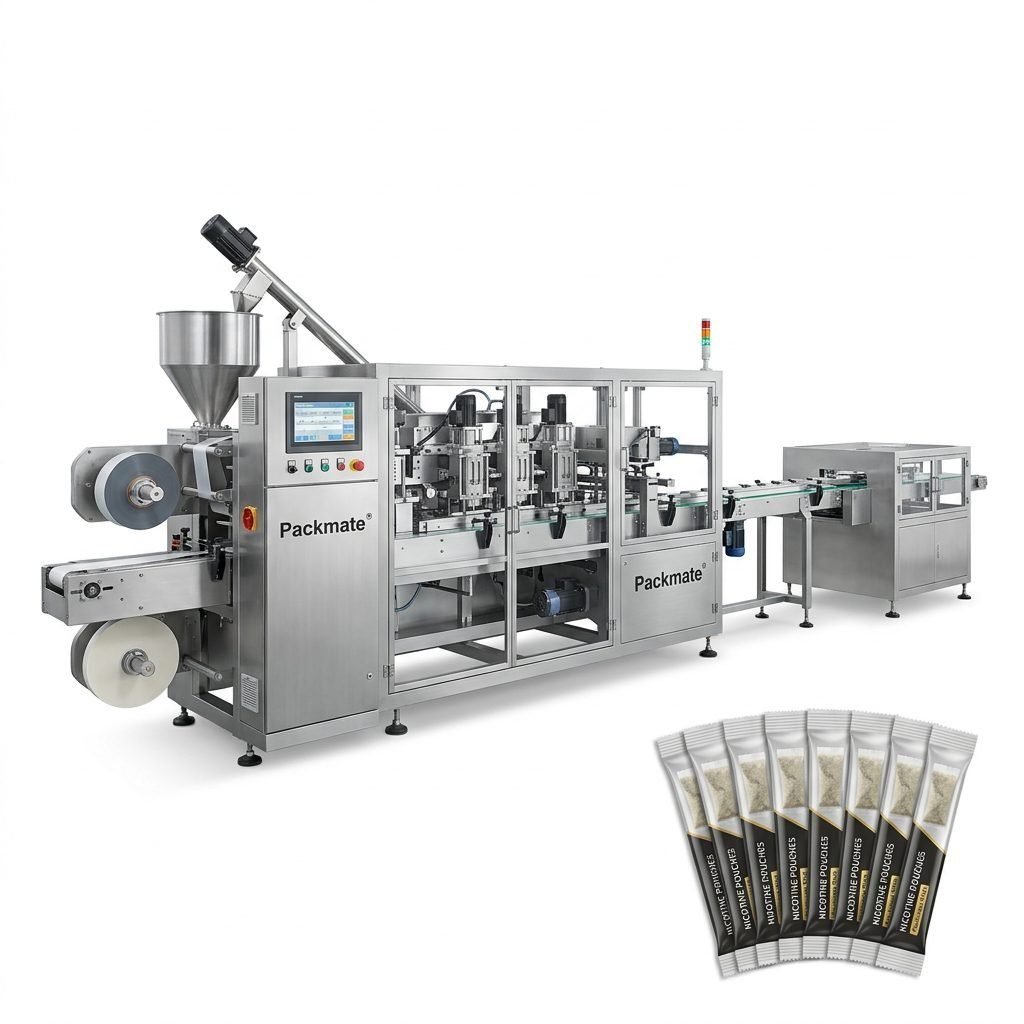
- Sachet & stick pack machines for single-dose or trial formats — ideal for promotional packs (Sachet & Stick Pack Machines).
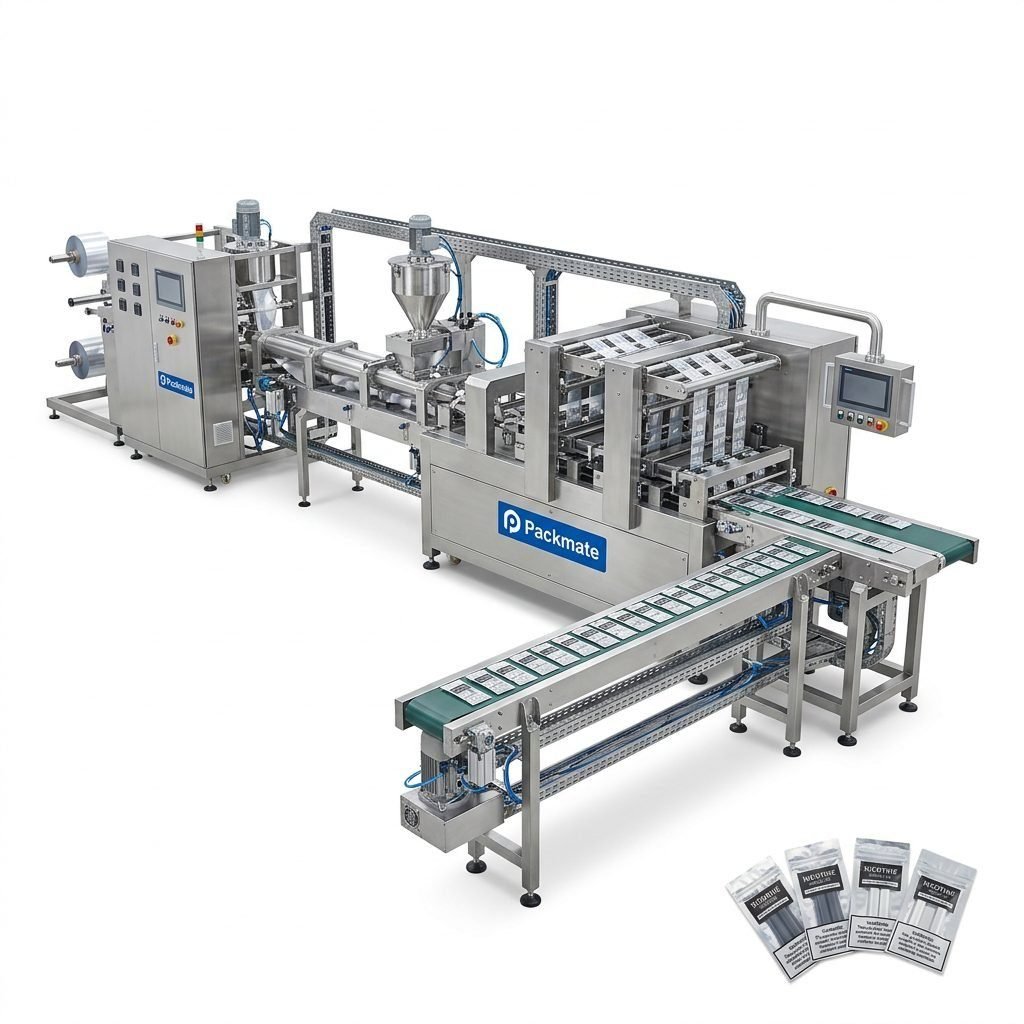
- Form-fill-seal systems for stand-up pouches and resealable packs.
- Specialized canning lines if you produce traditional snus cans or rigid containers.
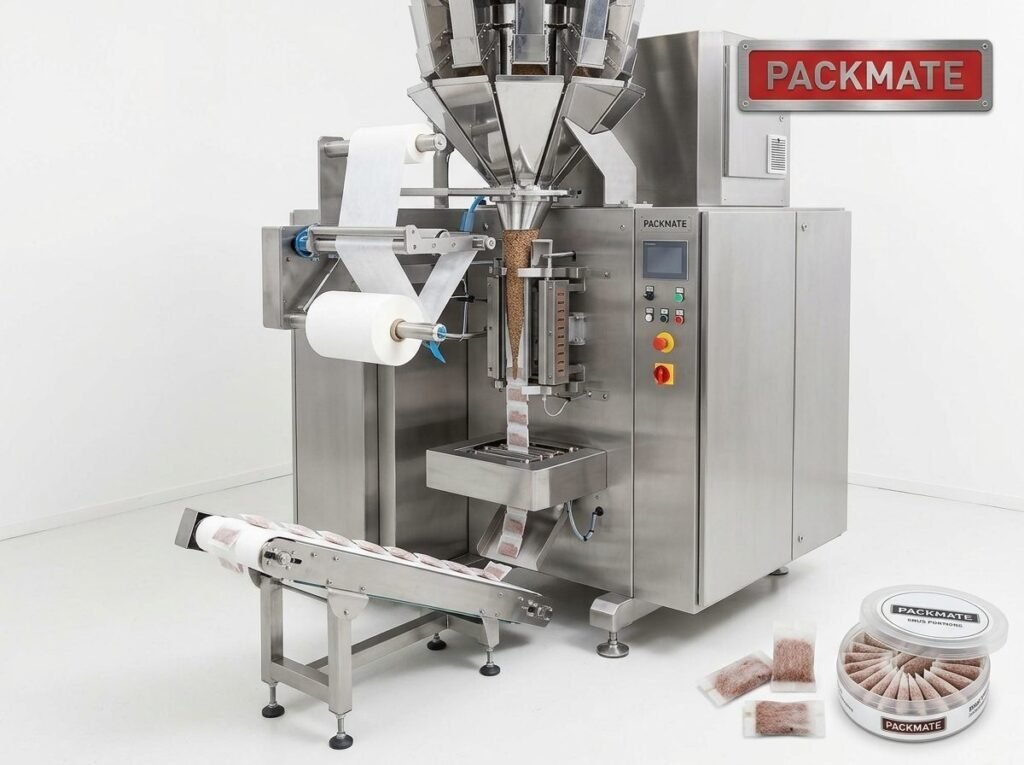
✔ Quick guidance: If your focus is nicotine pouches, consider a dedicated snus packaging line that handles low-dose, small-format pouches with gentle handling and multi-lane capability for higher output.
Why multi-lane systems matter
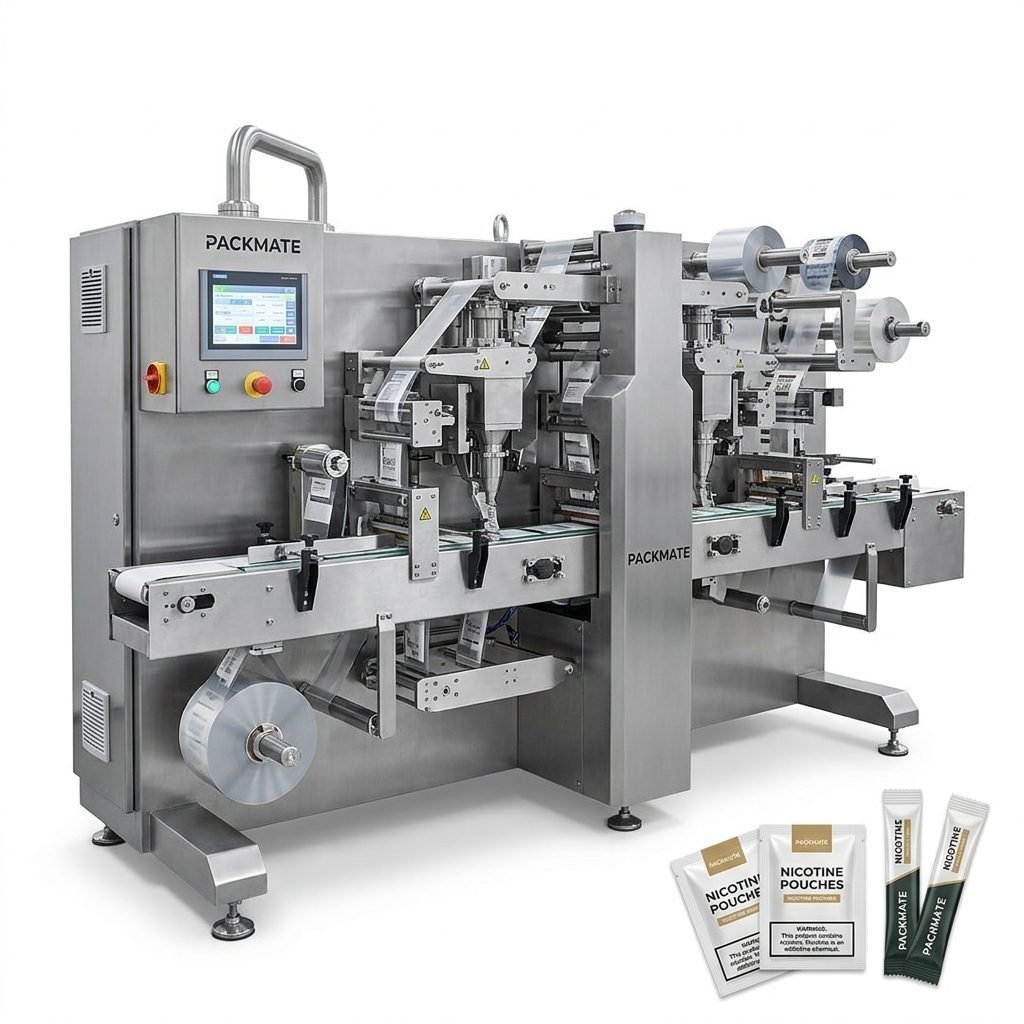
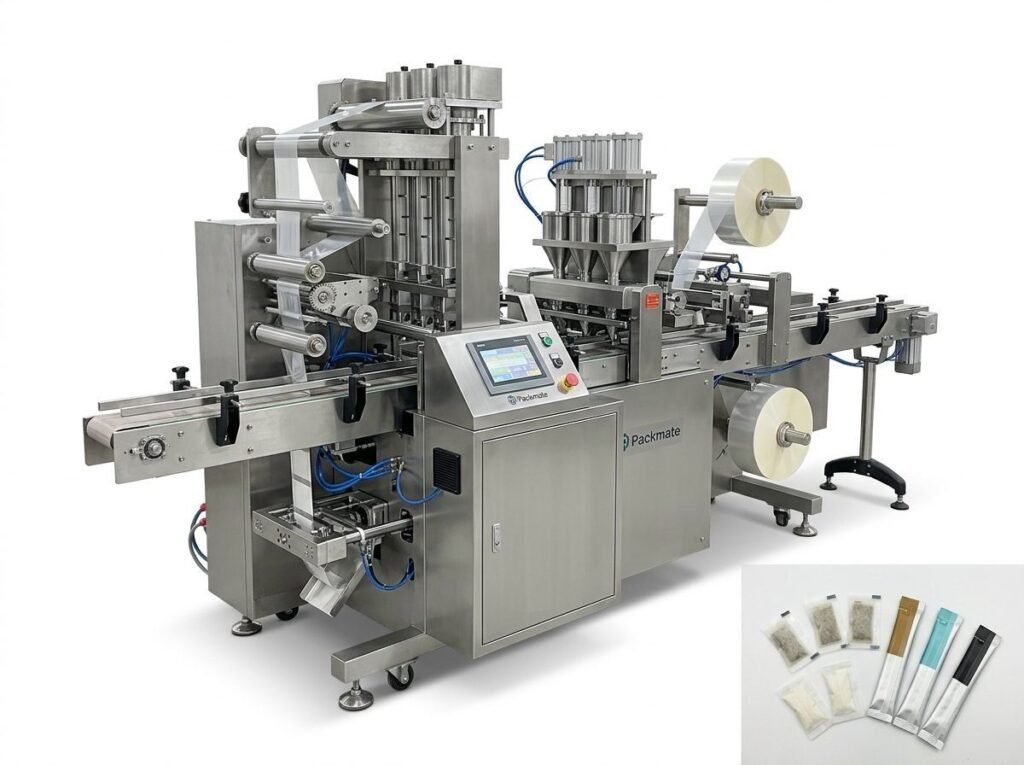
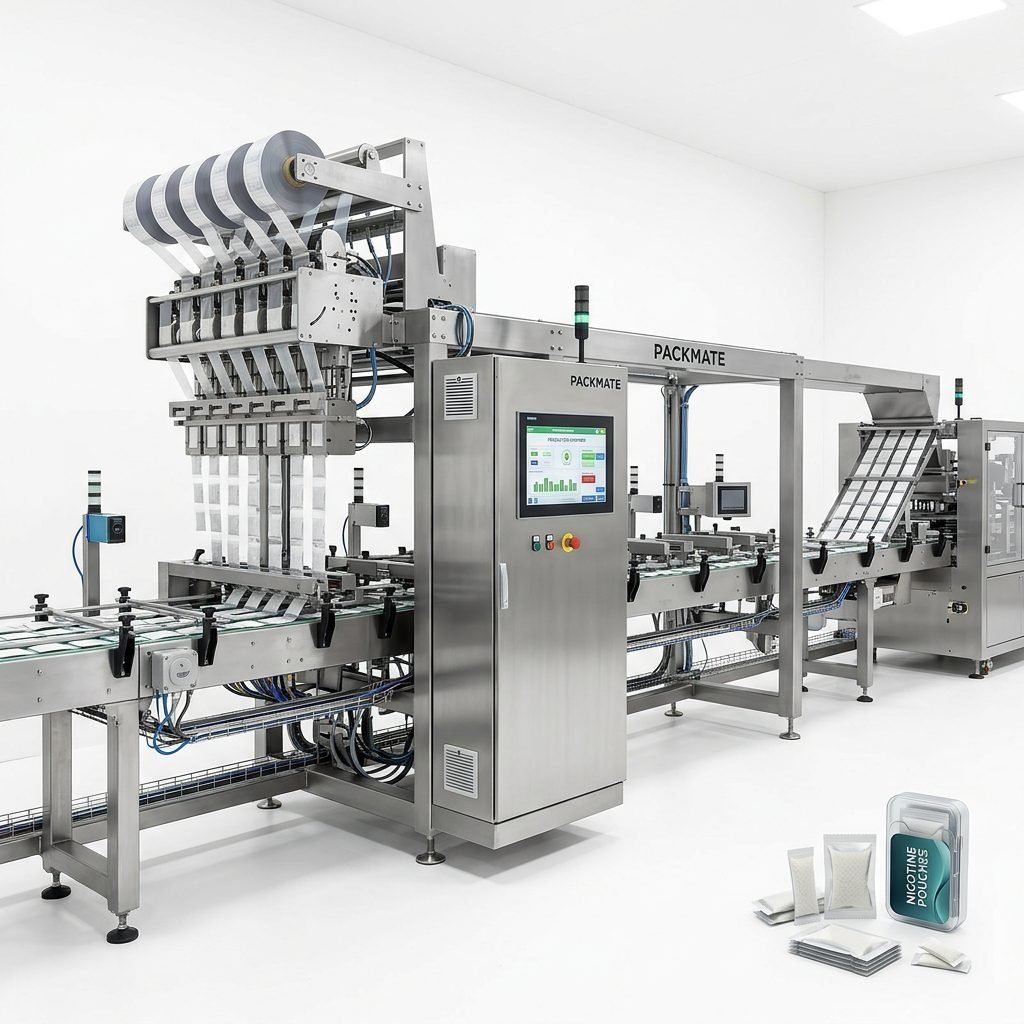
Multi-lane machines let you produce several lanes of pouches simultaneously, dramatically increasing throughput without requiring more floor space. For Belgian suppliers aiming to scale quickly or service export markets across Europe, multi-lane systems offer attractive economies of scale. Packmate, for example, has a long heritage in developing high-precision multi-lane lines optimized for nicotine pouch production.
Performance Metrics to Compare
When evaluating machines, focus on measurable performance indicators:
- Throughput (pouches/min): Choose a machine that meets current demand with headroom for growth.
- Product changeover time: Faster changeovers reduce downtime when switching flavors, sizes, or languages on labels.
- Filling accuracy & weight control: Essential to control nicotine dose and avoid regulatory deviations.
- Waste rate: Minimal scrap lowers material costs and supports sustainability goals.
- OEE (Overall Equipment Effectiveness) and availability metrics provided by the supplier.
Automation & integration
Modern packaging lines should integrate weighing, feeding, sealing, and secondary packaging seamlessly. Consider vendors that provide turnkey solutions including auxiliary equipment such as weighing and packaging systems to reduce integration risk (Weighing & Packaging Systems).
⚙ Integration benefit: A single supplier for both the primary snus machine and auxiliary systems reduces communication gaps and speeds up commissioning.
Material Compatibility & Packaging Formats
Your selected machine must handle the films, foils, or papers you plan to use. Common formats include mono-PE films, laminated films, and compostable alternatives. Machines should be adaptable to:
- Small-dose sachets/pouches with sealed edges.
- Resealable pouches and cans with induction or mechanical seals.
- Blister or tray systems where applicable.
If you plan to experiment with sustainable substrates, confirm the machine’s sealing temperatures, dwell times, and tension control are compatible with low-energy sealing films. A poor match can increase rejects.
Quality, Safety & Certifications
Seek machines that carry internationally recognized certifications and robust quality assurances. Certifications such as CE and ISO are often required for European operations. Packmate machines comply with CE and ISO standards and are built in a precision facility with strict testing protocols.
ℹ Safety reminder: Ensure guards, sensors, and emergency stops meet Belgian workplace safety standards (well aligned with EU directives) and that operators receive thorough training.
Service, Spare Parts & Local Support in Belgium
After-sales service is critical. Evaluate suppliers on spare-parts availability, remote diagnostic capability, and training options. A European partner network or responsive global supplier is essential to minimize downtime. Packmate offers global turnkey solutions and long-term technical support, backed by a 20,000㎡ manufacturing facility and dedicated engineering teams.
Spare parts logistics
Ask for a spare-parts list and expected delivery times. Fast access to critical components — seals, cutters, sensors — is more valuable than lower initial price when uptime matters.
Total Cost of Ownership (TCO) Analysis
Compare machines not just on purchase price but on TCO over 3–7 years: energy consumption, material waste, maintenance, spare parts, and labor. A higher-quality machine with lower downtime often proves cheaper over its lifetime.
- Energy efficiency (servo-driven systems usually consume less power).
- Ease of maintenance and modular component design.
- Availability of retrofit upgrades and automation enhancements.
Factory Acceptance Test (FAT) & Site Acceptance Test (SAT)
Insist on FAT before shipment and a thorough SAT after installation. FAT validates performance with your product and materials; SAT confirms integration into your Belgian production environment. Request documented acceptance criteria and performance thresholds.
✔ Must-have: A FAT video demonstrating your exact pouch format and materials gives confidence before shipping and helps speed up on-site commissioning.
Vendor Selection Checklist
Use this checklist when comparing suppliers:
- Proven references in nicotine/snus packaging — request case studies (Case).
- CE/ISO certification and documented FAT/SAT procedures (Certificate).
- Availability of turnkey solutions or willingness to integrate auxiliary systems (Filling & Packaging Lines).
- Clear warranty terms and spare-parts lead times.
- Training programs for Belgian operators in multiple languages if needed.
Sustainability & Future-Proofing
Belgian customers reward brands that demonstrate environmental responsibility. Choose machines that:
- Support reduced-film formats and precise dosing to cut waste.
- Can be adapted to new substrates (mono-materials, recyclable films).
- Have energy-saving features (servo drives, sleep modes).
Working with Packmate — What to Expect
Packmate Snus Machine brings 30+ years of engineering experience, 50+ machine models, and a 20,000㎡ factory to the table. Clients benefit from tailored multi-lane systems, precise CNC-manufactured components, and comprehensive testing. For more details on products and services, visit the Packmate product pages and company profile links included below.
Useful resources:
- Snus & Nicotine Packaging Machines
- About Packmate
- Contact Us — ask for a tailored proposal and FAT plan.
Budgeting & Financing Options
Capital budgeting should include the machine cost, installation, validation, spare parts kit, and operator training. Many suppliers offer leasing or phased payment options. Factor in potential tax incentives or grants for equipment that improves energy efficiency or reduces waste — Belgian regional authorities sometimes support sustainability-focused industrial upgrades.
Final Selection & Implementation Roadmap
A practical implementation roadmap reduces risk:
- Define product formats, materials, and required languages for labeling.
- List regulatory requirements and safety standards for Belgium/EU.
- Request machine demos and FAT with your actual materials.
- Compare TCO and vendor service capabilities.
- Plan SAT, training, and maintenance schedules before production ramp-up.
🔎 Checklist highlight: Don’t buy on speed alone — verify packaging quality, changeover flexibility, and legal printing/labeling capability.
Conclusion
Choosing the right nicotine packaging machine in Belgium means balancing regulatory compliance, local language demands, consumer preferences, and long-term costs. By prioritizing multi-lane flexibility, material compatibility, strong vendor support, and sustainability, you can select a packaging line that scales with your business and satisfies Belgian and broader European markets.
Frequently Asked Questions
Q: How do I ensure my packaging meets Belgian language requirements?
A: Plan for multilingual label printing or pre-printed films and confirm your machine supports inline printing or label application that can handle Dutch, French, and German where required.
Q: Are nicotine pouches regulated differently in Belgium versus other EU countries?
A: Belgium follows EU frameworks but may have national nuances. Always consult local regulatory guidance and consider partners experienced with European compliance to avoid surprises.
Q: What maintenance support should I expect from a supplier?
A: Expect spare parts availability, remote diagnostics, operator training, and clear warranty terms. Choose suppliers with a track record in snus/nicotine packaging and global service networks.
Q: Can I switch packaging materials (e.g., to recyclable films) on my machine later?
A: Many modern machines are adaptable, but verify sealing parameters and tension control are compatible with your intended materials. Request FAT trials with the new films before full adoption.
Q: Where can I see real examples and request quotations?
A: Explore Packmate product lines, cases, and contact pages for machine specs and demo requests. Useful pages include Snus & Nicotine Packaging Machines, the Case library, and Contact Us.