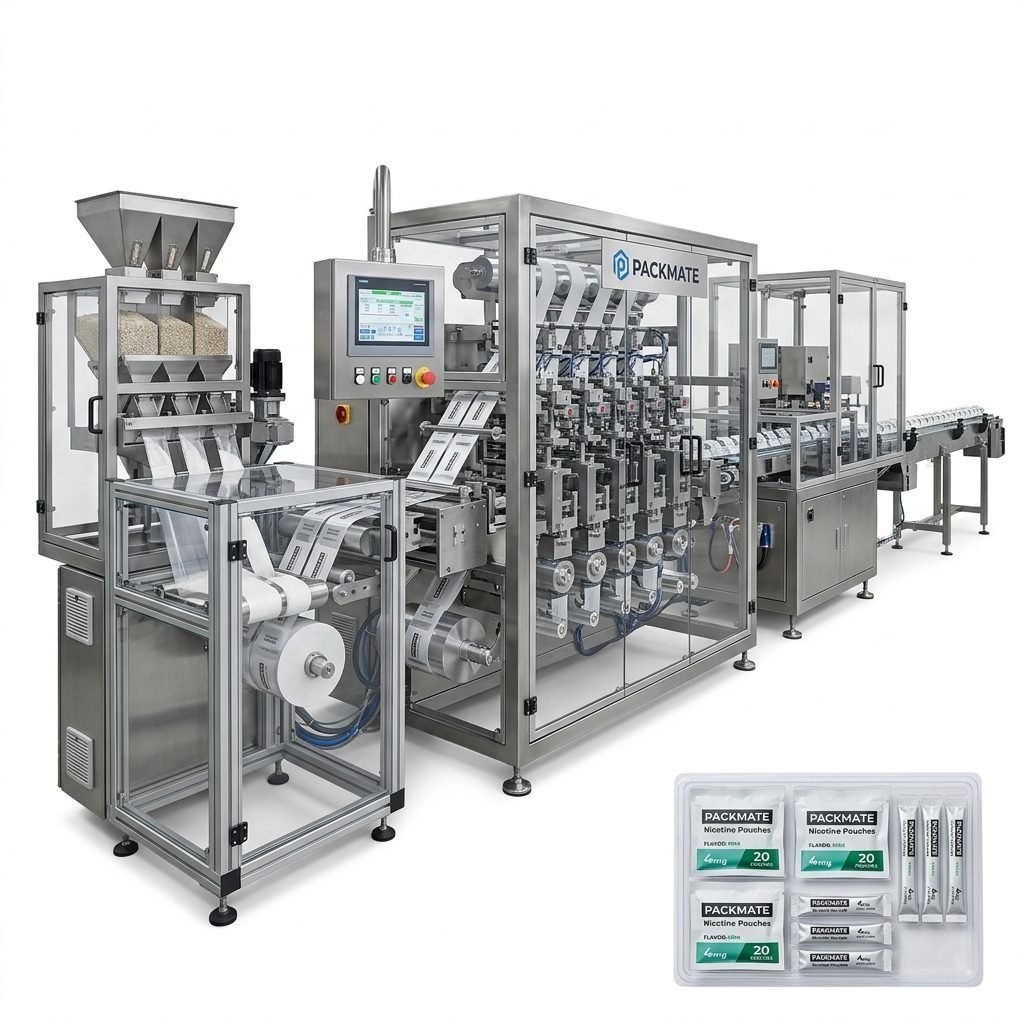
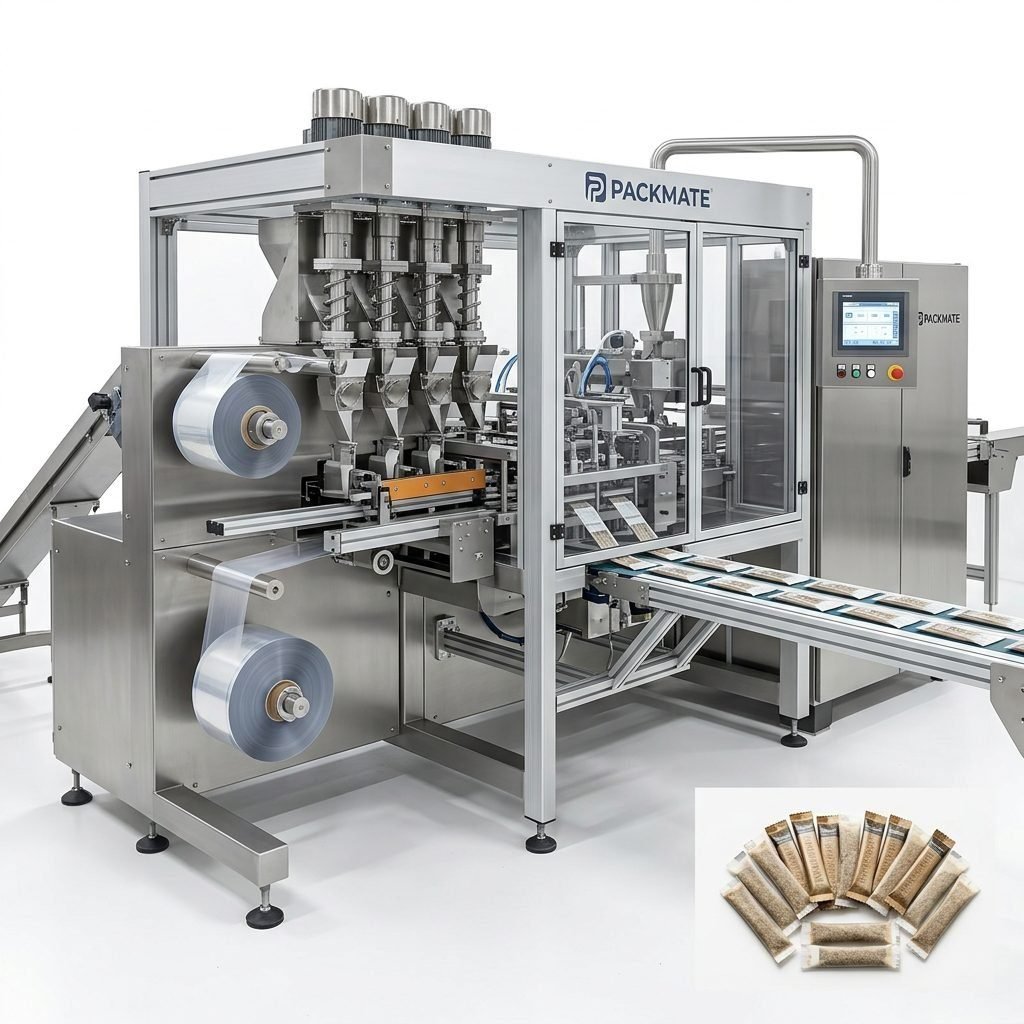
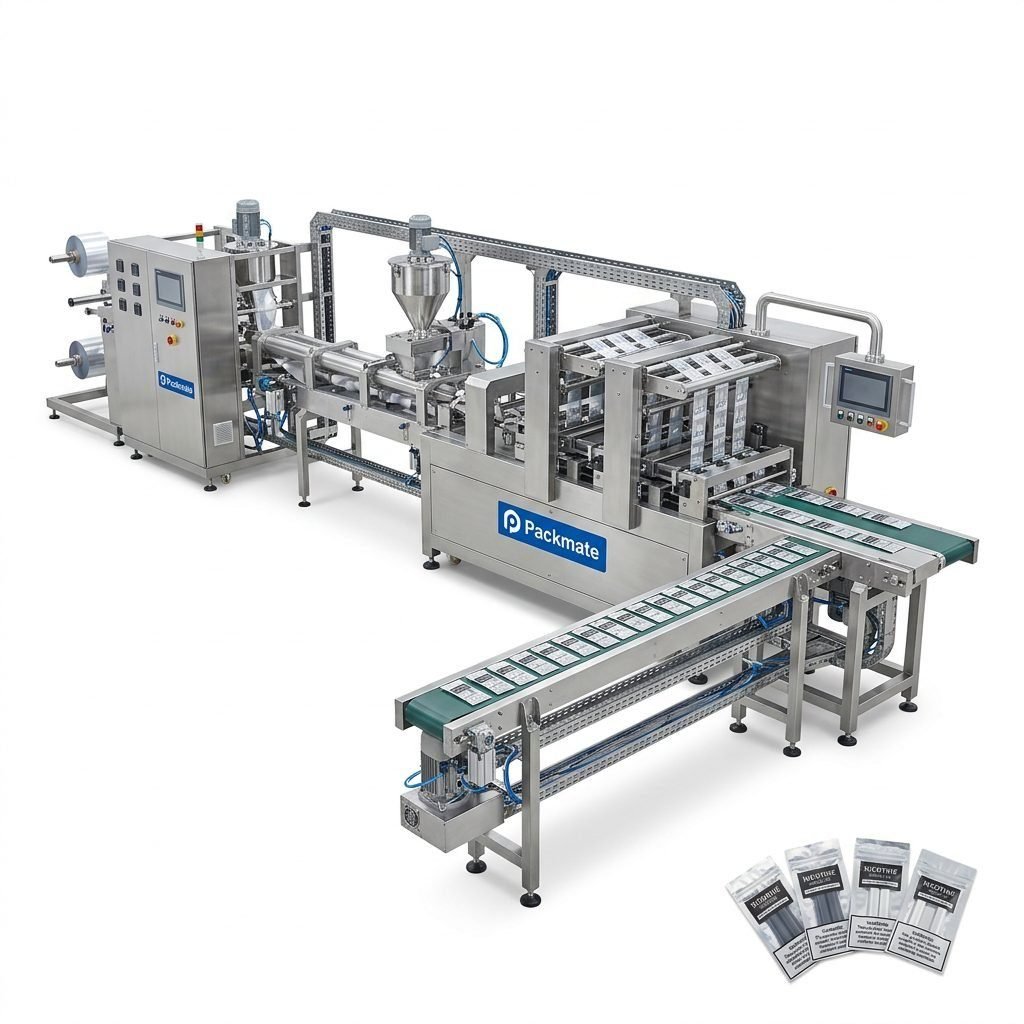
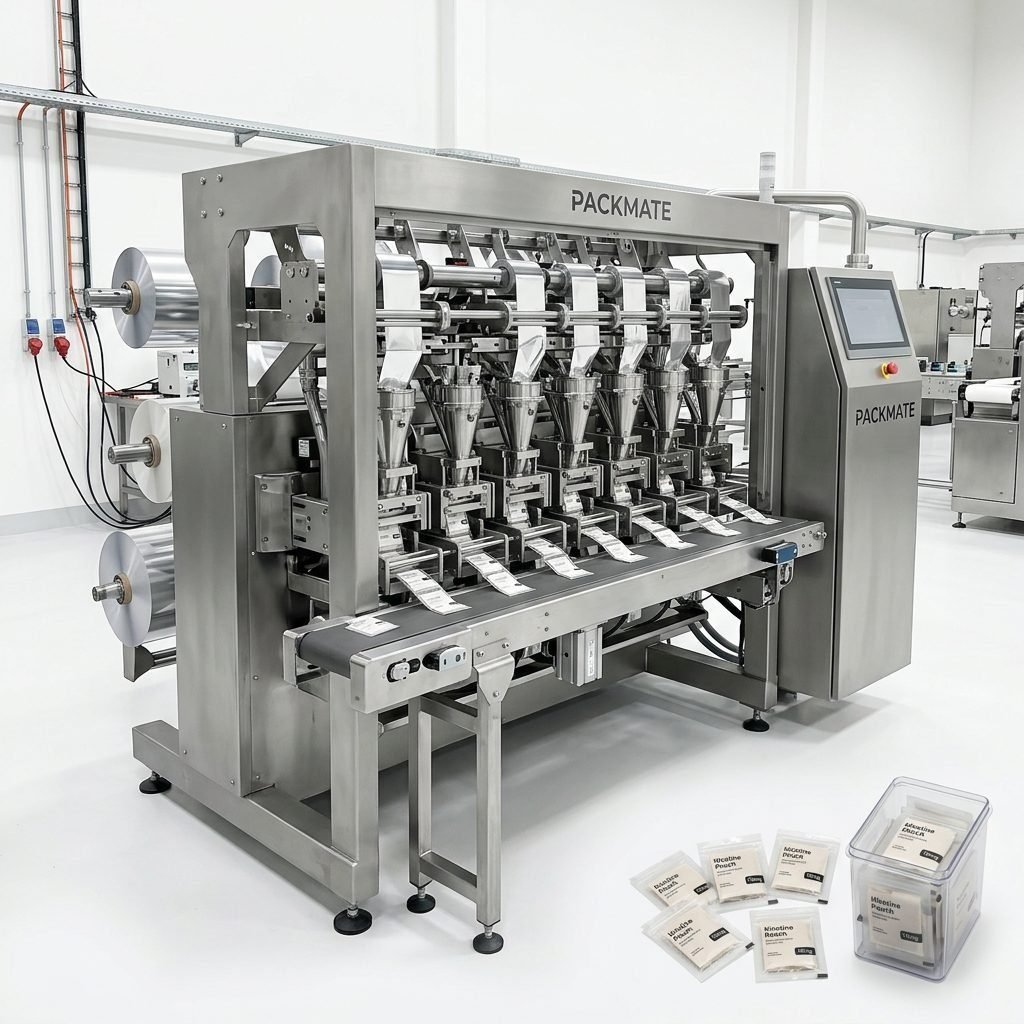
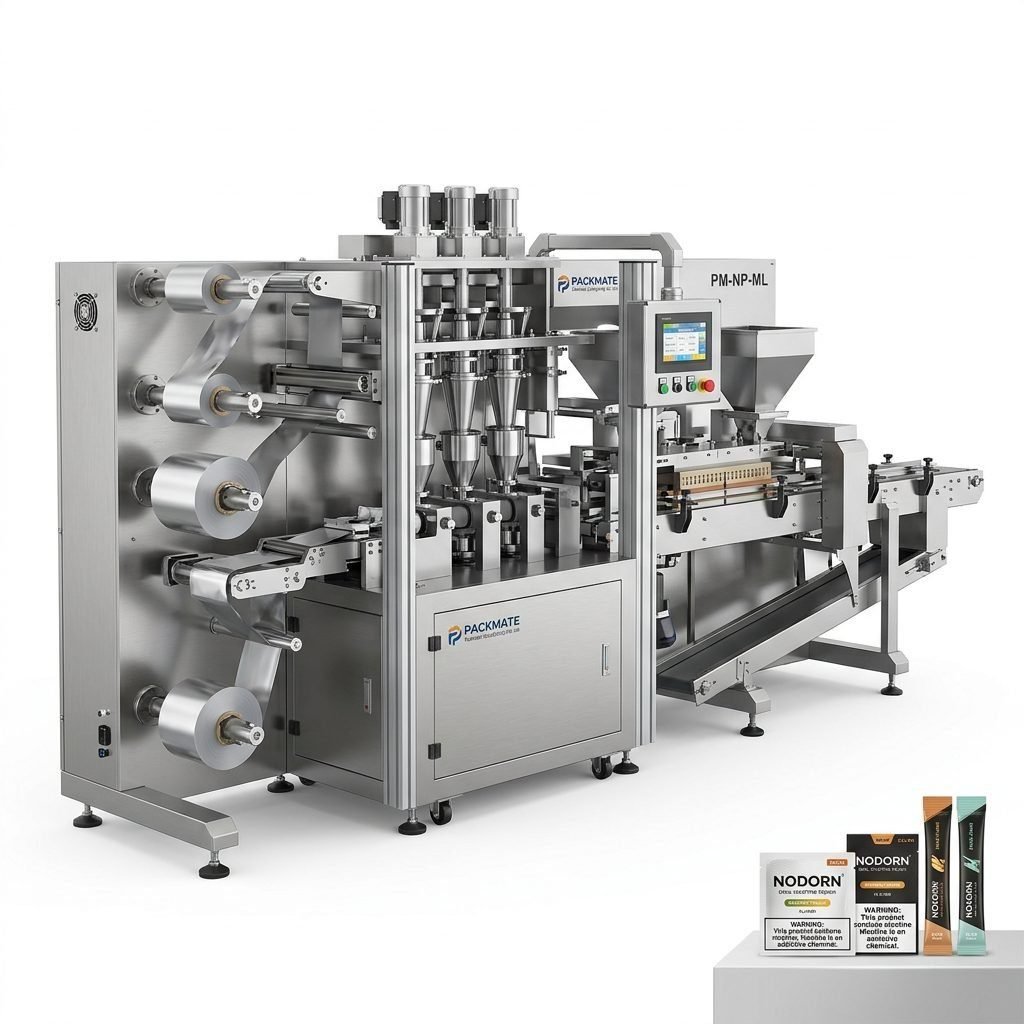
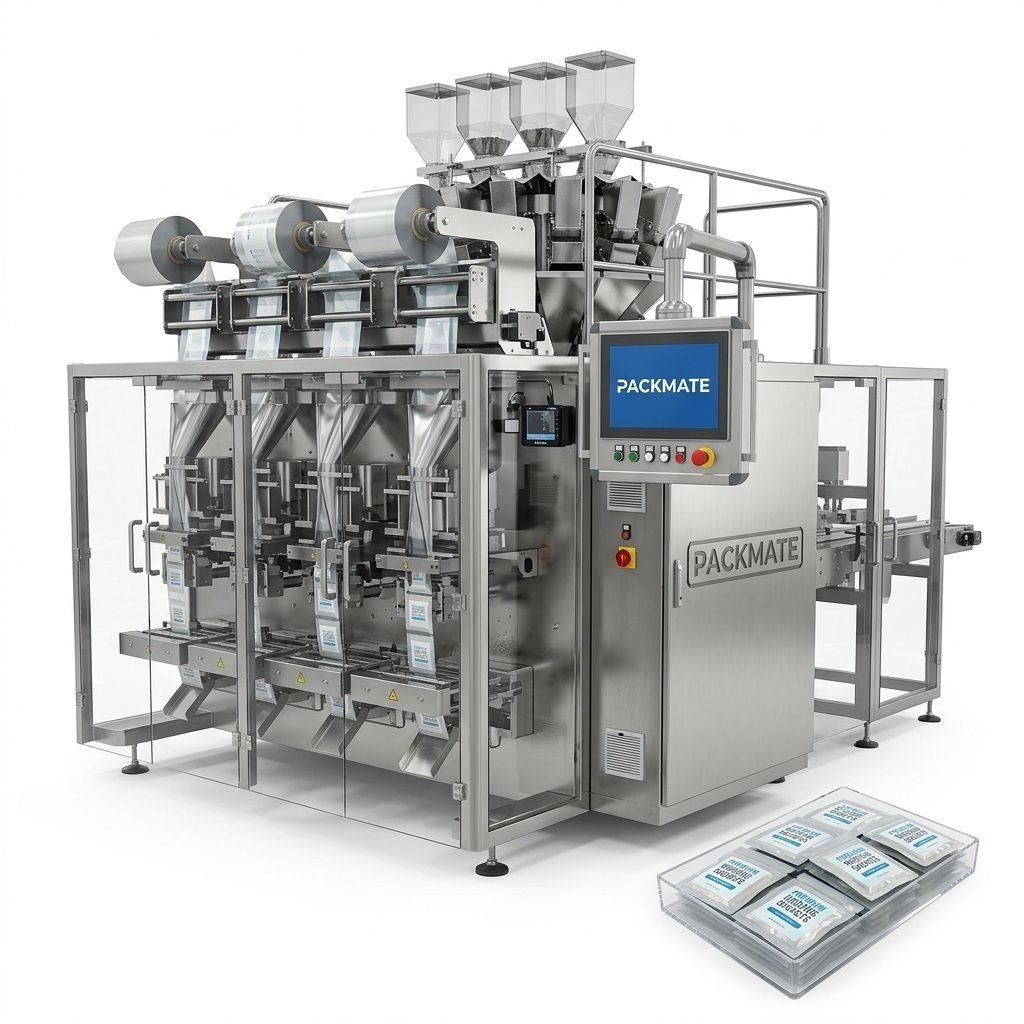
In the rapidly evolving tobacco-alternative market, establishing a reliable and highly automated snus production line is essential for factories aiming to scale safely and efficiently. This guide presents a complete overview of automatic snus manufacturing solutions, from selecting the right snus packing machines to designing turnkey production lines, quality control, and after-sales service. Whether you are launching a new nicotine pouch brand or upgrading existing operations, this article outlines practical steps and engineering considerations to build a world-class production system.
📦 Why Choose an Automated Snus Production Line?
Automation transforms snus manufacturing by delivering consistent dosing, high throughput, and reduced labor costs. Modern automated lines integrate feeding, dosing, filling, sealing, labeling, and packing into a continuous flow. The results are clear: improved product consistency, traceability, and faster time-to-market. For factories targeting regulated markets, automation also helps maintain hygiene standards and documentation for compliance.
⚙️ Core Components of a Complete Snus Production Line
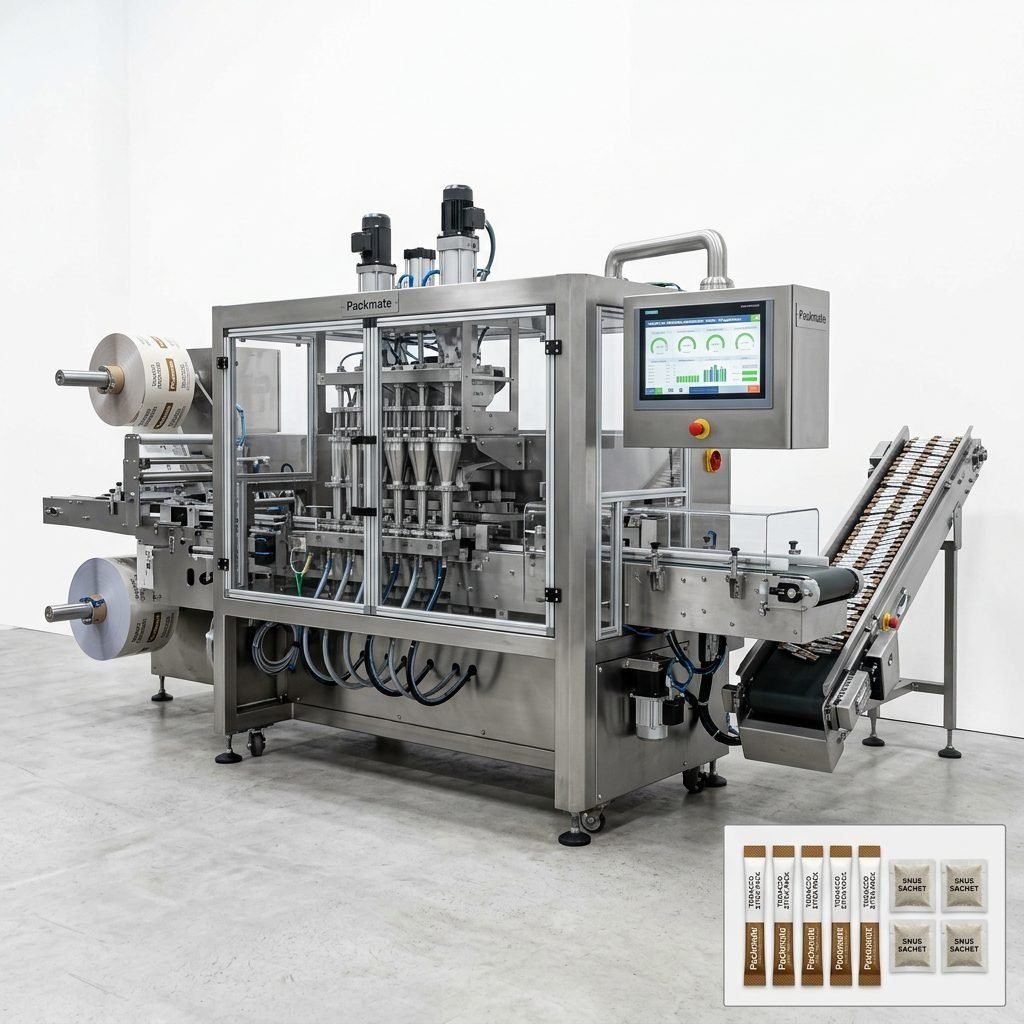
A reliable line typically includes several coordinated subsystems. Each subsystem must be selected and configured for the product format (loose powder, pouches, stick packs) and production capacity:
- Feeding & Storage Systems – controlled supply of raw material to prevent segregation and ensure stable dosing;
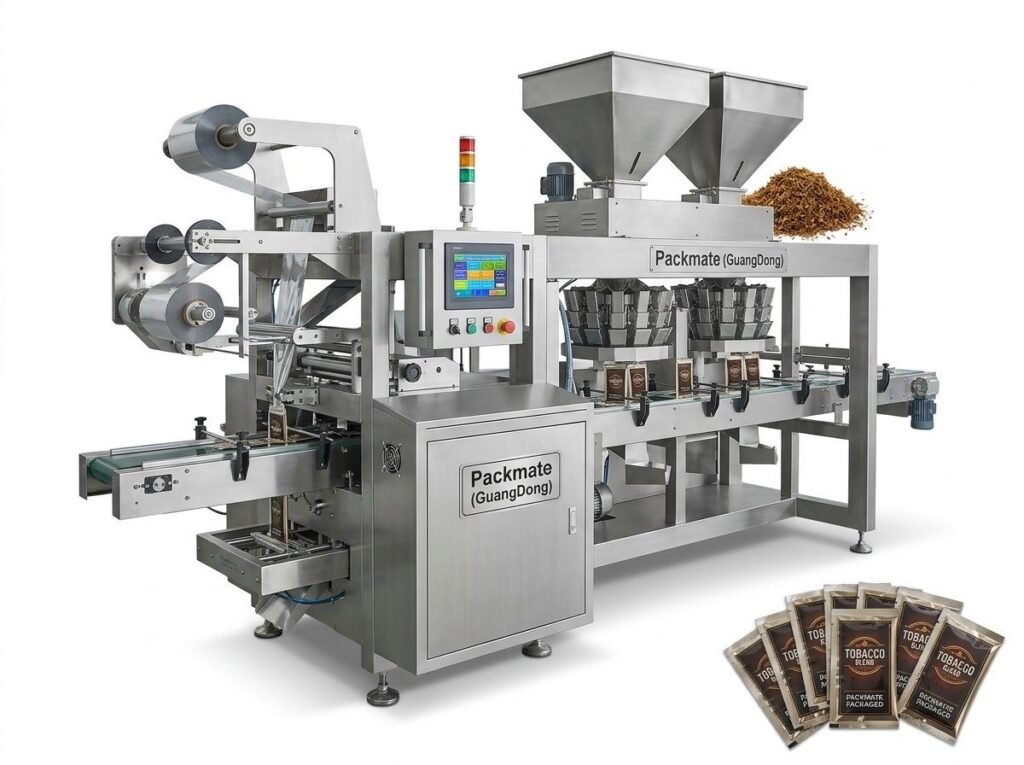
- Weighing & Dosing Units – high-precision multi-head or volumetric dosing for consistent pouch fill weights;
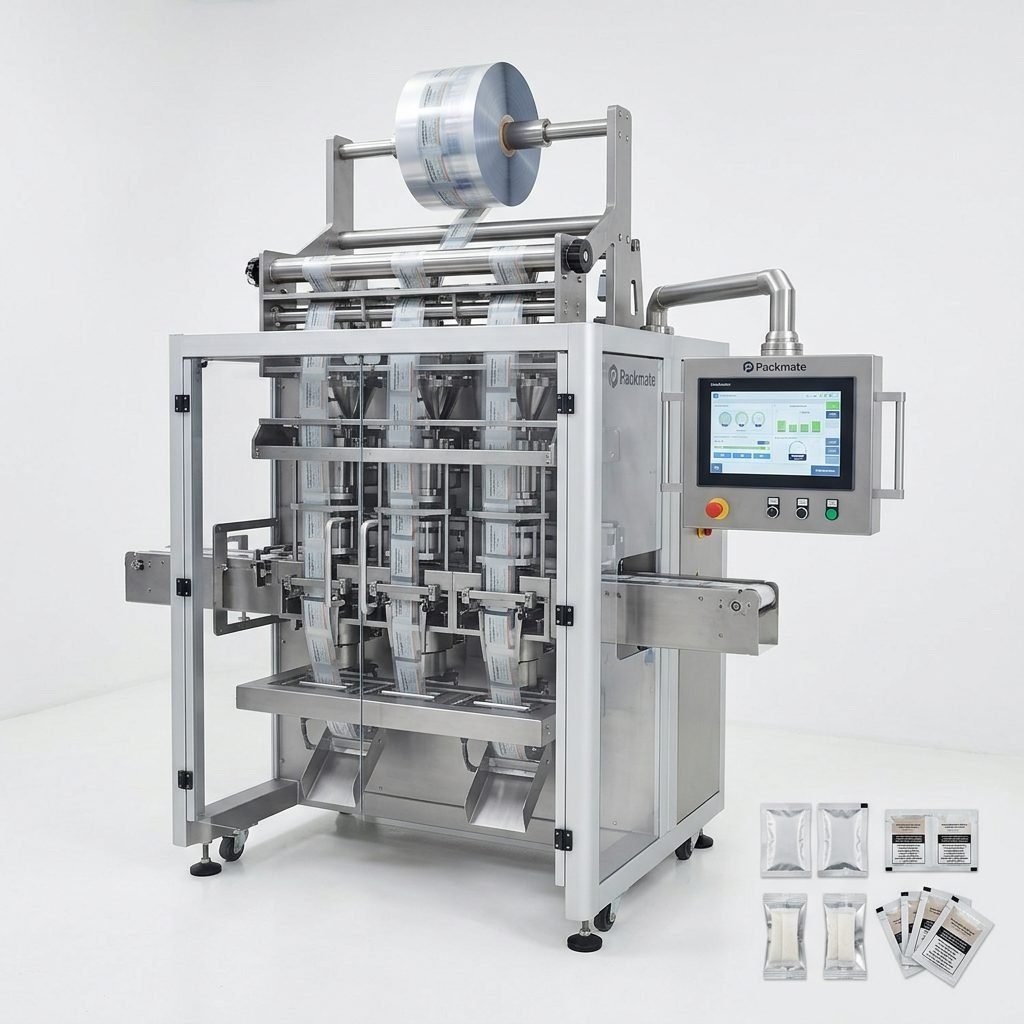
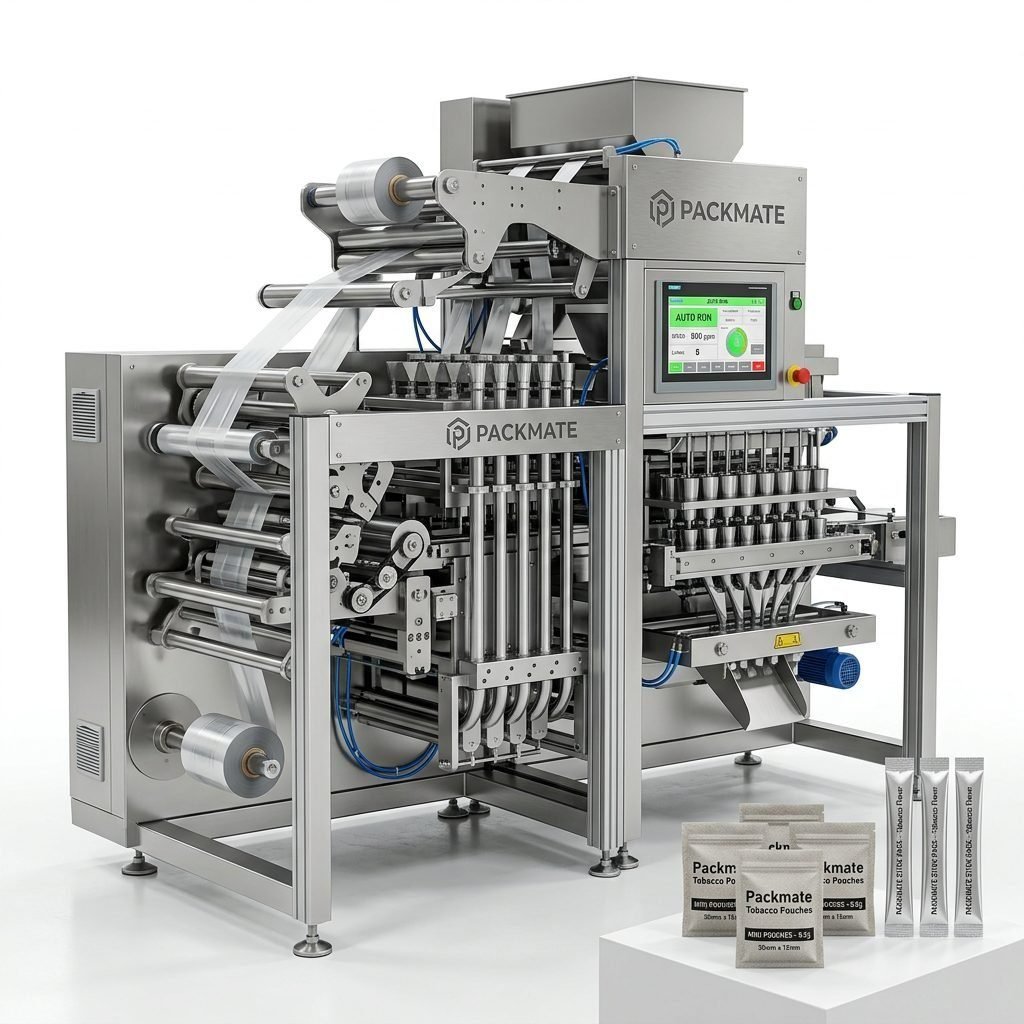
- Pouch/Stick Forming Machines – machines that form sachet, stick, or multi-lane pouches with consistent seal quality;
- Filling & Sealing Stations – integrated systems for accurate filling and hermetic sealing to preserve freshness;
- Printing & Labeling Equipment – inline printing for batch numbers, dates, and variable data for traceability;
- Secondary Packaging – cartoning or flow-wrapping for retail-ready packs and pallets for distribution.
Key advantage: automated lines reduce product variability and labor dependency while increasing output consistency and traceability — critical for nicotine pouch and snus markets.
🔍 Selecting the Right Machine Types
Selection depends on product format and target output. Popular equipment types include:
– For multi-lane low-dose nic-pouches, choose high-speed multi-lane pouch machines with rotary dosing heads for uniform fill distribution. These machines optimize floor space with compact multi-lane arrangements.
– For stick packs and sachets, stick pack machines deliver fast, hygienic packaging for single-dose formats. These are ideal for market-ready single-portion offerings.
– For factories requiring flexible output, modular systems that combine snus & nicotine packaging machines with interchangeable dosing and sealing modules can reduce downtime and increase product range.
✅ Packmate’s Engineering Strength and Turnkey Solutions
Packmate Snus Machine offers end-to-end solutions combining decades of engineering experience. With a 20,000㎡ manufacturing facility and over 50 machine models, Packmate delivers customized lines that meet CE and ISO standards. Key services include:
- Custom layout and workflow design to fit factory constraints;
- Integration of auxiliary equipment such as feeders, conveyors, and automated inspection systems;
- Comprehensive FAT (Factory Acceptance Testing) and SAT (Site Acceptance Testing) procedures;
- Global installation and commissioning support plus training for operators and maintenance teams.
Learn more about Packmate’s capabilities on the About Packmate page.
💡 Production Planning: Throughput, Footprint & OEE
Proper planning is critical. When designing a production line consider:
- Desired throughput (pouches/min or units/hour) — determines the number of lanes and the dosing speed;
- Floor footprint — plan for material flow, maintenance access, and safety zones;
- Overall Equipment Effectiveness (OEE) — measure availability, performance, and quality to identify bottlenecks and improve uptime.
Practical tip: design lines with 10–20% spare capacity for maintenance windows and product changeovers.
🧰 Machine Features to Prioritize
Top-performing snus packing machines share several key features that reduce waste and ensure product safety:
- Servo-driven motion control for precise dosing and seal accuracy;
- Hygienic stainless-steel construction and easy-to-clean designs to meet GMP requirements;
- Automated error detection and rejection systems to protect product integrity;
- PLC and HMI systems with data logging for traceability and production analytics;
- Modular design for fast changeovers between SKUs and formats.
🔗 Integration: Weighing, Filling & Auxiliary Equipment
Integrating weighing and auxiliary systems is essential for consistent snus pouch weight and downstream packaging efficiency. For combined solutions, explore Packmate’s Weighing & Packaging Systems and Filling & Packaging Lines pages for compatible modules. Proper integration reduces manual handling and improves hygiene compliance.
🛠️ Installation, Commissioning & Training
A turnkey provider should offer full installation and operator training. Best practices include:
- Structured commissioning plans with calibration and test runs;
- Hands-on operator training for changeovers, clean-in-place, and troubleshooting;
- Maintenance training focused on preventive checks to maximize machine life;
- Remote support capability for quick diagnostics and software updates.
Installation note: ensure your facility meets utility and ventilation specs before arrival: power, compressed air, dust control, and floor load capacity.
📈 Quality Control & Regulatory Compliance
Quality control for nicotine and snus products includes both in-process checks and finished product testing. Key elements:
- Inline weight checks and automated rejection of out-of-tolerance pouches;
- Seal integrity tests and periodic microbiological sampling where applicable;
- Batch-level traceability with printed lot codes and production records for audits;
- Compliance with electrical and safety standards (e.g., CE) and adherence to local regulations for nicotine-containing products.
🧾 After-Sales Support & Spare Parts
Reliable after-sales service minimizes downtime. Choose suppliers offering:
- Global spare parts availability and preventive maintenance contracts;
- Remote diagnostics and fast-response onsite technicians;
- Comprehensive documentation, wiring diagrams, and SOPs for maintenance teams.
For real-world examples and case studies, view Packmate’s customer Case listings and exhibition presence on the Our Exhibition page.
💡 ROI Considerations: Cost vs. Performance
Investment decisions should balance capital cost, operating expenses, and expected production gains. Consider:
- Payback period calculated from labor savings, reduced scrap, and increased throughput;
- Energy-efficient drives and pneumatic systems to reduce operating costs;
- Flexibility for future SKUs to avoid full-capex replacement when product lines evolve.
📣 Choosing a Trusted Supplier
When evaluating vendors, prioritize proven track records, global references, and robust technical documentation. Packmate’s 30+ years of experience and 50+ machine models demonstrate long-term commitment to the snus and nicotine pouch industries. For detailed product options, browse specific categories such as Sachet & Stick Pack Machines and auxiliary systems to match your production blueprint.
Next step: request a site review and capacity analysis from a machinery partner before ordering. This ensures your line meets both performance and regulatory targets.
🔧 Maintenance Best Practices
Maintain uptime with a structured maintenance plan:
- Daily visual inspections and cleaning after each run;
- Weekly checks on servo performance and belt tension;
- Monthly calibration of dosing systems and verification of weight accuracy;
- Scheduled OEM preventive maintenance every 6–12 months.
📞 How to Contact and Request a Quote
For specifications, layout proposals, and quotes, contact the supplier directly. Visit the Contact Us page to submit requirements and arrange a consultation.
FAQ — Common Questions About Snus Production Lines
Q1: What production capacity should I plan for initial investment?
A1: Start by forecasting demand for 12–24 months. Small pilot lines may run 500–2,000 pouches/hour while industrial multi-lane setups exceed 10,000 pouches/hour. Select a capacity that balances capital cost and anticipated sales growth.
Q2: Are nicotine pouch machines compliant with international standards?
A2: Reputable manufacturers provide machines compliant with CE and ISO standards. However, product regulatory compliance depends on local laws governing nicotine products; consult legal experts in your market to ensure your finished products meet all requirements.
Q3: How long does it take to install and commission a full production line?
A3: Installation varies by complexity. A compact single-format line can be commissioned in 2–4 weeks, while large turnkey lines typically take 8–12 weeks including FAT, shipping, installation, and validation.
Q4: What after-sales support should I expect?
A4: Expect spare parts supply, remote technical support, periodic maintenance visits, and operator training. Choose suppliers offering fast-response service and detailed documentation to minimize downtime.
Q5: Can a line handle multiple pouch sizes and flavors?
A5: Yes. Modular and servo-driven systems are designed for fast changeovers between SKUs. Plan for spare tooling and validated recipes for each SKU to ensure quick line changeovers and consistent quality.