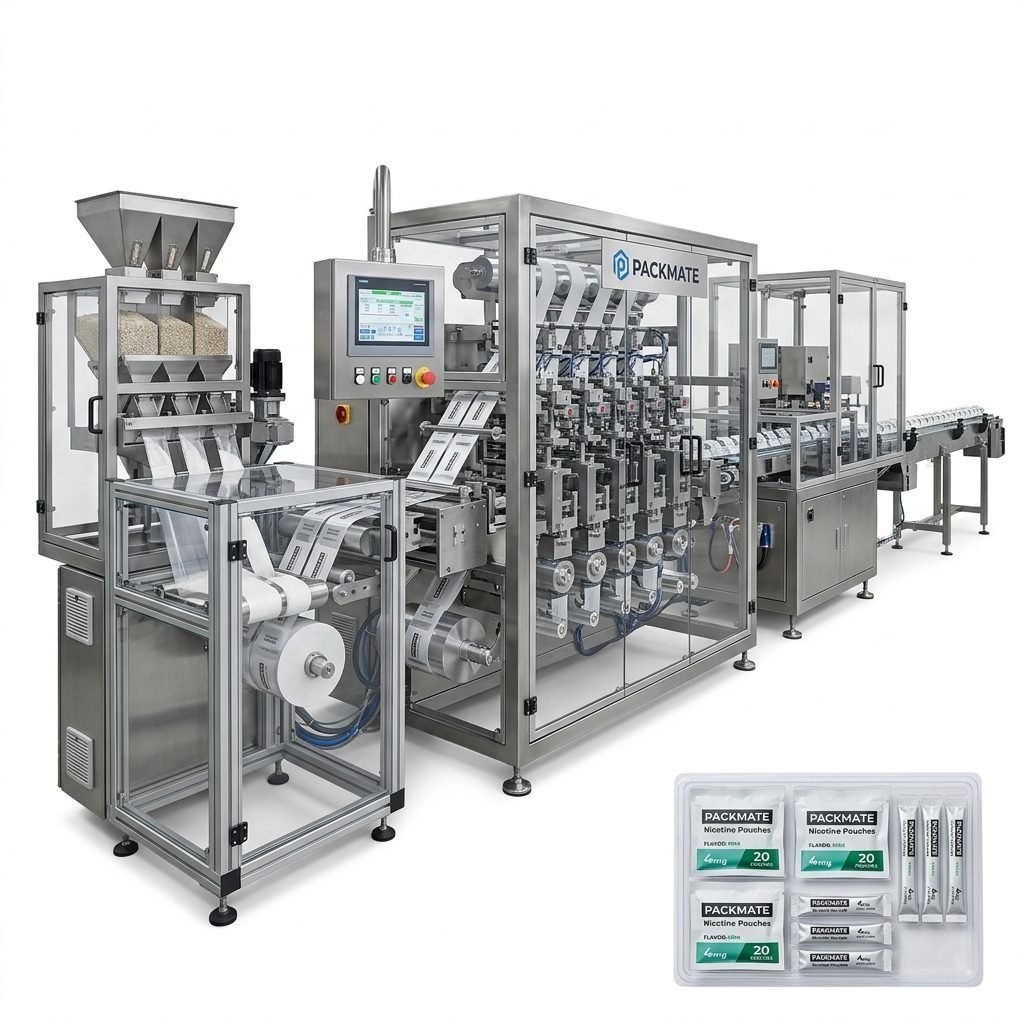
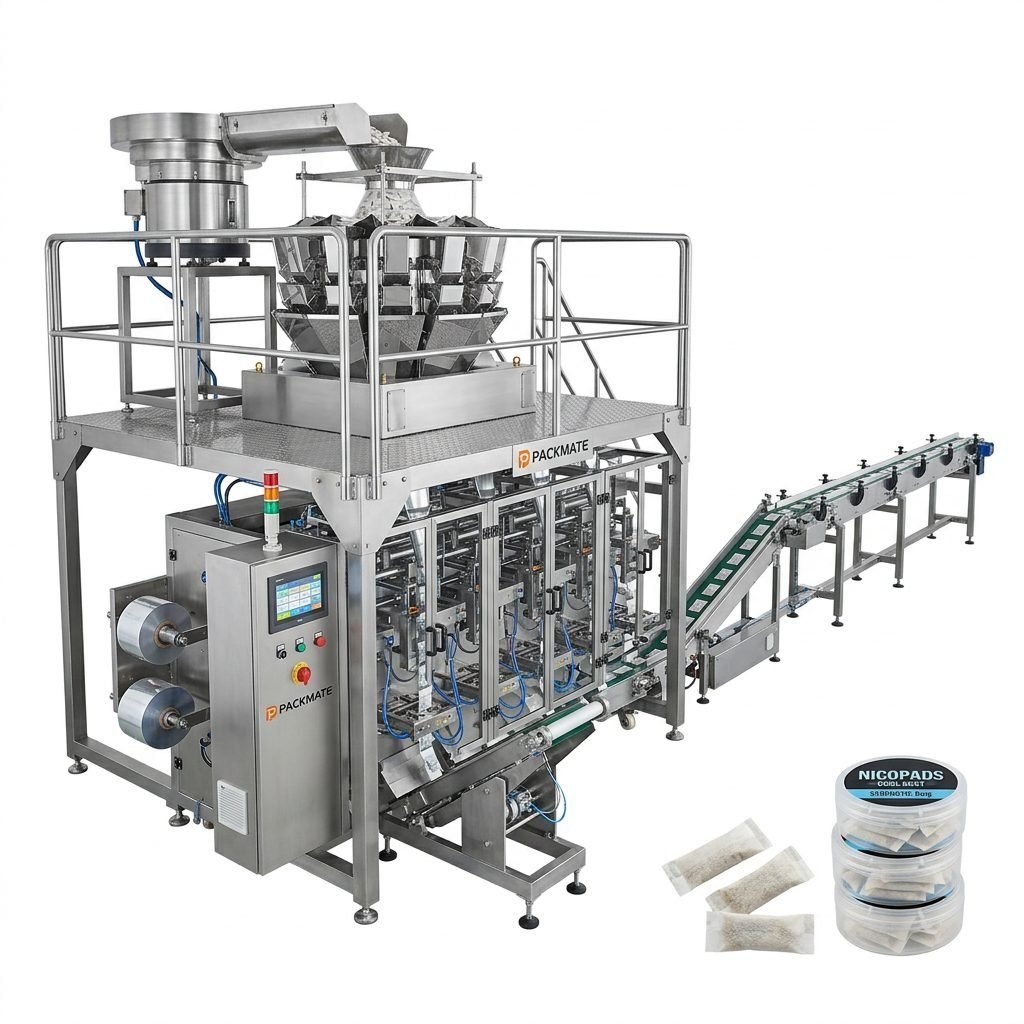
Choosing the right snus packaging machine in Bosnia and Herzegovina requires more than comparing speeds and prices. Local market habits, regulatory requirements, label languages, and after-sales service are all decisive factors. This guide walks you through everything buyers should consider — from machine types and technical specifications to practical tips on installation, local compliance, and return on investment.
Understanding the Bosnia and Herzegovina Market
Bosnia and Herzegovina sits at a crossroads of Eastern and Central Europe, with tobacco use historically prevalent across the Balkans. Consumers often prefer discreet, small-dose products and clear local-language labeling (Bosnian/Croatian/Serbian, using both Latin and sometimes Cyrillic scripts). Retail dynamics include small kiosks, specialty shops, and growing online sales. When evaluating packaging equipment, consider packaging formats popular in the region (single-dose pouches, multi-pouch tubes, stick packs) and make sure your packaging solutions match local retail preferences.
Local technical and regulatory considerations
Bosnia and Herzegovina uses 230V, 50Hz electrical standards and has specific import and labeling rules. Even if snus is not regulated the same way across neighboring EU countries, ensure your machines support required label printing, multilingual warning text, and traceability features. Certifications such as CE and ISO are often expected by distributors and importers; suppliers with these certificates make customs clearance and market access smoother.
Tip: Verify electrical compatibility (230V/50Hz), local labeling language support, and whether the supplier offers export documentation and certificate copies to simplify customs.
Which Type of Snus Packaging Machine Fits Your Business?
There are multiple machine types tailored to different product forms and production scales. Select a machine type based on product format, speed requirements, and future expansion plans.
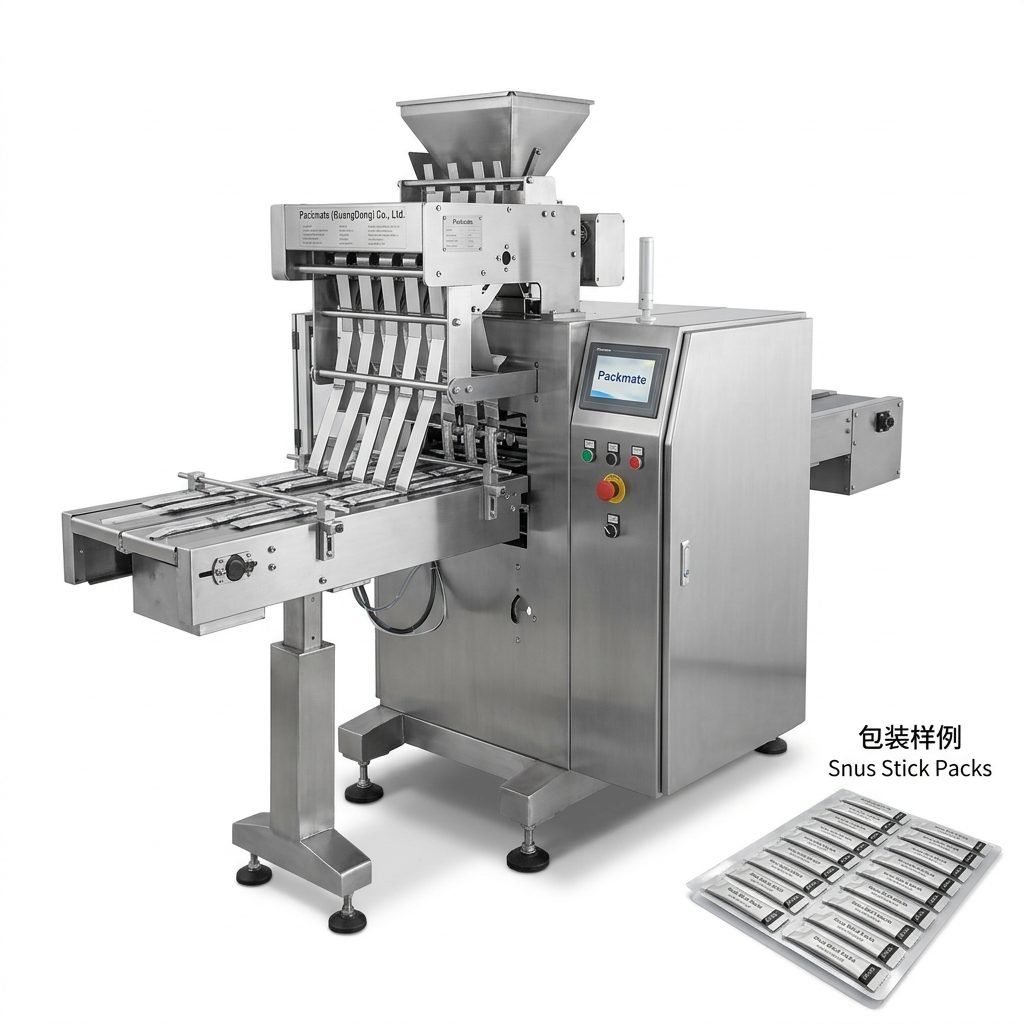
Stick pack & Sachet machines
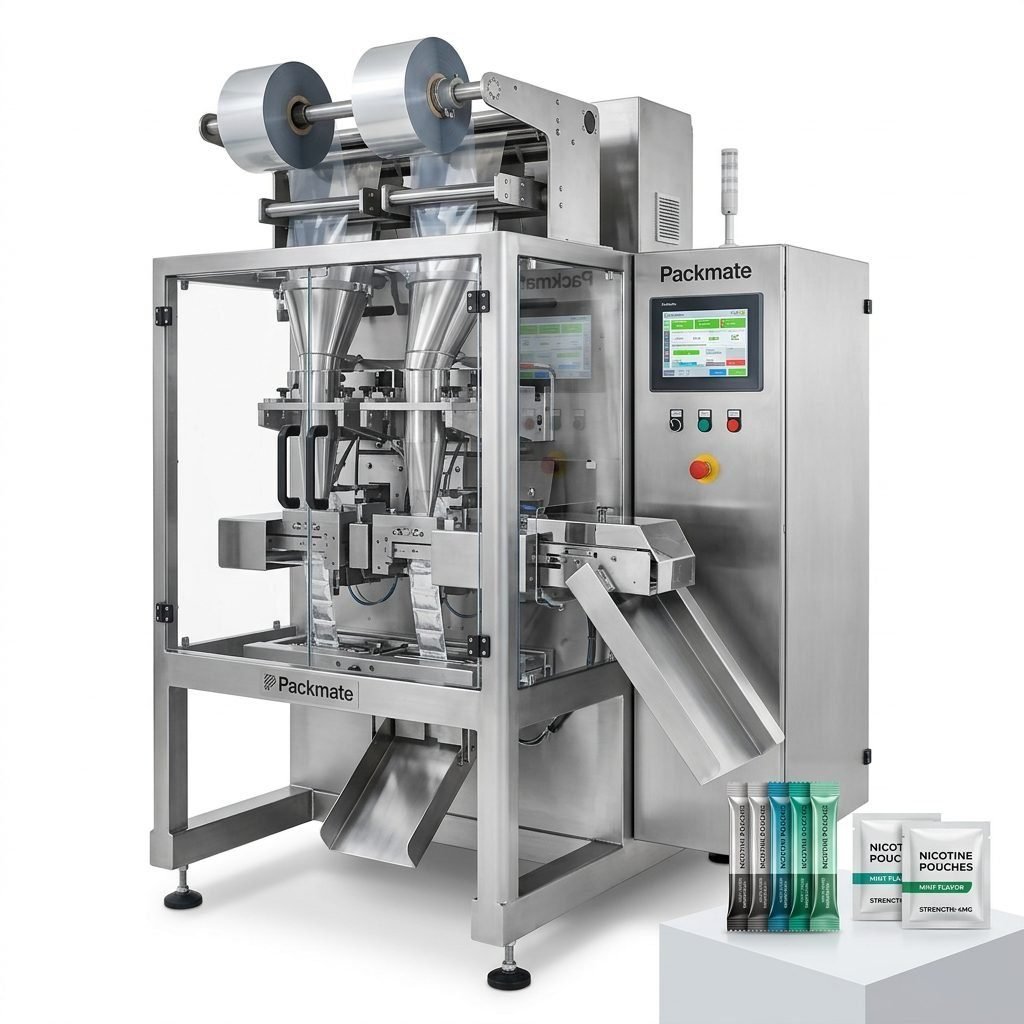
Good for single-portion nicotine pouches and stick-style products. These machines are flexible and relatively easy to operate for small to medium batches. If you plan to produce flavored single-use pouches, consider machines that can handle powders and micro-granules with consistent dosing.
Explore specific models and configurations in the Sachet & Stick Pack Machines catalog for details on lane options and dosing systems.
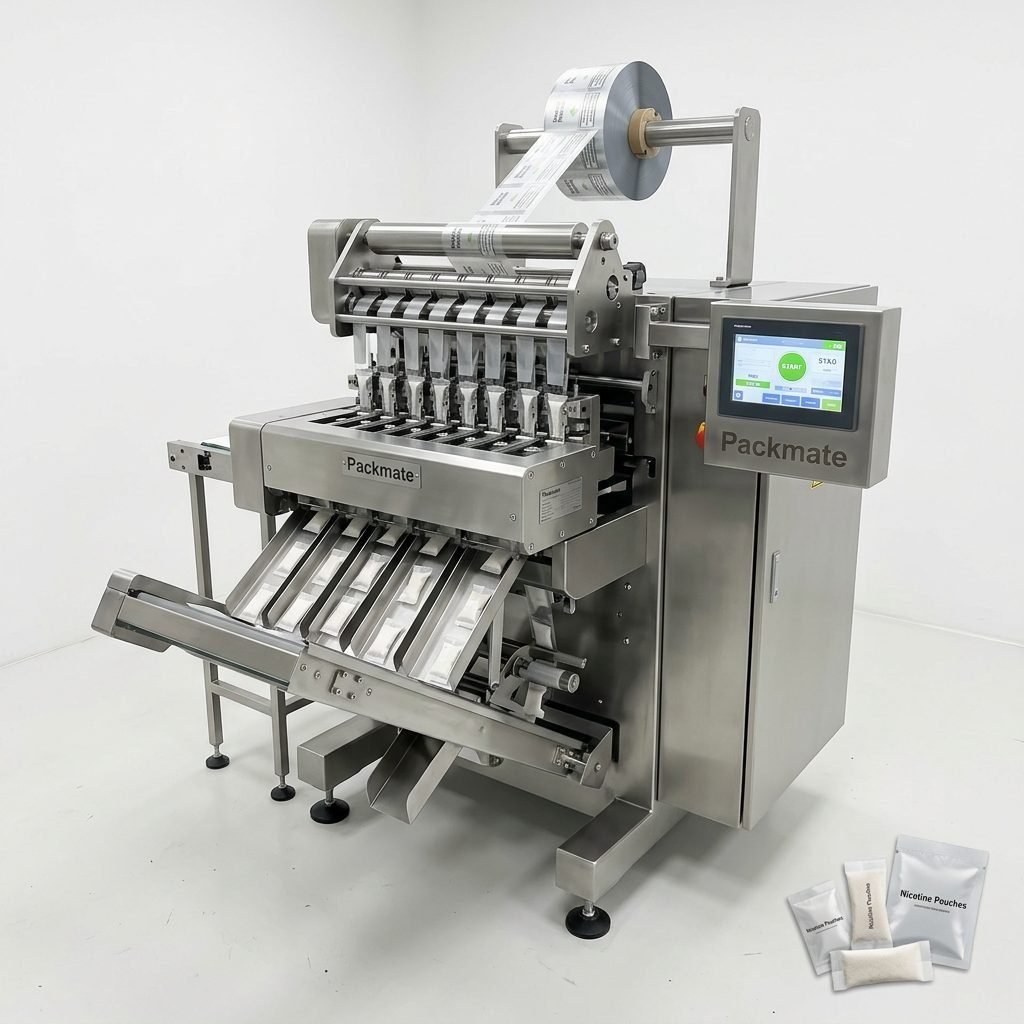
Multi-lane snus pouch systems
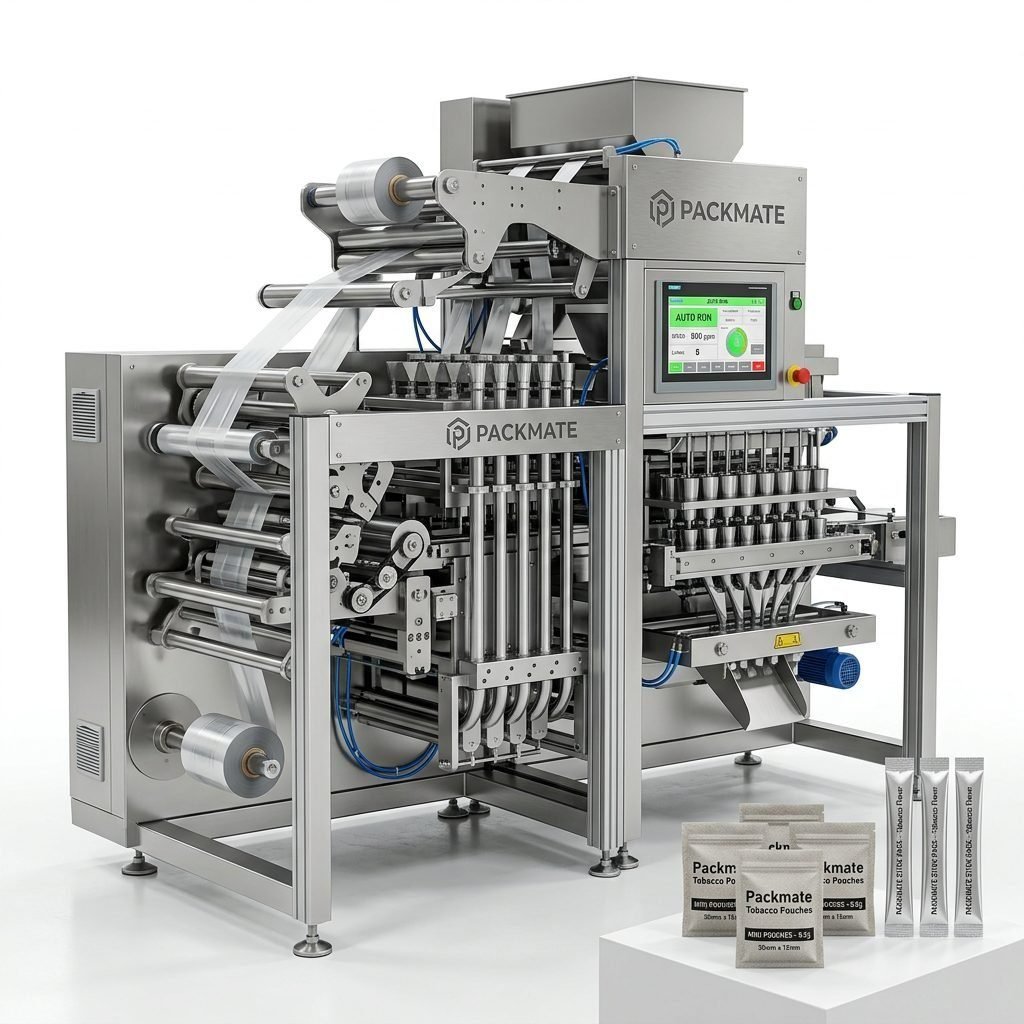
For higher volume production of small-dose pouches, multi-lane systems multiply output while maintaining footprint efficiency. These are ideal for manufacturers aiming to serve regional wholesalers or export markets. Key benefits include synchronized filling, reduced downtime per unit produced, and scalability.
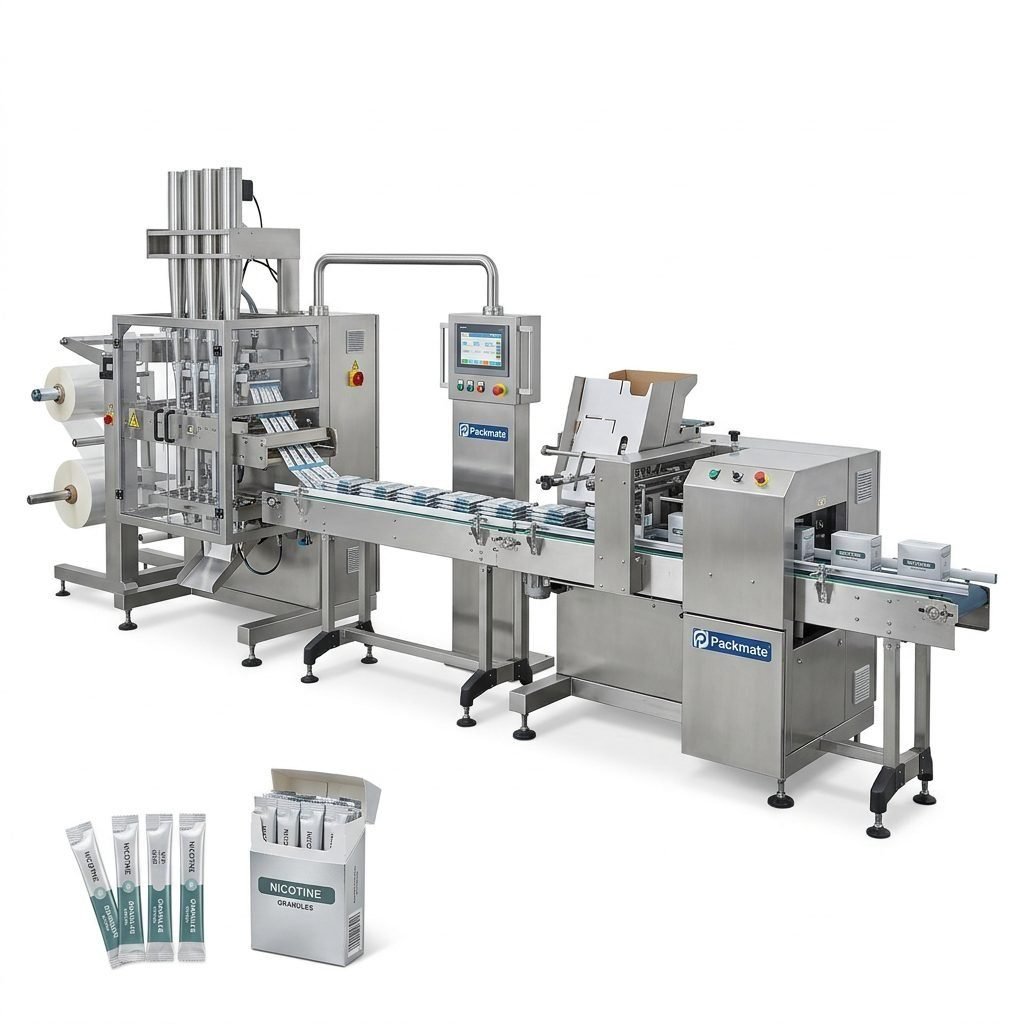
Integrated turnkey lines
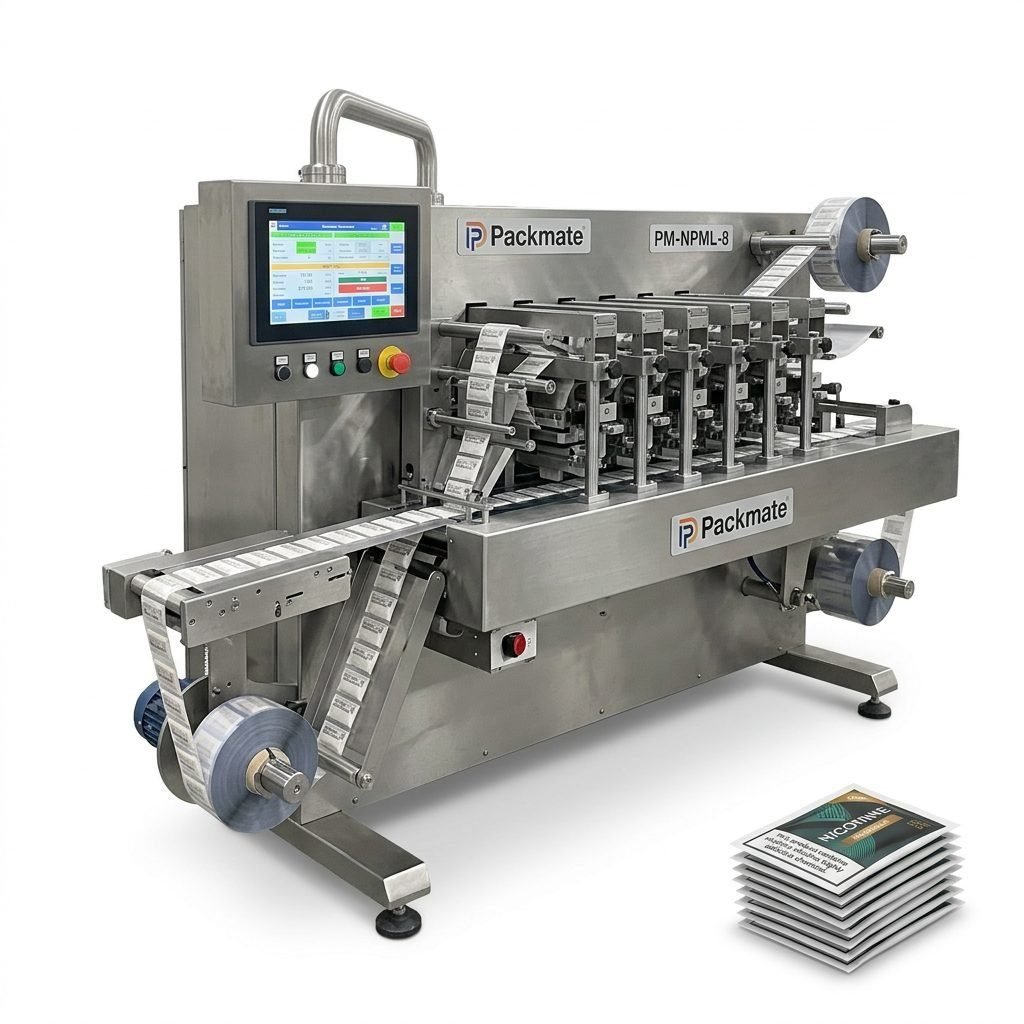
If you need a full solution — from forming and filling to labeling and packing — consider turnkey lines that combine weighing, filling, sealing, and secondary packaging. Packmate’s integrated lines support end-to-end automated production and are especially useful when quality control and traceability are essential.
Key Technical Specifications to Compare
When comparing vendors, pay attention to the following technical attributes. These directly affect product quality, throughput, and long-term operational cost.
Dosing accuracy and filling technology
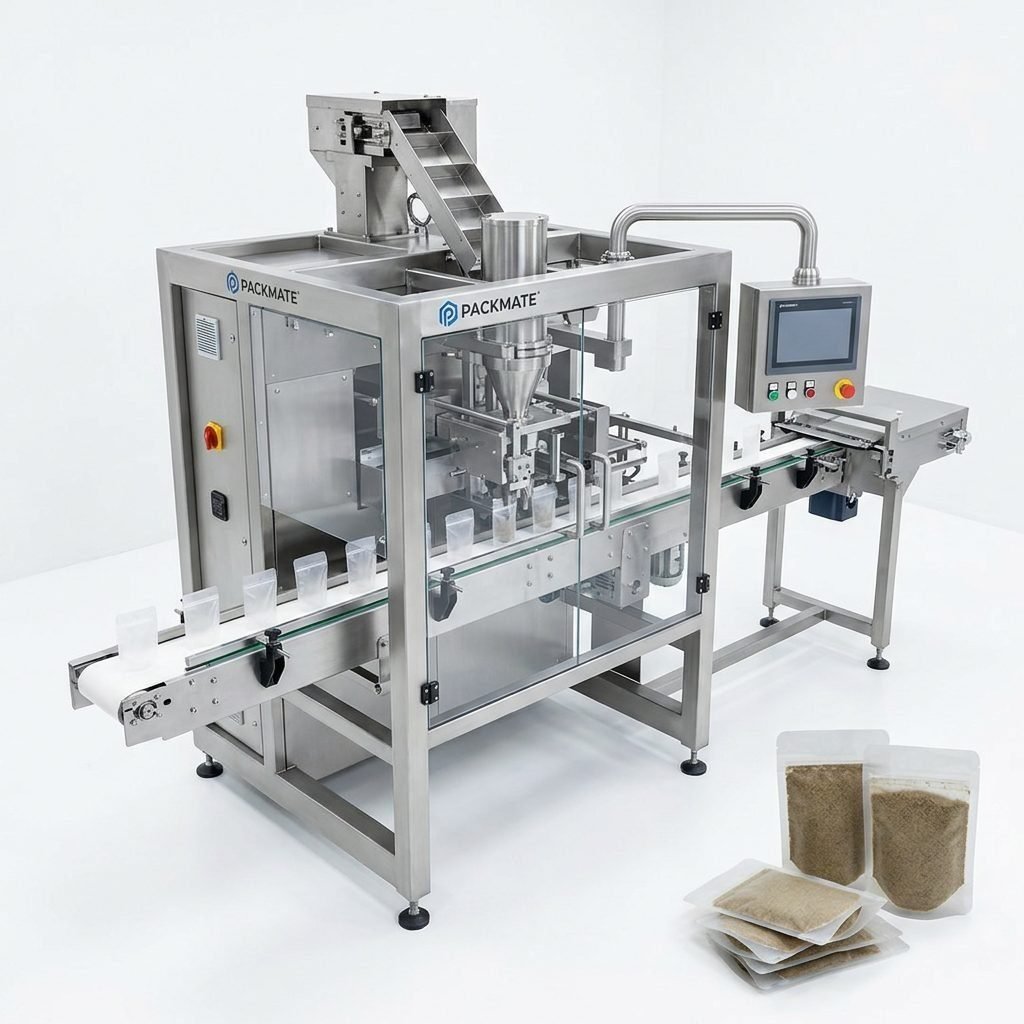
Accurate dosing ensures consistent nicotine content and minimizes waste. Machines using precision weighing heads or volumetric pistons with closed-loop control are preferred for nicotine pouches. Ask for measurement data, typical deviation values, and sample packaging details.
Speed and lane configuration
Speed is measured in pouches per minute (ppm) or sticks per minute. Multi-lane machines achieve higher aggregate throughput. Balance speed against product complexity — extremely fast machines may require more frequent maintenance and higher operator skill.
Materials compatibility and sealing
Ensure machines are compatible with barrier films, laminated pouches, and foil options you plan to use. Robust sealing systems reduce leaks, extend shelf life, and provide consistent appearance. Look for heat-seal control, cooling options, and servo-driven sealing for repeatability.
Key metric: Ask suppliers for actual ppm figures under real-product testing rather than theoretical maximums.
Operational & Maintenance Considerations
Ongoing costs and uptime are as important as initial investment. Factor in maintenance ease, spare parts availability, and local service options.
Spare parts and local support
Select a supplier that can ship spare parts quickly or maintains local partnerships in Europe/Balkans. Keep an inventory of high-wear parts (seals, belts, sensors) to minimize downtime. Machines from experienced manufacturers usually offer detailed parts lists and service agreements.
Ease of cleaning and hygiene
Depending on product hygroscopicity, choose machines designed for fast cleaning cycles and accessible components. Stainless-steel frames, hygienic design, and easy-to-clean hoppers reduce contamination risk and speed changeovers.
Training, documentation, and language support
Verify that operator manuals, electrical diagrams, and training are available in languages understood by your team (English and local languages when possible). On-site training during installation and remote support options are highly valuable for first-time buyers.
Quality & Compliance: Certifications and Testing
For export and local acceptance, certifications matter. Reputable manufacturers provide CE, ISO, and performance test reports. Pre-shipment Factory Acceptance Tests (FAT) and sample runs with actual product formulas are essential to validate performance.
Packmate offers machines compliant with international standards and conducts thorough quality checks. Learn more about the company and its history at About Packmate.
Must-have: Request CE/ISO documentation and a demonstration video or FAT report showing your exact product and packaging material.
Cost Considerations & Return on Investment (ROI)
Evaluate total cost of ownership: purchase price, installation, training, spare parts, tooling, and energy consumption. Higher initial investment in a robust, automated line may reduce labor costs and scrap, delivering faster ROI.
Calculate realistic ROI
Build a model including:
- Projected monthly/annual production volume
- Yield and waste percentages
- Labor savings and operator costs
- Maintenance and spare parts budget
- Expected product price and margin
How to Vet Suppliers: Checklist for Buyers
Use this checklist when contacting suppliers or evaluating quotations.
Supplier checklist
- Live machine demo or FAT with your product samples
- CE/ISO certificates and test reports
- Availability of spare parts and lead times
- Local or regional service partners in Europe/Balkans
- Warranty terms and response times for breakdowns
- Operator and maintenance training offered
Questions to Ask When Requesting a Quotation
When you request quotes, include clear product data: pouch material, target pouch weight, dimensions, and any secondary packaging needs. Here are practical questions to include:
- What is the confirmed production speed with our product (real-product test)?
- What are the dosing accuracy and rejection rates?
- Which spare parts are considered consumable and their estimated life?
- What local documentation and language support are provided?
- Can you provide references or case studies from Europe/Balkan markets? (Ask for videos or contact details)
Practical Buying Tips for Bosnia and Herzegovina
Keep the following local factors in mind when negotiating and planning production.
Labeling & language
Ensure packaging artwork supports multiple languages (Bosnian, Croatian, Serbian) and choose fonts that work in both Latin and Cyrillic if needed. This helps retailers across the country and neighboring markets.
Discreet packaging and retail expectations
Consumers value compact, discreet pouches. Consider formats that are easy to carry and sell in small quantities. Secondary packaging (slim boxes, small tins) should match regional retail display habits.
Logistics and customs
Partner with suppliers experienced in European shipments to minimize delays. Clear, correct documentation (invoices, packing lists, CE certificates) expedites customs clearance. Ask suppliers about experience shipping to the Balkans.
Why Choose an Experienced Manufacturer?
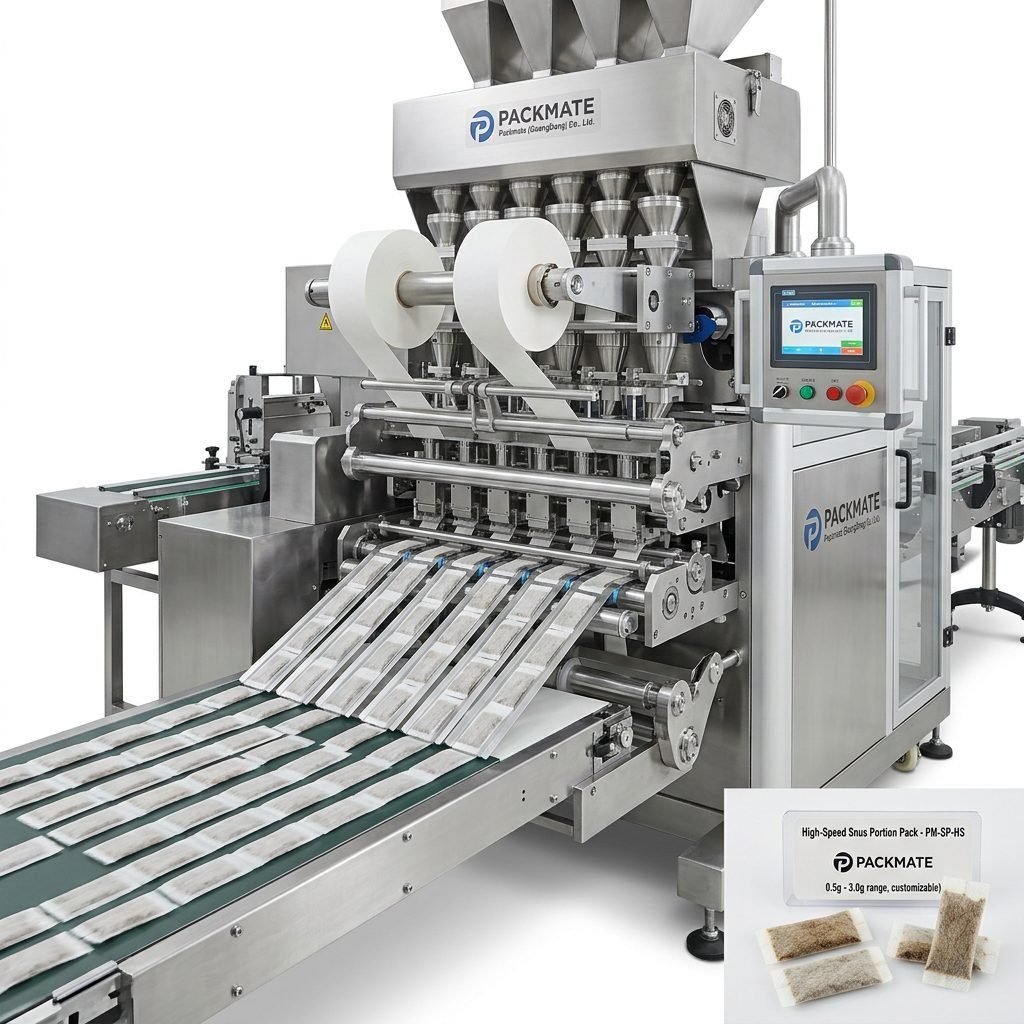
Manufacturers with decades of experience understand product nuances, provide reliable spare parts, and deliver effective after-sales support. Packmate, for example, offers specialized snus packing machines, multi-lane systems, and turnkey lines backed by 30+ years of engineering and a 20,000㎡ factory. For product and machine options, review Packmate’s snus machine lineup here: Snus & Nicotine Packaging Machines.
For broader packaging needs — including weighing, auxiliary equipment, and full lines — consult suppliers that provide integrated solutions like Weighing & Packaging Systems and Filling & Packaging Lines.
Pro tip: Ask for customer case studies from similar markets. Real-world examples show how a machine performs under typical production conditions. See examples at Case.
Installation, Training, and After-Sales
Successful commissioning requires clear planning: site power, floor loading, access for shipment, and operator schedules. Insist on documented installation and training plans. Remote support and spare parts packages reduce downtime risk; inquire about service contracts and guaranteed response times.
When you are ready to contact a manufacturer, use a direct channel like Contact Us to request quotes, FAT schedules, and site requirements.
Final Checklist Before Purchase
Before you sign a purchase order, confirm the following items:
- FAT with your exact product and film/materials
- Agreed warranty, spare parts list, and lead times
- Installation plan and training schedule
- Electrical, compressed air, and space requirements
- Language support and documentation availability
- References from similar markets or product types
Conclusion
Selecting the best snus packaging machine in Bosnia and Herzegovina combines technical evaluation with local-market understanding. Prioritize dosing accuracy, sealing reliability, certifications, and strong after-sales support. Leverage FAT runs, request multilingual documentation, and confirm spare parts logistics to ensure smooth production ramp-up and long-term profitability.
Frequently Asked Questions
Q1: What information should I provide to get an accurate quotation?
Provide product specifications (weight per pouch, pouch dimensions, powder/granule properties), desired output (pouches per minute), film/material type, required labeling languages, electrical supply details (230V/50Hz), and expected start date. The more precise your input, the more accurate the supplier’s FAT and speed data will be.
Q2: How important are CE and ISO certifications?
Very important — certifications facilitate customs clearance, signal machine safety and quality, and are often required by distributors and local authorities. Always request copies of relevant certificates and test reports.
Q3: How do I ensure fast spare parts delivery in Bosnia and Herzegovina?
Choose suppliers with European distribution partners or warehouses, or those willing to stock critical parts for you. Negotiate spare-parts kits and guaranteed shipping lead times as part of the purchase contract.
Q4: Should I buy a machine with multi-lane capability?
If you expect to grow production volume or serve export markets, multi-lane systems can deliver higher throughput and better floor efficiency. For smaller or variable product runs, flexible single-lane machines may be preferable.
Q5: Where can I see machine demonstrations and case studies?
Request on-site demos, video FATs, and customer references from the supplier. Packmate publishes case studies and showcases machines at exhibitions; see examples on their Exhibition and Case pages.