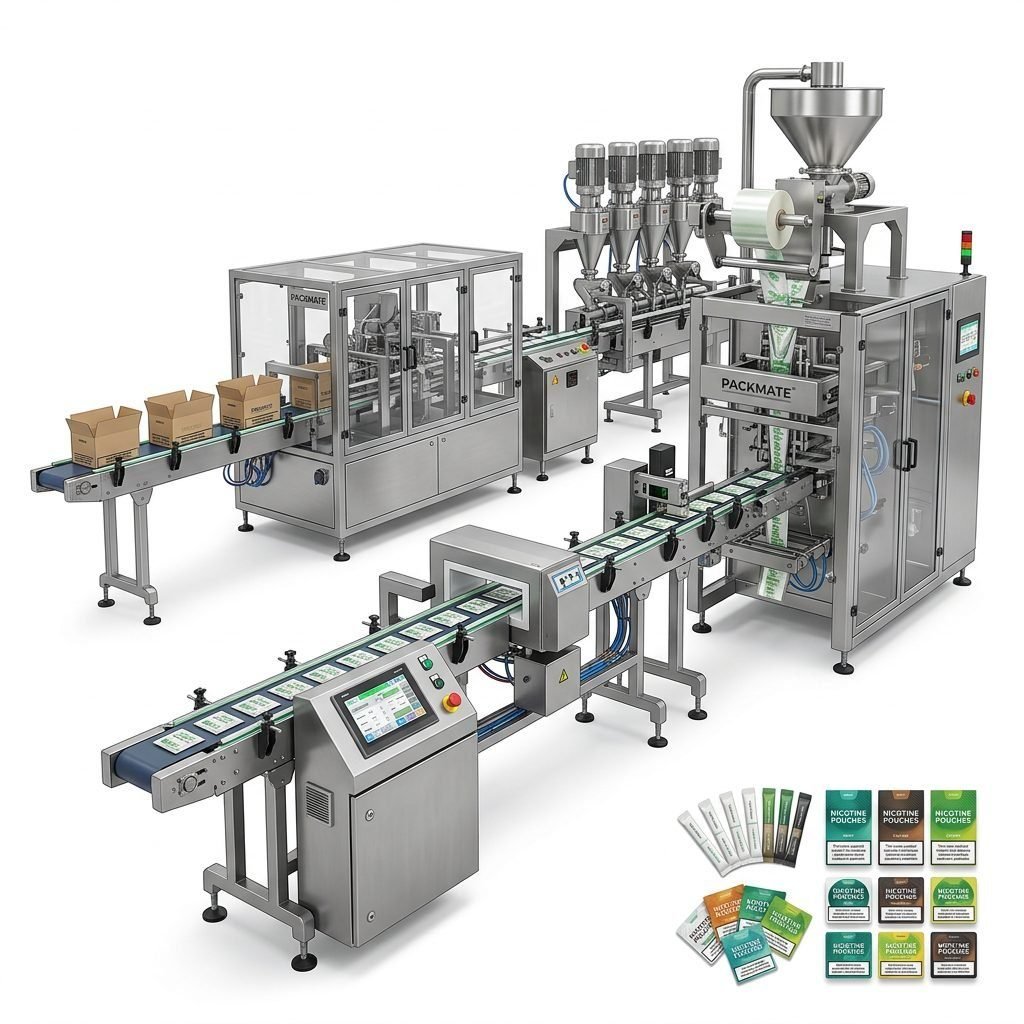
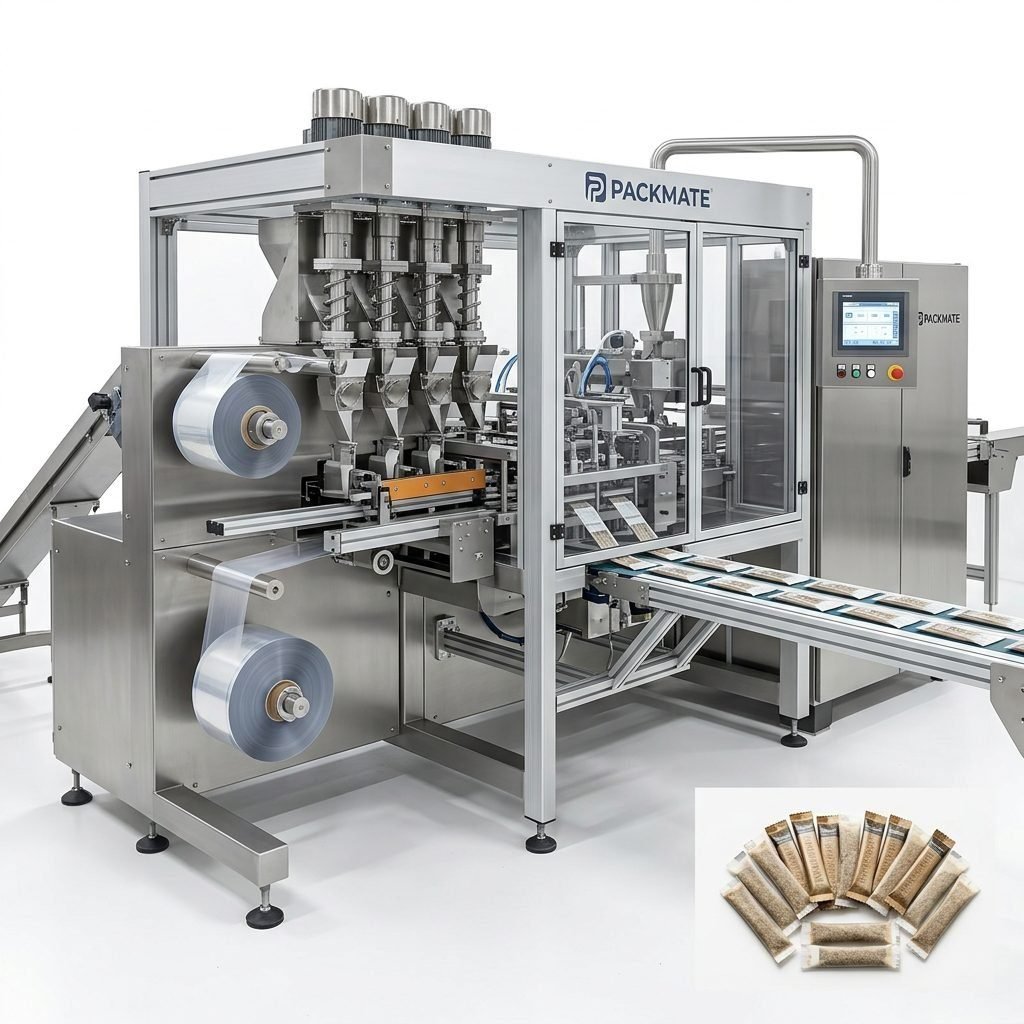
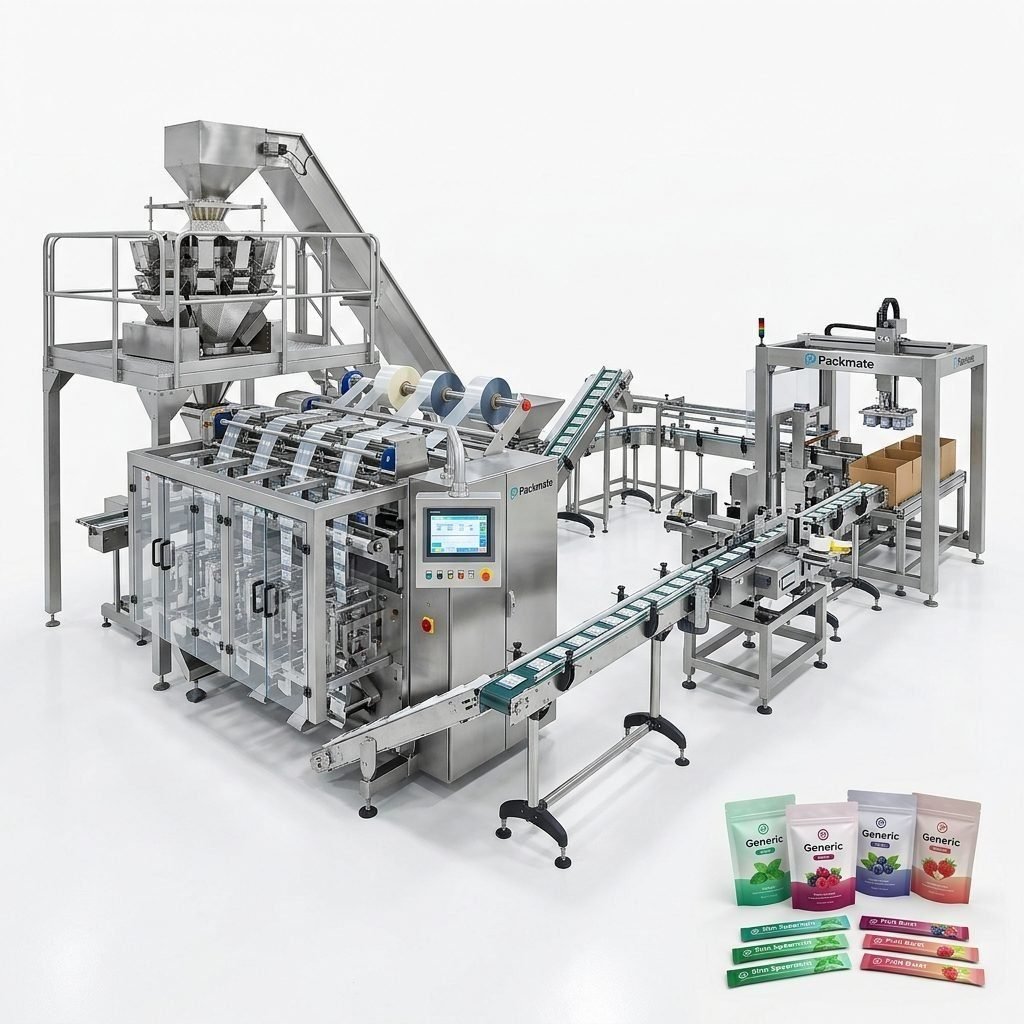
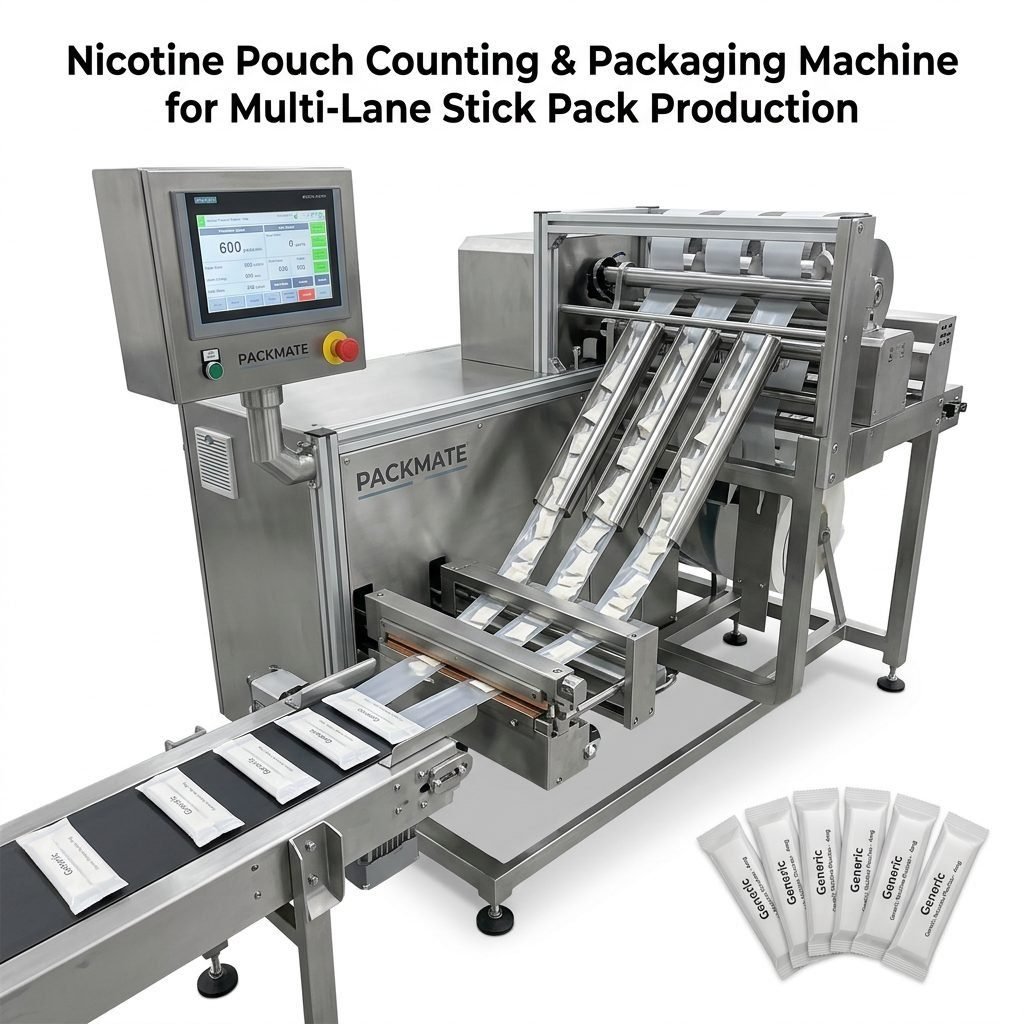
Designing and building a custom snus production line is a complex but rewarding endeavor for manufacturers entering the fast-growing nicotine pouch and snus market. This guide walks you through the practical considerations for planning capacity, selecting high-performance machinery, configuring automation and quality systems, and launching a reliable factory that meets regulatory requirements. Whether you are scaling an existing operation or starting a new facility, the insights below will help you make informed choices and avoid common pitfalls.
Why invest in a custom snus production line?
⚙️ A custom production line lets you match equipment capabilities to your product range — from single-flavor nicotine pouches to multi-flavor snus varieties. Choosing tailored machinery ensures consistent portion weight, precise sealing, and high throughput while minimizing material waste. Custom lines also support future growth: modular systems and multi-lane packaging allow rapid capacity expansion without complete retooling.
📌 Key benefit: A well-designed custom line reduces per-unit cost and ensures consistent product quality, which is critical for regulatory compliance and brand reputation.
Core components of a snus / nicotine pouch production line
A complete production line integrates several specialized machines and systems. Typical components include:
• Raw material handling and dosing
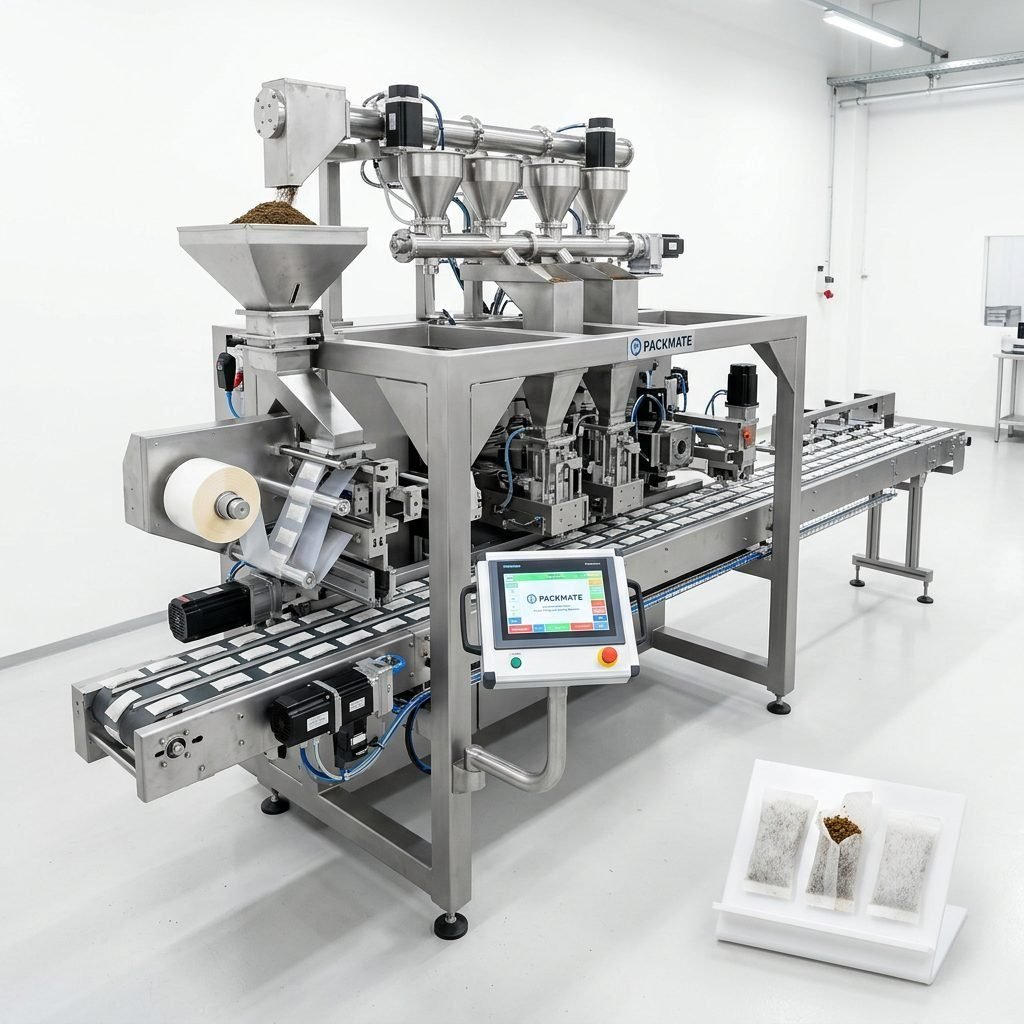
🔧 Accurate feeding systems for tobacco, fibers, powders, humectants, and flavor concentrates are essential. Gravimetric or volumetric dosing can be used depending on formulation. Integrating a centralized weighing and batching system improves repeatability and simplifies traceability.
• Mixing and conditioning
📦 Mixers and conditioning kettles ensure even distribution of moisture and flavors. Control of temperature and residence time preserves product stability and mouthfeel. Consider closed-loop mixers to minimize cross-contamination between batches.
• Forming and portioning systems
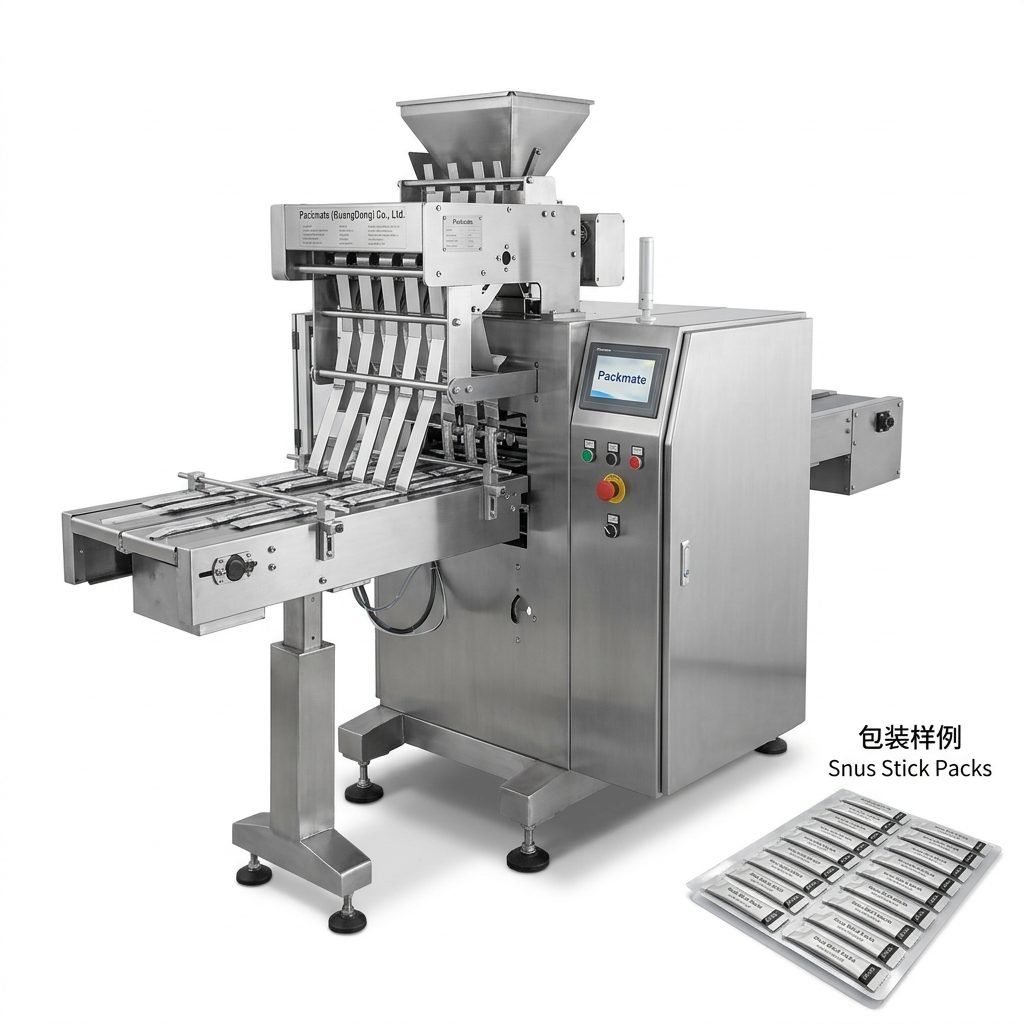
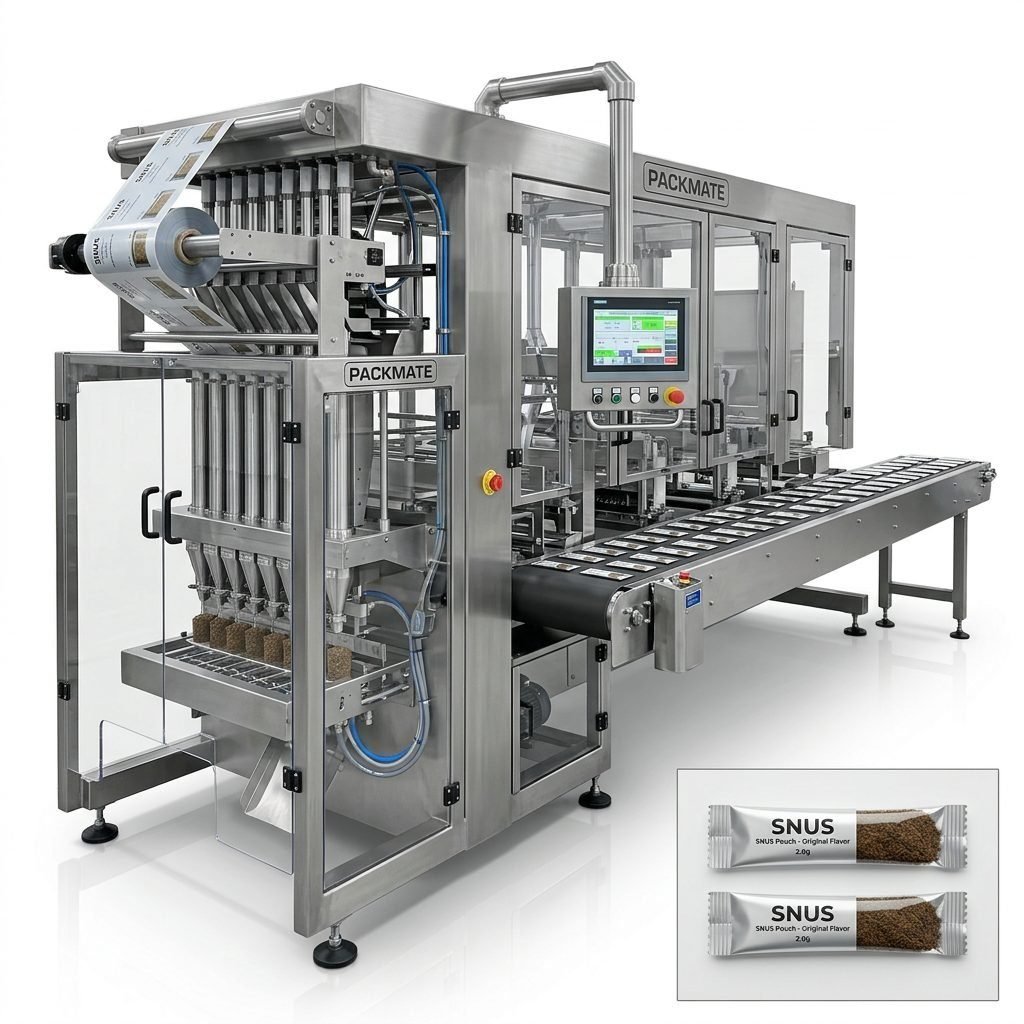
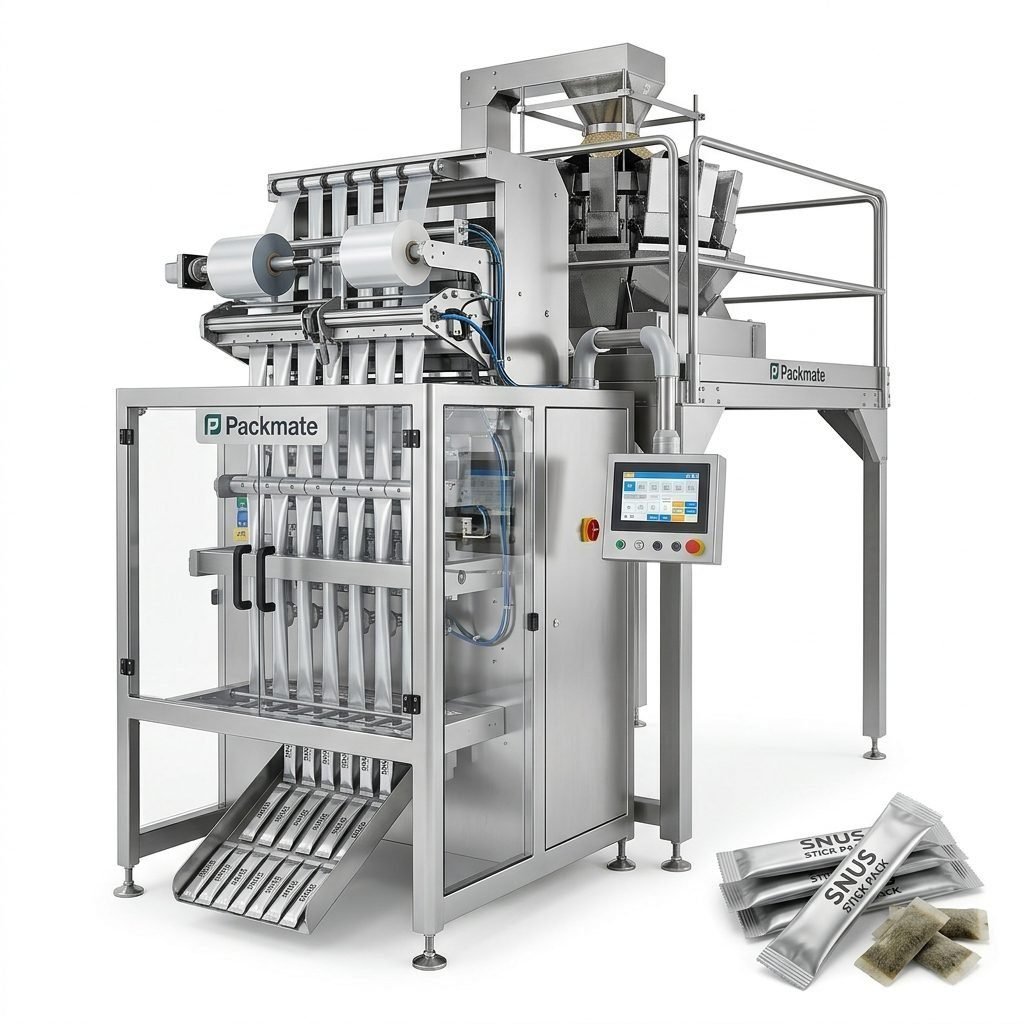
⚖️ Precise portioning is the heart of snus production. High-speed portioners and multi-lane forming stations achieve low weight variation while supporting different pouch sizes and formats like sachets and stick packs.
• Pouch or sachet packaging machines
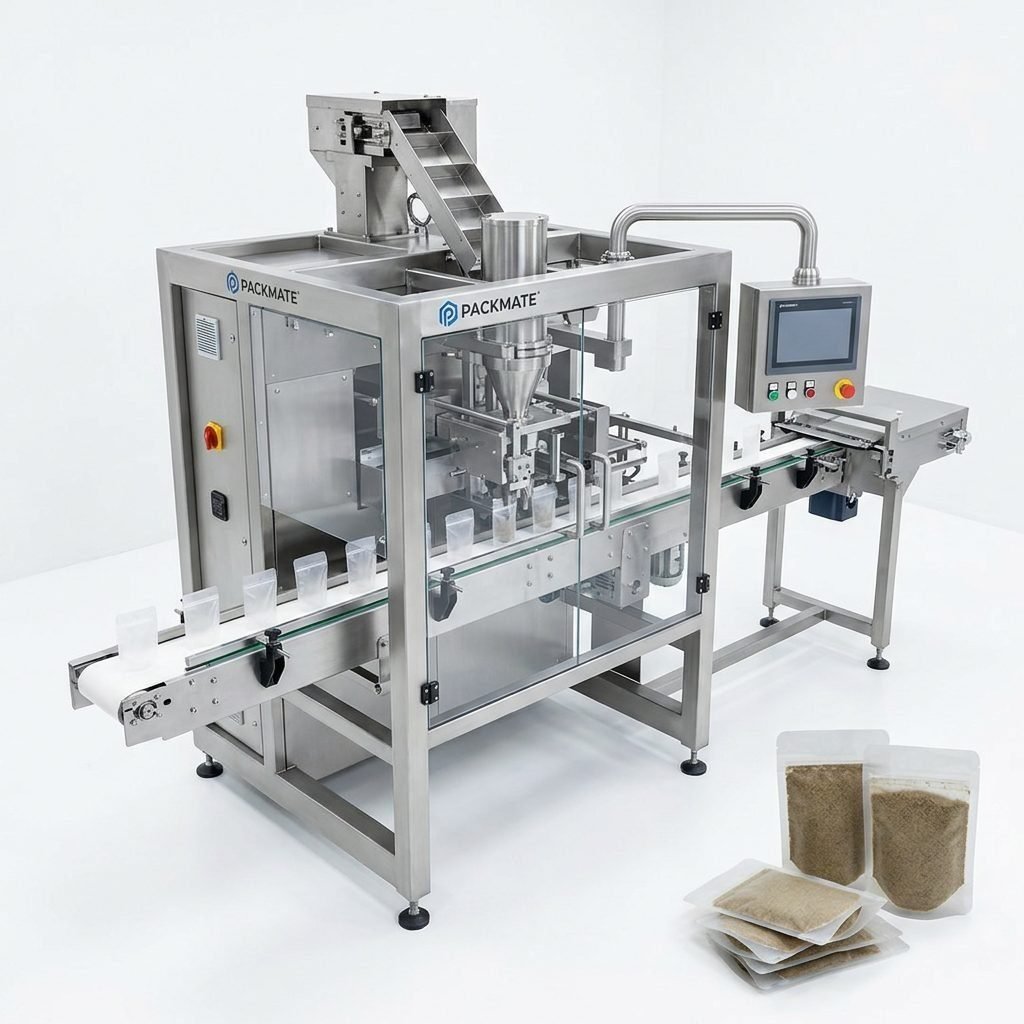
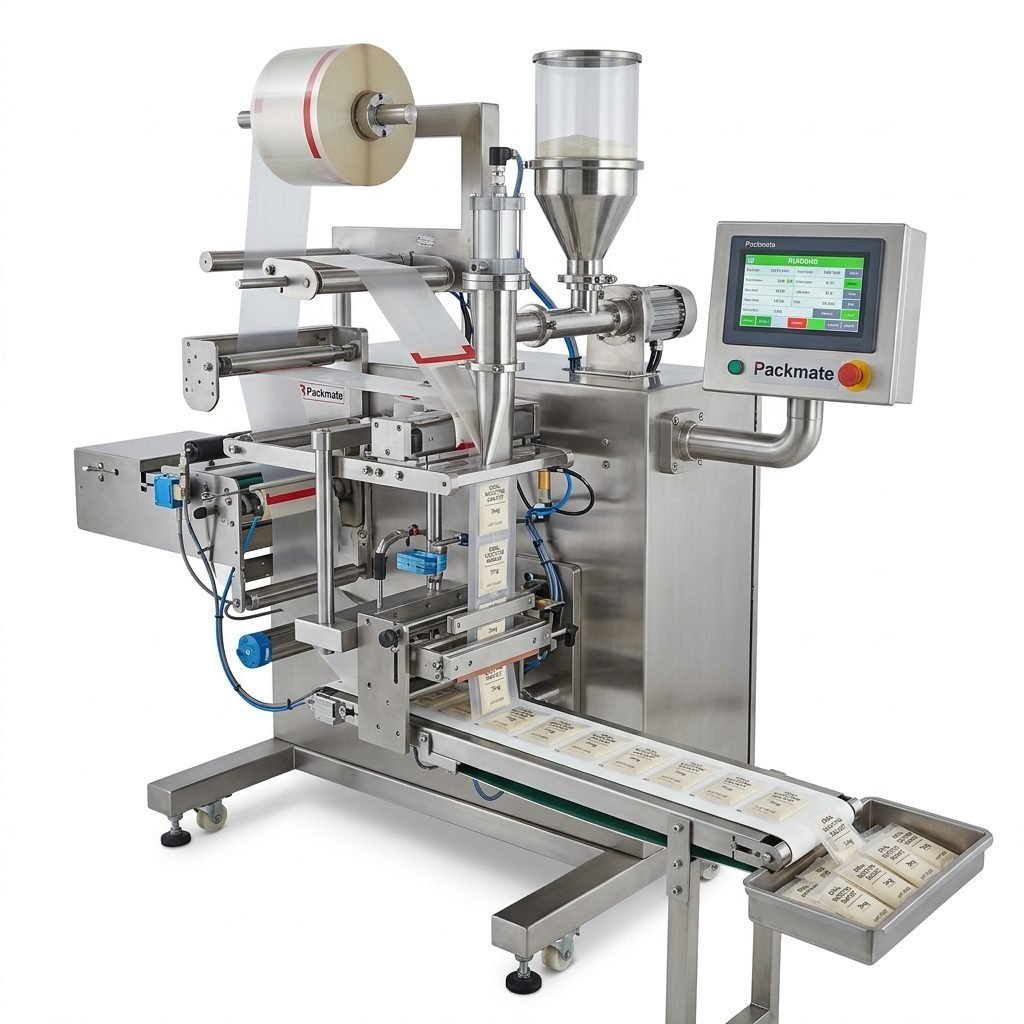
📦 Choose from multi-lane pouch machines, sachet systems, or stick pack units depending on product form. For turnkey solutions and a broad range of models, explore manufacturer offerings such as the Snus & Nicotine Packaging Machines to find models tailored to nicotine pouch production.
• Sealing, labeling and secondary packaging
🔒 Reliable sealing and tamper-evident features protect product integrity. Automated labeling and carton erectors streamline downstream packaging, while case packers prepare pallets for shipping with reduced labor.
• Weighing, metal detection and inspection
🔬 Inline checkweighers, metal detectors, and vision systems ensure each pouch meets specifications. Integrating these systems into your process control reduces recalls and increases customer confidence — consider complementary Weighing & Packaging Systems for full line integration.
✅ Tip: Opt for machines with easy-format changeovers and modular lanes to support multiple SKUs without long downtime.
Design considerations: capacity, layout, and flexibility
The design phase balances expected output, SKU mix, and future growth. Key decisions include planned throughput (pouches/min or packs/hr), number of lanes, and the level of automation. Higher automation reduces labor costs but increases upfront CAPEX — evaluate return on investment based on local labor rates and production targets.
Layout planning should follow a logical flow: raw material receipt → storage → batching → mixing → forming/portioning → packaging → inspection → secondary packing → warehousing. A linear flow minimizes cross-contamination and handling time. Pay special attention to hygienic zones, easy-clean surfaces, and sufficient maintenance access.
Factory build: utilities, space and staffing
Site selection is influenced by access to skilled technicians, logistics infrastructure, and utilities. Snus production requires stable power, compressed air, water (for cleaning), and climate control to maintain consistent moisture content. Allow generous ceiling height for conveyors and dust/extraction systems.
Staffing needs include operators, a maintenance team, QC analysts, and automation engineers. Investing in operator training during commissioning produces faster ramp-up and fewer stoppages. Consider remote monitoring and support agreements with your equipment supplier to reduce downtime.
Automation and integration strategies
Modern snus lines rely on PLC-controlled automation, user-friendly HMI panels, and optional MES connectivity for production tracking. Automation improves repeatability and enables features like recipe management, automatic format change, and traceability.
Integration points to plan:
- Centralized recipe storage for dosing and process parameters
- Sync between portioner speed and pouch machine feed to prevent bottlenecks
- Data logging for weight control, production counts, and QC results
- Remote diagnostics and spare part identification
🔗 Integration note: Consult your supplier early about PLC/HMI standards and network protocols to avoid expensive retrofit work later.
Quality control, hygiene and regulatory compliance
Quality systems are mandatory for nicotine product manufacturers. Implement documented procedures for in-process checks, batch release testing, and environmental monitoring. Equipment should be designed for easy cleaning and minimal harborage points. Certifications like CE and ISO demonstrate compliance to international markets.
Key QC checkpoints:
- Raw material identity, moisture, and microbiological screening
- In-process weight control and pouch integrity
- Final product labeling accuracy and package seal tests
- Traceability from raw material batch to finished goods
Supplier selection and partnerships
Choose suppliers with experience in snus and nicotine pouch equipment. Look for manufacturers that provide turnkey solutions, installation, training, and local service support. Packmate Snus Machine, for example, specializes in snus and nicotine packaging equipment and offers a range of models and custom turnkey lines tailored for this market. Review case studies to confirm reliability across similar product types.
Useful links to explore machine categories and line options:
Installation, commissioning and after-sales service
Professional installation and commissioning shorten the time to full production. A typical commissioning plan includes FAT (Factory Acceptance Test), SAT (Site Acceptance Test), training for operators and maintenance staff, and a performance validation period. After-sales service should cover remote support, spare parts, and preventative maintenance schedules.
🛠️ Service highlight: Negotiate service-level agreements that include response times for critical spare parts and support during scale-up production runs.
Case study snapshot: multi-lane nicotine pouch line
A European customer required a compact, high-throughput solution for multiple nicotine pouch SKUs. The delivered solution included a 6-lane forming and filling system, integrated checkweigher, and automated cartoning line. The multi-lane design provided the capacity needed without increasing floor footprint, and recipe control enabled fast changeovers between flavors.
For real-world examples and exhibition showcases, review case portfolios and exhibition appearances to evaluate machine performance in live settings.
Costing, ROI and timeline
Capital costs vary with automation level, number of lanes, and customization. Typical timeline phases:
- Concept & specification: 2–6 weeks
- Engineering & procurement: 8–16 weeks
- Manufacturing & FAT: 6–12 weeks
- Installation & commissioning: 2–6 weeks
Calculate ROI by comparing expected throughput and yield improvements versus current production costs. Include savings from reduced labor, lower material waste, and increased yield due to better portion control.
Safety and environmental considerations
Nicotine handling requires robust worker protection and careful waste management. Implement closed systems where feasible, local exhaust ventilation for dust control, and appropriate PPE protocols. Plan for responsible disposal or recovery of nicotine-contaminated cleaning water and materials in compliance with local regulations.
Practical checklist for launching your snus factory
📋 Start-up checklist:
- Define target SKUs, formats and daily throughput
- Specify portion accuracy and acceptable weight variation
- Design hygienic layout and clean-in-place strategies
- Select experienced suppliers with relevant case histories
- Plan operator training and spare parts inventory
- Implement QC and traceability from raw material to finished goods
Working with experienced manufacturers
Partnering with a manufacturer that understands snus and nicotine pouch production streamlines project delivery. Experienced suppliers can provide validated solutions, local support, and tailored engineering that align with your regulatory and market needs. Review certifications, factory capability (such as advanced CNC machining and precision assembly), and global project references before committing.
If you want to explore different machine categories, check related product lines and documentation for technical specifications:
- Filling & Packaging Lines — for integrated filling, sealing and packaging solutions
- Weighing & Packaging Systems — for precision dosing and checkweighing
Next steps: evaluation and pilot production
Begin with a detailed specification and request proposals from multiple vendors. Consider running pilot production or a small-scale proof of concept to validate recipe robustness and equipment performance before full-scale investment. Pilot runs also test packaging integrity and shelf-life under expected storage conditions.
📞 Action: Contact experienced suppliers early to align technical requirements and schedule FAT visits to inspect equipment performance in real conditions.
Frequently Asked Questions
Q1: How long does it take to install a full snus production line?
A: Typical timelines from order to production-ready vary, but expect 4–6 months for standard configurations and 6–10 months for customized turnkey projects. This includes engineering, manufacturing, FAT, shipping and on-site commissioning.
Q2: What level of automation is recommended for a mid-sized producer?
A: Mid-sized producers benefit from semi- to fully-automated multi-lane packaging machines, integrated weighing and inspection systems, and recipe-driven PLC/HMI control. This balance reduces labor costs while maintaining flexibility for multiple SKUs.
Q3: How do I ensure portion consistency across multiple lanes?
A: Use synchronized portioners with centralized dosing control and in-line checkweighers. Real-time monitoring and automatic speed adjustments keep lane output consistent. Implementing a good recipe management system also ensures repeatable results.
Q4: Where can I find examples of installed lines and reference projects?
A: Review manufacturer case studies and exhibition demonstrations to see installed lines in operation. Many suppliers publish case pages and participate in industry exhibitions — these provide valuable insights into machine reliability and performance.