Choosing the right nicotine packaging machine in Southeast Asia requires a clear understanding of local market habits, regulatory environments, product formats, and production targets. Manufacturers, brand owners, and contract packers must balance cost, performance, and long-term service support to ensure a reliable packaging line that fits humid climates, multilingual labeling, and cultural preferences across countries such as Indonesia, Malaysia, Thailand, Vietnam, the Philippines, and Singapore.
Market Context in Southeast Asia: Local Habits and Regulatory Realities
Southeast Asian markets are diverse. In Muslim-majority countries like Indonesia and Malaysia, brands must be sensitive to halal perceptions and clear ingredient disclosures. In urban centers across the Philippines and Vietnam, discreet, flavored nicotine pouches have growing acceptance among younger adult consumers. Singapore and Thailand enforce stricter nicotine and tobacco controls — import permits, high fines, and strict labeling — so manufacturers often pursue compliant products with low nicotine concentrations and robust documentation.
Climate matters: high humidity and temperature fluctuations demand barrier films and strong seal integrity to preserve flavor and shelf life. Packaging machinery must handle moisture-sensitive materials and deliver consistent seals to avoid product failures during transport across tropical weather.
Key Machine Types to Consider
Different product formats call for different equipment families. Typical choices include:
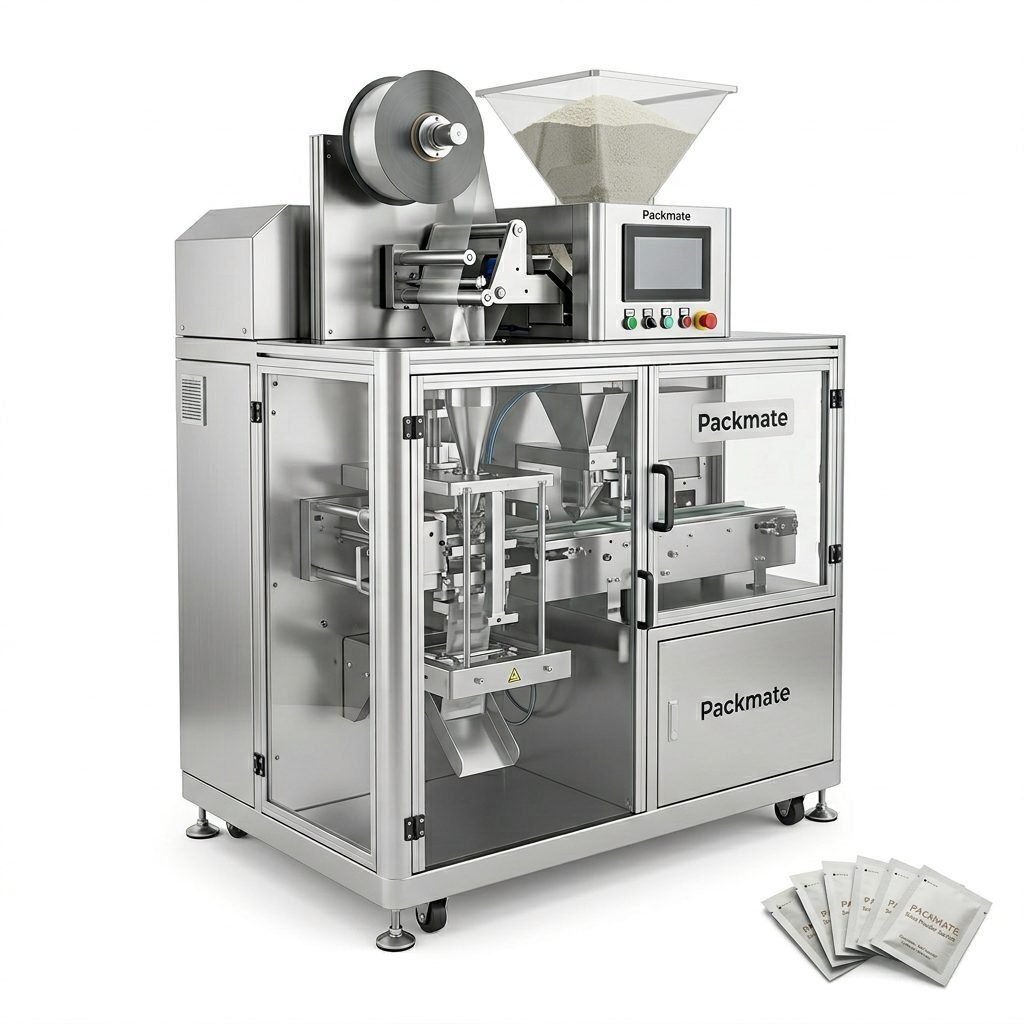
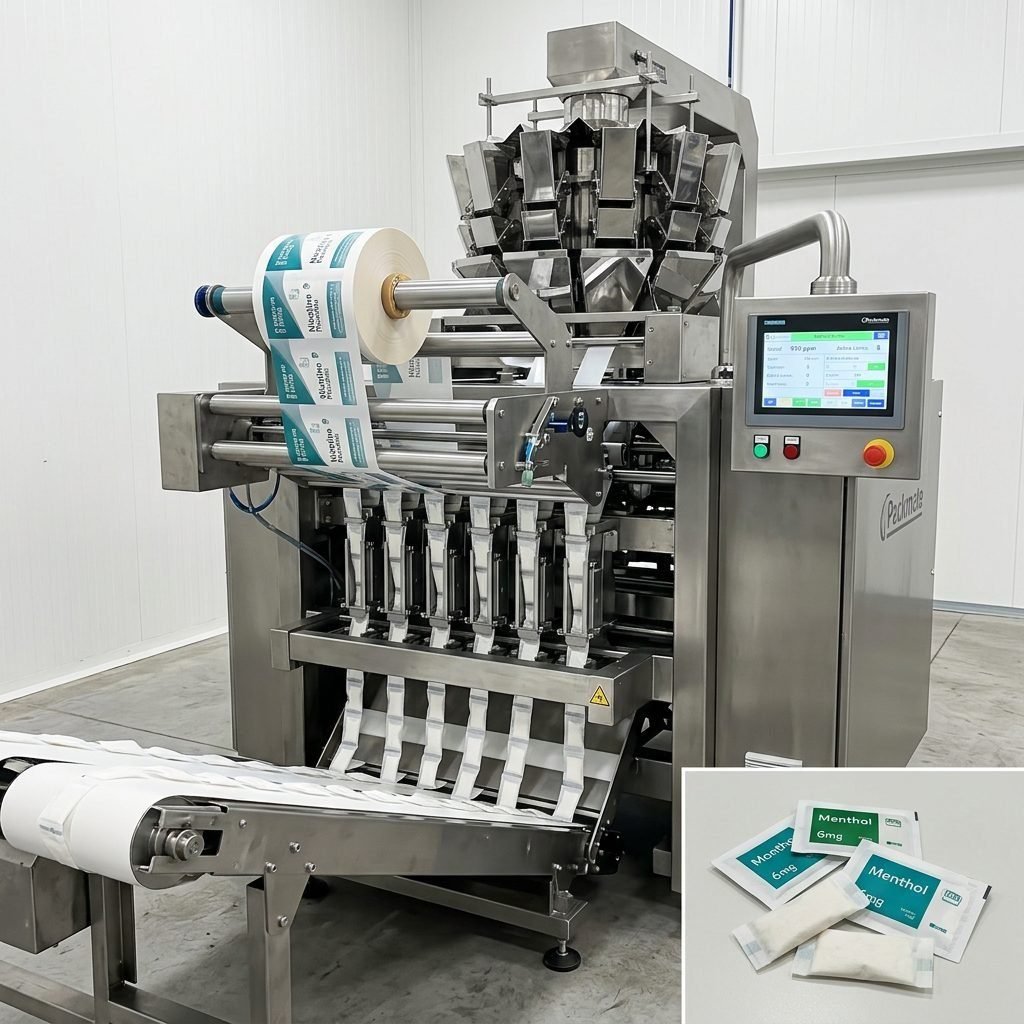
🔧 Stick pack machines — ideal for single-dose sachets and some nicotine pouch formats that require narrow, elongated packs. Reliable at medium to high speeds for single-serve distribution.
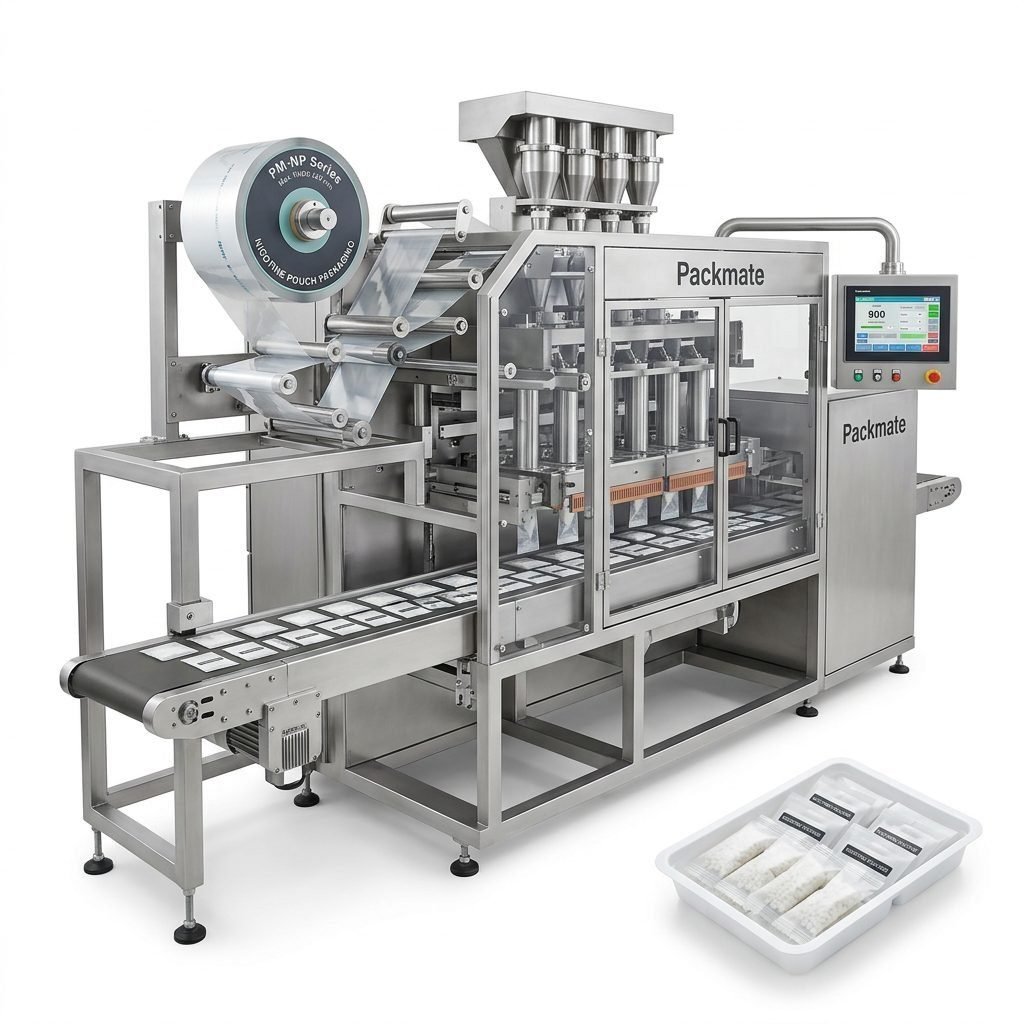
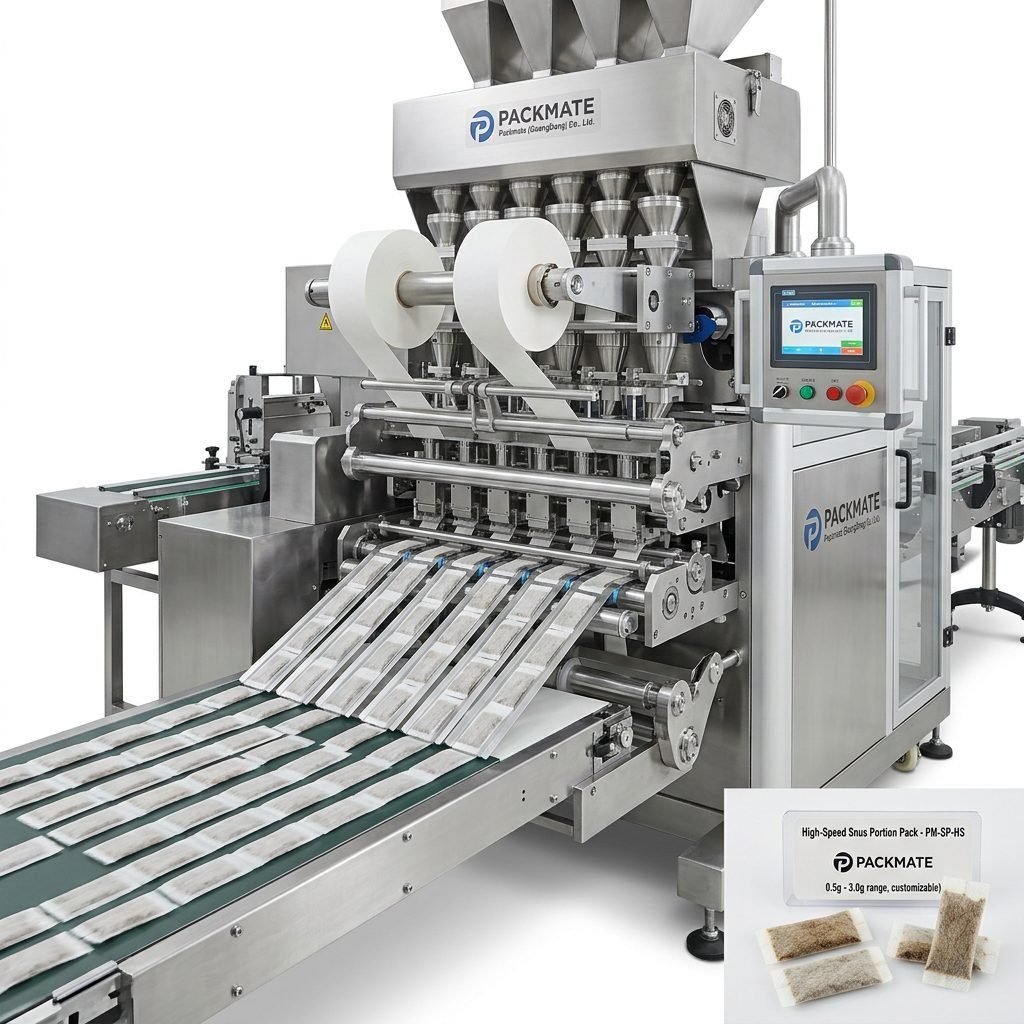
📦 Sachet & multi-lane snus pouch machines — designed for small-dose pouches with precise filling and sealing. Multi-lane systems increase throughput without enlarging the machine footprint.
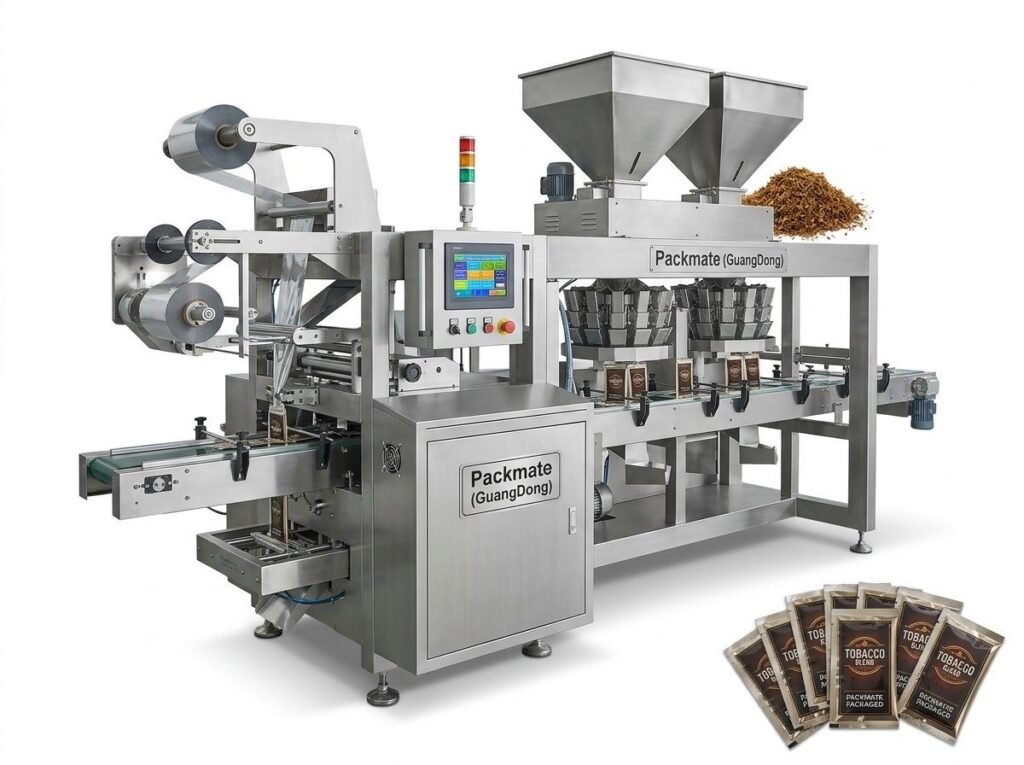
⚙️ Bag & pouch machines — for larger retail pouches or multi-unit pouches; these machines often integrate zipper application and finishing.
For more details on machine families, review targeted product pages:
Snus & Nicotine Packaging Machines,
Sachet & Stick Pack Machines, and
Bag & Pouch Packaging Machines.
Tip: If you expect frequent SKU changes or multiple flavor lines, prioritize modular machines that allow lane reconfiguration and quick-change parts to minimize downtime.
Technical Specifications and Performance Metrics
When evaluating machines, focus on core metrics that drive cost and consistency:
✅ Speed (packs per minute) — align machine throughput with your daily production targets, considering packaging, secondary packing, and palletizing rates.
✅ Lane count and expandability — multi-lane systems multiply output while keeping floor space efficient. Ensure lane synchronization and easy defect detection.
✅ Filling accuracy and dosing range — nicotine pouch weight must be precise to meet regulatory declarations and avoid customer complaints. Integrate weighing and dosing systems as needed.
For integrated measuring and feeding systems, explore Weighing & Packaging Systems.
Material Compatibility and Packaging Formats
Choose machines that support the films and laminates you plan to use. In tropical climates, laminated foil or high-barrier films help maintain aroma and moisture resistance. Machines must perform reliable heat-sealing, ultrasonic sealing, or cold sealing depending on film composition. If your product uses desiccants, the line must allow accurate placement and sealing around inserts.
Important: Films with different seal layers require different temperature profiles and dwell times — confirm machine control precision and PID loop stability for consistent seals.
Automation, Integration and Turnkey Solutions
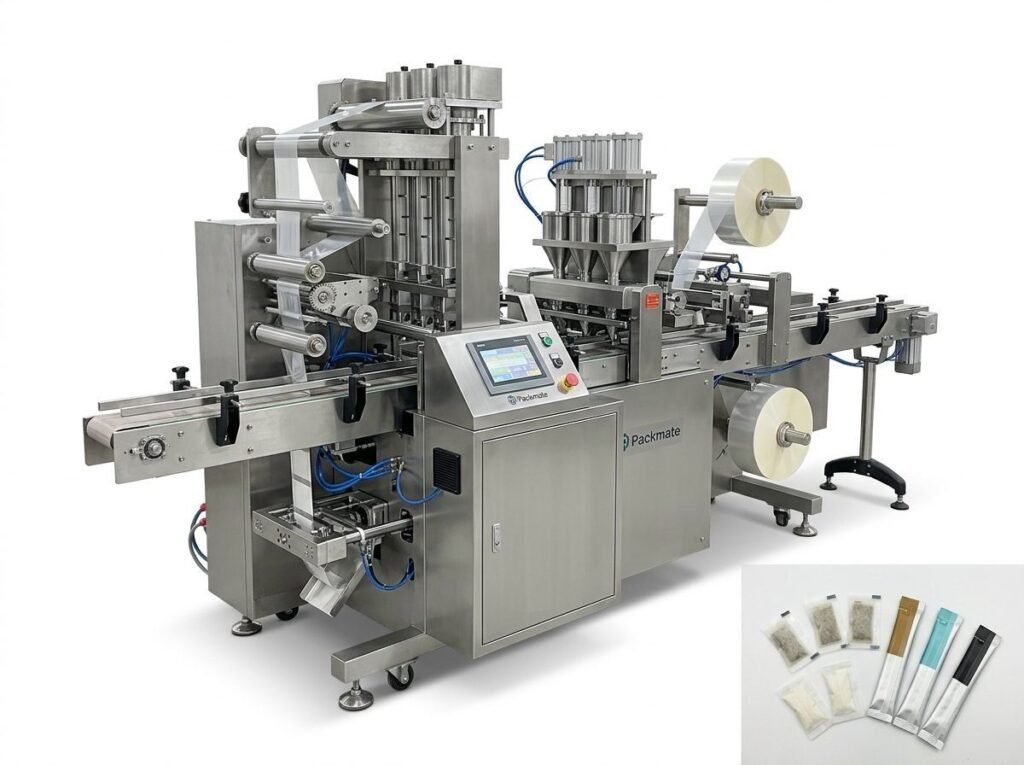
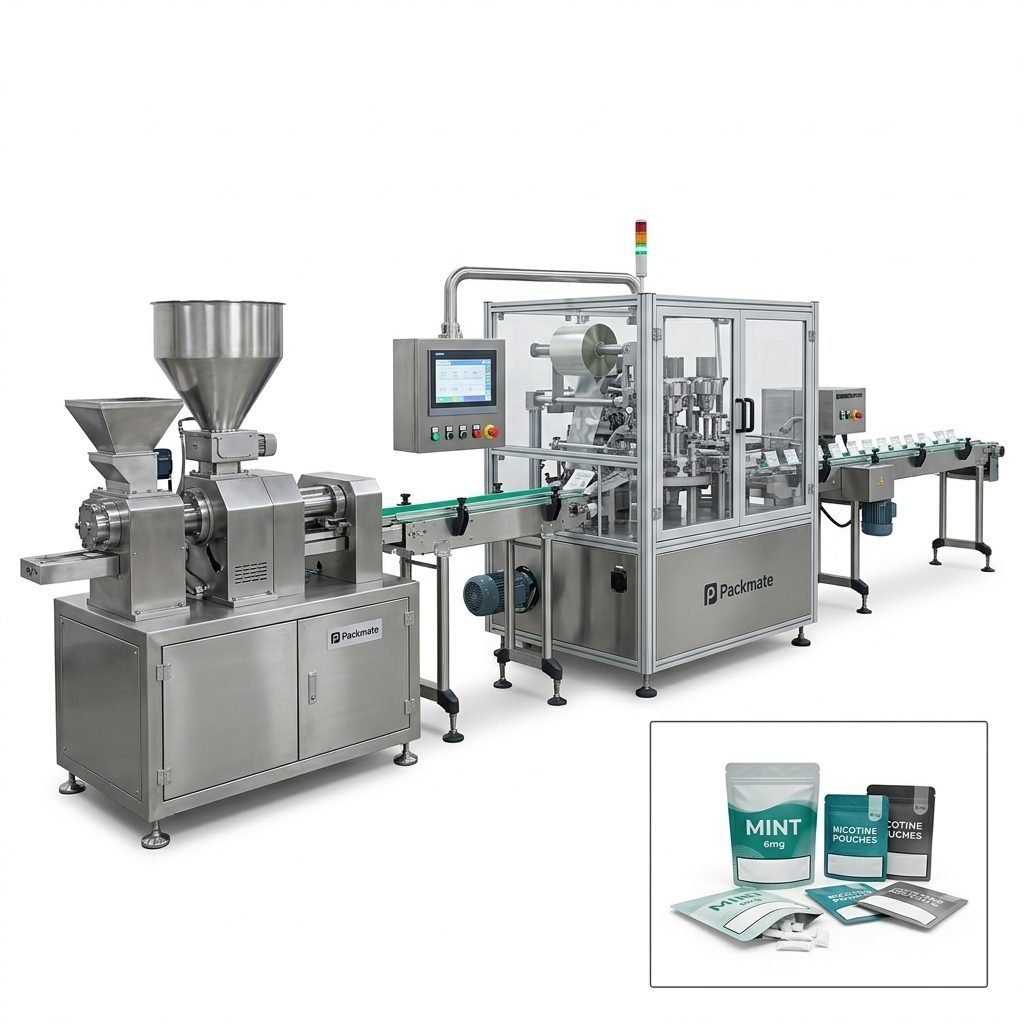
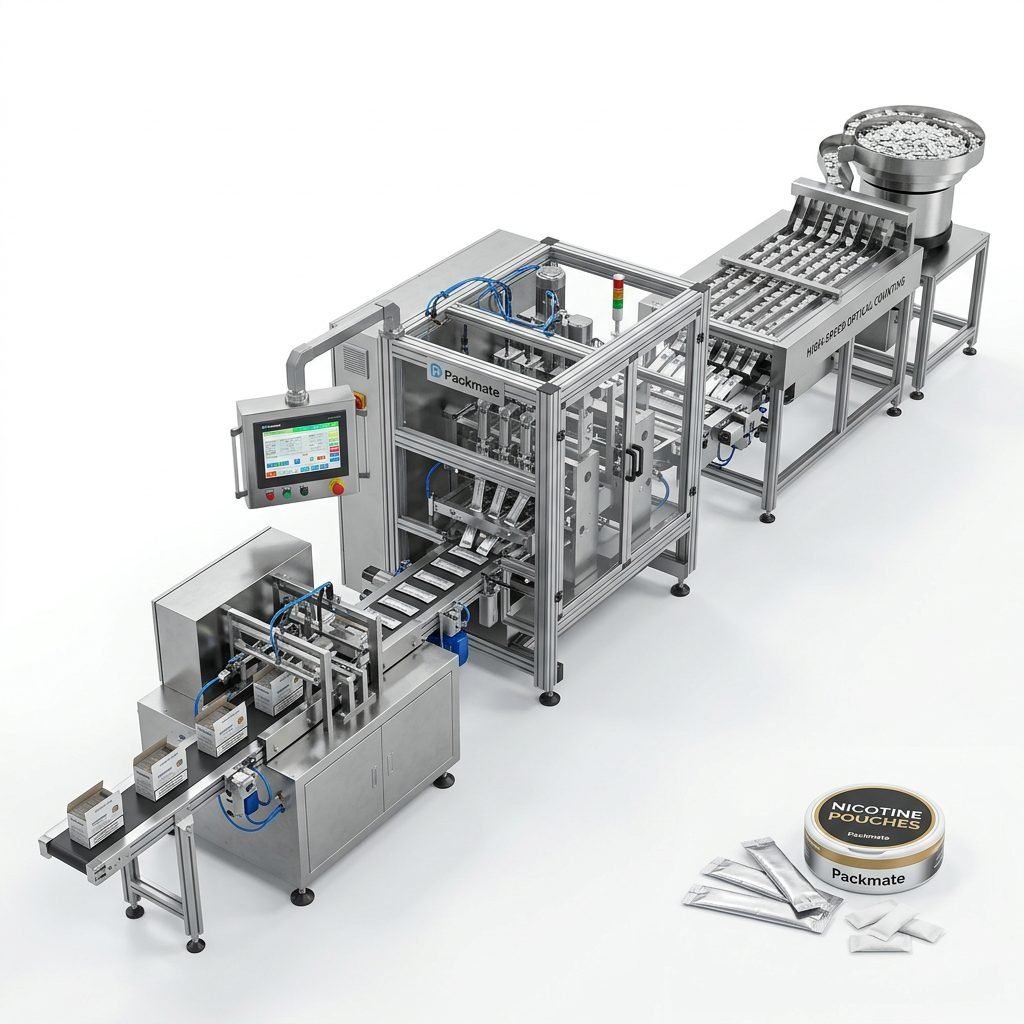
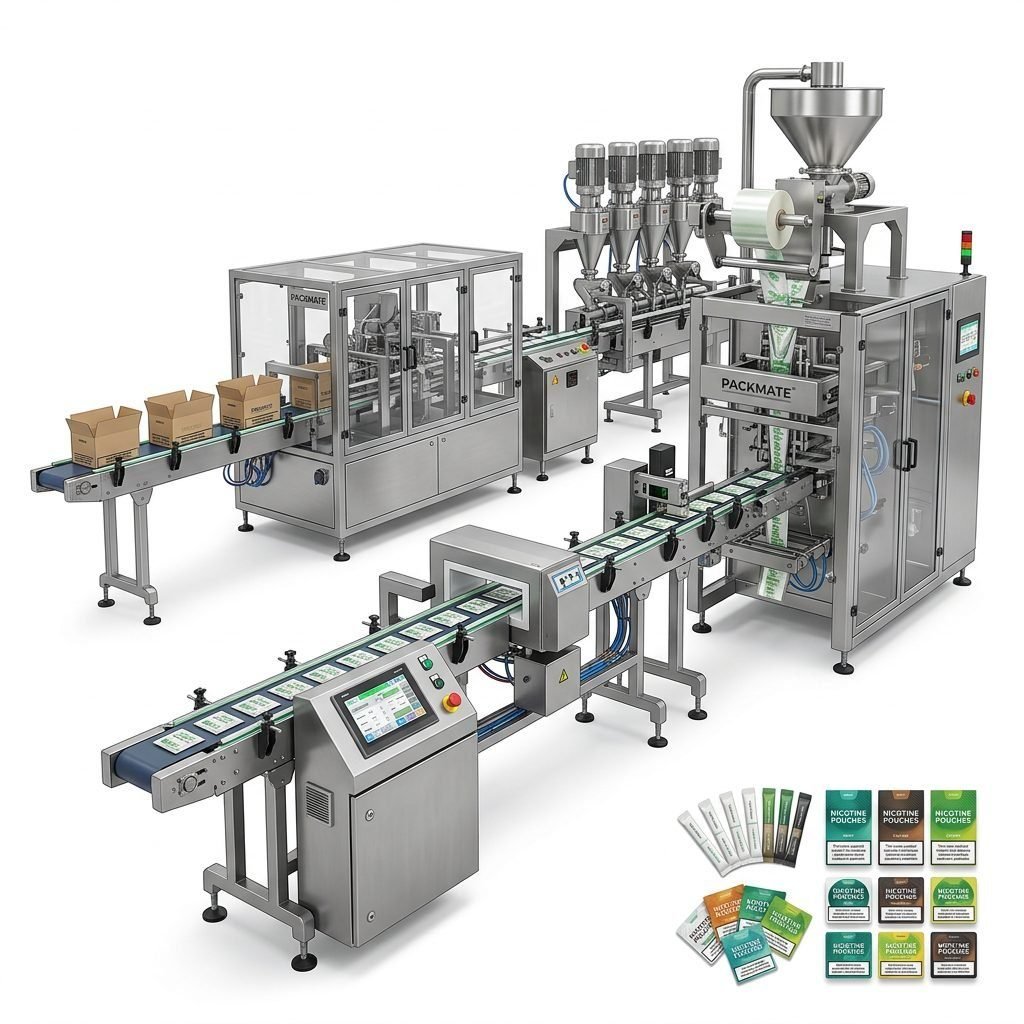
Modern nicotine pouch lines integrate multiple subsystems: product feeding and dosing, pouch forming or pre-made pouch handling, sealing, date coding, counting, cartoning, and case packing. Look for suppliers who provide turnkey lines and can integrate auxiliary equipment (vibratory feeders, metal detectors, conveyors, case packers). Packmate offers fully integrated solutions including filling & packaging lines and auxiliary systems.
Explore options here: Filling & Packaging Lines and Auxiliary Packaging Equipment.
Service, Spare Parts, and Local Support
In Southeast Asia, downtime can be costly due to extended transit times for parts. Prioritize suppliers with:
🌏 Local or regional spare parts stocking — reduces wait times for common wear parts.
🔧 On-site training and remote support — ensure your operators learn effective maintenance and troubleshooting.
🛡 Certifications and compliance documentation — CE, ISO, and machine test certificates simplify import and regulatory review processes.
Packmate Advantage: With 30+ years of engineering and a 20,000㎡ factory, Packmate provides custom turnkeys and after-sales support aimed at rapid parts supply and technical training. See more on About Packmate and their case studies.
Budgeting and Total Cost of Ownership
Equipment price is only part of the story. Consider:
• Installation and commissioning fees.
• Operator training and maintenance contracts.
• Spare parts and wear components — belts, sealing jaws, knives.
• Utility costs (electricity, compressed air) and factory modifications.
Calculate ROI based on throughput, product margin, and expected uptime. A slightly higher upfront investment in precision dosing and automation can pay back quickly through reduced rejects and labor savings.
Pre-Purchase Checklist
🔎 Production target (units/day):
🔎 Product format(s) and film materials compatibility:
🔎 Local regulatory limits and labeling languages:
🔎 Service level agreements and spare parts lead times:
🔎 Budget range including installation and training:
Commissioning and Operator Training
Insist on factory acceptance tests (FAT) and site acceptance tests (SAT) with your actual film and product. Comprehensive operator training reduces human errors that cause misfeeds, poor sealing or incorrect dosing. Ask the supplier for video tutorials and a spare parts kit for the first 12 months.
Common Pitfalls and How to Avoid Them
⚠️ Under-specifying machine speed — choose equipment with headroom to absorb growth.
⚠️ Ignoring environmental control — humidity affects seals and product stability; consider dehumidified packaging rooms for high-volume lines.
⚠️ Skipping integration tests — verify label, coding, and secondary packing sequences before final sign-off.
Quick Checklist: FAT completed, spare parts list agreed, SLA defined, operator training scheduled, and acceptance criteria signed by both parties.
Why Choose a Reputable Manufacturer
Selecting a manufacturer with proven industry experience reduces risk. Packmate (formerly Packmate Snus Machine) has over three decades of engineering expertise and a large manufacturing footprint that supports customization, CE/ISO certification, and global turnkey deliveries. Their product portfolio covers snus/nicotine pouch machines, stick pack and sachet systems, and auxiliary equipment that simplify integration and accelerate time-to-market.
Learn more about their capabilities and certificates: Certificate and Service.
Final Steps Before Purchase
1) Request references and examples of similar installations in Southeast Asia or tropical climates.
2) Get a full BOM (bill of materials) and spare parts recommendation for the first two years.
3) Agree on warranty terms, training scope, and remote support windows before signing.
Bottom line: Invest in quality, modularity, and local service when buying nicotine packaging machines for Southeast Asia — these decisions protect product integrity, regulatory compliance, and your brand reputation.
Frequently Asked Questions
Q1: What machine type is best for small-batch flavored nicotine pouches in humid climates?
A1: Multi-lane snus pouch machines with precise dosing and high-barrier film compatibility are ideal. They allow batch flexibility and maintain seal integrity under humidity stress.
Q2: How important is local spare parts inventory?
A2: Extremely important — shorter lead times reduce downtime and maintain supply continuity. Verify the supplier’s regional stocking strategy and express shipping options.
Q3: Are turnkey solutions worth the extra cost?
A3: Yes, turnkey systems reduce integration risk, speed time-to-market, and simplify support contracts — particularly valuable when you need coordinated coding, cartoning, and case packing.
Q4: Which certifications should I request from the supplier?
A4: Ask for CE and ISO certificates, FAT reports, electrical schematics, and test data using your product and film. These documents help with customs and local regulatory checks.
Q5: How can I verify a supplier’s claims about production speed?
A5: Request a video demonstration using your actual pouch and film, a FAT report with measured throughput, and at least two customer references in similar operating conditions.