Choosing the best snus packaging machinery in Lebanon requires a balance of technical understanding, supplier verification, and clear business goals. This guide walks local manufacturers through practical criteria — from machine types and performance metrics to compliance, after-sales service, and total cost of ownership — so you can make a confident investment in snus and nicotine pouch packaging solutions.
Why investing in the right snus packaging machine matters
⚙️ The right equipment ensures consistent product quality, regulatory compliance, and production efficiency. For tobacco alternatives like nicotine pouches and snus, precise dosing, sealed pouches, and contamination control are essential. Poor machinery can lead to product waste, downtime, and customer complaints — which quickly erode margins in a competitive market.
Primary benefits of high-quality snus packaging systems
📦 Increased throughput and reduced labor costs — automated lines replace manual packing and lower per-unit costs.
✅ Improved fill accuracy and pouch integrity — which preserves shelf life and consumer trust.
🔧 Easier maintenance and predictable spare parts management — leading to less unscheduled downtime.
Types of machines to consider
Understand the common machine families so you can match equipment to product format and capacity requirements.
Snus & Nicotine Pouch Packaging Machines
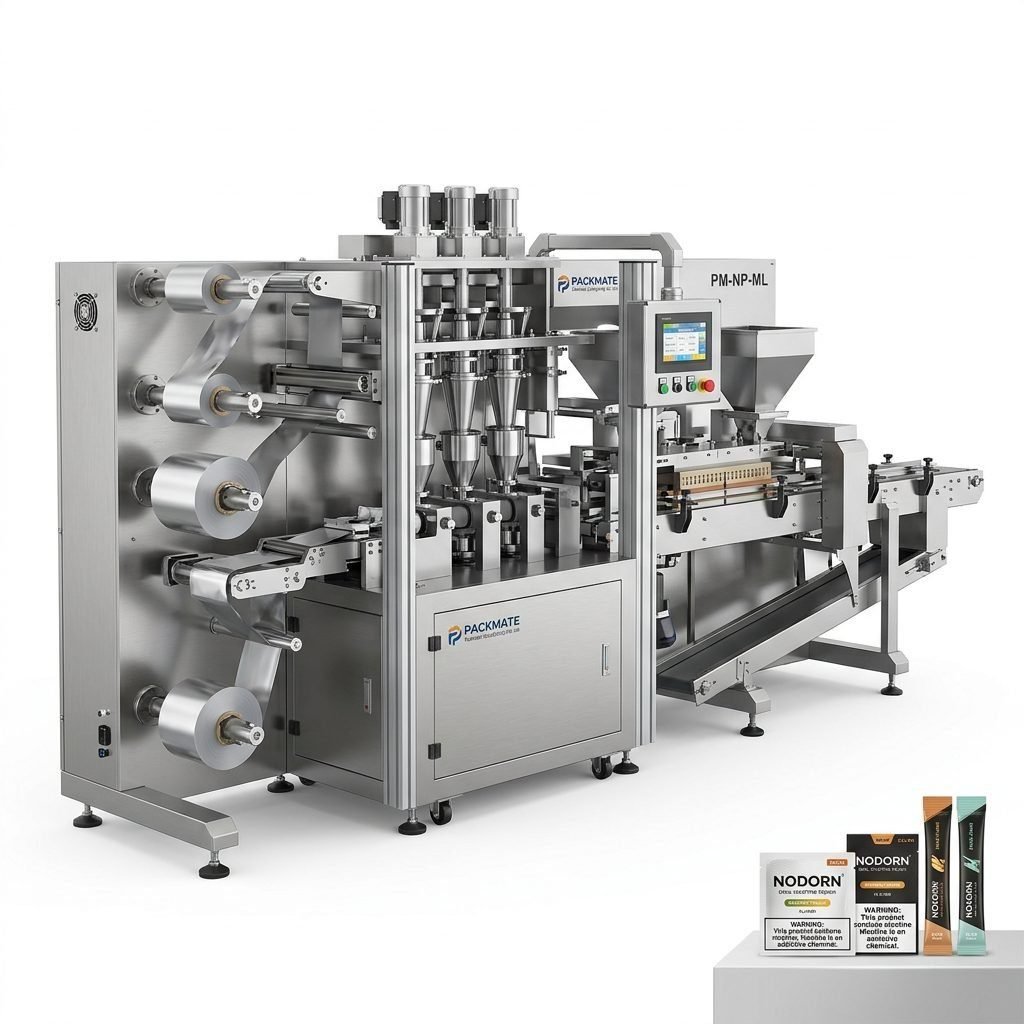
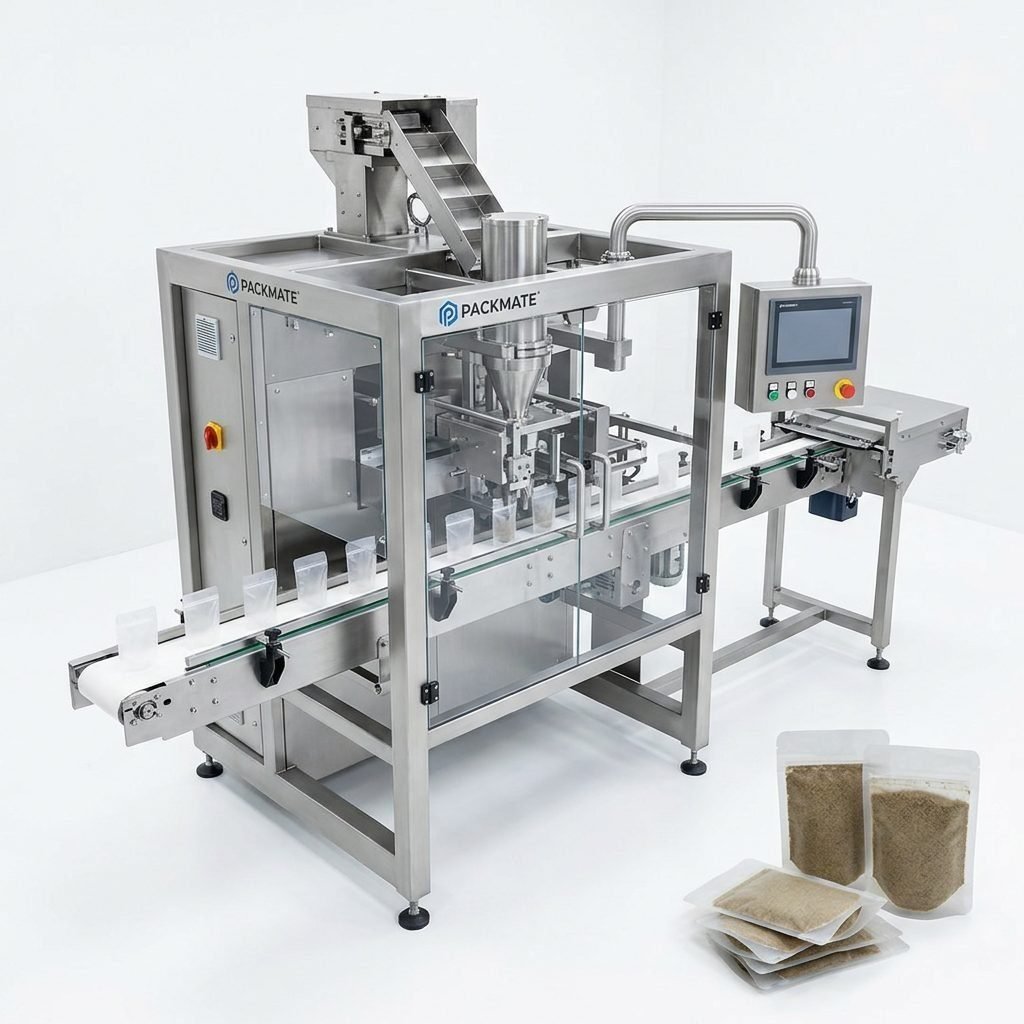
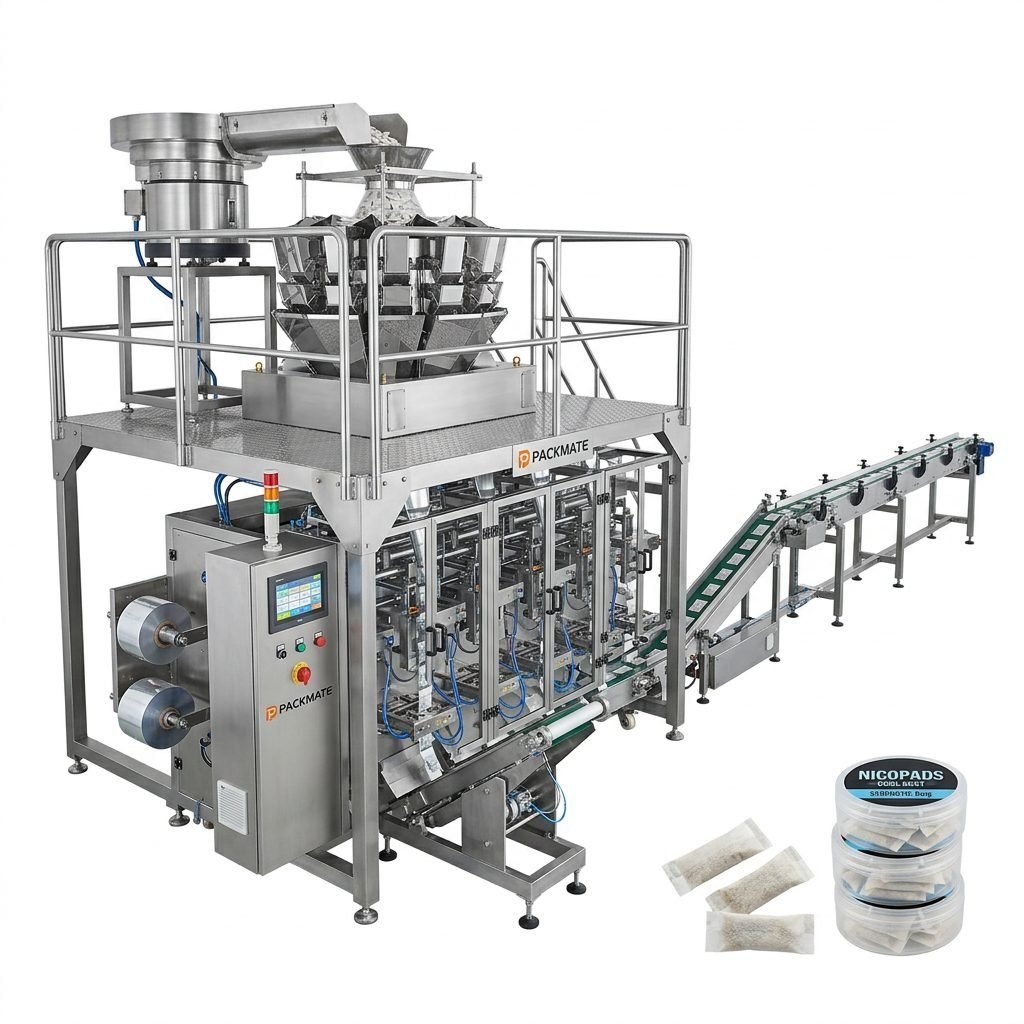
These systems are optimized for small-dose pouches and often include multi-lane capabilities. If your primary product is nicotine pouches, this is the most direct fit — offering gentle handling and accurate dosing. See typical solutions here: Snus & Nicotine Packaging Machines.
Stick Pack and Sachet Machines
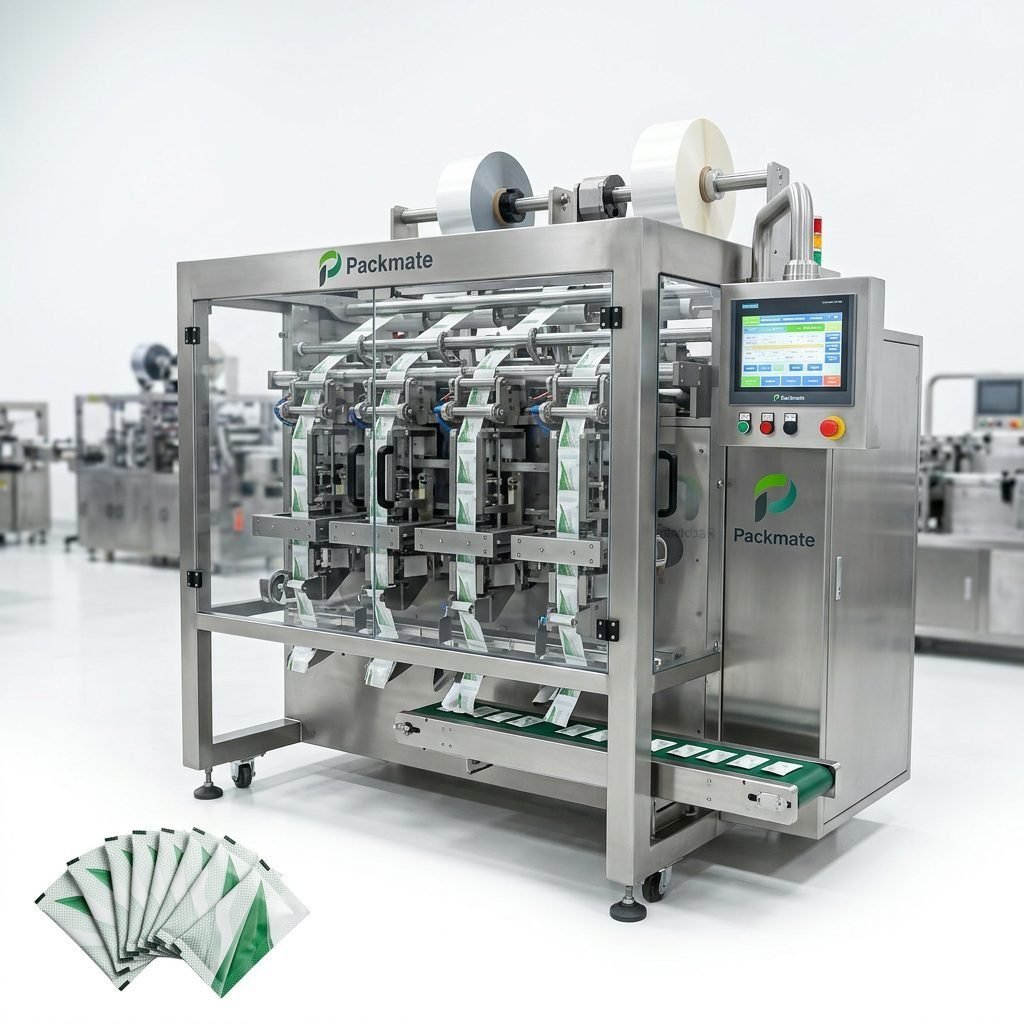
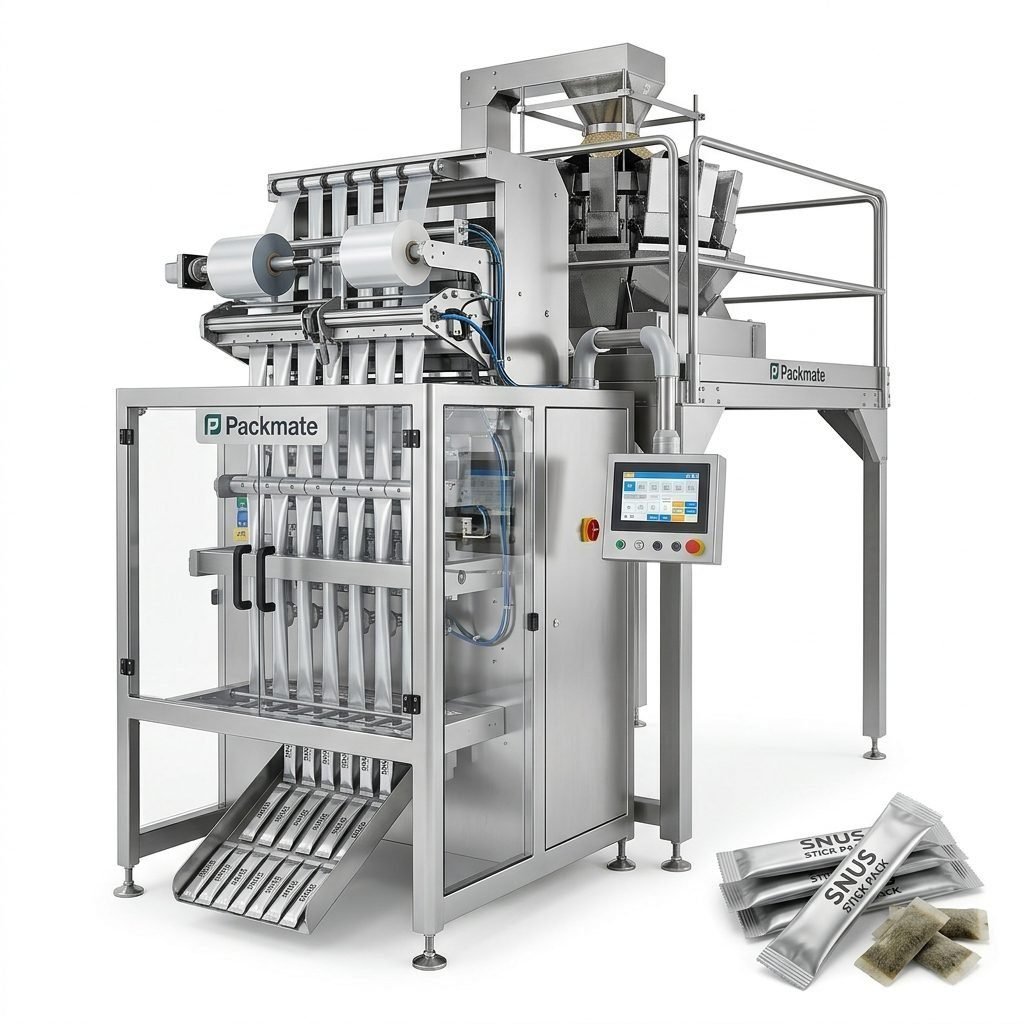
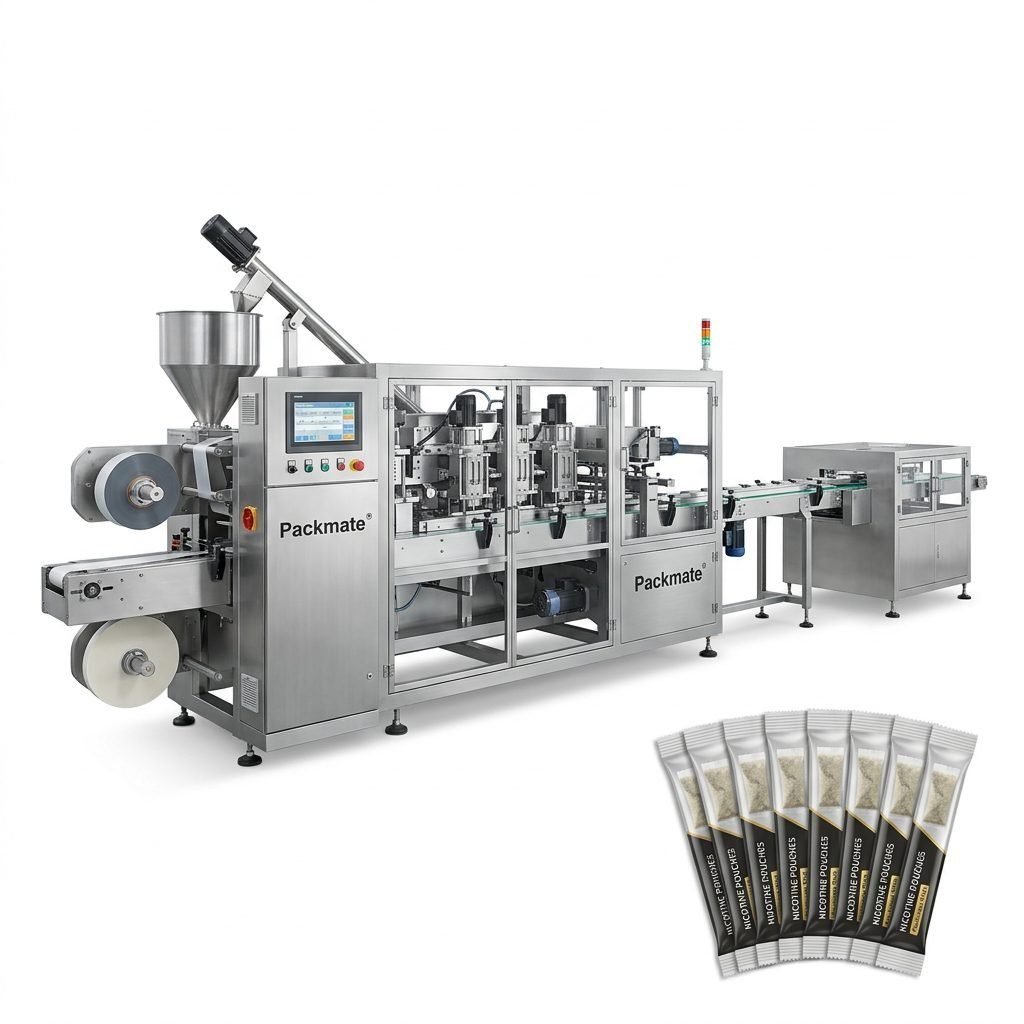
If you plan to expand formats to stick packs or single-serve sachets, choose versatile systems that can change format quickly. Many manufacturers offer sachet & stick pack machines that complement snus lines: Sachet & Stick Pack Machines.
Multi-lane Systems and High-Speed Lines
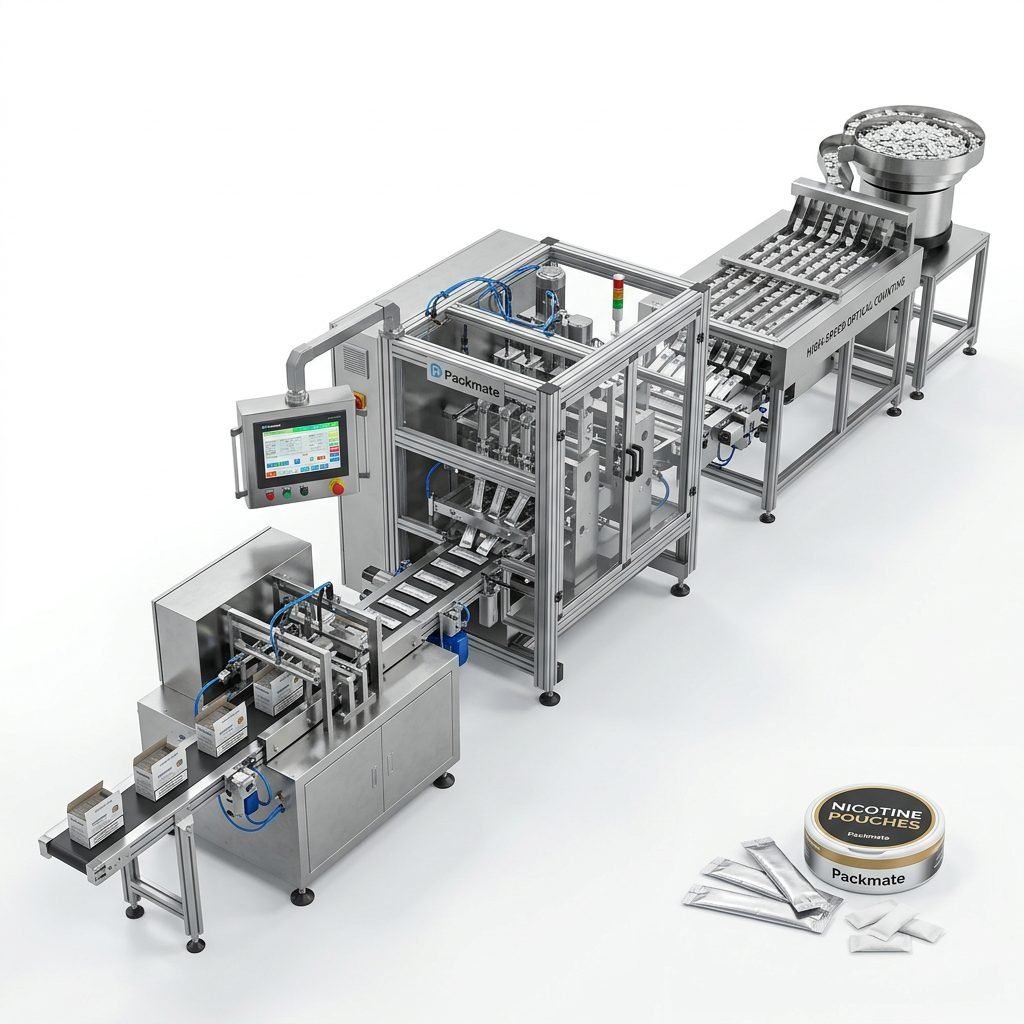
For larger production volumes, multi-lane pouch systems multiply output without needing additional operators. Look for synchronized control systems and modular designs that support lanes scaling.
Key technical specifications to compare
When evaluating offers, focus on measurable specs rather than marketing language. The following parameters determine real-world performance.
Speed (pouches/min): Compare rated maximums and sustained speeds at full dosing and packaging conditions.
Fill accuracy: important for nicotine pouches — look for precision weighing or volumetric solutions with low variance.
Lanes and scalability: Multi-lane options allow capacity growth without duplicating infrastructure.
Control systems: PLC/servo-driven systems with modern HMI reduce changeover time and improve repeatability.
Materials and contact parts: Stainless steel contact surfaces and hygienic design are critical for nicotine products.
Automation & integration features
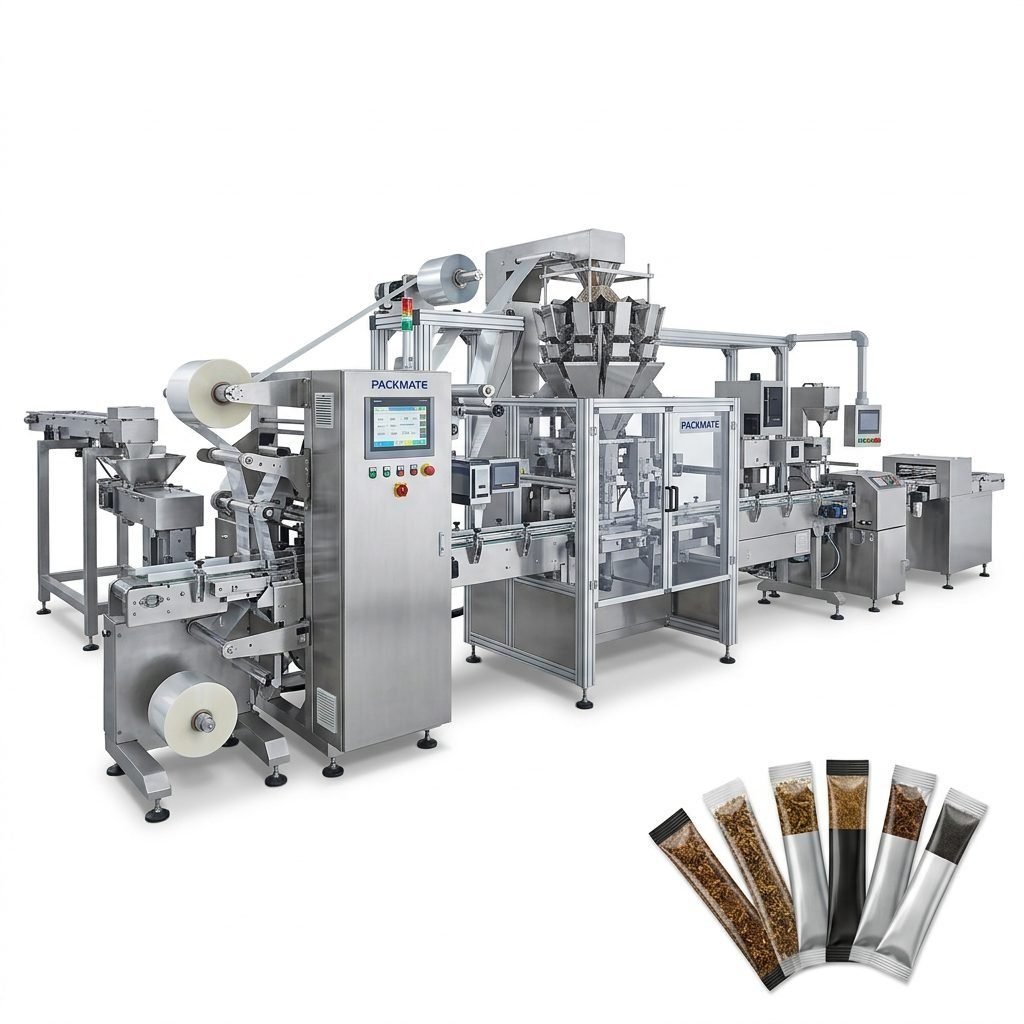
Systems that integrate weighing, filling, sealing, labeling, and cartoning deliver the best long-term value. Confirm compatibility with upstream/downstream equipment and ask about data logging and traceability features for regulatory compliance.
Certifications, safety and compliance
For export and domestic distribution, machines must meet international safety and quality standards. Look for CE, ISO compliance, and supplier-provided documentation that demonstrates adherence to hygiene and machine safety directives.
Packmate emphasizes certification and quality control across its product range; you may review machine certificates and test reports before purchase: Certificate.
Factory capability and supplier assessment
Evaluate the supplier’s manufacturing strength. A robust factory with CNC machining centers, precision assembly lines, and strict QA systems reduces risk. Suppliers with decades of experience usually offer better-documented performance, spare parts control, and field service.
For reference, Packmate Snus Machine operates a 20,000㎡ facility with 30+ years of engineering background and multiple machine models — factors that matter in long-term partnerships. Learn more about the company and its history: About Packmate.
Key supplier questions to ask
📌 What is the standard lead time for delivery and customization?
📌 Do you provide local or remote commissioning, training, and spare parts inventory?
📌 Can you share field references or case studies in similar product segments? (Ask for video demonstrations when possible.)
After-sales service and spare parts
Quick access to spare parts and competent technicians significantly reduces downtime. Confirm spare parts lead time, stock policies, and whether the supplier has regional partners or local agents to support installations in Lebanon.
Tip: Request a spare parts list and recommended consumables for the first 12 months. This helps you budget and keeps your production line reliable.
Total cost of ownership (TCO) considerations
Purchase price is only a part of the story. Evaluate installation costs, training, energy use, maintenance labor, consumables, and expected lifespan. A machine with a slightly higher upfront cost but lower maintenance and better uptime often yields a lower TCO.
Financial checklist
– Payback period estimate based on expected throughput improvements.
– Warranty terms and inclusion of spare parts or on-site service during the warranty window.
Installation, training and commissioning
Proper commissioning and operator training are essential. A reliable supplier will provide on-site setup, process optimization, and operator manuals. If local service is limited, request remote support options and thorough training programs.
When possible, attend a live machine demonstration at an exhibition or factory — Packmate often participates in global exhibitions where you can see machines running: Our Exhibition.
Customization and modular upgrades
Choose vendors that offer modular designs and customization for future product lines. Common upgrades include additional lanes, weighing modules, and automated cartoning. Modular machines save upgrade costs and shorten downtime during format changeovers.
For broader packaging needs (bag, pouch, filling or auxiliary equipment), review complementary product portfolios to ensure your supplier can grow with you: Bag & Pouch Packaging Machines and Filling & Packaging Lines.
Practical maintenance and operational tips
Regular preventive maintenance prevents costly breakdowns. Establish daily checks, weekly lubrication, and a monthly inspection schedule. Keep a log of machine faults and corrective actions to identify recurring issues that may indicate design or training gaps.
Maintenance checklist (short): spare belts, sensors, seal jaws, and a basic tool kit. Stock commonly replaced parts locally where possible.
How to evaluate offers and make the final decision
Create a scoring matrix to compare suppliers on technical fit, price, warranty, lead time, references, and after-sales support. Prioritize uptime, maintainability, and regulatory compliance over lowest purchase price.
Decision checklist (use this when comparing quotes)
⚙️ Production capacity required (pouches/min and monthly throughput)
⚙️ Dosing accuracy and validated filling mechanisms
⚙️ Spare parts availability and local support capability
⚙️ Compliance documentation and certifications
⚙️ Total cost of ownership estimate and warranty terms
Real-world example and vendor reference
Many global manufacturers choose suppliers with proven multi-lane snus lines and comprehensive support networks. Explore case studies for practical evidence of performance and long-term cooperation: Case.
Final recommendations
– Prioritize machines tailored to nicotine pouch handling and dosing rather than general-purpose packaging lines.
– Verify manufacturing credentials and ask for live demonstrations or video proof of similar installations.
– Factor in local parts availability, training, and remote support to minimize disruption in Lebanon.
If you want to contact a supplier or request a quotation, use the manufacturer’s contact channels to discuss capacities and custom needs: Contact Us.
Frequently Asked Questions (FAQs)
Q1: How long does it take to receive and install a snus packaging line in Lebanon?
A1: Typical lead times vary by customization and production schedules; standard systems can ship in 8–16 weeks, and installation plus commissioning may take several days to a few weeks depending on line complexity and training needs.
Q2: What is the expected accuracy for nicotine pouch dosing?
A2: Well-engineered systems with precision weighing or volumetric fillers can achieve tight tolerances — often within a few percent of target dose — but confirm specification limits and validation procedures before purchase.
Q3: Are spare parts and technical support available locally in Lebanon?
A3: It depends on the supplier network. Verify if the vendor keeps regional spare parts stock or has local partners. Otherwise, ensure reasonable lead times for parts shipment and remote troubleshooting options.
Q4: Can machines be upgraded to handle multiple pouch formats?
A4: Most reputable manufacturers design modular systems; inquire about changeover kits, extra lanes, and format tooling to future-proof your investment.
Q5: What certifications should I insist on from the supplier?
A5: Ask for CE and ISO certificates, machine safety documentation, and any hygiene or materials certificates relevant to nicotine or food-contact applications.