Optimizing a nicotine pouch production line for higher line speed is a critical challenge for manufacturers aiming to increase output while maintaining product integrity and regulatory compliance. This guide covers practical engineering, process, and operational improvements that directly impact throughput — from machine selection and layout to maintenance, materials, and staffing. Whether you operate single-lane sachet machines or high-speed multi-lane systems, these strategies will help you unlock better efficiency and consistent, scalable results.
Understanding Line Speed vs. Effective Throughput
Line speed (measured in cycles per minute or pouches per minute) is only one part of throughput. Effective throughput accounts for downtime, rejects, changeovers, and operator efficiency. A machine rated at 400 pouches/min can often achieve far less in real-world conditions if material handling, pouch integrity checks, or downstream processes create bottlenecks. To improve output you must analyze the complete value stream — not just the filling head or sealing station.
Key metrics to monitor
• Planned production speed (design spec) • Actual running speed • Overall Equipment Effectiveness (OEE) • Changeover time • Reject rate and waste percentage. Tracking these metrics gives you objective targets for improvement.
Machine Selection and Configuration
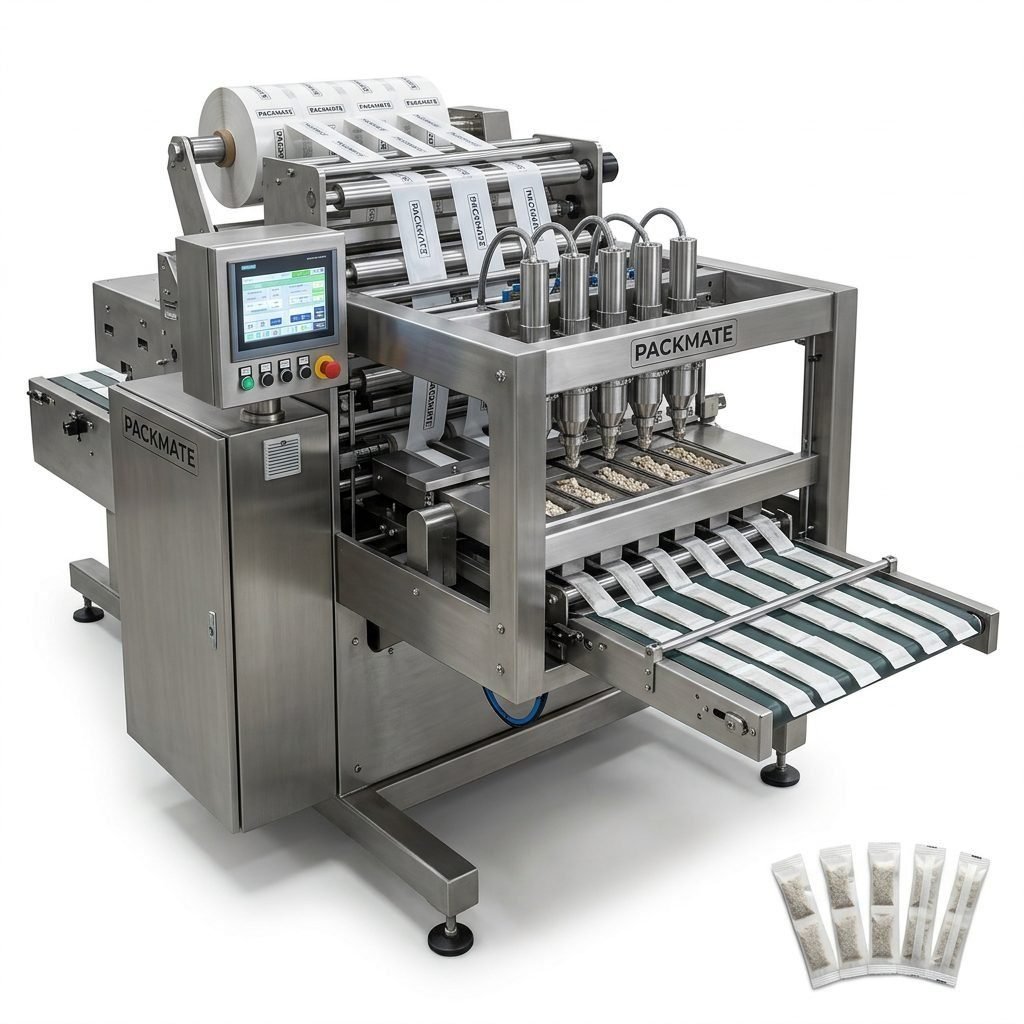
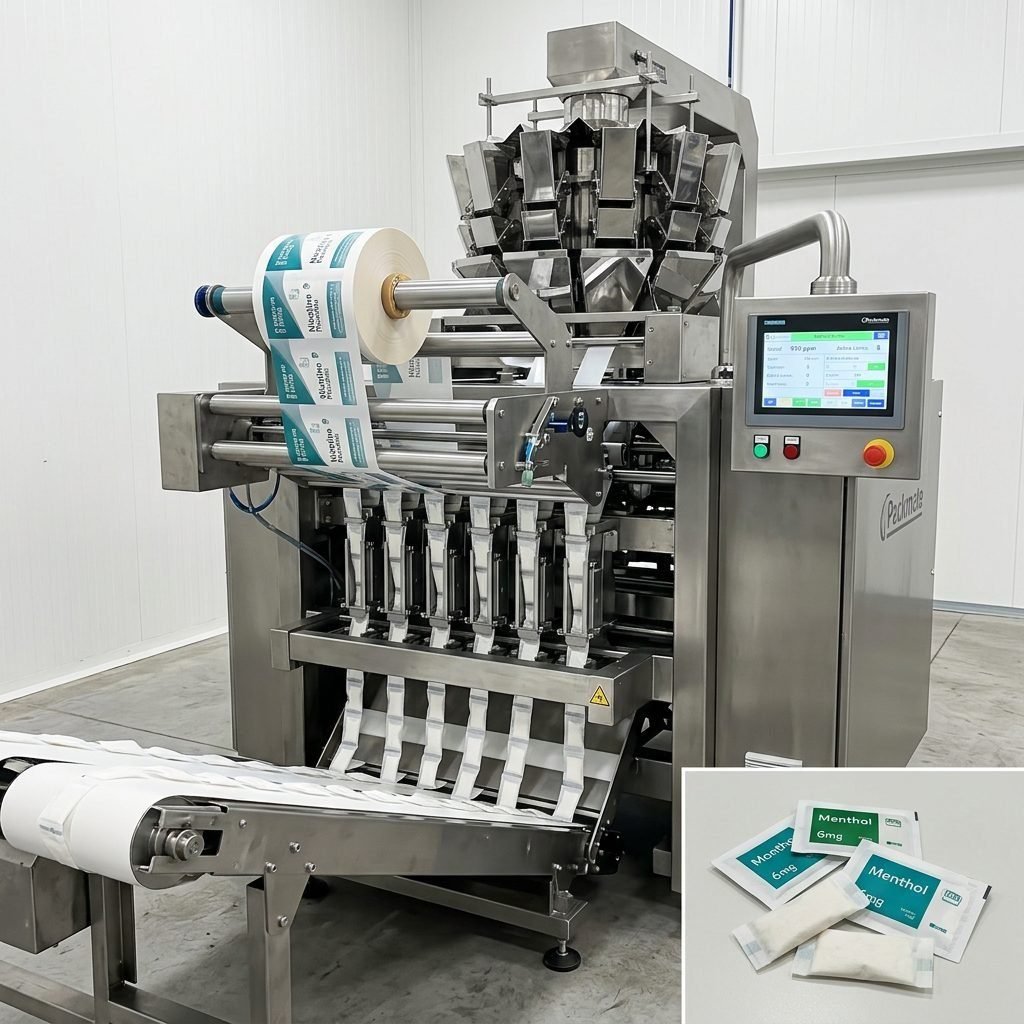
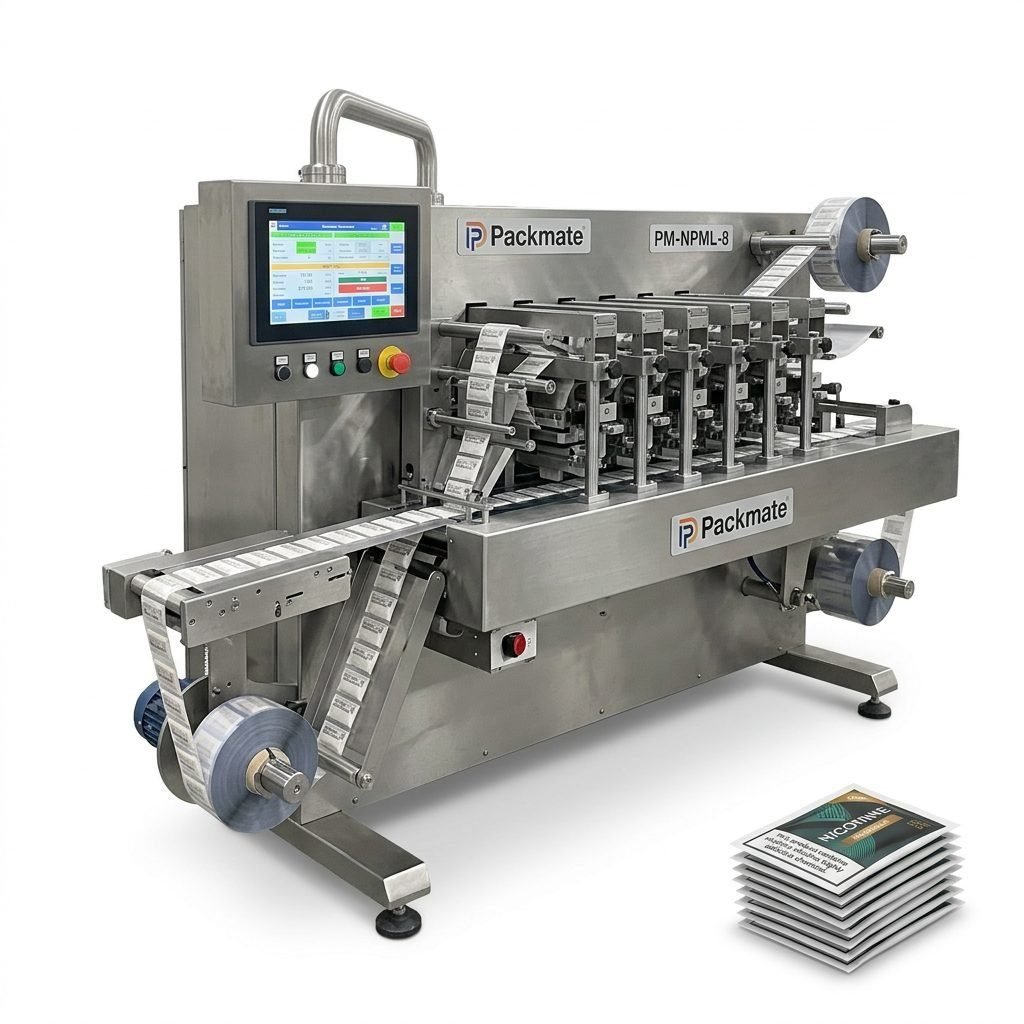
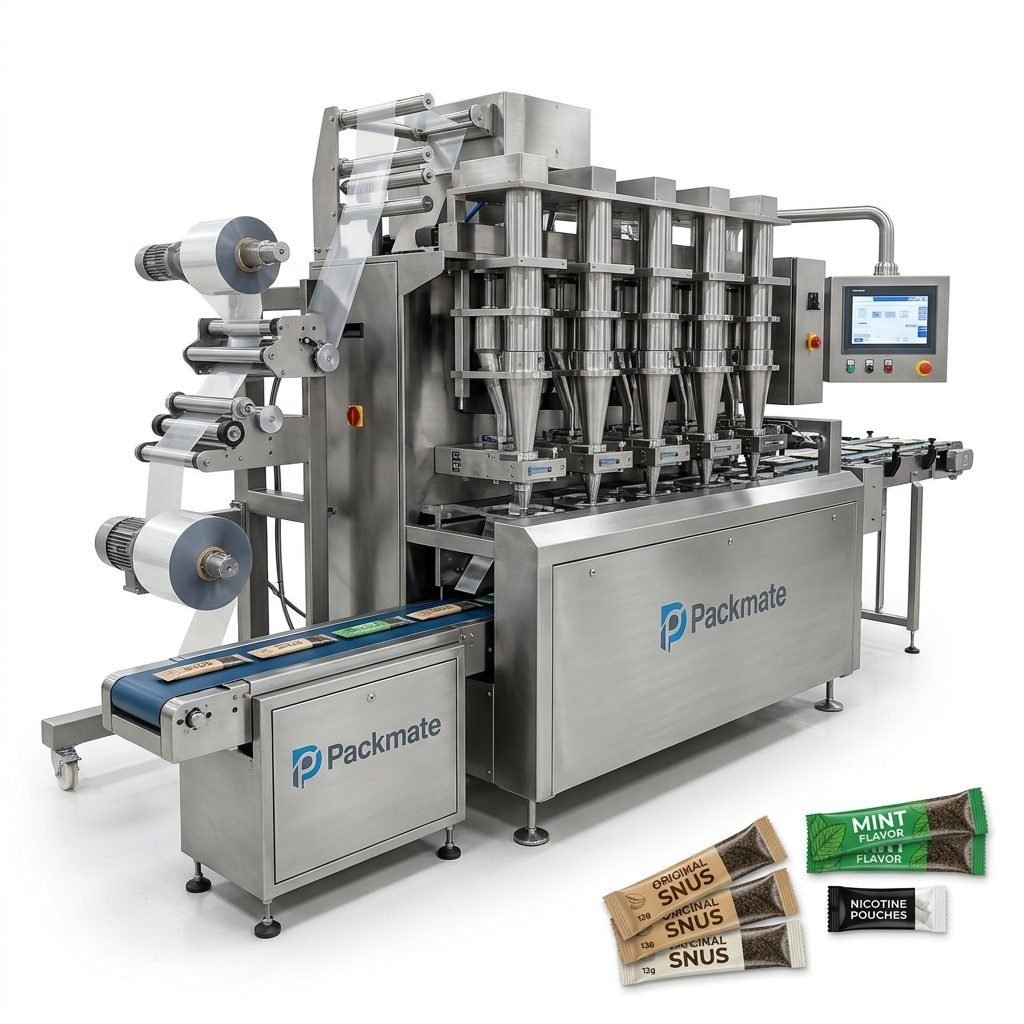
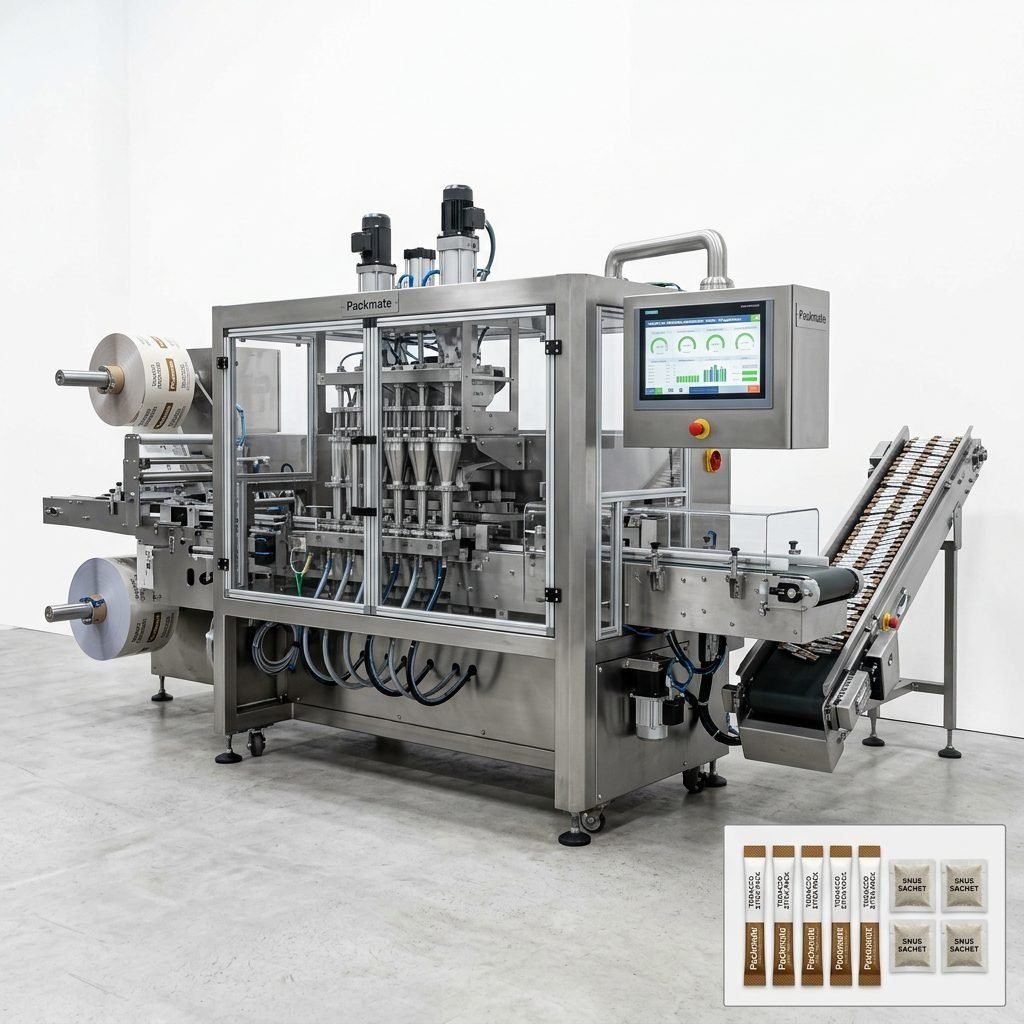
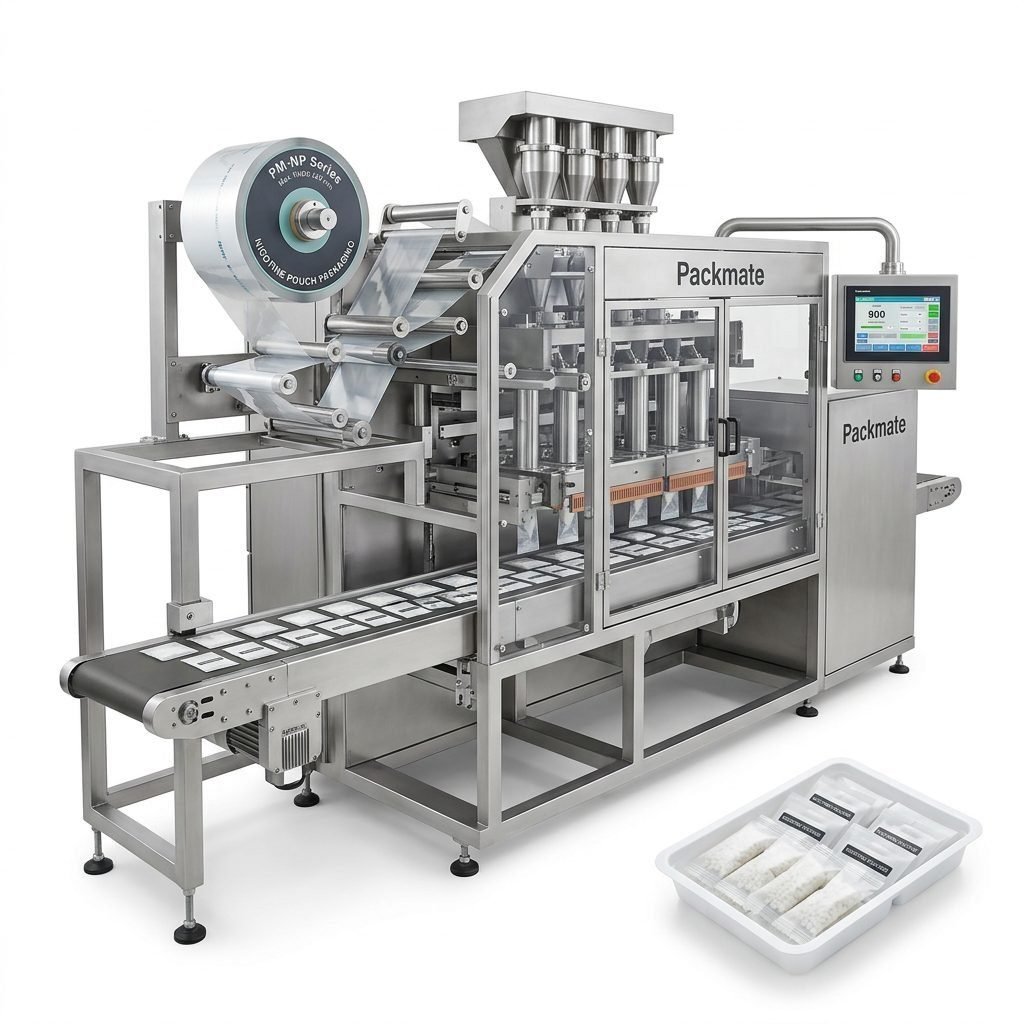
Choosing the right machine is foundational. If your business requires small-dose nicotine pouches at high volume, multi-lane systems and synchronized indexing provide higher theoretical speeds and lower cost per pouch. Evaluate machines for: servo-driven motion control, quick-change forming tools, high-precision filling heads, and robust sealing modules. Consider Packmate’s multi-lane snus packing solutions for scalable configurations and turnkey production lines: Snus & Nicotine Packaging Machines.
Quick tip: Prioritize machines with modular tooling. Modular systems reduce downtime for format changes and allow incremental investment as production scales.
Optimizing Material Flow and Feeding Systems
Even the fastest filler will be starved if upstream and downstream material handling is inefficient. Design conveyor lengths, buffer zones, and accumulators to smooth transient production rates. Use synchronized feeders and gravimetric or volumetric dosing systems that match the line speed. If your product requires seasoning or desiccant pouches as part of packaging, ensure those inserters can operate at target speeds without causing jams.
Common material handling fixes
• Install buffer zones between machines to prevent starve/stop cycles. • Use high-capacity hoppers and level sensors for continuous supply. • Standardize reel cores and spool sizes to speed up roll changes.
Precision Dosing and Consistency
Accurate dosing minimizes rejects and reduces corrective stops. For nicotine pouches, dosing systems must handle small masses with high repeatability. Consider servo-driven augers or micro-dosing pumps with closed-loop feedback to keep weight variance within tolerance at high speed. Integrate inline checkweighers from your Weighing & Packaging Systems to detect drift early and trigger automatic adjustments.
Performance note: Tightening dosing tolerances can allow a slight increase in line speed without increasing rejects, because fewer rejected pouches mean less stoppage time.
Improve Changeover and Setup Times
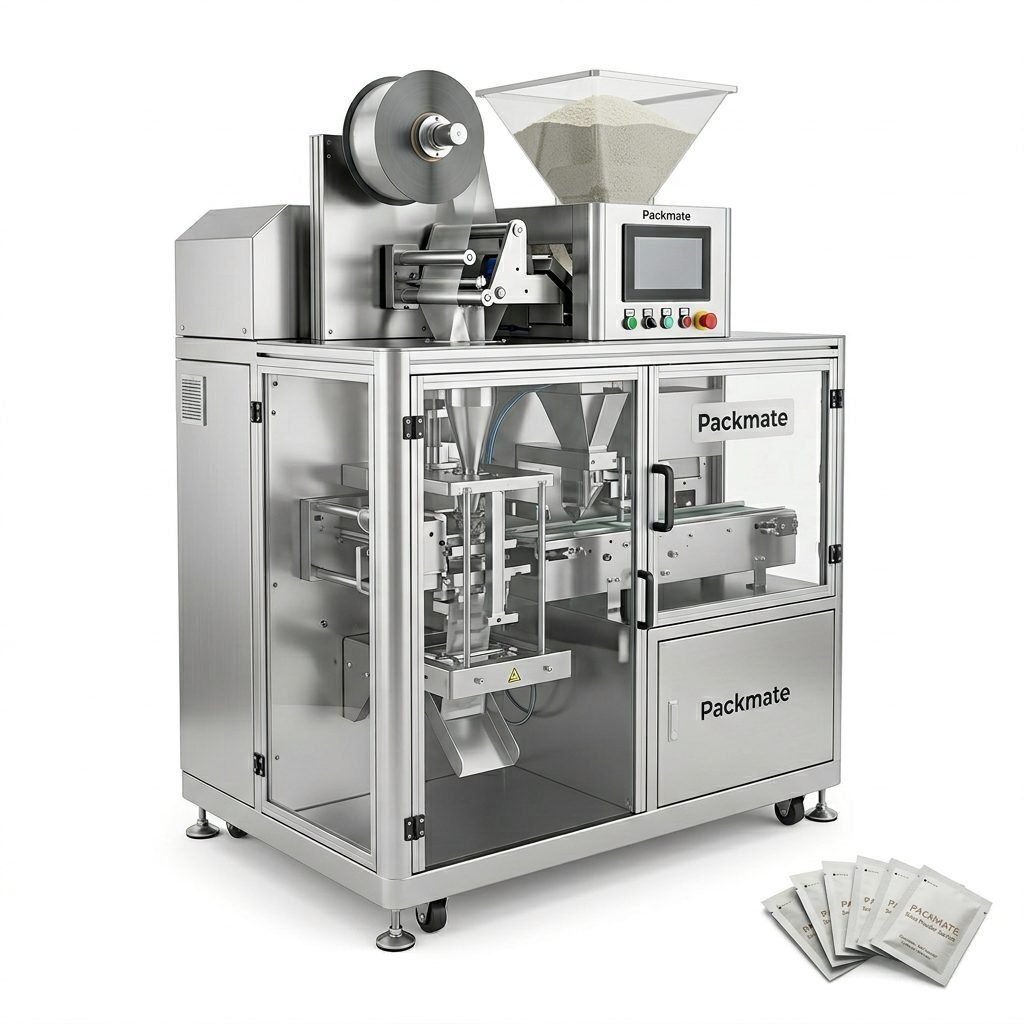
Quick changeovers are essential when running multiple SKUs. Implement SMED (Single-Minute Exchange of Die) principles by pre-staging tooling, using quick-clamp fixtures, and standardizing adjustment points. Operators should be trained to perform checks concurrently (e.g., checking seals while another operator loads pouches). Packmate’s designs often incorporate quick-change format tooling to reduce downtime on sachet and stick pack lines: Sachet & Stick Pack Machines.
Checklist for faster changeovers
• Pre-kitted tools and spare parts • Standardized torque settings • Color-coded guides for alignment • Dual-station changeover where feasible
Preventive Maintenance and Condition Monitoring
Stopping for unexpected failures is the most damaging constraint on throughput. A robust preventive maintenance (PM) program based on runtime hours and vibration/temperature sensors will keep machines running at rated speeds. Introduce predictive maintenance tools: vibration analysis on bearings, thermal checks on motors, and laser alignment for cams and belts. Keep spare critical parts on-site to quickly replace components that commonly fail.
Maintenance KPI: Track Mean Time Between Failures (MTBF) and Mean Time To Repair (MTTR). Reducing MTTR by just 20% can yield noticeable increases in weekly output.
Automation and Integration: The Role of Upstream and Downstream Equipment
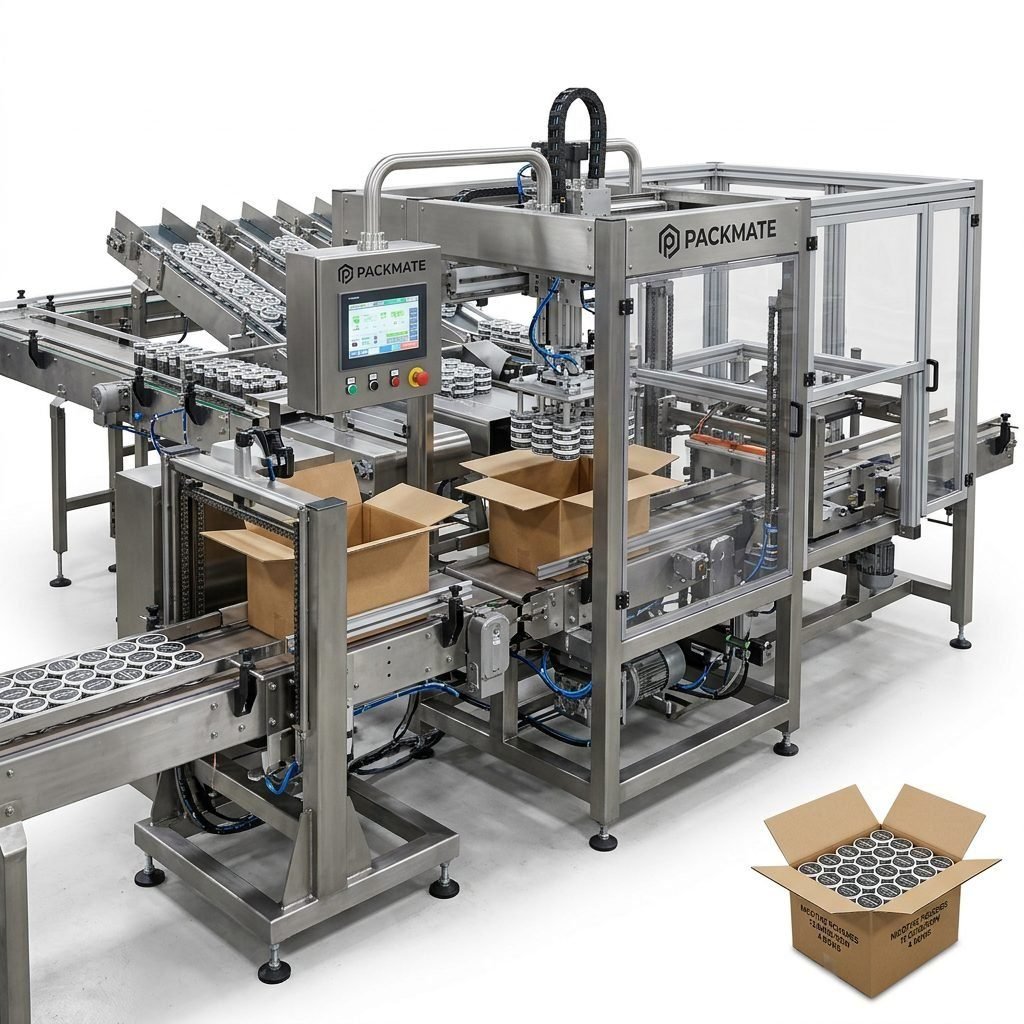
Full-line automation — combining fillers, sealers, case packers, and palletizers — minimizes manual intervention and enables higher continuous speeds. Evaluate whether adding automated carton erectors or robotic pick-and-place systems downstream eliminates bottlenecks. Integration with PLCs and centralized HMI dashboards helps operators see process bottlenecks and adjust in real time. If you need turnkey solutions, Packmate offers integrated filling and packaging lines: Filling & Packaging Lines.
Integration best practices
• Standardize communication protocols (Ethernet/IP, Modbus TCP) • Centralized alarms and logging • Keep mechanical line speeds synchronized via master encoder • Include safety interlocks without compromising uptime
Quality Control at Speed
Higher speed can mask quality deviations unless you have inline inspections. Vision systems can verify pouch sealing, print codes, and detect contamination or foreign objects. Inline leak testing and weight monitoring catch issues before they accumulate. Balancing speed with reliable quality checks is essential — rejecting defective pouches early is cheaper than halting a whole batch later.
Quality highlight: Implement automated scrap segregation with immediate root cause feedback to reduce repeat defects.
Operator Training and Shift Management
Skilled operators reduce human-caused stoppages. Provide structured training on setup, troubleshooting, and routine maintenance. Create operator checklists and short-shift handover notes that highlight pending issues. Consider multi-skilled teams so that staffing gaps do not force a line to stop. In regions with local labor practices, be mindful of shift lengths and break patterns to maintain consistent performance.
Material Quality and Supplier Collaboration
Packaging film, pouch paper, and nicotine pouch substrate variability can cause slip, jam, and sealing issues at high speeds. Work with suppliers to tighten tolerances on film thickness, coefficient of friction, and sealant formulations. Testing incoming batches before they enter production reduces surprises. If you collaborate closely with suppliers, you can often develop optimized materials that enable higher run speeds without increasing rejects.
Layout, Ergonomics, and Facility Considerations
A production line layout that minimizes material travel and operator walking time increases effective uptime. Place spares, consumables, and tools within easy reach. Ensure adequate ventilation and dust control — nicotine pouch lines may have regulatory requirements for controlled environments in some markets. Packmate’s factory and manufacturing strength, with 20,000㎡ facilities and advanced CNC systems, ensures component precision which supports reliable field performance: About Packmate.
Data-Driven Continuous Improvement
Use data to guide improvements. Capture runtime, rejects, energy consumption, and downtime reasons. Apply Pareto analysis to focus on the few causes that account for most lost production. Small iterative changes — better alignment, slightly different machine timing, or updated SOPs — compound into big gains.
ROI example: Reducing changeover by 30% and MTTR by 20% can often increase weekly output by 10–20% without buying new equipment.
Case Study Snapshot
A European customer running multi-lane nicotine pouch lines partnered with a system supplier to add inline vision, upgrade to servo dosing, and implement a staged buffer. Results: line speed increased by 25%, reject rate fell by 40%, and overall cost per pouch dropped. For examples of similar implementations and global cooperation cases, see our case studies: Case.
Regulatory and Safety Considerations
Faster production must not bypass safety and compliance. Ensure your line meets local regulations for nicotine product handling, packaging labeling, and worker protection. Machines should have appropriate guarding, emergency stops, and documented safety procedures. Certifications such as CE and ISO often guide design choices and are essential for export markets.
When to Upgrade Equipment vs. Optimize Existing Assets
If you find persistent mechanical limits — e.g., fillings that cannot keep up, repeated seal integrity failures at target speed — an equipment upgrade may be the best long-term solution. However, many operations gain significant capacity through process, training, and material improvements before a major capital purchase. Evaluate total cost of ownership, payback period, and disruption risk when deciding.
Partnering for Turnkey Solutions
For companies ready to scale, partnering with a supplier that provides not just machines but full turnkey solutions — from filling to secondary packaging and integration — accelerates implementation and reduces integration risk. Packmate offers a broad portfolio across snus, sachet, stick pack, and auxiliary equipment to help customers scale reliably: Auxiliary Packaging Equipment.
Final Implementation Roadmap
1) Baseline measurement: collect OEE, reject rates, changeover time. 2) Prioritize quick wins (material handling, tool kits). 3) Implement precision dosing and inline inspection. 4) Introduce PM and predictive maintenance programs. 5) Consider automation/upgrades for bottleneck stations. 6) Measure impact and iterate.
Need expert help? Reach out to Packmate for tailored options and turnkey line design to improve line speed and production efficiency: Contact Us.
Frequently Asked Questions
Q1: How much can I realistically increase throughput without new equipment?
A1: Many operations see 10–25% gains through process optimization, improved maintenance, and operator training. The exact improvement depends on current performance and bottlenecks.
Q2: Are multi-lane machines always better for line speed?
A2: Multi-lane machines increase theoretical capacity but require precise synchronization and higher-quality materials. They are ideal when demand justifies slightly higher complexity.
Q3: What are the most common causes of rejects at high speed?
A3: Common causes include inconsistent dosing, improper sealing (temperature/pressure issues), material variances, and misaligned tooling.
Q4: How important is supplier collaboration for material specs?
A4: Extremely important. Working closely with film and substrate suppliers to refine thickness, sealant formulation, and friction properties allows you to run at higher speeds with fewer stoppages.
Q5: Where can I find turnkey case studies and certification details?
A5: Visit Packmate’s case and certificate pages for examples and compliance documentation: Case | Certificate.