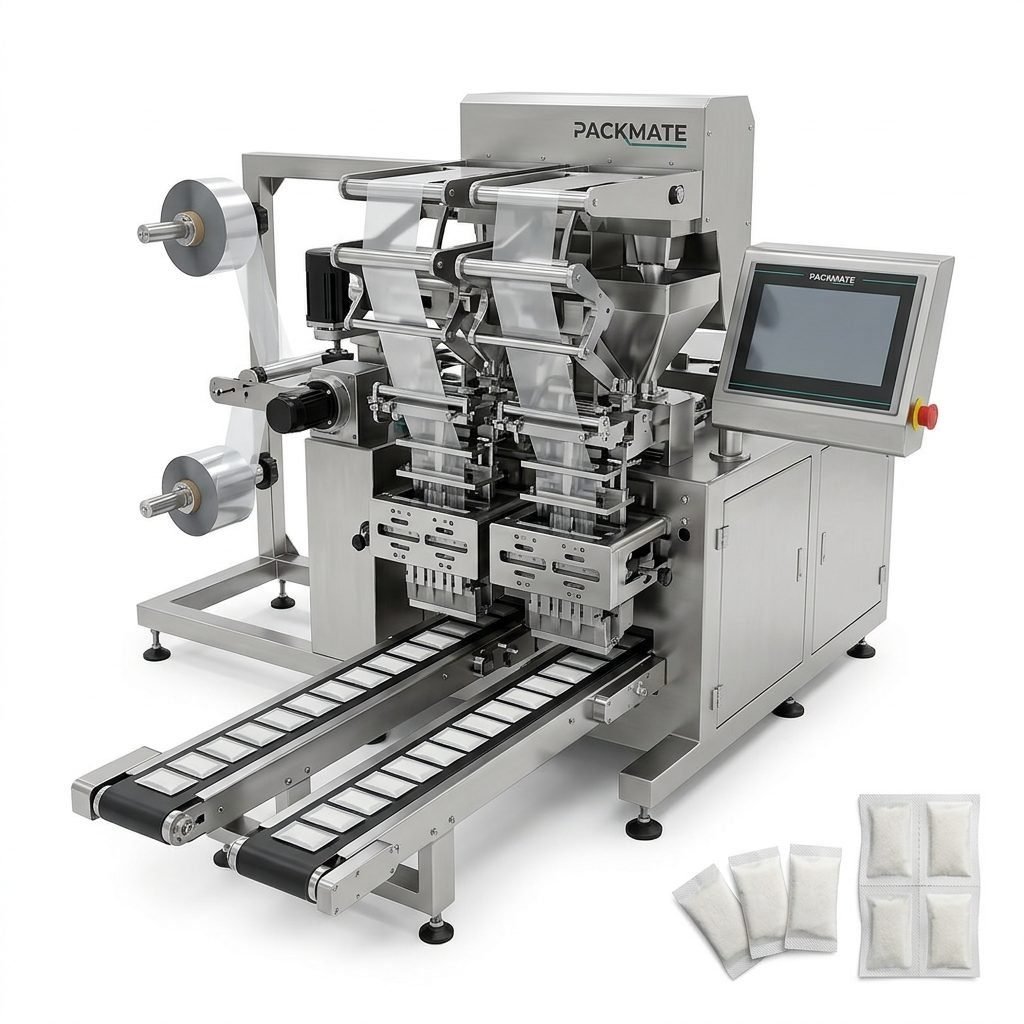
For companies scaling nicotine pouch and snus production, selecting the right packing equipment is a strategic decision that affects product quality, line efficiency, and regulatory compliance. This article presents a comprehensive guide to high-speed, precise nicotine pouch packing machines and turnkey solutions from a trusted manufacturer with decades of engineering experience. Readers will learn about machine types, customization options, production capacity optimization, quality control, and long-term service considerations to help make an informed purchasing choice.
🏭 Manufacturer Profile & Heritage
Packmate Snus Machine is a specialized snus packing machine manufacturer with over 30 years of engineering experience. From humble beginnings in 1993 to the establishment of the company in 2003 and an extensive modern factory spanning 20,000㎡, the company now offers more than 50 machine models and tailored turnkey packaging lines for the nicotine pouch, food, pharmaceutical, and daily chemical sectors.
With advanced CNC machining centers, precision assembly lines, and strict quality testing systems, the factory emphasizes reliability and long-term performance — critical for continuous production of small-dose pouch formats.
⚙️ Core Machine Types for Nicotine Pouch Production
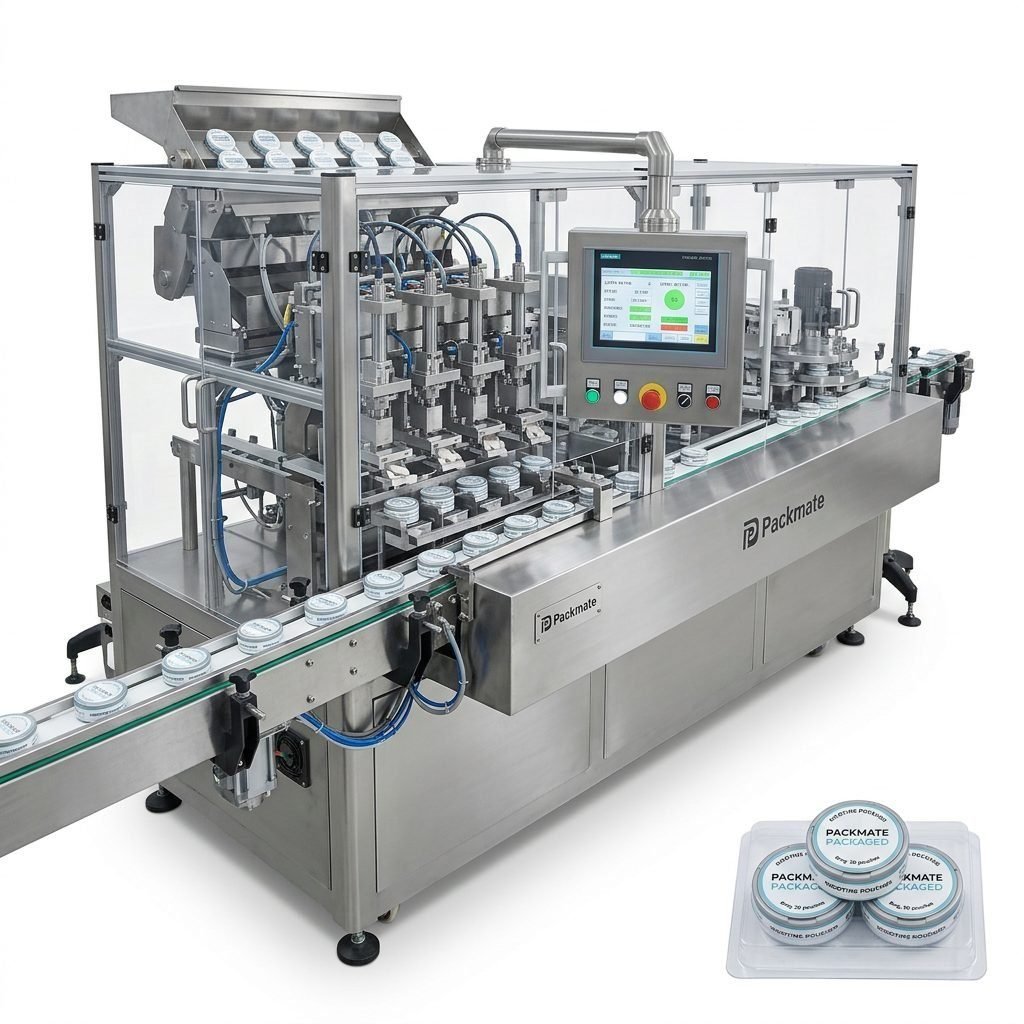
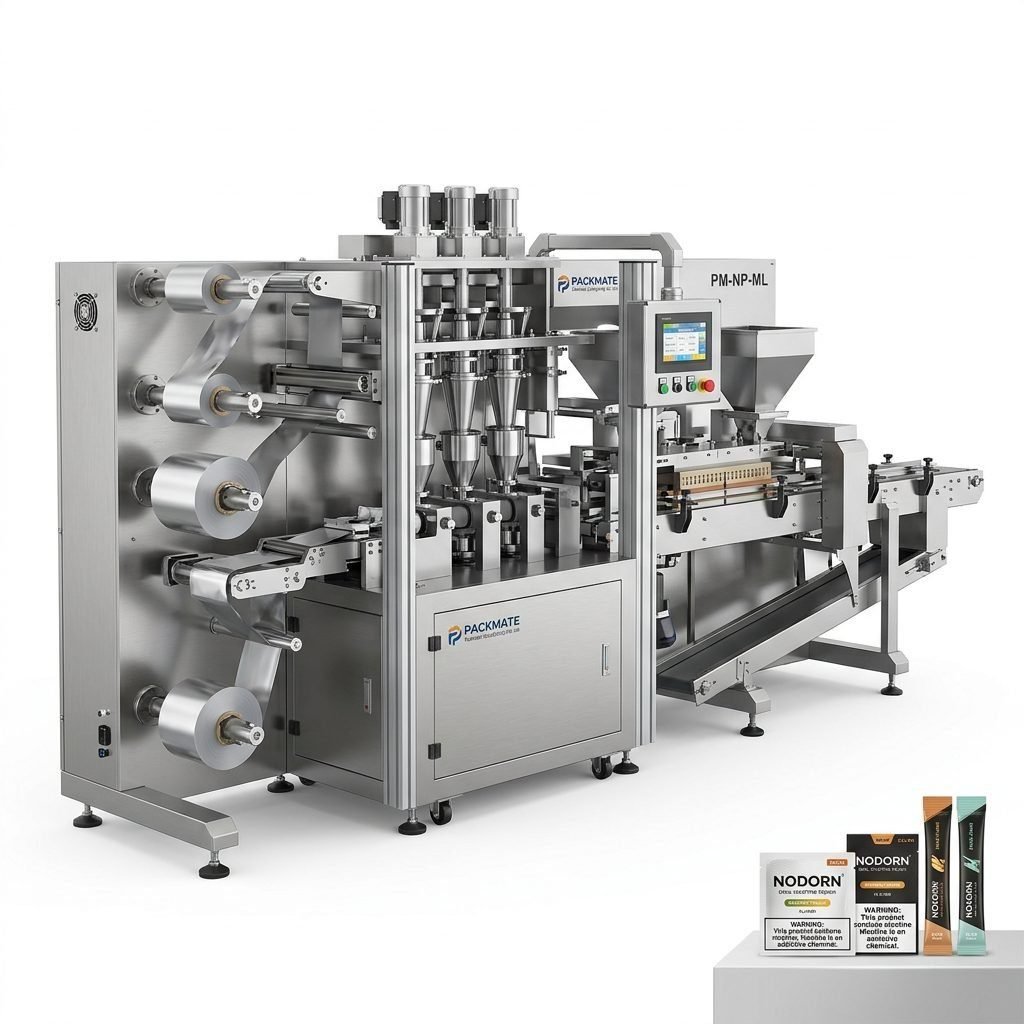
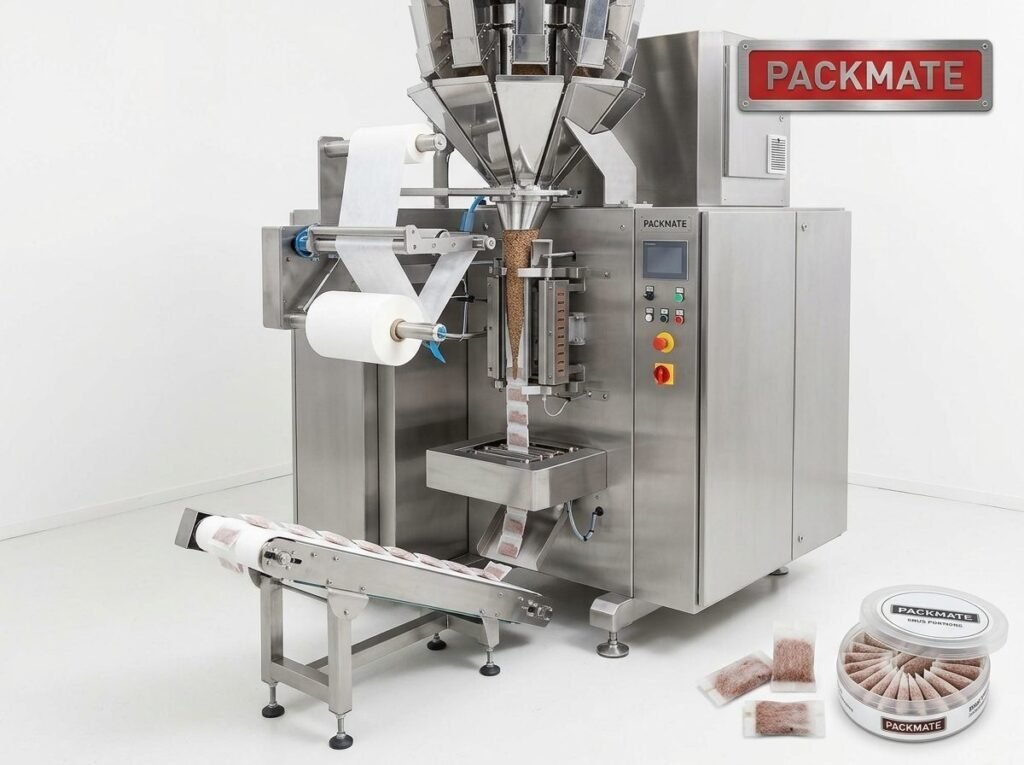
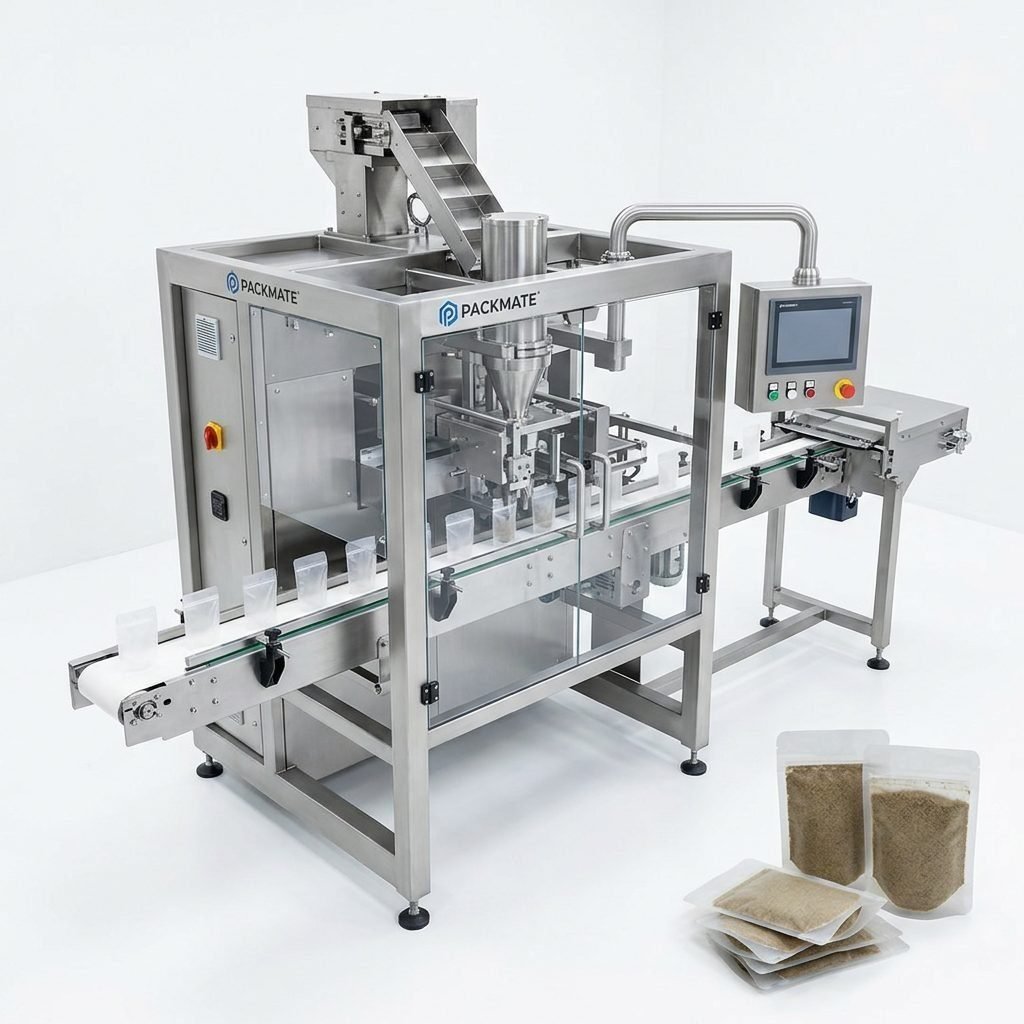
Nicotine pouch packing solutions vary by format and speed requirements. Common machine categories include:
-
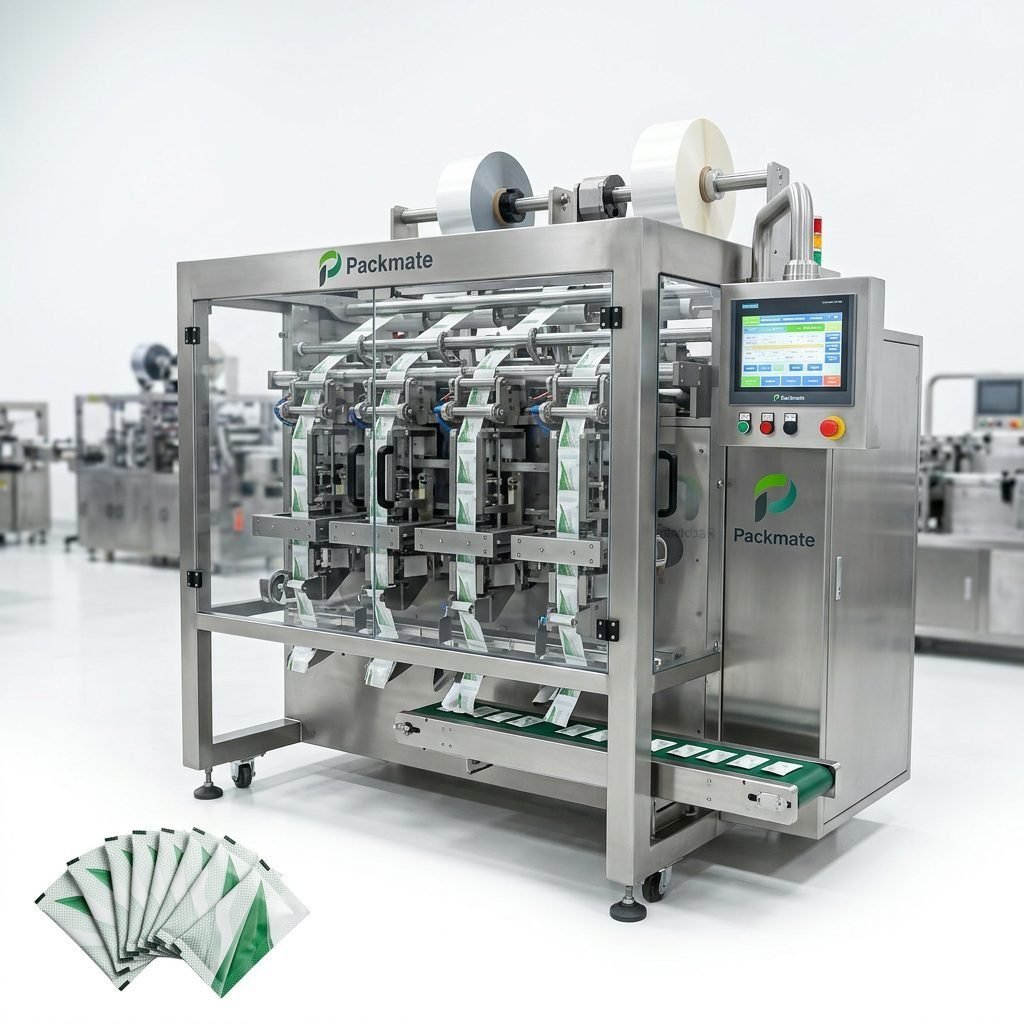
Multi-lane snus pouch machines for high-throughput small-dose pouches.
-
Stick pack and sachet machines for single-dose or elongated formats.
-
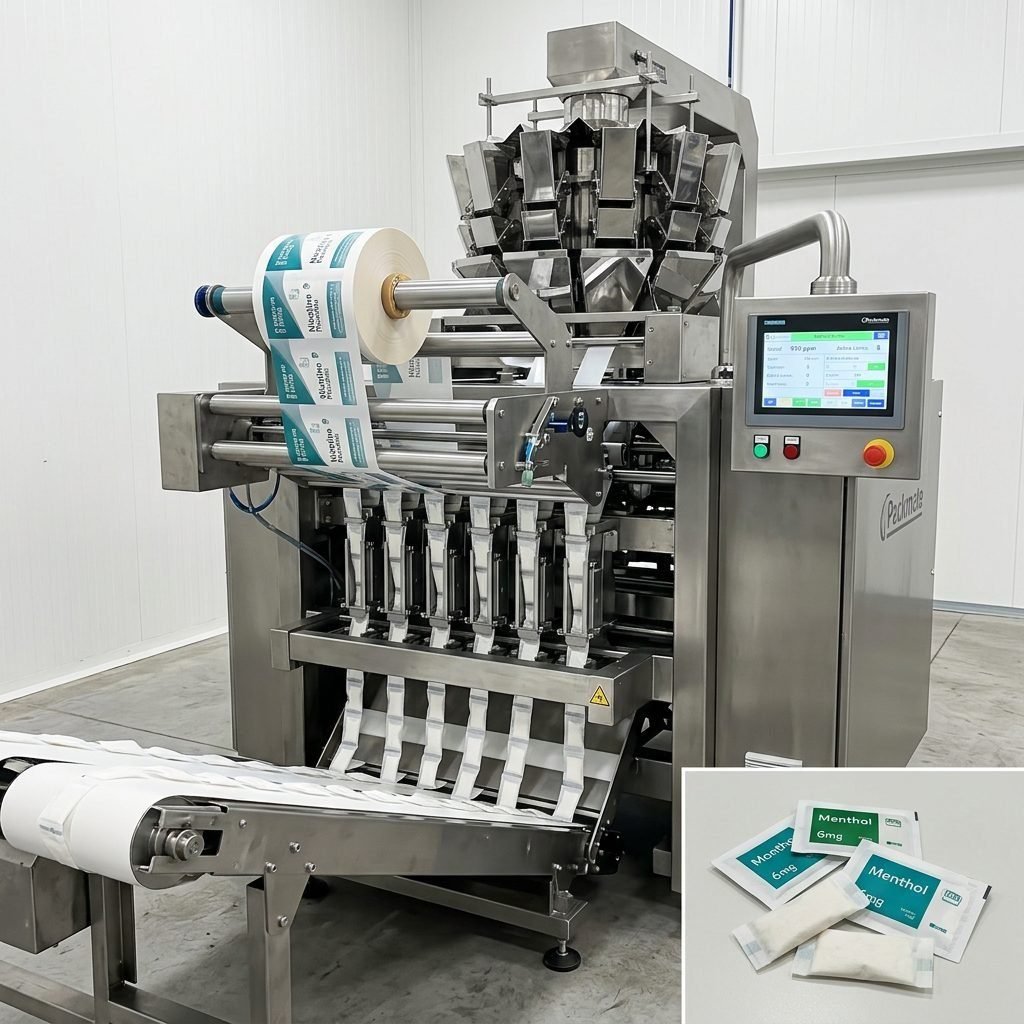
Weighing and filling systems integrated for powder or granule nicotine blends.
-
Auxiliary equipment such as cartoning, boxing, and labeling for finished product lines.
📦 Typical Production Capabilities
Depending on configuration, modern multi-lane nicotine pouch machines can achieve extremely high outputs while maintaining pouch weight accuracy and sealing integrity. Production rates and format flexibility are balanced through:
-
Lane count and pitch adjustments for speed scaling.
-
Servo-driven dosing to improve precision and reduce product giveaway.
-
Quick-change tooling and format parts for rapid product changeovers.
✅ Key Features That Ensure Precision & Speed
When evaluating packing machines for nicotine pouches, prioritize features that directly affect product consistency and line uptime:
Servo control systems for synchronized motion and exact pouch formation; high-precision weighing modules to ensure dose accuracy; stainless-steel contact parts for hygiene and cleanability; and modular design to allow easy upgrades and expansions.
🔧 Customization & Turnkey Solutions
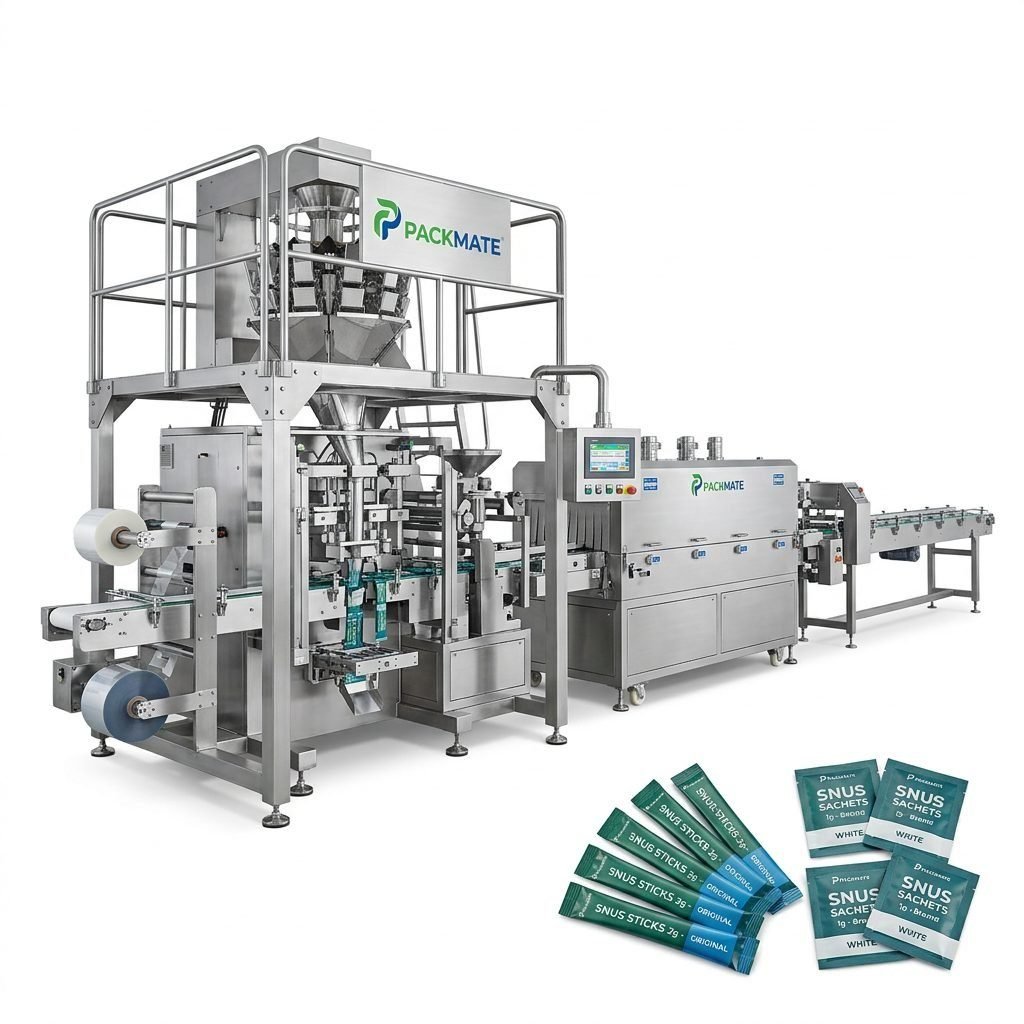
One of the strongest advantages offered by established manufacturers is the ability to deliver full turnkey lines configured to your product, production target, and regulatory needs. Customization can include multi-lane layouts, specific material handling (powder vs granular), hygienic machine finishes, and integration with upstream and downstream equipment.
For detailed product families and tailored solutions, explore the manufacturer’s portfolio: Snus & Nicotine Packaging Machines, Bag & Pouch Packaging Machines, and Sachet & Stick Pack Machines.
🔬 Quality Control & Certifications
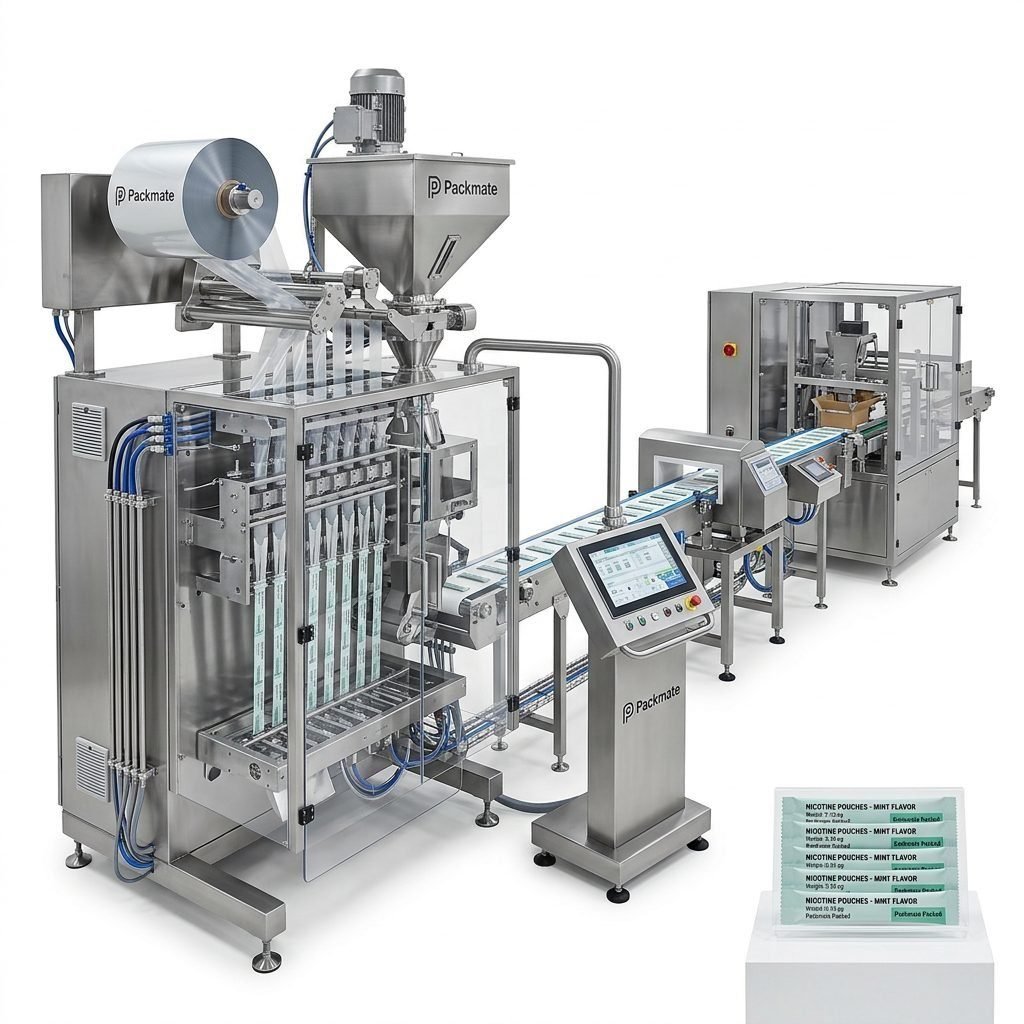
Compliance and consistent quality are non-negotiable in nicotine pouch production. Machines from reputable manufacturers often come with international certifications such as CE and ISO, and are built to minimize contamination risks via sanitary design and easy-to-clean surfaces. Inline monitoring options (weight checks, leak detection, and seal integrity inspection) help maintain continuous quality assurance.
📈 Factory & Manufacturing Strength
The manufacturer operates a 20,000㎡ facility equipped with advanced CNC machining centers and precision assembly lines. This vertical capability enables faster prototyping, tighter tolerances, and reliable spare part availability — important for global customers requiring long-term support and predictable lead times.
🧩 Integration: From Filling to Cartoning
A true turnkey approach links filling, dosing, pouch forming, sealing, and end-of-line packaging into a cohesive production flow. Typical integrations include:
-
Filling & packaging lines with accurate dosing modules (Filling & Packaging Lines).
-
Weighing & packaging systems for automatic portion control (Weighing & Packaging Systems).
-
Auxiliary equipment for case erecting, labeling, and palletizing (Auxiliary Packaging Equipment).
🛠️ Installation, Training & After-sales Service
Professional installation and operator training are essential to achieve the design output and maintain machine reliability. Leading suppliers provide on-site commissioning, operator & maintenance training, remote diagnostics, and spare parts support. Consider service packages that include preventive maintenance schedules and fast-response troubleshooting to reduce downtime.
🌍 Global Reach & Exhibition Presence
A manufacturer with global exhibition participation demonstrates commitment to international markets and direct customer engagement. Visiting live demos at trade shows can provide insights into machine operation, format flexibility, and build quality. For scheduled events and live demonstrations, see Our Exhibition.
📂 Typical Case Examples
Successful global deployments show scalable configurations from small pilot lines to multi-shift high-speed production. Case studies underline improvements in throughput, reduced product giveaway, and improved packaging consistency. For detailed case references and customer stories, refer to the manufacturer’s case library: Case.
💡 Selecting the Right Machine — A Practical Checklist
-
Define desired production output (pouches per minute and per shift).
-
Clarify pouch format(s), material types, and sealing requirements.
-
Assess dosing accuracy needs and choose appropriate weighing/filling modules.
-
Verify hygiene design, cleanability, and compliance documentation.
-
Evaluate spare parts supply, local service capabilities, and training offerings.
🔎 ROI Considerations & Cost of Ownership
When calculating return on investment, factor in not only the initial equipment price but also production yield, product giveaway, maintenance costs, energy consumption, and projected uptime. High-precision servo systems and accurate dosing can reduce material waste and improve margins over time. Always request a total cost of ownership estimate including recommended spares and preventive maintenance plans.
📞 Contact & Next Steps
For inquiries regarding machine models, detailed specifications, or to request a quote and factory visit, please contact the manufacturer directly: Contact Us. For company background and mission statements, review About Packmate.
🔁 Maintenance & Lifecycle Support
Long-term machine reliability depends on scheduled maintenance and access to certified technicians. Recommended practices include:
-
Documented preventive maintenance checklists and spare-part inventories.
-
Remote diagnostic tools to reduce time-to-fix and production loss.
-
Regular training refreshers for operators and maintenance personnel.
📑 Supporting Resources
To better understand product offerings and technical documentation, consult the supplier’s catalogs and FAQ resources before specifying equipment: Catalog and FAQs.
🧾 Final Recommendations
Selecting the right nicotine pouch packing machine is a balance of production targets, accuracy, hygiene requirements, and long-term service. Work with experienced manufacturers that provide multi-lane, modular systems and full-line integrations to future-proof your production. Prioritize machines with clear documentation, accessible spare parts, and robust after-sales service to minimize risk.
📌 Summary — Common Questions
Below are common questions customers ask when evaluating nicotine pouch packing solutions:
-
What is the typical lead time for a customized multi-lane snus packing line?
-
How accurate are the dosing and weighing systems? Manufacturers often specify dosing tolerances and provide inline check-weighers to validate every pouch.
-
What service and spare parts support is available internationally?
-
Can the machine be expanded for future product formats or increased speed?
-
What certifications and quality protocols are in place to ensure compliance with local regulations?
Frequently Asked Questions
Q1: How do I choose between multi-lane and single-lane systems?
A1: Choose multi-lane systems for high-volume small-dose pouches to maximize throughput and space efficiency. Single-lane or stick-pack systems are optimal for niche products or flexible testing lines.
Q2: What packaging materials are compatible?
A2: Most machines accommodate a range of films and laminates, but confirm sealing temperatures and material thickness ranges with the supplier before production qualification.
Q3: Are trials or factory acceptance tests (FAT) available?
A3: Reputable manufacturers provide FAT and demonstration runs at their facility. Witnessing actual pouch formation and weighing accuracy is recommended prior to shipping.
Q4: How to ensure long-term compliance and documentation?
A4: Ask for machine validation documents, spare parts lists, and maintenance logs. ISO and CE certifications indicate adherence to standardized processes and safety.