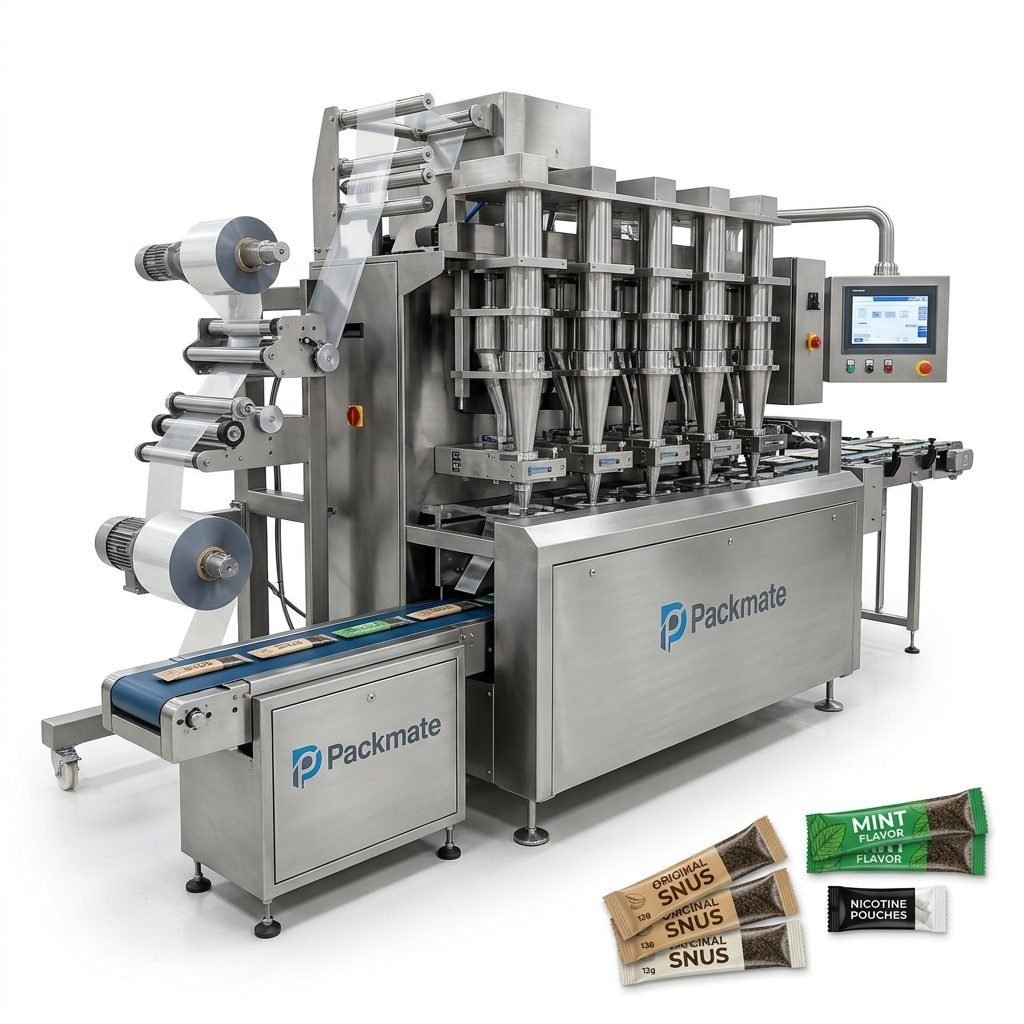
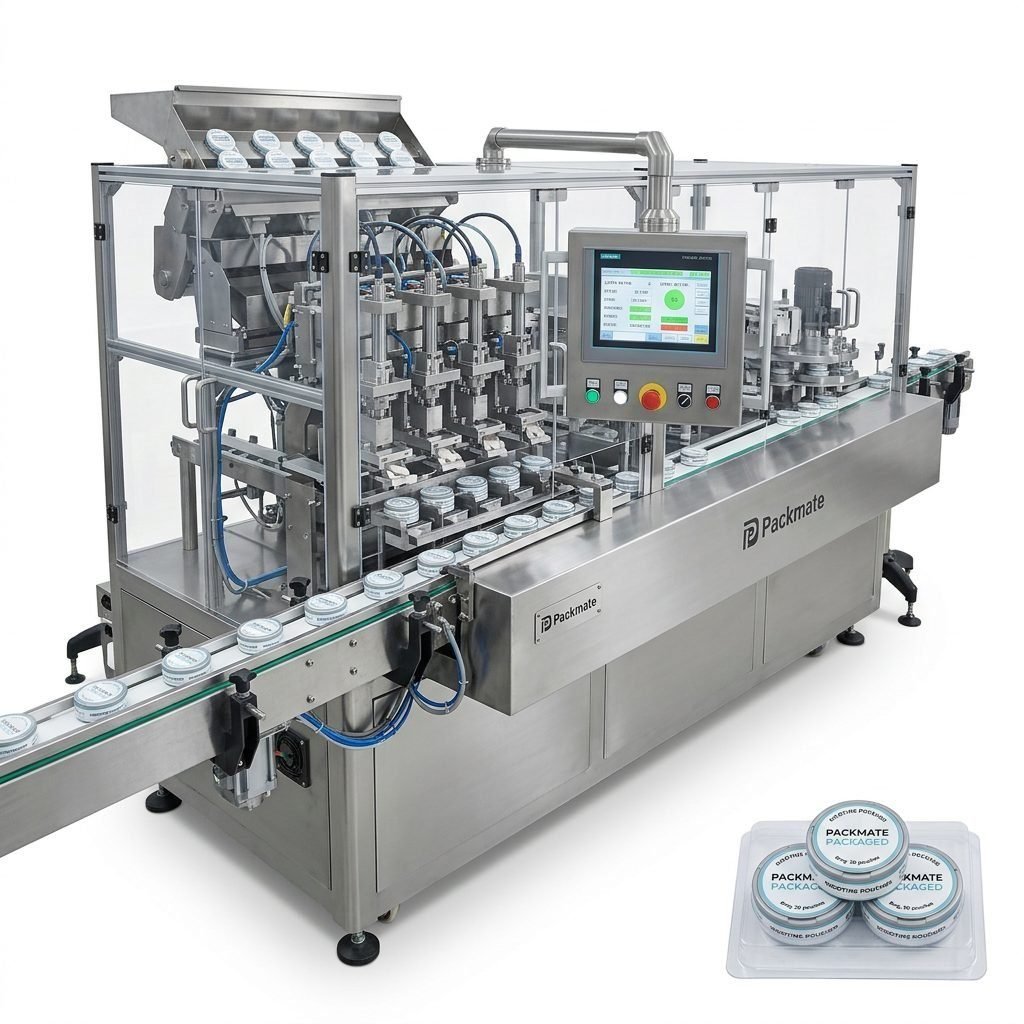
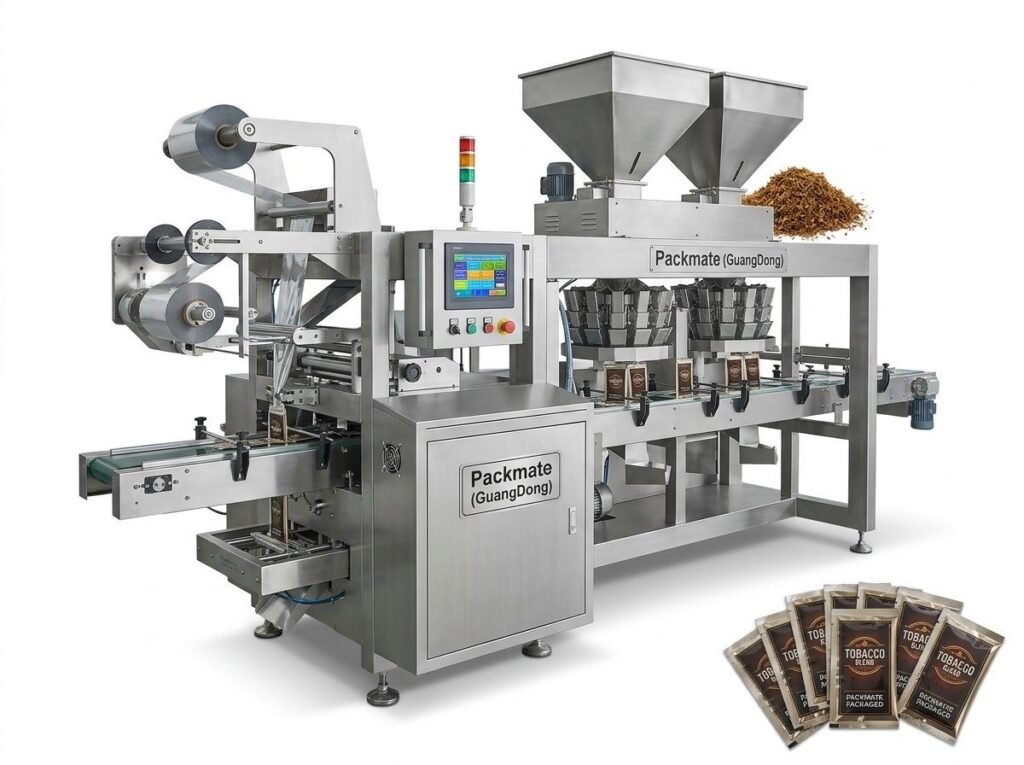
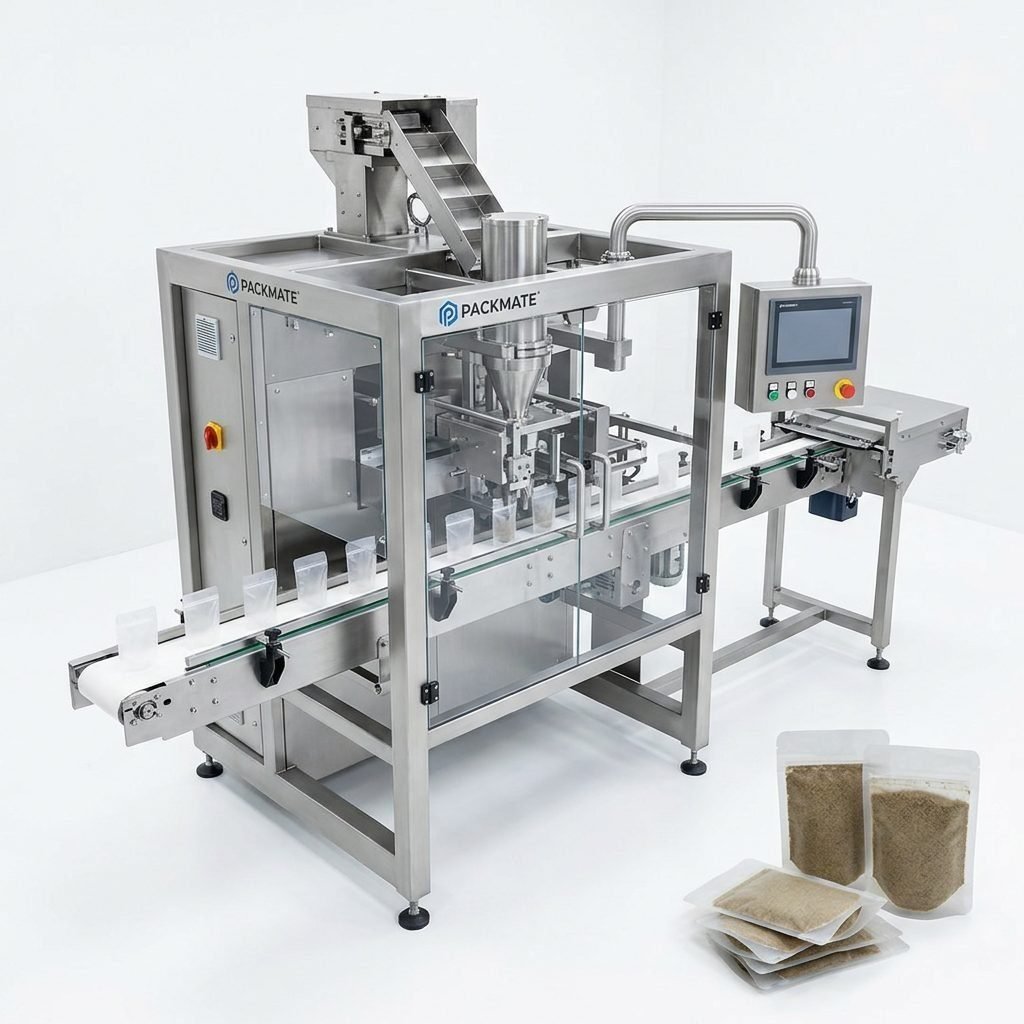
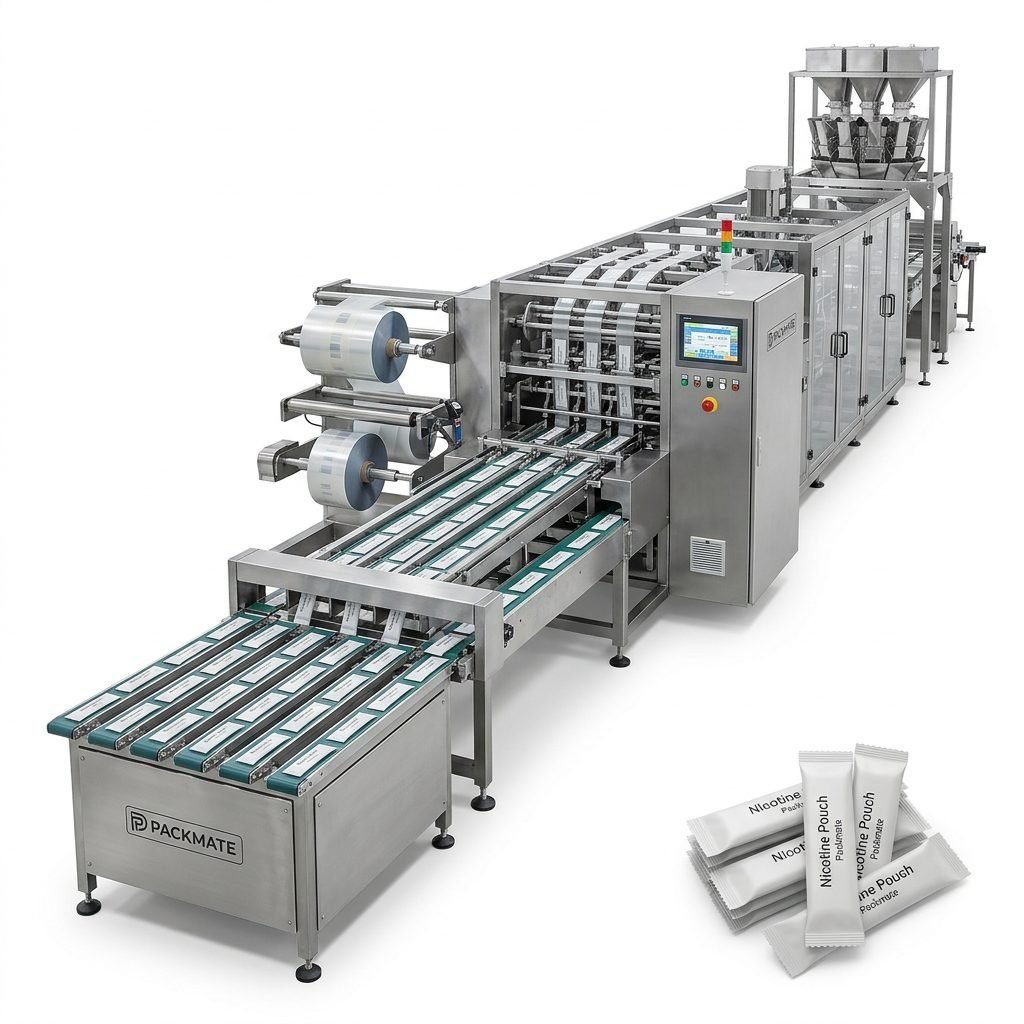
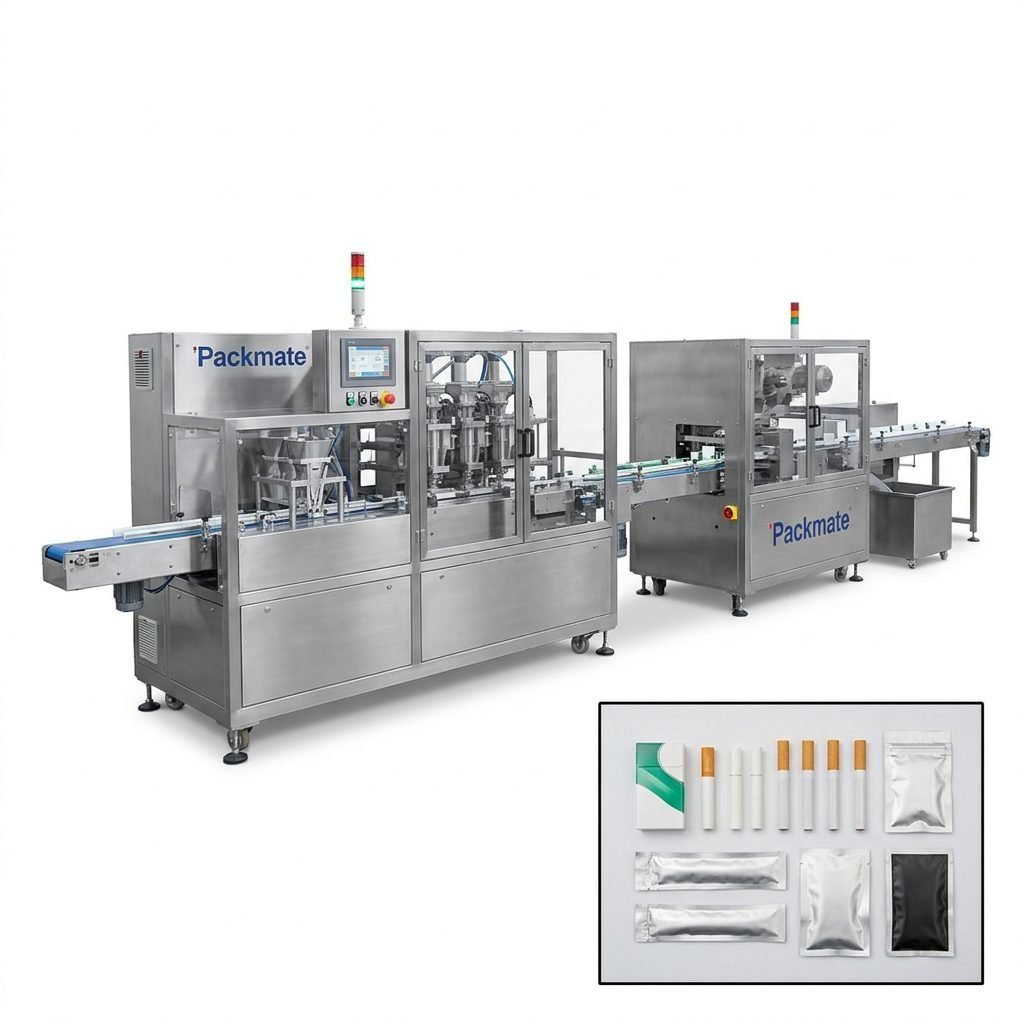
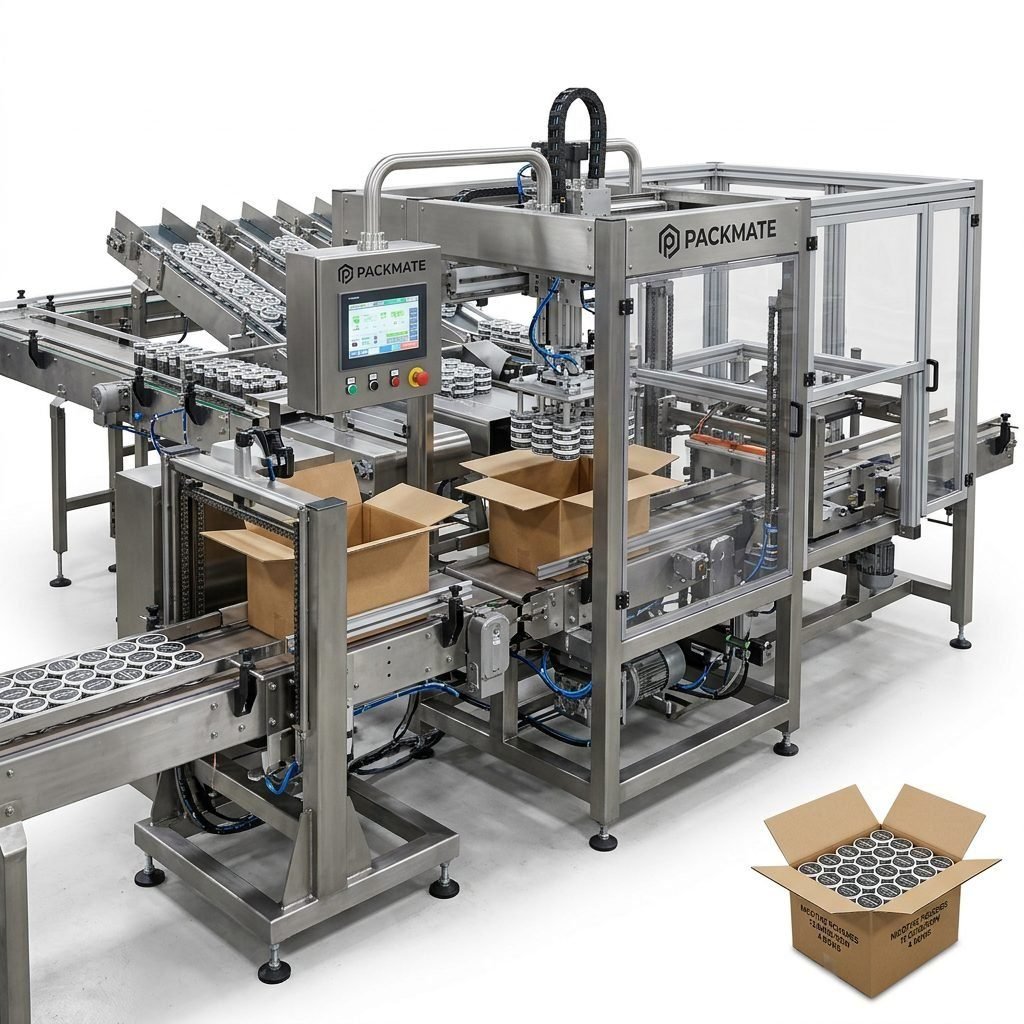
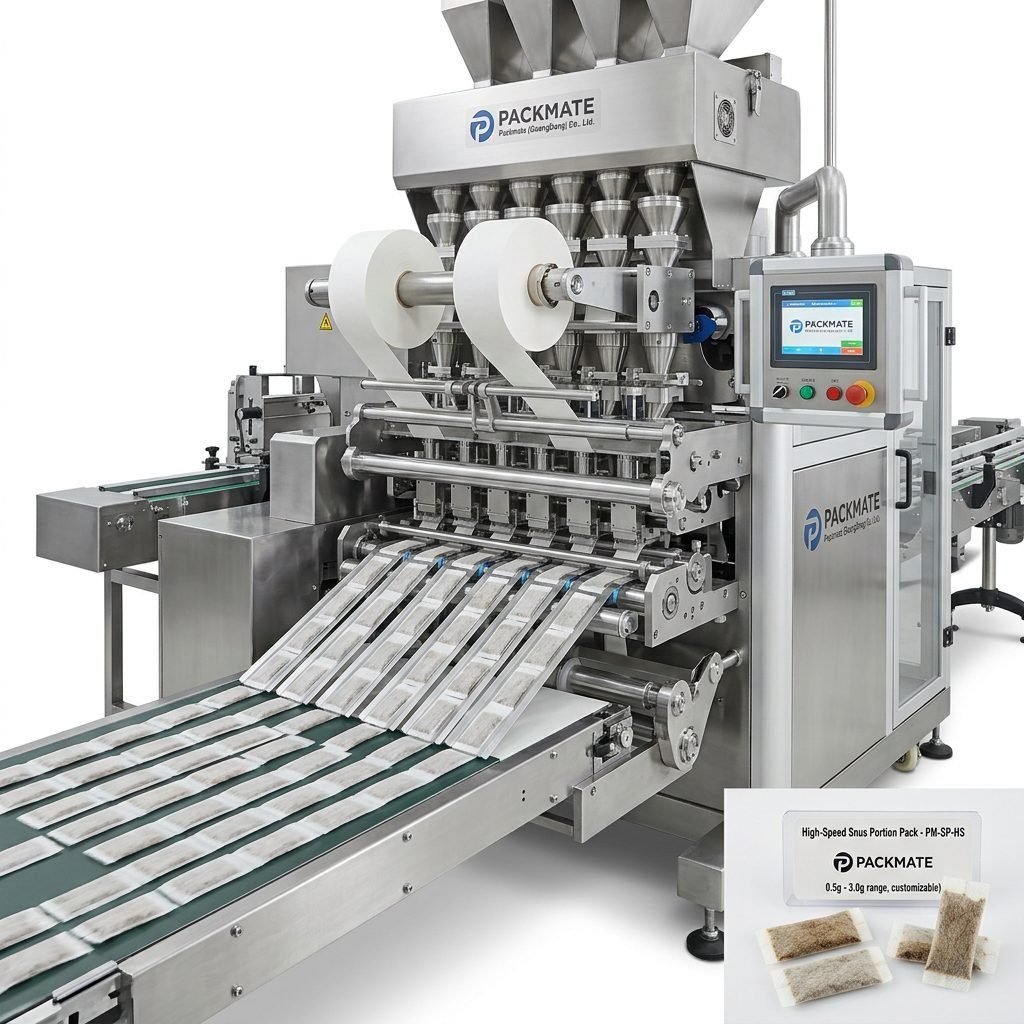
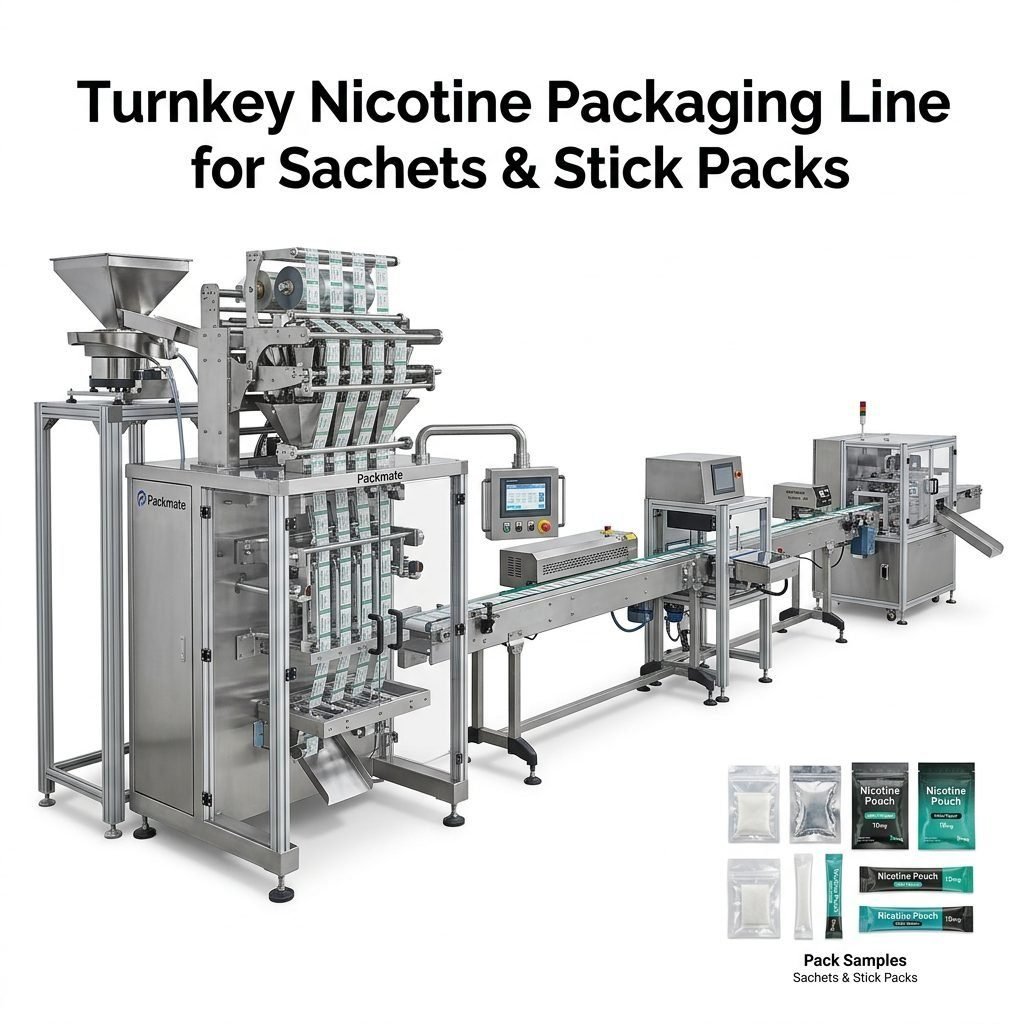
Stick pack format has become a dominant choice for portioned products such as moist snus and nicotine pouches because it combines consumer convenience, portion control, and production flexibility. Modern high-speed Stick Pack Snus Machines are engineered to pack delicate, moist formulations into tight, reliable seals while maintaining maximum throughput. This article dives deeply into design considerations, performance highlights, integration into turnkey lines, quality and compliance, and practical purchasing guidance for manufacturers exploring stick pack systems for snus and nicotine pouches.
Overview: What Is a Stick Pack Snus Machine?
A Stick Pack Snus Machine is a specialized vertical form-fill-seal (VFFS) system designed to produce narrow, single-serve sachets (stick packs) for snus, nicotine pouches, and similar small-dose products. These machines automate the sequence of film unwinding, shaping into a tube, longitudinal and transverse sealing, filling, and cutting to yield uniform packets ready for secondary packaging. Top manufacturers like Packmate deliver variants that support Snus & Nicotine Packaging Machines and multi-lane stick pack configurations for dramatically increased productivity.
Key Features and Capabilities
🔧 High-Speed Operation: Modern stick pack machines reach high cycle rates per lane while maintaining precise portioning for moist snus and tobacco-free nicotine pouches. Multi-lane systems multiply throughput for large-scale production.
✅ Gentle Handling: Special feed systems and precision dosing prevent damage to moist products, ensuring consistent pouch integrity and minimal product loss.
⚡ Flexible Dosing: Compatible with auger, piston, vibratory, or customized dosing modules to accommodate pastes, granules, and finely milled snus blends.
📦 Compact Footprint: Space-efficient layouts allow sticky or moist products to be processed near other filling systems in a single production room.
Why Stick Packs Are Ideal for Moist Snus & Nicotine Pouches
Stick packs are popular for portioned snus and nicotine pouches for several compelling reasons. First, the sealed stick form offers superior protection against moisture migration and contamination during transport and shelf life. Second, the single-serve format delivers precise dosing and a consistent consumer experience. Third, stick pack production enables high-speed automated secondary packaging into cartons or display-ready boxes. Manufacturers that require compact doses with reliable seals frequently choose stick pack solutions over traditional cans or sachets because the format supports modern retail and direct-to-consumer channels.
Material Compatibility and Film Selection
Film selection is critical when packing moist snus or nicotine pouches. Multi-layer laminates with robust barrier properties (e.g., PET/AL/PE or PET/PA/PE laminates) prevent moisture loss and oxygen ingress. Anti-sticking inner layers or slip coatings help maintain continuous film movement at high speeds. A reliable stick pack machine supports a broad range of film widths and thicknesses, and it offers precise tension control to prevent misalignment or wrinkling during sealing.
Precision Portioning Technologies
For moist and finely textured snus, dosing options include piston fillers, screw augers with gentle feed transitions, and custom volumetric or gravimetric modules. Gravimetric systems integrated with load cells offer the highest accuracy for small-dose applications and simplify quality control by recording net weights per stick pack. When integrating high-speed multi-lane lines, synchronization between dosing and sealing modules is essential to avoid product hang-up and ensure uniform fills.
Design Considerations for High-Performance Lines
• Machine frame rigidity and precision CNC components reduce vibration and maintain seal quality at speed.
• Servo-driven film transport and sealing stations ensure repeatable timing and easy recipe changes.
• Modular design enables easy integration with upstream feeders and downstream cartoning or case packing equipment.
• Cleanability and corrosion-resistant materials are important when handling moisture-prone products.
Integration with Full Packaging Lines
A successful snus production line is more than a single machine. It includes weighing, conveying, stick pack forming, secondary boxing, case packing, and often labeling and serialization. Leading suppliers deliver turnkey systems that include Weighing & Packaging Systems and auxiliary modules for seamless operation. When evaluating suppliers, consider the total line throughput, spare parts availability, and on-site commissioning support to minimize downtime during ramp-up.
Typical Line Flow
Raw material → Pre-blending/moisture control → Dosing & feeding → Stick pack forming & sealing → In-line inspection (weight, seal integrity) → Cartoning or blister packing → Case packing → Palletizing and shipping.
Quality Control and Compliance
Compliance with international standards (CE, ISO) and robust QA testing are crucial for nicotine product manufacturers. Inline metal detection, X-ray where applicable, and dynamic weight checks help verify product safety. Seal integrity testers and vision systems inspect print quality, barcodes, and package alignment to reduce downstream rejects. Packmate and similar manufacturers emphasize strict quality protocols and testing during factory acceptance to ensure stable performance on delivery.
Maintenance, Reliability, and OEE Optimization
A high-performing stick pack line combines reliable mechanical design with easy-to-access service points. Predictive maintenance practices—such as vibration monitoring, timely belt replacement, and scheduled seal jaw inspections—extend machine life and maximize Overall Equipment Effectiveness (OEE). Training local technicians and stocking critical consumables (seal jaws, pneumatic components, sensors) reduces Mean Time To Repair (MTTR) and protects production schedules.
Spare Parts and Global Support
When choosing a supplier, verify global spare parts distribution and remote support options. Suppliers with global service networks, clear documentation, and remote diagnostics help maintain uptime—especially important for international operations shipping to multiple markets.
Customization and Advanced Options
🌍 Multi-Lane Configurations: Systems with multiple lanes produce several stick packs per cycle, multiplying capacity while maintaining a small line footprint.
🔬 In-Line Inspection: Vision systems check print quality, batch codes, and label placement. Integrated weight control reduces product giveaway and enforces weight compliance.
🧰 Hygienic Upgrades: Stainless-steel housings, IP-rated electrical enclosures, and smooth surfaces are essential where moisture and cleaning are frequent.
Energy Efficiency and Operational Costs
Energy-efficient drives, servo motion systems, and optimized heating profiles for sealing jaws reduce operational expenditures. Accurate dosing minimizes product giveaway, directly improving margins for high-value small-dose products. Consider total cost of ownership (TCO): initial capital, energy use, spare parts, and service costs over the machine lifecycle.
Case Studies and Proven Applications
Established manufacturers have deployed stick pack lines for nicotine pouches across Europe, Asia, and the Americas. For practical examples and real-world outcomes of stick pack implementations, review supplier case references. Packmate publishes customer cases demonstrating how tailored multi-lane stick pack lines reduced production costs while increasing output and maintaining product quality—see more in their Case section.
Choosing the Right Supplier: What to Ask
When evaluating suppliers, ask for clear answers and demonstrations to these points:
• Target throughput per lane and scalability to multi-lane setups.
• Examples of similar installations for moist snus or nicotine pouches.
• After-sales support, spare parts lead times, and remote service capabilities.
• Compliance documentation and certification for global markets.
• Options for integration with weighing, cartoning, and case packing systems such as Filling & Packaging Lines.
Supplier Capabilities to Prioritize
Prioritize suppliers with strong engineering experience, advanced manufacturing facilities, and a track record in nicotine/snush packaging. Manufacturers with a wide product range and customization abilities (e.g., Packmate’s 50+ machine models) can better tailor solutions to unique product attributes and production goals. For company background, you can reference their About Packmate page.
Installation, Commissioning, and Ramp-Up
Proper installation and commissioning are vital. Expect factory acceptance testing (FAT), on-site installation, and production acceptance testing (SAT) to validate performance with your specific product. Supplier training for operators and maintenance staff shortens the learning curve and accelerates commercial production. Many reputable suppliers also provide extended warranties and tailored service agreements for peace of mind.
Return on Investment (ROI) Considerations
Assess ROI by factoring in increased throughput, reduced labor, product savings from accurate dosing, and lower rejection rates. Multi-lane systems often offer the best ROI when demand justifies their higher initial investment. Consider lifecycle costs, including energy, spare parts, and potential upgrades that future-proof the line for new SKUs.
Where to See Machines in Action
Trade exhibitions and supplier open houses are excellent venues to observe machines operating on real materials. Suppliers typically showcase their latest stick pack and sachet machinery at international events—check supplier exhibition calendars such as Our Exhibition before planning a visit.
Additional Resources and Documentation
Request catalogs, technical datasheets, and certificates (CE, ISO) to confirm machine specifications and compliance. Many suppliers maintain downloadable catalogs and documentation to assist procurement teams—see their Catalog and Certificate areas for details.
Summary: Making the Right Investment
Investing in a high-speed Stick Pack Snus Machine can transform production for manufacturers of moist snus and nicotine pouches. Key success factors include accurate dosing, film and seal technology, hygienic design, strong supplier support, and well-engineered integration with auxiliary systems. Evaluate suppliers on technical depth, factory capabilities, global service, and demonstrated results in similar installations.
Further Assistance
For tailored line design or to request quotations, contact experienced suppliers who specialize in nicotine packaging equipment and full line solutions. For direct inquiries and service options, refer to supplier contact portals like Contact Us.
Common Questions
Q1: How do stick pack machines handle moist snus without jamming or sticking?
A: Modern machines use controlled film tension, anti-stick coatings, precise filling transitions, and hygienic feed chutes. Customized dosing modules and gentle transfer systems prevent build-up and ensure reliable operation.
Q2: Can a stick pack line be scaled for higher output?
A: Yes. Scaling options include adding lanes, deploying higher-speed servo systems, or integrating parallel lines. Multi-lane stick pack modules are common for expanding capacity without requiring excessive floor area.
Q3: What certifications should I request for nicotine pouch equipment?
A: Request CE and ISO certifications, and ask for documented material compliance, electrical standards, and hygienic design features. Many suppliers provide factory certificates and compliance documentation for global shipping.
Q4: How important is spare parts availability and service network?
A: Critical—fast access to spare parts and remote diagnostics reduces downtime. Suppliers with global service networks and local partners provide faster on-site support and lower MTTR.
Q5: Where can I view examples or request demonstrations?
A: Visit supplier showrooms, request on-site demos, or review case studies in the supplier’s Case library. Attending trade shows listed in the supplier’s exhibition calendar is also recommended.