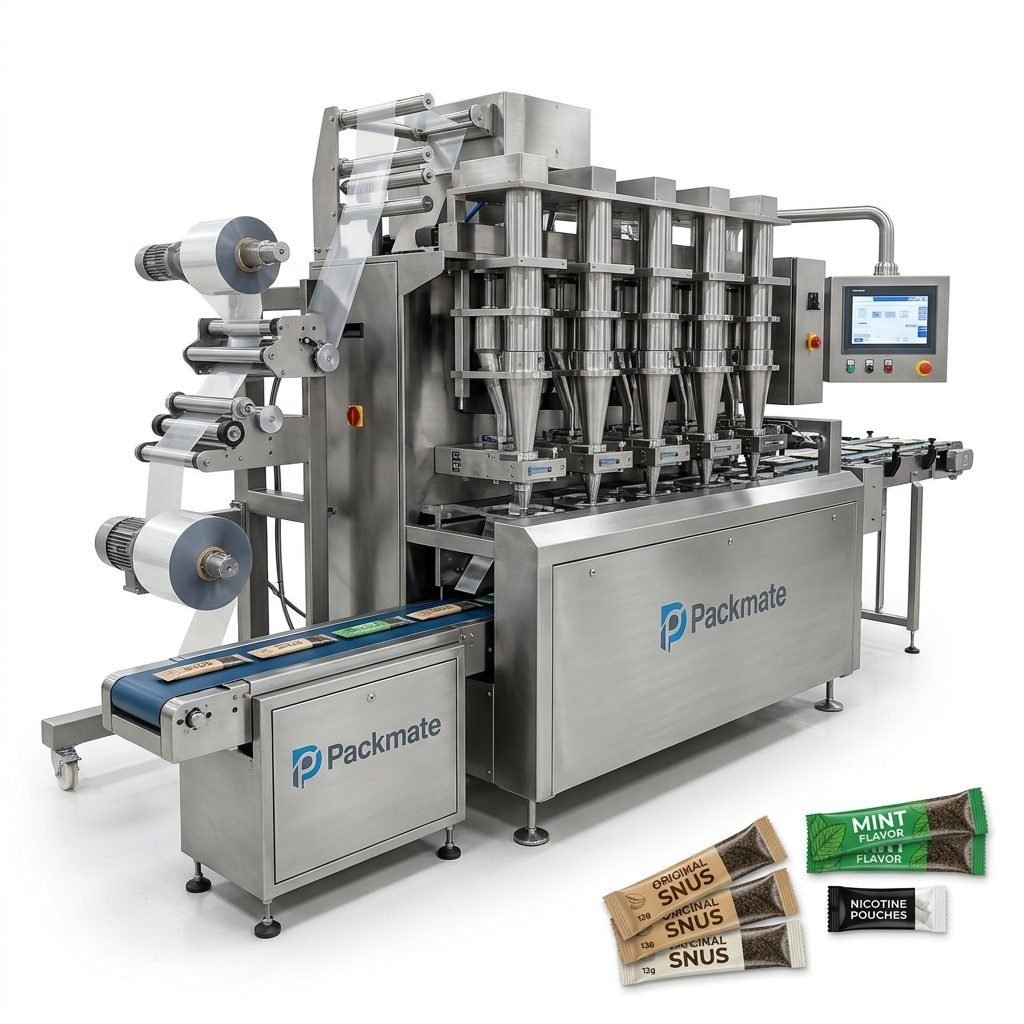
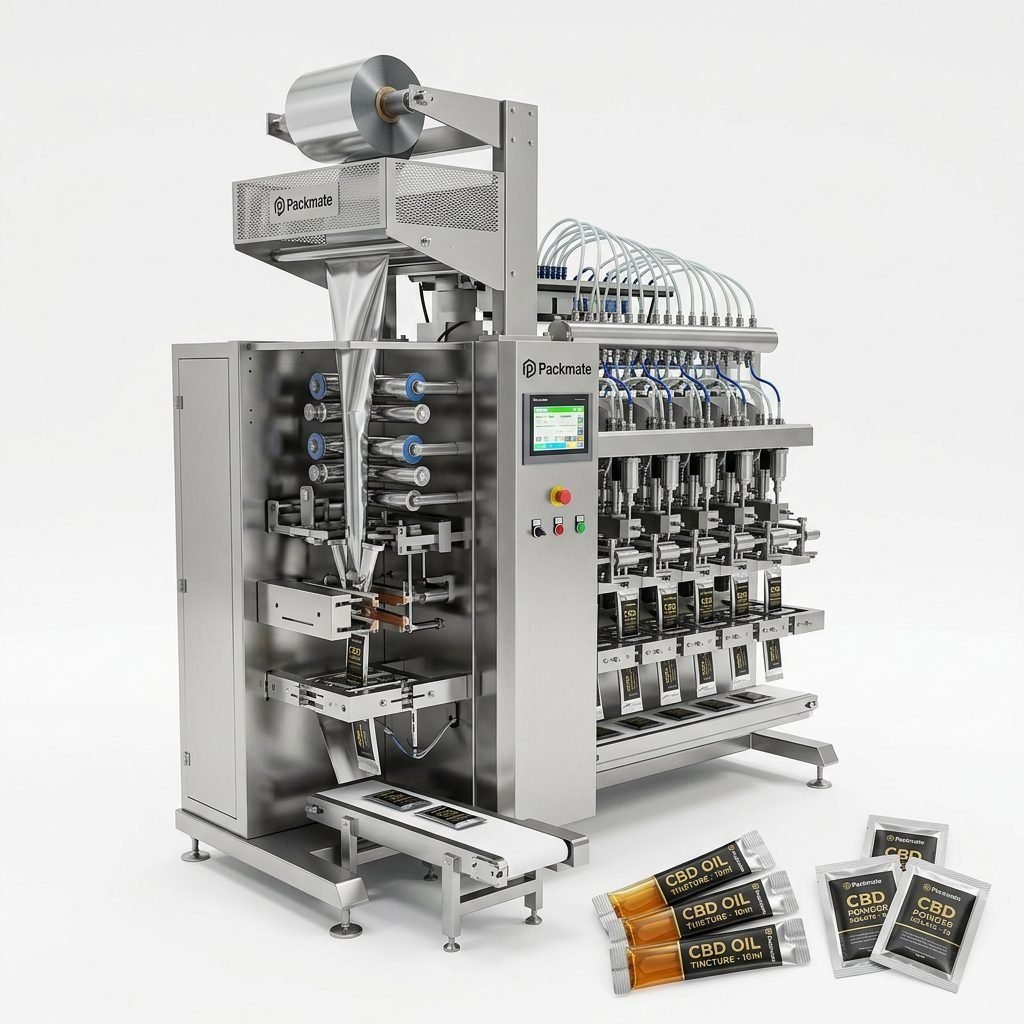
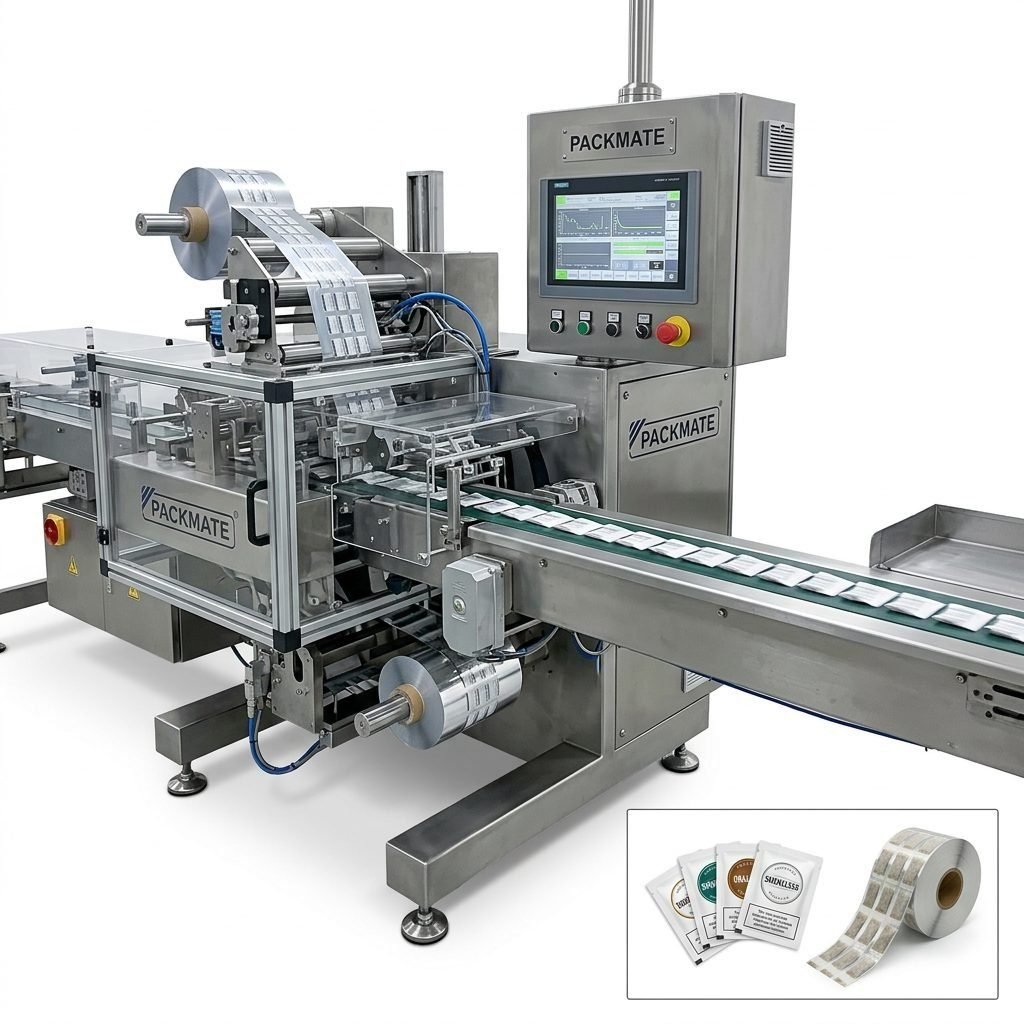
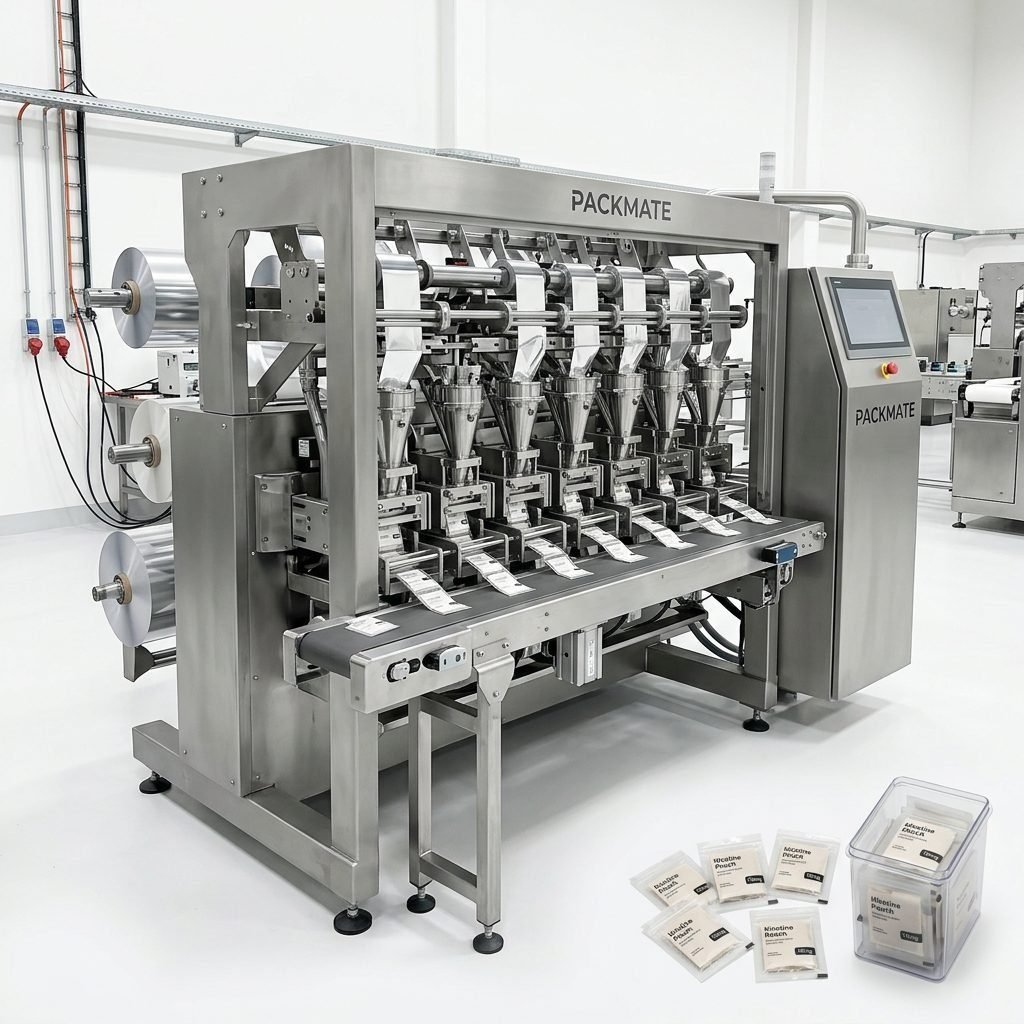
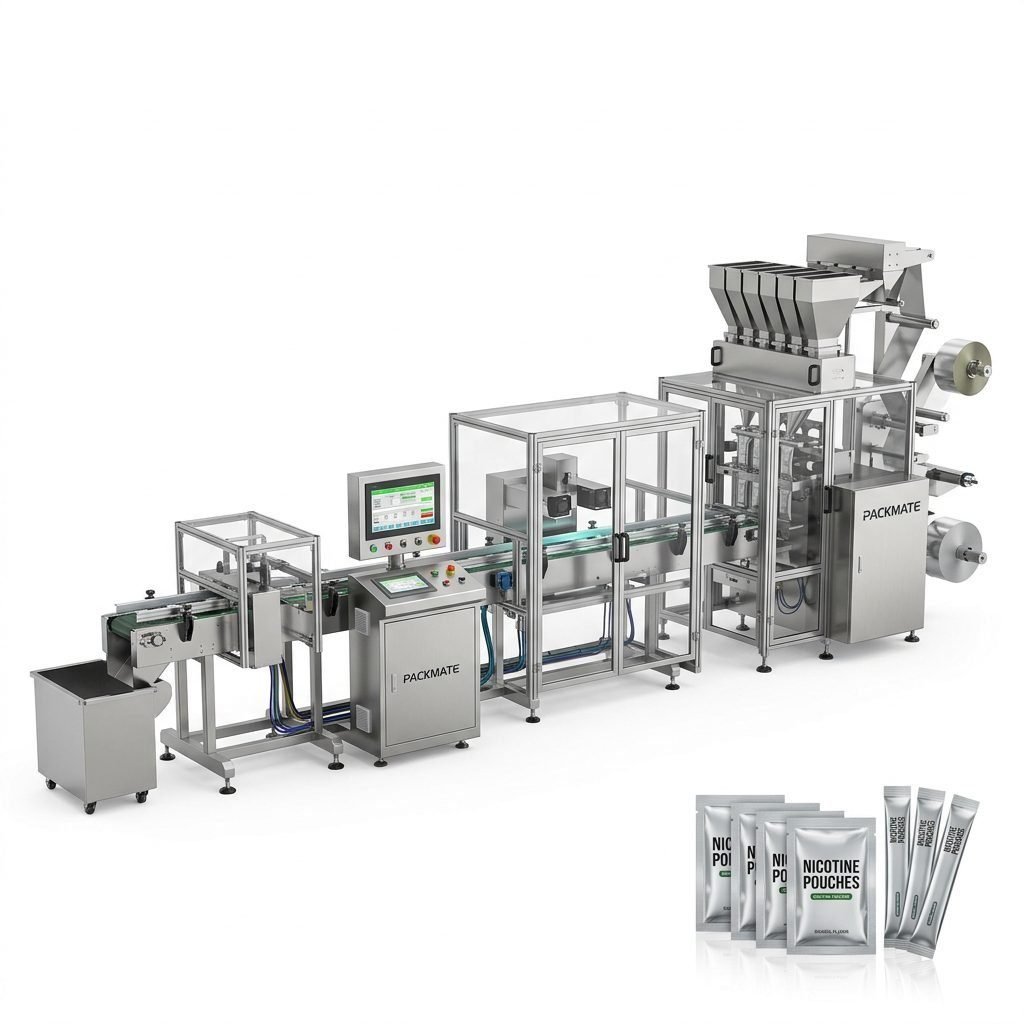
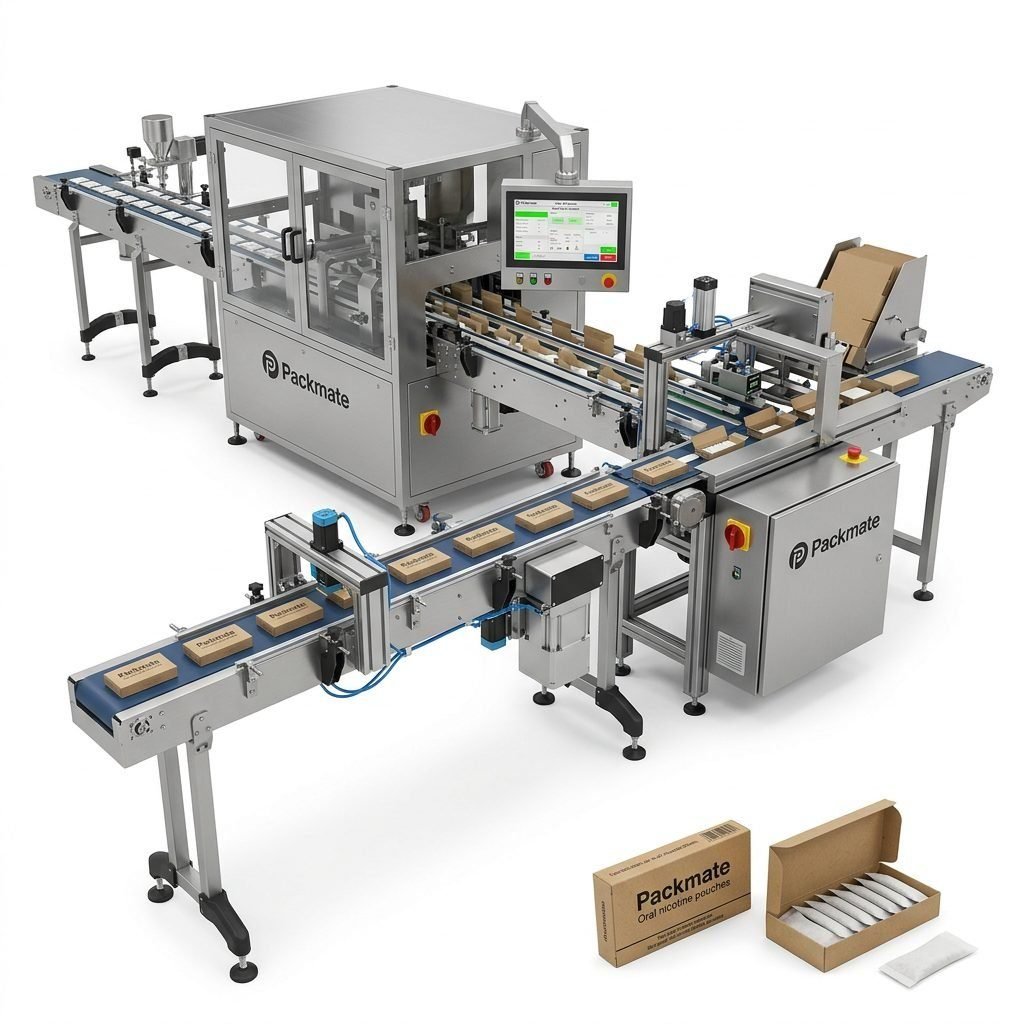
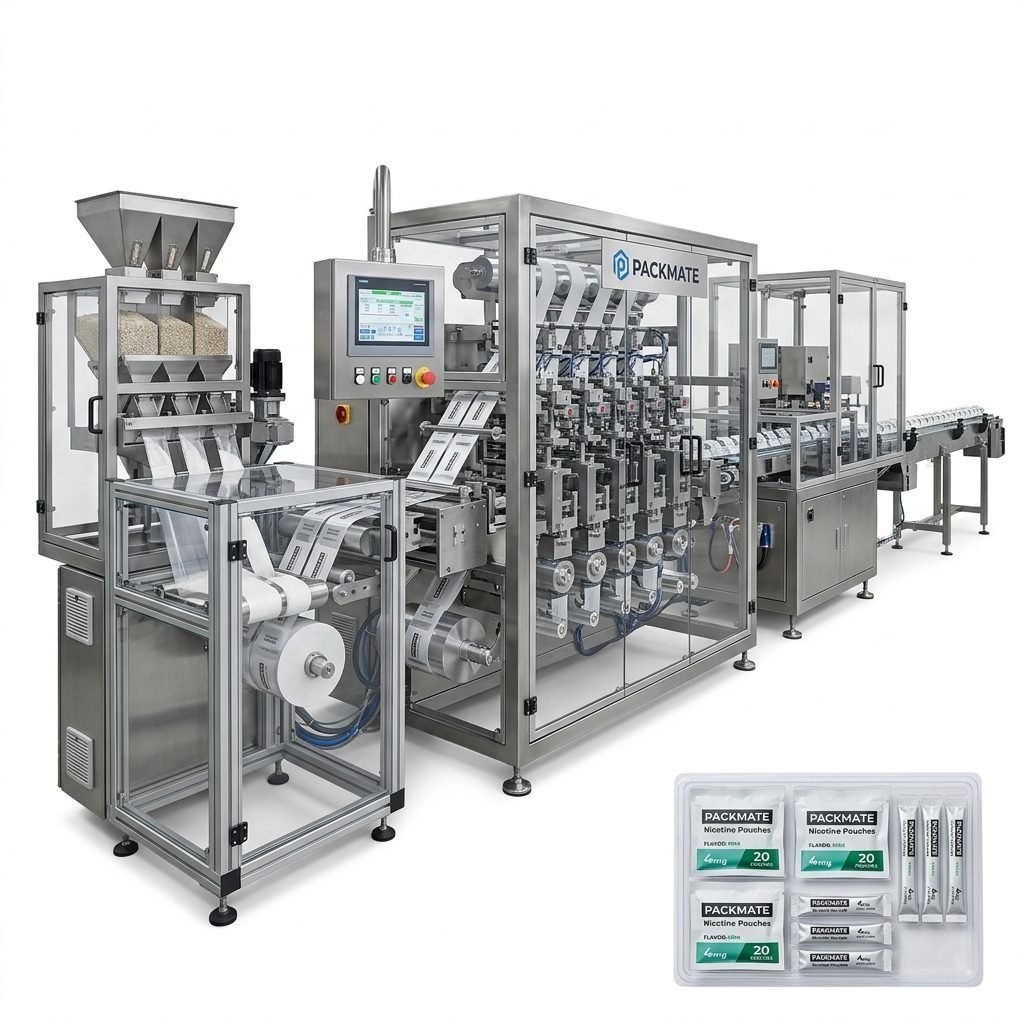
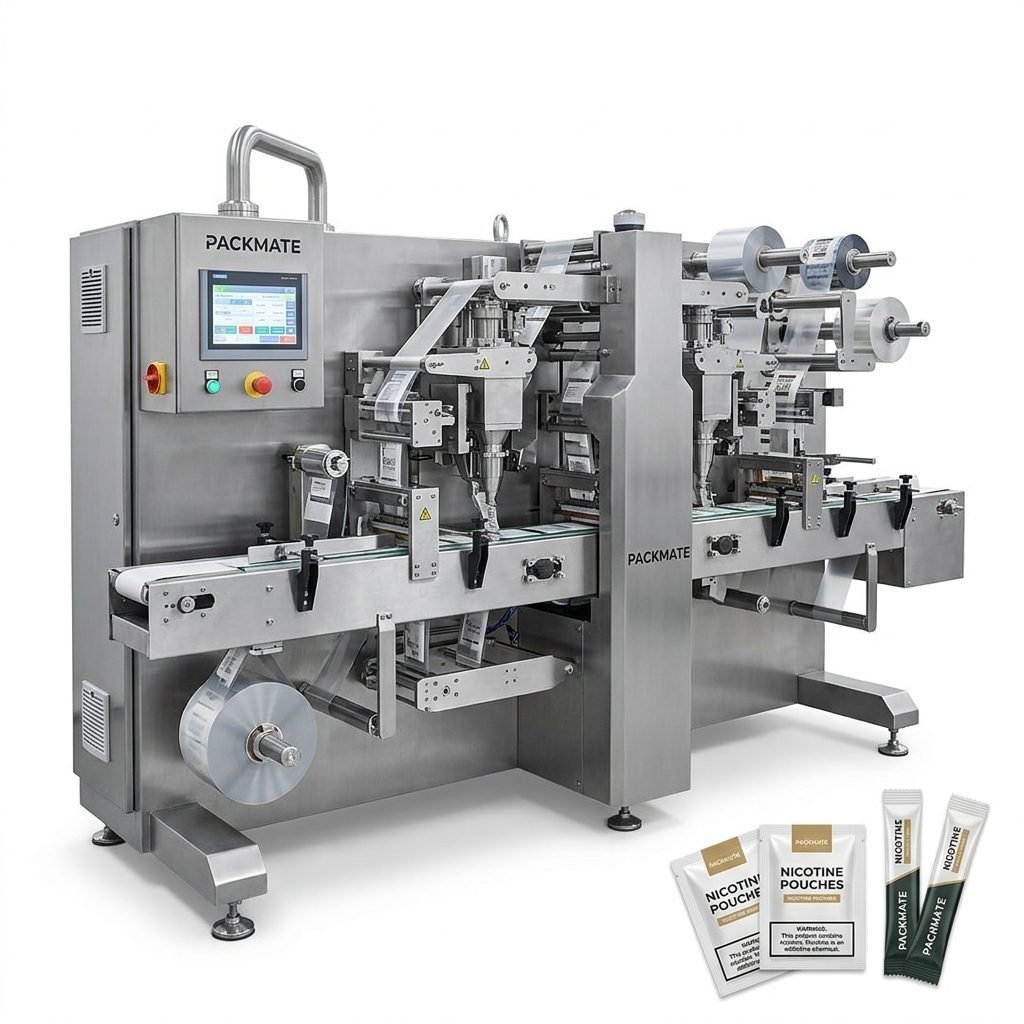
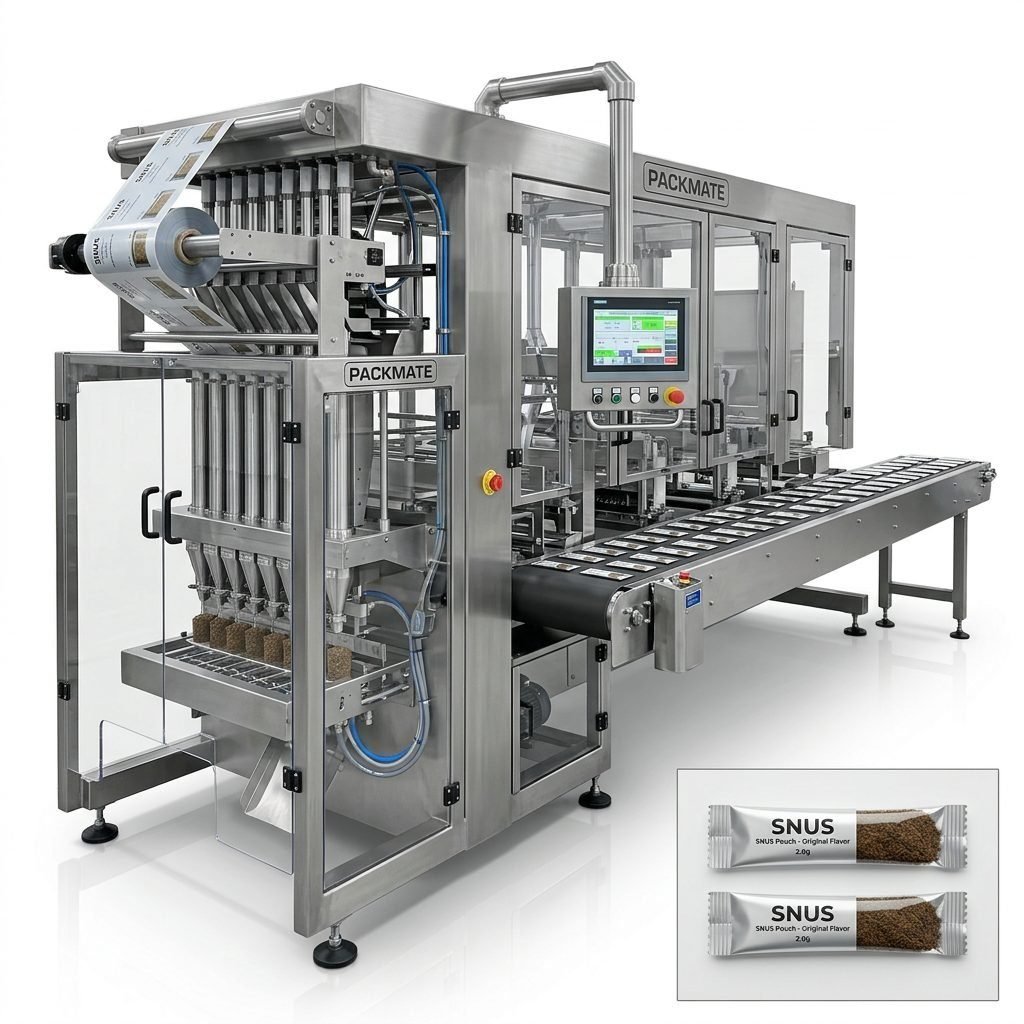
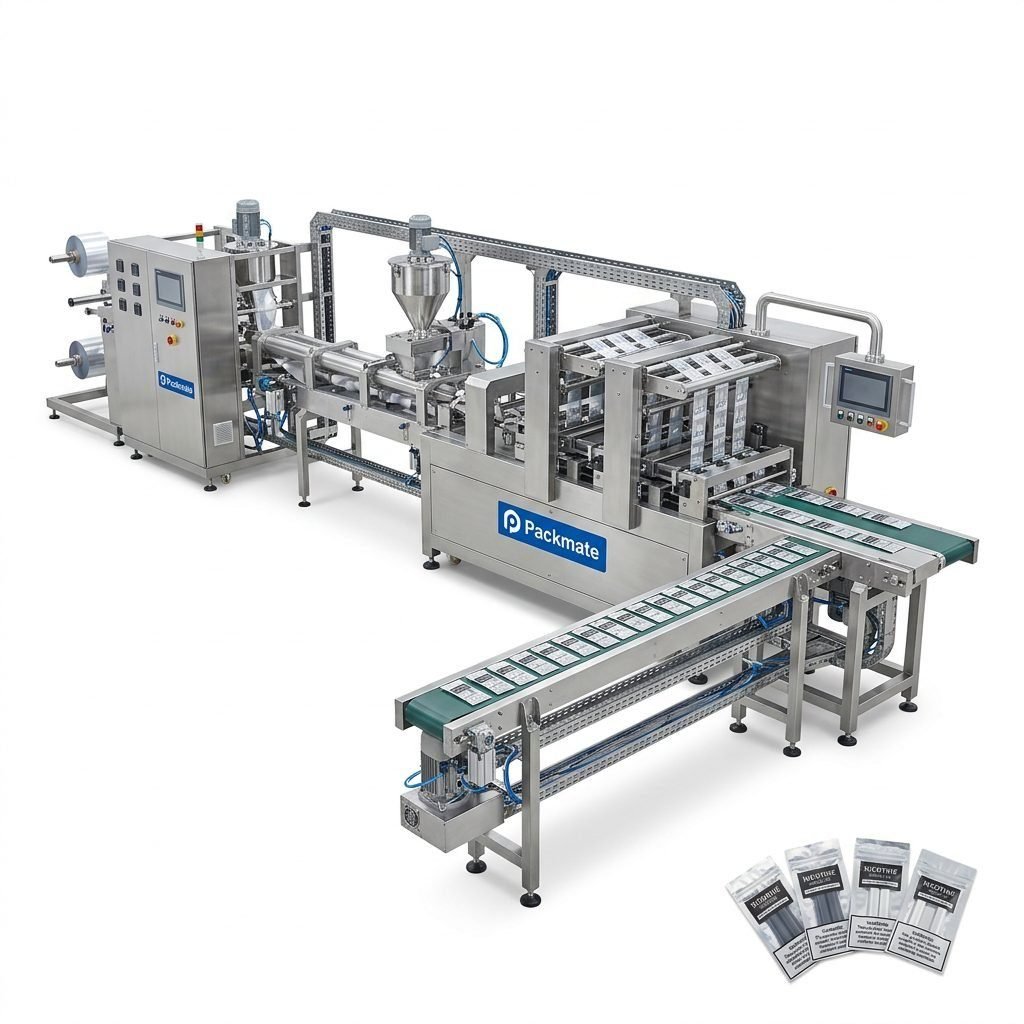
Choosing the right snus packaging machinery manufacturer for your factory in Bolivia is a strategic decision that affects production efficiency, product quality, regulatory compliance, and long-term operational costs. This guide breaks down the essentials—from technical capabilities and factory support to after-sales service and local logistics—so you can confidently select a partner who fits your capacity, budget, and growth plan.
Understand Your Production Needs First
Before contacting manufacturers, clarify your production profile: projected yearly volume, pouch formats (single-dose pouches, multi-lane snus sticks, sachets), materials (foil, laminated film, biodegradable films), and required filling types (powder, granule, moisture-controlled snus). These details drive machine type selection, production line layout, and budget. If your product mix includes nicotine pouches or specialized stick packs, look for manufacturers with proven experience in those exact formats like manufacturers listed under
Snus & Nicotine Packaging Machines.
Key Technical Capabilities to Evaluate
✔️ Machine Stability & Speed — Verify published cycles per minute, but insist on factory acceptance tests or video demonstrations under full load. A stable multi-lane snus line should maintain consistent pouch formation and filling across lanes without cross-contamination.
✔️ Precision Filling & Weighing — Nicotine and snus pouches require strict dose control. Ask about integrated weighing & dosing systems and tolerance levels. Reference manufacturers that provide modular weighing and packaging lines such as
Weighing & Packaging Systems.
✔️ Material Compatibility & Sealing Technology — Ensure the machine supports your film types and sealing specifications (e.g., vacuum, modified atmosphere, heat sealing). Compatibility reduces trial runs and wasted materials.
Factory & Manufacturing Strength Matters
When evaluating manufacturers, prioritize those with a proven factory footprint. A manufacturer with a sizable modern facility, advanced CNC machining centers, precision assembly lines and strict quality testing systems indicates capacity to deliver consistent, repeatable machines. For instance, Packmate Snus Machine highlights a 20,000㎡ facility with 30+ years of experience and 50+ machine models—traits that typically translate into faster lead times and mature product lines.
Pro tip: Ask for Production Evidence
Request factory photos, process videos, and FAT (Factory Acceptance Test) reports. Ask for customer references in similar climates and regulatory environments as Bolivia, so you can verify real-world performance and post-sale responsiveness.
Customization & Turnkey Solutions
🔧 Many factories require tailored lines—multi-lane systems, integration with upstream dosing and downstream secondary packaging, or modifications for specific pouch sizes. Choose a manufacturer that offers fully customized turnkey packaging solutions, including electrical integration, PLC programming, and mechanical adaptations.
🔧 Manufacturers who provide complementary equipment like filling lines, auxiliary packaging equipment, and inspection systems reduce integration complexity. See examples under
Filling & Packaging Lines and
Auxiliary Packaging Equipment.
Quality Certificates & Compliance
Compliance with international standards (CE, ISO) is essential, especially when dealing with nicotine products that may be subject to health regulations. Ask for certificates, inspection records, and details on material traceability. A manufacturer that openly shares certifications demonstrates transparency and a higher standard of quality control.
After-Sales Support & Spare Parts Availability
⚙️ Local Service or Remote Support — Determine whether the manufacturer has local partners, authorized service engineers in South America, or robust remote support via video call. Fast troubleshooting reduces downtime and lost production.
⚙️ Spare Parts Strategy — Confirm spare parts lead times and spare parts kits included with the purchase. A mature manufacturer often ships spare-kits and has fast logistics to minimize machine idle time.
⚙️ Request maintenance manuals in English and Spanish and training plans for your operators and technicians.
Factory Acceptance Testing & On-Site Commissioning
Insist on FAT with your product samples. FAT should validate speed, dose accuracy, sealing integrity, and complete workflow under production-like conditions. After shipment, ensure the contract includes on-site commissioning, operator training, and a performance warranty period. Many reputable suppliers will also attend your first production runs virtually or in-person.
Total Cost of Ownership (TCO) vs. Initial Price
A lower upfront price can hide higher long-term costs. Evaluate energy consumption, spare parts pricing, mean time between failures (MTBF), and expected service intervals. Factor in training costs and potential downtime. A reliable machine with slightly higher capital cost often results in a lower TCO.
Financing, Lead Time & Logistics for Bolivia
Ask about shipment options, export documentation, and assistance with customs clearance into Bolivia. Check lead times and whether the manufacturer can coordinate CIF/CIP delivery to your preferred port or warehouse. Also discuss warranty activation dates relative to delivery and commissioning.
Evaluate Manufacturer Reputation & Case Studies
Look for case studies and exhibition presence to assess credibility. Manufacturers who attend international trade shows and publish case examples of global installations provide better transparency. Review published customer testimonials, request references, and if possible, visit an installed customer site or the manufacturer’s factory. You can review typical case examples on manufacturer case pages such as
Case.
Service Packages, Training & Documentation
📘 Ensure the supplier provides detailed operation manuals, preventive maintenance schedules, electrical and pneumatic diagrams, and training for both operators and technicians.
📘 Ask about multilingual documents (English and Spanish preferred for Bolivia) and availability of on-site or remote training sessions.
Negotiation Tips
– Negotiate clear acceptance criteria for FAT and SAT (Site Acceptance Test).
– Include spare parts packages and first-year maintenance in the contract.
– Clarify intellectual property rights for customized tooling or software adaptations.
– Request a breakdown of warranty conditions and response time SLAs.
How to Shortlist Suppliers
Start with 3–5 suppliers: request proposals, technical specs, videos of machines running similar products, and customer references. Compare based on technical fit, TCO, lead time, and service footprint in South America. For clarity on a supplier’s background, visit their About page and certification pages like
About Packmate and
Certificate.
Final Selection Checklist
✔️ Technical compatibility with your product and materials.
✔️ Demonstrated production stability (videos/FAT reports).
✔️ Clear spare parts and service plan with defined SLA.
✔️ Transparent pricing and validated TCO.
✔️ Positive customer references and verifiable factory capabilities.
How Packmate Can Fit Your Bolivia Factory Needs
Packmate Snus Machine, with decades of experience and a large manufacturing facility, positions itself as a supplier capable of delivering high-precision multi-lane snus systems, stick pack and sachet lines. If you need a comprehensive line, their product categories such as
Sachet & Stick Pack Machines and
Bag & Pouch Packaging Machines might be directly relevant. For direct inquiries or project discussions, use the manufacturer contact page:
Contact Us.
Closing Recommendations
Invest time in FAT and supplier vetting. Prioritize manufacturers with proven snus/nicotine experience, strong factory capabilities, and clear post-sale support. The right partner will not only supply machines but also help optimize line layout, product yield, and regulatory compliance for Bolivian operations.
Frequently Asked Questions
Q1: What documentation should I request before purchase?
A1: Request datasheets, FAT reports, CE/ISO certificates, electrical diagrams, spare parts lists, and customer references.
Q2: How long does commissioning usually take on-site in Bolivia?
A2: Typical commissioning varies from 3 days for a single machine to 2–4 weeks for a full turnkey line, depending on complexity and integration needs.
Q3: What ongoing costs should I budget for beyond the machine price?
A3: Budget for spare parts, preventive maintenance, consumables (films, sealing bars), operator training, and potential software updates.
Q4: Can manufacturers help with regulatory compliance for nicotine products?
A4: Many experienced manufacturers provide guidance on hygienic design and traceability, but regulatory approvals in Bolivia typically require local legal and compliance services.
Q5: How do I ensure fast support if a machine breaks down?
A5: Negotiate guaranteed response times, spare parts kits, and remote diagnostic support into your contract. Having a trained in-house technician reduces dependence on external travel time.