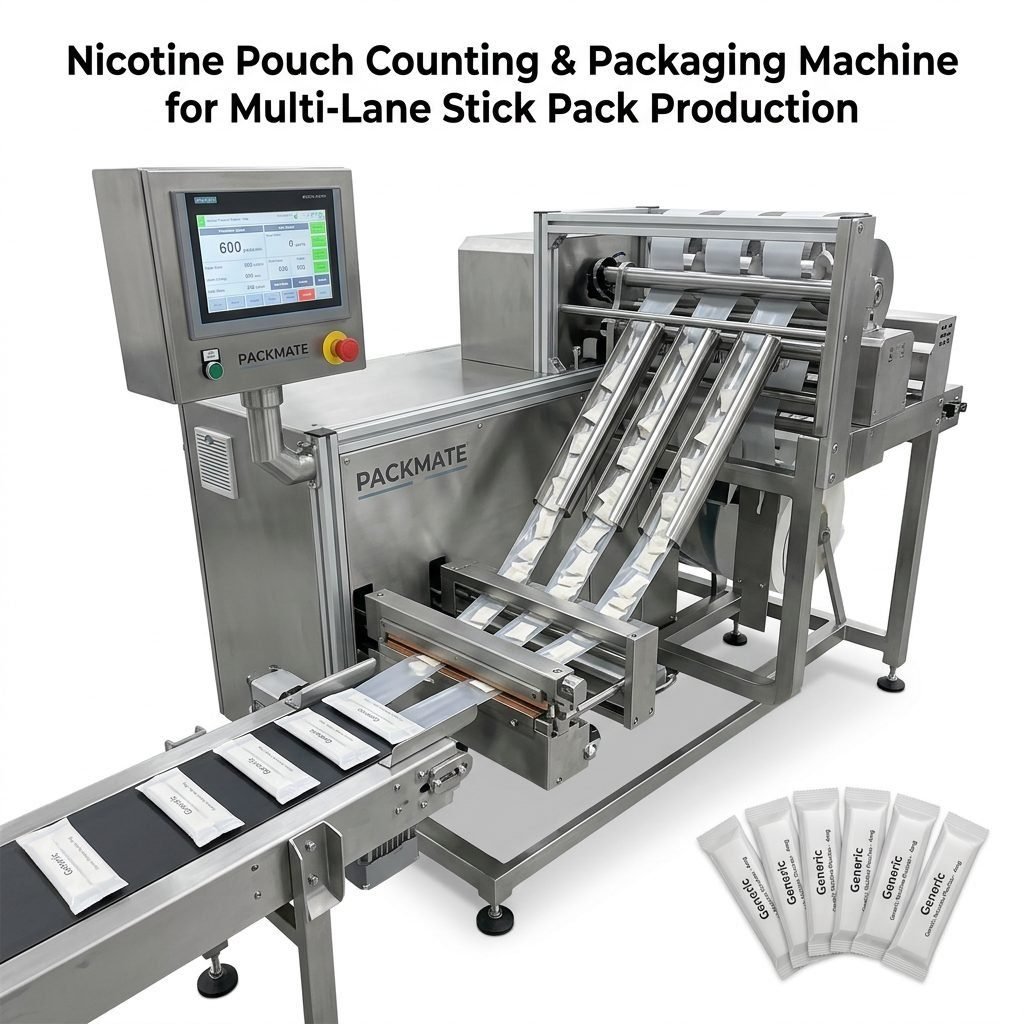
Choosing the right nicotine packaging machine manufacturer for your operation in Cuba can determine the speed, quality, and profitability of your production line. Whether you are launching a new nicotine pouch brand or scaling up an existing snus operation, selecting a partner who understands product-specific challenges, compliance, and local service needs is critical. This guide walks you through the practical criteria, machine types, and supplier capabilities to evaluate so you can make a confident purchase decision.
Understand Your Product and Production Goals
Before evaluating manufacturers, clarify what you are packaging: nicotine pouches, snus, powdered blends, or flavored sachets. Key production goals to define include:
✓ Output target: daily/weekly throughput (pouches per minute, lanes); ✓ Format flexibility: single-lane vs multi-lane; ✓ Automation level: semi-automatic vs turnkey lines with upstream/downstream systems.
Why these details matter
Manufacturers design machines around application specifics. A machine optimized for dry powder nicotine pouches may not perform well for high-moisture formulations or for ultra-small single-dose pouches. Defining your product parameters allows manufacturers to recommend suitable technologies such as multi-lane pouchers, stick pack systems, or sachet machines.
Pro tip: If you plan to export from Cuba or sell under strict markets, include regulatory and labeling requirements in your product brief before contacting suppliers.
Machine Types to Consider for Nicotine Packaging
Nicotine packaging demands precision and consistency. Common machine families you should evaluate include:
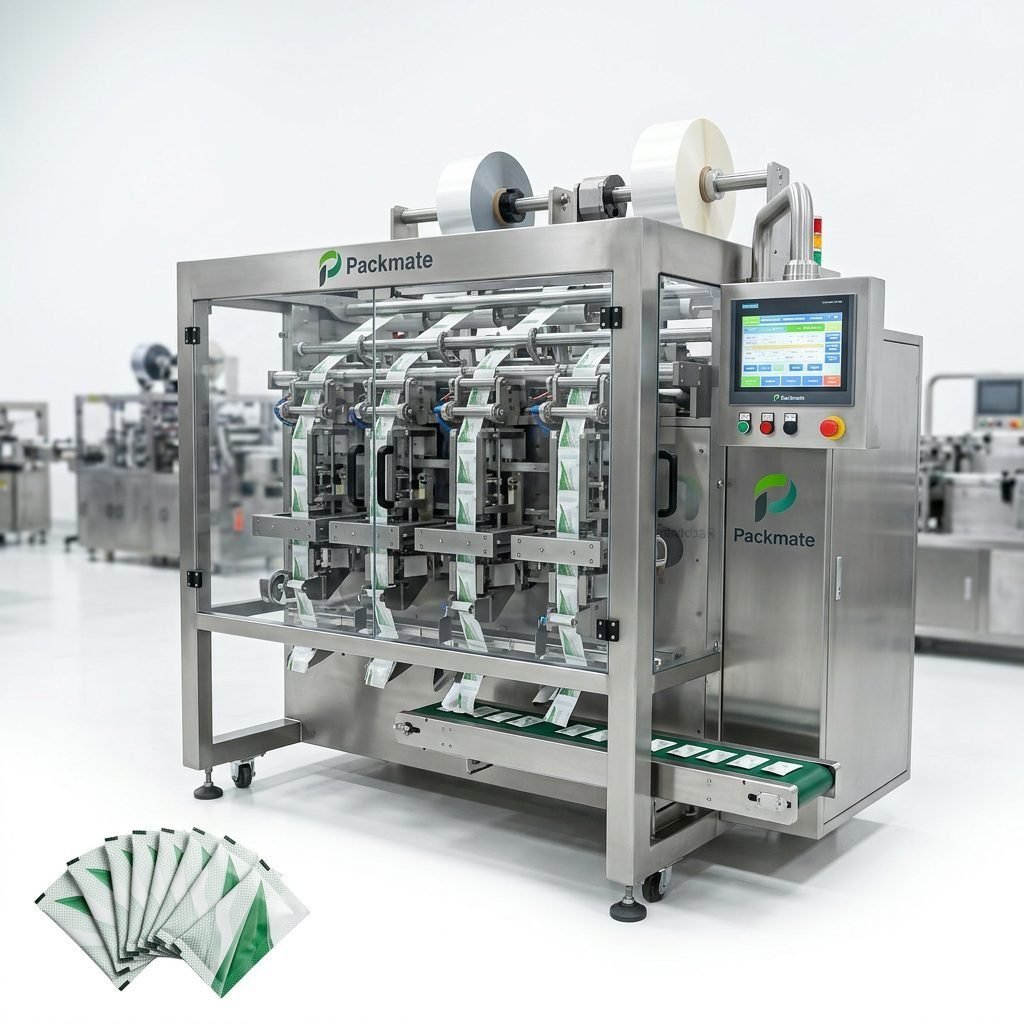
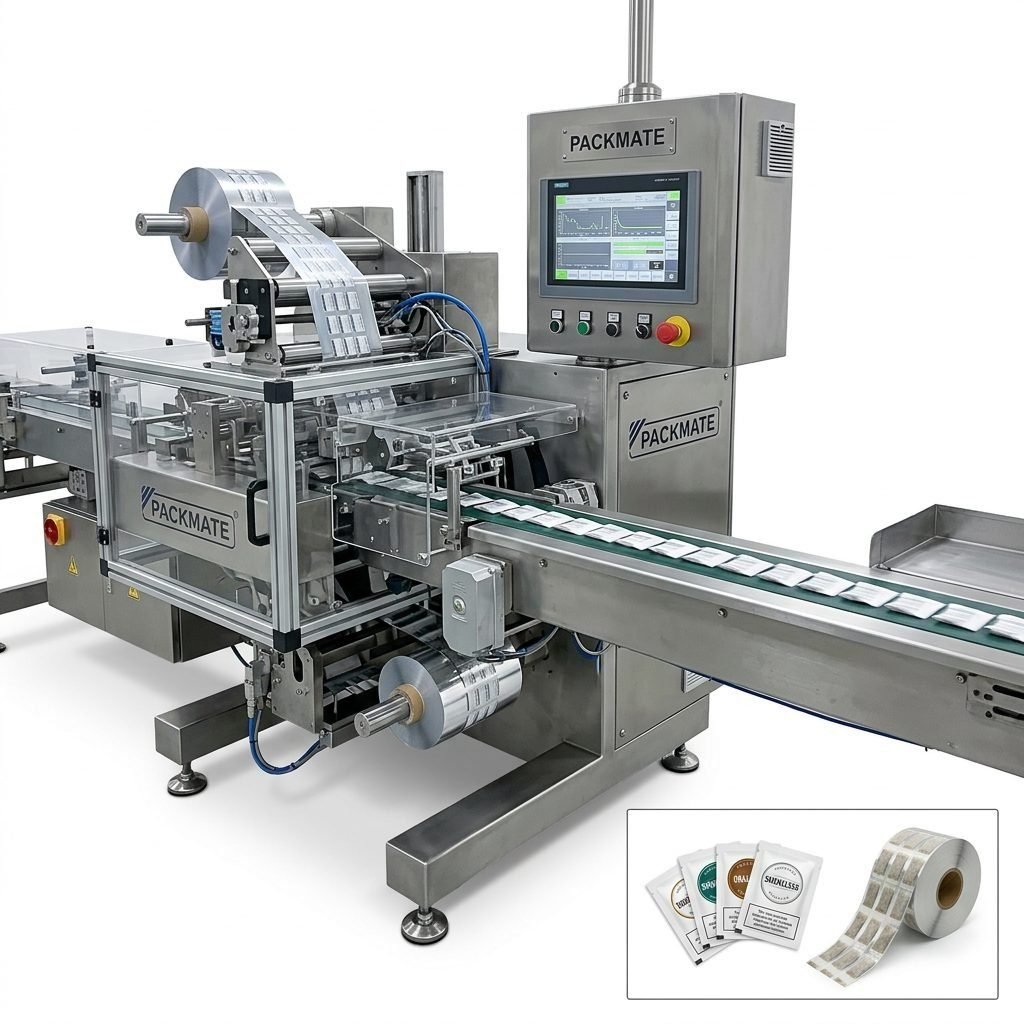
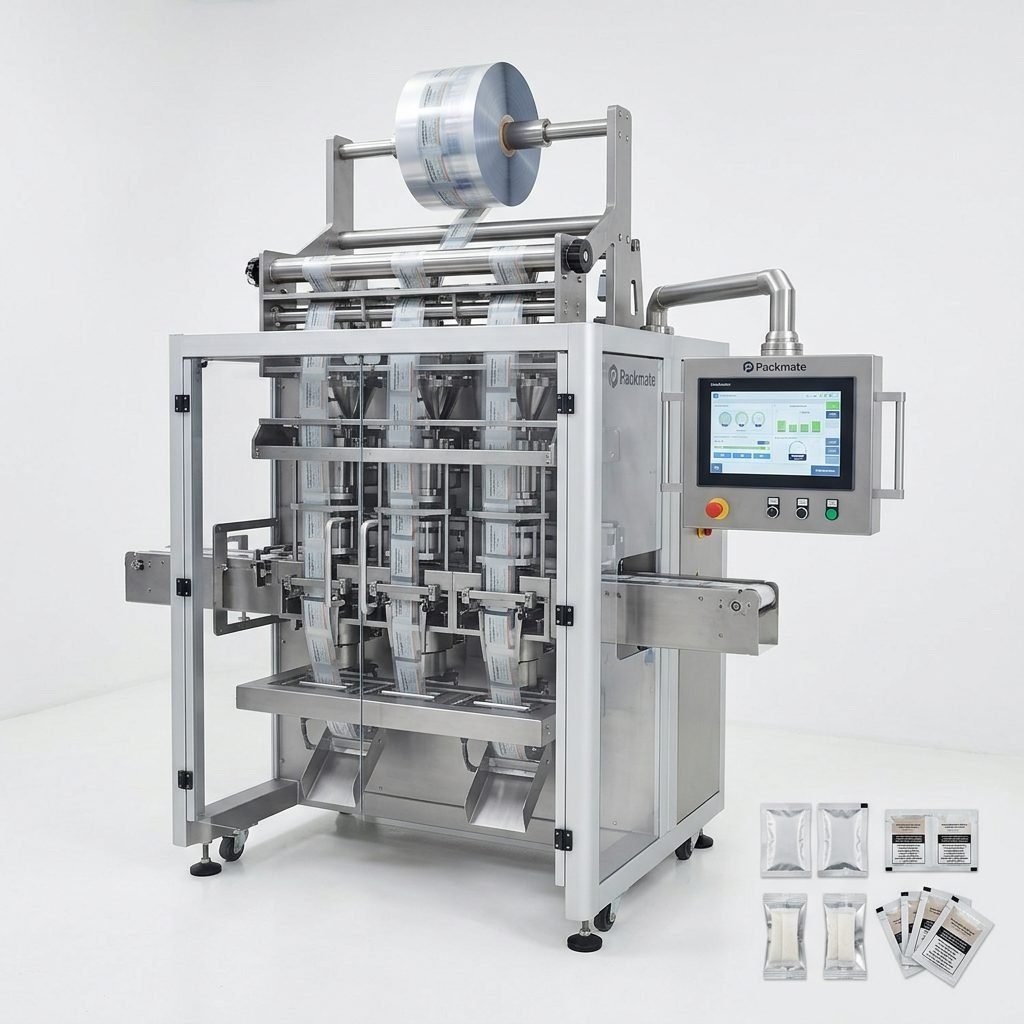
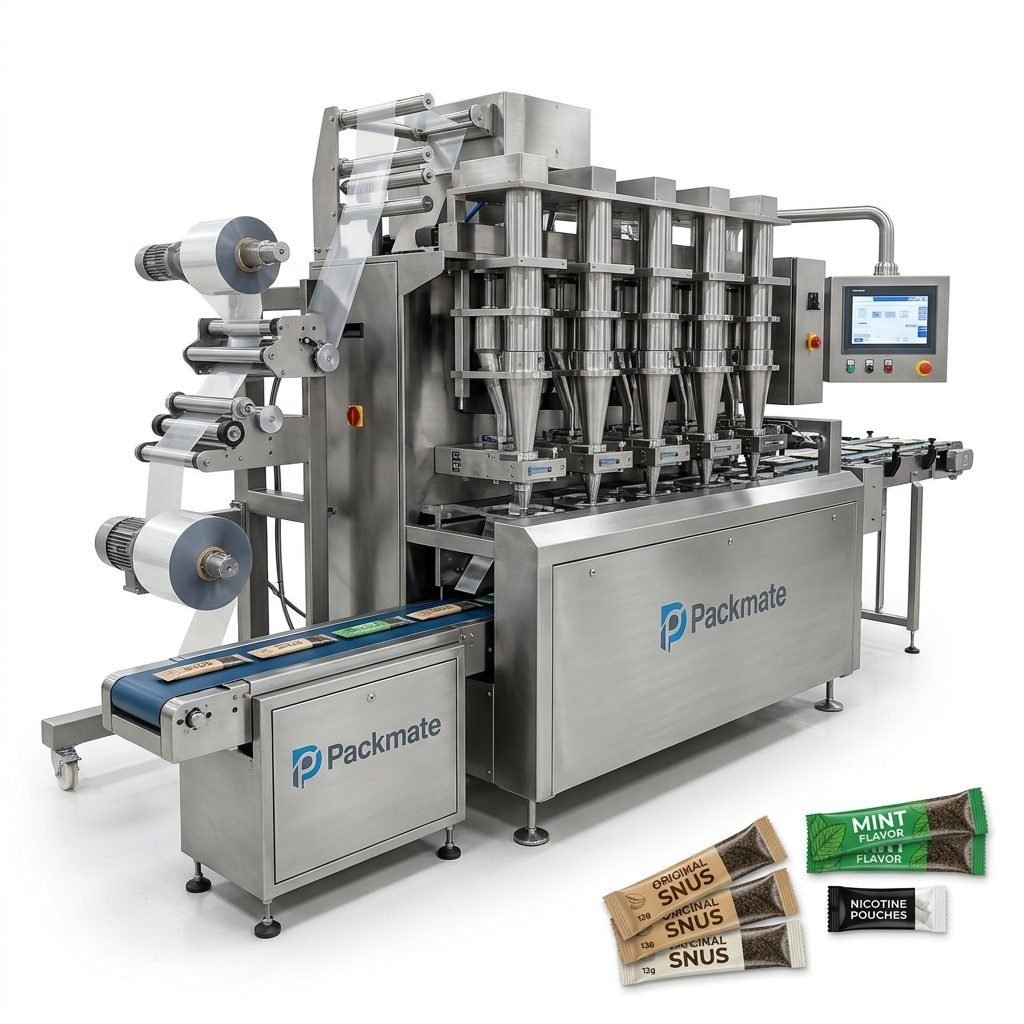
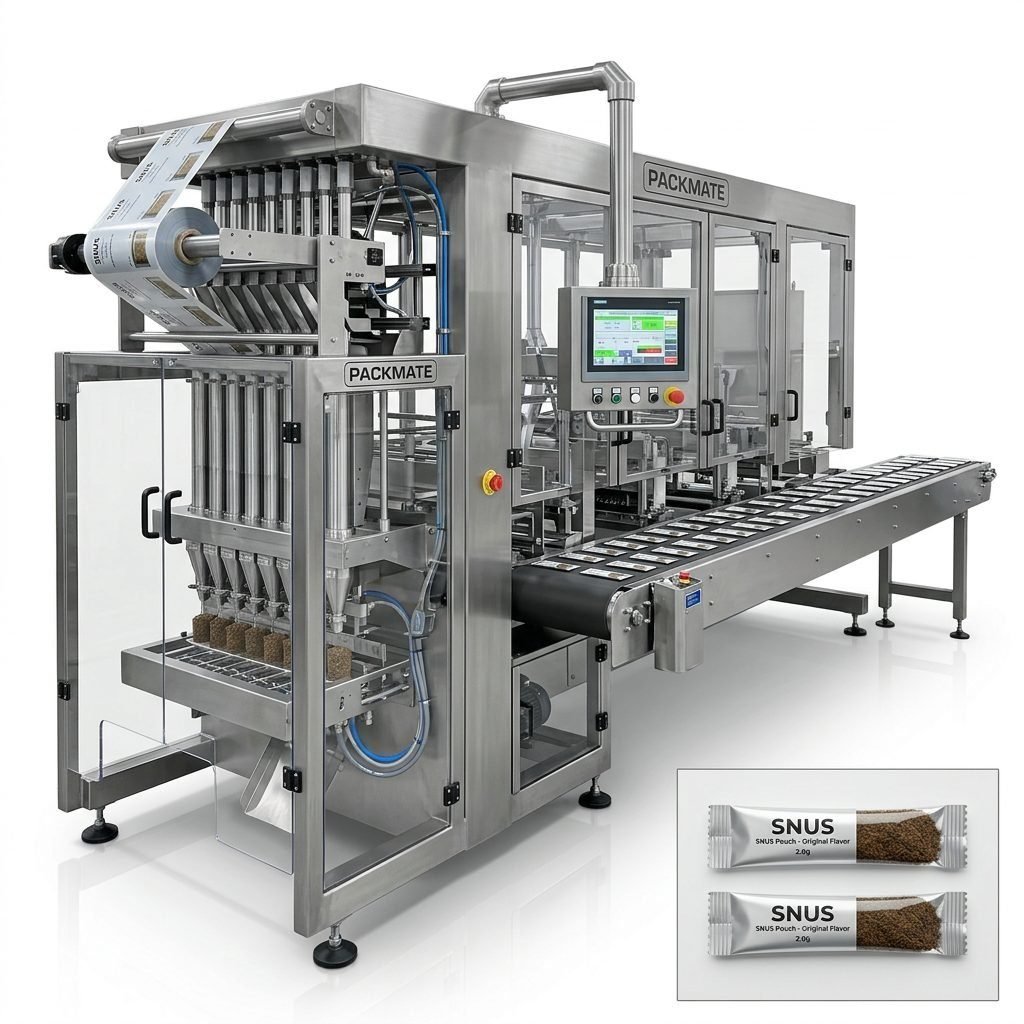
- Snus & Nicotine Pouch Packing Machines — single- and multi-lane pouchers for loose-fill and pre-weighed pouches.
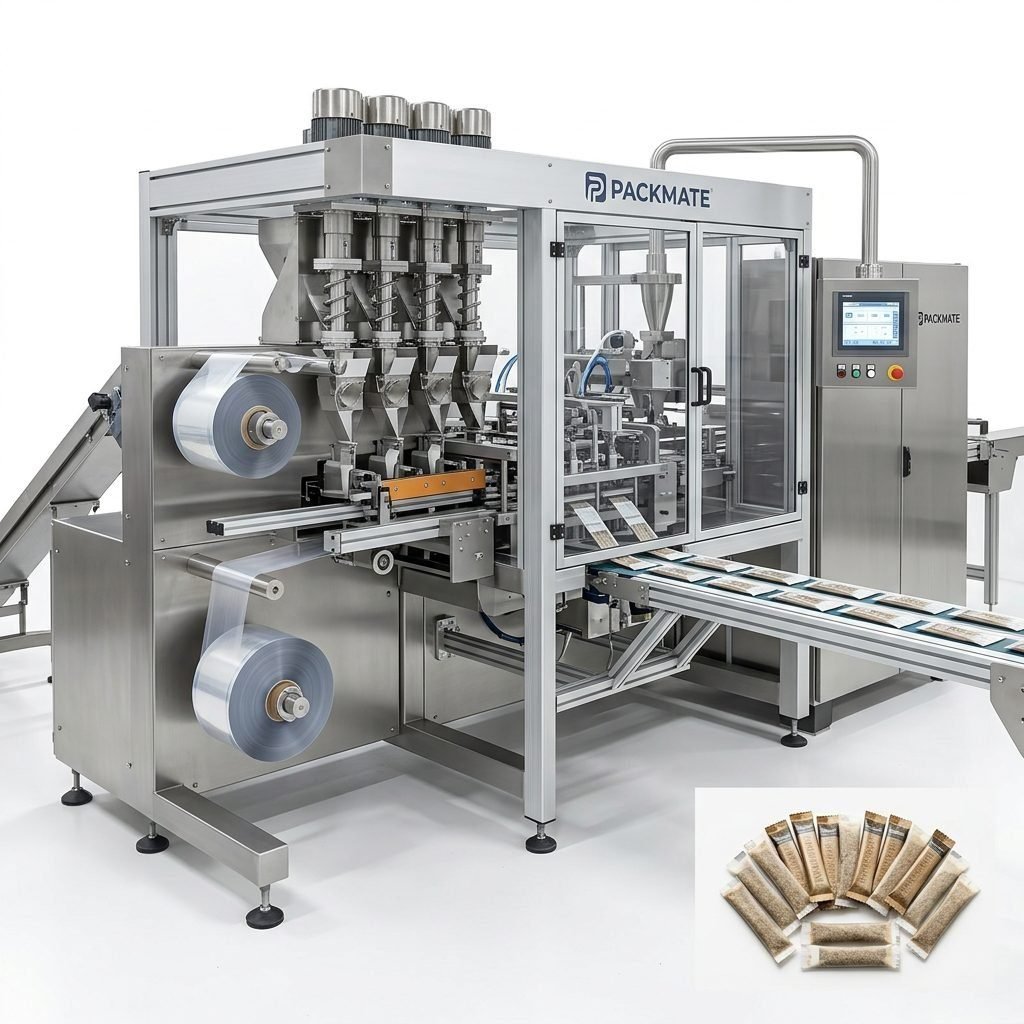
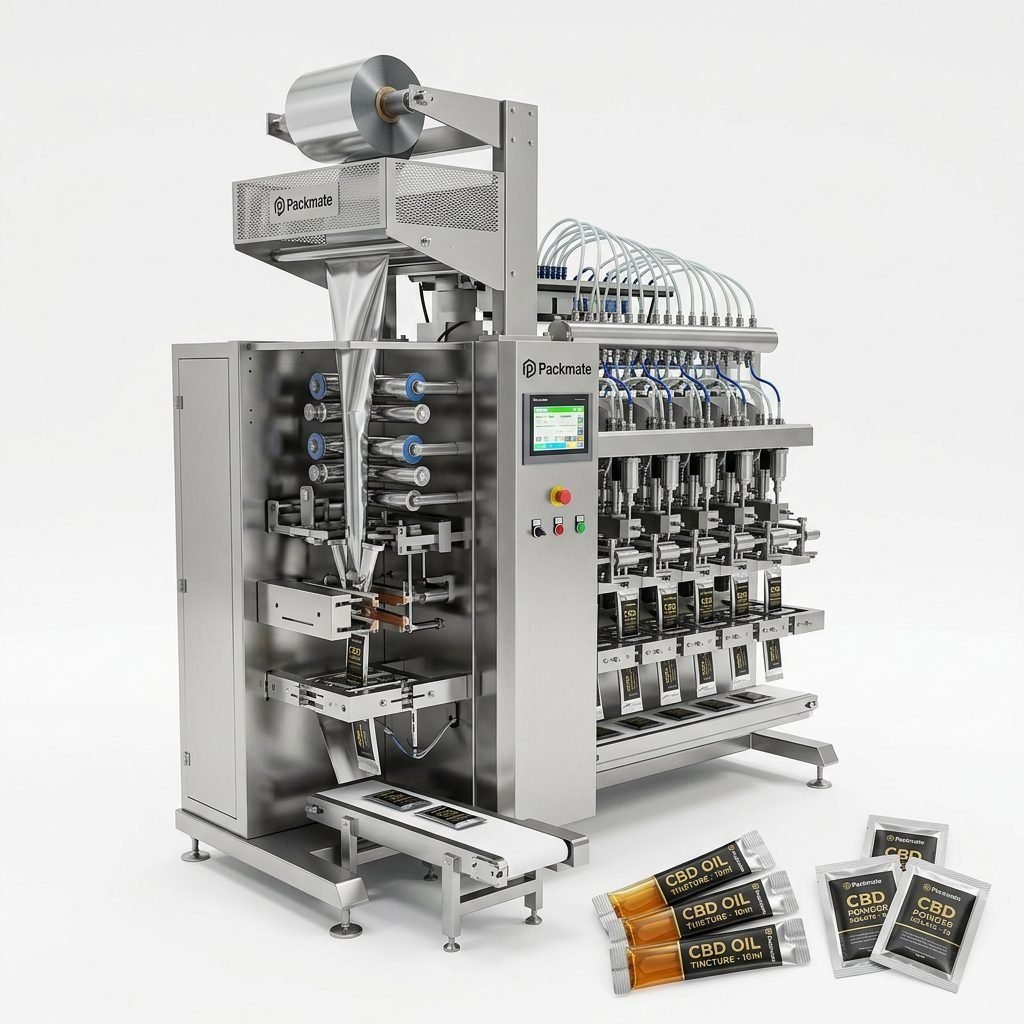
- Sachet & Stick Pack Machines — for single-dose sachets and stick formats with precise dosing.
- Bag & Pouch Packaging Machines — for pre-made pouches, zipper bags, or flow-pack formats.
- Weighing & Packaging Systems — multi-head or linear weighers integrated for accurate dosing.
Many reputable suppliers provide full lines combining these elements. For reference, product pages such as Snus & Nicotine Packaging Machines and Sachet & Stick Pack Machines illustrate typical options and configurations.
Key Technical Specifications to Compare
When you evaluate quotations and datasheets, compare these technical items carefully:
- Production speed: pouches/minute or sticks/minute at target specs.
- Number of lanes: scalability and multi-lane balance for small-dose pouches.
- Dosing accuracy: typical +/- tolerance and the weighing system used.
- Material compatibility: powder, wet-fill, granules, or liquids.
- Sealing technology: heat seal, ultrasonic, or combination for barrier integrity.
- Changeover time: speed and tool-less options when switching formats.
- Cleaning and hygiene: CIP options or easy disassembly for tobacco/nicotine compliance.
Must-have: a clear specification sheet from the supplier that lists cycle rate, dosing accuracy, power specs, and net weights — these are non-negotiable when planning throughput and return on investment.
Assess Manufacturer Capabilities and Factory Strength
A machine’s performance depends on manufacturing quality. Assess the supplier on:
- Engineering experience: length of R&D history and product focus.
- Factory scale: size of facility, CNC centers, and assembly lines.
- Product range: number of models and ability to customize turnkey lines.
- Quality control & certifications: CE, ISO, and documented testing procedures.
For example, a supplier with 30+ years in packaging engineering and a 20,000㎡ factory footprint signals robustness and a capacity to support custom multi-lane solutions. See company details such as About Packmate for insight into manufacturing capabilities.
Factory visits and audits
If possible, arrange a factory visit or virtual walkthrough. Key observations include machine assembly precision, test runs, stock of spare parts, and the availability of a demonstration line. A supplier who welcomes customers for live demonstrations shows confidence and transparency.
Service, Spare Parts, and Local Support in Cuba
Post-sale service is often as important as the machine itself. Evaluate the supplier’s after-sales approach:
- Spare parts availability: stocked parts, lead times, and local inventory options.
- Technical training: operator and maintenance training programs (on-site or remote).
- Remote support: PLC/HMI remote diagnostics and firmware update policies.
- Installation & commissioning: whether the supplier provides on-site engineers or partners with local technicians.
In Cuba, logistics and import approvals can extend timelines — confirm spare parts shipment plans and whether the manufacturer can supply essential spares through regional hubs.
Customization, Compliance, and Documentation
Nicotine products are tightly regulated in many jurisdictions. Work with a manufacturer who can adapt machines to meet labeling, traceability, and hygienic design requirements. Request:
- CE/ISO certificates and test reports.
- Material certificates for parts in product contact areas.
- Detailed operation manuals, electrical drawings, and spare parts lists.
- Validation and FAT (Factory Acceptance Test) documentation.
Suppliers that offer a complete documentation package reduce your regulatory and commissioning risk dramatically.
Total Cost of Ownership (TCO) vs Initial Price
Don’t judge a supplier solely on the lowest purchase price. Consider TCO across:
- Energy consumption and efficiency
- Maintenance intervals and mean time between failures (MTBF)
- Availability and cost of spare parts
- Uptime guarantees and support response time
A slightly higher upfront investment in a reliable multi-lane snus packing line often pays back through lower scrap rates, reduced downtime, and higher yield.
Checklist for comparing quotes
Create a side-by-side comparison including: machine performance, warranty terms, spare parts list, training scope, FAT requirements, shipping/installation costs, and expected lead time.
Ask for references and case studies to validate claims. See examples on the Case page to review real-world deployments and customer feedback.
Logistics, Shipping and Local Regulations in Cuba
Plan for import customs, electrical compatibility, and on-site installation constraints. Confirm:
- Voltage and frequency compatibility or whether a transformer is required.
- Crating and shock-absorbent packing for long sea transit.
- Customs documentation and HS codes provided by the manufacturer.
- Local partner resources for fast clearance and installation.
Selecting a Long-Term Partner, Not Just a Supplier
The best outcomes come from suppliers who view you as a partner. Look for:
- Clear communication and transparent lead times.
- Flexible customization and willingness to iterate prototypes.
- Global exhibition presence and testing capabilities — useful for seeing live demonstrations. See the supplier’s exhibition record at Our Exhibition.
- Strong warranty and a documented service SLA.
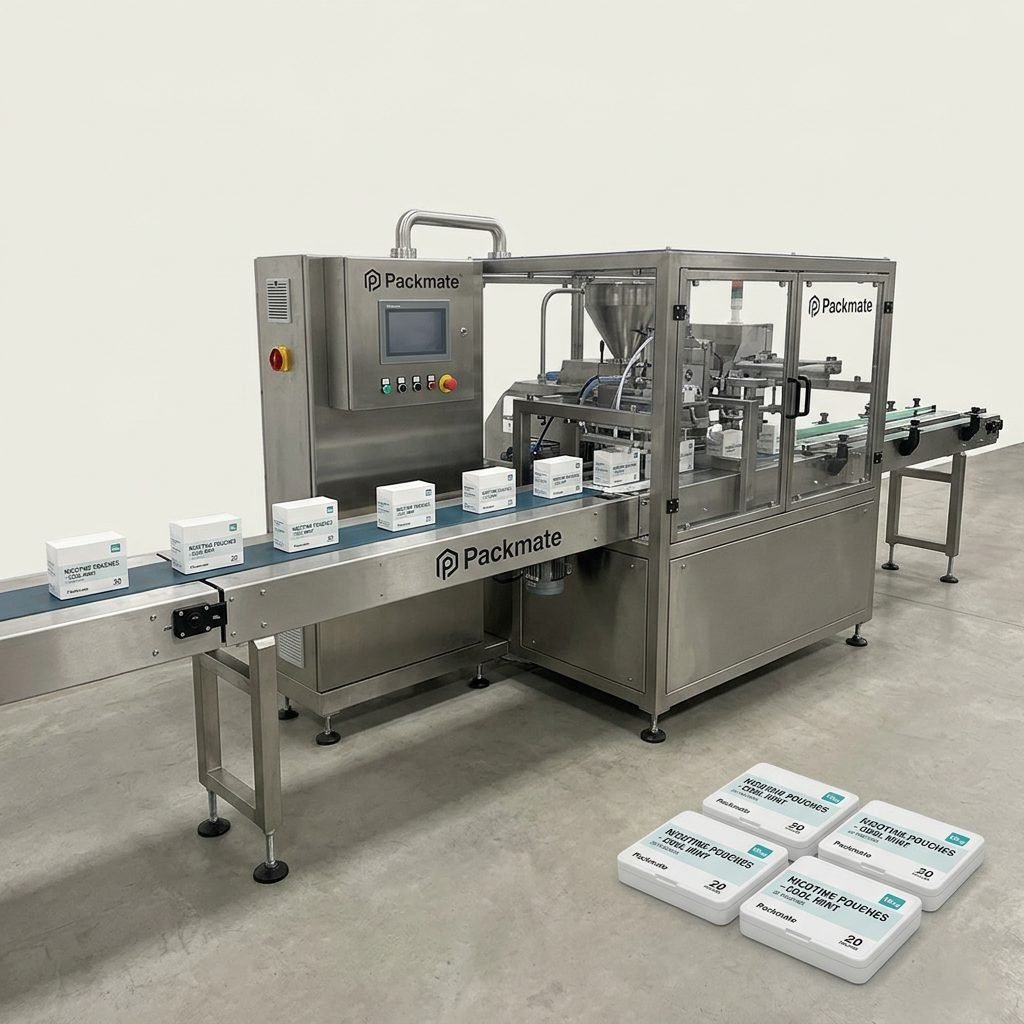
If a manufacturer offers turnkey solutions—integrating dosing, filling, sealing, and end-of-line cartoning—they can significantly reduce integration headaches and accelerate ramp-up.
How to Run a Supplier Evaluation Project
Follow a structured process:
- Issue an RFQ with detailed product specs and desired outputs.
- Request FAT videos or on-site demonstrations at the factory.
- Ask for references and local case studies.
- Clarify warranty, spare parts lead times, and training scope.
- Negotiate payment terms, shipping incoterms, and commissioning timeline.
A thorough RFQ avoids misunderstandings and ensures the delivered machine meets expectations the first time.
Why Packmate-style Expertise Matters for Nicotine Packaging
Suppliers with decades of focused experience on snus and nicotine pouch lines understand small-dose multi-lane dynamics, dosing stability, and sealing requirements. A manufacturer that offers a wide model range and experienced engineering teams can supply tailored solutions for the Cuban market and beyond. For details about such comprehensive offerings, review Bag & Pouch Packaging Machines and wider equipment selections like Weighing & Packaging Systems.
Balance performance specs, factory strength, after-sales support, and total cost of ownership. The right partner will help you scale production, maintain compliance, and reduce risk in the Cuban market.
Common Questions (FAQs)
Q1: How long is the typical lead time for a custom snus packaging line?
A1: Lead times vary by customization and factory workload. Standard models may ship within 8–12 weeks; fully customized turnkey lines can require 12–24 weeks including FAT.
Q2: What after-sales services should I insist upon?
A2: Insist on remote diagnostics, on-site commissioning, operator and maintenance training, spare parts kits, and a clear warranty with defined response times.
Q3: Can machines be adapted for multiple pouch sizes and formats?
A3: Yes — many modern lines support modular changeover kits and format memory in the HMI. Verify actual changeover time and whether tools are required.
Q4: Where can I see examples or request a demo?
A4: Ask suppliers for FAT videos, virtual demos, or attend industry exhibitions. You can explore machine examples and company credentials via the supplier’s product and exhibition pages.
Q5: How do I request quotes and technical support?
A5: Prepare a detailed RFQ and contact the supplier’s sales or service team through their contact page. For comprehensive solutions and support options, visit the supplier’s Contact Us page.