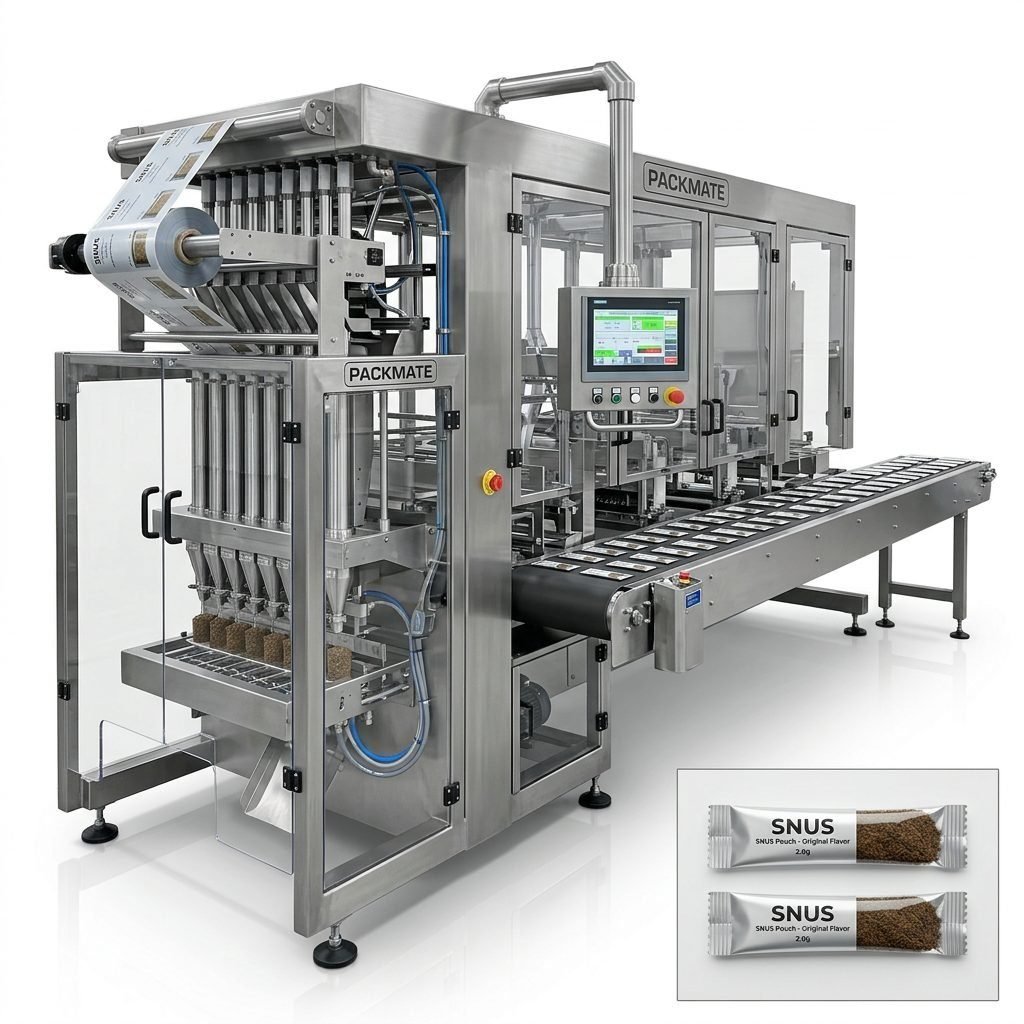
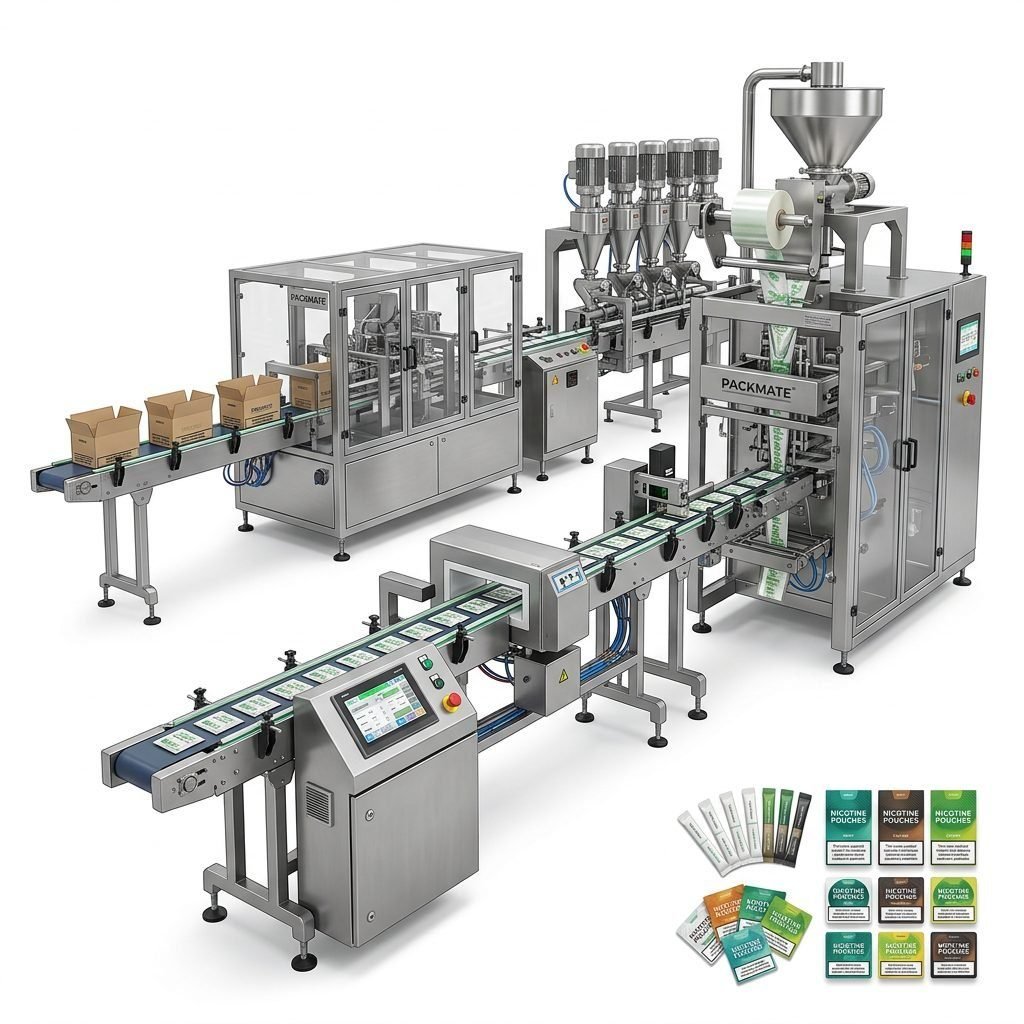
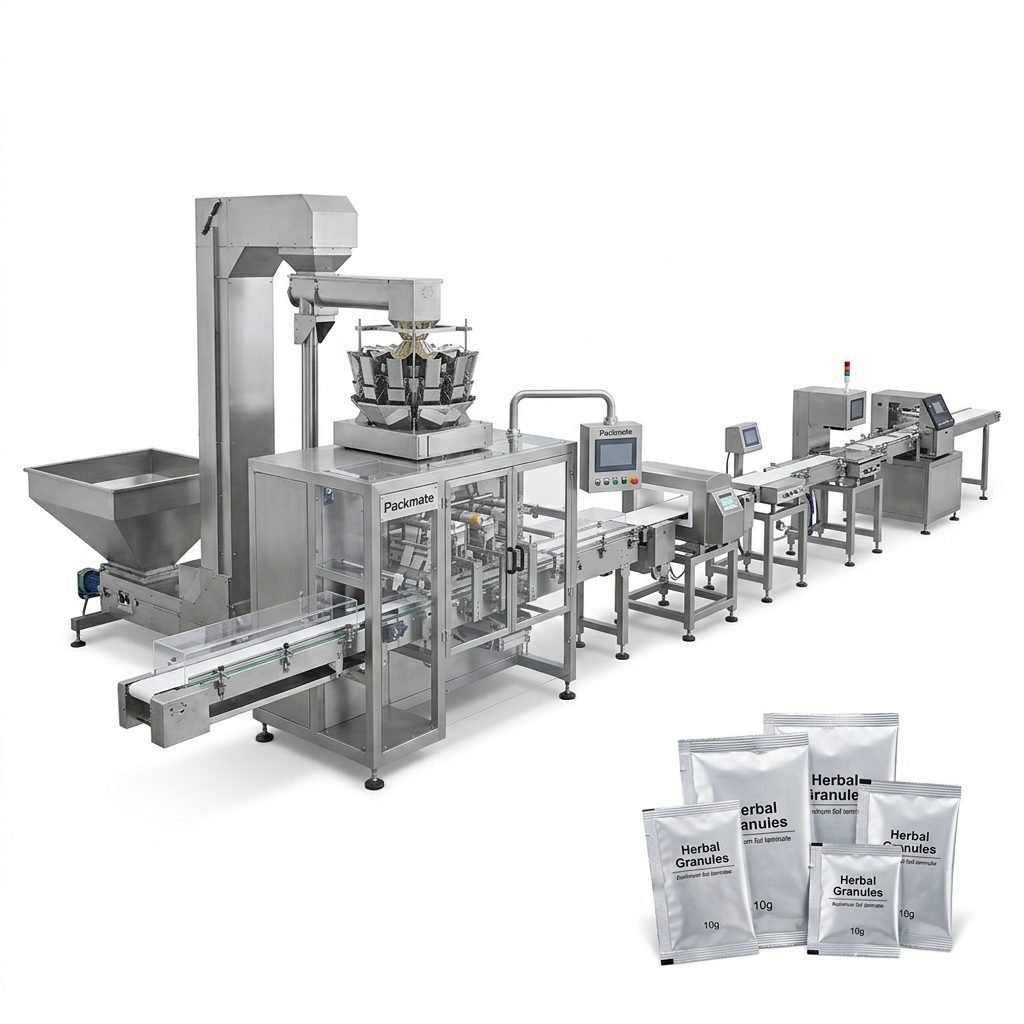
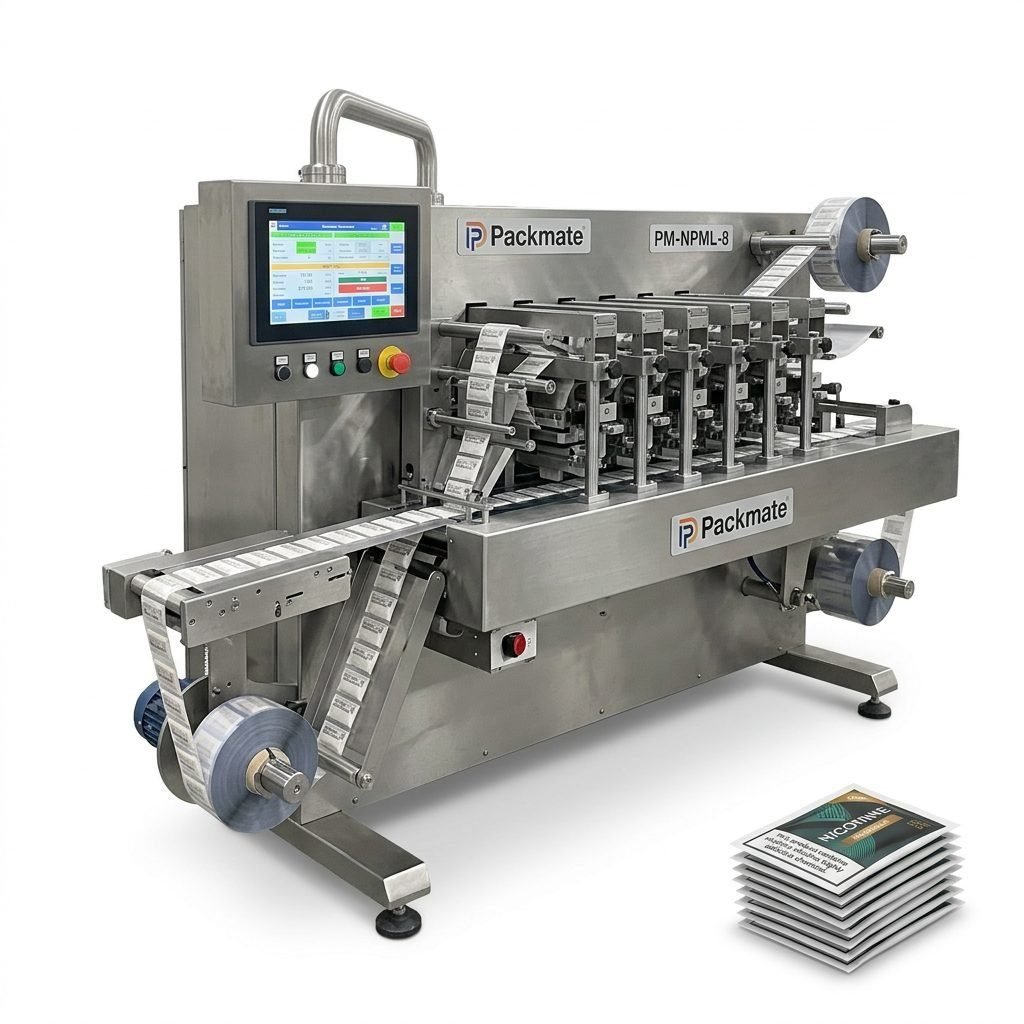
Modern snus packing machines are the backbone of efficient nicotine pouch production. This article walks through the detailed working principle of a snus packing machine, its main modules, typical workflows, automation features, quality control measures, and practical considerations when selecting or operating a system. Whether you are an engineer, production manager, or packaging buyer, this guide explains how these systems convert raw materials into perfectly formed, weighed, and sealed snus pouches.
🔧 What is a Snus Packing Machine and Why It Matters
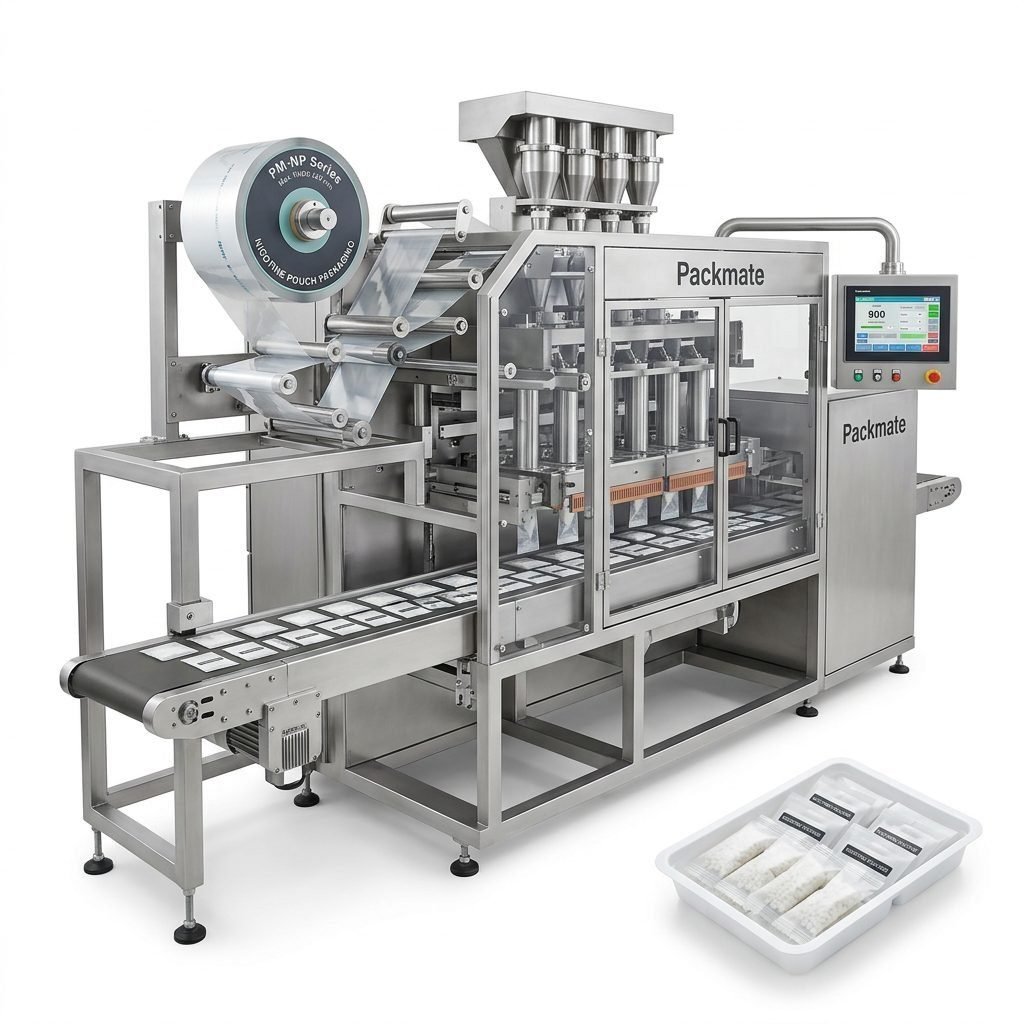
A snus packing machine is a specialized automated packaging unit designed to form, fill, weigh, and seal small-dose tobacco or nicotine pouches consistently at high speed. These systems are essential for scaling production, maintaining hygienic handling, and meeting stringent product weight and sealing specifications. Modern lines integrate multiple subsystems — dosing, pouch forming, sealing, cutting, and inspection — to deliver a continuous and traceable production flow.
✅ Core benefits
The main advantages include: improved consistency, reduced labor cost, higher throughput, integrated quality control, and flexible pouch formats (stick, sachet, multi-lane). For turnkey production lines and specialized models, see Packmate’s dedicated product range like the Snus & Nicotine Packaging Machines.
🧩 Main Components and Functional Modules
A complete snus packing machine is composed of several coordinated modules. Understanding these parts clarifies how each contributes to precise pouch production:
1. Material Feeding & Buffering
The raw snus or nicotine formulation is fed from bulk hoppers into controlled feeders. Buffering systems maintain constant feed to the dosing station, avoiding interruptions. Precision feeders are critical for powdery or granular blends to prevent segregation and ensure uniform flow.
2. Dosing & Weighing System
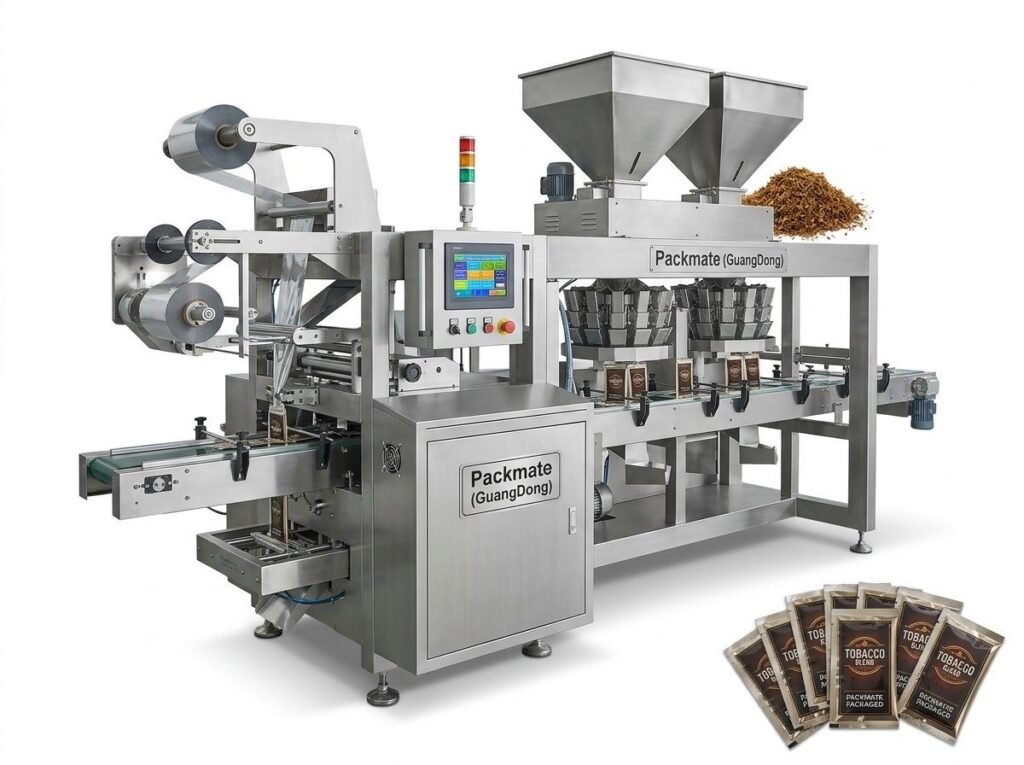
Accurate dosing is achieved by volumetric or gravimetric (weighing) systems. Multi-head weighers or electronic load cells measure each pouch dose. High-end lines often incorporate dynamic check-weighers and correction loops to maintain target weight tolerance across high speeds.
3. Pouch Forming & Filling
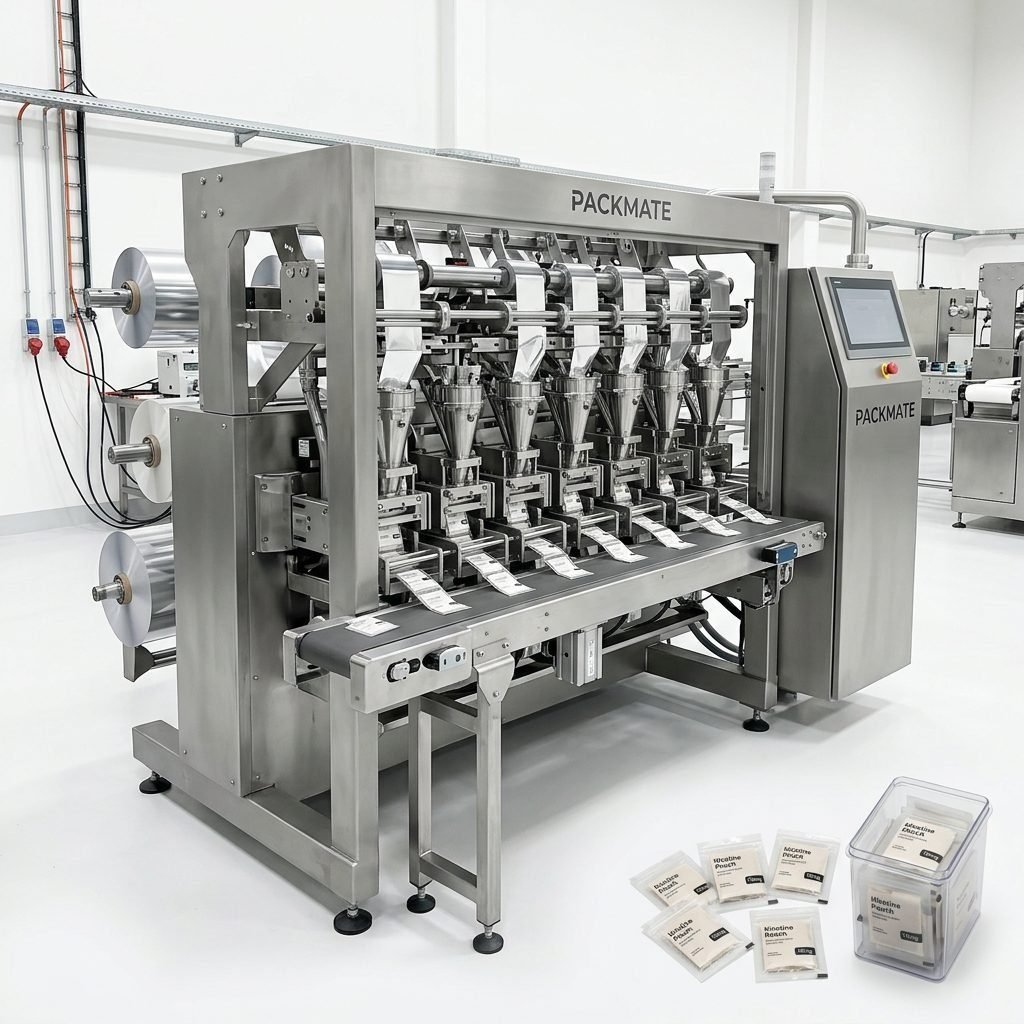
Depending on format (stick, sachet, or multi-lane), forming units create the pouch shape from roll stock or pre-made pouches. The filling head synchronizes with the dosing system to deposit measured snus into each cavity precisely before sealing.
4. Sealing & Cutting
Heat-seal jaws or ultrasonic sealing modules close the pouch with consistent pressure and temperature. Cutting modules then separate individual pouches or strips while maintaining clean edges. Proper sealing is critical to shelf-life and leak prevention.
5. Inspection & Quality Control
Vision systems, metal detectors, and in-line weight checks ensure every pouch meets quality standards. Reject systems automatically divert faulty units, and data logging captures batch metrics for traceability and compliance.
🔴 Highlight — Critical Tolerance Control
Maintaining dose tolerance is the most frequent challenge. High-precision weighers combined with real-time feedback to the feeder reduce drift and ensure each pouch meets target weight. Consider systems with automatic calibration and recipe management for faster changeovers.
⚙️ Detailed Working Sequence (Step-by-Step)
The following sequence describes a typical cycle on a continuous snus packing machine:
Step 1: Preparation and Material Loading
Operators load raw material into hoppers and ensure film or pouch roll stock is threaded correctly. The control system loads a production recipe which sets target weight, sealing temperature, machine speed, and lane configuration.
Step 2: Film/Pouch Forming and Initial Seal
The film web is formed into pouches (or pre-made pouches are fed). Pre-sealing may create compartments or channels required for consistent filling.
Step 3: Dosing & Filling
Precise doses are dispensed into each pouch. In multi-lane machines, simultaneous dosing heads operate in parallel, synchronized by the main PLC to match the sealing cycle.
Step 4: Final Seal and Cutting
Sealing jaws apply heat and pressure according to the film material. After sealing, cutting blades or rotary knives separate the pouches to final format.
Step 5: Inspection and Packaging Outfeed
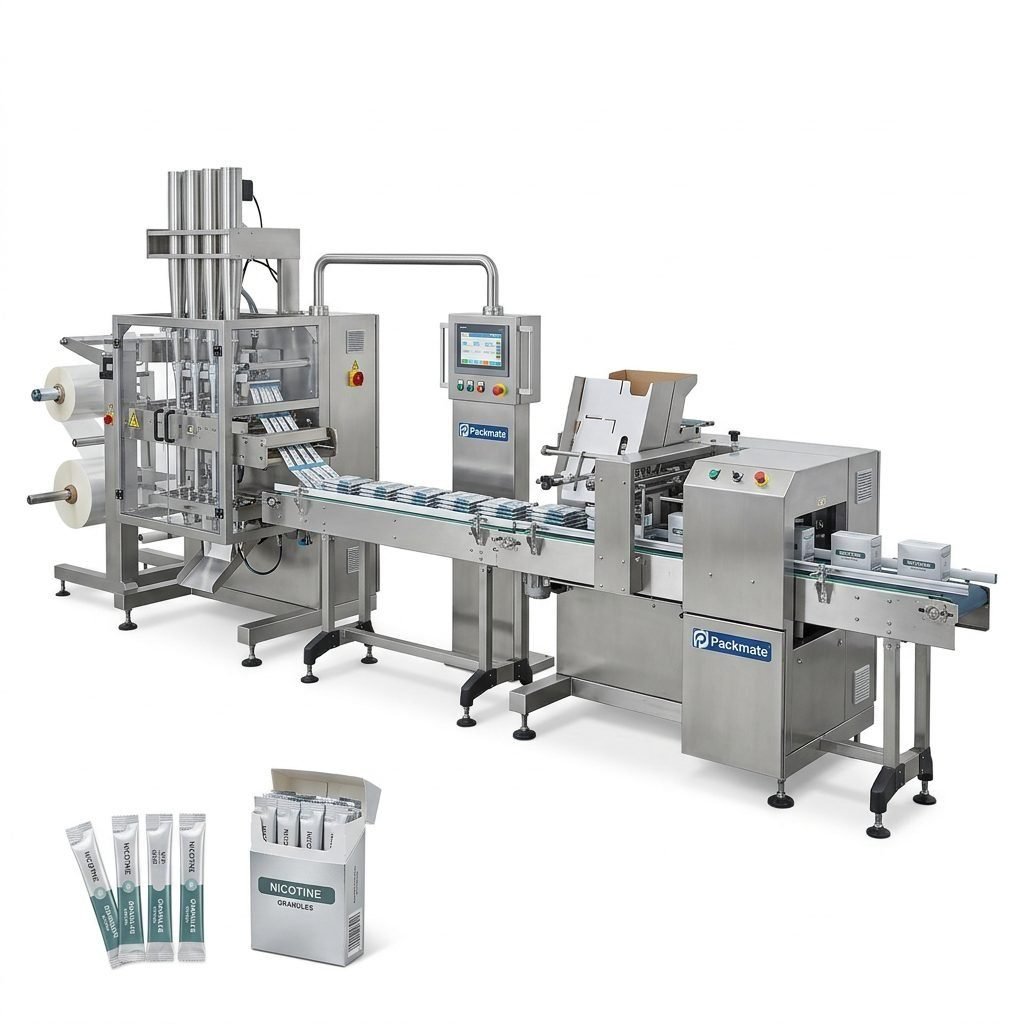
Vision and weight checks validate each pouch. Accepted units move to secondary packaging (boxes, trays) or case packers; rejects are removed automatically. Data capture records batch statistics for traceability.
Note: Multi-lane systems dramatically increase throughput but require more sophisticated synchronization and maintenance practices to keep lane-to-lane uniformity.
🔎 Automation & Control Features
Modern snus packing machines integrate PLCs, HMI touchscreens, servo drives, and remote diagnostics. These features enable recipe storage, quick changeovers, and predictive maintenance alerts. Advanced lines provide OEE dashboards and historical logs for compliance and continuous improvement.
Remote Support & Diagnostics
Remote access allows technicians to troubleshoot and update software, minimizing downtime. Choose suppliers with global support networks and clear service agreements to protect production continuity.
🧰 Maintenance, Cleaning & Safety Considerations
Hygienic design and easy-to-clean modules reduce product contamination risk. Safety features such as light curtains, emergency stops, and interlocked guards are standard. Establish preventive maintenance routines focusing on wear parts (seals, blades, belts) and keep spare part kits available.
🔧 Pro tip
Implement a calibration schedule for weighing systems and document all maintenance actions. This reduces weight drift and supports audit readiness.
📈 Production Line Integration & Turnkey Solutions
For full-scale operations, snus packing machines are integrated into complete lines including fillers, case packers, and palletizers. Packmate offers full lines and auxiliary equipment — visit Filling & Packaging Lines and Auxiliary Packaging Equipment for more examples of integrated solutions.
Line balancing and footprint
Efficient layout reduces material transit time and supports ergonomic operation. Early-stage planning should include factory space, utility requirements, HVAC for dust control, and access for maintenance.
📌 Choosing the Right Machine — Key Considerations
Selecting a snus packing machine depends on product format, target output, material properties, and regulatory needs. Evaluate vendor capabilities including customization options, factory certifications, and after-sales service.
- Format flexibility — stick, sachet, multi-lane
- Throughput capacity and scalability
- Weighing accuracy and inspection systems
- Hygienic design and cleanability
- Vendor experience and global support network
For a closer look at product families and technical specifications, explore Packmate’s product pages such as Sachet & Stick Pack Machines and Bag & Pouch Packaging Machines, where model options and customization cases are described in detail.
📦 Real-World Case Examples and Certifications
Packmate’s machines are used globally across markets. Certified to CE and ISO standards, these machines have proven performance in diverse operational environments. Browse customer Case studies and Exhibition showcases to see machines in action and learn about deployments across Europe, Asia, and the Americas.
Customer insight: Facilities that invest in multi-lane snus lines typically see a rapid return-on-investment through labor savings and higher throughput — provided the line is matched to demand and supported by skilled maintenance.
📞 Supplier Selection & After-Sales Service
Evaluate suppliers on technical competence, spare parts availability, training offerings, and remote support. A good supplier provides full lifecycle support: commissioning, operator training, preventive maintenance, and timely spare parts. For more about the manufacturer, visit About Packmate and Contact Us.
Sustainability and material choices
Consider film recyclability and packaging footprint. Some manufacturers offer optimized film usage to reduce waste and lower per-unit packaging cost.
📌 Final Takeaway
A well-designed snus packing machine is an integrated system of precise dosing, robust forming and sealing, and stringent inspection. Prioritize accuracy, hygiene, and vendor support when selecting systems. For turnkey projects and tailored solutions, suppliers with deep industry experience and global service reach are recommended.
Useful Links
Explore product categories and company information: Snus & Nicotine Packaging Machines, Sachet & Stick Pack Machines, About Packmate, Case, Contact Us.
❓ Frequently Asked Questions
1. How accurate are dosing systems on snus packing machines?
Modern gravimetric systems and multi-head weighers commonly achieve accuracies within a few milligrams per pouch, depending on product characteristics and machine calibration. Periodic calibration and routine maintenance keep accuracy within specifications.
2. Can a machine handle different pouch formats on the same line?
Many machines offer format changeover capabilities and recipe-driven settings to switch between stick, sachet, and multi-lane formats. However, extensive format changes may require tooling swaps and setup time.
3. What are typical throughput ranges?
Throughput varies widely: single-lane machines may run hundreds to a few thousand pouches per hour, while multi-lane systems can reach tens of thousands per hour depending on lane count and pouch size.
4. How important is after-sales service?
Critical. Fast spare-part delivery, remote diagnostics, and on-site support minimize downtime. Choose a supplier with proven global support and documented service offerings.
5. Where can I see real examples and request a quote?
View live cases, exhibitions, and product catalogs on the manufacturer’s website, and use the Contact Us link to request consultations, site surveys, and formal quotations.