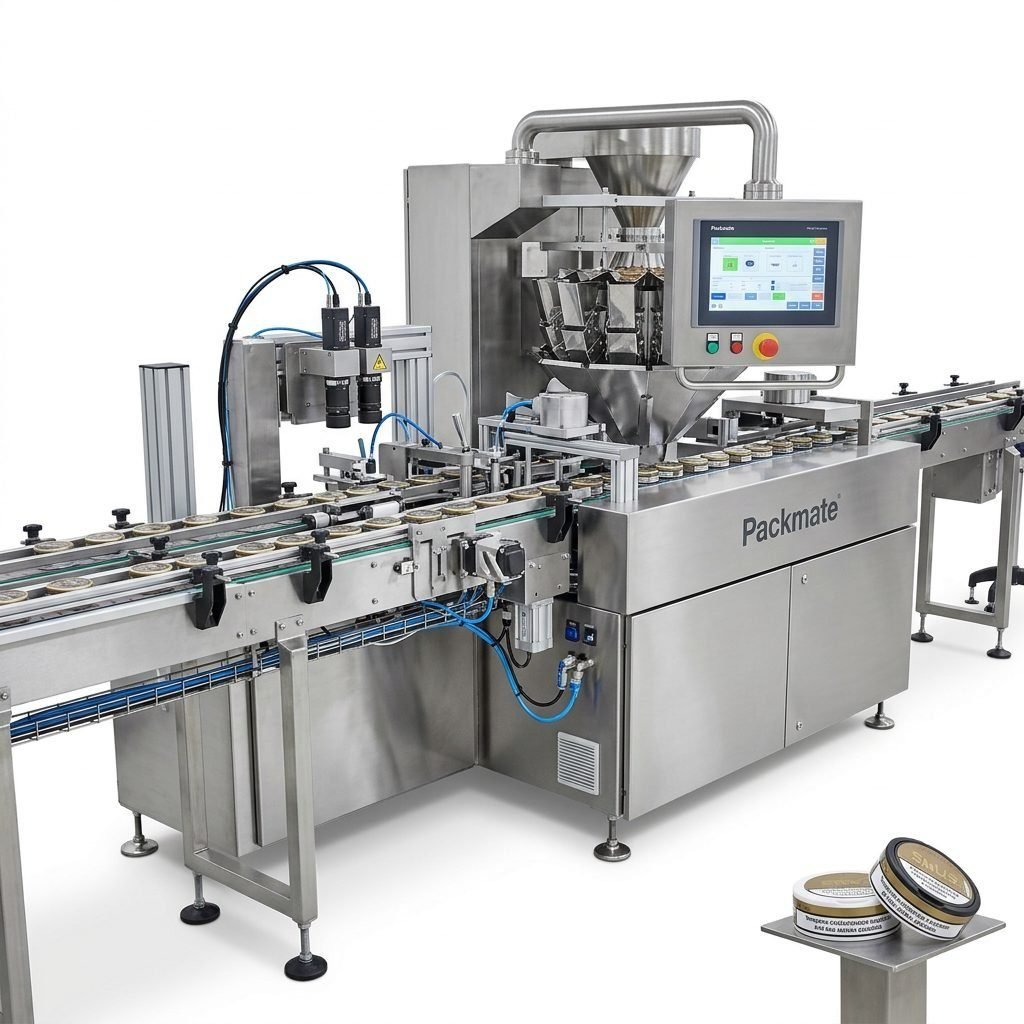
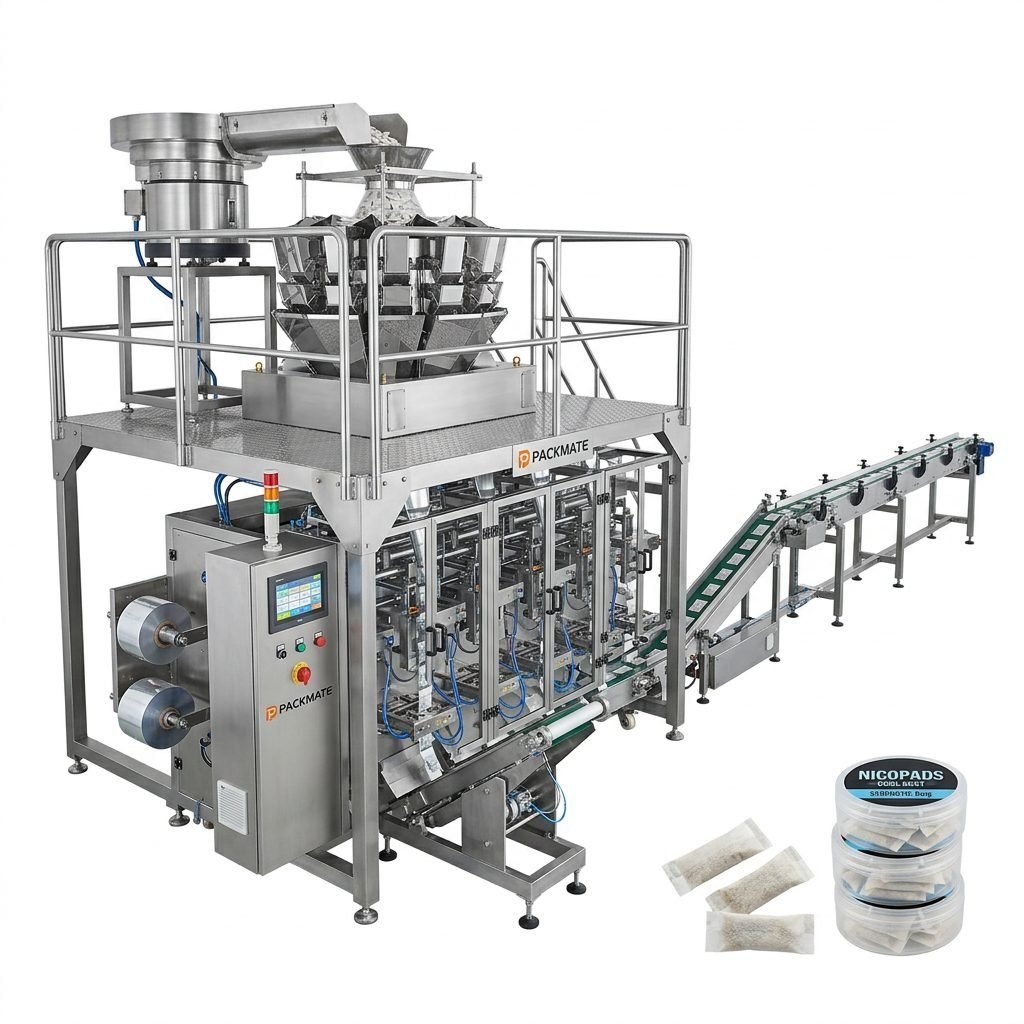
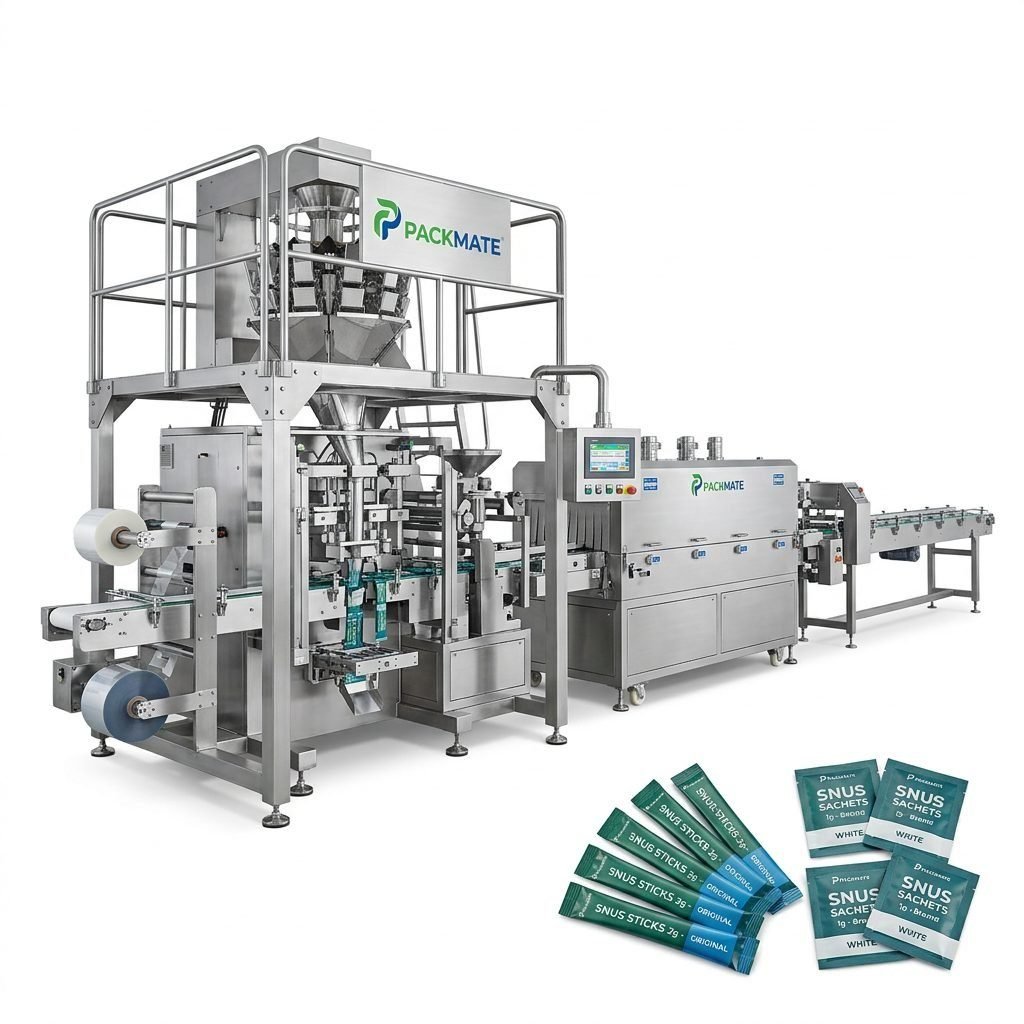
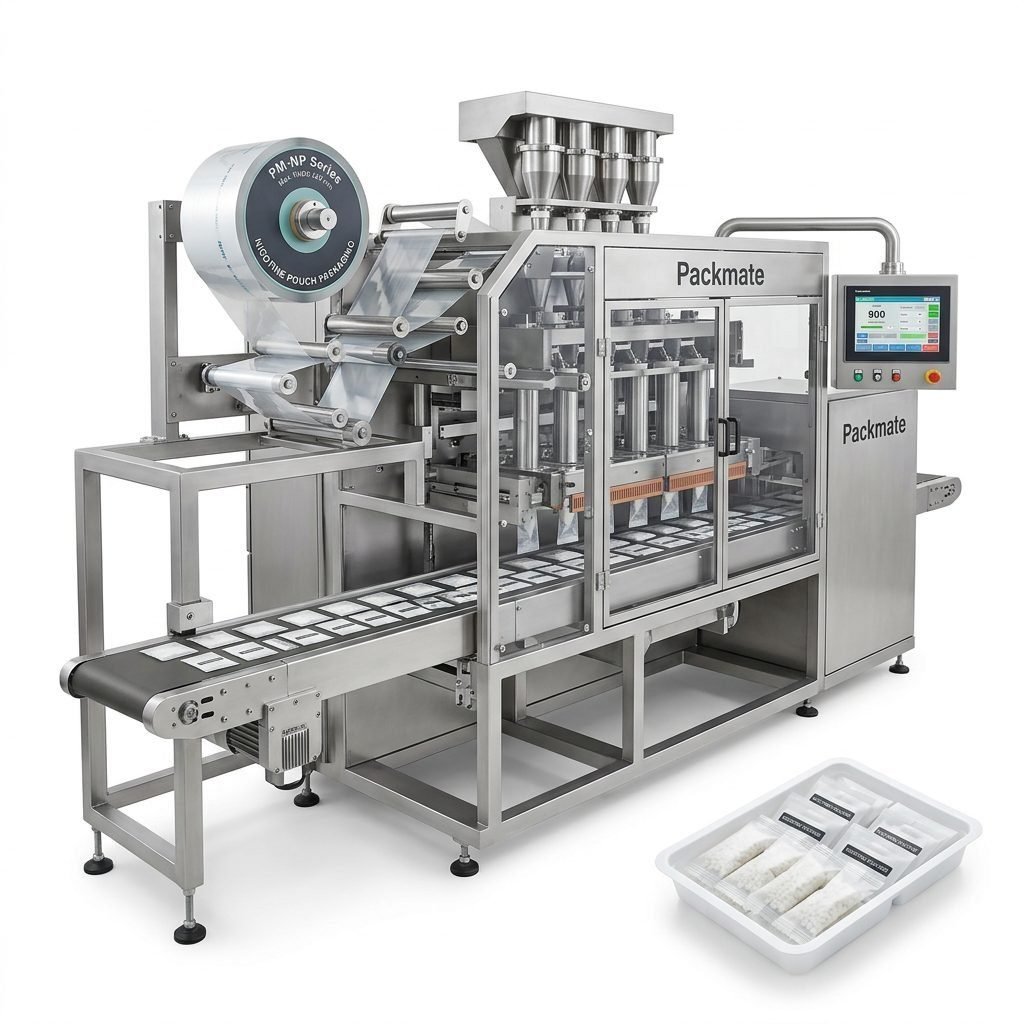
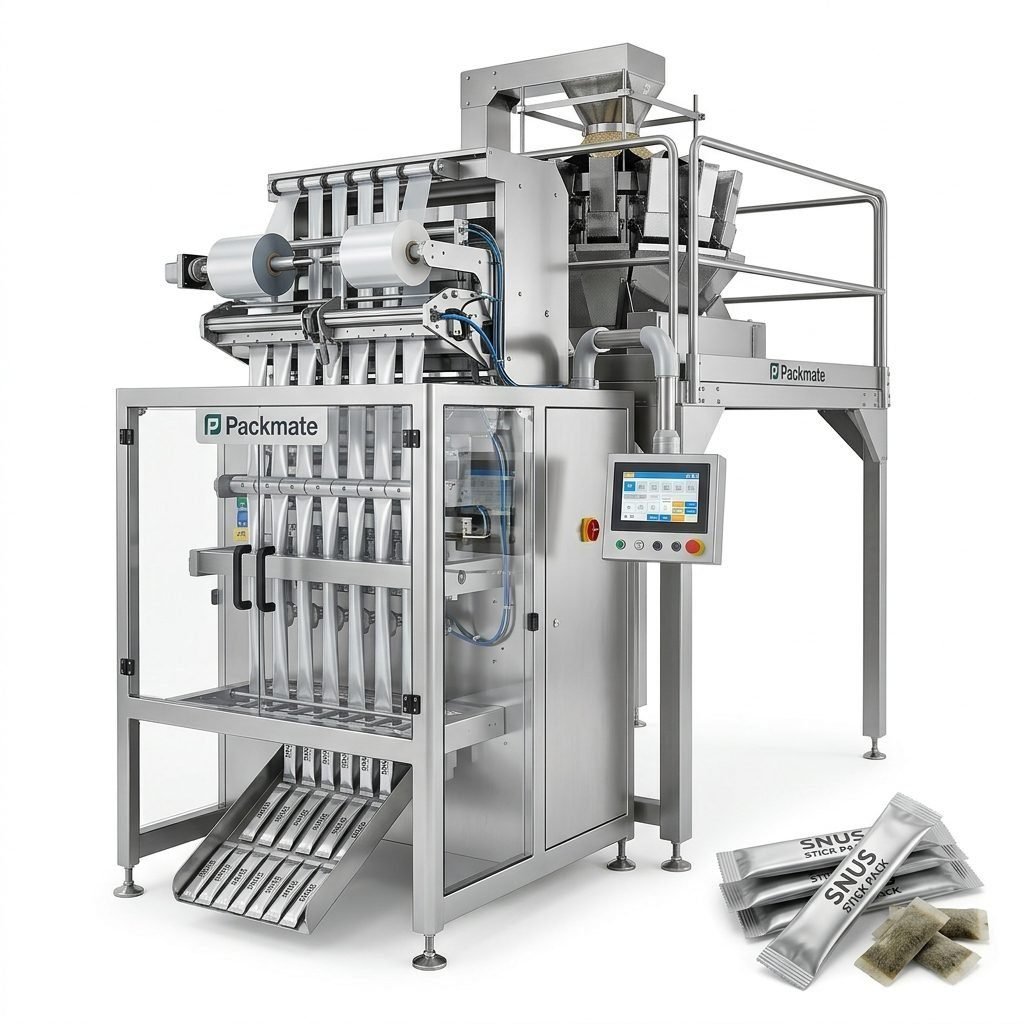
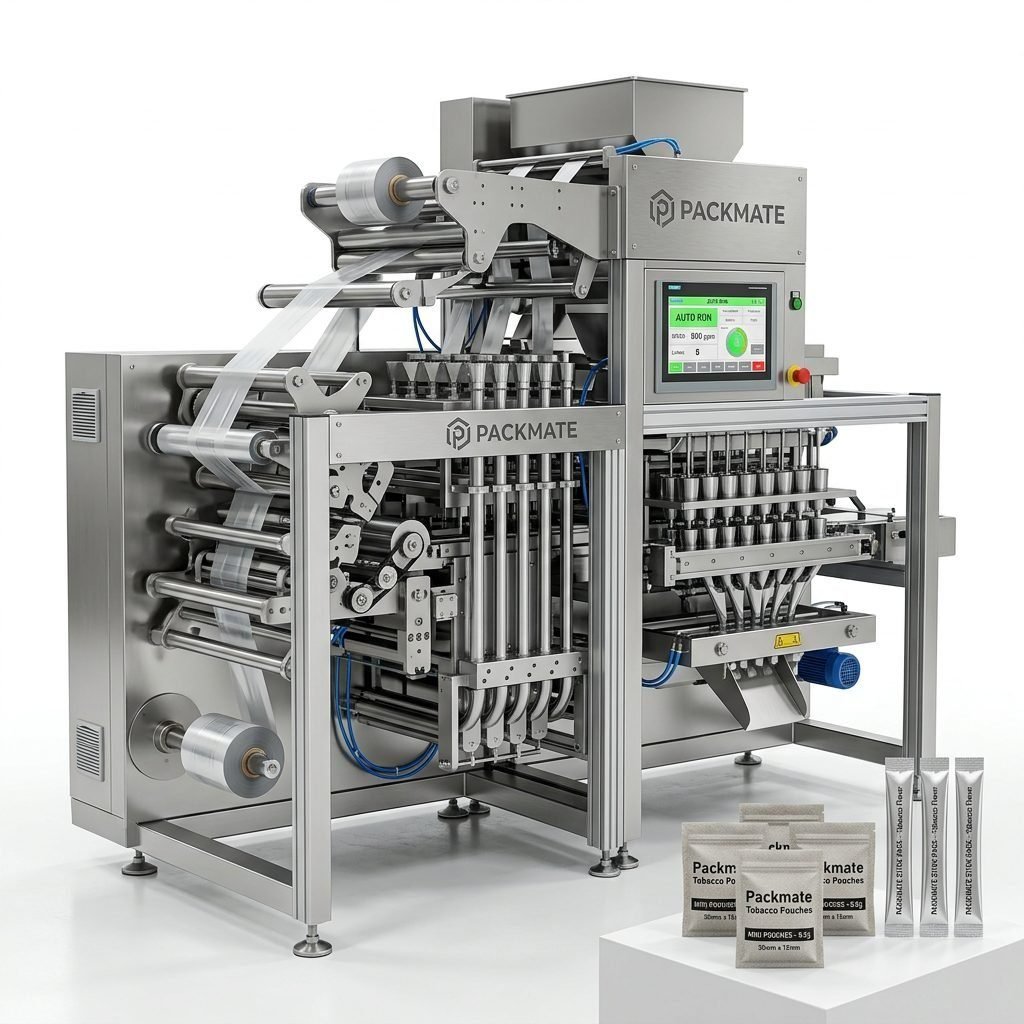
In an era where consumer demand for discreet, consistent, and safe nicotine pouches is growing rapidly, investing in a high-speed automatic nicotine pouch filling line is no longer optional — it’s essential. Modern production lines combine precision dosing, multi-lane efficiency, and integrated packaging to deliver high throughput with minimal waste. This guide walks factory managers, production engineers, and procurement teams through everything they need to know about selecting, integrating, and optimizing a top-tier nicotine pouch filling line.
Why Choose a High-Speed Nicotine Pouch Filling Line?
A modern nicotine pouch filling line transforms small-batch manual work into a reliable, scalable manufacturing operation. Key benefits include:
▶ Consistent dosing: High-precision feeders and weighers ensure each pouch contains the exact amount of product, which reduces regulatory risk and customer complaints.
▶ High throughput: Multi-lane filling systems and synchronized wrappers scale production to meet seasonal spikes and long-term growth.
▶ Improved hygiene and safety: Enclosed filling zones, cleanable surfaces, and CE/ISO-compliant designs protect product integrity and operator safety.
▶ Reduced labor costs: Automation reduces manual handling, lowers labor dependency, and shortens the training curve for new operators.
Core Components of a Modern Filling Line
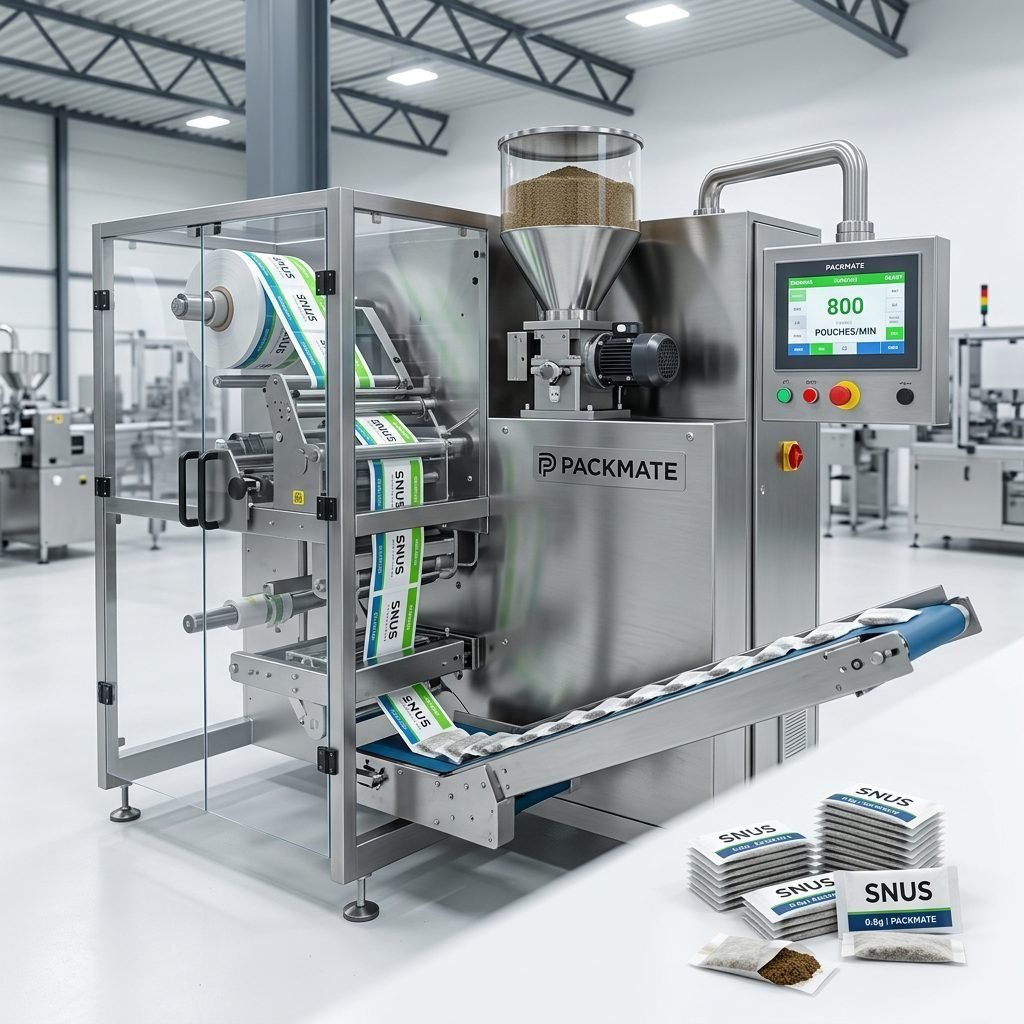
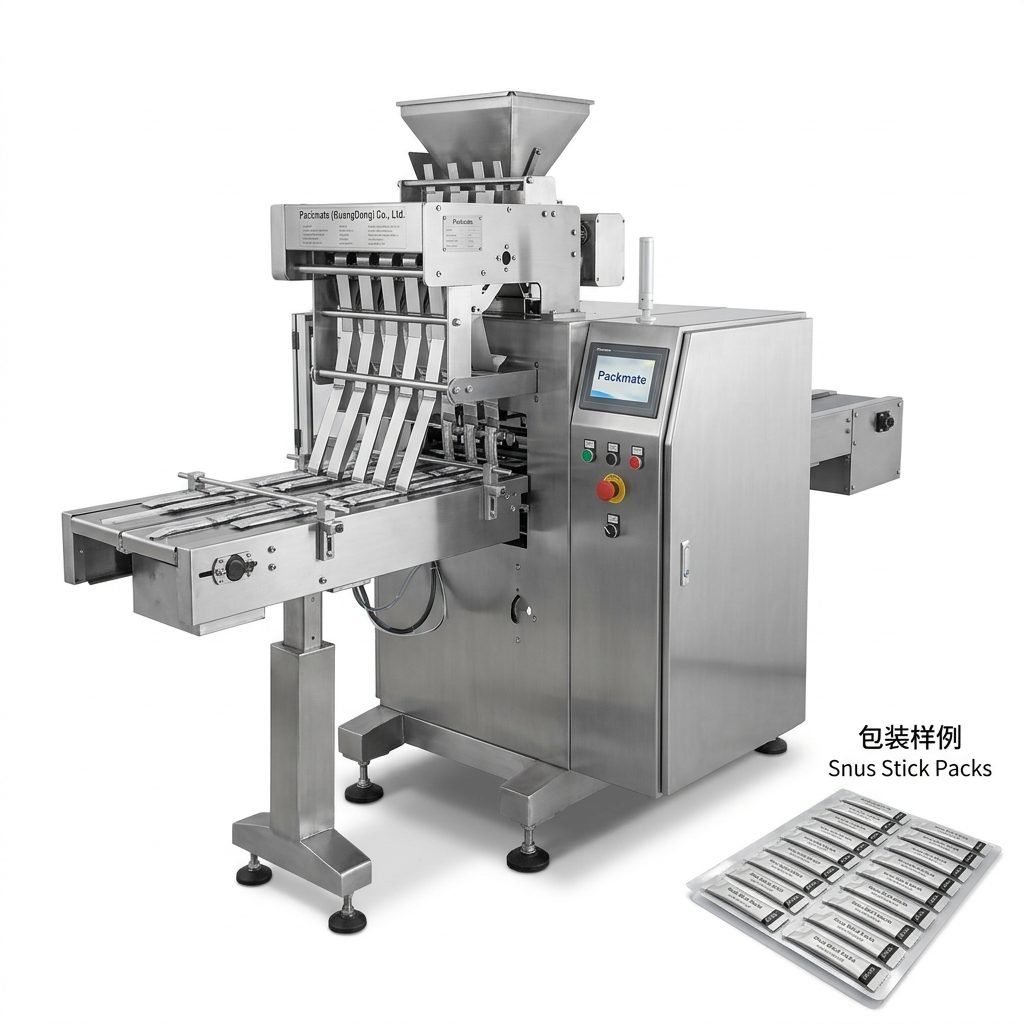
The typical high-speed nicotine pouch filling line integrates several critical modules. Each must be specified to your product format and target output:
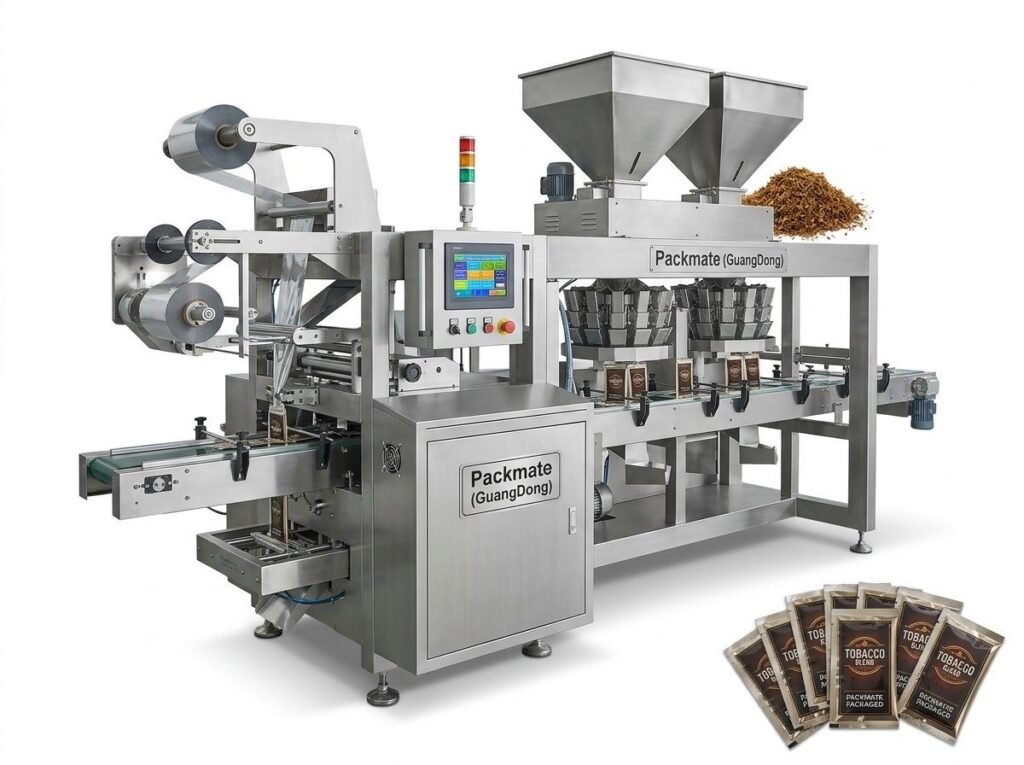
⚙️ Precision Feeding & Dosing: Volumetric or gravimetric dosing systems for powders and fiber blends. Multi-head weighers are common for ultra-stable results.
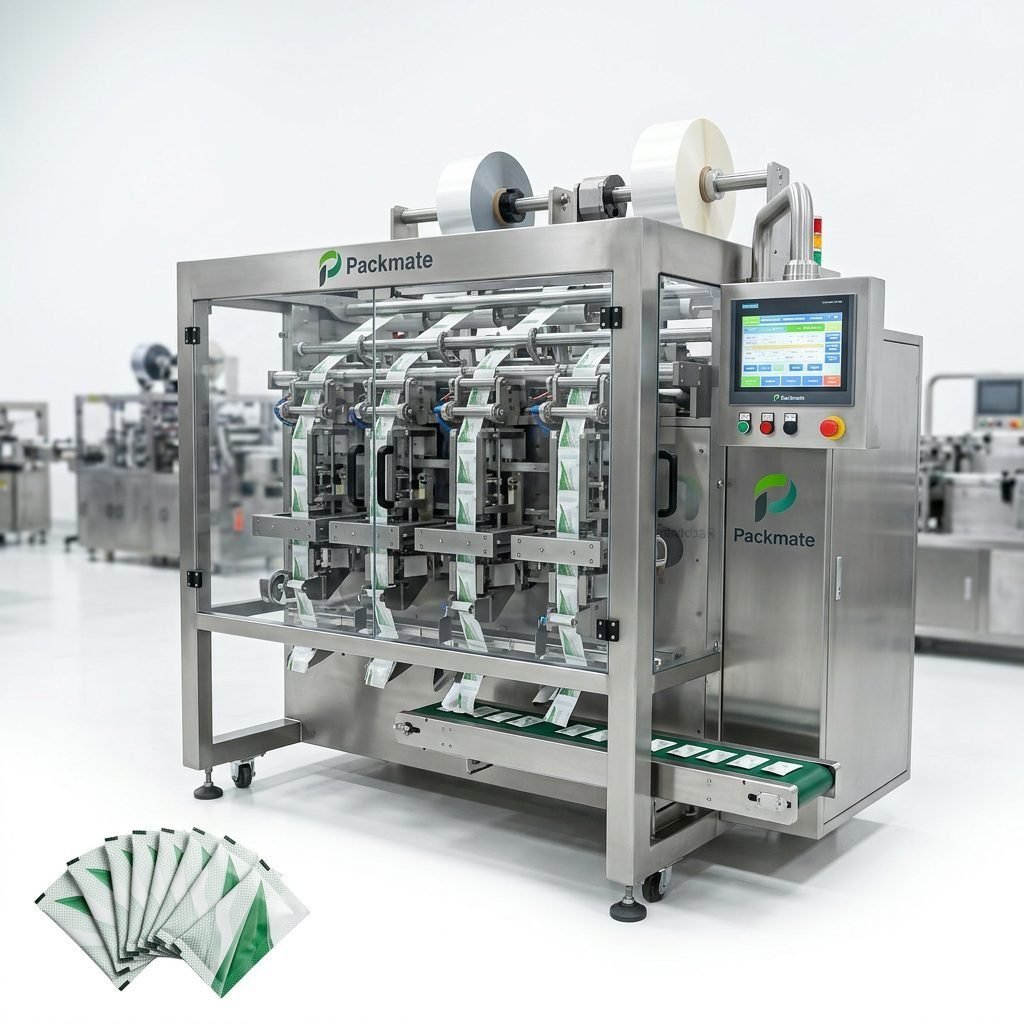
🧷 Pouch/Forming Station: High-speed multi-lane pouch formers for small-dose formats, compatible with coated/biodegradable wrappers.
🔁 Filling & Sealing: Rotary or linear systems providing accurate filling followed by hermetic sealing or crimping to ensure shelf life and tamper evidence.
🧪 In-line Quality Control: Checkweighers, vision inspection, and metal detection to ensure every pack meets specification.
📦 Secondary Packaging: Collating, cartoning, or flow-wrap systems to prepare consumer-ready boxes or multipacks.
Production Capacity & Speed: What to Expect
Output depends on lane count, dosing technology, and product characteristics. Typical benchmarks include:
▶ Single-lane precision fillers: suitable for specialty batches, producing hundreds to a few thousand pouches per hour.
▶ Multi-lane automatic lines (4–12 lanes): designed for commercial volumes, capable of tens of thousands of pouches per hour when combined with automated feeding and downstream packaging.
When planning capacity, allow for changeover time, maintenance windows, and peak season buffer to avoid bottlenecks. Upgrading to a scalable multi-lane system is a common strategy for fast-growing brands.
Automation & Quality Control: Ensure Compliance and Consistency
Automated quality control is not optional for regulated products. Essential elements include:
✅ In-line checkweighers: Reject underweight/overweight pouches automatically.
✅ Vision inspection: Detect sealing defects, foreign particles, and incorrect printing.
✅ Metal detection and X-ray: Protect consumer safety where needed.
Automated data logging enables traceability and simplifies quality audits — an important advantage when your business expands into export markets.
Customization & Turnkey Solutions
Some manufacturers provide modular machines only, while others deliver fully integrated turnkey lines including installation, commissioning, and training. Choosing a turnkey supplier reduces integration risk and accelerates time-to-market. For a complete set of packaging options and custom line builds, explore Packmate’s solutions and product families:
– Snus & Nicotine Packaging Machines: https://www.snusmachinery.com/products/snus-nicotine-packaging-machines/
– Filling & Packaging Lines: https://www.snusmachinery.com/products/filling-packaging-lines/
Factory Strength & Certification
Selecting a supplier with proven manufacturing capacity and international certifications minimizes risk. Packmate operates a modern 20,000㎡ facility with advanced CNC machining, precision assembly, and rigorous quality control — backed by CE and ISO compliance. These credentials matter when you scale and when your customers or regulators require audited documentation.
Learn more about their company background and certificates: About Packmate • Certificate
Installation, Training & After-Sales Service
A high-speed filling line is an investment that requires proper implementation. Key service components to demand from your supplier:
▶ Pre-installation audit: Ensure utilities, foundation, and layout meet machine requirements.
▶ On-site commissioning: Calibration, run-off tests, and performance validation under real product conditions.
▶ Operator training: Hands-on training for technicians and operators covering maintenance, troubleshooting, and safety.
▶ Spare parts & technical support: Fast spare parts delivery and remote support reduce downtime. See service offerings: Service
Cost Considerations & ROI
Capital cost varies with lane count, automation level, and optional modules (e.g., vision systems, metal detectors). When evaluating ROI, include:
– Labor savings from automation.
– Reduced product giveaway via accurate dosing.
– Fewer recalls and rework due to in-line inspection.
– Faster time-to-market and greater production flexibility for new SKUs.
Practical Tips for Smooth Integration
⚠️ Plan layout early: Give priority to clear material flow, waste routes, and maintenance access.
⚠️ Test with real formulations: Run trials with actual pouch blends to verify dosing behavior and bridging issues.
⚠️ Document changeovers: Create SOPs for fast lane changes and SKU swaps to maximize uptime.
Real-World Examples & Case Studies
Successful implementations range from boutique lines optimized for novel flavors to large multi-lane plants producing millions of pouches per year. Review specific deployments and industry cases to better understand practical constraints and outcomes: Case
Regulatory & Market Considerations
Regulations differ by market. Some countries have strict labeling, ingredient disclosure, and packaging restrictions. When planning exports, ensure the line supports:
– Accurate label application and serialization options.
– Traceable batch records and electronic data logs.
– Clean-in-place or sanitary designs for audits.
Choosing the Right Supplier
When evaluating suppliers, consider these criteria:
– Manufacturing capacity and in-house machining.
– Field experience with nicotine pouch formats.
– Availability of turnkey solutions including upstream and downstream equipment.
– References and exhibition demos — meet teams at trade shows to watch machines in operation: Our Exhibition
Next Steps: From Inquiry to Commissioning
1) Define your product specifications (pouch size, weight, fill type, and post-packaging). 2) Request line layouts and throughput models from shortlisted vendors. 3) Schedule factory acceptance tests (FAT) and on-site acceptance (SAT) with real product trials. 4) Plan logistics, installation, and operator training.
For direct consultation or to request a tailored quote, contact the manufacturer’s sales and technical team: Contact Us
Summary
Investing in a high-speed nicotine pouch filling line delivers measurable improvements in product quality, operational efficiency, and regulatory compliance. Prioritize suppliers with proven manufacturing strength, integrated turnkey capabilities, and global service reach to maximize ROI and reduce time-to-market.
Common Questions
Q1: How do I calculate the required line speed for my annual target output?
A1: Start with your annual pouch target, divide by annual operating hours (consider shifts and downtime), then divide by the number of lanes. Discuss product specifics with suppliers to account for changeovers and yield.
Q2: What are the typical maintenance needs for a high-speed filling line?
A2: Regular tasks include lubrication, filter changes, belt inspections, calibration of dosing components, and cleaning of product-contact parts. A preventive maintenance schedule reduces unplanned downtime.
Q3: Can the same line handle multiple pouch sizes and materials?
A3: Many modern systems are modular and support multiple SKUs with quick-change tooling and programmable recipes. Verify changeover times and tooling costs during procurement.
Q4: What certifications should I expect from a reputable supplier?
A4: CE and ISO certifications are common for international sales. Additional documentation for electrical safety, machine directives, and material traceability may be provided based on market needs.
Q5: How do I validate fill accuracy before full production?
A5: Run FAT with production weight checks, verify checkweigher settings, and perform sample-based laboratory analysis. Adjust dosing parameters and revalidate until targets are consistently met.