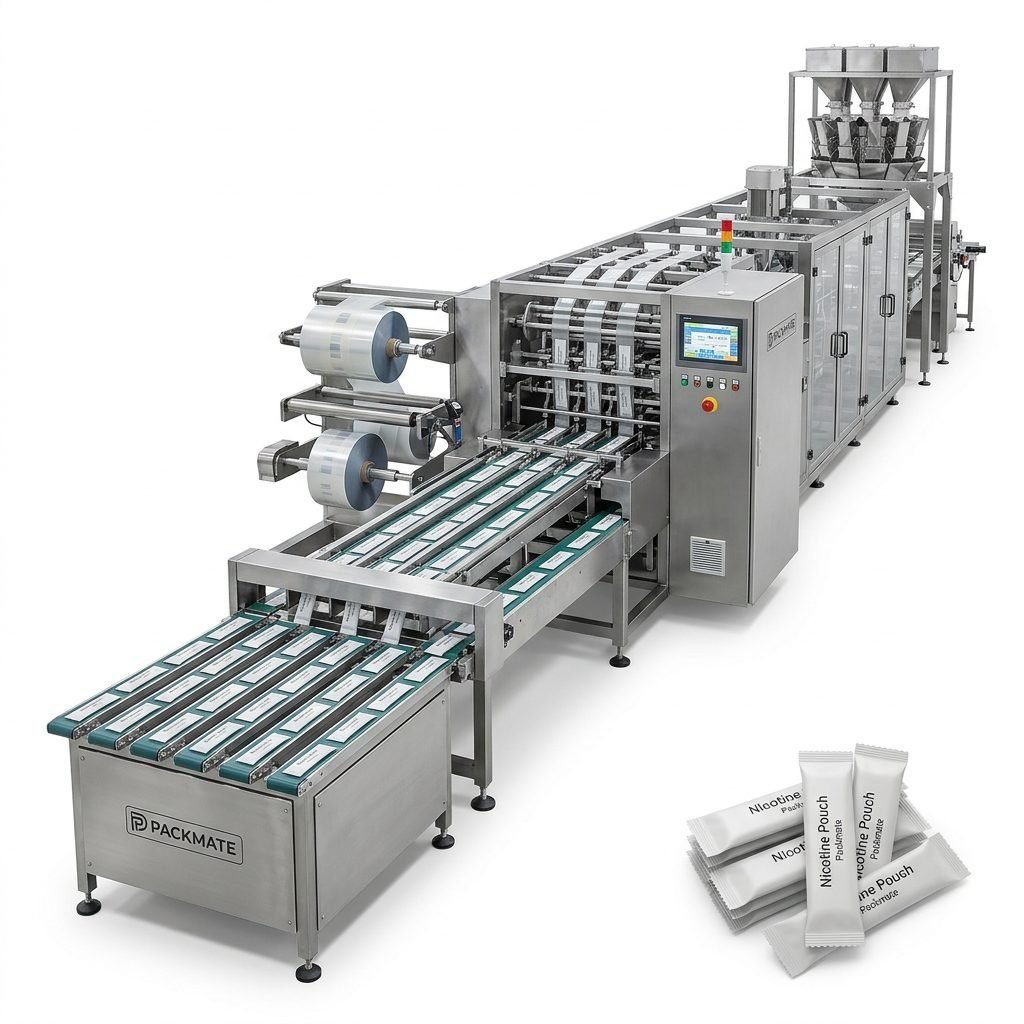
Designing an efficient snus production line requires more than just buying machines. It is a systems engineering task that balances layout, equipment selection, automation strategy, hygiene and regulatory compliance, and total cost of ownership. This guide walks packaging managers, factory planners and decision-makers through every step of planning a snus / nicotine pouch production line — from single-lane pilot setups to high-speed multi-lane turnkey lines.
Why a purpose-built snus production line matters
A dedicated snus production line is optimized for low-dose pouch filling accuracy, contamination control, and high throughput with minimal downtime. Modern lines combine precision weighing, portioning, pouch forming/sealing and secondary packaging into an integrated flow that reduces labor and scrap while ensuring consistent product quality.
Key outcomes for operators
Efficiency gains — increase output per square meter; accuracy improvements — tight dose control for nicotine pouches; reliability — less unplanned downtime through automation and modular design.
Core layout principles
Start with product flow. Arrange processes in a linear or U-shaped flow to minimize cross-traffic. Separate raw material receiving, storage, processing and finished goods. Provide clear zones for cleaning, maintenance and inspection. A well-planned flow reduces handling, contamination risk and production waste.
Tip (✓): Allow enough aisle space for roll changes, forklift access and maintenance. Plan for modular expansion — multi-lane lanes or additional auxiliary modules can be added without reworking the entire layout.
Typical factory zones
– Raw material receiving and quarantine
– Ingredient storage and dosing area
– Filling and pouch forming zone
– Seal / secondary quality inspection
– Cartoning / case packing and palletizing
– QC lab and sampling area
– Service and spare parts storage
Equipment selection: the building blocks
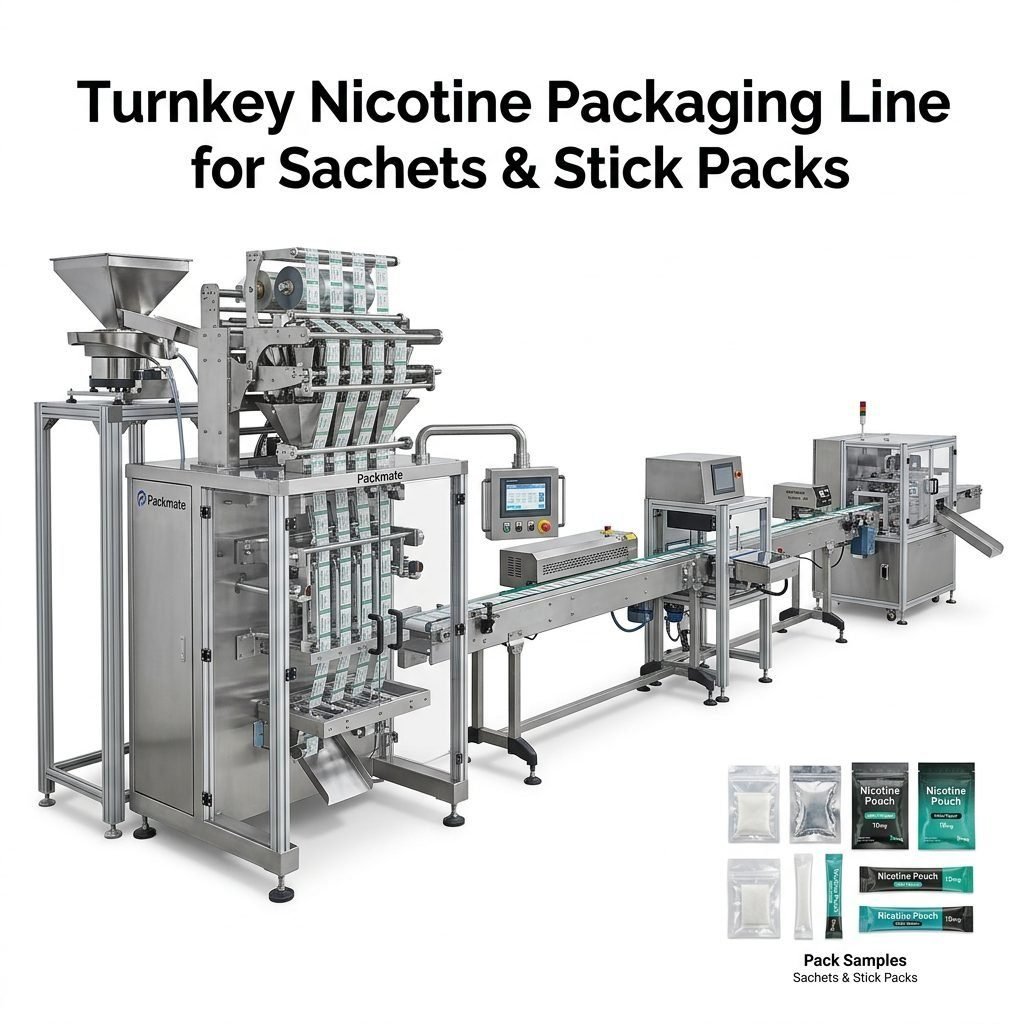
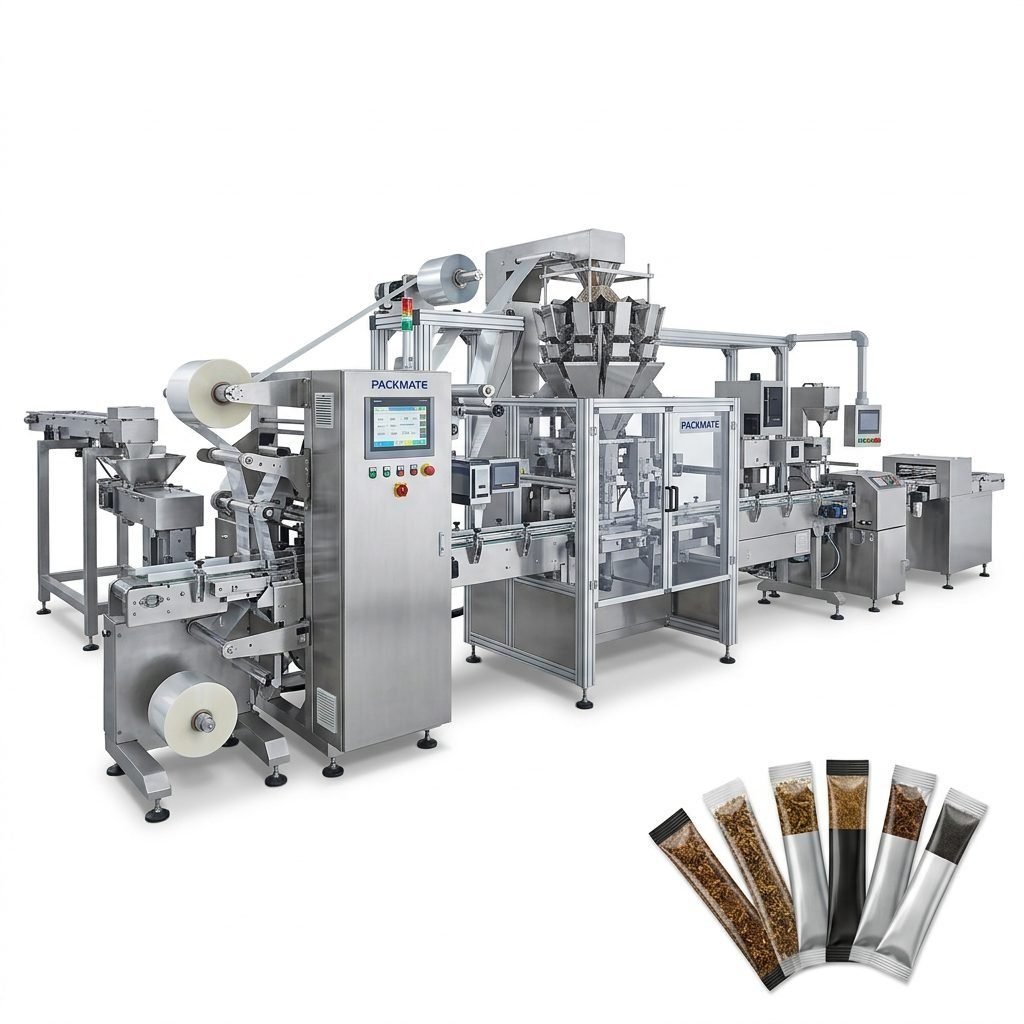
Selecting the right machines is mission-critical. Below are the typical machines that build a high-performance snus / nicotine pouch line.
Essential machines
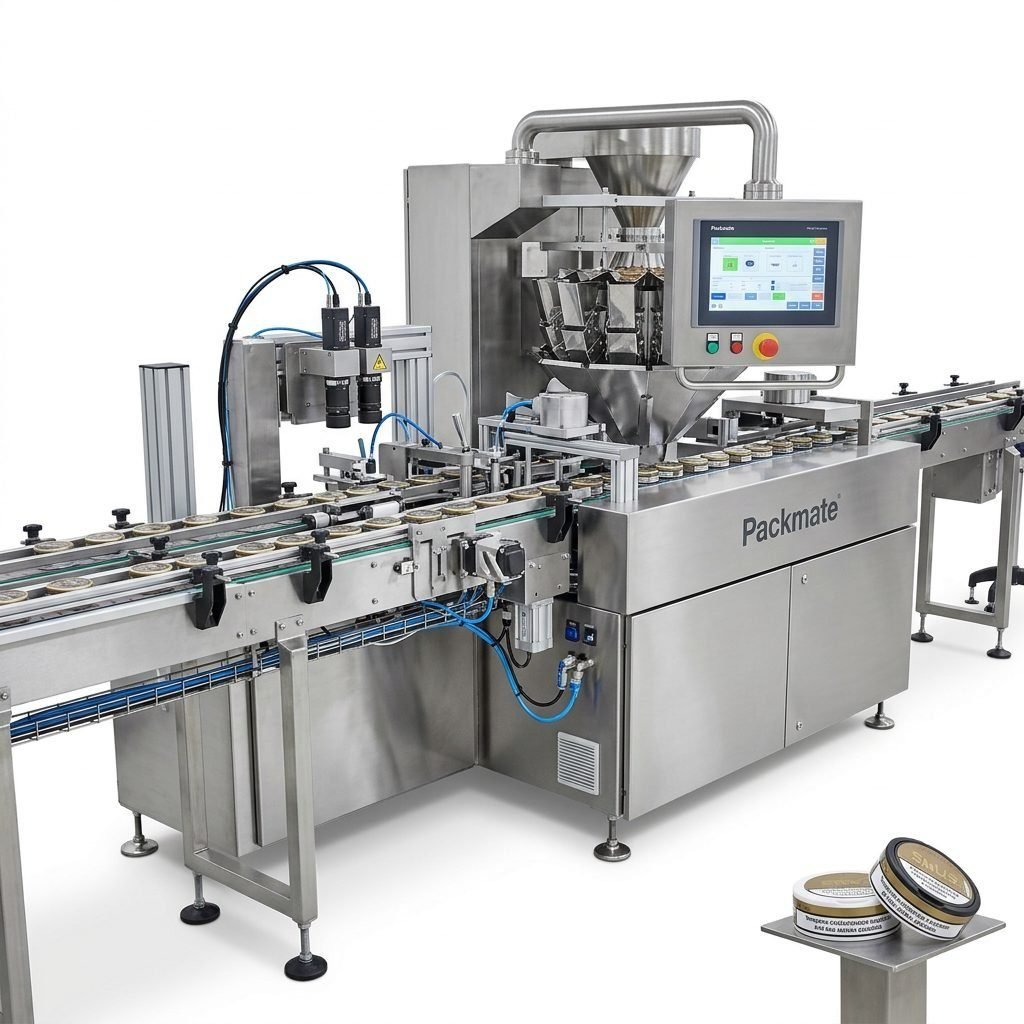
Weighing & dosing (high-precision multi-head or auger fillers) — accurate micro-dosing to ± a few milligrams.
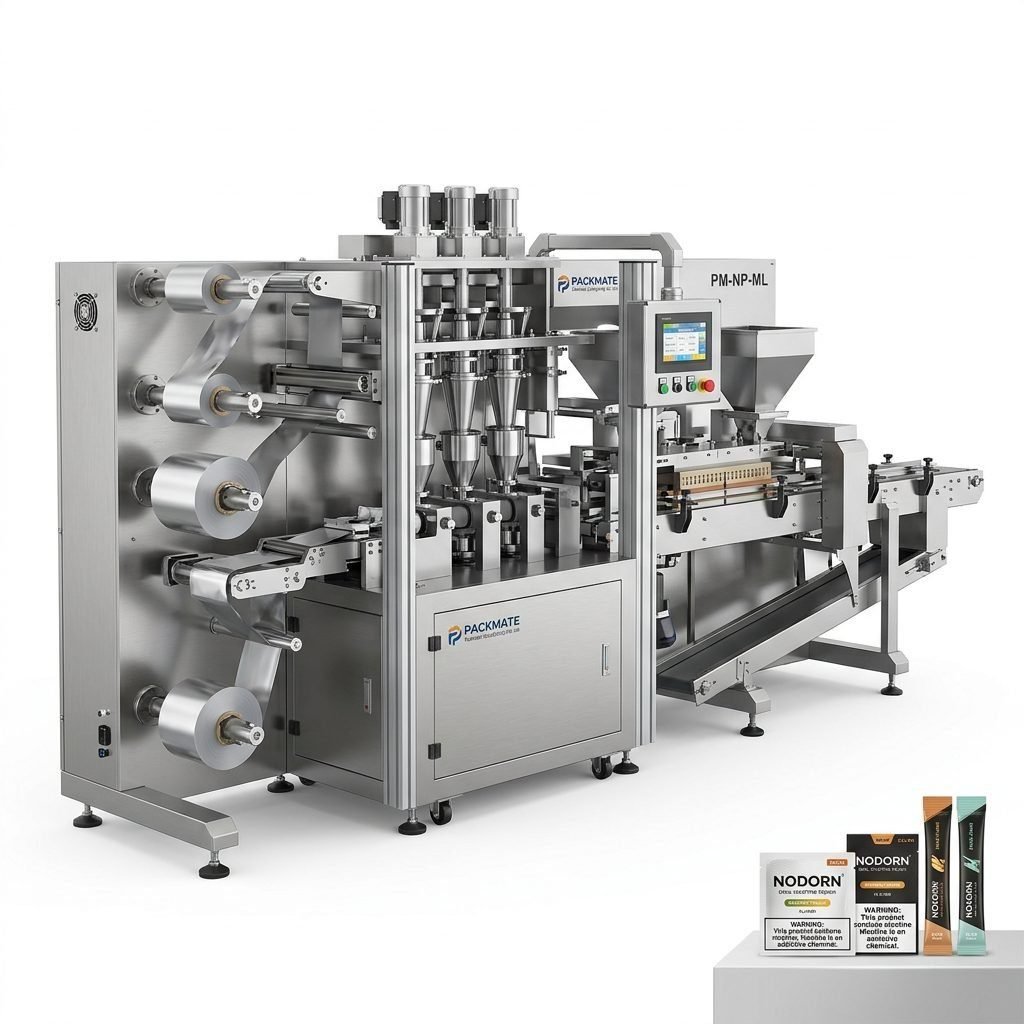
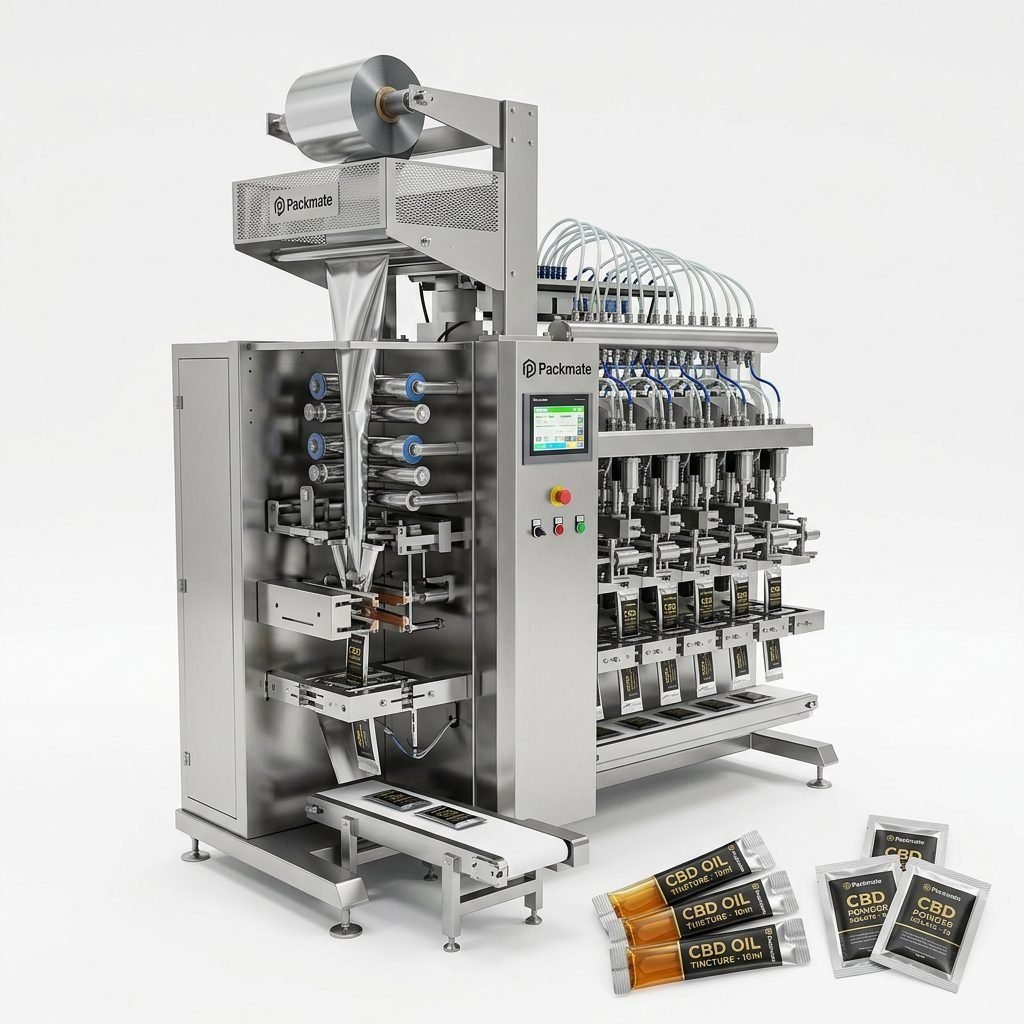
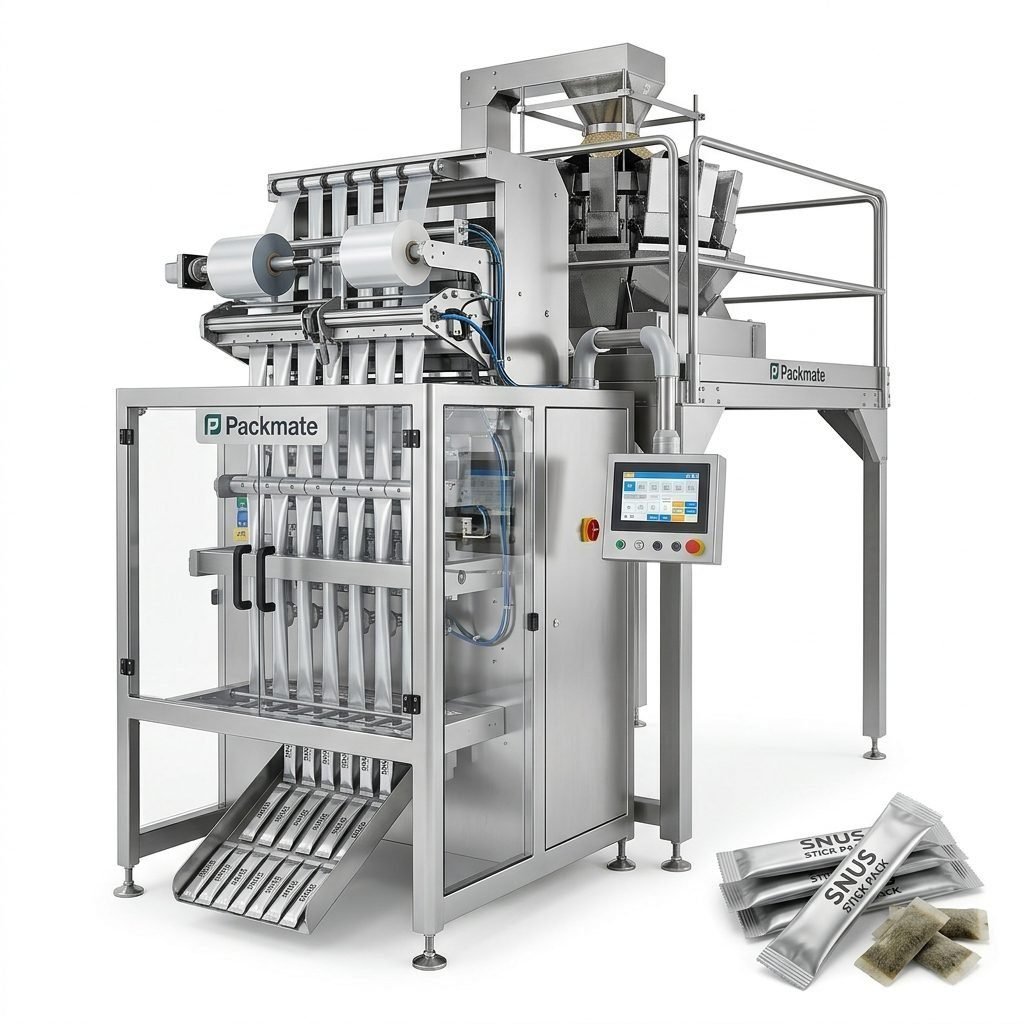
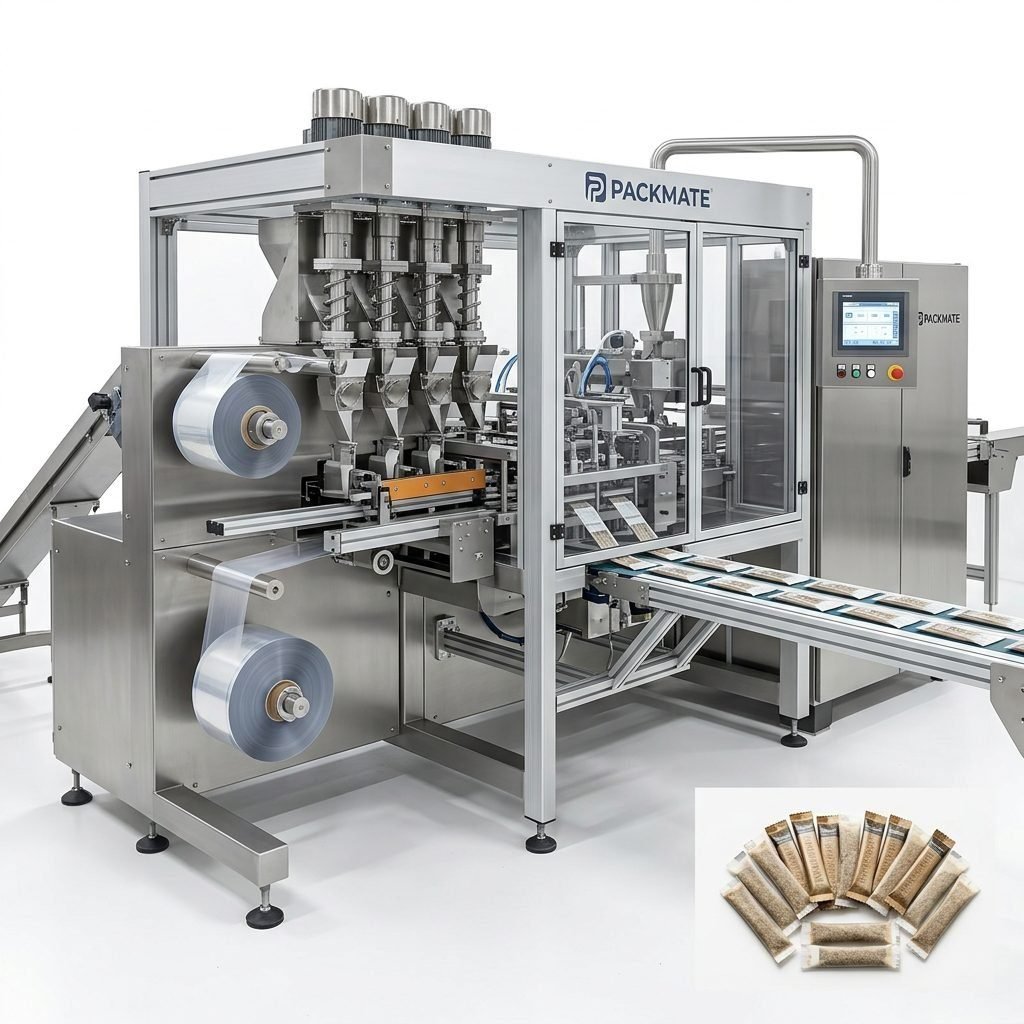
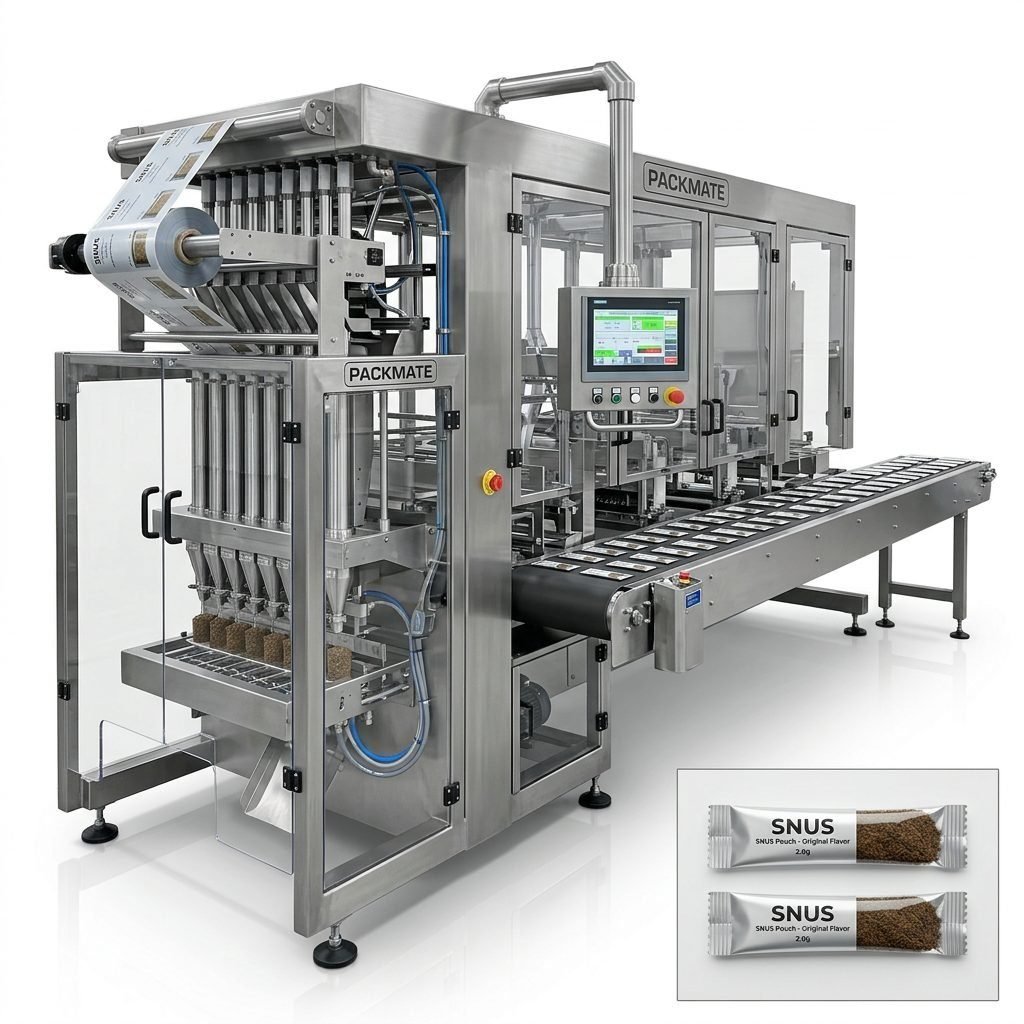
Form-fill-seal (FFS) puch machines — stickpack, sachet, or sealed pouch formats depending on your product; multi-lane options multiply throughput.
Vibratory or rotary portioners — ensure consistent bed density for snus material.
Sealing and finishing modules — ultrasonic or heat sealing with integrated check systems.
Cartoning, case-packing and palletizers — for secondary and tertiary packaging automation.
Focus: For nicotine pouches, precision filling and controlled humidity are often decisive. Choose filling systems designed for small-dose powders and granules, with hygienic components and easy-clean design.
Automation & integration
Automation reduces labor and improves repeatability. Consider PLC-driven centralized control, recipe management, SCADA connectivity and vision inspection systems to check pouch integrity and labeling. Integrate weighing feedback to adjust dosing on the fly for minimal giveaway.
Single-lane vs multi-lane: choose your throughput strategy
Single-lane lines are ideal for R&D, small batches, or niche flavors. Multi-lane systems (4/6/8+ lanes) multiply throughput without proportionally increasing footprint — essential for large-volume producers. Multi-lane lines require precise synchronization and uniform filling across lanes.
Consideration: Multi-lane systems deliver high output but magnify the impact of a single lane fault. Design for easy isolation of lanes and quick lane replacement to maintain uptime.
Hygiene, materials and local compliance
Hygienic design (stainless steel 304/316, sanitary seals, CIP-friendly surfaces) is non-negotiable. Ensure your line design adheres to local regulations for nicotine-containing products. For factories in Europe, North America and Scandinavia where snus has long traditions, robust traceability and labeling are especially important to meet market standards.
Cultural and regional considerations
In countries like Sweden and Norway where snus is part of consumer habits, packaging aesthetics, portion size and flavor stability are closely scrutinized by consumers. In emerging markets, adaptability for different pouch sizes and cost-effective packaging may be prioritized.
Utilities, factory infrastructure and footprint planning
Account for compressed air, vacuum, electrical loads (three-phase), chilled water or refrigerant for humidity control, and extraction systems for dust. Reserve space for spare parts, maintenance bays and operator stations. Utility access points should be grouped to minimize piping complexity.
Power & air examples
Small pilot lines may run on 32A circuits and a small compressor. High-speed multi-lane systems require robust three-phase supply and compressors sized for peak demand with adequate dryer capacity to avoid moisture issues.
Testing, commissioning and validation
Validation starts at FAT (Factory Acceptance Test) and continues through SAT (Site Acceptance Test). Test runs should validate dosing accuracy, pouch seal strength, throughput and integration with labeling and cartoning. Keep clear acceptance criteria and nonconformance protocols.
Checklist (⚙️): FAT completed, dosing tolerance verified, vision inspection calibrated, batch traceability tested, operator training scheduled.
Maintenance strategy and spare parts
Preventive maintenance and a ready stock of wear parts (seals, belts, cutters, sensors) are crucial. Establish an SOP for daily cleaning, weekly checks and monthly calibrations. Remote diagnostics and spare-part kits minimize downtime.
Service & training
Choose a supplier that provides on-site commissioning, operator training and long-term spare parts support. For international buyers, check for local partners or rapid remote-service capability.
Cost considerations and ROI
Evaluate total cost of ownership: equipment capex, installation, utilities, labor savings, scrap reduction and increased yield. High initial investment in multi-lane automation often pays back through lower unit costs and higher consistency.
ROI model (example): Estimate breakeven by comparing manual packaging labor hours vs automated line throughput and reliability. Factor in waste reduction and quality claims avoided.
Why choose a specialized manufacturer?
Specialized manufacturers bring decades of field experience, pre-engineered modules for snus-specific challenges, and regulatory know-how. This reduces integration risk and shortens commissioning time. Look for vendors with multi-lane experience, CNC-enabled factories and global service networks.
Packmate Snus Machine is a representative example: over 30 years of engineering experience, a modern 20,000㎡ factory and a broad product portfolio across snus machines, stick pack, sachet and weighing systems. For product browsing and machine specs, explore resources such as
Snus & Nicotine Packaging Machines,
Sachet & Stick Pack Machines, and
Weighing & Packaging Systems.
Case studies & exhibitions
Real-world cases illustrate how modular multi-lane systems scale. Visit the manufacturer’s case pages for verified installations, and consider attending trade shows to see live demonstrations before committing.
Learn more from the company’s documented projects: Case and check upcoming events at Our Exhibition.
Final checklist before you order
– Define target throughput (units/minute) and SKU mix.
– Confirm pouch format and desired sealing technology.
– Validate dosing accuracy requirements and allowable giveaway.
– Confirm utilities and floor space, including maintenance access.
– Ask for FAT, spare parts list and training package.
Need help? Contact the manufacturer’s service team for layout consultation and quoting: Contact Us or review Service options.
Selecting a trusted partner
When selecting a partner, evaluate engineering depth, global references, certifications (CE, ISO) and the ability to supply turnkey solutions. Review company background and product brochures: About Packmate and downloadable Catalog.
Summary checklist for an efficient snus production line
Plan product flow, select precision dosing and multi-lane FFS equipment, design hygienic zones, size utilities correctly, insist on FAT/SAT validation, and secure maintenance support and spare parts. With these elements in place, your line will deliver quality, throughput and regulatory compliance consistently.
Frequently Asked Questions
Q1: What throughput can a multi-lane snus line achieve?
A1: Throughput varies by pouch size and lane count. Typical multi-lane systems achieve several thousand pouches per minute in aggregate; discuss your SKU and target output with suppliers for exact numbers.
Q2: How do I validate filling accuracy for nicotine pouches?
A2: Use calibrated balances during FAT/SAT, integrate in-line check weighers and implement statistical sampling procedures. Suppliers often provide dose validation protocols and reporting templates.
Q3: What are the main maintenance items to keep downtime low?
A3: Replaceable wear parts (cutters, belts, seals), sensor cleaning, periodic lubrication, and scheduled calibration of dosing systems. Maintain a local spare-parts stock and remote support agreement.
Q4: Can I integrate my existing cartoner or palletizer with a new snus line?
A4: Yes — most suppliers support integration via mechanical and control interfaces. Provide communication protocols and conveyor details early in the design phase.
Q5: How do I evaluate potential suppliers for regulatory and after-sales support?
A5: Check certifications (CE/ISO), global references, exhibition presence, case studies and warranty/service terms. Request FAT documentation and spare-parts lead times.