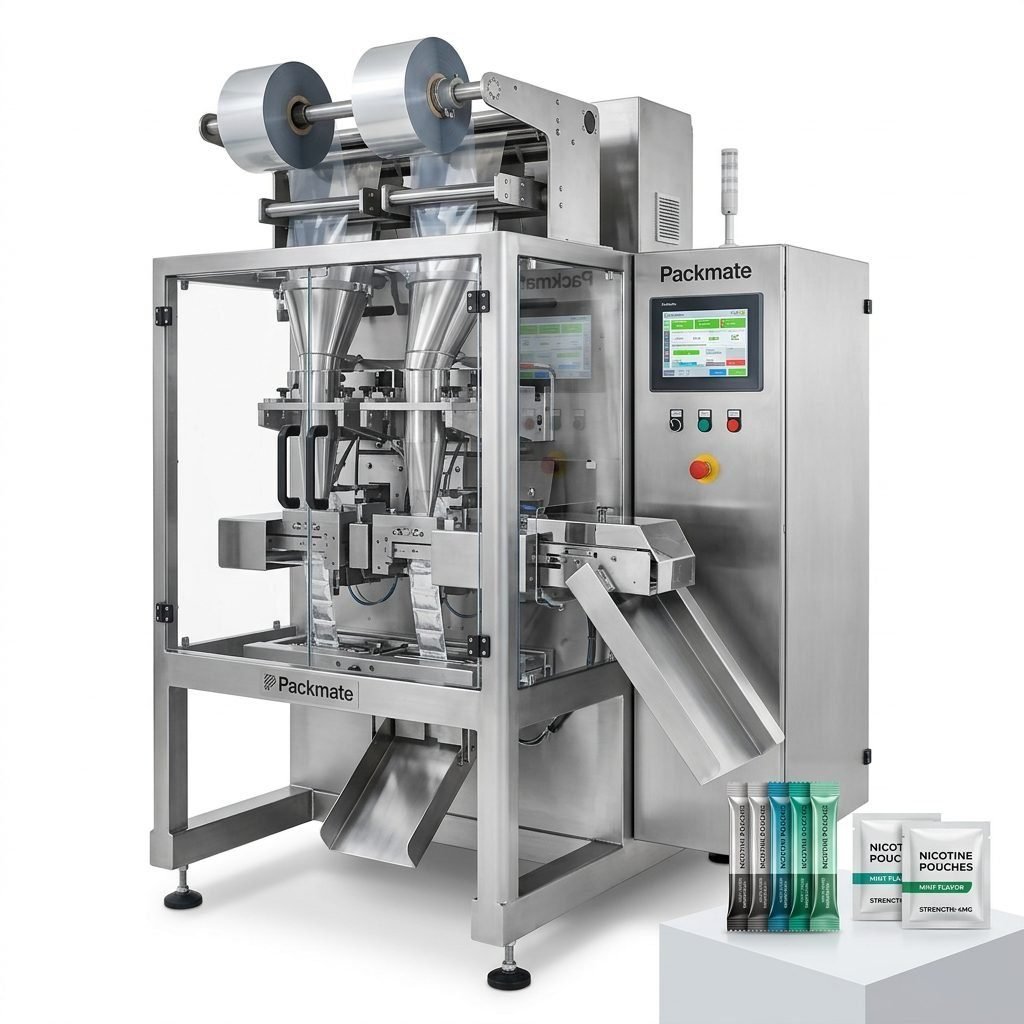
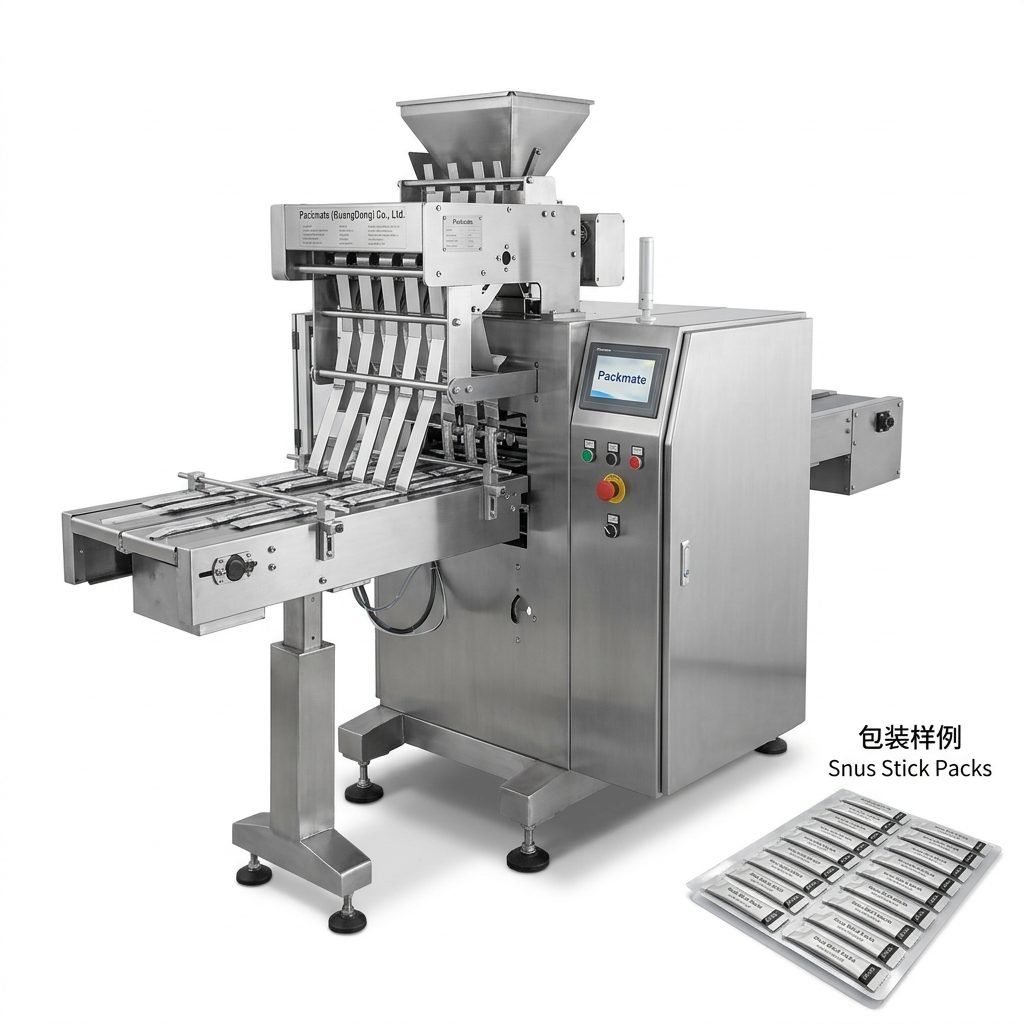
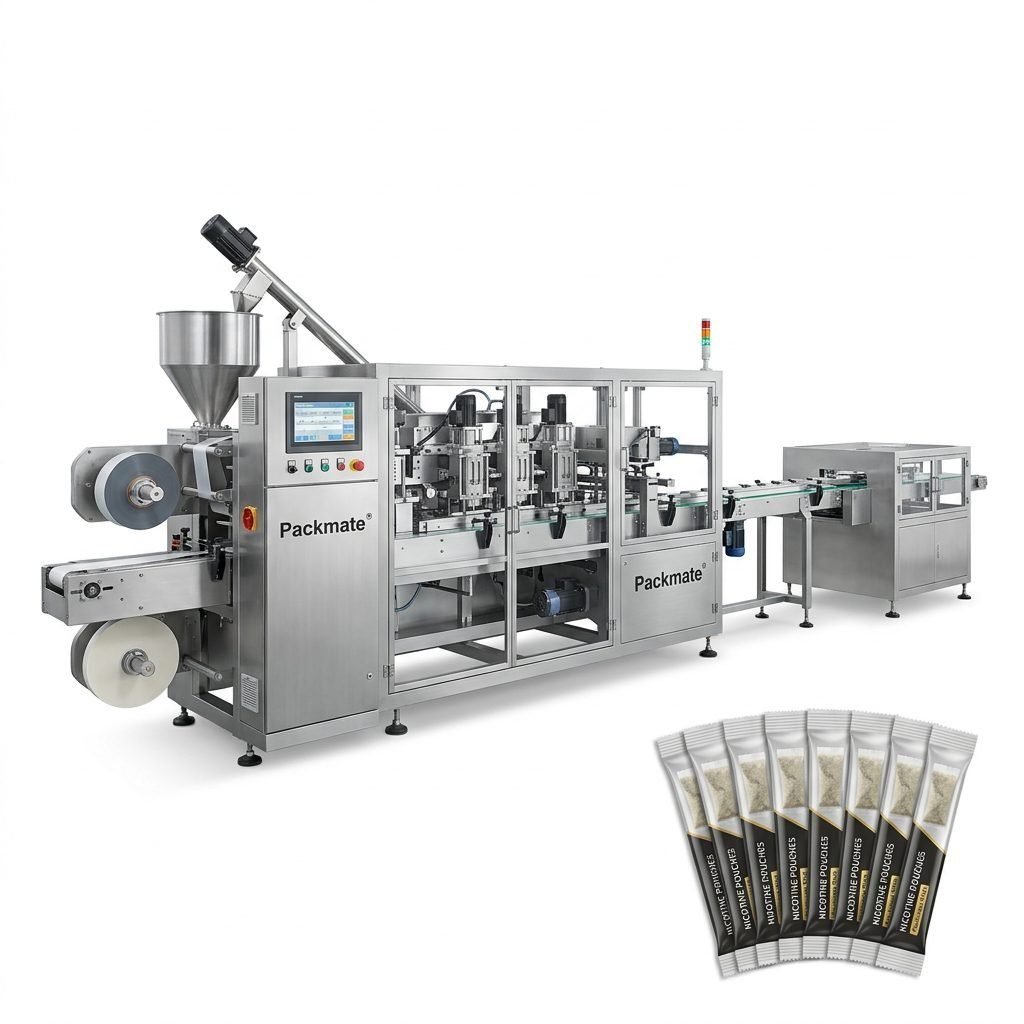
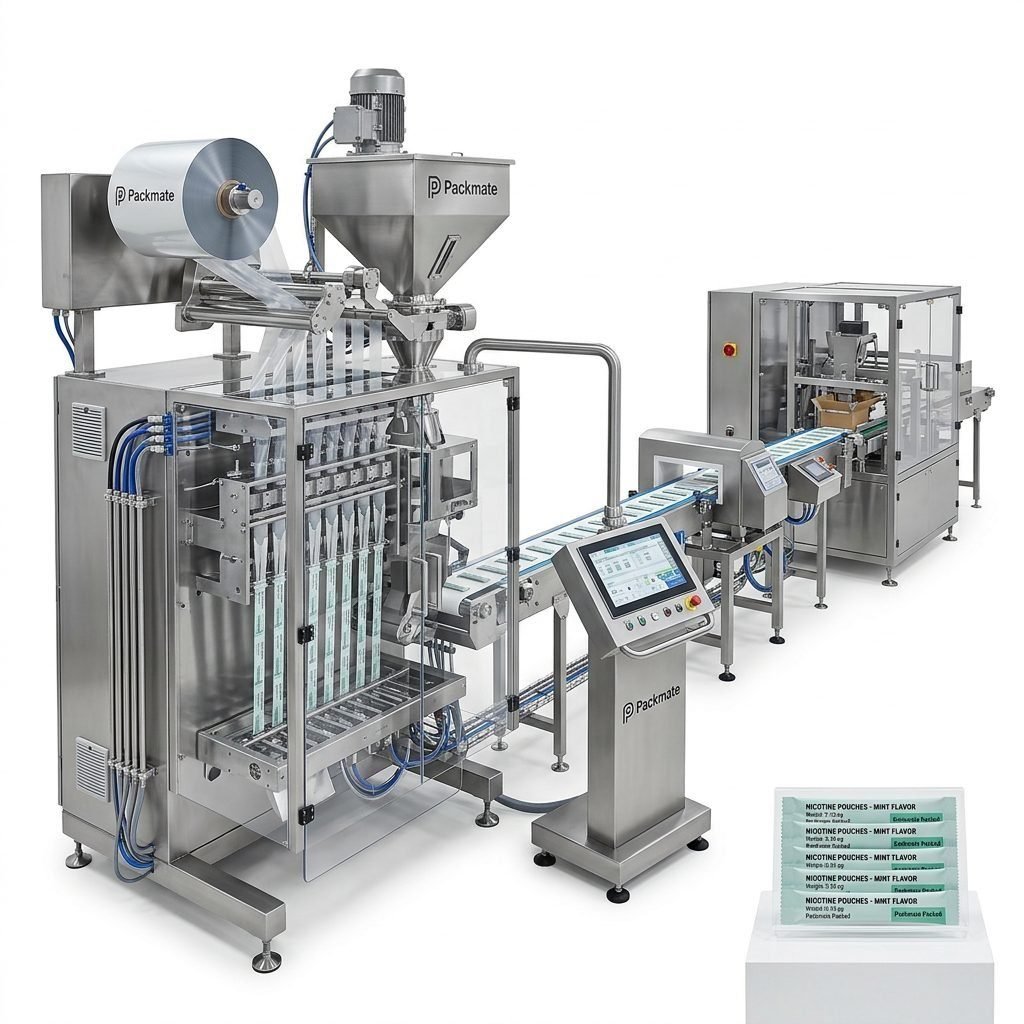
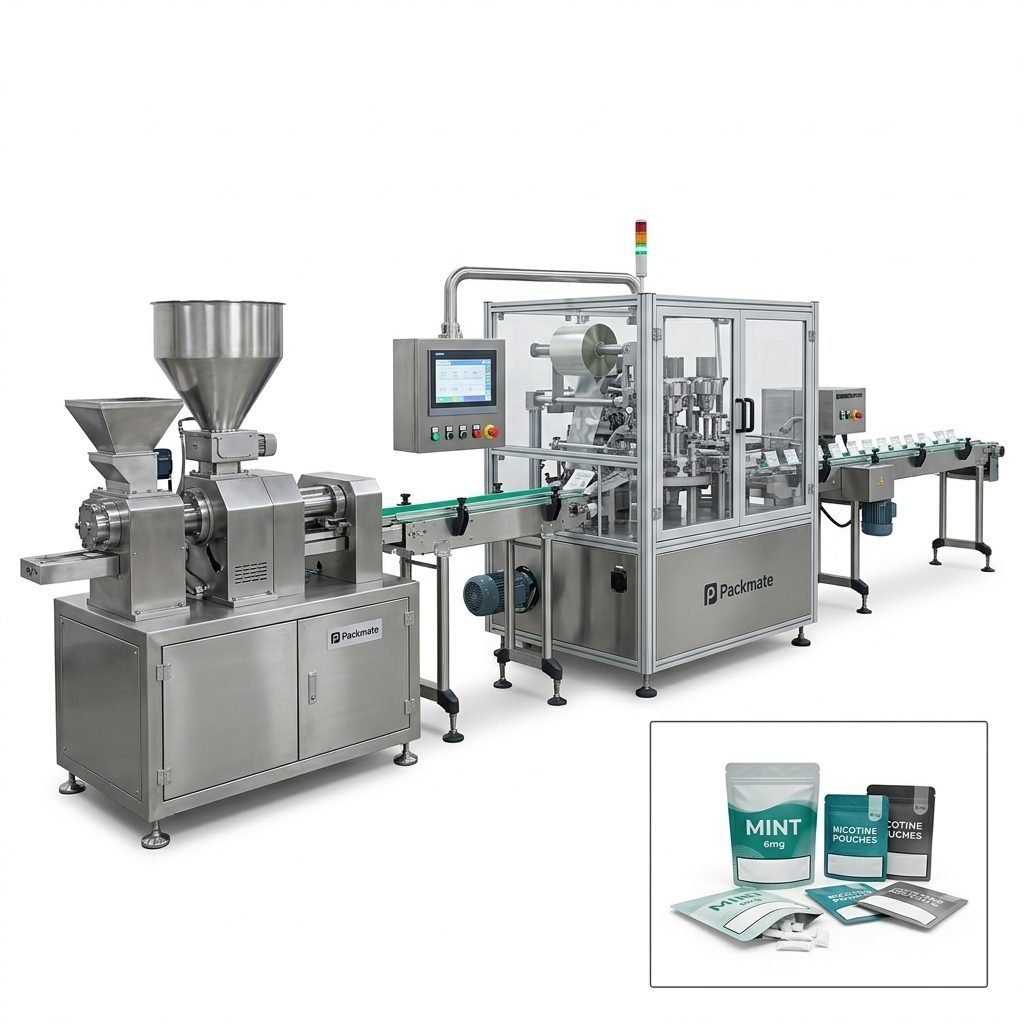
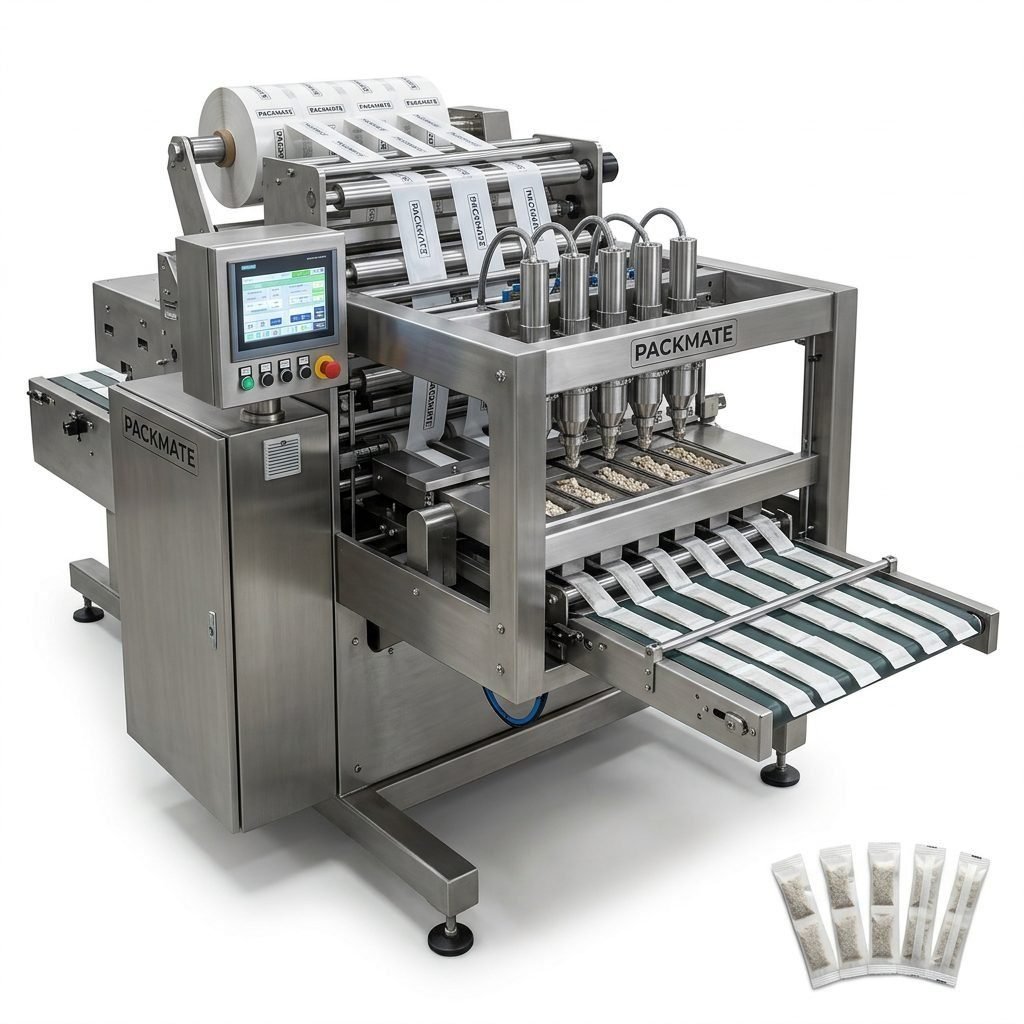
In today’s competitive snus and nicotine pouch market, manufacturers must balance speed, hygiene, consistency, and flexibility to meet regulatory and consumer demands. A modern snus pouch packaging line delivers automated, high-precision solutions that streamline production from feeding and dosing to sealing and final packaging. The following content explores complete automatic packing solutions for nicotine pouches, focusing on equipment choices, line configurations, factory capabilities, quality assurance, and practical buying guidance.
Why Choose a Complete Automatic Snus Pouch Packaging Line ⚙️
Manufacturers of snus and nicotine pouches seek reliable lines that can maintain small-dose accuracy, protect product integrity, and scale with market demand. A complete automatic packaging line integrates dosing, forming, sealing, and secondary packaging to eliminate manual handling and reduce contamination risks. Key advantages include:
✓ Higher Throughput — Automated multi-lane systems can produce tens of thousands of pouches per hour depending on pouch format and dosing method.
✓ Consistent Dosing & Sealing — Precision feeders and servo-controlled filling ensure uniform weight and airtight seals.
✓ Improved Hygiene — Minimizes manual touch points and supports cleanroom or GMP-aligned environments.
✓ Flexibility — Rapid changeovers for different pouch sizes, materials, and formulations.
Core Components of a Snus Pouch Packaging Line
A full turnkey line typically includes several integrated machines. Each component plays a role in ensuring efficient, reliable output:
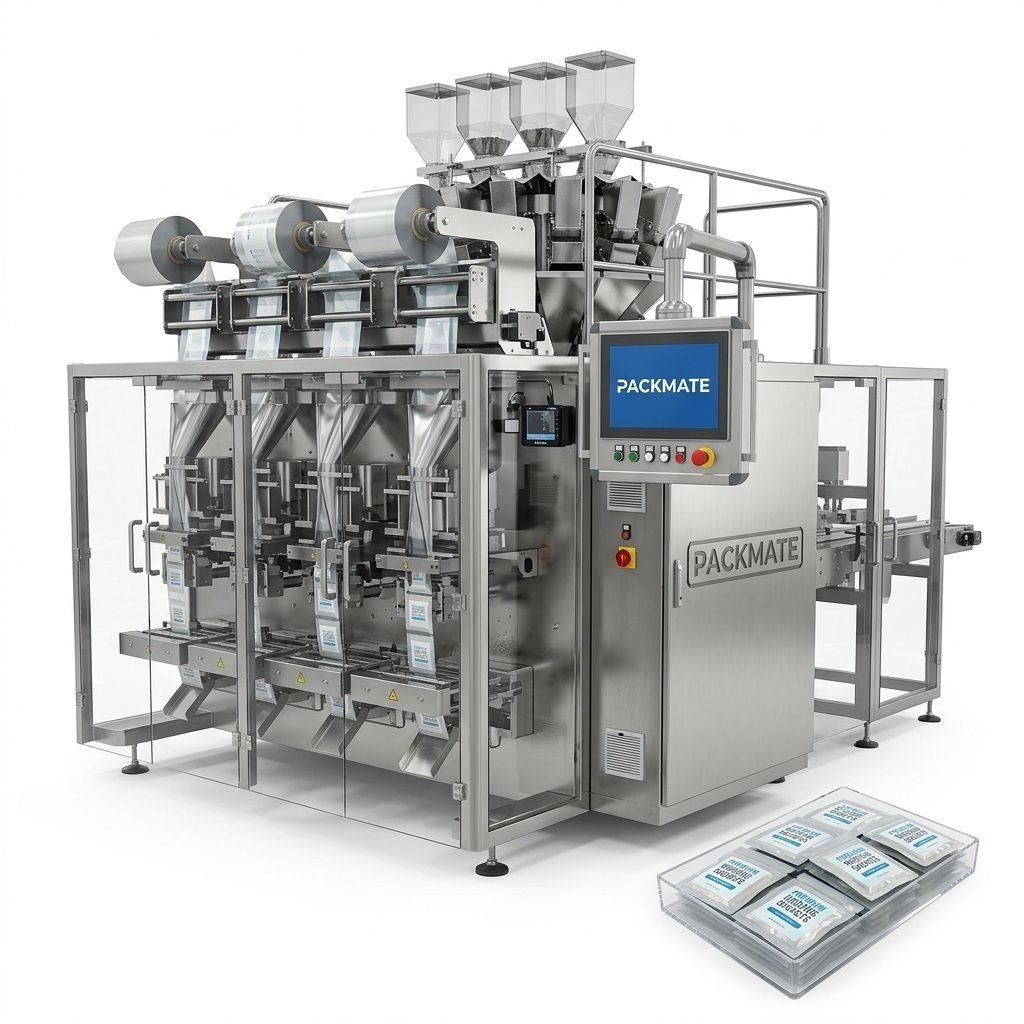
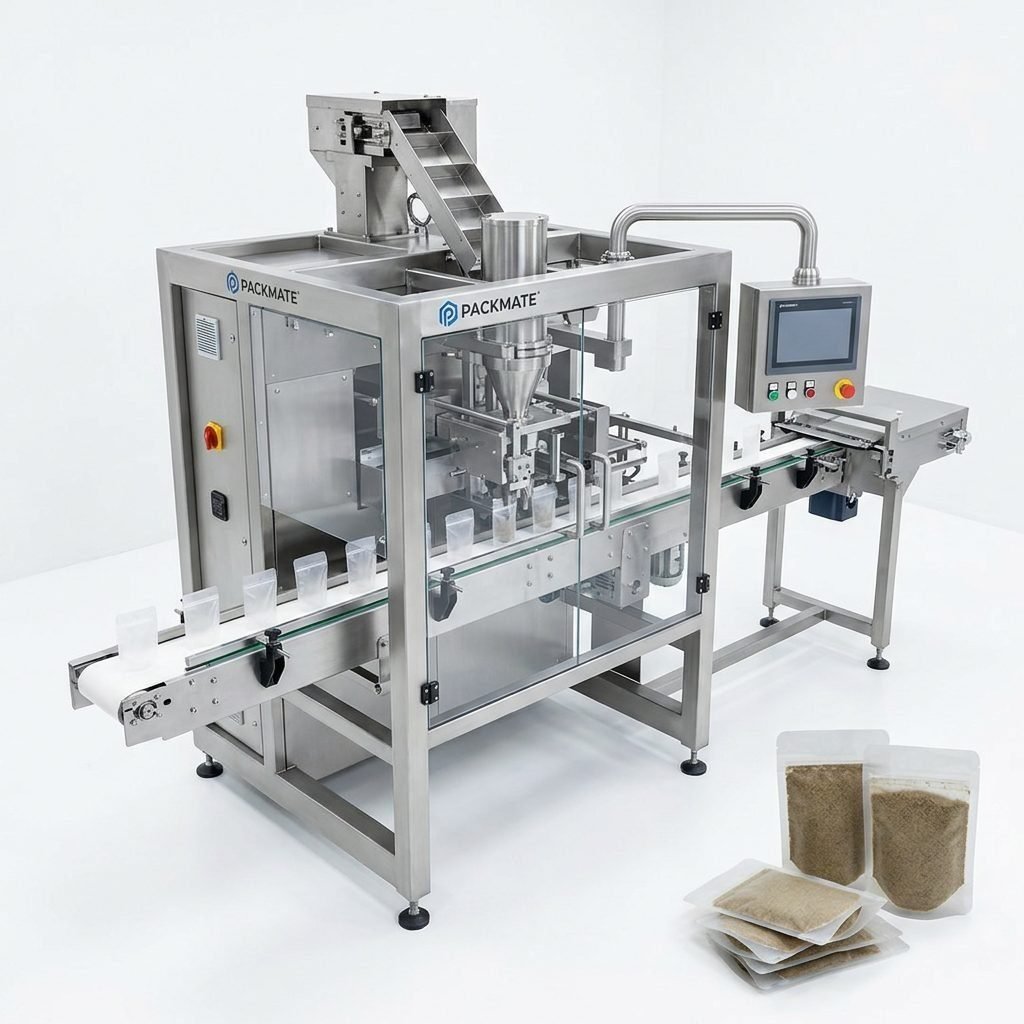
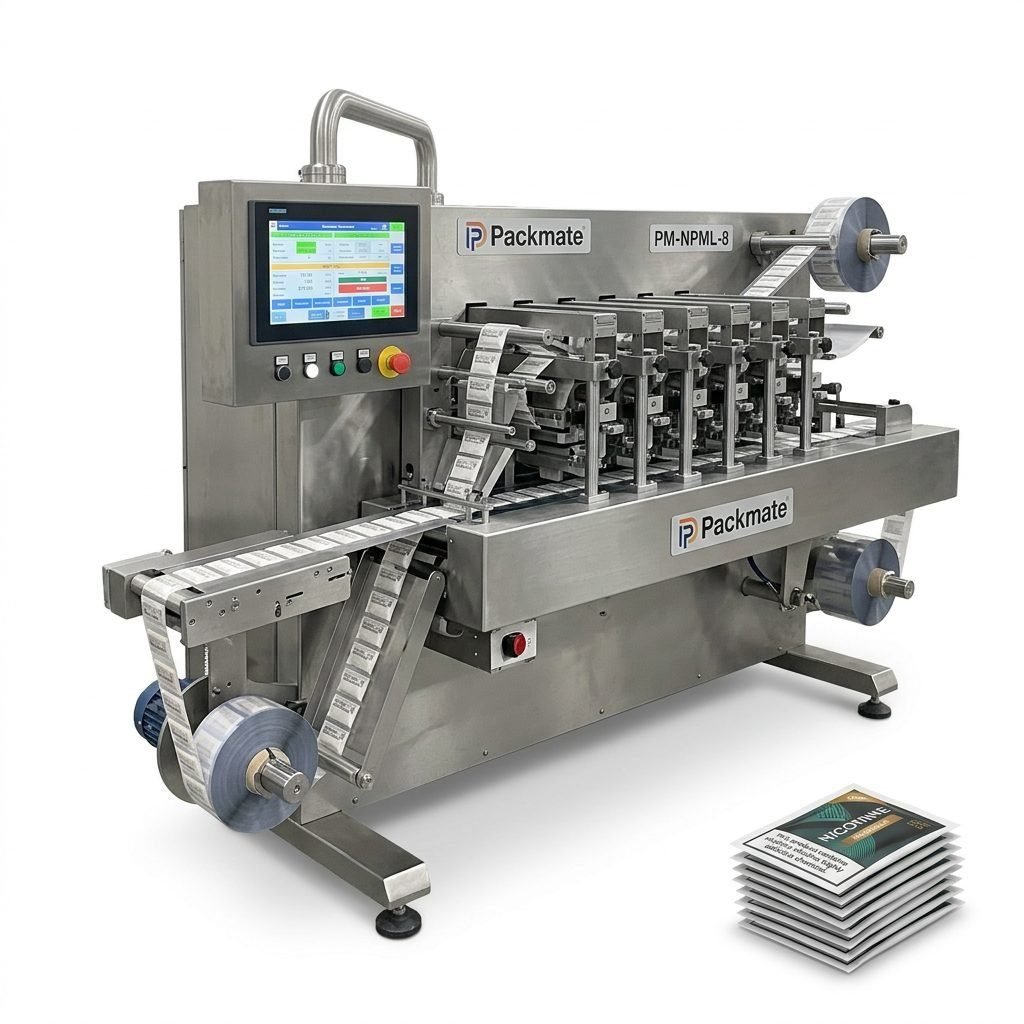
Form-Fill-Seal Machine — The heart of the line, responsible for forming pouches, dosing the snus or nicotine blend, and sealing the pouches with high repeatability.
Multi-Lane Head / Divider — For small-dose products, multi-lane packaging heads enable parallel filling to multiply output without increasing footprint.
Weighing & Dosing Systems — High-precision weighers and auger or vibratory feeders ensure each pouch meets target weight tolerances. (See Weighing & Packaging Systems.)
Secondary Packaging — Collating, cartoning, and boxing modules prepare finished pouches for distribution while protecting product quality.
Popular Configurations and Production Capacities
Packaging lines are configured based on pouch format (stick, sachet, pouch), dose size, lane count, and downstream packaging. Typical options include:
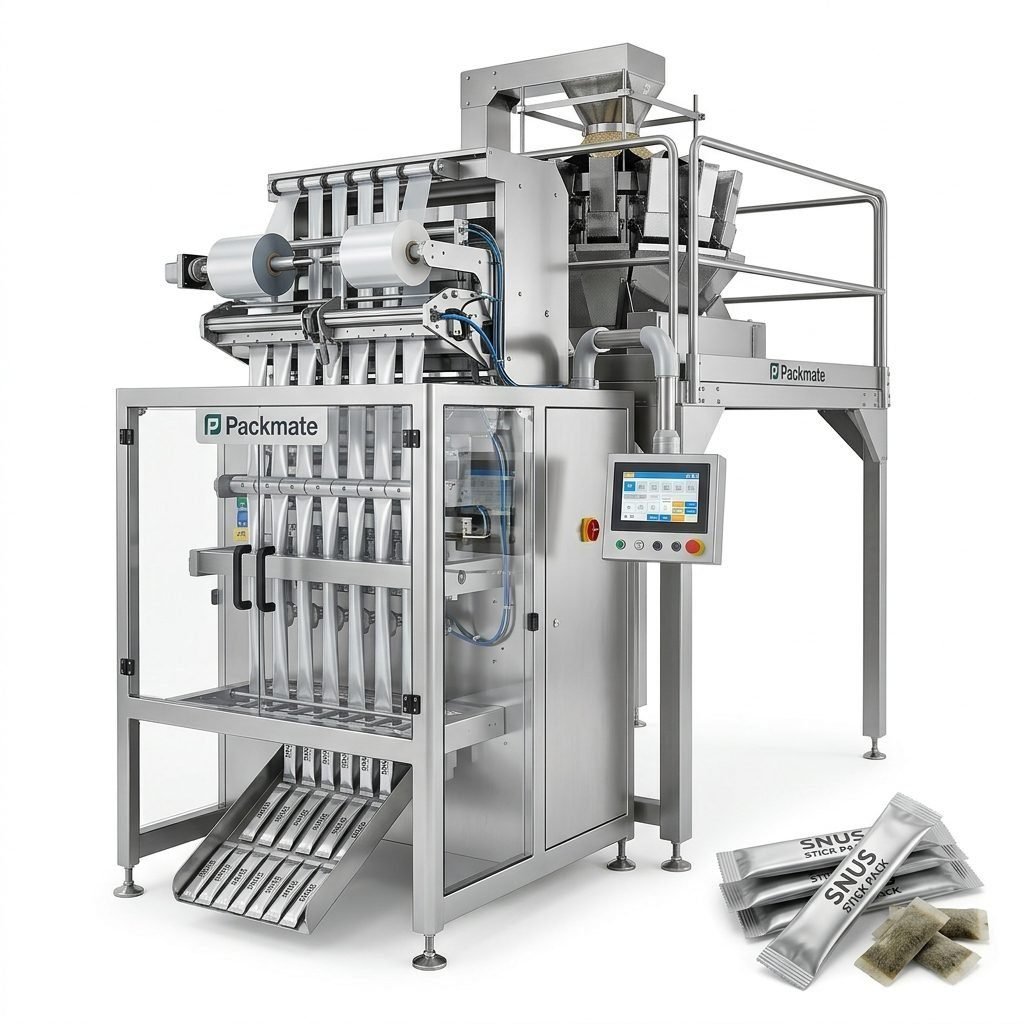
Sachet & Stick Pack Lines — Ideal for single-dose sticks and sachets; see Sachet & Stick Pack Machines for models suited to high-speed stick formats.
Multi-Lane Pouch Lines — 4, 6, 8, or more lanes can dramatically increase throughput for small pouches without sacrificing accuracy.
Integrated Filling & Packaging Lines — Combine weighing, filling, sealing, and secondary packaging into a synchronized production flow (refer to Filling & Packaging Lines).
Materials, Films & Sealing Considerations
Selecting the right film structure and sealing method is critical to product shelf life and user experience. Common film constructions include laminated barrier films that provide moisture and aroma protection. Heat-seal settings, jaw design, and cooling zones must be optimized for nicotine pouch fabrics, fiber blends, or foamed substrates.
Customization & Technical Specifications
A reputable manufacturer will offer tailored configurations based on product characteristics and production targets. Typical customization options include:
Lane Count & Head Design: From single-lane pilot machines to 8+ lane high-speed heads for mass production.
Feeding Systems: Vibratory, rotary, or bespoke dosing modules for fiber, granular, or powder components.
Control & HMI: PLC and touchscreen interfaces with recipe management, remote diagnostics, and data logging.
Integration with Auxiliary Equipment
To create a complete production solution, auxiliary packaging equipment such as conveyors, checkweighers, metal detectors, and case packers are integrated. For a broader view of options, visit Auxiliary Packaging Equipment.
Factory Strength & Quality Assurance
When evaluating suppliers, factory capabilities and quality processes are non-negotiable. Key indicators of a reliable manufacturer:
20,000㎡ Manufacturing Facility — Ample space for assembly lines, testing, and custom integrations.
Advanced CNC & Precision Assembly — Ensures repeatable mechanical tolerances and robust machine life.
Certifications — CE and ISO compliance demonstrate adherence to international standards (see Certificate).
R&D, Experience & Track Record
A team with decades of experience in packaging machinery is better equipped to solve niche challenges like small-dose variability and delicate pouch fabrication. Look for suppliers with a proven story of innovation and global case references (see Case and About Packmate).
Turnkey Solutions & Project Workflow
Implementing a full production line typically follows a structured workflow: consultation, layout design, machine selection, factory acceptance testing (FAT), installation, and validation. A partner offering global turnkey services reduces complexity and shortens time-to-market.
Consultation & Sampling — Provide product samples to ensure machine compatibility and optimal settings.
FAT & Commissioning — Factory tests validate line performance; on-site commissioning ensures smooth startup.
Training & Support — Operator and maintenance training plus spare parts packages keep your line productive.
After-Sales Service & Spare Parts
Reliable after-sales service is essential. Look for responsive technical support, remote diagnostics, and accessible spare parts inventory to minimize downtime. For service offerings, consult the Service page.
Compliance, Exhibitions & Global Reach
Compliance with international safety and quality regulations (CE, ISO) is a baseline expectation. Manufacturers with global exhibition participation and international case studies show commitment to global markets and evolving standards. Visit Our Exhibition and Case for examples of global engagement.
Environmental & Safety Best Practices
Consider energy-efficient drives, material recycling practices, and safety interlocks. Proper extraction and containment systems protect operators when handling nicotine-containing materials.
How to Choose the Right Machine for Your Project
When selecting a snus pouch packaging solution, evaluate:
Production Target — Daily output goals determine lane count and machine speed.
Product Characteristics — Powdery, fibrous, or moist fillings need different dosing and sealing strategies.
Space & Budget — Floor space and CAPEX constraints influence single vs. multi-lane decisions.
Regulatory Requirements — Ensure traceability features and hygienic design meet local regulations.
Recommended Actions Before Purchase
Request factory references, sample runs, and a detailed layout proposal. If possible, arrange a factory visit or live demonstration to evaluate machine ergonomics and service capabilities.
Relevant Product Links & Resources
Explore product pages and resources to compare machine families and integration options:
- Snus & Nicotine Packaging Machines
- Bag & Pouch Packaging Machines
- Weighing & Packaging Systems
- Service & After-Sales
- Case Studies
Conclusion: Investing in High-Performance Snus Pouch Lines
A professionally engineered snus pouch packaging line is a strategic investment that enhances product consistency, regulatory compliance, and throughput. Choosing a manufacturer with robust factory capabilities, proven multi-lane systems, and global service networks reduces risk and accelerates time-to-market. Whether you’re scaling from pilot runs to full production or seeking a turnkey solution, prioritize suppliers with transparent testing, certifications, and strong after-sales support.
Common Questions
Q1: What throughput can I expect from a multi-lane snus pouch line?
A1: Throughput varies with pouch format, lane count, and dosing method. Multi-lane heads (4–8 lanes) can achieve significantly higher outputs — consult with the manufacturer to model throughput for your specific pouch size and target weight.
Q2: How do you handle nicotine powder or moist formulations safely?
A2: Use enclosed feeding systems, proper extraction, and sealed dosing modules. Machines designed for nicotine pouch production often include containment measures and materials compatible with nicotine chemistry.
Q3: Can lines be adapted for different pouch sizes or product types?
A3: Yes — flexible tooling, recipe management, and modular auxiliary equipment support rapid changeovers. Discuss required size ranges and changeover targets during the quoting phase.
Q4: What certifications should I verify when selecting a supplier?
A4: Verify CE, ISO, and any industry-specific certifications relevant to your market. Certification pages and factory audits provide transparency about manufacturing standards.
Q5: How do I request a sample run or factory acceptance test?
A5: Contact the supplier with product samples and production requirements. A reputable manufacturer will propose a FAT plan, demo schedule, and on-site commissioning timeline — use the Contact Us page to initiate discussions.