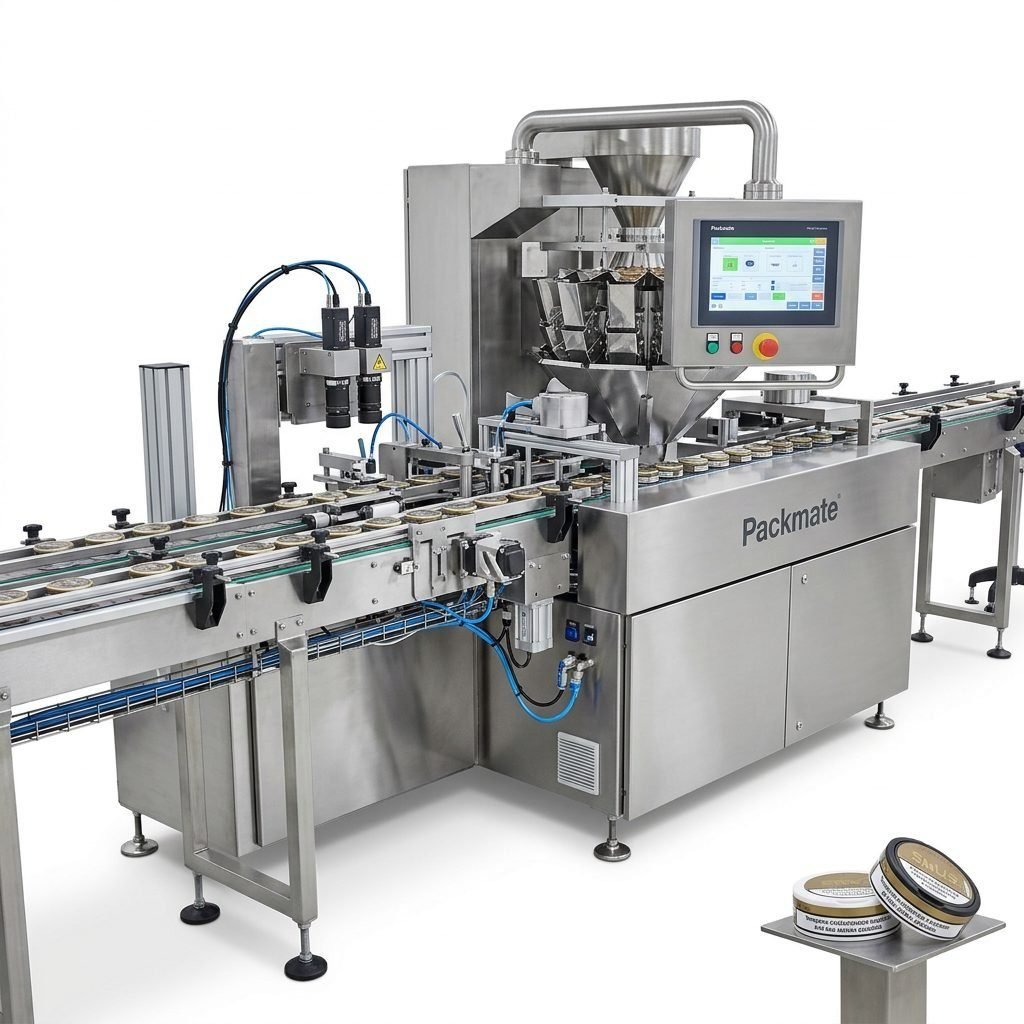
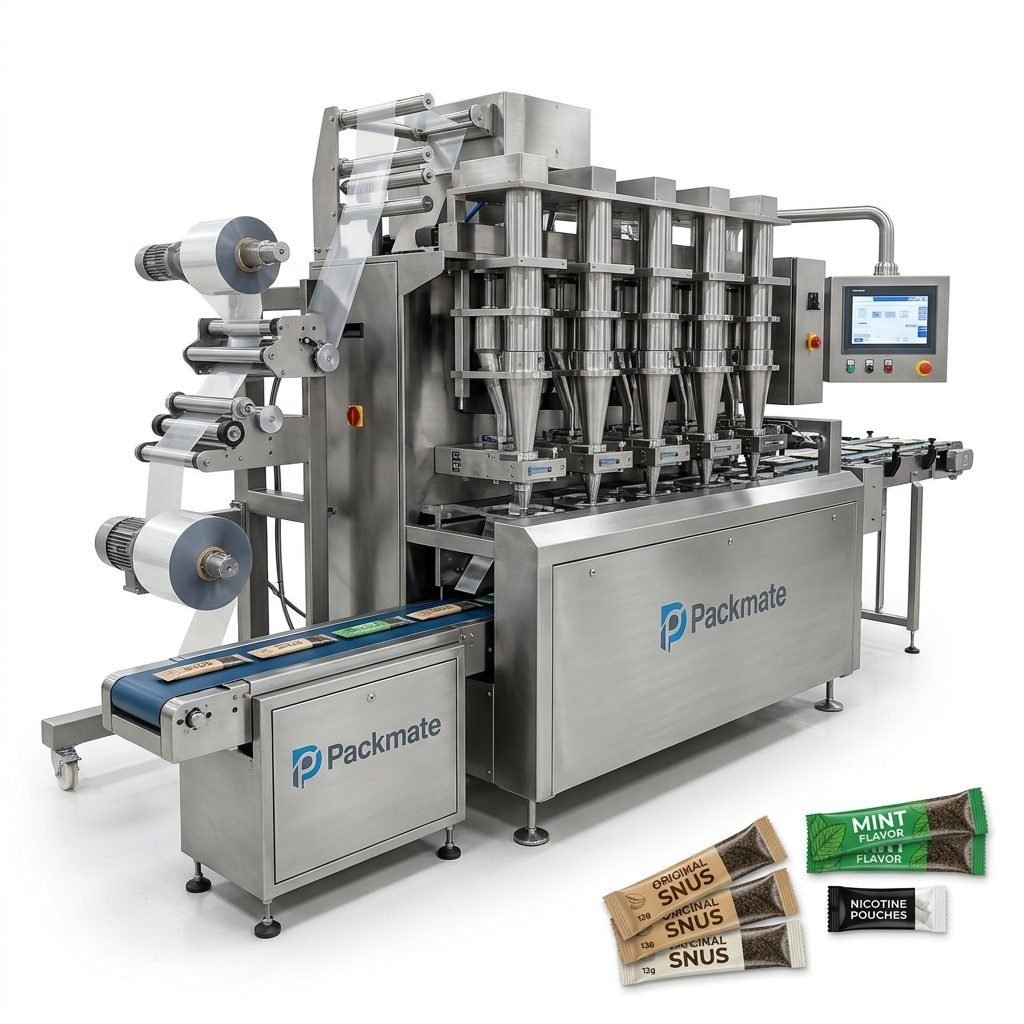
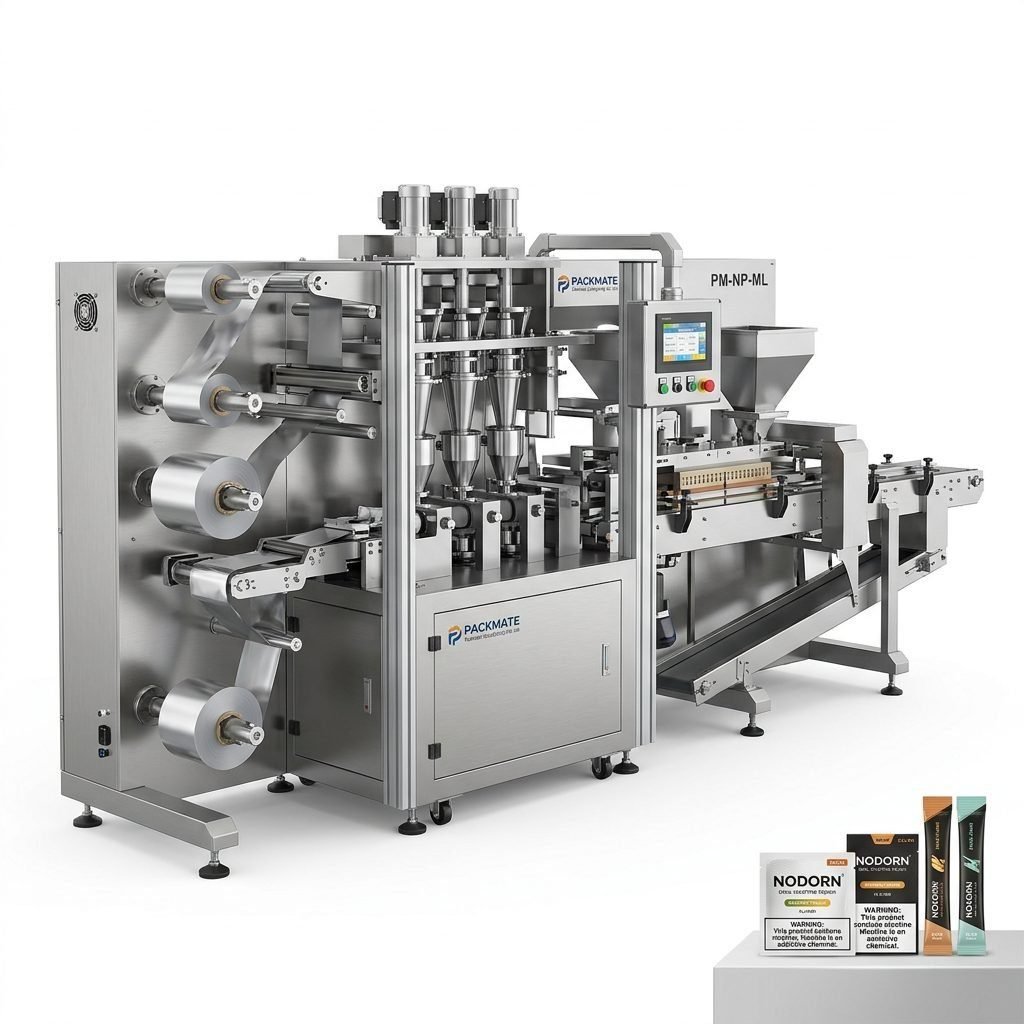
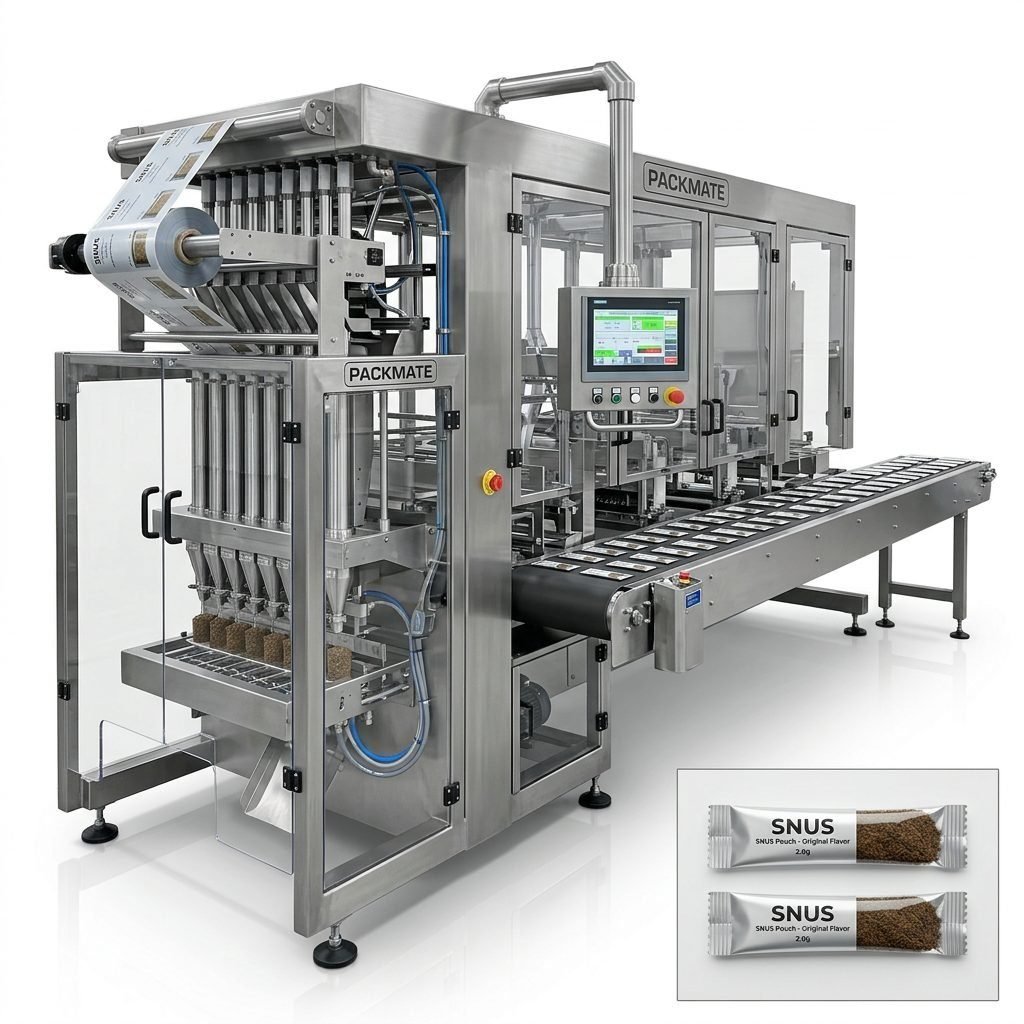
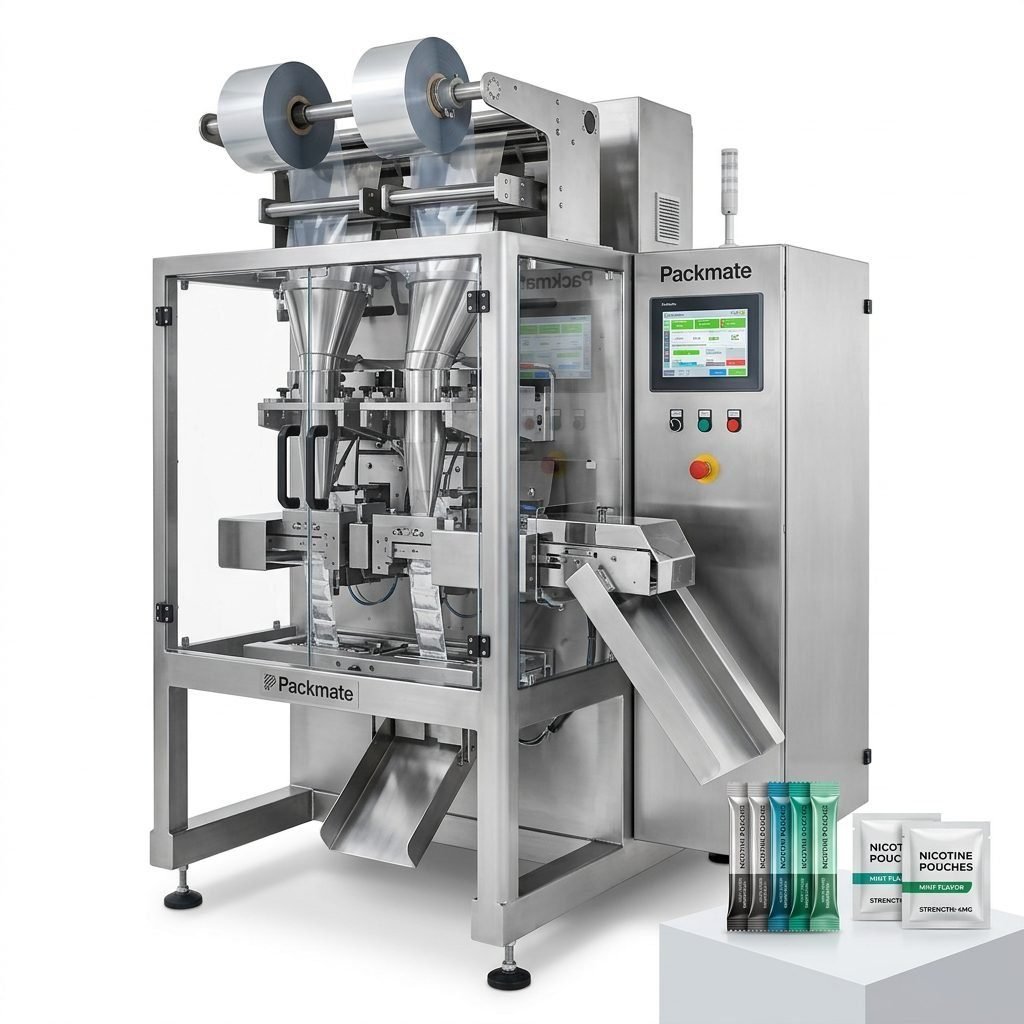
In the fast-evolving nicotine pouch and snus market, efficient, reliable, and flexible production equipment is essential for maintaining product quality, meeting regulatory requirements, and scaling output. This guide covers the full landscape of automatic snus production equipment — from primary machine types and core features to efficient line layouts, quality control, and practical tips that help manufacturers achieve consistent, high-yield packaging operations.
Overview: What Is an Automatic Snus Production Line?
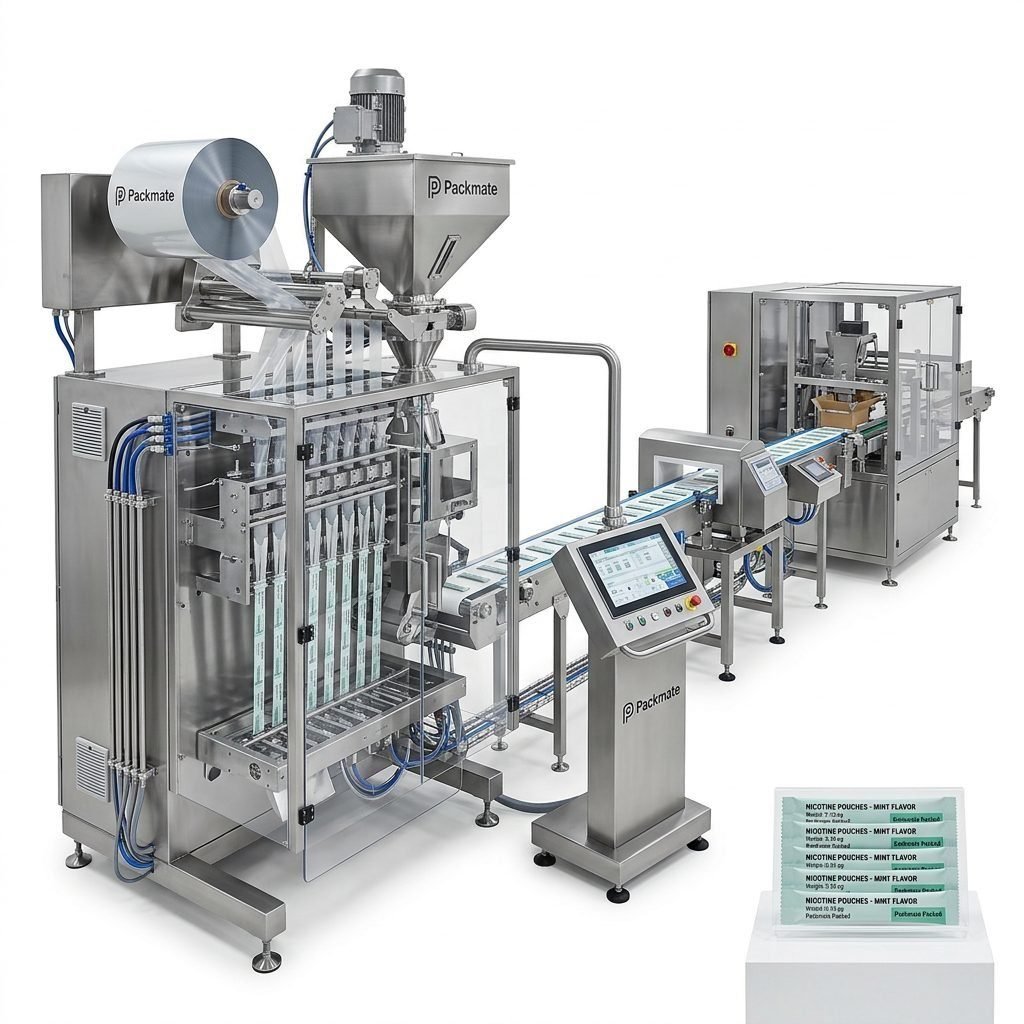
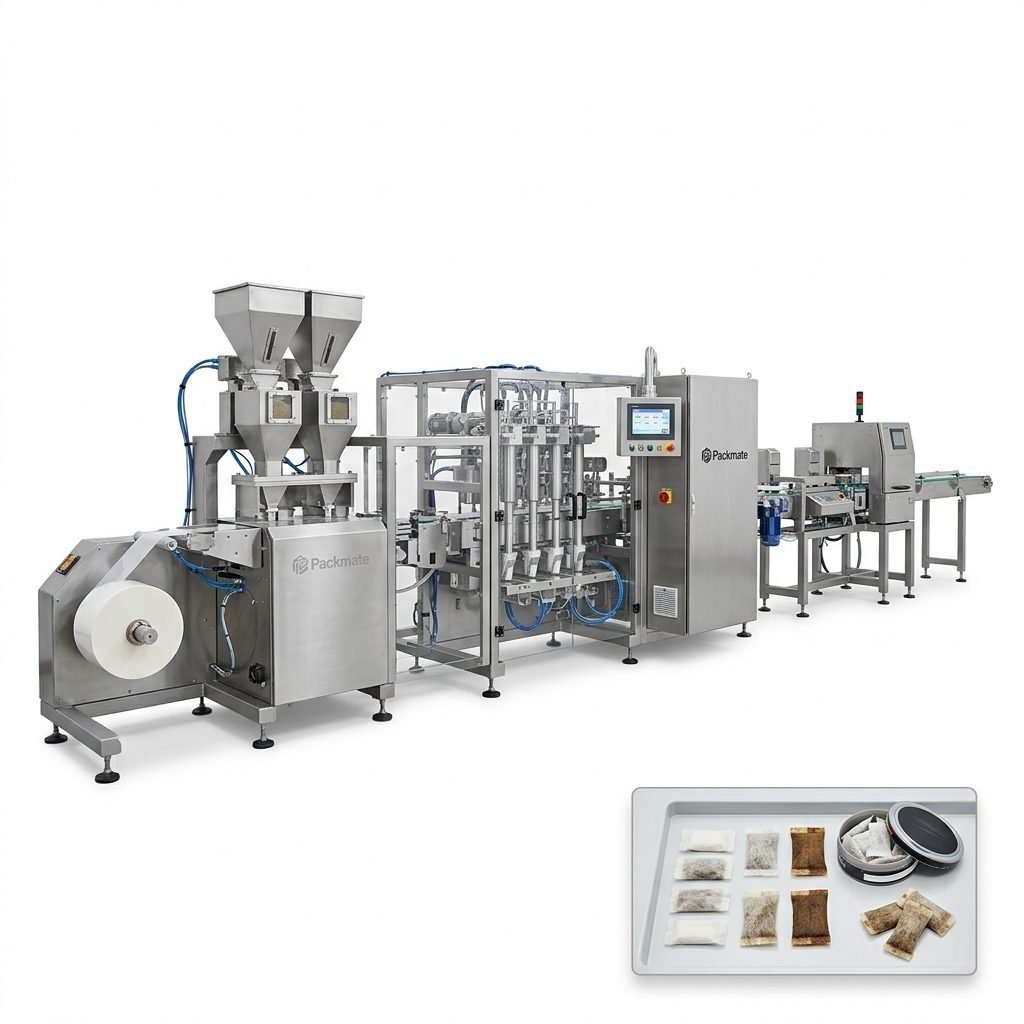
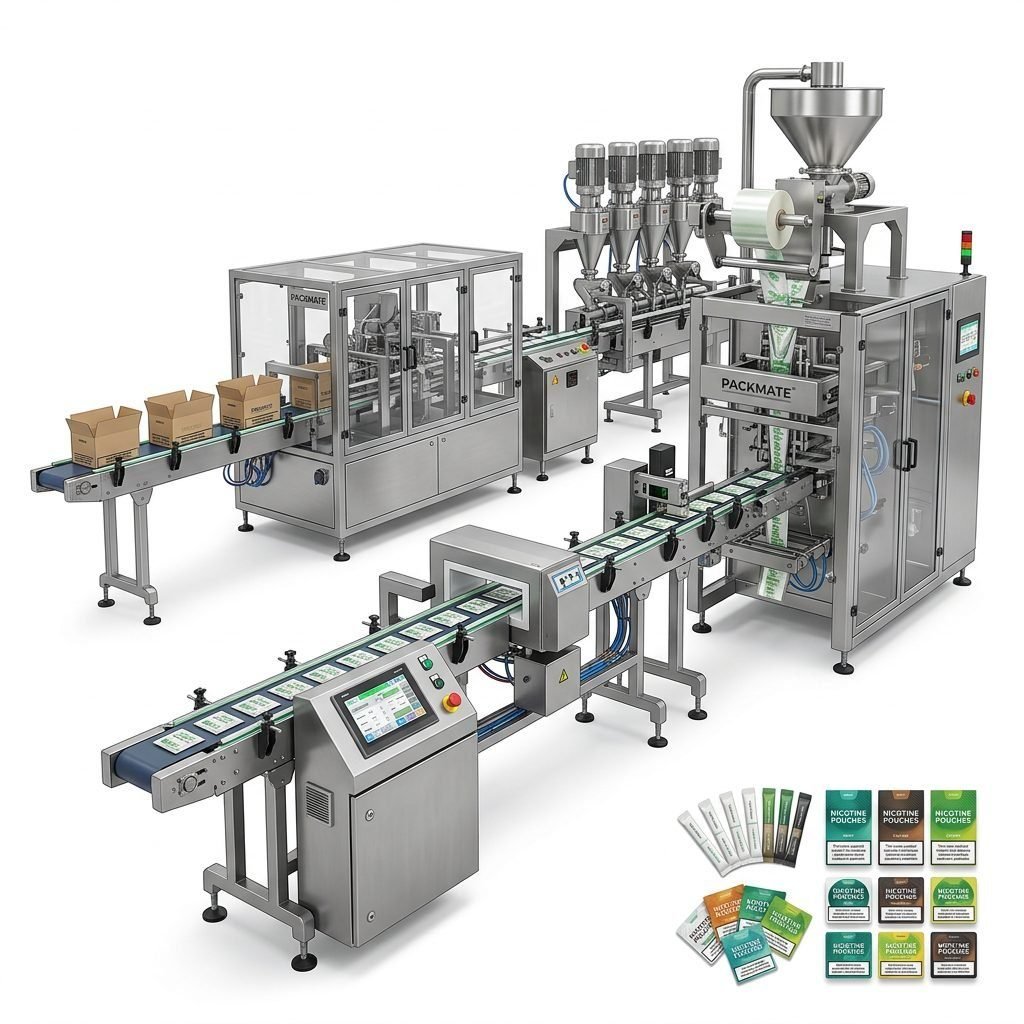
An automatic snus production line integrates a series of machines to convert raw material (tobacco, nicotine pouch powder, or blend) into finished, sealed pouches or cans ready for distribution. Typical lines include feeding and dosing systems, pouch forming/filling/sealing machines, can or outer-package handling, quality inspection, and packing stations. Modern lines emphasize multi-lane throughput, flexible packaging formats, and digital controls for traceability.
⚙️ Core objective: deliver stable, high-precision dosing and sealing while minimizing downtime and material waste.
Key Machine Types in a Snus Line
Understanding the core equipment types helps planners choose a solution that fits capacity, pouch format, and product characteristics.
Stick Pack & Sachet Machines
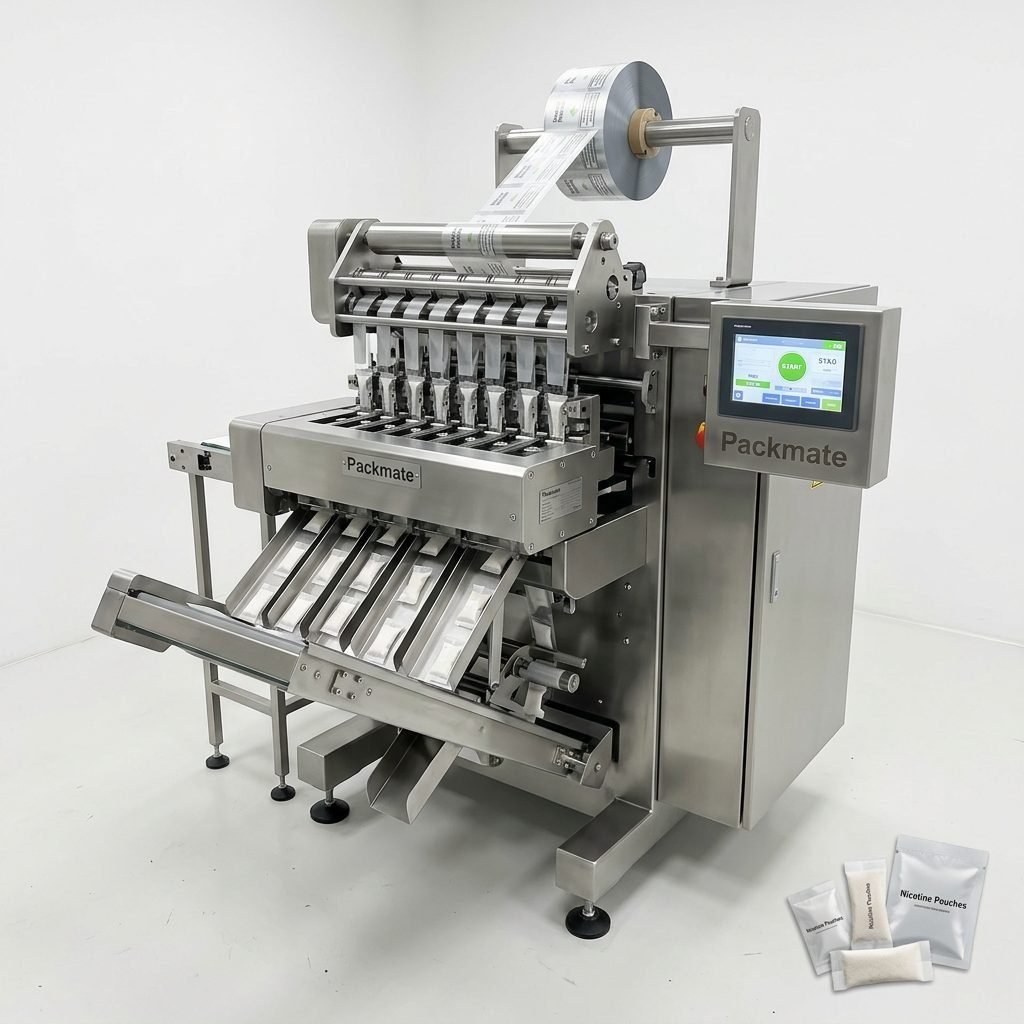
Stick pack and sachet machines form narrow, single-serve pouches ideal for nicotine pouches and small-dose snus. Multi-lane variants increase throughput with synchronized dosing and cutting systems. These are typically selected for single-dose convenience and retail-ready formats.
Pouch & Multi-Lane Systems
Multi-lane pouch systems enable high-speed production by forming several lanes of pouches concurrently. These systems are favored when producing small, pellet-like nicotine pouches in large volumes. Precision dosing heads and lane synchronization are essential to avoid weight variation.
Weighing & Dosing Equipment
High-accuracy weighing systems (often multi-head or auger-driven) control the nicotine content and pouch weight. Stability in dosing eliminates rework and ensures compliance with labelling and regulatory specifications across batches.
Essential Features to Look For
When evaluating equipment, prioritize reliability, modularity, and serviceability. The following features are non-negotiable for modern snus production.
- High-precision dosing with repeatable weight control and minimal variance.
- Multi-lane compatibility for scalable throughput.
- Servo-driven motion control for accurate pouch registration and cutting.
- HMI with recipe management and remote diagnostics for fast changeovers.
- Clean-in-place or easy-clean components to meet hygiene standards.
📌 Tip: Choose machines from manufacturers with proven multi-lane solutions and a strong service network to reduce downtime risks.
Designing an Efficient Line Layout
A well-planned production layout minimizes material handling, reduces cycle times, and improves operator ergonomics. Consider these planning principles when designing or upgrading a line.
1. Logical Flow
Arrange equipment sequentially: raw material prep → dosing/weighing → forming/filling/sealing → inspection → secondary packing. This reduces cross-traffic and contamination risk.
2. Space for Maintenance and Access
Leave clearance for belt changes, hygienic washdowns, and component replacement. Quick access reduces Mean Time to Repair (MTTR).
3. Quality Control Stations
Integrate inline metal detectors, vision systems, and weight checks to intercept faults before packaging. Automated rejection mechanisms protect brand integrity.
Automation & Industry 4.0 Integration
Modern lines support real-time data capture, recipe control, and remote support. These functions enhance predictive maintenance and traceability across batches.
🔍 Data benefits: reduced downtime, faster troubleshooting, and better yield analysis by linking production KPIs to machine telemetry.
Regulatory Compliance & Safety
Compliance with CE, ISO, and local regulations is critical. Machines should include guards, emergency stops, and safety interlocks. Material contact parts must meet food/pharmaceutical-grade standards when required.
Maintenance, Spare Parts & After-Sales Support
Preventive maintenance plans and accessible spare parts reduce unplanned stoppages. Choose vendors with:
- On-site commissioning and operator training.
- Fast spare parts dispatch and recommended spares list.
- Remote diagnostics and software updates.
Why Manufacturer Experience Matters
Established manufacturers that have evolved their designs across decades typically provide better-engineered solutions. For example, Packmate Snus Machine brings 30+ years of packaging expertise and a proven multi-lane focus that benefits high-volume nicotine pouch production. Learn more about the company’s portfolio on the About page.
Useful resources:
Snus & Nicotine Packaging Machines,
Bag & Pouch Packaging Machines,
Filling & Packaging Lines,
About Packmate.
Packaging Materials & Format Considerations
Material selection (laminate structure, barrier layers, and thermal properties) affects seal quality and shelf life. Consider water vapor transmission rate (WVTR), oxygen barrier, and sealant compatibility with your sealing equipment. For nicotine pouches, a stable barrier film combined with precise heat-sealing profiles ensures long-term freshness.
🔶 Material tip: verify seal integrity through routine peel and burst testing after any material change.
Secondary Packaging & Labelling
Secondary tasks include can filling, carton erecting, and labelling. Integrate serialization or batch coding for traceability. Automated case packing reduces manual handling and supports high throughput lines.
Purchasing & Customization Guidance
When procuring equipment:
- Define target throughput (pouches/min and annual volume).
- Specify pouch type(s) and material choices for validation.
- Ask for references and performance data demonstrating OEE (Overall Equipment Effectiveness).
- Request a site acceptance test (SAT) or factory acceptance test (FAT) with your product to validate performance.
For turnkey lines, vendors such as Packmate offer full-service solutions including auxiliary equipment and installation support — review case studies to evaluate fit for your market.
Operational Best Practices
Effective operations hinge on disciplined procedures:
- Standardize start-up and shutdown checklists to avoid incorrect settings.
- Train staff on quick-change tooling and hygienic cleaning procedures.
- Implement SPC (Statistical Process Control) for weight and seal parameters.
- Keep a small inventory of critical spare parts identified during commissioning.
✅ Operational highlight: regular calibration of dosing systems and periodic thermal profile checks keep product variance within specification.
Real-World Case & Support
Companies using specialized snus packaging lines report improved yields and reduced labor when moving from semi-automatic to fully automated multi-lane systems. Review real customer cases and machine demonstrations to assess ROI and performance — many vendors provide case histories and exhibition demos to evaluate machines in action. See example case studies on the manufacturer’s Case page.
If you are evaluating suppliers, request documentation on certifications like CE and ISO, and confirm after-sales service scope including training, spare parts, and remote support availability. For more details on certifications, check the certificate resource.
Exhibitions & Live Demonstrations
Attending exhibitions is an effective way to see machines running and talk with engineers. Vendors often run sample products during shows, allowing prospective buyers to validate pouch format and machine capabilities. Learn about upcoming shows on the exhibition page.
Final Considerations Before Investment
Purchasing a snus production line is a long-term investment. Balance cost with proven performance, service footprint, and future scalability. A supplier who offers tailored solutions, robust multi-lane experience, and comprehensive after-sales support will deliver sustainable value as your volumes grow.
📞 Ready to evaluate your line? Contact the manufacturer directly to discuss capacity requirements, customization options, and commissioning: Contact Us.
Common Questions
Q1: What is the typical output of a multi-lane snus machine?
Output varies by lane count and pouch size. Multi-lane systems can scale from thousands to tens of thousands of pouches per hour. Confirm expected pouches/min with the vendor using your product during a FAT.
Q2: How do I ensure consistent nicotine dosing?
Use high-precision weighing or volumetric dosing with feedback control and frequent calibration. Implement SPC to detect drift and trigger corrective actions before out-of-spec packs are made.
Q3: What after-sales services are important?
Essential services include commissioning, operator training, fast spare parts supply, and remote diagnostics. Verify warranty scope and service SLA during contract negotiation.
Q4: Can machines handle different pouch materials?
Yes, but sealing parameters and tooling may need adjustment. Always perform material compatibility tests and request vendor support for profile optimization.
Q5: How to reduce downtime during format changes?
Invest in quick-change tooling, well-documented recipes in the HMI, and trained changeover teams. Pre-staging materials and checklists speed up transitions and reduce human error.