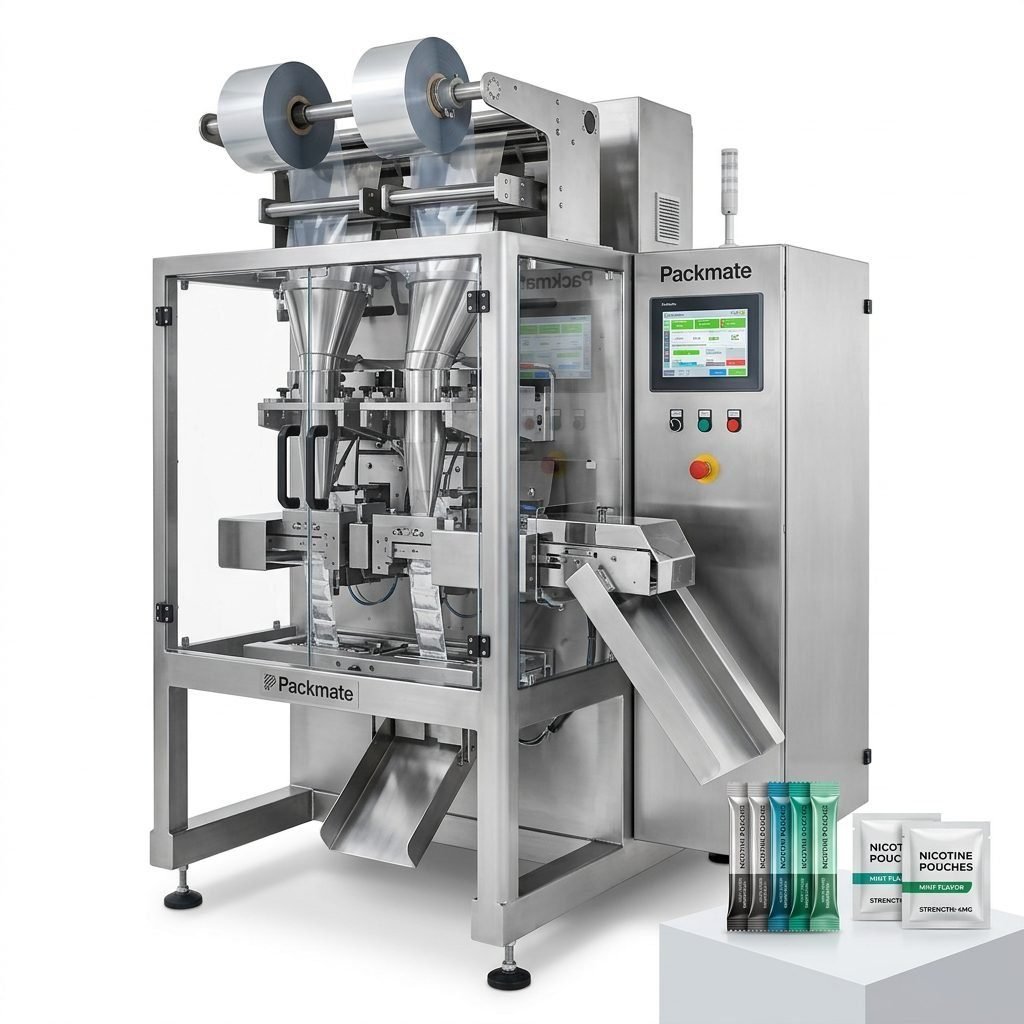
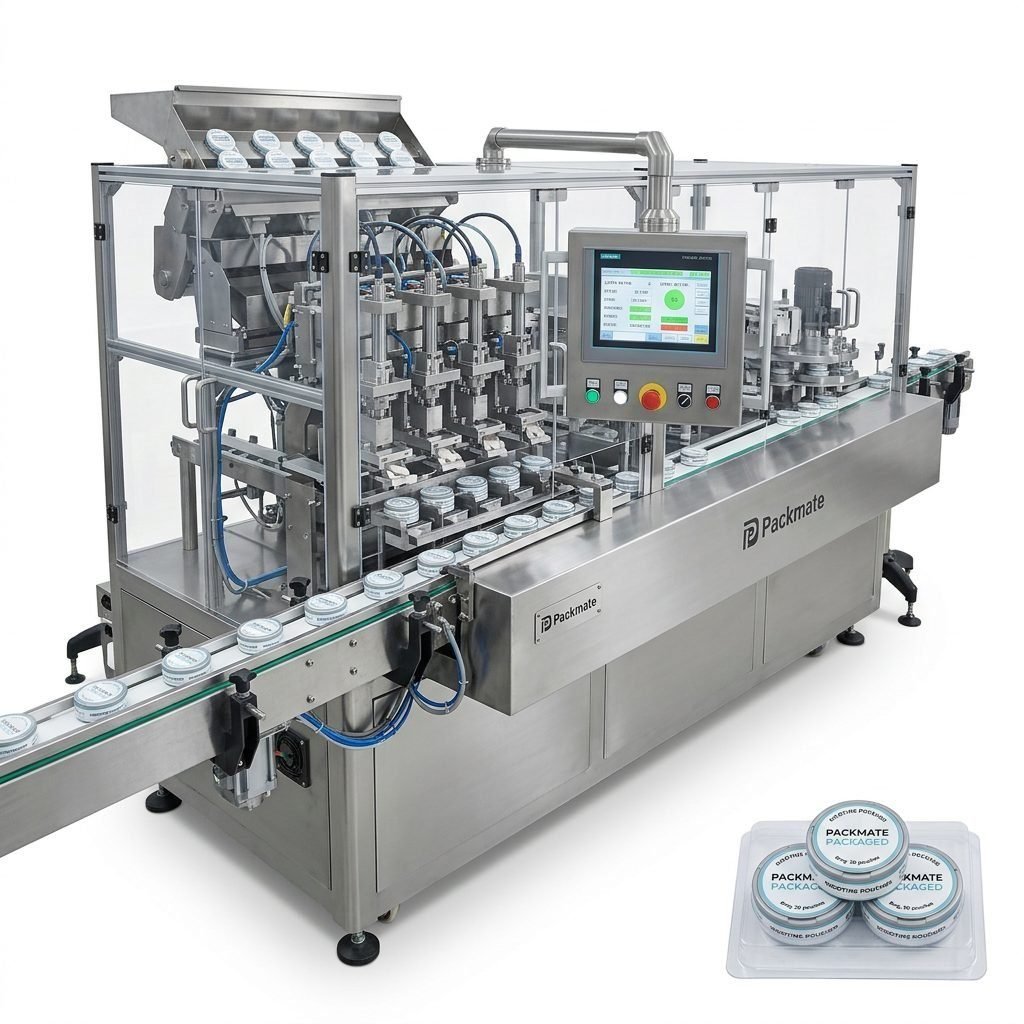
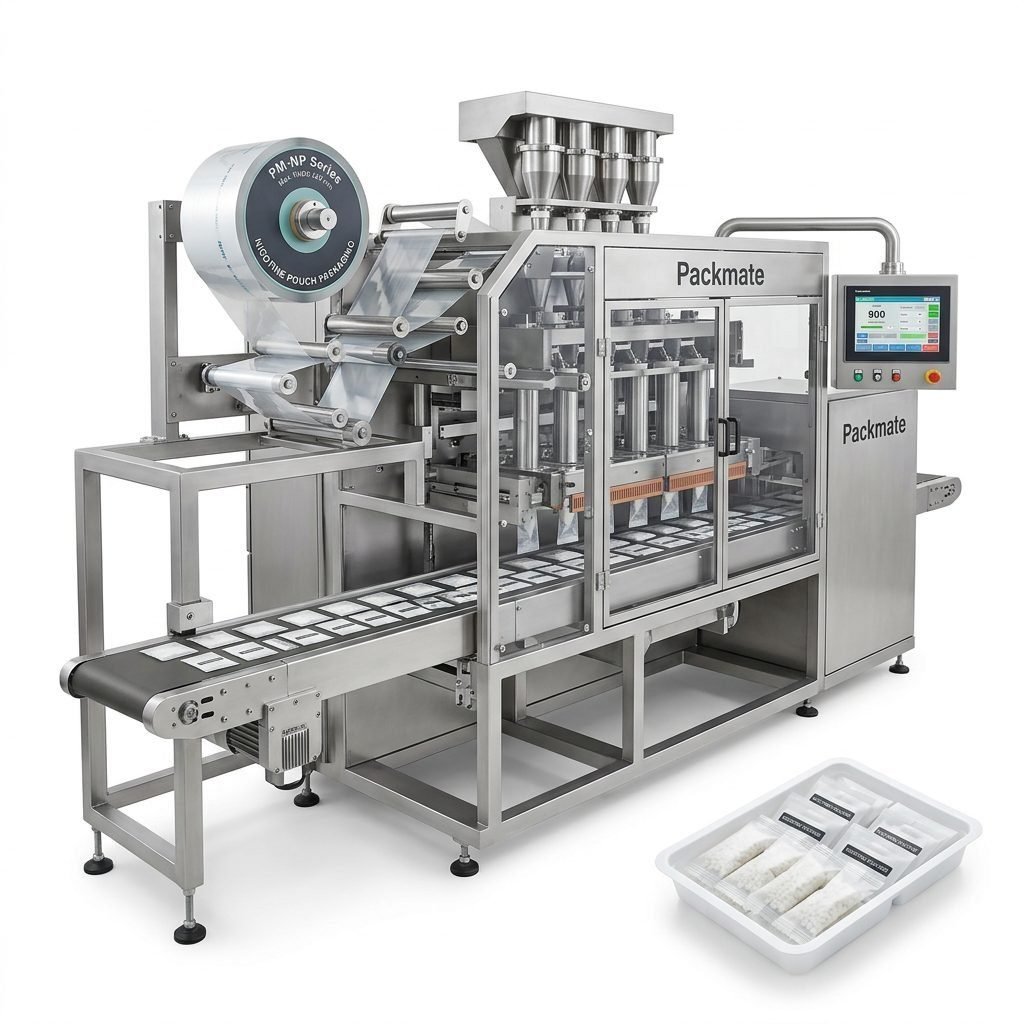
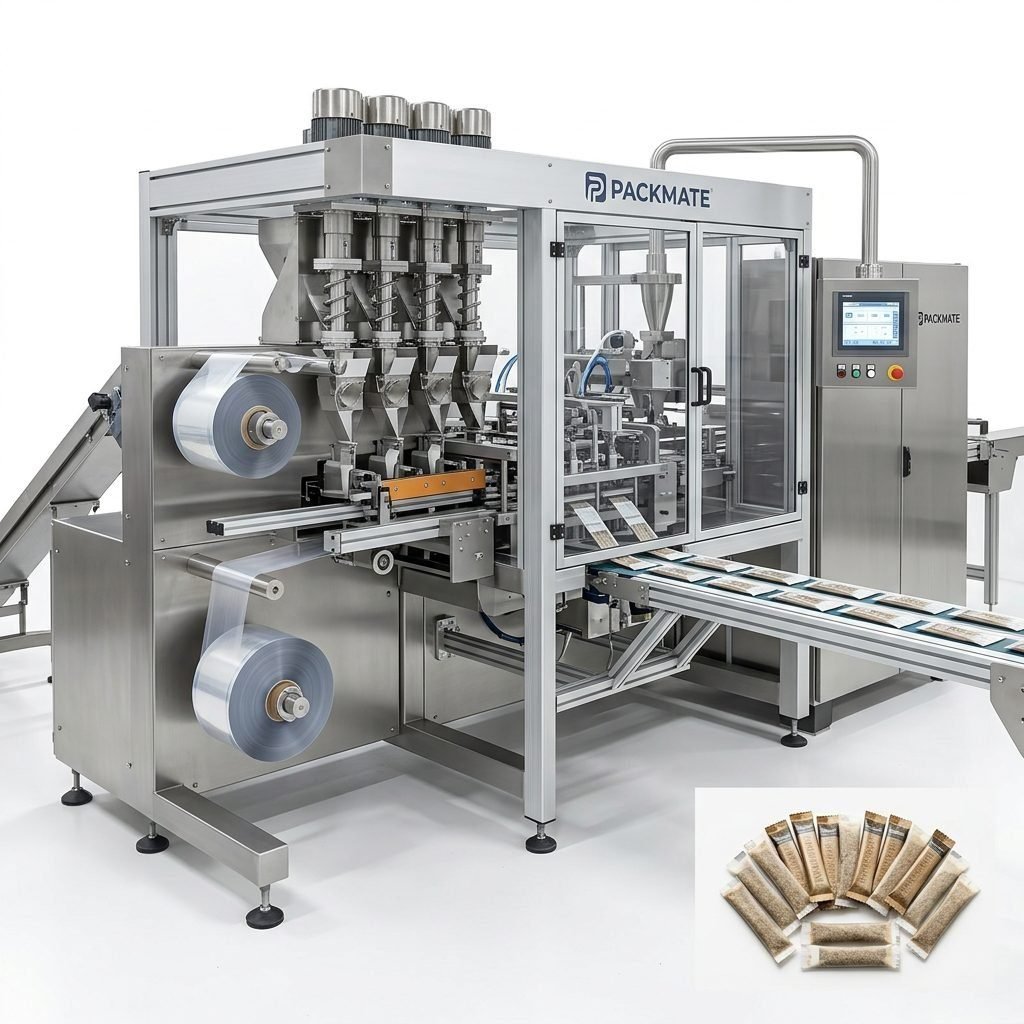
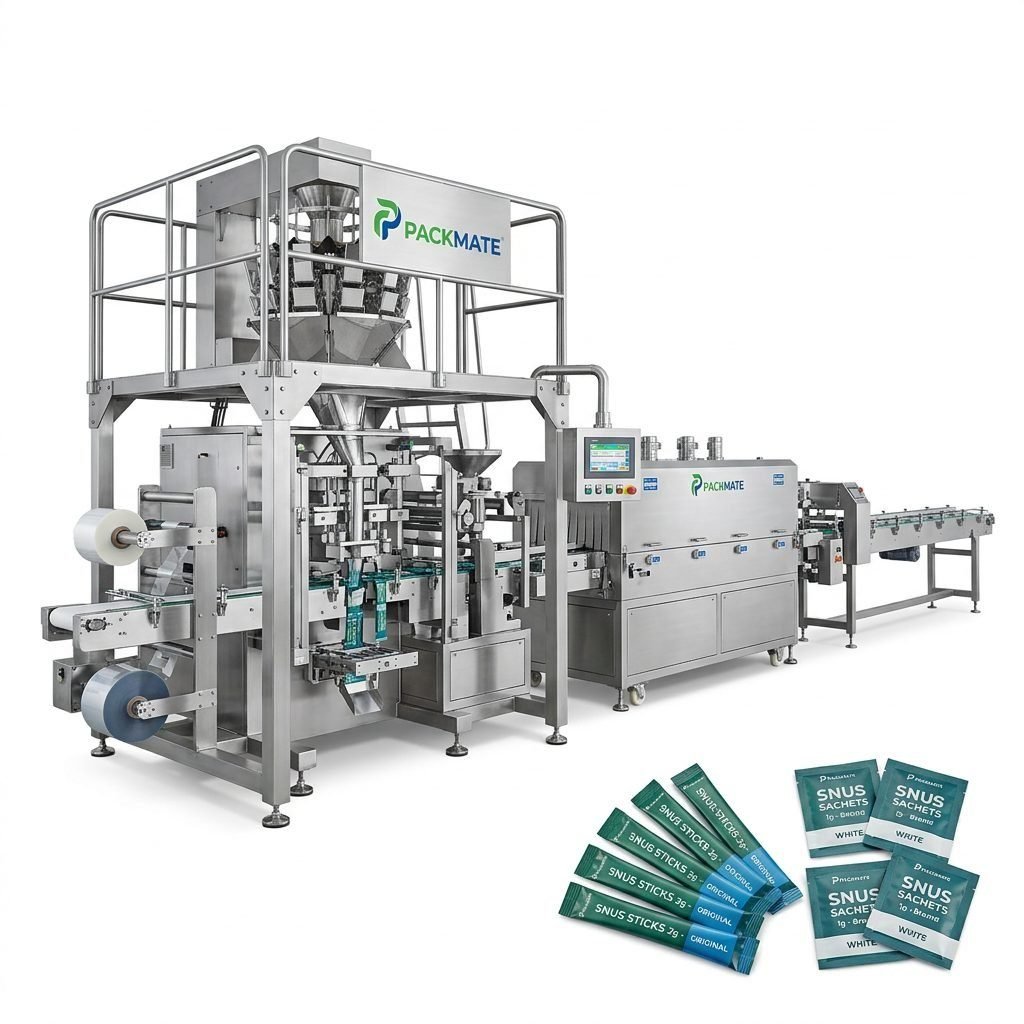
The snus and nicotine pouch market demands precision, consistency, and compliance. Choosing the right snus packing machine is not just about buying equipment; it’s about selecting an automation level that matches production targets, product characteristics, and long-term operational strategy. This guide explains automation tiers, technical considerations, ROI drivers, and practical selection tips to help packaging managers, engineers, and business owners pick the ideal automatic snus filling and packing solution.
Why Automation Level Matters for Snus Packing
Automation level determines throughput, labor needs, product consistency, and compliance capabilities. Snus and nicotine pouches are small-dose products that require highly accurate filling, gentle handling, and secure sealing. A mismatched automation level can cause bottlenecks, higher waste rates, or regulatory risks. Conversely, the right automation delivers predictable yields, reduced labor costs, and reliable traceability.
Key outcomes of choosing the correct automation
✓ Consistent fill accuracy that protects product dosing and customer safety
✓ Higher output per square meter through multi-lane and integrated systems
✓ Scalable production to grow with market demand
Understanding Automation Levels: From Semi-Auto to Fully Turnkey Lines
Automation can be categorized into clear tiers. Each tier aligns with different business sizes and goals — from small pilot runs to high-volume continuous production.
Manual & Semi-Automatic Systems
Manual or semi-automatic machines are appropriate for low-volume production, R&D, or frequent product changes. These machines often require operator intervention for feeding, pouch placement, or dosing adjustments. They keep capital costs lower but need more labor and have slower throughput.
Fully Automatic Single-Lane Machines
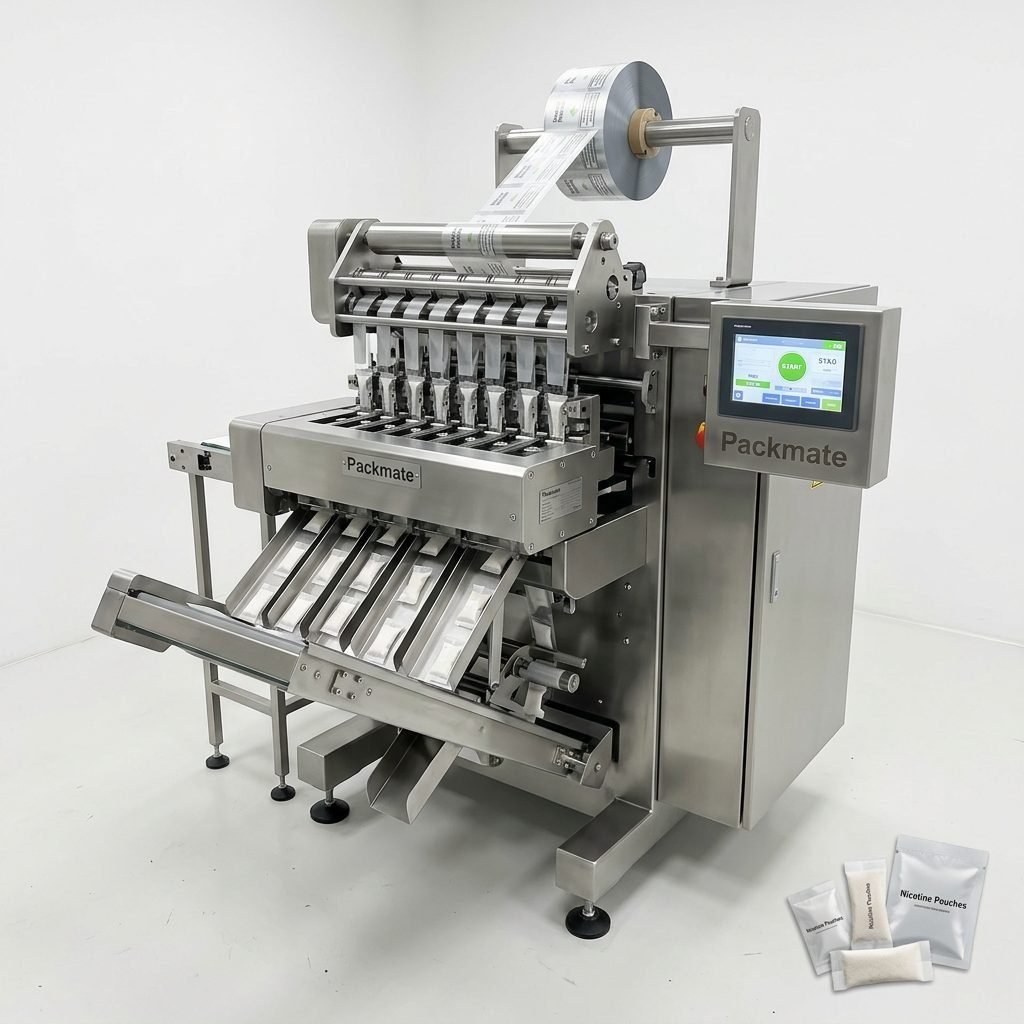
Automatic machines that form pouches, fill, and seal in a single continuous motion are ideal for steady runs of a single product. They deliver higher speed and consistency with integrated control systems, touch HMIs, and servo-driven movements.
Multi-Lane High-Speed Systems
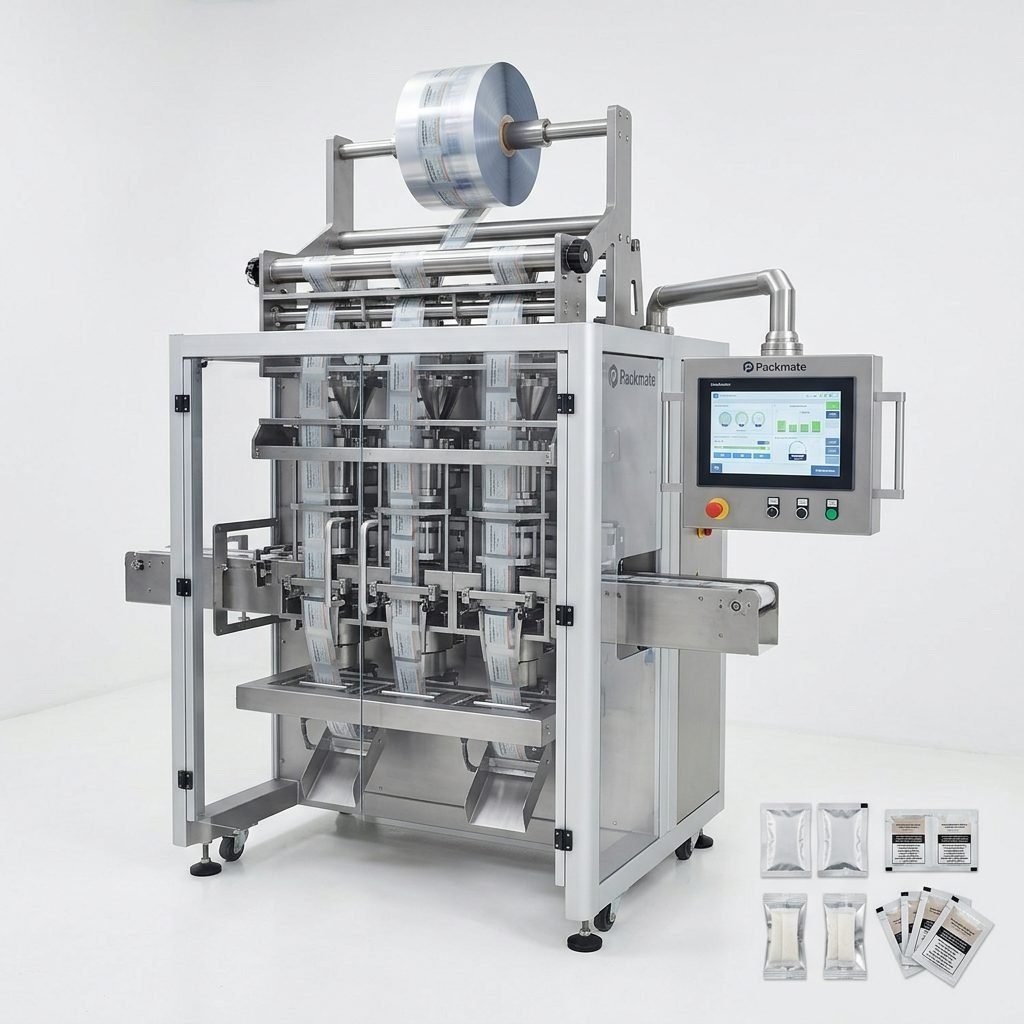
For manufacturers targeting mass output, multi-lane machines can run several parallel lanes of pouches simultaneously. These systems maximize throughput while maintaining dosage accuracy — crucial for low-dose nicotine pouches.
Turnkey Integrated Lines
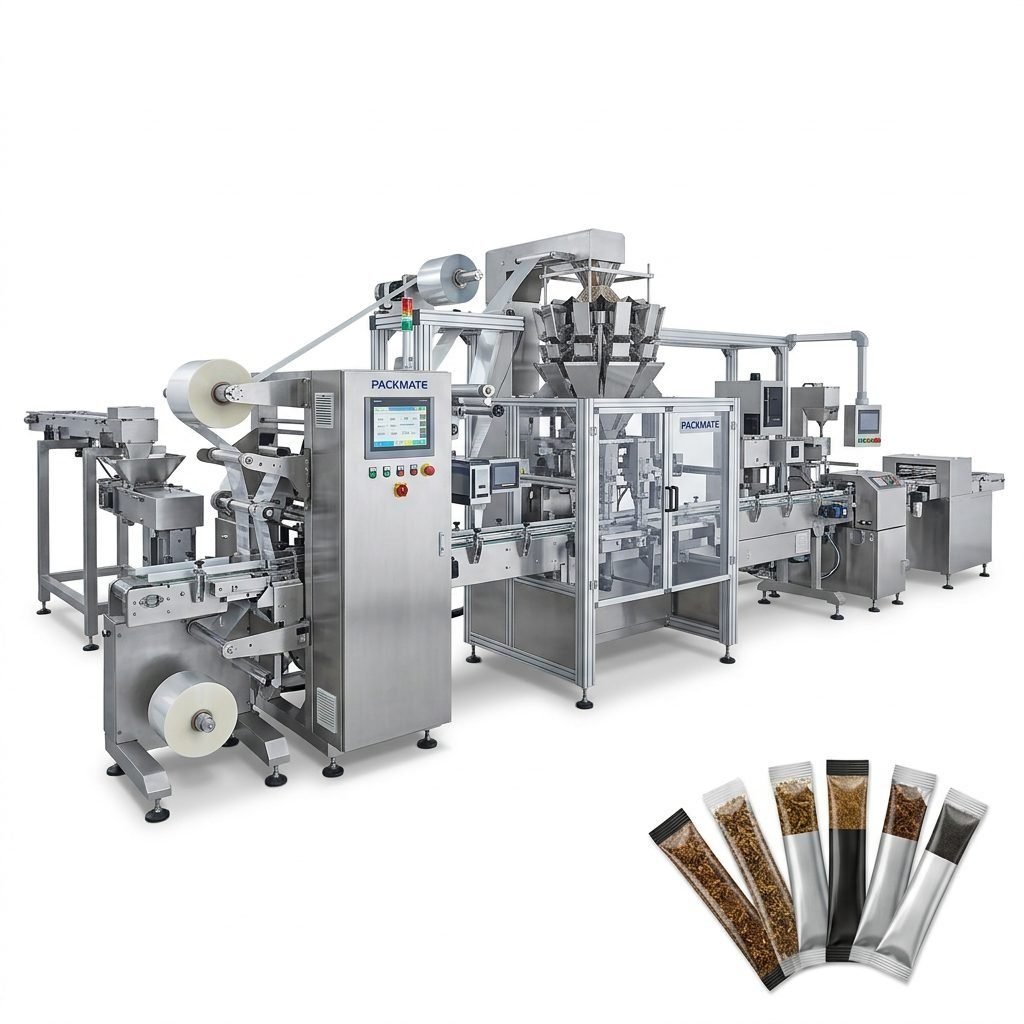
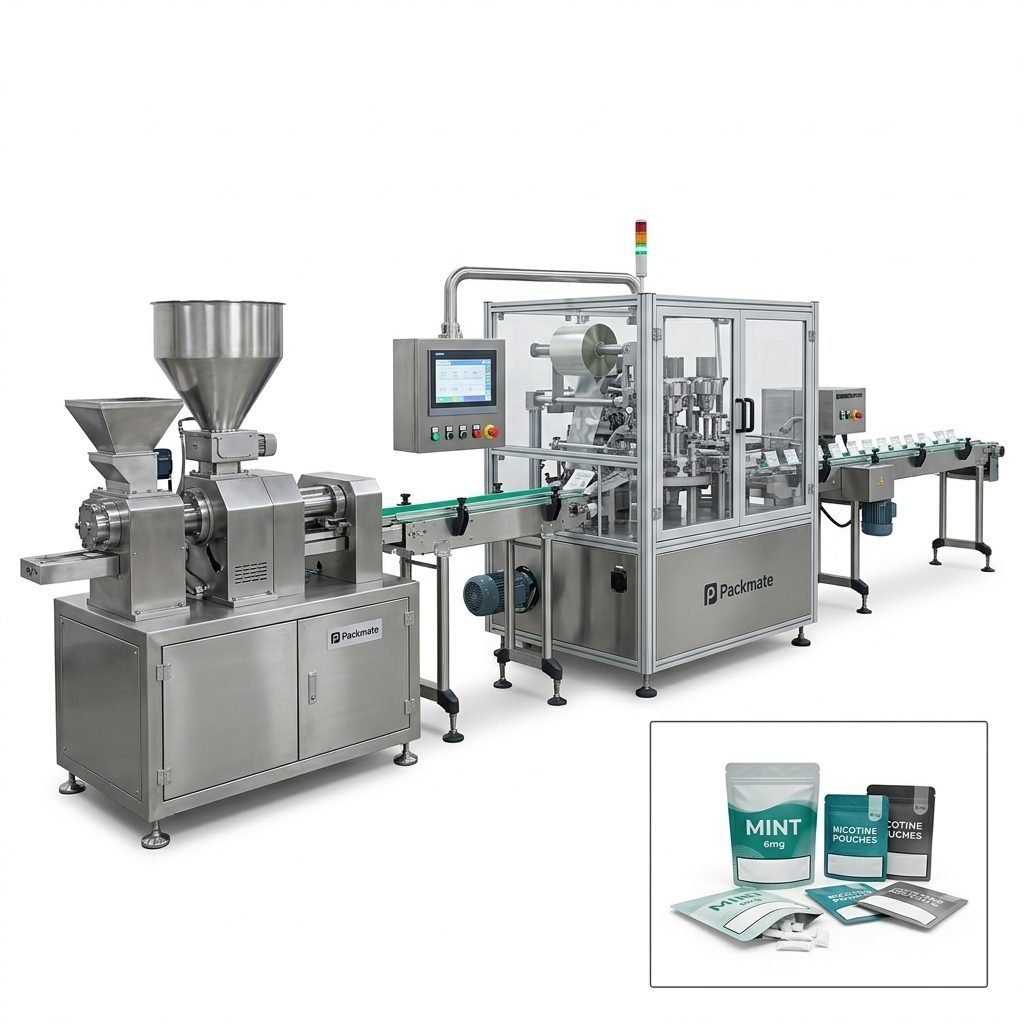
Turnkey lines integrate upstream processes (weighing, dosing, mixing) and downstream operations (cartoning, case packing, labeling) into one automated solution. They are suited to established brands and contract manufacturers that require full production continuity, data logging, and regulatory traceability.
Core Technical Features to Consider
Choosing the right machine means understanding the functional blocks that affect product quality and productivity. Below are technical features to evaluate carefully.
-
Metering & Weighing — high-precision auger or volumetric dosing and loss-in-weight feeders reduce variance for nicotine pouch filling.
-
Pouch Forming & Material Handling — stable film transport and accurate cutting reduce sealing defects and minimize waste.
-
Sealing Technology — constant monitoring of temperature and pressure ensures hermetic seals and shelf stability.
-
PLC & HMI Control — modern PLCs, servo drives, and intuitive HMI screens reduce setup time and help operators manage changeovers.
-
In-line Quality Inspection — vision systems and weight checks catch defects early and reduce recalls.
-
Cleanability & Maintenance — hygienic design and easy access parts shorten downtime.
Important: Compliance and Certification
Machines built to CE and ISO standards simplify international market entry and reduce audit friction. Always verify machine certifications and documentation, and ensure materials in contact with product meet food or pharma-compatible standards when required. For more information about company certifications and global compliance, visit the certificate page.
Relevant equipment categories and solutions are available across Packmate’s portfolio including Snus & Nicotine Packaging Machines and Filling & Packaging Lines.
How to Match Automation to Production Needs: A Practical Checklist
⚙️ Daily output target — define your planned units per day (not just theoretical max speed).
📦 Product diversity — number of SKUs, pouch formats, and frequency of changeovers.
📏 Tolerance & dosing accuracy — specify grams or milligram tolerances for nicotine pouch fills.
🏭 Available footprint — measure factory layout; multi-lane machines can be more footprint-efficient than multiple singles.
🔧 Maintenance & service — consider spare parts availability and supplier support commitments.
Calculating ROI: Beyond Purchase Price
An investment in automation must be evaluated across multiple dimensions: throughput gains, labor savings, waste reduction, reduced recalls, and faster market response. Consider a conservative ROI model that includes:
-
Production value per hour × increased uptime from automation
-
Labor cost savings scaled over 3–5 years
-
Waste reduction rate (reduced overfills and rejects)
-
Regulatory compliance benefits (lower recall risk)
Keep in mind that multi-lane and turnkey lines typically show faster payback for high-volume producers due to shared utilities, centralized controls, and reduced per-unit labor.
Operational Considerations: Installation, Training, and After-Sales
A machine is only as good as the team that operates it and the service backing it. Look for suppliers that provide factory acceptance tests, on-site commissioning, operator training, and remote diagnostic support. Packmate is an example of a supplier with global exhibition presence and ongoing service capabilities—your chosen partner should document case references and service commitments. See Packmate’s case studies for real-world deployments.
Explore additional resources like Case and Service pages to validate vendor performance and support.
Integration Tips
– Design a staged acceptance plan: FAT → SAT → production ramp-up.
– Ensure spare parts kits and recommended preventive maintenance schedules are included in contract terms.
– Plan utilities and material flow: film rolls, powder feed systems, nitrogen supply, and discharge conveyors must match machine specs.
Selecting a Supplier: What to Ask and Verify
When comparing quotations, focus questions on long-term reliability and total cost of ownership. Key verification points include:
-
Production references with similar SKUs and throughput.
-
Uptime and MTBF statistics for installed machines.
-
Spare parts lead-times and local stocking options.
-
Training programs and documentation language options.
-
Warranty coverage and on-site response times.
Why Packmate is a Consideration
With more than 30 years of engineering experience and a 20,000㎡ manufacturing facility, Packmate offers a wide range of snus packaging equipment from single-lane machines to complete automated lines. Their portfolio includes Sachet & Stick Pack Machines, Weighing & Packaging Systems, and Auxiliary Packaging Equipment to build integrated solutions.
Practical Examples of Automation Choices
– Start-up brand producing multiple SKUs with seasonal demand: a single-lane automatic machine with quick-change tooling and a robust HMI offers flexibility and modest capital expense.
– Contract manufacturer serving FMCG and nicotine brands: a multi-lane, modular system with in-line inspection and data logging supports high throughput and traceability.
– Established manufacturer scaling globally: turnkey lines that include upstream feeders and downstream cartoning reduce manual transfers and increase overall OEE.
Quick Selection Checklist
• Define target throughput and SKU mix
• Match dosing accuracy to product requirements
• Evaluate footprint vs. multi-lane options
• Confirm certifications and supplier case studies
• Plan for spare parts and service response
Final Recommendations
Choose a machine whose automation level aligns with your three-year production forecast. Avoid overbuying highly integrated lines if demand is uncertain; conversely, avoid underspecifying automation for high-volume products as it increases unit cost and risk. Prioritize dose accuracy, uptime, and supplier support — these drive long-term ROI more than headline speed specs.
If you want to compare product lines and machine types directly, the product pages provide detailed specifications and machine models to evaluate: Snus & Nicotine Packaging Machines and Filling & Packaging Lines.
Common Questions (FAQ)
Q1: What automation level is best for a startup with 500–2,000 pouches/day?
A: A flexible single-lane automatic machine or semi-automatic platform with quick-change tooling is often the best compromise. It keeps initial capital lower, allows SKU testing, and can be upgraded to higher automation when demand grows.
Q2: How important is multi-lane technology for snus packaging?
A: Multi-lane systems are critical for high-volume producers because they multiply throughput without a proportional increase in floor space or operators. They also centralize control and inspection, improving consistency.
Q3: What are typical lead times for custom turnkey lines?
A: Lead times vary by complexity, customization, and supplier capacity; typical ranges are 12–28 weeks. Discuss FAT (Factory Acceptance Testing) and phased deliveries with your vendor to reduce deployment risk.
Q4: Where can I see machine demos and find real-world cases?
A: Visit major exhibitions where manufacturers like Packmate show live demos. Online case studies are also available for review: Our Exhibition and Case.
Q5: How do I start the procurement process?
A: Define throughput, SKUs, and key tolerances, then request detailed proposals including FAT plans, spare parts lists, and service agreements. Use supplier references and site visits where possible. For direct contact and consultation, see the vendor contact page: Contact Us.