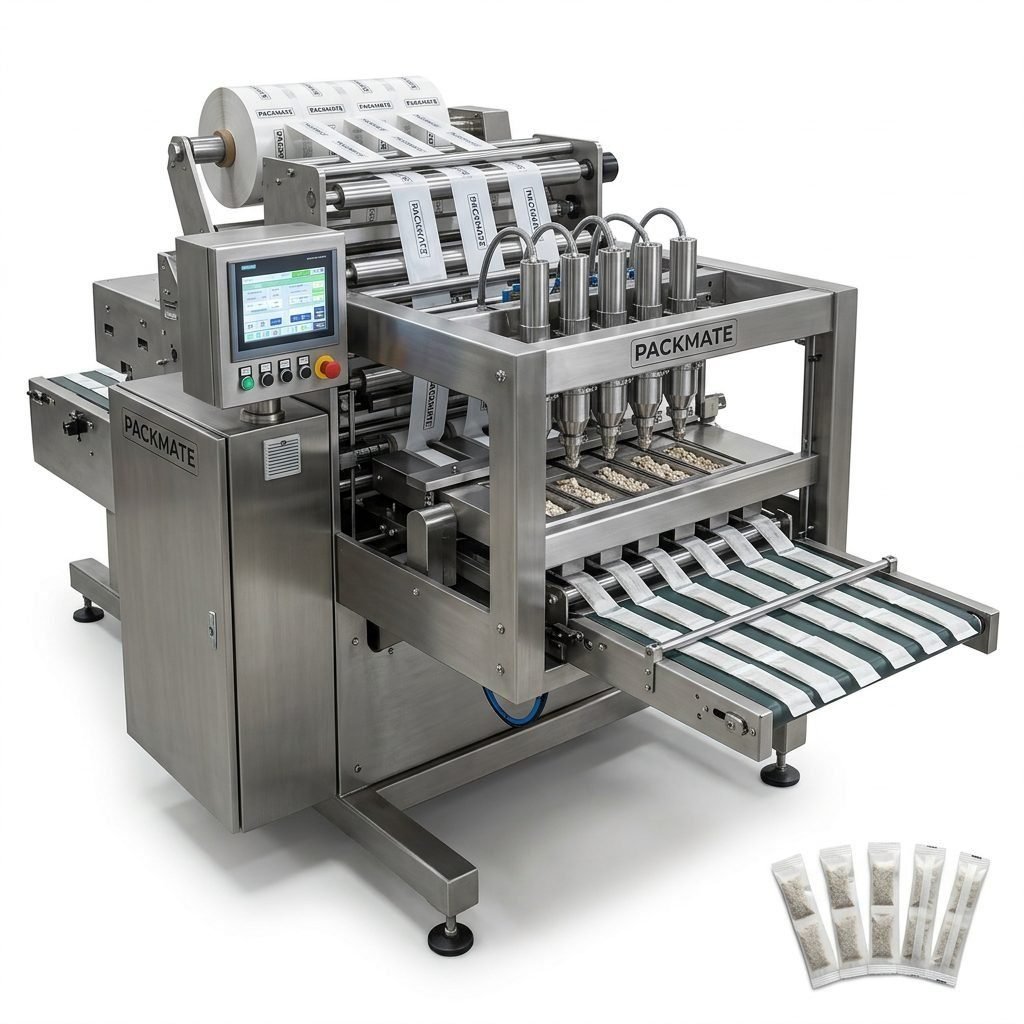
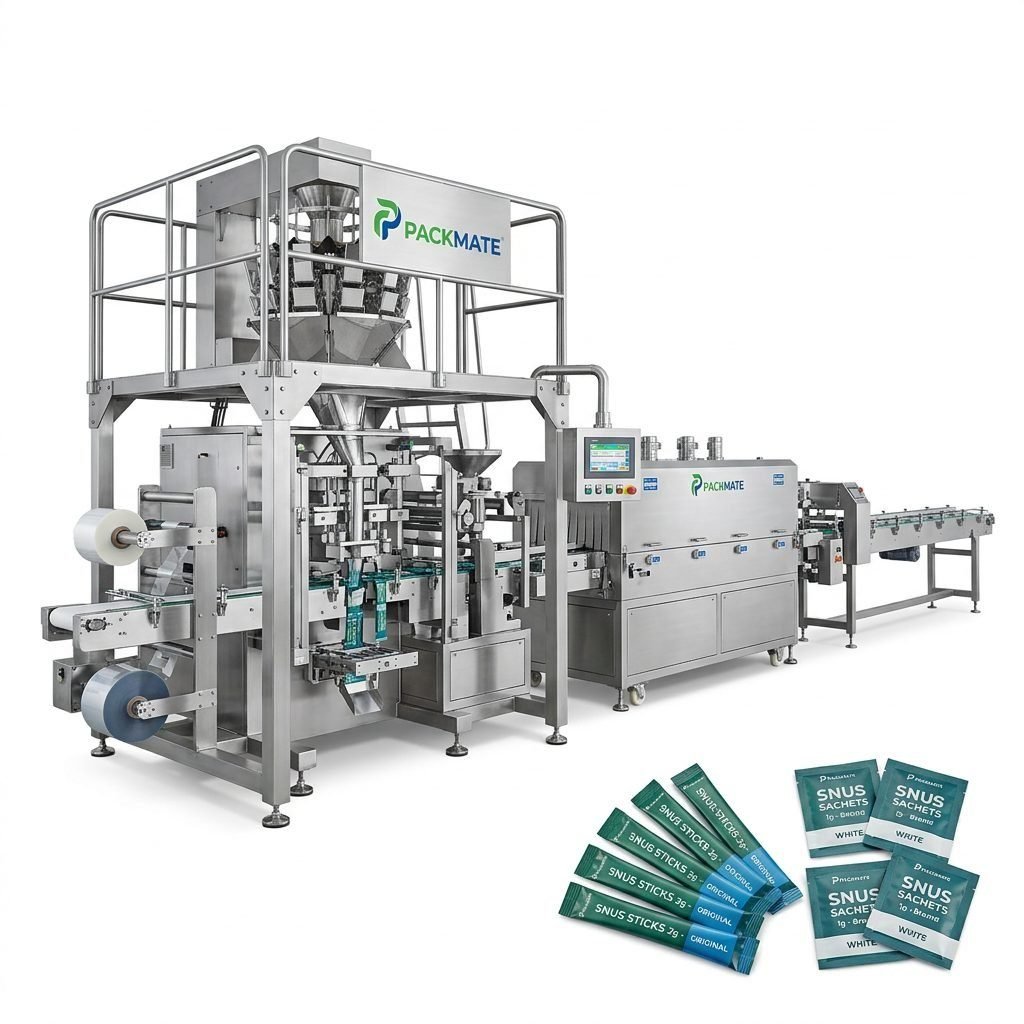
The global snus packaging market is evolving rapidly as manufacturers, brand owners, and consumers demand safer, more sustainable, and more attractive packaging for nicotine pouches and related products. This article examines current market trends, emerging designs and materials, machinery advancements, and growth opportunities for companies operating in the snus and nicotine pouch packaging space. It is written with packaging machinery professionals and business decision-makers in mind, highlighting how production equipment, material choices, and regulatory landscapes intersect to shape the future of this niche segment.
⚙️ Market Overview and Demand Drivers
Demand for snus and nicotine pouches has been driven by shifting consumer preferences, harm-reduction conversations, and the expanding availability of alternative nicotine products across multiple regions. As product portfolios broaden — including single-dose sticks, multi-stick sachets, and micro-pouches — packaging requirements become more diverse. Manufacturers must balance shelf appeal, portion control, freshness preservation, and regulatory labeling while maintaining efficient production at scale.
Key market drivers:
✓ Regulatory shifts creating new labeling and child-resistant requirements
✓ Consumer demand for discreet, portable, and single-serve formats
✓ Sustainability and recyclability becoming purchasing considerations
📐 Emerging Packaging Designs
Packaging design for snus and nicotine pouches increasingly emphasizes ergonomics, user privacy, and brand differentiation. Key format trends include:
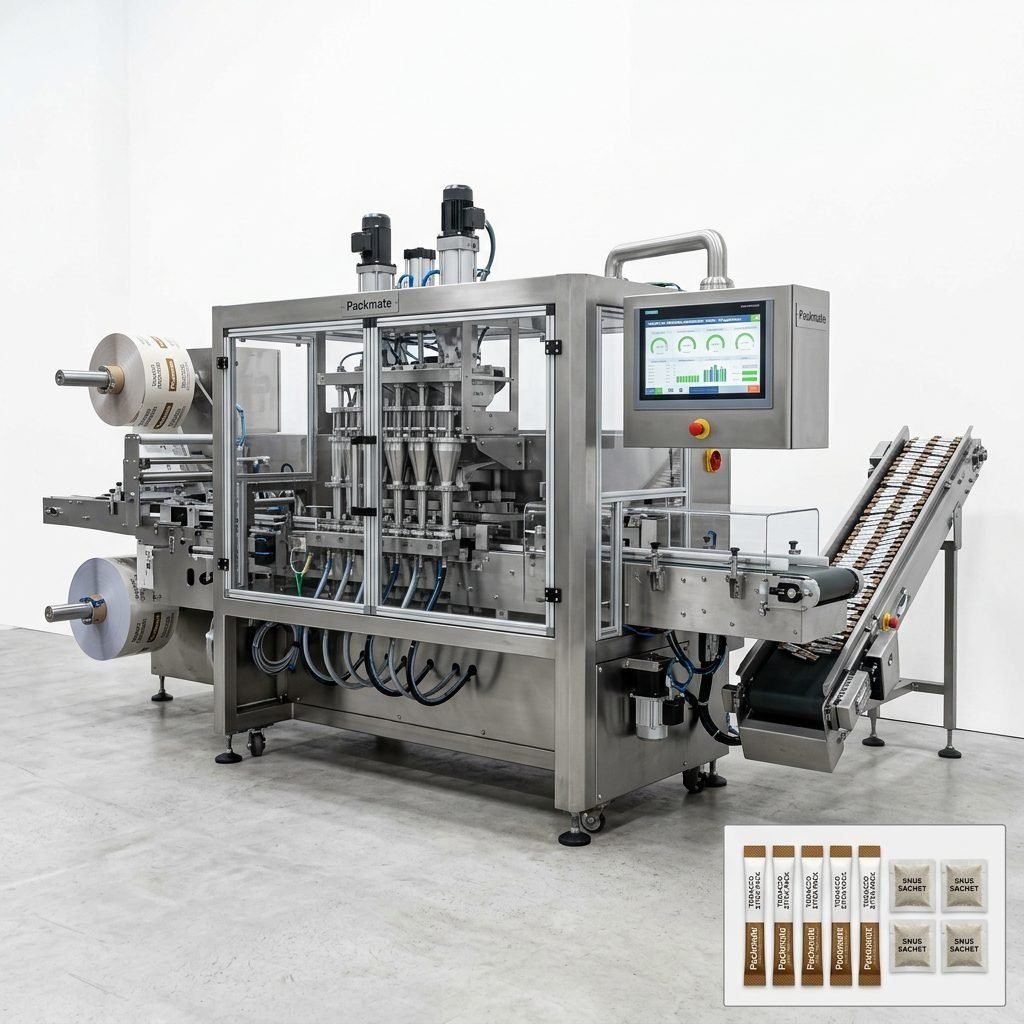
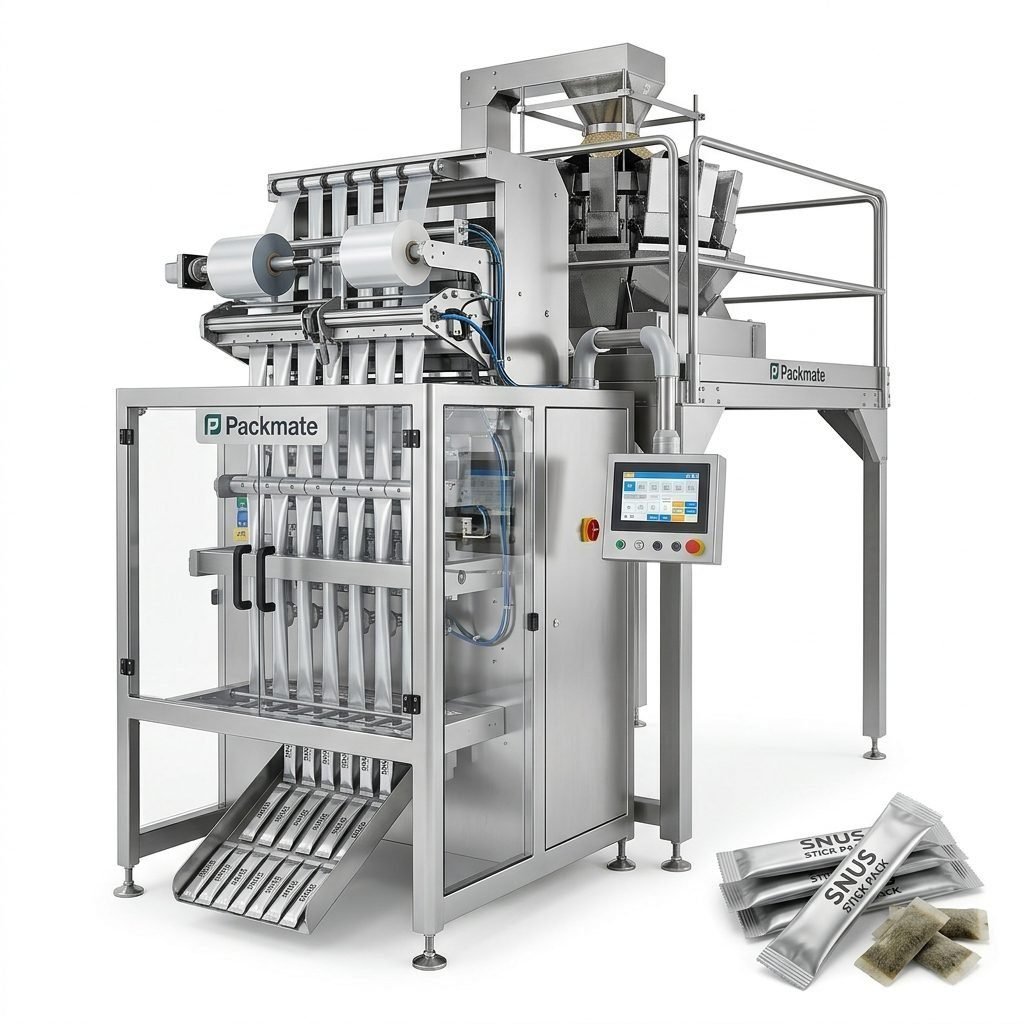
• Stick packs and micro-sticks: ultra-slim, single-serve stick formats for portability and precise dosing.
• Sachets with tear notches and resealable options: providing freshness and repeated use for multi-dose packs.
• Multi-compartment pouches: integrating child-resistant closures or compartments for varied flavours in one pack.
• Tamper-evident and discreet outer wraps: protecting products while maintaining low-profile aesthetics for consumers.
Production implications
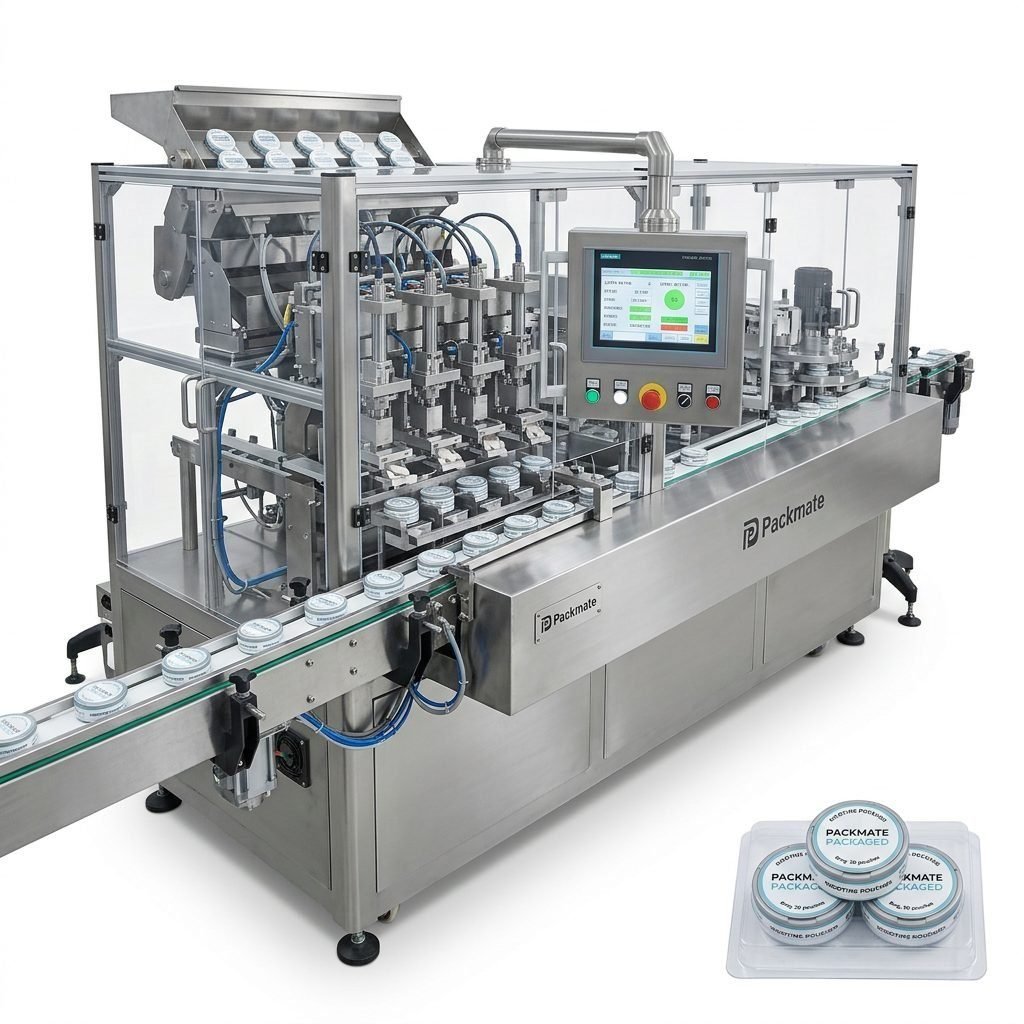
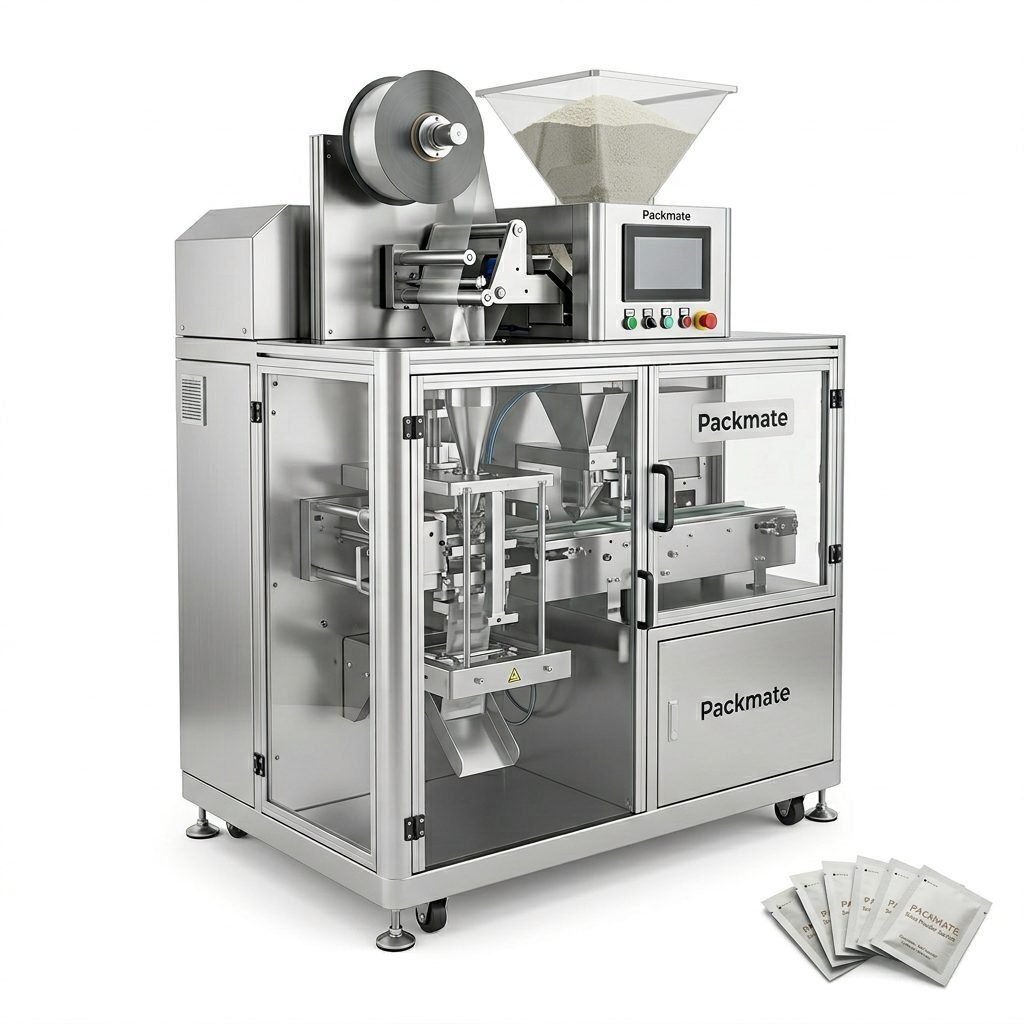
These design shifts require machinery that can manage tight tolerances, rapid format changeovers, and multi-lane synchronization. Manufacturers increasingly invest in modular lines capable of running sachet & stick pack machines and converting between different pouch geometries without significant downtime.
🔬 Materials and Sustainability Trends
Material selection is at the forefront of packaging strategy. Brands seek materials that protect product integrity while reducing environmental impact. Common directions include:
Material priorities:
• Barrier films with lower carbon footprints
• Recyclable mono-material solutions for certain markets
• Compostable or bio-based films for niche product lines
Machines must be compatible with a broader range of film thicknesses and material properties. For example, high-barrier aluminium laminates require different sealing profiles and temperatures than mono-PE films. Leading equipment suppliers offer adjustable sealing units, precise temperature control, and sensors to ensure consistent seal integrity across material types.
🤖 Machinery and Automation Advances
Packaging equipment manufacturers are responding with machines that emphasize speed, flexibility, and digital integration. Advances include:
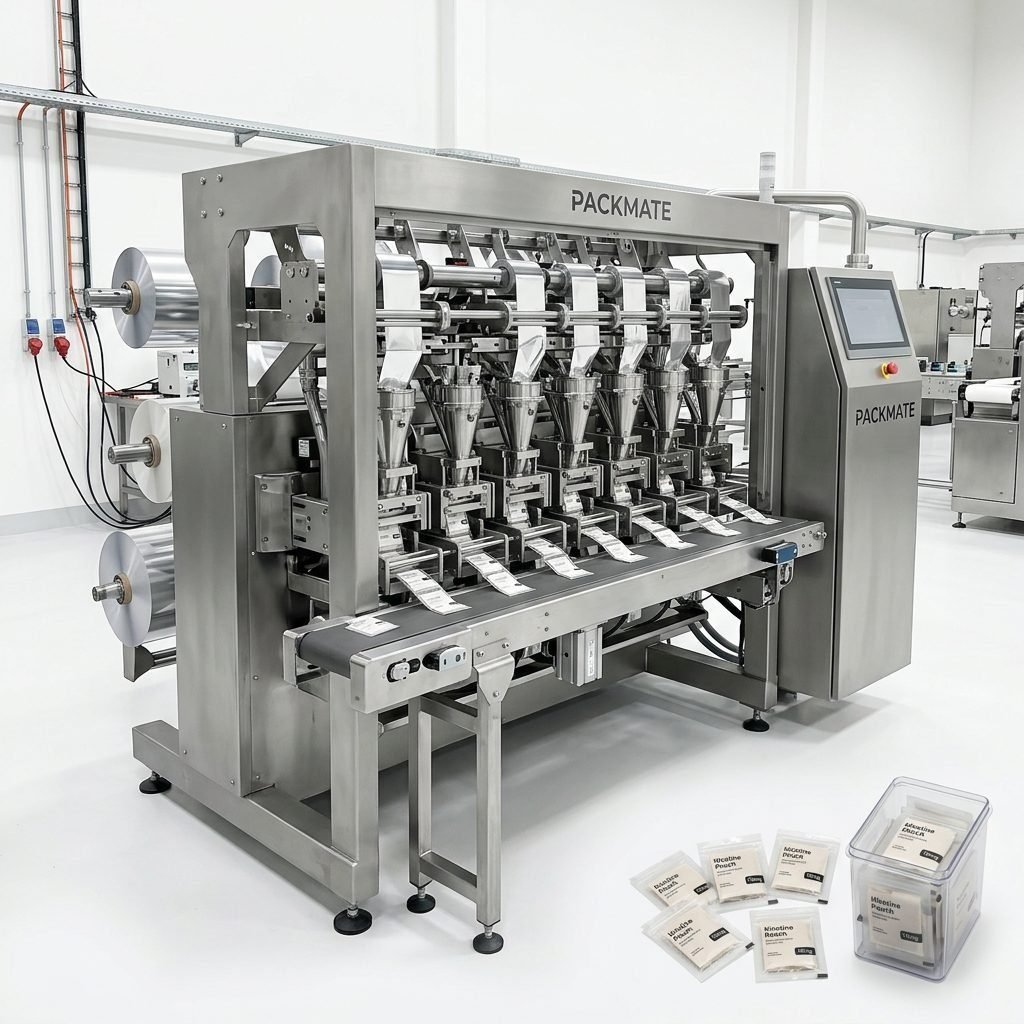
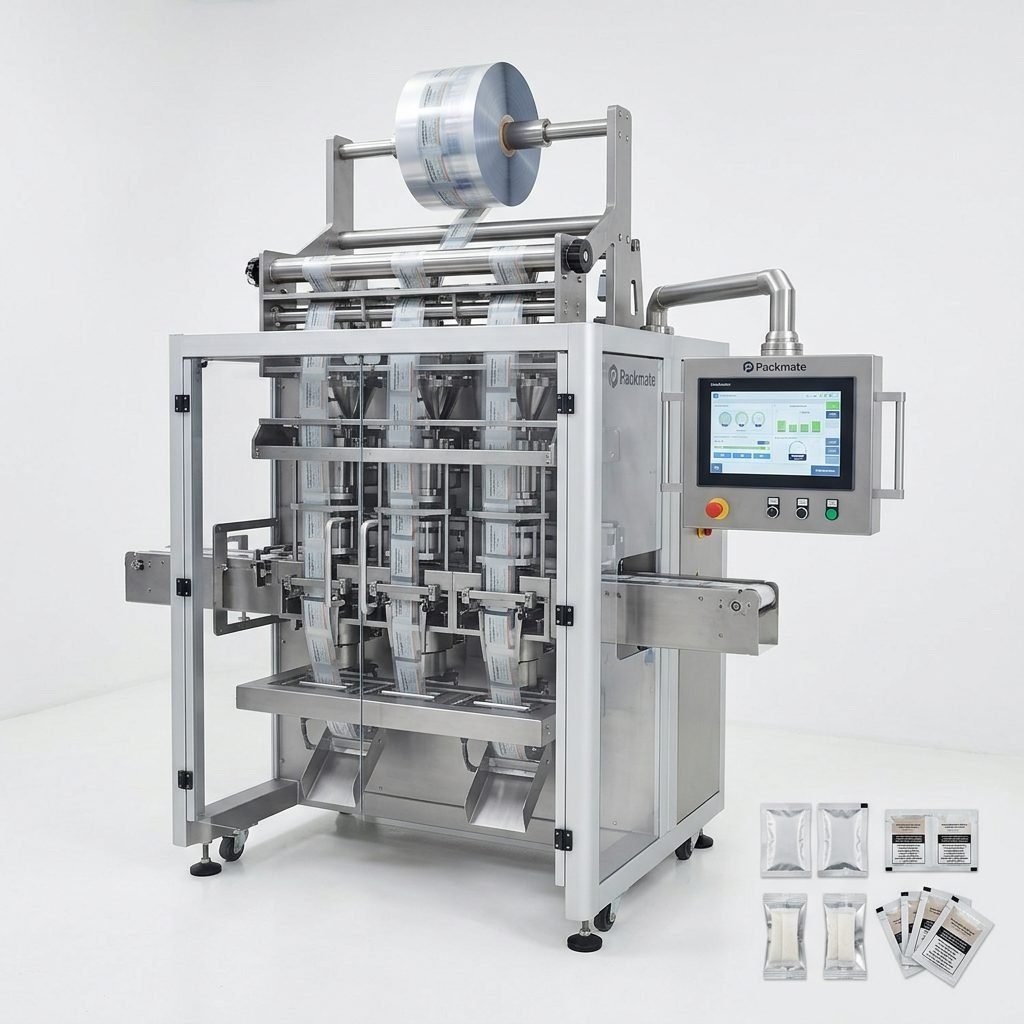
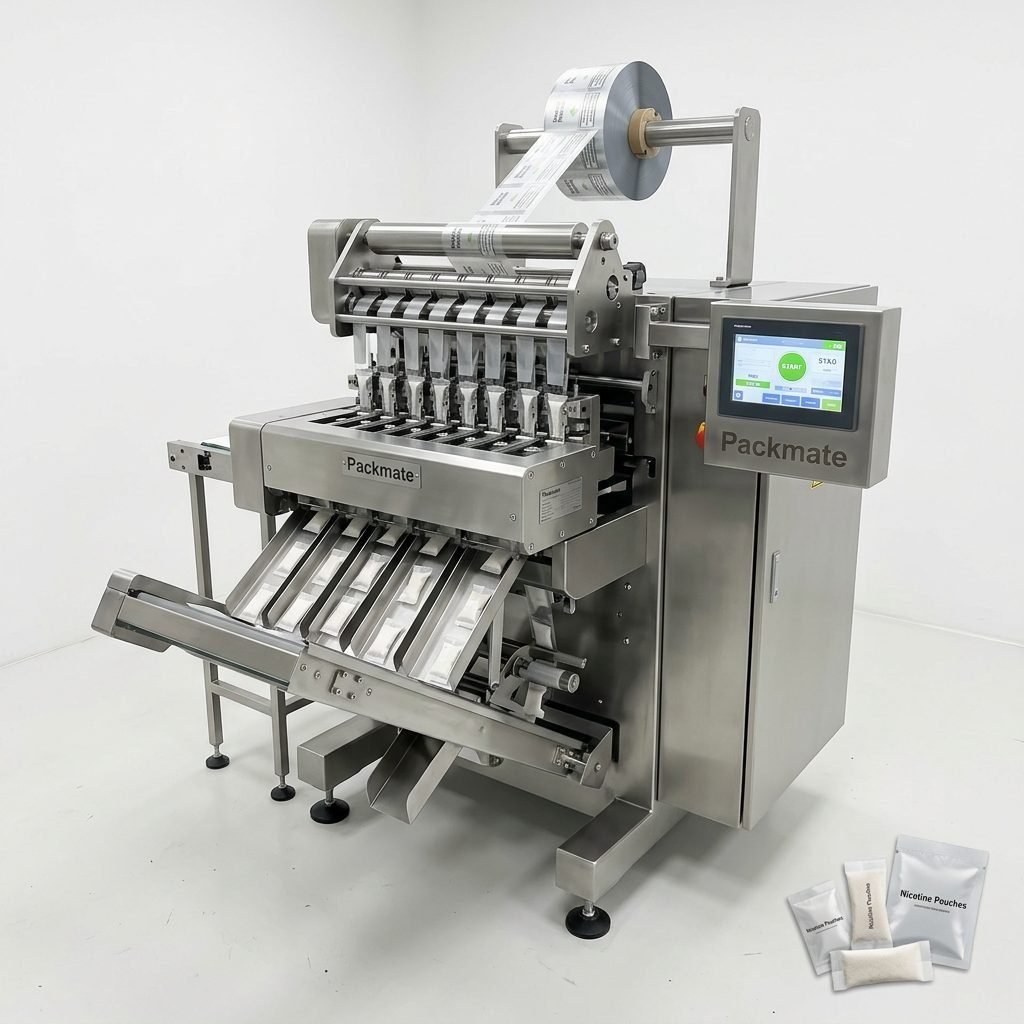
• Multi-lane systems that increase throughput by running several lanes simultaneously, often used for small-dose nicotine pouches.
• Robotic pick-and-place modules for product loading and cartoning, reducing manual handling and contamination risk.
• Remote diagnostics, predictive maintenance, and IIoT connectivity to minimize downtime and optimize performance.
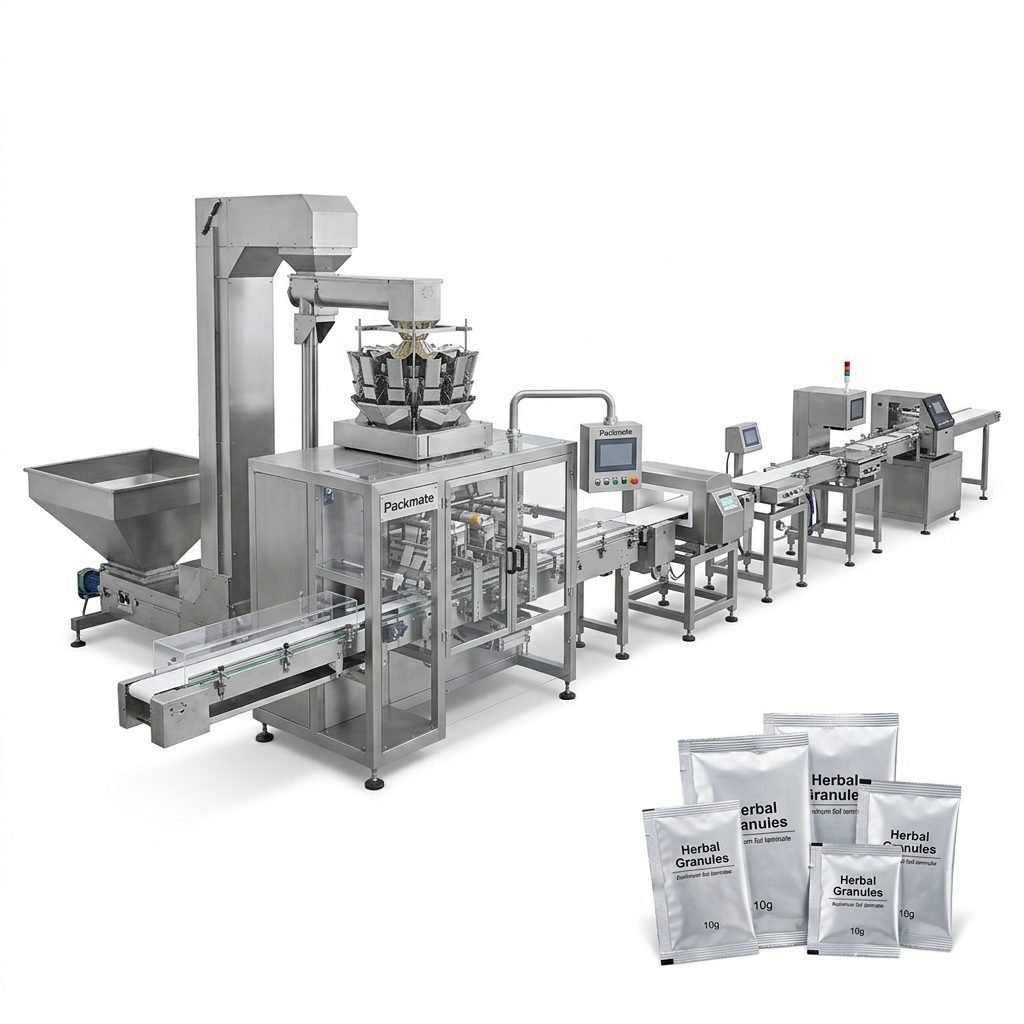
Suppliers who provide turnkey solutions that combine dosing, forming, sealing, and secondary packaging are better positioned to serve new entrants and established brands alike. See examples of full-line offerings for inspiration on system layouts and integration: Filling & Packaging Lines.
Case in point
Companies with advanced CNC machining and precision assembly facilities can deliver high-performance multi-lane machines that meet the stringent speed and tolerance requirements of modern snus lines. Manufacturers with experience across stick pack, sachet, and pouch formats often provide the shortest path from pilot runs to full-scale production.
🏭 Quality, Compliance and Certification
Regulatory compliance and product safety are non-negotiable. Packaging must support accurate labeling, child-resistant features where required, and tamper evidence. Machinery suppliers often provide documentation and machine features that help customers meet CE and ISO standards, enhancing product traceability and audit readiness.
Manufacturing credentials matter. Prioritize partners with:
• ISO-compliant production facilities
• CE-certified machinery
• Documented validation and FAT/SAT capability
🔧 Customization, Turnkey Solutions and After-Sales
Many customers require tailored lines to handle unique pouch shapes, dosing requirements, or labeling needs. Suppliers who offer turnkey services — from process design and factory layout to commissioning and operator training — reduce time to market. After-sales support including spare parts, remote service, and on-site maintenance contracts are crucial for sustained uptime.
For those evaluating suppliers, review case histories and service commitments. See real-world installations and references to understand performance expectations: Case.
📈 Growth Opportunities by Region and Channel
Growth hotspots for snus packaging vary by region. Northern Europe remains a mature market with high demand for premium packaging. North America and parts of Asia are growing rapidly as alternative nicotine products gain regulatory clarity and consumer adoption. E-commerce channels add new packaging considerations — tamper-proof outer packaging, clear labeling, and logistics-optimized pack sizes.
Manufacturers who can scale from pilot to multi-shift production and who supply flexible equipment for different markets have a competitive edge. Learn more about integrated packaging options and models for global distribution from manufacturers with a strong OEM background: Snus & Nicotine Packaging Machines.
🧭 Procurement and ROI Considerations
When evaluating equipment investments, buyers should consider:
• Throughput and uptime projections
• Ease of changeover and tool-less adjustments for format changes
• Spare parts availability and lead times
• Training and remote support options to minimize ramp-up time
A thorough total cost of ownership (TCO) analysis should include labor savings from automation, material cost differentials, utility consumption, and expected service costs. Projects that include factory acceptance testing and on-site commissioning typically achieve target yields faster and with fewer production quality incidents.
🛠 Maintenance Best Practices for High-Performance Lines
Consistent preventive maintenance and trained operators are the primary drivers of long-term reliability. Best practice elements include regular calibration of dosing systems, scheduled replacement of high-wear parts, and establishing a spare-parts inventory for critical components. Many suppliers offer tailored service contracts to protect investments and reduce unplanned downtime.
If you are looking for comprehensive equipment support and lifecycle services, consider suppliers with dedicated service teams and clear escalation paths: Service.
📌 Why Partner with an Experienced OEM?
Partnering with a manufacturer that combines decades of equipment engineering with multi-format experience can accelerate product launches and reduce technical risk. A reliable OEM will offer:
• Proven multi-lane systems for small-dose pouch production
• Complete turnkey solutions from filling to secondary packaging
• Documentation and support to meet international standards
For an OEM profile with deep experience in snus packing machines, manufacturing capabilities, and global turnkey delivery, explore company backgrounds and capabilities here: About Packmate.
🔎 Final Thoughts
The snus packaging market sits at the intersection of design innovation, materials science, and high-precision machinery. Businesses that integrate flexible, automated equipment with sustainable material strategies and robust quality systems will be best positioned to capture market share. Investing in modular, multi-format lines and strong after-sales partnerships can turn complex product portfolios into scalable production realities.
FAQs
Q1: What machine types are most suitable for nicotine pouch production? — High-speed stick pack and sachet machines, combined with multi-lane pouch formers and automated dosing systems, are the most common. For product selection and models, review dedicated lines such as Snus & Nicotine Packaging Machines.
Q2: How important is material compatibility for sealing and barrier performance? — Extremely important. Different film structures require tailored sealing temperatures, dwell times, and pressure settings. Machines with precise temperature control and sensor feedback can maintain consistent seals across material changes.
Q3: What are the key considerations when choosing a turnkey supplier? — Look for experience with multi-lane systems, strong after-sales support, available validation services, and a manufacturing footprint that supports spare parts and upgrades. Supplier case studies and factory capabilities help validate claims; see real installations and references at Case.
Q4: Can packaging lines be adapted for sustainable mono-material films? — Yes, but it often requires adjustments in sealing technology and sometimes minor hardware modifications. Early collaboration between material suppliers and machine OEMs improves first-run success.
Q5: How do I get technical support or request a catalog? — Contact manufacturers directly to request catalogs, technical datasheets, or demonstrations. For comprehensive product listings covering bag & pouch, sachet & stick pack, and weighing systems, visit the product pages and the catalog resources available from experienced suppliers.