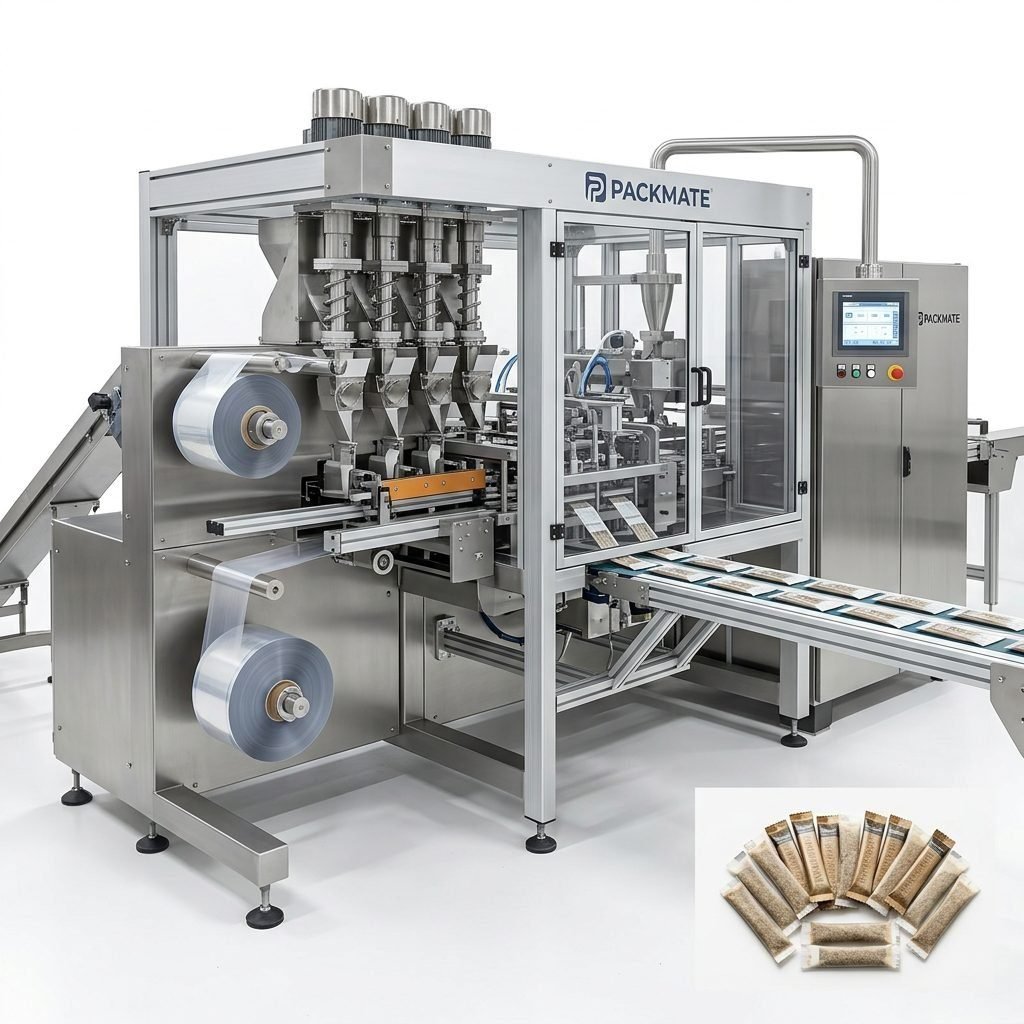
Designing a high-efficiency snus production line requires more than picking high-speed machines — it demands an integrated approach to layout, material flow, utilities, quality control, and maintenance access. This guide walks packaging engineers, plant managers, and procurement teams through practical layout principles and actionable design choices to maximize output, minimize downtime, and keep operational costs under control for snus and nicotine pouch production.
Understand the production requirements first
Before drawing any floor plan, clarify your target throughput (pouches/min and shifts/day), pouch formats (stick, sachet, multi-lane pouches), raw material properties (moisture, particle size, free-flowing or cohesive), and post-packaging processes (cartoning, case packing, palletizing). For reference on machine families, explore the core equipment categories like
Snus & Nicotine Packaging Machines and
Sachet & Stick Pack Machines.
- Target production capacity per hour/day/shift.
- Number of product SKUs and changeover frequency.
- Space for utilities (compressed air, vacuum, electrical panels, PLC cabinets).
- Material staging and buffer zones for upstream and downstream processes.
Flow-first layout: minimize handling and cross-traffic
The most efficient snus lines adopt a linear or gently curved process flow from raw materials to finished pallets. Arrange equipment so material and personnel flows do not cross. Typical primary stages include:
➤ Receiving & pre-processing: raw material hoppers, sifters, mixers if formulation or moisture control is required.
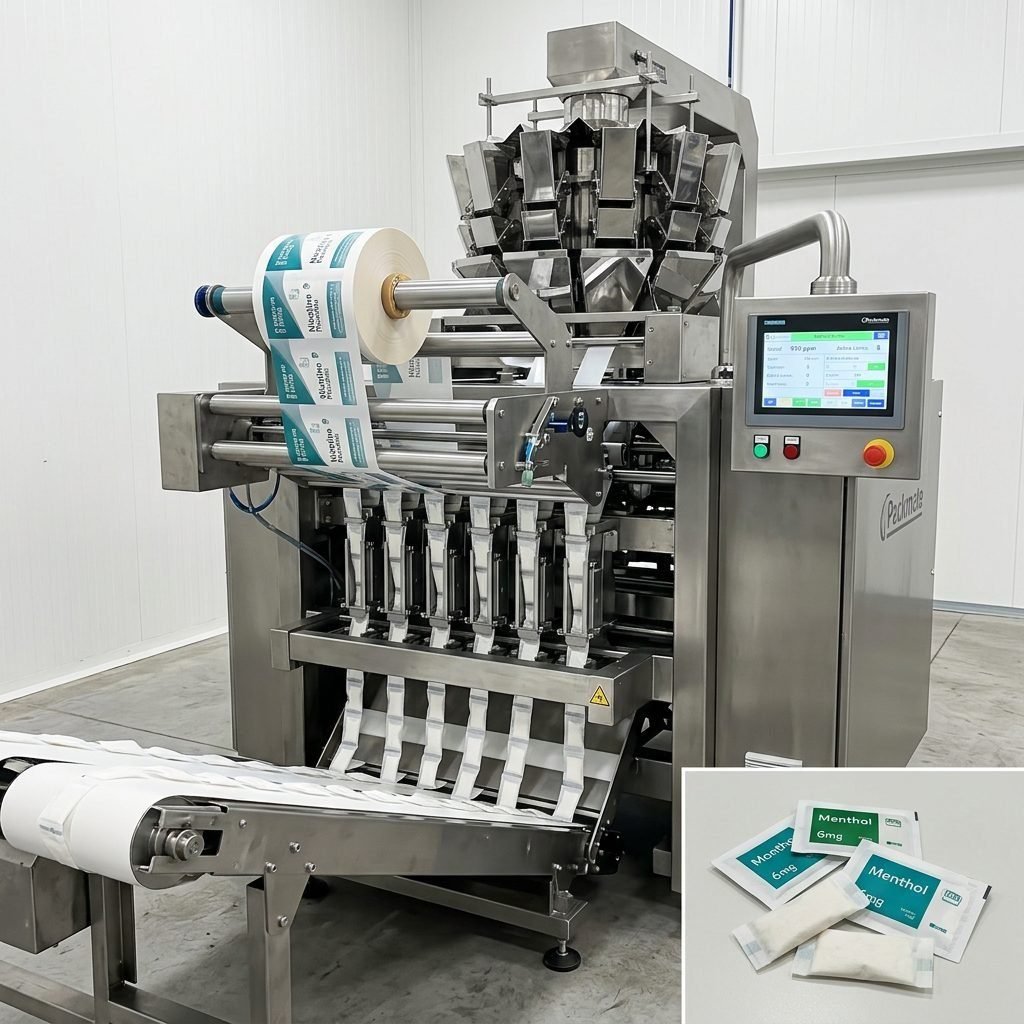
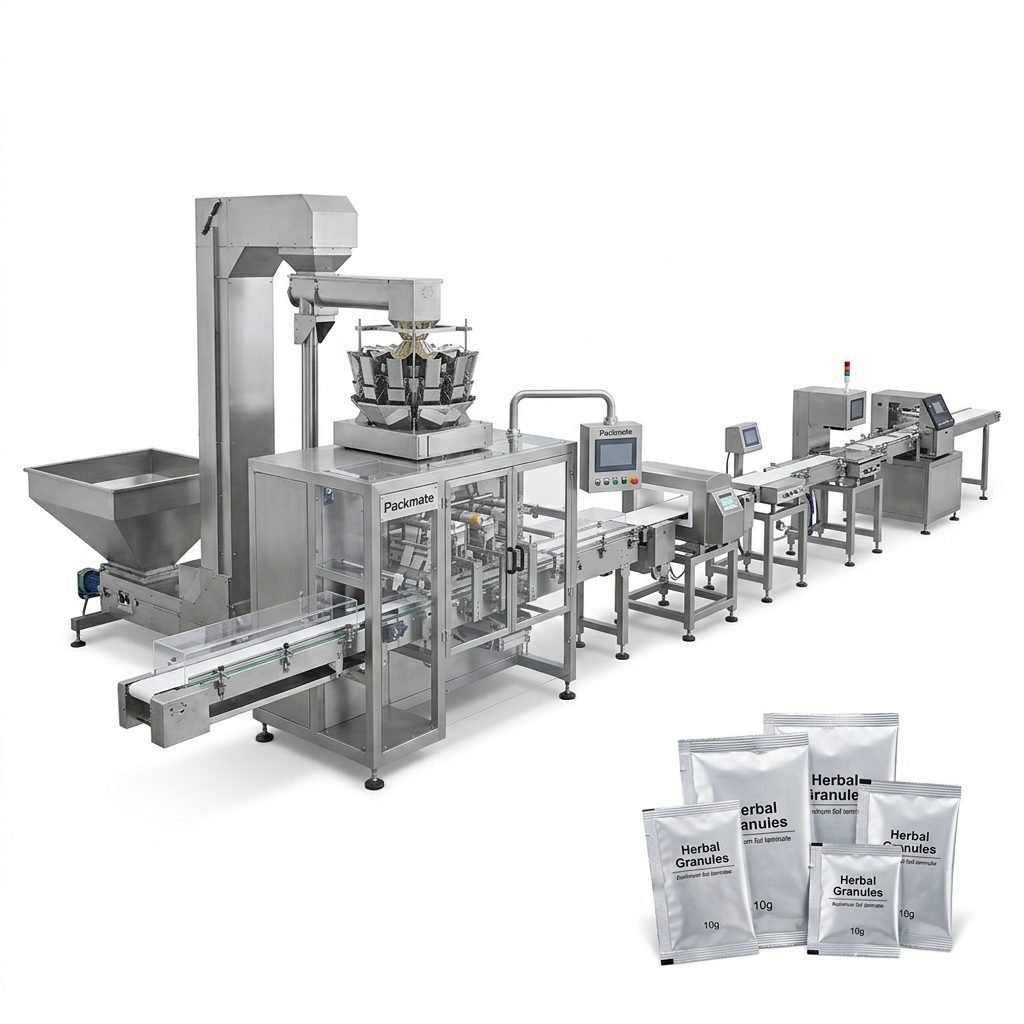
➤ Weighing & dosing: precision multi-head weighers or volumetric dispensers sized for low-dose nicotine pouches — see Weighing & Packaging Systems.
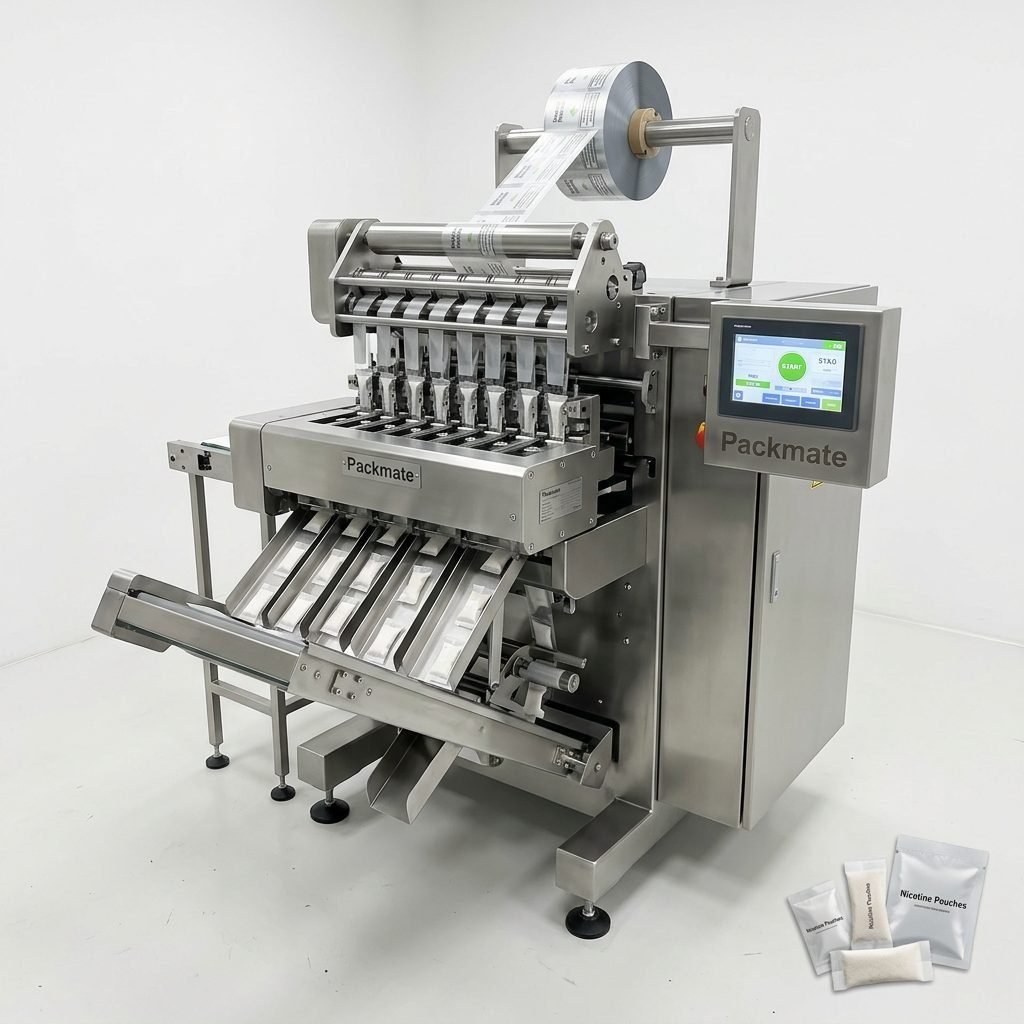
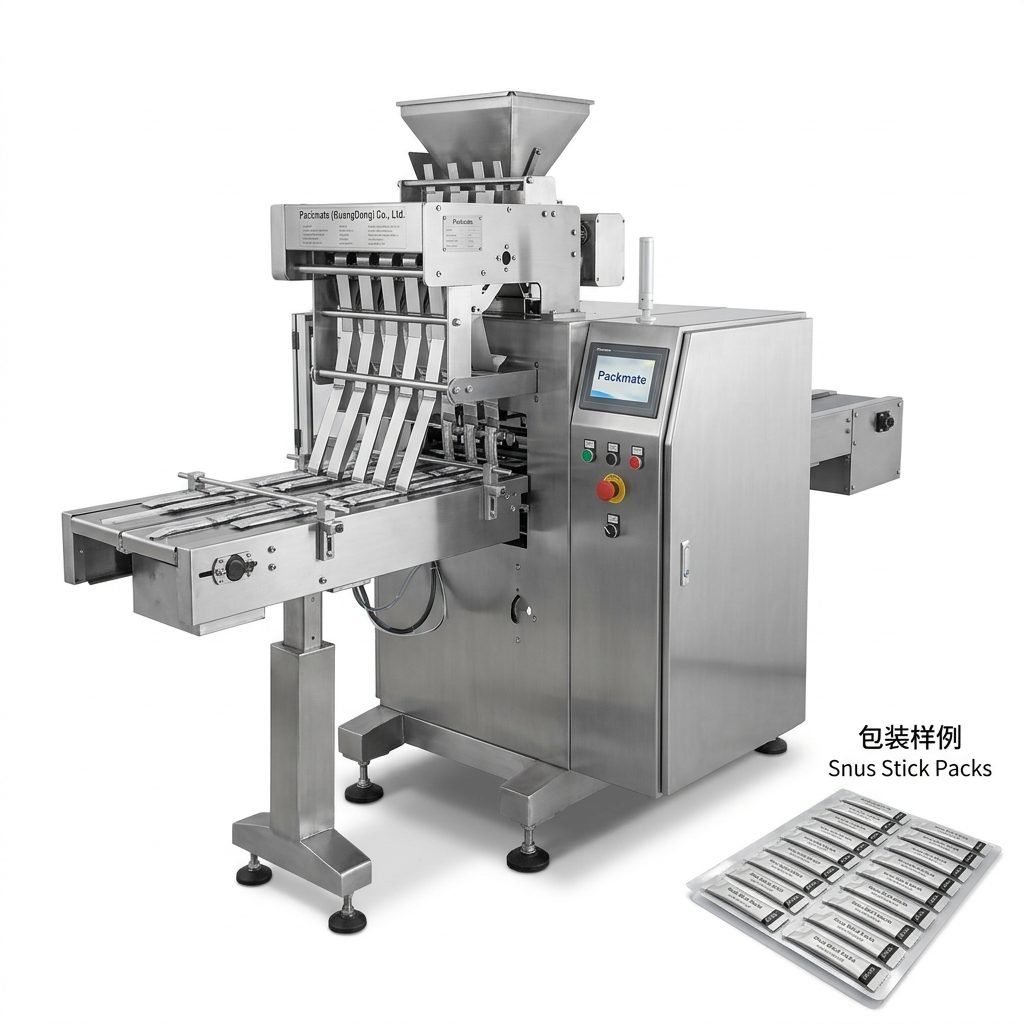
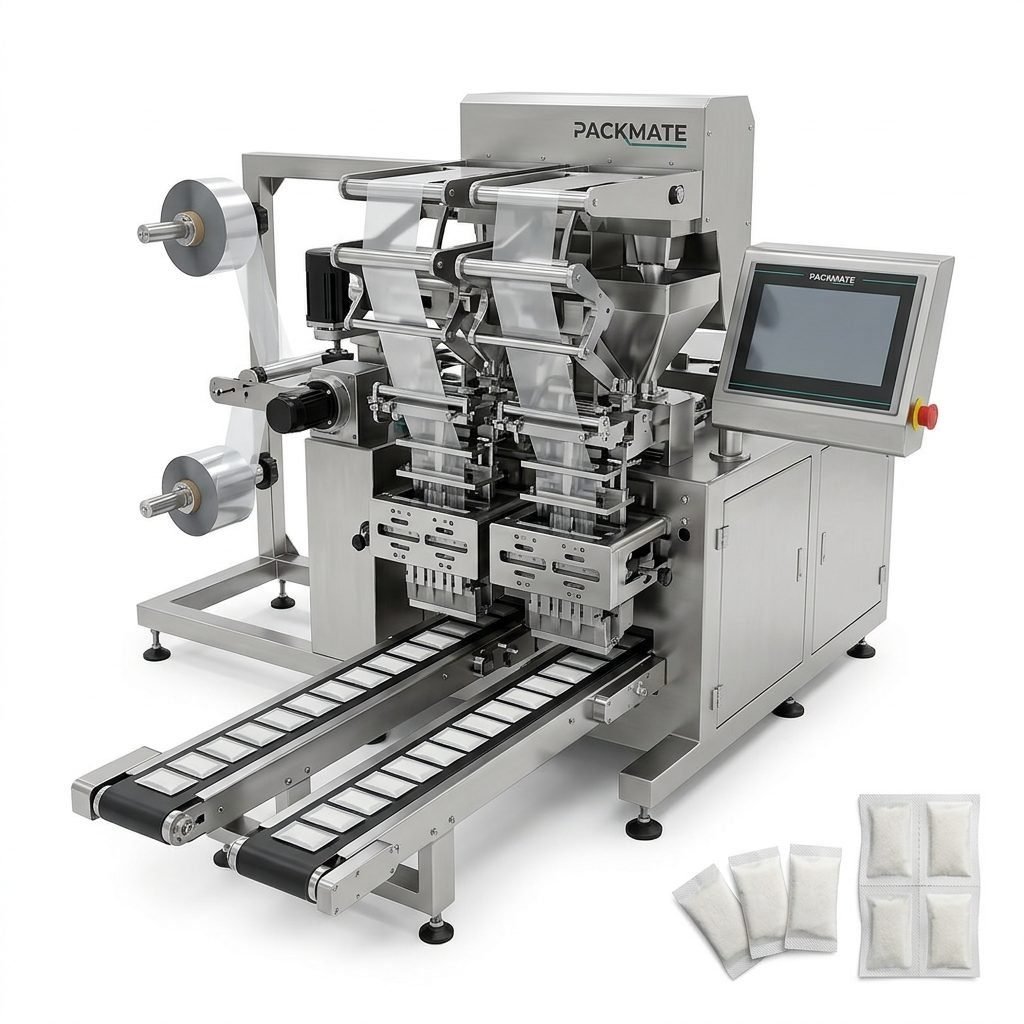
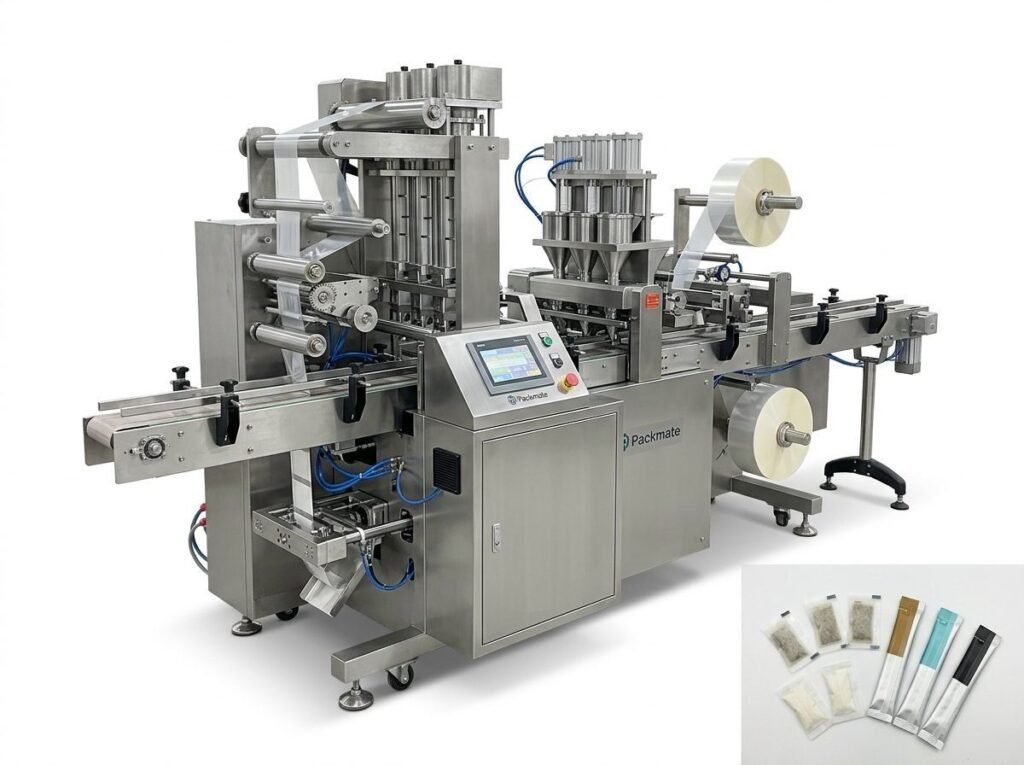
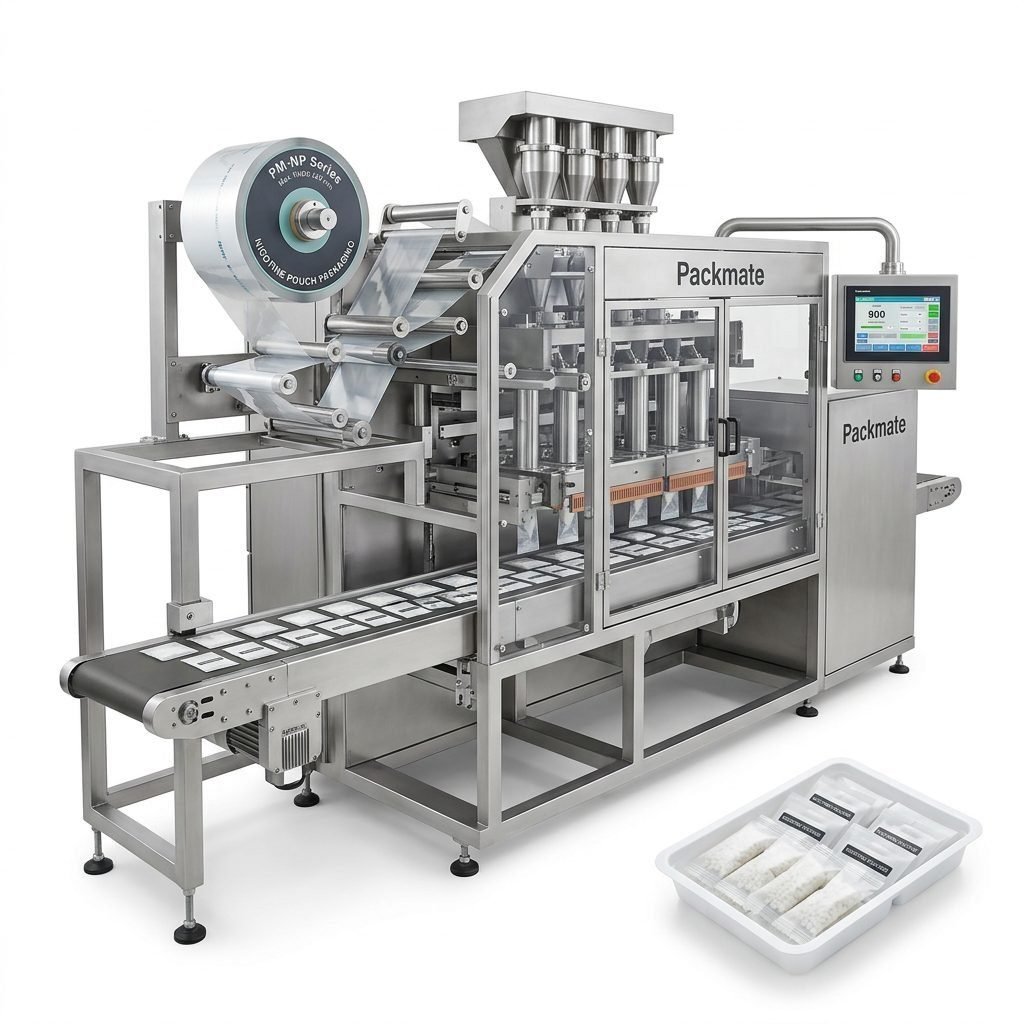
➤ Form, fill & seal: multi-lane sachet or stick machines for continuous high-throughput output.
➤ In-line inspection & metal detection: vision systems and QC stations to reject non-conforming pouches earlier in the line.
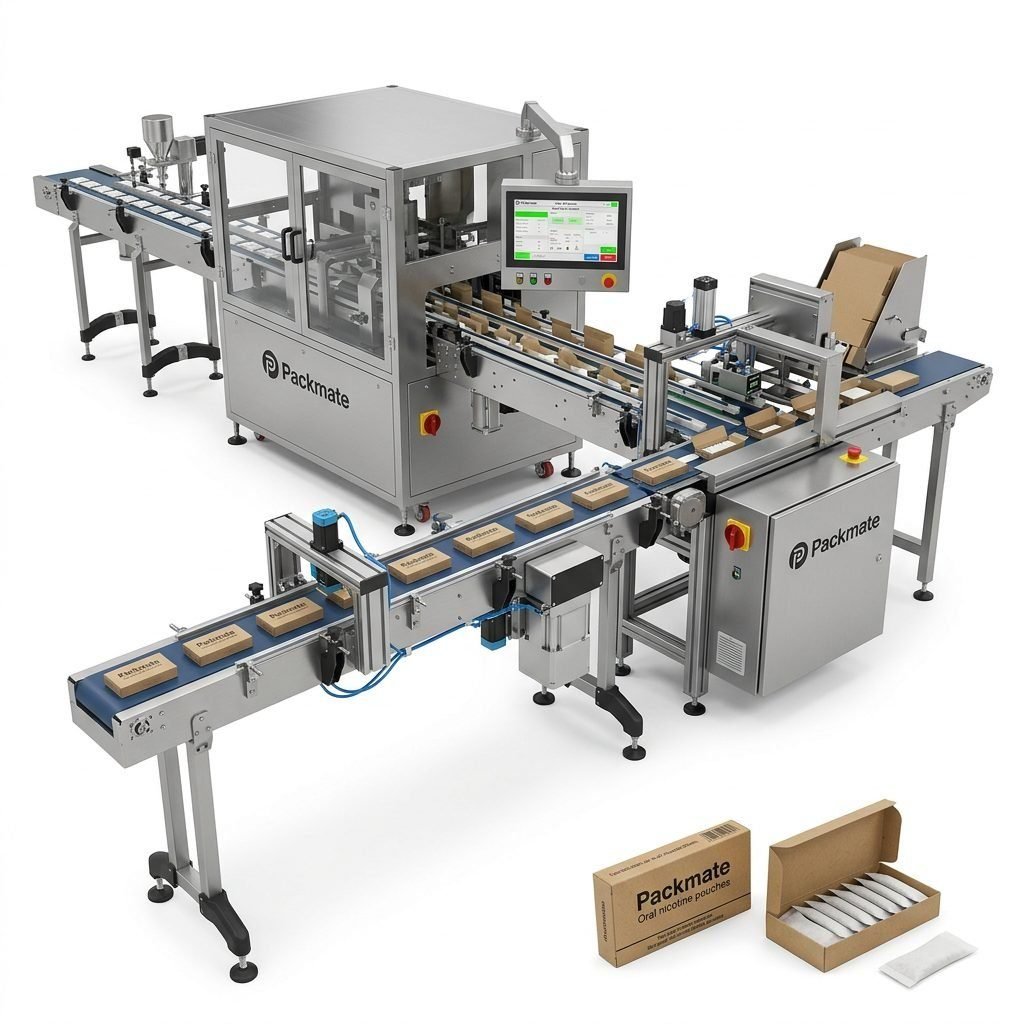
➤ Secondary packaging: collators, cartoners, case packers, and palletizers positioned to minimize conveyor lengths and hand-offs; consider modular conveyors for flexibility.
Multi-lane approach for small-dose production
Multi-lane heads multiply the output of a single machine footprint, making them ideal for nicotine pouch and snus manufacturing where pouch size is small but demand is high. Space your lanes to allow routine access for cleaning and lane-specific maintenance without stopping the entire system.
Design lanes and hopper feeds so they can be isolated individually. That allows minor repairs or clearing without full-line stoppage, improving overall equipment effectiveness (OEE).
Space planning and utilities
Accurate utility placement prevents costly retrofits. Confirm compressed air consumption, vacuum needs, electrical phases, PLC network cabling, and drainage points during layout design. Reserve overhead space for cable trays and conveyors if you plan to add modules in the future.
Utilities checklist:
- Compressed air (filter/regulator/dryer) sized with surge capacity.
- Stable 3-phase power with surge protection and UPS for PLC/HMI.
- Vacuum systems for pick-and-place or product handling where needed.
- Local drainage and spill containment for washdowns and lubricant control.
Quality control and traceability integration
Put inspection points where defects are most likely: after filling, after sealing, and before cartoning. Integrate vision systems, weight checks, and metal detectors inline, and link them to your MES/SCADA for immediate lot traceability. Packmate systems can be integrated with common automation platforms to push quality data in real time.
Assign barcode/QR printing at the final packaging stage and ensure pack ID is linked to batch, operator, and line parameters. This reduces recall scope and speeds investigations.
Accessibility, cleaning, and safety
For snus lines, hygiene and dust control are critical. Plan aisles wide enough for maintenance lifts and safe egress, and arrange equipment to allow full access to bearings, motors, and drive systems without dismantling adjacent modules. Use local extraction at dust-generating stations to protect product and equipment.
Cleaning-in-place and changeover
If your product requires frequent SKU changeovers, prioritize quick-release conveyors, modular hoppers, and tool-free access panels. Consider CIP-compatible surfaces for mixers and conveyors that contact the product.
✔️ Safety & cleaning checklist:
- Emergency stops accessible from both sides of conveyors.
- Lockout/tagout zones for electrical and pneumatic isolation.
- Designated washdown zones with appropriate IP-rated drives.
- Dust extraction and HEPA filtration for product handling areas.
Modularity and future-proofing
Market demand for snus and nicotine pouches evolves quickly. Choose modular machines and conveyors that let you add lanes, integrate a new cartoner, or upgrade inspection systems without a full re-layout. Keep a growth corridor in your plant design for future machines and palletizing systems.
For complementary equipment and line modules, review options such as
Auxiliary Packaging Equipment and
Filling & Packaging Lines to ensure smooth integration.
Layout examples and zoning
Consider zoning your floor into discrete areas:
Zone A — Raw material & pre-mix: Bulk receiving, storage silos, mixers.
Zone B — Primary packaging: Weighing, multi-lane form-fill-seal machines and in-line inspection.
Zone C — Secondary packaging: Collators, cartoners, case packers.
Zone D — Finished goods & shipping: Palletizing, stretch-wrapping and staging.
Case study highlights and manufacturing strength
Manufacturers like Packmate combine decades of packaging engineering with modular multi-lane platforms built in modern facilities. Their 20,000㎡ plant and advanced CNC capability allow customization for specific snus requirements — from lane geometry to servo control tuning for low-dose accuracy. See real implementations in the Case section to learn how compact layouts translated to higher throughput and reduced footprint.
When to consult OEM design engineers
Engage equipment suppliers early if you need: custom multi-lane configurations, integrated vision/metal detection, PLC/MES connectivity, or bespoke feeding systems for challenging powders and blends. Early OEM involvement prevents layout conflicts and shortens commissioning time.
🔧 Why early OEM input matters:
- Confirm real machine dimensions and service clearances.
- Define utilities and PLC I/O early to avoid rework.
- Plan for spare parts and serviceability in the budget.
Commissioning, training and OEE ramp-up
A well-designed layout still needs thorough commissioning and operator training to realize maximum output. Schedule phased ramp-up with clear KPIs: availability, performance (speed vs ideal), and quality (first-pass yield). Packmate and similar suppliers typically offer on-site commissioning, remote support, and training packages — see Service offerings.
- Documented acceptance tests (SAT) tied to throughput and quality targets.
- Operator and maintenance training with hands-on sessions and reference materials.
- Spare parts kit for critical wear items to reduce MTTR.
- Remote diagnostics enabled for fast vendor support.
Practical checklist before finalizing layout
- Verify net machine footprint + service clearance for each unit.
- Confirm conveyor elevations and transfer points for smooth product handoff.
- Reserve space for inspection rejects and rework lanes.
- Plan for future lane expansion and additional automation modules.
- Document utility stub locations and capacity with margin for growth.
Useful resources and further reading
For machine selection and module options, explore product families like
Bag & Pouch Packaging Machines and
Filling & Packaging Lines. For certifications and compliance, check supplier documentation in the Certificate section.
Final remarks: balance speed, quality and flexibility
The best snus line layout is the one that meets your current output needs while protecting flexibility for future SKUs and capacity increases. Prioritize linear, modular flows; early OEM collaboration; accessible utilities; and robust inline inspection to keep yield high. With careful planning and the right multi-lane equipment, you can achieve maximum output from a compact footprint.
Common Questions
Q1: How much floor space is needed for a small multi-lane snus line?
A1: Space varies with lane count and secondary equipment. A compact multi-lane packaging cell with in-line inspection and a small cartoner can fit in a 6–10m long bay, but always add service clearances and staging. Engage suppliers for precise footprints.
Q2: Can existing utilities support high-speed multi-lane lines?
A2: Often upgrades are required — especially for compressed air and electrical capacity. Conduct an early utility audit to avoid installation delays and ensure adequate surge capacity for drives and heaters.
Q3: Is multi-lane packaging suitable for low-volume SKUs?
A3: Multi-lane systems excel when you need high aggregate throughput. For very low volumes or frequent small-batch changeovers, modular single-lane solutions may be more economical. Hybrid strategies (modular lanes with temporary isolation) provide flexibility.
Q4: What is the best way to reduce downtime during maintenance?
A4: Design for isolation of lanes, keep critical spares on-site, implement predictive maintenance from vibration/temperature data, and train staff for rapid mechanical and electrical interventions.
Q5: Who can help integrate the full line?
A5: Work with experienced turnkey suppliers who offer end-to-end solutions — from weighing systems to final palletizing. For more details on supplier capabilities and turnkey projects, visit About Packmate and the Contact Us page to discuss your specific requirements.