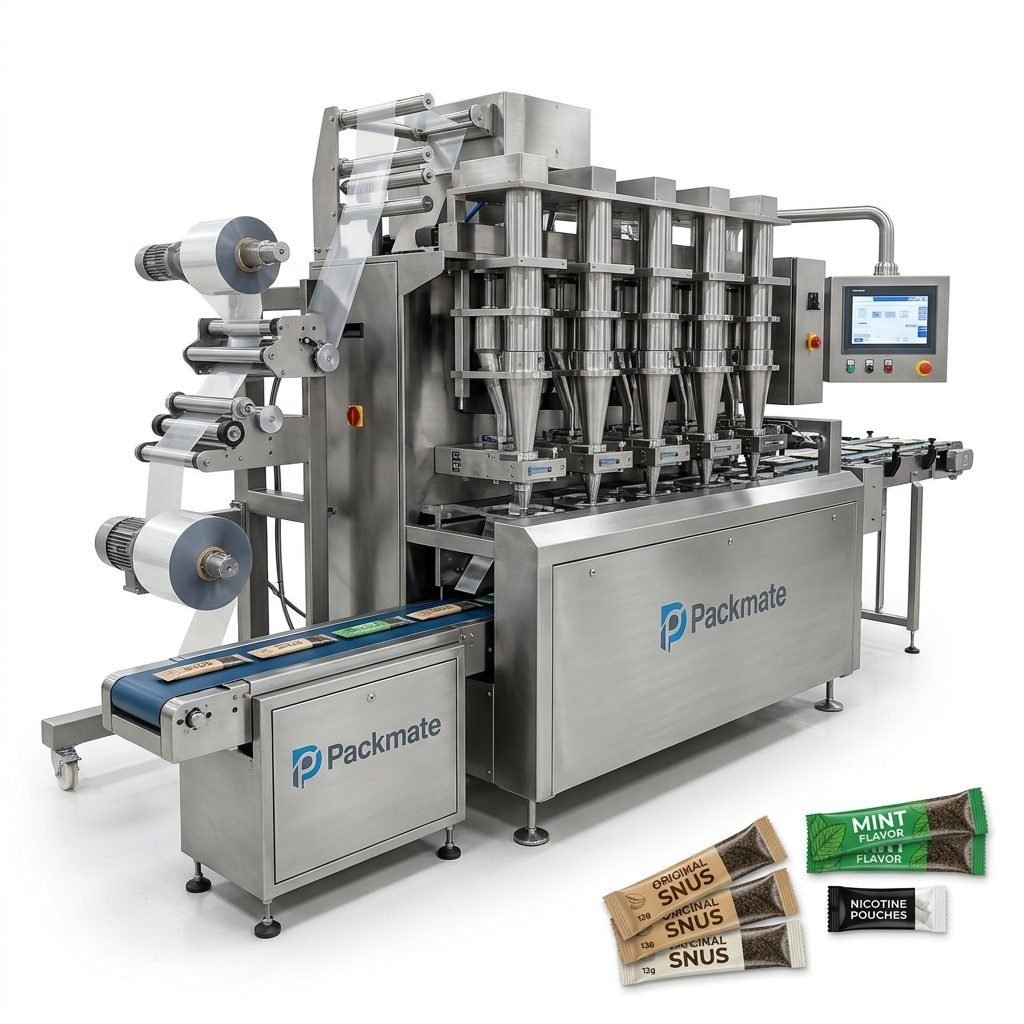
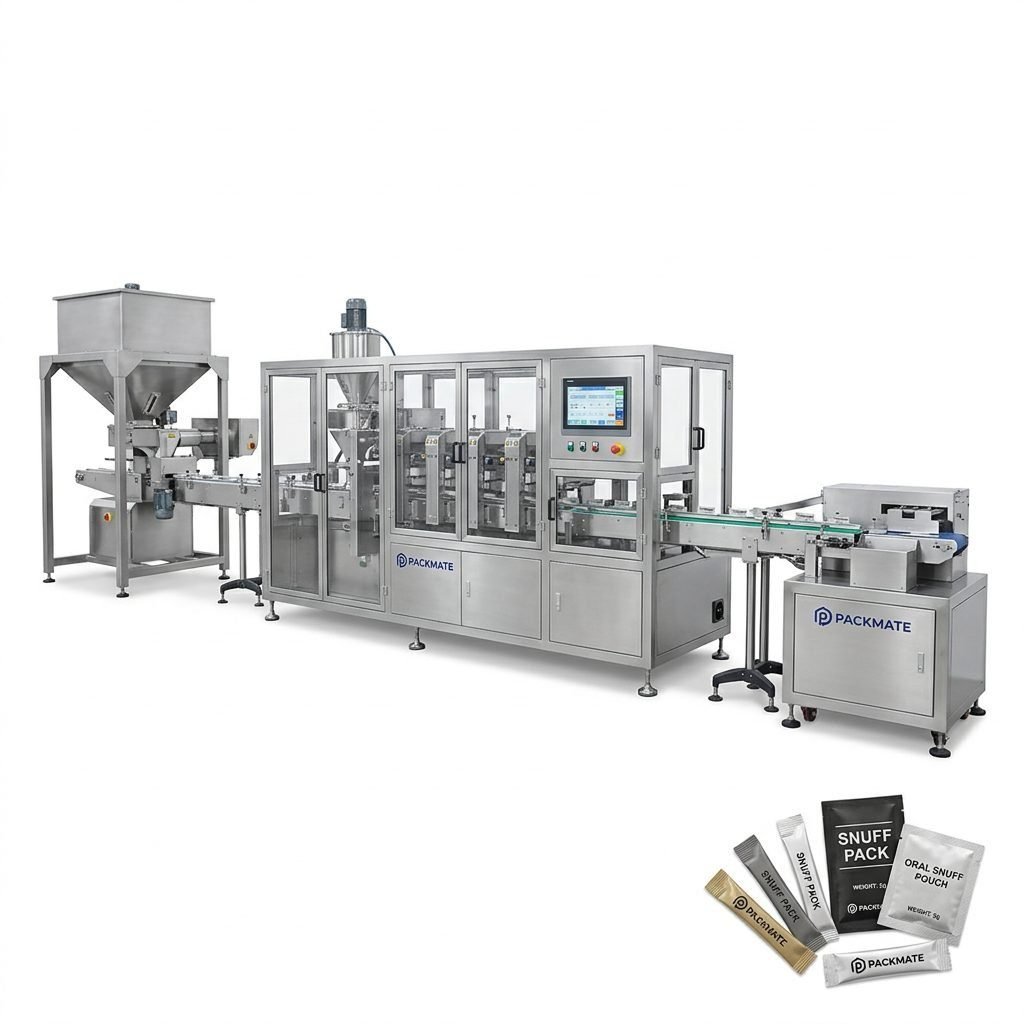
In Ethiopia’s growing nicotine pouch market, selecting the right packaging machine is a critical step that determines product quality, production efficiency, and long-term profitability. Choosing a machine that matches your production volume, pouch format, local environment and regulatory landscape will save time and money while ensuring consistent delivery to retailers across Addis Ababa, regional markets and export customers.
Why the Right Nicotine Packaging Machine Matters
✅ Consistency: Packaging machines ensure uniform pouch weight, seal integrity and appearance — vital for consumer trust. In Ethiopia, where repeat purchase is built on visual trust and product reliability, consistency matters.
✅ Compliance: Machines with controlled dosing and sealed packaging support regulatory compliance and shelf-life requirements. This is especially important if you plan to distribute to major retail chains in Ethiopian cities or export.
Understand the Local Market & Consumer Habits
Ethiopia is diverse: urban buyers in Addis Ababa and Mekelle often prefer convenience and discreet formats, while buyers in smaller towns may choose smaller pack sizes and lower price points. Local customs value face-to-face business relationships and after-sales support. Consider offering mixed pack sizes (single-portion sachets, small multi-packs) to match retail kiosk preferences and neighborhood shops.
Common Nicotine Pouch Formats to Consider
🔧 Pillow sachets / sachet formats: Popular for single-use portions. Require sachet or stick pack machines for fast, low-cost units.
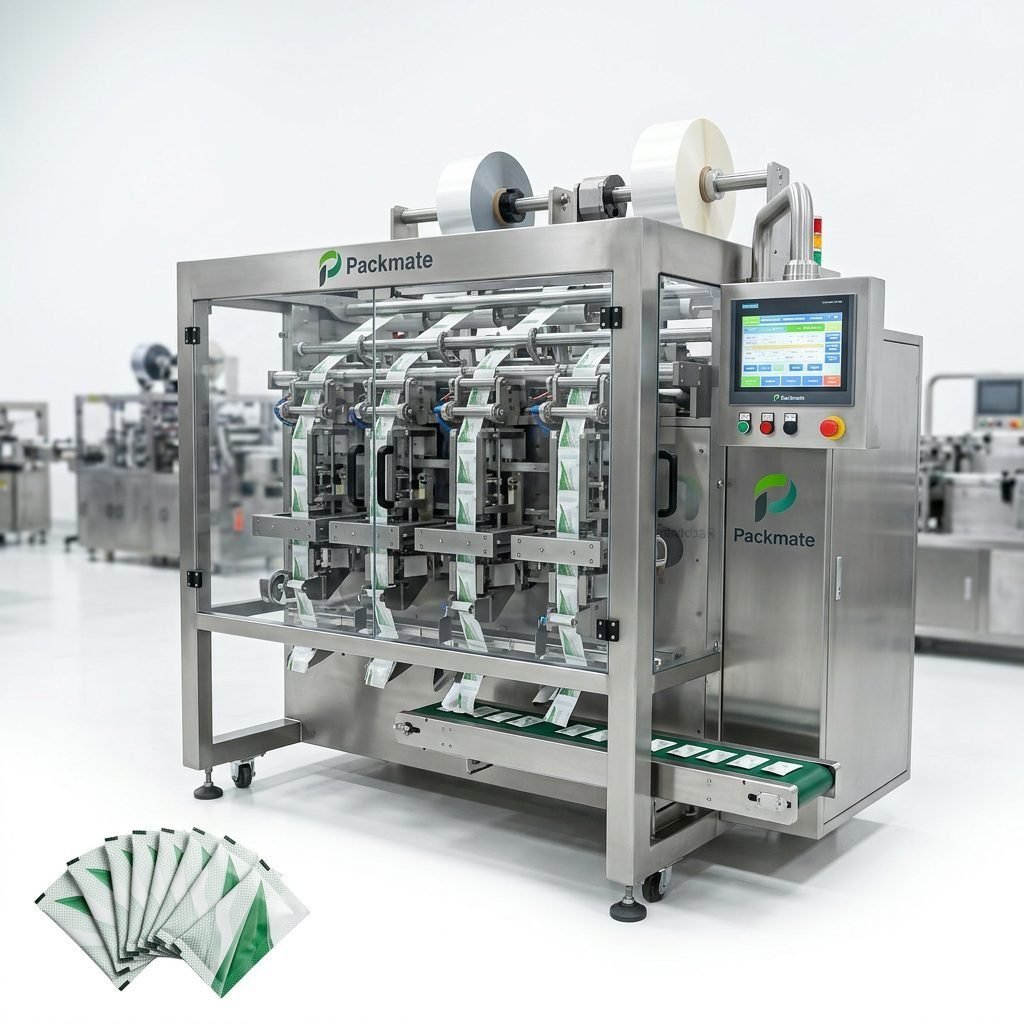
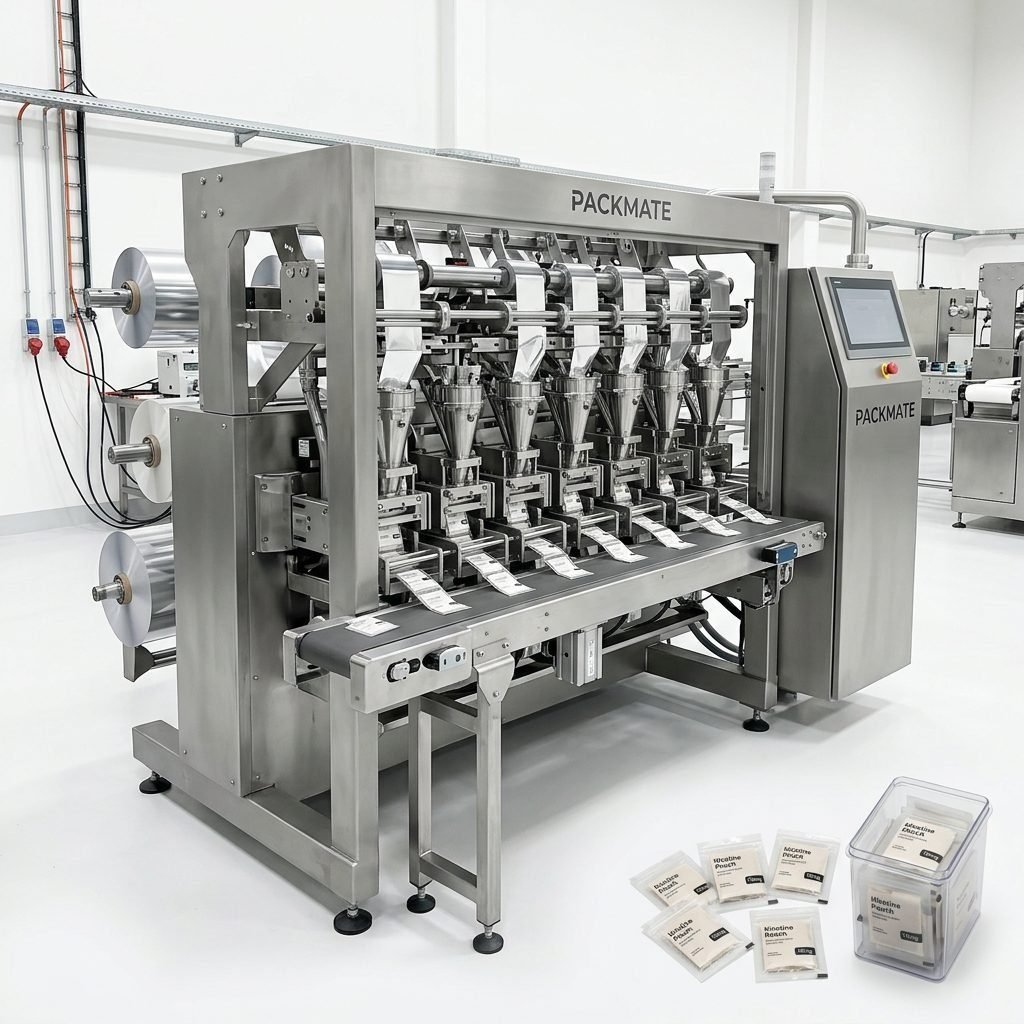
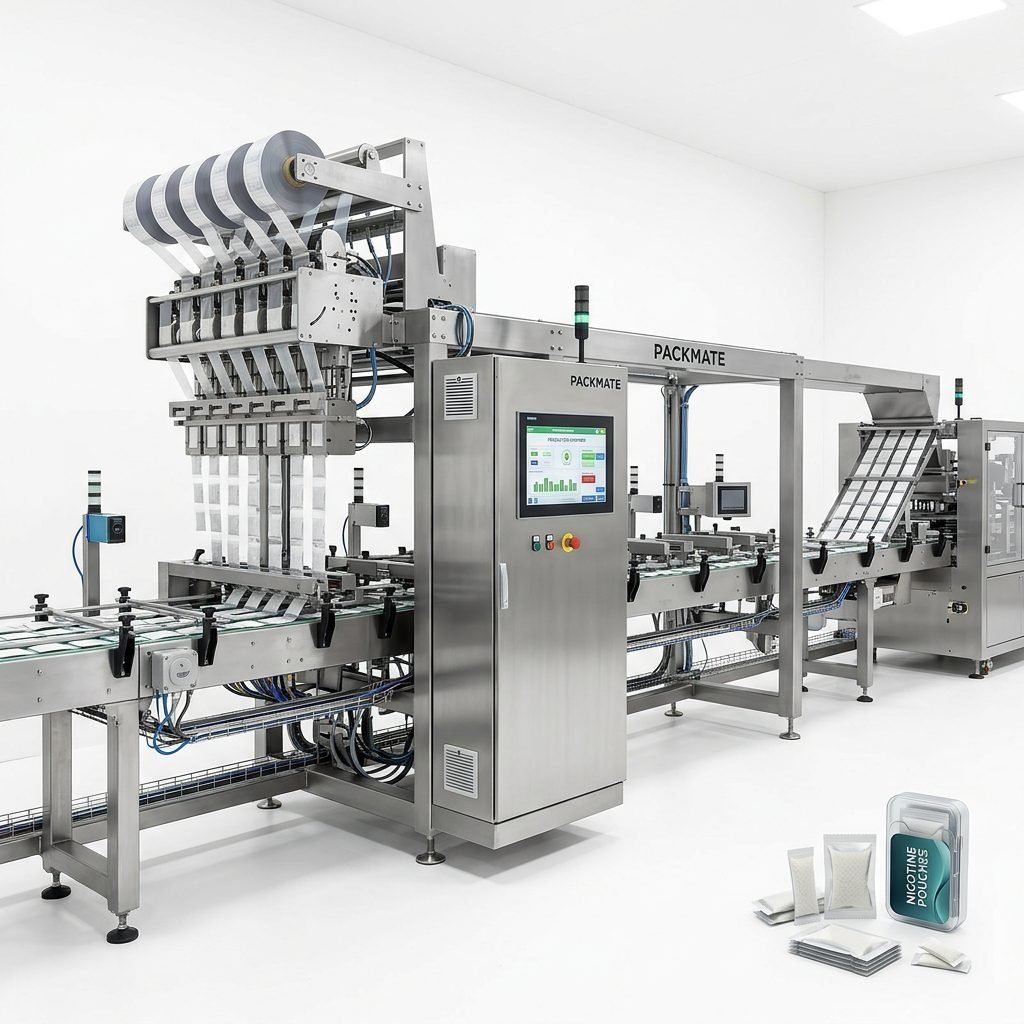
🔧 Multi-lane pouch lines: Ideal for small-dose nicotine pouches produced at high throughput. Multi-lane systems multiply output without requiring proportionally more floor space.
Key Machine Types and What They Offer
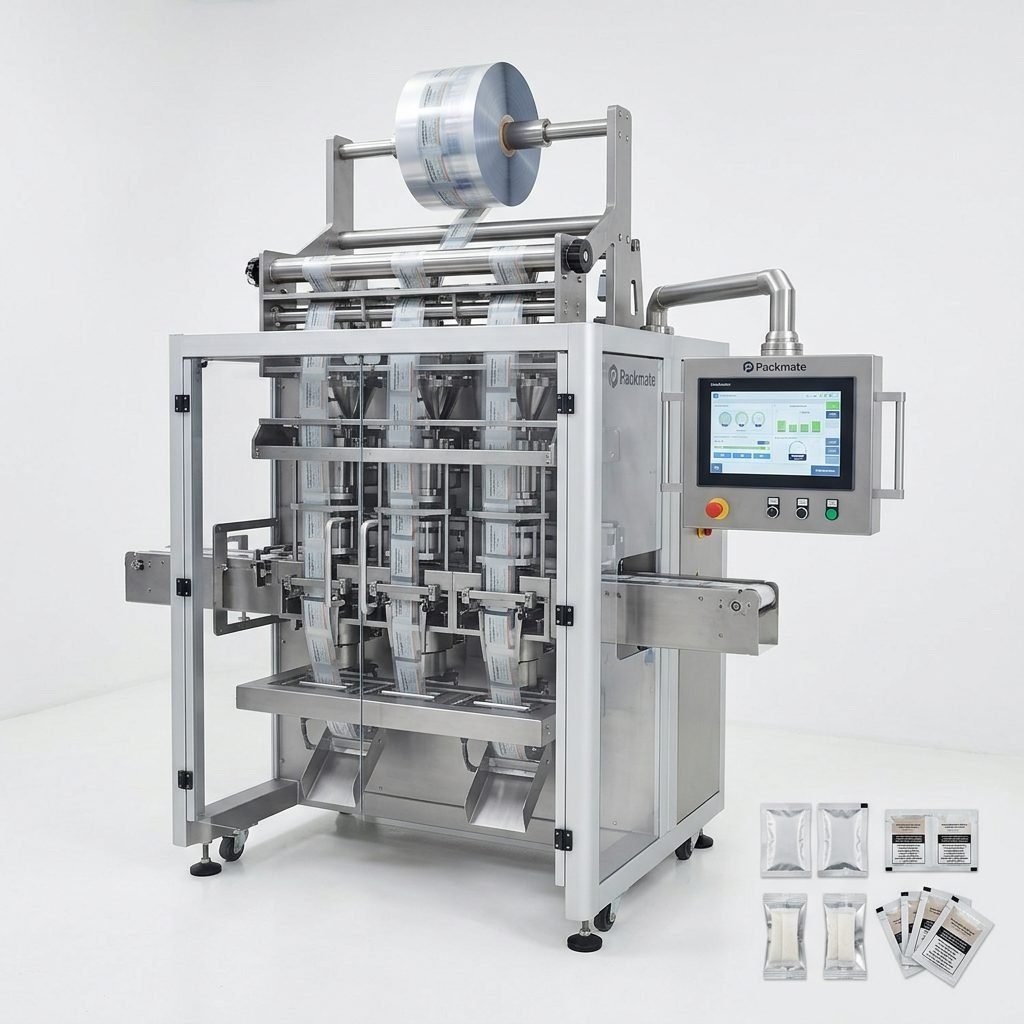
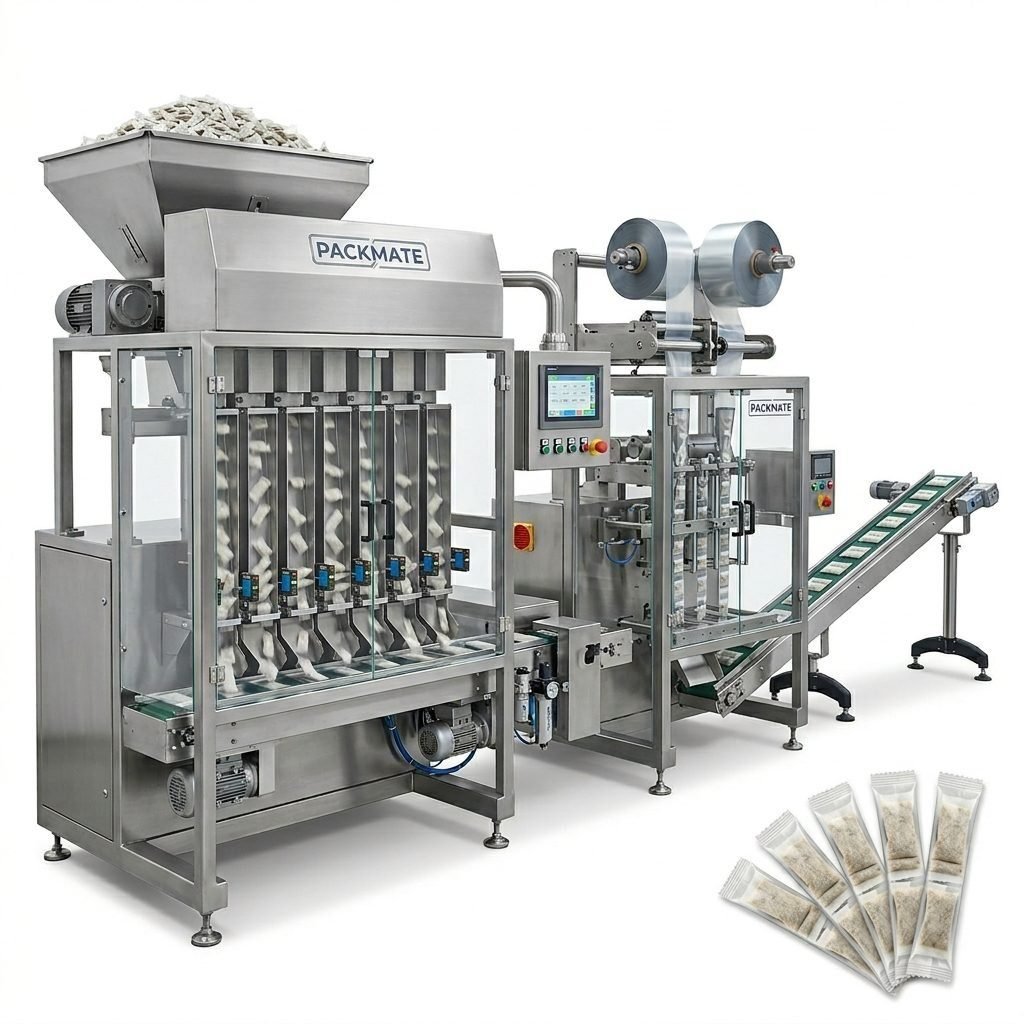
Stick pack machines: efficient for elongated pillow packs often used for single-dose nicotine or flavor sachets. Good for compact retail presentation.
Sachet packaging machines: Flexible for powder, granule, or paste nicotine blends. They can be adjusted for different pouch sizes and materials.
Multi-lane systems: Best for small-dose nicotine pouches where speed and uniformity are priorities. Multi-lane systems provide high throughput and reduced per-unit cost when producing large volumes.
⚠️ Tip: If you plan to scale quickly for distribution across Ethiopia and neighboring markets, prioritize a modular system that can be upgraded to more lanes or integrated with weighing and secondary packaging lines.
Calculate Your Required Production Capacity
Start with target daily sales and work backwards: desired units per day → units per hour → required machine speed. Account for downtime (maintenance, changeovers) and local labor practices. For instance, Ethiopian factories might align shifts with local labor norms; design capacity with realistic uptime of 75–85% rather than theoretical 100%.
Example: If you need 100,000 small pouches per week, a 4-lane multi-lane snus packaging machine running at moderate speed could be more cost-effective than multiple single-lane machines.
Material Compatibility & Pouch Materials
Different nicotine blends require different packaging films (foil-laminates for moisture barrier, paper-laminates for breathability). Make sure your chosen machine handles the film thickness and sealing temperature ranges of your material. Machines that allow precise temperature control and servo-driven film handling reduce waste and rejected packs.
Climate & Storage Considerations in Ethiopia
Ethiopia has varied climates — from the cooler highlands of Addis Ababa to warmer lowland areas. Humidity and temperature affect both production and storage. Consider machines with environmental controls or agree on warehouse temperature/humidity guidelines for finished products. Packaging with stronger moisture barriers is recommended for humid regions and export shipments.
🔎 Local Insight: Many Ethiopian retailers prefer small, sealed sachets that can be sold individually or in small multi-packs. Plan your output mix accordingly to reduce local repackaging and to maintain product hygiene.
Regulatory & Compliance Considerations
Packaging must meet national labeling and health warnings where required. Check Ethiopia’s current tobacco and nicotine regulations, customs rules if importing components, and export documentation if selling abroad. Machines that generate batch codes and traceability labels help with quality control and compliance.
Power, Installation & After-Sales Support
Ensure the machine’s electrical requirements match local supply (voltage, phase). Plan for UPS or stabilizers if the region has unstable grid supply. Also prioritize suppliers who offer local training, spare parts availability and responsive remote support. Ethiopian customers often value suppliers who provide on-site commissioning and operator training in person.
Integration with Pre- and Post-Production Equipment
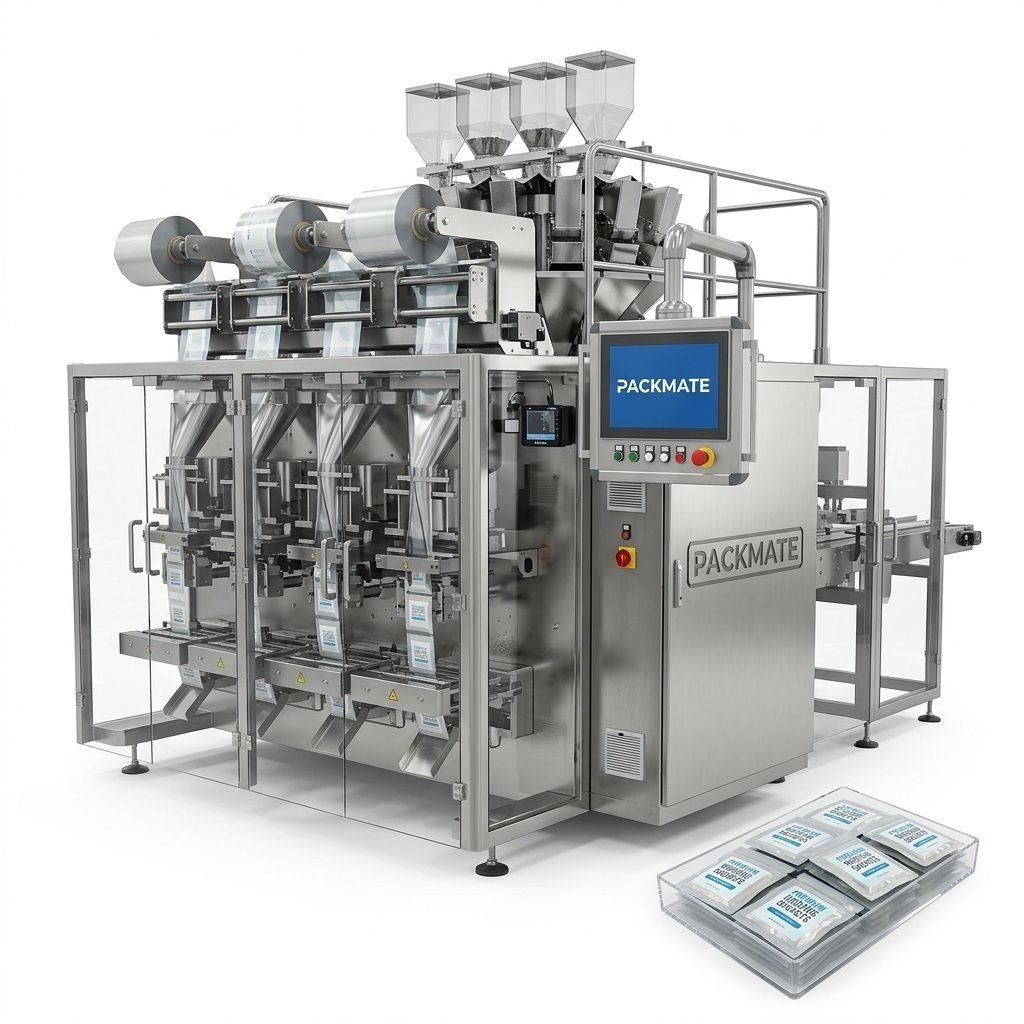
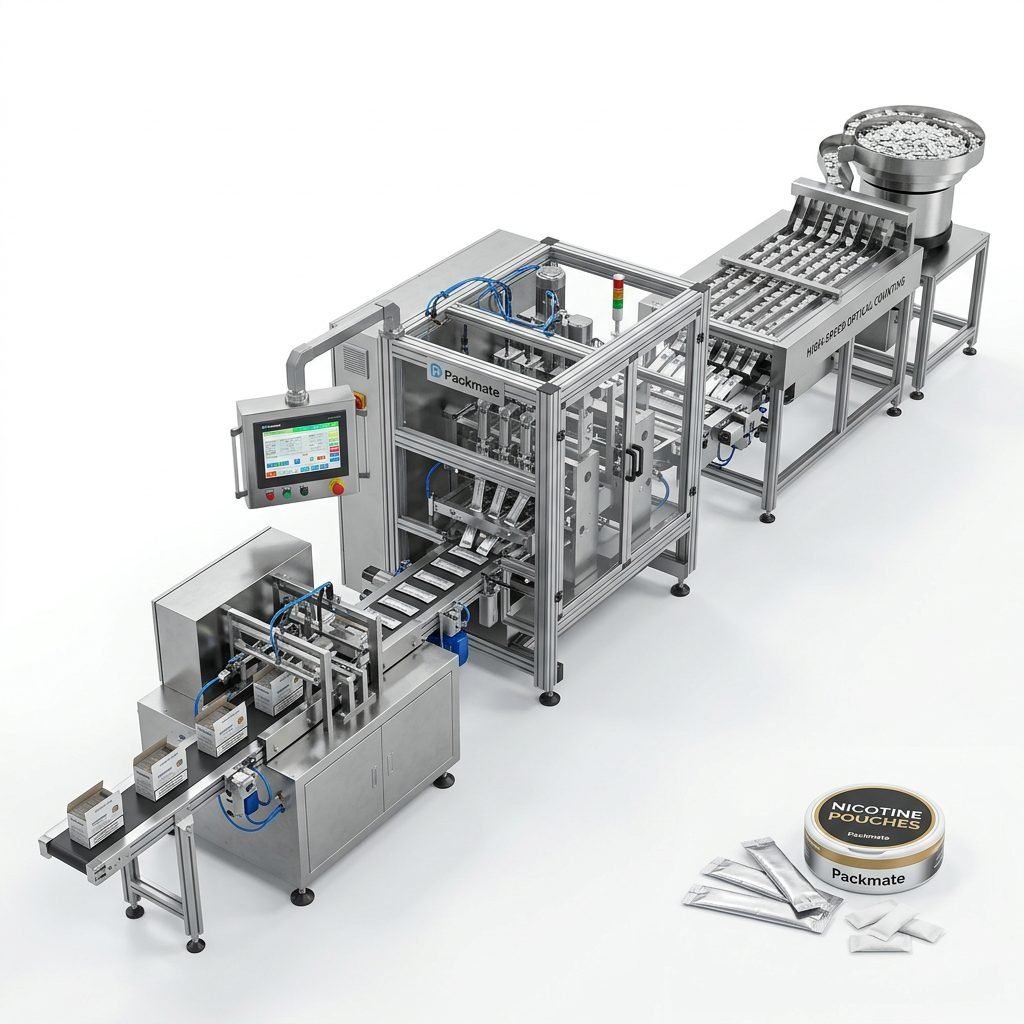
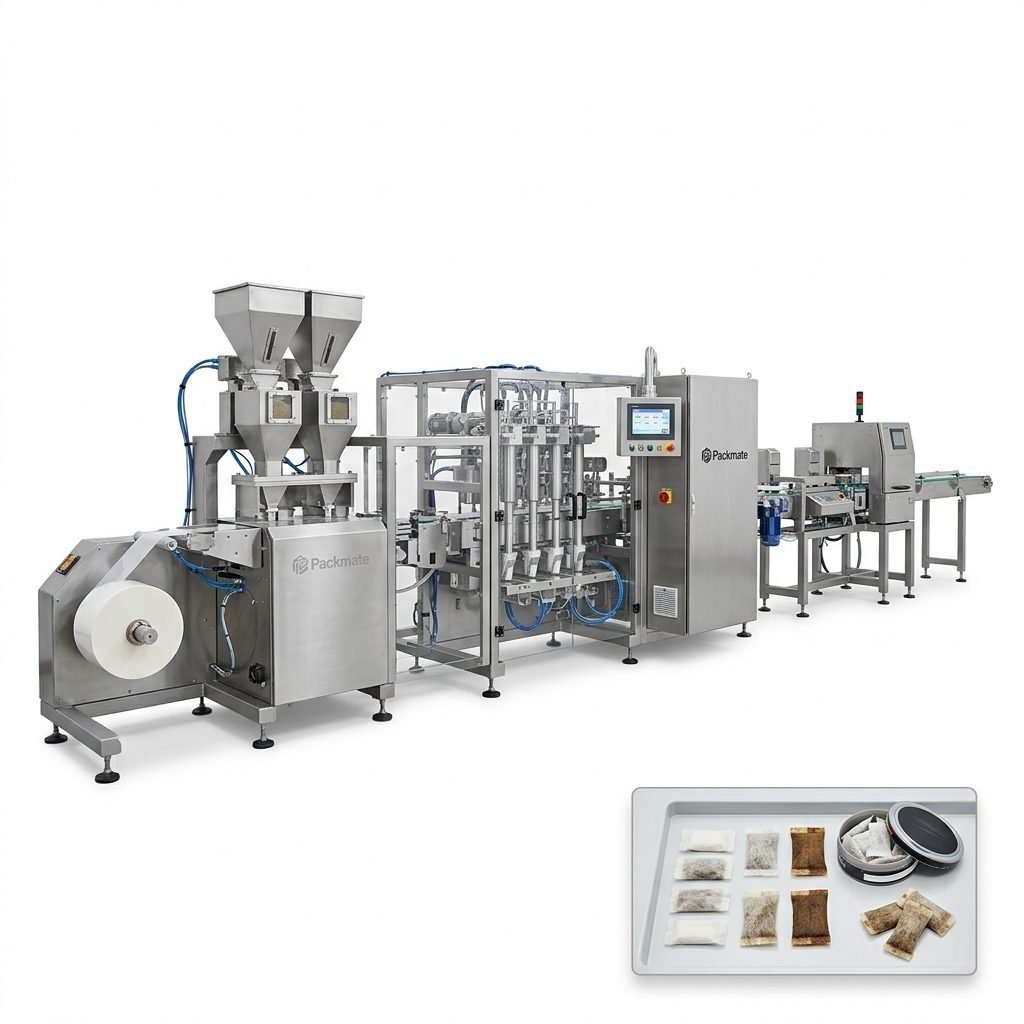
For a complete line, include upstream fillers and downstream cartoners or flow-wrappers. Consider weighing & packaging integration to ensure accurate dosing and efficient secondary packaging. If you want turnkey solutions, explore integrated suppliers that can provide filling, weighing and packaging lines together.
For example, Packmate offers Snus & Nicotine Packaging Machines as well as Weighing & Packaging Systems and Filling & Packaging Lines for cohesive lines. See product details here: Snus & Nicotine Packaging Machines, Weighing & Packaging Systems, Filling & Packaging Lines.
Supplier Selection Checklist
🔧 Experience & Track Record: Choose manufacturers with proven experience in snus/nicotine pouch equipment. Packmate’s 30+ years of engineering and dedicated snus machine focus are examples of strong credentials. (Learn more About Packmate.)
🔧 Certifications & Quality: Look for CE, ISO or other international certifications ensuring safety and reliability. Packmate provides certified machines and global turnkey solutions.
🔧 Customization & Spare Parts: Verify availability of spare parts, local stocks or express shipping options. Ask about customization for pouch size, lane count and automation level.
📦 Case Example: Many global clients choose multi-lane snus pouch lines from Packmate for high-efficiency nicotine pouch production. Explore real-world projects and exhibition demos at Case and Our Exhibition.
Cost, Financing & Return on Investment
Initial investment varies by machine type, lane count and automation. Factor in installation, training, spare parts, import duties and local logistics. A well-chosen multi-lane line can reduce per-unit cost substantially. Ask suppliers for ROI estimates based on your expected output and local pricing structure.
Installation, Training & Local Collaboration
Ethiopian manufacturers and packagers benefit from hands-on training and documentation in English and, if possible, local languages like Amharic. Negotiate on-site commissioning and operator trainings. Many successful projects include a short period of local technician training to build independent maintenance capacity.
Common Technical Features to Ask For
– Servo-controlled film handling for precise registration and long runs.
– PLC and HMI with multilingual support and recipe memory for quick changeovers.
– Integrated weighing or dosing for accurate nicotine content.
– Easy-to-clean design and quick-change tooling to reduce downtime.
🛠️ Service Note: Confirm service response times and availability of consumables. A reliable supplier will offer spare parts, preventive maintenance plans and remote diagnostics.
Why Work with Established Manufacturers
Established firms offer tested designs, quality control and the ability to provide full lines: from snus/nicotine machines and bag & pouch machines to auxiliary equipment. Packmate’s product portfolio includes Bag & Pouch Packaging Machines, Sachet & Stick Pack Machines, and Auxiliary Packaging Equipment to build integrated lines.
Practical Steps to Finalize Your Purchase
1) Define target SKU list, daily volumes and pack formats.
2) Request quotations and machine specs from several suppliers.
3) Visit demonstrations or request video trials; review case studies.
4) Confirm installation, spare parts, warranty and training terms.
5) Plan space, power and staff training before machine arrival.
📞 If you need direct supplier contact, Packmate handles turnkey packaging projects and local support inquiries at Contact Us, and offers technical documentation and certifications under Certificate.
Final Considerations for Ethiopia-based Producers
– Embrace local retail habits: provide small, affordable packs for informal retail channels.
– Plan for distribution challenges: consider robust secondary packaging for long road transport.
– Invest in operator training and preventive maintenance to avoid bottlenecks caused by limited local repair services.
Conclusion
Choosing the right nicotine packaging machine for your Ethiopian operation requires balancing production needs, local market preferences, environmental factors and supplier support. Prioritize machines that offer flexibility, consistent dosing, easy maintenance and strong after-sales support. Working with experienced turnkey suppliers will streamline installation and help you scale sustainably.
Frequently Asked Questions (FAQs)
Q1: How do I estimate the right machine speed for my target volumes?
A1: Start with your required units per day, divide by operating hours to get units/hour, then consider machine uptime and changeovers. Ask suppliers for realistic throughput data under your planned recipe and materials.
Q2: Can packaging machines handle different pouch materials and sizes?
A2: Most modern machines are adjustable for a range of pouch sizes and compatible with various laminate films. Confirm the machine’s specification for film thickness, seal temperature range and available format tooling.
Q3: What after-sales support should I expect from a reliable supplier?
A3: Expect commissioning, operator training, spare parts lists, remote diagnostics and clear warranty terms. Prefer suppliers with exhibition demos, case studies and documented service networks.
Q4: Are there special considerations for storing nicotine pouches in Ethiopia?
A4: Yes. Use moisture-barrier packaging for humid regions, maintain cool storage where possible, and monitor shelf-life closely. Design packaging and secondary packaging to withstand local transport conditions.
Q5: Where can I see validated packaging solutions and case examples?
A5: Review manufacturer portfolios and case pages for real-world examples. For one example, see Packmate’s case collection and product offerings at Case and Snus & Nicotine Packaging Machines.