Launching a nicotine pouch production plant requires a clear understanding of equipment, floor layout, process flow, staffing and realistic cost estimates. This guide walks packaging professionals and entrepreneurs through a practical plant setup plan that balances production efficiency, regulatory compliance and predictable return on investment.
⚙️ Equipment Overview: Core Machines and Auxiliary Systems
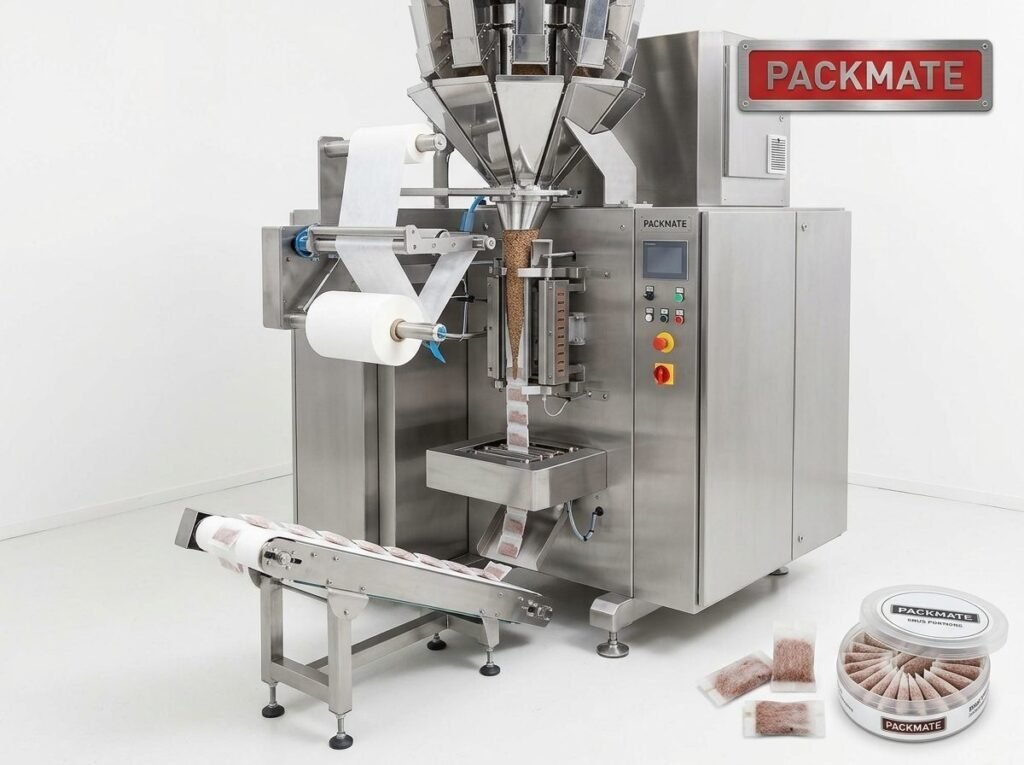
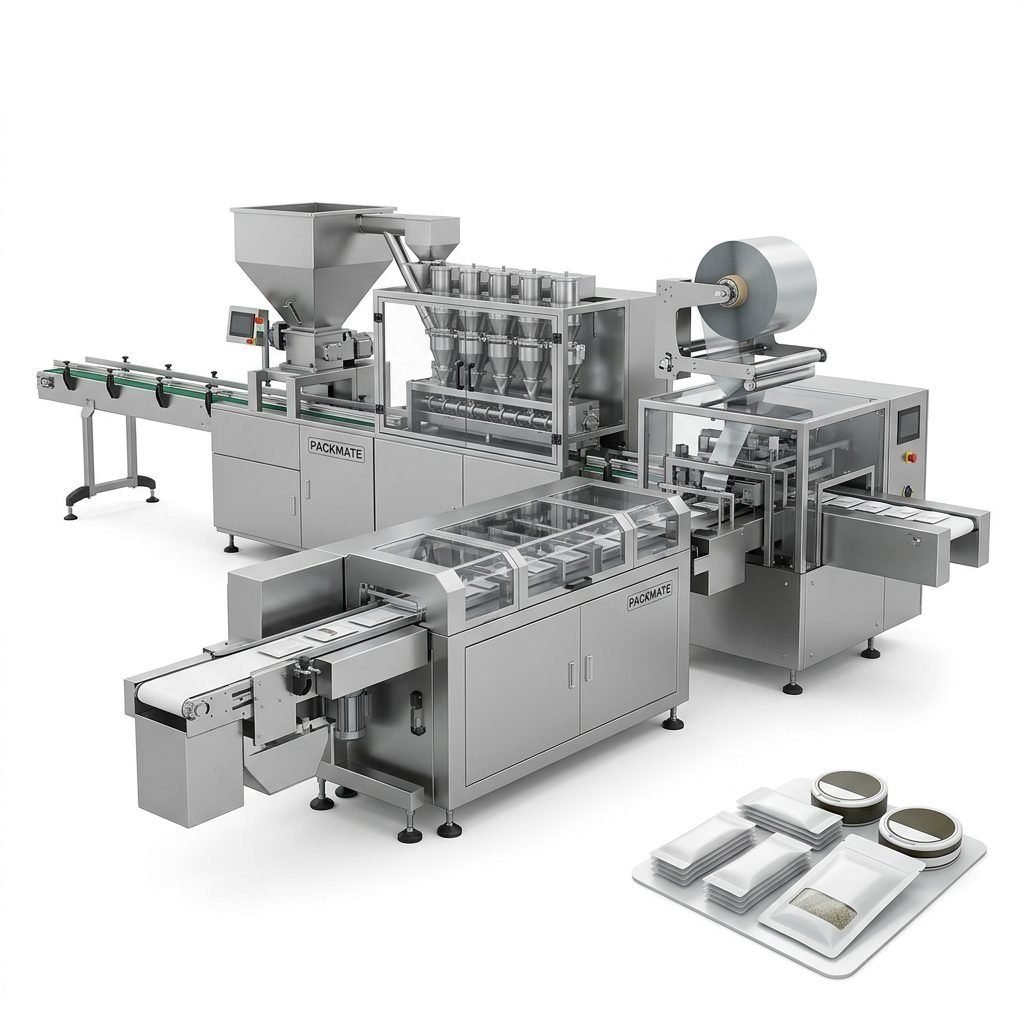
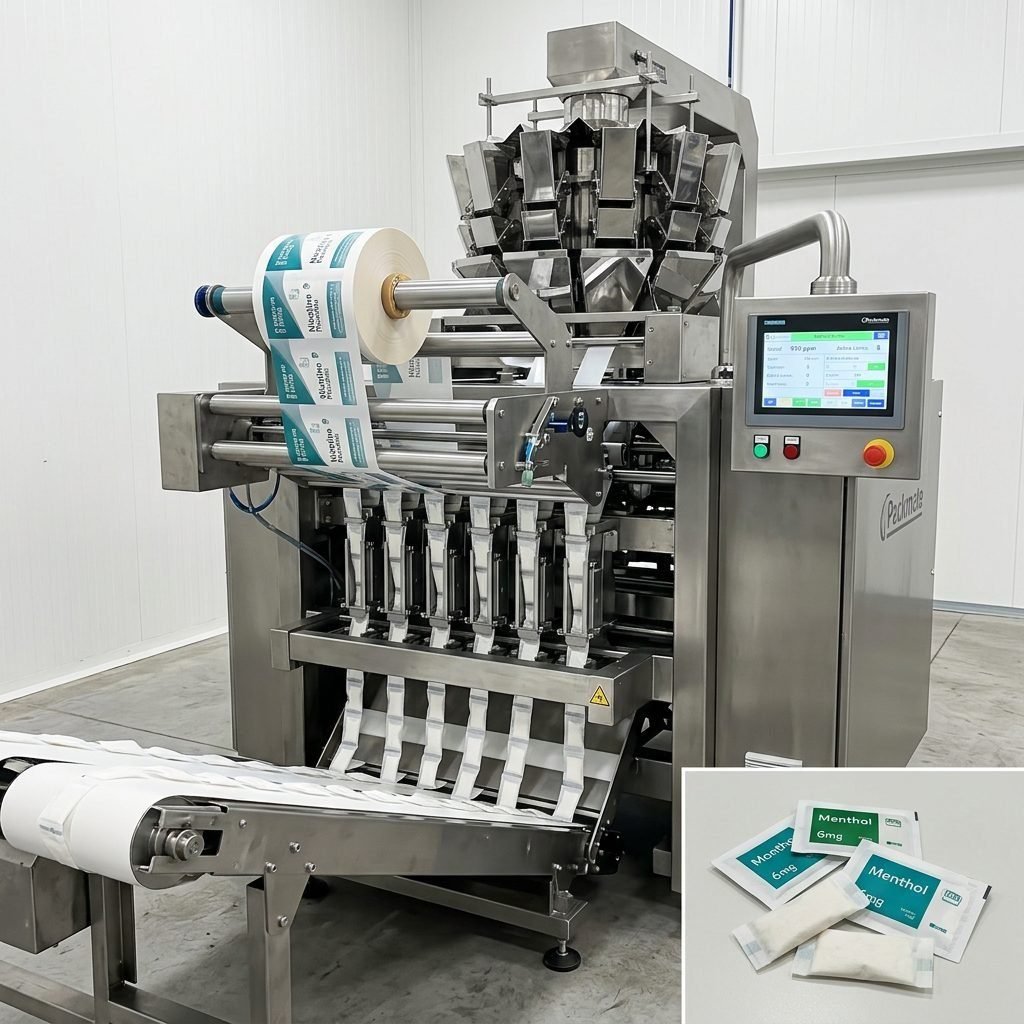
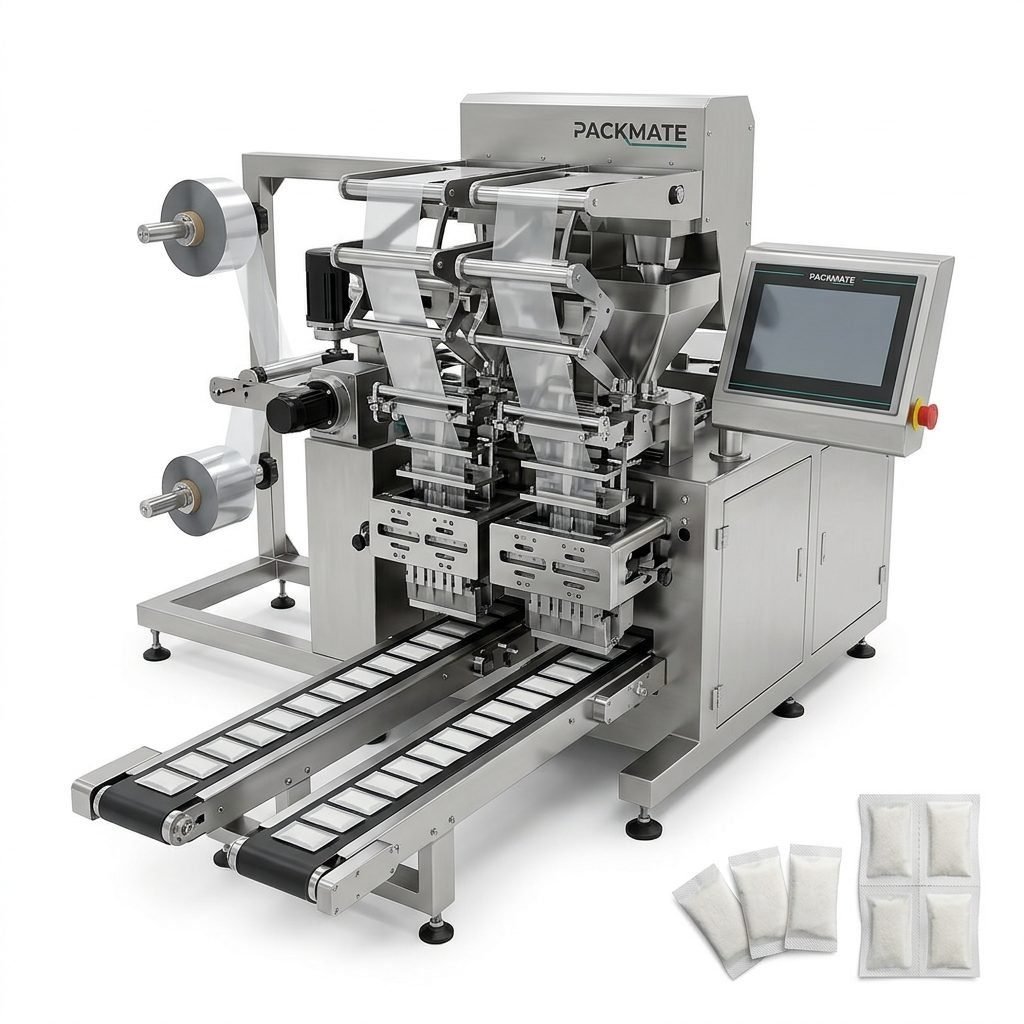
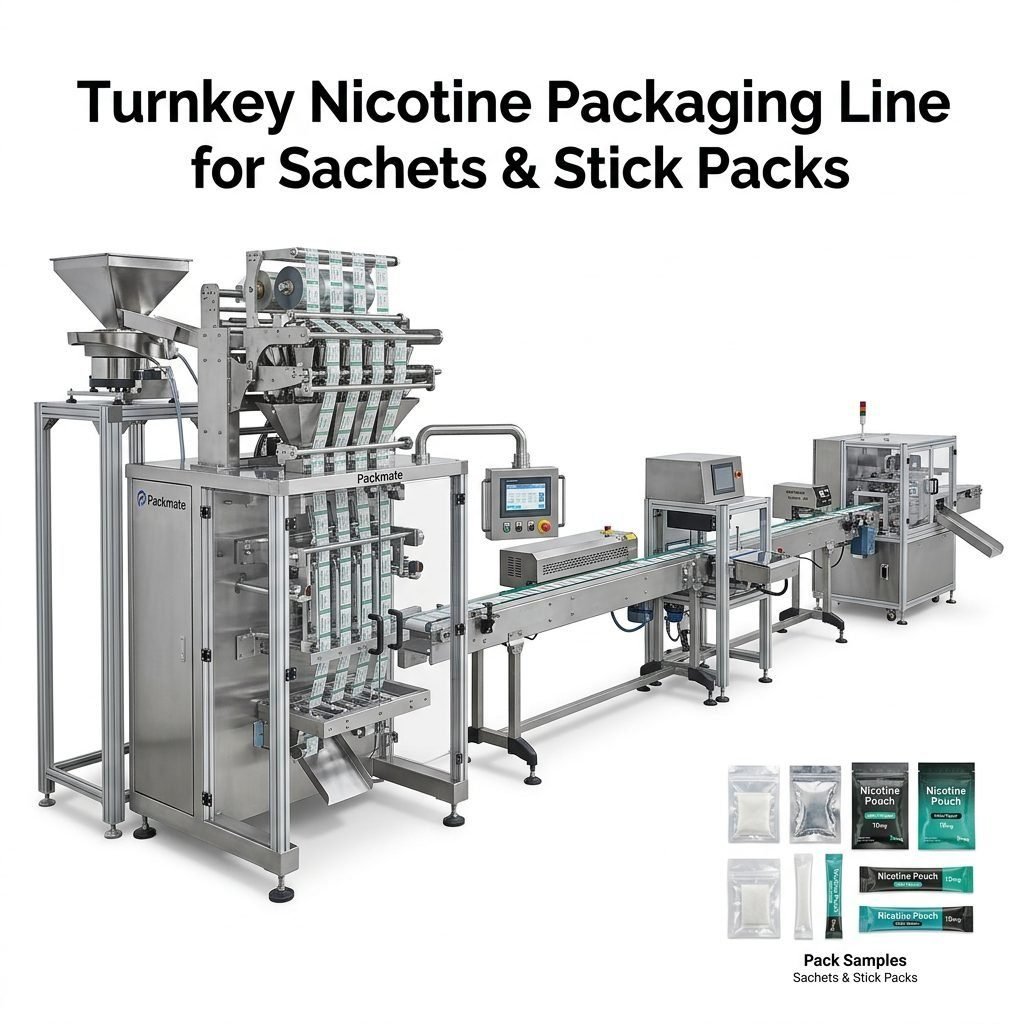
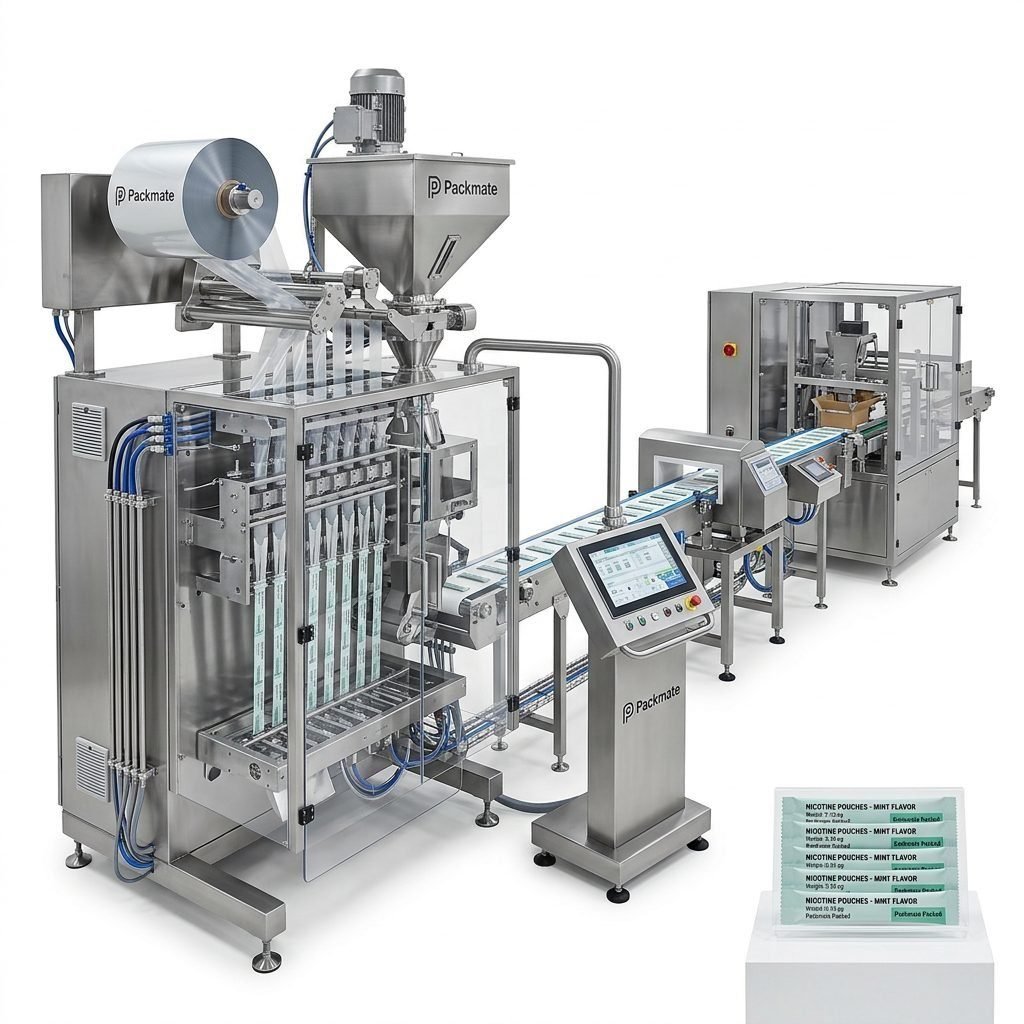
Choosing the right machinery is the foundation of an efficient nicotine pouch line. A modern line typically consists of primary filling and sealing machines, weighing systems, automatic pouch/form-fill-seal or stick pack systems, labeling and cartoning equipment, and essential auxiliary units like conveyors, metal detectors and case packers.
Key items to prioritize:
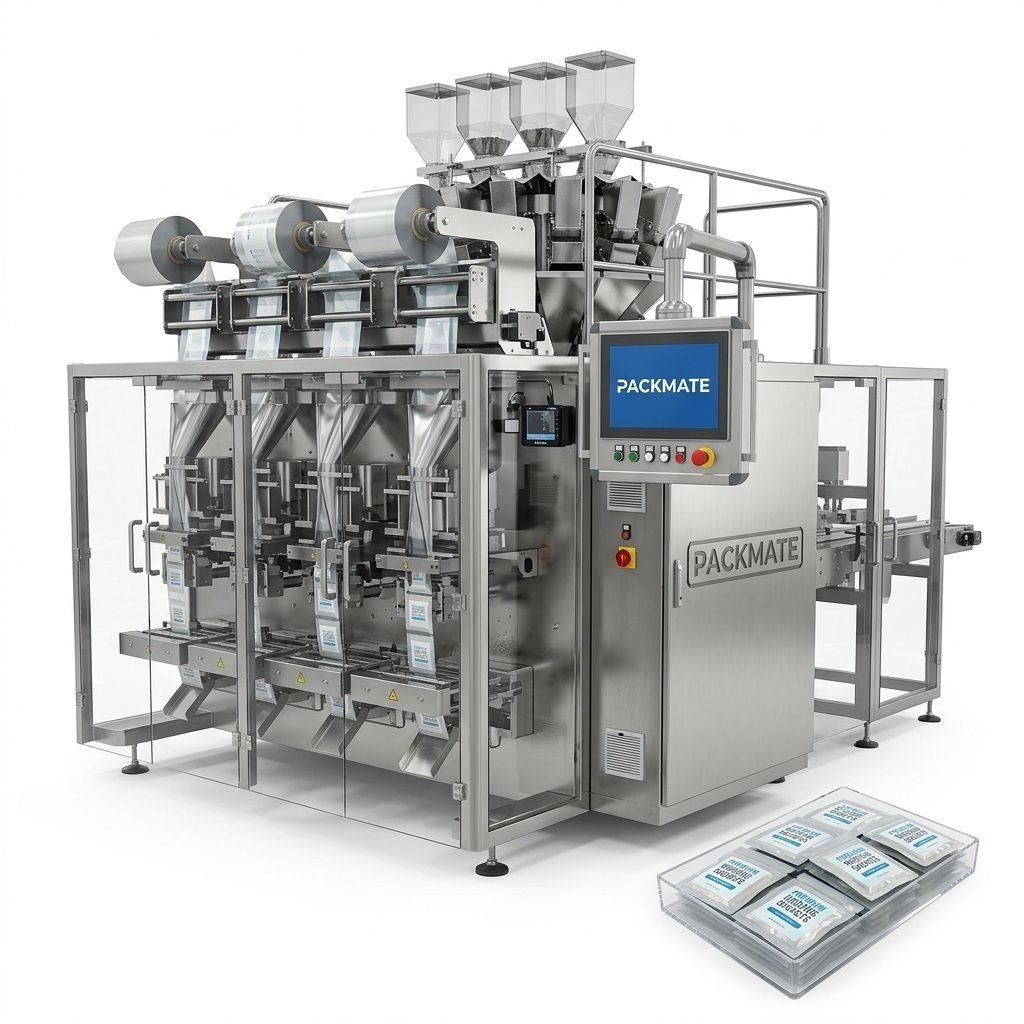
• High-precision multi-lane snus/nicotine pouch packing machine (for small-dose multi-lane output). See linked product options for multi-lane and single-lane solutions: Snus & Nicotine Packaging Machines.
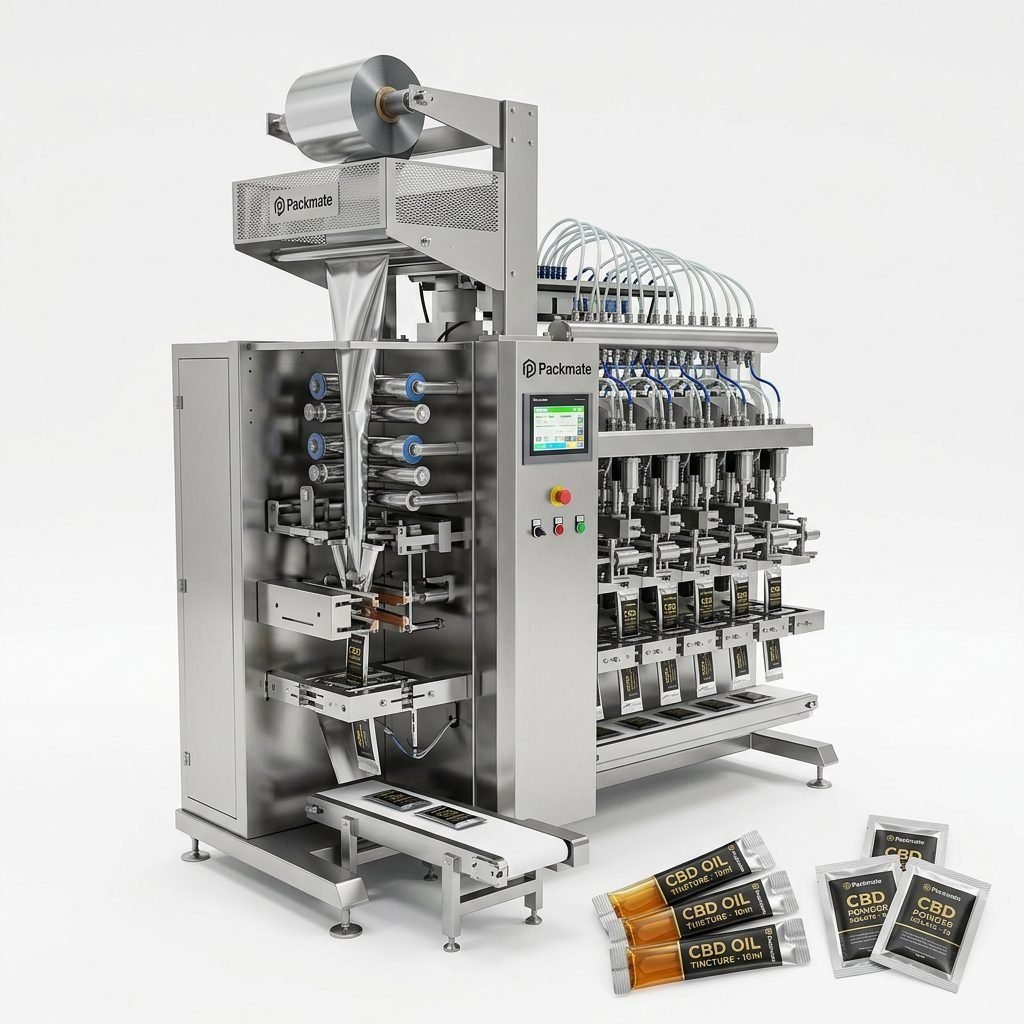
• Sachet & stick pack machines for retail single-dose formats: Sachet & Stick Pack Machines.
• Weighing & dosing systems for consistent fill weights and powder handling.
• Bag/pouch unwinding and pouch forming, pouch sealing, and final cartoning: Bag & Pouch Packaging Machines.
🧾 Auxiliary Equipment & Utilities
Auxiliary equipment ensures smooth integration and quality control. Plan for metal detectors, checkweighers, conveyors, in-line gas flushing (if required), vibration feeders, mixing/blending tanks, and dust collection for powder/paste formulations. Utilities include stable 3-phase electricity, compressed air (dry, oil-free), chilled water (if thermal control is needed), and a controlled HVAC environment for consistent hygroscopic product quality.
📐 Plant Layout & Workflow: Designing for Flow and Compliance
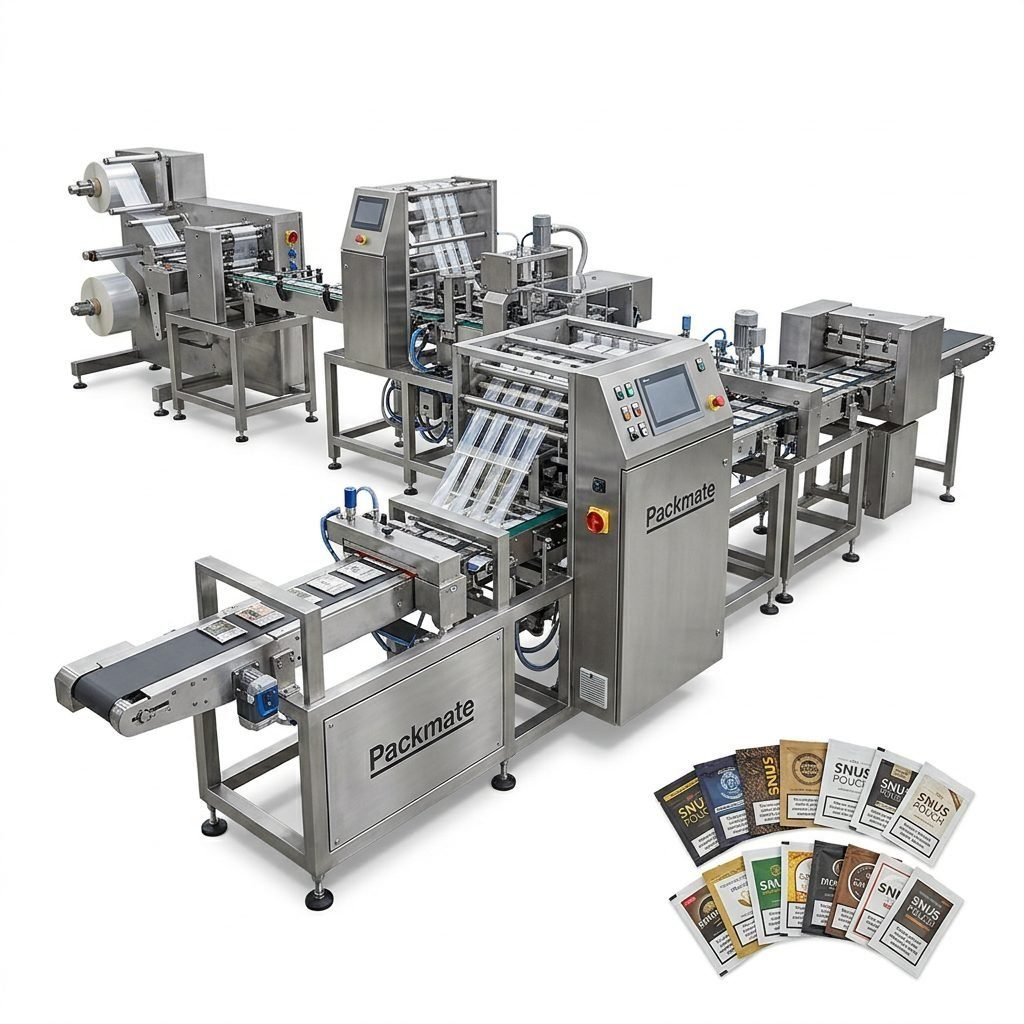
A well-designed layout reduces contamination risks and maximizes throughput. Typical flow follows raw material storage → mixing/blending → dosing/weighing → filling/sealing → inspection → secondary packaging → warehousing.
Layout best practices:
• Keep raw material ingress separate from finished goods egress to prevent cross-contamination.
• Locate quality-control stations immediately after the sealing/filling zone for quick rework feedback.
• Provide adequate space for maintenance access around major machines—typically 1.2–1.5 meters on service sides.
• Designate personnel flow (cleanroom gowns, lockers) and raw-material flow to conform with local hygiene and occupational safety norms.
📏 Typical Area Requirements
For a small-to-medium line (1–2 multi-lane machines plus auxiliary equipment), plan for 300–800 m². Larger turnkey plants with multiple lines and warehousing will require 1,500–5,000 m² depending on target volumes and storage needs.
🔬 Production Process: Step-by-Step Workflow
The standard nicotine pouch production process includes formulation, mixing, dosing, pouch forming/filling/sealing, conditioning, inspection and secondary packaging. Below is a concise step list that aligns with modern automated lines.
1. Raw Material Handling & Formulation
Receive and quarantine raw materials (nicotine base, fillers, flavorings, pH adjusters, pouch substrate). Use batch records and traceability labeling. Hygienic storage and humidity control are critical for powder stability.
2. Mixing & Dosing
Homogeneous mixing ensures consistent nicotine content. Automated gravimetric dosing systems maintain fill accuracy to ±1–3% depending on product tolerance.
3. Pouch Forming, Filling & Sealing
Multi-lane pouch machines increase throughput while maintaining precision. For pre-made pouches, high-speed filling heads and vacuum/pressure systems ensure neat fills and reliable seals.
4. In-Line Inspection & QC
Implement metal detection, vision inspection for seal integrity and labeling checks. Sampling for weight and nicotine assays should be routine per batch.
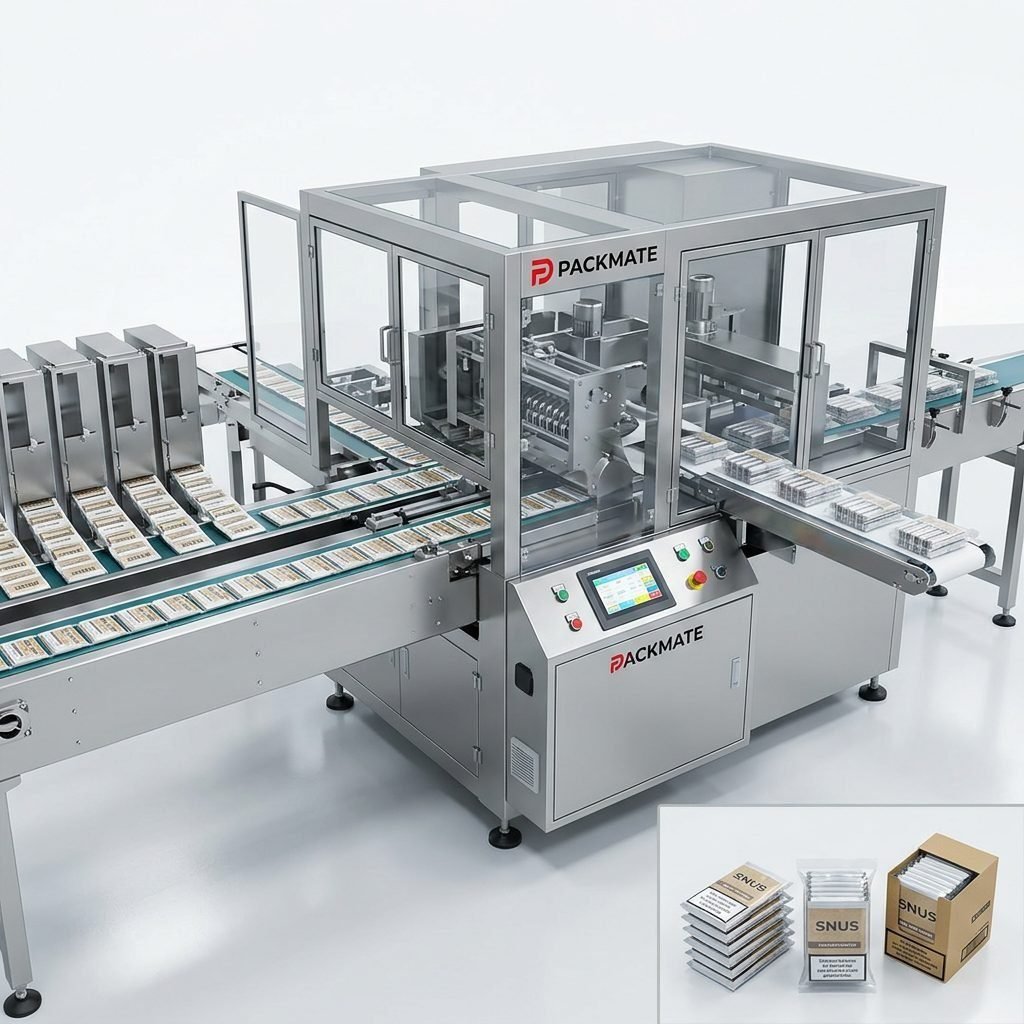
5. Secondary Packaging & Warehousing
Cartoning, case packing and palletizing complete the flow. Controlled storage for finished goods helps preserve shelf life—monitor temperature and humidity closely.
💰 Cost Breakdown: CAPEX and OPEX Estimates
Costs vary widely by capacity, automation level and region. Below are realistic ranges for a medium-capacity plant (approx. 1–5 million pouches/year).
Capital Expenditure (CAPEX) estimates:
• Primary packing machine(s): $80,000 – $500,000 per line depending on multi-lane capability and automation.
• Auxiliary equipment (weighers, conveyors, metal detectors): $30,000 – $120,000.
• Cleanroom/HVAC and utilities setup: $20,000 – $150,000.
• Building fit-out, racking and installation: $50,000 – $300,000.
Operating expenses (OPEX) include raw materials, labor, utilities, consumables (pouch film, labels), maintenance and quality testing. Monthly OPEX for a medium line often falls in the $20,000–$80,000 range depending on throughput and local labor costs.
📈 Return on Investment & Production Ramp
Typical payback periods are 2–4 years for a moderately automated plant if market demand and pricing are favorable. Initial months will be for validation, regulatory testing, and process optimization. Expect a 2–6 month commissioning and validation window before full-rate production.
🛠️ Staffing, Training & Maintenance
Staff requirements vary by automation: automated lines need fewer operators but more technicians. A minimal team for a medium line includes line operators, a quality specialist, a maintenance technician and production supervision. Invest in OEM training and maintenance contracts for critical systems.
Maintenance highlights:
• Preventive maintenance schedules (daily, weekly, monthly).
• Spare parts stock for critical wear items (sealing jaws, servo components, belts).
• Remote support and commissioning from OEM suppliers reduces downtime—contact the manufacturer via Contact Us.
✅ Regulatory, Quality & Traceability Considerations
Compliance requirements vary by market. Implement robust batch records, raw material traceability, HACCP-style hazard analysis, and local reporting as required. For export markets, ensure CE/ISO and any regional regulatory registrations are addressed. Packmate (Packmate Snus Machine) machines comply with common international standards—learn more about the manufacturer at About Packmate.
📦 Supply Chain & Packaging Materials
Secure long-term suppliers for pouches, films, lids and cartons. For flavored nicotine pouches, flavor concentrate quality and stability are critical. Negotiate MOQ and lead times to align procurement with production schedules.
🚀 Commissioning Checklist & Timeline
A practical commissioning checklist speeds time-to-market:
• Receive & inspect machines; verify electrical and pneumatic connections.
• Run dry tests, then wet tests with inert materials to validate sealing and fill accuracy.
• Optimize machine recipes for target pouch weight and seal settings.
• Perform microbial and chemical stability testing as required by market regulations.
🔎 Case Examples & Further Reading
For insights into turnkey installations and previous projects, review real-world cases and product lines. Packmate showcases multiple machine types across product categories including filling and packaging lines: Filling & Packaging Lines and auxiliary equipment options: Auxiliary Packaging Equipment. Project case studies provide helpful benchmarks for throughput and investment.
Quick setup timeline (typical):
• Equipment procurement & factory acceptance testing: 8–20 weeks.
• Site preparation & installation: 4–8 weeks.
• Commissioning & validation: 2–6 weeks.
📌 Final Recommendations
Start with a scalable line to match initial demand and enable incremental expansion. Prioritize machine reliability, after-sales support and spare parts availability. Establish robust QC protocols early to reduce recalls and compliance risk. For personalized turnkey solutions and project planning, consult an experienced OEM with snus/nicotine pouch expertise.
❓ Frequently Asked Questions (FAQ)
Q1: How long does it take to start production after ordering machines?
A1: Typical lead times are 8–20 weeks for equipment delivery, plus 6–14 weeks for site prep, installation and validation—plan ~3–6 months for a standard line.
Q2: What is the expected output of a multi-lane snus pouch machine?
A2: Depending on lane count and pouch size, multi-lane machines can produce from tens of thousands to hundreds of thousands of pouches per day. Exact throughput depends on pouch size, fill speed and downstream packing.
Q3: What safety and compliance issues should I prepare for?
A3: Prepare for product labeling, batch traceability, manufacturing hygiene controls, and regional nicotine-specific regulations. Seek legal/regulatory advice for each target market early in planning.
Q4: How do I choose between pre-made pouches and form-fill-seal?
A4: Pre-made pouches simplify sealing and reduce tooling complexity, while form-fill-seal allows more flexibility in pouch design and lower material inventory. Consider volumes, packaging customization and cost per pouch.
Q5: Where can I find trusted OEM support and spare parts?
A5: Choose a supplier with proven snus/nicotine pouch experience, global service network and clear spare-parts lists. For machine lines and support, explore manufacturer product pages and contact pages such as Contact Us.