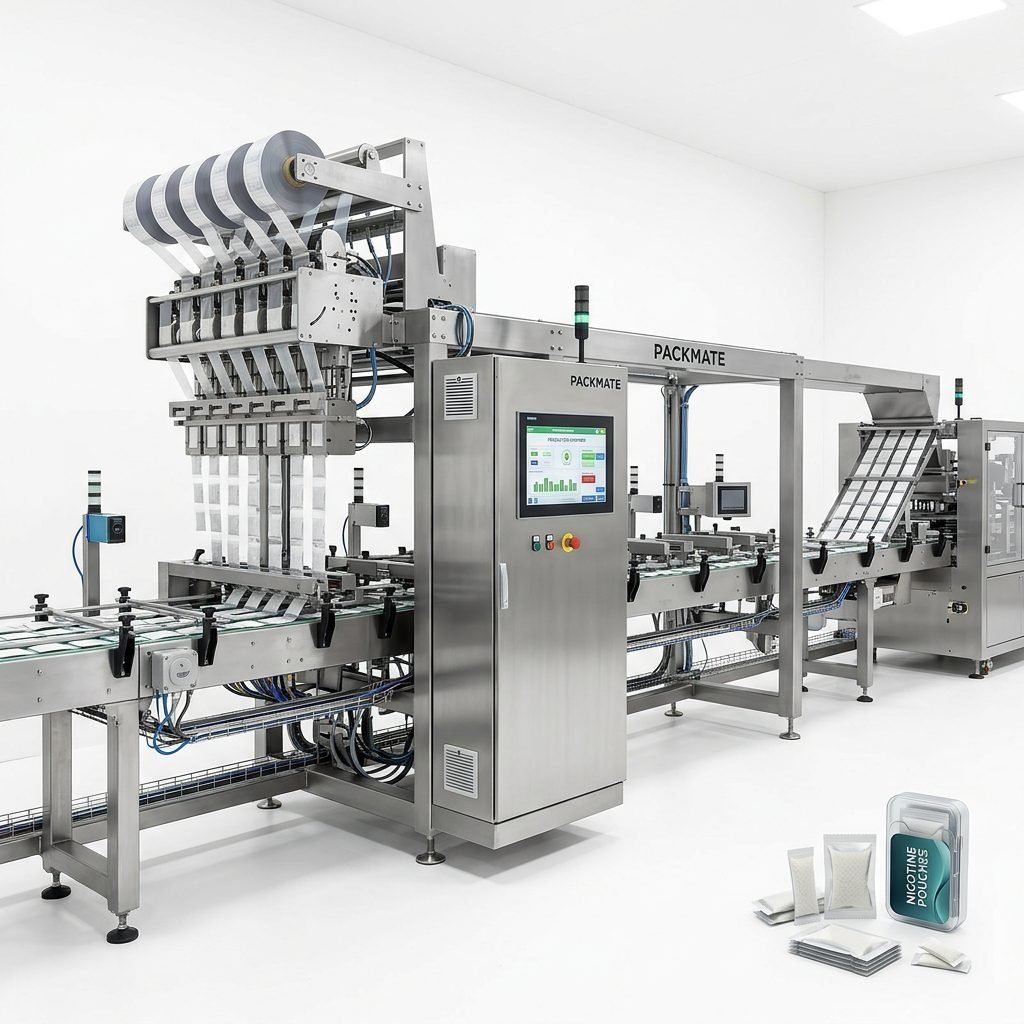
Launching a snus production line as a startup can seem complex, but with the right planning and equipment choices you can build a cost-effective, compliant and scalable operation. This guide walks you through the essential decisions — from selecting machinery and estimating capacity to regulatory considerations, cost control and a smooth commissioning plan. Whether you aim to produce nicotine pouches, traditional snus or single-dose sachets, the practical steps below will help you reduce risks and accelerate time-to-market.
Market Focus & Startup Strategy
Begin by defining your product niche and target consumers. Startups often succeed by focusing on a narrow but well-defined segment — for example, flavored nicotine pouches for adult consumers, premium portion snus for traditional markets, or compact sachet lines for travel packs. Selecting a focused SKU range reduces initial tooling and packaging complexity and speeds up validation and compliance.
Tip: Start with 1–3 SKUs that share similar pouch formats to keep changeovers fast and costs low. ⚙️
Understand Local Habits and Regulations
Regulations and consumer habits vary by market. If you plan to sell in Europe, Scandinavia or select North American markets, research nicotine limits, labeling, and age-restriction requirements. Cultural preferences (portion size, flavor profiles, and product format) should shape your product design. If you need supplier certification or machine compliance information, check manufacturer documentation early in negotiations.
Choosing the Right Production Line Type
Your production line choice depends on desired output, budget and scalability. The main types are:
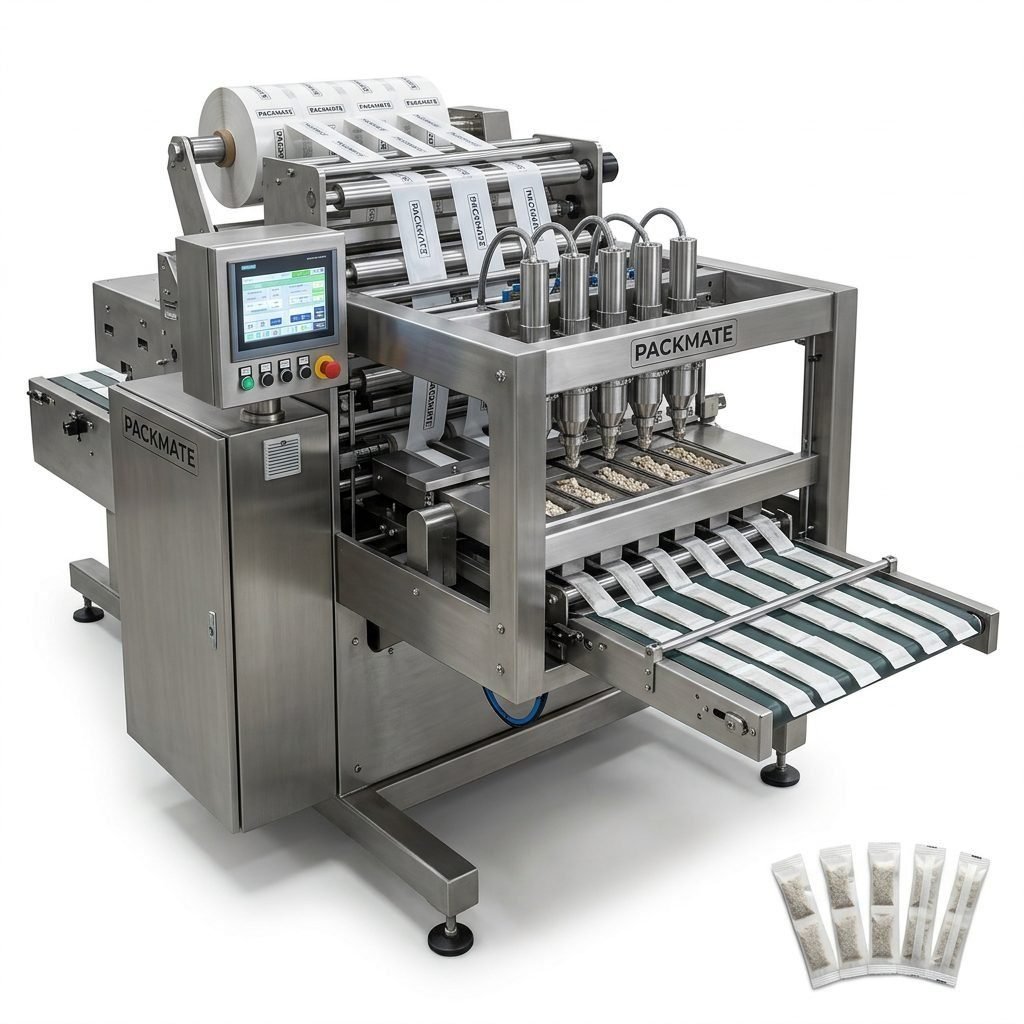
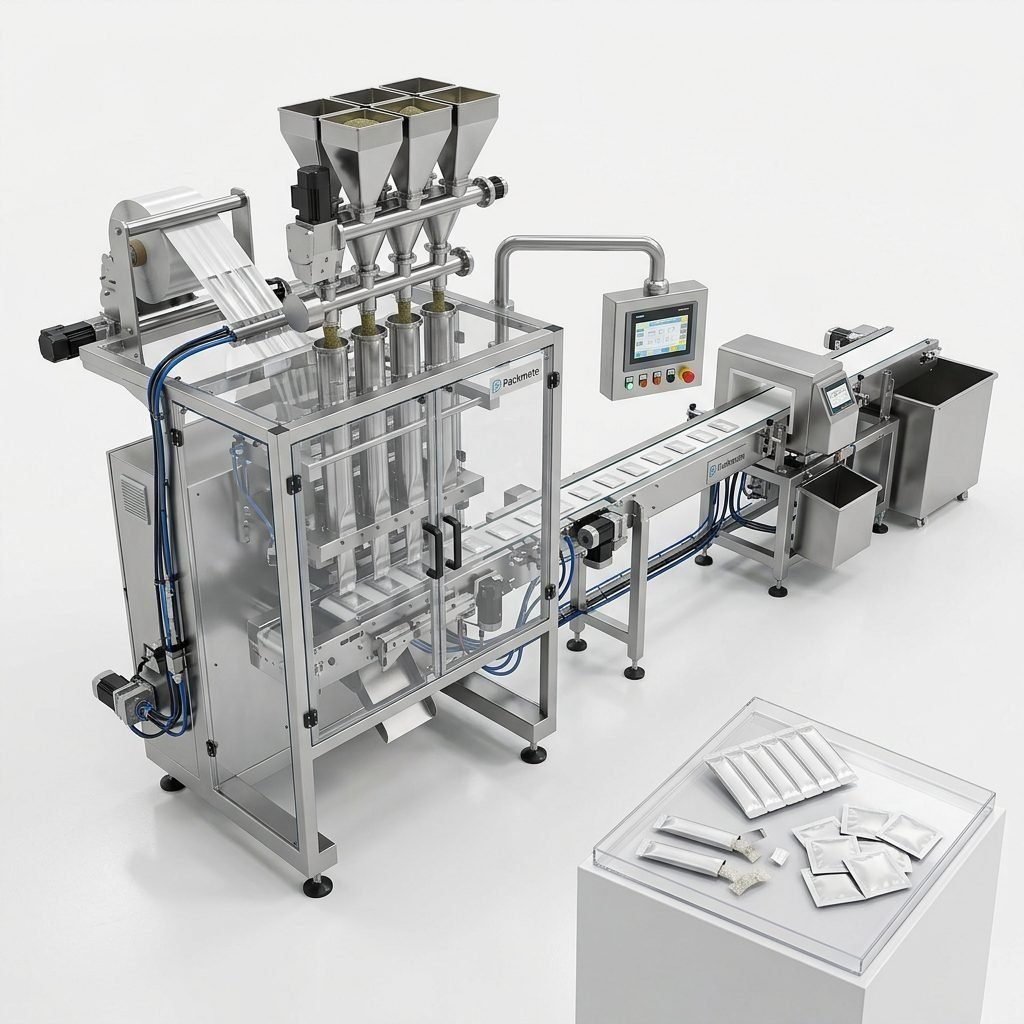
– Stick-pack or sachet machines for single-dose portions.
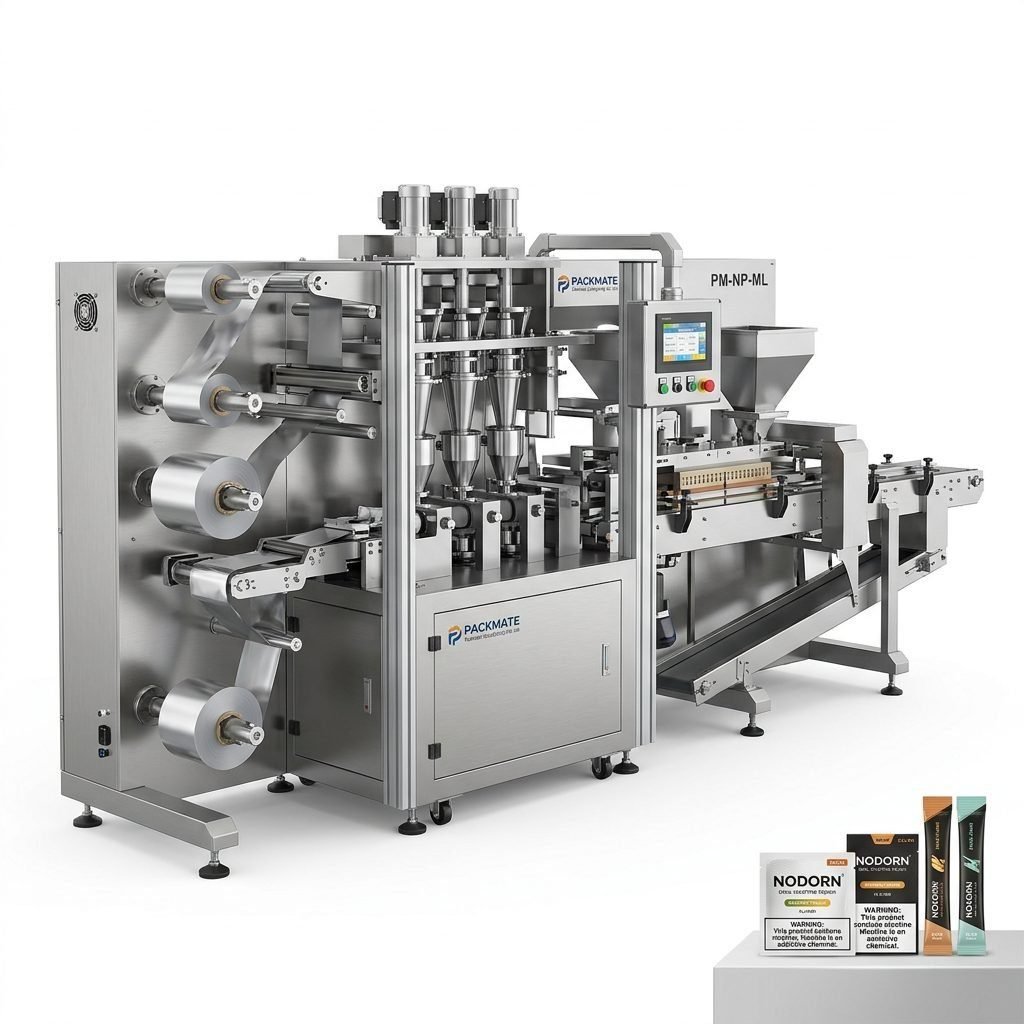
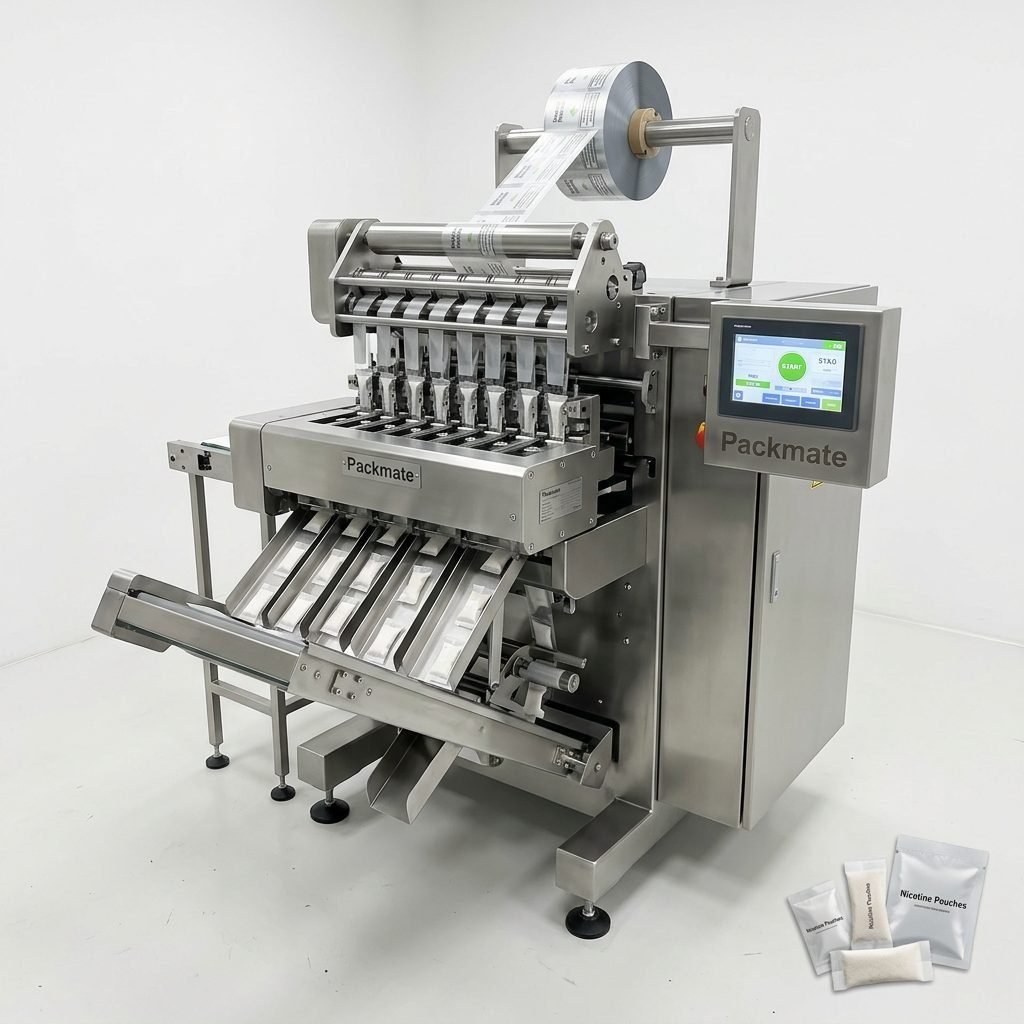
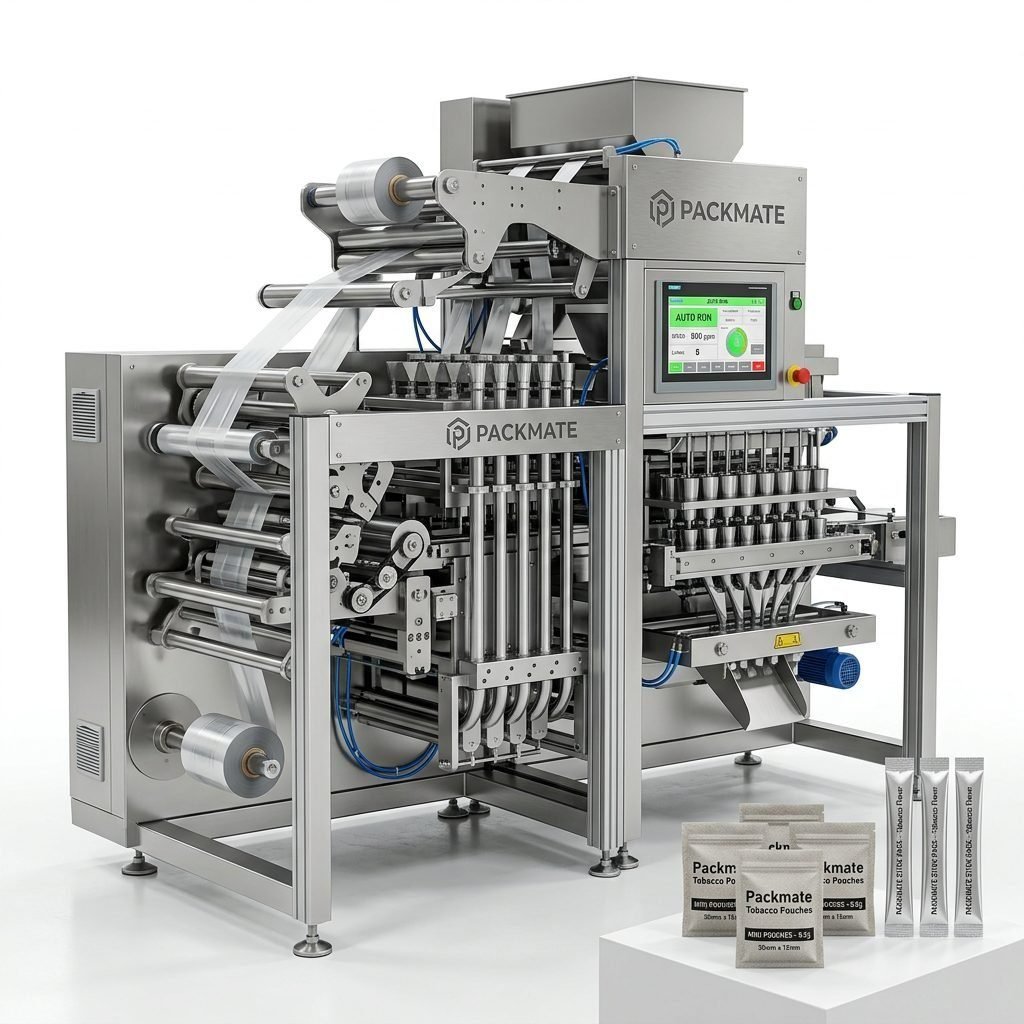
– Multi-lane pouch systems for high-throughput nicotine pouch production.
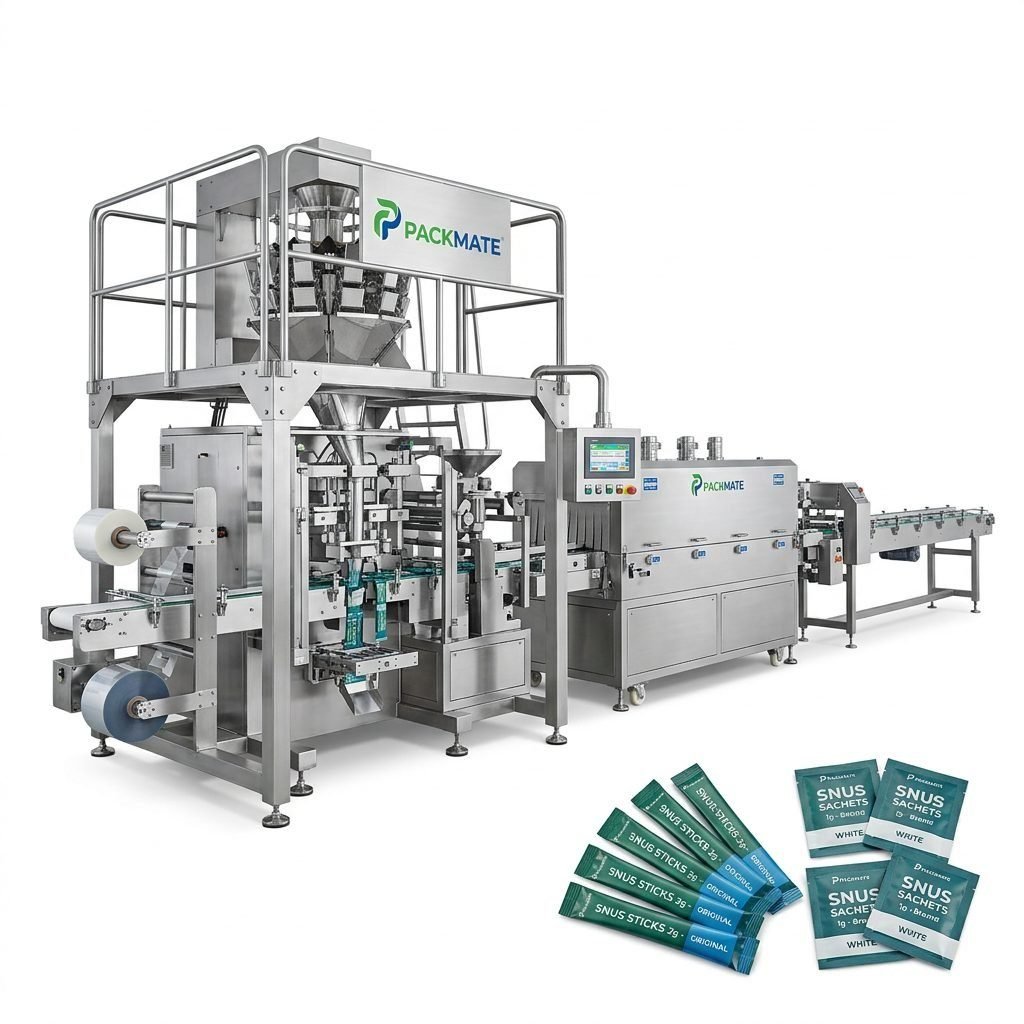
– Sachet & stick pack hybrid lines for mixed-format ranges.
🔧 Key decision: choose a line that allows modular upgrades — e.g., add lanes or upgrade dosing heads as your volumes grow.
Where to Source Equipment
Look for manufacturers with deep experience in snus and nicotine packaging machines and turnkey line integration. Suppliers should provide CE/ISO documentation, testing support, and global after-sales service. Consider visiting supplier exhibition demos or requesting video tests for your specific product. Explore detailed machine categories like Snus & Nicotine Packaging Machines and Sachet & Stick Pack Machines for comparisons.
Line Components & What to Look For
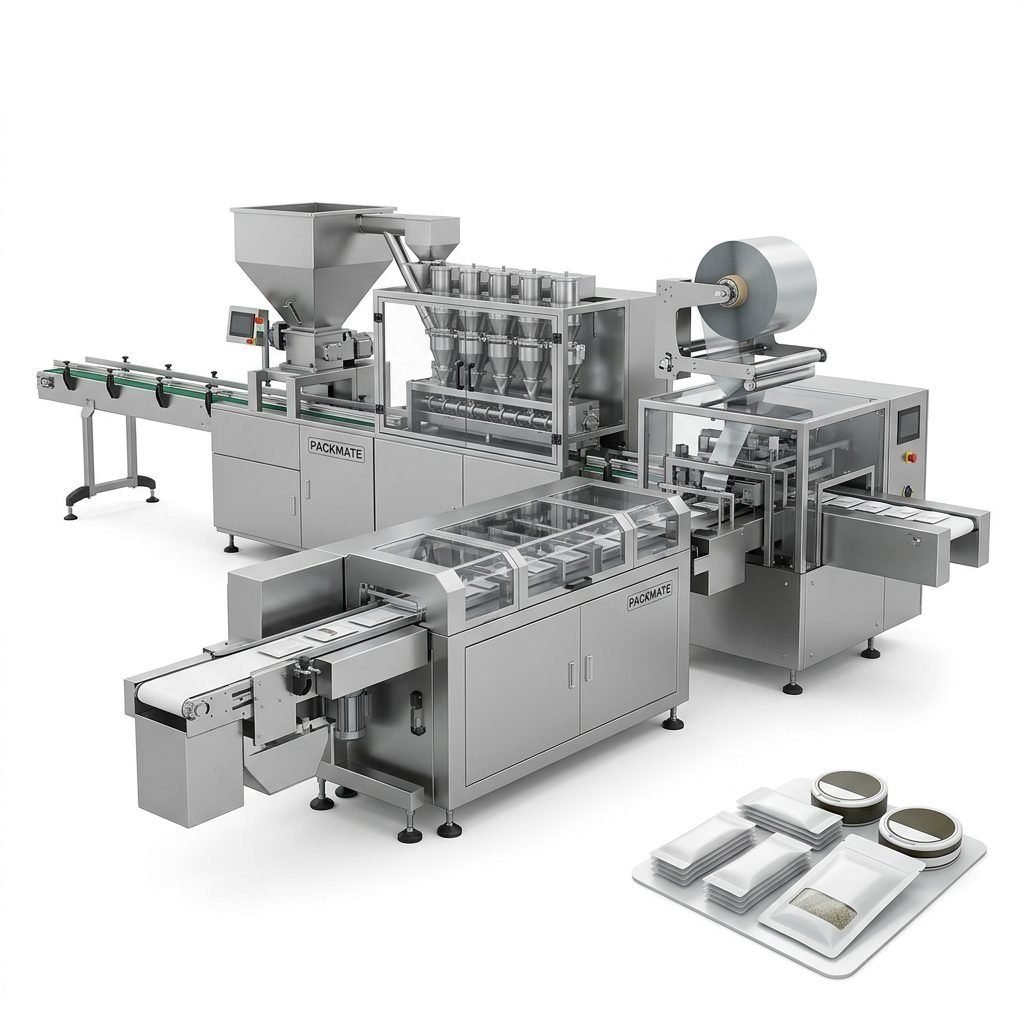
A complete snus line typically includes:
– Raw material feeding and dosing systems (precision micro-dosing for nicotine).
– Form-fill-seal units or pouch forming machines.
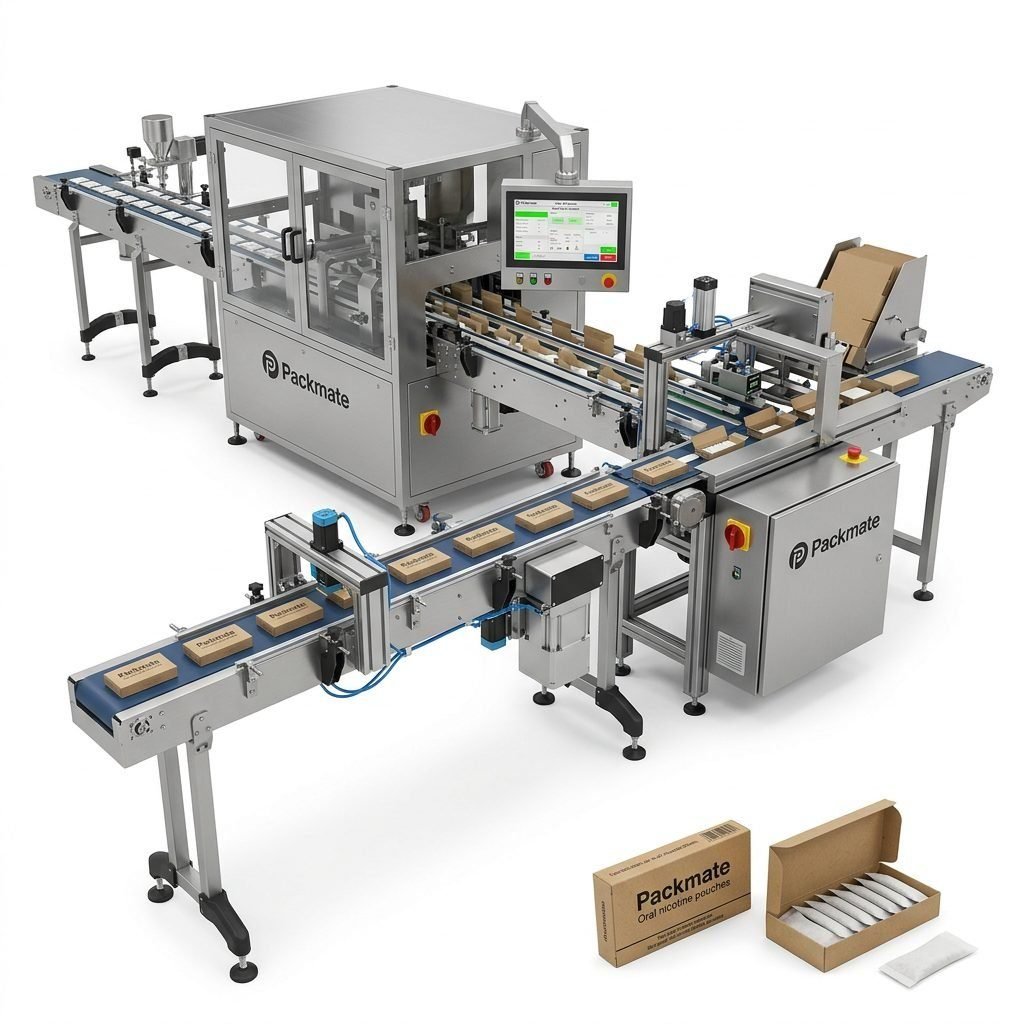
– Secondary packaging (cartoning, case packing).
– Metal detectors, check weighers and inspection stations.
– Conveyors, accumulators and labeling.
📦 Must-have features: accurate dosing, easy changeover, and sanitary design to comply with food/pharmaceutical standards.
Machine Performance Metrics
Evaluate machines by their OEE-relevant metrics: throughput (pouches/min per lane), uptime, mean time between failures (MTBF), and changeover time. For startups, a 2–4 lane machine with modular expansion is often the sweet spot to balance capital and growth.
Estimating Costs & Return on Investment
Initial capital includes machinery, tooling, installation, facility upgrades and working capital for raw materials. Operating expenses include labor, utilities, maintenance, packaging materials and regulatory testing. Create a 3-year financial model projecting production volumes, yield losses and price points.
Consider phased investment:
Phase 1 — pilot line to validate product and processes.
Phase 2 — expand lanes or add secondary packaging for higher capacity.
Phase 3 — automation of upstream/downstream processes to reduce labor.
ROI hint: focus first on reducing variable cost per pouch (packaging materials, dosing accuracy) — this drives profitability faster than squeezing CapEx.
Facility & Layout Considerations
Plan a modular plant layout with clear production flow: raw material storage → dosing → forming/filling → sealing → quality inspection → secondary packaging → finished goods. Allow aisle space for maintenance, and plan cleanroom or controlled zones if required by local regulators.
HVAC, dust control and proper drainage are important for snus and nicotine pouch production — nicotine powder can be hygroscopic and require stable humidity control.
Utilities & Safety
Confirm power, compressed air, and water requirements before purchase. Safety interlocks, emergency stops and proper grounding for dosing equipment should be standard. Ensure staff PPE and training align with local occupational safety laws.
Raw Materials, Suppliers & Quality Control
Secure reliable suppliers for tobacco or nicotine powder (as applicable), pouch substrates, inner liners and outer packaging. Perform incoming quality checks: moisture content, particle size and nicotine concentration for powders; tensile strength and barrier properties for films.
Implement a HACCP-style approach to identify critical control points: dosing accuracy, seal integrity, and microbial control (if applicable).
Regulatory Compliance & Documentation
Compliance steps may include facility registration, product labeling approvals, testing reports and machine certification (CE, ISO). Maintain batch records, traceability, and validated SOPs. If exporting, prepare documentation for each destination market.
⚠️ Important: product classification (tobacco vs. nicotine product) determines regulatory pathways; consult legal/regulatory advisors early.
Installation, Commissioning & Training
Choose a supplier who provides on-site startup, validation support and operator training. A robust commissioning plan should include test runs with actual materials, process parameter validation and staff competency sign-off. Document machine recipes for each SKU to reduce variability.
After-Sales Service & Spare Parts
Fast access to spare parts and remote troubleshooting reduces downtime. Verify warranty terms and whether the supplier offers global service or local partners. Packmate’s history and factory capabilities are assets to evaluate when comparing offers — you can learn more About Packmate.
Operational Tips for Cost Efficiency
– Standardize packaging sizes early to reduce tooling costs.
– Optimize dosing accuracy to minimize raw material waste.
– Schedule preventive maintenance to avoid unplanned stops.
– Use data logging to monitor yield and identify bottlenecks.
✅ Startup hack: run validation batches at 50–70% speed to build staff confidence before ramping to full-speed production.
Packaging & Branding Considerations
Packaging is both functional and a brand touchpoint. Choose films that balance barrier performance with printability. For startups, flexible cartons or resealable tins can elevate perceived value but add cost. Test shelf life and mechanical handling with finished packs to ensure seal integrity under distribution stresses.
Scaling from Pilot to Commercial
Move from pilot to commercial by validating your process windows, securing larger supply contracts, and planning capital spend for additional lanes or automation modules. Keep product recipes and quality control plans stable to avoid revalidation delays in regulated markets.
Selecting a Supplier: Key Questions to Ask
When comparing vendors, ask:
– Can you provide references and videos of similar lines running our product?
– What is your spare parts lead time and technical support model?
– Do you offer turnkey integration for weighing, conveying and cartoning?
– Are machines CE/ISO certified and accompanied by FAT documentation?
Explore suppliers with proven snus packaging experience such as those showcasing full-line solutions and case studies here: Case.
Why Packmate is a Practical Option
Packmate offers specialized snus and nicotine pouch machines with 30+ years of packaging engineering experience, factory ISO/CE compliance and global turnkey solutions. Their product range covers multi-lane systems, stick pack and sachet machines plus weighing and auxiliary equipment — see product details under Weighing & Packaging Systems and Filling & Packaging Lines.
Practical Onboarding Checklist for Startups
– Finalize SKU spec sheets and two trial formulations.
– Secure supplier agreements for primary film and pouches.
– Reserve space and confirm utilities for machine delivery.
– Book Factory Acceptance Test (FAT) and installation timeline.
– Train 2–3 operators as machine champions before commercial runs.
📣 Note: request spare parts kits and critical wear items during purchase — this reduces downtime and can be more economical than emergency shipping later.
Exhibitions & Demo Visits
Visiting trade shows and supplier demo centers helps validate choices. Packmate regularly participates in global exhibitions where you can see live demonstrations — check their exhibition schedule at Our Exhibition.
Final Checklist Before Ordering
– Confirm production rate and required lanes.
– Approve FAT protocol and sample production acceptance criteria.
– Ensure documentation for CE/ISO and spare parts lists.
– Lock lead times for packaging films and nicotine raw material.
Contact & Next Steps
When you are ready to discuss technical specifications, request a customized quote and a production timeline from an experienced supplier. For direct inquiries or service requests, use the manufacturer’s contact portal: Contact Us.
Summary of Key Takeaways
– Start with a focused SKU range and modular machine setup.
– Prioritize dosing accuracy and sanitary design to control variable costs.
– Validate suppliers through FAT, demos and documented references.
– Plan phased investments and preventive maintenance to protect uptime.
Common Questions
Q1: How much space do I need for a small 2–4 lane snus line?
A1: A compact 2–4 lane line with auxiliaries typically fits in 100–200 m² depending on secondary packaging needs and storage space. Allow extra for maintenance access.
Q2: What is a realistic timeline from order to production for a startup?
A2: From technical finalization, FAT and shipping to installation, expect 12–20 weeks for standard lines; customization can extend timelines. Early engagement on utilities and approvals shortens commissioning time.
Q3: Are turnkey solutions expensive for startups?
A3: Turnkey solutions carry higher initial CapEx but reduce integration risk and speed ramp-up. Consider phased turnkey options or financing to spread cost.
Q4: How do I ensure machine compliance and spare parts availability?
A4: Request CE/ISO certificates, spare parts lists with lead times, and service options before purchase. Choose vendors with global support networks.
Q5: Where can I see reliable machine examples and product ranges?
A5: Review manufacturer product pages for snus and pouch equipment and case studies — explore Snus & Nicotine Packaging Machines and related product categories for details and references.