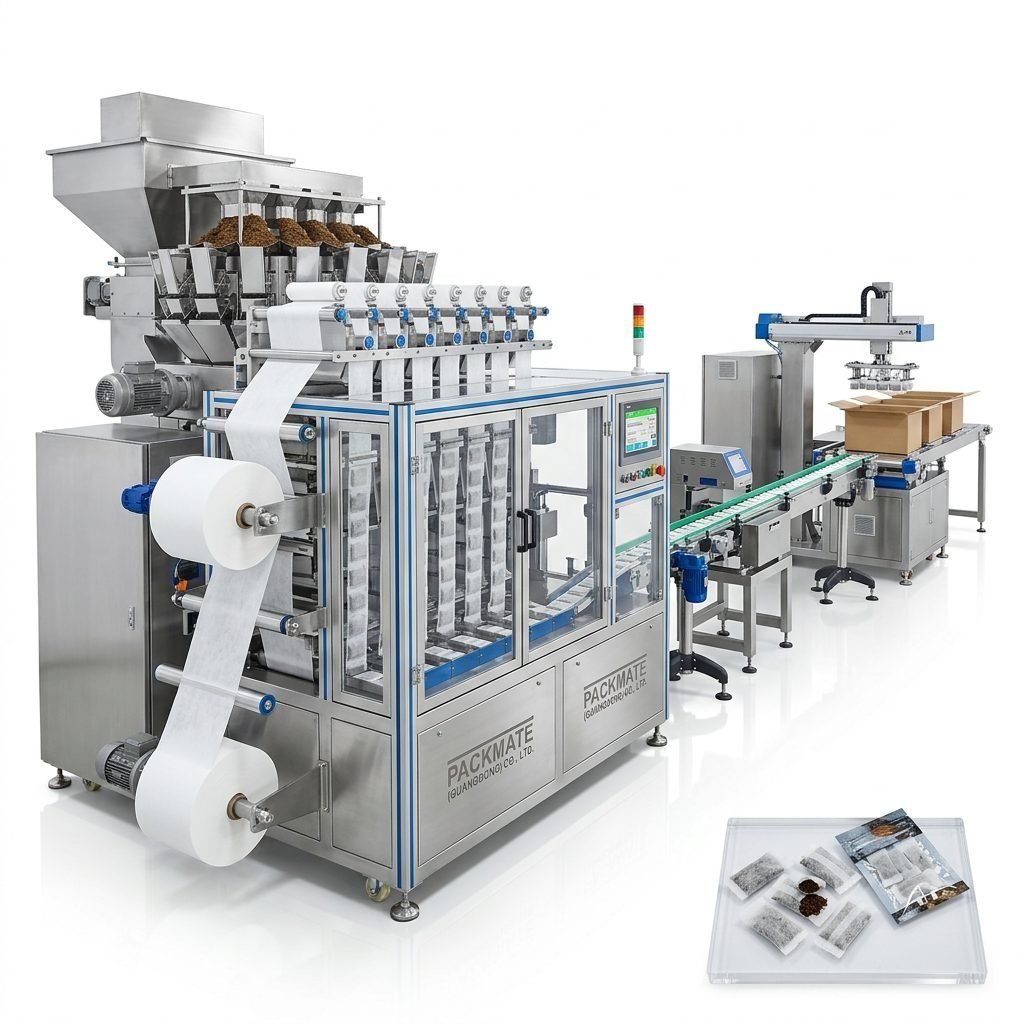
The nicotine pouch market demands precision, consistency, and regulatory compliance. This guide walks through a complete nicotine pouch production line, detailing the essential machines, process flow, quality checkpoints, and customization options that help manufacturers scale up production while maintaining product integrity. Whether you are planning a small pilot line or a fully automated multi-lane system, the following sections will give you actionable information to design and operate an efficient production line.
Overview: What Constitutes a Nicotine Pouch Production Line
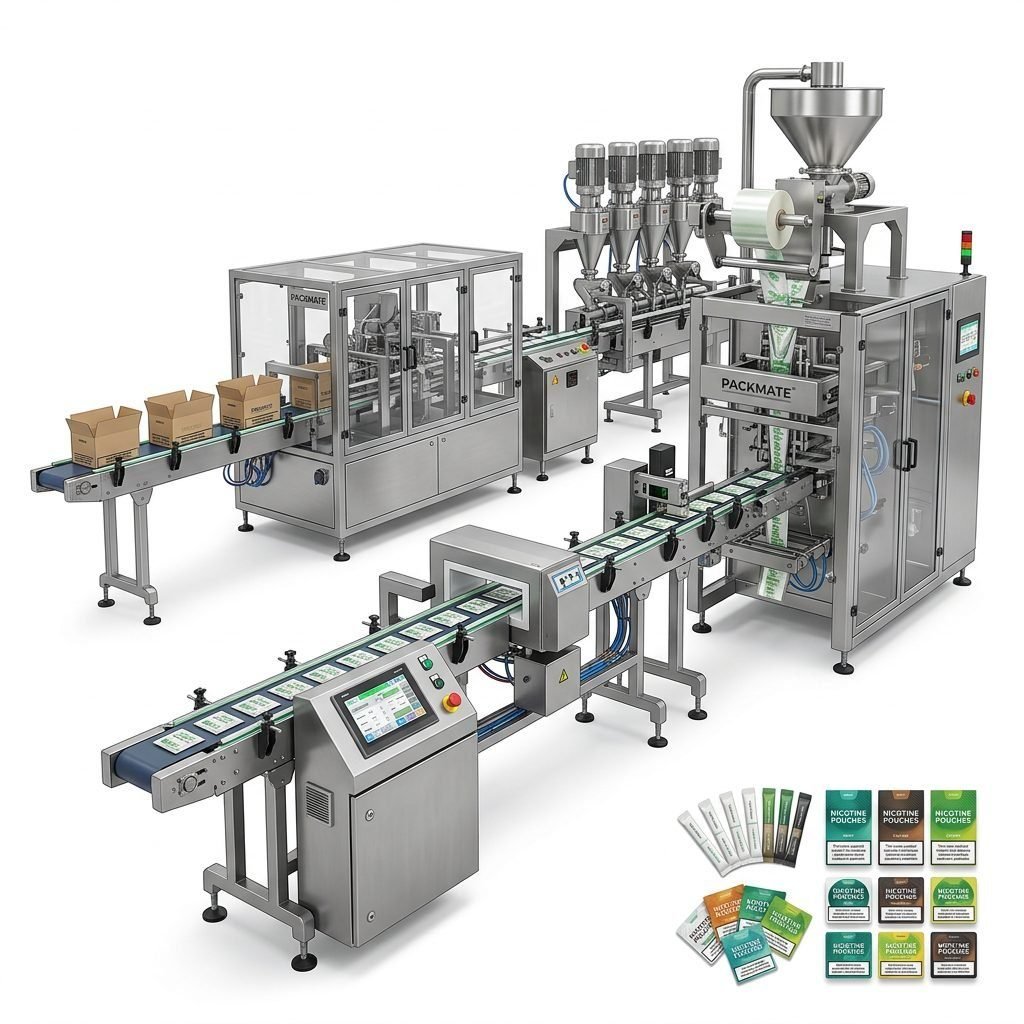
A full nicotine pouch production line typically includes material handling, dosing/weighing, mixing/blending, pouch forming & filling, sealing, secondary packaging, and final inspection & palletizing. Each module must be selected to match the target pouch size, fill weight tolerance, product characteristics (powder, granulate, moisture), and regulatory traceability requirements.
Core Equipment List
The following machines form the backbone of most nicotine pouch lines:
– Feeding & Storage Hoppers for raw material and nicotine salts
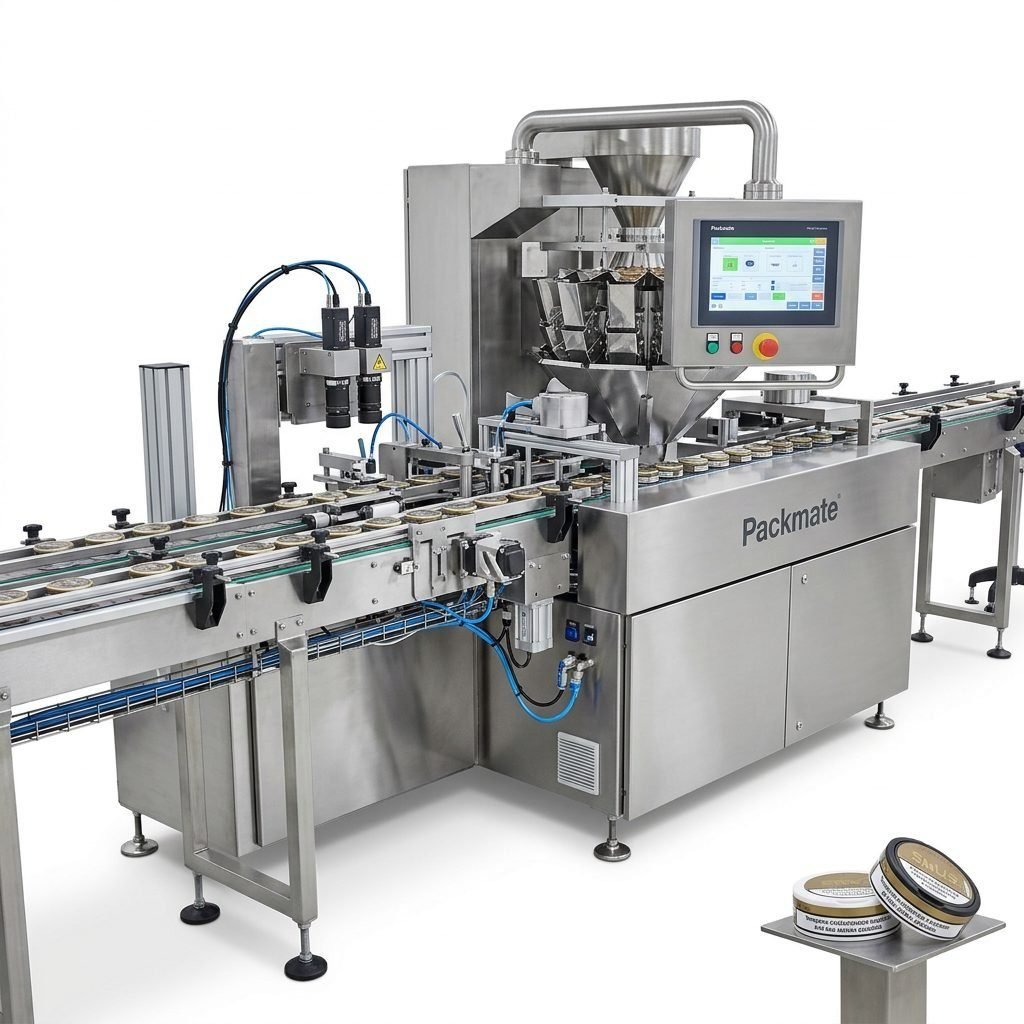
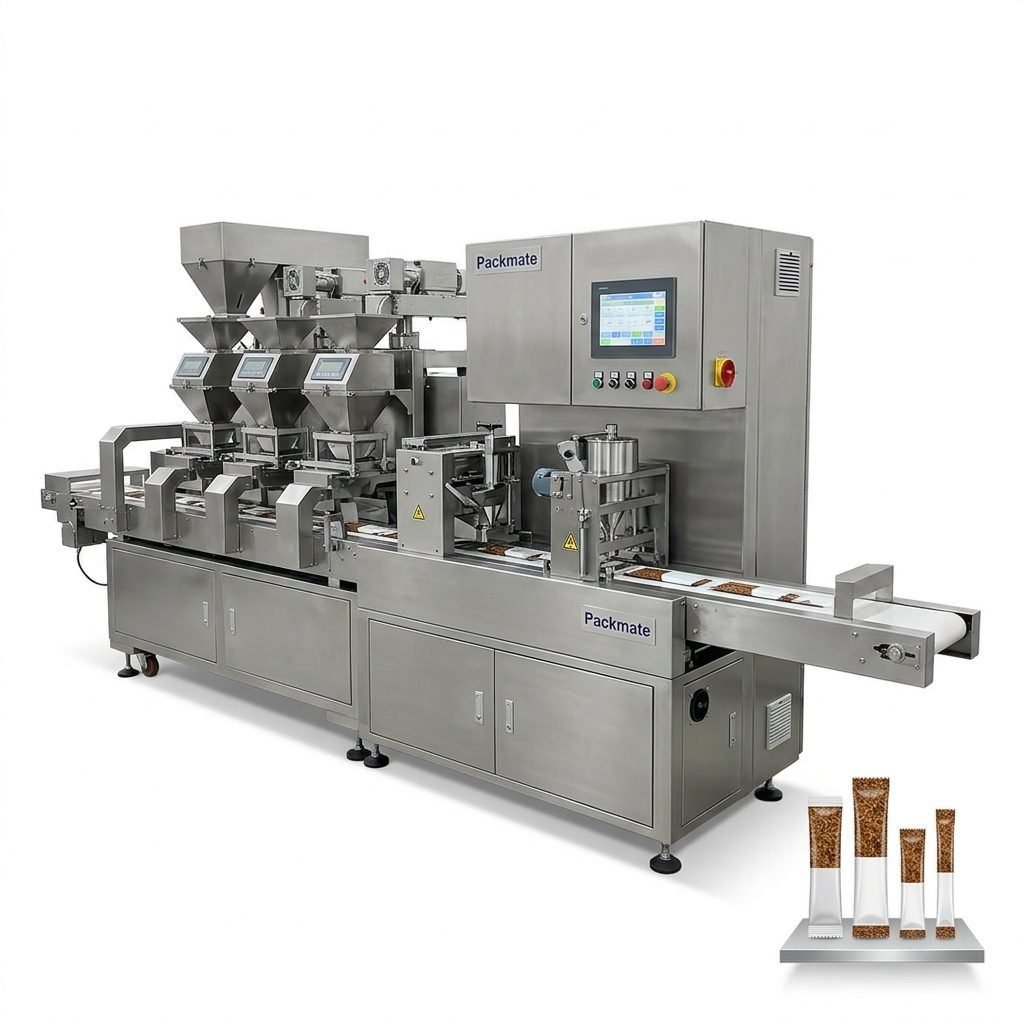
– High-precision Weighing & Dosing Systems for controlled fill weights (Weighing & Packaging Systems)
– Mixing & Homogenizing Equipment for consistent blend distribution
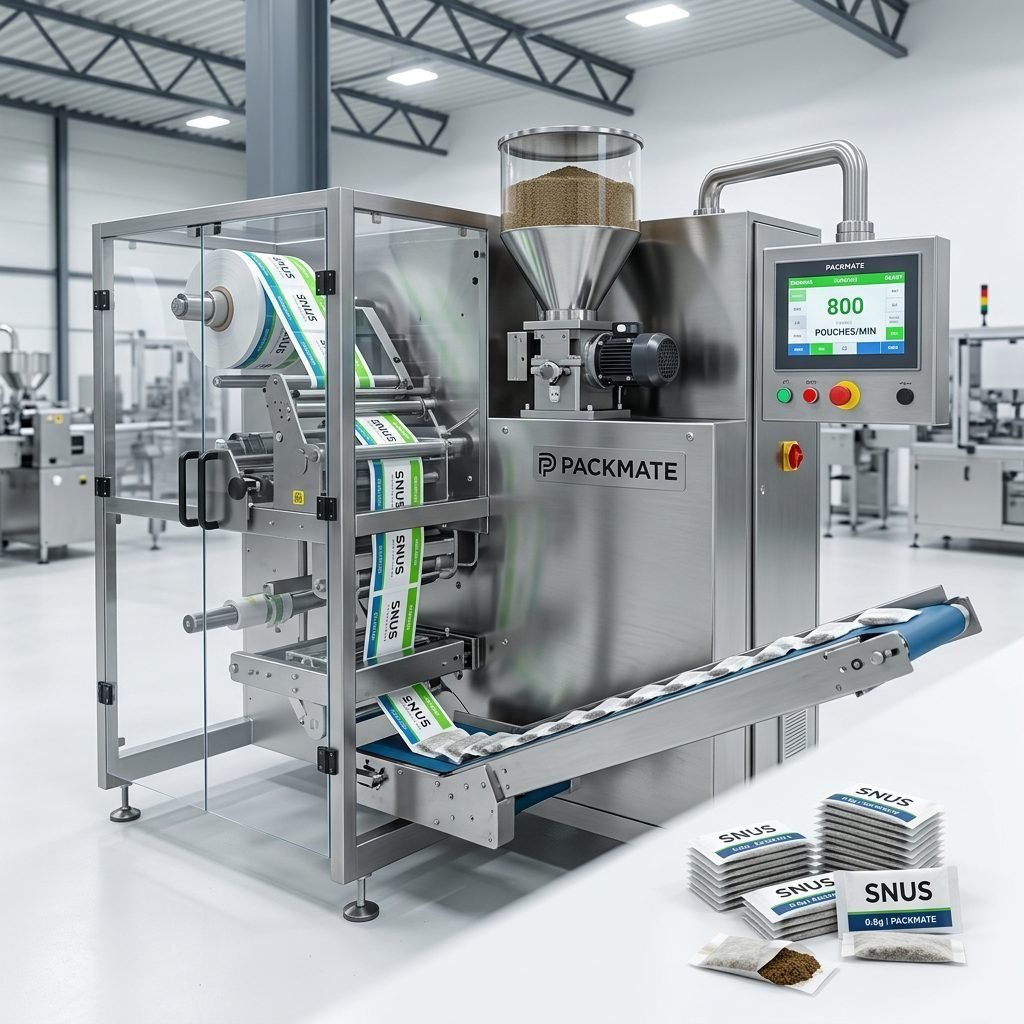
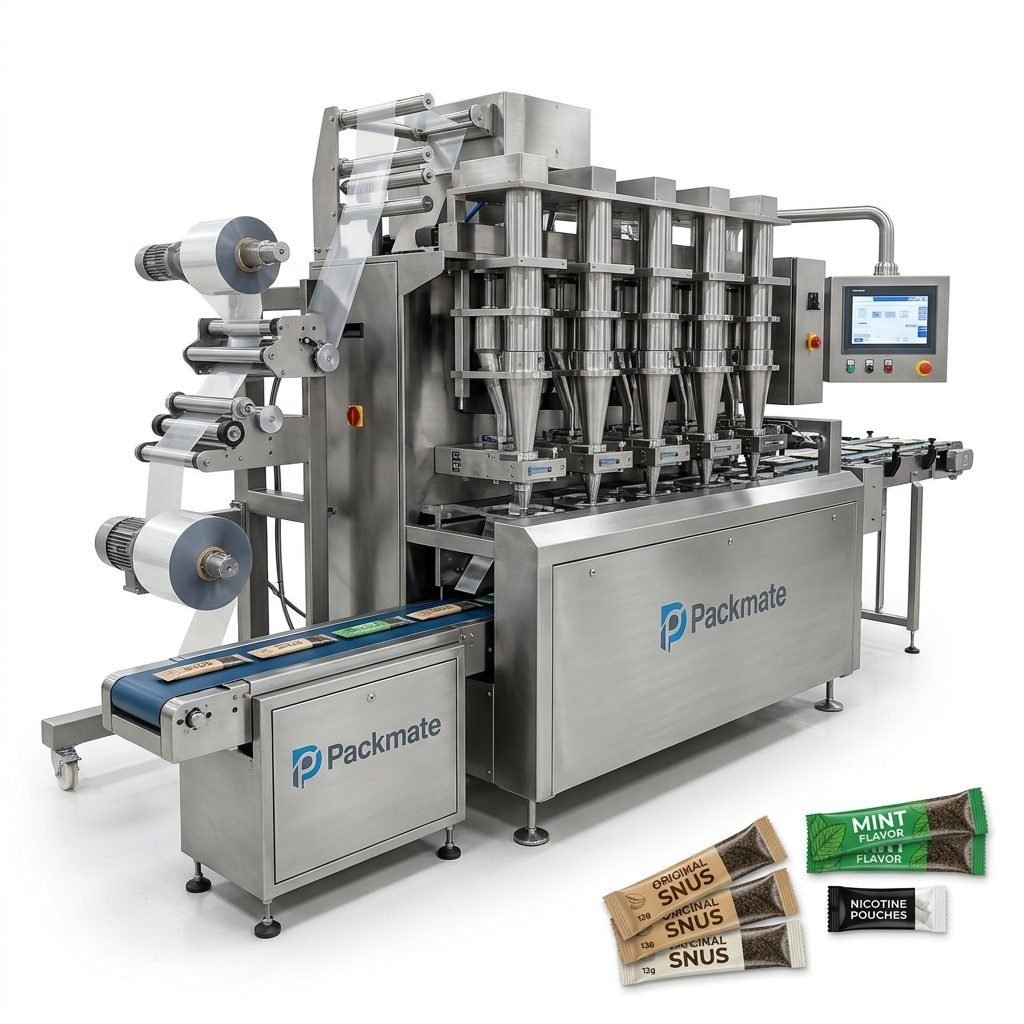
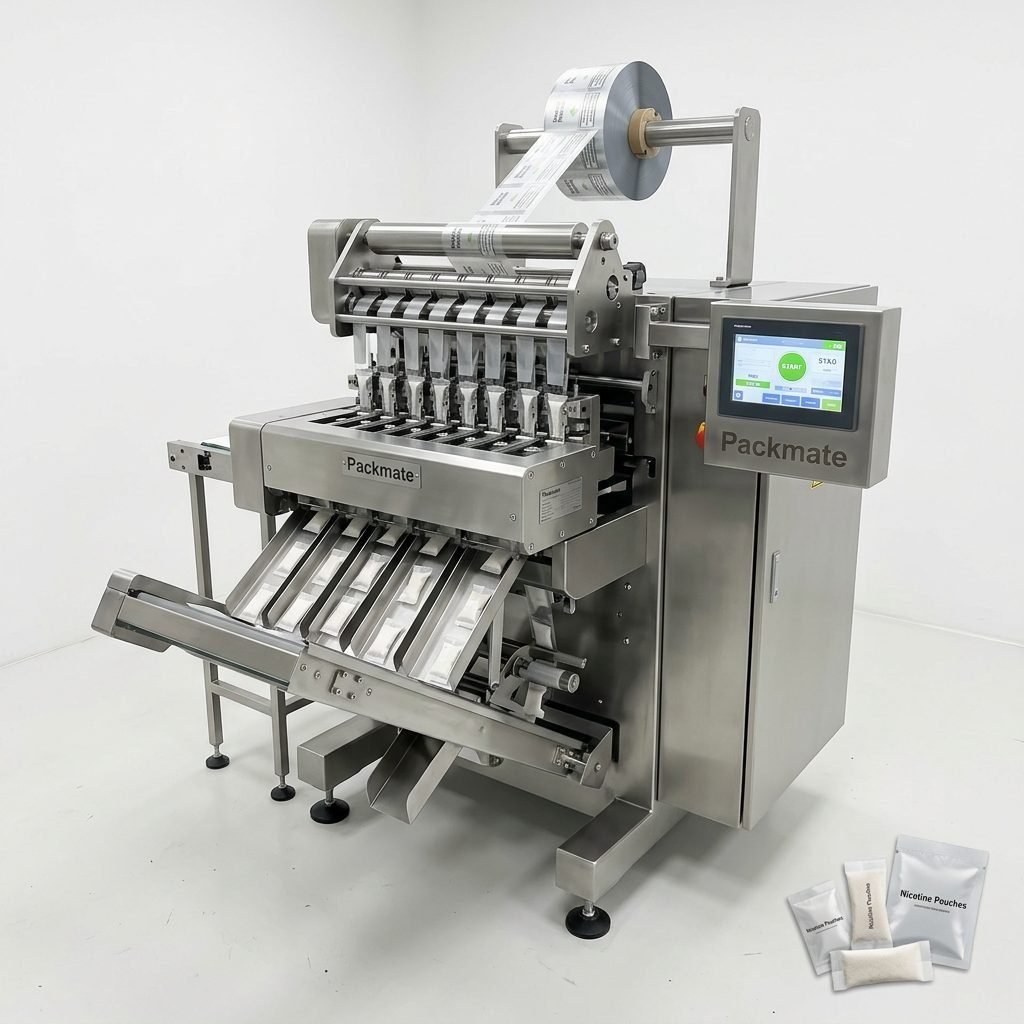
– Pouch Forming & Filling Machines (including multi-lane snus machines) (Snus & Nicotine Packaging Machines)
– Sealing & Cutting Units for precise edge sealing and individual pouch separation
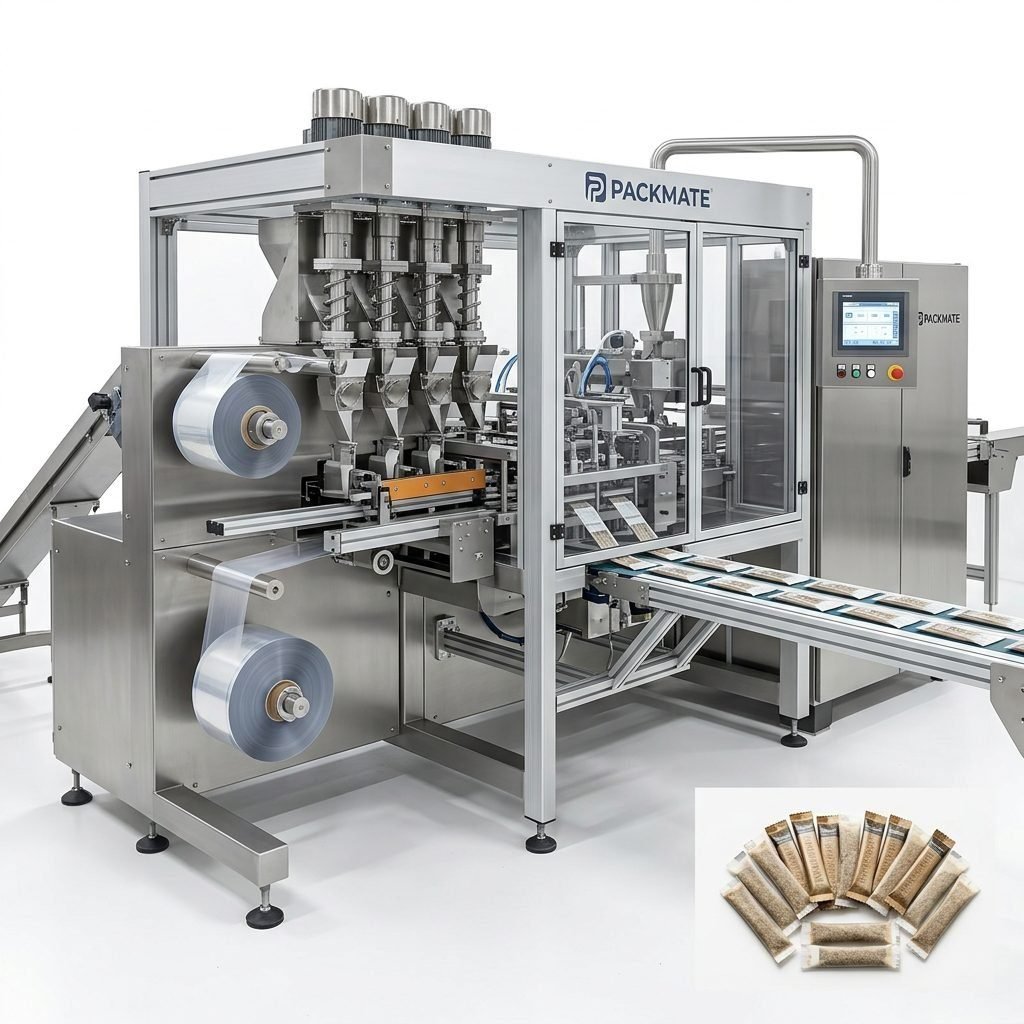
– Secondary Packaging: Cartoning, stickpack, sachet or flow-wrap lines (Bag & Pouch Packaging Machines)
– Inspection Systems: Metal detectors, vision inspection, weight checks
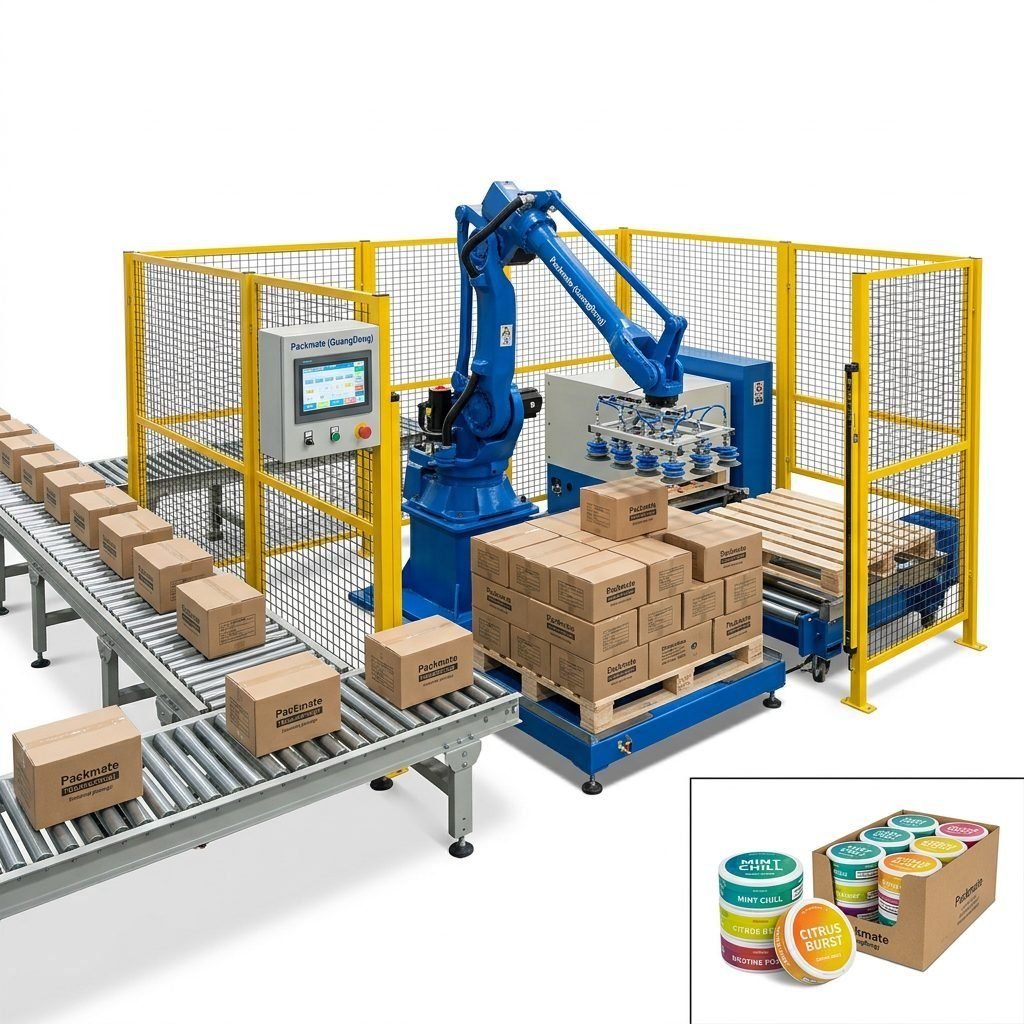
– Palletizing and Case Handling for finished goods distribution
Step-by-Step Production Process
The production flow is a sequence of controlled operations. Below is a typical step-by-step process, with practical tips to optimize throughput and minimize downtime.
1. Raw Material Handling & Pre-Weigh
Raw materials — nicotine salts, fillers, flavors, moisture control agents — are stored in hygienic silos or hoppers. Use pneumatic transfers and inline sieving to prevent clumping. A pre-weigh hopper reduces variance by delivering near-target quantities to the final dosing unit.
2. Mixing & Conditioning
Homogeneous mixing is crucial. Choose mixers with gentle shear or high-shear options depending on particle size and hygroscopicity. Conditioning stations with controlled humidity help produce stable pouch texture and prevent excessive dust.
3. Precise Dosing & Filling
High-accuracy dosing systems (multi-head weighers or auger fillers) feed the pouch forming machine. For low-dose nicotine pouches, tolerance is often ±2–5% of target weight, requiring highly repeatable dosing mechanisms and real-time weight monitoring.
4. Sealing, Cutting & Forming
The pouch former seals material between webs and cuts to size. Select temperature-controlled sealing heads and synchronized motions to avoid seal inconsistencies and reduce debris. Multi-lane formers dramatically increase capacity without inflating footprint.
5. Post-Packaging & Secondary Handling
After individual pouches are produced, they can be grouped into sticks, placed into tins, or cartoned. Auxiliary packaging equipment complements the primary line; see options like stick pack lines and auxiliary units (Auxiliary Packaging Equipment).
Design Considerations for High-Performance Lines
Designing a production line requires balancing throughput, footprint, uptime, and regulatory traceability. Important factors include modularity, CIP (clean-in-place) compatibility, changeover speed, and the ability to handle variable pouch sizes with minimal tool changes.
Quality Control, Certifications & Compliance
Regulatory compliance and quality assurance are non-negotiable. Look for equipment and lines that support CE and ISO standards, provide GMP-friendly design, and facilitate traceability through batch codes and digital logging. Inline metal detectors, vision inspection for seal integrity, and automated weight verification are essential control points.
Packmate’s lines meet international standards and are backed by factory certifications to ensure safe, repeatable production—details and certifications can be reviewed on the company profile and certificate pages (Certificate).
Factory Capabilities & Customization
A robust manufacturing partner provides machining precision, assembly expertise, and testing protocols. With advanced CNC centers and a 20,000㎡ facility, suppliers can supply standard models as well as bespoke turnkey solutions. Customization may include:
– Multi-lane configurations for higher throughput
– Integration with upstream dosing and downstream packaging lines (Filling & Packaging Lines)
– GMP-compliant surfaces and materials
– Automated changeover kits for flexible pouch formats
Installation, Commissioning & After-sales Support
Proper installation and commissioning ensures target performance is met. Reputable manufacturers provide on-site startup, operator training, preventive maintenance plans, and remote diagnostics. Be sure the vendor offers spare parts, service contracts, and documentation to reduce downtime.
Cost Drivers & Layout Considerations
Major cost components include equipment capital, installation, utilities (compressed air, power), and facility modifications for cleanrooms or dust control. Floor layout should minimize product travel and allow for safe material flows, operator access, and maintenance clearances. Plan for future expansion: reserve space and modular interfaces to add lanes, packaging, or quality equipment.
Case Examples & Where to See Machines
Many manufacturers demonstrate lines at industry exhibitions and customer sites. Reviewing case studies helps understand real-world performance and deployment scenarios; see examples and exhibition activity for practical insights (Case, Our Exhibition).
Purchasing Checklist
Before ordering, verify the following:
– Proven accuracy of dosing systems at your target weight
– Ease of cleaning and maintenance access
– Availability of spare parts and local support
– Compliance with local regulations and documentation
– Scalability options such as multi-lane upgrade paths
Selecting the Right Supplier
Choose suppliers with experience in nicotine pouch or snus packaging. Look for companies with a track record, strong technical support, and demonstrated capability to deliver turnkey solutions — including weighing, forming, and downstream packaging. Learn more about supplier backgrounds and mission statements on the About page (About Packmate).
Conclusion
Building an efficient nicotine pouch production line requires a careful selection of high-precision dosing and forming equipment, robust QA systems, and scalable design to accommodate future growth. Working with an experienced manufacturer ensures regulatory compliance, reliable after-sales service, and access to modular upgrades that protect your investment.
Common Questions
Q1: How do I choose between multi-lane and single-lane pouch machines?
A1: Multi-lane systems are ideal when you need high throughput with limited floor space. Single-lane lines are simpler and cheaper for low-volume production or R&D. Consider changeover complexity, maintenance, and initial capital.
Q2: What are typical tolerance levels for nicotine pouch filling?
A2: Tolerance depends on regulation and product design; common industry targets are ±2–5% of nominal fill. Use high-precision weighers and in-line weight verification to maintain compliance.
Q3: Do manufacturers provide turnkey lines and installation support?
A3: Many experienced suppliers offer turnkey solutions, on-site commissioning, and operator training. Confirm spare parts availability and service contracts before purchase; contact your vendor for details (Contact Us).
Q4: What certifications should I expect from reputable equipment suppliers?
A4: Suppliers typically provide CE and ISO documentation, plus machine-specific certificates. Verify compliance relevant to your market and request test reports and QA documentation.
Q5: How can I evaluate a supplier’s real-world performance?
A5: Ask for case studies, customer references, and live demonstrations at exhibitions or customer sites. Review published case examples and exhibition participation to assess experience and reliability (Case).