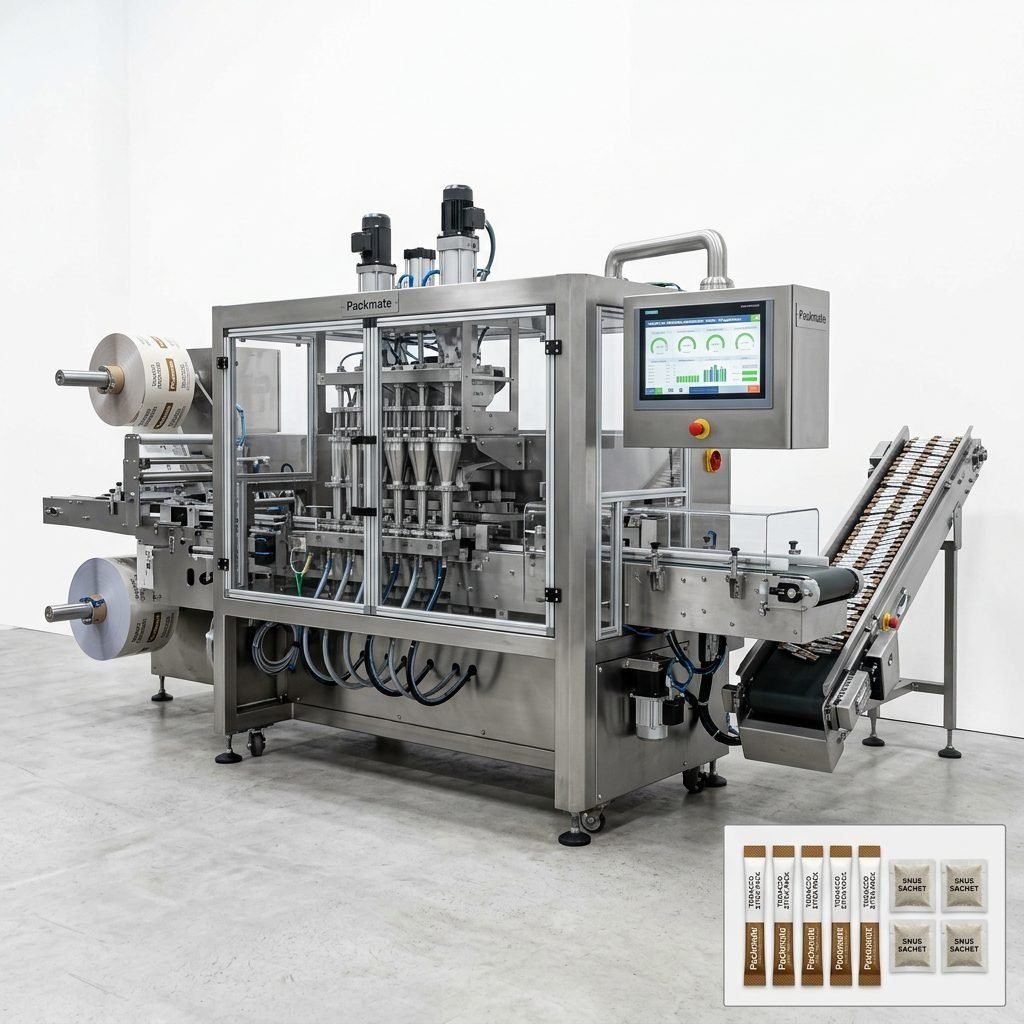
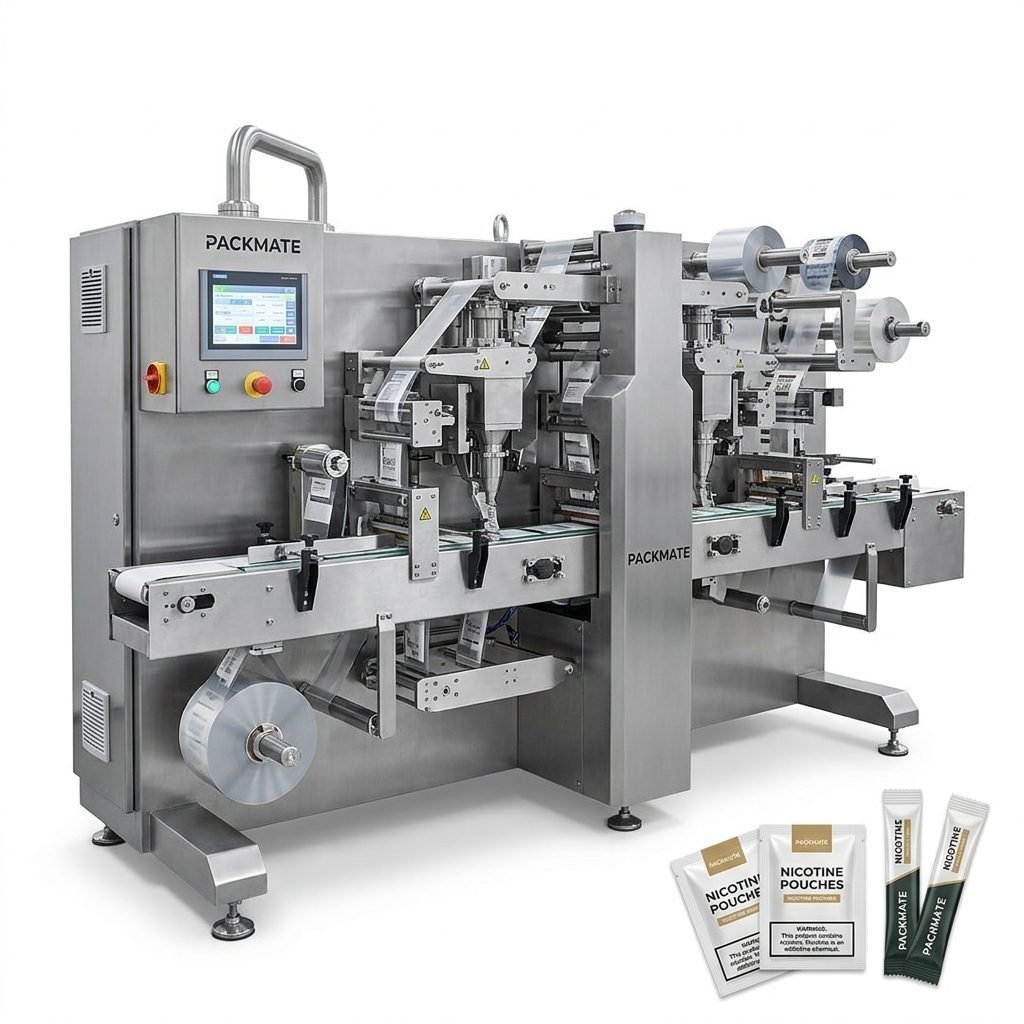
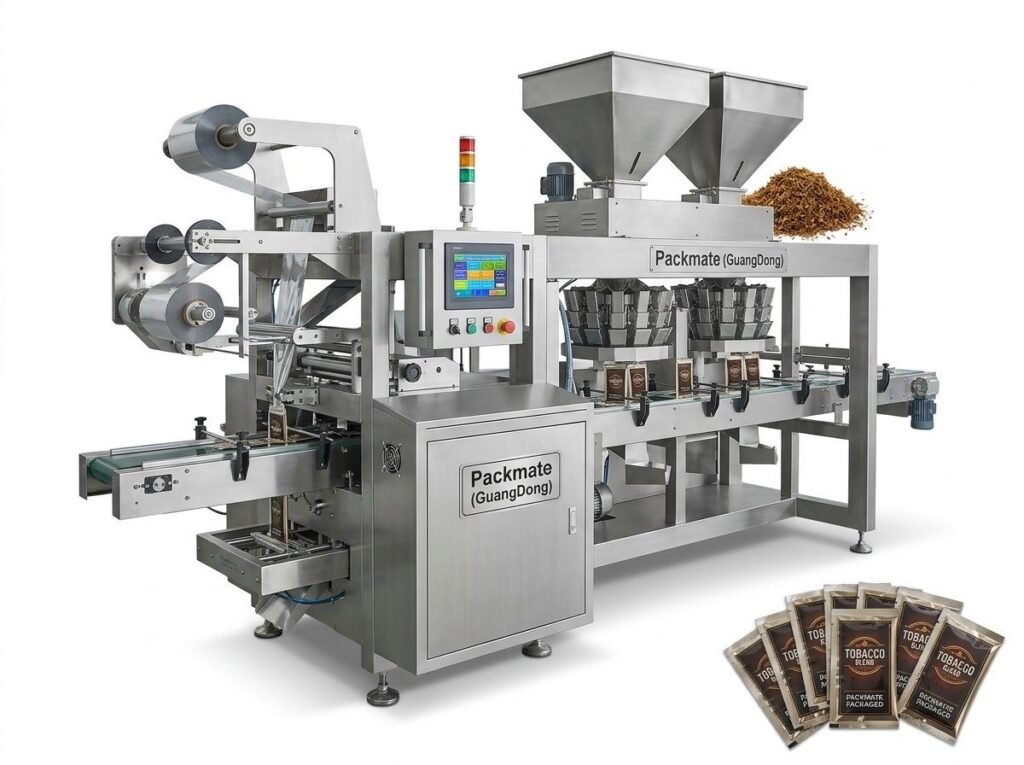
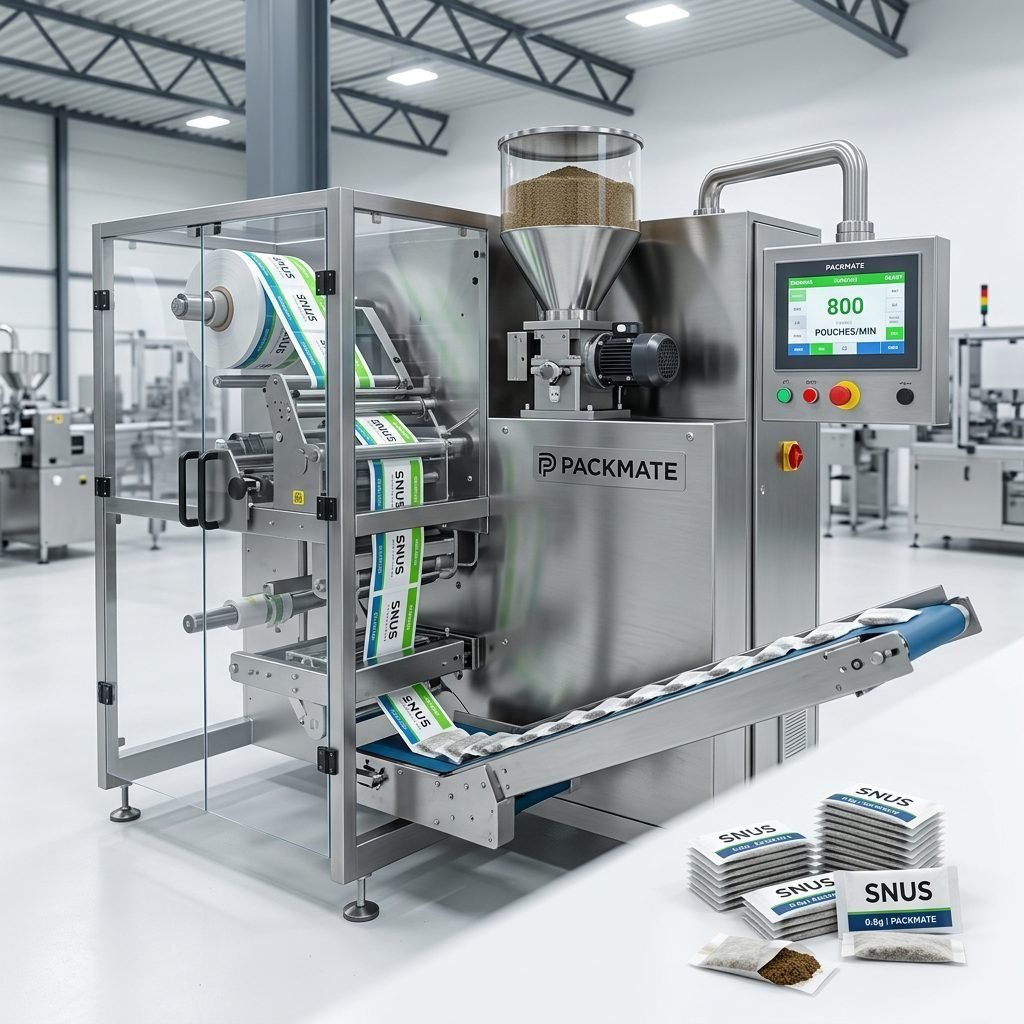
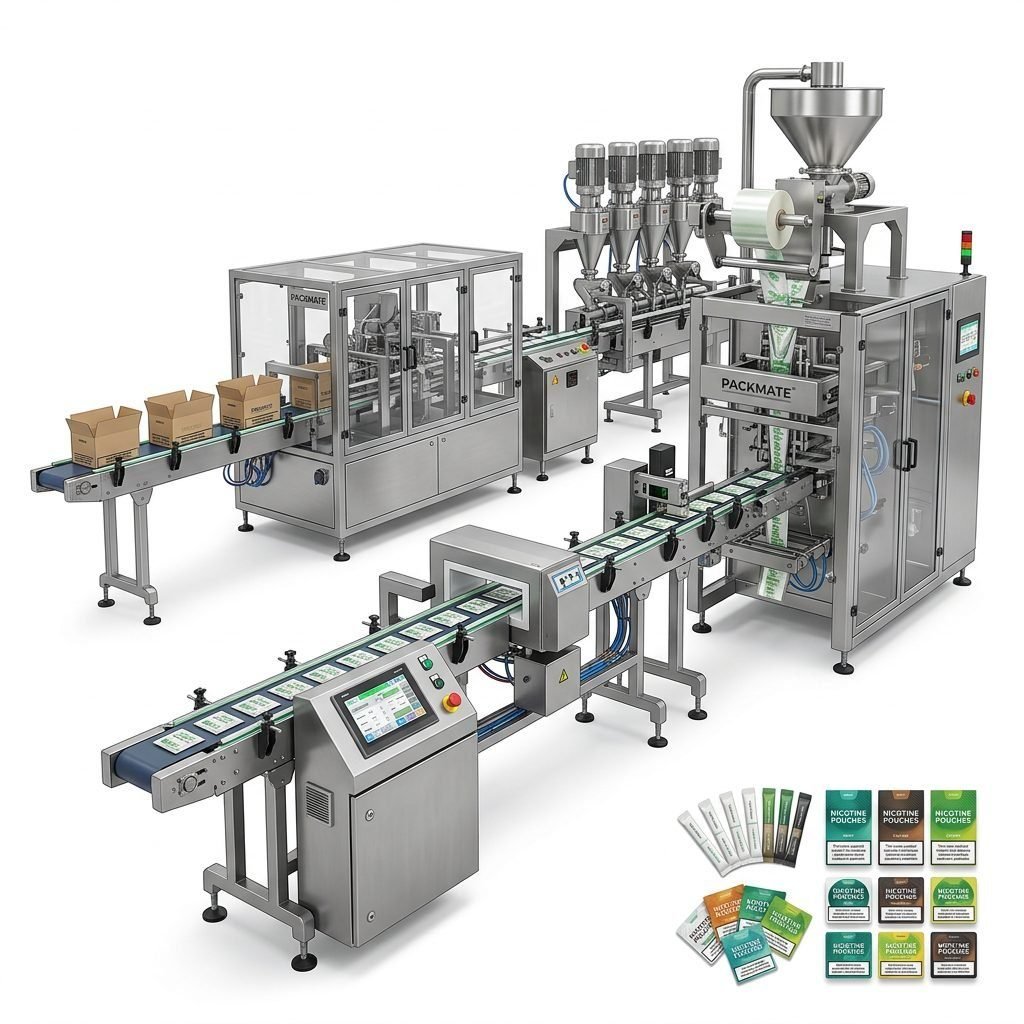
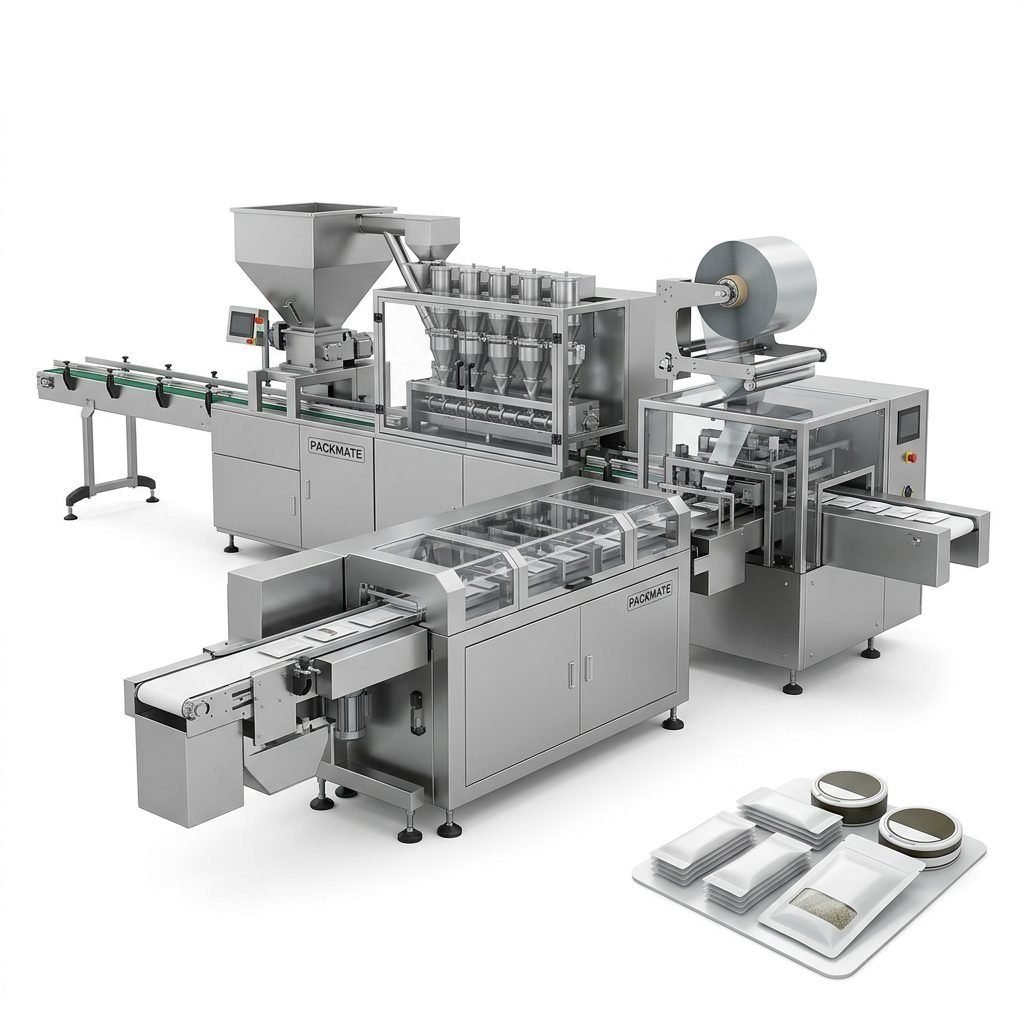
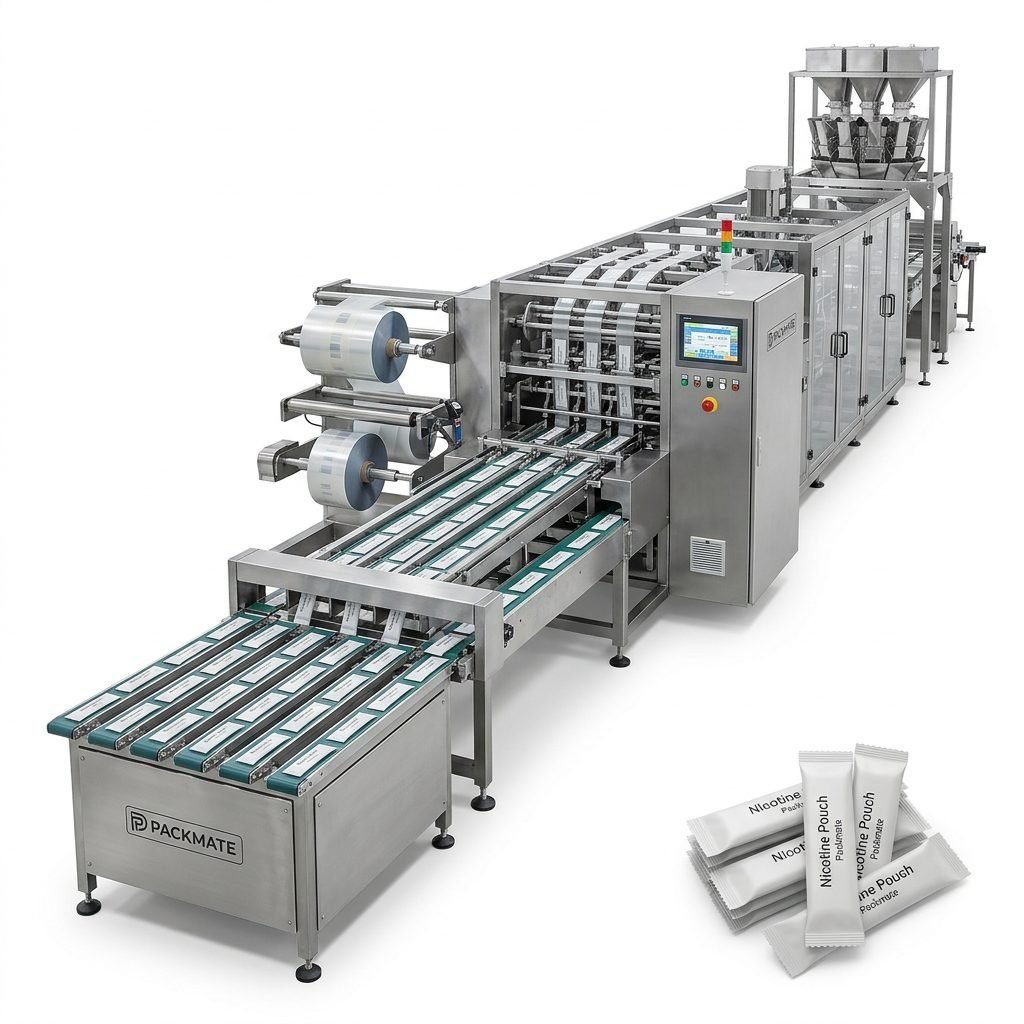
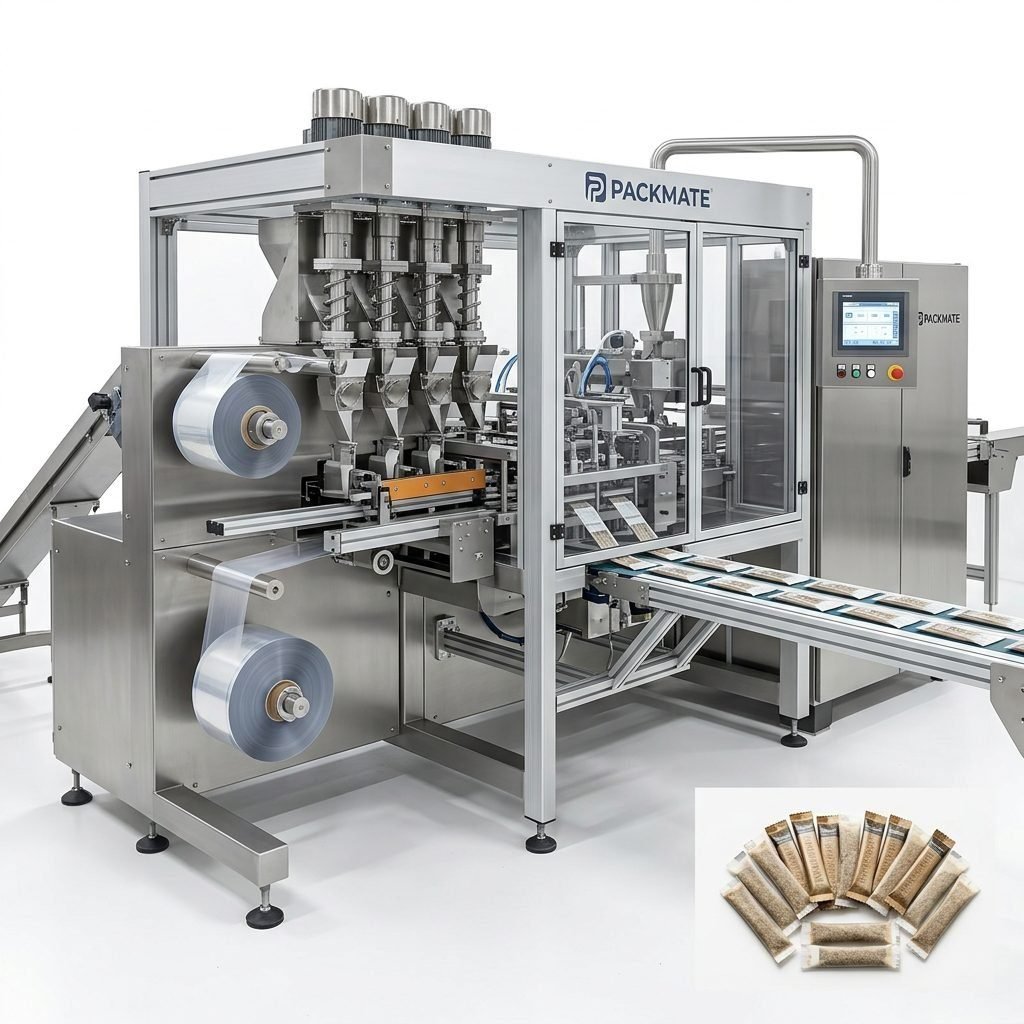
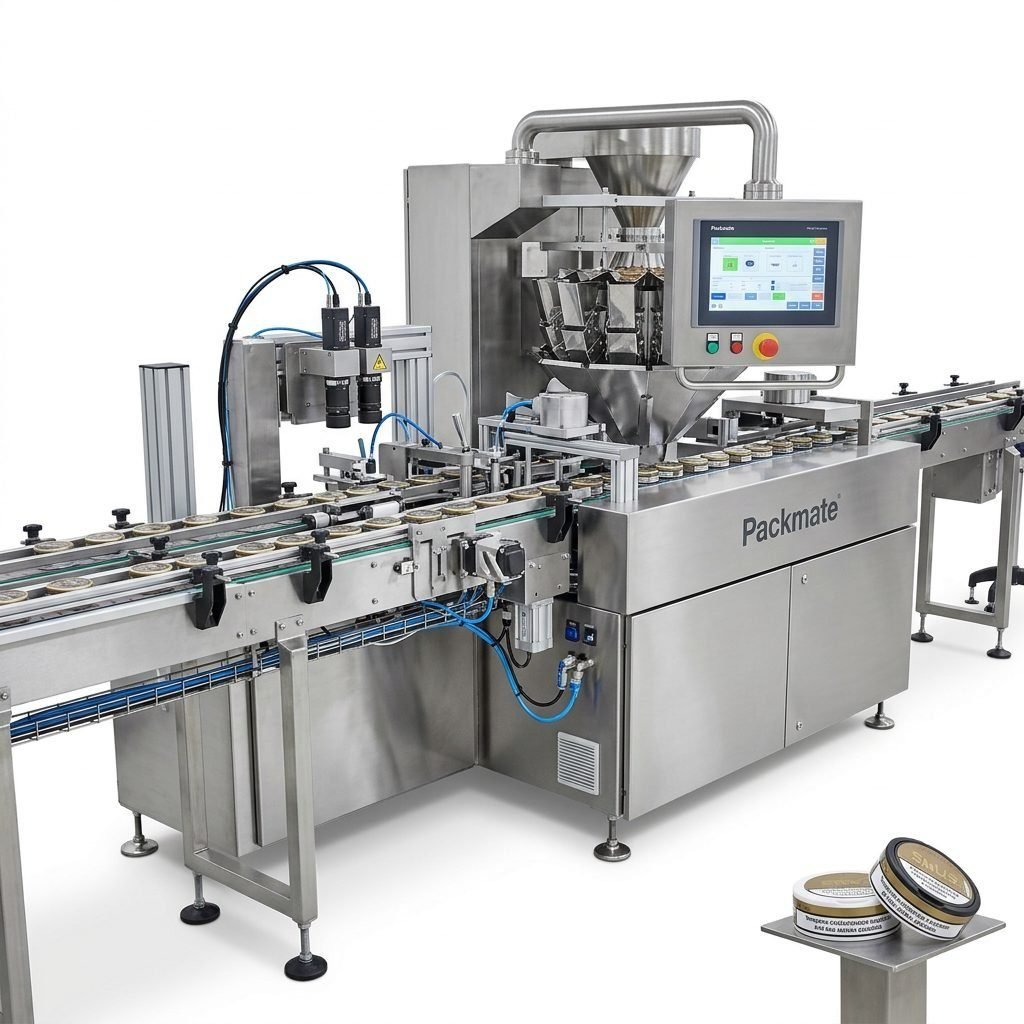
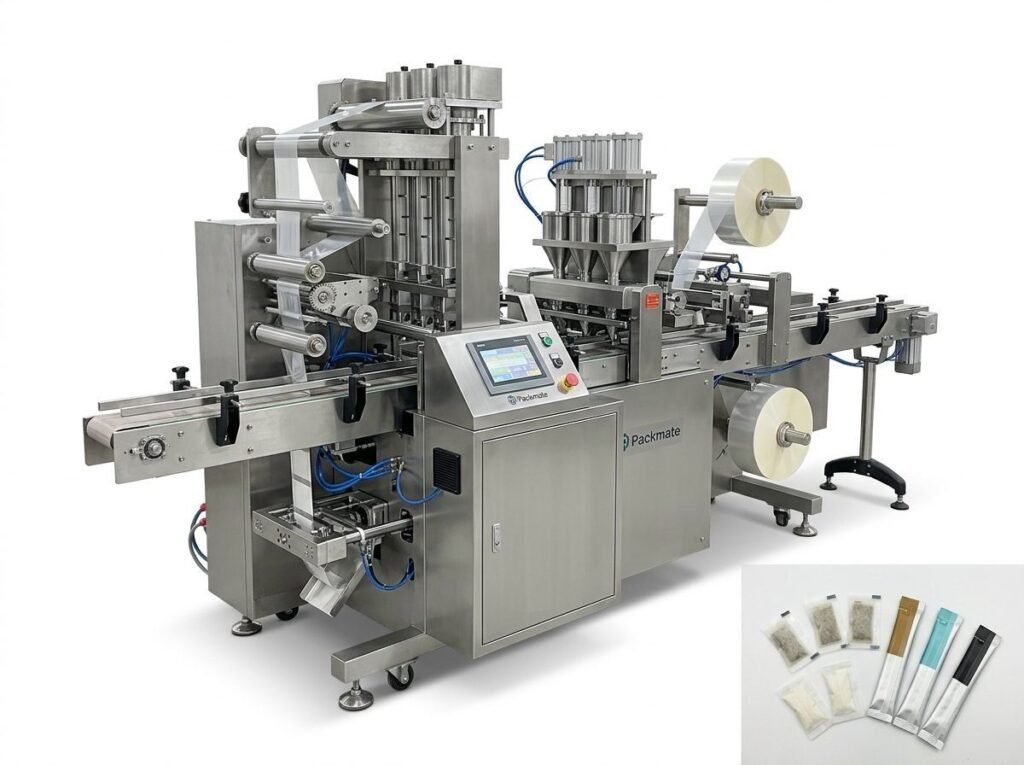
The nicotine pouch market is expanding rapidly, and choosing the right packaging equipment is one of the most important investments a manufacturer will make. This guide breaks down nicotine pouch machine costs, explains the factors that influence price, and offers practical budgeting and ROI tips for manufacturers evaluating single machines or full turnkey lines.
What You’re Actually Paying For
When you request a quote for a nicotine pouch packing machine, the line item you receive typically hides several cost components. Understanding each component helps prevent surprises and ensures you budget properly for installation and commercial-scale production.
Core cost components
- Base machine price (mechanical structure, drive systems, frame)
- Filling & dosing modules (volumetric, auger, loss-in-weight, or customized dosing)
- Control systems (PLC, HMI, servo motors, sensors)
- Infeed & outfeed conveyors, reject systems and packaging conveyors
- Optional modules: multi-lane feeding, stick/sachet converters, vacuum systems
- Installation, training, and commissioning
- Documentation, certifications (CE/ISO), spare parts and tooling
Typical Price Ranges — From Small Lines to Turnkey Systems
Exact prices vary by region, supplier, and customization levels. Below are representative ranges to help frame budgets. These are indicative and should be verified with a quoted proposal.
Entry-level / Single-lane machines
For startups and R&D batches: $25,000 – $60,000. These systems cover basic pouch filling and sealing at lower speeds and may require manual feeding.
Mid-range single/multi-lane packaging lines
Industry-standard equipment with better automation, dosing accuracy and modest throughput: $60,000 – $200,000. Multi-lane configurations that boost output sit in this band.
High-end turnkey production lines
Complete automated lines with weighing systems, multi-lane pouchers, automatic feeding, secondary packaging and integration with upstream/downstream processes: $200,000 – $800,000+, depending on capacity and customization.
Key Factors That Drive Machine Cost
Several design and business considerations have outsized impact on final pricing. Evaluate each one carefully when comparing quotes.
1. Production speed and lanes
Throughput is one of the largest cost drivers. Multi-lane machines that produce many pouches per cycle require more complex feeding, synchronization, and servo systems. Doubling lanes significantly increases both machine complexity and price, but reduces unit cost at volume.
2. Dosing accuracy and product characteristics
Fine powders, tobacco blends, and small-dose nicotine pouch formulas need precise dosing. Higher-accuracy dosing systems (loss-in-weight, multi-head weighers) increase capital cost but reduce material waste and regulatory risk.
3. Automation & control features
Advanced PLCs, touch-screen HMIs, servo motors, automatic changeovers, and remote diagnostics elevate the machine price but improve uptime and ease of operation — important for large-scale manufacturers prioritizing reliability.
4. Materials of construction and hygienic design
Stainless steel 304/316, polished surfaces, and food/pharma-grade seals add to the expense. If you require cleanability and compliance for nicotine-related products, invest in hygienic designs to avoid contamination and downtime for cleaning.
5. Certification, testing and compliance
CE, ISO and other documentation, FAT/SAT testing, and compliance work often appear as additional line items. These are important for export markets and to reduce regulatory risk.
Hidden and recurring costs
- Installation and commissioning fees
- Spare parts inventory and tooling costs
- Training operators and maintenance staff
- Shipping, customs duties and local taxes
- Facility upgrades: compressed air, power, dust control
How to Evaluate Total Cost of Ownership (TCO)
TCO goes beyond machine price. Use these metrics to forecast profitability and payback period.
Key metrics to calculate
- Throughput (pieces/min) — multiply by operational hours to estimate daily output
- Downtime percentage — realistic maintenance and changeover losses
- Material yield — waste rates caused by dosing inaccuracies or rejects
- Labor cost per shift and operator-to-machine ratio
- Energy consumption and utility costs
- Spare parts consumption rate and lead times
Budgeting Tips & Cost-saving Strategies
Whether you’re buying your first nicotine pouch machine or expanding capacity, these practical tips help control capital and operating expenses.
Top tactics
- 🔍 Start with a modular plan — buy a robust base machine and add lanes or modules later.
- 💡 Choose proven dosing technology — slightly higher capital for precision dosing often pays off in lower waste.
- ✅ Negotiate spare parts packages and include critical consumables in the initial purchase to secure better pricing.
- ⚠️ Factor in acceptance testing — insist on FAT (Factory Acceptance Test) and on-site SAT before final payment.
- 📈 Consider multi-year service contracts or local service partners to reduce emergency repair costs and downtime.
- 💸 Explore financing, leasing and trade-in options to smooth cash flow for large turnkey investments.
Selecting the Right Supplier
Supplier expertise, after-sales service, and engineering capability influence both initial purchase and long-term operational costs. Look for partners with proven nicotine pouch experience and global references.
What to verify
- Past project references and exhibition presence (can you see machines in operation?).
- Engineering and manufacturing capacity — in-house CNC & assembly reduces lead times.
- Certifications and documentation for export markets.
- Availability of spare parts and training services close to your facility.
If you’d like to review machine families and real production examples, consider exploring a supplier portfolio that includes Snus & Nicotine Packaging Machines and integrated Filling & Packaging Lines for reference. Manufacturer pages and case studies help validate performance claims.
Estimating Payback and ROI
Simple ROI estimates help guide investment decisions. Use a realistic scenario: expected daily production, average selling price per pouch pack, material cost and operating margins to compute monthly gross profit and payback time.
Example (simplified)
If a line costs $250,000 and produces 200,000 pouches/month with gross margin of $0.02 per pouch, monthly gross profit is $4,000 and payback ~62 months. Improving throughput, reducing downtime, or increasing margin shortens payback significantly.
Practical Purchasing Checklist
Use this checklist when comparing offers from suppliers to ensure you understand what is and is not included in the quoted price.
- Detailed scope: machine modules, spare parts list, tooling and consumables included
- Performance guarantees: speed, accuracy, and typical reject rates
- Warranty terms and excluded wear parts
- Training: operator and maintenance training days on-site
- Delivery terms: FOB/CIF, shipping, customs, installation responsibilities
- Testing: FAT, witnessed tests, and final acceptance criteria
- Support: local service partner or remote diagnostics capability
Why Choose an Experienced Manufacturer
Experienced manufacturers bring engineering maturity, predictable lead times and proven spare parts management. A supplier with 20,000㎡ manufacturing capability and advanced CNC centers can better control quality and offer custom solutions tailored to nicotine pouch requirements.
Explore supplier background and product lines directly: About Packmate, review Case studies and contact their team via Contact Us to request tailored proposals and FAT invitations.
Final Procurement Advice
Make decisions based on TCO rather than lowest sticker price. Prioritize suppliers who can demonstrate field performance, provide local support, and offer scalable modular solutions. Expect to invest in commissioning, spare parts and operator training — these items drive long-term uptime and efficiency.
Quick summary
Plan for more than the machine price: include installation, spare parts, certification, and training. Evaluate suppliers by references, manufacturing capability and after-sales support to protect your investment.
Frequently Asked Questions (FAQ)
Q1: How much should I expect to spend for a reliable production-capable nicotine pouch line?
A typical production-capable multi-lane line can range from $100,000 to $500,000+ depending on throughput, dosing technology and level of automation.
Q2: Are used machines a good option?
Used machines reduce capital outlay but can carry higher lifecycle and spare-part risk. If choosing used equipment, verify service history, run-time, and request a witnessed test or video demonstration.
Q3: What are the main operating costs after purchase?
Beyond labor, the main recurring costs are spare parts, consumables (seals, belts, nozzles), energy, preventive maintenance and periodic calibration for dosing systems.
Q4: How do I reduce unit cost per pouch quickly?
Increase uptime and throughput, improve dosing accuracy to reduce material waste, and optimize packaging format or lanes to amortize fixed costs over higher production volume.
Q5: Where can I see real machine examples and request quotes?
Visit manufacturer product pages and case studies to evaluate models, performance and references. For example, check the Snus & Nicotine Packaging Machines product line and request demo quotes via the supplier contact channels.