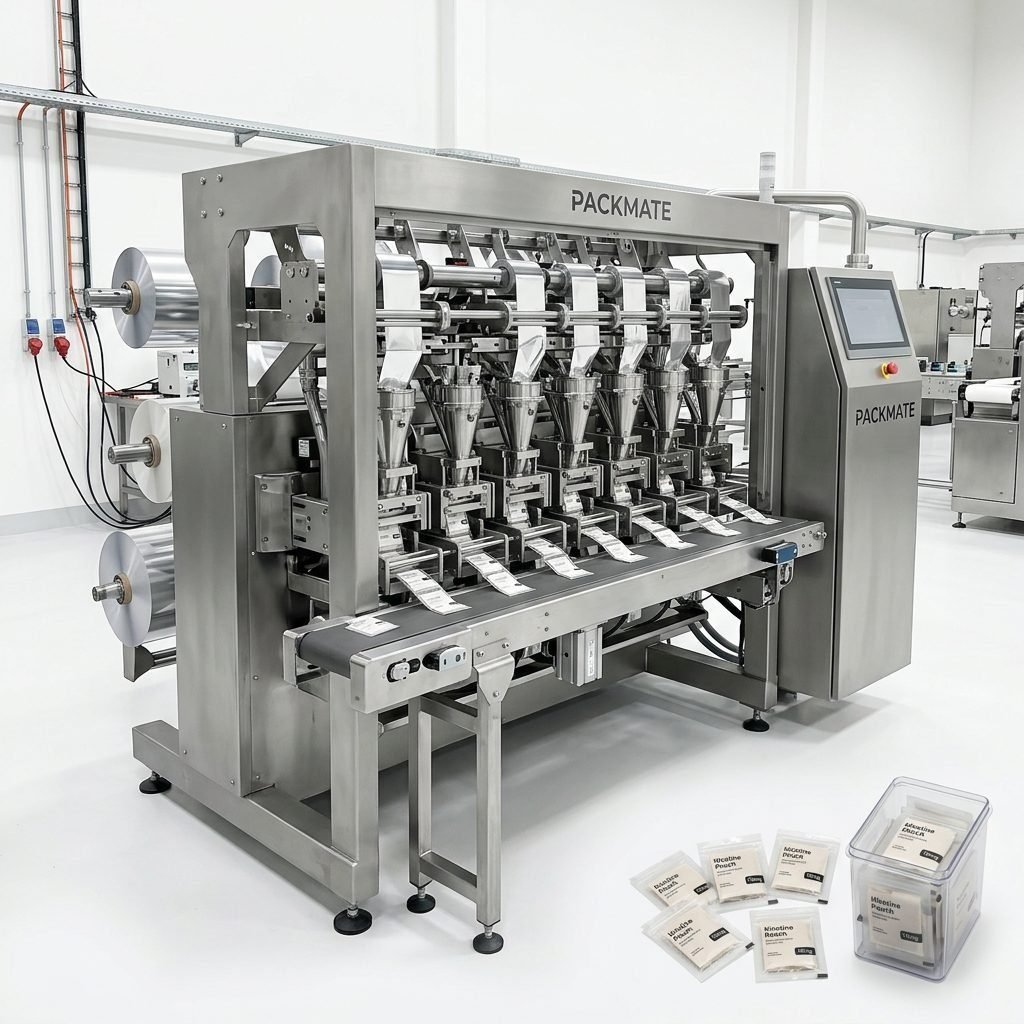
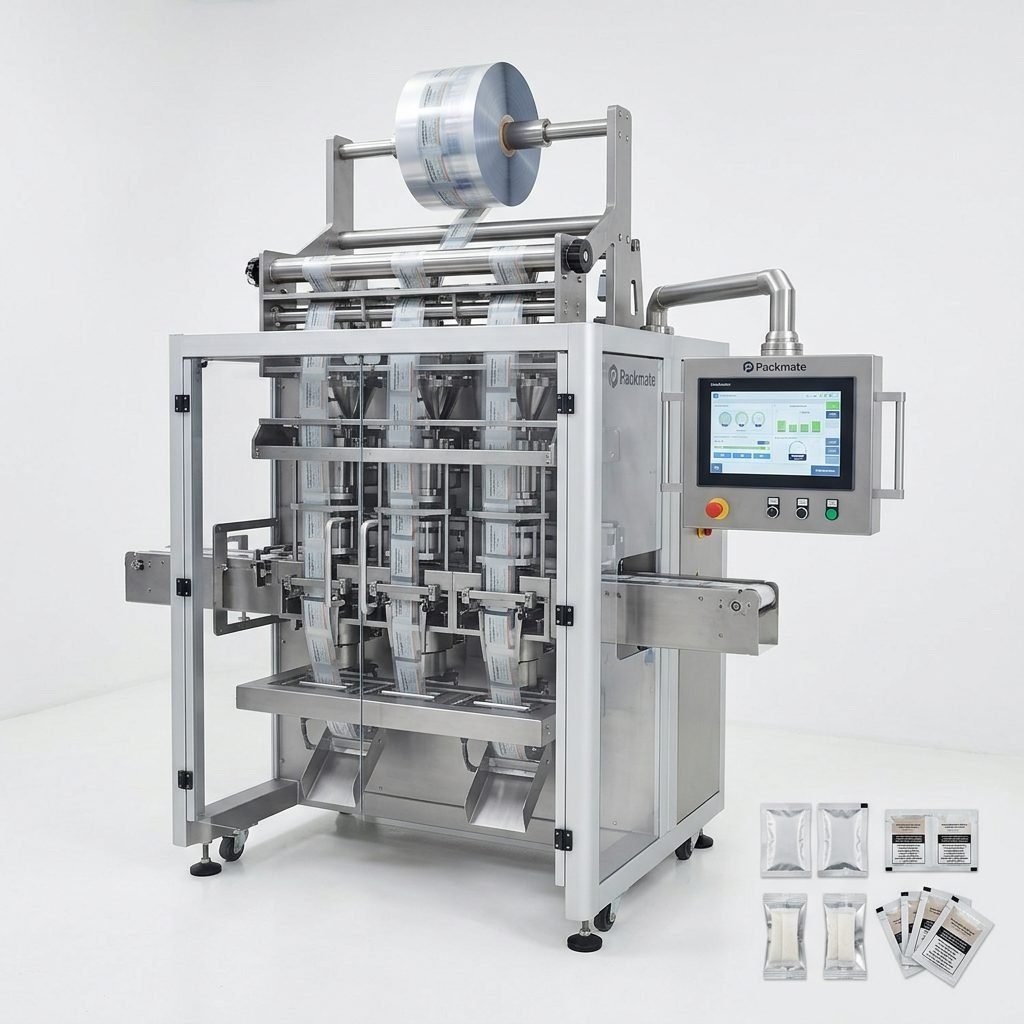
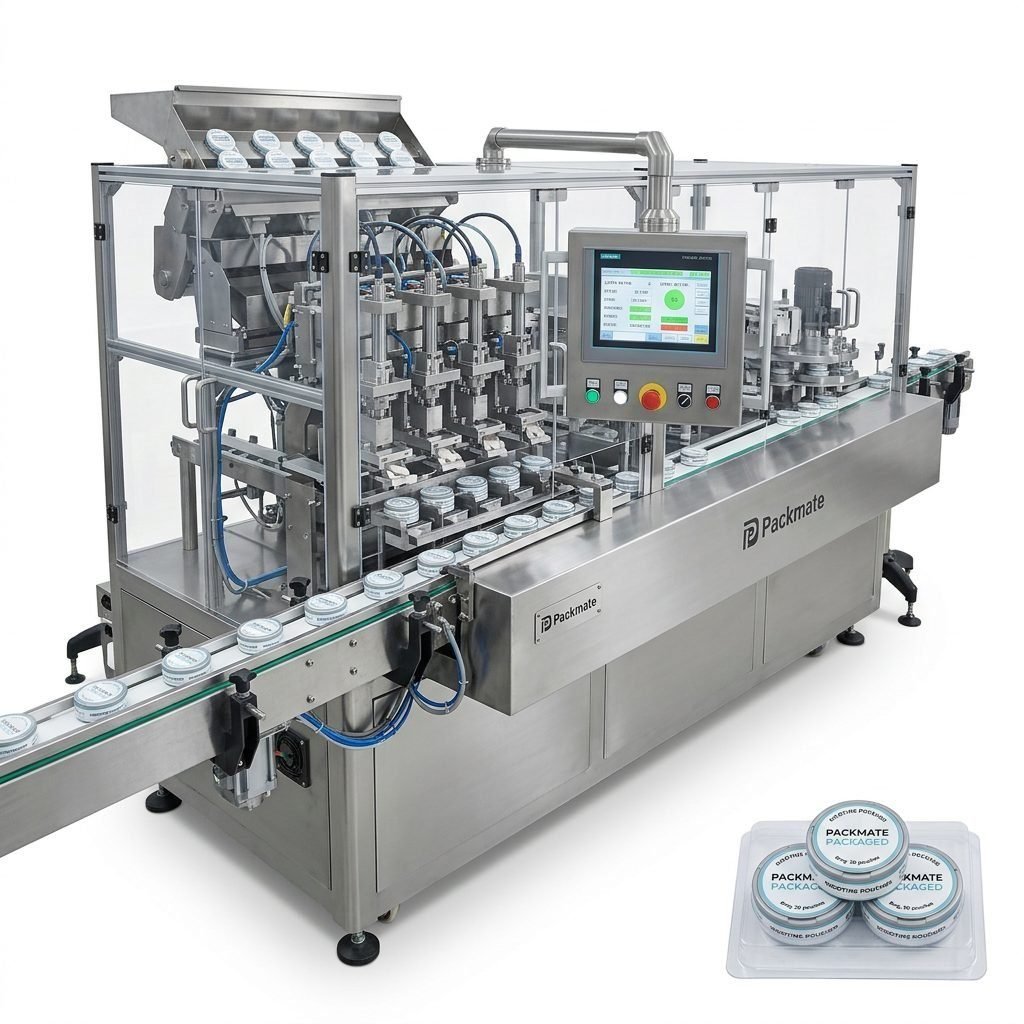
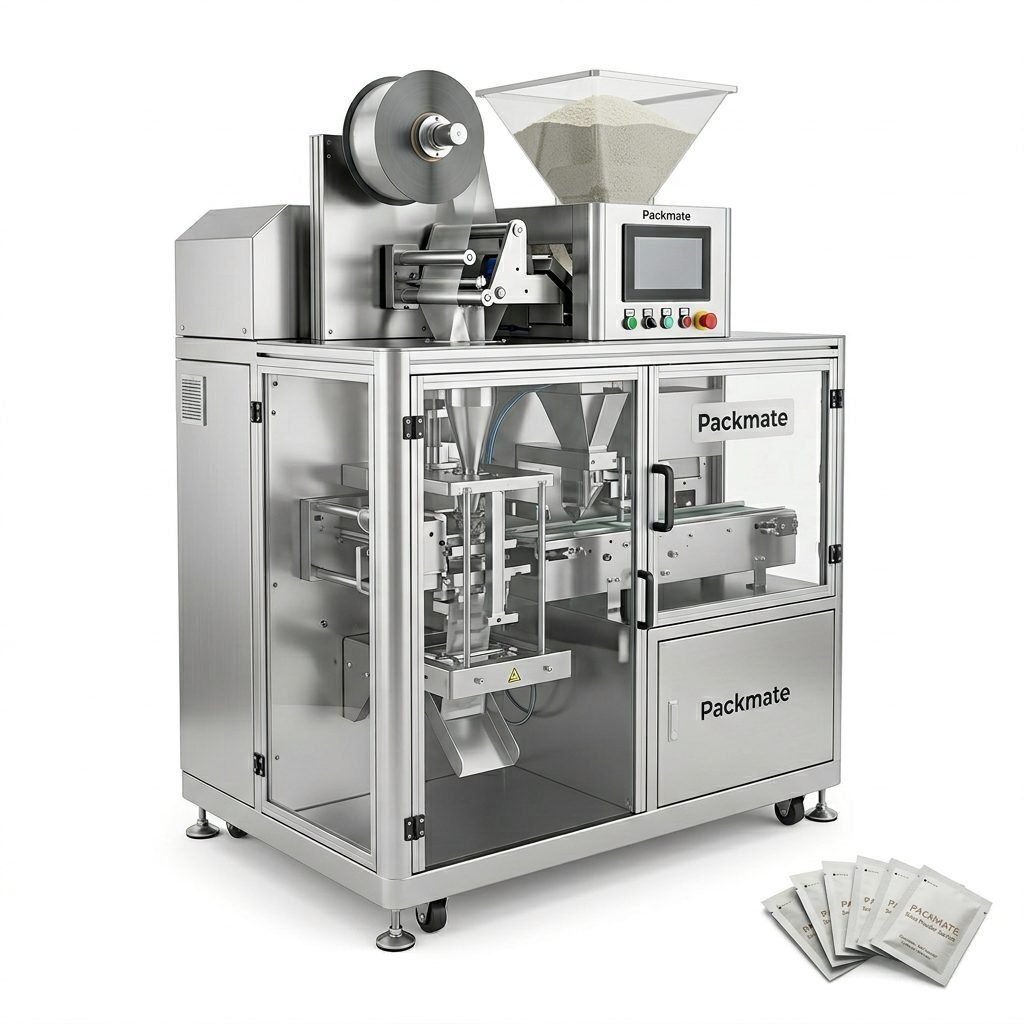
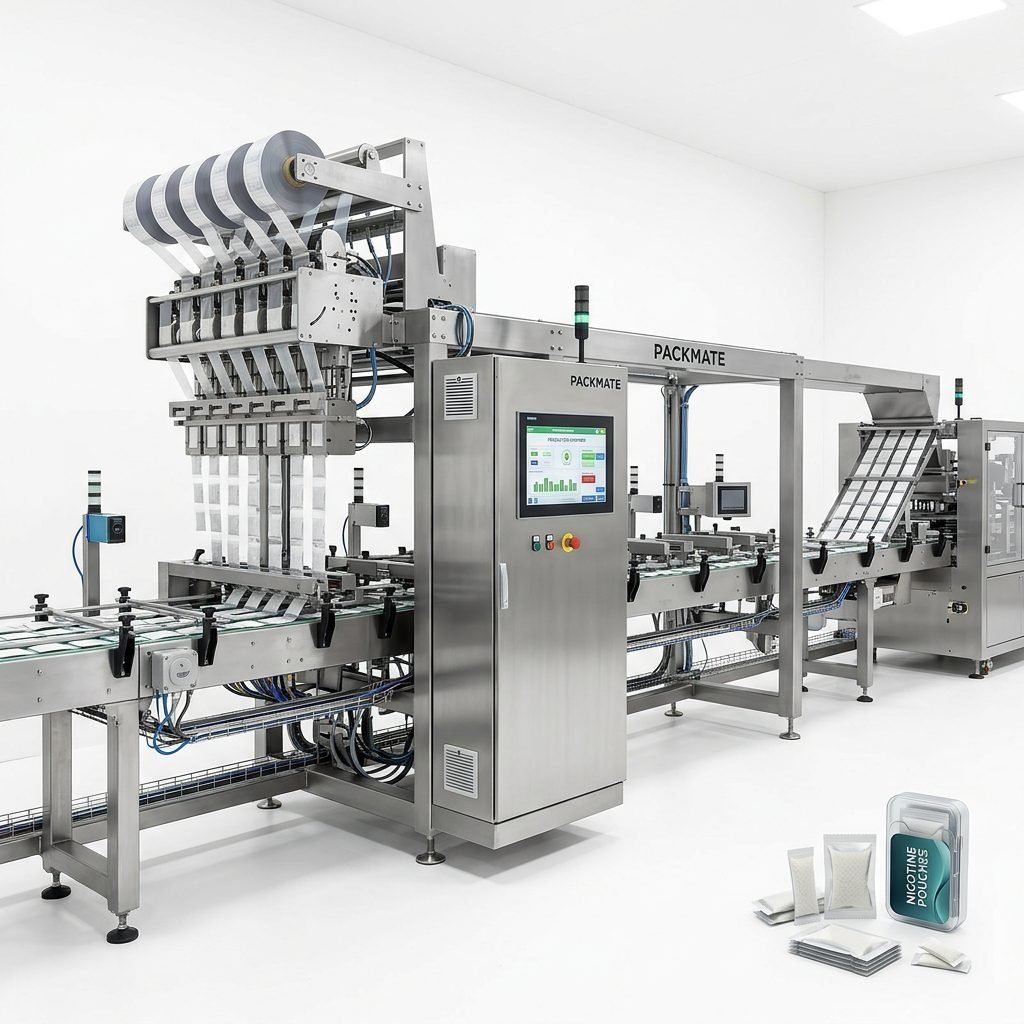
Upgrading a nicotine pouch production line is not just about buying a faster machine — it’s about redesigning workflows, improving component accuracy, reducing downtime, and ensuring consistent product quality at higher throughput. Whether you manufacture small-dose nicotine pouches, snus sachets, or are scaling from pilot runs to continuous multi-lane production, targeted upgrades can deliver measurable gains in efficiency, output and cost-per-unit.
🔧 Common Challenges in Nicotine Pouch Production
Manufacturers often face several recurring issues when scaling pouch production. Inconsistent fill weights, frequent changeover delays, material handling jams, and suboptimal sealing integrity all reduce effective OEE (Overall Equipment Effectiveness). Regulatory traceability and hygienic design are also more demanding for nicotine-containing products compared with other consumer goods.
⚙️ Upgrade focus areas: multi-lane feeding, precision dosing, thermal sealing control, inline quality inspection and fast, tool-less changeovers.
📈 How Upgrades Boost Production Efficiency
Incremental or modular upgrades can deliver rapid ROI. Converting single-lane lines into multi-lane systems, integrating high-precision weighers, and automating peripheral equipment (like conveyors and pack aggregation) increase throughput without proportionally increasing labor. Reduced variation in dosing and improved sealing parameters directly lower scrap rates.
1. Multi-lane Systems and Lane Synchronization
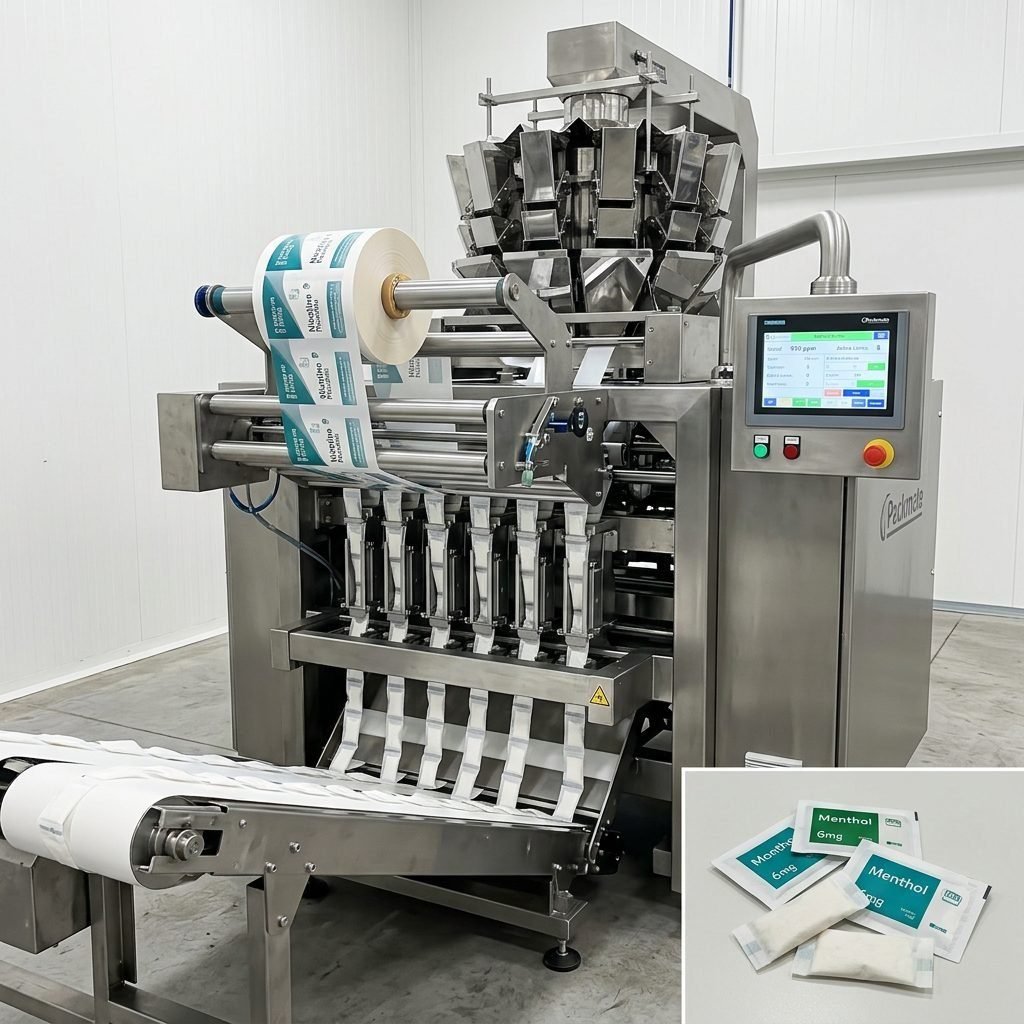
Upgrading to multi-lane packaging is one of the fastest ways to multiply output. A well-designed multi-lane module allows several pouches to be formed and filled in parallel while maintaining individual lane control. Synchronization between lanes avoids misfeeds and ensures uniform timing for cutting, sealing and labelling.
2. Precision Dosing & Weighing Technology
Exact filler calibration is essential for nicotine pouches where small deviations alter product performance and compliance. Upgrading to gravimetric or high-precision volumetric feeders with closed-loop feedback reduces variation and rejects fewer pouches. Consider integrating weighing & packaging systems that support per-lane measurement and automatic correction.
✅ Benefit snapshot: higher yield, tighter tolerances, and faster start-up after changeovers.
🌡️ Sealing, Material Compatibility and Consumables
Seal integrity protects nicotine pouches from moisture and contamination. Upgrades include better seal temperature control, improved jaw designs for uniform pressure, and film compatibility testing. Switching to optimized films and laminates can enable faster sealing cycles and better shelf life — for customized options see bag & pouch packaging machines product lines for guidance on materials and tooling.
3. Advanced Process Control & HMI Upgrades
Modern HMI systems with recipe management let operators quickly recall production parameters for different SKUs. Data logging supports traceability and remote diagnostics, reducing mean time to repair (MTTR). Integration with MES makes scheduling and batch reporting more accurate and less manual.
4. Inline Inspection and Reject Systems
Vision systems, metal detectors and checkweighers are vital for quality assurance. Inline cameras can detect fill position, pouch shape and code printing quality in real time. A robust reject conveyor minimizes contamination risk by isolating defective units fast — particularly important in highly regulated markets.
🔁 Changeover, Maintenance & Spare Parts Strategy
Fast changeover systems — tool-less clamps, quick-release guides and pre-set recipes — drastically reduce downtime between SKUs. A planned spare parts inventory (critical wear parts and sensors) and preventive maintenance schedule keep uptime high. Partnering with a manufacturer that offers local support and genuine parts shortens lead times for repairs.
📦 Pro tip: Maintain a minimum stock of high-wear seals, sensors and drive belts. Documented procedures for changeover reduce operator variability.
🤝 Integration with Upstream & Downstream Equipment
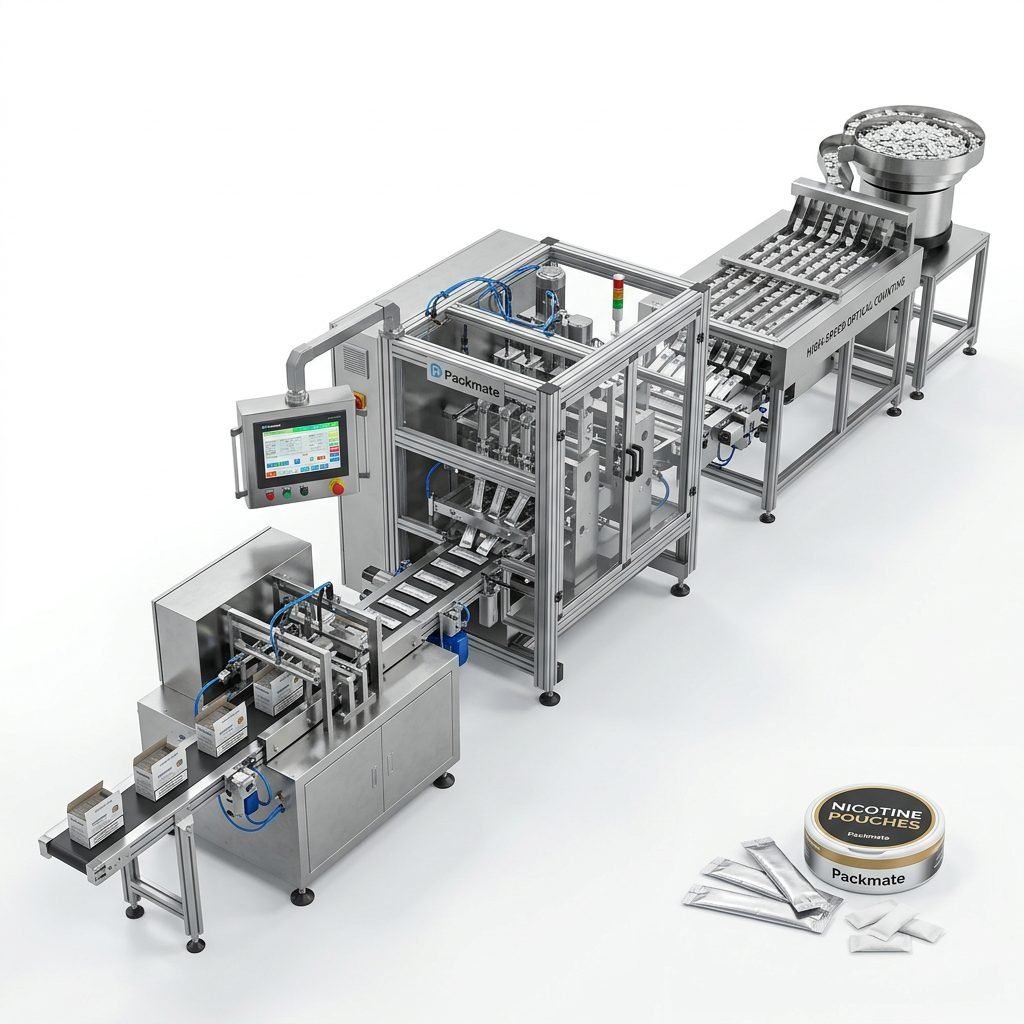
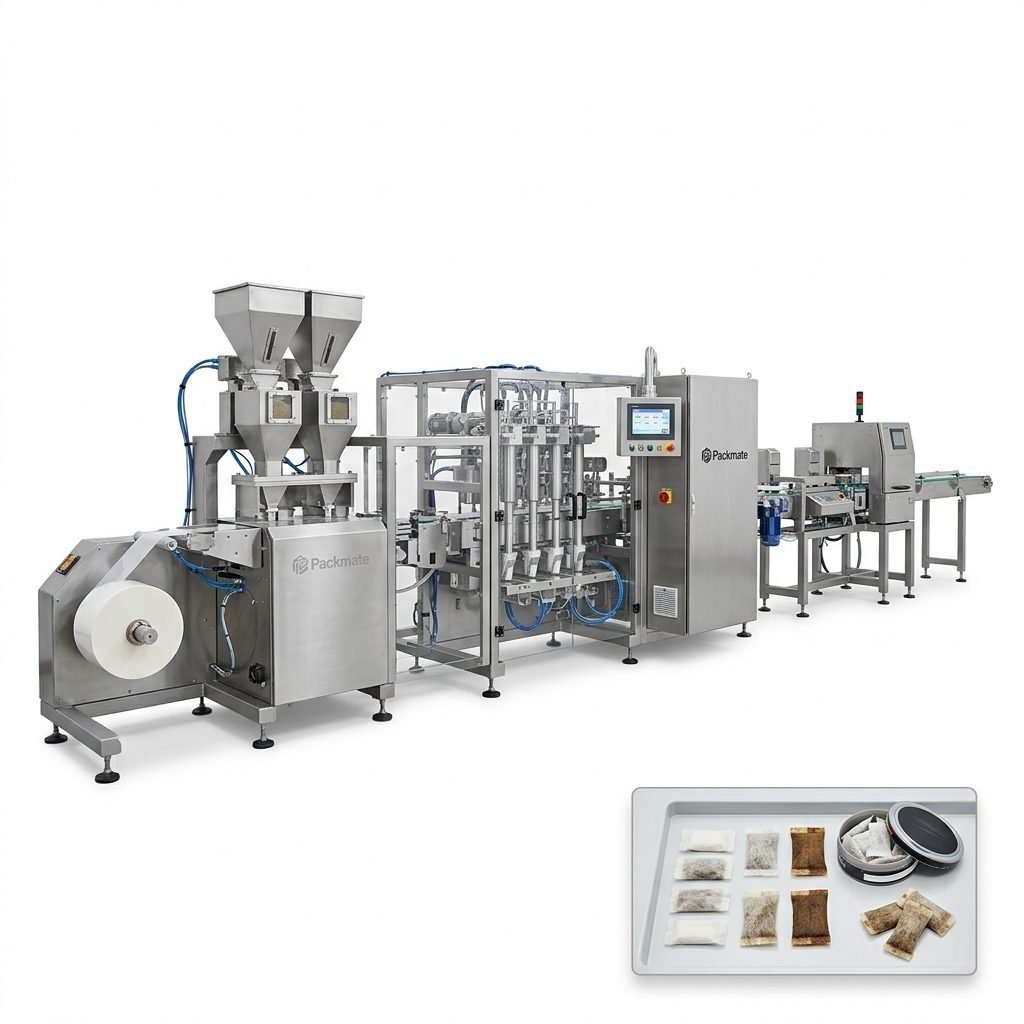
Efficiency gains compound when the entire line is harmonized — from bulk ingredient dosing to final case packing. Upgrading conveyors, accumulators, and case packers to match increased pouch output prevents bottlenecks. Explore complete filling and packaging lines that include both primary and secondary packaging modules: Filling & Packaging Lines.
5. Automation & Data-Driven Optimization
Industry 4.0 tools — predictive maintenance analytics, SPC (statistical process control) dashboards and OEE trackers — let managers spot trends and optimize performance continuously. Small process drifts can be corrected before they impact yield, and long-term data supports CAPEX decisions for future upgrades.
🌍 Regulatory, Safety & Local Market Considerations
Nicotine pouch lines often export to multiple regions with varying regulatory requirements. Ensure equipment adheres to CE, ISO and local safety standards and that traceability and labeling meet destination market rules. In markets where consumer preferences vary (for example questions about pouch format, dosing, or packaging language), machine flexibility for multiple pouch sizes and printing capabilities is crucial. Learn more about company certifications and support at Certificate.
💡 Case Example: Scaled Multi-Lane Conversion
A mid-size manufacturer shifted from a single-lane pouch machine to a four-lane synchronized module. After upgrading feeder accuracy and adding inline checkweighers, output quadrupled with only a 25% increase in floor footprint. Scrap rates dropped by over 60% due to improved dosing and sealing, and overall labor per 10,000 pouches declined substantially.
📚 Choosing the Right Partner
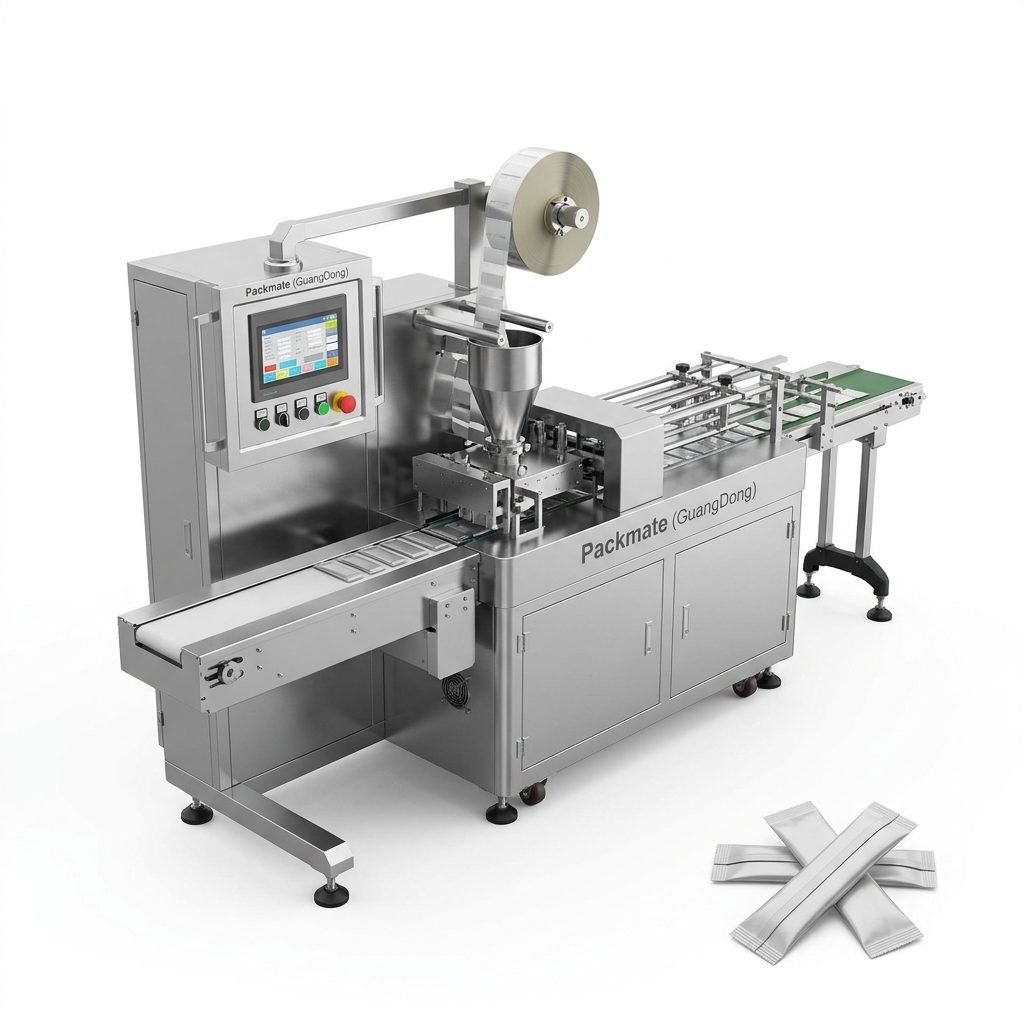
When evaluating suppliers, prioritize manufacturers with deep experience in nicotine pouch equipment, modular upgrade paths and international after-sales networks. Packmate Snus Machine offers a range of solutions from single-lane machines to high-speed multi-lane lines and full turnkey systems. For more details on machine types and turnkey capabilities, visit the product pages: Snus & Nicotine Packaging Machines and Sachet & Stick Pack Machines.
📍 Quick checklist before upgrading: confirm line balance, specify required OEE target, identify bottlenecks, validate consumables, and ensure spare part availability.
🔁 After-Sales, Service & Training
Training operators on new HMI interfaces, preventive maintenance tasks and quick changeover methods is essential for sustained performance. A supplier that provides remote troubleshooting, on-site commissioning and periodic maintenance contracts reduces the learning curve and protects uptime. Explore service options at Service.
Conclusion
Upgrading a nicotine pouch line requires a blend of mechanical improvements, automation, better consumables and a strong service partnership. By focusing on multi-lane throughput, precise dosing, reliable sealing and inline inspection, manufacturers can significantly boost production efficiency, product quality and profitability. Choosing a manufacturer with proven experience and comprehensive solutions helps ensure upgrades deliver the expected operational and financial benefits.
Frequently Asked Questions
Q1: How quickly can I scale from single-lane to multi-lane production?
A1: Depending on the platform, conversions can take from a few weeks (for modular add-ons and minor retrofits) to a few months for fully customized multi-lane systems — including FAT (Factory Acceptance Testing) and on-site commissioning.
Q2: What are the main cost drivers when upgrading a pouch line?
A2: Key costs include new dosing modules, multilaning assemblies, control/HMI upgrades, film tooling, inspection equipment, and installation/commissioning. However, these are typically offset by higher throughput and lower waste.
Q3: Will upgrades affect product certification or require re-validation?
A3: Significant changes affecting formulation, packaging materials or critical process parameters may require re-validation and documentation updates. Always plan for regulatory checks when modifying production equipment.
Q4: How do I choose the right spare parts inventory?
A4: Base your parts inventory on historical failure modes: seals, sensors, belts, cutters and heating elements are common spares. Work with your OEM to define a prioritized stocking list and recommended reorder points.
Q5: Where can I see real-world examples of upgraded lines?
A5: Check manufacturer case studies and exhibition demonstrations to review real implementations. Visit the company case page for examples: Case.