Choosing the right nicotine packaging machinery in Bulgaria requires a clear understanding of product formats, production demand, regulatory obligations, and after-sales support. This guide walks you through practical selection criteria, evaluation steps, supplier checkpoints, and cost considerations so you can make an informed purchase for snus and nicotine pouch production lines.
Why the right machine matters
A well-matched packaging line reduces waste, improves product consistency, and protects compliance with EU and Bulgarian regulations. Whether you produce single-dose nicotine pouches, stick packs, or multi-lane sachets, the correct equipment choice impacts throughput, product integrity, and total cost of ownership. Key business outcomes include faster market entry, predictable yields, and fewer production interruptions.
✔️ Quick focus: If you need compact lines for R&D batches or high-speed multi-lane systems for scale-up, make that decision early — it determines machine type, footprint, and downstream equipment.
🔍 Core benefits to prioritize: consistent pouch weight, reliable sealing, quick changeover, and integration capability with metal detectors/vision systems.
Primary selection criteria for nicotine packaging machinery
Below are the practical selection dimensions to evaluate when shortlisting machines suited to the Bulgarian market and EU distribution.
1. Product format and packaging style
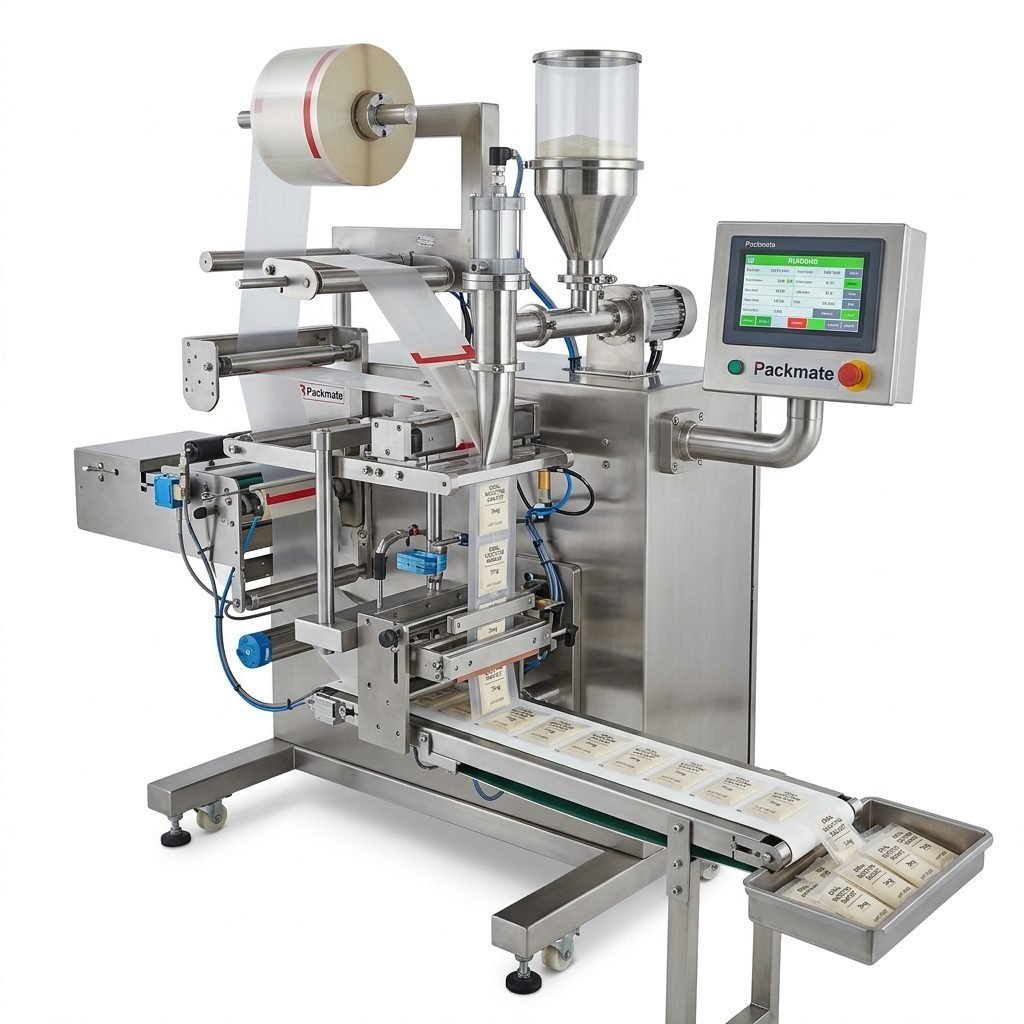
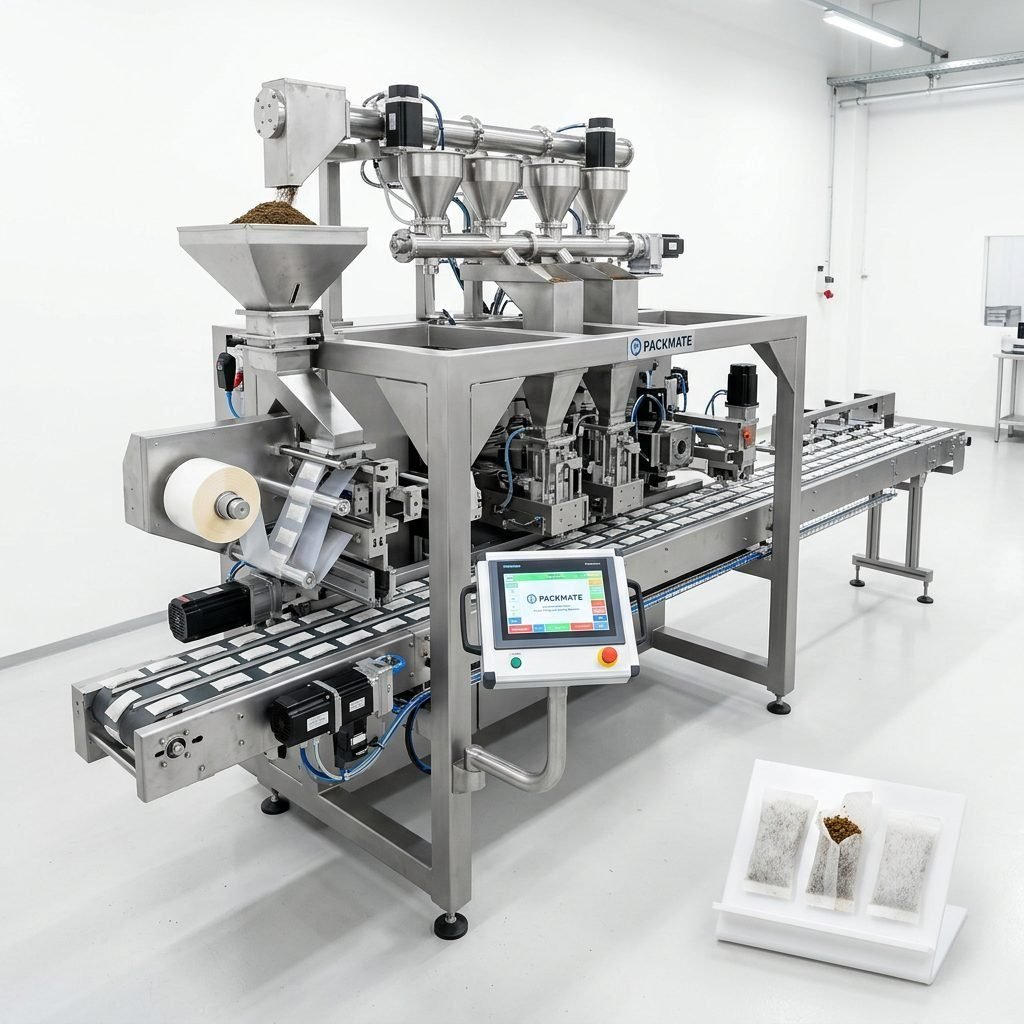
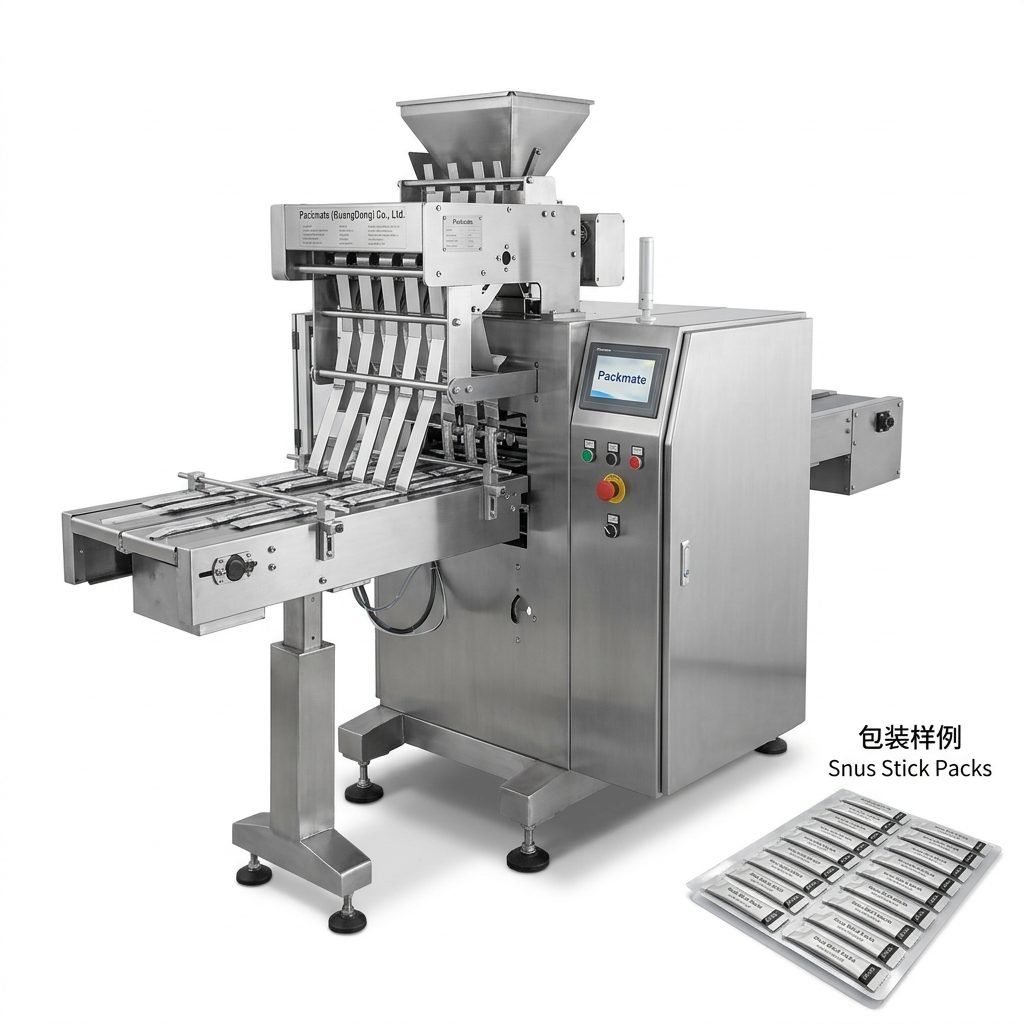
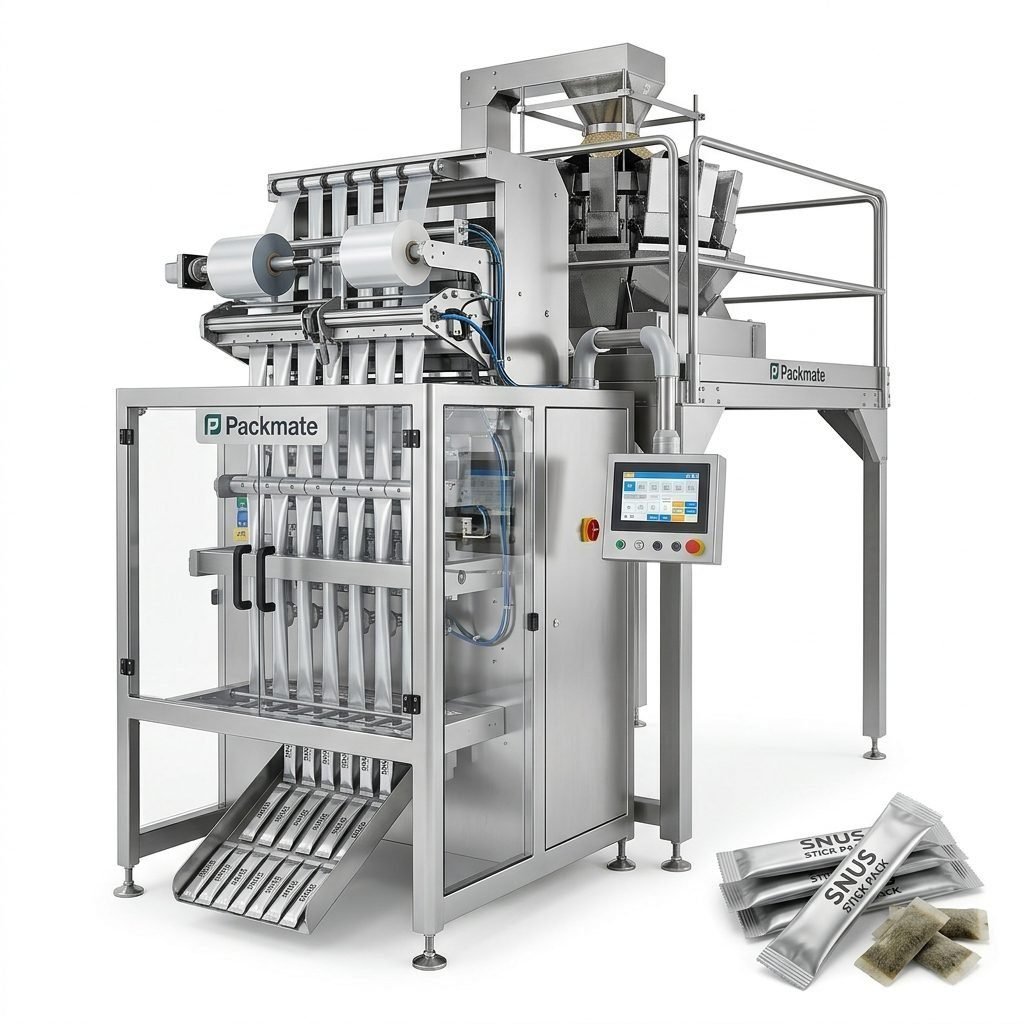
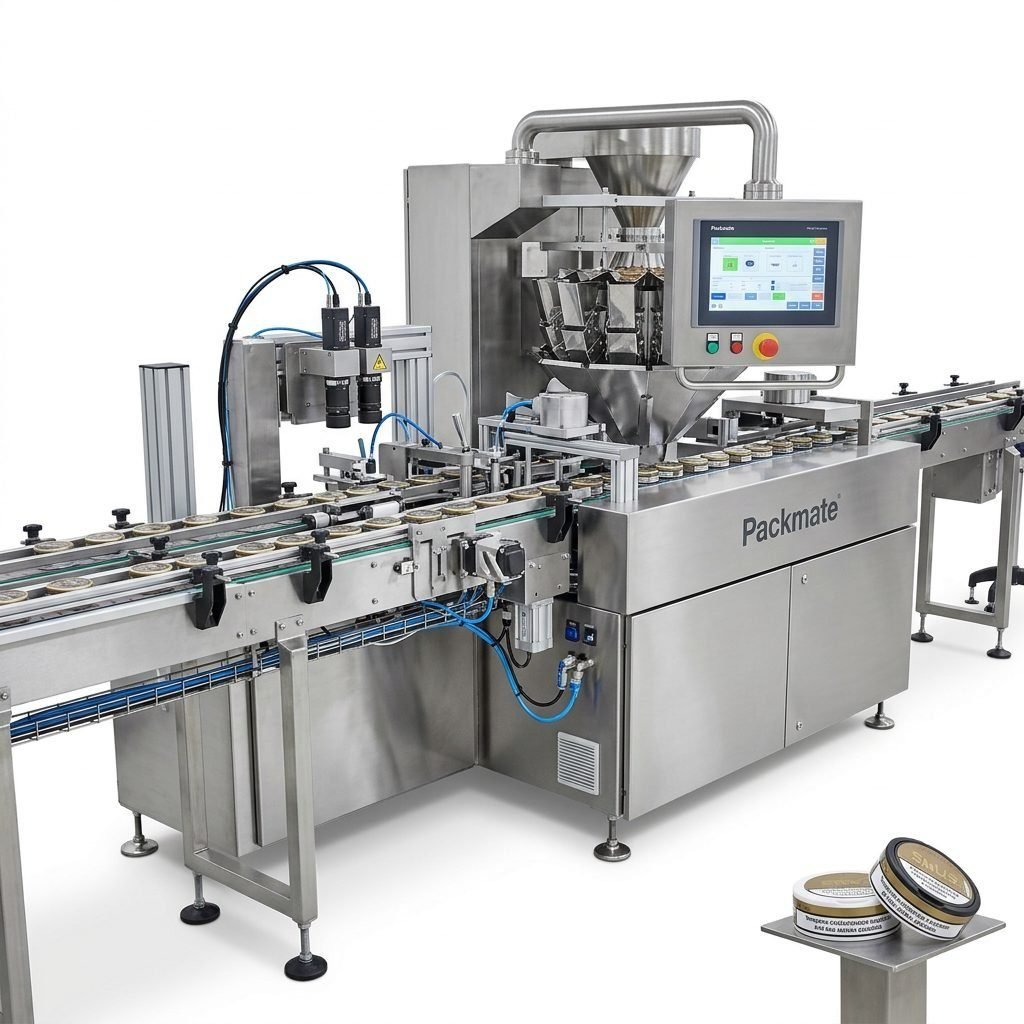
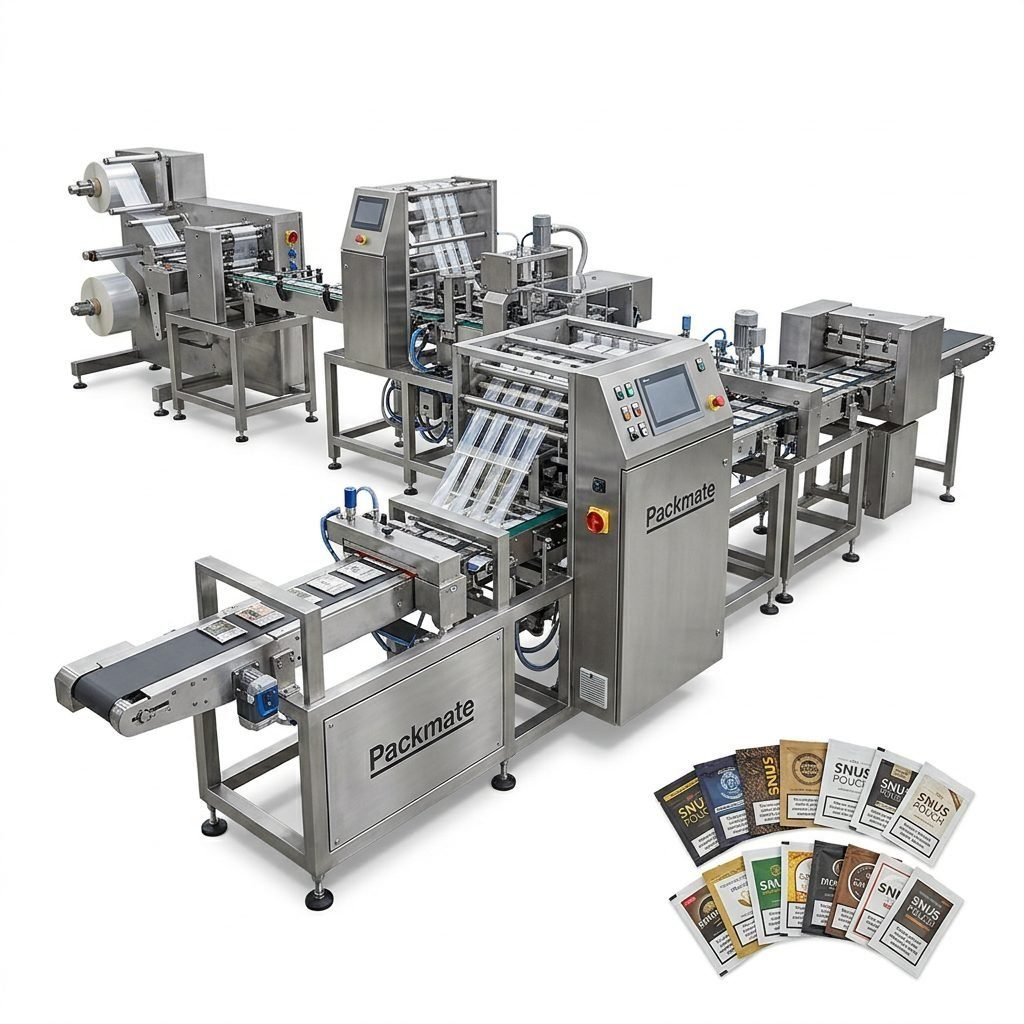
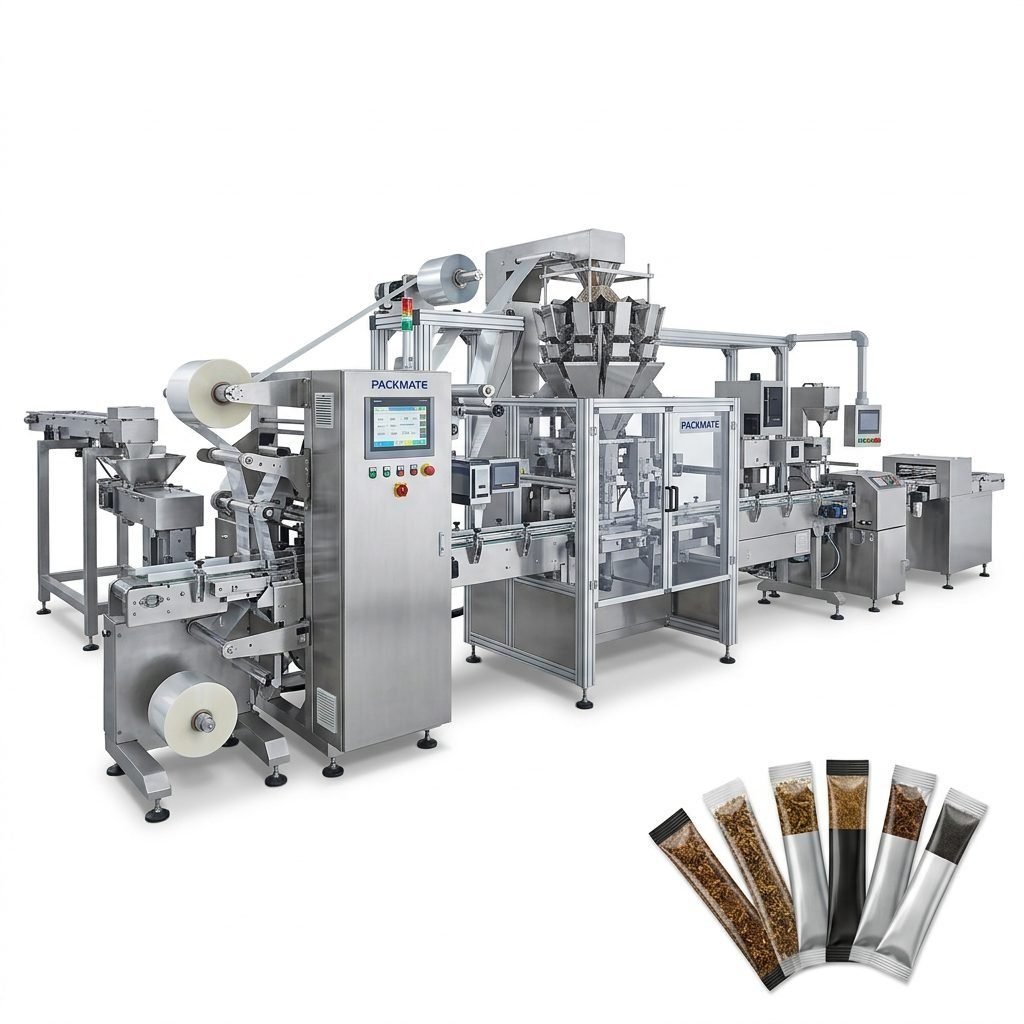
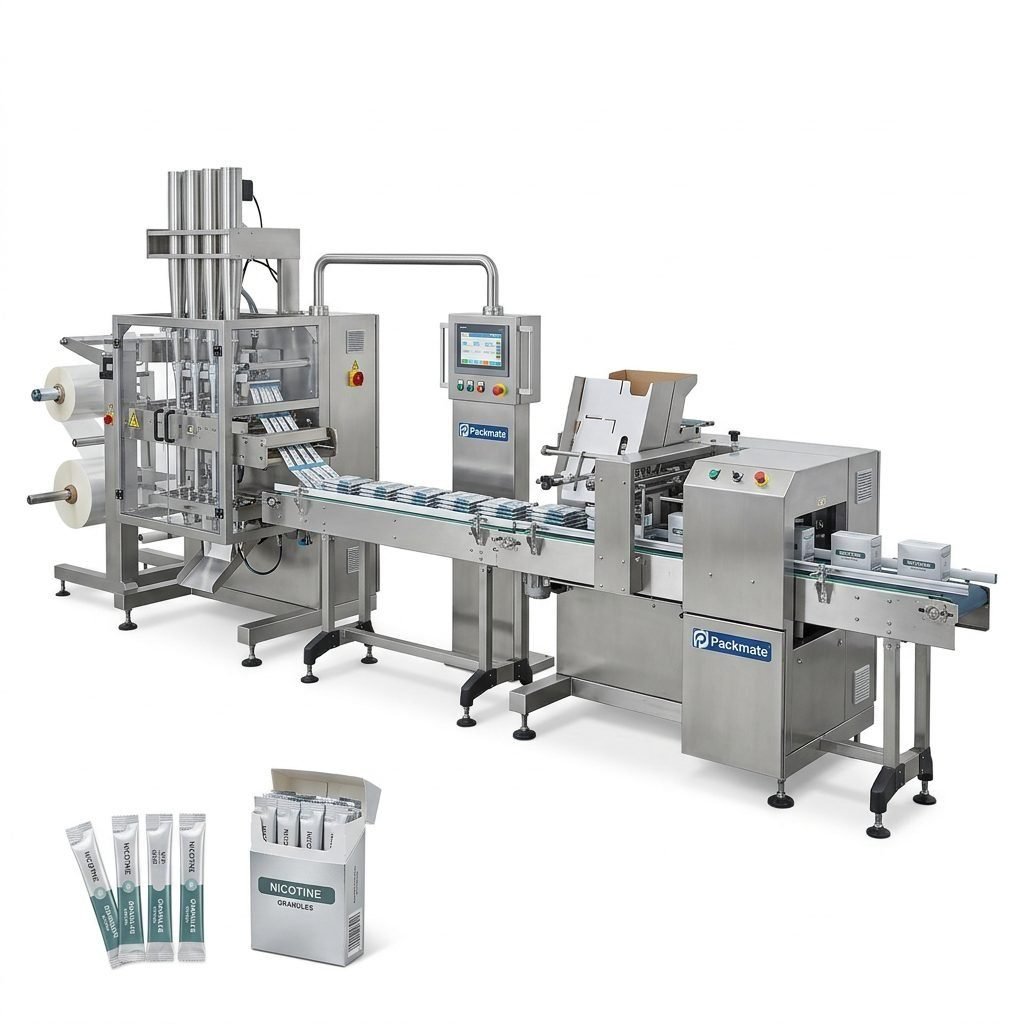
Decide whether you will produce pouches, stick packs, sachets, or flexible pouches. Machines designed for nicotine pouches (snus) differ from standard sachet machines because they handle small-dose, high-precision filling and sealing. Consider specialized snus and nicotine packaging options such as multi-lane snus lines for higher throughput. For product examples and machine categories, see Snus & Nicotine Packaging Machines and Sachet & Stick Pack Machines.
2. Throughput and scalability
Estimate your peak production in pouches per minute and monthly volume. Startups may favor single- or dual-lane setups with modular upgrade paths, while established manufacturers should consider 4–12 lane machines for maximum output. A modestly higher initial investment in scalable multi-lane equipment often yields faster ROI for growing brands.
3. Filling accuracy and dosing technology
Nicotine pouch production demands highly accurate dosing to meet product claims and regulatory limits. Choose machines with precision dosing systems and in-line weighing or gravimetric checks. For integrated weighing solutions, consult Weighing & Packaging Systems and Filling & Packaging Lines for compatible subsystems.
4. Materials compatibility and sealing
Confirm the machine supports your film types (mono-film, laminates, foil) and sealing technologies (heat seal, ultrasonic). Proper sealing prevents humidity ingress and protects nicotine stability. Machines with adjustable temperature control, easy-to-change sealing jaws, and robust film transport reduce scrap rates.
5. Automation, UI, and industry 4.0 readiness
Modern HMI panels, recipe management, and remote diagnostics reduce downtime and training time. If you plan to grow, choose equipment with Ethernet connectivity, OPC-UA or similar protocols to integrate with MES systems.
📌 Compliance & certifications: Ensure the supplier offers CE and ISO-compliant machines and can provide documentation for customs and regulatory reviews in Bulgaria and the EU.
Certificate evidence helps accelerate procurement and approvals.
Evaluating suppliers: what to check on the factory tour or remote demo
A supplier evaluation should combine technical checks with commercial terms and after-sales capacity. For reliable references and real case studies, review supplier cases and exhibition records to see machines in operation.
- Factory capability: CNC centers, clean assembly areas, and documented quality testing indicate consistent manufacturing quality.
- Spare parts & lead times: Ask about critical spare parts stock and international shipping timelines to Bulgaria.
- Onsite training & installation: Clarify if the supplier provides FAT (Factory Acceptance Test), SAT (Site Acceptance Test), and trainer-led commissioning.
- References and case studies: Request factory case studies and customer contacts in similar markets; view live demos at exhibitions where possible. See Our Exhibition and Case pages for examples.
Technical checklist during demo
Look for stable film feeding, consistent pouch forming, fast and error-free changeover, clean seals, and repeatable dosing. Verify the machine’s PLC/HMI language options, data logging, and alarm diagnostics. Observe sound levels and footprint requirements for your Bulgarian facility.
Integration with upstream/downstream equipment
A packaging line rarely stands alone. Confirm compatibility with upstream fillers, feeders, or powder handling systems and downstream leisure or cartoning equipment. Auxiliary Packaging Equipment and Filling & Packaging Lines provide complementary systems that should integrate mechanically and electronically.
⚙️ Tip: Ask for a line diagram and cable list to pre-plan utilities (air, power, vacuum) and floor layout to avoid surprises during installation.
If you need full turnkey coordination, view the company’s turnkey services and About Packmate for background on integrated project delivery.
Costing, ROI and financing options
Beyond purchase price, calculate installation, training, spare parts, consumables (films, inks), and expected uptime into your ROI model. Higher automation may mean higher upfront cost but lower labor and waste — run a 3–5 year TCO projection to compare options.
Common extra costs to anticipate
Utility upgrades, operator training, spare part kits, preventive maintenance contracts, and software licenses. Also consider shipping, customs duties, and installation engineering for Bulgaria.
Installation, commissioning and after-sales support in Bulgaria
Evaluate supplier support plans: remote troubleshooting, local service partners, spare part warehouses in Europe, and availability of OEM consumables. Look for clear SLAs for response times and options for preventive maintenance agreements.
🔧 Service checklist: installation scope, commissioning acceptance criteria, operator training schedule, spare parts lead times, and warranty terms.
Check the supplier’s Service page and FAQs for standard support offerings before signing.
Practical step-by-step buying guide for Bulgaria
Follow these steps to reduce procurement risks and ensure a smooth purchase and ramp-up.
- Define product specs: pouch format, dose range, film types, and packaging artwork constraints.
- Estimate capacity: hourly and monthly targets, plus growth projections.
- Shortlist suppliers: request datasheets, operation videos, and references. Include suppliers with proven nicotine/sn
us experience.
- Arrange FAT or remote demos: test with your film and product simulants.
- Request full quotation: include shipping, installation, training and spare parts list.
- Plan site readiness: utilities, floor load, and receiving logistics in Bulgaria.
- Execute purchase: confirm delivery timelines, payment milestones, and acceptance tests.
- Commission and validate: run SAT, performance qualification, and operator training.
Supplier documents to secure before delivery
Purchase contract, electrical/mechanical drawings, spare parts list, operation & maintenance manuals, FAT report, and CE/ISO certificates. These documents ease customs clearance and regulatory review in Bulgaria.
Key red flags and how to avoid them
Watch out for sellers unwilling to demonstrate machines under load, vague spare part policies, or no references in nicotine/sn
us markets. Avoid long lead time traps by confirming manufacturing schedules and logistics details in writing.
❗ Red flag checklist: no FAT available, no CE documentation, unclear warranty clauses, or missing training plans.
If a supplier passes all checks, request a sample production run before final acceptance.
Useful links and further reading
Explore product categories and company information to compare machine capabilities and turnkey offerings:
- Snus & Nicotine Packaging Machines
- Sachet & Stick Pack Machines
- Filling & Packaging Lines
- Contact Us for quotes and local support options.
Final recommendations
Make decisions based on validated performance (FAT), clear commercial terms, and a robust support plan. Prioritize suppliers with documented snus/nicotine pouch experience and compliant machines. A thoughtful purchase prepares your Bulgarian operation for regulatory compliance, repeatable quality, and scalable growth.
Frequently asked questions
Q1: How long does it take to install a snus packaging line?
A1: Typical installation and commissioning take 2–6 weeks depending on line complexity, site readiness, and validation requirements. Planning utilities and FAT in advance shortens on-site time.
Q2: What certifications should I expect?
A2: Expect CE marking and ISO compliance for quality management. Suppliers should provide test reports, material certificates, and FAT documentation to support regulatory review.
Q3: Can I expand a single-lane line to multi-lane later?
A3: Some suppliers offer modular upgrades; confirm mechanical and control architecture compatibility before purchase to ensure scalability without major redesigns.
Q4: What spare parts should I stock initially?
A4: Keep critical wear items, sealing jaws, belts, sensors, and a small electrical spare kit. Suppliers usually provide an initial recommended spare parts list; ensure availability within the EU to reduce downtime.
Q5: Who can help with Bulgarian regulatory questions?
A5: Work with local regulatory consultants and your supplier’s technical team to align on labelling, product composition, and documentation. Suppliers with EU export experience often assist with compliance paperwork.