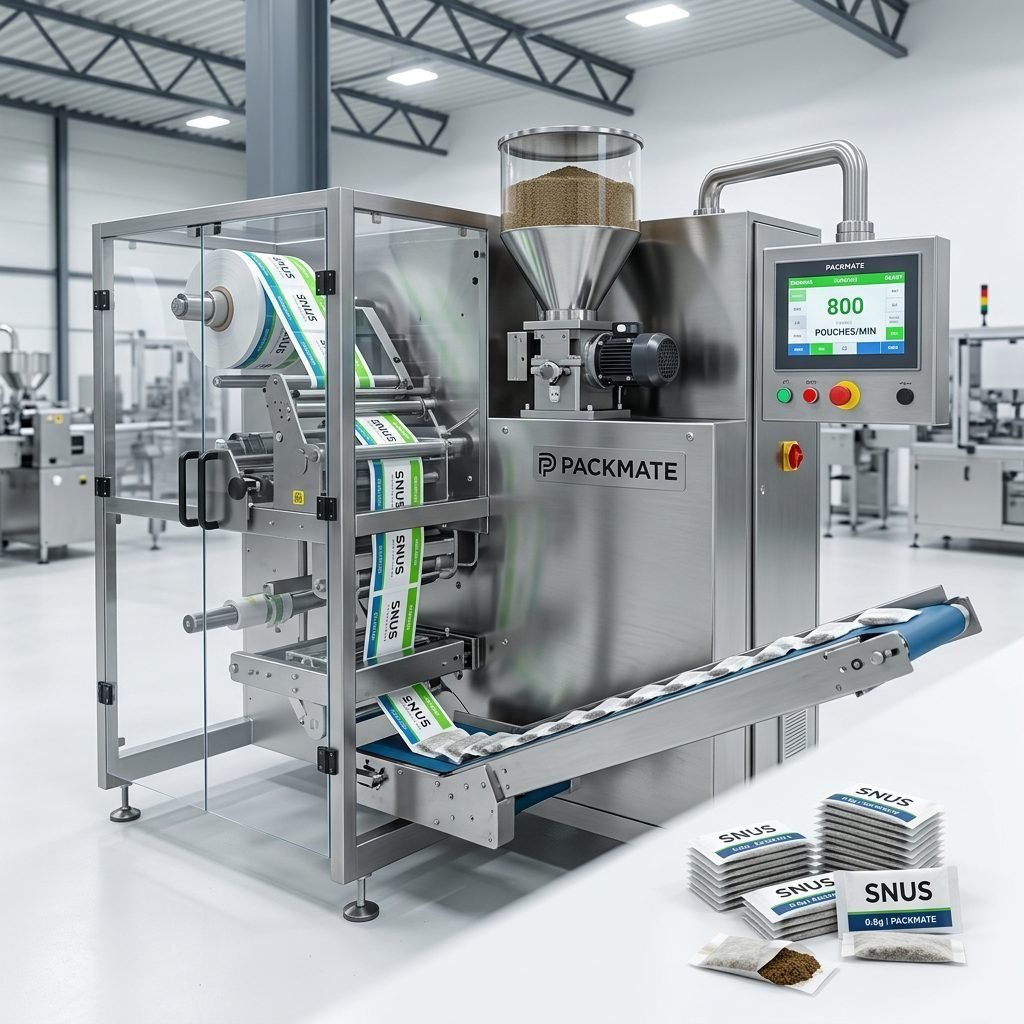
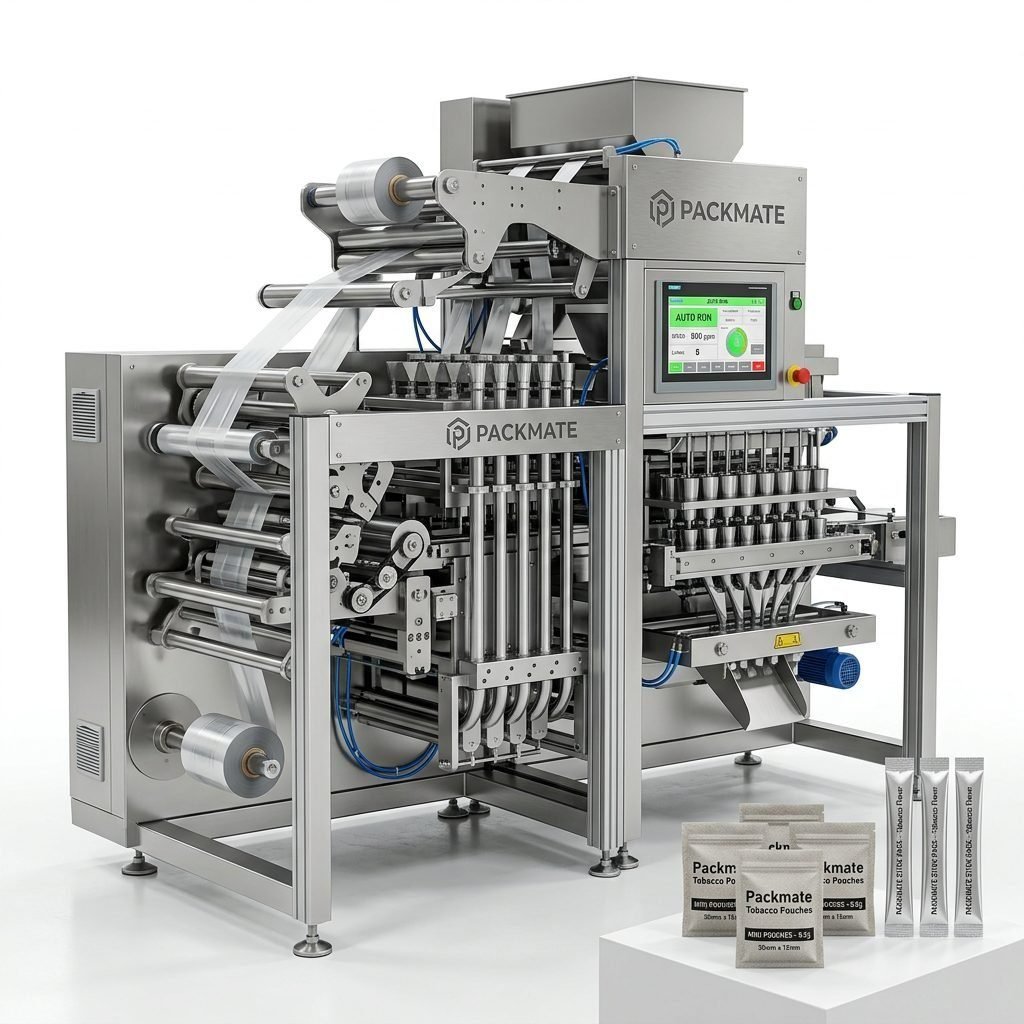
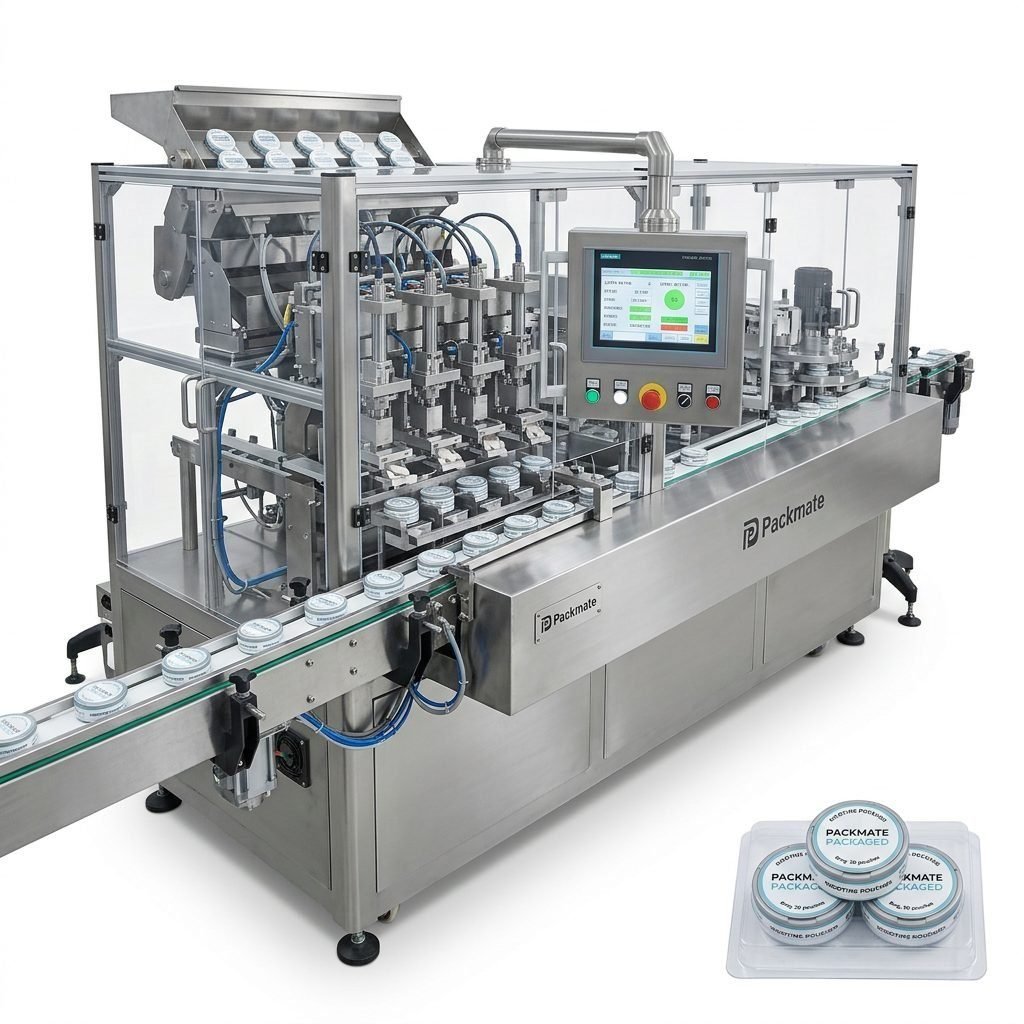
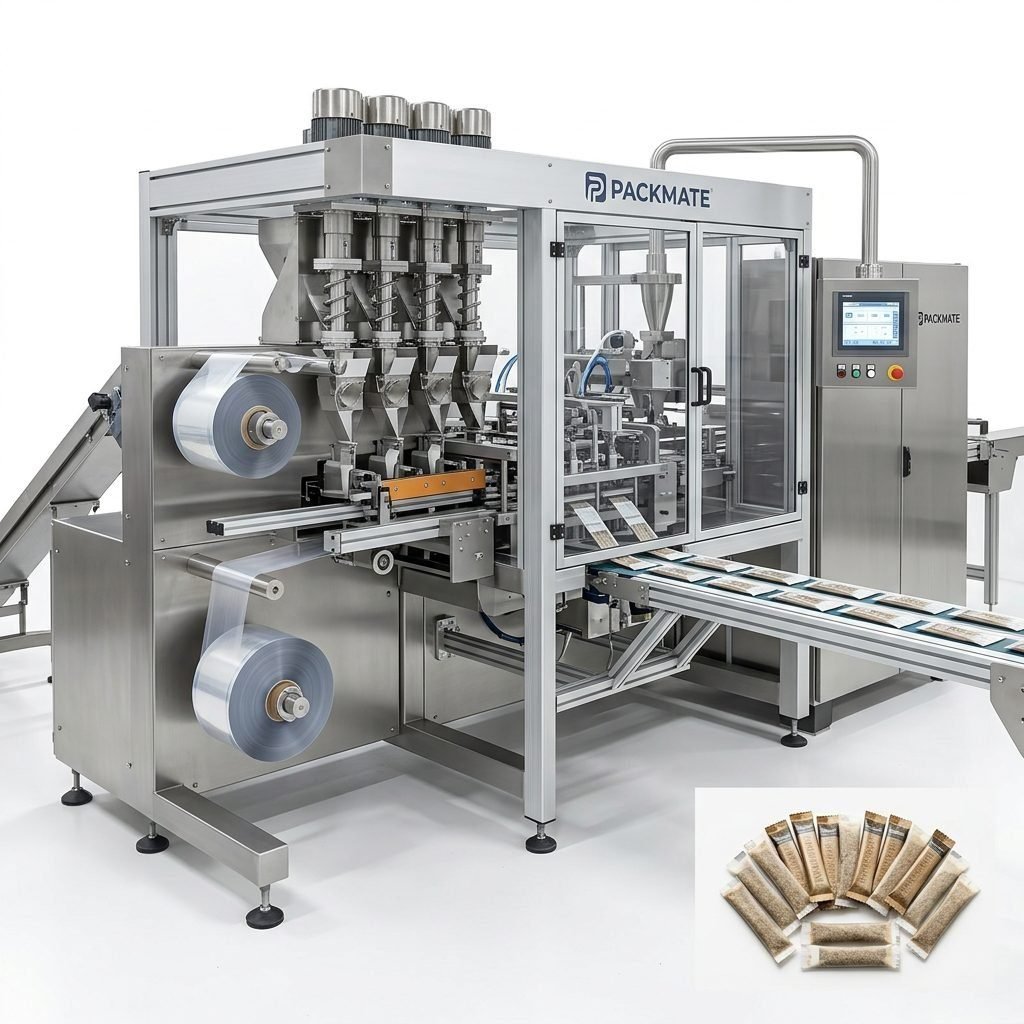
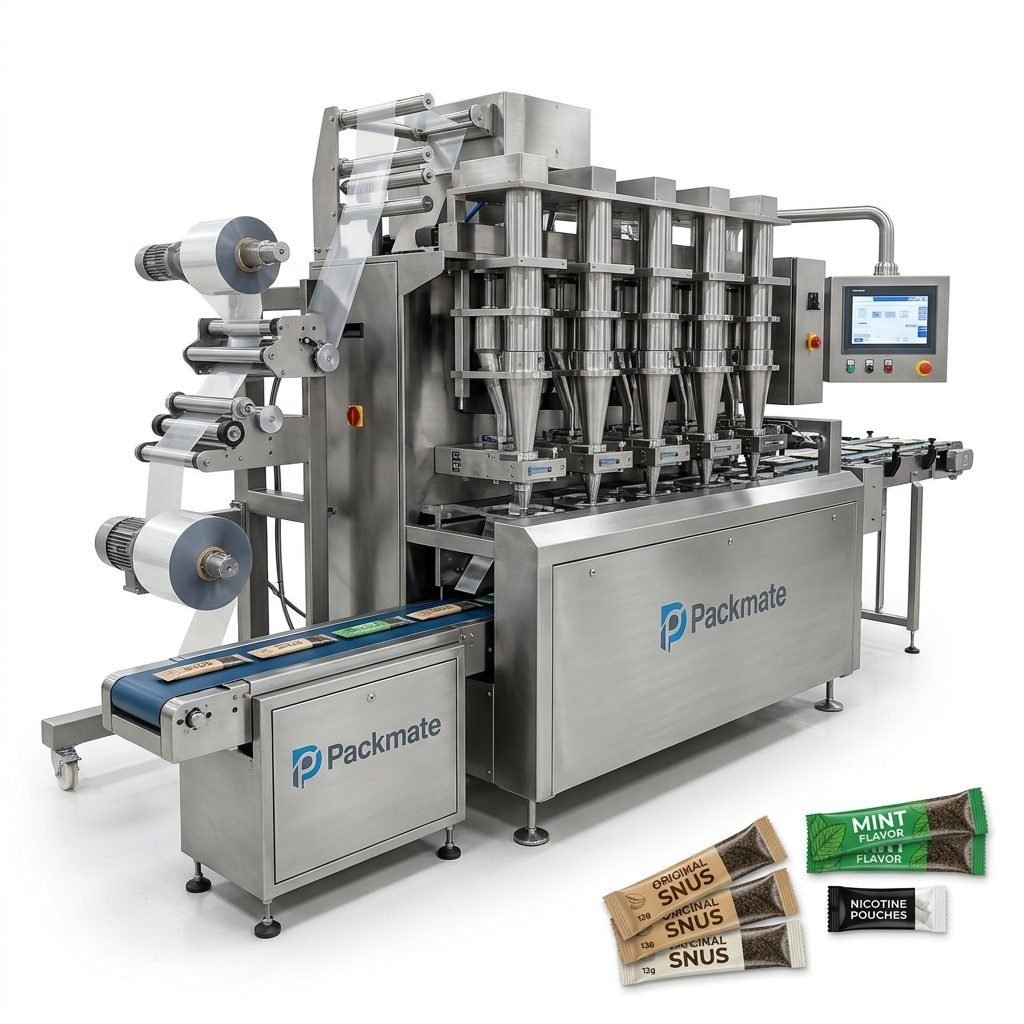
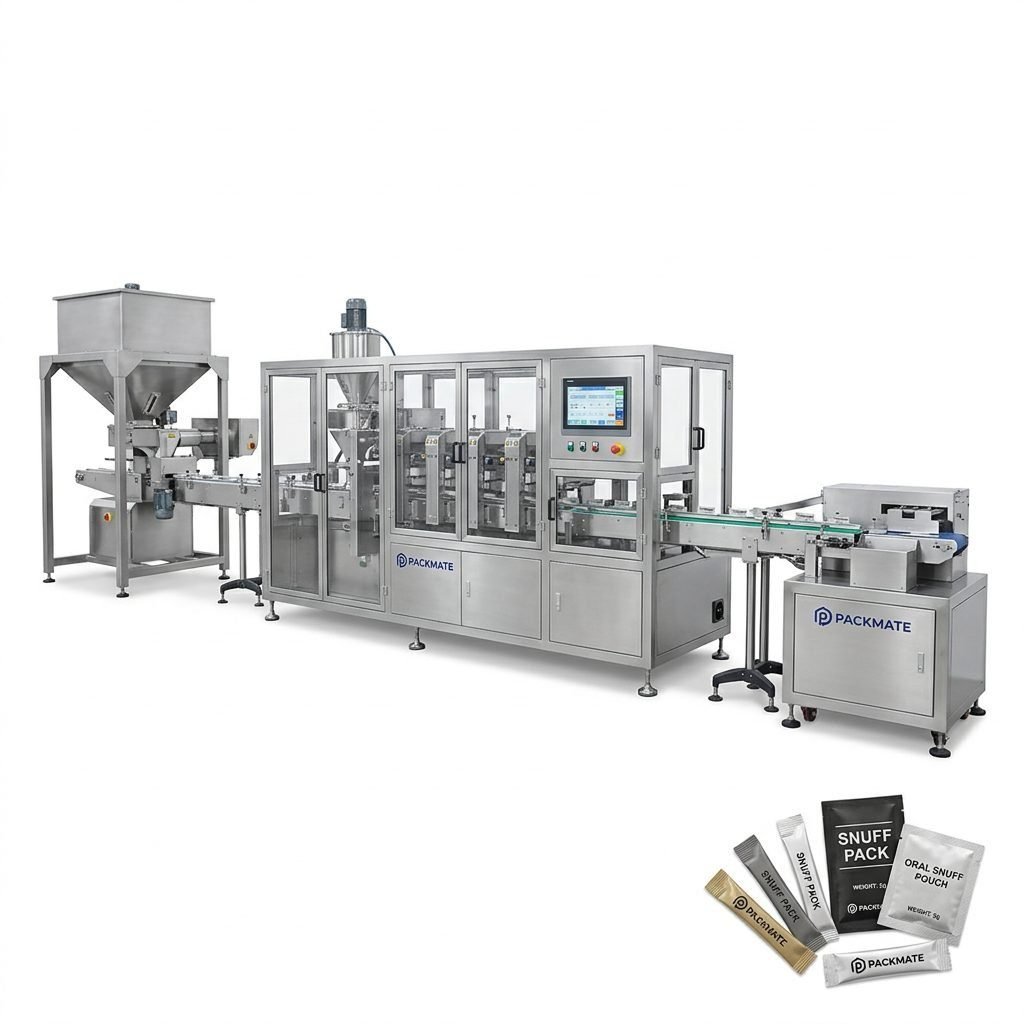
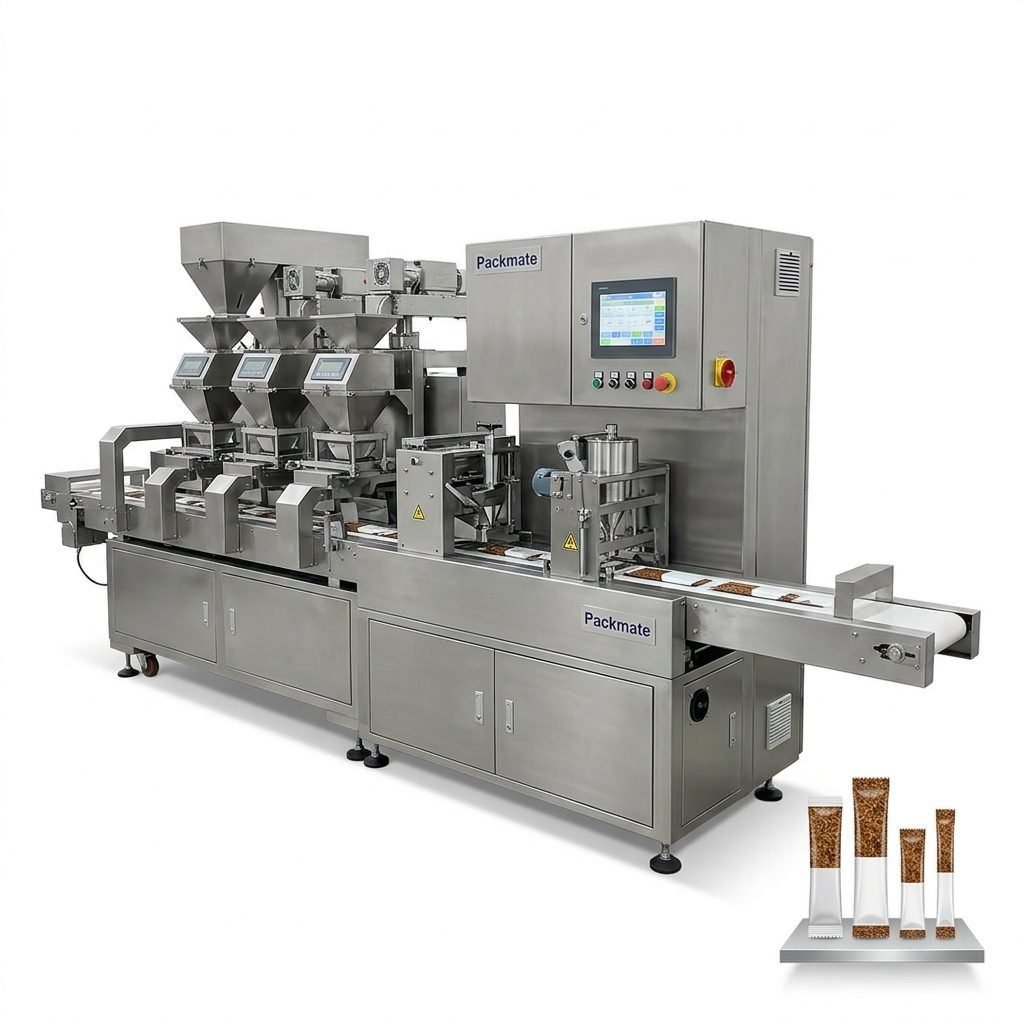
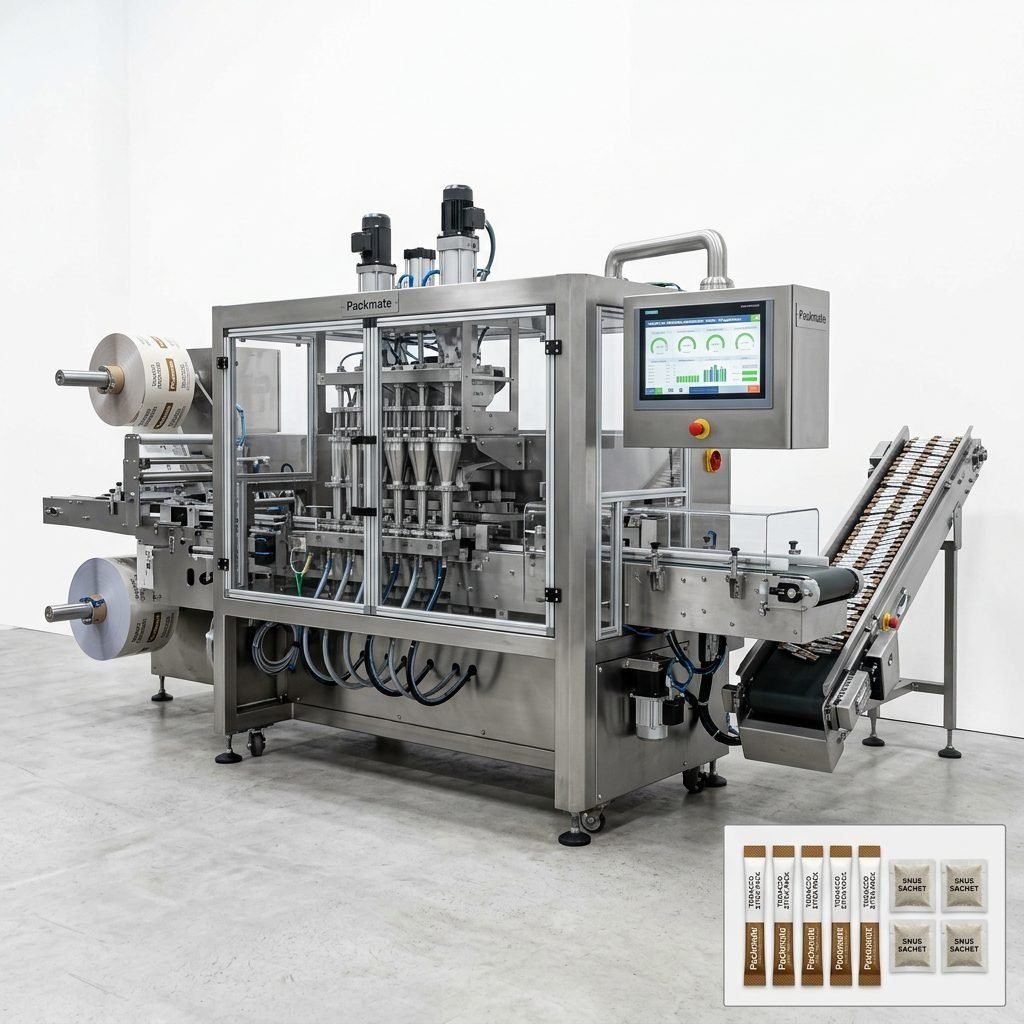
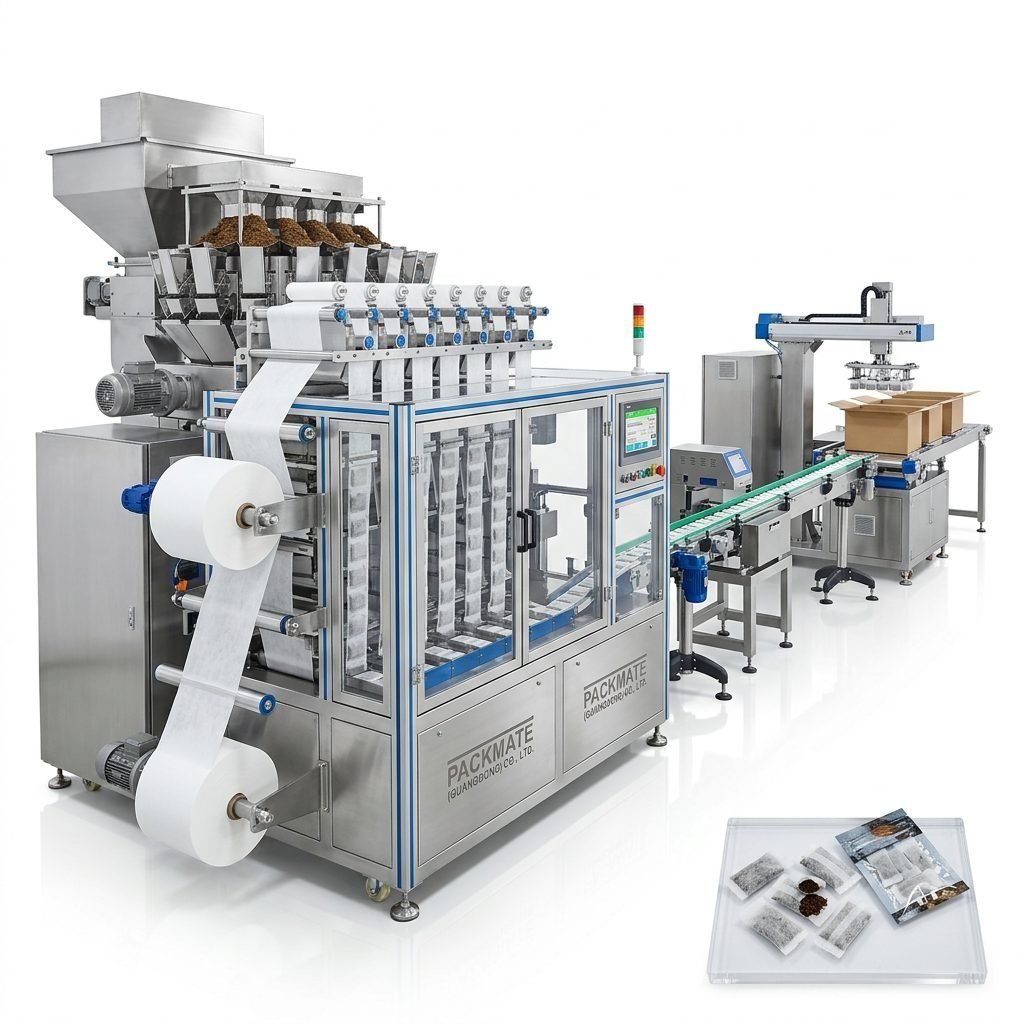
In the rapidly evolving nicotine pouch market, manufacturers must balance speed, precision, and regulatory compliance. Automated nicotine pouch filling lines deliver high-throughput production while maintaining consistent pouch weight, seal integrity, and minimal product loss. This article walks packaging managers, engineers, and procurement teams through the end-to-end considerations for designing, selecting, and implementing a high-speed nicotine pouch filling line — from core machine modules to ROI, quality controls, and supplier selection.
Why Automation Matters for Nicotine Pouch Production
The nicotine pouch segment demands tight tolerances: small-dose pouches, variable formats (stick, sachet, multi-lane), and increasingly stringent documentation for traceability and hygiene. Manual or semi-automatic approaches struggle to meet volume and consistency. Automated lines deliver:
⚙️ Consistent filling accuracy — modern dosing systems reduce variance in pouch weight and active ingredient distribution.
📦 High throughput — multi-lane and rotary solutions achieve hundreds to thousands of pouches per minute depending on format.
🔁 Reduced labor and contamination risk — closed transfer systems and automated handling lower contamination risk and labor costs.
🔍 Integrated quality control — inline checkweighers, vision systems, and leak detection ensure each pouch meets spec.
Core Modules of a Nicotine Pouch Filling Line
A complete automated line typically integrates several specialized modules. Understanding each module’s function helps optimize layout and performance:
1. Product Feeding & Dosing
Dosing systems vary with product characteristics (powder, granule, granular tobacco blends). High-precision volumetric or gravimetric feeders and multi-head weighers provide the repeatability required for nicotine pouches. For extremely small doses, micro-dosing technologies with feedback loops are essential to keep variation under tight tolerances.
2. Pouch/Forming & Filling Module
Depending on format, you might use pre-formed pouches, stick packs, or form-fill-seal (FFS) sachets. Multi-lane pouch formers significantly increase capacity for small pouches while maintaining alignment and seal quality.
For micro-dose nicotine pouches, select feeders with gravimetric feedback and integrate an inline checkweigher to eliminate out-of-spec pouches before sealing.
3. Sealing & Cutting
Robust sealing systems (heat-seal, ultrasonic when applicable) and precision cutting mechanisms ensure consistent pouch integrity. Temperature-controlled zones and servo-driven pressure systems maintain seal repeatability across high speeds.
4. Inspection & Quality Control
Inline vision systems verify print, batch codes, and pouch fill levels. Leak detection, metal detection, and x-ray (if required) can be added for higher assurance. Integrated software logs quality events for traceability and audits.
Automation Design Considerations
When planning a line, balance throughput goals against product complexity and regulatory needs. Key factors include:
- Product handling sensitivity — choose gentle transfer systems for delicate pouch films.
- Material compatibility — food/medical-grade contact surfaces and cleanability.
- Changeover speed — modular designs and quick-change tooling reduce downtime for format switches.
- Scalability — multi-lane or parallel modules allow incremental capacity expansions.
- Data capture — MES integration and batch traceability for compliance and analytics.
Prioritize machines with PLC and HMI platforms that support recipe management, recipe locking, and remote diagnostics to shorten troubleshooting and validation time.
Integration: Building a Turnkey Filling & Packaging Line
A turnkey approach bundles all modules — dosing, forming, sealing, inspection, cartoning, and end-of-line — into a commissioned system. This minimizes integration risk and accelerates time-to-market. When evaluating suppliers, look for:
✔️ Proven multi-lane implementations and ✔️ documented validation/qualification support. Packmate’s experience in snus and nicotine pouch machinery is an example of a supplier that provides complete lines and global after-sales service; explore product portfolios such as their Snus & Nicotine Packaging Machines and Filling & Packaging Lines.
Regulatory & Hygiene Requirements
Compliance varies by market. For production lines handling nicotine-containing products, consider:
- Cleanability — openable hygiene zones and smooth, corrosion-resistant materials.
- Material traceability — batch records for raw blends and pouch film lots.
- Safety & certification — CE/ISO compliance for equipment and electrical systems.
- Documentation — IQ/OQ/PQ templates and BOM traceability to support audits.
Request CE/ISO certificates, hygiene design documentation, and example validation packages. Packmate provides certifications and project case studies — see their Case and Certificate pages for reference.
Operational Excellence: OEE, Maintenance & Uptime
Automated lines should be engineered for availability and maintainability. Focus areas:
- Preventive maintenance schedules and spare parts kits for wear components.
- Quick-change format tooling and modular stations for minimal downtime.
- Remote support and spare parts logistics to reduce Mean Time To Repair (MTTR).
- Operator training programs and digital SOPs accessible on HMIs.
Design for >85% OEE by combining reliable mechanics, predictive maintenance, and operator competency.
Layout & Facility Considerations
Efficient plant layout reduces product transfer times and supports hygiene. Consider:
- Linear vs. U-shaped lines — U-shaped can save floor space and centralize utilities.
- Clean and dirty zones — separate raw material ingress from finished goods packing.
- Utility requirements — compressed air quality, electrical distribution, and dust extraction for powders.
- Access for maintenance — ensure service aisles and removable guards.
Choosing the Right Supplier
Supplier selection impacts commissioning speed, long-term performance, and support. Evaluate vendors on:
- Domain experience in nicotine pouch or small-dose pouch machinery.
- Ability to deliver turnkey solutions and integration services.
- Local after-sales support and spare parts network.
- Performance references and factory acceptance testing (FAT) offerings.
Explore vendor portfolios and contact pages — for a manufacturer example, see Packmate’s About Packmate and Contact Us to learn about turnkey capabilities and global service options.
Financial Considerations & ROI
While capital expenditure for a high-speed line can be significant, the long-term benefits include lower labor costs, reduced waste, higher throughput, and improved compliance. To estimate ROI:
- Model throughput gains and reduced giveaway from improved dosing precision.
- Quantify labor savings from automation and reduced rework.
- Include downtime reductions from preventive maintenance and better sparing.
- Factor in regulatory risk mitigation and faster product launches.
Installation, Commissioning & Validation
A successful project includes detailed FAT, SAT, and commissioning plans. Ensure the supplier provides:
- Factory Acceptance Tests with production simulations.
- On-site commissioning and operator training.
- Validation packages (IQ/OQ/PQ) and documentation for regulatory compliance.
Schedule FAT early and define acceptance criteria clearly to avoid delays during on-site commissioning.
Case Snapshot: Multi-Lane Snus / Nicotine Pouch Lines
Multi-lane machines are commonly used for small pouches to multiply throughput without dramatically increasing floor space. Typical implementations:
- 4-8 lane rotary or linear formers feeding a single sealing/cutting station.
- Centralized dosing with precise distribution manifolds and active feedback.
- Integrated cartoning or flow-wrapping for secondary packaging downstream.
For real-world examples of equipment and project delivery, review product categories like Sachet & Stick Pack Machines and explore turnkey line references on vendor case pages.
Final Recommendations
To achieve reliable, high-speed nicotine pouch production:
- Specify dosing accuracy and allowable variance up front.
- Insist on FAT and clear acceptance criteria tied to production specs.
- Design for maintainability — quick-change tooling and accessible components.
- Choose a supplier with industry experience, turnkey capability, and strong after-sales support.
Helpful links
Learn more about machine types and systems:
– Snus & Nicotine Packaging Machines
– Filling & Packaging Lines
– About Packmate
– Contact Us
Common Questions (FAQ)
Q1: What throughput can I expect from a multi-lane nicotine pouch filling line?
Throughput varies by pouch size and lane count; typical multi-lane systems can produce from several hundred to multiple thousands of pouches per minute aggregated across lanes. Exact figures should be validated during FAT with your product.
Q2: How accurate are dosing systems for micro-dose pouches?
Modern gravimetric and micro-dosing systems can consistently achieve tight tolerances with minimal variance. For critical formulations, pair dosing with inline checkweighing and automatic reject systems.
Q3: What certifications should the equipment have?
Seek CE/ISO compliance as a baseline and ask suppliers for documentation related to electrical safety, machine guarding, and hygienic design. Suppliers with experience in regulated industries will typically provide validation support and certification evidence.
Q4: Can a supplier deliver a turnkey line including cartoning and end-of-line packaging?
Yes — many specialist manufacturers offer turnkey solutions that include secondary and tertiary packaging. Confirm scope, integration responsibilities, and acceptance criteria in the commercial agreement. See turnkey references in vendor case studies for examples.
Q5: What after-sales services should I expect?
Expect commissioning, operator training, spare parts packages, remote diagnostics, and preventive maintenance plans. A strong after-sales network and documented service SLAs reduce downtime and preserve line performance.