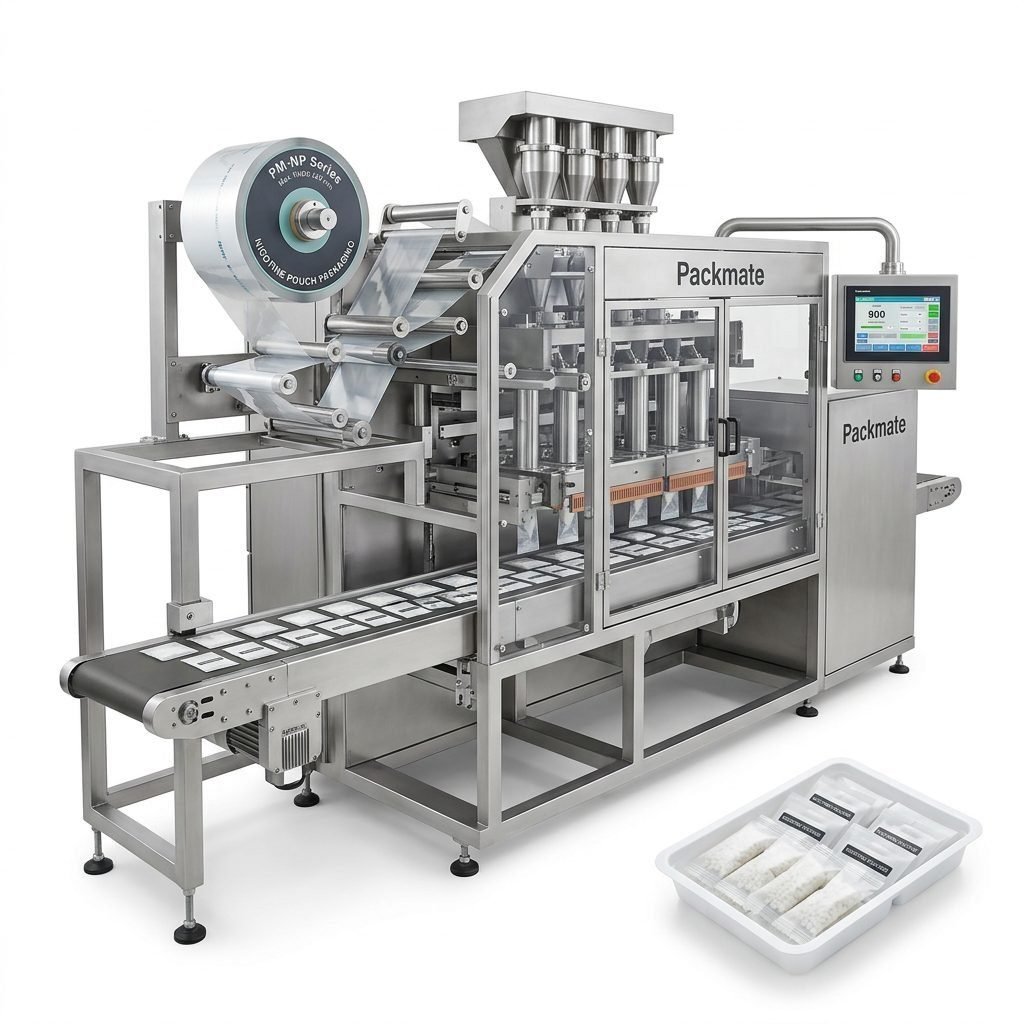
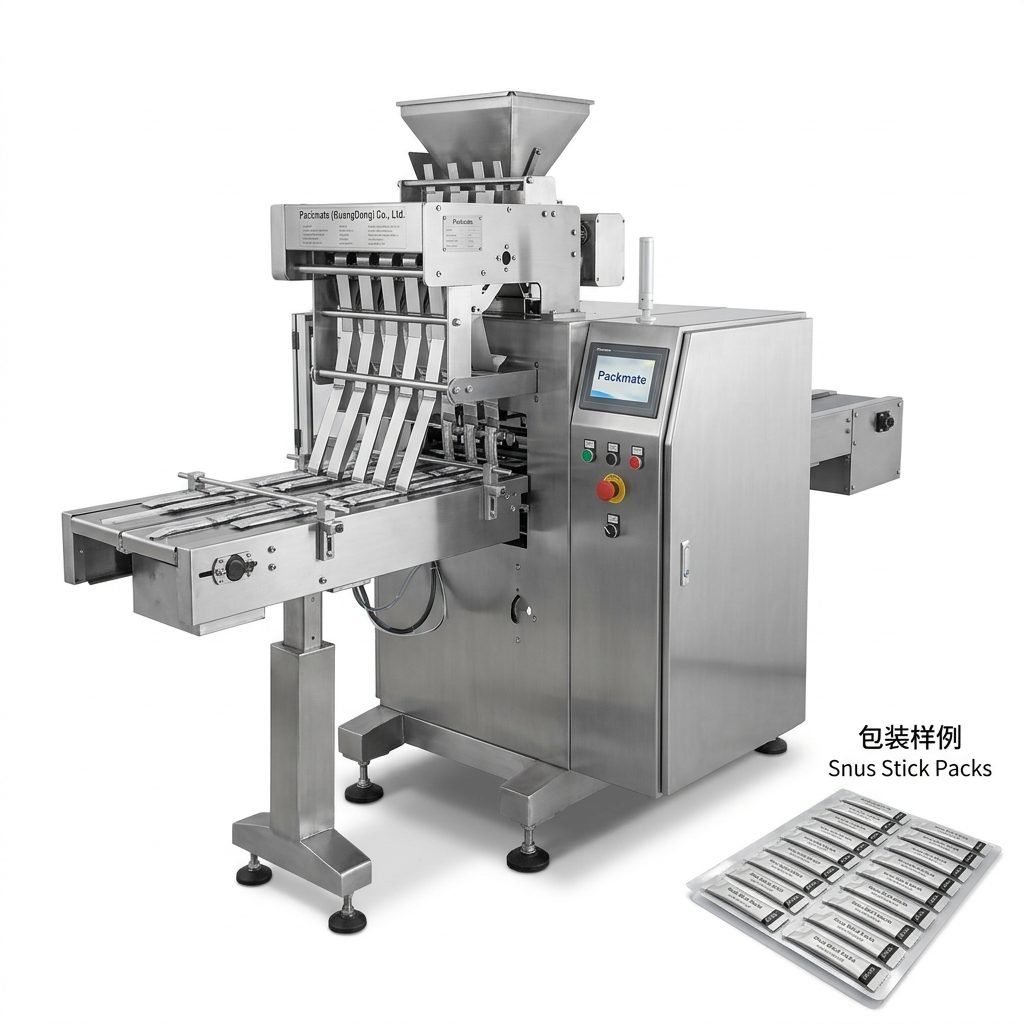
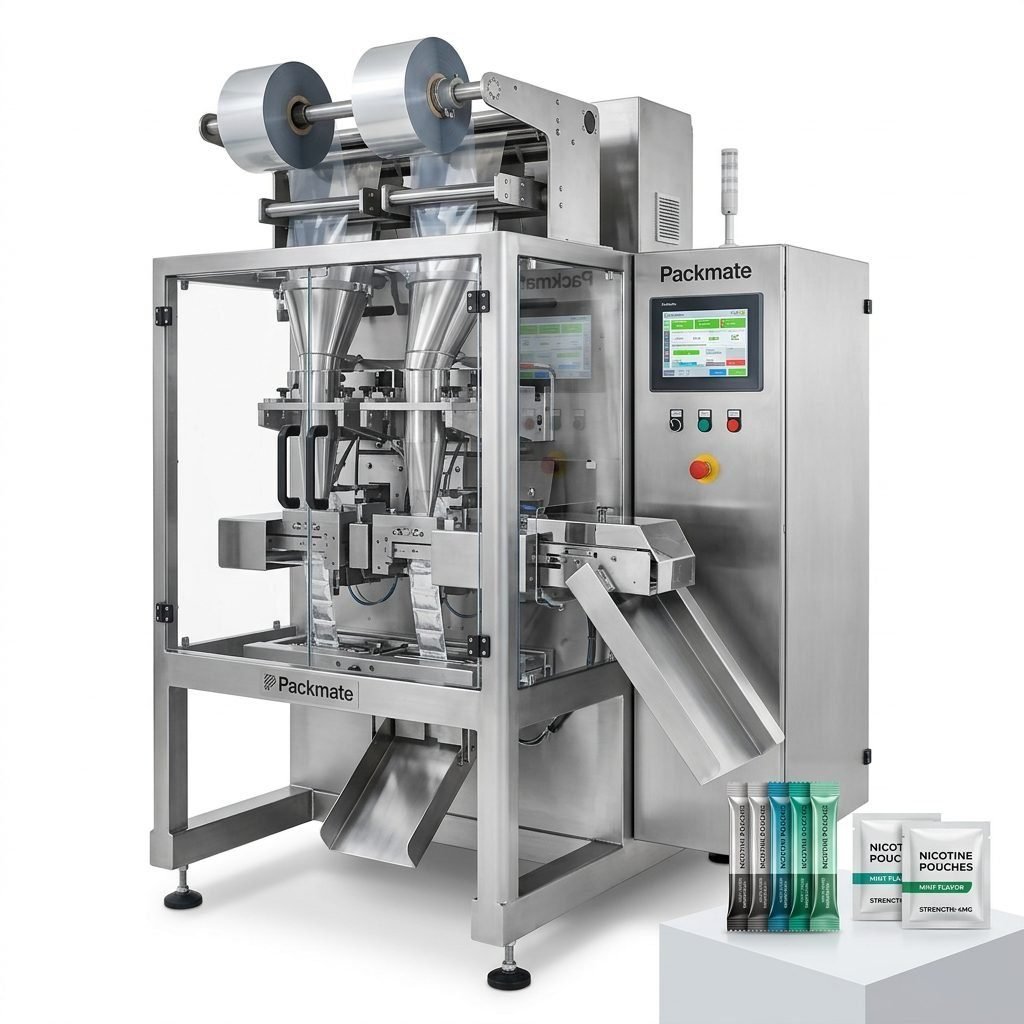
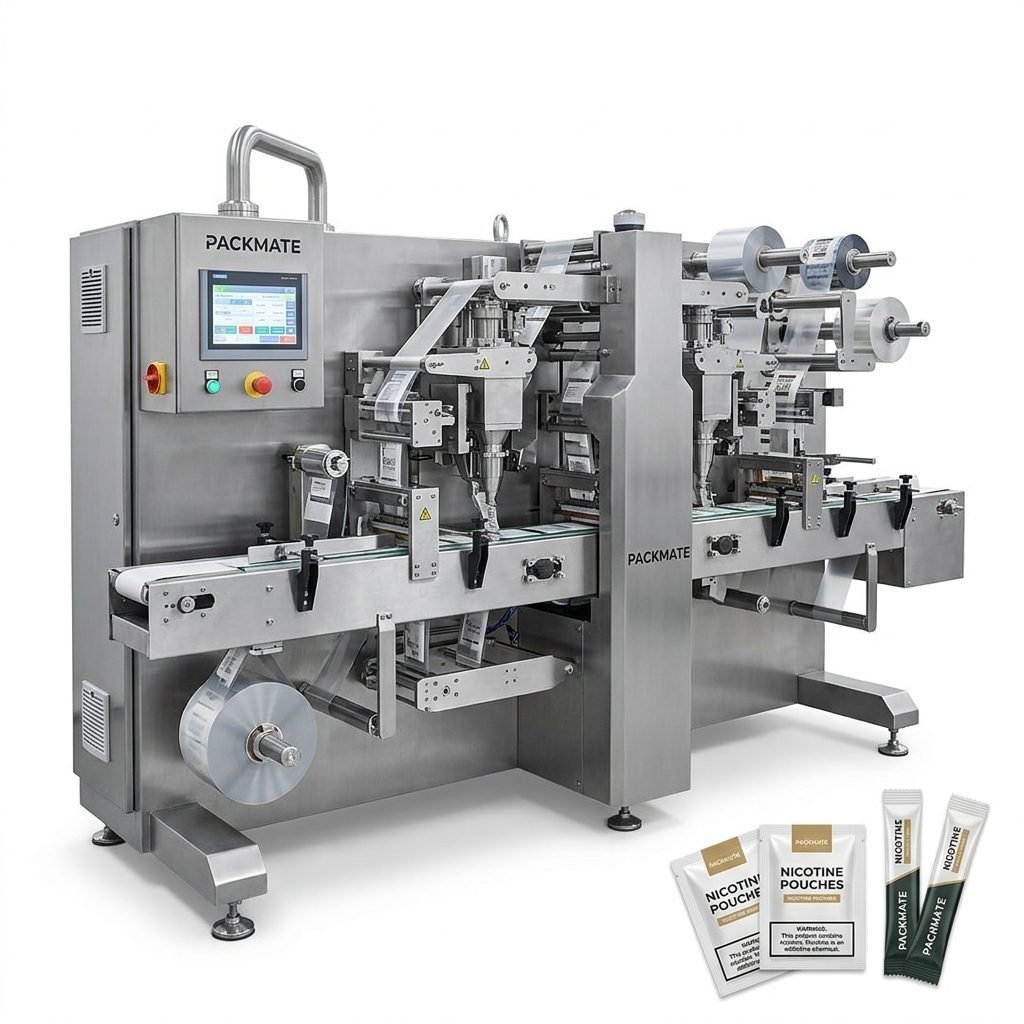
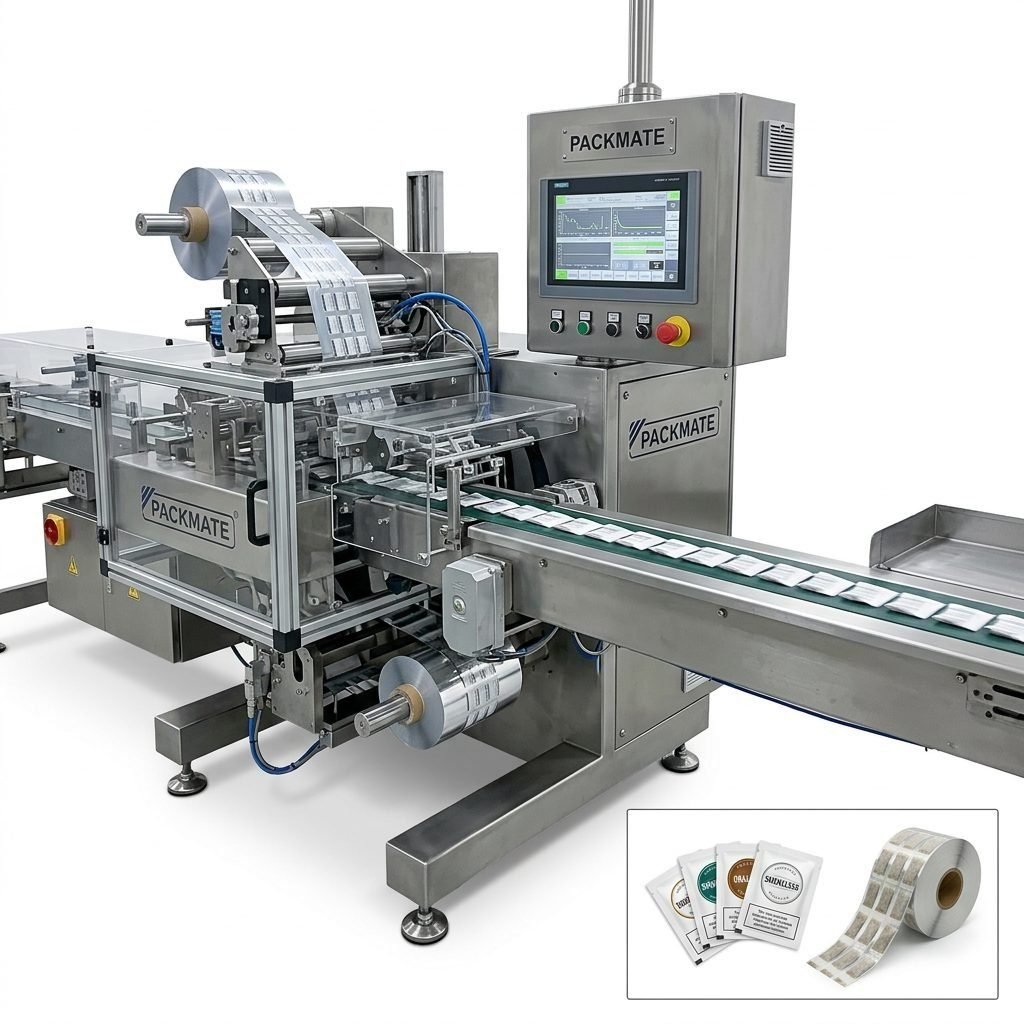
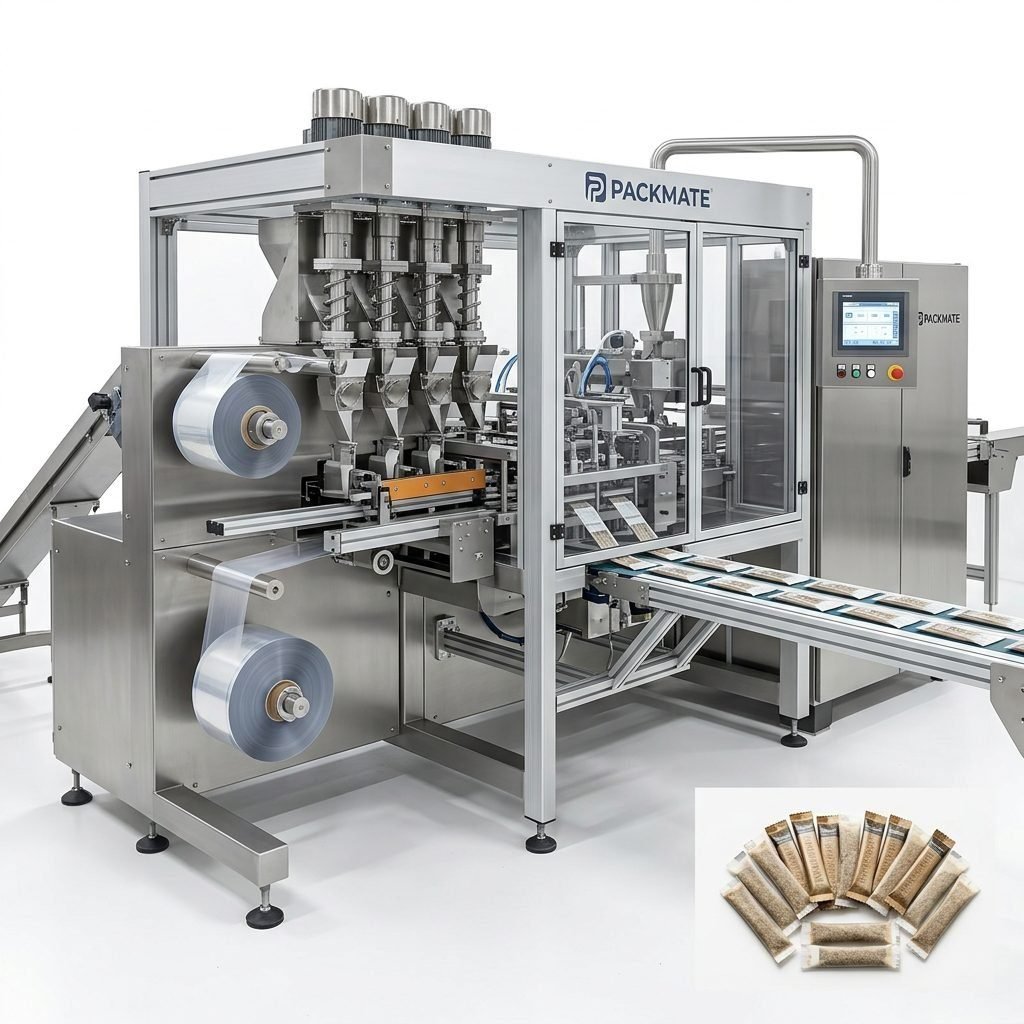
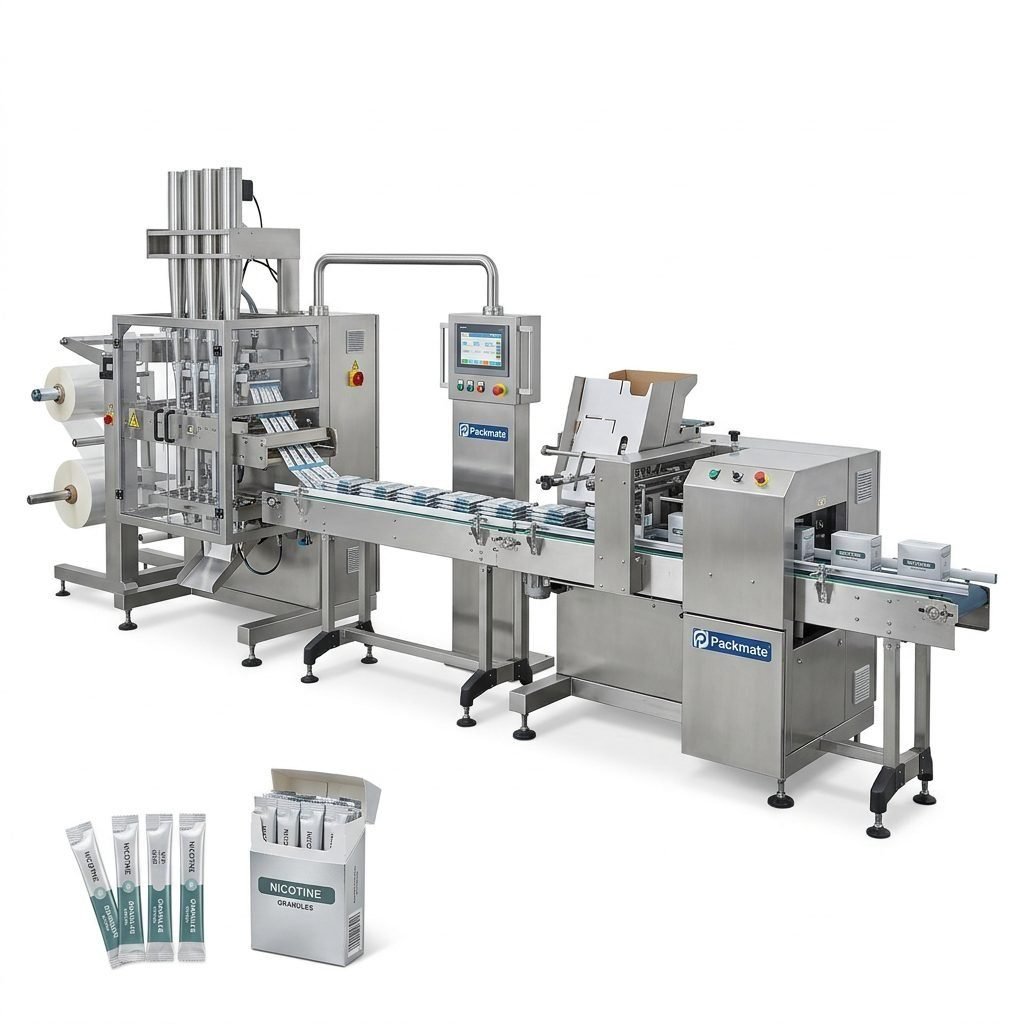
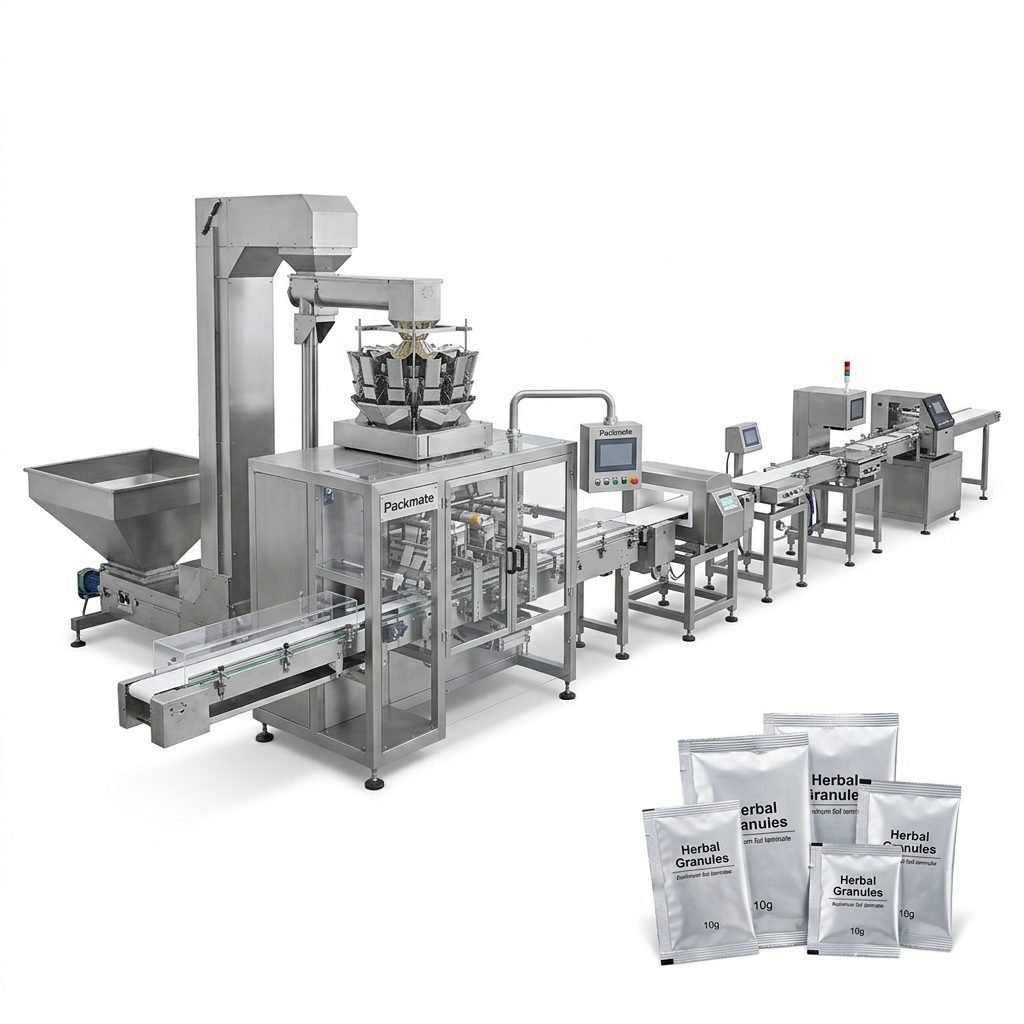
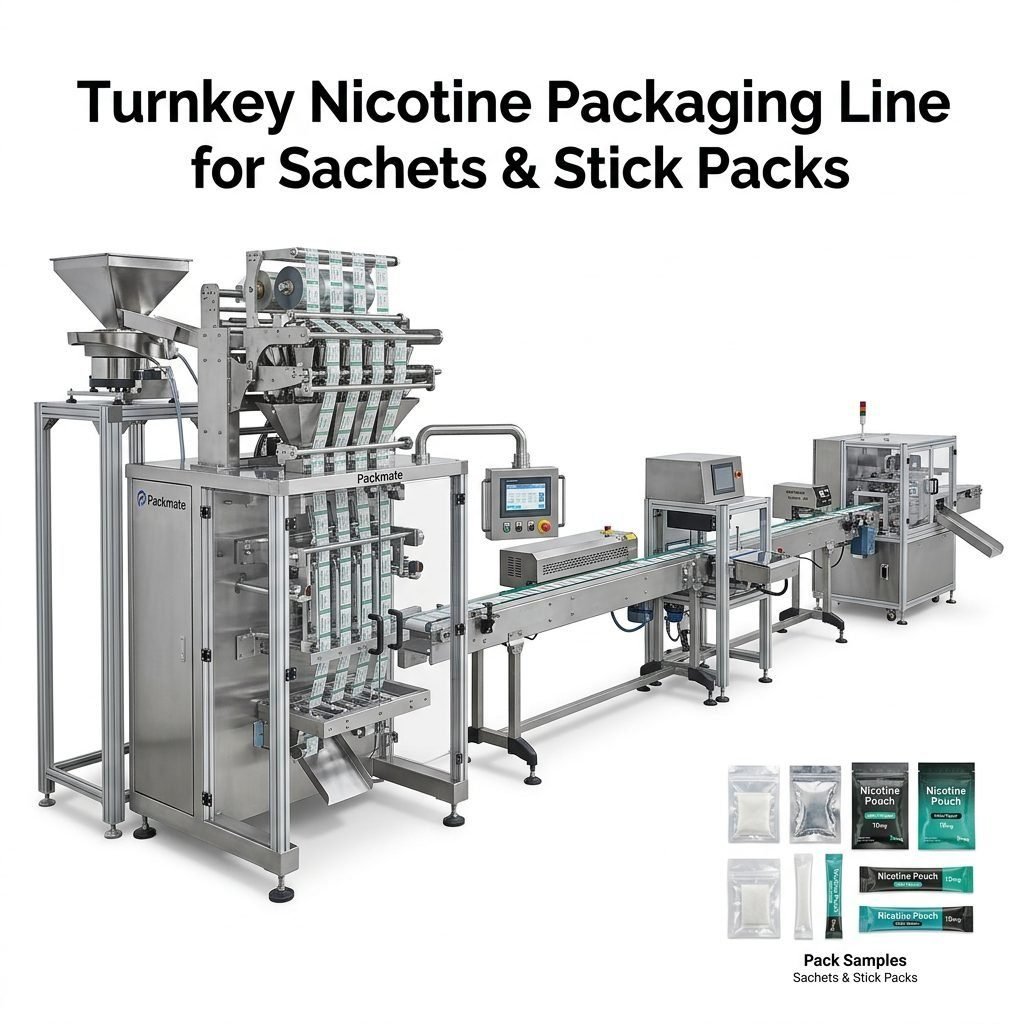
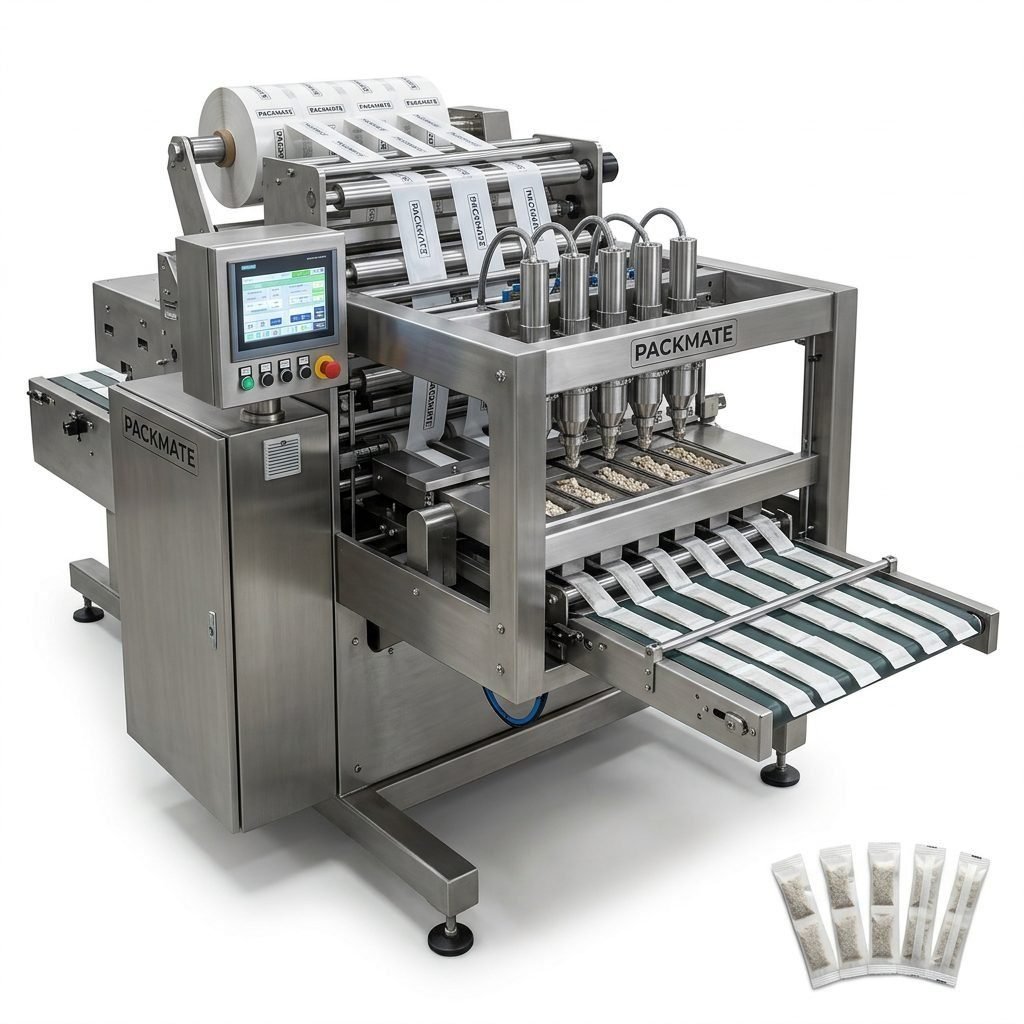
The industrial nicotine pouch production line has become a strategic investment for manufacturers seeking high-speed, automated output with consistent quality. From precision filling and multi-lane sachet formation to intelligent checkweighing and automated packing, modern lines reduce labor, boost yield, and ensure regulatory compliance for nicotine pouch and snus products. This article walks through complete manufacturing solutions, key components, technical advantages, customization options, and after-sales considerations to help you evaluate and implement a production line that scales with market demand.
Why Industrial Nicotine Pouch Production Lines Matter
Modern nicotine pouch markets demand efficient, repeatable, and traceable production. A dedicated production line delivers:
🔶 Consistent dosing accuracy — crucial for regulatory compliance and customer trust.
⚙️ High throughput via multi-lane sachet or stick pack configurations to meet large order volumes.
✅ Integrated quality control including metal detection and checkweighers to minimize recalls.
Core Components of a Complete Production Line
1. Upstream Handling & Material Feeding
Proper raw material management starts with bulk bag unloading, vibration feeders, and accurate dosing hoppers for powders, fibers, or blends. Consistent material flow reduces variation during pouch formation and ensures reliable weight control downstream.
2. Weighing & Dosing Systems
Multi-head scales and precision auger fillers are available depending on product characteristics. For small-dose nicotine pouches, high-resolution weighing systems deliver microgram to gram accuracy. See related solutions: Weighing & Packaging Systems.
3. Sachet / Stick-Pack / Multi-Lane Form-Fill-Seal Machines
The heart of the line, form-fill-seal machines can be configured for single-lane sachets, multi-lane pouches, or stick packs. Multi-lane systems multiply throughput without increasing the machine footprint — ideal for nicotine pouch brands scaling production. Explore machine categories: Sachet & Stick Pack Machines and Snus & Nicotine Packaging Machines.
4. Auxiliary Systems (Sealing, Cooling, Transfer)
Reliable sealing jaws, controlled cooling tunnels, and gentle product transfer conveyors protect pouch shape and integrity. Correct sealing parameters ensure shelf stability and leak-proof packaging.
5. Quality & Inspection (Metal Detectors, Checkweighers, Vision Systems)
Inline metal detectors and checkweighers detect contaminants and weight anomalies in real time. Vision systems verify pouch print, barcode placement, and seal quality, enabling automated rejection and reporting.
6. Secondary Packaging & Cartoning
Automated cartoners, wrap-around cases, and end-of-line palletizing streamline packaging into retail-ready formats. Integration with labeling and serialization modules supports traceability.
Key Features & Technical Advantages
Industrial nicotine pouch lines combine mechanical precision with smart controls. Notable advantages include:
🔹 Multi-lane architecture — scale capacity without linear cost increases in footprint or staffing.
🔹 PLC & HMI integration — intuitive interfaces for production recipes, fault diagnosis, and batch traceability.
🔹 Hygienic design & easy cleaning — stainless steel construction and quick-disassemble parts for GMP compliance.
🔹 High repeatability — servo-driven dosing and film handling reduce variance and material waste.
Production Capacity & Scalability
Typical production capacity depends on lane count, format, and product fill weight. Single-lane machines are suitable for pilot and small-batch production, while 4-, 8- or 12-lane lines are common for industrial output. Multi-lane lines can achieve thousands of pouches per minute in aggregate. When evaluating throughput, consider:
⚙️ Cycle time vs. lane count — doubling lanes often doubles throughput with marginal additional complexity.
🔶 Product changeover flexibility — modern lines support quick format changes for multiple SKU runs per shift.
✅ Material utilization — optimized film handling and precision dosing reduce scrap and lower cost-per-unit.
Customization & Turnkey Solutions
A true turnkey partner configures the line to the product and the plant. Customization options include lane count, pouch formats (round, square, oval), dosage ranges, film types, hygiene standards, and integration with upstream mixing or downstream cartoning. Packmate’s team provides end-to-end capabilities from process design and machine supply to electrical integration and operator training. For example, explore tailored systems in Filling & Packaging Lines.
Quality Assurance, Certifications & Manufacturing Capability
Manufacturers should verify certifications and production capability when selecting equipment:
🔹 CE & ISO compliance — ensures machines meet international safety and quality benchmarks. See certificates: Certificate.
🔹 Advanced CNC machining & precision assembly — Packmate operates a 20,000㎡ factory with CNC centers and dedicated assembly lines for consistent build quality.
🔹 Field-proven designs — global deployments and exhibition demonstrations offer real-world validation. Learn more: Case and Our Exhibition.
Installation, Commissioning & After-Sales Support
Successful deployment is more than equipment delivery. Comprehensive services should include site assessment, foundation and utilities planning, FAT (Factory Acceptance Test), on-site commissioning, operator training, and OEE optimization. Remote diagnostics and spare parts programs help reduce downtime. For details on service offerings, see: Service.
Material & Packaging Considerations for Nicotine Pouches
Material selection affects product stability and machine performance. Barrier films, heat-sealable laminates, and printable layers must be compatible with sealing temperatures and machine speeds. For brands targeting premium positioning, printed barrier films and tamper-evident features add value but require precise web handling and registration systems.
Regulatory & Traceability Requirements
Nicotine pouch manufacturers must manage batch records, ingredient traceability, and labeling mandates. Integrating MES or traceability modules with the packaging line enables automated batch coding, serialization, and electronic record-keeping — essential in regulated markets and for cross-border distribution.
Choosing the Right Supplier
Evaluate suppliers on engineering experience, range of machine models, facility capability, references, and global service network. Packmate highlights include 30+ years of engineering experience, 50+ machine models, and turnkey solutions across food, pharmaceutical, and chemical industries. Learn more about the company: About Packmate.
Real-World Deployment Examples
Manufacturers across Europe, Asia, and the Americas are adopting multi-lane lines for nicotine pouch production to meet surging demand. Typical implementations include integrated dosing and sachet forming with downstream auto-cartoning, combined with inline inspection and data logging to support export compliance and retailer requirements.
How to Get Started: Project Roadmap
A typical implementation follows these phases:
1) Requirements & product definition — define pouch format, fill weights, materials, and regulatory needs.
2) Solution design & quotation — equipment layout, capacity, and automation scope.
3) Factory acceptance test (FAT) — verify performance before shipment.
4) Site installation & commissioning — on-site validation, staff training, and production ramp-up.
Further Resources & Contact
If you are evaluating nicotine pouch lines, review machine categories and case histories to match technology with business goals. Browse product categories here: Bag & Pouch Packaging Machines and contact the team for a tailored proposal: Contact Us.
Case & Exhibition Links
See field examples and meet the team live at exhibitions: Case | Our Exhibition.
Frequently Asked Questions
Q1: How quickly can a production line be installed and commissioned?
A1: Typical timelines range from 12 to 24 weeks from contract to commissioning depending on customization, FAT scheduling, and site readiness. Simple, standardized lines can be delivered faster, while fully customized turnkey projects take longer for design validation and regulatory considerations.
Q2: What level of automation is recommended for a mid-sized nicotine pouch brand?
A2: For mid-sized brands, a multi-lane form-fill-seal line with automated dosing, inline inspection, and semi-automated secondary packaging balances throughput with capital investment. This configuration supports growth while keeping operational complexity manageable.
Q3: How do you ensure dosing accuracy for very small pouch weights?
A3: Use high-resolution weighing heads or precision auger fillers paired with vibration control and closed-loop feedback to the PLC. Regular calibration and environmental control (humidity, static) are also essential for repeatable micro-dosing.
Q4: What after-sales services should I expect from a machine supplier?
A4: Comprehensive service includes spare parts availability, remote troubleshooting, preventive maintenance plans, on-site technicians for major events, and training for operators and maintenance staff. Suppliers with global show presence and customer references provide higher confidence.
Q5: Where can I find examples of installed lines and performance benchmarks?
A5: Review supplier case studies and exhibition demonstrations for benchmarked performance. Visit the Case section and request references to validate uptime and OEE in similar installations.