The nicotine pouch market demands consistent, high-speed, and reliable packaging to meet growing volumes while maintaining product integrity and regulatory compliance. Increasing packaging speed is not just about running machines faster — it’s about rethinking line design, choosing the right equipment, optimizing material flow, and applying data-driven maintenance and changeover strategies. This guide walks through the best machines, practical line design principles, and tangible optimization tips to boost your nicotine pouch packaging output without sacrificing quality.
Understand the true constraints before pushing speed
⚙️ Bottleneck analysis is the first step. Identify whether the limiting factor is product filling, pouch forming, sealing, labeling, or downstream packing. Running a packaging line faster without solving the true bottleneck only increases downtime and rejects.
Best machine types to increase nicotine pouch packaging speed
Choosing the right machine family dramatically affects achievable throughput. Consider these high-performance categories:
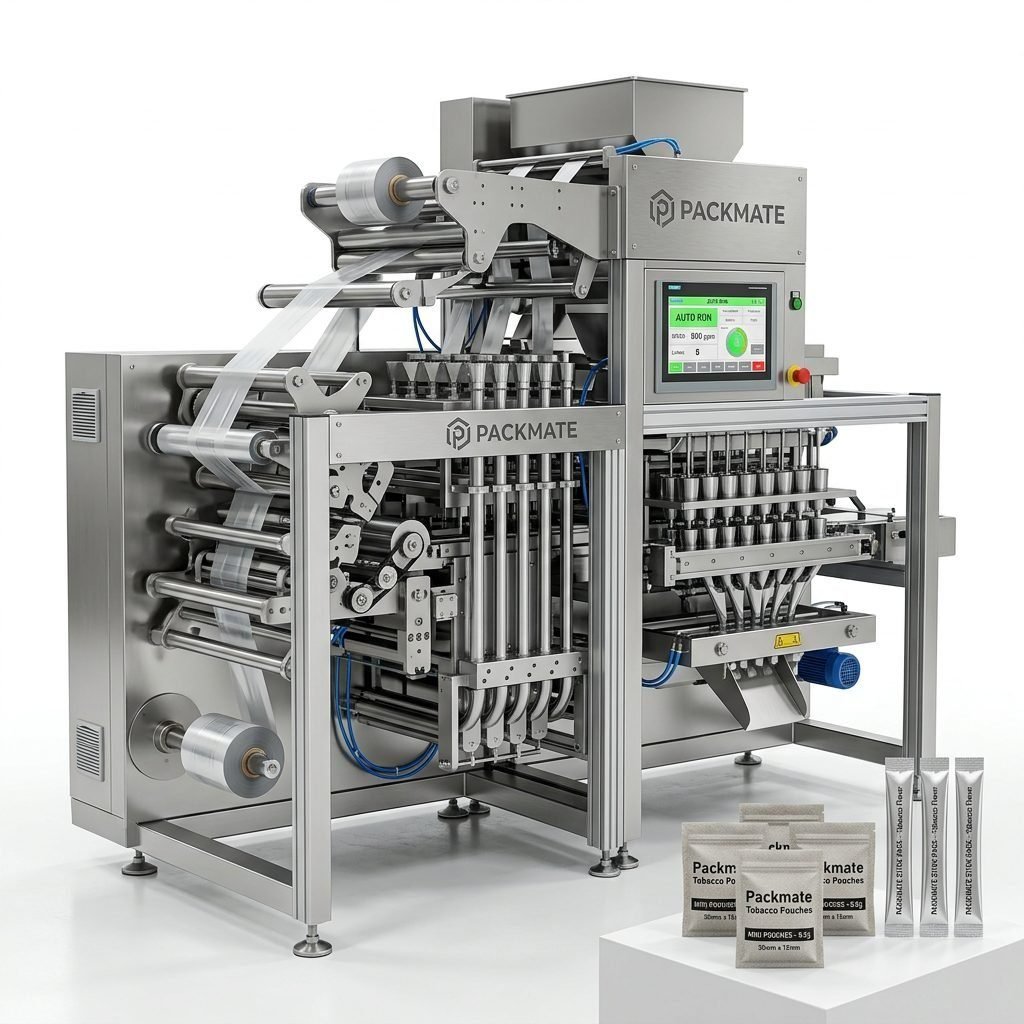
High-speed multi-lane form-fill-seal (FFS) machines
📈 Multi-lane FFS systems allow concurrent pouch formation across several lanes. For nicotine pouches, multi-lane machines increase output with synchronized filling and sealing, ideal for small-dose products. Look for models with robust servo motion control and lane balancing to avoid lane-to-lane variations.
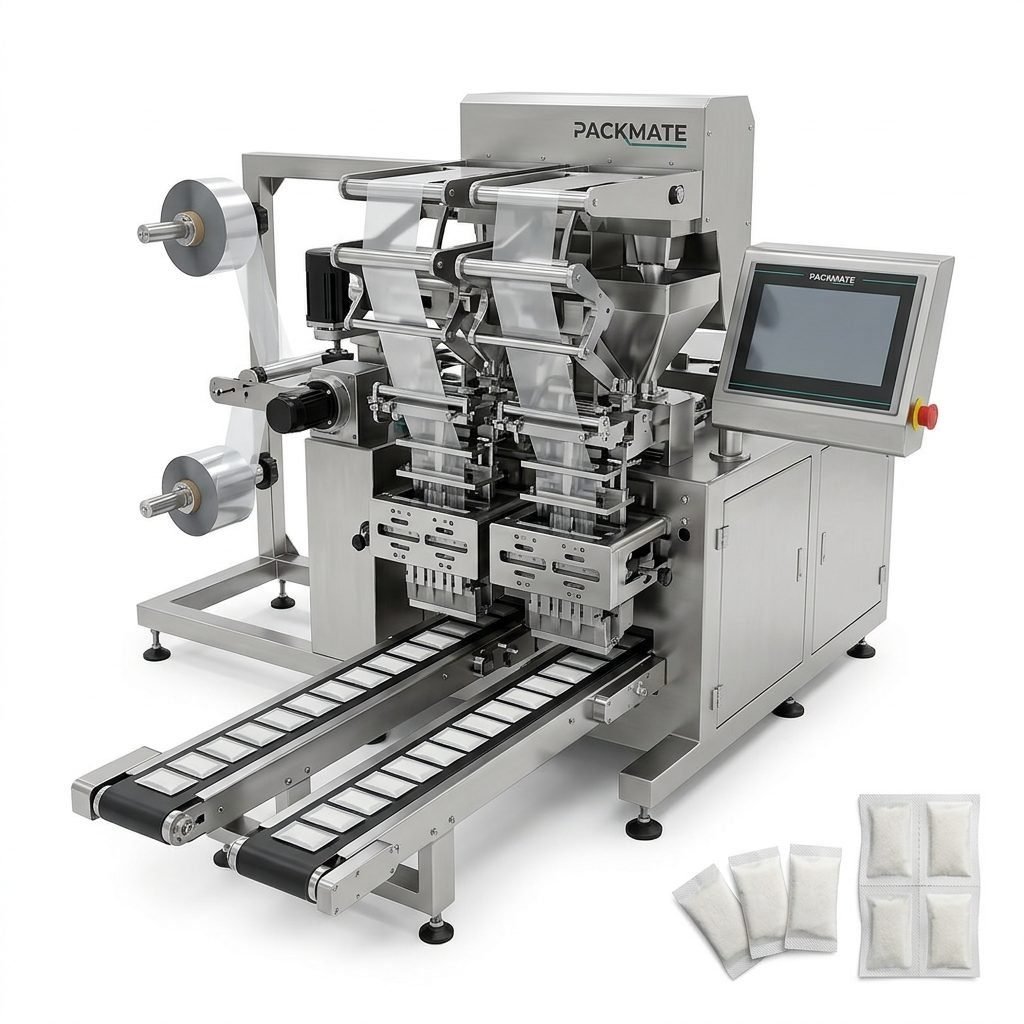
Rotary pre-made pouch fillers
🔁 Rotary fillers are excellent when using pre-made pouches. They provide continuous indexing at high speeds with precise dosing and minimal pouch handling time. They are particularly useful when format changeover speed and gentle pouch handling are priorities.
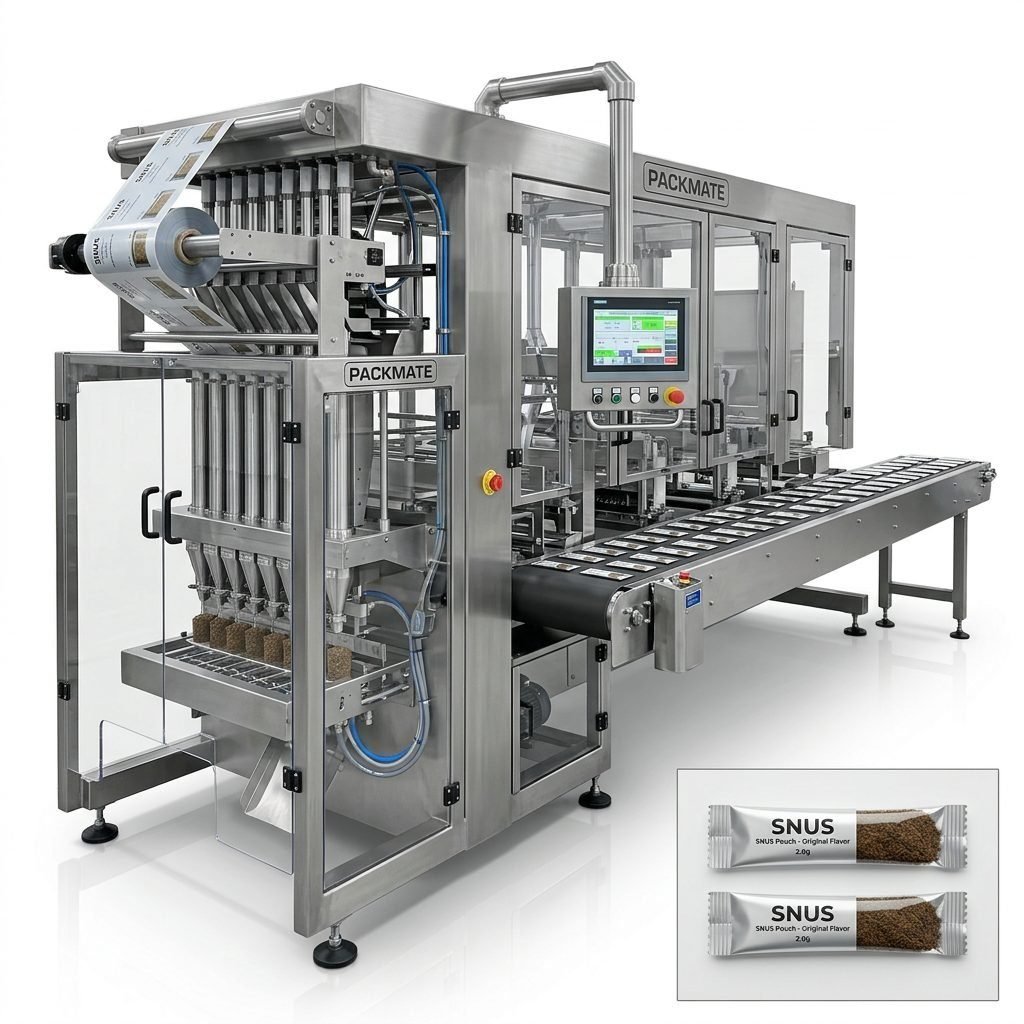
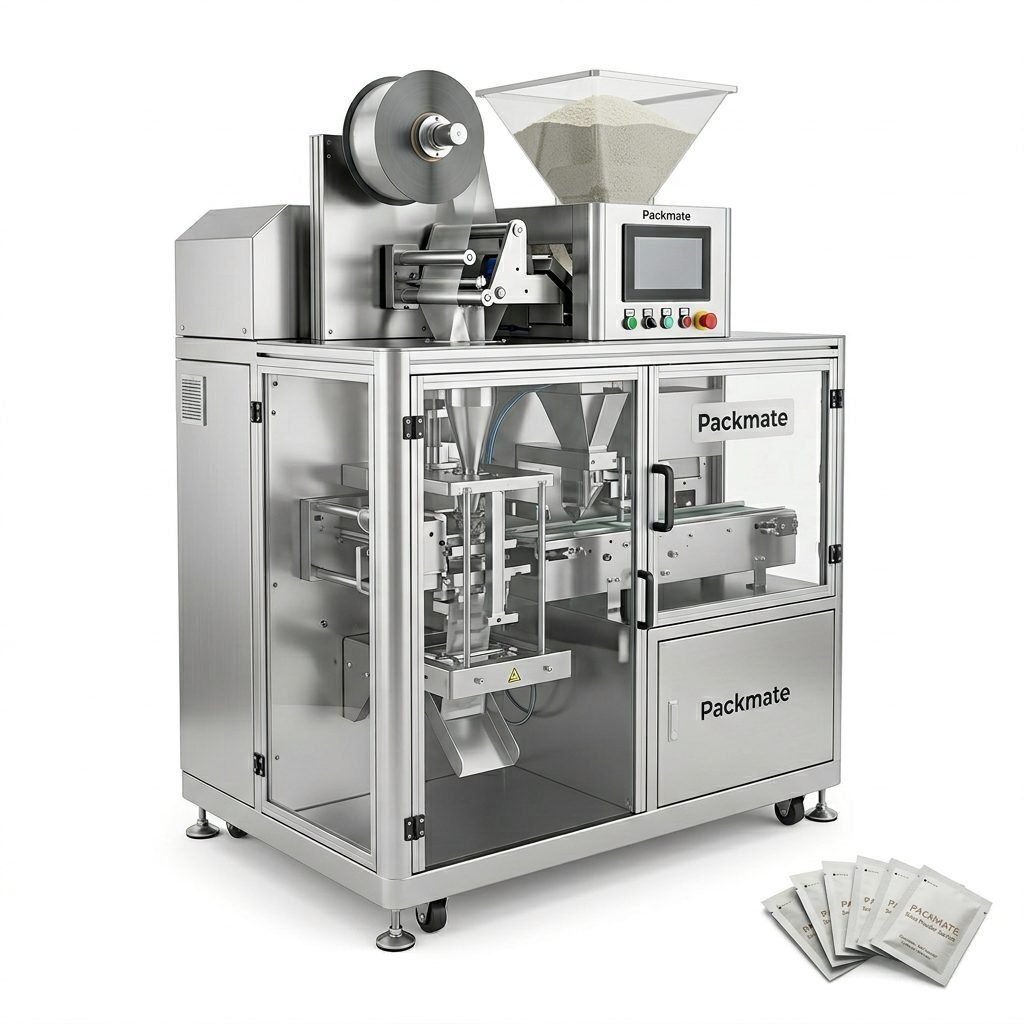
Stick pack & sachet machines for single-serve nicotine pouches
🧾 For stick packs and sachets, high-speed rotary stick pack machines and continuous sachet systems can reach very high sachets-per-minute rates. They are compact and offer fast changeovers when designed with quick-tooling features.
Auxiliary systems: weighing, feeding and secondary packaging
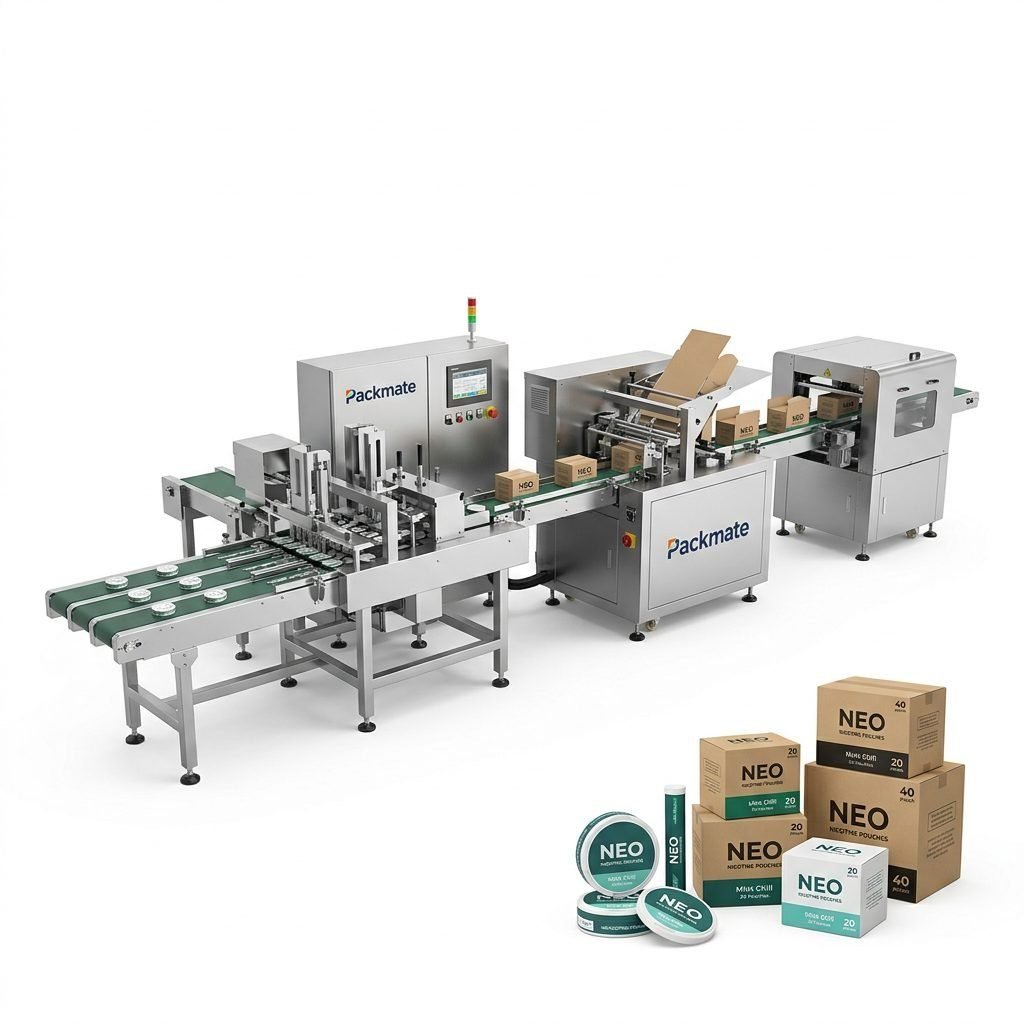
🔧 Fast pouch packaging requires matching upstream and downstream equipment: high-speed weighers, automated feeders, collating systems, and case packers. Mismatched auxiliary equipment is a common hidden bottleneck.
Line design principles that translate to higher productivity
A fast machine in a poorly designed line yields poor results. Focus on flow, synchronization, and minimal manual interventions.
✅ Straight-line material flow: Avoid unnecessary turns or buffer stations that create jams or require operator handling.
✅ Sufficient accumulation: Use short automated buffers between machines to decouple small stalls and maintain upstream operation.
✅ Unified control architecture: Central PLC/SCADA control with synchronized servo drives ensures lanes and machines stay in phase at high speeds.
Infeed optimization
Proper infeed design reduces misfeeds and downtime. Vibro-feeders, optical positioning systems, and gentle conveyors keep pouches oriented and ready for fast pick-and-place or transfer operations.
Minimize manual touches
Each manual intervention costs time and introduces variability. Automate roll changes, film splicing, and pouch loading where possible to sustain higher line speeds and reduce errors.
Machine-level optimizations to safely increase cycle rates
Many machines have headroom for higher throughput after tuning. Follow these machine-level best practices.
⚡ Servo tuning and motion profiles: Optimize acceleration and deceleration profiles to reduce cycle times while avoiding mechanical shock.
🔎 Sensor placement and timing: Ensure fill and seal sensors are positioned to give just-enough reaction time; late triggers cost cycles, early triggers cause defects.
🔧 Air and vacuum systems: Upgrade valves, filters and tubing to maintain stable vacuum/pressure at higher cycle rates.
Material, pouch and film choices that enable higher speed
Packaging materials directly affect machine ability to run fast and reliably. Use materials that are designed for high-speed forming and sealing.
– Choose films with consistent thickness and good sealability to avoid rework.
– For pre-made pouches, specify pre-cut precision and consistent mouth profiles for fast feeding and filling.
– Consider anti-static treatments or conductive materials for dry nicotine powders to prevent clumping during high-speed dosing.
Automation, monitoring and Industry 4.0 tips
Real-time data and automation reduce stoppages and optimize throughput.
📊 OEE dashboards: Track Availability, Performance and Quality to quickly identify recurrent speed losses.
🔔 Automated alarms & alerts: Configure alarms for out-of-spec fills, seal temperature excursions, or lane imbalance to reduce defect runs.
🔗 Integration with MES/WMS: Sync production targets and material inventory to eliminate idle time awaiting materials.
Maintenance and changeover strategies
Preventive and predictive maintenance keeps lines at peak performance. Quick and repeatable changeovers reduce non-productive time.
– Implement a daily quick-check list focusing on belts, seals, sensors, and pneumatics.
– Use SMED (Single-Minute Exchange of Dies) principles: pre-stage tools, use quick-clamp mechanisms, standardize fixtures across formats.
– Adopt condition-monitoring sensors (vibration, temperature) to predict bearing wear or misalignment before failure.
Operator training and process discipline
Even the best-equipped lines underperform without trained operators and consistent procedures.
👩🏭 Standard operating procedures: Document start-up, shutdown, defect handling and cleaning steps to minimize variability when running at high speed.
📚 Skill matrix & training: Cross-train staff on preventive maintenance and troubleshooting to keep lines moving without waiting for specialists.
Quality control and regulatory compliance at speed
Speed must not jeopardize safety and compliance. Inline checks and sampling programs allow higher throughput while ensuring product integrity.
– Integrate inline metal detection and vision inspection to reject defects without stopping the line.
– Use automated weight checks and statistical process control to monitor fill accuracy at higher speeds.
Case examples and proven solutions
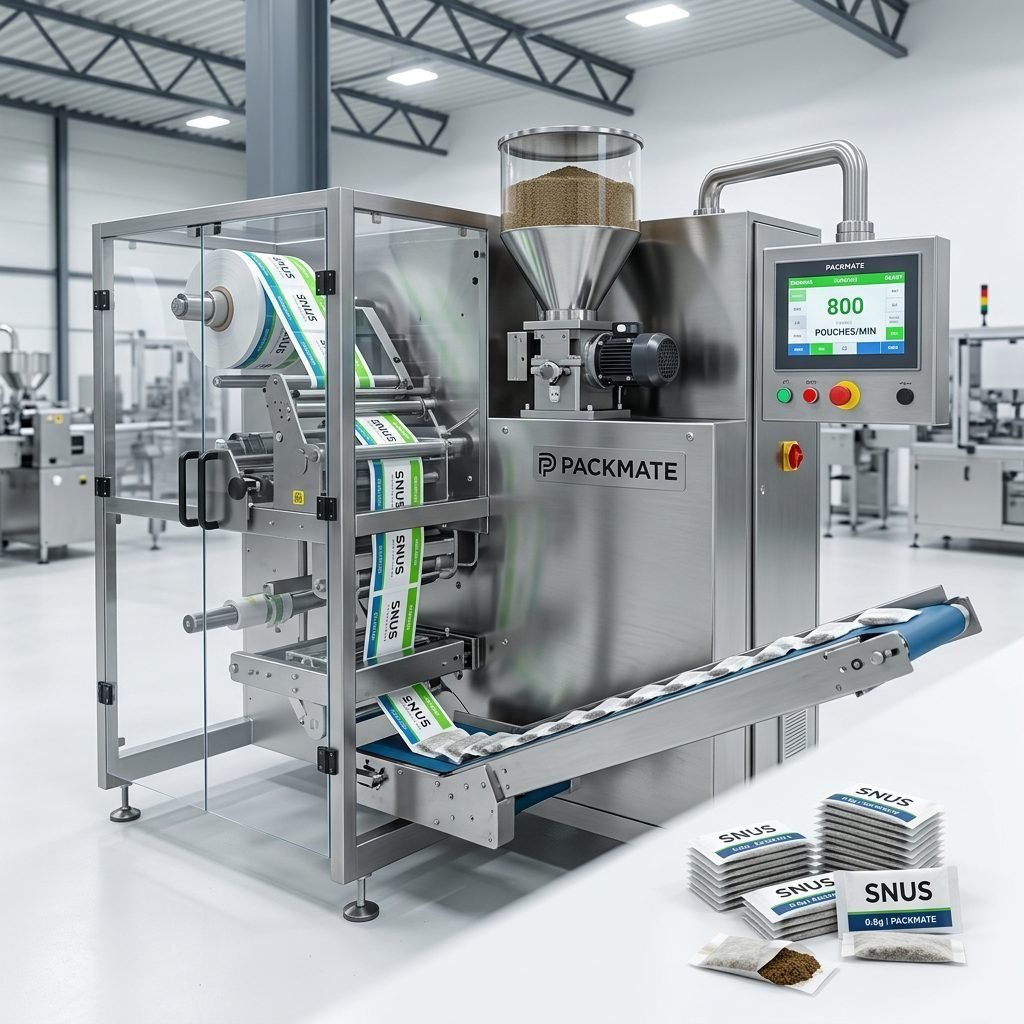
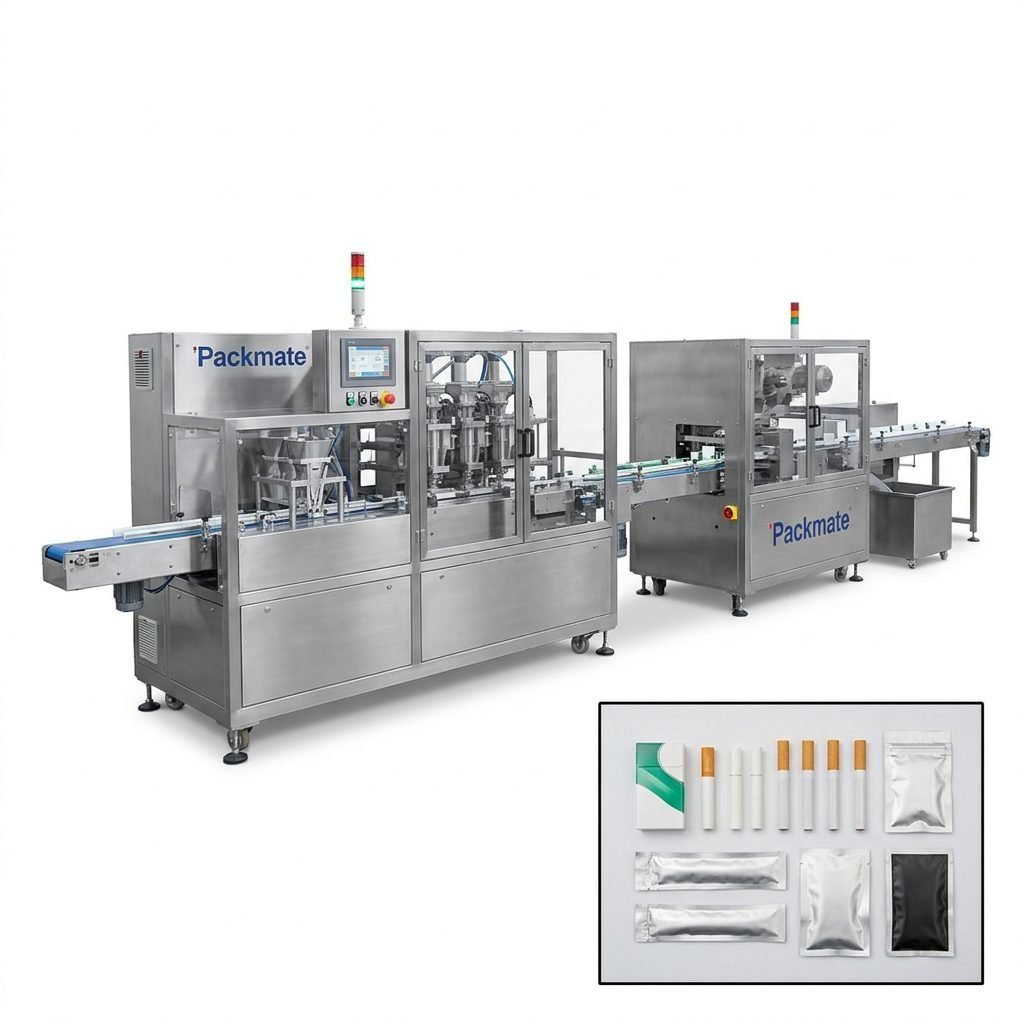
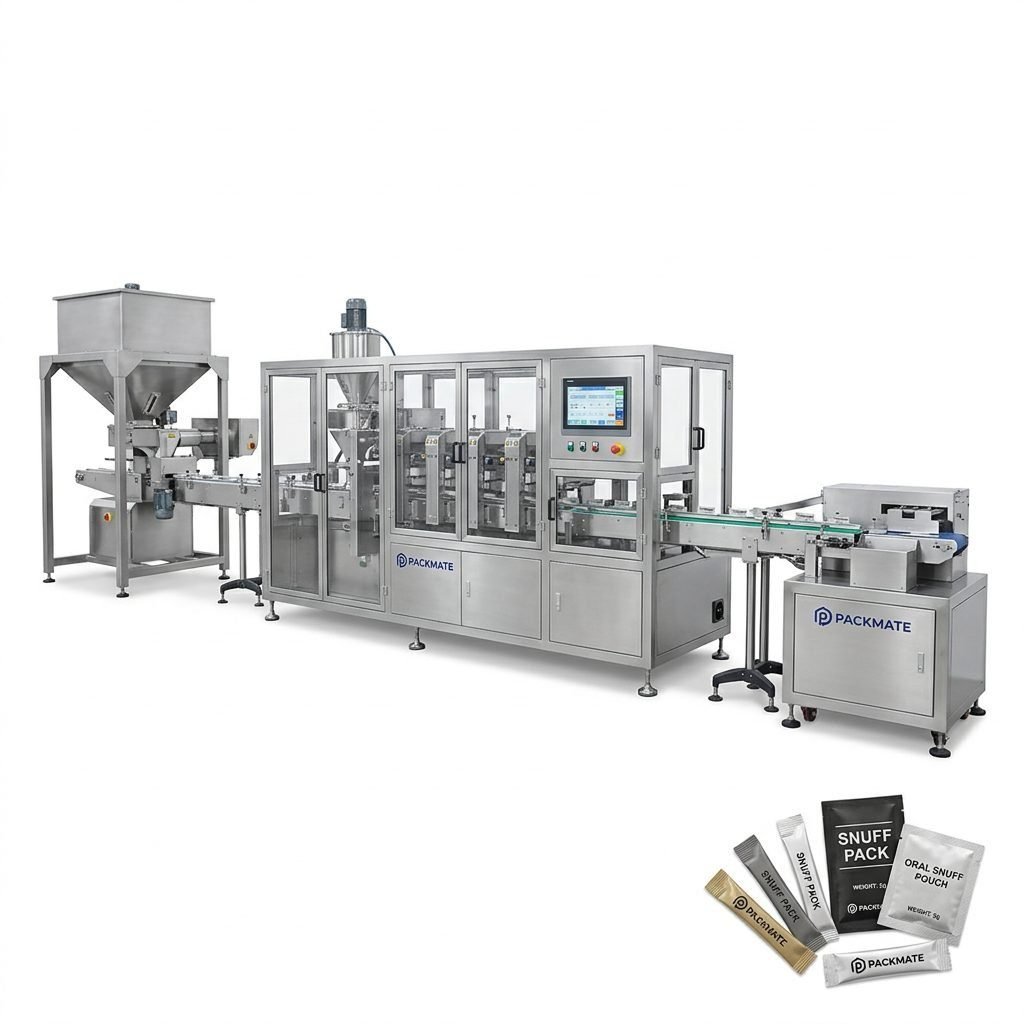
Many manufacturers have boosted nicotine pouch output by moving to specialized multi-lane systems and optimizing the entire line. Packmate Snus Machine provides turnkey solutions including high-performance multi-lane pouch machines, weighing systems, and secondary packaging to ensure throughput and reliability. Explore their product families for matched solutions:
– Snus & Nicotine Packaging Machines: https://www.snusmachinery.com/products/snus-nicotine-packaging-machines/
– Sachet & Stick Pack Machines: https://www.snusmachinery.com/products/sachet-stick-pack-machines/
– Weighing & Packaging Systems: https://www.snusmachinery.com/products/weighing-packaging-systems/
Cost vs. benefit: how to evaluate speed investments
Faster machines and automation require investment. Evaluate ROI by quantifying increased throughput, reduced labor, decreased rejects, and improved OEE. Small percentage improvements in cycle time compound significantly across shifts and lines.
💡 Quick ROI checklist: increased throughput (units/hour), reduced downtime (minutes/day), lower rejects (%), labor savings (FTEs) — use these to build a business case.
Practical optimization checklist before ramping speed
Follow a structured checklist to ensure reliability when increasing line speed:
✔️ Validate material consistency and supplier tolerances at expected speeds.
✔️ Confirm servo tuning, sensor timing and pneumatic capacity.
✔️ Ensure auxiliary equipment (weighers, conveyors, case packers) are rated for the target throughput.
✔️ Run pilot batches and measure quality metrics before full-rate production.
Working with suppliers and system integrators
Partnering with experienced machine manufacturers and integrators reduces risk. Look for suppliers with proven nicotine pouch experience, turnkey capabilities, and strong after-sales service. Packmate Snus Machine, for example, offers a range of specialized equipment and global support built on decades of experience and factory-level testing. See company capabilities and case stories to benchmark solutions:
– Company overview & capabilities: https://www.snusmachinery.com/about-us/
– Case examples & references: https://www.snusmachinery.com/case/
Final thoughts
Increasing nicotine pouch packaging speed requires an integrated approach: choose the right machines (multi-lane FFS, rotary fillers, or stick pack systems), design flow-optimized lines, invest in auxiliary automation, and implement data-driven maintenance and operator training. Small systematic improvements in tooling, material specification, and controls frequently unlock the largest gains in throughput and quality.
Further resources
For specific equipment families and turnkey lines, explore product categories and reach out to experienced suppliers for tailored line layouts:
– Bag & Pouch Packaging Machines: https://www.snusmachinery.com/products/bag-pouch-packaging-machines/
– Filling & Packaging Lines: https://www.snusmachinery.com/products/filling-packaging-lines/
Common Questions
Q1: How much can I safely increase speed on an existing nicotine pouch line?
A1: Small incremental steps (5-10%) with careful monitoring are typical. Make sure material specs, sealing temperatures and sensor timings are validated at each step to avoid defects.
Q2: Is multi-lane equipment always the best option for higher throughput?
A2: Multi-lane machines boost nominal capacity, but they require excellent lane synchronization and consistent pouch materials. For some operations, upgrading auxiliary systems or improving changeover time yields better ROI.
Q3: What are the most common hidden bottlenecks when trying to increase speed?
A3: Typical hidden bottlenecks include auxiliary weighers, vacuum pumps, film unwinds, and manual handling points. Conduct a line-wide assessment before adjusting core machine speeds.
Q4: How important is supplier support when increasing line throughput?
A4: Very. Suppliers with nicotine pouch experience provide critical advice on materials, servo tuning, and specialized tooling. Look for vendors that offer commissioning, training, and global service.
Q5: Where can I see real-world examples of high-speed nicotine pouch lines?
A5: Refer to manufacturer case studies and exhibition demonstrations. Packmate Snus Machine publishes cases and exhibits globally — see their case pages and exhibition schedule for live demos.