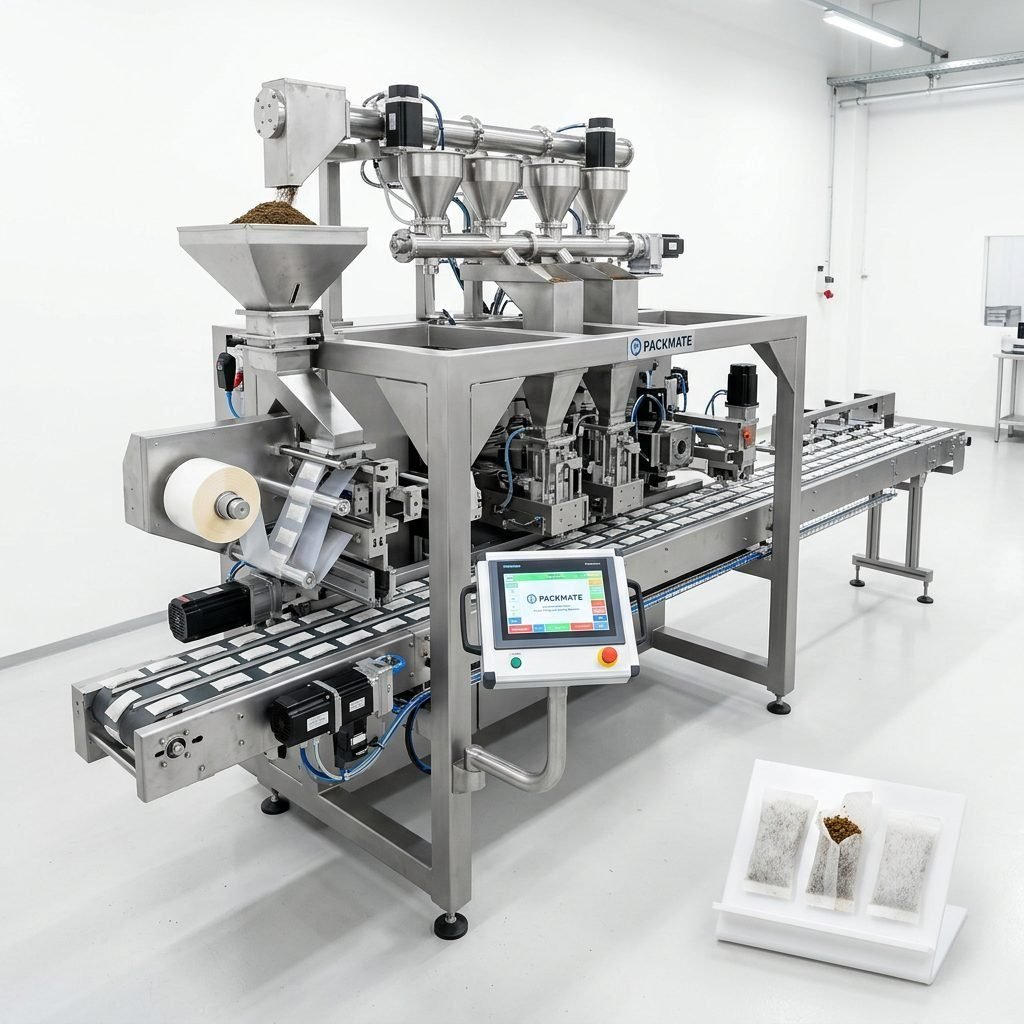
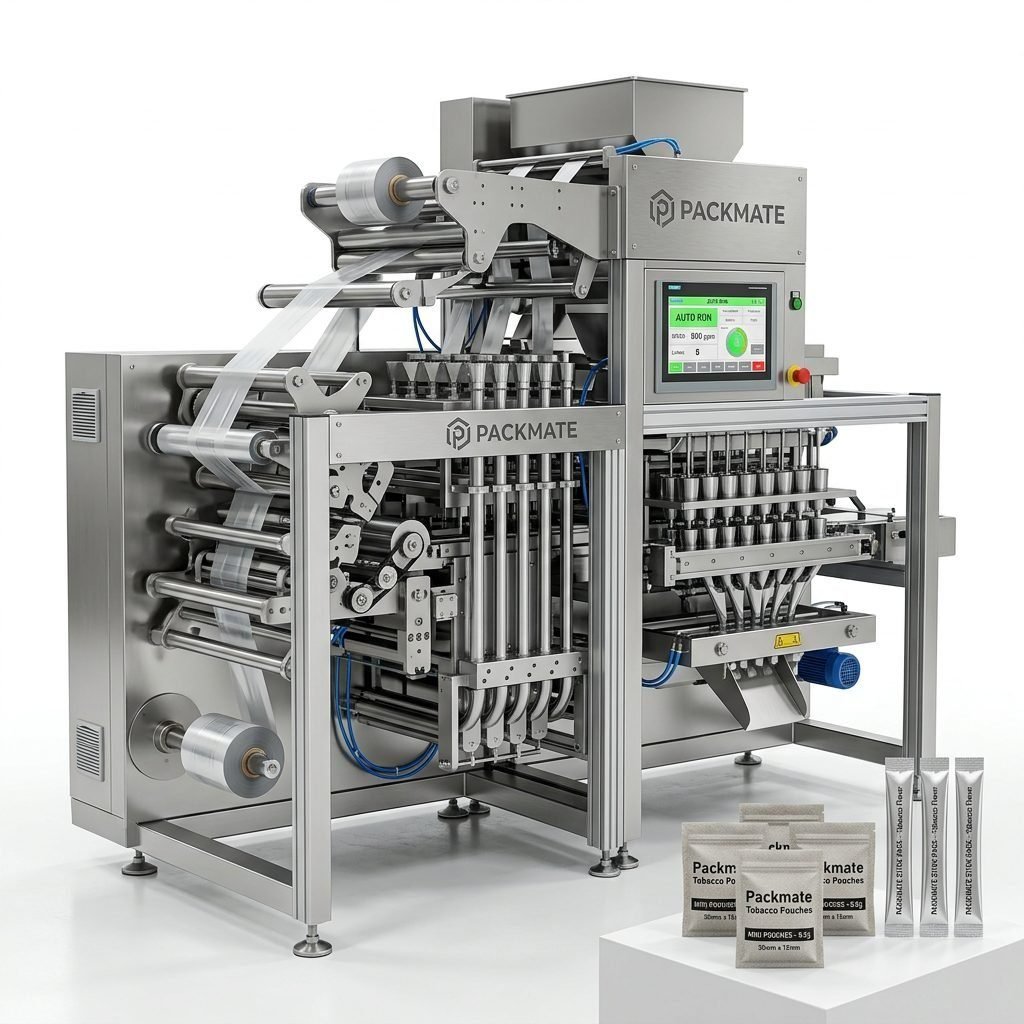
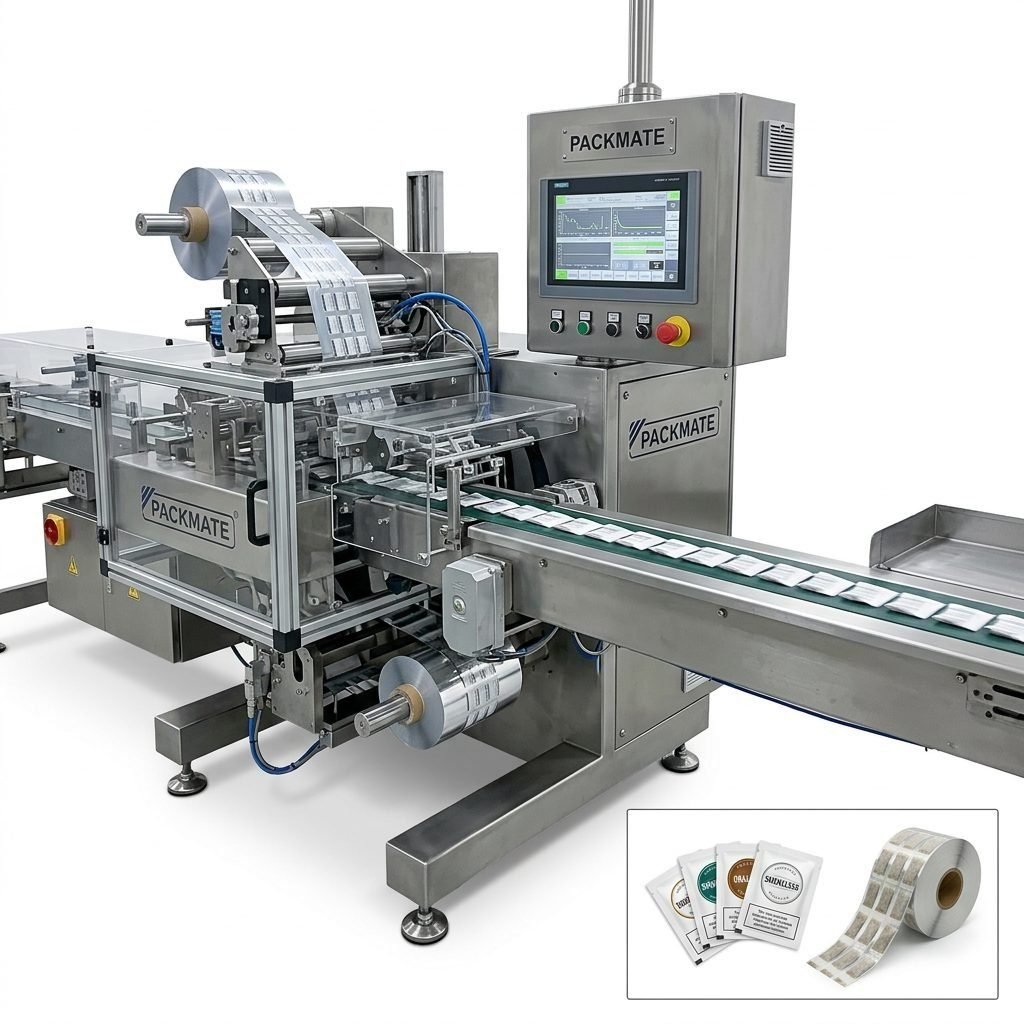
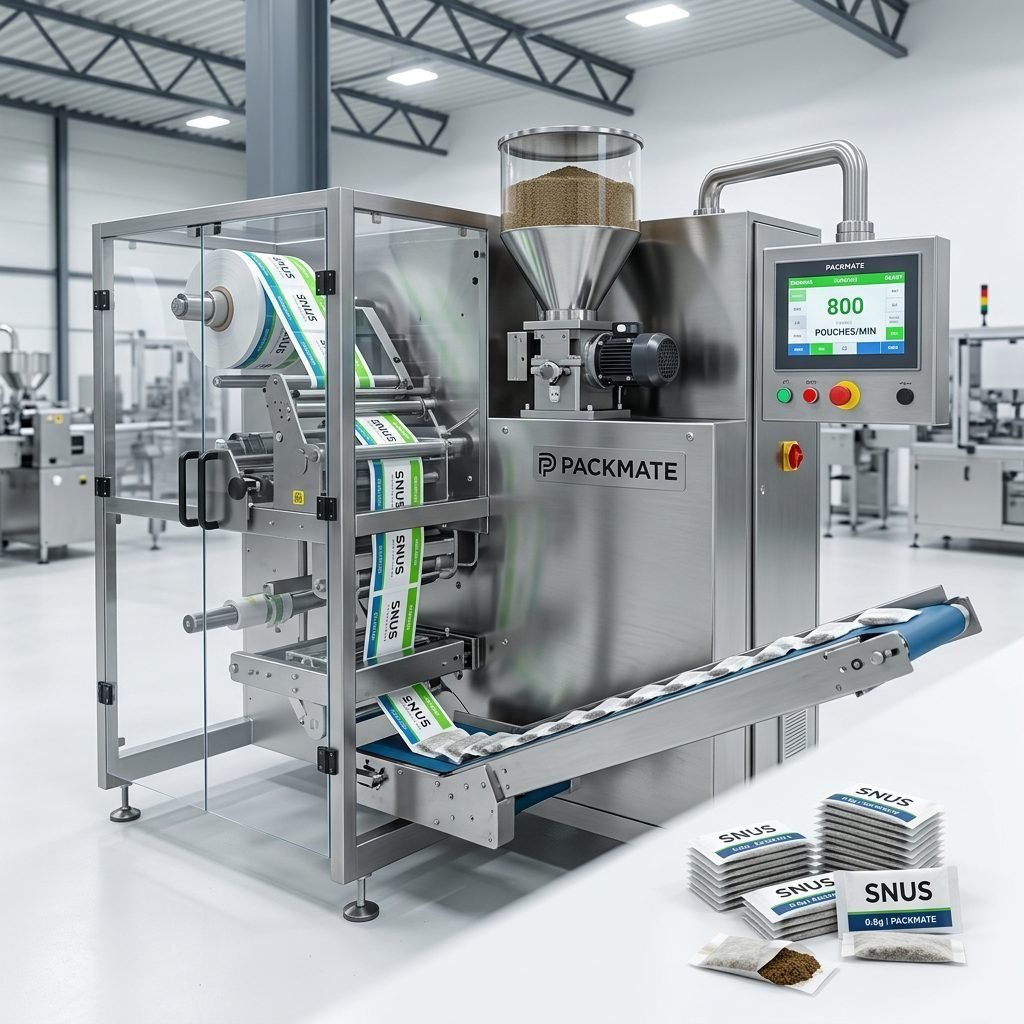
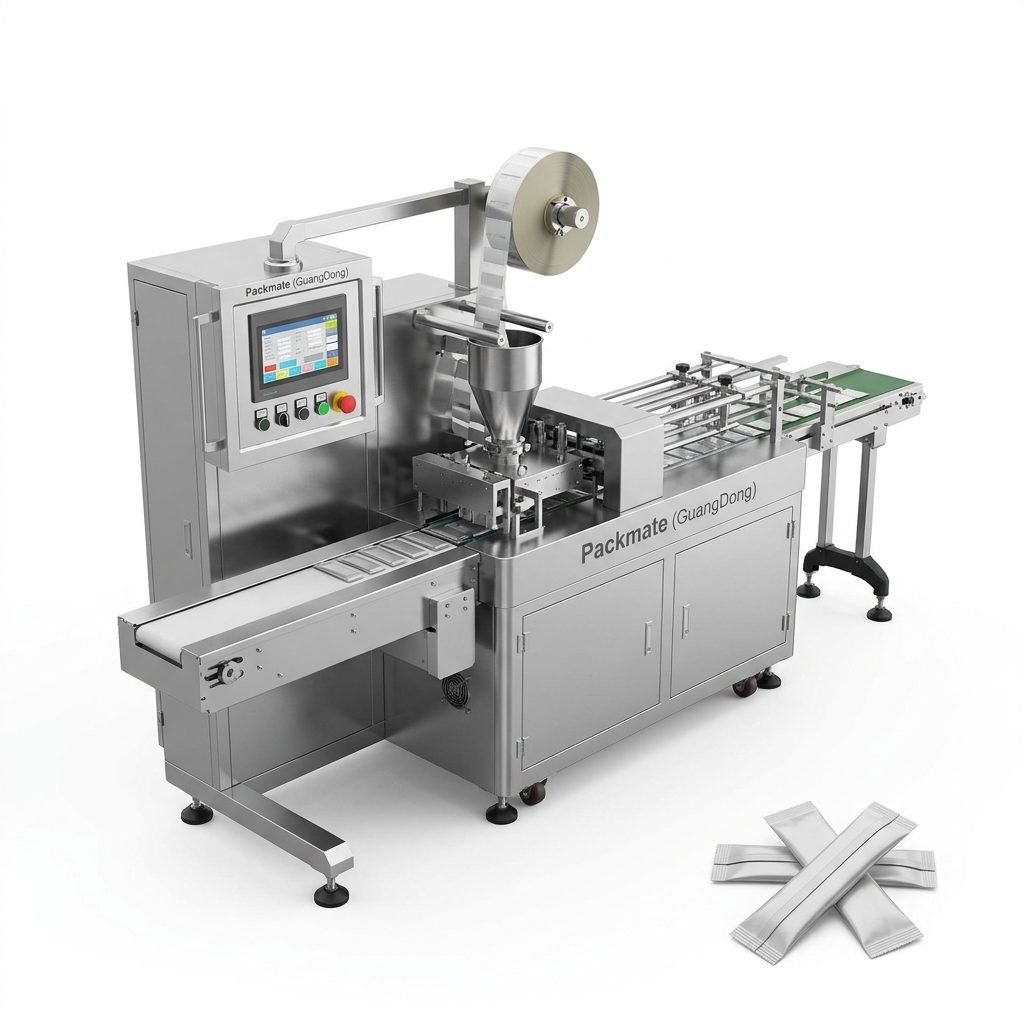
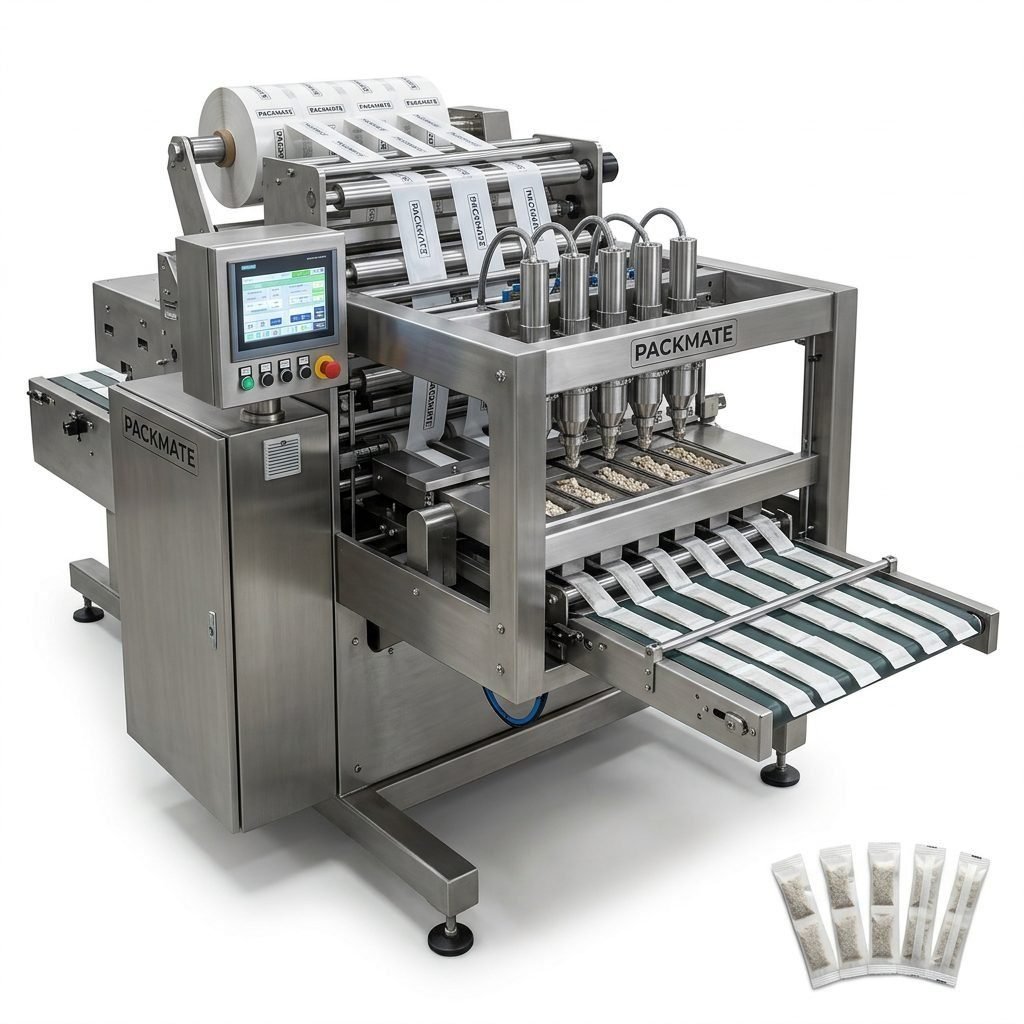
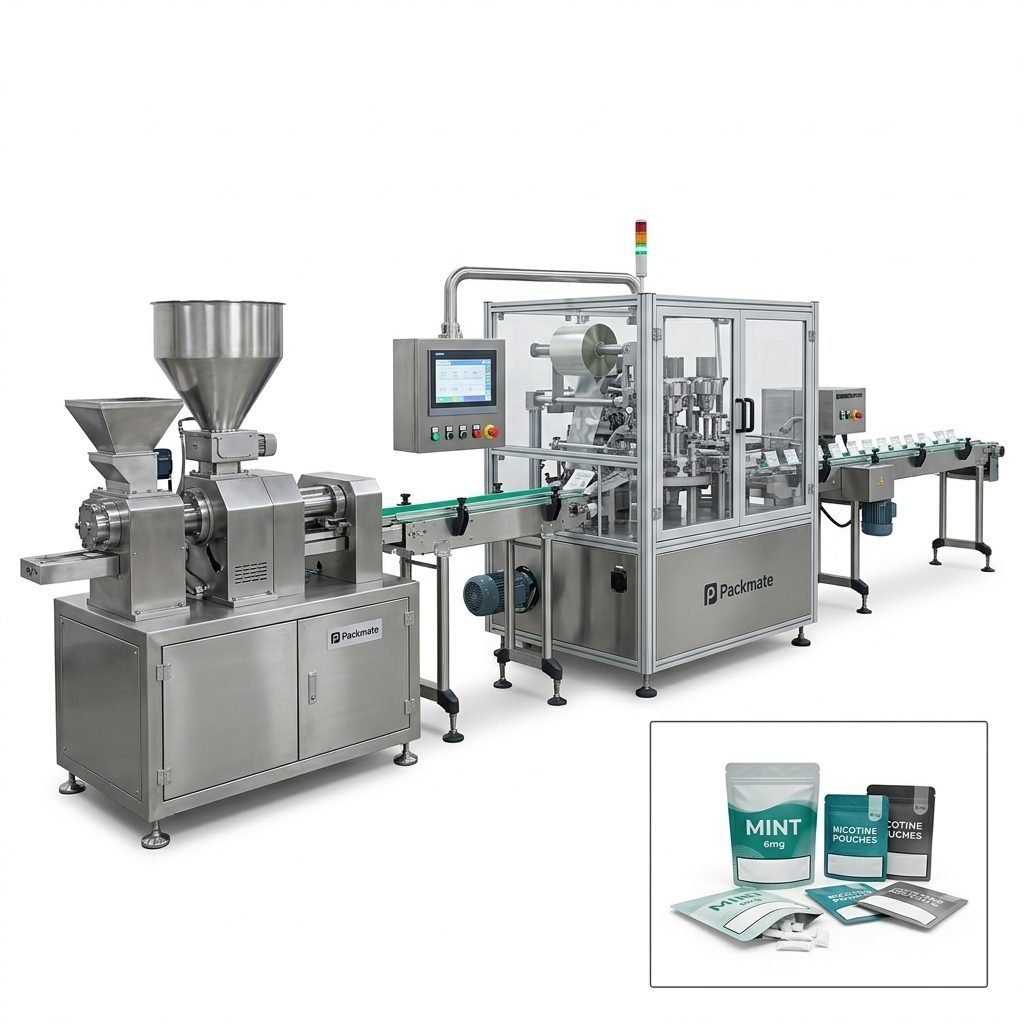
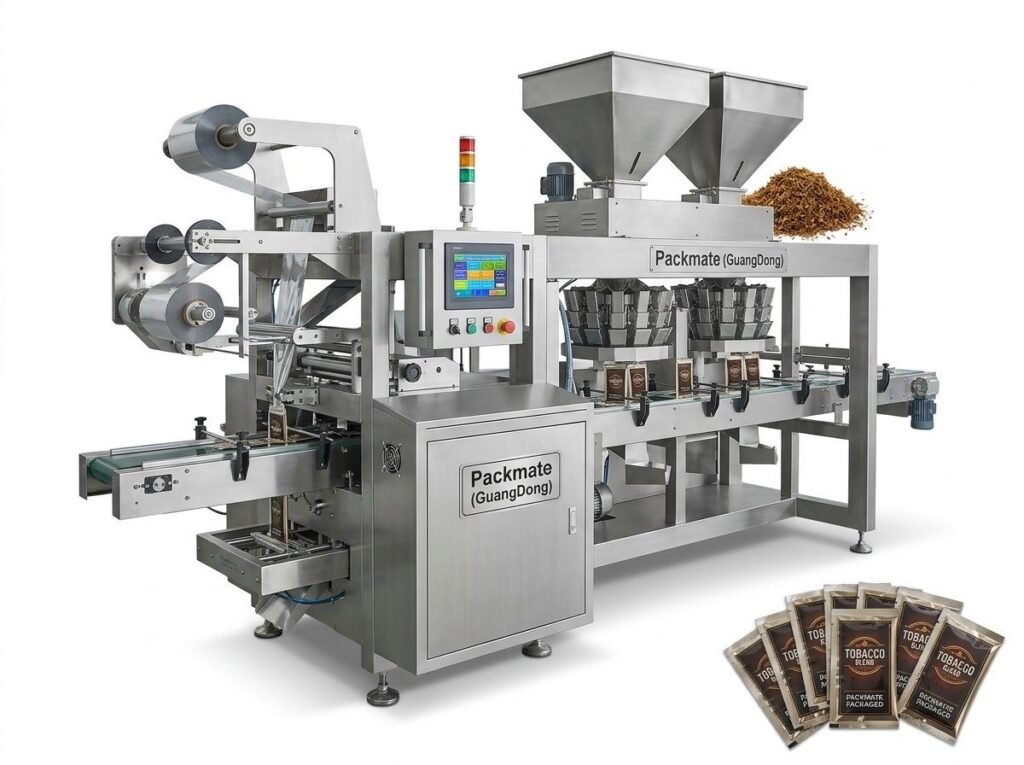
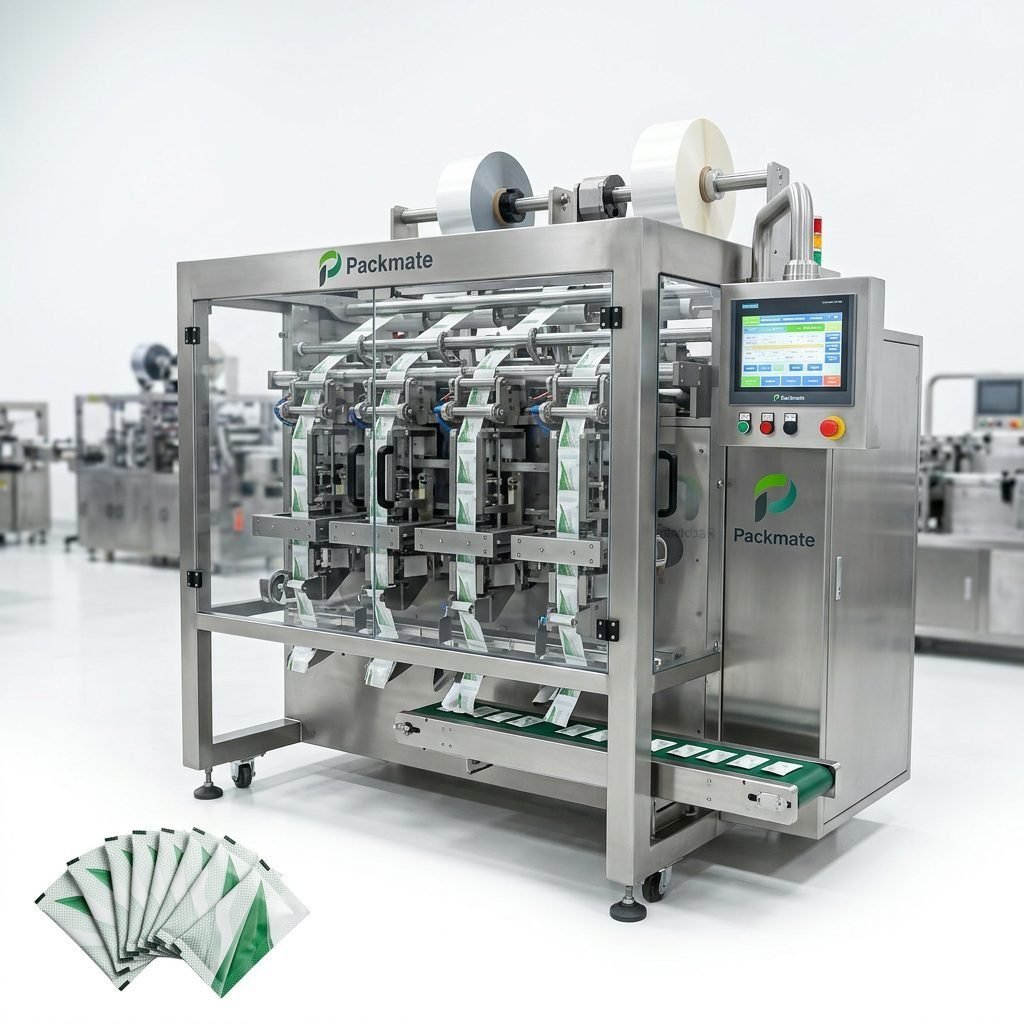
In the modern snus and nicotine pouch industry, precision, consistency and compliance are non-negotiable. Manufacturers demand packaging systems that can handle delicate small-dose portions reliably while meeting regulatory standards and production targets. This article explores advanced pouch packaging machines for snus — automatic solutions that integrate portioning, filling and sealing with high efficiency, flexible formats, and robust quality control.
Why Choose an Automatic Pouch Packaging Machine for Snus?
Automatic pouch packaging machines for snus deliver several compelling advantages over semi-manual or older systems:
✔ High throughput — Multi-lane and continuous high-speed systems can significantly raise output without compromising portion accuracy.
✔ Consistent portion control — Integrated weighing and dosing systems ensure every pouch has the correct nicotine or tobacco mass.
✔ Reduced labor and downtime — Automation reduces operator dependency and improves production continuity with quick changeovers.
Core Functional Modules
A modern snus pouch packaging line typically integrates several synchronized modules. Below is an overview of the essential functional blocks:
Portioning & Dosing ⚙️ — Precision volumetric or gravimetric dosing units tailored for powders, granules and moist snus formulations. Accurate dosing is vital to maintain product consistency and regulatory compliance.
Forming & Conveyance 📦 — Pouch film forming assemblies create the packaging shape (sachets, stick packs, or multi-lane pouches) and convey them to filling stations with servo-controlled movements to avoid spills and damage.
Filling, Sealing and Special Features
The filling and sealing stage combines speed with hygiene and sealing integrity:
Sealing technologies — Heat-seal, ultrasonic seal and combination sealing options are available depending on film material and barrier requirements. High-performance jaws and controlled temperature zones ensure reliable seals.
In-line quality inspection — Vision systems, weight checks and leak detection verify every pouch. Reject mechanisms and data logging maintain traceability and reduce waste.
Formats Supported: Flexibility for Product Variety
Packmate-style lines support multiple pouch types: single-dose pouches, sachets, stick packs and multi-lane mini-pouches. This flexibility allows a single production line to handle different SKUs with fast changeovers, ideal for companies with diverse portfolios.
Multi-lane systems — For high-volume brands, multi-lane filling increases output by running several parallel lanes. The synchronized dosing ensures uniform distribution across all lanes.
Single-lane flexibility — Ideal for niche products or small-batch production where frequent SKU changes are common.
Materials, Films and Barrier Requirements
Selecting the right film is critical for snus products due to moisture sensitivity and aroma preservation. Common material choices include laminated films with barrier layers and heat-sealable inner layers. Machines must be compatible with both standard and advanced high-barrier films.
Control Systems and Industry 4.0 Readiness
Modern pouch packing machines are PLC- and HMI-driven with recipe management, remote diagnostics and production reporting. Industry 4.0 features allow integration with MES systems for real-time monitoring and predictive maintenance.
Compliance, Safety and Certifications
A reputable manufacturer will design machines that meet international standards and regulatory requirements. Certifications such as CE and ISO are common, ensuring safety, hygiene and performance standards are met across global markets. Packmate’s experience includes delivering lines that comply with such standards and provide full documentation for audits and verification.
Sanitation & GMP Considerations
Hygienic design with easy-to-clean components, accessible seals and CIP-friendly sections reduces contamination risk. Stainless steel contact surfaces, quick-release parts and sealed electrical housings support GMP and food/pharma-grade environments.
Documentation & Validation — IQ/OQ/PQ documentation, FAT/SAT procedures and full traceability records can be provided to satisfy regulatory and buyer audits.
Customization, Turnkey Lines and After-sales Support
Suppliers with deep engineering expertise offer turnkey solutions: from material handling and dosing to final packing and case-packing. Customization can include specific dosing heads for unique blends, flavor dosing, nitrogen flushing for extended shelf life, and integrated cartoning or case packing.
Support & service should cover spare parts, remote troubleshooting, operator training and periodic maintenance contracts to ensure long-term uptime and performance consistency.
Case Studies & Global Reach
Leading manufacturers have delivered lines across Europe, Asia and the Americas. Real-world deployments show multiple benefits: reduced waste, improved yields, and faster time-to-market for new pouch formats. For concrete examples of implemented systems, customers often review detailed deployments and outcomes on supplier case pages.
Explore examples and machine families such as Snus & Nicotine Packaging Machines and multi-functional systems in the Bag & Pouch Packaging Machines catalog.
Selecting the Right Machine: Key Questions to Ask
When evaluating packaging partners and systems, consider these critical parameters:
- Target throughput (pouches/minute) and expected SKU mix
- Portion accuracy and acceptable weight tolerances
- Film compatibility and sealing method requirements
- Automation level: are cartoning and case-packing also needed?
- Service, spare parts lead time and remote support options
Tip: Ask for a factory acceptance test (FAT) or sample run to verify portion accuracy and sealing integrity with your exact formulations and films.
Integration with Upstream & Downstream Equipment
A well-designed production line integrates upstream powder handling and blending with downstream processes like box forming and labeling. Look for suppliers who provide comprehensive systems, including weighing solutions and auxiliary equipment to minimize the integration burden and ensure full line performance.
See examples of integrated units in the Weighing & Packaging Systems and Filling & Packaging Lines portfolios.
Installation, Commissioning and Training
Proper installation and commissioning are essential for hitting production KPIs quickly. Professional suppliers provide on-site commissioning, operator training and documentation. Remote commissioning features can accelerate setup, but on-site validation remains important for complex multi-lane systems.
Lifecycle Cost & ROI
Calculate total cost of ownership (TCO) including energy consumption, spare parts, and expected maintenance intervals. High-quality machines may carry higher initial cost but deliver faster ROI through reduced material waste, higher uptime, and lower labor costs.
Why Manufacturer Experience Matters
Manufacturers with decades of engineering experience bring nuanced design improvements that reduce downtime and boost reliability. Packmate’s multi-decade development history and factory capabilities ensure precision components, advanced CNC machining and rigorous quality testing—key to delivering dependable snus pouch production lines.
Learn more about the company’s history and capabilities at About Packmate and view examples of completed projects in the Case section.
Conclusion
Investing in an advanced pouch packaging machine for snus is a strategic decision that impacts product quality, regulatory compliance and operational efficiency. Choose a partner who offers robust engineering, turnkey solutions and ongoing support — ensuring your production line delivers consistent portions, secure seals and long-term performance.
Frequently Asked Questions
Q1: How accurate are automated portioning systems for snus pouches?
A1: Modern gravimetric dosing systems typically achieve high accuracy within small tolerances (often <±2% depending on formulation). Regular calibration and controlled environmental conditions help maintain precision.
Q2: Can a single machine handle multiple pouch formats?
A2: Yes — many modular machines support stick packs, sachets and multi-lane pouches with quick-change tooling and programmatic recipe selection for repeatable changeovers.
Q3: What are the most common sealing methods for snus pouches?
A3: Heat-seal is the most common method; ultrasonic sealing is used for some laminates and specific film types. The choice depends on film composition, barrier needs and production speed.
Q4: How quickly can a new line be commissioned?
A4: Commissioning timelines vary with complexity. A single-lane machine can often be commissioned in a few days, while full turnkey multi-lane lines with upstream/downstream integration may require several weeks for installation, validation and operator training.
Q5: Where can I find more resources and contact information?
A5: For product catalogs, technical specs and service inquiries visit the Catalog or reach out via the Contact Us page for tailored consultation and quotations.