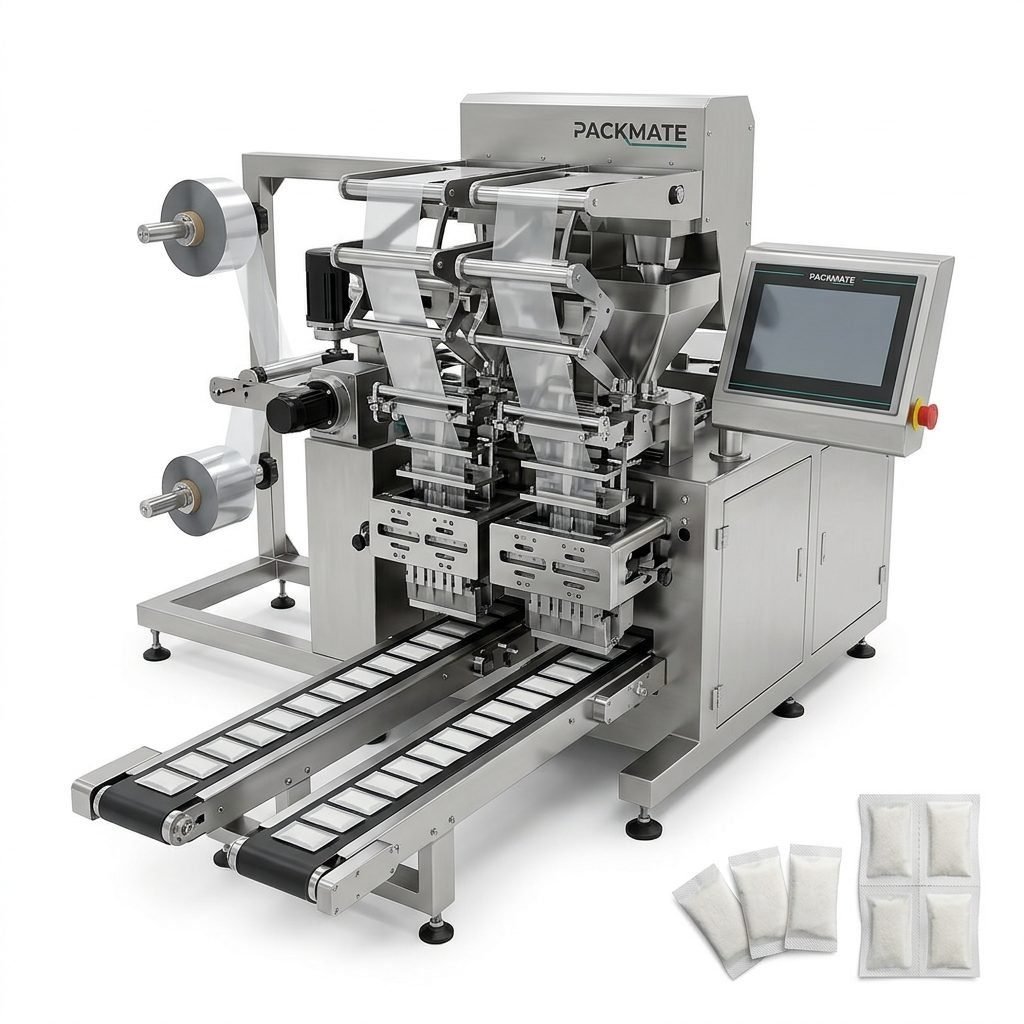
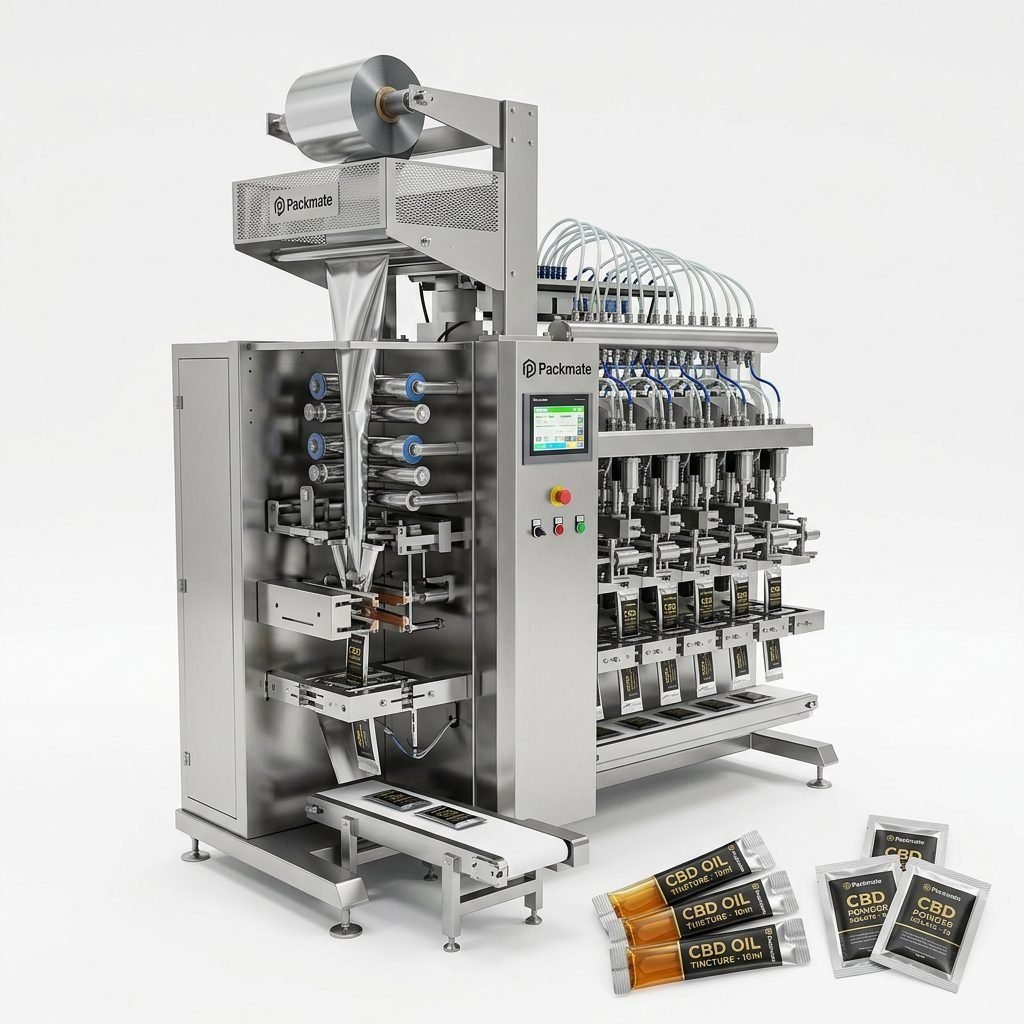
Choosing the right snus packaging machinery for your manufacturing operation in Estonia is a strategic decision that affects product quality, production efficiency, regulatory compliance, and long-term costs. This guide walks Estonian manufacturers through practical selection criteria, machine types, supplier evaluation, installation considerations, and return-on-investment thinking so you can make an informed purchase that fits both small-batch artisan production and high-throughput industrial lines.
🔎 Understand Your Product and Market Needs
Before you shop for equipment, document the specifics of your snus or nicotine pouch product: pouch size and weight, dosing accuracy, moisture tolerance, intended packaging material (foil, laminated film, paper combo), single-dose stick vs sachet formats, and target daily throughput. Estonian market demands may favor compact lines for local brands and export-ready lines for EU distribution — know whether you need a flexible multi-format machine or a highly optimized single-format solution.
📦 Product variables to define
– Target output (pouches/min or packs/min).
– Fill types: powder, granules, paste, or liquid nicotine blends.
– Packaging styles: stick pack, sachet, multi-lane pouches.
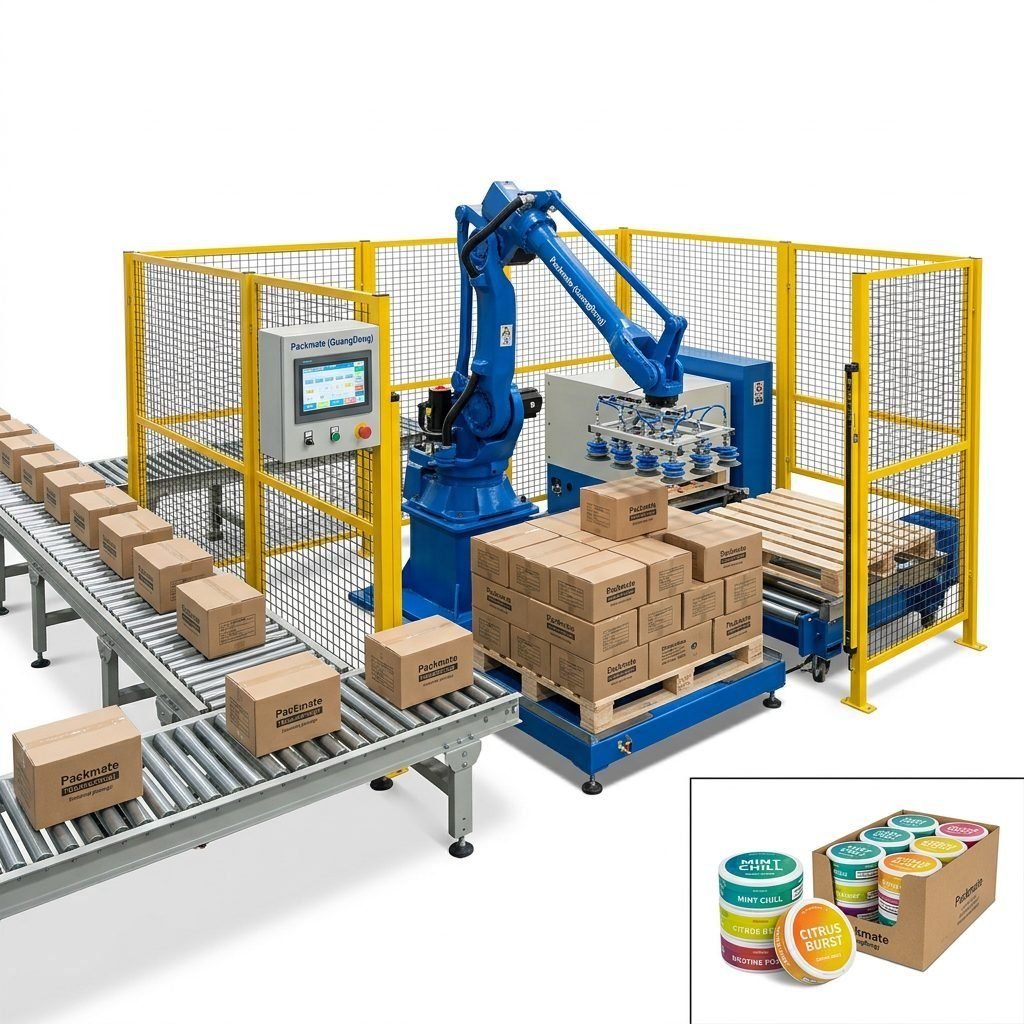
– Labelling and secondary packaging needs (cartoning, case packing).
⚙️ Types of Snus Packaging Machinery and When to Choose Each
Understanding machine categories helps you match capability to product. Leading manufacturers supply specialized machines for nicotine pouches alongside multi-purpose sachet and stick pack systems.
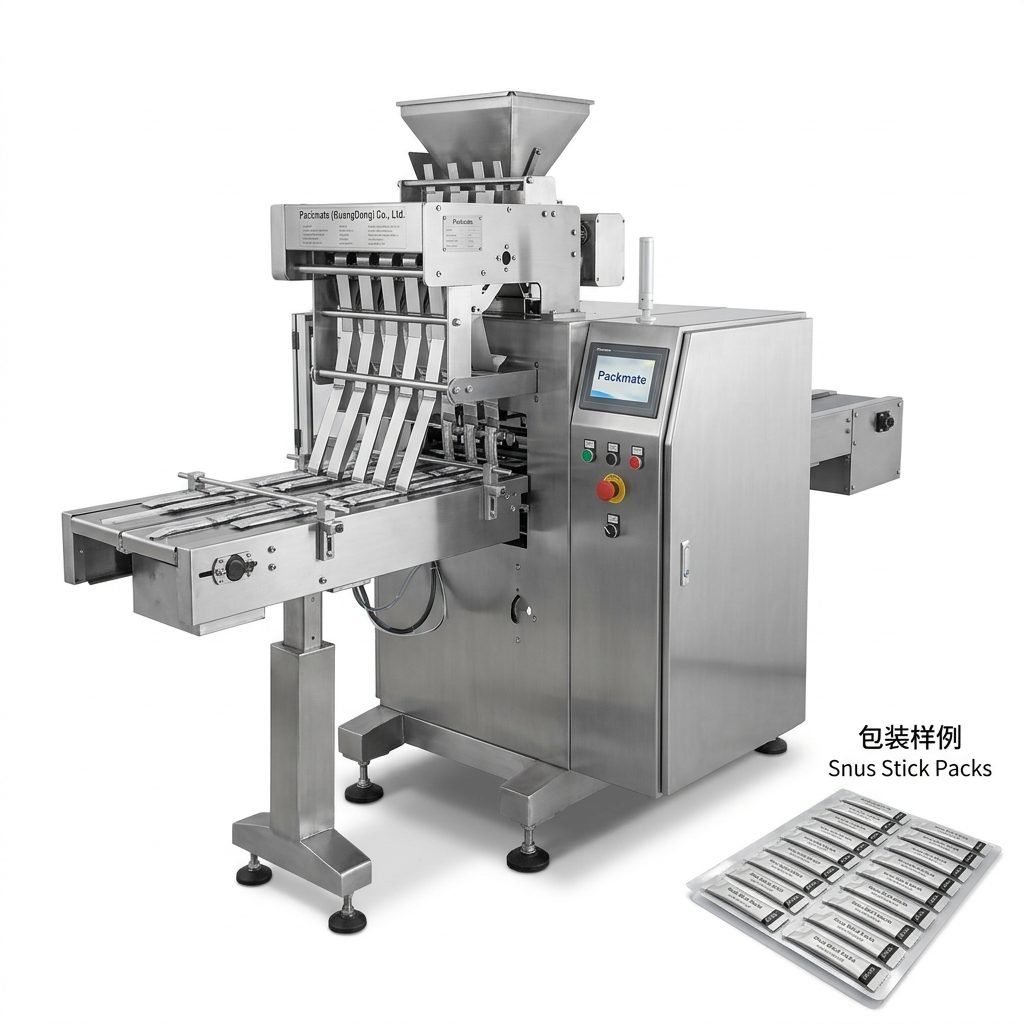
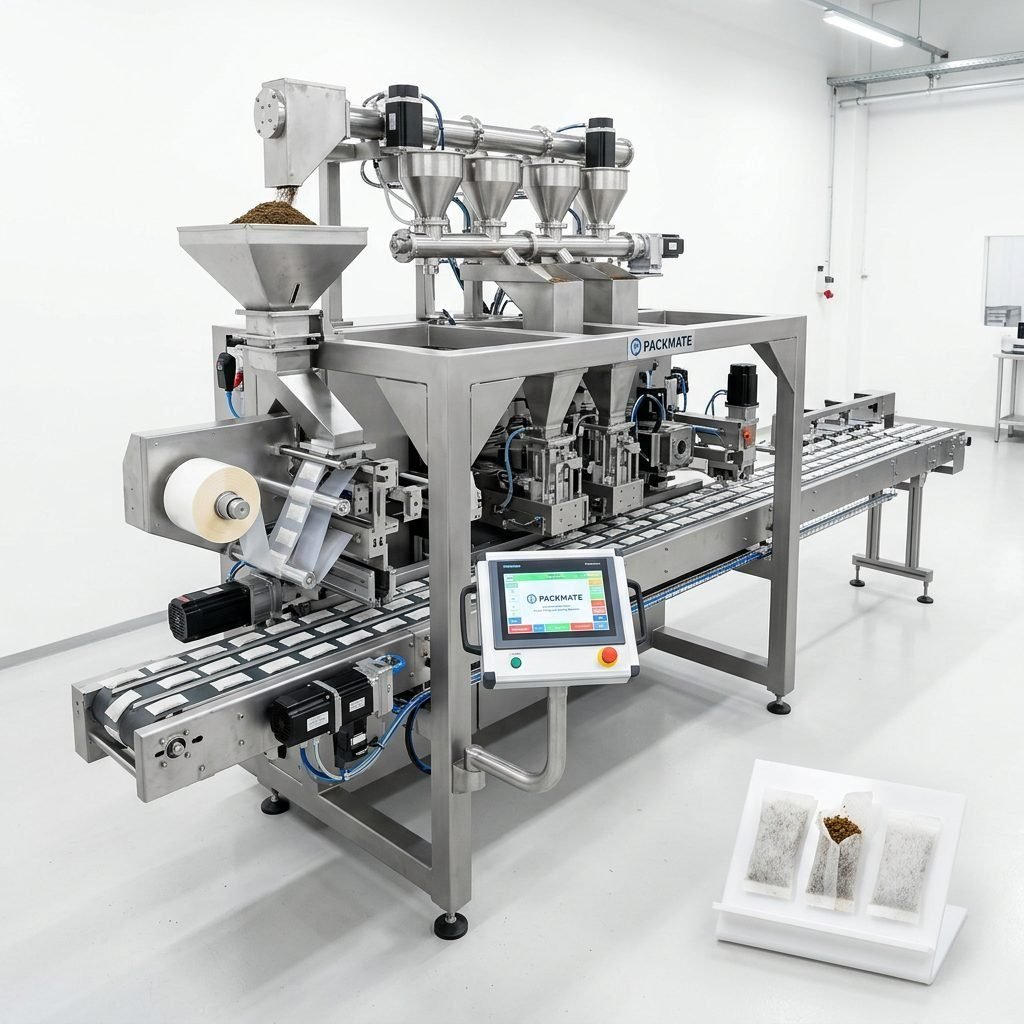
Sachet and stick pack machines
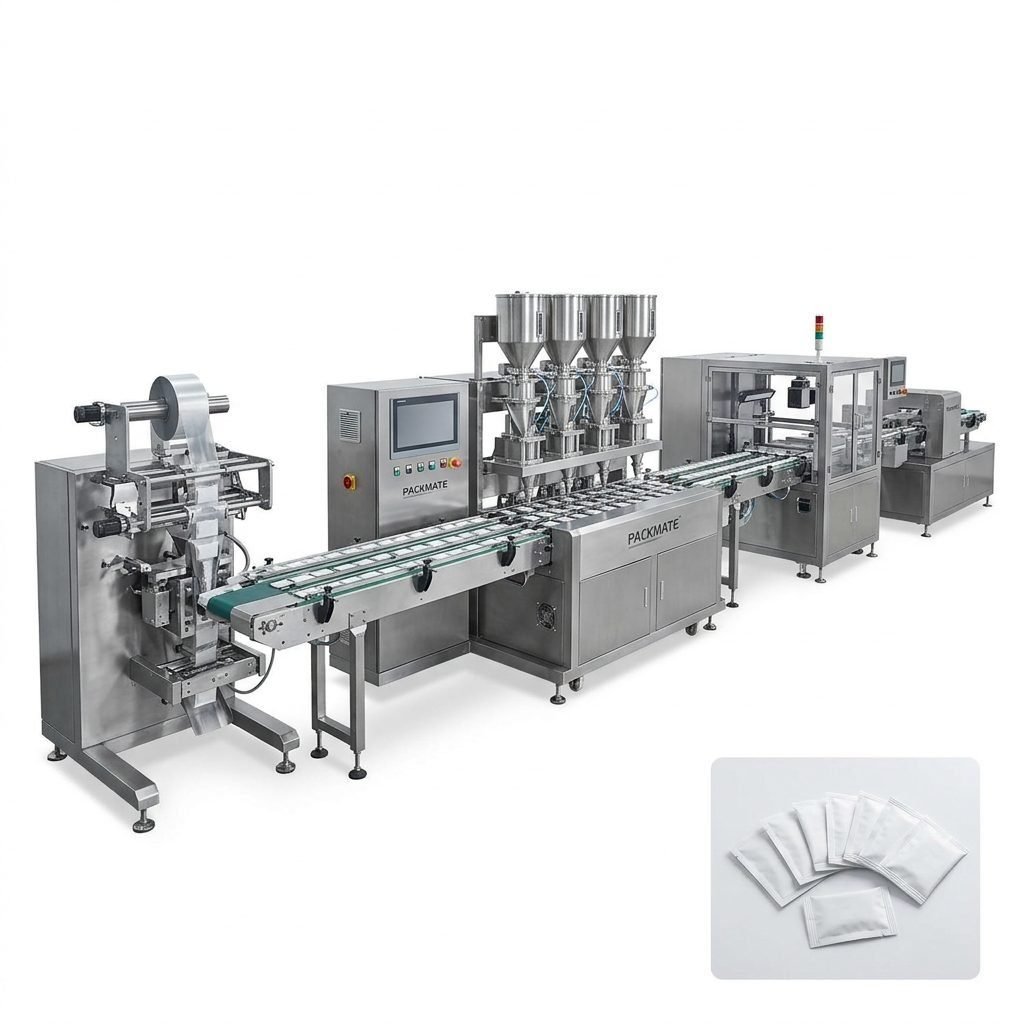
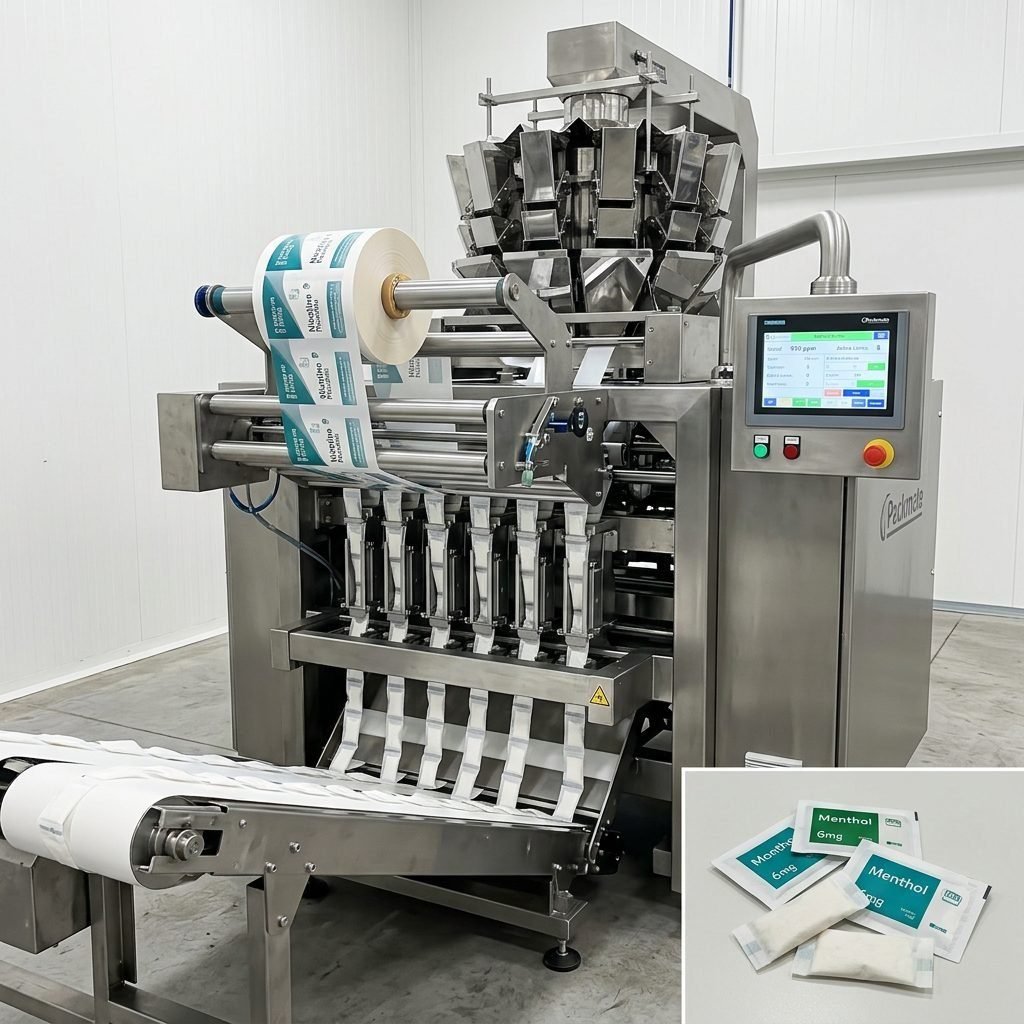
Sachet & stick pack machines are ideal for single-dose formats and high-speed continuous packaging. They suit thin film materials and are often the best choice for compact, retail-ready sachets. See examples of reliable systems at the Sachet & Stick Pack Machines product page.
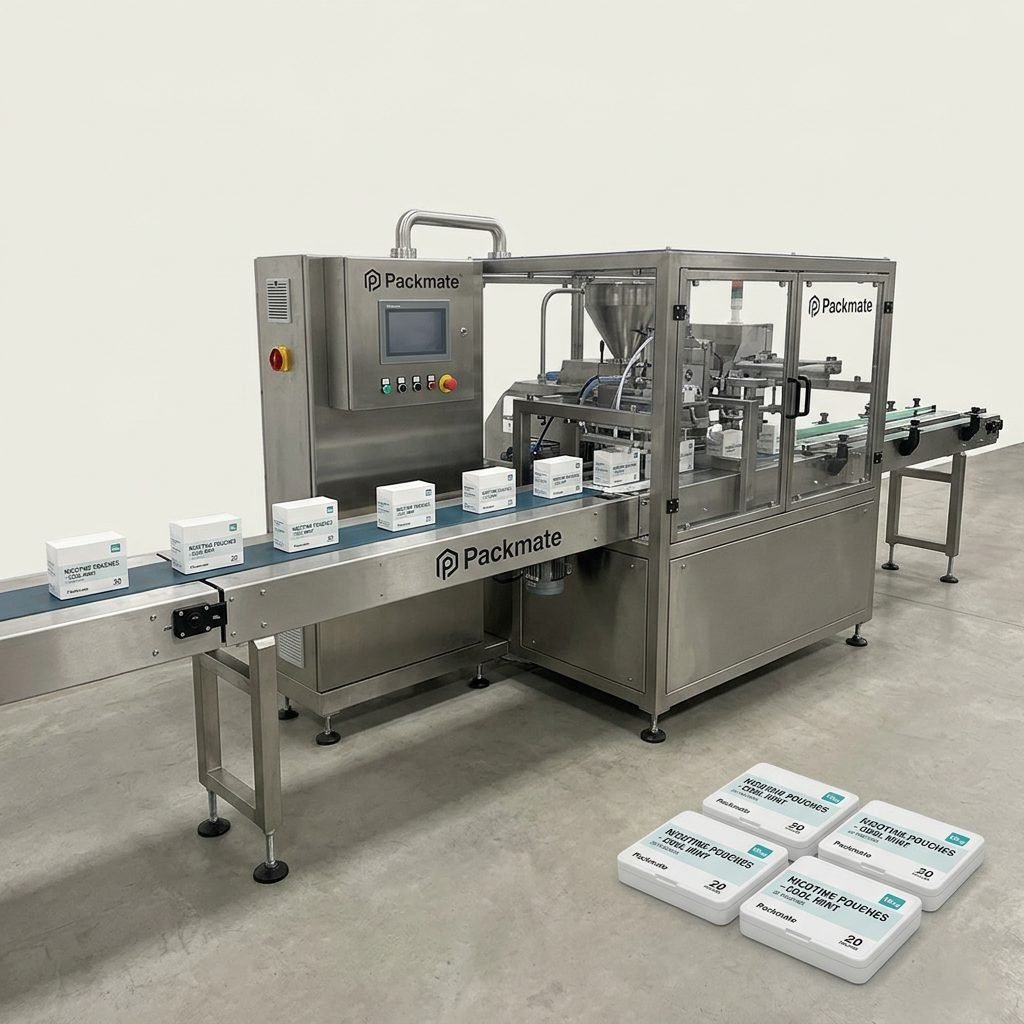
Multi-lane snus pouch lines
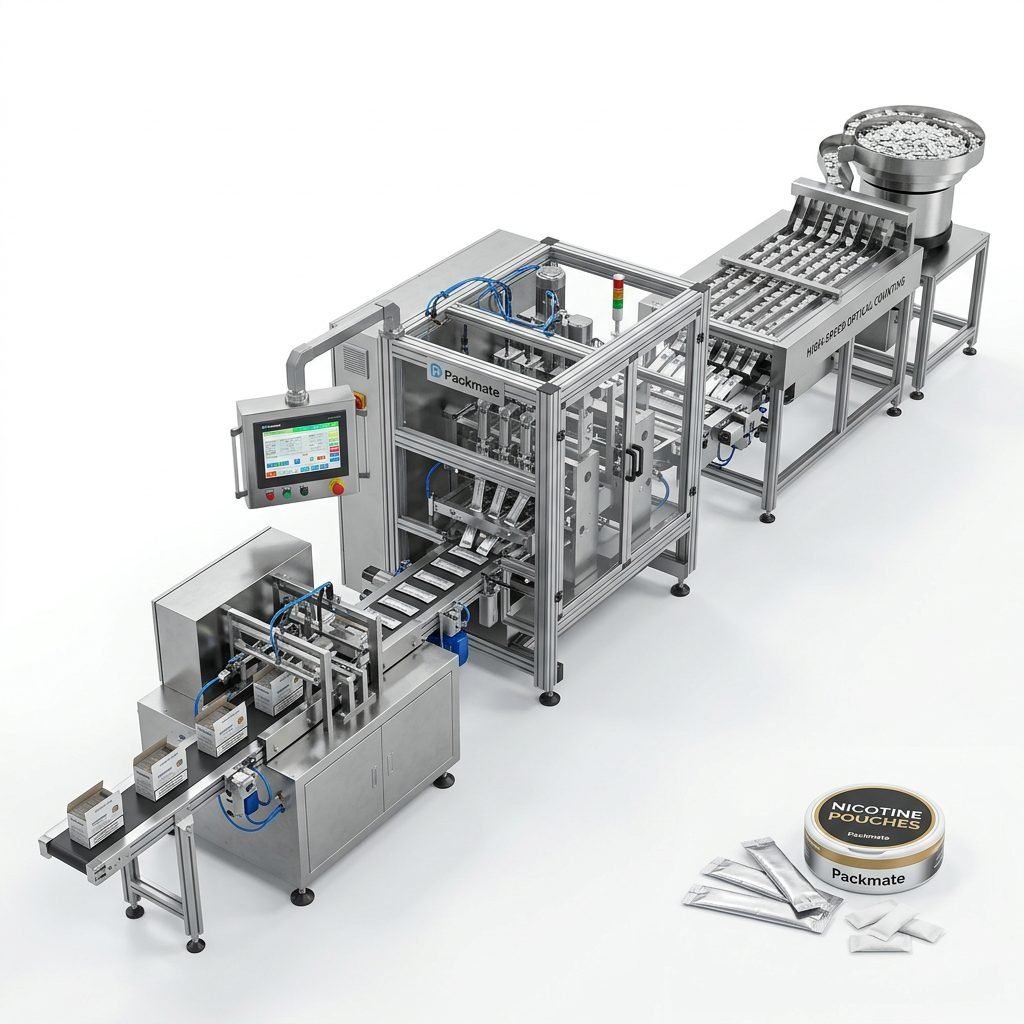
Multi-lane systems increase throughput by running several lanes in parallel — excellent for manufacturers scaling production for European distribution. These systems require precise synchronization and robust dosing systems for consistent pouch weights.
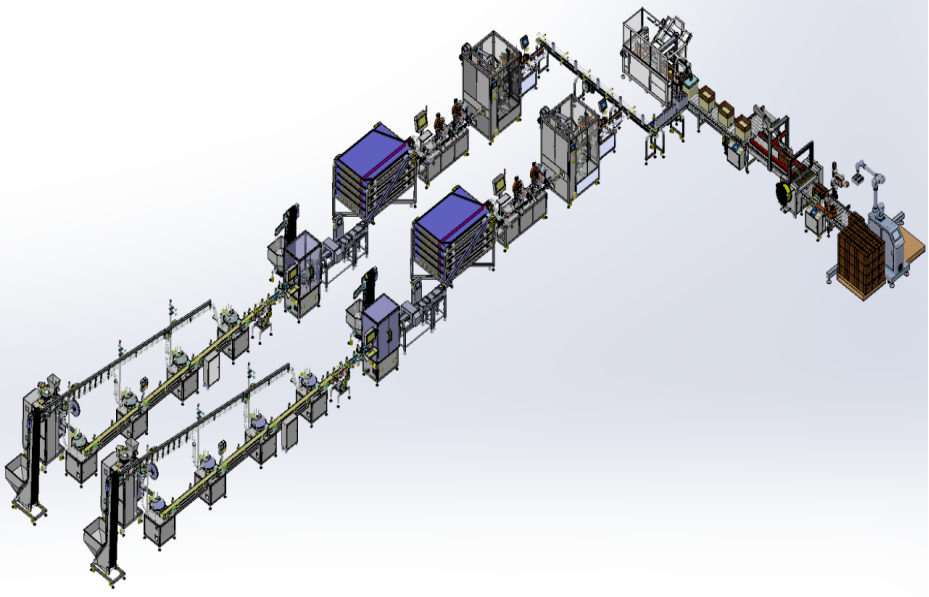
Complete filling & packaging lines
For turnkey operations, integrated filling & packaging lines combine dosing, sealing, coding, and secondary packaging in one production chain to minimize footprint and streamline automation. Check Filling & Packaging Lines for full-line solutions and integration options.
✅ Key Technical Selection Criteria
When comparing machine models, focus on technical metrics that drive performance and compliance in Estonia and the EU.
📋 Quick Buyer Checklist (highlighted)
• Throughput consistency — machines should hit declared pouches/min at target fill weights.
• Dosing precision — ±X% tolerance depending on product; essential for compliance and waste reduction.
• Material compatibility — confirm film types, laminates, barrier films, and heat-seal profiles with supplier tests.
• Ease of cleaning & maintenance — quick-change modules reduce downtime and support hygiene protocols.
• Certifications — CE/ISO compliance for EU markets and documented risk assessments.
Throughput & line balancing
Match main packaging machine speed with upstream and downstream equipment (weighers, conveyors, cartoners). If you plan to add multi-lane dosing or high-speed cartoners, make sure the vendor can provide synchronized automation — vendors with integrated Weighing & Packaging Systems experience will help you avoid bottlenecks.
Material and sealing requirements
Nicotine pouches often require high-barrier films and precise heat-seal profiles. Confirm material trials and request sample runs from prospective suppliers to validate seal integrity and shelf life before purchase.
🧩 Supplier Evaluation: What to Ask Manufacturers
Choosing the right manufacturer is as important as choosing the right machine. Prioritize suppliers who demonstrate experience in snus and nicotine pouch technology, robust factory capabilities, and global service networks.
Key questions:
- How many years of experience do you have with snus/nicotine pouch equipment?
- Can you provide case studies or references from European customers? (See Case examples)
- What certifications do your machines carry? (ask for CE, ISO docs — see Certificate)
- Do you offer factory acceptance testing (FAT), site acceptance testing (SAT), and on-site commissioning?
- What are your spare parts lead times and field service arrangements within Europe?
🏭 Factory Capabilities and Customization
Work with manufacturers who have strong CNC machining, precision assembly, and quality control systems. A supplier with extensive factory capacity and multiple machine models can offer tailored modifications, spare parts stock, and faster lead times. Learn more about an experienced supplier’s background on their About Packmate page.
Turnkey vs. modular purchases
Turnkey lines simplify integration and single-supplier accountability, whereas modular purchases let you upgrade capacity incrementally. If you foresee rapid growth, a modular approach with standardized interfaces eases future scaling.
🔧 Installation, Utilities and Site Preparation
Before equipment arrival, prepare an installation plan covering floor loading, electrical supply, compressed air, vacuum, chilled water (if required), and factory layout for material flow. Suppliers typically provide installation drawings and utility lists — be sure these match your Estonian facility.
Electrical and environmental considerations
Confirm voltage and frequency compatibility, local certified electrical installations, and any environmental controls needed for temperature-sensitive tobacco or nicotine blends.
🛠 After-sales Support, Spare Parts and Training
Good after-sales support reduces downtime and protects production. Select vendors offering:
- Comprehensive operator and maintenance training
- Fast spare parts shipping to Estonia
- Remote diagnostics and on-site commissioning
- Extended warranties and service contracts
Look for suppliers with dedicated Service and Contact Us channels so your team can quickly resolve issues.
💶 Total Cost of Ownership (TCO) and ROI
Beyond purchase price, calculate energy consumption, consumables (films, seals), maintenance labor, spare parts, downtime risk, and training costs. Create scenarios for 1-, 3- and 5-year horizons to compare vendors. Often a higher initial investment in more reliable equipment pays back through reduced scrap and higher overall OEE.
📈 Quick ROI tips
• Track yield and scrap rates during trial runs. Better sealing and dosing lowers waste.
• Consider automation that reduces manual handling — lower labor costs and fewer quality incidents.
• Verify spare parts pricing and typical MTTR (mean time to repair) estimates.
🔬 Testing, Trials and Quality Assurance
Insist on pre-shipment testing with your actual product or equivalent materials. Factory acceptance testing (FAT) should demonstrate sustained speed, weight accuracy, sealing integrity and labelling/coding accuracy. After installation, run site acceptance tests (SAT) and sample production runs to finalize process parameters.
🌍 Compliance and Export Considerations for Estonia
Ensure machines and production processes meet EU regulatory requirements. CE conformity and documented quality management systems (ISO) are essential. If you plan to export beyond the EU, verify additional certifications early in the procurement phase. Use supplier Certificate pages to review compliance documentation.
📚 Vendor Resources and Choosing a Partner
Suppliers that publish catalogs, case studies, exhibition participation, and FAQs demonstrate transparency and ongoing product development. Review product lines such as Snus & Nicotine Packaging Machines and Bag & Pouch Packaging Machines to compare features. Visit vendor exhibition pages to see live demos and schedule factory visits where possible.
🧾 Practical Steps to Finalize Your Purchase
1) Shortlist 2–4 suppliers with relevant snus experience. 2) Request detailed proposals including FAT plans, spare parts lists, and timelines. 3) Negotiate payment terms with milestones tied to commissioning. 4) Plan installation, training, and initial material trials well ahead of machine delivery.
🔧 Supplier short-listing checklist
• Proven snus/nicotine machine models and references.
• On-site commissioning and training included.
• Spare parts availability and clear warranty terms.
• Ability to deliver FAT and SAT documentation.
📞 Next Steps: Where to Get Help
If you need turnkey solutions, product samples, or to schedule a factory visit, contact experienced suppliers with proven production lines and global service networks. For manufacturer background and service options, check About Packmate, Service, and Contact Us pages. Reviewing exhibition activity and case studies can also help validate vendor capabilities.
Selecting the right snus packaging machinery in Estonia requires a careful balance of technical specification, supplier competence, compliance readiness, and long-term serviceability. Prioritize precise dosing, material compatibility, after-sales support, and documented testing. With the right partner and a detailed procurement plan, you can establish a reliable, scalable production line that meets local and export market demands.
Common Questions:
Q1: How do I verify a machine’s claimed throughput in real conditions?
A1: Request a Factory Acceptance Test (FAT) using your product or a representative material, review video evidence of sustained runs, and include performance guarantees in the contract.
Q2: What certifications should snus packaging machines have for the EU market?
A2: Machines should carry CE marking and be manufactured under an ISO-compliant quality system. Ask suppliers for documented certificates (see Certificate) and risk assessment files.
Q3: Can I buy a modular system and upgrade lanes later?
A3: Yes — many modern systems are modular. Confirm lane-expansion options, control system scalability, and mechanical interfaces before purchase.
Q4: What after-sales services should I expect?
A4: Expect commissioning, operator and maintenance training, spare parts supply, remote diagnostics, and service contracts. Confirm lead times for critical spares and local technical support availability.
Q5: Where can I see real-world examples and technical catalogs?
A5: Review supplier case studies and product catalogs online (see Case and Catalog) and attend exhibitions where vendors demonstrate equipment (see Our Exhibition).